Search Results: "nwp"

12 May 2025

Sergio Talens-Oliag: Playing with vCluster

After my previous posts related to Argo CD (one about argocd-autopilot and another with some usage examples) I started to look into Kluctl (I also plan to review Flux, but I m more interested on the kluctl approach right now). While reading an entry on the project blog about Cluster API somehow I ended up on the vCluster site and decided to give it a try, as it can be a valid way of providing developers with on demand clusters for debugging or run CI/CD tests before deploying things on common clusters or even to have multiple debugging virtual clusters on a local machine with only one of them running at any given time. On this post I will deploy a vcluster using the k3d_argocd kubernetes cluster (the one we created on the posts about argocd) as the host and will show how to:
  • use its ingress (in our case traefik) to access the API of the virtual one (removes the need of having to use the vcluster connect command to access it with kubectl),
  • publish the ingress objects deployed on the virtual cluster on the host ingress, and
  • use the sealed-secrets of the host cluster to manage the virtual cluster secrets.

Creating the virtual cluster

Installing the vcluster applicationTo create the virtual clusters we need the vcluster command, we can install it with arkade:
  arkade get vcluster

The vcluster.yaml fileTo create the cluster we are going to use the following vcluster.yaml file (you can find the documentation about all its options here):
controlPlane:
  proxy:
    # Extra hostnames to sign the vCluster proxy certificate for
    extraSANs:
    - my-vcluster-api.lo.mixinet.net
exportKubeConfig:
  context: my-vcluster_k3d-argocd
  server: https://my-vcluster-api.lo.mixinet.net:8443
  secret:
    name: my-vcluster-kubeconfig
sync:
  toHost:
    ingresses:
      enabled: true
    serviceAccounts:
      enabled: true
  fromHost:
    ingressClasses:
      enabled: true
    nodes:
      enabled: true
      clearImageStatus: true
    secrets:
      enabled: true
      mappings:
        byName:
          # sync all Secrets from the 'my-vcluster-default' namespace to the
          # virtual "default" namespace.
          "my-vcluster-default/*": "default/*"
          # We could add other namespace mappings if needed, i.e.:
          # "my-vcluster-kube-system/*": "kube-system/*"
On the controlPlane section we ve added the proxy.extraSANs entry to add an extra host name to make sure it is added to the cluster certificates if we use it from an ingress. The exportKubeConfig section creates a kubeconfig secret on the virtual cluster namespace using the provided host name; the secret can be used by GitOps tools or we can dump it to a file to connect from our machine. On the sync section we enable the synchronization of Ingress objects and ServiceAccounts from the virtual to the host cluster:
  • We copy the ingress definitions to use the ingress server that runs on the host to make them work from the outside world.
  • The service account synchronization is not really needed, but we enable it because if we test this configuration with EKS it would be useful if we use IAM roles for the service accounts.
On the opposite direction (from the host to the virtual cluster) we synchronize:
  • The IngressClass objects, to be able to use the host ingress server(s).
  • The Nodes (we are not using the info right now, but it could be interesting if we want to have the real information of the nodes running pods of the virtual cluster).
  • The Secrets from the my-vcluster-default host namespace to the default of the virtual cluster; that synchronization allows us to deploy SealedSecrets on the host that generate secrets that are copied automatically to the virtual one. Initially we only copy secrets for one namespace but if the virtual cluster needs others we can add namespaces on the host and their mappings to the virtual one on the vcluster.yaml file.

Creating the virtual clusterTo create the virtual cluster we run the following command:
vcluster create my-vcluster --namespace my-vcluster --upgrade --connect=false \
  --values vcluster.yaml
It creates the virtual cluster on the my-vcluster namespace using the vcluster.yaml file shown before without connecting to the cluster from our local machine (if we don t pass that option the command adds an entry on our kubeconfig and launches a proxy to connect to the virtual cluster that we don t plan to use).

Adding an ingress TCP route to connect to the vcluster apiAs explained before, we need to create an IngressTcpRoute object to be able to connect to the vcluster API, we use the following definition:
apiVersion: traefik.containo.us/v1alpha1
kind: IngressRouteTCP
metadata:
  name: my-vcluster-api
  namespace: my-vcluster
spec:
  entryPoints:
    - websecure
  routes:
    - match: HostSNI( my-vcluster-api.lo.mixinet.net )
      services:
        - name: my-vcluster
          port: 443
  tls:
    passthrough: true
Once we apply those changes the cluster API will be available on the https://my-cluster-api.lo.mixinet.net:8443 URL using its own self signed certificate (we have enabled TLS passthrough) that includes the hostname we use (we adjusted it on the vcluster.yaml file, as explained before).

Getting the kubeconfig for the vclusterOnce the vcluster is running we will have its kubeconfig available on the my-vcluster-kubeconfig secret on its namespace on the host cluster. To dump it to the ~/.kube/my-vcluster-config we can do the following:
  kubectl get -n my-vcluster secret/my-vcluster-kubeconfig \
    --template=" .data.config "   base64 -d > ~/.kube/my-vcluster-config
Once available we can define the vkubectl alias to adjust the KUBECONFIG variable to access it:
alias vkubectl="KUBECONFIG=~/.kube/my-vcluster-config kubectl"
Or we can merge the configuration with the one on the KUBECONFIG variable and use kubectx or a similar tool to change the context (for our vcluster the context will be my-vcluster_k3d-argocd). If the KUBECONFIG variable is defined and only has the PATH to a single file the merge can be done running the following:
KUBECONFIG="$KUBECONFIG:~/.kube/my-vcluster-config" kubectl config view \
  --flatten >"$KUBECONFIG.new"
mv "$KUBECONFIG.new" "$KUBECONFIG"
On the rest of this post we will use the vkubectl alias when connecting to the virtual cluster, i.e. to check that it works we can run the cluster-info subcommand:
  vkubectl cluster-info
Kubernetes control plane is running at https://my-vcluster-api.lo.mixinet.net:8443
CoreDNS is running at https://my-vcluster-api.lo.mixinet.net:8443/api/v1/namespaces/kube-system/services/kube-dns:dns/proxy
To further debug and diagnose cluster problems, use 'kubectl cluster-info dump'.

Installing the dummyhttpd applicationTo test the virtual cluster we are going to install the dummyhttpd application using the following kustomization.yaml file:
apiVersion: kustomize.config.k8s.io/v1beta1
kind: Kustomization
resources:
  - https://forgejo.mixinet.net/blogops/argocd-applications.git//dummyhttp/?ref=dummyhttp-v1.0.0
# Add the config map
configMapGenerator:
  - name: dummyhttp-configmap
    literals:
      - CM_VAR="Vcluster Test Value"
    behavior: create
    options:
      disableNameSuffixHash: true
patches:
  # Change the ingress host name
  - target:
      kind: Ingress
      name: dummyhttp
    patch:  -
      - op: replace
        path: /spec/rules/0/host
        value: vcluster-dummyhttp.lo.mixinet.net
  # Add reloader annotations -- it will only work if we install reloader on the
  # virtual cluster, as the one on the host cluster doesn't see the vcluster
  # deployment objects
  - target:
      kind: Deployment
      name: dummyhttp
    patch:  -
      - op: add
        path: /metadata/annotations
        value:
          reloader.stakater.com/auto: "true"
          reloader.stakater.com/rollout-strategy: "restart"
It is quite similar to the one we used on the Argo CD examples but uses a different DNS entry; to deploy it we run kustomize and vkubectl:
  kustomize build .   vkubectl apply -f -
configmap/dummyhttp-configmap created
service/dummyhttp created
deployment.apps/dummyhttp created
ingress.networking.k8s.io/dummyhttp created
We can check that everything worked using curl:
  curl -s https://vcluster-dummyhttp.lo.mixinet.net:8443/   jq -cM .
 "c": "Vcluster Test Value","s": "" 
The objects available on the vcluster now are:
  vkubectl get all,configmap,ingress
NAME                             READY   STATUS    RESTARTS   AGE
pod/dummyhttp-55569589bc-9zl7t   1/1     Running   0          24s
NAME                 TYPE        CLUSTER-IP     EXTERNAL-IP   PORT(S)   AGE
service/dummyhttp    ClusterIP   10.43.51.39    <none>        80/TCP    24s
service/kubernetes   ClusterIP   10.43.153.12   <none>        443/TCP   14m

NAME                        READY   UP-TO-DATE   AVAILABLE   AGE
deployment.apps/dummyhttp   1/1     1            1           24s
NAME                                   DESIRED   CURRENT   READY   AGE
replicaset.apps/dummyhttp-55569589bc   1         1         1       24s
NAME                            DATA   AGE
configmap/dummyhttp-configmap   1      24s
configmap/kube-root-ca.crt      1      14m
NAME                                CLASS   HOSTS                             ADDRESS                          PORTS AGE
ingress.networking.k8s.io/dummyhttp traefik vcluster-dummyhttp.lo.mixinet.net 172.20.0.2,172.20.0.3,172.20.0.4 80    24s
While we have the following ones on the my-vcluster namespace of the host cluster:
  kubectl get all,configmap,ingress -n my-vcluster
NAME                                                      READY   STATUS    RESTARTS   AGE
pod/coredns-bbb5b66cc-snwpn-x-kube-system-x-my-vcluster   1/1     Running   0          18m
pod/dummyhttp-55569589bc-9zl7t-x-default-x-my-vcluster    1/1     Running   0          45s
pod/my-vcluster-0                                         1/1     Running   0          19m
NAME                                           TYPE        CLUSTER-IP      EXTERNAL-IP   PORT(S)                  AGE
service/dummyhttp-x-default-x-my-vcluster      ClusterIP   10.43.51.39     <none>        80/TCP                   45s
service/kube-dns-x-kube-system-x-my-vcluster   ClusterIP   10.43.91.198    <none>        53/UDP,53/TCP,9153/TCP   18m
service/my-vcluster                            ClusterIP   10.43.153.12    <none>        443/TCP,10250/TCP        19m
service/my-vcluster-headless                   ClusterIP   None            <none>        443/TCP                  19m
service/my-vcluster-node-k3d-argocd-agent-1    ClusterIP   10.43.189.188   <none>        10250/TCP                18m

NAME                           READY   AGE
statefulset.apps/my-vcluster   1/1     19m
NAME                                                     DATA   AGE
configmap/coredns-x-kube-system-x-my-vcluster            2      18m
configmap/dummyhttp-configmap-x-default-x-my-vcluster    1      45s
configmap/kube-root-ca.crt                               1      19m
configmap/kube-root-ca.crt-x-default-x-my-vcluster       1      11m
configmap/kube-root-ca.crt-x-kube-system-x-my-vcluster   1      18m
configmap/vc-coredns-my-vcluster                         1      19m
NAME                                                        CLASS   HOSTS                             ADDRESS                          PORTS AGE
ingress.networking.k8s.io/dummyhttp-x-default-x-my-vcluster traefik vcluster-dummyhttp.lo.mixinet.net 172.20.0.2,172.20.0.3,172.20.0.4 80    45s
As shown, we have copies of the Service, Pod, Configmap and Ingress objects, but there is no copy of the Deployment or ReplicaSet.

Creating a sealed secret for dummyhttpdTo use the hosts sealed secrets controller with the virtual cluster we will create the my-vcluster-default namespace and add there the sealed secrets we want to have available as secrets on the default namespace of the virtual cluster:
  kubectl create namespace my-vcluster-default
  echo -n "Vcluster Boo"   kubectl create secret generic "dummyhttp-secret" \
    --namespace "my-vcluster-default" --dry-run=client \
    --from-file=SECRET_VAR=/dev/stdin -o yaml >dummyhttp-secret.yaml
  kubeseal -f dummyhttp-secret.yaml -w dummyhttp-sealed-secret.yaml
  kubectl apply -f dummyhttp-sealed-secret.yaml
  rm -f dummyhttp-secret.yaml dummyhttp-sealed-secret.yaml
After running the previous commands we have the following objects available on the host cluster:
  kubectl get sealedsecrets.bitnami.com,secrets -n my-vcluster-default
NAME                                        STATUS   SYNCED   AGE
sealedsecret.bitnami.com/dummyhttp-secret            True     34s
NAME                      TYPE     DATA   AGE
secret/dummyhttp-secret   Opaque   1      34s
And we can see that the secret is also available on the virtual cluster with the content we expected:
  vkubectl get secrets
NAME               TYPE     DATA   AGE
dummyhttp-secret   Opaque   1      34s
  vkubectl get secret/dummyhttp-secret --template=" .data.SECRET_VAR " \
    base64 -d
Vcluster Boo
But the output of the curl command has not changed because, although we have the reloader controller deployed on the host cluster, it does not see the Deployment object of the virtual one and the pods are not touched:
  curl -s https://vcluster-dummyhttp.lo.mixinet.net:8443/   jq -cM .
 "c": "Vcluster Test Value","s": "" 

Installing the reloader applicationTo make reloader work on the virtual cluster we just need to install it as we did on the host using the following kustomization.yaml file:
apiVersion: kustomize.config.k8s.io/v1beta1
kind: Kustomization
namespace: kube-system
resources:
- github.com/stakater/Reloader/deployments/kubernetes/?ref=v1.4.2
patches:
# Add flags to reload workloads when ConfigMaps or Secrets are created or deleted
- target:
    kind: Deployment
    name: reloader-reloader
  patch:  -
    - op: add
      path: /spec/template/spec/containers/0/args
      value:
        - '--reload-on-create=true'
        - '--reload-on-delete=true'
        - '--reload-strategy=annotations'
We deploy it with kustomize and vkubectl:
  kustomize build .   vkubectl apply -f -
serviceaccount/reloader-reloader created
clusterrole.rbac.authorization.k8s.io/reloader-reloader-role created
clusterrolebinding.rbac.authorization.k8s.io/reloader-reloader-role-binding created
deployment.apps/reloader-reloader created
As the controller was not available when the secret was created the pods linked to the Deployment are not updated, but we can force things removing the secret on the host system; after we do that the secret is re-created from the sealed version and copied to the virtual cluster where the reloader controller updates the pod and the curl command shows the new output:
  kubectl delete -n my-vcluster-default secrets dummyhttp-secret
secret "dummyhttp-secret" deleted
  sleep 2
  vkubectl get pods
NAME                         READY   STATUS        RESTARTS   AGE
dummyhttp-78bf5fb885-fmsvs   1/1     Terminating   0          6m33s
dummyhttp-c68684bbf-nx8f9    1/1     Running       0          6s
  curl -s https://vcluster-dummyhttp.lo.mixinet.net:8443/   jq -cM .
 "c":"Vcluster Test Value","s":"Vcluster Boo" 
If we change the secret on the host systems things get updated pretty quickly now:
  echo -n "New secret"   kubectl create secret generic "dummyhttp-secret" \
    --namespace "my-vcluster-default" --dry-run=client \
    --from-file=SECRET_VAR=/dev/stdin -o yaml >dummyhttp-secret.yaml
  kubeseal -f dummyhttp-secret.yaml -w dummyhttp-sealed-secret.yaml
  kubectl apply -f dummyhttp-sealed-secret.yaml
  rm -f dummyhttp-secret.yaml dummyhttp-sealed-secret.yaml
  curl -s https://vcluster-dummyhttp.lo.mixinet.net:8443/   jq -cM .
 "c":"Vcluster Test Value","s":"New secret" 

Pause and restore the vclusterThe status of pods and statefulsets while the virtual cluster is active can be seen using kubectl:
  kubectl get pods,statefulsets -n my-vcluster
NAME                                                                 READY   STATUS    RESTARTS   AGE
pod/coredns-bbb5b66cc-snwpn-x-kube-system-x-my-vcluster              1/1     Running   0          127m
pod/dummyhttp-587c7855d7-pt9b8-x-default-x-my-vcluster               1/1     Running   0          4m39s
pod/my-vcluster-0                                                    1/1     Running   0          128m
pod/reloader-reloader-7f56c54d75-544gd-x-kube-system-x-my-vcluster   1/1     Running   0          60m
NAME                           READY   AGE
statefulset.apps/my-vcluster   1/1     128m

Pausing the vclusterIf we don t need to use the virtual cluster we can pause it and after a small amount of time all Pods are gone because the statefulSet is scaled down to 0 (note that other resources like volumes are not removed, but all the objects that have to be scheduled and consume CPU cycles are not running, which can translate in a lot of savings when running on clusters from cloud platforms or, in a local cluster like the one we are using, frees resources like CPU and memory that now can be used for other things):
  vcluster pause my-vcluster
11:20:47 info Scale down statefulSet my-vcluster/my-vcluster...
11:20:48 done Successfully paused vcluster my-vcluster/my-vcluster
  kubectl get pods,statefulsets -n my-vcluster
NAME                           READY   AGE
statefulset.apps/my-vcluster   0/0     130m
Now the curl command fails:
  curl -s https://vcluster-dummyhttp.localhost.mixinet.net:8443
404 page not found
Although the ingress is still available (it returns a 404 because there is no pod behind the service):
  kubectl get ingress -n my-vcluster
NAME                                CLASS     HOSTS                               ADDRESS                            PORTS   AGE
dummyhttp-x-default-x-my-vcluster   traefik   vcluster-dummyhttp.lo.mixinet.net   172.20.0.2,172.20.0.3,172.20.0.4   80      120m
In fact, the same problem happens when we try to connect to the vcluster API; the error shown by kubectl is related to the TLS certificate because the 404 page uses the wildcard certificate instead of the self signed one:
  vkubectl get pods
Unable to connect to the server: tls: failed to verify certificate: x509: certificate signed by unknown authority
  curl -s https://my-vcluster-api.lo.mixinet.net:8443/api/v1/
404 page not found
  curl -v -s https://my-vcluster-api.lo.mixinet.net:8443/api/v1/ 2>&1   grep subject
*  subject: CN=lo.mixinet.net
*  subjectAltName: host "my-vcluster-api.lo.mixinet.net" matched cert's "*.lo.mixinet.net"

Resuming the vclusterWhen we want to use the virtual cluster again we just need to use the resume command:
  vcluster resume my-vcluster
12:03:14 done Successfully resumed vcluster my-vcluster in namespace my-vcluster
Once all the pods are running the virtual cluster goes back to its previous state, although all of them were started, of course.

Cleaning upThe virtual cluster can be removed using the delete command:
  vcluster delete my-vcluster
12:09:18 info Delete vcluster my-vcluster...
12:09:18 done Successfully deleted virtual cluster my-vcluster in namespace my-vcluster
12:09:18 done Successfully deleted virtual cluster namespace my-vcluster
12:09:18 info Waiting for virtual cluster to be deleted...
12:09:50 done Virtual Cluster is deleted
That removes everything we used on this post except the sealed secrets and secrets that we put on the my-vcluster-default namespace because it was created by us. If we delete the namespace all the secrets and sealed secrets on it are also removed:
  kubectl delete namespace my-vcluster-default
namespace "my-vcluster-default" deleted

ConclusionsI believe that the use of virtual clusters can be a good option for two of the proposed use cases that I ve encountered in real projects in the past:
  • need of short lived clusters for developers or teams,
  • execution of integration tests from CI pipelines that require a complete cluster (the tests can be run on virtual clusters that are created on demand or paused and resumed when needed).
For both cases things can be set up using the Apache licensed product, although maybe evaluating the vCluster Platform offering could be interesting. In any case when everything is not done inside kubernetes we will also have to check how to manage the external services (i.e. if we use databases or message buses as SaaS instead of deploying them inside our clusters we need to have a way of creating, deleting or pause and resume those services).

14 December 2020

Vincent Fourmond: Version 3.0 of QSoas is out

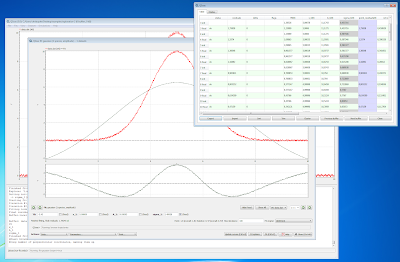
After almost two years of development, version 3.0 of QSoas is finally out ! It brings in a number of new features. An expert mode for fitting Undoubtedly the most important feature in the new version is a complete upgrade of the fit system, which now features an expert mode, turned on by using the /expert=true option with the fit commands. The expert mode features a command prompt that looks like the normal command prompt, in which it is possible: The latter feature is very important when running fits with many parameters. In that case, there are a number of local minima, and it is necessary to try a number of different starting parameters to really find the best parameters. The new parameter space exploration feature makes it much easier than before, with an interface that allows easily finding the best parameters tried so far and reuse them.
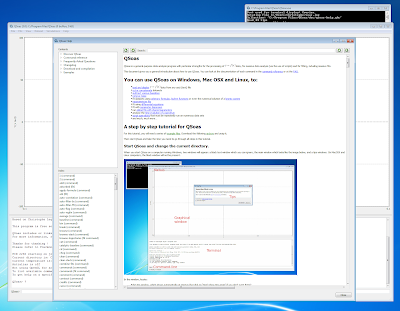
A new documentation system Another very important update is the inclusion of a new, offline, documentation system. The documentation features browsing via table of contents, a command index and text search. It also features the possibility to copy commands from the help to the command prompt, or even run them directly. To top it all, it comes with a series of startup tips that might teach you a thing or two about QSoas (try hitting Show random to learn new tricks !).
Many other features For the full list of changes, please see the changelog. Apart from the changes described above, these are my favorites:
To get the new version, you can just download the source code from the downloads page, where you can also purchase precompiled versions for Windows and MacOS. You can also clone the source from the GitHub repository. About QSoasQSoas is a powerful open source data analysis program that focuses on flexibility and powerful fitting capacities. It is released under the GNU General Public License. It is described in Fourmond, Anal. Chem., 2016, 88 (10), pp 5050 5052. Current version is 3.0. You can download its source code there (or clone from the GitHub repository) and compile it yourself, or buy precompiled versions for MacOS and Windows there.

22 June 2014

Simon Josefsson: OpenPGP Key Transition Statement

I have created a new OpenPGP key 54265e8c and will be transitioning away from my old key. If you have signed my old key, I would appreciate signatures on my new key as well. I have created a transition statement that can be downloaded from https://josefsson.org/key-transition-2014-06-22.txt. Below is the signed statement.
-----BEGIN PGP SIGNED MESSAGE-----
Hash: SHA512
OpenPGP Key Transition Statement for Simon Josefsson
I have created a new OpenPGP key and will be transitioning away from
my old key.  The old key has not been compromised and will continue to
be valid for some time, but I prefer all future correspondence to be
encrypted to the new key, and will be making signatures with the new
key going forward.
I would like this new key to be re-integrated into the web of trust.
This message is signed by both keys to certify the transition.  My new
and old keys are signed by each other.  If you have signed my old key,
I would appreciate signatures on my new key as well, provided that
your signing policy permits that without re-authenticating me.
The old key, which I am transitioning away from, is:
pub   1280R/B565716F 2002-05-05
      Key fingerprint = 0424 D4EE 81A0 E3D1 19C6  F835 EDA2 1E94 B565 716F
The new key, to which I am transitioning, is:
pub   3744R/54265E8C 2014-06-22
      Key fingerprint = 9AA9 BDB1 1BB1 B99A 2128  5A33 0664 A769 5426 5E8C
The entire key may be downloaded from: https://josefsson.org/54265e8c.txt
To fetch the full new key from a public key server using GnuPG, run:
  gpg --keyserver keys.gnupg.net --recv-key 54265e8c
If you already know my old key, you can now verify that the new key is
signed by the old one:
  gpg --check-sigs 54265e8c
If you are satisfied that you've got the right key, and the User IDs
match what you expect, I would appreciate it if you would sign my key:
  gpg --sign-key 54265e8c
You can upload your signatures to a public keyserver directly:
  gpg --keyserver keys.gnupg.net --send-key 54265e8c
Or email simon@josefsson.org (possibly encrypted) the output from:
  gpg --armor --export 54265e8c
If you'd like any further verification or have any questions about the
transition please contact me directly.
To verify the integrity of this statement:
  wget -q -O- https://josefsson.org/key-transition-2014-06-22.txt gpg --verify
/Simon
-----BEGIN PGP SIGNATURE-----
Version: GnuPG v1.4.12 (GNU/Linux)
iLwEAQEKAAYFAlOnV+AACgkQ7aIelLVlcW89XgUAljJgYfReyR9/bU+Om6UHUttt
CAOgSRqdcQSQ2hT69vzuhb/bc8CslIQcBtGqTgxDFsxEFhbm5zKn+tSzy5MHNHqt
MsqHcZjlYuYVhMXDhka+cfyhtd9zIxjVE5vk8v+GqEGoh8DGYq0vPy3VfvcSz5Z3
MSUpSj8gN00jlU1z4nad3maEq0ApvsLr8EsLZmtxF5TNFvzJ8mmwY+gHBGHjVYkB
8AQBAQoABgUCU6dX4AAKCRAGZKdpVCZejD1eDp46XGL2puMp0le2OF75WIUW8xqf
TMiZeB99ruk3P/jvuLnGPP2J5o7SIKE50FkMEss0yvxi6jBlHk+cJeKWGXVjBpxU
0QHq063NU+kjbMYwDfi5ZxXqaKeYODJm8Xmfh3d7lRaWF5rUOosR8nC/OROSrhg4
TjlAbvbxpQsls/JPbbporK2gbAtMlzJPD8zC8z/dT+t0qjlce8fADugblVW3bACC
Kl53X4XpojzNd/U19tSXkIBdNY/GVJqci+iruiJ1WGARF9ocnIXVuNXsfyt7UGq4
UiM/AeDVzI76v1QnE8WpsmSXzi2zXe3VahUPhOU2nPDoL53ggiVsTY3TwilvQLfX
Av/74PIaEtCi1g23YeojQlpdYzcWfnE+tUyTSNwPIBzyzHvFAHNg1Pg0KKUALsD9
P7EjrMuz63z2276EBKX8++9GnQQNCNfdHSuX4WGrBx2YgmOOqRdllMKz6pVMZdJO
V+gXbCMx0D5G7v50oB58Mb5NOgIoOnh3IQhJ7LkLwmcdG39yCdpU+92XbAW73elV
kmM8i0wsj5kDUU2ys32Gj2HnsVpbnh3Fvm9fjFJRbbQL/FxNAjzNcHe4cF3g8hTb
YVJJlzhmHGvd7HvXysJJaa0=
=ZaqY
-----END PGP SIGNATURE-----
flattr this!

18 May 2014

Benjamin Mako Hill: Installing GNU/Linux on a 2014 Lenovo Thinkpad X1 Carbon

I recently bought a new Lenovo X1 Carbon. It is the new second-generation, type 20A7 laptop, based on Intel s Haswell microarchiteture with the adaptive keyboard. It is the version released in 2014. I also ordered the Thinkpad OneLink Dock which I have returned for the OneLink Pro Dock which I have not yet received. The system is still very new, challenging, and different, but seems to support GNU/Linux reasonably well if you are willing to run a bleeding edge version and/or patch your kernel and if you are not afraid to spend an afternoon or two tweaking things. What follows are my installation notes for Debian testing (jessie) when I installed it in early May 2014. My general impressions about the laptop as a GNU/Linux system and overall are at the end of this write-up.
System Description The X1 Carbon I ordered included the 512GB SSD, the 14.0 inch WQHD (2560 1440) 260 nit touchscreen, and the maximum 8GB of memory. I believe the rest is not particularly negotiable but includes a 720p HD Camera, a 45.2Wh battery, and an Intel Dual Band Wireless 7260AC with Bluetooth 4.0. For those that are curious Here is the output of lspci on the system:
00:00.0 Host bridge: Intel Corporation Haswell-ULT DRAM Controller (rev 0b)
00:02.0 VGA compatible controller: Intel Corporation Haswell-ULT Integrated Graphics Controller (rev 0b)
00:03.0 Audio device: Intel Corporation Haswell-ULT HD Audio Controller (rev 0b)
00:14.0 USB controller: Intel Corporation Lynx Point-LP USB xHCI HC (rev 04)
00:16.0 Communication controller: Intel Corporation Lynx Point-LP HECI #0 (rev 04)
00:16.3 Serial controller: Intel Corporation Lynx Point-LP HECI KT (rev 04)
00:19.0 Ethernet controller: Intel Corporation Ethernet Connection I218-LM (rev 04)
00:1b.0 Audio device: Intel Corporation Lynx Point-LP HD Audio Controller (rev 04)
00:1c.0 PCI bridge: Intel Corporation Lynx Point-LP PCI Express Root Port 6 (rev e4)
00:1c.1 PCI bridge: Intel Corporation Lynx Point-LP PCI Express Root Port 3 (rev e4)
00:1d.0 USB controller: Intel Corporation Lynx Point-LP USB EHCI #1 (rev 04)
00:1f.0 ISA bridge: Intel Corporation Lynx Point-LP LPC Controller (rev 04)
00:1f.2 SATA controller: Intel Corporation Lynx Point-LP SATA Controller 1 [AHCI mode] (rev 04)
00:1f.3 SMBus: Intel Corporation Lynx Point-LP SMBus Controller (rev 04)
BIOS/Firmware The BIOS firmware is non-free and proprietary as it the case with all ThinkPads and nearly all laptops. According to this thread there is a bug in the default BIOS that means that suspend to RAM is broken in GNU/Linux. You can get updated BIOS at the Lenovo s ThinkPad X1 Carbon (Type 20A7, 20A8) Drivers and software page by looking in the the BIOS section. Honestly, the easiest approach is probably to download the Windows BIOS Update utility (documentation is here) which you can use to run the BIOS update from within Windows before you install GNU/Linux. If that s not an option (e.g., if you ve already installed GNU/Linux) the best method is to download the bootable CD ISO from the same page. Of course, since the X1 Carbon has no optical media, you have to find another way to boot the CD image. I struggled to get the ISO to boot from USB using the usually reliable dd method. This message suggest that the issue had to do with the El Torito wrapper:
I had to dump the eltorito image from the ISO they provide, after that I was able to dd the resulting image to a flash drive and the bios update went well, no cdrom needed.
I updated to version 1.13 of the BIOS which fixes the suspend/resume bug. By the time you read this, there may be newer versions that fix other things so check the Lenovo website.
Installing Debian I installed Debian testing using the March 19, 2014 Alpha 1 release of the Debian Installer for Jessie (currently testing). I installed in graphical mode. With the WQHD screen, everything was extremely tiny but it worked flawlessly. I downloaded the amd64 net install image from the normal place and installed the rest of the system using the built-in Ethernet port which required no firmware or extra drivers. I did the normal dd if=FILENAME.iso of=/dev/sdX method of getting the installer onto the a USB stick to boot. I turned off restricted boot in BIOS first. In general, the latest version of the Debian installation guide is always a good source of guidance on installing Debian. I used the Debian installer wizard to partition and selected Use entire disk and partition it for LVM and encrypted data which kept the UEFI partitions around. The system installed with no errors or issues and booted up normally afterward. The grub menu is hilariously narrow on the WQHD screen. If you want to use the built-in wireless and/or Bluetooth, you will need to install the non-free iwlwifi firmware package. It is very lame that we still have to do this to use hardware we have purchased.
What Works and Doesn t The following stuff works the first time I booted into the GNOME 3 desktop and logged in:
  • The WQHD 2560 1440 screen
  • The touchscreen
  • Both the TrackPoint and the touchpad
  • Built-in e1000e Ethernet using the dongle
  • The keyboard plus the adaptive row of F1-F12 keys.
  • External monitor using the full HDMI or mini-DisplayPort connectors
  • Audio (both speakers and microphone)
  • The camera/webcam
The following stuff works if you install non-free firmware:
  • Internal Wireless
  • Bluetooth 4.0
The following stuff works with qualifications:
  • Suspend to RAM Works once you have updated the firmware.
  • The adaptive keyboard The F1-F12 keys work but the button that theoretically lets you switch to different sets of function buttons (e.g., volume, brightness) does nothing.
  • Disabling the touchpad There is a BIOS option to disable the touchpad. It works in Windows and does nothing at all in GNU/Linux.
I have not tried:
  • The fingerprint reader
Disabling the touchpad As a long-term ThinkPad user, I love the TrackPoint pointing stick. If you plan on using this, the built-in touchpad is incredibly aggravating because it is very easy to brush against it while using the TrackPoint. In BIOS, there is an option to disable the touchpad. Although this works in Windows, it does absolutely nothing in GNU/Linux. Part of the issue is that, unlike the older X1 Carbon and other ThinkPads, there are no TrackPoint buttons. Instead of buttons, there are regions at the top of the touchpad which are configured, in software, to act like buttons. If you want to be able to click, the touchpad can never be truly turned off. This is not problem unique to the Haswell X1 Carbon and a number of people have been struggling with this issue on other Lenovo laptops. Essentially, what you need to do is configure your touchpad so that the buttons are where you want them and so that it ignores any input for the purposes of cursor movement. There are a few ways of doing this but this answer from an askubuntu.com question has the solution I ended up using:

Open file /usr/share/X11/xorg.conf.d/50-synaptics.conf for edit.

Find Section InputClass which the following line is Identifier Default clickpad buttons .

Edit option for SoftButtonAreas to values 64% 0 1 42% 36% 64% 1 42%, this is size of the right and middle button.

Enable option AreaBottomEdge and change value to 1, this will disable touchpad movement.

If everything done right, your class should looks like:

Section "InputClass"
     Identifier "Default clickpad buttons"
     MatchDriver "synaptics"
     Option "SoftButtonAreas" "64% 0 1 42% 36% 64% 1 42%"
     Option "AreaBottomEdge" "1"
EndSection
Essentially, the first Option line will create a middle button that is 32% of the width and 42% of the height, and a right button that is 32% of the width and 42% of the height. The synaptics manpage (man synpatics) will give you more detail on the general way this works. Of course, something does feel very wrong about editing a file in /usr/share.
Fixing the Adaptive Keyboard The most wild feature of the laptop is the adaptive keyboard strip. The strip is a back-lit LCD that looks almost like E Ink screen and acts as a touchscreen keyboard. The default mode gives you the F1-F12 keys. If you press the keys (since they aren t buttons, you just put your finger on top of them) they act like normal F-keys. You can Ctrl-Alt-F1, etc., to switch to virtual terminals out of the box. There are four modes: Function (i.e., normal F-keys), Home, Web, and Chat. The last three overlap quite a bit (e.g., they all have brightness and volume). You can play with an example on the Lenovo homepage. In Windows, switching programs will apparently change these keys so that an appropriate set of buttons is shown for the application you are using. You can also change these keys manually with a big Fn button at the far left of the adaptive keyboard strip. As I write this this, released kernels do not support the adaptive keyboard Fn button which means you cannot use anything other than the F-keys out of the box. I believe it also means that resuming from suspend to RAM breaks these keys. That said, Shuduo Sang from Canonical has released several versions of a patch to to the thinkpad_acpi kernel module which adds support for the Home mode. The other modes (web and chat) do not seem to be supported. The latest version of the patch is on on the Linux Kernel Mailing List and the relevant commits are:
330947b save and restore adaptive keyboard mode for suspend and,resume
3a9d20b support Thinkpad X1 Carbon 2nd generation's adaptive keyboard
Although this is not supported in Debian testing at the time of writing, a bug was filed in Debian and quickly fixed by Ben Hutchings in Debian kernel version 3.14.2-1 which is currently in sid/unstable. As a result, if you install the latest version kernel from Debian unstable (3.14.2-1 or later), the adaptive keyboard just works. If you aren t using Debian and if kernel you are using does not have support, you might be patching your kernel.
General Impressions As I have described in my interview with The Setup, I have been a user of ThinkPad X-series laptops for many years. This is my sixth X-series ThinkPad. Overall, I quite like the hardware! Once things mature a little bit, I think that this will be a great laptop for running GNU/Linux. That said, I ordered the laptop without realizing that the X1 Carbon had gone through a major revision! The keyboard was quite a suprise. I think that changing a system so radically without changing the model name/number is a very bad move on Lenovo s part. There are two remaining issues with the system I m still struggling with: (1) the keyboard layout is freaky and weird, and (2) the super high resolution screen breaks many things. The quality of the keyboard itself is great and worthy of the ThinkPad name. That said, there are two ways in which it is strange. The first is the adaptive keyboard strip. Overall, it works surprisingly well and I think it is a clever idea. My sense is that the strip is more annoying in Windows because it changes out from under you all the time. In GNU/Linux, only manual changing of modes is supported. This, in my opinion, is a feature. I do miss the real feedback you get from pressing keys but for F-keys and volume-keys that I don t use often this isn t too important. On the downside, I have realized several times that I had been holding down a button for several seconds and not noticed. The more annoying issue with the keyboard is the way that the other keys have moved around. Getting rid of the CapsLock is wonderful! How has this taken so long? Replacing it with a split Home and End keys is nuts. I ve remapped the Home and End to put Control back where it should be. My right Control to now Home but I still don t have an End key. The split Backspace and Delete is not a problem for me. The tilde/apostrophe is in a very bad place. There is no Insert, Print Screen/SysRq, Scroll Lock, Pause/Break or NumLock. They are all just gone. Surprisingly, I haven t missed any of them. The second issue is the 2560 1440 resolution on the 14 inch screen. I use a 27 inch external monitor with the same native resolution laptop but, by my arithmetic, the pixel density on the laptop is 210 DPI instead 109 DPI on the external monitor. The result is the scaling problem and it s a huge pain that seems mostly unsolved on any operating system. Fonts and widgets that look good on the laptop look huge on my external monitor. Stuff that looks good on my external monitor looks minuscule on the laptop. I routinely move windows between my laptop screen and my large monitor. Until I find a display system that can handle this kind of scaling effectively, this requires changing font size and zooming all the time. At the moment, I m shrinking and expanding my font size using the built in hot keys in Emacs, Gnome Terminal, and Firefox/Iceweasel. I love the high resolution screen but the current situation is crazy-making. Finally, this setup will not get you into the Church of Emacs and it s not about to find its way onto the FSF s list of endorsed hardware. For one, I paid the Windows tax. Beyond that, there is the non-free BIOS and the need for non-free firmware to use the wireless and Bluetooth. This is standard for ThinkPads but it isn t getting any easier to swallow. There are alternatives in the form of Gluglug s X60 laptops running CoreBoot, Lemote Yeelong laptops, Bunnie Huang s Novena and others that are better in these regards. I am very excited for these projects but, for a number of reasons, these just weren t an option for the laptop I use for my research computing.
16 March 2014

Benjamin Mako Hill: Community Data Science Workshops in Seattle

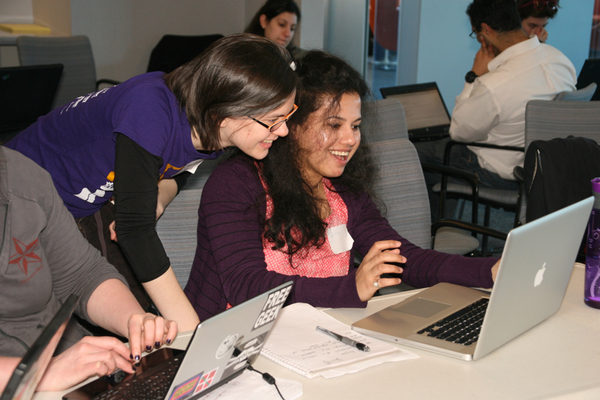
Photo from the Boston Python Workshop   a similar workshop run in Boston that has inspired and provided a template for the CDSW.

Photo from the Boston Python Workshop a similar workshop run in Boston that has inspired and provided a template for the CDSW.

On three Saturdays in April and May, I will be helping run three day-long project-based workshops at the University of Washington in Seattle. The workshops are for anyone interested in learning how to use programming and data science tools to ask and answer questions about online communities like Wikipedia, Twitter, free and open source software, and civic media. The workshops are for people with no previous programming experience and the goal is to bring together researchers as well as participants and leaders in online communities. The workshops will all be free of charge and open to the public given availability of space. Our goal is that, after the three workshops, participants will be able to use data to produce numbers, hypothesis tests, tables, and graphical visualizations to answer questions like: If you are interested in participating, fill out our registration form here. The deadline to register is Wednesday March 26th. We will let participants know if we have room for them by Saturday March 29th. Space is limited and will depend on how many mentors we can recruit for the sessions. If you already have experience with Python, please consider helping out at the sessions as a mentor. Being a mentor will involve working with participants and talking them through the challenges they encounter in programming. No special preparation is required. If you re interested, send me an email.

13 March 2013

Paul Tagliamonte: hilariously debuggable lisp: Hy

If anyone wants to check out some new Hy stuff, check out the REPL 3.0 at hy.pault.ag Also, check out the GitHub Repo, and star it, or consider contributing to it. Hang tight, this is technical Hopefully you re a rockn Pythonista already. If not, hang on! Right, so, here s the Hython we re working with:
;;;; testing.hy
(import-from sunlight openstates)
(defn get-legislators [state]
  "Get some Legislators from a state"
  (kwapply (.legislators openstates)  "state" state ))
(defn print-legislator-count [state]
  "Print the Legislative count for a state"
  (print (len (get-legislators state))))
And a Python script to run it:
#!/usr/bin/env python
import hy
import testing
# import pdb; pdb.set_trace()
testing.print_legislator_count("ma")
Which outputs (correctly): 198. Now, let s try and debug this sucker: I added import pdb; pdb.set_trace() to the top of the Pythonic script (after the imports), to drop into a pdb shell:
> /home/tag/tmp/invoke.py(8)()
-> testing.print_legislator_count("ma")
(Pdb) 
Here s where we are:
(Pdb) l
  3     import hy
  4     import testing
  5     
  6     import pdb; pdb.set_trace()
  7     
  8  ->  testing.print_legislator_count("ma")
[EOF]
OK. Let s step into it.
(Pdb) s
--Call--
> /home/tag/tmp/testing.hy(12)print_legislator_count()
-> (defn print-legislator-count [state]
Whoh! Right! We ve just invoked Lisp. Let s step through the Lisp code:
> /home/tag/tmp/testing.hy(14)print_legislator_count()
-> (print (len (get-legislators state))))
(Pdb) 
--Call--
> /home/tag/tmp/testing.hy(7)get_legislators()
-> (defn get-legislators [state]
(Pdb) 
> /home/tag/tmp/testing.hy(9)get_legislators()->[ (SNIP) ]
-> (kwapply (.legislators openstates)  "state" state ))
(Pdb) l
  4     (import-from sunlight openstates)
  5     
  6     
  7     (defn get-legislators [state]
  8       "Get some Legislators from a state"
  9  ->    (kwapply (.legislators openstates)  "state" state ))
 10     
 11     
 12     (defn print-legislator-count [state]
 13       "Print the Legislative count for a state"
 14       (print (len (get-legislators state))))
(Pdb) 
Rockn . This worked hilariously well.
-> (kwapply (.legislators openstates)  "state" state ))
(Pdb) state
'ma'
Whoh, right there. Look at that! Python s pdb has access to Hy s bits! Neat :)
(Pdb) openstates
(Pdb) s
And. just to prove it s actually Python :)
(Pdb) s
198
--Return--
> /home/tag/tmp/testing.hy(14)print_legislator_count()->None
-> (print (len (get-legislators state))))
(Pdb) s
--Return--
> /home/tag/tmp/invoke.py(8)()->None
-> testing.print_legislator_count("ma")
Whoo! From Python to Lisp and back! Now, for fun, here s some pudb action: And, now, some bpython voodoo: Hopefully this is the start of something wicked neat! :)

4 January 2013

David Welton: The Software Millionaire Next Door

I've been reading "The Millionaire Next Door" and have so far found it to be a pleasant book with a good message: don't waste your money on silly things and appearance (fancy suits, fancy cars, expensive boats, etc...), save what you do earn consistently and constantly, invest wisely, and so on. Wikipedia has a good summary:
http://en.wikipedia.org/wiki/The_Millionaire_Next_Door
One of the things I like about it is that it focuses on "ordinary" wealthy people, those with a million or more in the bank, but not the Warren Buffets or Bill Gates types that are extreme statistical outliers. There are plenty of people in the US who have done well by themselves by slowly but surely putting together enough money to be financially independent, without, however, being in the spotlight. As the book says, these are the kind of people who maybe own a local chain of businesses doing something fairly ordinary, but doing it well enough to succeed. They may very well not live in a fancy house, nor drive an expensive car, or otherwise outwardly draw much attention to themselves. The world of software does not revolve around "dressing for success" (you noticed?), but we do tend to focus on the "big winners". Gates, Jobs, Zuckerberg, Larry & Sergey, Larry Ellison, and so on are the stars of the show. Of course, the economics of software being what they are, instances of winner-take-all markets with one big fish and a lot of also-rans are not uncommon. However, that is not the only story, and I think it'd be interesting to know more about those in our industry who have accumulated significant wealth, yet are not the guys with more money than they could possibly ever spend on things that aren't, say, country-sized chunks of real-estate. I'm guessing they'd fall into these categories: It'd be very interesting to gather some actual data on this, although I'm not in a position to do so myself - I wouldn't even really know where to start. As I age, I think the third category has begun to seem appealing in many ways - I'm simply not cut out for the Big Company life, and I'm not interested in living in Silicon Valley and going "all in" on the latest startup - I already did that, and while it was fun and I don't regret it, it's not the kind of thing I'd want to do now that I'm married and have kids. Incidentally, this more relaxed, under the radar approach is exactly what is expoused in one of my favorite books of the past few years, Start Small, Stay Small. Edit : I finished reading the book and reviewed it here: http://davids-book-reviews.blogspot.com/

18 August 2010

Martin Meredith: Mark Shuttleworth is driving me insane

With his announcement of the N-imal for Ubuntu 11.04 I m being driven slightly insane, as I now now have this song stuck in my head (and probably will do for weeks to come!)

19 March 2006

Clint Adams: This report is flawed, but it sure is fun

91D63469DFdnusinow1243
63DEB0EC31eloy
55A965818Fvela1243
4658510B5Amyon2143
399B7C328Dluk31-2
391880283Canibal2134
370FE53DD9opal4213
322B0920C0lool1342
29788A3F4Cjoeyh
270F932C9Cdoko
258768B1D2sjoerd
23F1BCDB73aurel3213-2
19E02FEF11jordens1243
18AB963370schizo1243
186E74A7D1jdassen(Ks)1243
1868FD549Ftbm3142
186783ED5Efpeters1--2
1791B0D3B7edd-213
16E07F1CF9rousseau321-
16248AEB73rene1243
158E635A5Erafl
14C0143D2Dbubulle4123
13D87C6781krooger(P)4213
13A436AD25jfs(P)
133D08B612msp
131E880A84fjp4213
130F7A8D01nobse
12F1968D1Bdecklin1234
12E7075A54mhatta
12D75F8533joss1342
12BF24424Csrivasta1342
12B8C1FA69sto
127F961564kobold
122A30D729pere4213
1216D970C6eric12--
115E0577F2mpitt
11307D56EDnoel3241
112BE16D01moray1342
10BC7D020Aformorer-1--
10A7D91602apollock4213
10A51A4FDDgcs
10917A225Ejordi
104B729625pvaneynd3123
10497A176Dloic
962F1A57Fpa3aba
954FD2A58glandium1342
94A5D72FErafael
913FEFC40fenio-1--
90AFC7476rra1243
890267086duck31-2
886A118E6ch321-
8801EA932joey1243
87F4E0E11waldi-123
8514B3E7Cflorian21--
841954920fs12--
82A385C57mckinstry21-3
825BFB848rleigh1243
7BC70A6FFpape1---
7B70E403Bari1243
78E2D213Ajochen(Ks)
785FEC17Fkilian
784FB46D6lwall1342
7800969EFsmimram-1--
779CC6586haas
75BFA90ECkohda
752B7487Esesse2341
729499F61sho1342
71E161AFBbarbier12--
6FC05DA69wildfire(P)
6EEB6B4C2avdyk-12-
6EDF008C5blade1243
6E25F2102mejo1342
6D1C41882adeodato(Ks)3142
6D0B433DFross12-3
6B0EBC777piman1233
69D309C3Brobert4213
6882A6C4Bkov
66BBA3C84zugschlus4213
65662C734mvo
6554FB4C6petere-1-2
637155778stratus
62D9ACC8Elars1243
62809E61Ajosem
62252FA1Afrank2143
61CF2D62Amicah
610FA4CD1cjwatson2143
5EE6DC66Ajaldhar2143
5EA59038Esgran4123
5E1EE3FB1md4312
5E0B8B2DEjaybonci
5C9A5B54Esesse(Ps,Gs) 2341
5C4CF8EC3twerner
5C2FEE5CDacid213-
5C09FD35Atille
5C03C56DFrfrancoise---1
5B7CDA2DCxam213-
5A20EBC50cavok4214
5808D0FD0don1342
5797EBFABenrico1243
55230514Asjackman
549A5F855otavio-123
53DC29B41pdm
529982E5Avorlon1243
52763483Bmkoch213-
521DB31C5smr2143
51BF8DE0Fstigge312-
512CADFA5csmall3214
50A0AC927lamont
4F2CF01A8bdale
4F095E5E4mnencia
4E9F2C747frankie
4E9ABFCD2devin2143
4E81E55C1dancer2143
4E38E7ACFhmh(Gs)1243
4E298966Djrv(P)
4DF5CE2B4huggie12-3
4DD982A75speedblue
4C671257Ddamog-1-2
4C4A3823Ekmr4213
4C0B10A5Bdexter
4C02440B8js1342
4BE9F70EAtb1342
4B7D2F063varenet-213
4A3F9E30Eschultmc1243
4A3D7B9BClawrencc2143
4A1EE761Cmadcoder21--
49DE1EEB1he3142
49D928C9Bguillem1---
49B726B71racke
490788E11jsogo2143
4864826C3gotom4321
47244970Bkroeckx2143
45B48FFAEmarga2143
454E672DEisaac1243
44B3A135Cerich1243
44597A593agmartin4213
43FCC2A90amaya1243
43F3E6426agx-1-2
43EF23CD6sanvila1342
432C9C8BDwerner(K)
4204DDF1Baquette
400D8CD16tolimar12--
3FEC23FB2bap34-1
3F972BE03tmancill4213
3F801A743nduboc1---
3EBEDB32Bchrsmrtn4123
3EA291785taggart2314
3E4D47EC1tv(P)
3E19F188Etroyh1244
3DF6807BEsrk4213
3D2A913A1psg(P)
3D097A261chrisb
3C6CEA0C9adconrad1243
3C20DF273ondrej
3B5444815ballombe1342
3B1DF9A57cate2143
3AFA44BDDweasel(Ps,Gs) 1342
3AA6541EEbrlink1442
3A824B93Fasac3144
3A71C1E00turbo
3A2D7D292seb128
39ED101BFmbanck3132
3969457F0joostvb2143
389BF7E2Bkobras1--2
386946D69mooch12-3
374886B63nathans
36F222F1Fedelhard
36D67F790foka
360B6B958geiger
3607559E6mako
35C33C1B8dirson
35921B5D8ajmitch
34C1A5BE5sjq
3431B38BApxt312-
33E7B4B73lmamane2143
327572C47ucko1342
320021490schepler1342
31DEB8EAEgoedson
31BF2305Akrala(Gs)3142
319A42D19dannf21-4
3174FEE35wookey3124
3124B26F3mfurr21-3
30A327652tschmidt312-
3090DD8D5ingo3123
30813569Fjeroen1141
30644FAB7bas1332
30123F2F2gareuselesinge1243
300530C24bam1234
2FD6645ABrmurray-1-2
2F95C2F6Dchrism(P)
2F9138496graham(Gs)3142
2F5D65169jblache1332
2F28CD102absurd
2F2597E04samu
2F0B27113patrick
2EFA6B9D5hamish(P)3142
2EE0A35C7risko4213
2E91CD250daigo
2D688E0A7qjb-21-
2D4BE1450prudhomm
2D2A6B810joussen
2CFD42F26dilinger
2CEE44978dburrows1243
2CD4C0D9Dskx4213
2BFB880A3zeevon
2BD8B050Droland3214
2B74952A9alee
2B4D6DE13paul
2B345BDD3neilm1243
2B28C5995bod4213
2B0FA4F49schoepf
2B0DDAF42awoodland
2A8061F32osamu4213
2A21AD4F9tviehmann1342
299E81DA0kaplan
2964199E2fabbe3142
28DBFEC2Fpelle
28B8D7663ametzler1342
28B143975martignlo
288C7C1F793sam2134
283E5110Fovek
2817A996Atfheen
2807CAC25abi4123
2798DD95Cpiefel
278D621B4uwe-1--
26FF0ABF2rcw2143
26E8169D2hertzog3124
26C0084FCchrisvdb
26B79D401filippo-1--
267756F5Dfrn2341
25E2EB5B4nveber123-
25C6153ADbroonie1243
25B713DF0djpig1243
250ECFB98ccontavalli(Gs)
250064181paulvt
24F71955Adajobe21-3
24E2ECA5Ajmm4213
2496A1827srittau
23E8DCCC0maxx1342
23D97C149mstone(P)2143
22DB65596dz321-
229F19BD1meskes
21F41B907marillat1---
21EB2DE66boll
21557BC10kraai1342
2144843F5lolando1243
210656584voc
20D7CA701steinm
205410E97horms
1FC992520tpo-14-
1FB0DFE9Bgildor
1FAEEB4A9neil1342
1F7E8BC63cedric21--
1F2C423BCzack1332
1F0199162kreckel4214
1ECA94FA8ishikawa2143
1EAAC62DFcyb---1
1EA2D2C41malattia-312
1E77AC835bcwhite(P)
1E66C9BB0tach
1E145F334mquinson2143
1E0BA04C1treinen321-
1DFE80FB2tali
1DE054F69azekulic(P)
1DC814B09jfs
1CB467E27kalfa
1C9132DDByoush-21-
1C87FFC2Fstevenk-1--
1C2CE8099knok321-
1BED37FD2henning(Ks)1342
1BA0A7EB5treacy(P)
1B7D86E0Fcmb4213
1B62849B3smarenka2143
1B3C281F4alain2143
1B25A5CF1omote
1ABA0E8B2sasa
1AB474598baruch2143
1AB2A91F5troup1--2
1A827CEDEafayolle(Gs)
1A6C805B9zorglub2134
1A674A359maehara
1A57D8BF7drew2143
1A269D927sharky
1A1696D2Blfousse1232
19BF42B07zinoviev--12
19057B5D3vanicat2143
18E950E00mechanix
18BB527AFgwolf1132
18A1D9A1Fjgoerzen
18807529Bultrotter2134
1872EB4E5rcardenes
185EE3E0Eangdraug12-3
1835EB2FFbossekr
180C83E8Eigloo1243
17B8357E5andreas212-
17B80220Dsjr(Gs)1342
17796A60Bsfllaw1342
175CB1AD2toni1---
1746C51F4klindsay
172D03CB1kmuto4231
171473F66ttroxell13-4
16E76D81Dseanius1243
16C63746Dhector
16C5F196Bmalex4213
16A9F3C38rkrishnan
168021CE4ron---1
166F24521pyro-123
1631B4819anfra
162EEAD8Bfalk1342
161326D40jamessan13-4
1609CD2C0berin--1-
15D8CDA7Bguus1243
15D8C12EArganesan
15D64F870zobel
159EF5DBCbs
157F045DCcamm
1564EE4B6hazelsct
15623FC45moronito4213
1551BE447torsten
154AD21B5warmenhoven
153BBA490sjg
1532005DAseamus
150973B91pjb2143
14F83C751kmccarty12-3
14DB97694khkim
14CD6E3D2wjl4213
14A8854E6weinholt1243
14950EAA6ajkessel
14298C761robertc(Ks)
142955682kamop
13FD29468bengen-213
13FD25C84roktas3142
13B047084madhack
139CCF0C7tagoh3142
139A8CCE2eugen31-2
138015E7Ethb1234
136B861C1bab2143
133FC40A4mennucc13214
12C0FCD1Awdg4312
12B05B73Arjs
1258D8781grisu31-2
1206C5AFDchewie-1-1
1200D1596joy2143
11C74E0B7alfs
119D03486francois4123
118EA3457rvr
1176015EDevo
116BD77C6alfie
112AA1DB8jh
1128287E8daf
109FC015Cgodisch
106468DEBfog--12
105792F34rla-21-
1028AF63Cforcer3142
1004DA6B4bg66
0.zufus-1--
0.zoso-123
0.ykomatsu-123
0.xtifr1243
0.xavier-312
0.wouter2143
0.will-132
0.warp1342
0.voss1342
0.vlm2314
0.vleeuwen4312
0.vince2134
0.ukai4123
0.tytso-12-
0.tjrc14213
0.tats-1-2
0.tao1--2
0.stone2134
0.stevegr1243
0.smig-1-2
0.siggi1-44
0.shaul4213
0.sharpone1243
0.sfrost1342
0.seb-21-
0.salve4213
0.ruoso1243
0.rover--12
0.rmayr-213
0.riku4123
0.rdonald12-3
0.radu-1--
0.pzn112-
0.pronovic1243
0.profeta321-
0.portnoy12-3
0.porridge1342
0.pmhahn4123
0.pmachard1--2
0.pkern3124
0.pik1--2
0.phil4213
0.pfrauenf4213
0.pfaffben2143
0.p21243
0.ossk1243
0.oohara1234
0.ohura-213
0.nwp1342
0.noshiro4312
0.noodles2134
0.nomeata2143
0.noahm3124
0.nils3132
0.nico-213
0.ms3124
0.mpalmer2143
0.moth3241
0.mlang2134
0.mjr1342
0.mjg591342
0.merker2--1
0.mbuck2143
0.mbrubeck1243
0.madduck4123
0.mace-1-2
0.luther1243
0.luigi4213
0.lss-112
0.lightsey1--2
0.ley-1-2
0.ldrolez--1-
0.lange4124
0.kirk1342
0.killer1243
0.kelbert-214
0.juanma2134
0.jtarrio1342
0.jonas4312
0.joerg1342
0.jmintha-21-
0.jimmy1243
0.jerome21--
0.jaqque1342
0.jaq4123
0.jamuraa4123
0.iwj1243
0.ivan2341
0.hsteoh3142
0.hilliard4123
0.helen1243
0.hecker3142
0.hartmans1342
0.guterm312-
0.gniibe4213
0.glaweh4213
0.gemorin4213
0.gaudenz3142
0.fw2134
0.fmw12-3
0.evan1--2
0.ender4213
0.elonen4123
0.eevans13-4
0.ean-1--
0.dwhedon4213
0.duncf2133
0.ds1342
0.dparsons1342
0.dlehn1243
0.dfrey-123
0.deek1--2
0.davidw4132
0.davidc1342
0.dave4113
0.daenzer1243
0.cupis1---
0.cts-213
0.cph4312
0.cmc2143
0.clebars2143
0.chaton-21-
0.cgb-12-
0.calvin-1-2
0.branden1342
0.brad4213
0.bnelson1342
0.blarson1342
0.benj3132
0.bayle-213
0.baran1342
0.az2134
0.awm3124
0.atterer4132
0.andressh1---
0.amu1--2
0.akumria-312
0.ajt1144
0.ajk1342
0.agi2143
0.adric2143
0.adejong1243
0.adamm12--
0.aba1143