I very, very nearly didn t make it to DebConf this year, I had a bad cold/flu for a few days before I left, and after a negative covid-19 test just minutes before my flight, I decided to take the plunge and travel.
This is just everything in chronological order, more or less, it s the only way I could write it.
DebCamp
I planned to spend DebCamp working on various issues. Very few of them actually got done, I spent the first few days in bed further recovering, took a covid-19 test when I arrived and after I felt better, and both were negative, so not sure what exactly was wrong with me, but between that and catching up with other Debian duties, I couldn t make any progress on catching up on the packaging work I wanted to do. I ll still post what I intended here, I ll try to take a few days to focus on these some time next month:
Calamares / Debian Live stuff:
#980209 installation fails at the install boot loader phase
#1021156 calamares-settings-debian: Confusing/generic program names
#681025 Put old themes in a new package named desktop-base-extra
#941642 desktop-base: split theme data files and desktop integrations in separate packages
The Egg theme that I want to develop for testing/unstable is based on Juliette Taka s Homeworld theme that was used for Bullseye. Egg, as in, something that hasn t quite hatched yet. Get it? (for #1038660)
Debian Social:
Set up Lemmy instance
I started setting up a Lemmy instance before DebCamp, and meant to finish it.
Migrate PeerTube to new server
We got a new physical server for our PeerTube instance, we should have more space for growth and it would help us fix the streaming feature on our platform.
Loopy:
I intended to get the loop for DebConf in good shape before I left, so that we can spend some time during DebCamp making some really nice content, unfortunately this went very tumbly, but at least we ended up with a loopy that kind of worked and wasn t too horrible. There s always another DebConf to try again, right?
So DebCamp as a usual DebCamp was pretty much a wash (fitting with all the rain we had?) for me, at least it gave me enough time to recover a bit for DebConf proper, and I had enough time left to catch up on some critical DPL duties and put together a few slides for the Bits from the DPL talk.
DebConf
Bits From the DPL
I had very, very little available time to prepare something for Bits fro the DPL, but I managed to put some slides together (available on my wiki page).
I mostly covered:
A very quick introduction of myself (I ve done this so many times, it feels redundant giving my history every time), and some introduction on what it is that the DPL does. I declared my intent not to run for DPL again, and the reasoning behind it, and a few bits of information for people who may intend to stand for DPL next year.
The sentiment out there for the Debian 12 release (which has been very positive). How we include firmware by default now, and that we re saying goodbye to architectures both GNU/KFreeBSD and mipsel.
Debian Day and the 30th birthday party celebrations from local groups all over the world (and a reminder about the Local Groups BoF later in the week).
I looked forward to Debian 13 (trixie!), and how we re gaining riscv64 as a release architecture, as well as loongarch64, and that plans seem to be forming to fix 2k38 in Debian, and hopefully largely by the time the Trixie release comes by.
I made some comments about Enterprise Linux as people refer to the RHEL eco-system these days, how really bizarre some aspects of it is (like the kernel maintenance), and that some big vendors are choosing to support systems outside of that eco-system now (like CPanel now supporting Ubuntu too). I closed with the quote below from Ian Murdock, and assured the audience that if they want to go out and make money with Debian, they are more than welcome too.
Job Fair
I walked through the hallway where the Job Fair was hosted, and enjoyed all the buzz. It s not always easy to get this right, but this year it was very active and energetic, I hope lots of people made some connections!
Cheese & Wine
Due to state laws and alcohol licenses, we couldn t consume alcohol from outside the state of Kerala in the common areas of the hotel (only in private rooms), so this wasn t quite as big or as fun as our usual C&W parties since we couldn t share as much from our individual countries and cultures, but we always knew that this was going to be the case for this DebConf, and it still ended up being alright.
Day Trip
I opted for the forest / waterfalls daytrip. It was really, really long with lots of time in the bus. I think our trip s organiser underestimated how long it would take between the points on the route (all in all it wasn t that far, but on a bus on a winding mountain road, it takes long). We left at 8:00 and only found our way back to the hotel around 23:30. Even though we arrived tired and hungry, we saw some beautiful scenery, animals and also met indigenous river people who talked about their struggles against being driven out of their place of living multiple times as government invests in new developments like dams and hydro power.
Photos available in the DebConf23 public git repository.
Losing a beloved Debian Developer during DebConf
To our collective devastation, not everyone made it back from their day trips. Abraham Raji was out to the kayak day trip, and while swimming, got caught by a whirlpool from a drainage system.
Even though all of us were properly exhausted and shocked in disbelief at this point, we had to stay up and make some tough decisions. Some initially felt that we had to cancel the rest of DebConf. We also had to figure out how to announce what happened asap both to the larger project and at DebConf in an official manner, while ensuring that due diligence took place and that the family is informed by the police first before making anything public.
We ended up cancelling all the talks for the following day, with an address from the DPL in the morning to explain what had happened. Of all the things I ve ever had to do as DPL, this was by far the hardest. The day after that, talks were also cancelled for the morning so that we could attend his funeral. Dozens of DebConf attendees headed out by bus to go pay their final respects, many wearing the t-shirts that Abraham had designed for DebConf.
A book of condolences was set up so that everyone who wished to could write a message on how they remembered him. The book will be kept by his family.
Today marks a week since his funeral, and I still feel very raw about it. And even though there was uncertainty whether DebConf should even continue after his death, in hindsight I m glad that everyone pushed forward. While we were all heart broken, it was also heart warming to see people care for each other in all of this. If anything, I think I needed more time at DebConf just to be in that warm aura of emotional support for just a bit longer. There are many people who I wanted to talk to who I barely even had a chance to see.
Abraham, or Abru as he was called by some people (which I like because bru in Afrikaans is like bro in English, not sure if that s what it implied locally too) enjoyed artistic pursuits, but he was also passionate about knowledge transfer. He ran classes at DebConf both last year and this year (and I think at other local events too) where he taught people packaging via a quick course that he put together. His enthusiasm for Debian was contagious, a few of the people who he was mentoring came up to me and told me that they were going to see it through and become a DD in honor of him. I can t even remember how I reacted to that, my brain was already so worn out and stitching that together with the tragedy of what happened while at DebConf was just too much for me.
I first met him in person last year in Kosovo, I already knew who he was, so I think we interacted during the online events the year before. He was just one of those people who showed so much promise, and I was curious to see what he d achieve in the future. Unfortunately, we was taken away from us too soon.
Poetry Evening
Later in the week we had the poetry evening. This was the first time I had the courage to recite something. I read Ithaka by C.P. Cavafy (translated by Edmund Keely). The first time I heard about this poem was in an interview with Julian Assange s wife, where she mentioned that he really loves this poem, and it caught my attention because I really like the Weezer song Return to Ithaka and always wondered what it was about, so needless to say, that was another rabbit hole at some point.
Group Photo
Our DebConf photographer organised another group photo for this event, links to high-res versions available on Aigar s website.
BoFs
I didn t attend nearly as many talks this DebConf as I would ve liked (fortunately I can catch up on video, should be released soon), but I did make it to a few BoFs.
In the Local Groups BoF, representatives from various local teams were present who introduced themselves and explained what they were doing. From memory (sorry if I left someone out), we had people from Belgium, Brazil, Taiwan and South Africa. We talked about types of events a local group could do (BSPs, Mini DC, sprints, Debian Day, etc. How to help local groups get started, booth kits for conferences, and setting up some form of calendar that lists important Debian events in a way that makes it easier for people to plan and co-ordinate. There s a mailing list for co-ordination of local groups, and the irc channel is #debian-localgroups on oftc.
If you got one of these Cheese & Wine bags from DebConf, that s from the South African local group!
In the Debian.net BoF, we discussed the Debian.net hosting service, where Debian pays for VMs hosted for projects by individual DDs on Debian.net. The idea is that we start some form of census that monitors the services, whether they re still in use, whether the system is up to date, whether someone still cares for it, etc. We had some discussion about where the lines of responsibility are drawn, and we can probably make things a little bit more clear in the documentation. We also want to offer more in terms of backups and monitoring (currently DDs do get 500GB from rsync.net that could be used for backups of their services though). The intention is also to deploy some form of configuration management for some essentials across the hosts. We should also look at getting some sponsored hosting for this.
In the Debian Social BoF, we discussed some services that need work / expansion. In particular, Matrix keeps growing at an increased rate as more users use it and more channels are bridged, so it will likely move to its own host with big disks soon. We might replace Pleroma with a fork called Akkoma, this will need some more home work and checking whether it s even feasible. Some services haven t really been used (like Writefreely and Plume), and it might be time to retire them. We might just have to help one or two users migrate some of their posts away if we do retire them. Mjolner seems to do a fine job at spam blocking, we haven t had any notable incidents yet. WordPress now has improved fediverse support, it s unclear whether it works on a multi-site instance yet, I ll test it at some point soon and report back. For upcoming services, we are implementing Lemmy and probably also Mobilizon. A request was made that we also look into Loomio.
More Information Overload
There s so much that happens at DebConf, it s tough to take it all in, and also, to find time to write about all of it, but I ll mention a few more things that are certainly worth of note.
During DebConf, we had some people from the Kite Linux team over. KITE supplies the ICT needs for the primary and secondary schools in the province of Kerala, where they all use Linux. They decided to switch all of these to Debian. There was an ad-hoc BoF where locals were listening and fielding questions that the Kite Linux team had. It was great seeing all the energy and enthusiasm behind this effort, I hope someone will properly blog about this!
I learned about the VGLUG Foundation, who are doing a tremendous job at promoting GNU/Linux in the country. They are also training up 50 people a year to be able to provide tech support for Debian.
I came across the booth for Mostly Harmless, they liberate old hardware by installing free firmware on there. It was nice seeing all the devices out there that could be liberated, and how it can breathe new life into old harware.
Some hopefully harmless soldering.
Overall, the community and their activities in India are very impressive, and I wish I had more time to get to know everyone better.
Food
Oh yes, one more thing. The food was great. I tasted more different kinds of curry than I ever did in my whole life up to this point. The lunch on banana leaves was interesting, and also learning how to eat this food properly by hand (thanks to the locals who insisted on teaching me!), it was a fruitful experience? This might catch on at home too less dishes to take care of!
Special thanks to the DebConf23 Team
I think this may have been one of the toughest DebConfs to organise yet, and I don t think many people outside of the DebConf team knows about all the challenges and adversity this team has faced in organising it. Even just getting to the previous DebConf in Kosovo was a long and tedious and somewhat risky process. Through it all, they were absolute pro s. Not once did I see them get angry or yell at each other, whenever a problem came up, they just dealt with it. They did a really stellar job and I did make a point of telling them on the last day that everyone appreciated all the work that they did.
Back to my nest
I bought Dax a ball back from India, he seems to have forgiven me for not taking him along.
I ll probably take a few days soon to focus a bit on my bugs and catch up on my original DebCamp goals. If you made it this far, thanks for reading! And thanks to everyone for being such fantastic people.
Github recently announced Copilot, a machine learning system that makes suggestions for you when you're writing code. It's apparently trained on all public code hosted on Github, which means there's a lot of free software in its training set. Github assert that the output of Copilot belongs to the user, although they admit that it may occasionally produce output that is identical to content from the training set.
Unsurprisingly, this has led to a number of questions along the lines of "If Copilot embeds code that is identical to GPLed training data, is my code now GPLed?". This is extremely understandable, but the underlying issue is actually more general than that. Even code under permissive licenses like BSD requires retention of copyright notices and disclaimers, and failing to include them is just as much a copyright violation as incorporating GPLed code into a work and not abiding by the terms of the GPL is.
But free software licenses only have power to the extent that copyright permits them to. If your code isn't a derived work of GPLed material, you have no obligation to follow the terms of the GPL. Github clearly believe that Copilot's output doesn't count as a derived work as far as US copyright law goes, and as a result the licenses on the training data don't apply to the output. Some people have interpreted this as an attack on free software - Copilot may insert code that's either identical or extremely similar to GPLed code, and claim that there are no license obligations created as a result, effectively allowing the laundering of GPLed code into proprietary software.
I'm completely unqualified to hold a strong opinion on whether Github's legal position is justifiable or not, and right now I'm also not interested in thinking about it too much. What I think is more interesting is what the impact of either position has on free software. Do we benefit more from a future where the output of Copilot (or similar projects) is considered a derived work of the training data, or one where it isn't? Having been involved in a bunch of GPL enforcement activities, it's very easy to think of this as something that weakens the GPL and, as a result, weakens free software. That was my initial reaction, but that's shifted over the past few days.
Let's look at the GNU manifesto, specifically this section:
The fact that the easiest way to copy a program is from one neighbor to another, the fact that a program has both source code and object code which are distinct, and the fact that a program is used rather than read and enjoyed, combine to create a situation in which a person who enforces a copyright is harming society as a whole both materially and spiritually; in which a person should not do so regardless of whether the law enables him to.
The GPL makes use of copyright law to ensure that GPLed work can't be taken from the commons. Anyone who produces a derived work of GPLed code is obliged to provide that work under the same terms. If software weren't copyrightable, the GPL would have no power. But this is the outcome Stallman wanted! The GPL doesn't exist because copyright is good, it exists because software being copyrightable is what enables the concept of proprietary software in the first place.
The powers that the GPL uses to enforce sharing of code are used by the authors of proprietary software to reduce that sharing. They attempt to forbid us from examining their code to determine how it works - they argue that anyone who does so is tainted, unable to contribute similar code to free software projects in case they produce a derived work of the original. Broadly speaking, the further the definition of a derived work reaches, the greater the power of proprietary software authors. If Oracle's argument that APIs are copyrightable had prevailed, it would have been disastrous for free software. If the Apple look and feel suit had established that Microsoft infringed Apple's copyright, we might be living in a future where we had no free software desktop environments.
When we argue for an interpretation of copyright law that enhances the power of the GPL, we're also enhancing the power of giant corporations with a lot of lawyers on hand. So let's look at this another way. If Github's interpretation of copyright law holds, we can train a model on proprietary code and extract concepts without having to worry about being tainted. The proprietary code itself won't enter the commons, but the ideas it embodies will. No more worries about whether you're literally copying the code that implements an algorithm you want to duplicate - simply start typing and let the model remove the risk for you.
There's a reasonable counter argument about equality here. How much GPL-influenced code is going to end up in proprietary projects when compared to the reverse? It's not an easy question to answer, but we should bear in mind that the majority of public repositories on Github aren't under an open source license. Copilot is already claiming to give us access to the concepts embodied in those repositories. Do these provide more value than is given up? I honestly don't know how to measure that. But what I do know is that free software was founded in a belief that software shouldn't be constrained by copyright, and our default stance shouldn't be to argue against the idea that copyright is weaker than we imagined.
(Edit: this post by Julia Reda makes some of the same arguments, but spends some more time focusing on a legal analysis of why having copyright cover the output of Copilot would be a problem)
C Thi Nguyen wrote an interesting article about the difficulty of escaping from Echo Chambers and also mentions Epistemic Bubbles [1].
An Echo Chamber is a group of people who reinforce the same ideas and who often preemptively strike against opposing ideas (for example the right wing denigrating mainstream media to prevent their followers from straying from their approved message). An Epistemic Bubble is a group of people who just happen to not have contact with certain different ideas.
When reading that article I wondered about what bubbles I and the people I associate with may be in. One obvious issue is that I have little communication with people who don t write in English and also little communication with people who are poor. So people who are poor and who can t write in English (which means significant portions of the population of India and Africa) are out of communication range for me. There are many situations that are claimed to be bubbles such as white people who are claimed to be innocent of racial issues because they only associate with other white people and men in the IT industry who are claimed to be innocent of sexism because they don t associate with women in the IT industry. But I think they are more of an echo chamber issue, if a white American doesn t access any of the variety of English language media produced by Afro Americans and realise that there s a racial problem it s because they don t want to see it and deliberately avoid looking at evidence. If a man in the IT industry doesn t access any of the media produced by women in tech and realise there are problems with sexism then it s because they don t want to see it.
When is it OK to Reject a Group?
The Ad Hominem Wikipedia page has a good analysis of different types of Ad Hominem arguments [2]. But the criteria for refuting a point in a debate are very different to the criteria used to determine which sources you should trust when learning about a topic.
For example it s theoretically possible for someone to be good at computer science while also thinking the world is flat. In a debate about some aspect of computer programming it would be a fallacious Ad Hominem argument to say you think the Earth is flat therefore you can t program a computer . But if you do a Google search for information on computer programming and one of the results is from earthisflat.com then it would probably save time to skip reading that one. If only one person supports an idea then it s quite likely to be wrong. Good ideas tend to be supported by multiple people and for any good idea you will find a supporter who doesn t appear to have any ideas that are obviously wrong.
One of the problems we have as a society now is determining the quality of data (ideas, claims about facts, opinions, communication/spam, etc). When humans have to do that it takes time and energy. Shortcuts can make things easier. Some shortcuts I use are that mainstream media articles are usually more reliable than social media posts (even posts by my friends) and that certain media outlets are untrustworthy (like Breitbart). The next step is that anyone who cites a bad site like Breitbart as factual (rather than just an indication of what some extremists believe) is unreliable. For most questions that you might search for on the Internet there is a virtually endless supply of answers, the challenge is not finding an answer but finding a correct answer. So eliminating answers that are unlikely to be correct is an important part of the search.
If someone is citing references to support their argument and they can only cite fringe or extremist sites then I won t be convinced. Now someone could turn that argument around and claim that a site I reference such as the New York Times is wrong. If I find that my ideas were based on a claim that can only be found on the NYT then I will reconsider the issue. While I think that the NYT is generally accurate they are capable of making mistakes and if they are the sole source for claims that go against other claims then I will be hesitant to accept such claims. Newspapers often have exclusive articles based on their own research, but such articles always inspire investigation from other newspapers so other articles appear either supporting or questioning the claims in the exclusive.
Saving Time When Interacting With Members of Echo Chambers
Convincing a member of a cult or echo chamber of anything is not likely. When in discussions with them the focus should be on the audience and on avoiding wasting much time while also not giving them the impression that you agree with them.
A common thing that members of echo chambers say is I don t have time to read about that when you ask if they have read a research paper or a news article. I don t have time to listen to people who can t or won t learn before speaking, there just isn t any value in that. Also if someone has a list of memes that takes more than 15 minutes to recite then they have obviously got time for reading things, just not reading outside their echo chamber.
Conversations with members of echo chambers seem to be state free. They make a claim and you reject it, but regardless of the logical flaws you point out or the counter evidence you cite they make the same claim again the next time you speak to them. This seems to be evidence supporting the claim that evangelism is not about converting other people but alienating cult members from the wider society [3] (the original Quora text seems unavailable so I ve linked to a Reddit copy). Pointing out that they had made a claim previously and didn t address the issues you had with it seems effective, such discussions seem to be more about performance so you want to perform your part quickly and efficiently.
Be aware of false claims about etiquette. It s generally regarded as polite not to disagree much with someone who invites you to your home or who has done some favour for you, but that is no reason for tolerating an unwanted lecture about their echo chamber. Anyone who tries to create a situation where it seems rude of you not to listen to them saying things that they know will offend you is being rude, much ruder than telling them you are sick of it.
Look for specific claims that can be disproven easily. The claim that the Roman Salute is different from the Hitler Salute is one example that is easy to disprove. Then they have to deal with the issue of their echo chamber being wrong about something.
A masterpiece by Yukio Mishima Patriotism the story of love and dead. A short story about the double suicide of a Lieutenant and his wife following the Ni Ni Roku Incident where some parts of the military tried to overthrow government and military leaders. Although Lieutenant Takeyama wasn t involved into the coup, because his friends wanted to safeguard him and his new wife, he found himself facing a fight and execution of his friends. Not being able to cope with this situation he commits suicide, followed by his wife.
Written in 1960 by one of the most interesting writers of Japanese modern history, Yukio Mishima, this book and the movie made by Mishima himself, are very disturbing images of the relation between human and state.
Although the English title says Patriotism, the Japanese one is (Yukoku) which is closer to Concern for one s own country. This concern, and the feeling of devotion to the Imperial system and the country that leads the two into their deed. We are guided through the whole book and movie by a large scroll with (shisei, devotion) written on it.
But indeed, Patriotism is a good title I think one of the most dangerous concepts mankind has brought forth. If Patriotism would be only the love for one s own country, all would be fine. But reality shows that patriotism unfailingly brings along xenophobia and the feeling of superiority.
For someone coming from a small and unimportant country, I never had even the slightest allure to be patriotic in the bad sense. And looking at the world and people around me, I often have the feeling that mainly big countries produce the biggest and worst style of patriotism. This is obvious in countries like China, but having recently learned that all US pupils have to recite (obviously without understanding) the Pledge of Allegiance, the shock of how bad patriotism can start washing the brains of even the smallest kids in a seemingly free country is still present.
But back to the book: Here the patriotism is exhibited by the presence of the Imperial images and shrine in the entrance, in front of which the two pray the last time before executing themselves.
Not only the book is a masterpiece by itself, also the movie is a special piece of art: Filmed in silent movie style with text inserts, the whole story takes place on a Noh stage. This is in particular interesting as Mishima was one of the few, if not the only, modern Noh play writer. He has written several Noh plays.
Another very impressive scene for me was when, after her husbands suicide, Reiko returns from putting up her final make-up into the central room. Her kimono is already blood soaked and the trailing kimono leaves traces on the Noh stage resembling the strokes of a calligraphy, as if her movement is guided, too, by .
The final scene of the movie shows the two of them in a Zen stone garden, forming the stone, the unreachable island of happiness.
Very impressive, both the book as well as the movie.
After my server that has hosted my blog for some years had given out its last breath (second motherboard failure), I decited it was time for a change. And not just server change, but also change in the blog engine itself. As I now focus on Python and Django almost exclusively at work, it felt logical to use some kind of Django-based blog or CMS. I tried django-cms and mezzanine and ... Mezzanine is so fast and simple, that I simply stopped looking.
After simply following the tutorial and creating a skeleton project, I had a ready-to go site with all the CMS features, incuding a blog. I just had to change a few settings to have the blog module be the home page of the site, change site settings for the title and Google Analytics settings and such and tweak the theme a bit to my liking.
This was my first real exposure to a Bootstrap design. I must say - it is very simple to understand and modify if your needs fit within its limits. For example, I wanted to remove the left sidebar and expand the main content block to fill that. All I had to do was to remove the div element with class "left-sidebar span-2" and change the class of the main content part from "span-7" to "span-9". To do that I simply copied the templates/base.html file from mezzanine default templates and modified it. The information from django-debug-toolbar showed me what files were used in rendering the page.
But the feature that really got me hooked was the Wordpress import. Using a simple management command I was able to feed into Mezzanine instance the XML export file from Wordpress. It created blog posts, categories, comments, static pages and even redirects from Wordpress permalinks to Mezzanine permalinks. It was not flawless - there were a few issues:
I had to set the COMMENT_MAX_LENGTH setting to something higher than the default 3000 chars to accomodate some longer comments
As I failed to clean up the comments before exporting, comments marked as spam in Wordpress still got into the XML and showed up in the new blog without being marked as spam there
Some comments (mostly spam) had a much longer user name than 50 char maximum. Even with a --noinput setting that should have truncated the names, the import errored-out as Django passed the long strings to the Postgress database which promptly refused to store too much data or to truncate it. I chose to work around that by increasing the column size in Postgress.
One of the posts did not have a set title, so the import took the whole first paragraph as the title and then failed to create a good slug from it. This caused the redirect creation to fail. I fixed this by editing the XML file and setting a title.
It looks like the slug creation for the redirect and the actual slug are slightly different. Some permalink redirects for posts with non-ascii symbols in the title failed to link up correctly
After that was done it was a relatively straightforward process of picking up the code and data and deploying it to a Django-friendly hosting service. There is a plenty of good competition out there, most now offer a simple one-click Django installation, so I just created a simple Django skeleton via their web interface and then replace what they generated with my app while keeping their settings as local_settings.py . I should probably write a bit more details about the process. After I create a custom fabric file for this.
It is quite a strange feeling to have a Mezzanine blog that responds faster from a shared server half a continent away, compared to a Wordpress on dedicated server in the same room
There are a few features that I am still missing - most notably draft post autosave. That has bitten me hard while writing this post :P Also a Twitter digest post feature. But on the bright side - that is a great motivation to write such features, preferably in a portable way that other people can use too :)
Giving away distromatch
at last year's Fosdem I tried to inject a
lot of energy into distromatch but shortly afterwards
I've had to urgently rewrite the nm.debian.org website.
After Lars WirzeniusGTDFH
talks in Bologna and
Varese I wrote a
tool which, among
other things, is able to scan my home dir and list how many projects I'm
working on.
The output was scary. Like, they are too many. Like, I couldn't even recite the
list out of memory. And since I couldn't do that, I had no idea there were so
many. And I kept being stressful because I couldn't manage to take care of them
all properly.
Now that I became conscious of the situation, it's time to deal with it like a
grown up, and politely back off from some of my irresponsible responsibilities.
Distromatch is one of them. It had just started as a proof of concept
prototype, and I had the vision that it could be the
basis for a fantastic culture of sharing and exchange of information across
distributions.
I need to distinguish the vision from the responsibility. I still have that
vision for distromatch, but I cannot take responsibility for making it happen.
So I am giving it up to anyone who has the time and resources to pick up that
responsibility.
Current status
It works well enough as a prototype. I believe it can successfully map a large
enough slice of packages, that one can prototype stuff based on it.
I have for example used it to export the Debtags
categories for other distros, and the resulting file looked big enough to be
used for prototyping category-based features on distributions that don't have
them yet.
I think it also works well enough to support a few common use cases, like
sharing screenshots, or doing most of the work of
converting dependency lists from a distro to another.
And finally, anyone can deploy it, and work on
it.
Existing data sources
Everything I index in the Debian distromatch deployment is available at
http://dde.debian.net/exports/distromatch/. The rpm-based data in there comes
from an export script I wrote that runs on Sophie,
but which I cannot maintain properly.
This is an experimental export of Fedora and OpenSUSE data:
http://tmp.vuntz.net/misc/distromatch/distromatch-opensuse-fedora.tar
All existing export scripts are found in distromatch git repo on
gitorious.
Contacts I gathered at Fosdem
At Fosdem I devoted quite some work to get contacts from all possible
distributions and software repositories, so that distromatch could be hooked
into them. Here is a dump of what I have collected:
Some of those contacts may have "expired" in the meantime: I wouldn't assume
all of them still remember talking with me, although most probably still do.
My commitment for the time being
I am happy to commit, at the moment, to maintaining a working data
export for Debian data. I can take
responsibility for making it so that the Debian data for it stays up to date,
and to fix it asap if it isn't the case.
I hope that now someone can take distromatch over from me, and make it grow to
achieve its great potential.
Friday, I wrote about the train trip Jacob and I were planning to take. Here s the story about it.
Friday night, Jacob was super excited. He was running around the house, talking about trains. I had him pack his own backpack with toys this time, which were you guessed it trains. Plus train track. His usual bedtime is around 7. He was still awake in his room at about 11, too excited to sleep.
The train was an hour late into Newton, so got up, got ready, and then went into Jacob s room at 3:15AM. I put my arm around him and said his name softly. No response. I said, just a little louder, Jacob, it s time to wake up to go to the train station. There was about a 2-second pause and then he sat bolt upright rubbing his eyes. A couple seconds later, in a very tired but clear voice, OK dad, let s go! That is, I believe, a record for waking up speed for Jacob.
We went downstairs, got coats, mittens, hats, etc. on, made sure we had the stuffed butterfly he always sleeps with, and went out the door.
As usual, Jacob chattered happily during the entire 15-minute drive to the Amtrak station. One of these days I need to remember to record it because it s unique. He described things to me ranging from the difference between freight and passenger trains, to what the dining car is all about, to tractors and how to ride them safely. Newton has some winter lights , and a few places still had Christmas lights, which were of course big hits.
We had to wait a few minutes at the Amtrak station, and Jacob hadn t shown any signs of slowing down yet. He wanted to look at every Amtrak poster, picture, logo, or sign in the building. This generally meant me holding him up high while he leaned over to touch it and make out a few words. Then, of course, he would pick out minute details about the trains, such as how many coach cars he thought they had, and we d visit about that for awhile.
We got on at about 4:20. We found our seats, and Jacob showed no signs of calming down, despite having had only 4 hours of sleep (instead of his usual 11) so far. We checked out the buttons for lights. And, of course, he excitedly yelled out, Dad, the train is moving!
He spent the next while mostly watching out his window, but also still exploring his space. Finally at about 5, I said, Jacob, I am really tired. I am going to sleep now. Will you sleep too? His response: Oh sure dad, I will sleep with my eyes open! As a result, no sleep was had for Jacob, and only a little for me.
The dining car opens for breakfast at 6:30, which is normally a rather foreign time for breakfast on the train for us. But we were both awake so I figured might as well go. So Jacob and I went to the dining car. We sat with a woman going from New Mexico to Lawrence for her grandpa s funeral, though it was expected and she was having a good time on the train. Jacob turned completely shy, and refused to say a word, except maybe a few whispered into my ear.
He got his favorite railroad French toast, and had me drizzle some syrup on it. I used the word drizzle for syrup the first time he had French toast on the train, and if I fail to use that word in the dining car, I will hear about it in no uncertain terms from Jacob.
He loved his dining car breakfast, but we spent about an hour and a half there. He was really slow at eating because his face was pressed up against the window so much. But that was just fine; we had nowhere else to be, the person eating breakfast with us enjoyed visiting (and, apparently, scaring the dining car staff with tales of bears in the New Mexico mountains). This was what the train trip was all about, after all.
We played in the lounge car for awhile. The almost floor-to-ceiling wrap-around windows provided a great view for him, and more opportunities to press his face against a window. We talked about freight trains that he saw, noticed the snow on some of them. Then we found the back of the train and he got to look out the back window.
Back at our seat, he played with his toys for about 10 minutes, which was all he used them on the entire trip. There was just too much else to enjoy.
When we used the restroom on the train, he d comment on how much he liked the Amtrak soap. It smells SO very very good! He wanted to wash his hands on the train. By late morning, he had decided: Dad, I LOVE this Amtrak soap. It smells like peaches! Shall your hands smell like peaches too? And, when we d get back up to our seats, he d put his hands in my face, saying, Dad, smell that! My hands smell like peaches! It was from the AMTRAK SOAP!
At some point, he discovered the airline-style safety brochures in the seat back pockets. These were filled with diagrams of the train car, a few photos, and lots of icons with descriptions. I don t know how many times I read the thing to him, or really how many times he then recited it to me from memory. It was a lot. He spent hours with those brochures.
Jacob had already told me that he wanted pizza for lunch, so I got him the kid-sized pizza. It wasn t all that big, and he could have devoured at least half of it when hungry. But he was getting really tired and ate only a few bites of pizza and a few chips. Pretty soon he was leaning up against me, the window, and eventually had his head on the table in some tomato sauce. But he didn t quite fall asleep by the time we went back to our seats, and of course was wide awake by that point.
Jacob loves spotting the word Amtrak on things. It was very exciting when he noticed his orange juice at breakfast, and milk at lunch, were Amtrak juice and Amtrak milk due to the logo on the cups. At dinner he noticed we had Amtrak plates, and when I pointed out that his metal fork had the Amtrak logo on it, he got very excited and had to check every piece of silverware within reach. Dad, I have an Amtrak fork too! . And dad, YOU also have an Amtrak fork! We ALL have Amtrak forks! *cackling laughter*
I finally insisted that Jacob lay down for some quiet time. I closed the curtains, and he finally did fall asleep less than an hour before our arrival into Galesburg. So by 2:15 he was up to 4.75 hours of sleep, I guess.
We stopped in the train station briefly, then started our walk to the Discovery Depot Children s Museum, which was right nearby. Although I made no comment about it, Jacob said, Dad, there is a train museum RIGHT HERE! Yes, you re right Jacob. I can see a steam engine and some cars here. Let s go in! I don t think it s open today. It IS open shall we go check? It wasn t, and that was mighty sad though when he spotted another old caboose sitting outside the children s museum, the day suddenly seemed brighter. He complained of how cold he was, although my suggestion that he stop walking through the big piles of snowdrifts was met with a whiny, But dad, I WANT to do that!
We went inside the museum (having to walk right buy the locked caboose thankfully the people at the desk promised to unlock it for us when we were ready) and Jacob started to explore. There was some wooden play trains big enough for children to climb in which he enjoyed, but in general he went from one thing to the next every minute or two as he does when he s really tired or overstimulated. Until, that is, he discovered the giant toy train table. It had a multi-level wooden track setup, and many toy trains with magnetic hitches. It was like what we have at home, only much bigger and fancier. He spent a LONG time with that. We then briefly explored the rest of the museum and went out into the caboose. It wasn t the hit it might have been, possibly because there are several at the Great Plains Transportation Museum that he gets to go in on a somewhat regular basis.
After that, he was ready to go back into the museum, but I was feeling rather over-stimulated. On a day when the highs were still well below freezing, it seemed just about every family in Galesburg was crowded into the children s museum, making it loud and crowded which I don t enjoy at all. So I suggested maybe it was snack time instead. A moment s thought, then he started to pull me out of the caboose before I could get my gloves back on Yes dad, I think it IS snack time. Let s go. Let s go NOW!
We walked over to Uncle Billy s Bakery (Google link or minimal website). Jacob spotted some sugar cookies shaped like mittens. Despite my reluctance to get him more sugar, he was so excited plus I had barely prevented a meltdown at lunch by promising him that he would get dessert later in the day so he picked two red mitten cookies. I got myself a wonderful peach muffin and a croissant and we sat down at one of the tables by the window. I taught Jacob how to hang his coat on his chair and he lit into those cookies.
I spotted a guy at the next table over wearing a BNSF jacket, and asked him if he worked for the railroad. He had retired as an engineer a couple of years ago, and had worked various jobs before that. He grew up in Manhattan, KS and so was interested in our trip and very friendly. While we visited, Jacob devoured his cookies and increasing portions of my snack as well. He told us about a new shop The Stray Cat just two stores down that was having a grand opening event today. They make decorations and art out of basically discarded items, and had some really nifty things that I may have bought had I not been wanting for space in our backpack.
Then I spotted Sweets Old-Fashioned Ice Cream, Candy, and Soda Shop across the road. I figured he d love it and I was already in for the sugar so might as well. He picked out some birthday cake flavor ice cream for himself. I got huckleberry ice cream, which he insisted on calling purpleberry and managed to get some tastes of as well.
After that, we went to the train station. It was about an hour until our train would be there. I wasn t sure if we d find enough to do, but I shouldn t have worried. Earlier, we had made the happy discovery that the station s restroom featured the Amtrak soap, so there was that. Then there was the model Amtrak train in the ticket window, which Jacob kept wanting to look at while I d hold him. And also, the California Zephyr came in. We watched it arrive from the station window, saw people get off and on, and saw it leave maybe the first time Jacob has witnessed all that in person. And, of course, we looked at the pictures in that train station. The ticketmaster gave Jacob a paper conductor s hat with puzzles and mazes on the back side.
And then it was time to get onto our train back home. We ate dinner Jacob again ate little and almost fell asleep and got back to our seats. I let Jacob stay awake until about 8, when he was starting to get a bit fragile. It took him awhile to fall asleep, but he finally did at about 8:30.
Today he s still been all excited. He will randomly tell us about bits of the trip, that the man at supper called his grilled cheese sandwich piece little when it was really big, what we did at the ice cream store, etc. And I do think that he is now a train safety expert.
All in all, I think that is probably the most excitement he s ever had in 24 hours and it was a lot of fun to be with him for it!
This morning started with a call from my mom. She was calling to let us know that my grandmother had apparently taken a turn for the worse, and we didn t know how much time was left.
Terah, Jacob, and I got dressed and went to the hospital to visit. Grandma had been in a partial coma that left her able to hear, nod, and hold hands, but unable to speak. Apparently she came out of it overnight, and was talking and even singing with my mom and aunt some. She seemed happy, loved to hear the old German prayers she grew up with. She said some memorable things I ll have to write about later too.
By the time we got there, she wasn t that active anymore, and was about like she was yesterday. She could see us, and give our hands a squeeze, maybe nod occasionally. She drifted asleep often. One time when I saw she was awake with her eyes open, I lifted up Jacob to where she could see him. Immediately her face brightened, and I saw the biggest smile on her face that I d seen in days! She smiled and waved to him, and with a small bit of coaxing, he waved back. Then she wiggled her foot, and when Jacob noticed, he wiggled his foot back at her. He s 92 years younger than her, and they still managed to communicate just fine.
Grandma held my hand for awhile this morning; she loves to have a hand or two to hold. My cousin showed up for a visit, and I was going to get up to let her sit down, and when grandma felt my hand leaving, she grabbed on tighter. I went around to the other side of the bed and held the other hand.
In the last couple of days, grandma s hearing has become much sharper than before, and I m pretty sure her memory has too.
When it was time for us to leave and go to church, I was holding her hand, looking into her eyes, saying goodbye, and how much I loved her. I got a hand squeeze, and saw a few tears at her eyes the first I can remember seeing that. As I pulled my hand away to leave, she once again grabbed tighter and was still looking at me. I think she thought this was the last time she d see me, and didn t want the moment to pass too quickly. But that also guaranteed that I d be back in the afternoon.
It was Palm Sunday in church today, and as every year, the Palm Sunday celebration ends with Bill singing I walked today where Jesus walked while Dale carries in a heavy cross. Right when Bill is singing I climbed the hill on Calvary, where on the cross He died! , Dale is climbing the steps to the stage and laying the cross there. Hardly a dry eye in the room at that.
For lunch, my parents were still hosting their monthly college student get-together/home cooking event which we usually attend too. After that, I dropped off Terah and Jacob at home, and went back to the hospital.
By the time I had left, grandma had 27 visitors just today. When I arrived, my great uncle (her brother) and aunt were there, along with her pastor and a deacon from her church, plus my mom and my aunt. More people came and went throughout the afternoon, and I enjoyed visiting and hearing stories about the family and grandma all afternoon. She was sometimes awake and able to look at people, and sometimes deeply asleep. I heard her say God bless you to several people.
It was awhile before I had a chance to go be with her, and when I did, she was asleep, so I sat beside her bed and held her hand for quite awhile, maybe an hour, while visiting with family in the room. At one point, a nurse came in to give her some more morphine by IV. I got up to get our of her way, but the nurse said, Don t think of it; I can work around you, and what you re doing is more important than what I m doing anyway.
Some of her old friends from church came by, and prayed with her in German, and recited the words to some German hymns and poems, which I think she really enjoyed. Her eyes were closed through most of it, but when they got to the end of each item, they opened, saying thank you, I believe.
Eventually things calmed down, and it was time for me to head home. Grandma was awake by then, and I looked at her and said goodbye, and that I was glad I got to see her again. We gave each other a final hand squeeze, and then she let go of my hand this time. I m glad I came back for sure.
They say sometimes that people that are dying feel like they need permission to die, before they will let themselves go. I wondered if grandma was feeling that way today. But then I hear that my uncle, who is driving in from 8 hours away through wintry weather, called and ask that she be given this message: Tell mom that I m coming, but if Jesus gets there first, she should go with him. That might not work on everybody, but for her, it s the best way I could think of to give her permission.
So I know, I know. There are a lot of annoying memes circulating on the net/facebook/[pick your spot] and well, sometimes the best thing to do is stop the damn thing by ignoring its existence. But I have to say, I have completely, totally and absolutely have loved reading the 25 things notes on facebook. It just provides a window into the extraordinary character that emerges from the collection of mundane events/likes/pleasures that make up people s lives.
Reading them took me back to elementary school when and where I was an avid slam-booker. I have very fond of collecting and reading the tidbits of thoughts and information people left behind in my notebook. What also struck me about these recent 25 thingie notes is how odd or not as interesting, I think, it would be to have them recited to you over coffee or at dinner.
Now I could be wrong here but I think the list-like quality would just not fly in a conversational context. A few facts with more embellishment would work but a whole string of thoughts would just sound flat and out of place. A reminder that format does matter for engendering certain types of knowledge.
So here is my list..
1. I looked like a boy for the first three years of my life (but a cute one, I think).
2. I love dogs so much that I often think that if I had a criminal streak, I would be a dog nabber.
3. I would routinely bring home dogs from the street when I was a kid. Many of them ended up dead after being hit by cars (they liked to return to the street and this only happened to 2 of them).
4. My favorite concert was Jimmy Cliff in a parking lot. There was lots of rain and lots of weed.
5. I like have a penchant for tall men. My mom claims it was because I lacked a strong father figure in my early childhood years. Who knows if that is the case.
6. I knew the instant that I took an anthropology class I wanted to be an anthropologist. I guess I made it happen (and it was one of the few moments of clarity in life).
7. I started the first environmental club in my high school and my car was called the recycle-mobile because there were always cans in the back seat.
8. I love the ocean; swimming, snorkeling, diving, sailing, and just watching it, though the cold ocean is not always by cup of tea.
9. I had terrible insomnia for a year and slept for a good chunk of it on a couch. I like the snuggle feeling I got from sleeping against a back.
10. I am very indecisive person. It is annoying as i tend to worry a lot about whether I made the right decision.
11. I was a shy kid and barely talked until meeting my best friend in kindergarten, Yael
12. I also failed the psychological test to get into school but my mom managed to get me in anyway.
13. I often wonder if I would have been a nun if I had lived prior to 1900s to escape various domestic obligations. I think it might have been fun to be a nun.. Fun to be a nun also has a nice ring to it.
14. I am currently struggling with an Etsy addiction and the UPS delivery guy asked if delivering packages would be a daily occurrence.. I just find all the stuff amazing and it brings me back to my artist days when I used to paint and spend a heck of a lot of time in the darkroom.
15. I have recurrent issues with nausea and have been hospitalized for it a few times. It is gut wrenching and really uncomfortable when it happens.
16. When I left NYC in 1997 I thought i would never come back. I am here now and quite happy.
17. I was obsessed with Ultimate Frisbee for many man years. I played more than I studied and finally gave up as it was ruining (or perhaps ruined?) my neck. I still miss it.
18. I LOVE tostones and would eat them everyday if they were not, you know, so bad for you.
19. I have been using IRC for 7 years and consider some of my best friends to come from there.
20. Some folks have asked how I became interested in politics and I am pretty sure it was Doonesbury.
21. When I was like 4 we went to some fair and I swore that I almost got flung off some rickety ride but this could be totally wrong. It was really frightening.
22. The coldest night of my life was spent in Los Nevados, Venezuela and the scariest car ride I ever took was leaving Los Nevados in a jeep and something that resembled a road.
23. A few sucker fish once tried to stick on me while I was doing a decompression stop after a dive. My dive buddy smacked the fish, which had devil faces, with the regulator, saving me from what would have been a really sort of sucky situation.
24. I am trying to learn how to surf and am really sorry that I did not do so when a teenager since I don t exactly have the time to really learn.
25. Since I am not sure how to end, I will do so with a
rc-buggy packages sorted by popularity
After doing a round of tag reviews so that we release lenny with
the latest tag contributions, I still had a bit of spare time.
Since peopleare urgingto fix the last
bugs I thought I could contribute a list of RC-buggy packages
sorted by popularity:
#!/usr/bin/pythonimport urllib2
import sys, re #, gzip
PKGRE = re.compile(r'<strong>Package: </strong><a href="[^"]+" name="([^"]+)">')
POPCONRE = re.compile(r'^(\d+)\s+(\S+)')
PKGMAPRE = re.compile(r'^([^(]+)\(([^)]+)')
COMMASPLIT = re.compile(r'\s*,\s*')
# Allow to download other package viewsif len(sys.argv) > 1:
url = sys.argv[1]
else:
url = "http://bts.turmzimmer.net/details.php"
defread_packages(url):
"Download the list of rc-buggy packages"
fd = urllib2.urlopen(url)
for line in fd:
mo = PKGRE.search(line)
if mo:
yield mo.group(1)
# FIXME: this is a deprecated data source, but at the moment it is just what# is neededdefread_bintosrc(url = "http://qa.debian.org/data/ddpo/results/ddpo_packages"):
"Download the binary to source package map"
fd = urllib2.urlopen(url)
for line in fd:
mo = PKGMAPRE.search(line)
if mo:
src = mo.group(1)
bin = COMMASPLIT.split(mo.group(2))
for p in bin:
yield p, src
defread_popcon(url = "http://popcon.debian.org/by_inst"):
"Download popcon information"
fd = urllib2.urlopen(url)
# It doesn't work on urllib2 objects because it wants tell()#fd = gzip.GzipFile(fileobj=fd, filename=url, mode="rb")for line in fd:
mo = POPCONRE.match(line)
if mo:
yield mo.group(2), int(mo.group(1))
print "Reading mapping of binary packages to source packages..."
bin2src = dict(read_bintosrc())
print "Reading popcon scores..."
# We actually want the score of source packages, and for it we use the score of# its binary package with the highest score
scores = dict()
for pkg, score in read_popcon():
pkg = bin2src.get(pkg, pkg)
if pkg notin scores:
scores[pkg] = score
#scores = dict(read_popcon("http://popcon.debian.org/by_inst.gz"))print "Reading list of rc-buggy packages..."
# The bug page has a mix of source and binary packages: convert all to source# packages
packages = sorted(read_packages(url), key=lambda x:scores.get(bin2src.get(x,x), 0))
for p in packages:
print scores.get(bin2src.get(p,p), 0), p
This can be run on people.debian.org as
~enrico/popzimmer (0 is the rank of packages that for
some reason cannot be mapped to any rank):
So, if you don't know from what package to start fixing bugs,
"Begin at the beginning,", the King said, very gravely, "and go
on till you come to the end: then stop."
The South American maid confesses that she doesn't clean much, because the Spaniards don't notice.
Day Two
People keep playing the same Jason Mraz song over and over again. It is awful. Does Jason Mraz have
more than one song? If so, does he have any good songs? This makes Coldplay seem like good music.
Day Three
While dumpster-diving in Fulda, a large man wearing an archer's cap and peculiar shoes appeared,
carrying one of the largest baskets I have ever seen. He showed me that it was full of bread,
and attempted to sell me some. When I showed no interest in his wares, he recited the following
gibberish:
 Ich glaab ich bin aus Staa
 unn hab' mehr Bauch wie Baa-
 unn doch bin ich en arme Tropp-
 denn ach, ich hab'e Loch im Kopp!
Day Four
More Jason Mraz. Ugh. Jos complains about people who will walk together without talking
constantly. He repeats himself about fifty times without accidentally saying anything
interesting. I am afraid that he will injure his voice and then his brain will have to
start working. Luckily this does not occur.
Day Five
In Neu-Isenburg for a standoff with the Sky Chefs. Every time I enter Neu-Isenburg I
get paranoid and start looking for UutiSaruman. It's creepy.
Day Six
A Hessian woman tells me I lead a sad life. I can tell that she's Hessian because she
looks like a slender Austrian with teeth. I don't tell her this.
Day Seven
Razula asks if I remember what le k means in Slavic. I don't know why he thinks I
knew in the first place. His friend starts spouting off a lecture on why Hungarians
are superior to Germans because Hungarians lie, cheat, and steal, and Germans obey
laws. I wonder if le k can help this situation. Probably not.
Day Eight
Now the South American maid is complaining that Spanish men are gay and don't
realize it. Then she goes on at great length about the Great Flying Circus of
North Korea. I think about asking her where it's from. I decide against it.
What’s the difference between bad usage of PowerPoint in lectures and bad lectures that involve hand-outs, overhead transparencies and writing on the chalkboard? Are we just complaining about old wine in new bottles here? Is the real culprit professorial droning at classrooms of 200+ students followed by recite-repeat-and-forget examinations? I think it’s at least plausible that the technology is just giving us a new reason to pay attention to a pedagogy whose effectiveness has been suspect for two generations.
I dare say I’m among the last doctoral students who was “trained”—and I use that word loosely—to teach prior to the widespread use of PowerPoint. Four years of full-time in-classroom experience, mostly with small lectures and seminars, has brought me basically to agreement with Burke on this point—complaints about PowerPoint essentially boil down to complaints about either instructional laziness or the whole nature of lecturing, or as a Burke commenter puts it, ”[e]xactly how does one teach even 80† students at once without succumbing to passive data transfer?” The non-use of PowerPoint or some other form of instructional technology seems to me to be a luxury confined to those who only teach small seminars and graduate students, and while my personal career aspirations lean in that direction the reality is that I’m several years away (in terms of research productivity) from being there—if I ever get there.
Burke in his comments hits the nail on the head, I think, when it comes to any sort of visual presentation in class:
It seems to me that the absolutely key thing is to avoid speaking the slides literally. They’re best as definitions, key concepts, images: the kind of thing you’d stop your flow of lecturing to write on the chalkboard. They’re not the lecture itself.
I think there are three useful aspects to a lecture: what you put on the board (or slides), what you say, and the general outline. If you’re preparing a handout or something to stick on Blackboard for students, the outline or outline-plus-slides is what they need, along with space to fill in the gaps. An alternative approach is to make the slides/board material the outline; several of the more effective teachers I had (my high school history teacher and a political science professor at Rose-Hulman) took that approach. But you can’t shovel your script into PowerPoint and expect that to work well, any more than you’d expect that writing it up on the board, or for that matter reading a paper verbatim at a conference would be a good presentation, to work.
All this discussion leaves aside the question of teaching anything that involves symbols (chemistry, mathematics, statistics) which I think requires a different approach than bullet-points. In class, mathematics and statistics (and, by extension, social science research methods courses) lend themselves to a combination of “passive” PowerPoint-style presentation and more spontaneous problem-solving and brainstorming; for example, one of my early activities is to have the class try to operationalize (define in terms of a measurable quantity or quality) a concept like “globalization,” which you can’t really do with a static slideshow even though you can define terms like “operationalization” that way. Similarly, while you can step through the process of solving a problem in a slideshow I think it’s more effective to demonstrate how to step through the process on the board.
Unfortunately, many classrooms aren’t set up to allow you to present and use a board simultaneously; some of TAMIU‘s lecture halls have a nice design where the projection screen is above the board, so you can write on the board without having to do anything special with the slideshow, but rooms most places are designed for “either-or” which can be a real pain—fiddle with the control system to blank the screen, raise the screen, write on the board, then lower the screen, switch the screen back on. After a few iterations of that in a single class, you’ll never do it again.
I freely admit I haven’t figured everything out yet; my current methods slides are pretty good lecture notes but pretty rotten for projection. One of my projects for this summer (postponed from last summer after I learned I wouldn’t be teaching any methods courses this year) is to work on my research methods lectures to incorporate advice from Andrew Gelman’s book so I can lay the groundwork for my plot to take over the world effort to produce a workable, but rigorous, methods curriculum at both the undergraduate and master’s levels for political science, sociology, and (at the grad level) public administration.
More on this theme from Laura at 11D, who takes note of some of the more positive technological developments associated with academe. And, another of Burke’s commenters links this hilarious example of what not to do with your slides.
* I use “PowerPoint” as shorthand for the use of a computer-projector based slideshow-style sequential presentation of items associated with a lecture, a technique obviously made famous by the Microsoft software package but also available with many other software packages such as Apple’s Keynote, OpenOffice.org Impress, and several PDF viewers including Adobe Reader, xpdf, and GNOME‘s Evince.
† I’d put the cutoff significantly lower, at around 30–40 students. Beyond that point, one might as well just blow the cap off the class.
‡ By the way, it’s nice to see Michelle’s blog back from haïtus! (Where else would I keep up with current Mexican politics?)
I've been working (part-time) on an existing Rails application for the last
month or so, getting comfortable with it, modifying some sections to
support needed functionality, and beginning an all-out, carpet-bombing
"shock and awe" assault on it's test suite. However, a significant portion
of the system is (or rather was, since I've already gutted a lot of it) a
chunk of rather messy and unpleasant auto-generated code.
I've always been a bit iffy about code generation tools, ever since my
first encounters with them whilst working on some $DEITY-awful access
application years ago. (First encounters with anything Microsoft
usually have that effect on me, though). Since then, I've never found any
reason to change my mind, and dealing with this particular chunk of
auto-generated code has pushed me over the edge into "wild-eyed extremist"
territory.
Please note that when I say "code generator", I'm talking here about
programs or wizards or whatever that create a block of code that you're
then expected to tweak to suit your conditions. If it's just a mechanical
transformation of an input format to an output format, where a human is
never expected to maintain the output by hand, that's not code generation
in my book -- that's just a compiler being used for it's intended purpose.
I like compilers. I'm fairly sure you do too. Code generators, though?
EVIL.
Consider what you get out of your generator: A big blob of code in your
application that you then have to understand and maintain. It's like you
gave a commit bit to some random person who dropped a 5000 line change into
your tree and then ran away into the night, cackling.
If there's bugs in the generated code (and remember, there's
always bugs in software), when they get fixed upstream you're up
the creek unless you haven't modified the code at all (and thus can
regenerate), or you're willing to apply the necessary patches to your
modified version, often by hand. Hand-patching is error-prone, and if
you've modified the code at the same place that has to be patched, things
can get unpleasant.
In the case of the generator I'm dealing with at the moment, I'm not even
blessed with it being decent code. It's ugly code, in every possible sense
of the word. There's inconsistent formatting, poor commenting, it uses
some totally whack coding constructs[1], the hard-coded text strings are
ungrammatical, it's got very few (and poorly covering) test cases, the
methods are huge and unwieldy, and it's got security bugs (not so hot for
something that's supposed to be guarding your application). In short, it
looks like some quick-and-dirty internal hack that escaped one night and is
now wreaking havoc on the world.
There's probably some really good code generators out there. I've been
poking around a bit, and there's some written for Rails by people who I
know produce good code. However, no matter how good the author of the code
generator is, the very best you can hope for is solid, clean code that is
the equivalent of some portion of your application having been coded by
some member of your team who you (and nobody else) has ever met, who didn't
follow your team's coding conventions, and who has never looked at any
other part of your application to make sure that everything hung together
in a consistent manner. Which you now have to maintain.
I've read a lot of books, articles, blog posts, and mailing list messages,
and participated in no shortage of "why software sucks" discussions with
other programmers, but I've never heard anyone advocate that the
way to clean code, minimal bugs, and happy programmers was to drop a big
chunk of unknown code right in the middle of things.
Before you start charging up the e-mail-delivered tasers, ready to fry my
delicate braincells for the twin crimes of Xenocodophobia and a vicious
case of Not Invented Here syndrome, though, please understand that I'm not
against code reuse in the right place. That right place is a library,
component, or other abstract, documented, fairly static, and
presumably-replaceable chunk of code. By using a library, you get a
relatively simple interface to somebody else's complexity. This is a good
thing, for all the reasons that everyone should already be able to recite.
Items such as a comprehensible interface, minimal learning curve, and so
on. Things you don't get with generated code because, pretty much by
definition, the entire chunk of code is you "interface".
There are some times, though, when what you want to do can't be done in a
library. Either the thing has too many tentacles to be able to easily
encapsulate behind an abstracted interface, or you need to modify it's
behaviour in too many places to be able to get away with a few simple
callbacks to get the job done. Hence, it might be tempting to fire up the
code generator to get yourself out of a hole quickly.
Don't do it though. Don't succumb to the temptation of saving yourself a
little bit of time by firing up a code generator. What you're doing there
is just making pain for yourself, by inheriting a big chunk of code that
you don't fully understand, probably doesn't solve your problem
particularly well, and which you (or whichever poor slob gets the job after
you) will have to maintain into perpetuity -- most likely by gradually
rewriting large pieces of it so that it fits your application better.
The output of a code generator is likely to be the least maintainable code
in your tree -- either by virtue of the fact that it's crap code, or at the
very least because you just don't understand it. The general principle of
good codebase hygiene is that you get rid of unmaintainable code quickly,
so it doesn't infect everything else (a la the "broken window theory").
With that in mind, why would you ever consider deliberately introducing a
huge chunk of unmaintainable code into your application?
The closest I can come to a defence of code generators is something like
Rails' scaffolding, where the controller and views for a set of simple CRUD
operations on a table are auto-generated. The key word there, though, is
scaffolding. It's very name suggests that it's temporary, to be
replaced with something more robust and useful as soon as is reasonable.
The default scaffolding is ugly as sin, besides, which encourages you to
replace it, and -- as of Rails 1.1 (I think), there's a 'scaffold' method
which creates the scaffolding output at runtime, so you never, ever need to
generate scaffolding code any more.
Anyone planning on producing any significant piece of their application
through the use of code generators is, in my book, committing a crime
against software decency.
1. My favourite whack code
construct thus far has been this gem:
 case somevar
   when 17
     do_something_here()
 end
Because, you know, if statements are for people who know how to
program, or something.
I’ve significantly updated the code behind the Debian Administration website over the past few days.
Now:
A fair amount of authority has been delegated to other users.
Several icky aspects of the code have been tidied up.
The test cases are more thorough.
The site stoodup to being on the front-page of Digg for a day. With no manual tweaking at all!
I still need to decide whether to open up the inter-user messaging system, and implement a few more tweaks and fixups. But these are pretty trivial to do, it is more a matter of deciding whether they are appropriate things than actually writing the code.
All of this work combined with travelling a fair amount recently has left me behind on several fronts though.
I’m going to dedicate tomorrow to catching up on the biggest outstanding issues, but I’m not sure how far I’ll get.
Being behind on things actually makes me feel pretty good, I’m no longer on as many critic paths as I was a few months ago, so whilst getting behind is frustrating and annoying it doesn’t affect quite so many people/projects/packages/things.
Either way better to be happy and behind than the reverse ..
ObXen: The xen-hosting setup managed to reach an uptime of 100 days. I’m obviously not geeky enough; powers of ten remain much more significant to me than powers of two!
Actually I take that back: I can recite powers of two to rediculous degrees and disassemble x86 and z80 hex dumps into opcodes with a fair degree of accuracy .. About time I got more practised at patching binaries; although its hard to find GNU/Linux software which requires serial numbers
With the advent of Uncle Steve's Barbie,
I was reminded of DebConf, and the fact that I was intending to setup
a blog, if for no other reason than so that I could make this post,
so here goes:
Some of you will be aware that my father died on May 16th this year,
which was during Debconf6.
Given that I was in Mexico, while the rest of my family were dealing
with the fact of his death in the UK, I'd have expected to feel somewhat
lonely or isolated. I'd just like to say that, the fact that during the
rest of the week people kept coming up to me and offering their sympathies
was really amazingly supportive, and is deeply appreciated -- thank
you all. Being surrounded by friends and knowing that we were engaged
in doing something productive helped offset the loss to some extent.
It also helped to know that my father had chosen the optimal time to die,
having survived until the moment when his quality of life was about to
evaporate, but not beyond.
Since so many of you offered your condolences about my father,
I thought you might like to have at least a flavour of the man, and
anyway I'd like to publish the
eulogy written by Steve McCullagh, which he recited at the funeral,
because it sums up my father brilliantly.
So, thanks to all of you that offered your support, also thanks to
the organisers of Debconf6, and thanks very much to Steve McCullagh for
his permission to publish the eulogy.
From the streets of old Oz comes the keeper of britney
With demands for retraction and rhythm like Whitney
Perceiving a challenge he rose to the bait
And this brief but strange tale which I did recite
With interspersed rhymes did he variegate
Bypassing the foils of which I did write
The end of the poem is triumphant and haughty
The lyrical prince has been just a smidge naughty
To call me a name is the act of a churl
Amphibian? No.  Bitch, this frog is a squirrel
 I very, very nearly didn t make it to DebConf this year, I had a bad cold/flu for a few days before I left, and after a negative covid-19 test just minutes before my flight, I decided to take the plunge and travel.
This is just everything in chronological order, more or less, it s the only way I could write it.

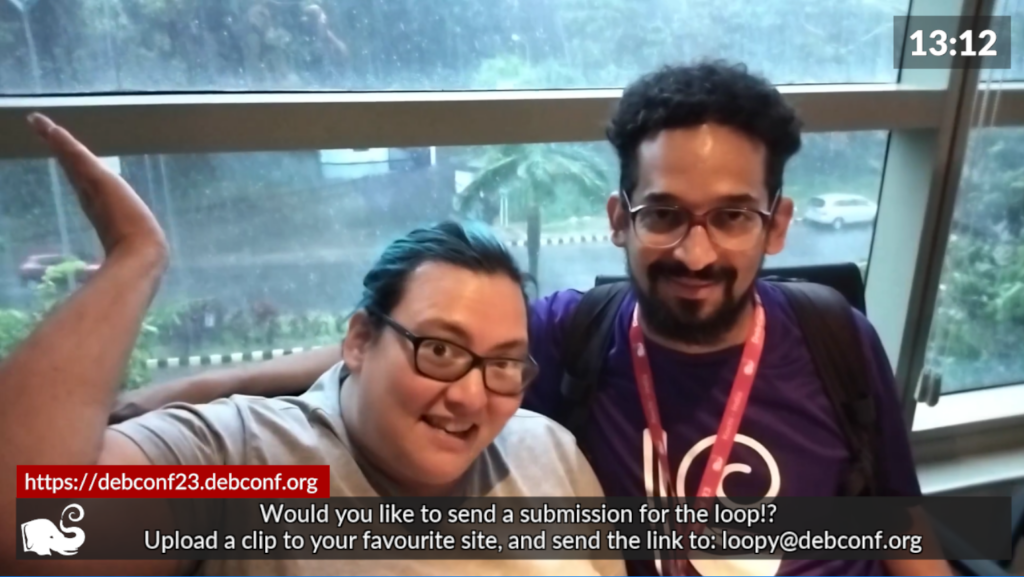
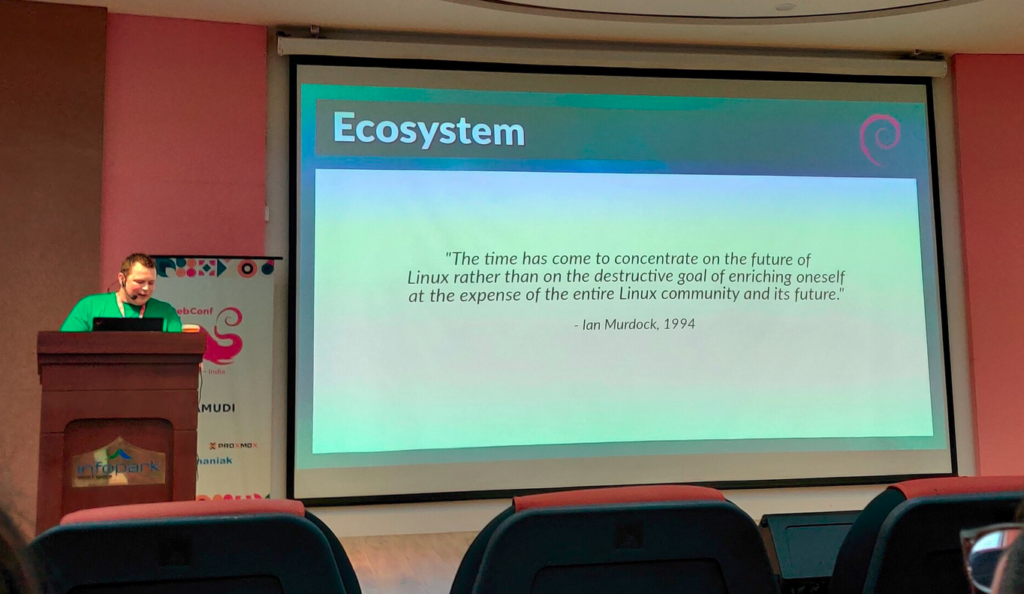

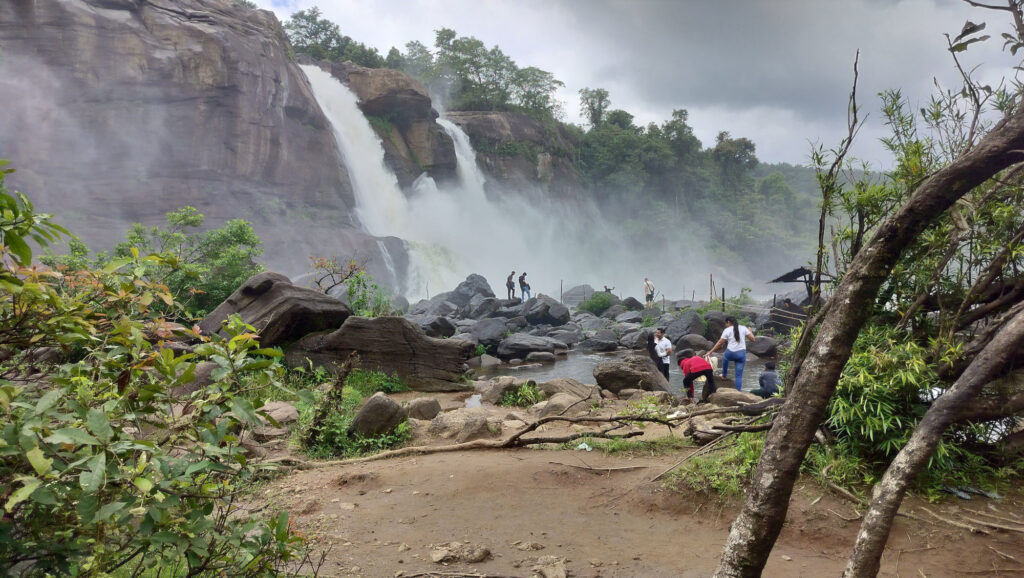




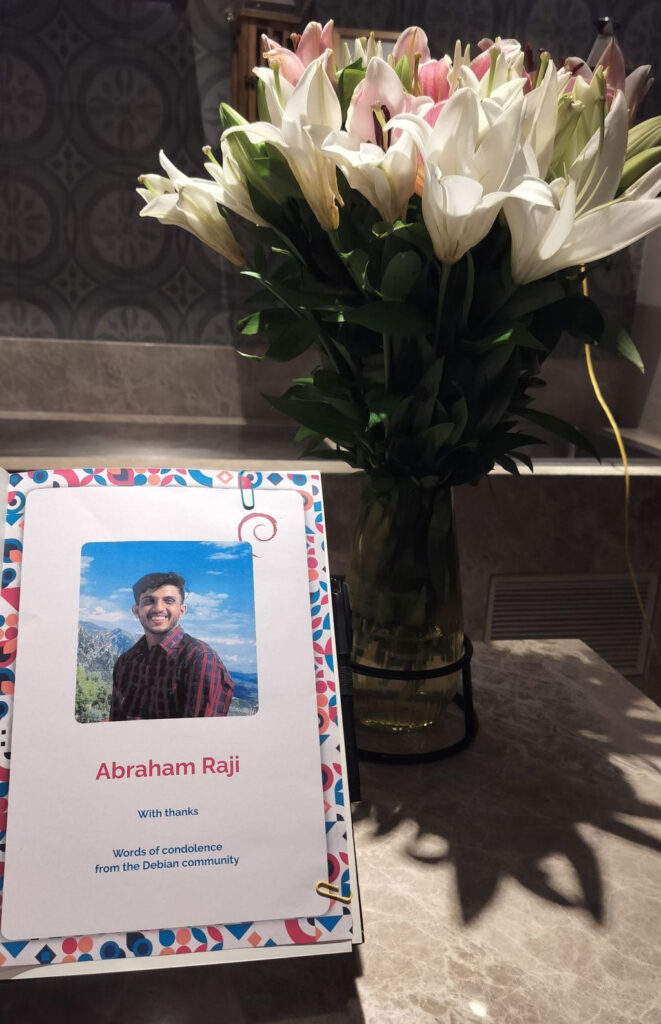
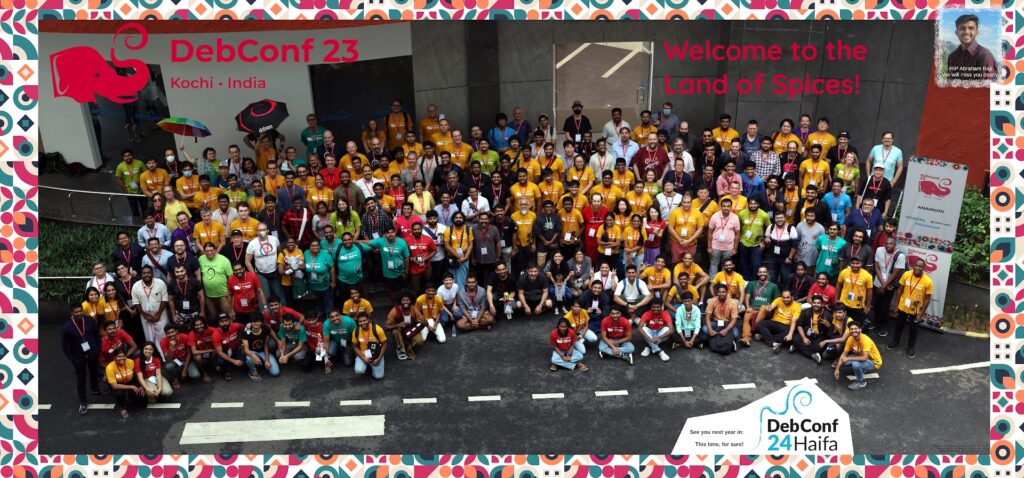
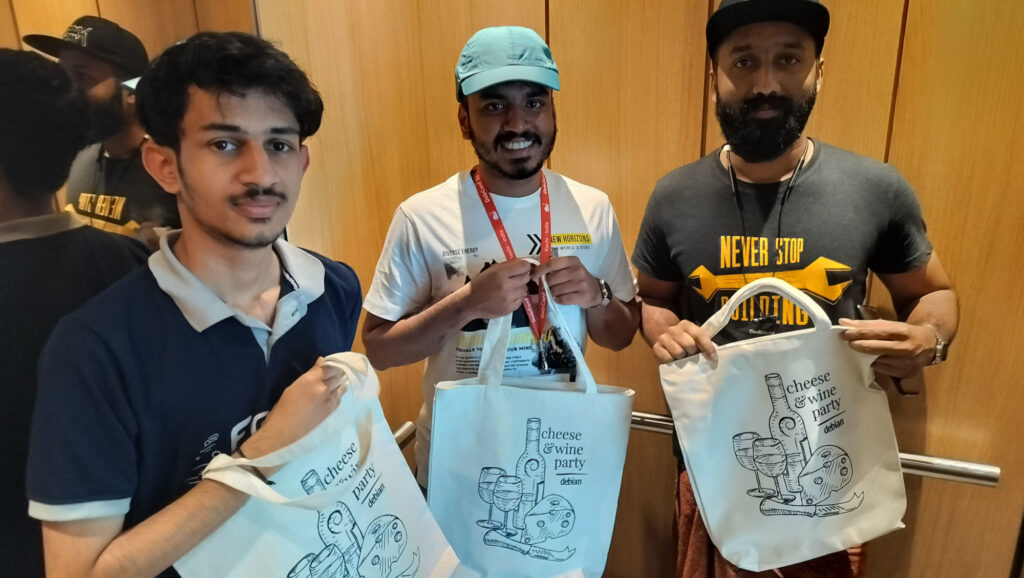 If you got one of these Cheese & Wine bags from DebConf, that s from the South African local group!
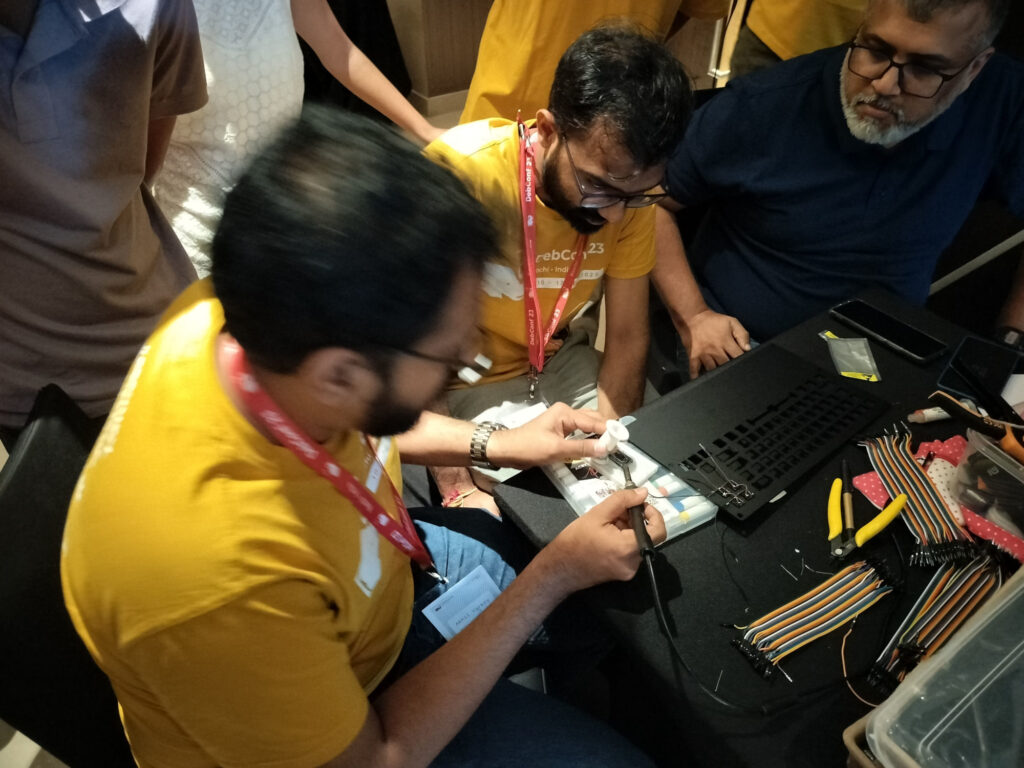 Some hopefully harmless soldering.

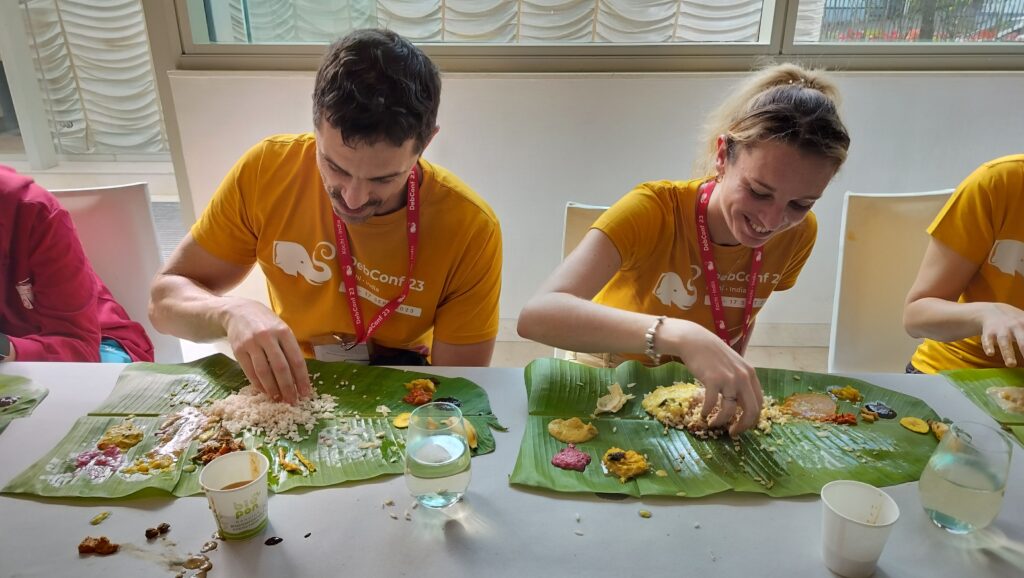

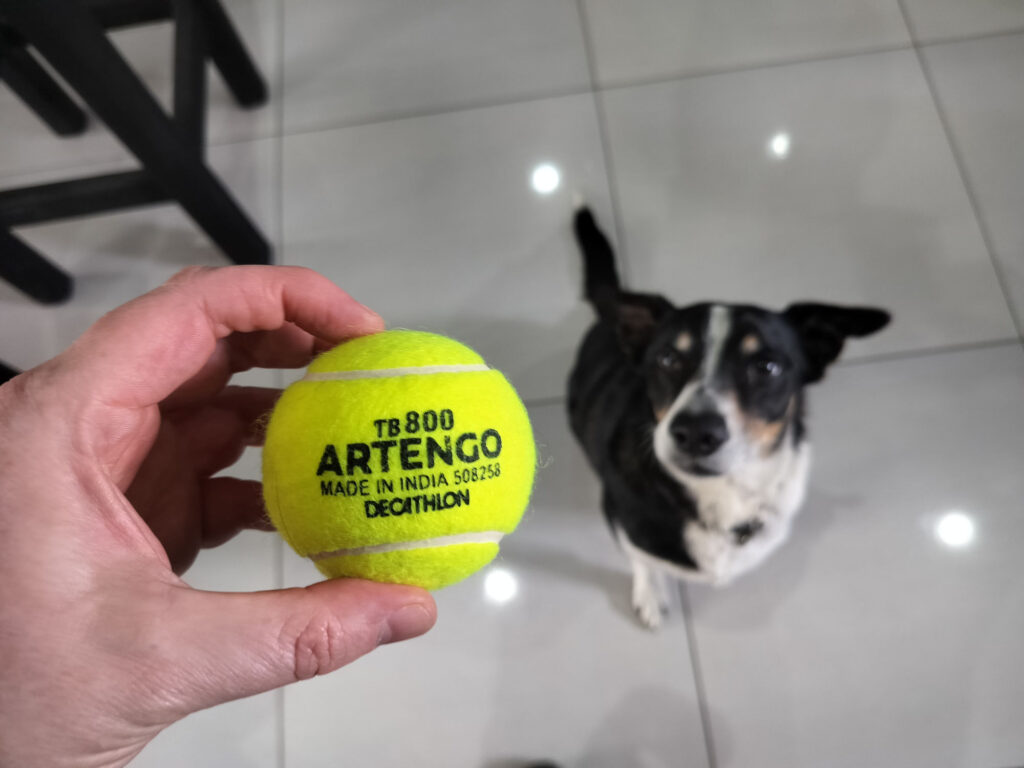
 Github recently announced
 A masterpiece by Yukio Mishima Patriotism the story of love and dead. A short story about the double suicide of a Lieutenant and his wife following the

 Not only the book is a masterpiece by itself, also the movie is a special piece of art: Filmed in silent movie style with text inserts, the whole story takes place on a Noh stage. This is in particular interesting as Mishima was one of the few, if not the only, modern Noh play writer. He has written several Noh plays.
Another very impressive scene for me was when, after her husbands suicide, Reiko returns from putting up her final make-up into the central room. Her kimono is already blood soaked and the trailing kimono leaves traces on the Noh stage resembling the strokes of a calligraphy, as if her movement is guided, too, by .
The final scene of the movie shows the two of them in a Zen stone garden, forming the stone, the unreachable island of happiness.
 Very impressive, both the book as well as the movie.
 After my server that has hosted my blog for some years had given out its last breath (second motherboard failure), I decited it was time for a change. And not just server change, but also change in the blog engine itself. As I now focus on Python and Django almost exclusively at work, it felt logical to use some kind of Django-based blog or CMS. I tried django-cms and mezzanine and ...


