Niels Thykier: Improving Debian packaging in Kate
The other day, I noted that the emacs integration with debputy stopped working.
After debugging for a while, I realized that emacs no longer sent the didOpen
notification that is expected of it, which confused debputy. At this point, I was
already several hours into the debugging and I noted there was some discussions on
debian-devel about emacs and byte compilation not working. So I figured I would
shelve the emacs problem for now.
But I needed an LSP capable editor and with my vi skills leaving much to be desired,
I skipped out on vim-youcompleteme. Instead, I pulled out kate, which I had not
been using for years. It had LSP support, so it would fine, right?
Well, no. Turns out that debputy LSP support had some assumptions that worked for
emacs but not kate. Plus once you start down the rabbit hole, you stumble on
things you missed previously.
Getting started
First order of business was to tell kate about debputy. Conveniently, kate has
a configuration tab for adding language servers in a JSON format right next to the tab where
you can see its configuration for built-in LSP (also in JSON format9. So a quick bit of
copy-paste magic and that was done.
Yesterday, I opened an MR against upstream to have the configuration added
(https://invent.kde.org/utilities/kate/-/merge_requests/1748) and they already merged it.
Today, I then filed a wishlist against kate in Debian to have the Debian maintainers
cherry-pick it, so it works out of the box for Trixie (https://bugs.debian.org/1099876).
So far so good.
Inlay hint woes
Since July (2024), debputy has support for Inlay hints. They are basically small
bits of text that the LSP server can ask the editor to inject into the text to provide
hints to the reader.
Typically, you see them used to provide typing hints, where the editor or the underlying
LSP server has figured out the type of a variable or expression that you did not
explicitly type. Another common use case is to inject the parameter name for positional
arguments when calling a function, so the user do not have to count the position to
figure out which value is passed as which parameter.
In debputy, I have been using the Inlay hints to show inherited fields in
debian/control. As an example, if you have a definition like:
Then foo-bin inherits the Section and Priority field since it does not supply
its own. Previously, debputy would that by injecting the fields themselves and their
value just below the Package field as if you had typed them out directly. The editor
always renders Inlay hints distinctly from regular text, so there was no risk of
confusion and it made the text look like a valid debian/control file end to end. The
result looked something like:
With the second instances of Section and Priority being rendered differently than
its surrendering (usually faded or colorlessly).
Unfortunately, kate did not like injecting Inlay hints with a newline in them,
which was needed for this trick. Reading into the LSP specs, it says nothing about
multi-line Inlay hints being a thing and I figured I would see this problem again
with other editors if I left it be.
I ended up changing the Inlay hints to be placed at the end of the Package field
and then included surrounding () for better visuals. So now, it looks like:
Unfortunately, it is no longer 1:1 with the underlying syntax which I liked about the
previous one. But it works in more editors and is still explicit. I also removed the
Inlay hint for the Homepage field. It takes too much space and I have yet to
meet someone missing it in the binary stanza.
If you have any better ideas for how to render it, feel free to reach out to me.
Source: foo-src
Section: devel
Priority: optional
Package: foo-bin
Architecture: any
Source: foo-src
Section: devel
Priority: optional
Package: foo-bin
Section: devel
Priority: optional
Architecture: any
Source: foo-src
Section: devel
Priority: optional
Package: foo-bin  (Section: devel)  (Priority: optional)
Architecture: any
Spurious completion and hover
As I was debugging the Inlay hints, I wanted to do a quick restart of debputy after
each fix. Then I would trigger a small change to the document to ensure kate would
request an update from debputy to render the Inlay hints with the new code.
The full outgoing payloads are sent via the logs to the client, so it was really about
minimizing which LSP requests are sent to debputy. Notably, two cases would flood the
log:
In my infinite wisdom, I chose to make a comment line where I would do the change. I figured it would neuter the completion requests completely and it should not matter if my cursor landed on the comment as there would be no hover docs for comments either. Unfortunately for me, debputy would ignore the fact that it was on a comment line. Instead, it would find the next field after the comment line and try to complete based on that. Normally you do not see this, because the editor correctly identifies that none of the completion suggestions start with a \#, so they are all discarded. But it was pretty annoying for the debugging, so now debputy has been told to explicitly stop these requests early on comment lines.
- Completion requests. These are triggered by typing anything at all and since I wanted to a change, I could not avoid this. So here it was about making sure there would be nothing to complete, so the result was a small as possible.
- Hover doc requests. These are triggered by mouse hovering over field, so this was mostly about ensuring my mouse movement did not linger over any field on the way between restarting the LSP server and scrolling the log in kate.
Hover docs for packages
I added a feature in debputy where you can hover over package names in your relationship
fields (such as Depends) and debputy will render a small snippet about it based on
data from your local APT cache.
This doc is then handed to the editor and tagged as markdown provided the editor supports
markdown rendering. Both emacs and kate support markdown. However, not all
markdown renderings are equal. Notably, emacs's rendering does not reformat the text
into paragraphs. In a sense, emacs rendering works a bit like <pre>...</pre> except
it does a bit of fancy rendering inside the <pre>...</pre>.
On the other hand, kate seems to convert the markdown to HTML and then throw the result
into an HTML render engine. Here it is important to remember that not all newlines are equal
in markdown. A Foo<newline>Bar is treated as one "paragraph" (<p>...</p>) and the HTML
render happily renders this as single line Foo Bar provided there is sufficient width to
do so.
A couple of extra newlines made wonders for the kate rendering, but I have a feeling this
is not going to be the last time the hover docs will need some tweaking for prettification.
Feel free to reach out if you spot a weirdly rendered hover doc somewhere.
Making quickfixes available in kate
Quickfixes are treated as generic code actions in the LSP specs. Each code action has a "type"
(kind in the LSP lingo), which enables the editor to group the actions accordingly or
filter by certain types of code actions.
The design in the specs leads to the following flow:
This flow is really annoying from a LSP server writer point of view. When you do the diagnostics (in step 1), you tend to already know what the possible quickfixes would be. The LSP spec authors realized this at some point, so there are two features the editor provides to simplify this.
- The LSP server provides the editor with diagnostics (there are multiple ways to trigger this, so we will keep this part simple).
- The editor renders them to the user and the user chooses to interact with one of them.
- The interaction makes the editor asks the LSP server, which code actions are available at that location (optionally with filter to only see quickfixes).
- The LSP server looks at the provided range and is expected to return the relevant quickfixes here.
All the quickfix logic in debputy so far has hinged on both of these two features. As life would have it, kate provides neither of them. Which meant I had to teach debputy to keep track of its diagnostics on its own. The plus side is that makes it easier to support "pull diagnostics" down the line, since it requires a similar feature. Additionally, it also means that quickfixes are now available in more editors. For consistency, debputy logic is now always used rather than relying on the editor support when present. The downside is that I had to spend hours coming up with and debugging a way to find the diagnostics that overlap with the range provided by the editor. The most difficult part was keeping the logic straight and getting the runes correct for it.
- In the editor request for code actions, the editor is expected to provide the diagnostics that they received from the server. Side note: I cannot quite tell if this is optional or required from the spec.
- The editor can provide support for remembering a data member in each diagnostic. The server can then store arbitrary information in that member, which they will see again in the code actions request. Again, provided that the editor supports this optional feature.
Making the quickfixes actually work
With all of that, kate would show the quickfixes for diagnostics from debputy and you could
use them too. However, they would always apply twice with suboptimal outcome as a result.
The LSP spec has multiple ways of defining what need to be changed in response to activating a
code action. In debputy, all edits are currently done via the WorkspaceEdit type. It
has two ways of defining the changes. Either via changes or documentChanges with
documentChanges being the preferred one if both parties support this.
I originally read that as I was allowed to provide both and the editor would pick the one it
preferred. However, after seeing kate blindly use both when they are present, I reviewed
the spec and it does say "The edit should either provide changes or documentChanges",
so I think that one is on me.
None of the changes in debputy currently require documentChanges, so I went with just
using changes for now despite it not being preferred. I cannot figure
out the logic of whether an editor supports documentChanges. As I read the notes for this
part of the spec, my understanding is that kate does not announce its support for
documentChanges but it clearly uses them when present. Therefore, I decided to keep it
simple for now until I have time to dig deeper.
Remaining limitations with kate
There is one remaining limitation with kate that I have not yet solved. The kate
program uses KSyntaxHighlighting for its language detection, which in turn is the
basis for which LSP server is assigned to a given document.
This engine does not seem to support as complex detection logic as I hoped from it. Concretely,
it either works on matching on an extension / a basename (same field for both cases) or
mime type. This combined with our habit in Debian to use extension less files like
debian/control vs. debian/tests/control or debian/rules or
debian/upstream/metadata makes things awkward a best.
Concretely, the syntax engine cannot tell debian/control from debian/tests/control as
they use the same basename. Fortunately, the syntax is close enough to work for both and
debputy is set to use filename based lookups, so this case works well enough.
However, for debian/rules and debian/upstream/metadata, my understanding is that if
I assign these in the syntax engine as Debian files, these rules will also trigger for any
file named foo.rules or bar.metadata. That seems a bit too broad for me, so I have
opted out of that for now. The down side is that these files will not work out of the box
with kate for now.
The current LSP configuration in kate does not recognize makefiles or YAML either. Ideally,
we would assign custom languages for the affected Debian files, so we do not steal the ID
from other language servers. Notably, kate has a built-in language server for YAML and
debputy does nothing for a generic YAML document. However, adding YAML as a supported
language for debputy would cause conflict and regressions for users that are already
happy with their generic YAML language server from kate.
So there are certainly still work to be done. If you are good with KSyntaxHighlighting
and know how to solve some of this, I hope you will help me out.
Closing
I am glad I tested with kate to weed out most of these issues in time before
the freeze. The Debian freeze will start within a week from now. Since debputy
is a part of the toolchain packages it will be frozen from there except for
important bug fixes.
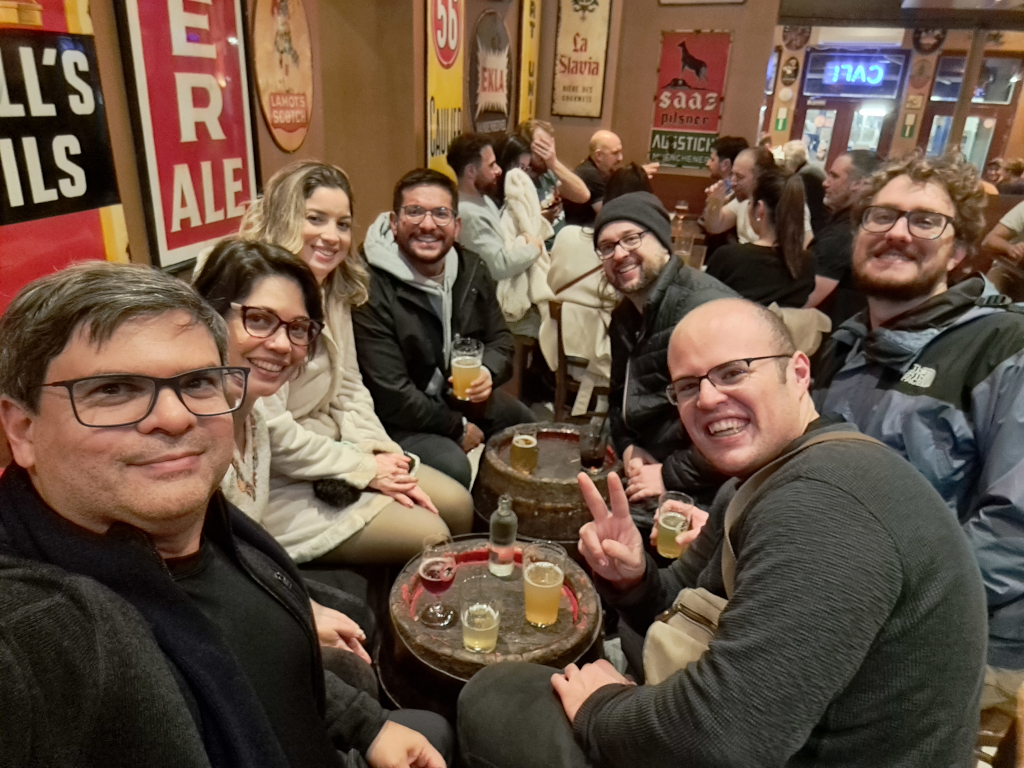
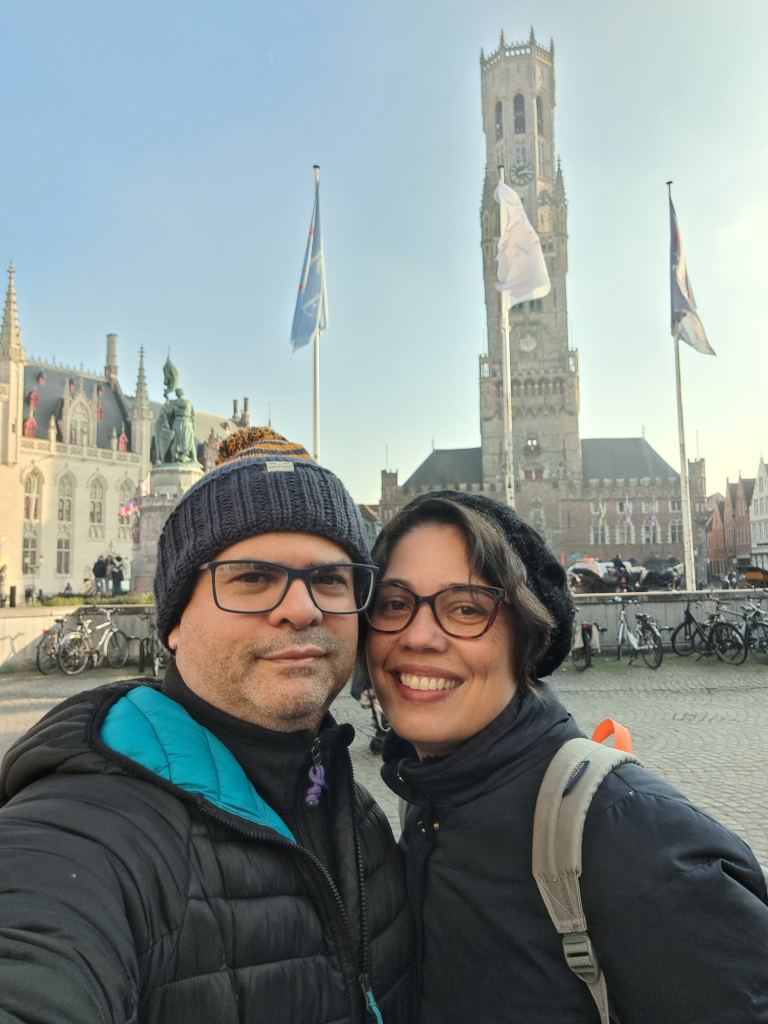
 This year I was at

 por Allythy
O Debian Day um evento anual que celebra o anivers rio do Debian, uma das
distribui es GNU/Linux mais importante do Software Livre, criada em 16 de
Agosto de 1993, por Ian Murdock.
No ltimo s bado (17/08/2024) no Sebrae-RN comemoramos os 31 anos Debian em
Natal, no Rio Grande do Norte. A celebra o, foi organizada pela
PotiLivre(Comunidade Potiguar de Software Livre), destacou os 31 anos de
hist ria do Debian. O evento contou com algumas palestras e muitas discuss es
sobre Software Livre. Tivemos 70 inscri es, 40 estiverem presentes.
O Debian Day em Natal foi uma ocasi o para celebrar a trajet ria do Debian e
refor ar a import ncia do Software Livre.
Palestrantes
Agradecemos imensamente a Isaque Barbosa Martins, Eduardo de Souza Paix o,
Fernando Guisso,que palestraram nessa edi o! Obrigado por compartilhar tanto
conhecimento com a comunidade. Esperamos ver voc s novamente em futuros
encontros!

 Essa edi o do Debina Day Natal foi organizada por: Allythy, Clara Nobre,
Gabriel Damazio e Marcel Ribeiro.
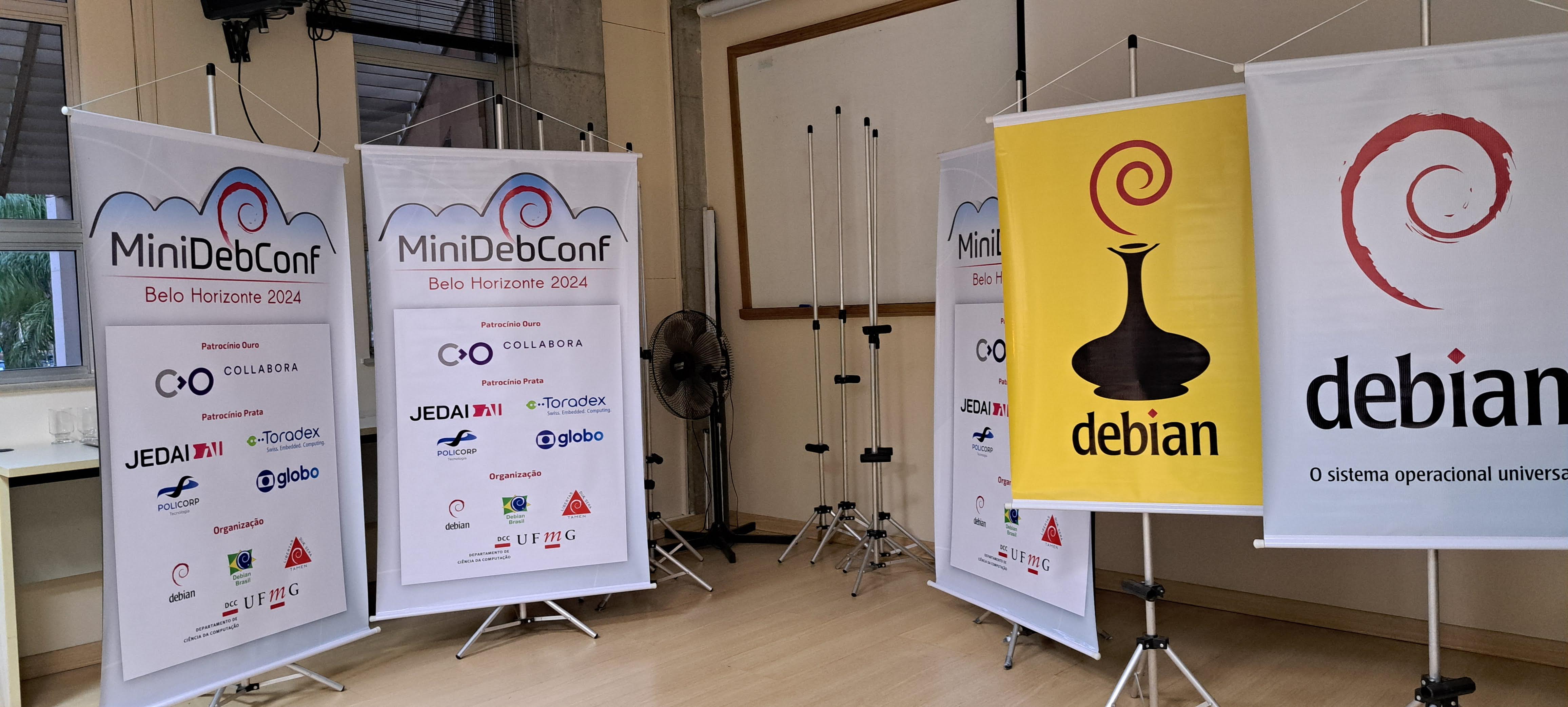 Esta foi a quinta vez que uma MiniDebConf (como um evento presencial exclusivo
sobre Debian) aconteceu no Brasil. As edi es anteriores foram em Curitiba
(
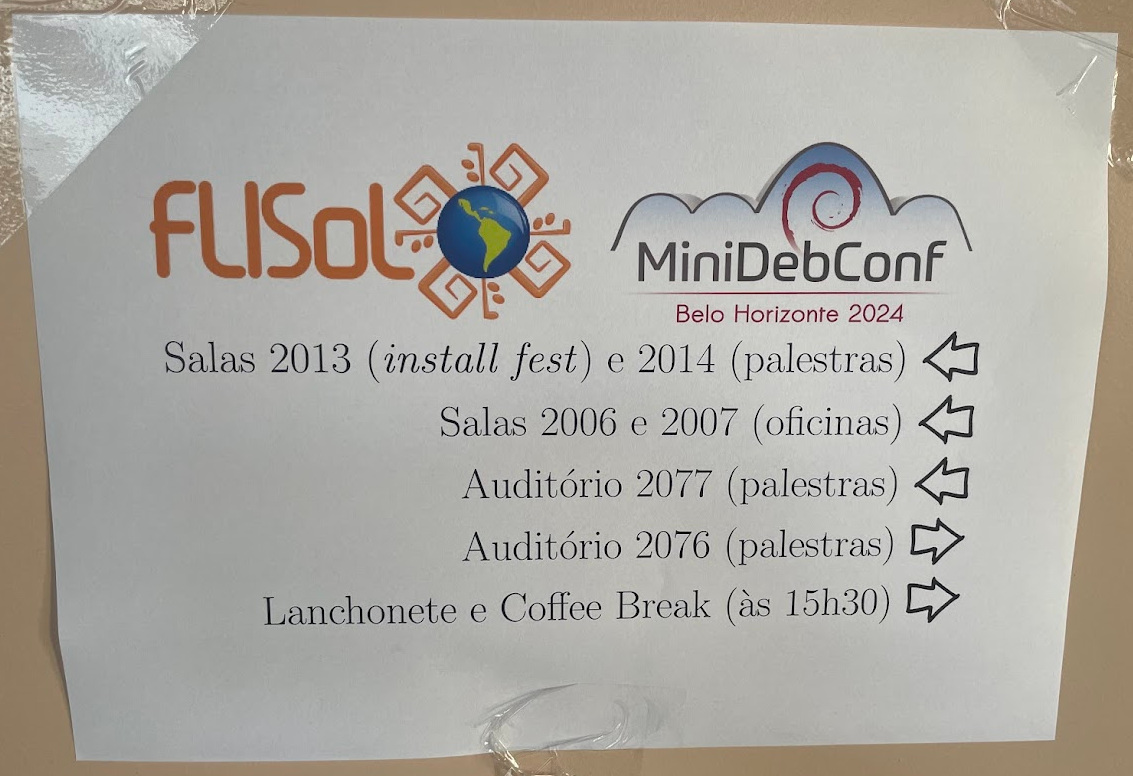 N meros da edi o 2024
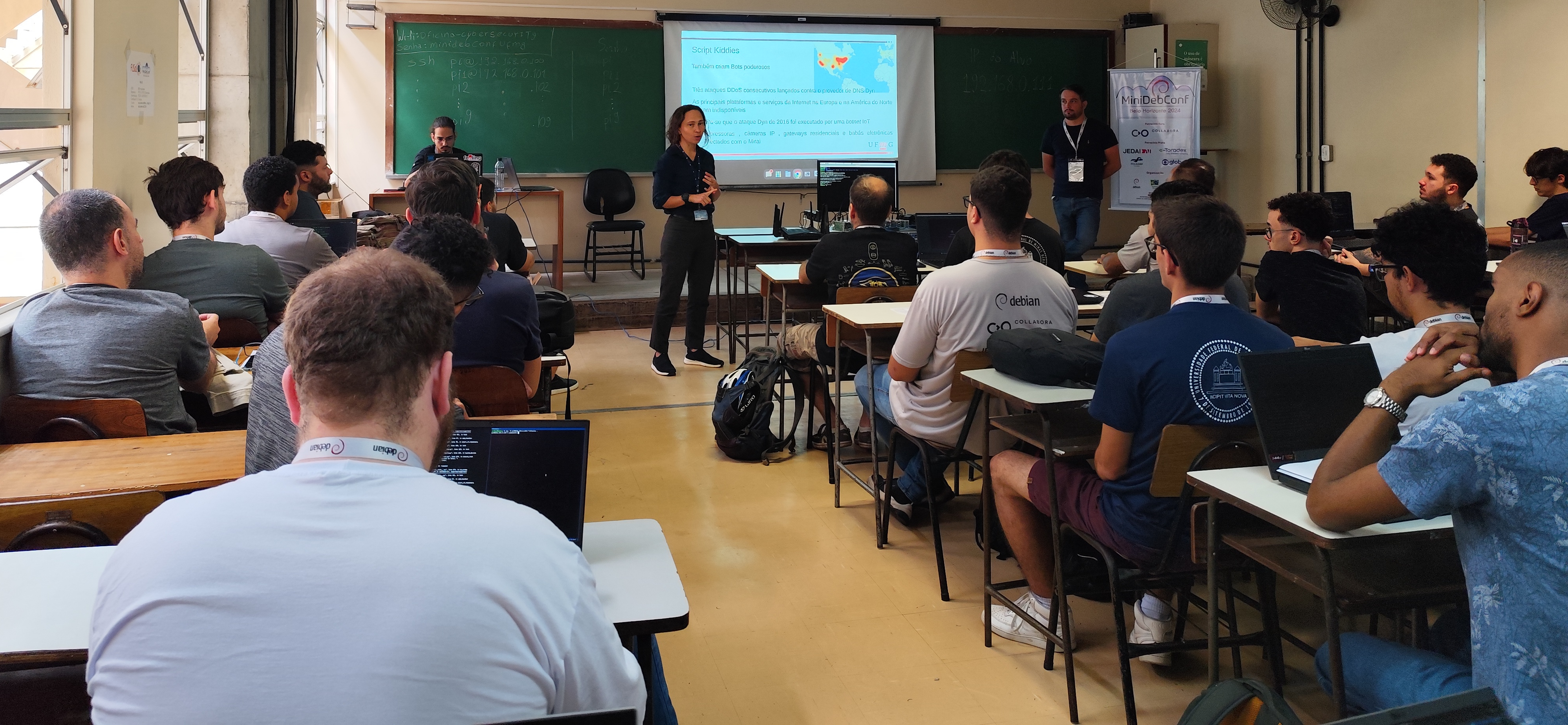
Durante os quatro dias de evento aconteceram diversas atividades para todos os
n veis de usu rios(as) e colaboradores(as) do projeto Debian. A
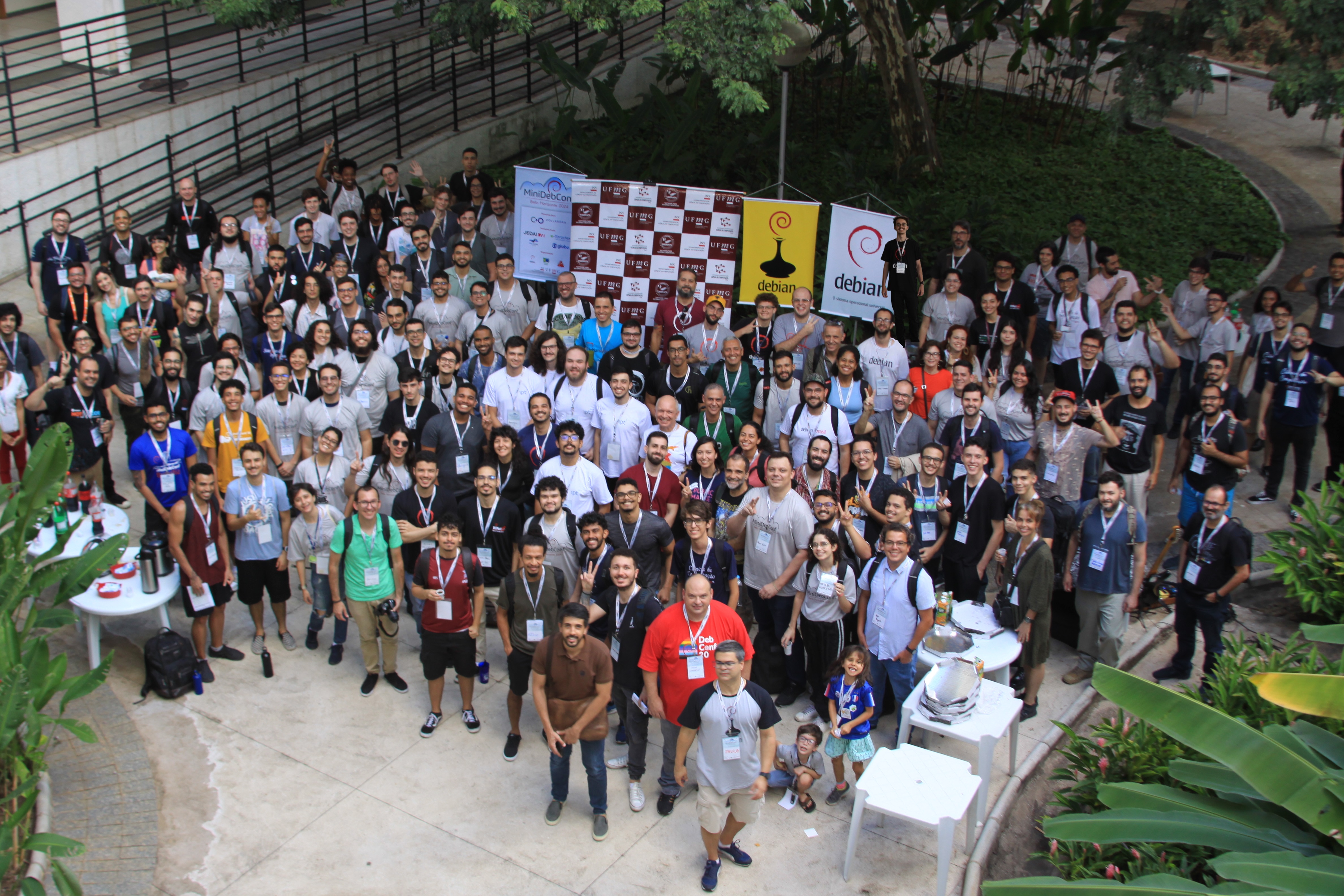
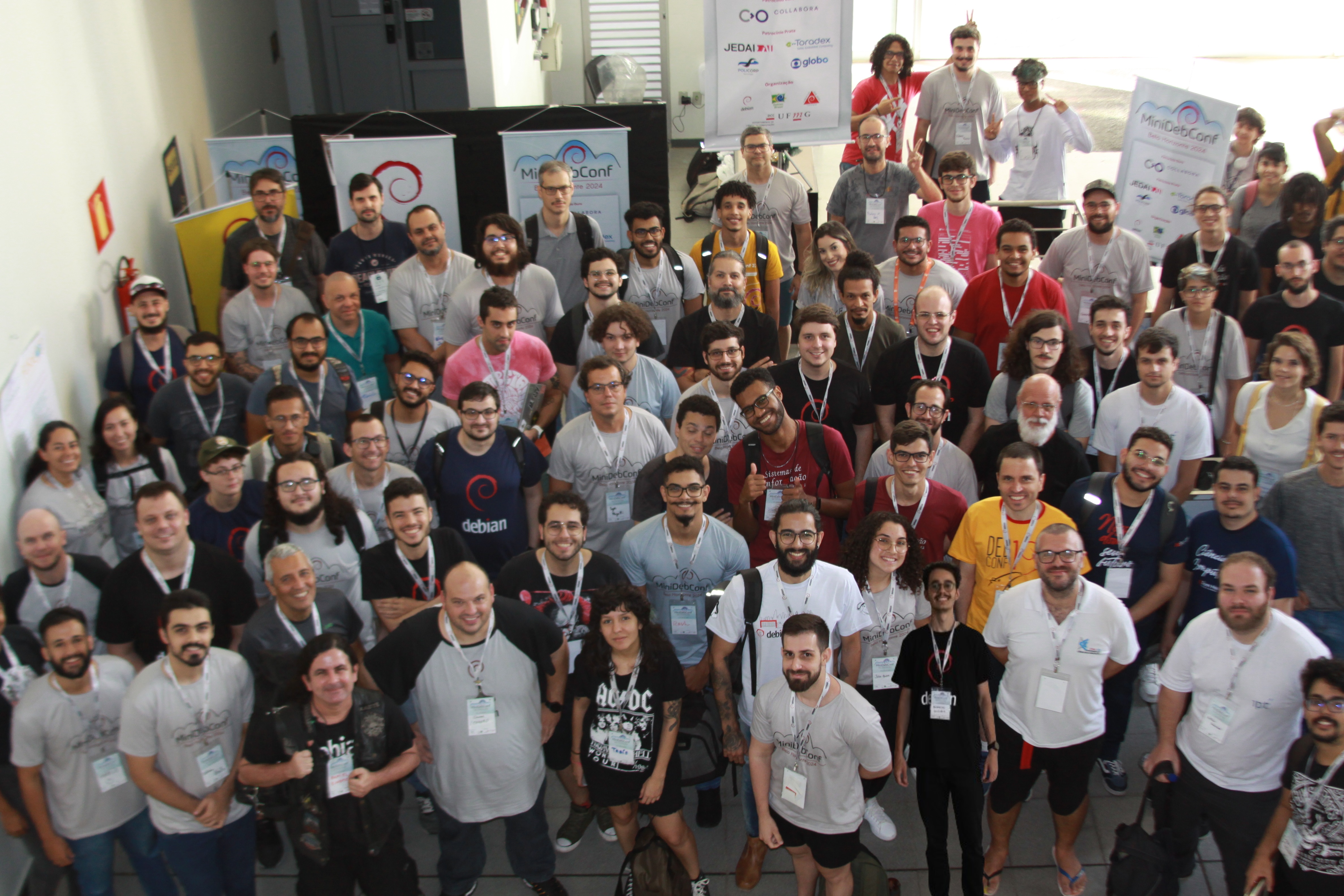
 Os n meros finais da MiniDebConf Belo Horizonte 2024 mostram que tivemos um
recorde de participantes.
 Atividades
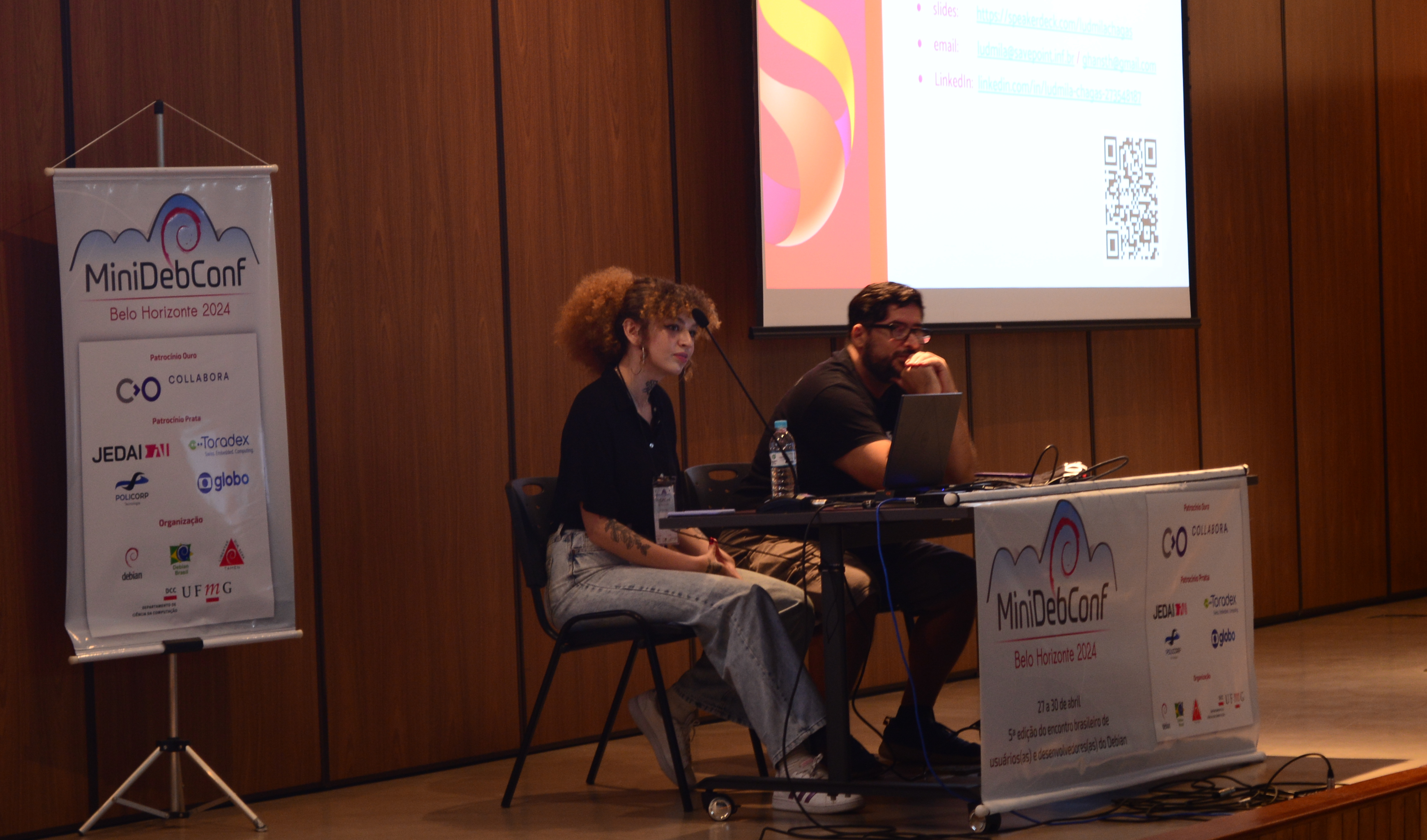
A programa o da MiniDebConf foi intensa e diversificada. Nos dias 27, 29 e 30
(s bado, segunda e ter a-feira) tivemos palestras, debates, oficinas e muitas
atividades pr ticas.
 J no dia 28 (domingo), ocorreu o Day Trip, um dia dedicado a passeios pela
cidade. Pela manh sa mos do hotel e fomos, em um nibus fretado, para o
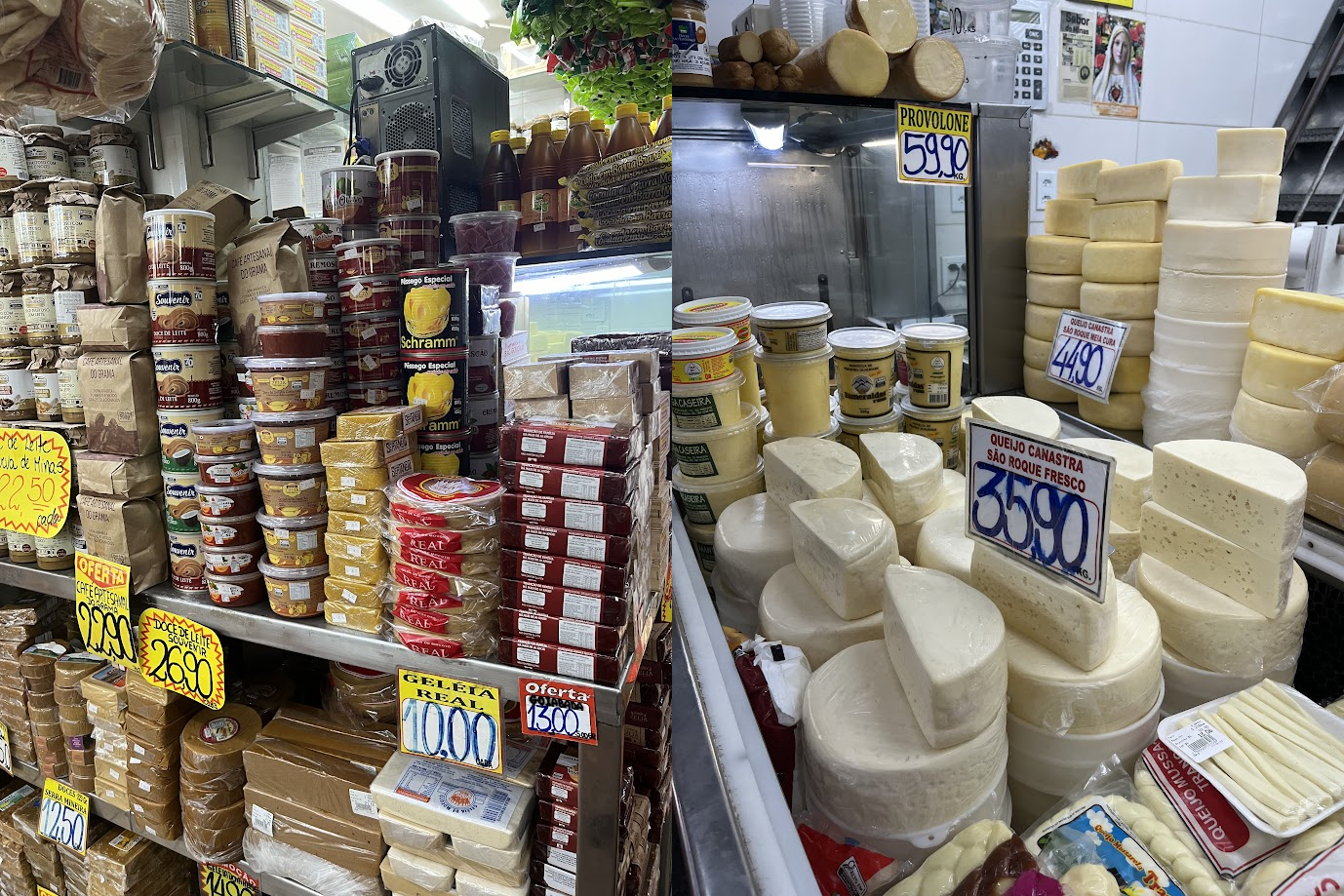 Depois de 2 horas de passeio pelo Mercado, voltamos para o nibus e pegamos a
estrada para almo armos em um restaurante de comida t pica mineira.
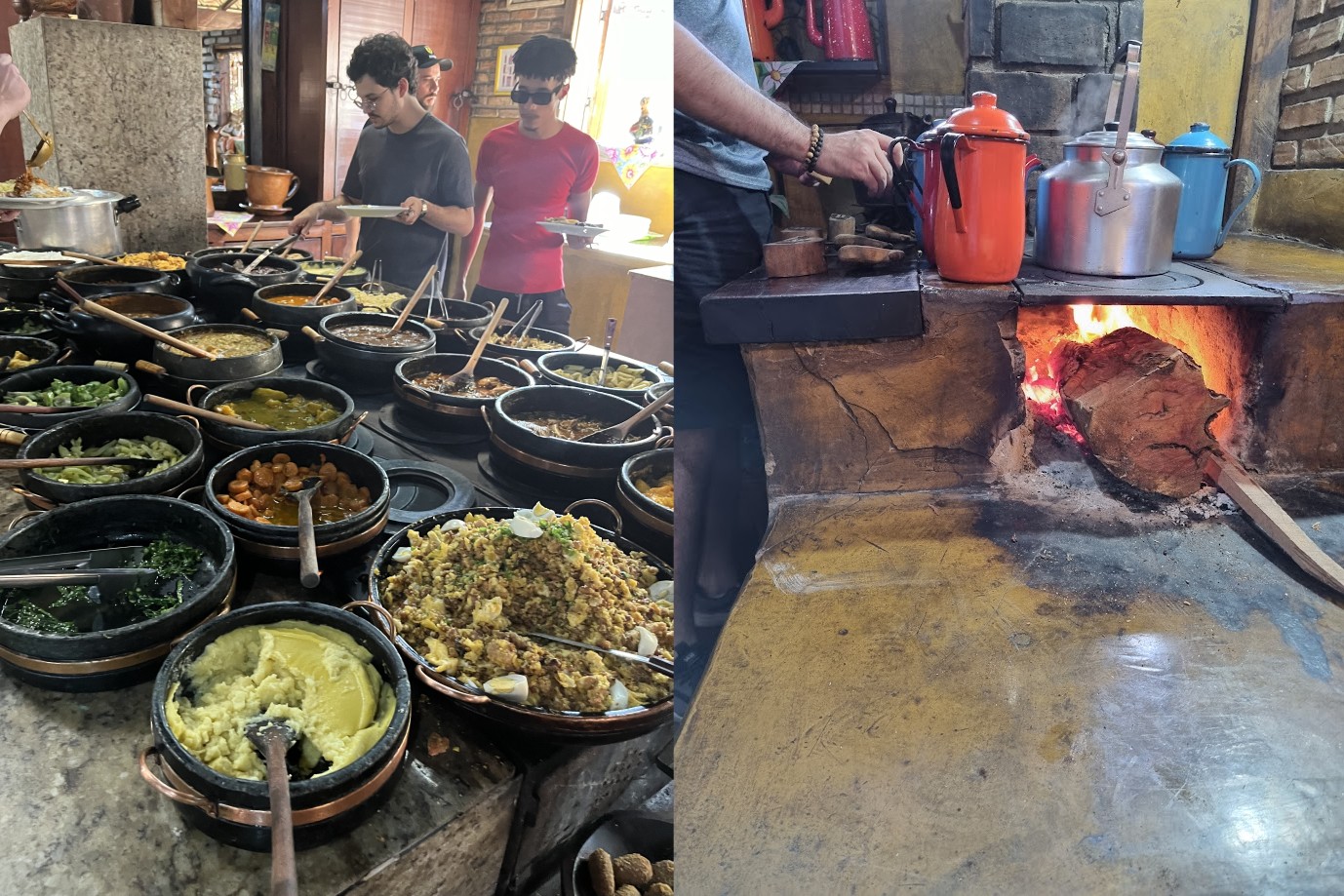 Com todos bem alimentados, voltamos para Belo Horizonte para visitarmos o
principal ponto tur stico da cidade: a Lagoa da Pampulha e a Capela S o
Francisco de Assis, mais conhecida como
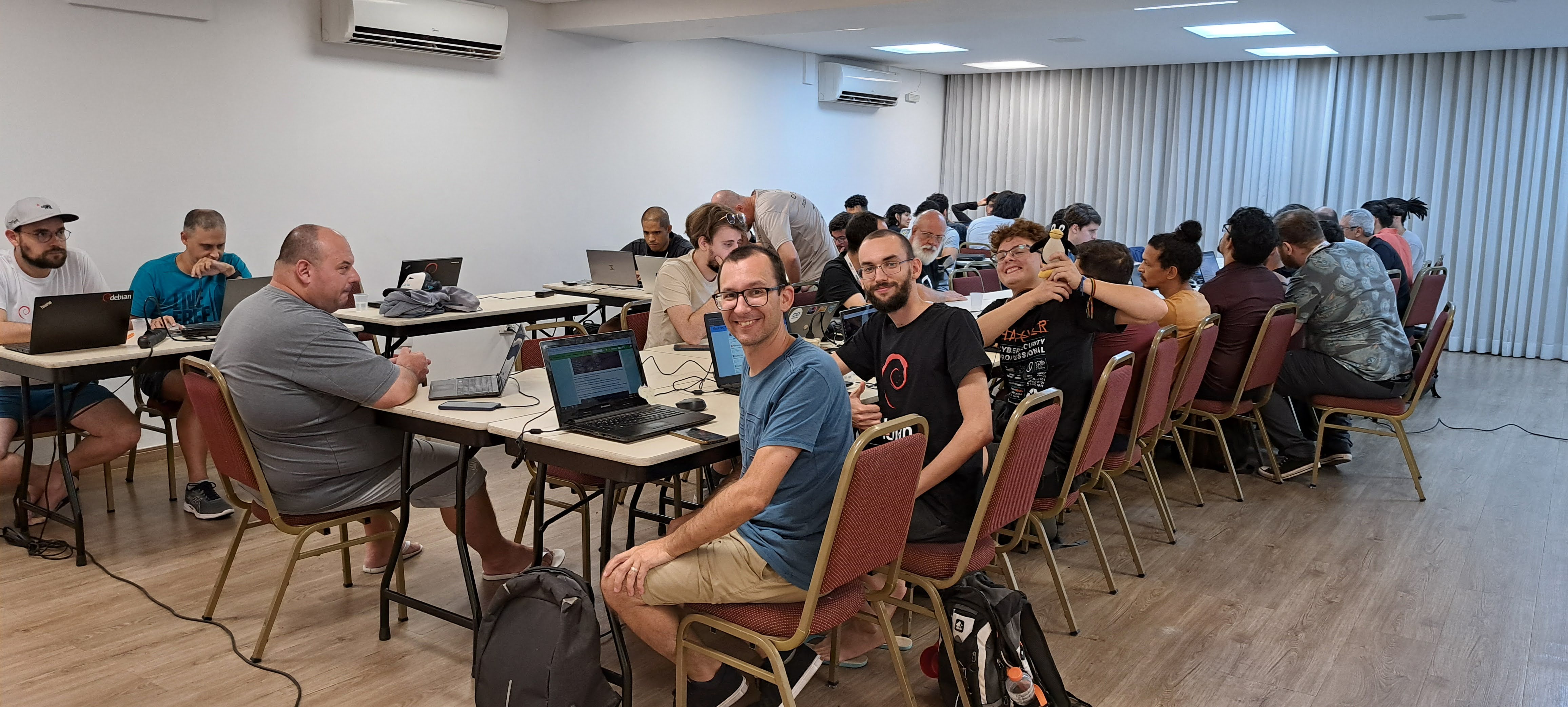
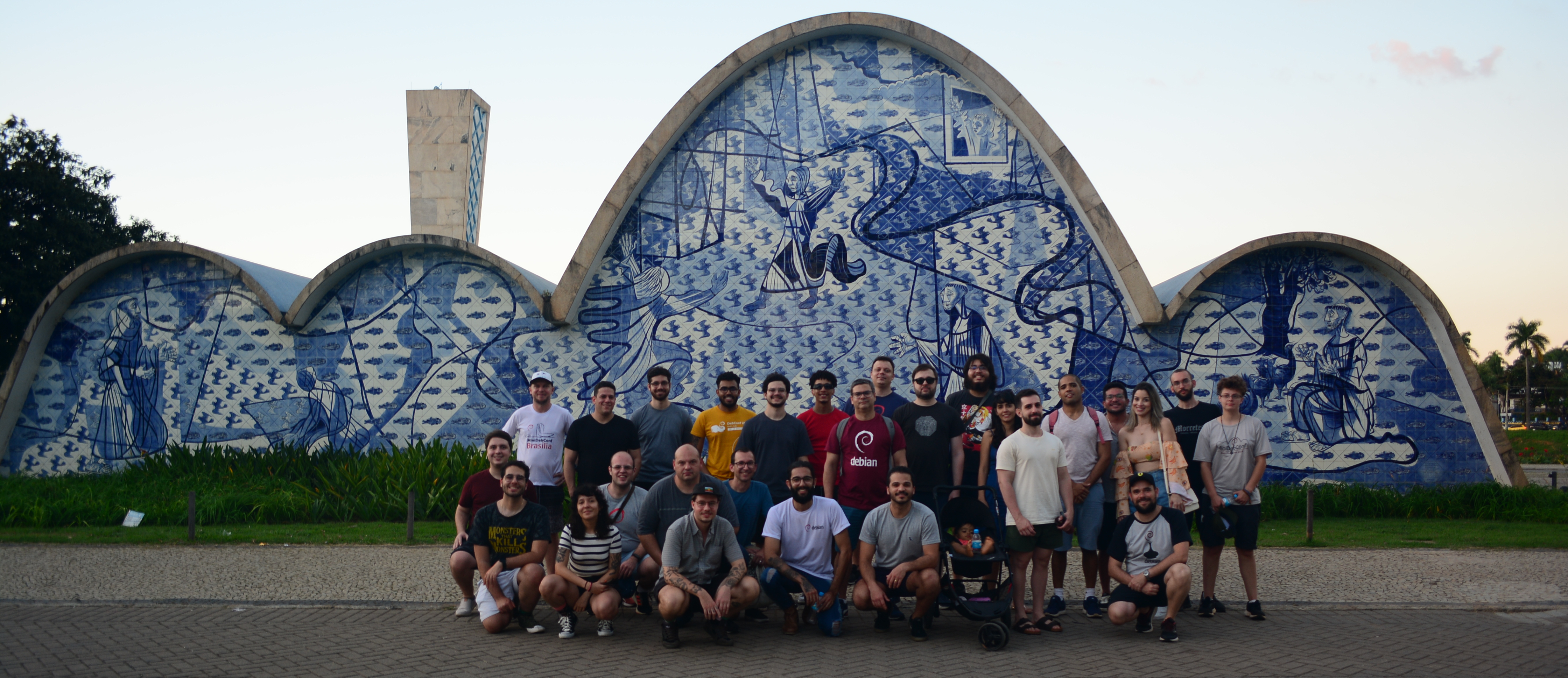 Voltamos para o hotel e o dia terminou no hacker space que montamos na sala
de eventos para o pessoal conversar, empacotar, e comer umas pizzas.
 Financiamento coletivo
Pela terceira vez fizemos uma campanha de financiamento coletivo e foi incr vel
como as pessoas contribu ram! A meta inicial era arrecadar o valor equivalente
a uma cota ouro de R$ 3.000,00. Ao atingirmos essa meta, definimos uma nova,
equivalente a uma cota ouro + uma cota prata (R$ 5.000,00). E novamente
atingimos essa meta. Ent o propusermos como meta final o valor de uma cota
ouro + prata + bronze, que seria equivalente a R$ 6.000,00. O resultado foi que
arrecadamos R$ 7.239,65 com a ajuda de mais de 100 pessoas!
Muito obrigado as pessoas que contribu ram com qualquer valor. Como forma de
agradecimento,
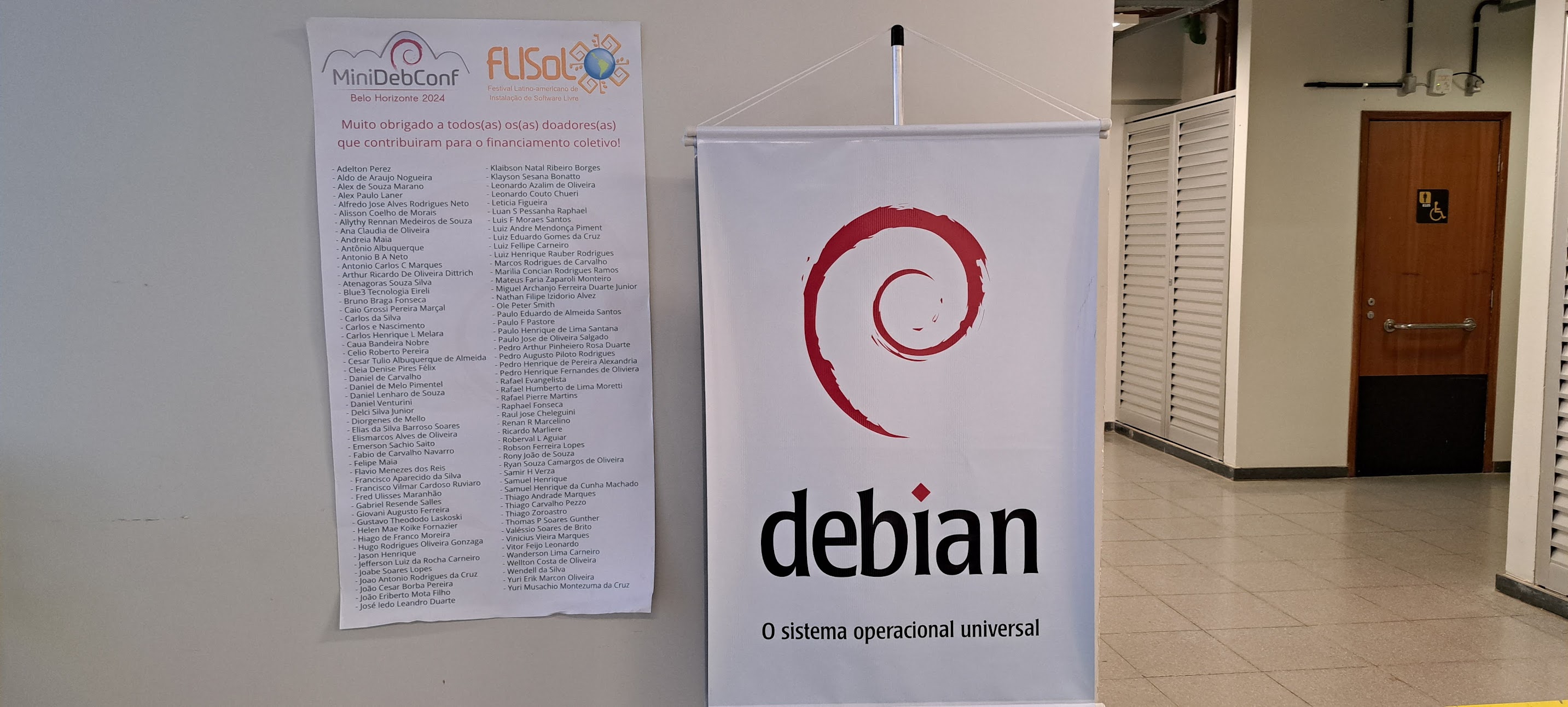 Bolsas de alimenta o, hospedagem e/ou passagens para participantes
Cada edi o da MiniDebConf trouxe alguma inova o, ou algum benef cio diferente
para os(a) participantes. Na edi o deste ano em Belo Horizonte, assim como
acontece nas DebConfs,
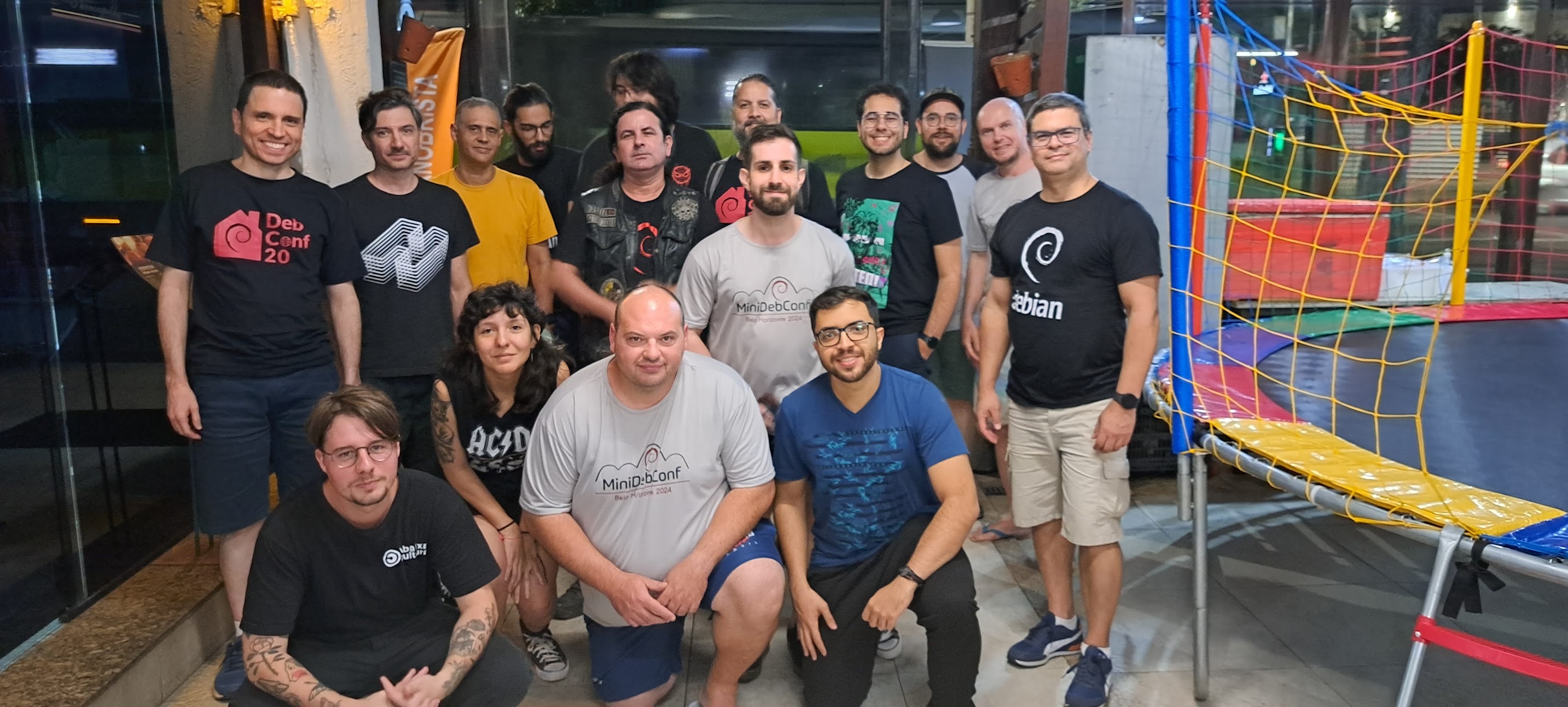 Fotos e v deos
Voc pode assistir as grava es das palestras nos links abaixo:
 Patrocinadores
Ouro:
 Est aberta a inscri o de participantes e a



 Bem vindo ao Debian Stretch!
Ontem, 17 de junho de 2017, o Debian 9 (Stretch) foi lan ado. Eu gostaria de falar sobre alguns procedimentos b sicos e regras para migrar do Debian 8 (Jessie).
Passos iniciais
 Nos dois casos, recomend vel que voc escolha por instalar a nova vers o do arquivo de configura o. Isso porque o novo arquivo de configura o estar totalmente adaptado aos novos servi os instalados e poder ter muitas op es novas ou diferentes. Mas n o se preocupe, pois as suas configura es n o ser o perdidas. Haver um backup das mesmas. Assim, para shell, escolha a op o "Y" e, no caso de janela, escolha a op o "instalar a vers o do mantenedor do pacote". muito importante anotar o nome de cada arquivo modificado. No caso da janela anterior, trata-se do arquivo /etc/samba/smb.conf. No caso do shell o arquivo foi o /etc/rsyslog.conf.
Depois de completar a migra o, voc poder ver o novo arquivo de configura o e o original. Caso o novo arquivo tenha sido instalado ap s uma escolha via shell, o arquivo original (o que voc tinha anteriormente) ter o mesmo nome com a extens o .dpkg-old. No caso de escolha via janela, o arquivo ser mantido com a extens o .ucf-old. Nos dois casos, voc poder ver as modifica es feitas e reconfigurar o seu novo arquivo de acordo com as necessidades.
Caso voc precise de ajuda para ver as diferen as entre os arquivos, voc poder usar o comando diff para compar -los. Fa a o diff sempre do arquivo novo para o original. como se voc quisesse ver como fazer com o novo arquivo para ficar igual ao original. Exemplo:
 Con el coraz n compungido, Debian lamenta el fallecimiento de Ian Murdock, firme partidario del software libre y abierto, padre, hijo y el 'ian' en Debian.
Ian empez el proyecto en agosto de 1993, publicando la primera versi n
de Debian m s tarde en el mismo a o. Debian se convertir a as en el
sistema operativo universal para el mundo, funcionando en cualquier
dispositivo, desde sistemas embebidos hasta la estaci n espacial.
Ian se centr en crear una distribuci n y una cultura de comunidad que hiciera lo correcto tanto en lo tico como en lo t cnico. Publicar cuando est listo y una postura firme sobre la libertad de software son las reglas de oro en el mundo del software libre y de c digo abierto.
La devoci n le gui en su trabajo, tanto en Debian como en los a os posteriores, siempre trabajando hacia un futuro lo mejor posible.
El sue o de Debian est vivo, la comunidad permanece incre blemente activa con miles de desarrolladores que trabajan incontables horas para ofrecer un sistema operativo seguro y confiable.
La comunidad de Debian da el p same a la familia en este momento tan dif cil.
Su familia nos ha pedido discreci n durante estos momentos dif ciles y
deseamos respetarlo. Desde dentro de Debian y de la amplia comunidad de
Linux podemos expresar nuestras muestras de condolencia a
in-memoriam-ian@debian.org, donde ser n guardadas y archivadas.
 There's something brewing, moving in Jalisco (a state in Mexico's West, where our second largest city, Guadalajara, is located). And it seems we have an opportunity to participate, hopefully to be taken into account for the future.
Ten days ago, I was contacted by phone by the staff of


