In September 2025, I attended the annual LibreOffice conference in Budapest, Hungary. This gave me an opportunity to explore the city, which I will cover in this post.
Let s start with the currency. Although Hungary is a part of the European Union (EU), it doesn t use the euro as its currency. Instead, it uses Hungarian forints (denoted by Ft ). During my time in Hungary, 1 Indian rupee was equal to 4 Hungarian forints.
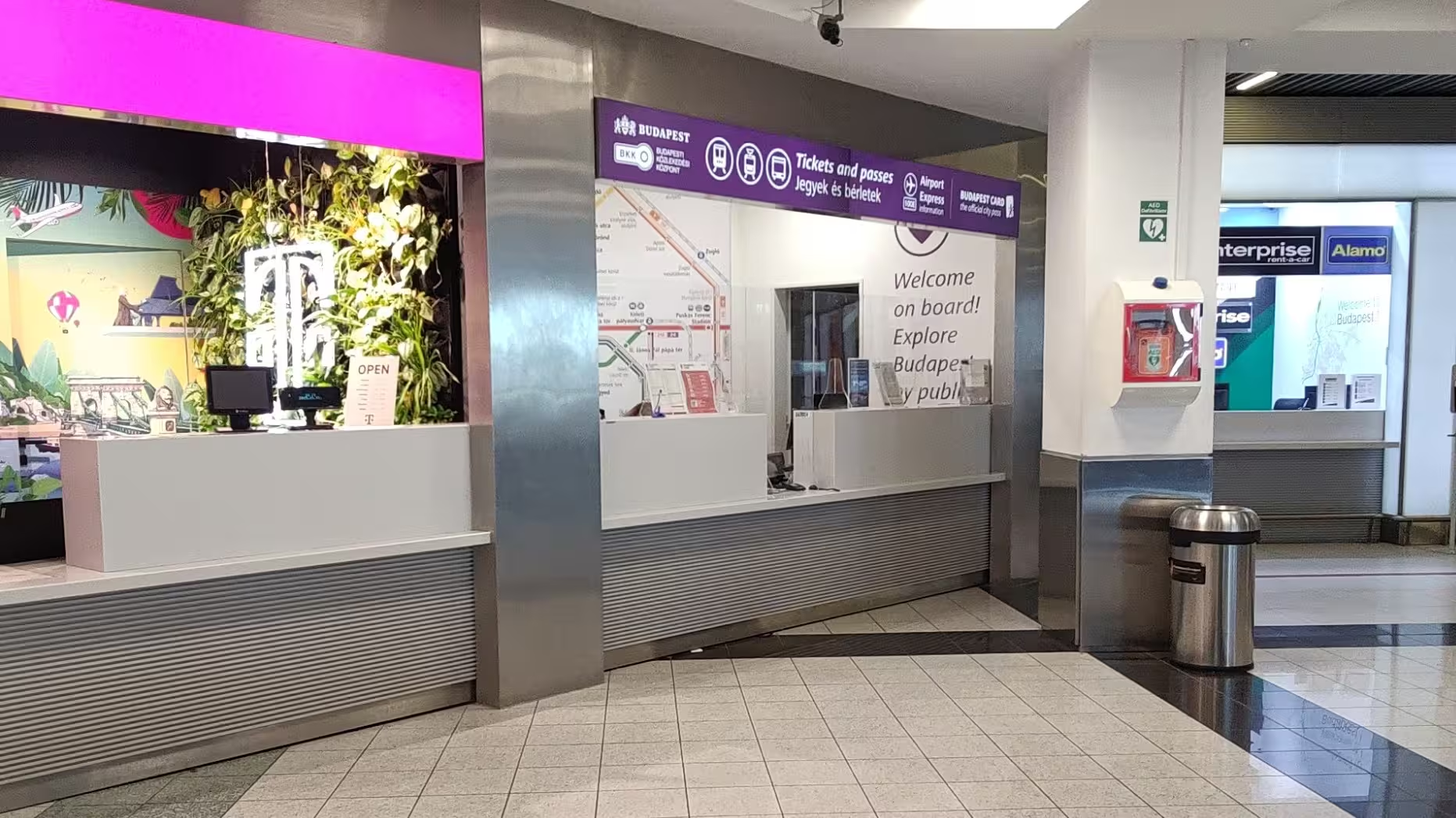
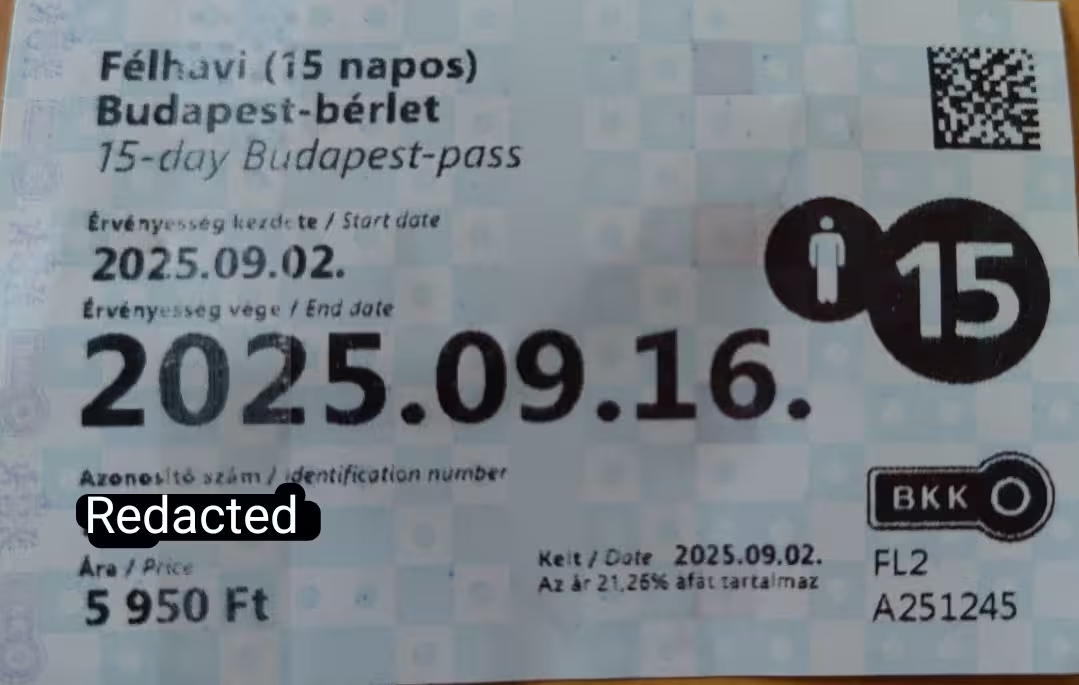
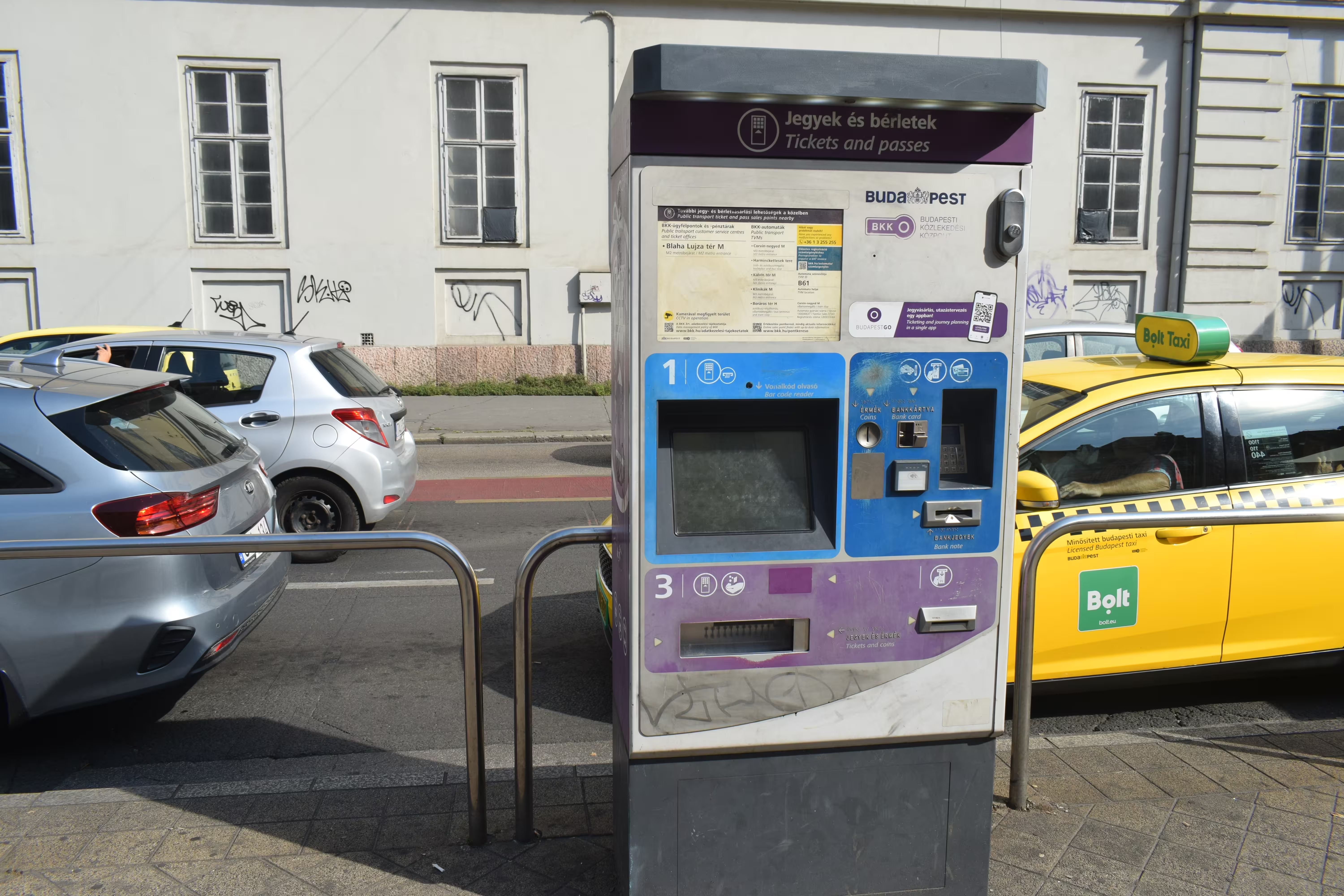
After reaching the Budapest airport, I bought a 15-day public transport pass. The public transport counter is after you pass customs and immigration. The pass allows unlimited use of public transport in the city. I had to show my passport and pay 5950 Ft to get the pass. The pass had my passport number mentioned on it. The public transport passes can also be bought at any of the tram stations as well.
This is the counter from where I bought my public transport pass.
My unlimited public transport pass for Budapest. I have redacted my passport number from it.
An automatic ticket machine at a tram station in Budapest.
Budapest is a union of two cities Buda and Pest lying on opposite sides of the Danube River. My hotel Corvin Hotel was on the Pest side.
Budapest had good public transport. The buses, metros, and trams complemented each other. For example, the airport didn t have metro or tram connectivity, but it was served by the bus. Most of the metro was on the Pest side, with only a couple of stations falling in Buda. However, both sides had an extensive network of trams.
Furthermore, the information about the public transport was easily accessible. For instance, the map of tram stops inside the trams also included the bus routes one could get after alighting at those stops.
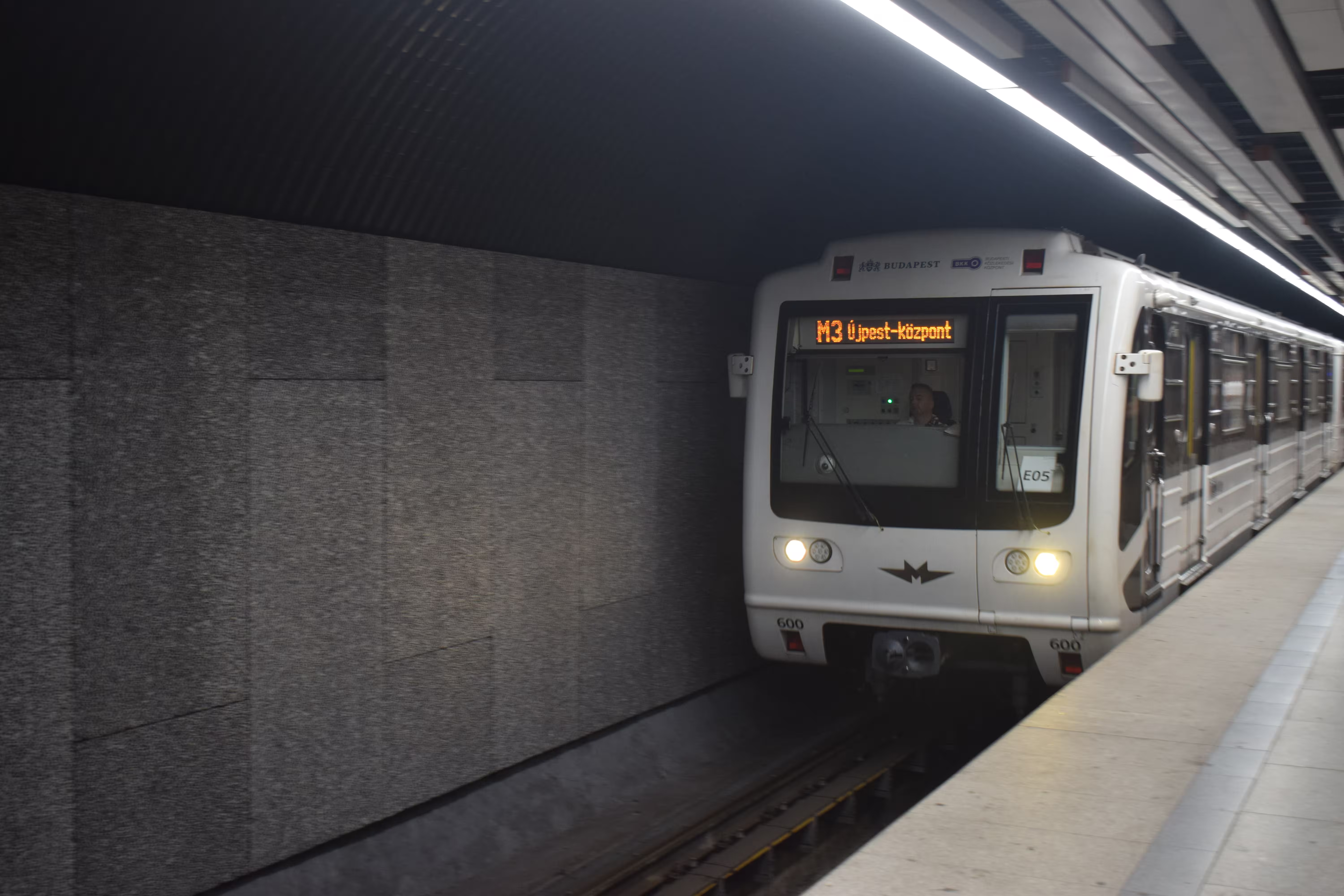
From the airport, I took a bus followed by taking a metro on the M3 line to reach within walking distance of my hotel.
An M3 line metro in Budapest.
During the conference I would take the tram to the conference venue. The trams were modern and fast. They also had a smiley face at the front, which gave them a friendly look. It seemed like the trams were happily doing their job. The city also had a good pedestrian infrastructure along with separate cycling tracks.
A tram in Budapest having a smiley face at the front.
Budapest s tap water is officially safe to drink, which was mentioned on a sticker posted on the wall of the bathroom of my hotel room. So, I did not need to buy any water bottles while I was there.
On the 6th of September, I went on a sightseeing tour of Budapest with my Dione. Our friend Attila, who was a local (from Hungary), joined us. We went to the central market from our hotel by metro.
If you read my post on Vienna, I mentioned that the metro stations don t have AFC gates but ticket validators instead. Budapest s metro also has the same system. If you buy individual tickets, you need to validate them using the validators on the station before boarding the metro. If you are using a public transport pass like I was, then you do not need to validate, and you can board the metro directly.
A ticket validator at a metro station in Budapest.
In 10-15 minutes, we reached the central market. Attila showed us around. I bought a fridge magnet and paprika powder as souvenirs. Paprika powder is a signature spice of Hungary. It is mainly available in two forms one is sweet and the other being spicy. I wanted the spicy one, but I didn t get that in that market. Therefore, I had to contend with buying the sweet version. The sweet version isn t sweet though, it is just not spicy. After bringing that paprika powder home, it is mainly used for food coloring. I like it though and use it frequently in my omelets and other dishes.
Central market.
The building right behind the tram is the central market building.
At some point, Atilla had to join the The Document Foundation (TDF) sightseeing group, so we parted ways at the central market. Dione and I continued our sightseeing and decided to start with visiting the Hungarian parliament, which is a tourist attraction. It was because we were on the Pest side and the parliament was also on the same side, while other tourist attractions were on the Buda side.
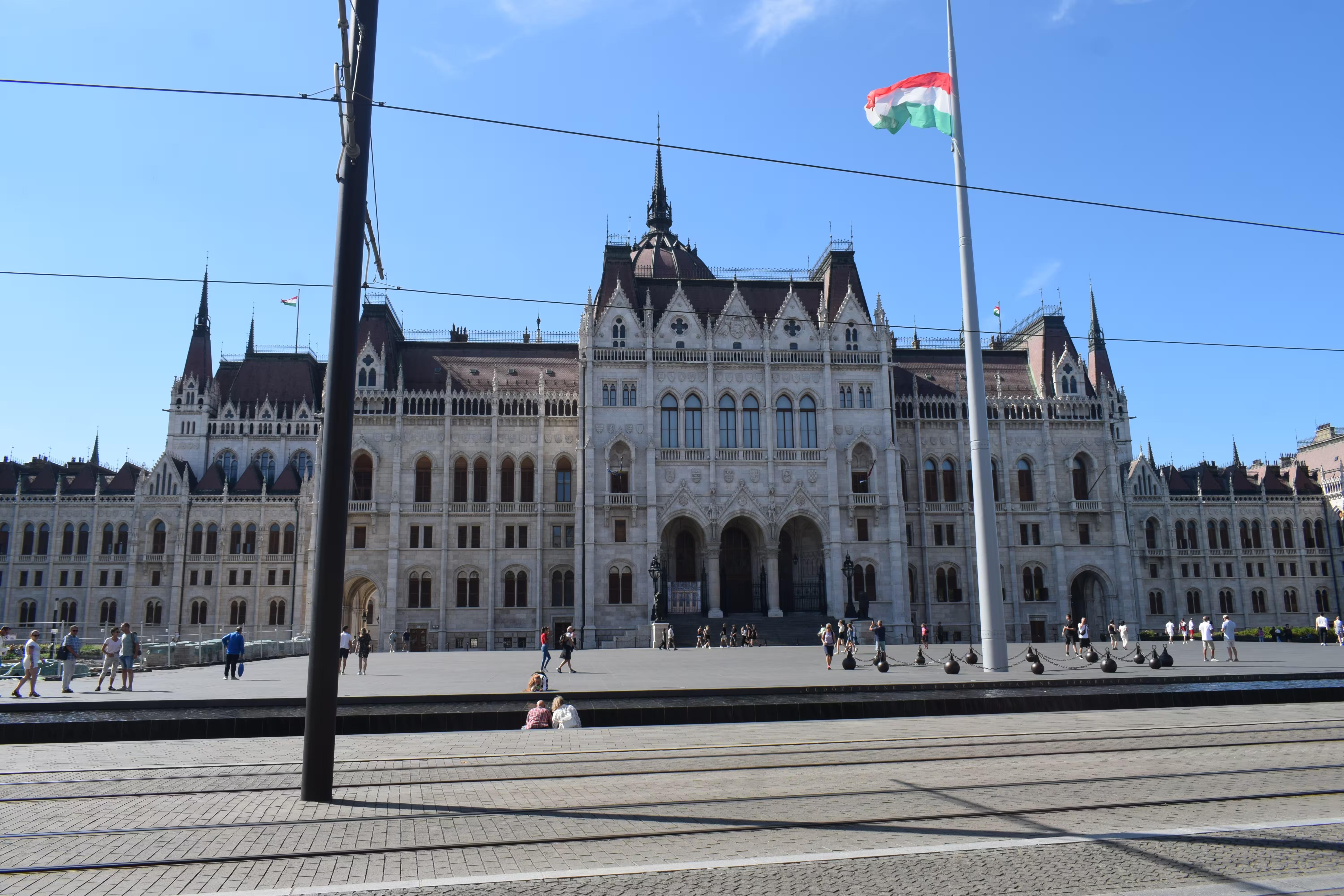
So, Dione and I hopped on a tram and went to the parliament. We got off at a tram station just outside the parliament. The parliament is the icon of Budapest. The building has a gothic architecture and colored brown and white. One can buy tickets and take an inside tour. However, we didn t have a lot of time, so we stayed outside the building.
Hungarian Parliament building.
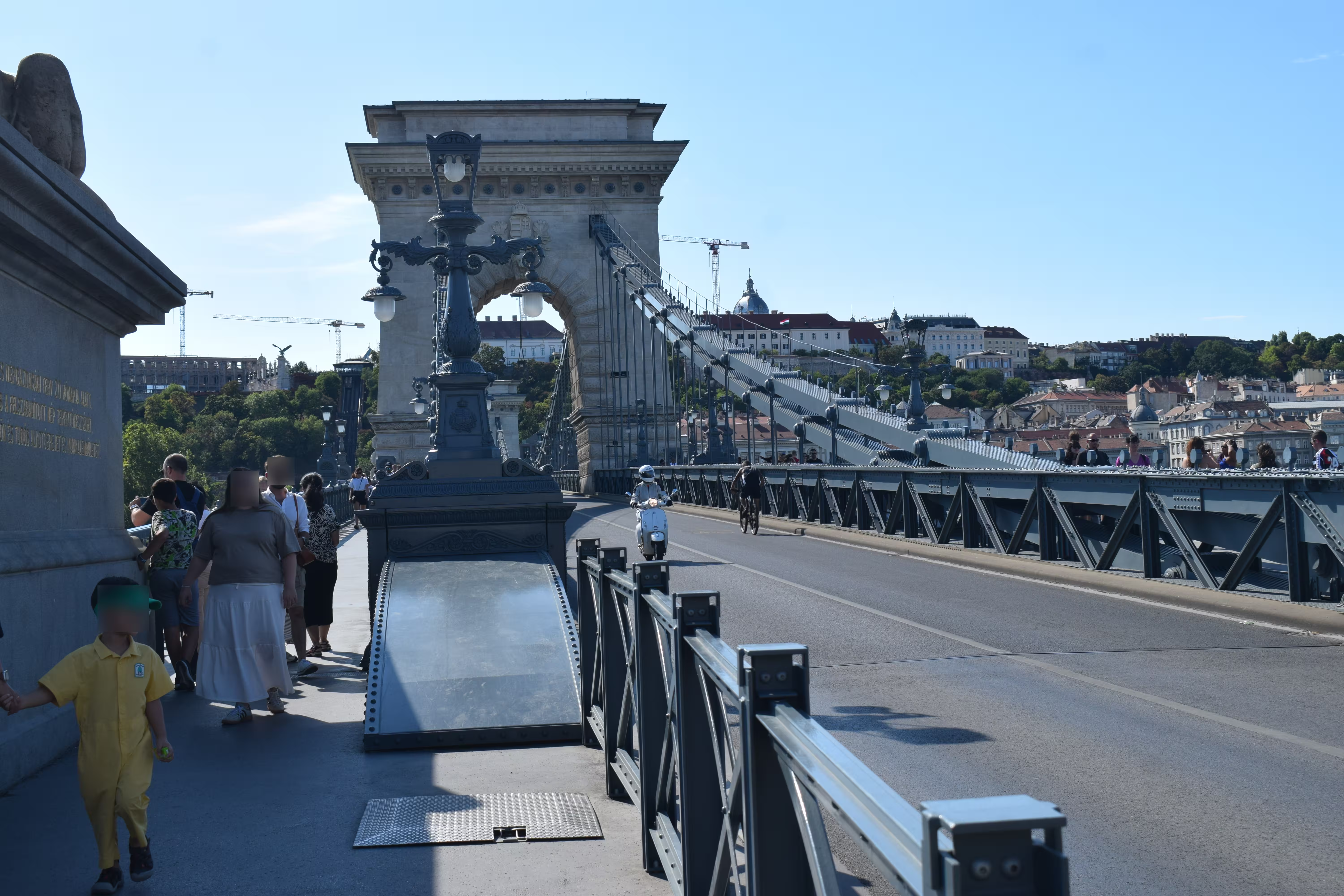
After spending some time outside the parliament building, we took a tram to the Chain Bridge. As I mentioned earlier, Budapest has two parts Buda and Pest separated by the Danube River. To go from one of the sides to the other requires crossing a bridge. Although Budapest has many bridges linking the two sides, the main one is the Chain Bridge.
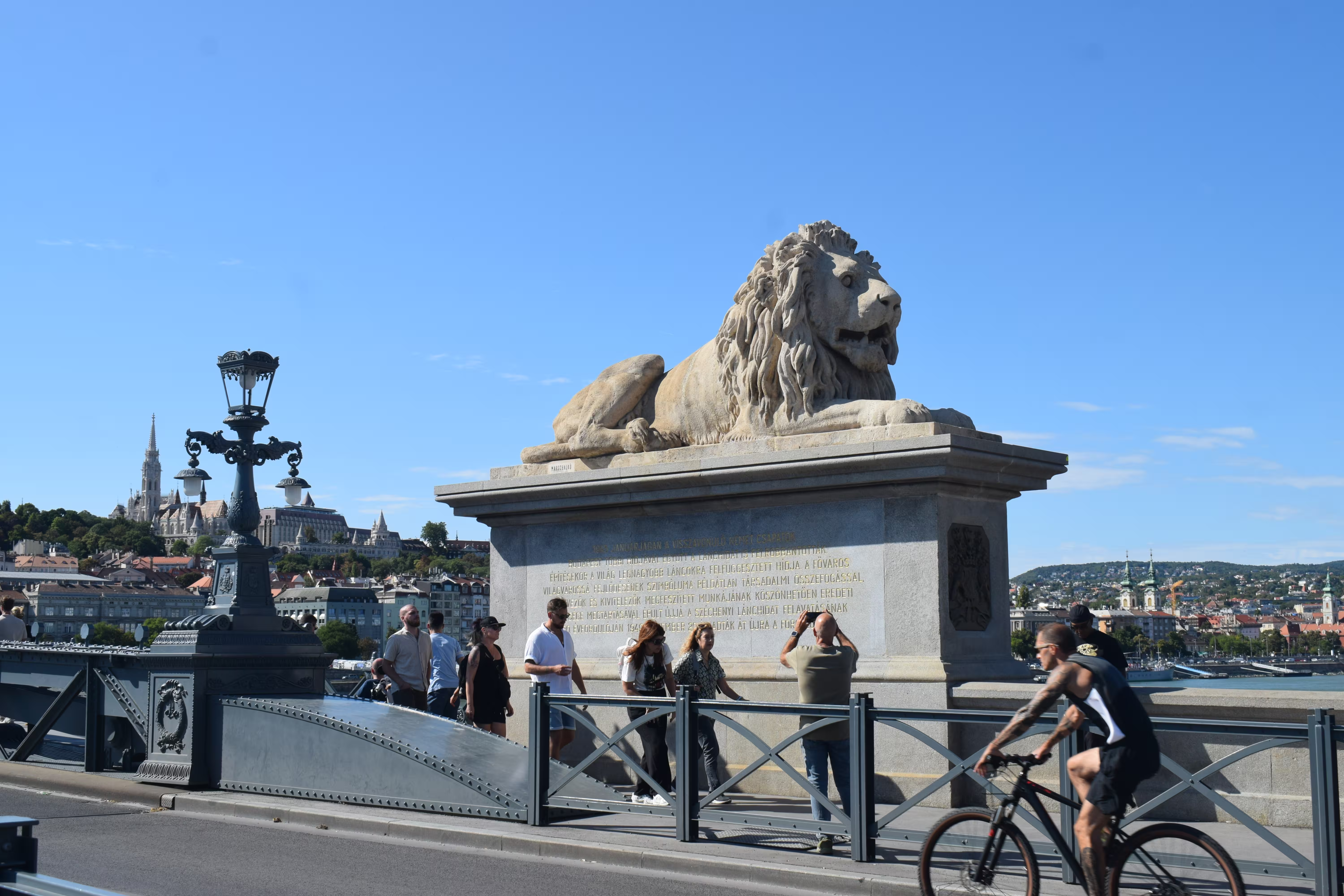
We walked on the chain bridge to get to the other side. The bridge gave a good view of the Danube River. It also had a statue of a lion. The Buda Castle (another major landmark of Budapest) was visible from the bridge.
A shot of Chain Bridge.
The lion statue on the Chain Bridge.
After reaching the other side of the bridge (the Buda side), we sat on a bench for some time and then planned on where to go next. We decided to go to Fisherman s Bastion, which is another tourist attraction.
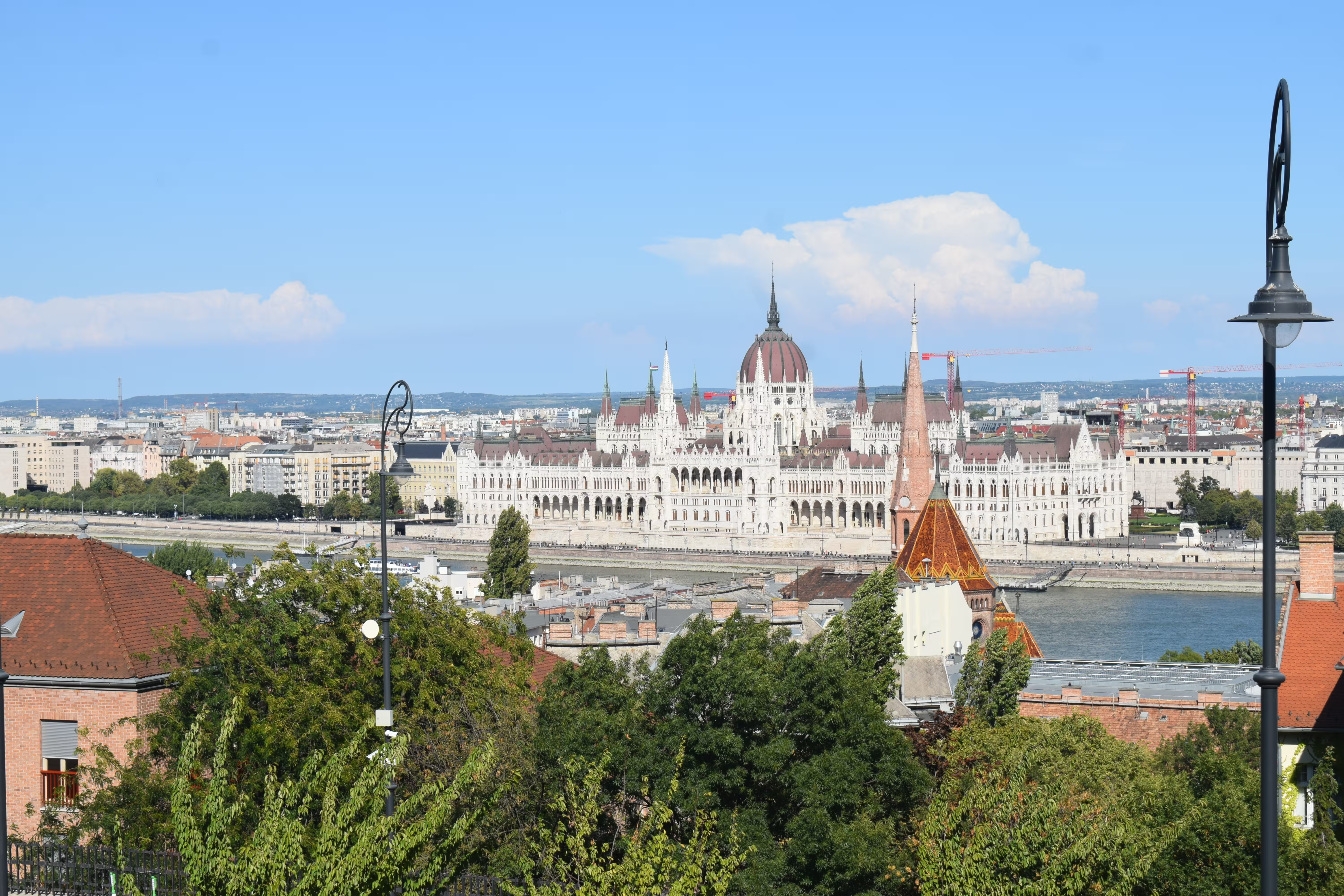
We used the OSMAnd~ app to figure out which bus to take and hopped on one. Soon we reached Fisherman s Bastion, where we found a flight of stairs that led upwards. Upon climbing the stairs, we got a panoramic view of the city. It also gave us a good view of the Hungarian parliament across the river. Going further upstairs, we found a statue of Stephen I of Hungary. He was the first king of Hungary, getting the crown in the year 1900.
A view of Hungarian parliament from Fisherman s bastion.
I found Fisherman s Bastion to be the best tourist attraction in the city. As mentioned earlier, it offers a panoramic view of the city, which I liked. I liked the arhitecture and open space there. If you find yourself in Budapest, I would highly recommend that you visit Fisherman s Bastion.
Fisherman s Bastion.
Statue of Stephen I of Hungary at Fisherman s Bastion.
Next, we went downstairs and returned to where the bus dropped us. From here on, we walked in random streets to see the residential and non-touristy side of Budapest. It was not so random as we walked towards Batthy ny t r metro station. Upon reaching the metro station, we found a caf where we stopped for a while for some coffee. After injecting some caffeine into our blood, we proceeded to find a place to have lunch.
Batthy ny t r metro station.
For lunch, we decided to go to R k czi t r metro station after reading on the internet about the food options there. Upon exiting the metro station, we found a market inside a building that had a lot of shops, but most of them were closed.
After roaming around inside a bit, we found an Italian place open and decided to eat there. The name of this place was Matteos. We ordered an eggplant parmigiana, a lasagna artichoke, and a classic tiramisu. It wasn t very tasty but filled us up for the day.
A picture of Matteos, where we had our lunch.
Budapest has four metro lines, and we had been to three of them, so we decided to try the remaining line, which was the M1 line. It is the oldest line in the city and has a different vibe than the modern lines. This line was opened in 1896, one of the oldest subway systems in the world.
The coaches were much smaller than the other metro lines, and the seating arrangement was something you would expect from a bus than a typical metro train. We rode all the way to the last stop, Mexik i t. Upon going outside, we found out there wasn t much to do here.
At this point, I checked the map and realized that Heroes Square is just a couple of metro stations away. Heroes Square is a tourist attraction in Budapest. It is located in Zugl a and is a historically significant place in Budapest. It has a monument which features the Seven chieftains of the Magyars.
M1 line station and tracks. It is the oldest metro transit of Budapest and one of the oldest in the world. It started operations in 1896.
Here, our unlimited public transport pass was handy because if it was paid per trip, we would think of the stop as a wasted one because we would have to buy a ticket again, but in this case we could just hop on again without any regrets.
An M1 line metro train entering the station.
So we took the M1 line again and deboarded at H s k tere station, followed by walking to the square. After roaming around for a while, we saw a trolleybus and decided to ride on that.
Heroes Square.
This is the trolleybus we took in Budapest.
A trolleybus is an electric bus that is powered by overhead electric cables. It is like a tram but runs on roads instead of tracks. We got down at D zsa Gy rgy t metro station. Then we took a metro to our hotel.
Before going to the hotel, we went to a place to eat something. We had coffee and l ngos. L ngos is a deep-fried Hungarian dish, which looks exactly like the Indian flatbread bhatura. I found it tasty, but since it was deep-fried, that was almost a given.
L ngos a dish which looks like the Indian flatbread bhatura.
The next day we went to Vienna the capital of Austria which I have already posted about. Check it out here.
I had a good time in Budapest, and it is a beautiful city with good public transport and some amazing sites to visit.
That s it for now, and see you next time!
Credits: Thanks Dione and Badri for proofreading.
In September 2025, I attended the LibreOffice Conference in Budapest, Hungary, on the 4th and the 5th, and a community meeting on the 3rd. Thanks to The Document Foundation (TDF) for sponsoring my travel and accommodation costs. The conference venue was Faculty of Informatics, E tv s Lor nd University (ELTE).
The conference was planned to be held from the 4th to the 6th, but the program for the 6th of September had to be canceled due to the venue being unavailable because of a marathon in Budapest. So, all the talks got squeezed into just two days, making the schedule a bit hectic.
The TDF had booked my room at the Corvin Hotel. It was a double bedroom with a window. The breakfast was included in the hotel booking. The hotel was walking distance from the conference venue. One could also take a tram from the hotel to reach the venue.
A shot of my room. Photo by Ravi Dwivedi, released under CC-BY-SA 4.0.
A tram in Budapest. Photo by Ravi Dwivedi, released under CC-BY-SA 4.0.
3rd of September
On the 3rd of September, we had a community meeting at the above-mentioned venue. I walked with my friend Dione to the venue. Upon reaching there, I noticed that the university had no boundaries and gates. This reminded me of the previous year s conference venue in Luxembourg, which also had no boundaries or gates.
In contrast, Indian universities and institutes typically have walls and gates serving as boundaries to separate them from the rest of the city. Many of these institutes also have security guards at the entrance, who may ask attendees to present proof of admission before allowing them inside. I was surprised to find that institutes in Europe, like the one where the conference was held, did not have such boundaries.
The building where the conference was held was red, which happened to be the same color as the building for the previous year s conference venue. I remember joking with Dione that the criteria for the conference venue might have been the color of the building.
The red building in the picture served as the conference venue. Photo by Ravi Dwivedi, released under CC-BY-SA 4.0.
During the community meeting, we shared ideas on how to spread the word about LibreOffice. The meeting lasted for a couple of hours.
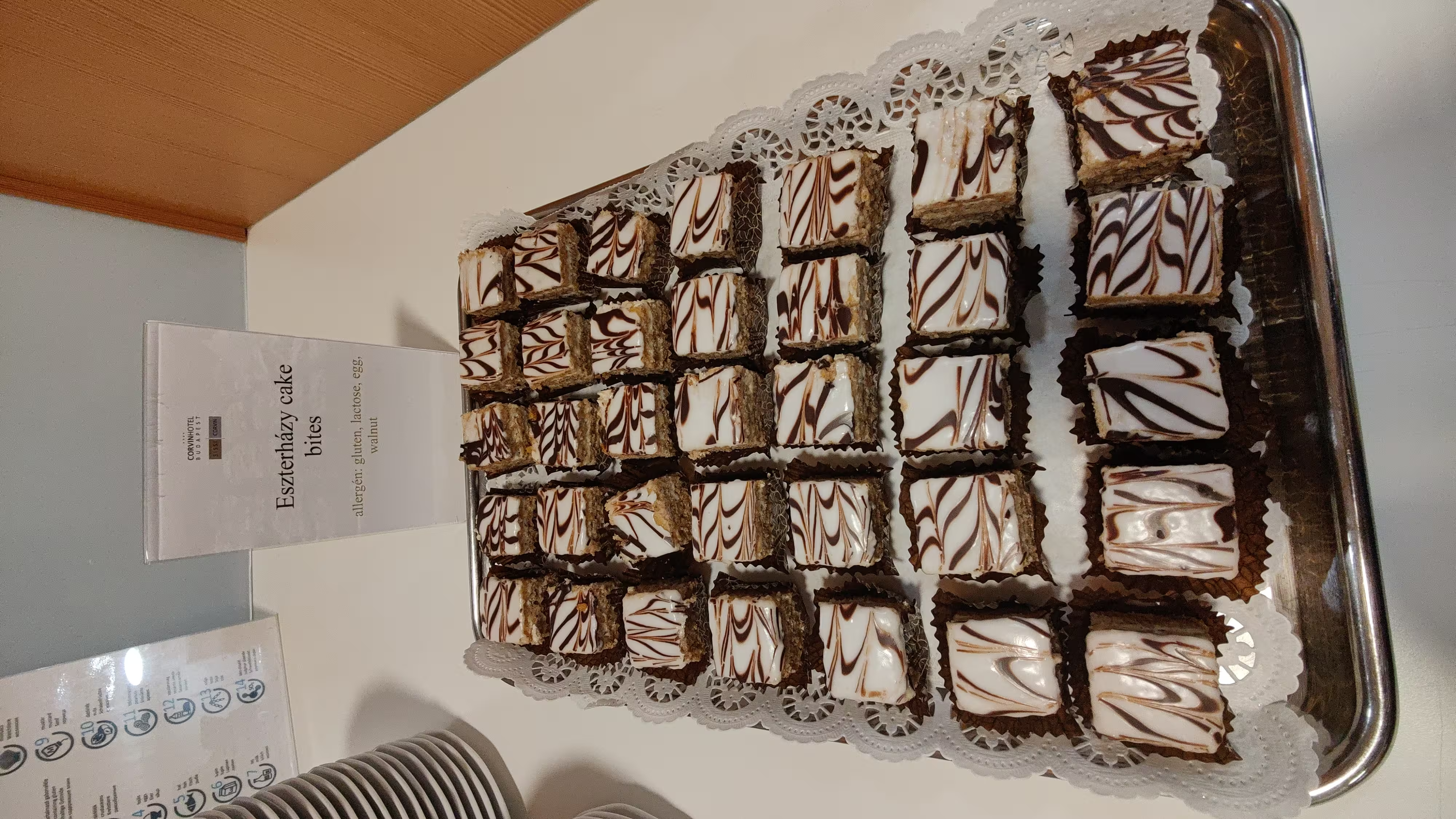
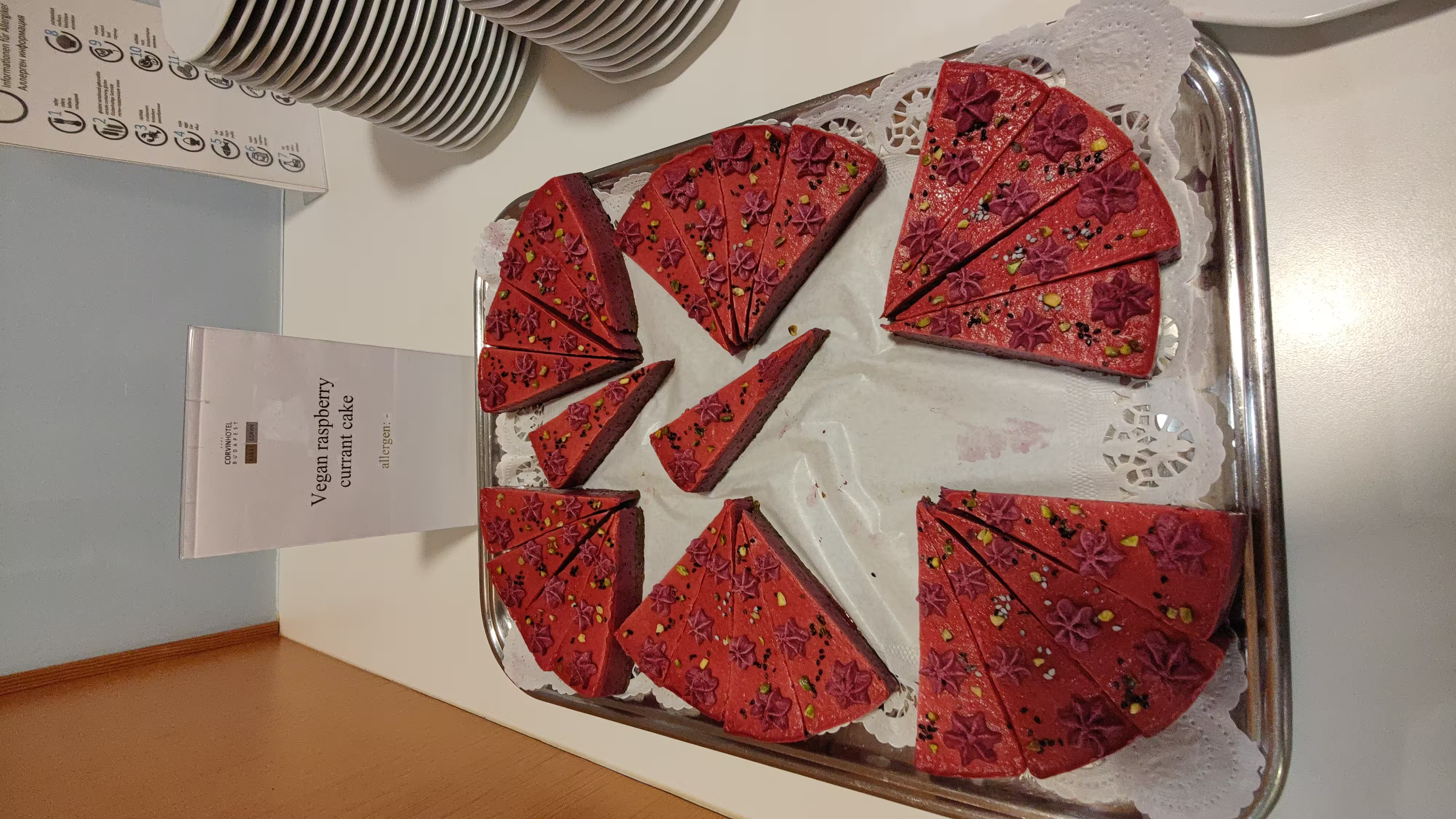
After the community meeting, we went to the hotel for dinner sponsored by the TDF.
These Esterh zy cake bites were really yummy. Photo by Ravi Dwivedi, released under CC-BY-SA 4.0.
Raspberry Currant cake slices. Photo by Ravi Dwivedi, released under CC-BY-SA 4.0.
4th of September
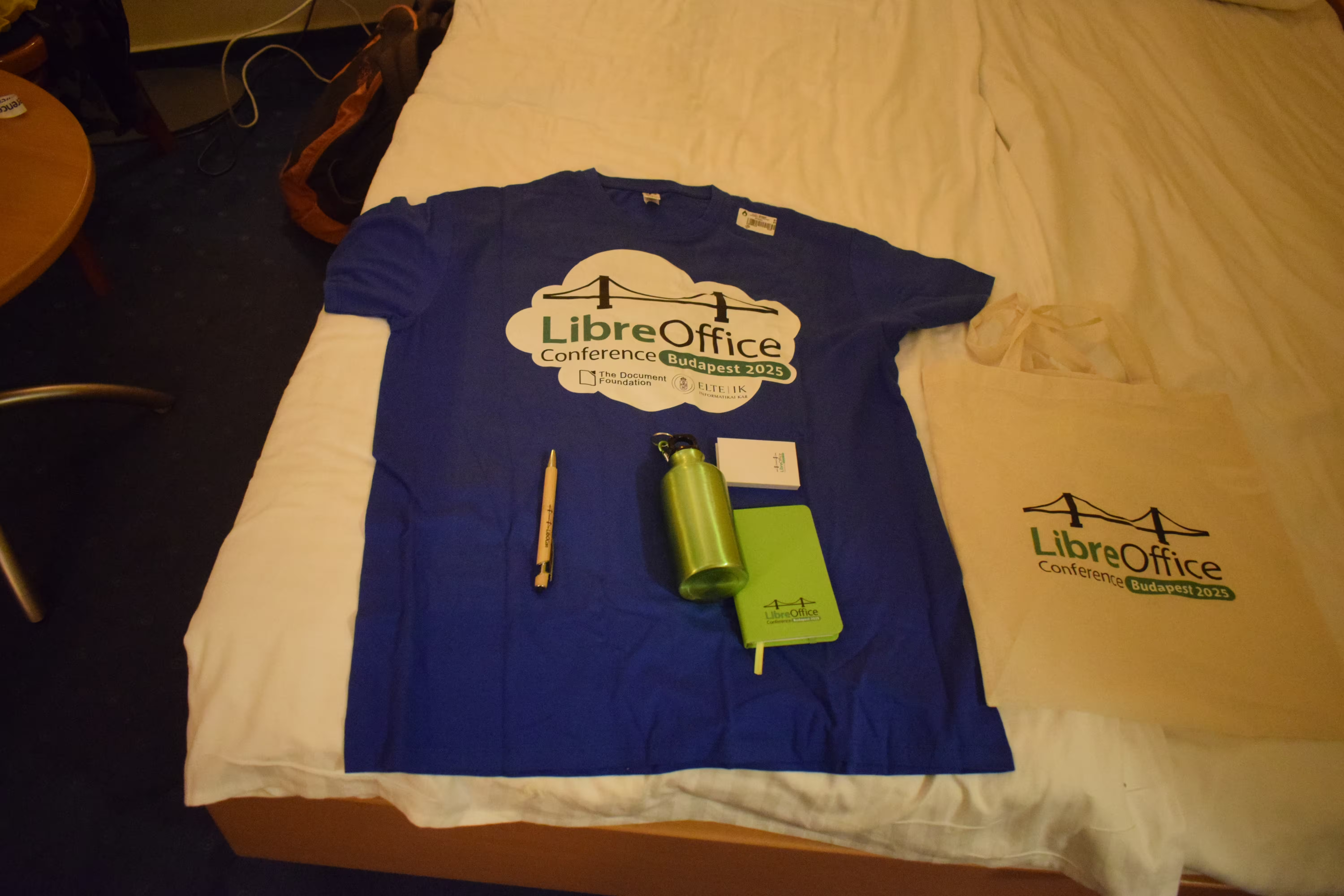
On the first day of the conference, attendees were given swag bags containing a pad, sticky notes, a pen, a conference T-shirt, and a bottle.
Conference swag. Photo by Ravi Dwivedi, released under CC-BY-SA 4.0.
The talks started early in the morning with Eliane Domingos, Chairperson of TDF s Board of Directors, giving the inauguration talk. As always, I found Italo Vignoli s talk on the importance of document freedom interesting.
During the snack break, I noticed that there were three types of milk available for coffee: cow s milk, lactose-free milk, and almond milk. Almond milk is rare in India, but I have managed to get it, but I have never seen lactose-free milk in India.
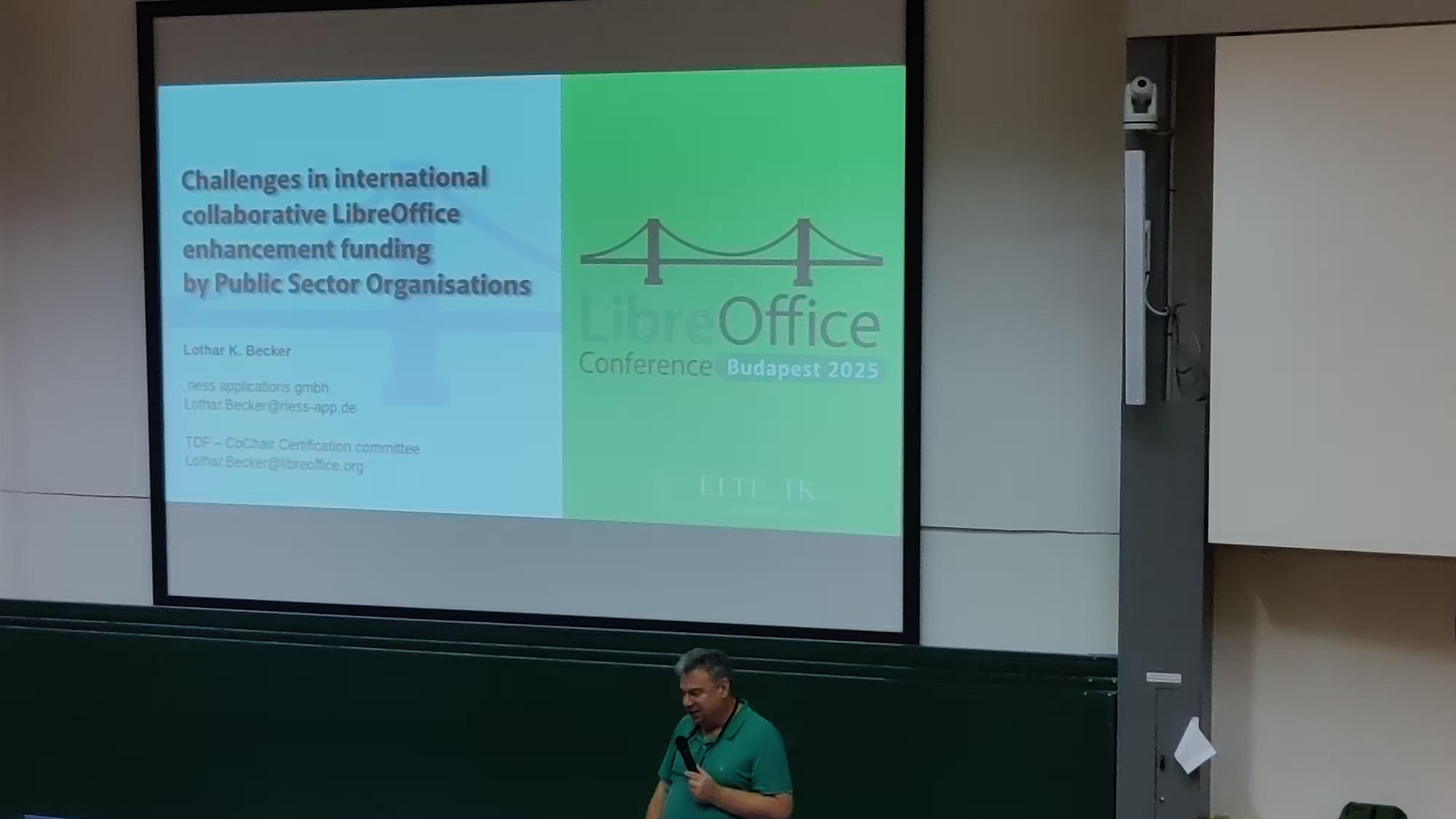
Since I run fundraisers in my projects, such as Prav, I could relate to Lothar K. Becker s talk. He discussed the issue that certain implementations in LibreOffice require a budget that is too large for any single interested entity to fund independently. Furthermore, The Document Foundation (TDF) cannot legally receive funds from government entities. Therefore, there is no organization or entity to pool resources from all the interested entities to finance the implementation.
Lothar giving his presentation. Photo by Ravi Dwivedi, released under CC-BY-SA 4.0.
Another talk was by the Austrian Armed Forces on their migration to LibreOffice. I wanted to know why they migrated, and I found out that they did it for their digital sovereignty, and not for saving on the license costs. Another point presented in the talk was that LibreOffice is available on all the operating systems, while the Microsoft Office suite is not that widely available. The migration was systematic and was performed over a few years. They started working on it in 2021, and the migration was finished recently. In addition, it also required training their staff in using LibreOffice.
Presentation on migration to LibreOffice by Austrian Armed Forces. Photo by Ravi Dwivedi, released under CC-BY-SA 4.0.
The lunch was inside the university canteen. We were provided lunch coupons by the TDF. I got a vegan coupon with 4000 Ft written on it, which meant I could take lunch for up to 4000 Hungarian forints.
My lunch ticket for the conference. Photo by Ravi Dwivedi, released under CC-BY-SA 4.0.
The lunch I had on the first day. Photo by Ravi Dwivedi, released under CC-BY-SA 4.0.
During the evening, it was my turn for the presentation. I was done with preparing my slides ten days before my talk. I also got my slides reviewed by friends.
My talk was finished in 20 minutes, while I was given a 30-minute slot. This helped us catch up on the schedule. Furthermore, I made my talk interactive by asking questions and making sure that the audience was not asleep. During my talk, my friend Dione took my pictures with my camera.
My talk was on how free software projects could give users a say in freedom to modify the software. I illustrated this using the Prav project that I am a part of.
After the talks were over, we were treated to a conference dinner at Trofea Grill. It had a great selection of desserts, which helped me sample some Hungarian desserts. The sponge cake was especially good.
Desserts at Tofea Grill. Photo by Ravi Dwivedi, released under CC-BY-SA 4.0.
5th of September
The next day the 5th of September I went with Dione to the venue early in the morning, as her talk was the first one of the day. Her talk was titled Managing Tasks with Nextcloud Deck. Later that day, I also attended a talk on Collabora. At lunch, I found the egg white salad quite tasty.
Dione giving her presentation. Photo by Ravi Dwivedi, released under CC-BY-SA 4.0.
Egg white salad. Photo by Ravi Dwivedi, released under CC-BY-SA 4.0.
After the lunch break, we had the conference group photo. I had a Nikon camera, which we used to take the group photo. I requested a university student to take our group photo and also taught her how to operate the camera.
Group photo
By the evening, the conference ended, after which we went to a pub, which was again sponsored by TDF. I had beer, but that one really tasted bad, so I couldn t finish it. The only vegetarian option was goat cheeseburger, which my friend Manish and I opted for. The burger tasted awful. Apparently, I don t like goat cheese.
The next day I went sightseeing with Dione in Budapest. Stay tuned for our adventures!
Credits: Thanks to Dione and Richard for proofreading.
 This is the counter from where I bought my public transport pass.
 My unlimited public transport pass for Budapest. I have redacted my passport number from it.
 An automatic ticket machine at a tram station in Budapest.
 An M3 line metro in Budapest.
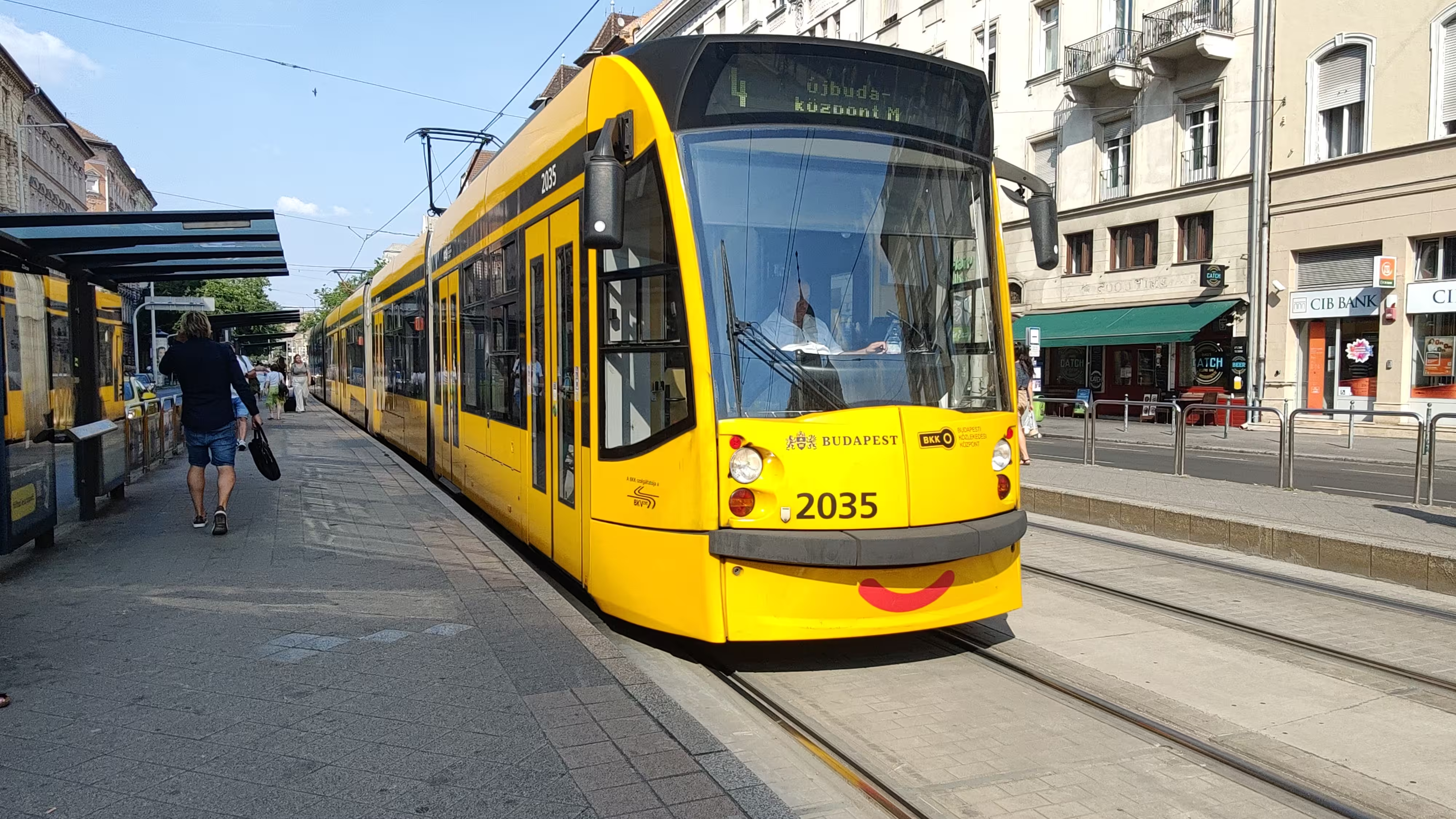 A tram in Budapest having a smiley face at the front.
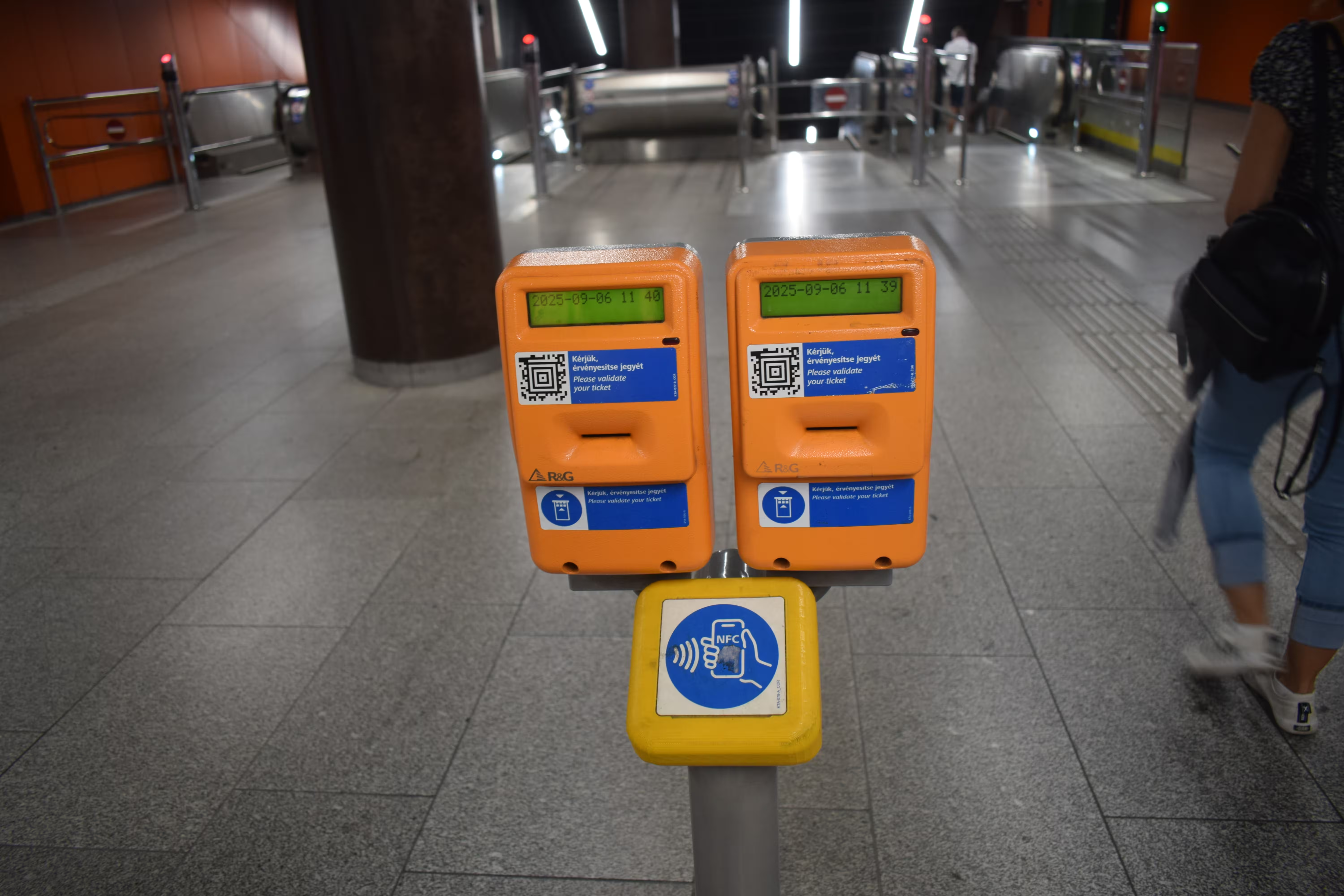 A ticket validator at a metro station in Budapest.
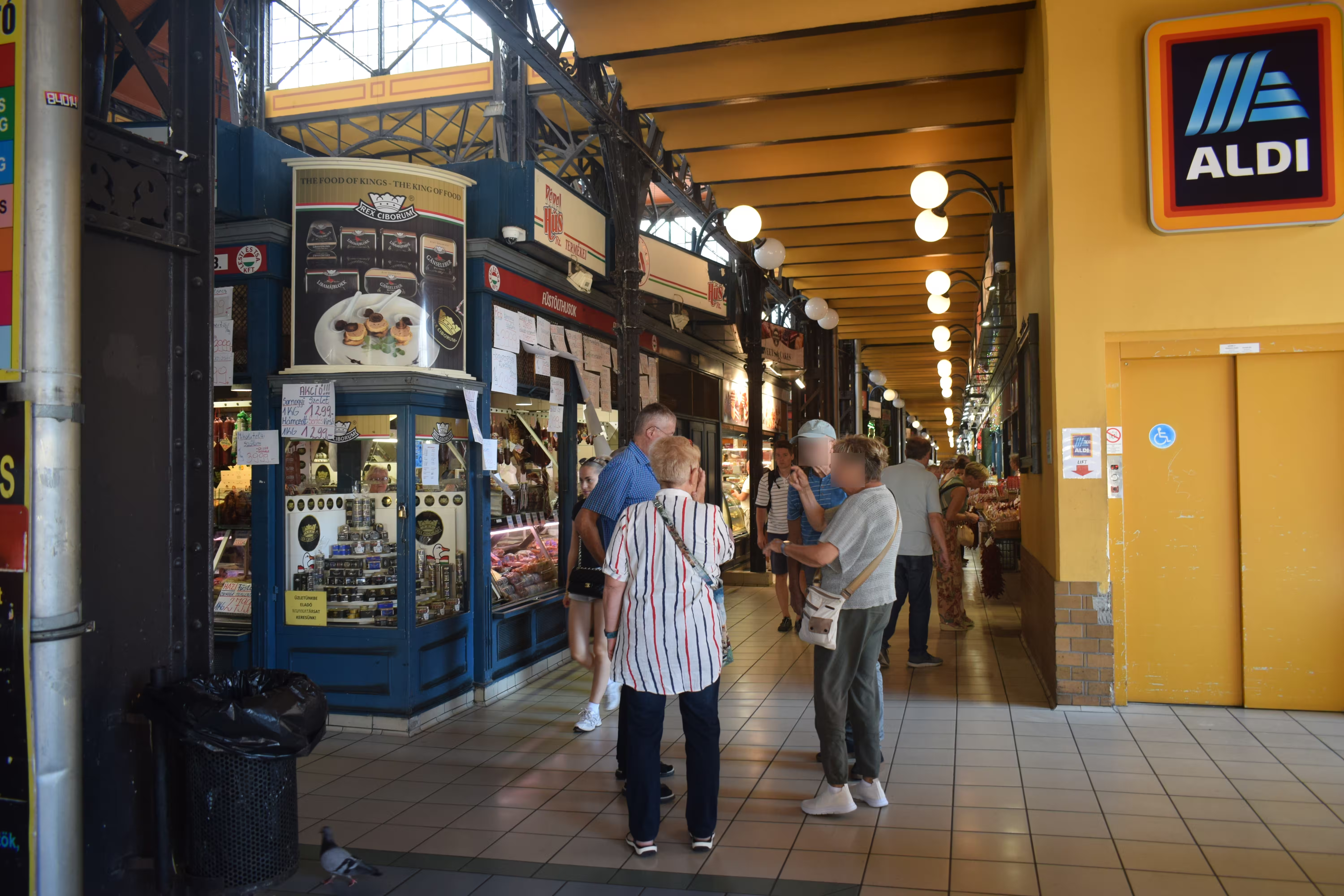 Central market.
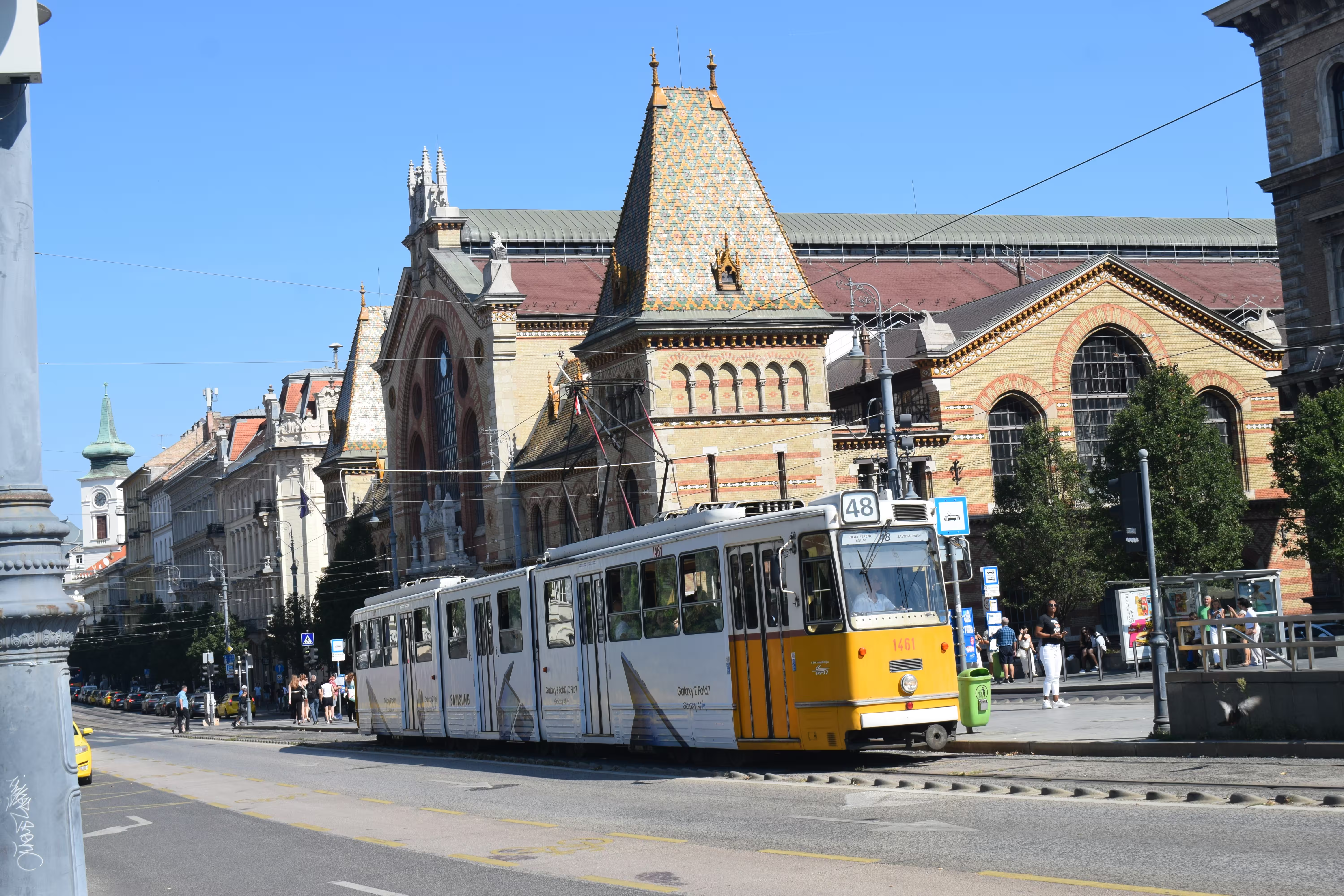 The building right behind the tram is the central market building.
 Hungarian Parliament building.
 A shot of Chain Bridge.
 The lion statue on the Chain Bridge.
 A view of Hungarian parliament from Fisherman s bastion.
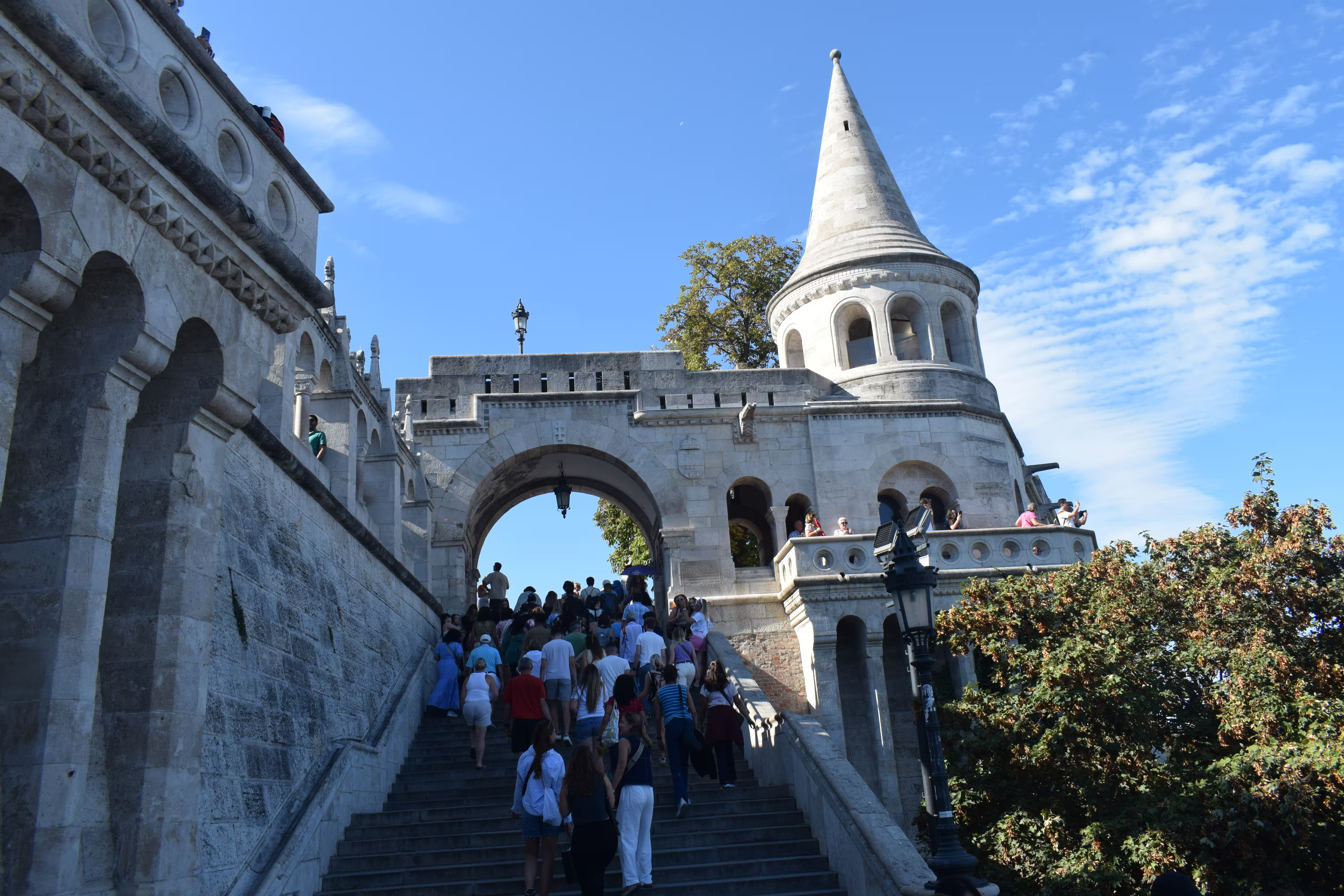 Fisherman s Bastion.
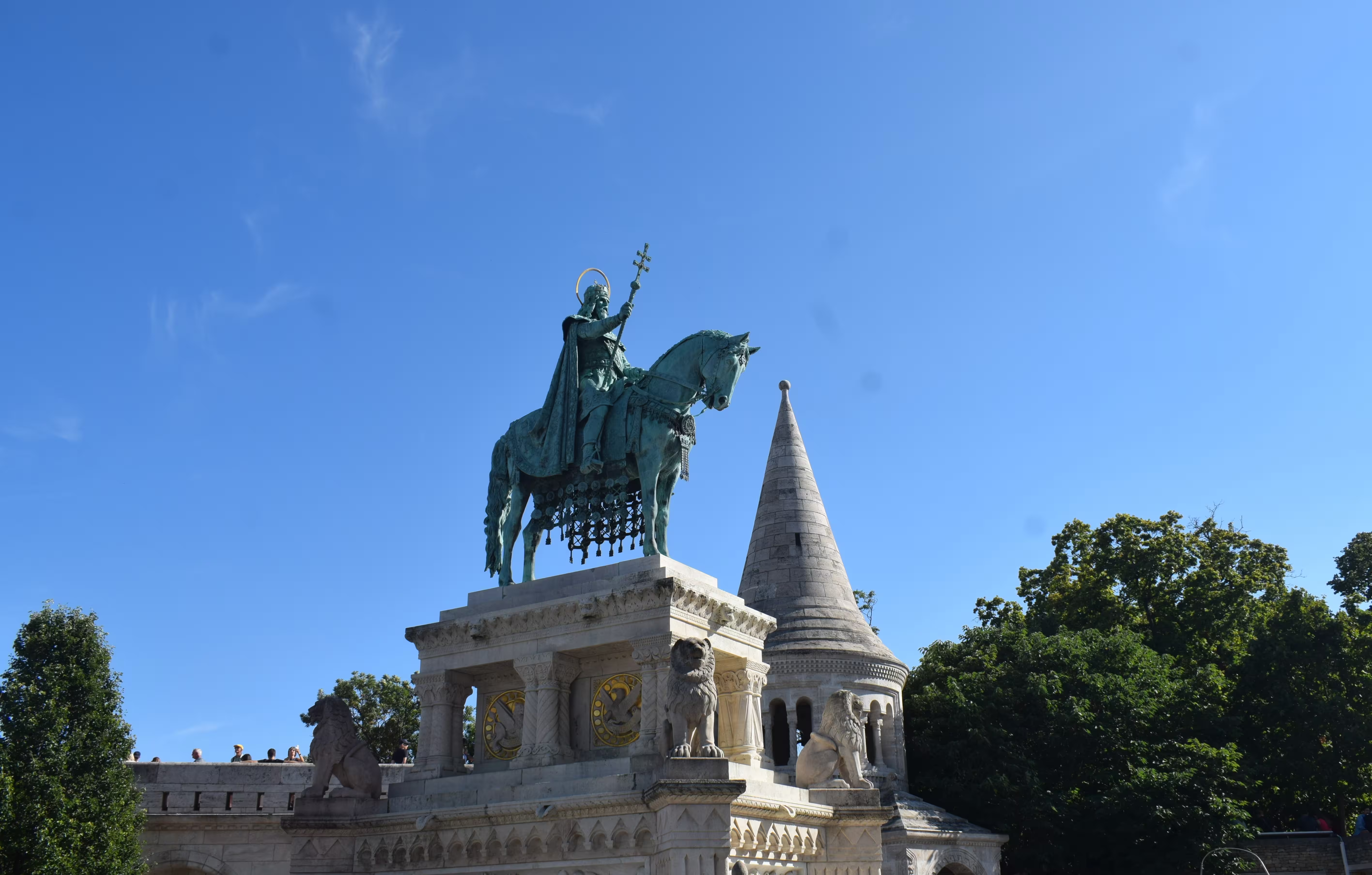 Statue of Stephen I of Hungary at Fisherman s Bastion.
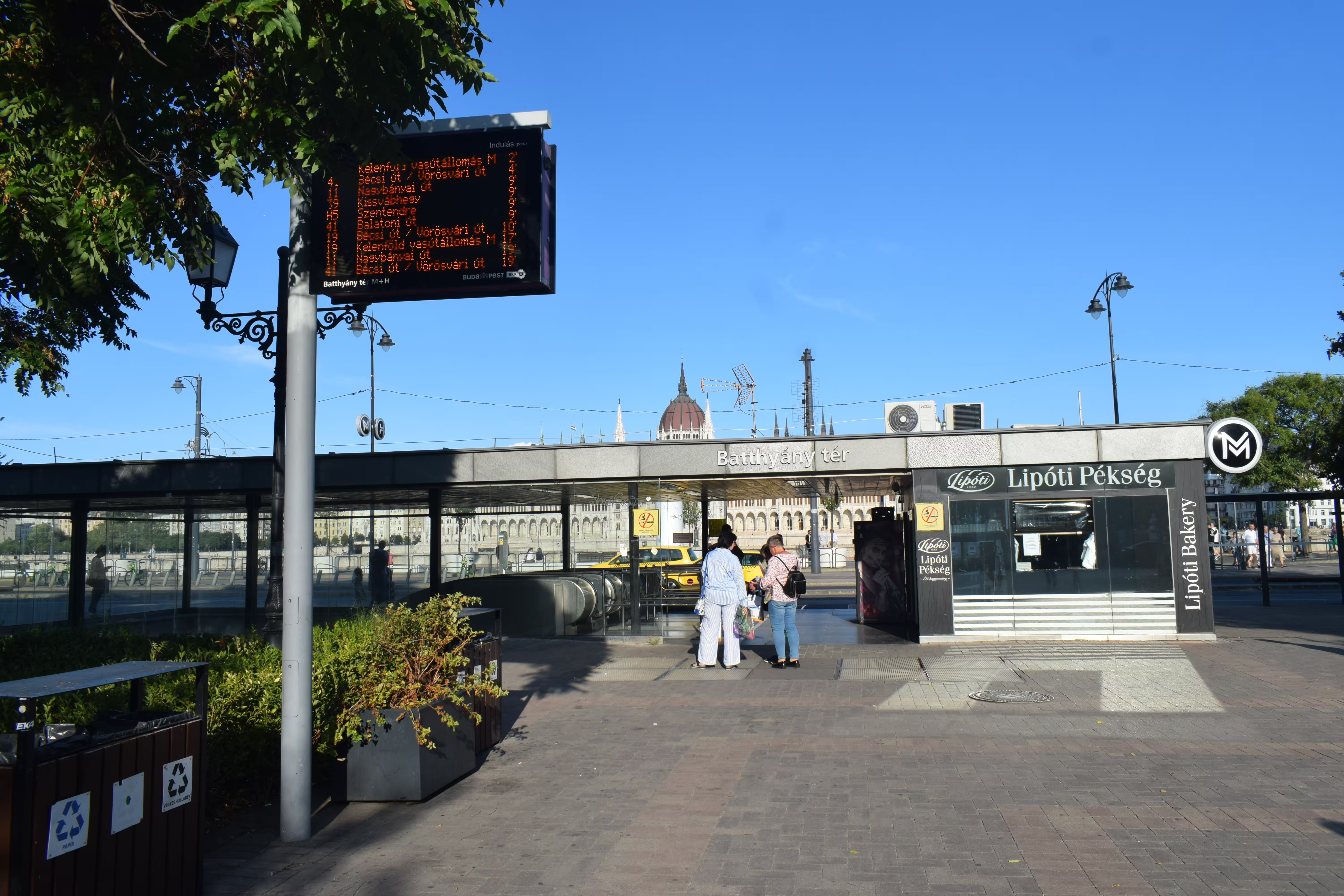 Batthy ny t r metro station.
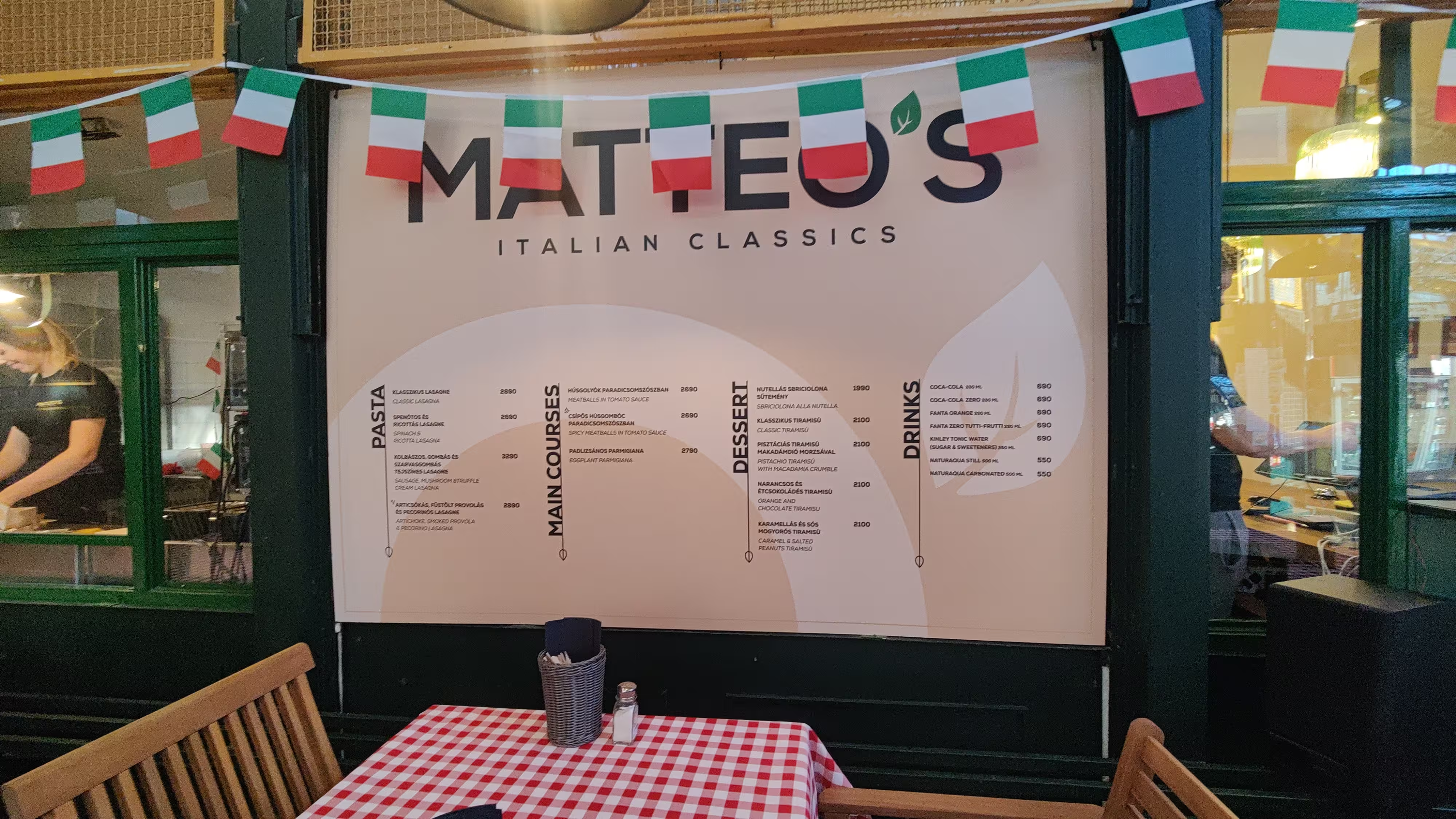 A picture of Matteos, where we had our lunch.
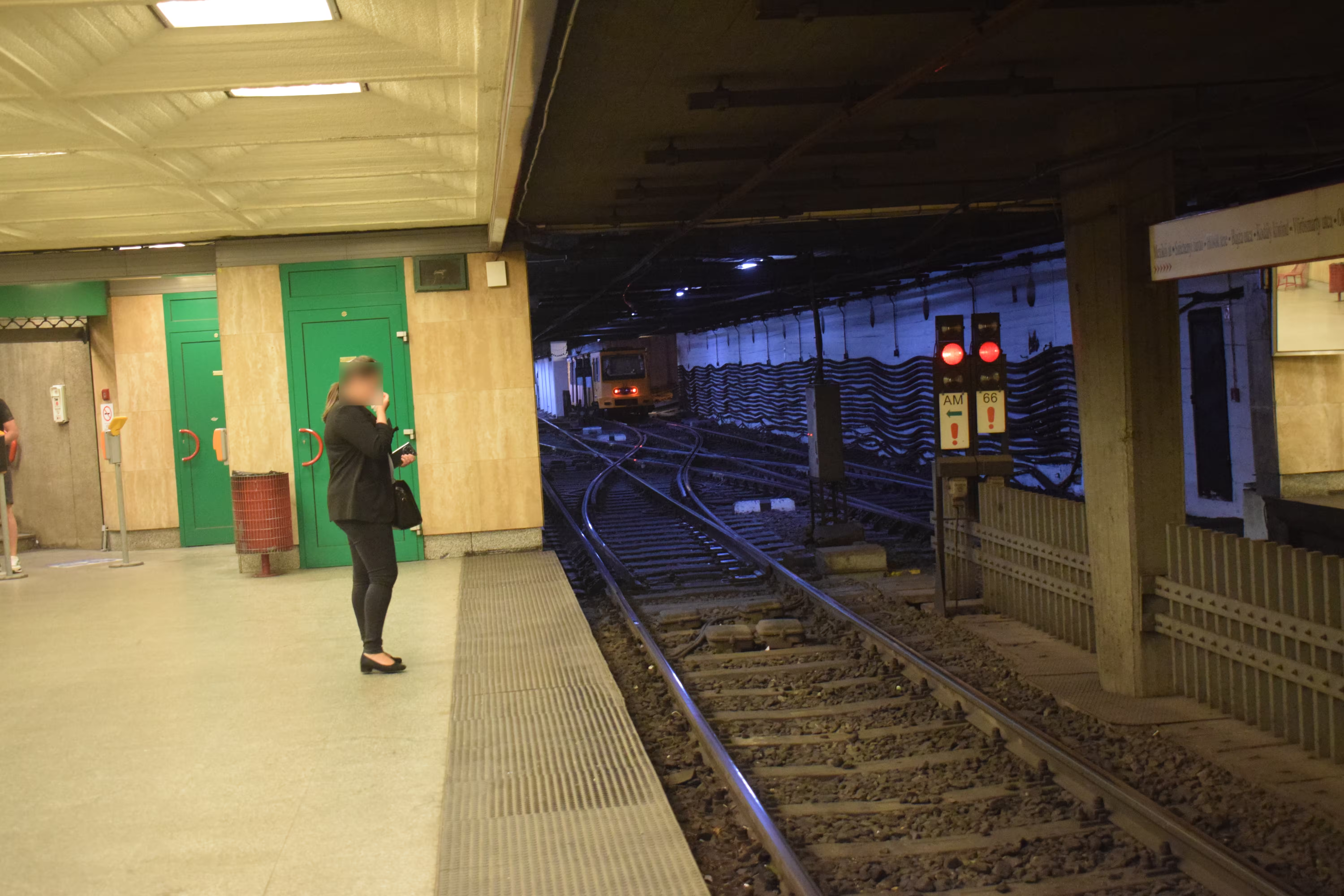 M1 line station and tracks. It is the oldest metro transit of Budapest and one of the oldest in the world. It started operations in 1896.
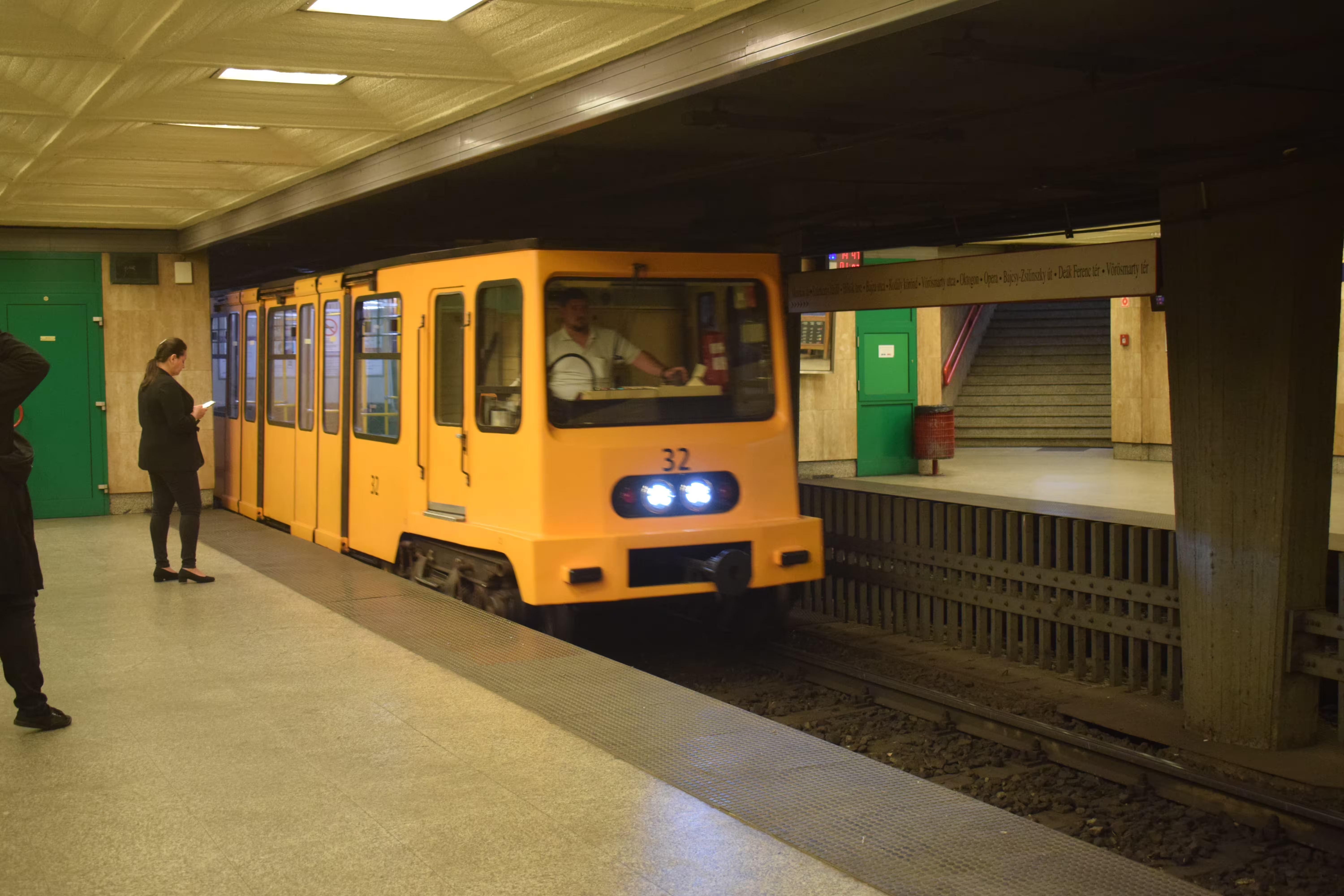 An M1 line metro train entering the station.
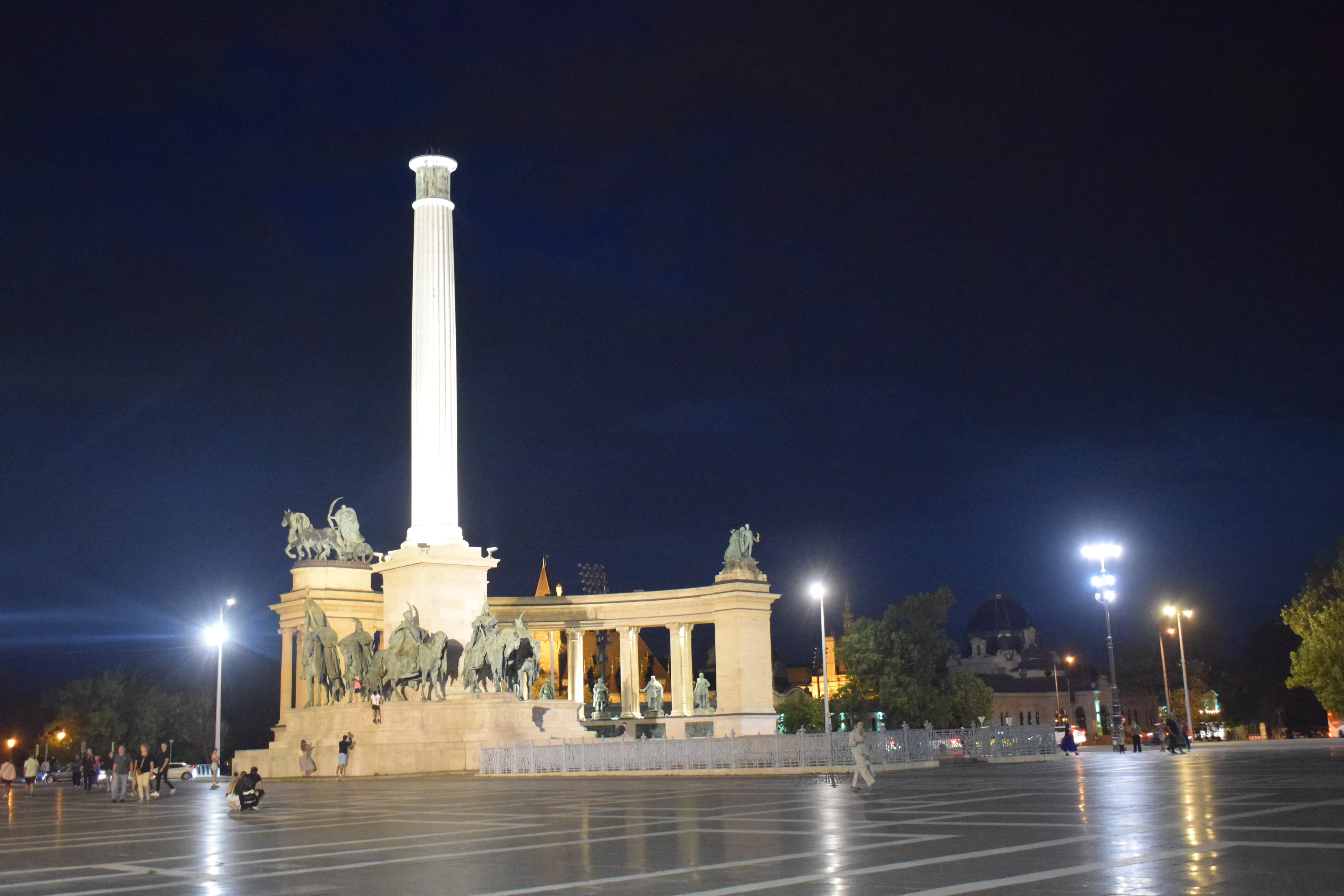 Heroes Square.
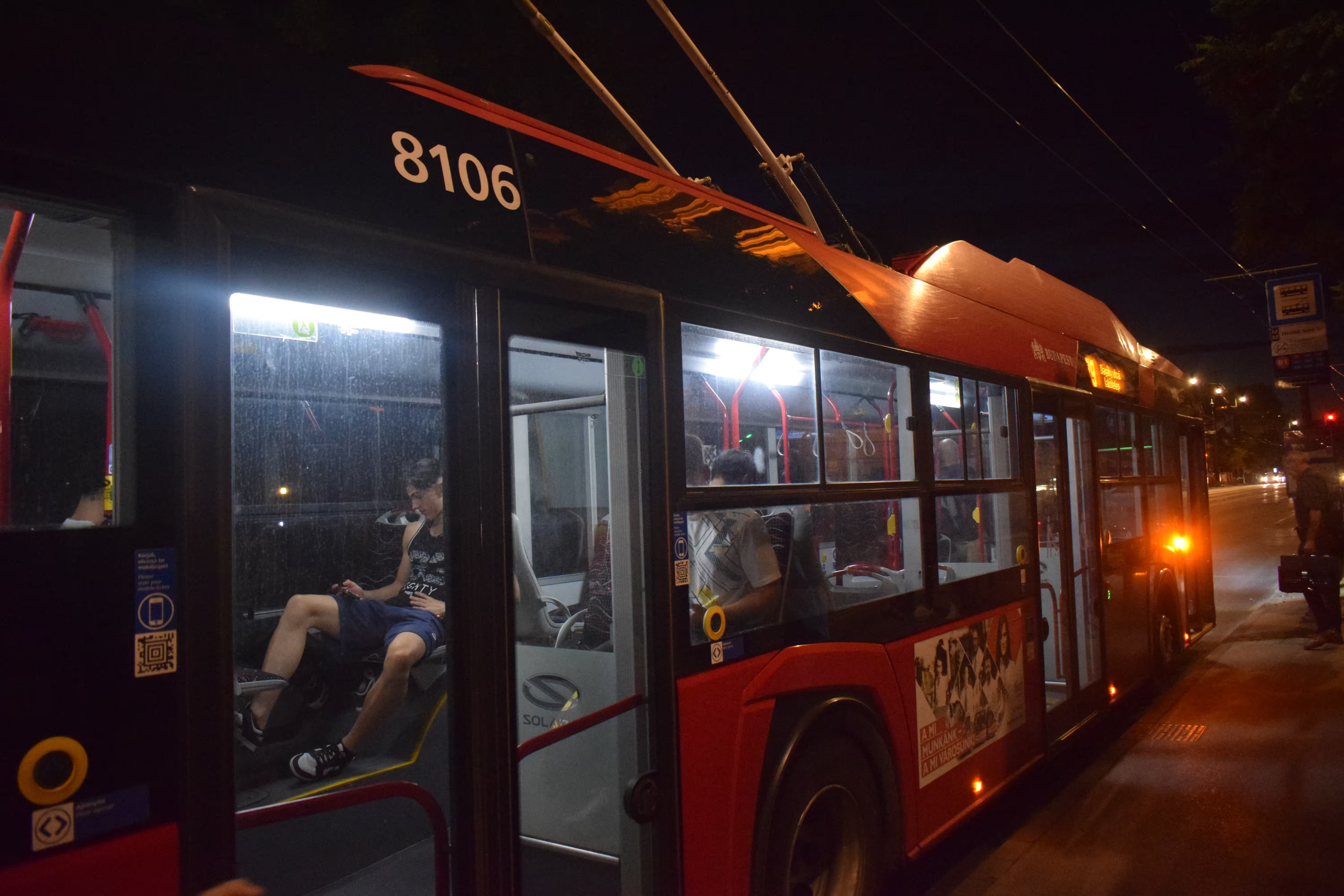 This is the trolleybus we took in Budapest.
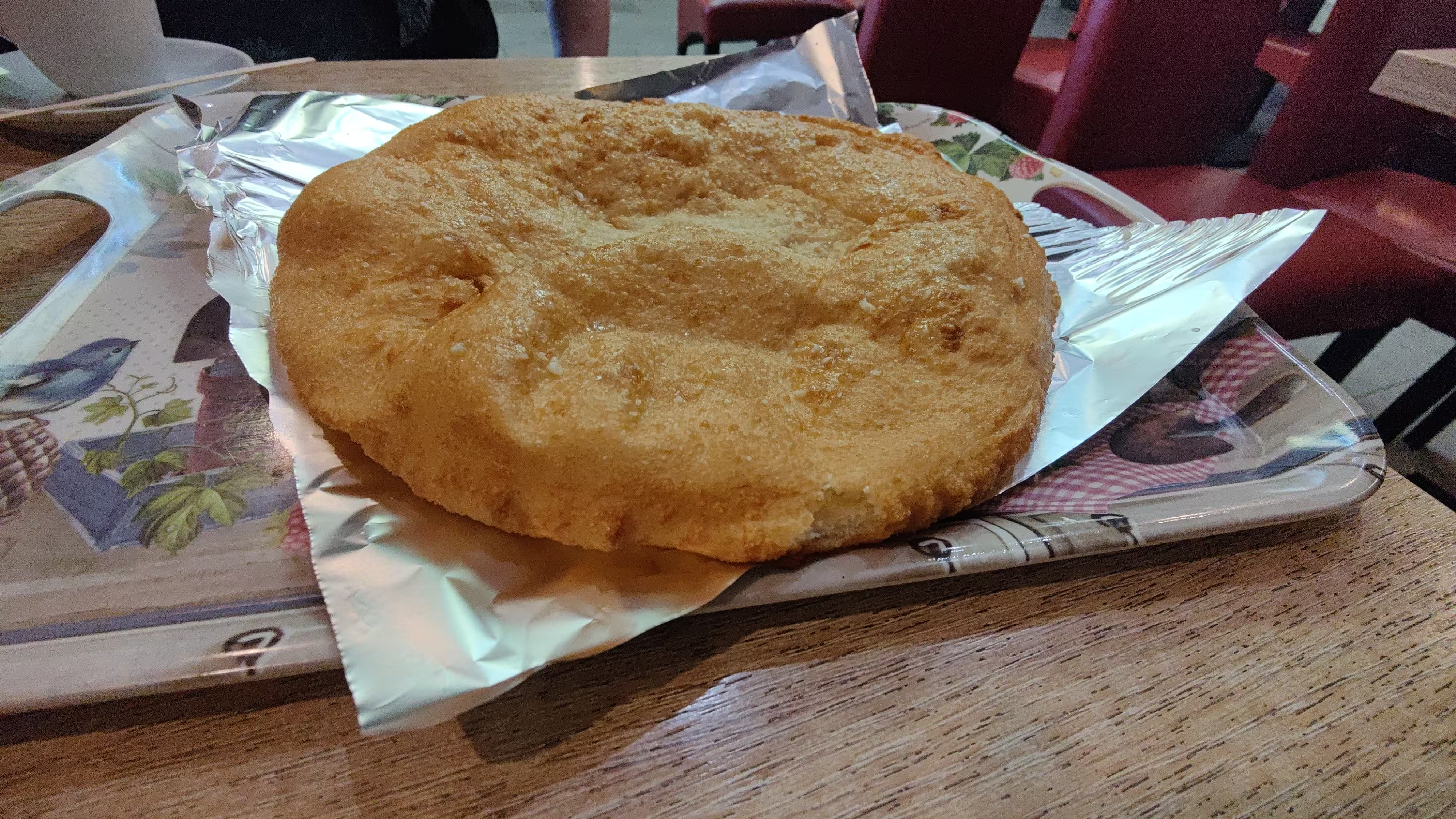 L ngos a dish which looks like the Indian flatbread bhatura.
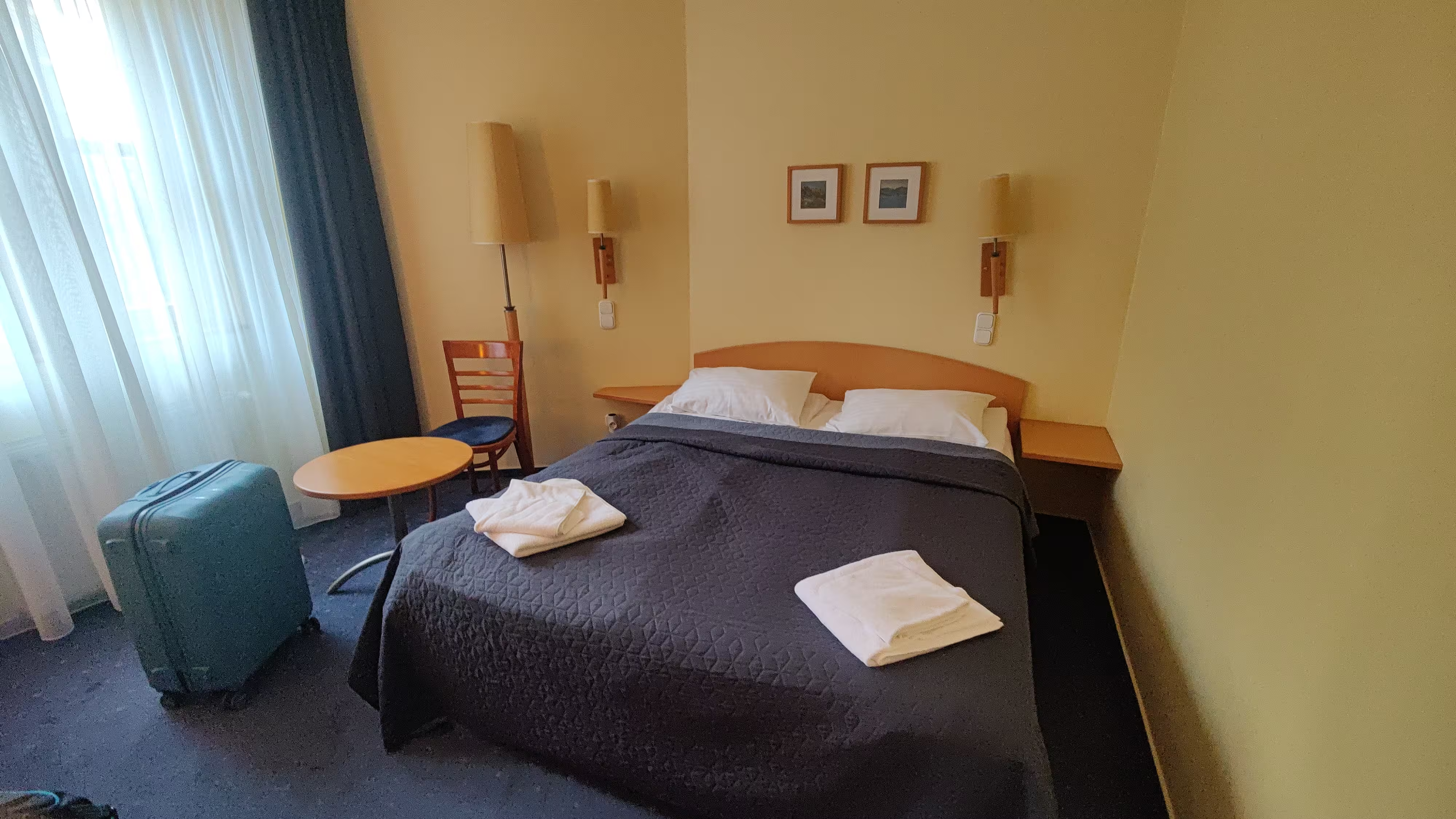 A shot of my room. Photo by Ravi Dwivedi, released under CC-BY-SA 4.0.
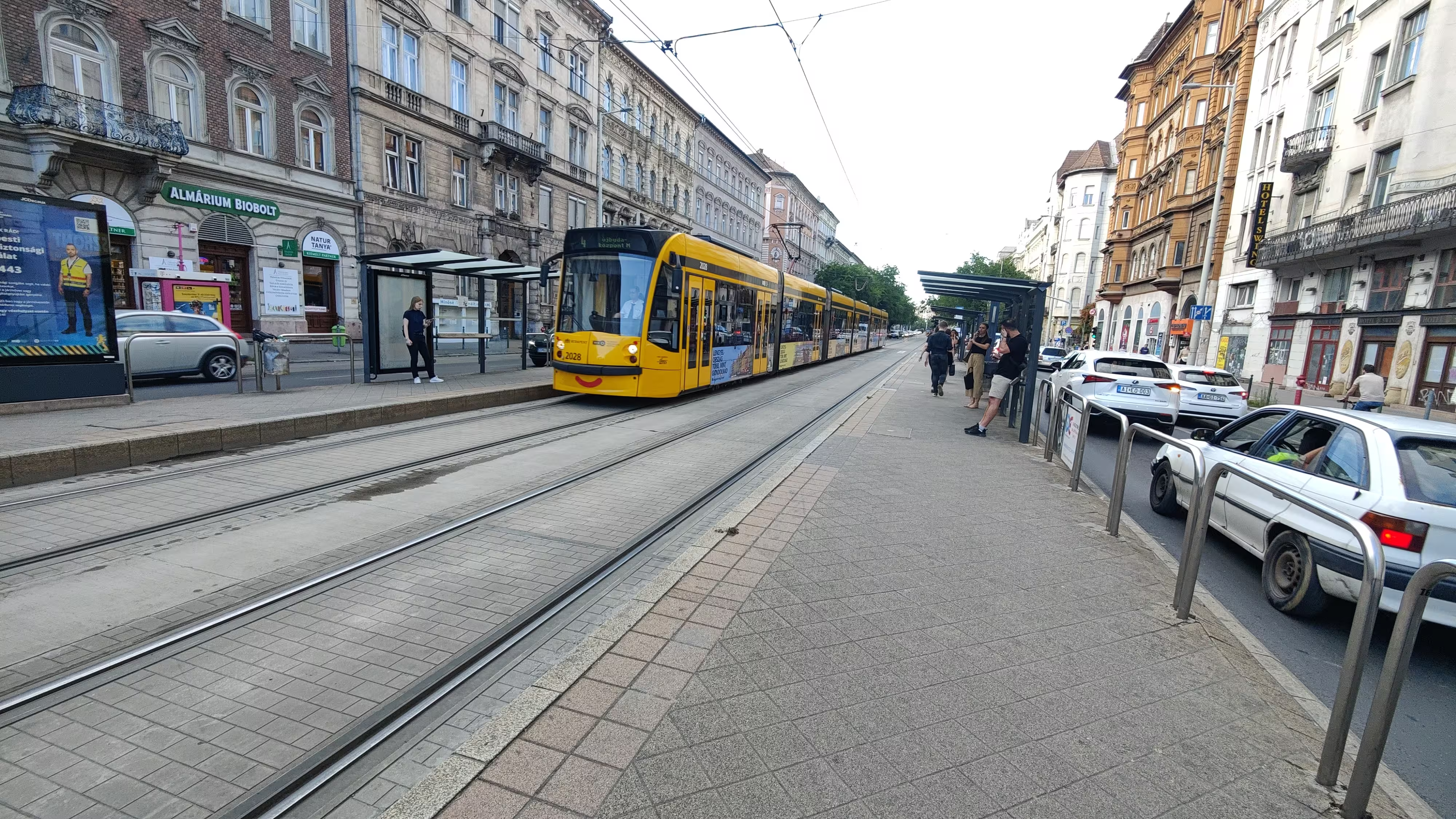 A tram in Budapest. Photo by Ravi Dwivedi, released under CC-BY-SA 4.0.
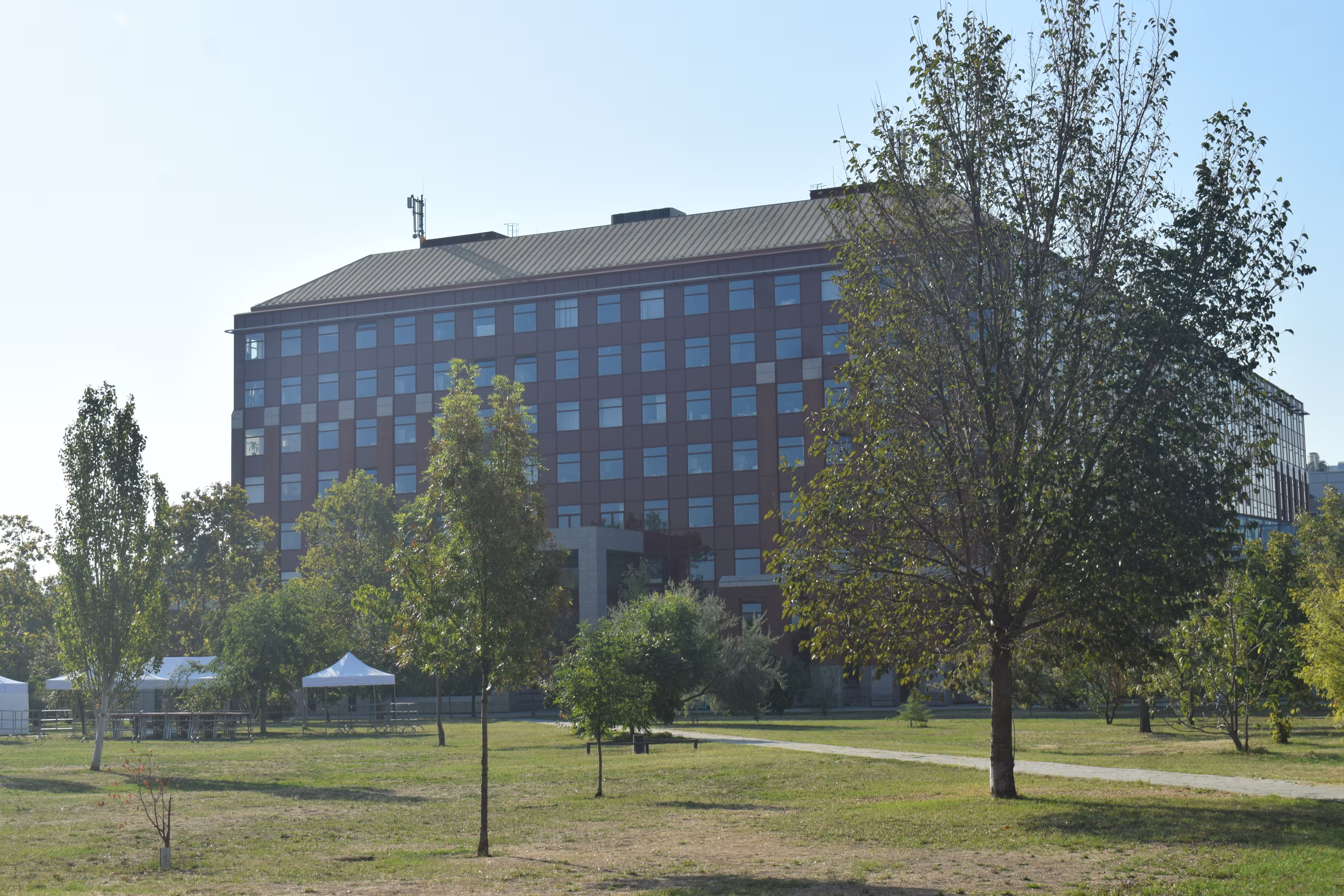 The red building in the picture served as the conference venue. Photo by Ravi Dwivedi, released under CC-BY-SA 4.0.
 These Esterh zy cake bites were really yummy. Photo by Ravi Dwivedi, released under CC-BY-SA 4.0.
 Raspberry Currant cake slices. Photo by Ravi Dwivedi, released under CC-BY-SA 4.0.
 Conference swag. Photo by Ravi Dwivedi, released under CC-BY-SA 4.0.
 Lothar giving his presentation. Photo by Ravi Dwivedi, released under CC-BY-SA 4.0.
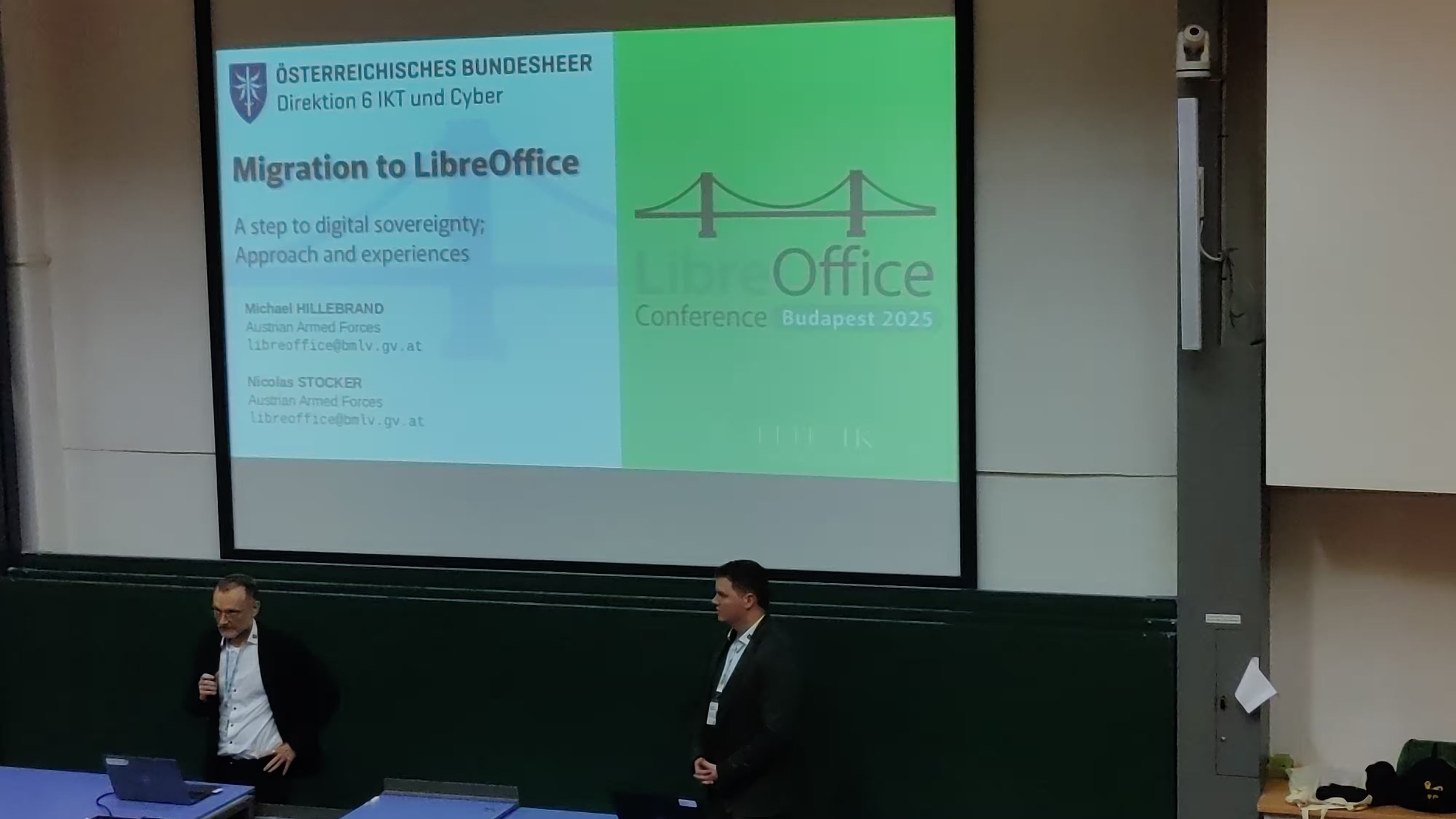 Presentation on migration to LibreOffice by Austrian Armed Forces. Photo by Ravi Dwivedi, released under CC-BY-SA 4.0.
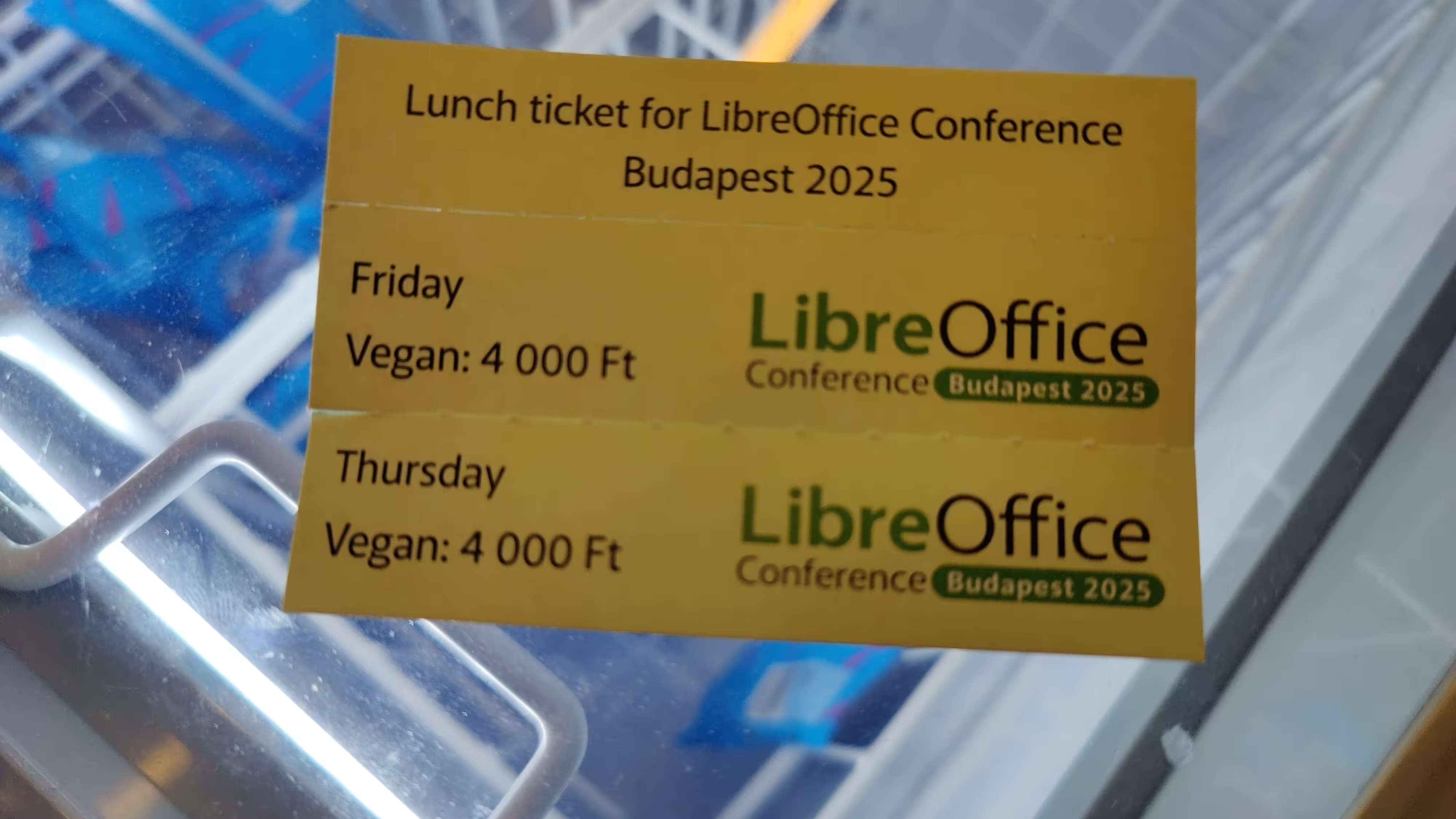 My lunch ticket for the conference. Photo by Ravi Dwivedi, released under CC-BY-SA 4.0.
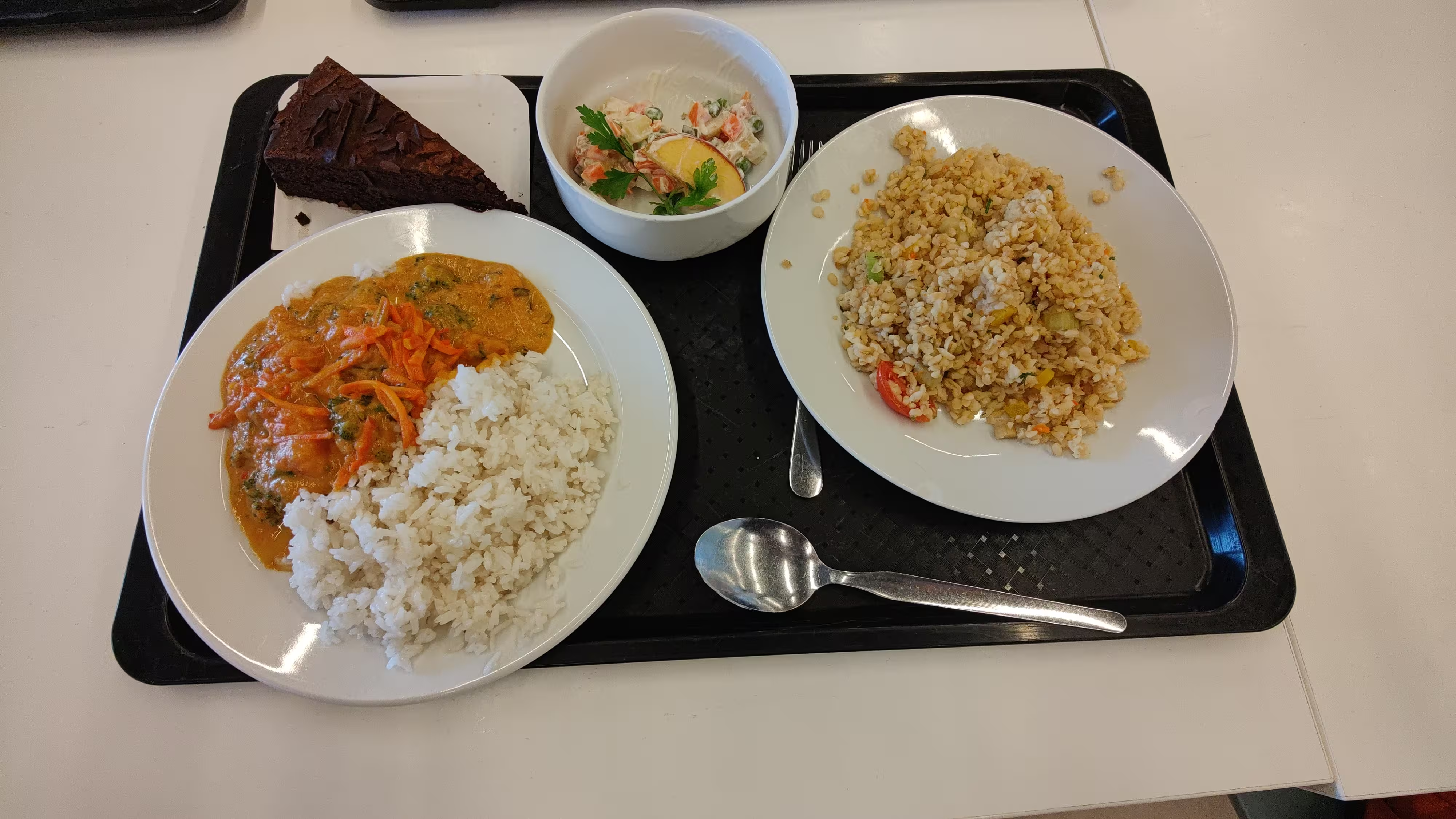 The lunch I had on the first day. Photo by Ravi Dwivedi, released under CC-BY-SA 4.0.
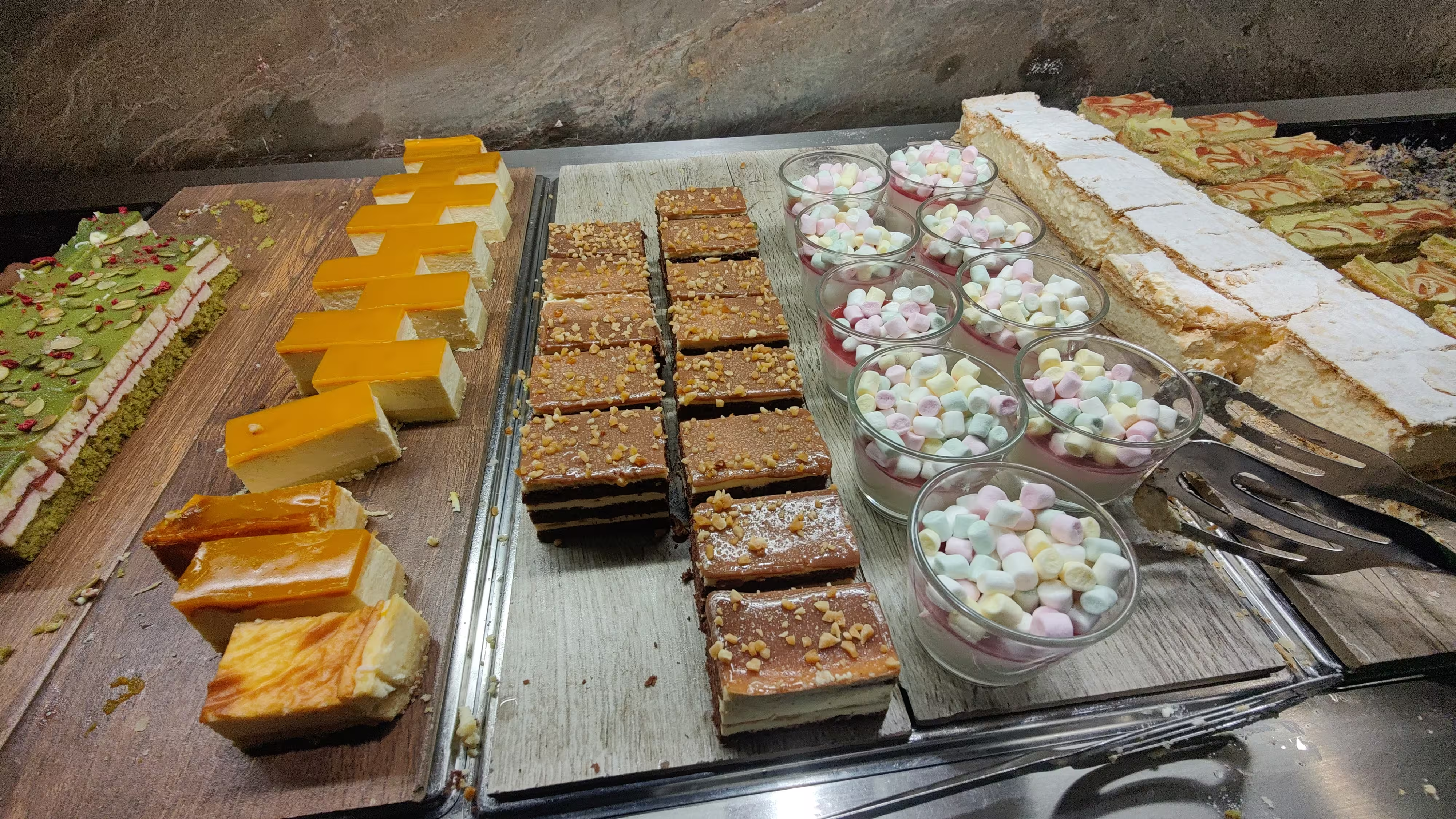 Desserts at Tofea Grill. Photo by Ravi Dwivedi, released under CC-BY-SA 4.0.
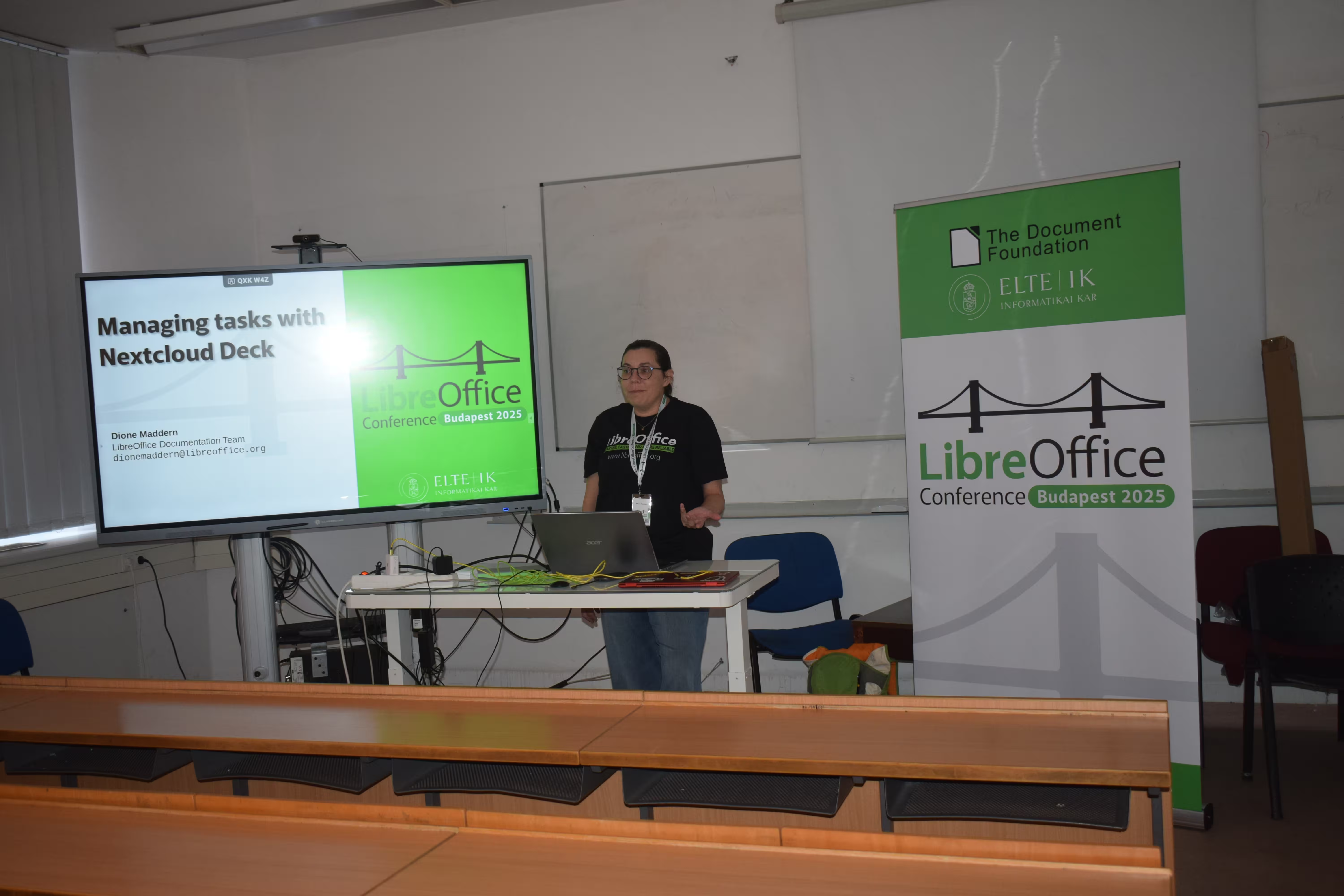 Dione giving her presentation. Photo by Ravi Dwivedi, released under CC-BY-SA 4.0.
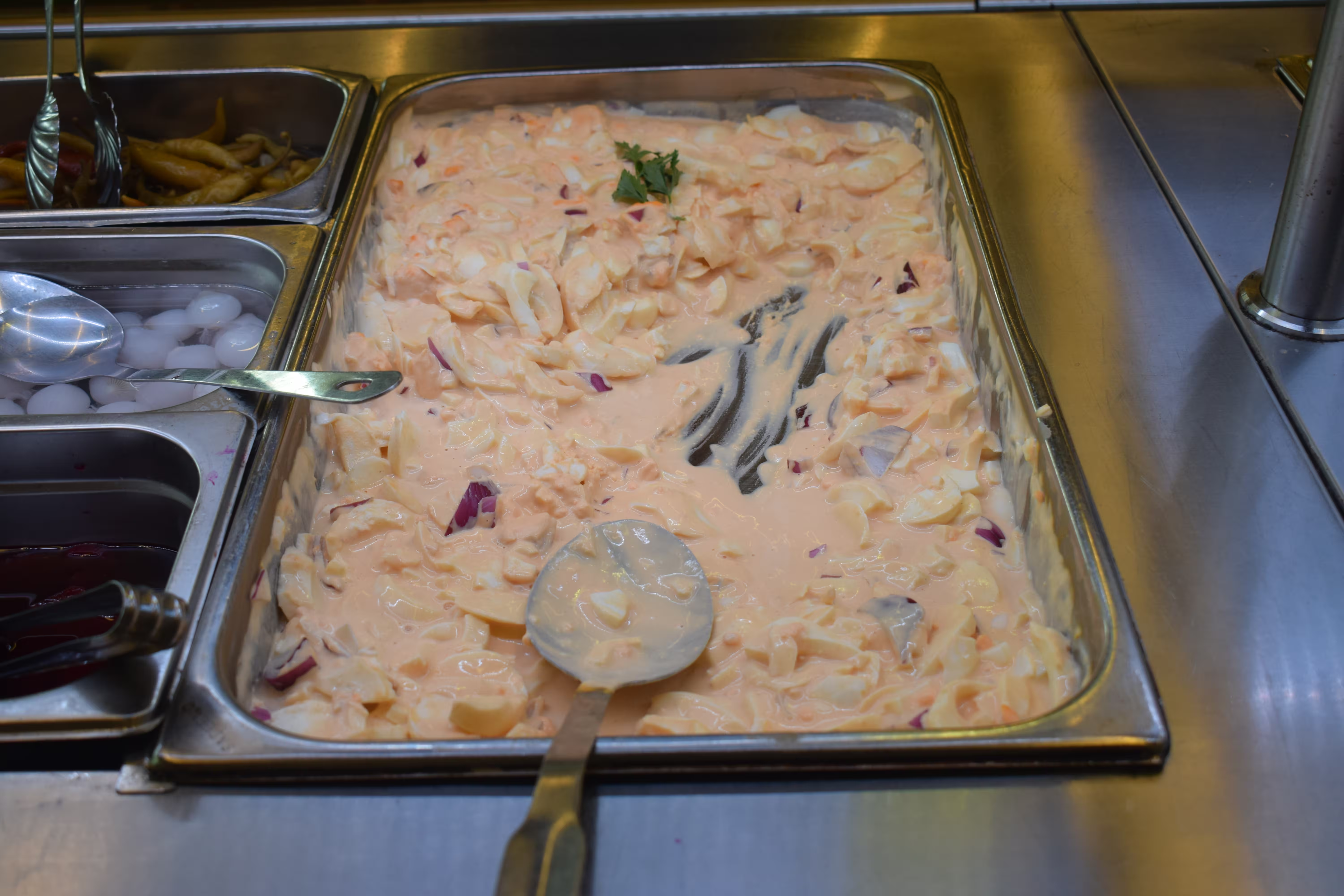 Egg white salad. Photo by Ravi Dwivedi, released under CC-BY-SA 4.0.
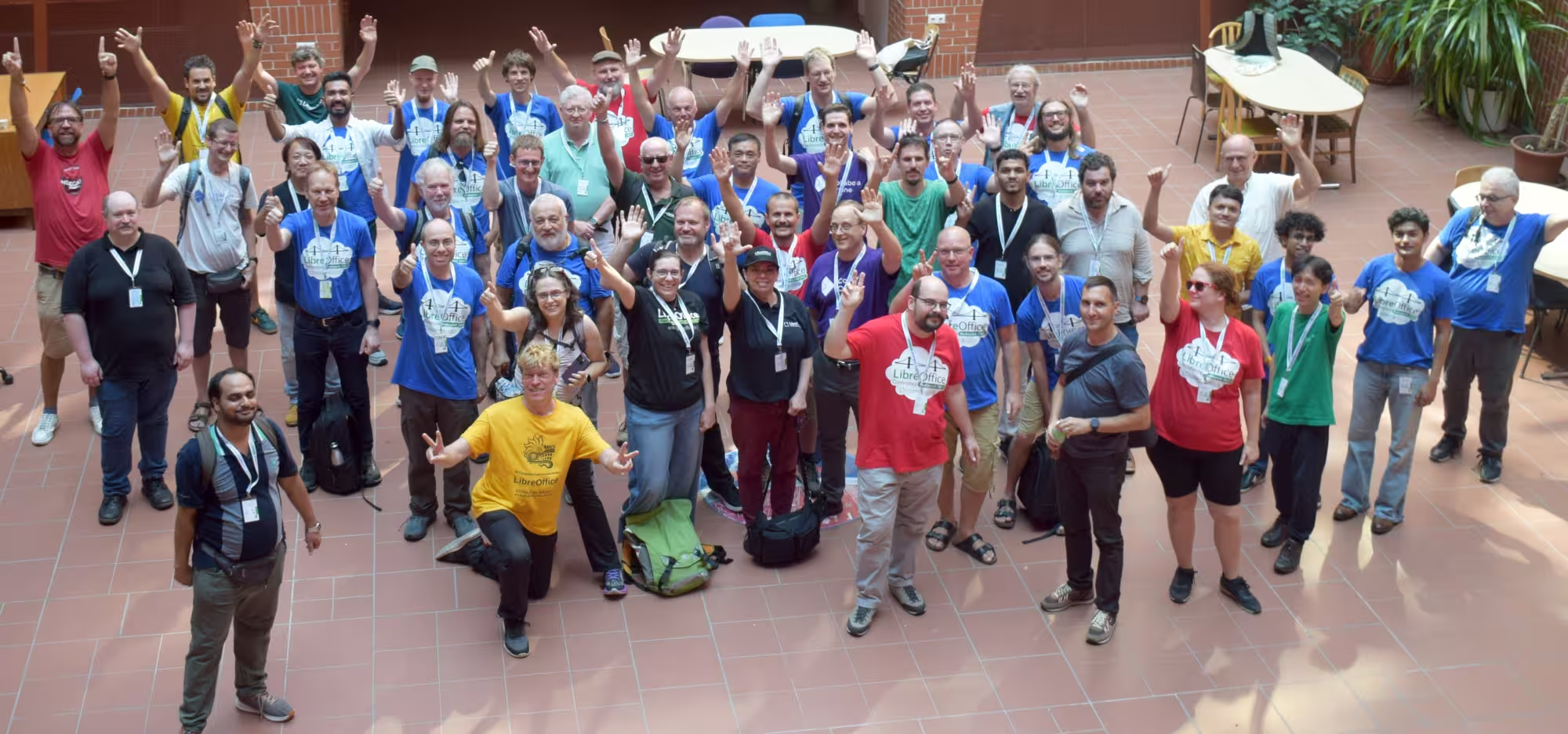 Group photo