Search Results: "akash"

27 September 2025

Bits from Debian: New Debian Developers and Maintainers (July and August 2025)

The following contributors got their Debian Developer accounts in the last two months: The following contributors were added as Debian Maintainers in the last two months: Congratulations!

8 July 2023

Russell Coker: Sandboxing Phone Apps

As a follow up to Wayland [1]: A difficult problem with Linux desktop systems (which includes phones and tablets) is restricting application access so that applications can t mess with each other s data or configuration but also allowing them to share data as needed. This has been mostly solved for Android but that involved giving up all legacy Linux apps. I think that we need to get phones capable of running a full desktop environment and having Android level security on phone apps and regular desktop apps. My interest in this is phones running Debian and derivatives such as PureOS. But everything I describe in this post should work equally well for all full featured Linux distributions for phones such as Arch, Gentoo, etc and phone based derivatives of those such as Manjaro. It may be slightly less applicable to distributions such as Alpine Linux and it s phone derivative PostmarketOS, I would appreciate comments from contributors to PostmarketOS or Alpine Linux about this. I ve investigated some of the ways of solving these problems. Many of the ways of doing this involves namespaces. The LWN articles about namespaces are a good background to some of these technologies [2]. The LCA keynote lecture Containers aka crazy user space fun by Jess Frazelle has a good summary of some of the technology [3]. One part that I found particularly interesting was the bit about recognising the container access needed at compile time. This can also be part of recognising bad application design at compile time, it s quite common for security systems to flag bad security design in programs. Firejail To sandbox applications you need to have some method of restricting what they do, this means some combination of namespaces and similar features. Here s an article on sandboxing with firejail [4]. Firejail uses namespaces, seccomp-bpf, and capabilities to restrict programs. It allows bind mounts if run as root and if not run as root it can restrict file access by name and access to networking, system calls, and other features. It has a convenient learning mode that generates policy for you, so if you have a certain restricted set of tasks that an application is to perform you can run it once and then force it to do only the same operations in future. I recommend that everyone who is still reading at this point try out firejail. Here s an example of what you can do:
# create a profile
firejail --build=xterm.profile xterm
# now this run can only do what the previous run did
firejail --profile=xterm.profile xterm
Note that firejail is SETUID root so can potentially reduce system security and it has had security issues in the past. In spite of that it can be good for allowing a trusted user to run programs with less access to the system. Also it is a good way to start learning about such things. I don t think it s a good solution for what I want to do. But I won t rule out the possibility of using it at some future time for special situations. Bubblewrap I tried out firejail with the browser Epiphany (Debian package epiphany-browser) on my Librem5, but that didn t work as Epiphany uses /usr/bin/bwrap (bubblewrap) for it s internal sandboxing (here is an informative blog post about the history of bubblewrap AKA xdg-app-helper which was developed as part of flatpak [5]). The Epiphany bubblewrap sandbox is similar to the situation with Chrome/Chromium which have internal sandboxing that s incompatible with firejail. The firejail man page notes that it s not compatible with Snap, Flatpack, and similar technologies. One issue this raises is that we can t have a namespace based sandboxing system applied to all desktop apps with no extra configuration as some desktop apps won t work with it. Bubblewrap requires setting kernel.unprivileged_userns_clone=1 to run as non-root (IE provide the normal and expected functionality) which potentially reduces system security. Here is an example of a past kernel bug that was exploitable by creating a user namespace with CAP_SYS_ADMIN [6]. But it s the default in recent Debian kernels which means that the issues have been reviewed and determined to be a reasonable trade-off and also means that many programs will use the feature and break if it s disabled. Here is an example of how to use Bubblewrap on Debian, after installing the bubblewrap run the following command. Note that the new-session option (to prevent injecting characters in the keyboard buffer with TIOCSTI) makes the session mostly unusable for a shell.
bwrap --ro-bind /usr /usr --symlink usr/lib64 /lib64 --symlink usr/lib /lib --proc /proc --dev /dev --unshare-pid --die-with-parent bash
Here is an example of using Bubblewrap to sandbox the game Warzone2100 running with Wayland/Vulkan graphics and Pulseaudio sound.
bwrap --bind $HOME/.local/share/warzone2100 $HOME/.local/share/warzone2100 --bind /run/user/$UID/pulse /run/user/$UID/pulse --bind /run/user/$UID/wayland-0 /run/user/$UID/wayland-0 --bind /run/user/$UID/wayland-0.lock /run/user/$UID/wayland-0.lock --ro-bind /usr /usr --symlink usr/bin /bin --symlink usr/lib64 /lib64 --symlink usr/lib /lib --proc /proc --dev /dev --unshare-pid --dev-bind /dev/dri /dev/dri --ro-bind $HOME/.pulse $HOME/.pulse --ro-bind $XAUTHORITY $XAUTHORITY --ro-bind /sys /sys --new-session --die-with-parent warzone2100
Here is an example of using Bubblewrap to sandbox the Debian bug reporting tool reportbug
bwrap --bind /tmp /tmp --ro-bind /etc /etc --ro-bind /usr /usr --ro-bind /var/lib/dpkg /var/lib/dpkg --symlink usr/sbin /sbin --symlink usr/bin /bin --symlink usr/lib64 /lib64 --symlink usr/lib /lib --symlink /usr/lib32 /lib32 --symlink /usr/libx32 /libx32 --proc /proc --dev /dev --die-with-parent --unshare-ipc --unshare-pid reportbug
Here is an example shell script to wrap the build process for Debian packages. This needs to run with unshare-user and specifying the UID as 0 because fakeroot doesn t work in the container, I haven t worked out why but doing it through the container is a better method anyway. This script shares read-write the parent of the current directory as the Debian build process creates packages and metadata files in the parent directory. This will prevent the automatic signing scripts which is a feature not a bug, so after building packages you have to sign the .changes file with debsign. One thing I just learned is that the Debian build system Sbuild can use chroots for building packages for similar benefits [7]. Some people believe that sbuild is the correct way of doing it regardless of the chroot issue. I think it s too heavy-weight for most of my Debian package building, but even if I had been convinced I d still share the information about how to use bwrap as Debian is about giving users choice.
#!/bin/bash
set -e
BUILDDIR=$(realpath $(pwd)/..)
exec bwrap --bind /tmp /tmp --bind $BUILDDIR $BUILDDIR --ro-bind /etc /etc --ro-bind /usr /usr --ro-bind /var/lib/dpkg /var/lib/dpkg --symlink usr/bin /bin --symlink usr/lib64 /lib64 --symlink usr/lib /lib --proc /proc --dev /dev --die-with-parent --unshare-user --unshare-ipc --unshare-net --unshare-pid --new-session --uid 0 --gid 0 $@
Here is an informative blog post about using Bubblewrap with Seccomp (BPF) [8]. In a future post I ll write about how to get this sort of thing going but I ll just leave the URL here for people who want to do it on their own. The source for the flatpak-run program is the only example I could find of using Seccomp with Bubblewrap [9]. A lot of that code is worth copying for application sandboxing, maybe the entire program. Unshare The unshare command from the util-linux package has a large portion of the Bubblewrap functionality. The things that it doesn t do like creating a new session can be done by other utilities. Here is an example of creating a container with unshare and then using cgroups with it [10]. systemd --user Recent distributions have systemd support for running a user session, the Arch Linux Wiki has a good description of how this works [11]. The units for a user are .service files stored in /usr/lib/systemd/user/ (distribution provided), ~/.local/share/systemd/user/ (user installed applications in debian a link to ~/.config/systemd/user/), ~/.config/systemd/user/ (for manual user config), and /etc/systemd/user/ (local sysadmin provided) Here are some example commands for manipulating this:
# show units running for the current user
systemctl --user
# show status of one unit
systemctl --user status kmail.service
# add an environment variable to the list for all user units
systemctl --user import-environment XAUTHORITY
# start a user unit
systemctl --user start kmail.service
# analyse security for all units for the current user
systemd-analyze --user security
# analyse security for one unit
systemd-analyze --user security kmail.service
Here is a test kmail.service file I wrote to see what could be done for kmail, I don t think that kmail is the app most needing to be restricted it is in more need of being protected from other apps but it still makes a good test case. This service file took it from the default risk score of 9.8 (UNSAFE) to 6.3 (MEDIUM) even though I was getting the error code=exited, status=218/CAPABILITIES when I tried anything that used capabilities (apparently due to systemd having some issue talking to the kernel).
[Unit]
Description=kmail
[Service]
ExecStart=/usr/bin/kmail
# can not limit capabilities (code=exited, status=218/CAPABILITIES)
#CapabilityBoundingSet=~CAP_SYS_TIME CAP_SYS_PACCT CAP_KILL CAP_WAKE_ALARM CAP_DAC_OVERRIDE CAP_DAC_READ_SEARCH CAP_FOWNER CAP_IPC_OWNER CAP_LINUX_IMMUTABLE CAP_IPC_LOCK CAP_SYS_MODULE CAP_SYS_TTY_CONFIG CAP_SYS_BOOT CAP_SYS_CHROOT CAP_BLOCK_SUSPEND CAP_LEASE CAP_MKNOD CAP_CHOWN CAP_FSETID CAP_SETFCAP CAP_SETGID CAP_SETUID CAP_SETPCAP CAP_SYS_RAWIO CAP_SYS_PTRACE CAP_SYS_NICE CAP_SYS_RESOURCE CAP_NET_ADMIN CAP_NET_BIND_SERVICE CAP_NET_BROADCAST CAP_NET_RAW CAP_SYS_ADMIN CAP_SYSLOG
# also 218 for ProtectKernelModules PrivateDevices ProtectKernelLogs ProtectClock
# MemoryDenyWriteExecute stops it displaying message content (bad)
# needs @resources and @mount to startup
# needs @privileged to display message content
SystemCallFilter=~@cpu-emulation @debug @raw-io @reboot @swap @obsolete
SystemCallArchitectures=native
UMask=077
NoNewPrivileges=true
ProtectControlGroups=true
PrivateMounts=false
RestrictNamespaces=~user pid net uts mnt cgroup ipc
RestrictSUIDSGID=true
ProtectHostname=true
LockPersonality=true
ProtectKernelTunables=true
RestrictAddressFamilies=~AF_PACKET
RestrictRealtime=true
ProtectSystem=strict
ProtectProc=invisible
PrivateUsers=true
[Install]
When I tried to use the TemporaryFileSystem=%h directive (to make the home directory a tmpfs the most basic step in restricting what a regular user application can do) I got the error (code=exited, status=226/NAMESPACE) . So I don t think the systemd user setup competes with bubblewrap for restricting user processes. But if anyone else can start where I left off and go further then that will be interesting. Systemd-run The following shell script runs firefox as a dynamic user via systemd-run, running this asks for the root password and any mechanism for allowing that sort of thing opens potential security holes. So at this time while it s an interesting feature I don t think it is suitable for running regular applications on a phone or Linux desktop.
#!/bin/bash
# systemd-run Firefox with DynamicUser and home directory.
#
# Run as a non-root user.
# Or, run as root and change $USER below.
SANDBOX_MINIMAL=(
    --property=DynamicUser=1
    --property=StateDirectory=openstreetmap
    # --property=RootDirectory=/debian_sid
)
SANDBOX_X11=(
    # Sharing Xorg always defeats security, regardless of any sandboxing tech,
    # but the config is almost ready for Wayland, and there's Xephyr.
#    --property=LoadCredential=.ICEauthority:/home/$USER/.ICEauthority
    --property=LoadCredential=.Xauthority:/home/$USER/.Xauthority
    --property=Environment=DISPLAY=:0
)
SANDBOX_FIREFOX=(
    # hardware-accelerated rendering
    --property=BindPaths=/dev/dri
    # webcam
    # --property=SupplementaryGroups=video
)
systemd-run  \
    "$ SANDBOX_MINIMAL[@] "  "$ SANDBOX_X11[@] " "$ SANDBOX_FIREFOX[@] " \
    bash -c '
        export XAUTHORITY="$CREDENTIALS_DIRECTORY"/.Xauthority
        export ICEAUTHORITY="$CREDENTIALS_DIRECTORY"/.ICEauthority
        export HOME="$STATE_DIRECTORY"/home
        firefox --no-remote about:blank
    '
Qubes OS Here is an interesting demo video of QubesOS [12] which shows how it uses multiple VMs to separate different uses. Here is an informative LCA presentation about Qubes which shows how it asks the user about communication between VMs and access to hardware [13]. I recommend that everyone who hasn t seen Qubes in operation watch the first video and everyone who isn t familiar with the computer science behind it watch the second video. Qubes appears to be a free software equivalent to NetTop as far as I can tell without ever being able to use NetTop. I don t think Qubes is a good match for my needs in general use and it definitely isn t a good option for phones (VMs use excessive CPU on phones). But it s methods for controlling access have some ideas that are worth copying. File Access XDG Desktop Portal One core issue for running sandboxed applications is to allow them to access files permitted by the user but no other files. There are two main parts to this problem, the easier one is to have each application have it s own private configuration directory which can be addressed by bind mounts, MAC systems, running each application under a different UID or GID, and many other ways. The hard part of file access is to allow the application to access random files that the user wishes. For example I want my email program, IM program, and web browser to be able to save files and also to be able to send arbitrary files via email, IM, and upload to web sites. But I don t want one of those programs to be able to access all the files from the others if it s compromised. So only giving programs access to arbitrary files when the user chooses such a file makes sense. There is a package xdg-desktop-portal which provides a dbus interface for opening files etc for a sandboxed application [14]. This portal has backends for KDE, GNOME, and Wayland among others which allow the user to choose which file or files the application may access. Chrome/Chromium is one well known program that uses the xdg-desktop-portal and does it s own sandboxing. To use xdg-desktop-portal an application must be modified to use that interface instead of opening files directly, so getting this going with all Internet facing applications will take some work. But the documentation notes that the portal API gives a consistent user interface for operations such as opening files so it can provide benefits even without a sandboxed environment. This technology was developed for Flatpak and is now also used for Snap. It also has a range of APIs for accessing other services [15]. Flatpak Flatpack is a system for distributing containerised versions of applications with some effort made to improve security. Their development of bubblewrap and xdg-desktop-portal is really good work. However the idea of having software packaged with all libraries it needs isn t a good one, here s a blog post covering some of the issues [16]. The web site flatkill.org has been registered to complain about some Flatpak problems [17]. They have some good points about the approach that Flatpak project developers have taken towards some issues. They also make some points about the people who package software not keeping up to date with security fixes and not determining a good security policy for their pak. But this doesn t preclude usefully using parts of the technology for real security benefits. If parts of Flatpak like Bubblewrap and xdg-portal are used with good security policies on programs that are well packaged for a distribution then these issues would be solved. The Flatpak app author s documentation about package requirements [18] has an overview of security features that is quite reasonable. If most paks follow that then it probably isn t too bad. I reviewed the manifests of a few of the recent paks and they seemed to have good settings. In the amount of time I was prepared to spend investigating this I couldn t find evidence to support the Flatkill claim about Flatpaks granting obviously inappropriate permissions. But the fact that the people who run Flathub decided to put a graph of installs over time on the main page for each pak while making the security settings only available by clicking the Manifest github link, clicking on a JSON or YAML file, and then searching for the right section in that shows where their priorities lie. The finish-args section of the Flatpak manifest (the section that describes the access to the system) seems reasonably capable and not difficult for users to specify as well as being in common use. It seems like it will be easy enough to take some code from Flatpak for converting the finish-args into Bubblewrap parameters and then use the manifest files from Flathub as a starting point for writing application security policy for Debian packages. Snap Snap is developed by Canonical and seems like their version of Flatpak with some Docker features for managing versions, the Getting Started document is worth reading [19]. They have Connections between different snaps and the system where a snap registers a plug that connects to a socket which can be exposed by the system (EG the camera socket) or another snap. The local admin can connect and disconnect them. The connections design reminds me of the Android security model with permitting access to various devices. The KDE Neon extension [20] has been written to add Snap support to KDE. Snap seems quite usable if you have an ecosystem of programs using it which Canonical has developed. But it has all the overheads of loopback mounts etc that you don t want on a mobile device and has the security issues of libraries included in snaps not being updated. A quick inspection of an Ubuntu 22.04 system I run (latest stable release) has Firefox 114.0.2-1 installed which includes libgcrypt.so.20.2.5 which is apparently libgcrypt 1.8.5 and there are CVEs relating to libgcrypt versions before 1.9.4 and 1.8.x versions before 1.8.8 which were published in 2021 and updated in 2022. Further investigation showed that libgcrypt came from the gnome-3-38-2004 snap (good that it doesn t require all shared objects to be in the same snap, but that it has old versions in dependencies). The gnome-3-38-2004 snap is the latest version so anyone using the Snap of Firefox seems to have no choice but to have what appears to be insecure libraries. The strict mode means that the Snap in question has no system access other than through interfaces [21]. SE Linux and Apparmor The Librem5 has Apparmor running by default. I looked into writing Apparmor policy to prevent Epiphany from accessing all files under the home directory, but that would be a lot of work. Also at least one person has given up on maintaining an Epiphany profile for Apparmor because it changes often and it s sandbox doesn t work well with Apparmor [22]. This was not a surprise to me at all, SE Linux policy has the same issues as Apparmor in this regard. The Ubuntu Security Team Application Confinement document [23] is worth reading. They have some good plans for using AppArmor as part of solving some of these problems. I plan to use SE Linux for that. Slightly Related Things One thing for the future is some sort of secure boot technology, the LCA lecture Becoming a tyrant: Implementing secure boot in embedded devices [24] has some ideas for the future. The Betrusted project seems really interesting, see Bunnie s lecture about how to create a phone size security device with custom OS [25]. The Betrusted project web page is worth reading too [26]. It would be ironic to have a phone as your main PC that is the same size as your security device, but that seems to be the logical solution to several computing problems. Whonix is a Linux distribution that has one VM for doing Tor stuff and another VM for all other programs which is only allowed to have network access via the Tor VM [27]. Xpra does for X programs what screen/tmux do for text mode programs [28]. It allows isolating X programs from each other in ways that are difficult to impossible with a regular X session. In an ideal situation we could probably get the benefits we need with just using Wayland, but if there are legacy apps that only have X support this could help. Conclusion I think that currently the best option for confining desktop apps is Bubblewrap on Wayland. Maybe with a modified version of Flatpak-run to run it and with app modifications to use the xdg-portal interfaces as much as possible. That should be efficient enough in storage space, storage IO performance, memory use, and CPU use to run on phones while giving some significant benefits. Things to investigate are how much code from Flatpak to use, how to most efficiently do the configuration (maybe the Flatpak way because it s known and seems effective), how to test this (and have regression tests), and what default settings to use. Also BPF is a big thing to investigate.

14 March 2023

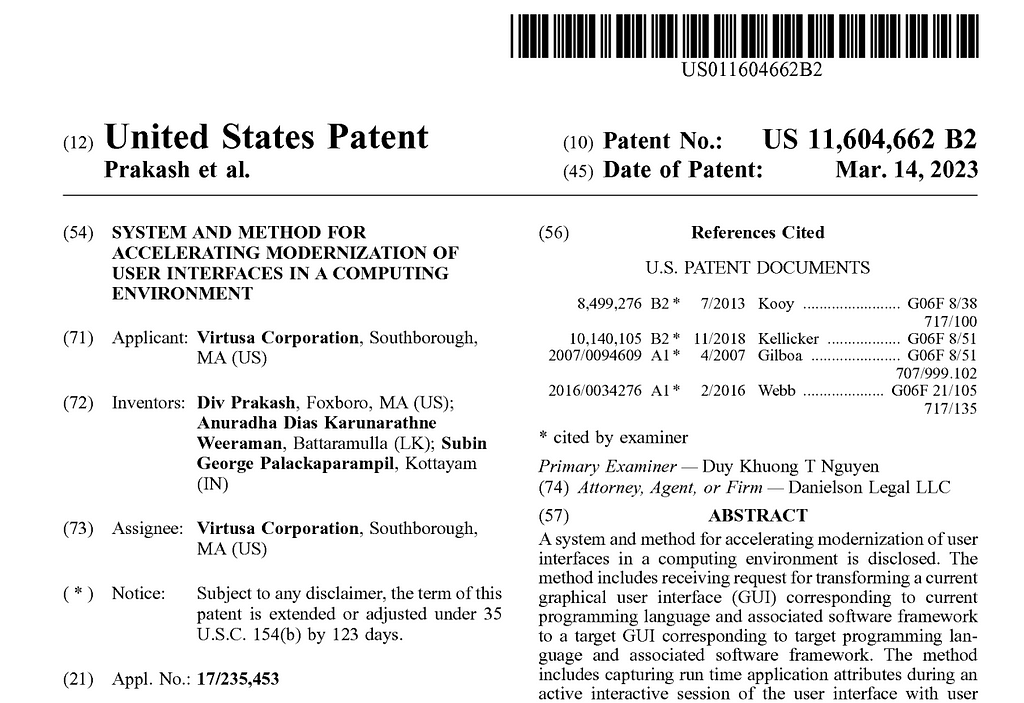
Anuradha Weeraman: US-11604662-B2

US-11604662-B2
I m happy to announce, that after a long wait, patent US-11604662-B2 has been issued.I want to thank and recognize my co-inventors, Div Prakash and Subin George, who I m privileged to be on paper with.The effort that led to this work involved a group of engineers, many phone calls, some nerve-wracking presentations, culminating in a fantastic hackathon-winning outcome for a young and talented team, which I was proud to be a part of and privileged to lead.

19 October 2022

Shirish Agarwal: Pune Rains, Uncosted Budgets, Hearing Loss Covid, Fracking

Pune Rains Lemme start with a slightly funny picture that tells as much about Pune, my city as anything else does.
Pune- Leave your attitude behind, we have our own
This and similar tags, puns and whatnot you will find if you are entering Pune from the road highway. You can also find similar similar symbols and Puns all over the city and they are partly sarcasm and ironic and partly the truth. Puneities work from the attitude that they know everything rather than nothing, including yours truly  . What is the basis of that or why is there such kind of confidence I have no clue or idea, it is what it is. Approximately 24 hrs. ago, apparently we had a cloudburst. What I came to know later is that we got 100 mm of rain. Sharing from local news site. Much more interesting was a thread made on Reddit where many people half-seriously asked where they can buy a boat. One of the reasons being even if it s October, in fact, we passed middle of October and it s still raining. Even today in the evening, it rained for quite a while. As I had shared in a few blog posts before, June where rains should have started, it didn t, it actually started late July or even August, so something has shifted. The current leadership does not believe in Anthropogenic Climate Change or human activity induced climate change even though that is a reality. I could share many links and even using the term above should give links to various studies. Most of the people who are opposed to it are either misinformed or influenced from the fossil fuel industry. Again, could share many links, but will share just one atm. I have talked to quite a few people about it but nobody has ever been able to give a convincing answer as to why GM had to crush the cars. Let s even take the argument that it was the worst manufactured car in history and there have been quite a few, have the others been crushed? If not, then the reason shared or given by most people sounds hollow. And if you look into it, they had an opportunity that they let go, and now most of them are scrambling and yet most of the legacy auto manufacturers will be out of existence if they don t get back into the game in the next 2-3 years. There have been a bunch of announcements but we are yet to see. The Chinese though have moved far ahead, although one has to remark that they have been doing that for the last decade, so they have a 10-year head start, hardly surprising then. But I need to get back to the subject, another gentleman on Reddit remarked that if you start to use boat, and others start to use boat, then the Govt. will tax it. In fact, somebody had shared the below the other day
Different types of taxes collected by GOI
Many of the taxes that I have shared above are by the Modi Govt. who came on the platform, manifesto that once they come to power they will reduce taxes for the common man, they have reduced taxes but only for the Corporates. For the common man, the taxes have only gone up, both direct tax and indirect tax. Any reference to the Tory party who have also done similar things and have also shared that it is labor who had done large expenditures even though they have been 8 years in power, I am sure for most is purely coincidental. Incidentally, that is the same tack that was taken even by the Republican party. They all like to give tax benefits to the 1% while for the rest is austerity claiming some reason, even if it has been proven to be false.
Corporate Tax Rate, Revenue Loss to Govt.
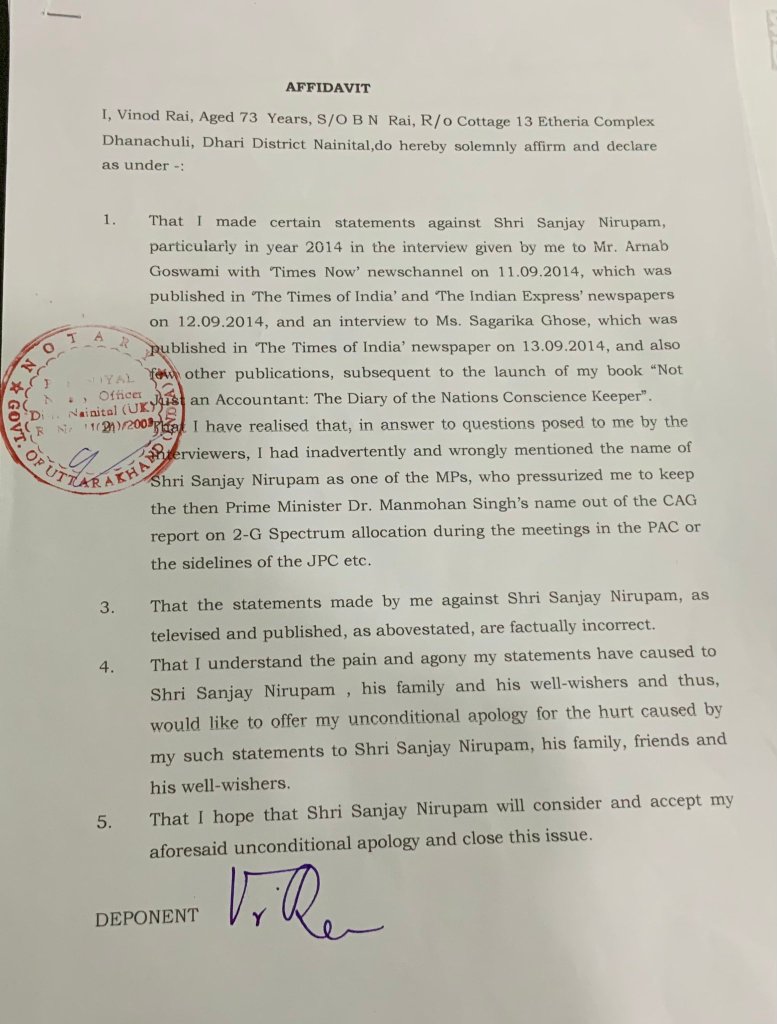
The figures mentioned above are findings of parliamentary panel so nobody can accuse of anybody having a bias. Also, I probably had shared this but still feel the need to re-share it as people still believe that 2G scam happened even though there are plenty of arguments I can share to prove how it was all a fabricated lie.
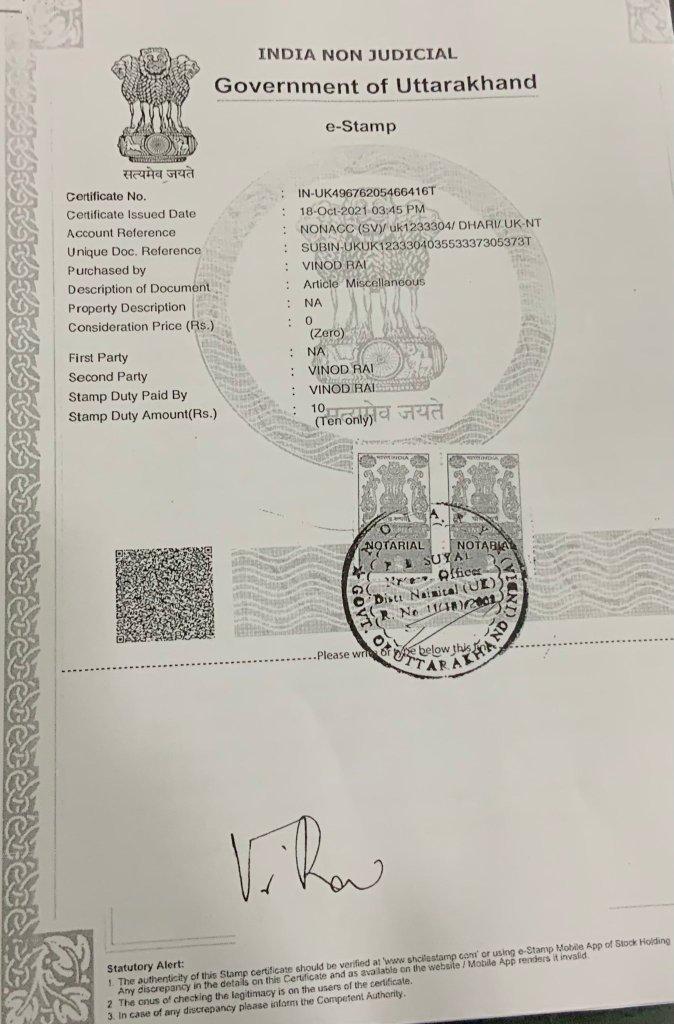
Vinod Rai Mafinama in Uttarakhand High Court.
Part 2 of the same Mafinama.
How pathetic Mr. Rai s understanding of economics is can be gauged from the fact that he was made Chairman of IDFC and subsequently had to be thrown out. That whole lie was engineered to throw UPA out and it worked. There are and have been many such coincidences happening over the last 8 years, parallel stories happening in India and UK. This was just yesterday, about a year back Air India was given back to the Tatas, There was controversy about the supposed auctions as only Indigo was the only other party allowed to be at auction but not allowed to buy but more as a spectator as they already have 60% of the Indian civil aviation market. And there was lot of cheering from the Govt. side that finally Air India has been bought home to its true owners, the Tatas. The Tatas too started cheering and sharing how they will take down all the workers, worker unions and everything will be happy glory within a year. In fact, just couple of days back they shared new plans. Btw for the takeover of Air India, they had bought loans from the Banks and they are in the category of too big to fail. As I have shared couple of times before, RBI has not shared any inspection reports of nationalized or private banks after 2013/14. While by law, RBI is supposed to do inspection reports every 3 months and share them in the Public domain. And if you ask any of their supporter, for everything they will say UPA did x or y, which only goes to show morally bankrupt the present Govt. is. Coming back to the topic, before I forget, the idea of sharing their plans is so that they can again borrow money from the banks. But that is not the only story. Just one day back, Smita Prakash, one of the biggest cheerleaders of the present Govt. (she is the boss at Asia News International (ANI)) posted how Air India had treated her sister and other 21 passengers. Basically, they had bought business tickets but the whole cabin was dirty, they complained and they were forced to sit in economy class, not just her cousin sister but the other 21 odd passengers too. Of course Ms Smita became calm as her sister was given free air tickets on Vistara and other goodies. Of course, after that she didn t post anything about the other 21 odd passengers after that. And yes, I understand she is supposed to be a reporter but as can be seen from the twitter thread, there is or was no follow up. Incidentally, she is one of many who has calling others about Revdi culture (freebies to the masses.) but guess that only applies to other people not her or her sister. Again, if there are any coincidences of similar nature in the UK or when Trump was P.M. of the U.S. they are just coincidental .

The Uncosted budget India and the UK have many parallels, it s mind boggling. Before we get into the nitty-gritties, saw something that would be of some interest to the people here.
For those who might not be able to see above, apparently there is place in UK called Tufton Street where there are quite a few organizations that are shadowy and whose finances are not known as to how they are financed. Ms. Truss and quite a few of the people in the cabinet are from the same shadowy organizations. Mr. Kwasi Kwarteng, the just-departed chancellor is and was part of the same group. Now even for me it was a new term to learn and understand what is an uncosted budget is. To make it much more easier I share the example using a common person who goes to the bank for a loan

Now M/S X wants a loan of say Rs. 1000/- for whatever reason. He/she/they go to the bank and asks give me a loan of say INR 1000/- The banks asks them to produce a statement of accounts to show what their financial position is. They produce a somewhat half-filled statement of accounts In which all liabilities are shown, but incomes are not. The bank says you already have so much liabilities, how are you gonna pay those, accounts have to be matched otherwise you are not solvent. M/s X adamantly refuses to do any changes citing that they don t need to. At this point, M/s X credit rating goes down and nobody in the market will give them a loan. At the same time, the assets they had held, their value also depreciates because it became known that they can t act responsibly. So whose to say whether or not M/s X has those number of assets and priced them accurately. But the drama doesn t end there, M/s X says this is the responsibility of actually Mr. Z ( cue The Bank of England) as they are my accountant/lawyer etc. M/s Z says as any lawyer/accountant should. This is not under my remit. If the clients either gives incomplete information or false information or whatever then it is their responsibility not mine. And in fact, the Chancellor is supposed to be the one who is given the responsibility of making the budget. The Chancellor is very similar to our Finance Minister. Because the UK has constitutional monarchy, I am guessing the terms are slightly different, otherwise the functionality seems to be the same. For two weeks, there was lot of chaos, lot of pension funds lost quite a bit in the market and in the end Mr. Kwasi Kwarteng was ousted out of the job. Incredibly, the same media and newspapers who had praised Mr. Kwarteng just few weeks back as the best Tory budget, they couldn t wait to bury him. And while I have attempted to simplify what happened, the best explanation of what has happened can be found in an article from the guardian. Speculation is rife in the UK as to who s ruling atm as the new Chancellor has reversed almost all the policies that Ms. Truss had bought and she is now more or less a figurehead. Mr. Hunt, the new chancellor doesn t have anybody behind him. Apparently, the gentleman wanted to throw his hat the ring in the Tory leadership contest that was held about a month back and he couldn t get 20 MP s to support him. Another thing that is different between UK and India is that in UK by law the PM has to answer questions put up to him or her by the opposition leaders. That is the way accountability is measured there. This is known as PMQ s or Prime Minister Questions and Answers. One can just go to YouTube or any streaming service and give Liz Truss and PMQ s and if they are interested of a certain date, give a date and they can see how she answered the questions thrown at her. Unfortunately, all she could do in both times were non-answers. In fact, the Tories seem to be using some of Labor s policies after they had bad-mouthed the same policies. Politics of right-wing both in the UK and the US seems so out of touch with the people whom they are supposed to protect and administer. An article about cyclists which is sort of half-truth, half irony shows how screwed up the policies are of the RW (right-wing). Now they are questions about the pensions triple-lock. Sadly, it is the working class who would suffer the most, most of the rich have already moved their money abroad several years ago. The Financial Times, did share a video about how things have been unfolding

Seems Ms. Truss forgot to add Financial Times in the list of anti-growth coalition she is so fond of. Also, the Tory party seems to want to create more tax havens in the UK and calling them investment zones. Of course, most of the top tax havens are situated around the UK itself. I wouldn t go more into as that would probably require its own article, although most of that information is all in public domain. Fracking I don t really want to take much time as the blog post has become long. There have been many articles written why Fracking is bad and that is why even the Tories had put in their Manifesto that they won t allow Fracking but apparently, today they are trying to reopen Fracking. And again how bad it is and can be found out by the article in Guardian.

18 July 2021

Shirish Agarwal: BBI Kenyan Supreme Court, U.P. Population Bill, South Africa, Suli Deals , IT rules 2021, Sedition Law and Danish Siddiqui s death.

BBI Kenya and live Supreme Court streaming on YT The last few weeks have been unrelenting as all sorts of news have been coming in, mostly about the downturn in the Economy, Islamophobia in India on the rise, Covid, and electioneering. However, in the last few days, Kenya surpassed India in live-streaming proceeds in a Court of Appeals about BBI or Building Bridges Initiative. A background filler article on the topic can be found in BBC. The live-streaming was done via YT and if wants to they can start from

https://www.youtube.com/watch?v=JIQzpmVKvro One can also subscribe to K24TV which took the initiative of sharing the proceedings with people worldwide. If K24TV continues to share SC proceedings of Kenya, that would add to the soft power of Kenya. I will not go into the details of the case as Gautam Bhatia who has been following the goings-on in Kenya is a far better authority on the subject. In fact, just recently he shared about another Kenyan judgment from a trial which can be seen here. He has shared the proceedings and some hot takes on the Twitter thread started by him. Probably after a couple of weeks or more when he has processed what all has happened there, he may also share some nuances although many of his thoughts would probably go to his book on Comparative Constitutional Law which he hopes to publish maybe in 2021/2022 or whenever he can. Such televised proceedings are sure to alleviate the standing of Kenya internationally. There has been a proposal to do similar broadcasts by India but with surveillance built-in, so they know who is watching. The problems with the architecture and the surveillance built-in have been shared by Srinivas Kodali or DigitalDutta quite a few times, but that probably is a story for another day.

Uttar Pradesh Population Control Bill
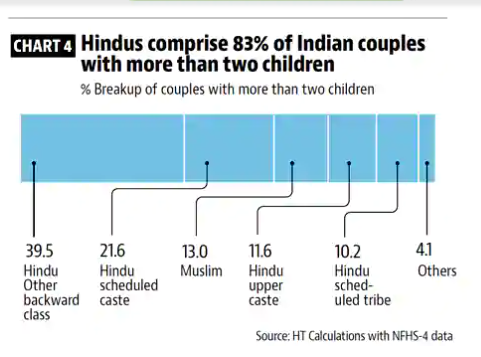
Hindus comprise 83% of Indian couples with more than two child children
The U.P. Population Bill came and it came with lot of prejudices. One of the prejudices is the idea that Muslims create or procreate to have the most children. Even with data is presented as shared above from NFHS National Family Health Survey which is supposed to carry our surveys every few years did the last one around 4 years back. The analysis from it has been instrumental not only in preparing graphs as above but also sharing about what sort of death toll must have been in rural India. And as somebody who have had the opportunity in the past, can vouch that you need to be extremely lucky if something happens to you when you are in a rural area. Even in places like Bodh Gaya (have been there) where millions of tourists come as it is one of the places not to be missed on the Buddhism tourist circuit, the medical facilities are pretty underwhelming. I am not citing it simply because there are too many such newspaper reports from even before the pandemic, and both the State and the Central Govt. response has been dismal. Just a few months back, they were recalled. There were reports of votes being bought at INR 1000/- (around $14) and a bottle or two of liquor. There used to be a time when election monitoring whether national or state used to be a thing, and you had LTO s (Long-time Observers) and STO s (Short-Term Observers) to make sure that the election has been neutral. This has been on the decline in this regime, but that probably is for another time altogether. Although, have to point out the article which I had shared a few months ago on the private healthcare model is flawed especially for rural areas. Instead of going for cheap, telemedicine centers that run some version of a Linux distro. And can provide a variety of services, I know Kerala and Tamil Nadu from South India have experimented in past but such engagements need to be scaled up. This probably will come to know when the next time I visit those places (sadly due to the virus, not anytime soonish.:( ) . Going back to the original topic, though, I had shared Hans Rosling s famous Ted talk on population growth which shows that even countries which we would not normally associate with family planning for e.g. the middle-east and Africa have also been falling quite rapidly. Of course, when people have deeply held prejudices, then it is difficult. Even when sharing China as to how they had to let go of their old policy in 2016 as they had the thing for leftover men . I also shared the powerful movie So Long my Son. I even shared how in Haryana women were and are trafficked and have been an issue for centuries but as neither suits the RW propaganda, they simply refuse to engage. They are more repulsed by people who publish this news rather than those who are actually practicing it, as that is culture . There is also teenage pregnancy, female infanticide, sex-selective abortion, etc., etc. It is just all too horrible to contemplate. Personal anecdote I know a couple, or they used to be a couple, where the gentleman wanted to have a male child. It was only after they got an autistic child, they got their DNA tested and came to know that the gentleman had a genetic problem. He again forced and had another child, and that too turned out to be autistic. Finally, he left the wife and the children, divorced them and lived with another woman. Almost a decade of the wife s life was ruined. The wife before marriage was a gifted programmer employed at IBM. This was an arranged marriage. After this, if you are thinking of marrying, apart from doing astrology charts, also look up DNA compatibility charts. Far better than ruining yours or the women s life. Both the children whom I loved are now in heaven, god bless them  If one wants to, one can read a bit more about the Uttar Pradesh Population bill here. The sad part is that the systems which need fixing, nobody wants to fix. The reason being simple. If you get good health service by public sector, who will go to the private sector. In Europe, AFAIK they have the best medical bang for the money. Even the U.S. looks at Europe and hopes it had the systems that Europe has but that again is probably for another day.

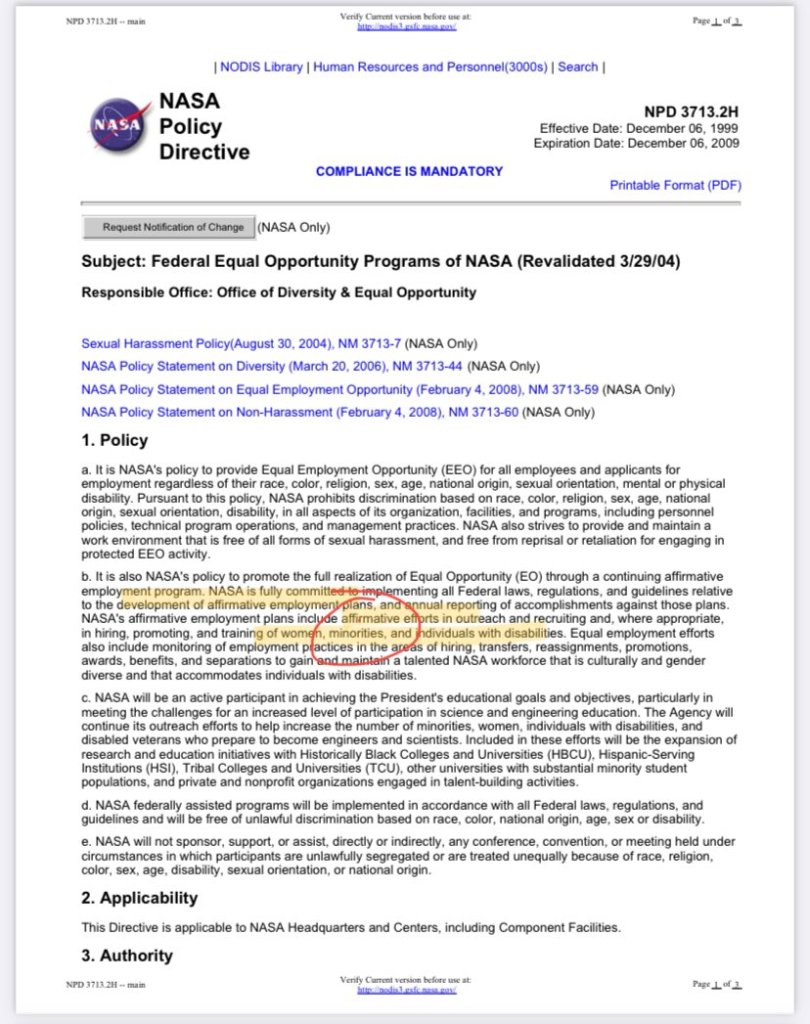
South Africa and India long-lost brothers. As had shared before, after the 2016 South African Debconf convention, I had been following South Africa. I was happy when FeesMustFall worked and in 2017 the then ANC president Zuma declared it in late 2017. I am sure that people who have been regular visitors to this blog know how my position is on student loans. They also must be knowing that even in U.S. till the 1970s it had free education all the way to be a lawyer and getting a lawyer license. It is only when people like Thurgood Marshall, Martin Luther King Jr., and others from the civil rights movement came out as a major force that the capitalists started imposing fees. They wanted people who could be sold to corporate slavery, and they won. Just last week, Biden took some steps and canceled student loans and is working on steps towards broad debt forgiveness. Interestingly, NASA has an affirmative diversity program for people from diverse backgrounds, where a couple of UC (Upper Caste) women got the job. While they got the job, the RW (Right-Wing) was overjoyed as they got jobs on merit . Later, it was found that both the women were the third or fourth generation of immigrants in U.S.
NASA Federal Equal Opportunity Policy Directive NPD 3713 2H
Going back to the original question and topic, while there has been a concerning spate of violence, some calling it the worst sort of violence not witnessed since 1994. The problem, as ascertained in that article, is the same as here in India or elsewhere. Those, again, who have been on my blog know that merit 90% of the time is a function of privilege and there is a vast amount of academic literature which supports that. If, for a moment, you look at the data that is shared in the graph above which shows that 83% of Hindus and 13% of Muslims have more than 2 children, what does it show, it shows that 83+13 = 96% of the population is living in insecurity. The 5% are the ones who have actually consolidated more power during this regime rule in India. Similarly, from what I understood living in Cape Town for about a month, it is the Dutch Afrikaans as they like to call themselves and the immigrants who come from abroad who have enjoyed the fruits of tourism and money and power while the rest of the country is dying due to poverty. It is the same there, it is the same here. Corruption is also rampant in both countries, and the judiciary is virtually absent from both communities in India and SA. Interestingly, South Africa and India have been at loggerheads, but I suspect that is more due to the money and lobbying power by the Dutch. Usually, those who have money power, do get laws and even press on their side, and it is usually the ruling party in power. I cannot help but share about the Gupta brothers and their corruption as I came to know about it in 2016. And as have shared that I m related to Gupta s on my mother s side, not those specific ones but Gupta as a clan. The history of the Gupta dynasty does go back to the 3rd-4th century. Equally interesting have been Sonali Ranade s series of articles which she wrote in National Herald, the latest on exports which is actually the key to taking India out of poverty rather than anything else. While in other countries Exporters are given all sort of subsidies, here it is being worked as how to give them less. This was in Economic times hardly a week back
Export incentive schemes being reduced
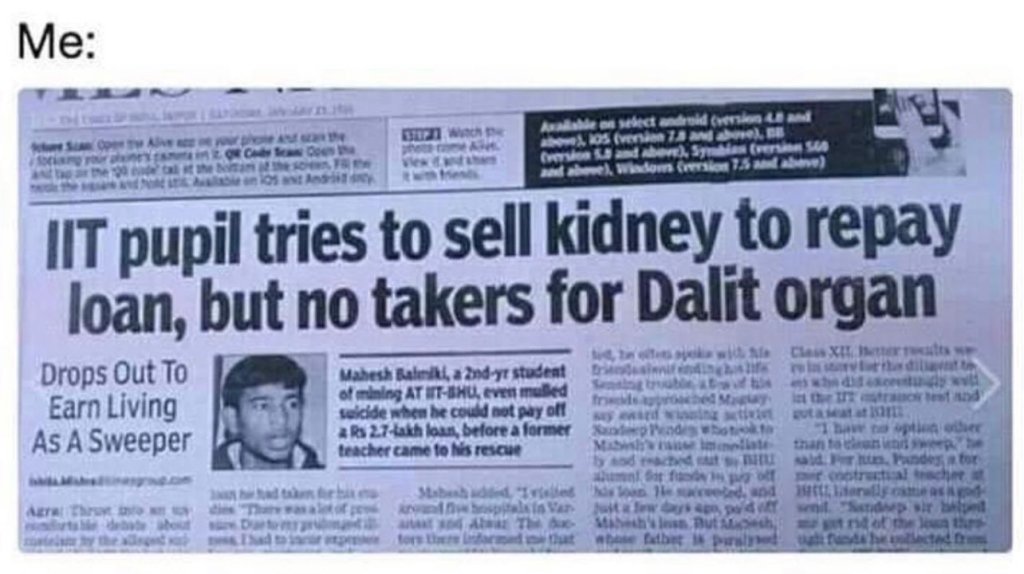
I can t imagine the incredible stupidity done by the Finance Minister. And then in an attempt to prove that, they will attempt to present a rosy picture with numbers that have nothing to do with reality. Interestingly enough, India at one time was a major exporter of apples, especially from Kashmir. Now instead of exporting, we are importing them from Afghanistan as well as Belgium and now even from the UK. Those who might not want to use the Twitter link could use this article. Of course, what India got out of this trade deal is not known. One can see that the UK got the better deal from this. Instead of investing in our own capacity expansion, we are investing in increasing the capacity of others. This is at the time when due to fuel price hike (Central taxes 66%) demand is completely flat. And this is when our own CEA (Chief Economic Adviser) tells us that growth will be at the most 6-7% and that too in 2023-2024 while currently, the inflation rate is around 12%. Is it then any wonder that almost 70% are living on Govt. ration and people in the streets of Kolkata, Assam, and other places have to sell kidneys to make sure they have some money for their kids for tomorrow. Now I have nothing against the UK but trade negotiation is an art. Sadly, this has been going on for the last few years. The politicians in India fool the public by always telling of future trade deals. Sadly, as any businessman knows, once you have compromised, you always have to compromise. And the more you compromise, the more you weaken the hand for any future trade deals.
IIT pupil tries to sell kidney to repay loan, but no takers for Dalit organ.
The above was from yesterday s Times of India. Just goes to show how much people are suffering. There have been reports in vernacular papers of quite a few people from across regions and communities are doing this so they can live without pain a bit. Almost all the time, the politicians are saved as only few understand international trade, the diplomacy and the surrounding geopolitics around it. And this sadly, is as much to do with basic education as much as it is to any other factor

Suli Deals About a month back on the holy day of Ramzan or Ramadan as it is known in the west, which is beloved by Muslims, a couple of Muslim women were targeted and virtually auctioned. Soon, there was a flood and a GitHub repository was created where hundreds of Muslim women, especially those who have a voice and fearlessly talk about their understanding about issues and things, were being virtually auctioned. One week after the FIR was put up, to date none of the people mentioned in the FIR have been arrested. In fact, just yesterday, there was an open letter which was published by livelaw. I have saved a copy on WordPress just in case something does go wrong. Other than the disgust we feel, can t say much as no action being taken by GOI and police.

IT Rules 2021 and Big Media After almost a year of sleeping when most activists were screaming hoarsely about how the new IT rules are dangerous for one and all, big media finally woke up a few weeks back and listed a writ petition in Madras High Court of the same. Although to be frank, the real writ petition was filed In February 2021, classical singer, performer T.M. Krishna in Madras High Court. Again, a copy of the writ petition, I have hosted on WordPress. On 23rd June 2021, a group of 13 media outlets and a journalist have challenged the IT Rules, 2021. The Contention came from Digital News Publishers Association which is made up of the following news companies: ABP Network Private Limited, Amar Ujala Limited, DB Corp Limited, Express Network Pvt Ltd, HT Digital Streams Limited, IE Online Media Services Pvt Ltd, Jagran Prakashan Limited, Lokmat Media Private Limited, NDTV Convergence Limited, TV Today Network Limited, The Malayala Manorama Co (P) Ltd, Times Internet Limited, and Ushodaya Enterprises Private Limited. All the above are heavyweights in the markets where they operate. The reason being simple, when these media organizations came into being, the idea was to have self-regulation, which by and large has worked. Now, the present Govt. wants each news item to be okayed by them before publication. This is nothing but blatant misuse of power and an attempt at censorship. In fact, the Tamil Nadu BJP president himself made a promise of the same. And of course, what is true and what is a lie, only GOI knows and will decide for the rest of the country. If somebody remembers Joseph Goebbels at this stage, it is merely a coincidence. Anyways, 3 days ago Supreme Court on 14th July the Honorable Supreme Court asked the Madras High Court to transfer all the petitions to SC. This, the Madras High Court denied as cited/shared by Meera Emmanuel, a reporter who works with barandbench. The Court says nothing doing, let this happen and then the SC can entertain the motion of doing it that level. At the same time, they would have the benefit of Madras High Court opinion as well. It gave the center two weeks to file a reply. So, either of end-week of July or latest by August first week, we might be able to read the Center s reply on the same. The SC could do a forceful intervention, but it would lead to similar outrage as has been witnessed in the past when a judge commented that if the SC has to do it all, then why do we need the High Courts, district courts etc. let all the solutions come from SC itself. This was, admittedly, frustration on the part of the judge, but due in part to the needless intervention of SC time and time again. But the concerns had been felt around all the different courts in the country.

Sedition Law A couple of days ago, the Supreme Court under the guidance of Honorable CJI NV Ramanna, entertained the PIL filed by Maj Gen S G Vombatkere (Retd.) which asked simply that the sedition law which was used in the colonial times by the British to quell dissent by Mahatma Gandhi and Bal Gangadhar Tilak during the Indian freedom struggle. A good background filler article can be found on MSN which tells about some recent cases but more importantly how historically the sedition law was used to quell dissent during India s Independence. Another article on MSN actually elaborates on the PIL filed by Maj Gen S. G. Vombatkere. Another article on MSN tells how sedition law has been challenged and changed in 10 odd countries. I find it equally sad and equally hilarious that the Indian media whose job is to share news and opinion on this topic is being instead of being shared more by MSN. Although, I would be bereft of my duty if I did not share the editorial on the same topic by the Hindu and Deccan Chronicle. Also, an interesting question to ask is, are there only 10 countries in the world that have sedition laws? AFAIK, there are roughly 200 odd countries as recognized by WTO. If 190 odd countries do not have sedition laws, it also tells a lot about them and a lot about the remaining 10. Also, it came to light that police are still filing laws under sec66A which was declared null and void a few years ago. It was replaced with section 124A if memory serves right and it has more checks and balances.

Danish Siddiqui, Pulitzer award-winning and death in Afghanistan Before I start with Danish Siddiqui, let me share an anecdote that I think I have shared on the blog years ago about how photojournalists are. Again, those who know me and those who follow me know how much I am mad both about trains and planes (civil aviation). A few months back, I had shared a blog post about some of the biggest railway systems in the world which shows that privatization of Railways doesn t necessarily lead to up-gradation of services but definitely leads to an increase in tariff/fares. Just had a conversation couple of days ago on Twitter and realized that need to also put a blog post about civil aviation in India and the problems it faces, but I digress. This was about a gentleman who wanted to take a photo of a particular train coming out of a valley at a certain tunnel at two different heights, one from below and one from above the train. This was several years ago, and while I did share that award-winning photograph then, it probably would take me quite a bit of time and effort to again look it up on my blog and share. The logistics though were far more interesting and intricate than I had first even thought of. We came around a couple of days before the train was supposed to pass that tunnel and the valley. More than half a dozen or maybe more shots were taken throughout the day by the cameras. The idea was to see how much light was being captured by the cameras and how much exposure was to be given so that the picture isn t whitened out or is too black. Weather is the strangest of foes for a photojournalist or even photographers, and the more you are in nature, the more unpredictable it is and can be. We were also at a certain height, so care had to be taken in case light rainfall happens or dew falls, both not good for digital cameras. And dew is something which will happen regardless of what you want. So while the two days our gentleman cameraman fiddled with the settings to figure out correct exposure settings, we had one other gentleman who was supposed to take the train from an earlier station and apprise us if the train was late or not. The most ideal time would be at 0600 hrs. When the train would enter the tunnel and come out and the mixture of early morning sun rays, dew, the flowers in the valley, and the train would give a beautiful effect. We could stretch it to maybe 0700 hrs. Anything after that would just be useless, as it wouldn t have the same effect. And of all this depended on nature. If the skies were to remain too dark, nothing we could do about it, if the dewdrops didn t fall it would all be over. On the day of the shoot, we were told by our compatriot that the train was late by half an hour. We sank a little on hearing that news. Although Photoshop and others can do touch-ups, most professionals like to take as authentic a snap as possible. Everything had been set up to perfection. The wide-angle lenses on both the cameras with protections were set up. The tension you could cut with a knife. While we had a light breakfast, I took a bit more and went in the woods to shit and basically not be there. This was too tensed up for me. Returned an hour to find everybody in a good mood. Apparently, the shoot went well. One of the two captured it for good enough. Now, this is and was in a benign environment where the only foe was the environment. A bad shot would have meant another week in the valley, something which I was not looking forward to. Those who have lived with photographers and photojournalists know how self-involved they can be in their craft, while how grumpy they can be if they had a bad shoot. For those, who don t know, it is challenging to be friends with such people for a long time. I wish they would scream more at nature and let out the frustrations they have after a bad shoot. But again, this is in a very safe environment. Now let s cut to Danish Siddiqui and the kind of photojournalism he followed. He followed a much more riskier sort of photojournalism than the one described above. Krittivas Mukherjee in his Twitter thread shared how reporters in most advanced countries are trained in multiple areas, from risk assessment to how to behave in case you are kidnapped, are in riots, hostage situations, etc. They are also trained in all sorts of medical training from treating gunshot wounds, CPR, and other survival methods. They are supposed to carry medical equipment along with their photography equipment. Sadly, these concepts are unknown in India. And even then they get killed. Sadly, he attributes his death to the thrill of taking an exclusive photograph. And the gentleman s bio reads that he is a diplomat. Talk about tone-deafness  On another completely different level was Karen Hao who was full of empathy as she shared the humility, grace, warmth and kinship she describes in her interaction with the photojournalist. His body of work can be seen via his ted talk in 2020 where he shared a brief collage of his works. Latest, though in a turnaround, the Taliban have claimed no involvement in the death of photojournalist Danish Siddiqui. This could be in part to show the Taliban in a more favorable light as they do and would want to be showcased as progressive, even though they are forcing that all women within a certain age become concubines or marry the fighters and killing the minority Hazaras or doing vile deeds with them. Meanwhile, statements made by Hillary Clinton almost a decade, 12 years ago have come back into circulation which stated how the U.S. itself created the Taliban to thwart the Soviet Union and once that job was finished, forgot all about it. And then in 2001, it landed back in Afghanistan while the real terrorists were Saudi. To date, not all documents of 9/11 are in the public domain. One can find more information of the same here. This is gonna take probably another few years before Saudi Arabia s whole role in the September 11 attacks will be known. Last but not the least, came to know about the Pegasus spyware and how many prominent people in some nations were targeted, including in mine India. Will not talk more as it s already a big blog post and Pegasus revelations need an article on its own.

9 February 2021

Kees Cook: security things in Linux v5.8

Previously: v5.7 Linux v5.8 was released in August, 2020. Here s my summary of various security things that caught my attention: arm64 Branch Target Identification
Dave Martin added support for ARMv8.5 s Branch Target Instructions (BTI), which are enabled in userspace at execve() time, and all the time in the kernel (which required manually marking up a lot of non-C code, like assembly and JIT code). With this in place, Jump-Oriented Programming (JOP, where code gadgets are chained together with jumps and calls) is no longer available to the attacker. An attacker s code must make direct function calls. This basically reduces the usable code available to an attacker from every word in the kernel text to only function entries (or jump targets). This is a low granularity forward-edge Control Flow Integrity (CFI) feature, which is important (since it greatly reduces the potential targets that can be used in an attack) and cheap (implemented in hardware). It s a good first step to strong CFI, but (as we ve seen with things like CFG) it isn t usually strong enough to stop a motivated attacker. High granularity CFI (which uses a more specific branch-target characteristic, like function prototypes, to track expected call sites) is not yet a hardware supported feature, but the software version will be coming in the future by way of Clang s CFI implementation. arm64 Shadow Call Stack
Sami Tolvanen landed the kernel implementation of Clang s Shadow Call Stack (SCS), which protects the kernel against Return-Oriented Programming (ROP) attacks (where code gadgets are chained together with returns). This backward-edge CFI protection is implemented by keeping a second dedicated stack pointer register (x18) and keeping a copy of the return addresses stored in a separate shadow stack . In this way, manipulating the regular stack s return addresses will have no effect. (And since a copy of the return address continues to live in the regular stack, no changes are needed for back trace dumps, etc.) It s worth noting that unlike BTI (which is hardware based), this is a software defense that relies on the location of the Shadow Stack (i.e. the value of x18) staying secret, since the memory could be written to directly. Intel s hardware ROP defense (CET) uses a hardware shadow stack that isn t directly writable. ARM s hardware defense against ROP is PAC (which is actually designed as an arbitrary CFI defense it can be used for forward-edge too), but that depends on having ARMv8.3 hardware. The expectation is that SCS will be used until PAC is available. Kernel Concurrency Sanitizer infrastructure added
Marco Elver landed support for the Kernel Concurrency Sanitizer, which is a new debugging infrastructure to find data races in the kernel, via CONFIG_KCSAN. This immediately found real bugs, with some fixes having already landed too. For more details, see the KCSAN documentation. new capabilities
Alexey Budankov added CAP_PERFMON, which is designed to allow access to perf(). The idea is that this capability gives a process access to only read aspects of the running kernel and system. No longer will access be needed through the much more powerful abilities of CAP_SYS_ADMIN, which has many ways to change kernel internals. This allows for a split between controls over the confidentiality (read access via CAP_PERFMON) of the kernel vs control over integrity (write access via CAP_SYS_ADMIN). Alexei Starovoitov added CAP_BPF, which is designed to separate BPF access from the all-powerful CAP_SYS_ADMIN. It is designed to be used in combination with CAP_PERFMON for tracing-like activities and CAP_NET_ADMIN for networking-related activities. For things that could change kernel integrity (i.e. write access), CAP_SYS_ADMIN is still required. network random number generator improvements
Willy Tarreau made the network code s random number generator less predictable. This will further frustrate any attacker s attempts to recover the state of the RNG externally, which might lead to the ability to hijack network sessions (by correctly guessing packet states). fix various kernel address exposures to non-CAP_SYSLOG
I fixed several situations where kernel addresses were still being exposed to unprivileged (i.e. non-CAP_SYSLOG) users, though usually only through odd corner cases. After refactoring how capabilities were being checked for files in /sys and /proc, the kernel modules sections, kprobes, and BPF exposures got fixed. (Though in doing so, I briefly made things much worse before getting it properly fixed. Yikes!) RISCV W^X detection
Following up on his recent work to enable strict kernel memory protections on RISCV, Zong Li has now added support for CONFIG_DEBUG_WX as seen for other architectures. Any writable and executable memory regions in the kernel (which are lovely targets for attackers) will be loudly noted at boot so they can get corrected. execve() refactoring continues
Eric W. Biederman continued working on execve() refactoring, including getting rid of the frequently problematic recursion used to locate binary handlers. I used the opportunity to dust off some old binfmt_script regression tests and get them into the kernel selftests. multiple /proc instances
Alexey Gladkov modernized /proc internals and provided a way to have multiple /proc instances mounted in the same PID namespace. This allows for having multiple views of /proc, with different features enabled. (Including the newly added hidepid=4 and subset=pid mount options.) set_fs() removal continues
Christoph Hellwig, with Eric W. Biederman, Arnd Bergmann, and others, have been diligently working to entirely remove the kernel s set_fs() interface, which has long been a source of security flaws due to weird confusions about which address space the kernel thought it should be accessing. Beyond things like the lower-level per-architecture signal handling code, this has needed to touch various parts of the ELF loader, and networking code too. READ_IMPLIES_EXEC is no more for native 64-bit
The READ_IMPLIES_EXEC flag was a work-around for dealing with the addition of non-executable (NX) memory when x86_64 was introduced. It was designed as a way to mark a memory region as well, since we don t know if this memory region was expected to be executable, we must assume that if we need to read it, we need to be allowed to execute it too . It was designed mostly for stack memory (where trampoline code might live), but it would carry over into all mmap() allocations, which would mean sometimes exposing a large attack surface to an attacker looking to find executable memory. While normally this didn t cause problems on modern systems that correctly marked their ELF sections as NX, there were still some awkward corner-cases. I fixed this by splitting READ_IMPLIES_EXEC from the ELF PT_GNU_STACK marking on x86 and arm/arm64, and declaring that a native 64-bit process would never gain READ_IMPLIES_EXEC on x86_64 and arm64, which matches the behavior of other native 64-bit architectures that correctly didn t ever implement READ_IMPLIES_EXEC in the first place. array index bounds checking continues
As part of the ongoing work to use modern flexible arrays in the kernel, Gustavo A. R. Silva added the flex_array_size() helper (as a cousin to struct_size()). The zero/one-member into flex array conversions continue with over a hundred commits as we slowly get closer to being able to build with -Warray-bounds. scnprintf() replacement continues
Chen Zhou joined Takashi Iwai in continuing to replace potentially unsafe uses of sprintf() with scnprintf(). Fixing all of these will make sure the kernel avoids nasty buffer concatenation surprises. That s it for now! Let me know if there is anything else you think I should mention here. Next up: Linux v5.9.

2021, Kees Cook. This work is licensed under a Creative Commons Attribution-ShareAlike 4.0 License.
CC BY-SA 4.0

21 September 2020

Kees Cook: security things in Linux v5.7

Previously: v5.6 Linux v5.7 was released at the end of May. Here s my summary of various security things that caught my attention: arm64 kernel pointer authentication
While the ARMv8.3 CPU Pointer Authentication (PAC) feature landed for userspace already, Kristina Martsenko has now landed PAC support in kernel mode. The current implementation uses PACIASP which protects the saved stack pointer, similar to the existing CONFIG_STACKPROTECTOR feature, only faster. This also paves the way to sign and check pointers stored in the heap, as a way to defeat function pointer overwrites in those memory regions too. Since the behavior is different from the traditional stack protector, Amit Daniel Kachhap added an LKDTM test for PAC as well. BPF LSM
The kernel s Linux Security Module (LSM) API provide a way to write security modules that have traditionally implemented various Mandatory Access Control (MAC) systems like SELinux, AppArmor, etc. The LSM hooks are numerous and no one LSM uses them all, as some hooks are much more specialized (like those used by IMA, Yama, LoadPin, etc). There was not, however, any way to externally attach to these hooks (not even through a regular loadable kernel module) nor build fully dynamic security policy, until KP Singh landed the API for building LSM policy using BPF. With this, it is possible (for a privileged process) to write kernel LSM hooks in BPF, allowing for totally custom security policy (and reporting). execve() deadlock refactoring
There have been a number of long-standing races in the kernel s process launching code where ptrace could deadlock. Fixing these has been attempted several times over the last many years, but Eric W. Biederman and Ernd Edlinger decided to dive in, and successfully landed the a series of refactorings, splitting up the problematic locking and refactoring their uses to remove the deadlocks. While he was at it, Eric also extended the exec_id counter to 64 bits to avoid the possibility of the counter wrapping and allowing an attacker to send arbitrary signals to processes they normally shouldn t be able to. slub freelist obfuscation improvements
After Silvio Cesare observed some weaknesses in the implementation of CONFIG_SLAB_FREELIST_HARDENED s freelist pointer content obfuscation, I improved their bit diffusion, which makes attacks require significantly more memory content exposures to defeat the obfuscation. As part of the conversation, Vitaly Nikolenko pointed out that the freelist pointer s location made it relatively easy to target too (for either disclosures or overwrites), so I moved it away from the edge of the slab, making it harder to reach through small-sized overflows (which usually target the freelist pointer). As it turns out, there were a few assumptions in the kernel about the location of the freelist pointer, which had to also get cleaned up. RISCV page table dumping
Following v5.6 s generic page table dumping work, Zong Li landed the RISCV page dumping code. This means it s much easier to examine the kernel s page table layout when running a debug kernel (built with PTDUMP_DEBUGFS), visible in /sys/kernel/debug/kernel_page_tables. array index bounds checking
This is a pretty large area of work that touches a lot of overlapping elements (and history) in the Linux kernel. The short version is: C is bad at noticing when it uses an array index beyond the bounds of the declared array, and we need to fix that. For example, don t do this:
int foo[5];
...
foo[8] = bar;
The long version gets complicated by the evolution of flexible array structure members, so we ll pause for a moment and skim the surface of this topic. While things like CONFIG_FORTIFY_SOURCE try to catch these kinds of cases in the memcpy() and strcpy() family of functions, it doesn t catch it in open-coded array indexing, as seen in the code above. GCC has a warning (-Warray-bounds) for these cases, but it was disabled by Linus because of all the false positives seen due to fake flexible array members. Before flexible arrays were standardized, GNU C supported zero sized array members. And before that, C code would use a 1-element array. These were all designed so that some structure could be the header in front of some data blob that could be addressable through the last structure member:
/* 1-element array */
struct foo  
    ...
    char contents[1];
 ;
/* GNU C extension: 0-element array */
struct foo  
    ...
    char contents[0];
 ;
/* C standard: flexible array */
struct foo  
    ...
    char contents[];
 ;
instance = kmalloc(sizeof(struct foo) + content_size);
Converting all the zero- and one-element array members to flexible arrays is one of Gustavo A. R. Silva s goals, and hundreds of these changes started landing. Once fixed, -Warray-bounds can be re-enabled. Much more detail can be found in the kernel s deprecation docs. However, that will only catch the visible at compile time cases. For runtime checking, the Undefined Behavior Sanitizer has an option for adding runtime array bounds checking for catching things like this where the compiler cannot perform a static analysis of the index values:
int foo[5];
...
for (i = 0; i < some_argument; i++)  
    ...
    foo[i] = bar;
    ...
 
It was, however, not separate (via kernel Kconfig) until Elena Petrova and I split it out into CONFIG_UBSAN_BOUNDS, which is fast enough for production kernel use. With this enabled, it's now possible to instrument the kernel to catch these conditions, which seem to come up with some regularity in Wi-Fi and Bluetooth drivers for some reason. Since UBSAN (and the other Sanitizers) only WARN() by default, system owners need to set panic_on_warn=1 too if they want to defend against attacks targeting these kinds of flaws. Because of this, and to avoid bloating the kernel image with all the warning messages, I introduced CONFIG_UBSAN_TRAP which effectively turns these conditions into a BUG() without needing additional sysctl settings. Fixing "additive" snprintf() usage
A common idiom in C for building up strings is to use sprintf()'s return value to increment a pointer into a string, and build a string with more sprintf() calls:
/* safe if strlen(foo) + 1 < sizeof(string) */
wrote  = sprintf(string, "Foo: %s\n", foo);
/* overflows if strlen(foo) + strlen(bar) > sizeof(string) */
wrote += sprintf(string + wrote, "Bar: %s\n", bar);
/* writing way beyond the end of "string" now ... */
wrote += sprintf(string + wrote, "Baz: %s\n", baz);
The risk is that if these calls eventually walk off the end of the string buffer, it will start writing into other memory and create some bad situations. Switching these to snprintf() does not, however, make anything safer, since snprintf() returns how much it would have written:
/* safe, assuming available <= sizeof(string), and for this example
 * assume strlen(foo) < sizeof(string) */
wrote  = snprintf(string, available, "Foo: %s\n", foo);
/* if (strlen(bar) > available - wrote), this is still safe since the
 * write into "string" will be truncated, but now "wrote" has been
 * incremented by how much snprintf() *would* have written, so "wrote"
 * is now larger than "available". */
wrote += snprintf(string + wrote, available - wrote, "Bar: %s\n", bar);
/* string + wrote is beyond the end of string, and availabe - wrote wraps
 * around to a giant positive value, making the write effectively 
 * unbounded. */
wrote += snprintf(string + wrote, available - wrote, "Baz: %s\n", baz);
So while the first overflowing call would be safe, the next one would be targeting beyond the end of the array and the size calculation will have wrapped around to a giant limit. Replacing this idiom with scnprintf() solves the issue because it only reports what was actually written. To this end, Takashi Iwai has been landing a bunch scnprintf() fixes. That's it for now! Let me know if there is anything else you think I should mention here. Next up: Linux v5.8.

2020, Kees Cook. This work is licensed under a Creative Commons Attribution-ShareAlike 4.0 License.
CC BY-SA 4.0

27 January 2016

Jonas Smedegaard: BOSS - Barath Operating System Solutions

Siri and I are on a journey through India and Nepal, with the aim of learning about needs of Debian derivatives, to improve Debian and encourage closer integration.

C-DAC and BOSS Centre for Development of Advanced Computing (C-DAC) is a large organization serving country- and state-level institutions in India, with offices and training facilities several major cities. In Chennai, C-DAC has a staff of 25 developers working full time on Barath Operating System Solutions (BOSS). BOSS is a Debian derivative with several flavors - a desktop for use at primary schools (EduBOSS), a desktop for governmental offices (BOSS), and a range of server-oriented use cases using same core as the desktops with various (non-packaged) code and configuration on top. The core common to all BOSS flavors is a derivative of Debian. Major work has been in strengthening localization and related code - including the development of a font covering all officially supported indic scripts, tuning input methods configuration, and bugfixing LibreOffice handling of complex scripts. All that work is all passed directly to upstream code projects (some still show as derived work until sifting down again into Debian). Besides locale derivations, BOSS currently includes 11 packages not yet in Debian - a mixture of package dependencies, branding data and configuration tweaks. Seems most if not all can fit into Debian with a bit of restructuring work.

small computers As some of you know, I always had a special interest in low-resource (yet general purpose) computers (partly driven by my lack of money to spend on shinier hardware), and since ~2009 particularly in ARM-based computers. After 4 days of meetings and discussion with C-DAC, - literally few minutes before departure - I casually mentioned my interest in small computers, and much to my surprise it turned out that C-DAC also works on that, just didn't get around to mention it yet at the Debian wiki page. C-DAC have worked for a year on tuning BOSS to work on the Vidyut laptop (successor to the Aakash tablet). All except builtin camera is allegedly working. C-DAC is also looking into Olimex boards - my favorites - possibly for use with small server setups but our time was up, we had to leave for our train to Pune, so details on that we will have to figure out through mail.

collaboration In the past, C-DAC have kept in touch with their users through BOSS-specific places like a dedicated IRC channel. Recent changes in management style at the development office have caused less attention available to that communication, however. C-DAC have politely offered their code changes upstram for years, but maybe "too polite": Maybe they have offered only polished fixes, being less loud about "interesting problems". I suggested, as way to improve while limiting (ideally avoiding) extra work, is to mentally take a step up the stream: Treat BOSS not as a derivative but a subset of Debian itself, hang out and discuss issues and ideas at debian irc channels, and maintain your packages directly in Debian. Only parts unfit for Debian - secret stuff done for India military, and dirty configuration hacks not yet possible within Debian Policy - really need to be kept away from Debian. C-DAC agreed, and Debian now has a BOSS team! Anyone interested to follow BOSS as a Debian blend, and perhaps even contribute with opinions and/or code, is quite welcome to join the newly created mailinglist on Debian Alioth: https://lists.alioth.debian.org/mailman/listinfo/boss-devel. Our meetings with BOSS developers have been very pleasant. Even those working at the top of cloud or big data stacks - furthest away from our mindset of tightly "locking down" all parts as packages - were patient with us. Thanks in particular to Prema S and Prathibha B, working on packaging of BOSS for the past 5+ years, and both likely to enter the Debian New Maintainer Queue before long :-)

21 April 2012

Vasudev Kamath: Update: Issue in Kannada Dictionary Bot

Just a short update for those who are wondering what is Kannada Dictionary bot, it is a small Jabber chat bot written in Python which pulls out meaning for given English or Kannada word from Kannada Wiktionary. More about the usage of this bot can be found in my previous post Recently I've been getting many queries from users that they are not able to access the bot from their GTalk account. Of course no one contacted me directly they were pinging my friend Omshivaprakash and in turn he was pinging and telling that some one contacted him and told bot is not online. But I have monit service monitoring bot 24x7 additionally I could see it online all the time, even when shiv is telling me its offline!. Finally figured out the reason when I went to Jabber So here is the reason
As you ve probably noticed, the jabber.org service has been experiencing connectivity problems with gmail.com and other Google Talk domains (e.g., you might not be able to see if your contacts there are online). The folks at Google are working on a solution and we will post again once they have fixed the problem.
Now folks please have patience till a solution comes up and once its in place you should be able to use the bot without any issue.

16 March 2009

James Morrison: Random Notes

Horse Gym USA has a picture of a Canadian at the top of the page.

San Francisco looks like a small place from the top, i.e. the top of Golden Gate Heights. It also seems like all the views of the city face northwards. Mt Davidson does have some views south, but they aren't as pretty. San Francisco is sand and rocks, the trees that do well here are not from here. The cloud forest plants should do well, the botanical garden has lots of them.

This post is for Akash. You'll have to ask him why.

1 February 2007

Kartik Mistry: Microsoft at LA07

* I was thinking to attend currently on-going Linux Asia 2007 event before I saw that Microsoft is ‘Interoperability Partner’! Now, I am still thinking what the hell is Interoperability? Can any one let me know? I see clearly that its Money things! Looking at speakers list only Philip (I heard that he is not going!), Dr. Louis, Zaheda Bhorat and Divya Prakash are Only worth attending! Good thing is that ILUG-D is not going to participate this event :)

31 July 2006

Eric Dorland: Fantasia Roundup

I'm a little behind having seen my last film on Monday, but here we go:

24 February 2006

Simon Law: CodeCon 2006, Day 3


Green
Originally uploaded by sfllaw.
Each morning, CodeCon started later and later. This is not just because us volunteers couldn't get there in time, but also because the attendees would show up more hungover and sleep-deprived as well. Thankfully, it's a hacker conference so we started at about noon. Or 12:30. Which is "morning" for some. We kicked off the day with a talk on Dido which is meant to help you write voice-menu systems. Quinn did a neat demonstration involving a real telephone, which was quite novel. However, since I despise voice-menu systems, I have to hate his project on principle. In the Q&A; period, I nipped over to Bill Pollock's booth. He runs No Starch Press which is absolutely fabulous. He gave me a free mug, some tea, a book, and a T-shirt. In exchange, I had to buy a few books as well. I'm afraid that my book buying habit is starting to get uncontrollable. Every time I return from a trip, I bring five or ten books back. Now I have a copy of madduck's book which I will get him to sign at DebConf 6. I completely zoned out on the Deme presentation. I think I was talking to someone who wanted to convert me to Evil, after hearing that I was a hacker. I'm afraid that I'm too noble for that. But what I did glean from the presentation is that deme is an actual English word. My presentation on UniConf came up next, so I put on my red "Speaker" badge and hopped on to stage. You see, I was at CodeCon as a backup speaker, in case one of the others missed a flight or fell down some stairs. I had to resist doing any of them bodily harm. For my altruism, I gave a talk about how UniConf glues configuration systems together, and why people should use it instead of writing their own. I got a lot of questions afterwards, which was pretty cool. At lunch, [info]wealhtheow and Bill came by to ask me what I'd like on my pizza. Wow! I said that it didn't matter, and thought little of it. Then they showed up with boxes and boxes from the local Costco. Bill had just bought everyone lunch! We organised a queue that would have made the British proud and everyone got a slice to eat. I remember first hearing about Monotone from Graydon, back at GCC Summit. So I was a little surprised to see Graydon sitting on stage looking pretty while Nathaniel was presenting. Monotone has inspired a couple of version control systems but it's never really gotten popular. But one thing it hasn't passed on is its use of Merkle trees to express differences.

Truck
Originally uploaded by sfllaw.
All throughout the conference, I had been selling drinks from behind the bar. Standing for all that time really hurts the feet, so I was sadden to discover that my shoes were not good for this. Still, I had a good time there. I've definitely found a calling in the service industry, if the computer bubble bursts again, I'd make a great bartender. I never knew! You make eye contact, smile and say something friendly. Then you chat as you pour a drink, take an interest in someone, and just be nice. If you give a little extra, smile and wink, like it's secret just between you. I was busy chatting to my customers for the Rhizome presentation. Reading its description, I'm not really sure that I could tell you what it is. And I work with computers! As I was selling drinks, I was also selling CodeCon T-shirts. Very snazzy T-shirts. Every time I sold a drink, I tried to sell a T-shirt along with it. Show off the front, show off the back, offer an appropriately sized shirt. Flattery seems to work very well, as does smiling when the person looks at it. You know they're sold when they're holding a shirt, so you offer to fold it for them and name the price. It was so easy! Daniel came up again to do his Cqual++ presentation. Not only was this piece of software more difficult to write than delta, it's also less popular. Alas! He does some very impressive static dataflow analysis on C++ to find nasty, horrible bugs. But parsing out C++ is scarily difficult! After the presentations were over, we had a very nice set of closing remarks which made all of us blush. And then we tore down all the stuff we put up and packed everything away. This is where I packed my own T-shirt in a box by accident. Jonathan's going to send it to me by post, which is very nice of him. Then I bid sad farewells to gorgeous Wealh eow and charming [info]akashayi who went off to dinner without me. Six of us climbed into a taxi and we went to a sushi restaurant called Osaka, where we met up with [info]breezip. Bree was the friend that the lovely and indefatigable [info]spider88 kept trying to meet, but failed to. We were all quite exhausted from socialising with people since, after all, we are a group of introverts. So we enjoyed an excellent dinner with subdued, but fascinating, conversation. I was treated to the best uni I have tasted in my entire life. I think Bree was quite amused at my sea-urchin ecstacy. After dinner, Len paid with a thick wad of cash, which in conjunction with his suit, made him look like a mob boss. I had a very good night.

23 February 2006

Simon Law: CodeCon 2006, Day 2


House
Originally uploaded by sfllaw.
I woke up to a breakfast of pancakes, cooked by the wonderful [info]riseorbleed. I don't know about you but waking up to a hot breakfast is heavenly. After some morning ablutions, we hailed a cab and along the way we chatted with the cabbie as I looked out the window. Luxor cabbies are really nice, every time I travelled with them, they had some interesting story to tell and big, broad smiles. Smiling is the way to fatter tips! The weather in San Francisco is supposed to be rather variable. You know how that is, rain one minute and then sun the next. Well, the entire time I was there, it was bright and sunny and gorgeous. San Francisco really put on her best to charm me and she really succeeded. I didn't think that postcard-perfect pictures were possible, but I saw them everywhere. I was happy to walk around without needing a winter coat. And everyone else smirked at how happy I was. Daniel seemed to have recovered from the previous night's revelry. His talk on delta was excellent because he's a very good public speaker. Which is good, because he gave two presentations at CodeCon. When I talked to him on Thursday night, he seemed a little embarassed at how successful delta had become since it such a simple piece of software. But people like GCC use it to fare down their bug reports to the lines of code that reproduce its bugs. Rob and Tristan sidled up to my bar and asked me if I could get them some juice. For their laptops. They were working on their presentation all the way until the last minute, which involved a drunken Tristan stumbling around on stage. Except that Tristan doesn't drink, so his imitation was quite poor. They were presenting Djinni, which is their implementation of a fast simulated-annealing algorithm that takes also pressure into account. Sadly, they didn't explain their algorithm but their talk was entertaining nevertheless.

Shoes
Originally uploaded by sfllaw.
At lunch, Spider snuck me out of the building and she showed me around San Francisco. She pointed out the Eagle Tavern with a glimmer in her eye. I think she's trying to corrupt me. Or she's trying to pimp me out. Then we went to Stompers where she tried on some boots. We were stymied, however, by the fact that a very annoying woman and her husband were trying on every single pair of boots in the entire store. iGlance is a real-world video-conferencing and screen-sharing application that has some fairly good usability built into it. It also has a fairly sensible privacy model and does some NAT punching to boot. Although it's only got a Win32 port for now, it's free software so someone will fix it up. Sometime in the afternoon, the beautiful and fair [info]wealhtheow came behind the bar and surprised me with a hug and a sandwich! I was happy with the random hug from a new friend, but the sandwich was wonderful. I had not eaten lunch on Friday so I was very grateful. She put a huge smile on my face. I munched on the sandwich while listening to the OASIS talk. This technology is a locality-aware server-selection resolver, which is pretty good for distributing servers around the world and finding the fastest one. They implement this as a DNS redirector so that lookups are transparent to normal Internet software. This made me feel a little bad for [info]holdenk, whose SelfDirectedProject happens to be on a very similar topic. It does, however, validate his approach. [info]maradydd's presentation about Query by Example was up next. She did a very good introduction to data-mining, which segued into her hack on PostgreSQL where you can specify examples of things you want to search for. That is not how SQL normally works, where you specify constraints. With QBE, you just specify things similiar to what you want, and things similar to what you don't want.

Proposal
Originally uploaded by sfllaw.
I was chatting with Rob Pascual when I noticed Len lining up in the Q&A; queue. Suddenly, my ears perked up as I sensed something important was going to happen. So I pulled out my camera, stepped on some toes, and got into position. When it was his turn at the microphone, he started saying random stuff that wasn't question at all! Something cheesy like how Meredith had changed his life and how he wanted to be with her. Then he got up on stage and asked The Question. It was beautiful. The audience broke out into cheers and applause, except for the heartless bastards beside me. But who cares about them? This was such an awesome occurance that an interview was taped. After teardown, some people were going to head to a franchise Mexican restaurant. Spider insisted that I get real food, so we walked down to the Mission. We made a detour to Good Vibrations which is a San Francisco landmark if ever there was one. I swear that she's trying to corrupt me. Anyway, as we were walking out, I must have mentioned that I was from Canada. Because Cohen, a Torontonian, came out of nowhere and introduced himself to us. Well, what was I to do but to invite my fellow countryman to dinner? So we set off to find a Taqueria that served nopales. This failed since Californians don't seem to like eating cactus. Instead, we went to Pancho Villa where I ate enchiladas and salsa verde and guacamole and churros and I was so very happy! We bid farewell to Cohen after exchanging contact information and tried to find everyone else. Unfortunately, we couldn't reach anyone by cellphone, so we sat around dejected for a while. Then we realised that we could go to Annie's Social Club where an event was happening. This turned out to be a good and a bad idea.

Taqueria
Originally uploaded by sfllaw.
It was a good idea because we found everyone at CodeCon. It was a bad idea because Annie's Social Club double-booked us with bad karaoke! And then were quite rude when we complained. And then kicked out John Gilmore. So I just want to say that Annie's Social Club hates geeks and freedom. So Len hailed a black stretch limousine, we all climbed into it, invited some reporters along and moved the entire party to the XYZ bar. The XYZ staff were very awesome, accommodating an extra hundred patrons and getting an extra bartender. And they were very nice about it. Unfortunately, the bar was full, so I had to lead a bunch of introverts in the fine art of taking over an establishment. We walked in, started talking, I encouraged people to sit down in empty spots on the couches. They did a very admirable job of taking over the back. I got the stunningly adorable [info]akashayi a seat and a drink, before I taked to the people sitting with us. They were a couple who had moved from Florida to San Francisco, and a man from New York who was quite the boor. The man in the couple knew the New Yorker and seemed quite embarassed about him. After twenty minutes of conversation, they excused themselves and bid us good night. This gave us plenty of seating space to talk about geeky things until the manager kindly kicked us out. I made sure Akasha got safely to her hostel and then took a taxi back to the guest room. It was quite the challenge to direct the cab driver, since I had lost the directions back, but I managed!

21 February 2006

Simon Law: CodeCon 2006, Day 1


SUV Taxi
Originally uploaded by sfllaw.
I woke up on Friday morning and wondered what breakfast would be. Then I remembered that I was staying at the W and decided to forage for food elsewhere. I took a taxicab with [info]spider88, [info]enochsmiles, [info]maradydd. It was a strange hybrid SUV cab that was painted all yellow, I would later learn that Yellow Cab drivers were scary and that I should avoid them. We got to StudioZ and discovered that we didn't know how to get inside. We figured that out eventually and took stock of the situation. I started moving tables about and setting up chairs, because I abhor standing about with my hands in my pockets. Then I helped hang banners from the rafters. After I did that, I tried to see if I could do anything else. Since CodeCon is run on the cheap so that anybody can attend, drinks like coffee are not included in the conference fee. And since the conference was being held in a night club, there was a convenient bar that would be a good place to setup a concessions stand. So I put things in order and stood behind the counter. I got to see people walk in the door and after registering with [info]wealhtheow or Spider, they'd stand in bewilderment in front of my bar. It was a lot of fun to watch all sorts of people come through. And then I'd smile at them and offer to get them something to drink. We started Lance's talk a little late in order to let everyone settle in their seats. I met him the night before where he talked about his Apache module that has heuristics for detecting when a phisher is trying to clone your website. Or when your website has been cloned and the phisher is passing login requests through to you. This kind of thing is totally what financial institutions have to start doing. We got coffee from this place called Cafe Organica, which seems to have some mixed online reviews. Or rather, Jonathan did, in a big messenger bag filled with carafes. Since Jonathan doesn't actually drink coffee, it was left to me to decide whether it was any good. It seemed to be drip coffee that was thick, dark and strong. Very decent for something that was brewed hours ago. The customers didn't seem to mind, as we ran out of coffee every day.

Couch
Originally uploaded by sfllaw.
The next presentation was SiteAdvisor which takes an interesting tack on safely surfing the web. Instead of building security features into your browser, there's a central server that stores information about sites that you're visiting. But what was really interesting was how they got this information. They had an automated tool that went in pretending to be a real person, signed up for some e-mails, downloaded some programs, and examined what happened afterward. I missed the majority of the VidTorrent presentation, because I was busy chatting with people and offering them refreshments. Also, their demo didn't work because the wireless setup at the conference kept on going down. People were abusing the free Wireless network that Cliff was trying to keep up and running. Which is sad, because Cliff had basically volunteered to set that up on his own time. Tom came up after that to present Localhost, which is a unimaginatively named piece of software, but is interesting because it lets you browse a world-wide filesystem of torrents. What's interesting about his filesystem is that it uses a distributed hash table, so that even if there are files with the same name, you'll be able to distinguish the distinct copies. Which is useful if you want to tell whether you're downloading a legitimate and popular file, or some malicious file that someone's injected. The last talk of the day was Truman, which not only demonstrated an interesting piece of technology, but also quite educational. The tool itself is a specialised Linux distribution that can capture what happens inside itself and simulate a public connexion to the Internet. This is advantages, Joe tells us, because modern pieces of malware are smart enough to disable themselves when they detect sandboxed environments. After people filed out, we packed away everything into storage as StudioZ is a nightclub, so it was setting up for its nightclub crowd. Everyone else went next door to Loft11 where a party was being held, sponsored by [info]bramcohen's awesome company I went inside and bumped into Graydon and we tried to go about finding fellow Canadians. This was not so successful on the crowded downstairs floor, so we went upstairs to chat and catch up. I met some people who were at the speaker's reception and successfully remembered their names. Then I met a guy who was at the night club just waiting for his buddy, and I explained CodeCon to him. He thought it was a great idea.

Stack of Macs
Originally uploaded by sfllaw.
Len Sassaman and Bram got up to give a little speech, which I tried to take photographs of. But failed. Instead, I noticed that they were on this awesome glass ceiling which made me want to dance. I didn't do that though, because my feet hurt from standing all day. I poked my head into a room upstairs that was all white, which was very cool. Some people were playing a game of Werewolf which finished with the villagers winning. I hung out with some people like Eric, Pete, and Kelsey who told the story of her pink Barbie backpack. I also met Chloe and her husband, whose name I have forgotten. But Chloe is awesome because she is now independently wealthy so that she can pursue her dream of studying the nitrogen cycle in soil using post-doc maths. Impressive! I also met [info]akashayi who is not a professional computer programmer at all. She teaches martial arts by day, and slings code by night. She drove all the way from Los Angeles to attend CodeCon and was having the time of her life. I wistfully remember when I was that excited about computing, so just hanging out with her was awesome. She promised me a Kempo lesson if I ever made my way to L.A., which is an offer I intend to collect. I found Spider downstairs, sitting on a couch with Daniel. The night was getting long and we were totally exhausted, so we took a taxicab to the W. There, we went up to Enoch's room party where he treated us to $17 cheeseburgers. Now, I didn't think that cheeseburgers that expensive were worth it, but boy oh boy were those good. Spider and I took a cab to [info]kineticphoenix and [info]riseorbleed's place sometime past midnight and we dragged our luggage into their guest room. Which was really more of an awesome guest apartment. Hurray for knowing people in foreign cities! I don't remember much after that. I think I turned on a space heater before passing out.