Search Results: "mak"

27 March 2010

Clint Adams: DPL Campaign Questions 006

Gerfried Fuchs:
I have a question to the candidates: History has shown that DPLs more or less disappear not too long after their period or at least reduce their visible efforts immensly. I wonder where you see the reasons for this trend, what your impression is about it and wether you try to follow that trend or what you will try to do to not have this happen to you, too.
I think that some DPLs are overwhelmed by the amount of requests they receive, and more importantly, are overwhelmed by the feeling of futility from perceiving that it is impossible to fix the things that they had intended to fix. So, unless there are other factors I would need to adapt to, I would try to discourage the number of private requests, and to not lose hope and faith in Debian. I imagine that delegation could be very useful in both these areas. Gunnar Wolf:
What would be different if there was no leader? Where would the project lose more? Would it gain in some aspect?
The DPL is theoretically one of the most important checks against the power of delegates. The absence of a DPL would thus increase any power imbalance in the the project, and likely to make the fighting between core teams even more political and harmful. Communities and teams are destabilized by egos because people stop paying attention to their healthy shared goals and the people around them and instead focus on their own individual success. So if the project were to achieve some kind of anarchic utopia where this is not an issue, I could imagine that the DPL would be the last remaining ego threat, and removing that role would make things better. However, we are nowhere near that now, and I think the DPL can do more good on this front. Yavor Doganov:
What do you think the project should do (with or without or regardless of your help as potential DPL) to preserve this goodness (maximum supported architectures) for as long as possible? Do you think it is "goodness" or you're in the "good riddance" camp?
I definitely think that one of our strengths is being available on a large number of architectures, and beyond that, providing nearly identical experiences on each of those platforms. I am saddened when porters or package maintainers make decisions to stray from the norm on a particular architecture, because I truly enjoy the consistency. I have run Debian on i386, sparc, hppa, powerpc, amd64, and in the few cases where something was different, I found it irksome. However, there is definitely a point where the cost in maintaining a release architecture far exceeds the benefit, and at that time I think we must regretfully bid it farewell. So you are right that porters are a precious resource, and as DPL I would try to reduce their attrition. Speaking as a former porter, I found the unresponsiveness and uncooperativeness of certain buildd maintainers (especially when not porters themselves) to be extremely demotivating. I would try to find a way mitigate porters being demotivated in such a way.

Clint Adams: DPL Campaign Questions 005

Marc Haber:
Do you see the diminishing care for our Core infrastructure as a problem? Do you have any idea how do sensibilize our new blood for the fact that "new packages" doesn't help Debian if our Core stuff is diminishing? I know that this is not exactly within the power of the DPL, but do you think that you, as DPL, can help speeding up Core development again?
Note: "core infrastructure" here refers to dpkg and apt. I am seeing numerous projects across the free software world struggle with a lack of contributors, and wonder why they cannot get anyone to help them. In most cases, I think there are hints about why people might feel disenfranchised by a particular development process, and in most cases, I think the people in charge are mostly unwilling to change the way that they have been doing things for years and years just to accommodate potential contributors. I think this is particularly true of projects where there is a dictatorship or a single gatekeeper for all VCS repository commits. Frequently these things seem to work themselves out after a long time. Old people leave, new people come in. Sometimes it is peaceful, sometimes it is violent. Rarely does it result in structural improvements. I do not know why there is lack of manpower on dpkg and apt right now. I know I tried to make a change to dpkg a few months ago and was unable to do so, partly due to the codebase and partly due to important information existing only in Guillem's mind. In the end, I had to just wait for Guillem to do it, which he helpfully did, and now we have libdpkg-dev in experimental, with one reverse build-dep. Had I been able to make the change myself, it is unclear whether I would have made any other contributions; that was the only itch I needed scratched, and I have plenty of other things to work on. So even though I found it near-impossible to contribute to dpkg in this way, I don't think that I'm excluded. So as DPL I would first try to determine why there might not be enough contributors to dpkg and apt, or why the existing contributors are not performing up to your standards. This could be an instance where I would solicit private communication from people who might have potentially-valuable information that they do not wish to communicate in public for fear of hurting someone's feelings. This does not mean that I would try to resolve these issues behind the scenes, because I consider that to be a dangerous and potentially-harmful tactic. Given a reasonable theory about why the problem exists, I would then proceed to encourage the resolution of that problem. I also think that some package maintenance teams may share some issues with some core teams and even the project at large, and addressing the more general problems could lead to relief in many areas. Specifically I would name problems related to ego and teamwork, which is a theme on which I plan to elaborate later.

Clint Adams: DPL Campaign Questions 003

Dmitrijs Ledkovs:
Sometimes technical Debian discussions (mailing lists, bug reports, blog posts, etc.) become personal flame-wars. Do you think current frequency/amount of heated discussions is acceptable for the Debian project? What would you do to reduce those?
I do think that the current frequency/amount of heated discussion, as I perceive it, is acceptable for the project. I think that it is acceptable because it demonstrates that we have problems, and we should not be trying to hide problems. A code of conduct, or CoC, is something that treats symptoms but not causes. As DPL I would encourage the identification and resolution of the root causes. Why are people so angry? Why is there lack of respect? Why are people not asking these questions? In any healthy, functional organization, there are shared goals. Shared goals, obviously, contribute to a feeling of unity of purpose, and perhaps a vague and general direction to follow. Another thing is the spirit of cooperation and teamwork, and perhaps this is most important. Such spirit does not flourish when there are power inequalities or hierarchical structures. Such spirit does not flourish when you say that it is reasonable to make someone ask for permission to do things that anyone should be able to do. Such spirit does not flourish when things like ego and greed get in the way. Anyone can claim to be a team player, but it is rare that I actually encounter one. Paul Wise:
Which project and external Debian-related communications media do you follow? and contribute to? As well as a general list I'm interested in specific lists (for eg #debian, #debian-devel, debian-devel@l.d.o, debian-project@l.d.o, the Hardware forum on forums.d.n etc). How do you see those two lists changing if you become DPL? Which of these communications media do you feel is important for the DPL to read?
I am subscribed to over 50 Debian mailing lists. I do not follow them all. I am currently on #debian-glibc, #debian-devel, #debian-women, #spi, #alioth, #debian.de, #debian-devel.de, #debian-devel-fr, #debian-release, #debian-kernel, #debian-private, #debian-dak, #debian-devel-changes, #debian-ftp, #debian-buildd, #debian-games, #debian-dpkg, and #debian-bugs. I do not follow them all. I joined #debian-admin after a misunderstanding which led me to believe that it had become open and transparent, and was kicked out after about a week. I do not read any web forums, as I find them to be unbearable. As for external media, I occasionally read LWN. The only specific change I would anticipate after becoming DPL is the addition of leader@debian.org. I feel that it is important for the DPL to have a grasp of what is going on in the project, but I would not cite anything other than debian-devel-announce@lists.debian.org to be required reading. As for tones and perceptions on these various communications channels, I cannot say that external perception is entirely unimportant. However, if Debian is made the best it can be, I think external perception will become positive or not matter very much. So unless there are specific public relations needs arising out of a particular incident, I imagine that I would prefer to focus on improving Debian rather than improving Debian's external image.

Tollef Fog Heen: Why I think you should publish your infrastructure

GNOME's current sysadmin team is entirely voluneer-based, but as they are having problems finding enough (trusted) volunteers they are looking at hiring a part-time sysadmin. From looking at the GNOME wiki, it looks like they have had a meeting about the shortage of sysadmins. Citing from the minutes
The biggest problem that we've always had with the maintaining an active sysadmin team is the need for trust. If somebody shows up and wants to help out with a GNOME coding project, then it's easy to build up trust over time. Suggest a project, have the person send patches, review the patches, if the patches are good, eventually give them direct commit access. However, for sysadmin work, we get a lot of people who want to help out, but it's very hard for someone to contribute without being given a "dangerous" level of access to the GNOME systems.
Without having looked very hard, I would guess at the GNOME infrastructure being about as open as most proprietary software projects. There's no way for me, as a third party to take a look at their infrastructure, take a look at their ticket backlog and submit patches for problems. Similarly, their nagios setup is behind a password prompt, so there's no way for me to look at what services often have performance problems, suggest new monitors or point out any servers or services that are not monitored. I'm not saying this to pick on GNOME, and as I'll touch on below, they do seem to mostly do the right thing, and as one of the Freedesktop.org sysadmins, I know we're not any better at least not yet. One way to make it at least somewhat easier to contribute and get involved is to use a tool like Chef or Puppet and publishing the recipes. This won't magically make everything transparent, but it'll be a big step up. Ideally, the recipes should be complete enough that you can bootstrap a working system from them and so easier reproduce the infrastructure and any problems. It seems like GNOME is using puppet, but I couldn't find the recipes. Moving a complete infrastructure from something managed by hand to something managed using automation tools is a fairly big and involved process. However, if you're serious about getting more people involved in your sysadmin team, I think it's one of the more reasonable ways to opening up. It also means that when one of your servers is stolen, catches fire or suffers other catastrophic failure you can rebuild the service much quicker. My last point is to open up your ticket tracker. Most tickets aren't security sensitive, so provide a way for people to mark those tickets that are sensitive as such and make the rest public. The GNOME wiki makes this a bit confusing as it talks a bit about RT, but it seems like they actually use bugzilla for sysadmin tickets and just hide security-sensitive ones.

Wouter Verhelst: Annoyed by Marc Wickmayer

In just under a month, Belgium will face Estonia in a Fed Cup World Group Playoff tie. The winning team will participate in the world group next year, which, in theory, opens the possibility of winning. So this is an important encounter. When team captain Sabine Appelmans announced the Belgian selection, it was described by the Belgian press as the 'dream team' Clijsters, Henin, Wickmayer and Flipkens, aka the four best Belgian female Tennis professionals. That, combined with the possibility of a World Group promotion, seems to excite much of the country, to the extent that 10000 tickets have been sold in no time. Yes, I'll be there too. But one man seems unhappy. Marc Wickmayer, father of Yanina, will say to everyone who wants to hear it, that 'Appelmans needs to choose'; that he's 'tired of the hypocrisy', and so on. His arguments: Clijsters and Henin have not been part of the Fed Cup selection in two years, and his daughter should not be the fourth wheel on the wagon after having been much of the reason why Belgium is playing these playoffs. Sigh. Let's check some facts, shall we? Curiously, Yanina herself does not share her father's opinion. She's been quoted several times as being excited to have Clijstes and Henin on the team, since 'the team is much better with them'. Indeed. Her relationship with her father, is often described as being 'very close'; apparently that doesn't mean they are of the same opinion on everything. Maybe it is time for the two of them to have a little chat on the whole Fed Cup thing, before this gets out of hand. I'd hate for Appelmans to have to make the wrong choices to appease people...

Russell Coker: How to Choose a Free Software Mission

Jane McGoningal gave an interesting TED talk about how Online Gaming can Make a Better World [1]. One of her points is that there is no unemployment in games such as World of Warcraft, there is always a world saving mission available to you which is just within reach of your skill level and no-one is assigned a mission that they can t possibly do. It seems to me that the free software development community has a similar issue, there are always missions available at all skill levels. Our challenge is to find ways to encourage people to accept the missions and to provide them appropriate levels of support to encourage them on their path to an epic win . Choosing a suitable mission is a particularly difficult problem as you often don t know how difficult a task will be until you are more than half complete. Jane makes points about humans being happier when working hard and a desire for epic meaning . She says that it s a problem that gamers believe that they can change a virtual world but not the real world . If you change the virtual world of software development then that changes the real-world . Jane cites Herodotus as reporting a kingdom that was gripped in a famine for 18 years where the king instituted a policy of playing games and eating on alternate days with the aim being that the games would distract people from their hunger. I m sure that I m not the only person who s gone without food or water for a day because of being too busy coding She has a lot of other interesting points and I recommend that you read the Institute For The Future [2] web site for more background information. Now my question is, how can we encourage programmers to start doing Free Software and Open Source development and achieving some Epic Wins? I don t claim to have good answers and I would appreciate any suggestions. If you blog about this please leave a comment on this post to direct readers to your blog.

Dirk Eddelbuettel: Rcpp 0.7.11

A new versions 0.7.11 of Rcpp is awaiting inclusion into CRAN and Debian. It is also available from here. This version fixes a somewhat serious bug uncovered by Doug Bates when working with vectors of strings. We also added a few new accessor functions as well as a new convenience function create that is particularly useful for creating (possibly named) list objects that are returned to R. Here is the full NEWS entry for this release:
0.7.11	2010-03-26
    o	Vector
 gains a set of templated factory methods "create" which
        takes up to 20 arguments and can create named or unnamed vectors.
        This greatly facilitates creating objects that are returned to R. 
    o	Matrix now has a diag() method to create diagonal matrices, and
        a new constructor using a single int to create square matrices
    o	Vector now has a new fill() method to propagate a single value
	
    o	Named is no more a class but a templated function. Both interfaces
        Named(.,.) and Named(.)=. are preserved, and extended to work also on 
        simple vectors (through Vector
::create) 
	
    o	Applied patch by Alistair Gee to make ColDatum more robust
    
    o	Fixed a bug in Vector that caused random behavior due to the lack of
        copy constructor in the Vector template
As always, even fuller details are in Rcpp Changelog page and the Rcpp page which also leads to the downloads, the browseable doxygen docs and zip files of doxygen output for the standard formats. A local directory has source and documentation too. Questions, comments etc should go to the rcpp-devel mailing list off the R-Forge page

26 March 2010

Jan Hauke Rahm: I got to get a life, I guess

I just had a nice talk with dpkg, yeah right, the bot The cracy thing is, that conversation made the most sense of my day. So, here it goes: 23:50 <jhr> hi!
23:50 <dpkg> hi
23:50 <jhr> how are you?
23:50 <dpkg> pretty good. how about you?
23:50 <jhr> I suppose it s going well
23:51 <dpkg> i haven t a clue
23:51 <jhr> how would you? it s my life!
23:51 <dpkg> I give up, what is it?
23:51 <jhr> oh, busy? I m sorry, didn t wanna annoy you
23:51 <dpkg> I don t know, could you explain it?
23:52 <jhr> uhh annoyance well, that s like when you have a girl friend that always just talks about makeup, you know?
23:52 <dpkg> You are person #2 to send an unparseable request
23:52 <jhr> oh, you already know my girl friend?
23:52 <dpkg> I resemble that remark!
23:52 <jhr> fuck yeah
23:52 <dpkg> wish i knew
23:52 <jhr> oh well, let s cut to the chase
23:53 <dpkg> no idea
23:53 <jhr> but I do
23:53 <dpkg> no idea
23:53 <jhr> why aptitude?
23:53 <dpkg> aptitude has more advanced conflict/dependency resolution and will often find a solution where apt-get gives up. It can be used from the command line like apt-get plus an interactive resolver makes it much easier to recover from broken dependencies. It has advanced search capabilities (see <aptitude search>).
23:53 <jhr> I see
23:53 <dpkg> I see, said the blind man.
23:53 <jhr> haha
23:53 * dpkg laughs!! that s funny jhr!
23:53 <jhr> you re weird
23:53 <dpkg> wish i knew
23:54 <jhr> thanks a lot!
23:54 <dpkg> my pleasure

Clint Adams: DPL Campaign Questions 001

A while back, I promised some people that I would answer the campaign questions on -vote despite not being on the ballot. Many things came up to pre-empt me, including a short-lived surprise stint on the Release Team. I am still a bit behind on bug reports and such, but it might be inappropriate to start answering after the official campaign period has closed, so here is a start. J rg Jaspert:
Do you plan on taking on a "2IC" or a team?
I do not. I do not believe that either option is a good idea to begin with, and even if I did, I would not be in favor of undermining the Constitution by making an end run around it in this fashion. Martin Zobel-Helas:
The Debian Project receives quite a number of monetary donations as well as contributions in kind via several umbrella organization like SPI, ffis, debian.ch, etc. a) What do you think are valid goals to spend this money on? b) How would you think is a valid way to thank (hardware) contributors? b) What qualifies a contributor to become a "Debian Partner"? What qualifies a "Debian Partner"?
a) I think that it is important not to spend money on things that only benefit a single person or small group, such as ex-post facto legal defenses, core team travel expenses, or equipment for select persons. I would consider valid expenditures to be only those that directly benefit Debian as a whole. b) Ideally, contributors, whether they be hardware donors or developers or anything else, would be motivated solely out of doing good for the project and community, and not be seeking recognition, praise, power, or favors in return. However, since it is considered acceptable to have other motives, I think it fairly appropriate to display logos and give recognition on the Partners page. b) If I had my druthers, I would reserve the term Partners for those organizations who were fully aligned with us in a common goal. In the absence of such, though, the current usage seems fine. Paul Wise:
How much time do you currently devote to Debian? How will that amount of time change for the DPL term? How will you balance your DPL time and time for other Debian activities.
My time commitment varies due to a combination of external factors and Debian-related motivation. Since I have been slowly scaling back my involvement over the past several years, and unless you assume that the DPL role is inherently demotivating, I would presume to be spending about the same time or more on Debian if elected. I will be orphaning some more packages after squeeze is released, regardless of the outcome of the election. I would definitely not run if I doubted my ability to muster up the time and energy to be a good and effective DPL for the full length of the term.

Martin Michlmayr: Fixing your Debian NAS from within initramfs-tools

The following article was contributed by John Cass. Note that John's instructions will also work on other NAS machines running Debian, such as QNAP devices. I had a problem upgrading my Debian kernel to 2.6.32 on the D-Link DNS-323. The upgrade looked like it worked but on reboot I had a hung machine. I tried taking the disk out, putting it in my main machine and remaking the links in /boot to the previous kernel and initrd.img but it turns out that on the DNS-323 both kernel and initrd are actually stored in flash memory (the /boot disk files are where they are built and a useful archive but are not used during the boot process). So I was stuck, and had to make a serial cable in order to find out what was going on. The instructions here and here were very useful and the CA-42 clone cost me 4 GBP on eBay and arrived within a couple of days. A delicate bit of soldering (and installing ckermit on my main machine) and I had a serial connection - I could finally see what was was happening. The upshot was, during the boot process the DNS-323 failed to mount my root partition. This was because the partition was formatted ext3 and the initrd.img had not included the ext3 module. It probably did this because I had deliberately forced mounting it as ext2 in the /etc/fstab (in an attempt to limit the write access to the disk, I want it to stay in standby for a long time but that's another post). (Remark by Martin: this is a known issue with initramfs-tools.) Anyway, having seen this, Martin was able to guide me to getting it fixed: And it should all be working!

Steve Kemp: I don't like it when people yell at me for no reason at all

Ubuntu always gets a lot of coverage in blogs, and the recent controvesy realisation that it isn't a 100% community-made distribution has triggered yet another round of this. A lot of the controvesy, coverage, and attention can be laid at the feet of Canonical themselves; I think it is fair to say that the visibility, hype, advertising, and the goal of trying to be all things to all men means that even relatively trivial issues can easily get blown out of proportion, and to a certain extent this is a self-inflicted. Live by the sword media & etc ... I think it is fair to say that Ubuntu has attracted a huge swathe of non-technical users. They want something "easy", "free", and "sexy", but more than that they want to use their computer, not develop the operating system. When a particular bug report, with 400+ comments, hits the press we're primarily seeing a marketing-fail rather than technical-fail. The realisation that yes bugs are reported, but no the community (of users) doesn't get input into every single thing is as it should be. If you look back over "controvesy" in the past you'll see comments from the non-technical users which are tantamoint to blackmail:
This should be fixed ... or I'm gonna .. install .. gentoo. yeah. really.
(Similarly you see many comments of the form "I agree", "oh noes", or "Please revert ASAP", rather than technical arguments.) This non-technical nature of the userbase is also readily apparent if you browse through the answers to problems posted in forums for example "Delete this file, I don't know why it works but it fixes it for me!!2!". (I've seen some truly horrific advice upon Ubuntu forums, even so far as chmodding various parts of the system to allow users to write binaries to /bin.) Similarly you'll see that the launchpad is full of generic linux misunderstandings and bugs that aren't "real". The unfortunate fact is that the Ubuntu bug tracker is a wasteland in many places: The tight timescale of releases combined with the sheer number of incoming bug reports means that often issues are overlooked. (For example one bug that bit a colleague is #402188 - on the one hand it is a trivial bug, on the other hand its readily apparent to users. If something like that can be missed it makes you wonder ..?) ObRandom: Ubuntu has 100 bugs open against its Vim package, some of which have been marked as NEW since 2009 (ie. untouched, ignored). By contrast the Debian vim package has way fewer bugs. I'm sure there are packages where the situation is reversed but I think is not an unusual comparison. Finally in addition to sheer numbers of bugs, and tight timescales, it has to be noted that the relative number of developers to users is miniscule, and this in turn has lead to some interesting solutions. The Ubuntu PPA system (personal package archive) should be a good thing. It should allow people to submit new packages for testing, for bugfixes, and for more visibility. Instead downloading a PPA file is no different than going to download.com and downloading a random binary - sure it might be legit, but there's no oversight, no quality control, and most likely no future updates.
Ubuntu as a distribution is interesting, and I'm not trying to be overly critical - A year or two ago had somebody thrown money at me I might have been inclined to accept it. I think most of the perceived problems stem from a single common source, which is largely the issue of scale. (e.g. bug reports to bug handlers. developer numbers to user numbers.)
There are many good things to be said about Ubuntu (& Canonical) in addition to the negative ones that we see in the press or that I've perceived and mentioned above. The truth is it works for a lot of people, and the growing pains will continue until it either dies or both its audience and itself matures. Either way I don't hate Ubuntu, in the same way that I don't hate Microsoft, Oracle, Fedora, Gentoo, or other mass-entities. There are pros and cons to be made for most of them, (and of course Debian itself is no different).
However I will say that every time I see people write "If you want a sexy/shiny/easy to use Linux desktop then install Ubuntu" I glance over at my Debian Lenny desktop, marvel at how sexy, shiny and easy to use it is, and get a little bit disappointed at our own marketing failure(s).
ObFilm: Day of the Woman

John Goerzen: Trip part 3: L beck

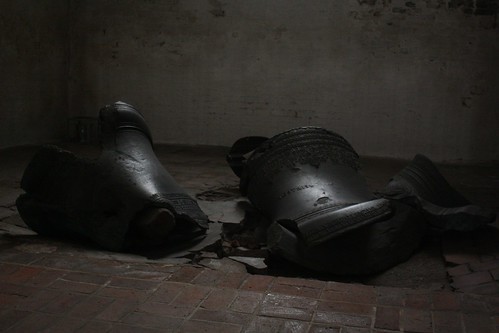
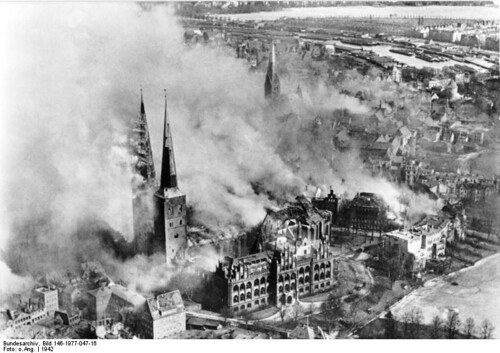
Note: This post was written in March 14-15 and posted after our return. When I think about L beck, the first thing that strikes me is the feeling of history underfoot. It struck me most when we set foot inside the Marienkirche. I had never quite felt a wave of a feeling of stepping back in time like that before. The stones on the floor were uneven and imperfect. L beck has had a wet and snowy winter, so the city had spread sand everywhere: sidewalks and roads. Walking into any grand church, I could hear the sound of sand under the shoes of everyone nearby, and feel it under my own shoes. I think I will long associate with L beck the feeling of walking into a grand old church, looking up at the top of the old building at seemingly impossible heights, while feeling the grit of sand and uneven stone beneath my feet. IMG_2643 Marienkirche isn t perfect, like some American churches I ve been in, such as the Basilica of Notre Dame. It doesn t have a lot of gold, either, and both of these attributes are wonderful. Look at a column of bricks, and you can see that each brick isn t exactly like its neighbor, and the entire column isn t perfectly straight. Lots of things in L beck are so old that they aren t perfectly straight, and it made me think that our American notion of always having to fix such things might be somewhat off sometimes. IMG_2629 Look up, and you see the frescos from the 1300s, revealed after many years after the building was struck by an allied bombing raid in 1942. This heavily damaged the building and knocked down plaster from the walls and ceiling, revealing the old artwork. Many parts of Marienkirche were lost as a result of the bombing, which perhaps adds to its slightly sparse and ancient feel. The church bells were sadly melted and crashed to the ground due to the bombing, and have been left exactly where they fell as a memorial. IMG_2641 Look down, and you see the uneven floor, and the concrete slabs above where important people were buried under the floor an attribute common to many of the churches we visited. It was common to see dates of graves from the 1600s and 1700s, though in some places it would go as far back as the 900s. The main part of the church has no heating or cooling, and visiting it on a day just a bit above freezing adds to the feeling of, well, old. Marienkirche has to be my favorite sight in L beck. Walking around the city, I get a similar feel. Many streets and sidewalks are made of stone. The streets that weren t damaged in the war have rows of beautiful old facades. Walk down many streets, and every so often I d see a little tunnel ( just wide enough for a coffin ) that goes under the street-facing houses to a nice little inner courtyard. These are open to the public, but tend to be very quiet and somewhat private. In the courtyard are smaller houses, which would have originally been used by the less wealthy. We also saw the L beck Dom (cathedral), which had a small museum about the destruction due to the Royal Air Force bombing in 1942. It was very sad to see the photo of the Dom in ruins, still smoking, even now. Burning L beck Cathedral after an air raid in 1942 I can only imagine what it must have felt like to residents of L beck to wake up to see many of their priceless centuries-old landmarks and places of worship so horribly destroyed and all of this for little strategic purpose really focused on the morale of the enemy civil population . It s sad that the allies would do such a short-sighted and terrible thing. Europeans have long had to live with the legacy of war upon war, while we Americans have rarely had to see the consequences of war up close. I think it would be good for more of us to visit these sites and come up face to face with what a bomb can do, and then perhaps we will be more judicious with them in the future. Shifting gears now to where we stayed: Andreas & Sigrid, with whom we stayed, have a beautiful 500-year-old house, with lots of original wood beams exposed, and some very old paintings on the walls and ceilings. Nearby were excellent bakeries and a chocolate shop. Terah and I visited it today and bought some very good chocolate. And this brings me to the second thing I ll remember: Andreas & Sigrid s children, Lukas and Rahel. Now, Terah knows no German, I know only a little bit, and the children know no English. So it was a bit slow getting to know each other to start out, but we managed to work around the communication barrier and had a great time. Terah played board games with Rahel, while with me, she kept inventing games to play: hiding somewhere, saying Hallo! , and laughing at how many unsuccessful attempts I might make to find her. I showed Lukas the camera on my Droid, which he used a lot, though a racing game on Terah s iPod Touch was more exciting. They both enjoyed looking at videos of American trains a bit, but especially pictures of our house and yard with Jacob and Oliver. They tried to teach me the German words for things, and also made futile attempts to correct my pronunciation! When we were leaving today, Rahel came over and gave me a kiss on the hand, then the same to Terah s hand, then a little kiss on one of our suitcases. It was touching and sweet. This was one of those experiences no guidebook prepared me for, and no tour bus would have provided. It is something neat to make friends with children despite the large language barrier. On to the rest of the visit We had arrived a little late into Hamburg. After getting our bags and some Euros at an ATM, the next step was to find the bus to L beck. No signs for it were evident, so I found an information desk. The person at the desk was carrying on a conversation in German with the person ahead of me in line. I figured an information desk person in a busy airport would speak English, and was all ready to ask Sprechen Sie Englisch? , but when I walked up, he got a polite smile, and said, Good morning! How can I help? Guess I m obvious. He directed me to the bus, gave me a brochure about it, and told me what time it would leave. Terah and I found the spot to wait, and for a moment I stepped inside the airport terminal. Terah won t let me forget that someone came up to her and asked a question in German, whereas I was spoken to in English. Anyhow, we found the bus, managed to communicate with the driver that doesn t speak English, and sat next to the friendly person that was talking to Terah. He turned out to be a violin player from Munich, and we had a great conversation for the next hour he asking questions about the USA, us asking questions about Germany and Munich. At one point, he commented, You two are so open minded and you re also Americans! He sounded surprised. We exchanged email addresses at the train station. Andreas found us there, and we walked through the city to his house, with him pointing out the sights along the way. L beck is a beautiful city, and though it was damaged in World War II, much of the really old parts still remain. The famous Holstentor Gate has a museum inside, which was fascinating to visit. On Sunday, we went to church with the family we were staying with, Andreas helpfully translating for us. There I met a British Python programmer, which was fun. His wife is a social worker, which was fun for Terah. Monday it was time to get on the train to Berlin. We again walked through a cold and rainy city to the Hauptbahnhof, ready to head to Berlin. There we got on a train to Hamburg, then an ICE train to Berlin. Despite having just a few minutes for a connection in Hamburg, it all went perfectly smoothly. The train left Leipzig about 10 seconds late the clock inside turned over to the minute, then the doors closed and we were off. Impressive. Note: the rest of my photos from L beck are available on Flickr.

Colin Watson: Thoughts on 3.0 (quilt) format

Note: I wrote most of this before Neil Williams' recent comments on the 3.0 family of formats, so despite the timing this isn't really a reaction to that although I do have a couple of responses. On the whole I think I agree that the Lintian message is a bit heavy-handed and I'm not sure I'm thrilled about the idea of the default source format being changed (though I can see why the dpkg maintainers are interested in that). That said, as far as I personally am concerned, there is a vast cognitive benefit to me in having as much as possible be common to all my packages. Once I have more than a couple of packages that require patching and benefit from the 3.0 (quilt) format as a result, I find it in my interest to use it for all my non-native packages even if they're patchless right now, so that for instance if they need patches in the future I can handle them the same way. It's not unheard of for me to apply temporary patches even to packages I actively maintain upstream, so I don't discount those either. I haven't decided what to do with my native packages yet; unless they're big enough for bzip2 compression to be worthwhile, there doesn't seem to be much immediate advantage to 3.0 (native). Anyway, on to the main body of this post: I've been one of the holdouts resisting use of patch systems for a long time, on the basis that I felt strongly that dpkg-source -x ought to give you the source that's actually built, rather than having to mess around with debian/rules targets in order to see it. Now that the 3.0 (quilt) format is available to fix this bug, I felt that I ought to revisit my resistance and start trying to use it. Migrating to it from monolithic diffs is of course a bit more work than migrating to it from other patch systems, so it's taken me a little while to get round to it. I'd been thinking about holding off until there was better integration with revision control (e.g. bzr looms), as I feel that patch files really ought to be an export format, but I eventually decided that I shouldn't let the perfect be the enemy of the good. I have enough experience with co-maintaining packages that use build-time patch systems to be able to compare my reactions. After experimenting with a couple of small packages, I moved over to the deep end and converted openssh a few weekends ago, since quite a few people have requested over the years that the Debian changes to openssh be easier to audit. This was a substantial job - over 6000 lines of upstream patches - but not actually as much work as I expected. I took a fairly simplistic approach: first, I unapplied all the upstream patches from my tree; then I ran bzr di interdiff -q /dev/stdin /dev/null >x, reduced it to a single logically-discrete patch, applied it to a new quilt patch using quilt fold, and repeated until x was empty. This was maybe an hour or two of work, and then I went through and tagged all the patches according to DEP-3, which took another few hours. After the first pass, I ended up with 38 patches and a much clearer idea of what has been forwarded upstream and what hasn't; I currently have 5 patches to forward or eliminate, down from 18. Good things: Bad things: On the whole I'm satisfied with this, and the benefits definitely outweigh the costs. Thanks to the dpkg team for all their work on this!

25 March 2010

Colin Watson: Thoughts on 3.0 (quilt) format

Note: I wrote most of this before Neil Williams' recent comments on the 3.0 family of formats, so despite the timing this isn't really a reaction to that although I do have a couple of responses. On the whole I think I agree that the Lintian message is a bit heavy-handed and I'm not sure I'm thrilled about the idea of the default source format being changed (though I can see why the dpkg maintainers are interested in that). That said, as far as I personally am concerned, there is a vast cognitive benefit to me in having as much as possible be common to all my packages. Once I have more than a couple of packages that require patching and benefit from the 3.0 (quilt) format as a result, I find it in my interest to use it for all my non-native packages even if they're patchless right now, so that for instance if they need patches in the future I can handle them the same way. It's not unheard of for me to apply temporary patches even to packages I actively maintain upstream, so I don't discount those either. I haven't decided what to do with my native packages yet; unless they're big enough for bzip2 compression to be worthwhile, there doesn't seem to be much immediate advantage to 3.0 (native). Anyway, on to the main body of this post: I've been one of the holdouts resisting use of patch systems for a long time, on the basis that I felt strongly that dpkg-source -x ought to give you the source that's actually built, rather than having to mess around with debian/rules targets in order to see it. Now that the 3.0 (quilt) format is available to fix this bug, I felt that I ought to revisit my resistance and start trying to use it. Migrating to it from monolithic diffs is of course a bit more work than migrating to it from other patch systems, so it's taken me a little while to get round to it. I'd been thinking about holding off until there was better integration with revision control (e.g. bzr looms), as I feel that patch files really ought to be an export format, but I eventually decided that I shouldn't let the perfect be the enemy of the good. I have enough experience with co-maintaining packages that use build-time patch systems to be able to compare my reactions. After experimenting with a couple of small packages, I moved over to the deep end and converted openssh a few weekends ago, since quite a few people have requested over the years that the Debian changes to openssh be easier to audit. This was a substantial job - over 6000 lines of upstream patches - but not actually as much work as I expected. I took a fairly simplistic approach: first, I unapplied all the upstream patches from my tree; then I ran bzr di interdiff -q /dev/stdin /dev/null >x, reduced it to a single logically-discrete patch, applied it to a new quilt patch using quilt fold, and repeated until x was empty. This was maybe an hour or two of work, and then I went through and tagged all the patches according to DEP-3, which took another few hours. After the first pass, I ended up with 38 patches and a much clearer idea of what has been forwarded upstream and what hasn't; I currently have 5 patches to forward or eliminate, down from 18. Good things: Bad things: On the whole I'm satisfied with this, and the benefits definitely outweigh the costs. Thanks to the dpkg team for all their work on this!

Neil Williams: lintian, source format 3.0 and blog comments

Regarding my previous post on source format 3.0, I think it came across that I was blaming lintian entirely which would be unfair.

(As a side-note, a bug in serendipity XMLRPC resulting in all entries having comments disabled has led to a welcome effect of spreading the discussion more widely than a series of comments on my own site could have achieved. I'm happy with this state of affairs, so it you want to comment, either contact me by private email or put your comments on your own blog. I won't be enabling comments any time soon.)

The extended information behind the lintian warning is one thing (I've explained my position on that to Russ privately) - my main objection is to how such a warning was pushed into lintian and the entire use 3.0 or be damned approach that seems to be being adopted.

IMHO, source format 3.0 is not good enough to be the standard dpkg source format for a simple reason: It offers nothing to well maintained packages. Not all packages need NMU's - ever. Not all packages have patches - ever. Native packages and packages with the Debian maintainer upstream gain nothing from 3.0, as far as I can see.

I have 67 source packages - after much very careful consideration, I have found that a handful of those (less than 10) actually benefit from 3.0 and the rest are all unaffected. None of the packages that I will keep on 1.0 have ever had an NMU since I've been maintainer, most are either native or entirely under my sole upstream control. I will decide whether Debian gets a .tar.gz or a .tar.bz2 and although I generally offer both for download where I can, I see no reason to adopt .tar.bz2 as my default for Debian packaging.

Adding a redundant directory and file is obnoxious. I fail to see why debian/source-format would not have been perfectly suitable. Nevertheless, I will do what is necessary to avoid 3.0 until there is a compelling technical reason to adopt it.

The imperative for those in favour of 3.0 is to convince me that there is a reason TO change, not to make it difficult for me NOT to change. I do not need any reason to avoid 3.0 other than I do not have a good enough reason to move from 1.0. Making developers feel like luddites or incompetent merely because the proponents of 3.0 have failed to convince others to move to 3.0 is just insulting. You want me to use 3.0? Explain why I should bother - the current "reasons" on the Wiki page are simply not good enough and any rehash of those will be ignored. Come up with something new or respect my decision and let me get on with more important stuff.

John Goerzen: Trip part 2: Flight to Hamburg

Note: This post written March 13, and posted after our return. Yesterday was a day of travel. We said goodbye to Jacob and Oliver in the morning. We had thought a lot about how to tell Jacob what was happening and when to tell him. Ultimately, he doesn t really understand time or distance very well yet, and we know that he worries about the unknown. So although he knew about the visit to Indiana for awhile, he didn t know that Terah and I would be going somewhere until th emorning. He wasn t pleased, but seemed to take it well. We told him that we re going to a hotel in Germany and reminded him of other times we ve gone to a hotel. I also reminded him that sometimes a babysitter comes to our house while Terah and I go somewhere else, but we always come back later. That seemed to help. We got to the Indianapolis International Airport in plenty of time for our flight. They have built a completely new terminal building; the old one we were familiar with is now abandoned. The new building is beautiful, sunny, open, and even inspiring. I was impressed. Newark Liberty International, on the other hand, had all the ambiance of a Greyhound station across from the county jail. It reminded me a lot of Chicago Midway, which I used to go through regularly: dark, a bit run down (water stains on the ceilings), and nowhere near enough seating in the gate areas. We wound up standing for an hour before our flight left (late). The food court in Concourse C was something special. As we were witting there, Terah remarked on the constant stream of passengers that walked up to the food court, glanced around, and made a look of THESE are my choices? Which was our exact reaction a few minutes before. Yep, it s the first food court I ve been in where McDonald s was the upscale choice. The sit-down Mexican Cafe had hamburgers with mexi-fries as its main attractions. Terah tried out the dodgy pizza place while I tried out the even more dodgy Chinese/sushi place (I was not silly enough to try sushi there). Ultimately we decided that perhaps the point of the food court was to make us eager for airplane food. The choices in Indianapolis sure put that to shame: TGI Fridays was a real gourmet option compared to the choices in Newark. I was really a bit embarrassed; Newark is a major international airport, and many visitors to the United States will be greeted by a foul-smelling food court and a dingy airport. Yay for being welcoming? Well, really we had a good day of travel and I shouldn t be ragging on the Newark airport so much, so I ll say something positive: there s a pharmacy right behind the food court, which is probably a very convenient location to meet the needs of many diners. Anyhow, our flight left Newark about an hour late, at about 7PM Eastern. As I write this, it s about 7:30 CET (1AM Eastern) and our plane will be on the ground in about an hour. I m excited for the coming week! I got some sleep on the plane, but not a lot. I m hoping that I will have the energy for a good weekend.

Gerfried Fuchs: dpkg source format 3.0

Ben Hutchings writes:
You are missing the point - debian/source/format allows you to make it explicit that the source format is 1.0, if you want to stick with that.
You are missing the point - the planned switch of the default format isn't considered a good approach by quite some people. If something new gets introduced, switching to it should be done in wake manner. Other tools do that too, so why can't a central package as dpkg use that approach? I especially want to mention that a point release update for stable was required to get it working in stable like it should.

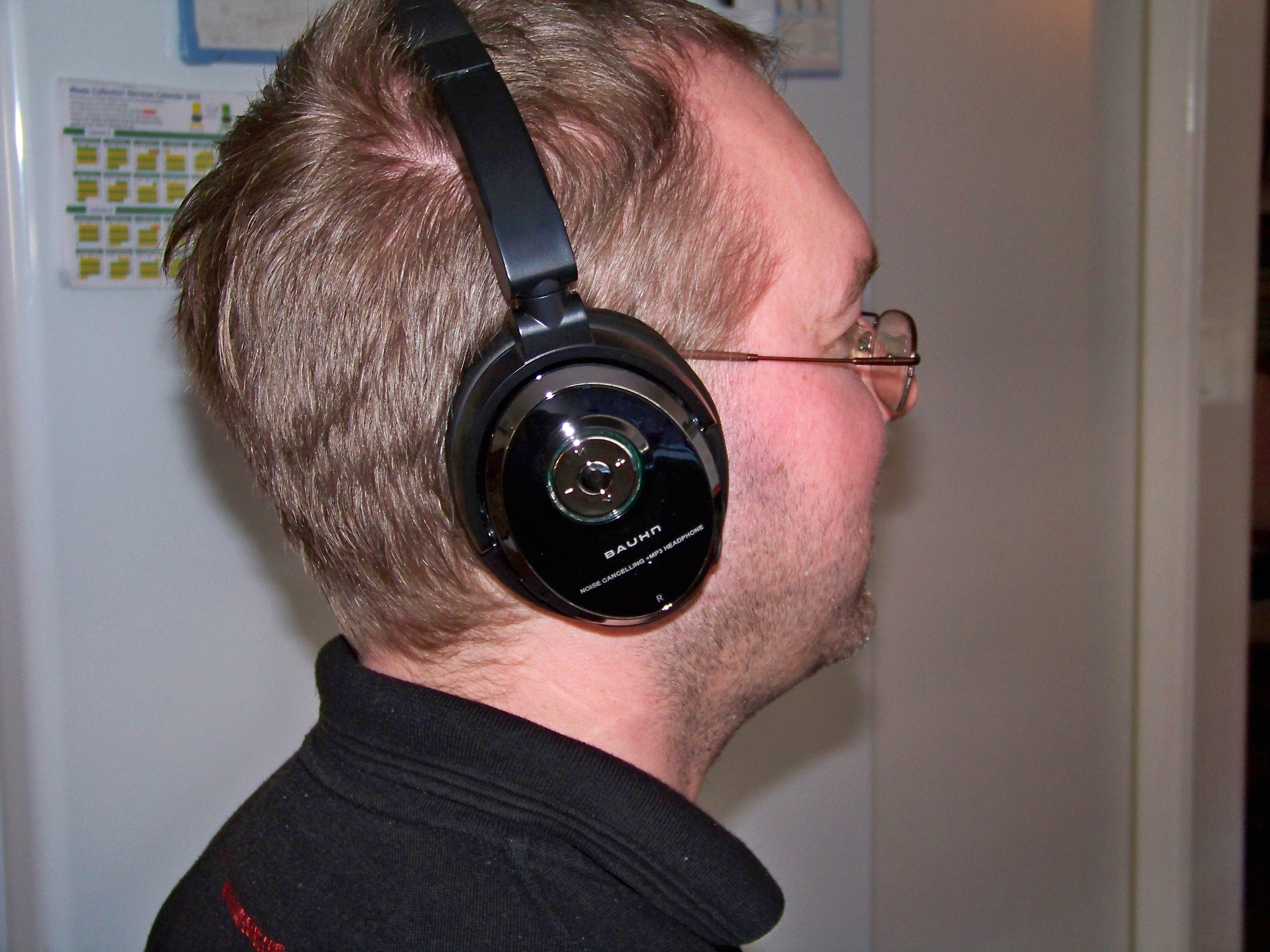
Russell Coker: Bose vs Bauhn/Aldi Noise Canceling Headphones

Me wearing Bauhn HeadphonesInside the case of Bauhn Noise Canceling Headphones showing the cable and connectorsOutside of the cases of Bauhn and Bose Headphones Overview The German supermarket chain Aldi has been running in Australia for 8 years now [1]. Their standard practice for a long time has been to offer regular special deals on a few items of consumer electronics every week, my chocolate fridge is one thing I bought from Aldi [2]. Today Aldi have started selling Noise Canceling Headphones [3]. These headphones are badged by Bauhn but that name is apparently applied to random products from cheap manufacturers, it may be an Aldi name that is applied to stuff that they sell. The headphones cost $69AU which is really cheap. But the deal will probably end in less than a week when stock runs out. Noise canceling headphones can be used in server rooms and other noisy environments. Every company that has a server room should buy a few sets. One of the features of noise-canceling is that it works best on low frequencies and on regular sounds it specifically doesn t block human voice well. In some noisy environments it will be easier to hear people talk if you wear such headphones! Noise canceling headphones are also very useful to people who are on the autism spectrum and other people who get more annoyed by noise pollution than average people. I have been wearing my Bose headphones on public transport and when walking around in the city, this not only stops traffic noise but it also helps to avoid people thinking that I want to talk to them. Features The first picture shows me wearing the Bauhn NC headphones, it s from the right to show the controls for the built-in MP3 player. I have not yet tested the MP3 functionality. It appears that as the controls are one power button, buttons for next/previous track, and for controlling the volume. This is fairly poor for MP3 functionality, ideally you would want to have a display to see a list of tracks, maybe have directories to store files, etc. I guess this could be a convenient feature on occasion, but you wouldn t buy the headphones for the MP3 functionality.
The next two pictures show a comparison of the Bauhn headset with the Bose QC-15 headset that I bought last year [4]. The cases of the Bauhn and Bose devices are almost exactly the same size and of a very similar shape, the Bose case is tapered and indented and also has a finer weave on the cloth covering it looks much nicer. Both devices come with an adapter for an airline socket and with a detachable cable. They also both have pouches attached to the inside of the case with velcro. But the Bauhn headphones come with an adapter for the 6.5mm TRS connector which could be convenient if you want to plug them in to a larger amplifier, the basic connector is 3.5mm in both cases. The Bauhn device uses a standard TRS connector at the headphone end while the Bose QC-15 use a special connector that matches the shape of the headset and which has a TRRS plug (to cater for the high/low volume switch), so it seems that a damaged Bauhn cable could be replaced cheaply while a replacement Bose cable would have to be purchased from Bose (presumably at great expense and delay). The Bauhn case also has a velcro attached pocket for storing business cards (or maybe a name tag or something). The supplied cable for the Bauhn is described as being 5 feet long which isn t quite long enough to reach a tower PC that is sitting on the floor. The Bose has a cable that is about a foot longer (maybe 6 feet total), but due to the non-standard connector you can t replace it. I presume that I could easily buy a 4 meter cable for the Bauhn headphones, but I could of course buy an extension cable to use with the Bose. Bose advertise the QC-15 headphones as having 35 hours of battery life from a single AAA battery. Aldi advertise the Bauhn headset as having 5 hours of battery life when NC is turned on and they use two AAA batteries. It s widely regarded that rechargeable batteries don t last as long as the batteries used for estimating the battery life (which presumably are the most expensive long-life batteries available). I ve found a single rechargeable AAA battery to last well over 5 hours in my Bose headphones, so it seems that battery life is considerably worse for the Bauhn device. One feature of the Bauhn device is that it can be used without any batteries for playing external music. The Bose headphones can t be used at all without a battery. So while the Bauhn will use the batteries faster it will at least be usable when the batteries run out. But if you are buying headphones for the purpose of avoiding noise then the Bose headphones are simply better. Comfort The Bose headphones have significantly deeper ear wells than the Bauhn about 23mm vs 18mm. If your ears stick out more than 18mm (as mine apparently do) then this is a good reason for choosing Bose. The Bose headphones are a tighter fit, the spring that pushes the ear-pieces together is stronger. But they have better padding so this doesn t cause me any discomfort. Also the Bose headphones have better passive noise reduction due to having a more snug fit around the ears. I ve worn my Bose headphones on a flight from the US to Australia with hardly a break and they were quite comfortable I would never want to do that with the Bauhn headphones. Noise Reduction I tested the Bose and Bauhn products against three noise scenarios, external music, an air-conditioner, and a car engine. The Bose headphones made good reductions of the noise from the external music (Numb by Linkin Park) and the air-conditioner. The Bauhn headphones did little to stop Linkin Park and was not very effective against the air-conditioner noise. I think that this is largely due to the lack of passive noise reduction, the air-conditioner in question makes little vibration noise and the sound of rushing air is generally immune to active noise cancellation. Both headphones were very effective when in a car with the engine idling. The engine noise of vehicles seems to fall in an ideal frequency range for active cancellation. Music Quality When listening to Youtube music played on my Thinkpad I could not notice any quality difference between the two sets of headphones. I did notice that the Bose headphones seemed to have a greater response in the higher frequency range, but that doesn t necessarily mean that one set is better than the other. Maybe if I was listening to FLAC0 encoded music that I had personally ripped from a CD then I would notice a difference. But for most people the Bauhn music quality should be good enough. Design Quality The Bose product is solidly designed, while the Bauhn product appears cheap in every way. Opening the battery compartment on the Bauhn headphones is difficult and if you do it wrong you could easily break the lid off, I expect that every set of Bauhn headphones that is used by children will be broken in a small amount of time but it should still be fully functional with a broken lid. The matt finish of the Bose headphones should hide minor scratches much better than the shiny Bauhn headphones. The Bauhn headphones also have lower quality plastic parts, it appears that the molds used were designed cheaply and without adequate care to prevent marking the final product. The design flaws that affect usage of the Bauhn product are the shallow ear wells, the poor fit of the cushions around the ears (which is probably mostly due to a weak spring pressing the ear cups to the wearer s head), and the battery compartment lid which is difficult to open and appears prone to breakage. The other flaws are all cosmetic. I wonder whether the Bauhn product was made by one of the big name manufacturers who deliberately reduced the quality to avoid competing with their more expensive products. It seems that the major flaws could have been corrected at design time with almost no increase in manufacturing costs. Recommendations If you can afford the Bose QuietComfort 15 Acoustic Noise Cancelling Headphones then they are really worth the extra expense, I have no regrets at all about spending about $320US (including tax) on my Bose QC-15. The Bauhn product is good for when you want something cheap, for example a set to be used in a server room, or for the use of children. I bought a Bauhn headset for a friend who is a pilot, he spent $1,100 on a noise-canceling headset for his plane but had never got around to buying one for recreational use I expect that he will allow his children to use his new Bauhn headphones, if they get broken it s only a $69 expense. The second cheapest NC headphones I ve seen on offer in Australia is Harvey Norman selling Phillips HN-110 Noise Canceling Headphones for $100AU [5]. Amazon sells Philips HN 110 Folding Noise-Canceling Headphones for $50US but doesn t seem to ship them outside the US (at least not to Australia). JB Hifi also has some NC headphones on sale in Australia [6], but they are more expensive at $219 for AKG and $319 for Sennheiser. Also the models they sell are on-ear which means that they will inherently have very little passive noise reduction and will also annoy anyone who doesn t like having their ears squashed. If I was buying NC headphones for my own use and didn t want to spend $300US then I would either buy the Philips HN 110 Folding Noise-Canceling Headphones from Amazon and get a friend in the US to post them to me or I would buy them from Harvey Norman. But the Bauhn product is good if you want cheap headphones to stop engine noise and give reasonable quality when playing music.

Ben Hutchings: Adding debian/source/format

Neil Williams writes:
The new lintian addition "missing-debian-source-format" is starting to remind me of a pestering nanny. I use source format 3.0 only where I see a technical benefit and that - so far - is restricted to packages that use a .tar.bz2 upstream and one or two with really tricky patching requirements.
You are missing the point - debian/source/format allows you to make it explicit that the source format is 1.0, if you want to stick with that.

24 March 2010

Gerfried Fuchs: rxvt-unicode Matcher Patch for Bug Numbers

A while ago Ganneff wondered weather it would be possible to make the matcher extension of rxvt-unicode also pick up something like #12345 and turn it into a link into the BTS. It isn't or rather, it wasn't. The idea got stuck in my head and invested some time to make it happen. Here is the quick'n'dirty diff to make it happen:
--- /usr/lib/urxvt/perl/matcher.distrib	2009-11-30 06:44:07.000000000 +0100
+++ /usr/lib/urxvt/perl/matcher.rhonda	2010-03-24 23:57:01.000000000 +0100
@@ -3,13 +3,14 @@
 # Author: Tim Pope <rxvt-unicodeNOSPAM@tpope.info>
 
 my $url =
-   qr 
+   qr (?:
       (?:https?:// ftp:// news:// mailto: file:// \bwww\.)
       [a-zA-Z0-9\-\@;\/?:&=%\$_.+!*\x27,~#]*
       (
          \([a-zA-Z0-9\-\@;\/?:&=%\$_.+!*\x27,~#]*\)  # Allow a pair of matched parentheses
          [a-zA-Z0-9\-\@;\/?:&=%\$_+*~]  # exclude some trailing characters (heuristic)
       )+
+      ) \#[0-9] 4, 
     x;
 
 sub on_user_command  
@@ -145,6 +146,7 @@
          my @begin = @-;
          my @end = @+;
          if (!defined($col)   ($-[0] <= $col && $+[0] >= $col))  
+            $match =~ s/^#/http:\/\/bugs.debian.org\//;
             if ($launcher !~ /\$/)  
                return ($launcher,$match);
               else  
The diff is intentionally small so it is clear what is happening here. And it should give ideas for other extensions that one would like to make. I don't consider it though flexible enough to submit it upstream. Enjoy anyway!

Next.

Previous.