Search Results: "tar"

30 November 2010

Robert Collins: testrepository iteration for python projects

Tesetrepository has a really nice workflow for fixing a set of failing tests:
  1. Tell it about the failing tests (e.g. by doing a full test run, or running a single known failing test)
  2. Run just the known failing tests (testr run failing)
  3. Make a change
  4. Goto step 2
As you fix up the tests testr will just give your test runner a smaller and smaller list of tests to run. However I haven t been able to use that feature when developing (most) Python programs. Today though, I added the necessary support to testtools, and as a result subunit (which inherits its thin test runner shim from testtools) now supports load-list. With this a simple .testr.conf can support this lovely workflow. This is the one used in testrepository itself: it runs the testrepository tests, which are regular unittest tests, using subunit.run this gives it subunit output, and tells testrepository how to run a subset of tests.

[DEFAULT]
test_command=python -m subunit.run $IDOPTION testrepository.tests.test_suite
test_id_option=--load-list $IDFILE

MJ Ray: ECJ on SAS v WPL: A Coming Storm?

While I share Alex s law [is] boring view, this also attracted my attention because it s (slightly) about statistics software. I feel the SAS v WPL case mentioned on his blog deserves a wider airing:
The basic story is that the Judge in this case is deeply unsure of the boundary of copyright. [...] has sent a number of questions to the European Court of Justice (ECJ). The questions are hypothetical, but clearly designed to test the waters and figure out where this line falls.
Now will this re-affirm what I ve always been told, that copyright s border is between ideas and expressions, and copyright only covers expressions? Or will it draw a different boundary? It seems that those most likely to be affected are those who are at the edges of acceptability of licences like LGPL, or trying to provide workalikes of hostile proprietary companies, but please, read it for yourself.

Sam Hartman: Implementation Progress

At the end of September, things were quite exciting as we had our first project meeting. At that meeting those in the room saw a demonstration of the Moonshot GSS EAP mechanism and we discussed a number of open issues and began to plan for our test infrastructure. We ve made significant progress on the specification front and on explaining Moonshot to important communities since then. However there has been little public progress on the implementation front. Unfortunately, getting the necessary legal clearance and agreements to release code often takes longer than anyone would like; that is what is happening here. We re all eagerly awaiting final approval from the lawyers and JANET(UK) management. However, things have been moving behind the scenes. Throughout much of October, Luke Howard and Linus Nordberg were working on their respective parts of the code. I ve also been working on putting together the test and build infrastructure. As we discussed at the meeting, we re going to use Debian and Ubuntu as the basis for our testing. For example, we hope to release virtual machine images for these platforms for the major Moonshot components. Thus the primary build environment for our testing and virtualization will be for Debian. I ve been putting together that here. Right now, that branch will pull together packages of the SAML infrastructure that we need. I ve also been looking into virtualized test frameworks and believe I ve found one that meets our needs. I ve also put together some primitive build infrastructure that is independent of packaging available here. I ve set up a buildbot that builds both environments. So, as the code becomes available we ll be in a good position to start making it available.

29 November 2010

Axel Beckert: Useful but Unknown Unix Tools: colored cal(endar)

Another thing I regard as useful on the commandline are colors. (Others commonly refer to my color preferences as eye cancer, but that s not relevant here. ;-) Colors help to easily distinguish between relevant and non-relevant things or to separate different things. One colored command line program I use nearly everyday is the colored fork of bsdmainutils s well know (or at least better known) cal program whose output looks like this:
$ cal
    November 2010    
Su Mo Tu We Th Fr Sa
    1  2  3  4  5  6
 7  8  9 10 11 12 13
14 15 16 17 18 19 20
21 22 23 24 25 26 27
28 29 30
$ 
Since the colored fork calls itself still cal (as the Debian source package is called), to avoid conflicts with bsdmainutils s cal, the binary package and the binary itself are called ccal (short for colored cal) and its output looks like this:
$ ccal
    November 2010     
 Mo Tu We Th Fr Sa Su 
  1  2  3  4  5  6  7 
  8  9 10 11 12 13 14 
 15 16 17 18 19 20 21 
 22 23 24 25 26 27 28 
 29<30>               
                      
$ 
ccal also use the locale definitions (LC_TIME), if available, that s why the one screenshot is Sun-Sat and the other one is Mon-Sun. According to the man page, ccal has some more improvements over the classic cal: If displaying the single-month format, ccal will look for a date file (the default file or whatever you specify with the -d option). If found, ccal will read the file, looking for special date descriptions for that month which will be displayed to the right of the calendar. By default, up to 24 appointments (number may be changed with -m) may be displayed per month. If the current date happens to fall on one of these special dates, it will be flagged by an asterisk. If there is room, appointments for the next month may also be displayed (next month s dates having definitions like 2nd Thursday will be skipped). But I must admit, I don t use that feature. I just use it as on-demand calendar sheet. The colored screenshot above is btw. generated with Adam Borowski s ansi2html which popped up after I published my Intent to package aha (for Ansi HTML Adapter), the first ANSI colors to HTML converter I found on the net. (And yes I searched for it because of this and some yet to come blog postings. No spoilers here though. ;-) While capturing colored output of ls and some other tools was easy, it needed a little hack to capture ccal s output, because if you pipe ccal output to anything, it drops its colors. Always. The solution was to run it in GNU Screen, log the output and then pipe the log file through aha or ansi2html :
$ screen -c /dev/null -L ccal; cat screenlog.0   ansi2html > ccal.html
Probably the output of every program which drops colors when writing to a pipe instead of a terminal can be fetched that way. Update, 2:04 CET: As Adam Borowski points out in message 62 of #605380, script is the better tool for making tools believe they talk to a terminal:
$ script -q /dev/null -c "ccal"   ansi2html
Catching the output of a whole year s calender ( ccal 2011 ) failed with GNU screen though, as it was truncated on the 24th of September by GNU screen (as it was already truncated in the screenlog.0), so no screenshot of that for the moment. And with script, I d get the whole output, but would have to manually fix the styles so they don t get posted literally to Planet Debian. So look for yourself how the output of ccal 2011 looks like by installing ccal. ;-)

Theodore Ts'o: Google has a problem retaining great engineers? Bullcrap.

Once again, there s been another story about how Google is having trouble retaining talent. Despite all Eric Schmidt s attempts to tell folks that Google s regretted attrition rate has not changed in seven years, this story just doesn t want to seem to die. (And those stories about Google paying $3.5 million and $7 million to keep an engineer from defecting to Facebook? As far as I know, total bull. I bet it s something made up by some Facebook recruiter who needed to explain how she let a live prospect get away. :-) At least for me, the complete opposite is true. There are very few companies where I can do the work that I want to do, and Google is one of them. A startup is totally the wrong place for me. Why? Because if you talk to any venture capitalist, a startup has one and only one reason to exist: to prove that it has a scalable, viable business model. Take diapers.com for example. As Business Week described, while they were proving that they had a business model that worked, they purchased their diapers at the local BJ s and shipped them via Fedex. Another startup, Chegg, proved its business model by using Amazon.com to drop ship text books to their first customers. (The venture capitalist Mark Maples talked about this in a brilliant talk at the Founders Showcase; the Chegg example starts around 20:50 minutes in, but I d recommend listening to the whole thing, since it s such a great talk.) You don t negotiate volume discounts with textbook publishers, or build huge warehouses to hold all of the diapers that you re going to buy until you prove that you have a business model that works. Similarly, you don t work on great technology at a startup. Startups, by and large, aren t about technology at least, not the Web 2.0 startups like Facebook, Foursquare, Twitter, Groupon, etc. They are about business model discovery. So if you are fundamentally a technologist at heart, whose heart sings when you re making a better file system, or fixing a kernel bug, you re not going to be happy at a startup. At least, not if the startup is run competently. If you have the heart of an entrepreneur, and you are willing to roll the dice (since 9 out of 10 startups go belly up; those are the ones that failed to find a viable business model), then sure, go for a startup. And understand that your job will be to make something that works well at a small scale, quick, dirty, and cheap. If that means using some proprietary software, then that s what you should do. Hopefully you ll get lucky and win the IPO lottery. But if your primary interest is to doing great engineering work, then you want go to company that has a proven business model. Google has enough scale that I can sleep well knowing that improvements I am making to Linux and the ext4 file system are saving enough money for the company that Google is making a profit on me. That is, the value Google is getting out of my work is worth many multiples of my total compensation. And that s a position that every engineer should strive for, since that s how you can be confident that you will remain gainfully employed. The fact that I can do what I love, and go to conferences, and all of my work is open source that s just total icing on the cake. :-) No related posts.

Vincent Sanders: Mobile Telecommunication Luddite

Actually I can not really be called a Luddite because I am not really against telecommunication progress nor do I fear it will negatively effect my employment...but the title sounded good? ;-)
Anyhow, I have a strange relationship with mobile phones. My ability to have a functioning device has historically limited their usefulness to me.

Because of my low usage and odd attitude for a techie I have always used PAYG for my personal phone. Work may have provided me with a device with a contract for being on-call etc. but in general its been PAYG all the way. My first phone was a Nokia 1610 back in the late nineties, second user after my employer at the time contract upgraded and had a load of "leftovers". I paid 50quid for it and bought a ten quid SIM and ten pounds credit.

My phones
The standing joke among my friends for the next decade has been that whatever provider I moved to they would go out of business within the year. I went through about eight providers in ten years. And for the first six the same tenner credit went with me! Each time the PAYG provider folded etc. I would be moved on to someone new with a tenners credit and a new SIM and number.

After Easy Mobile closed they did not have an option of a new provider with credit and the "recommended" provider was very poor, so this time I shopped around and went with Tesco mobile but remembered to take my number, which did at least stop my colleagues making fun of me for another move.

During this period my phones were no better than my providers. I bought a Nokia 1100 and used other peoples leftovers. Culminating in Daniel Silverstone taking pity on me and giving me his Sony Ericsson K800 at the end of his contract, despite acquiring an ADP1 and a G1 (both have which have dropped dead) this is the phone I have been using for three years now.

Due to my dreadful relationship I did not get the most from the technology and felt like I was missing out. Over the last few years to try and address this I have set myself a target of having a phone physically with me, turned on and in credit at all times. This I have finally managed for a whole six month stretch and as a reward I have bought myself a nice Android based smartphone on contract with T-Mobile.

I have done all the administrative things to port the number so no-one will need to alter their address books :-)

After only a few days of usage I have already discovered why the combination of smart phone and decent contract are so appealing. The freedom to just call and text and use the internet wherever you are without stopping to worry if you have enough credit is a wonderful thing. And decent hardware with the guarantee that if it breaks all I have to do is go into the store and they give me a new one.

I went for the HTC Wildfire instead of the Desire on cost grounds (100 pounds up front instead of 290) which seems perfectly reasonable hardware performance wise. My one and only niggle is T-mobile have nobbled the media player so it only plays some mp3s and not oggs or flacs. No real challenge, just a bit disappointing that vendurs seem to think they need to fiddle.


Adnan Hodzic: DebConf11 final and official dates

If you thought you saw this post already, you re right, since this is our second time announcing official DebConf11 dates. First time announced dates can be found on: DebConf11 official dates deprecated (Nov 29th update)
Official and Final DebConf11 dates in Banja Luka, Bosnia and Herzegovina are:
DebCamp: 17 23 July 2011
DebConf: 24 30 July 2011

On behalf of whole DebConf11 team I would like to apologize to everybody who already organized and booked their vacation after initial announcement, reasons why these dates were altered can be found on debconf-team discussion on Let s decide DebConf11 final dates .
These dates will be announced on Debian website as official announcment as well.
See you in Bosnia? Smile

http://wiki.debconf.org/wiki/DebConf11/BanjaLuka

Russell Coker: The Sad State of Shopping in Australia

Paul Wayper has written a blog post criticising the main chains of grocery stores in Australia [1]. That is the cartel of Coles and Woolworths (which was formerly known as Safeway in some parts of Australia), and the German newcomer Aldi.While he does make some good points I think he was a little harsh on Aldi. As a portion of the stock on shelves (by quantity stocked, shelf space, number of products, or almost any other metric) it seems that Aldi easily beats every other decent sized grocery chain for the portion of the stock being organic food. Aldi also has a very high portion of their stock being fair-trade also probably beating the other chains handily. Having organic fair-trade food sold in bulk at low prices is a really good thing!Paul criticises the lack of range on offer in the major chains. Aldi has the smallest range as their entire business model is based around offering a small range of products in a relatively small store at very low prices. That dramatically decreases the amount of stock that they have and therefore decreases the amount that is spoiled and the expense of storing and tracking it all. I wonder if the success of Aldi can drive other stores to getting a better range of products. Why buy a small range of products from Coles or Woolworths when you can get a similar small range from Aldi at low prices that the business models of Coles and Woolworths can t match? This may even drive consumers to buying core products (bread, milk, pasta, etc) and some basic luxury products (cooking wine, basic chocolate, cheap soda, etc) from Aldi and then buying other products from specialist stores. This might result in more delicatessens!Aldi also has a weekly selection of special items. For example selling snow boots etc just before winter starts. In most parts of Australia we don t see snow much and a cheap pair of snow boots is a good investment for the one day a year that most people spend at the snow. These specials provide real benefits to consumers although not to the Australian economy.Paul complains about own brand products. But for some products such as sugar you will get the same product from home brand as from other brands (there aren t really many options for sugar) and it ll probably end up being Australian just due to economics.When you buy big-name products you are mostly paying for marketing. For some things there are real taste differences (such as Coke for me), but for lots of things there are no difference, so I m happy to buy own brand . Generally not paying for marketing is a good thing.I totally agree with Paul s point about buying Australian to help the local economy and also to avoid the transmission of diseases. Any treaty which forces us to accept the import of products from countries that have diseases that can be transmitted to Australian crops should be voided. It seems that the WTO is specifically designed to benefit corporations at the expense of member countries and their citizens.Paul gave a positive review to IGA, I wasn t impressed with my local IGA the last time I visited it. But I ll give it another go.

Rapha&#235;l Hertzog: How to find the right Debian packages: high-level search interface

The Debian archive is known to be one of the largest software collections available in the free software world. With more than 16,000 source packages and 30,000 binary packages, users sometimes have trouble finding packages that are relevant to them. Debian developer Enrico Zini has been working on infrastructure to solve this problem. During the recent mini-debconf Paris, Enrico gave a talk presenting what he has been working on in the last few years, which hasn t gotten yet the attention it deserves . Enrico is known in the Debian community for the introduction of debtags, a system used to classify all packages using facets. Each facet describes a specific kind of property: type of user-interface, programming language it s written in, type of document manipulated, purpose of the software, etc. His most recent work builds on that. It is available in Debian and Ubuntu in the apt-xapian-index package. Its purpose is to allow advanced queries over the database of available packages. Users of apt-xapian-index He started by presenting some early users of the infrastructure. The most widely know is Ubuntu s software center. Its search feature provides results almost instantly thanks to apt-xapian-index. But it is a very simple interface that doesn t exploit many of the advanced features provided by the apt-xapian-index. Another early adopter, making use of some more advanced features, is GoPlay!. It s a graphical user interface to find games. It makes use of debtags to classify games so that you can browse, for example, all 3D action/arcade games related to cars. GoPlay has even been extended to be a more generic debtags based package browser and the package now also provides GoLearn!, GoAdmin!, GoNet!, GoOffice!, GoSafe!, and GoWeb!. Fuss-launcher is an application launcher and not a package browser, but by using apt-xapian-index, it s able to reuse information provided at the package level to make it easier to find installed applications. Package descriptions tend to be more verbose than those embedded in .desktop files. Enrico also showed another nice feature to the audience: if you drag a document onto its window, it will show you a list of applications that can open it. Last but not least, apt-xapian-index provides a command line search tool that is vastly superior to the traditional apt-cache search: it s axi-cache search (axi stands for apt-xapian-index). Enrico compared the output of a search on the letter r . While apt-cache spits out an infinite list of packages containing this letter somewhere in the description, axi-cache only listed packages related to GNU R. He also demonstrated the contextual tab completion. It makes it easy to use debtags and to refine your search. Once you have typed a first keyword, the tab-completion for the second one only contains keywords or debtags that are actually able to provide more restrictive results. Advanced queries with logical operations (AND, OR, NOT, XOR) are also supported. Features of the backend Enrico then dived into the internals. Xapian s search engine is at the root of this infrastructure. He likes it because it s a simple library (i.e. no daemon) and it has nice Python bindings. While apt-xapian-index s core work is to index the descriptions of all the packages, it actually stores much more and can be easily extended with plugins (written in Python). For instance, the information stored encompasses: He already has plans to store more: adding popularity contest data (see wishlist bugs #602180 and #602182) will make it possible to sort query results in a useful way. The most widely used applications are good choices when it comes to community support, and they are likely of better quality due to the larger user base. Adding timestamps of the last installation/upgrade/removal, will make it easier to pin-point a regression to a specific package update. The generated index is world-readable and can be used from any application provided it can use the Xapian library which is written in C++ but has bindings for Perl, Python, PHP, Java, Tcl, C#, and Ruby. Call for experimentation Enrico believes that many useful applications have yet to be invented on top of apt-xapian-index s features. He s calling for experimentation and asking for new ideas. The only practical limit that he has encountered is the size of the index: currently it varies between 50 Mb (Debian unstable without translation) and 70 Mb (Debian stable/testing/unstable with one translation). He would like it to not grow over 100 Mb since it s installed by default (due to aptitude recommending it) and he s not comfortable with the idea of using more than 20% of the disk footprint of a basic install just for this service. That s why the index was configured to not store the position of the terms: it s thus not possible to find out packages whose description contains the word statistical immediately followed by the word computing . You can however find those which have both terms somewhere in their description. Enrico wondered if apt-xapian-index offers too much freedom. That could explain why few people experimented with it despite his numerous blog posts with code samples and information on how to get started using it. But it s not difficult to imagine use cases for this data. It could be used to extend tools like rc-alert or wnpp-alert, for example. They provide a long list of Debian packages that are looking for some help and are installed on the machine. With apt-xapian-index, it would be possible to restrict the results to the set of packages written in a specific programming language or for a particular desktop environment. The more likely explanation is that too few people know about the tool. There are many more itches to scratch where apt-xapian-index s features could be very useful, and my guess is that Enrico s wishes will eventually come true.
This article was first published in Linux Weekly News. Click here to subscribe to my newsletter and keep up with the Debian/Ubuntu news thanks to my monthly digest.

No comment Liked this article? Click here. My blog is Flattr-enabled.

Keith Packard: Altos0.8

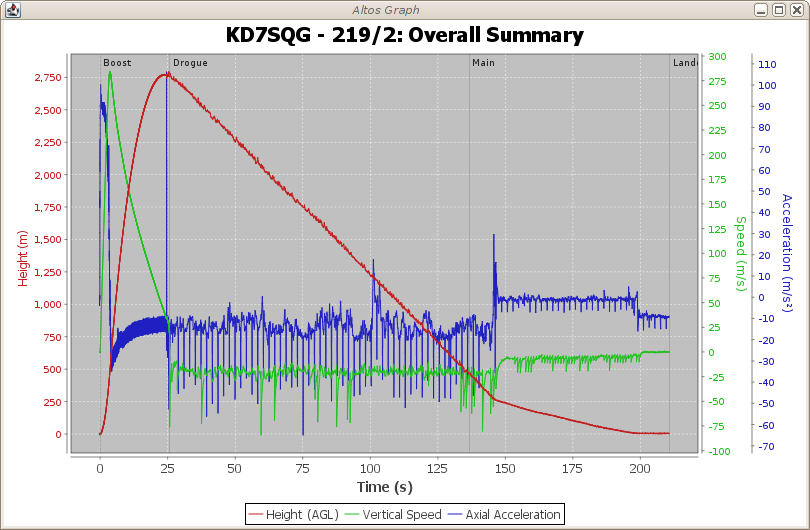
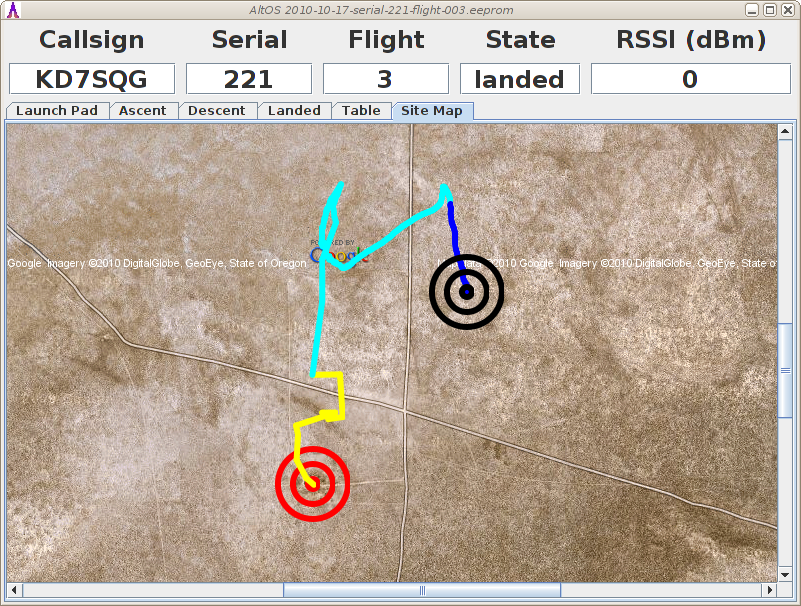
AltOS 0.8 New Software and Firmware for Altus Metrum Devices Bdale and I are pleased to announce the release of AltOS version 0.8. AltOS is the core of the software for all of the Altus Metrum products. It consists of cc1111-based microcontroller firmware and Java-based ground station software. AltosUI New Features in the AltusMetrum Ground Station AltOS version 0.8 contains significant upgrades to the ground station software, AltosUI: Continuing Features AltOS version 0.8 continues to provide the following features: AltOS Firmware Update AltOS version 0.8 contains a minor firmware update for TeleMetrum to resolve an issue with main deployment. A mis-feature in the igniter firing code would delay main deployment by 2 seconds in some cases. Thanks to our contributors! We had a lot of help with this release: Future Plans A number of features are implemented or in process in the sources available in our publicly visible repository that are not part of the current stable release. There are any number of additions that could be made to this list; feel free to send along ideas that you ve got. Of course, all of this software is licensed under the GNU General Public License, so you can get the source and hack on it in the comfort of your own home.

28 November 2010

Axel Beckert: Useful but Unknown Unix Commandline Options of cat

Yesterday in Harald K nig s commandline talk at LinuxDay.at, I first heard of cat s -e option, and noticed that cat has quite some interesting options. From the man page of cat:
-A, --show-all
equivalent to -vET
-b, --number-nonblank
number nonempty output lines
-e
equivalent to -vE
-E, --show-ends
display $ at end of each line
-n, --number
number all output lines
-s, --squeeze-blank
suppress repeated empty output lines
-t
equivalent to -vT
-T, --show-tabs
display TAB characters as ^I
-v, --show-nonprinting
use ^ and M- notation, except for LFD and TAB
Some examples made on an UTF-8 terminal:
user@host:demo $ cat bla
            
abc
user@host:demo $ cat -Ab bla
     1  M-CM-$  M-CM-6  M-CM-<^IM-CM-^_   $
$
$
     2  abc$
user@host:demo $ cat -Ens bla
     1              $
     2	$
     3  abc$
user@host:demo $ 
I hope this blog posting will reduce the percentage of useless uses of cat by raising the amount of useful uses of cat . :-)

Martin Meredith: New VPS & Shameless Plug

Due to the fact that my previous VPS was well out of date (Ubuntu Intrepid!!!) I m currently in the process of moving everything to a new server. I ve had lots of fun re-setting up my email and it s now very shiny and easy for me to use :) (I ll be writing a tutorial at some point in the near future) Other than that I d like to give a quick shameless plug to my VPS provider, Bitfolk. They re awesome, and have a great policy for Migrating to a new VPS. flattr this!

27 November 2010

Axel Beckert: Useful but Unknown Unix Tools: units

Ever wondered how to easily convert e.g. 10 seamiles into kilometres? Use units:
$ units 
2411 units, 71 prefixes, 33 nonlinear units
You have: 10 seamiles
You want: km
        * 18.288
        / 0.054680665
You have: ^C
$
Of course this is interactive. There s also a non-interactive mode:
$ units '10 seamiles' 'km'
        * 18.288
        / 0.054680665
$ 
The line with the asterisk means that 10 seamiles are 18.288 kilometres or 1 kilometre is the 0.054680665th part of 10 seamiles. This quite non-intuitive output is caused by the fact that unit is designed to be used with units only:
$ units seamiles km
        * 1.8288
        / 0.54680665
$
Now this makes more sense: You have to multiply seamiles with 1.8288 to get kilometres and you have to multiply (not divide) kilometres with 0.54something to get seamiles. But this output is still a little bit cumbersome, and annoying if you want to use it in shell scripts. But for luck, units knows some nice options, especially -v ( verbose ) and -t ( terse ):
$ units -v '10 seamiles' km
        10 seamiles = 18.288 km
        10 seamiles = (1 / 0.054680665) km
$ units -t '10 seamiles' km
18.288
Now that s way easier to read and script! You can also script more complex things like
$ units -v '100 attoparsec/microfortnight' m/s
        100 attoparsec/microfortnight = 2.5509901 m/s
        100 attoparsec/microfortnight = (1 / 0.39200466) m/s
Unfortunately not all common units are unambiguous for units:
units -v '100 km/h' m/s
conformability error
        100 km/h = 1.5091905e+38 s / kg m
        m/s = 1 m / s
Well, h seems not to be units unit for hours , so lets tell it explicity that we want km per hour:
units -v '100 km/hour' m/s
        100 km/hour = 27.777778 m/s
        100 km/hour = (1 / 0.036) m/s
Looks more like what I expected. units behaves though a little bit strange when I try to convert litres per 100 kilometres into miles per gallon:
$ units -t '6L/100km' 'mpg'
conformability error
6e-08 m^2
425143.71 / m^2
$
Interestingly changing the verbosity helps already in this case:
$ units -v '6L/100km' 'mpg'
        reciprocal conversion
        1 / (6L/100km) = 39.202431 mpg
        1 / (6L/100km) = (1 / 0.025508622) mpg
Greetings from the Debian booth at LinuxDay.at and thanks to Y_Plentyn, rhalina and bzed for example ideas and the suggestion to write a blog posting about units. :-)

Petter Reinholdtsen: Why isn't Debian Edu using VLC?

In the latest issue of Linux Journal, the readers choices were presented, and the winner among the multimedia player were VLC. Personally, I like VLC, and it is my player of choice when I first try to play a video file or stream. Only if VLC fail will I drag out gmplayer to see if it can do better. The reason is mostly the failure model and trust. When VLC fail, it normally pop up a error message reporting the problem. When mplayer fail, it normally segfault or just hangs. The latter failure mode drain my trust in the program. But even if VLC is my player of choice, we have choosen to use mplayer in Debian Edu/Skolelinux. The reason is simple. We need a good browser plugin to play web videos seamlessly, and the VLC browser plugin is not very good. For example, it lack in-line control buttons, so there is no way for the user to pause the video. Also, when I last tested the browser plugins available in Debian, the VLC plugin failed on several video pages where mplayer based plugins worked. If the browser plugin for VLC was as good as the gecko-mediaplayer package (which uses mplayer), we would switch. While VLC is a good player, its user interface is slightly annoying. The most annoying feature is its inconsistent use of keyboard shortcuts. When the player is in full screen mode, its shortcuts are different from when it is playing the video in a window. For example, space only work as pause when in full screen mode. I wish it had consisten shortcuts and that space also would work when in window mode. Another nice shortcut in gmplayer is [enter] to restart the current video. It is very nice when playing short videos from the web and want to restart it when new people arrive to have a look at what is going on.

26 November 2010

Iustin Pop: No gaming: one week left

Today there's one week left on my self-imposed no-gaming exercise . I like to make this kind of exercise for various things (not eating $foo for this amount of time, not doing $bar, etc.), so by itself the exercise was not a special event. But computer gaming is one of my favourite activities, so it was rather interesting. There were to goals to this: gaming is addictive (can I stop playing for three entire months?) and gaming eats time (how much time do I gain?). Last time I tried such an exercise (for a month), it ended early by me accidentally playing, of all things, nethack: someone told me at work hey, you know we have a nethack server? and before I realised what I was doing I was already playing nethack for half an hour. In an xterm. With no graphics, no sound, but with coloured ASCII chars. In truth, I started the new attempt rather accidentally. I travelled a lot this summer, and so I was already a month without playing games. Realising this, I said to myself: I already didn't play for a month, and it goes fine, let's see if I can make it a three months official no-gaming exercise. So, my Windows partition went away, my save games were put aside, my few Android games were uninstalled, and I was ready. How did it go? Very interesting. After two weeks, I was having lots of free time. Long-delayed tasks were finally taken care of, unread books were getting attention, and in general I had time on my hands. A month into the exercise, somehow my free time was creeping away. I took on some new (periodic) tasks, I was reading more, and by one and a half months I was back to zero on free time advantage. Lesson 1: people expand their schedule until it eats all their free time. After about two months, I was still doing fine, but I had a few times the classical addiction dreams: you dream you visit someone, and they're playing a new game, and ask you Don't you want to play? , or someone tells you about a nethack server, and without realising, you ruined your exercise. I had this kind of dreams while giving up other things, so it was definitely a withdrawal symptom. Lesson 2: you might have given something up, but your brain didn't (yet). With three weeks left, I said: it's time for me to start building a new gaming machine, so that when I'm done with the exercise, I can start playing right away. And this is where the problems started. For until then, I was not thinking about games at all. But once you install your new Win7, the graphics drivers, you start to wonder what new games were launched, what new expansions were released, and suddenly you realise you skipped many games, and how can you not play them? A week later, my Steam and GOG wish lists have increased greatly, and another week later I was already with many newly-bought games. Lesson 3: giving up computer games for a just few months is only partially a time saver: while the backlog of non-played games doesn't contain all games that you skipped, it's still a significant backlog. Such an exercise is rather more useful to shift free time around, than an absolute time saver. At this point, I was talking with colleagues about all the new games, the expected launches during the holiday season, etc. like I didn't stop playing games. The funny part was that in the second half of November, Slashdot had not one but two articles about people not being so much interested in games anymore. Believe me, if you cannot play games for a period while your friends very much talk about how awesome hot new game X is after a while you won't have this lack of interest problem anymore (of course, I'm extrapolating from my experience, etc. etc.). On top of that, on Planet Debian was another blog post about what game to play . All these were like a general reminder about playing games :) This moment (two weeks left) was also the hardest moment, with the sweetest temptations: machine installed, games installed, all set, just need to press New game. Lesson 4: abstaining from a thing is much harder if said thing is readily available, or in your face . Quite obvious in hindsight So here I am, with just one week left. It was an interesting thing to do, and it was definitely worth the effort, if not for time gained but for learning about oneself. Only one question remains: next week, which game shall I play first? ;-)

Leo 'costela' Antunes: My kingdom for a VGA cable

So you have two geeks in a university room after a relatively late and (at least for one of them) unproductive learning session. It s just natural that they decide to kick back and watch some mind-numbingly stupid geek series, which in this case happened to be Stargate SG-1 (so absurdly shitty its actually very entertaining).
The first lazy geek instinct is to just watch it on the laptop that has the file, which with its 11 display and shitty speakers doesn t turn out to be a great idea. The next try involves the other laptop, but a 13 screen isn t that big of an improvement.
Since the room our intrepid heroes are in happens to have a pretty decent built-in projector and a couple of small but still a lot better than a laptop s Bose speakers, the obvious next step would be using it. The only problem is the lack of a VGA cable. Inspired by the brief sight of MacGyver on the 11 screen, one particularly enterprising geek comes up with the challenge of making a VGA cable out of the only material available at the time: one horribly yellow cat5 ethernet cable.
Being the helpful little extra-dimensional entity that it is, the internet happily provided all the needed information and after some slight problems trying to appropriately deprive the cat5 of its connectors (no scissors and no blades of any kind in sight) and some annoying and manual sticking-cable-to-socket action what did you mother tell you about sticking things in sockets? our reluctant hackers get it right: it's ALIIIIIVEEEE!!! The final solution looked like this: nothing like cable salad for dinner And if you re wondering where those white wires came from, one final touch of ber-hackerdom: notepads have never been more useful This might seem like overkill, but after a nice nice 4 hour movies and series marathon, we can safely say it was totally worth it (but no, we didn t stand 4 hours of Stargate; even geeks have their limits). Just in case the Instructables page gets hosed at some point, here s the invaluable connection diagram, originally scraped off of a since dead Geocities page.

Joachim Breitner: Screenshots as vector graphics

Recently, I was considering the following set of statements: Vector graphics are great, especially in print. Program documentation needs screenshots. Usual screenshots are not bitmaps. Some programs use gtk. Gtk uses Cairo to render most of its display. Cairo can generate PDF. PDF is a vector graphics format.
And while I was doing so, for some reason, I thought: Wouldn t it be great if I my gtk programs could generate vector PDF files of their screen content? And after some experimentation, I was able to extract this PDF file from the buttonbox example program (see here if you do not see anything below):
<iframe height="300" src="http://www.joachim-breitner.de/various/pdf_screenshot.pdf" width="80%">Use the link above</iframe>
This works without any modification to the original program. Instead, I am loading some code using LD_PRELOAD that overrides the cairo_xlib_surface_create function and creates a PDF surface instead. It also monitors calls to XCopyArea to observe where on the window gtk (gdk actually) paints the resulting image. Then I combine these PDF files (6 in this example, theoretically a lot more) using a latex document and I must say, the result is pretty good for a start: All lines are vector lines, the text really is text (and not just rendered pixels), so you can actually copy n paste from it. Of course this is but a proof of concept and has several problems: I don t think I ll fix that myself, as I had my fun. But maybe it can inspire a more useful tool exploiting this idea, and maybe there are cleaner approaches (for example special gtk theme engines, or by patching gtk).

Axel Beckert: Useful but Unknown Unix Tools: awsetbg

Have you ever wondered which tool you should use to set the background of your X11 desktop? There are tons of it and every single one does need different command line options. And if you picked one, you could be sure, you ll once come to a machine or operating system, where that one isn t available. When I started to play around with the tiling window manager awesome, I also noticed that the awesome Debian package contains awesome s own desktop background image setting tool named awsetbg . Yet another one! I thought. But I was wrong: Today I noticed the word wrapper in awsetbg s man page. I became curious and had a peek into its source code. And indeed, it s an awesome desktop background image setting POSIX bourne shell compatible shell-script: It knows about not less than 15 other desktop background image setting tools and can be used as frontend wrapper for those who don t want to remember each tool s command line syntax: Needless to say that most of them are also available in Debian. :-) You may wonder what s useful with it. Well, it does something you no more need to do yourself or in one of your own scripts: Checking which desktop background image setting tools are available on the machine you re currently working and using the appropriate command line options for tiling, fullscreen, whatever. Only drawback I found so far: In Debian, you need the awesome window manager package to be installed, if you want to get the script via APT. But on the other hand, it s just a shell script. You can easily put it into your $HOME/bin or so. :-)

Julien Viard de Galbert: Triage X Bugs of the Week 3 (TXBW3)

This week it has been harder for me to start on this but KiBi s post Debian XSF News #1 pushed me to continue. Thanks for the cheers! The X Strike Force (still) needs you ! You can have a look at the X Strike Force Bug Closing Procedure and check XSF unstable bugs sorted by date.

Matt Zimmerman: Three ways for Ubuntu to help developers

Developers are a crucial part of any successful software platform. In the same way that an operating system is just a means for people to use applications, a platform is just a means for developers to create applications and make them available to people. There are three primary ways in which Ubuntu can help developers do their work. They are all related, but distinct, and so we should consider them individually: 1. Developing for Ubuntu Today, Ubuntu bundles thousands of free software applications, for both clients and servers, most of which are packaged by Debian. Ubuntu also carries certifications for a variety of third-party ISV software, both open source and proprietary, which are coordinated through Canonical s partner program. In both of these cases, many of these applications are actually developed on other platforms, and ported to Ubuntu, either by the free software community or by the creators of the software. 2. Developing on Ubuntu Ubuntu is already quite popular among developers, who mainly run Desktop Edition on their workstations. They might be developing: 3. Distributing through Ubuntu Like other modern operating systems, Ubuntu isn t just a platform where applications run, but also a system for finding and installing applications. Starting with APT, which originated in Debian, we ve added Software Center, the ISV partner repository, and various other capabilities in this area. They all help to connect developers with users, facilitating distribution of software to users, and feedback to developers. So, where should we focus? Some developers might be interested in all three of these, while others might only care about one or two. However, most of the developer improvements we could make in Ubuntu would only address one of these areas. For this reason, I think it s important that we consider the question of the relative importance of these three developer scenarios. Given that we want Ubuntu to flourish as a platform, how would we prioritize them? I have my own ideas, which I ll write about in subsequent posts, but here s your chance to tell me what you think. :-)

Next.

Previous.