Search Results: "will"

5 January 2011

Iustin Pop: More Haskell

It's no secret to the people I around me that over the past two years I've become a Haskell fan, to put it mildly. I mean, what's not to like? Just in the past month: The downside is that whenever I feel Ok, now I kind of know my way around Haskell , I learn of another thing that completely resets how I feel about my Haskell understanding. The most recent example is Template Haskell. I mean, there are people who already blame Haskell for its arcane syntax, which I like. But Template Haskell goes a step forward and allows you to use a Haskell library to write Haskell code, with an even more contorted syntax or at least that how it looks for now to my eyes. Gladly this is not easily doable in a recursive way (meta-TH code writing TH code that will write Haskell code), otherwise heads would explode (at least mine). But even though it seems very complicated, I feel that the power that it enables (a macro system that generates code that will be statically checked) is removing one of the last big advantages that (for me) Python had over Haskell: it's easy to do class modification in Python and introspection (e.g. via metaclasses) to automate boiler plate away, but it's of course not type safe (so unittests galore). With TH, you can do the same customization of data types (and not only) and compile-time introspection (called reification) to alter (some) of the properties of the respective type, for example automatic instance derivation, so one less reason to say this particular problem is harder to do in Haskell than in other languages . I haven't yet used TH for my own code and until I actually use it extensively I won't be sure it's actually a good replacement for throw a __metaclass__ in there and automate the boring parts away . But in any case, it looks to be yet another awesome tool in the Haskell programmer's toolbox, which I can't wait to use.

Christian Perrier: Becoming Libre

After reading about noise made around Ubuntu switching to LibreOffice, I just decided to look at what we have in Debian. And, of course, with no surprise, I found the work of our tireless Ren Engelhard, who built Debian packages for LibreOffice, in experimental (as, currently, unstable is targeted to the squeese release). I hope that Debian and Ubuntu efforts to get LibreOffice packages are synced...though the announcement pointed by Simon Phipps leaves me with huge doubts about this really happening. Hopefully, Ubuntu zealots or Canonical employees will prove me wrong. And, in the meantime...no more OpenOffice.org packages on my system. LibreOffice packages are here and meant to stay here.

4 January 2011

Mark Brown: Building firmware images for Nexus S

Since I couldn t seem to readily find any useful instructions for building firmware images for the Nexus S I thought I d publish some. In a clean directory this sequence of commands should result in a working set of application layer images. They assume you ve already got all the Android build dependencies installed:
repo init -u git://android.git.kernel.org/platform/manifest.git -b gingerbread
repo sync
MYDROID=$(pwd)
export MYDROID
. ./build/envsetup.sh
make PRODUCT-full_crespo-user
The resulting images will be in the directory out/target/product/crespo. You can get this running on your device by flashing the boot, recovery and system images:
out/host/linux-x86/bin/fastboot flash boot out/target/product/crespo/boot.img
out/host/linux-x86/bin/fastboot flash recovery out/target/product/crespo/recovery.img
out/host/linux-x86/bin/fastboot flash system out/target/product/crespo/system.img
Note that using these firmware images will void any warranty you have on the phone you ll need to unlock the phone using fastboot oem unlock, but note that this is irreversible. Similar instructions should work for Nexus One too, using passion instead of crespo in the make command above.

Luke Faraone: Google Cr-48 first impressions

On a lark, I signed up for the pilot program of the Google Cr-48 about a week ago. To my surprise, I found the distinctive box on my doorstep a week later. After initially mistaking it for an overpacked, late-model OLPC XO-1 I would have to repair, I sort of did a double-take as I realized what I had received. Using Chrome OS

My Cr-48 and a Kindle

Wow, they weren t kidding about the boot time. Chrome OS responds (to suspend / resume and boot / power-off) very quickly. Responsiveness elsewhere in the OS of course varies on system load and other factors. On the terms page, there is a system security setting which tells me I have a Trusted Platform Module, and that my TPM has a randomly generated password. The dialog could use some rewording; I m pretty familiar with the idea of a TPM, but I m still not sure what I m to do with that information. Cloud print is really a problem for me, right now. I use school printers for the majority of my work, which I was previously able to use by adding them by IP address. Unless there s some magic I m missing here, I can t do that with Chrome OS, and such a feature will not be supported. (except by connectors on Windows and Mac computers) General thoughts I can t imagine using a system running Chrome OS as a primary computer. The biggest missing feature is PGP (or any sort of encryption) support for email. This is probably not terribly difficult to implement as an extension, but the idea of my cryptographic software being automatically updated is rather unsettling. I think I ll have to agree with Paul Buchheit that ChromeOS will have to merge with Android; there is a utility for local apps, even if they re becoming less and less critical.

Gregor Herrmann: RC bugs 2010/50 - 2010/52

the release team has started to usertag [0] the remaining RC bugs yeah, another step towards the release!

here are my small contributions around RC bugs: [0] if I got it right: update: all tags combined: http://tinyurl.com/squeeze-sort (thanks to the RT for the URL & to zack for the pointer)

3 January 2011

John Goerzen: Wikis, Amateur Radio, and Debian

As I have been getting involved with amateur radio this year, I ve been taking notes on what I m learning about certain things: tips from people on rigging up a bicycle antenna to achieve a 40-mile range, setting up packet radio in Linux, etc. I have long run a personal, private wiki where I put such things. But I really wanted a convenient place to put this stuff in public. There was no reason to keep it private. In fact, I wanted to share with others what I ve learned. And, as I wanted to let others add their tips if they wish, I set up a public MoinMoin instance on . So far, most of my attention has focused on the amateur radio section of it This has worked out pretty well for me. Sometimes I will cut and paste tips from emails into there, and then after trying them out, edit them into a more coherent summary based on my experiences. Now then, on to packet radio and Debian. Packet radio is a digital communications mode that runs on the amateur radio bands. It is a routable, networking protocol that typically runs at 300bps, 1200bps, and 9600bps. My packet radio page gives a better background on it, but essentially AX.25 the packet protocol is similar to a scaled-down TCP/IP. One interesting thing about packet is that, since it can use the HF bands, can have direct transcontinental wireless links. More common are links spanning 30-50 miles on VHF and UHF, as well as those going across a continent on HF. Linux is the only operating system I know of that has AX.25 integrated as a first-class protocol in the kernel. You can create AX.25 sockets and use them with the APIs you re familiar with already. Not only that, but the Linux AX.25 stack is probably the best there is, and it interfaces easily with TCP/IP there are global standards for encapsulating TCP/IP within AX.25 and AX.25 within UDP, and both are supported on Linux. Yes, I have telnetted to a machine to work on it over VHF. Of Linux distributions, Debian appears to have the best AX.25 stack built-in. The AX.25 support in Linux is great, but it s rather under-documented. So I set up a page for packet radio on Linux. I ve had a great deal of fun with this. It s amazing what you can do running a real networking protocol at 300bps over long-distance radio. I ve had real-time conversations with people, connected to their personal BBS and sent them mail, and even use AX.25 nodes (think of them as a kind of router or bridge; you can connect in to them and the connect back out on the same or different frequencies to extend your reach) to connect out to systems that I can t reach directly. MoinMoin has worked out well for this. It has an inviting theme and newbie-friendly interface (I want to encourage drive-by contributions).

Michal Čihař: Sonata and others in Debian

There seems to be a little bit of confusion caused by my new year blog post, so it's probably best to clarify that right now. I'm not going to give up maintenance of mpd related packages right now.. I've even not yet asked for adopting and I clearly have no plans on orphaning the package completely if nobody will step up. Anyway if somebody is interested help is always welcome (though most of time you will spent on these packages is forwarding bugs upstream) and I can of course still do package uploads when he is not a Debian developer. All sources are stored in public VCS, so ready for cooperation.

Filed under: Debian English 1 comments Flattr this!

Mike Hommey: The measured effect of I/O on application startup

I did some experiments with the small tool I wrote in previous post in order to gather some startup data about Firefox. It turns out it can t flush directories and other metadata from the page cache, making it unfortunately useless for what I m most interested in. So, I gathered various startup information about Firefox, showing how page cache (thus I/O) has a huge influence on startup. The data in this post are mean times and 95% confidence interval for 50 startups with an existing but fresh profile, in a mono-processor GNU/Linux x86-64 virtual machine (using kvm) with 1GB RAM and a 10GB raw hard drive partition over USB, running, except when said otherwise, on an i7 870 (up to 3.6GHz with Intel Turbo Boost). The Operating System itself is an up-to-date Debian Squeeze running the default GNOME environment. Firefox startup time is measured as the difference between the time in ms right before starting Firefox and time in ms as returned by javascript in a data:text/html page used as home page. Startup vs. page cache
Average startup time (ms)
Entirely cold cache (drop_caches) 5887.62 0.88%
Cold cache after boot 3382.0 0.51%
Selectively cold cache (see below) 2911.46 0.48%
Hot cache (everything previously in memory) 250.74 0.18%
The selectively cold cache case makes use of the flush program from previous post and a systemtap script used to get the list of files read during startup. This script will be described in a separate post. As you can see, profiling startup after echo 3 > /proc/sys/vm/drop_caches takes significantly more time than in the normal conditions users would experience, because of all system libraries that would normally be in the page cache being flushed, hence biasing the view one can have of the actual startup performance. Mozilla build bots were running, until recently, a ts_cold startup test that, as I understand it, had this bias (which is part of why it was stopped). The Hot cache value is also interesting because it shows that the vast majority of cold startup time is due to hard disk I/O (and no, there is no page faults number difference). I/O vs CPU Interestingly, testing on a less beefy machine (Core 2 Duo 2.2GHz) with the same USB disk and kvm setup shows something not entirely intuitive:
Average (ms)
Entirely cold cache 6748.42 1.01%
Cold cache after boot 3973.64 0.53%
Selectively cold cache 3445.7 0.43%
Hot cache 570.58 0.70%
I, for one, would have expected I/O bound startups to only be slower by around 320ms, which is roughly the hot cache startup difference, or, in other words, the CPU bound startup difference. But I figured I was forgetting an important factor. I/O vs. CPU scaling Modern processors do frequency scaling, which allows the processor to run slowly when underused, and faster when used, thus saving power. It was first used on laptop processors to reduce power drawn from the battery, allowing batteries to last longer, and is now used on desktop processors to reduce power consumption. It unfortunately has a drawback, in that it introduces some latency when the scaling kicks in. A not so nice side effect of frequency scaling is that when a process is waiting for I/O, the CPU is underused, making the CPU usually run at its slowest frequency. When the I/O ends and the process runs again, the CPU can go back to full speed. This means every I/O can induce, on top of latency because of, e.g. disk seeks, CPU scaling latency. And it actually has much more impact than I would have thought. Here are results on the same Core 2 Duo, with frequency scaling disabled, and the CPU forced to its top speed :
Average (ms)
Entirely cold cache 5824.1 1.13%
Cold cache after boot 3441.8 0.43%
Selectively cold cache 3025.72 0.29%
Hot cache 576.88 0.98%
(I would have liked to do the same on the i7, but Intel Turbo Boost complicates things and I would have needed to get two new sets of data) Update: I actually found a way to force one core at its max frequency and run kvm processes on it, giving the following results:
Average (ms)
Entirely cold cache 5395.94 0.83%
Cold cache after boot 3087.47 0.31%
Selectively cold cache 2673.64 0.21%
Hot cache 258.52 0.35%
I haven t gathered enough data to have accurate figures, but it also seems that forcing the CPU frequency to a fraction of the fastest supported frequency gives the intuitive results where the difference between all I/O bound startup times is the same as the difference for hot cache startup times. As such, I/O bound startup improvements would be best measured as an improvement in the difference between cold and hot cache startup times, i.e. (cold2 - hot2) - (cold1 - hot1), at a fixed CPU frequency. Startup vs. desktop environment We saw above that the amount of system libraries in page cache directly influences application startup times. And not all GNU/Linux systems are made equal. While the above times were obtained under a GNOME environment, some other desktop environments don t use the same base libraries, which can make Firefox require to load more of them at cold startup. The most used environment besides GNOME is KDE, and here is what cold startup looks like under KDE:
Average startup time (ms)
GNOME cold cache 3382.0 0.51%
KDE cold cache 4031.9 0.48%
It s significantly slower, yet not as slow as the entirely cold cache case. This is due to KDE not using (thus not pre-loading) some of the GNOME core libraries, yet using libraries in common, like e.g. libc (obviously), or dbus.

Michal Čihař: Mastering phpMyAdmin 3.3.x for Effective MySQL Management

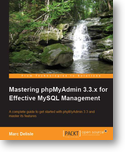
The book Mastering phpMyAdmin 3.3.x for Effective MySQL Management is already available for some time, but I still think I should promote a little bit in my blog so here it is :-). The book covers all you might want to know about using phpMyAdmin. It really does not make sense to copy text from book description, so feel free to find yourself what all it does cover. As every time, this book is written by Marc Delisle, who is for several years project admin, so probably the person who knows most about hidden features. Usually technical review of the book is done by some other developers and this time it was me doing this job (among other reviewers). I hope we did good job and you will like this book. Mastering phpMyAdmin 3.3.x for Effective MySQL Management book cover PS: As a nice bonus, the phpMyAdmin project receives money from every purchased book.

Filed under: English Phpmyadmin 0 comments Flattr this!

Raphaël Hertzog: 16 Debian contributors that you can thank

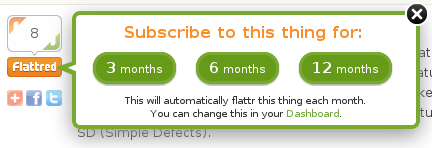
I put 5 EUR in Flattr each month and I like to spend those among other Debian contributors. That s why I keep a list of Debian people that I have seen on Flattr (for most of them I noticed through an article on Planet Debian). Directory of Debian contributors that you can thank I thought this list could be useful for others so I put it on a web page. Then I realized that limiting this to Flattr was not a good idea, and indeed several developers already propose multiple ways to be thanked. I went back through my list and looked up each developer s website to identify a Thank me page (it can be Donate , Support me , Amazon Wishlist , etc.). Obviously this means that Debian contributors who are not on Flattr do not appear on the initial list even if they have some Thank me page please help me fix this and send me the missing entries if you know of any. Click here to view the directory. The initial listing contains 16 developers and 8 of them have an additional (non-Flattr) Thank me link. Please note the warning I put on the page: the inclusion in the directory should not be taken as an endorsement of the amount or quality of the work done for Debian. You are supposed to make up your own judgment when deciding who you want to thank (but the links can help you learn more about what each contributor is doing). Flattr subscriptions explained Since this article replaces the traditional Flattr FOSS issue for this month, I wanted to introduce a new Flattr feature I recently discovered. With Flattr you have to click on some things every month or your monthly fee is given to a random charity. Now you can avoid this pitfall by subscribing to some things that you like. A subscription acts like an automatic click during a period of 3/6/12 months. If you want to subscribe to something, you just have to click a second time on the Flattr button and you will see this:
Screenshot with Flattr subscription choices Once you clicked on the desired duration, the subscription is recorded and the button will appear like this:

Screenshot with a subscribed flattr button Easy, isn t it? PS: I installed a WordPress plugin to make it super easy to share my articles on the most common social networks.

One comment Liked this article? Click here. My blog is Flattr-enabled.

Jose Luis Rivas Contreras: 413: Request Entity Too Large with nginx

I m working on a big site, importing a lot of files to a WordPress installation and started to get a bunch of 413 s. After a little bit of googling I found out what was happening: What needs to be done is on /etc/nginx/nginx.conf write:
http  
    client_max_body_size 20M;
    include       /etc/nginx/mime.types;
    A LOT MORE SETTINGS...
Yes, just add client_max_body_size and restart your webserver. This by default is 1M, so anything beyond this will be refused.

2 January 2011

Jelmer Vernooij: On the way to Samba 4: Part 2

It's been more than a month since the last status update on my Samba 4 work - much more than the two weeks I promised. During the holidays I finally managed to release the new alpha of Samba 4, as well as releases of some of our companion libraries (tdb, talloc, tevent and ldb). The release includes a significant amount of bug fixes and a lot of work towards a properly functioning Active Directory DC, too much to list here. This release I've mainly been involved in improving our Python bindings and our handling of internal and external libraries. We now use symbol versioning for our copy of Heimdal Kerberos as well as some of our other libraries. Hopefully this will fix some of the issues users of the evolution-mapi plugin have been seeing where they end up with both MIT Kerberos and Heimdal Kerberos loaded into the same process (with all the consequences of overlapping symbol names). Samba 4 now also has the ability to work with the system Heimdal rather than using the bundled copy. I have packaged alpha14 for Debian and Ubuntu (fixing most of the open bugs against the Samba 4 package in the BTS), but am currently waiting for the new release of ldb to pass through NEW before I can upload. The next release is scheduled for the first week of February. cp: Stream of Passion - Haunted

Lucas Nussbaum: Giving up on Ruby packaging

I have finally reached a decision regarding my involvement in the Debian Ruby packaging efforts. I have decided to stop. This has been a very hard decision to make. I have invested huge amounts of time in that work over the years. I still love the language, and will continue to use it on a daily basis for my own developments. I still hope that it will succeed. I know that some people will be disappointed by that decision (and that others will think your work was useless anyway, people should use RVM and rubygems ). But I also know that I won t be able to push for all the required changes alone. I just don t have the time, nor the motivation. For the record, here are the changes I would have liked to see in the Ruby community. The core Ruby development community should mature.
The core Ruby development community is still dominated by Japanese developers. While not a bad thing in itself, it is easily explained by the fact that the main development mailing list, where most of the important decisions are taken, is in japanese. ruby-dev@ should be closed, and all the technical discussions should happen on the english-speaking ruby-core@ list instead. The release management process should also improve. Currently, it looks like a total mess. The following Ruby development branches are actively maintained:
ruby_1_8 (106 commits over the last six months)
ruby_1_8_6 (4 commits over the last six months)
ruby_1_8_7 (35 commits over the last six months)
ruby_1_9_1 (4 commits over the last six months)
ruby_1_9_2 (227 commits over the last six months)
trunk (1543 commits over the last six months) While the state of the ruby_1_8_6 and ruby_1_9_1 branches is clear (very important bugfixes only), the state of all of the other branches is rather unclear.
What s the stable Ruby branch? 1.8 or 1.9? If it s 1.9, why are people still actively developing in the ruby_1_8 branch? How long will they continue to be maintained in parallel, dividing the manpower? Is a Ruby 1.8.8 release to be expected? Will it be ABI/API compatible with 1.8.7? Is the ruby_1_8_7 branch really bugfixes-only? How much testing of it has been done? If it s bugfixes-only and regression-free, I should push it to Debian squeeze, due to be released in a few weeks. But would you recommend that? Due to past breakages in the ruby_1_8_7 branch, it s unlikely that we will do it.
Is the ruby_1_9_2 a regression-free, bugfix-only branch? If yes, isn t 227 commits over 6 months a lot? What will be the version of the next release of trunk ? When is it expected? Will it be ABI-compatible with the current ruby_1_9_2 branch? API-compatible?
New releases in the 1.8.7 and 1.9.2 branches were done on december 25th. Why were they no betas or RCs allowing wider testing? How much testing has been done behind the scenes? Most of those questions have no clear answer. The Ruby development community should build a common understanding of the status of the various branches, and of their release expectations. Releasing on december 25th of each year sounds fun, but is releasing when everybody is on vacation really a good idea? It would be fantastic to have something similar to Python Enhancement Proposals in the Ruby community. But having open discussions in english about the major issues would already be great. Ruby is not just the interpreter.
The Ruby development community should clearly define what the Ruby platform is. There are some big players, like Rails, and newer interpreter releases should not be done before ensuring that those big players still work. Also, since we have alternative Ruby interpreters, like JRuby, Rubinius and MacRuby, we need a clear process on how they integrate with the rest of the ecosystem. For example, having each of them rely on their own outdated fork of the whole stdlib is ridiculous, since it s not where they compete. The Ruby community should acknowledge that RVM and Rubygems are not for everybody. People who say so should be laughed at. Of course, RVM and Rubygems are nice tools for some people. But it is completely wrong to believe that compiling from source using RVM should be the standard way of installing Ruby, or that all people interested in installing Redmine should know that Ruby has its own specific packaging system. The Ruby community should work with their target platforms to improve how Ruby is distributed instead of reinventing the wheel. That includes Debian, but also RedHat-based distros, for example. It is likely that it won t be possible to reach a one-size-fits-all situation. But that s real life. Some people in the Ruby community should stop behaving like assholes. As one of the Debian Ruby maintainers, I have been routinely accused of creating crippled packages on purpose (FTR, I don t think that the Debian packages are crippled, despite what the rumors says). Debian is not the only target of that. Just yesterday, someone called for abandonning YARV (the new Ruby VM in Ruby 1.9), calling it Yet Another Random Vailure. This kind of comments is really hurting the people who are investing their free time in Ruby, and is turning away people who consider getting involved. In Debian, we have had a lot of problems getting people to help with Ruby maintenance since they are getting shit from the community all the time. So, what s the future for Ruby in Debian? Update: there s also a number of interesting comments about this post on this site.
Update 2: First, thanks a lot for all the interesting comments. I will make some follow-up posts trying to summarize what was said. It seems that this post also triggered some reactions on ruby-core@, with Charles Olivier explaining the JRuby stdlib fork, and Yui Naruse clarifying that all questions are welcomed on ruby-core@. This is great, really.

1 January 2011

Stephan Peijnik: ISC dhcpd and IP assignments from a pool to specific hosts only

Assigning an IP address statically to a host with a given MAC address using ISC dhcpd is quite trivial, one host entry, a hardware ethernet entry and a fixed-address entry and you are up and running.
But what if you want to assign IP addresses from a pool to only a few hosts with specific MAC addresses?

Before you ask yourself why someone might want to do that, have a look at my (very real) use-case.
I am currently working on setting up an installation server for my employer, ANEXIA Internetdienstleistungs GmbH. The server itself uses PXE, TFTP and FAI for installing systems. To be able to do PXE booting one has to set up an DHCP server to provide configuration details, like the TFTP Server Address and the boot filename.

Now what one should consider is that this system is designed to provide automatic installations for internet-facing hosts, namely ones in public IP networks. Running a DHCP server in such a network is not a good idea. We neither want to dish out configurations to each and every hosts that asks for them, neither do not want to do a PXE boot each and every time one of our systems is restarted. Now the combination of FAI and pxelinux allows for default configurations which force local booting, but this still causes the (re-)boot time for those systems to increase and potentially also increases the load on the TFTP server. Also, let's not even consider thinking about whether this setup is "clean" or not. I personally believe that dishing out IP addresses in a public IP network is a bad thing(tm) and I guess a lot of people will be nodding when reading these lines.

What I was asking myself is how to get something like that set up in a cleaner way, and guess what, I found a solution.
The basic idea behind this is only providing IP configuration via DHCP to a specific set of hosts (with a specific set of MAC addresses) and not providing any information to all other hosts. The specific set of hosts are those that we want to do an install run on. This is a no-brainer and I guess the right way to do that, but implementing this approach is not as straight-forward as I initially thought.

Actually the implementation of that idea caused me a bit of a headache and cost me a few work-hours to get right, that's why I'd like to share the configuration details with you.


Let's have a look at how to get such a setup using ISC dhcpd. We are using the fact that ISC dhcpd allows you to not only configure a subnet, but rather also pools inside subnets, which can have allow and deny rules. Such rules can be in the form of "allow/deny member of <class>", where classes (and subclasses, keep on reading for details) can be defined inside the configuration file as well.</class>

What we first did was creating a subnet with a pool declaration, as follows:
subnet 10.0.0.0 netmask 255.255.255.0
option routers 10.0.0.254;
option broadcast-address 10.0.0.255;
filename "fai/pxelinux.0";
next-server 10.0.0.254;
server-name "10.0.0.254";
pool
allow members of "install";
range 10.0.0.10 10.0.0.230;
This one configures the subnet 10.0.0.0/24, with 10.0.0.254 being the network gateway, 10.0.0.254 being the TFTP server and "fai/pxelinux.0" being the TFTP filename. Additionally pool allows us to define a range of IP addresses we want to use, along with a line stating that only members of the "install" class should get a network configuration. If you do not have any other subnet defined in your config and a client that is not in this "install" class asks for an IP address you will see something like this in your syslog: "dhcpd: DHCPDISCOVER from 11:22:33:44:55:66 via eth1: network 10.0.0/24: no free leases". dhcpd will not even answer these requests and thus the client will not even know that there is a DHCP server running here. Exactly what we wanted.

I wrote about this giving me a headache, but so far things have been pretty straight-forward. Getting this far did not take very long, believe me.

Next thing we did was defining that "install" class as follows:

class "install" match hardware;
Again, not very hard to do. This tells dhcpd to look for subclasses of "install" with a matching hardware-address. So let's have a look at the subclass for, let's say the host with MAC address "11:22:33:44:55:66":

subclass "install" 1:11:22:33:44:55:66;
I intentionally highlighted the leading "1:" there. This means nothing more or less than "ethernet". Without that leading "1:" you won't get anywhere. Matching will fail, simple as that. It took me a while to find information about this in "man 5 dhcp-eval". Quoting parts of the interesting section:

The hardware operator returns a data string whose first element is
the type of network interface indicated in packet being considered,
and whose subsequent elements are client s link-layer address. [...] Hardware types include ethernet (1), token-ring (6), and fddi (8).
Now, with the combination of the subnet, pool, class and subclass directives we could get the setup we wanted: a DHCP server only providing IP configuration to a specific set of hosts and ignoring all other DHCP requests.

If you have any comments about this setup or ideas on how to get something similar set-up using another approach feel free to leave a comment.

Personal final note: accidentally typing 80 instead of 08 in a MAC address will cost you an additional two hours and will even have you re-compile ISC dhcpd with eval debugging turned on, believe me. :-)

Michal &#268;iha&#345;: New year

It's new year (for almost 18 hours here) and it's time to balance a bit what has happened in year 2010. I'm not going to expose details from my personal life and anything related to work, so all what remains are open source projects where I am active. For phpMyAdmin it was year of quite big changes, most of them beeing agreed on Fosdem 2010. We have migrated to git from svn, what was great step forward and I really like the change. It was also decided to use gettext (or rather php-gettext) for translations in upcoming release. I can see this move (together with online translation service) has definitely attracted more contributors (hey, but there are still many languages not translated, you're welcome!). Also we've participated in Google Summer of Code 2010, what lead to several big projects being merged into our code base (see my summary for more details). All in all, we're heading to 3.4 release in first months of 2011, which will be quite major step and hopefully heading in right direction. In Gammu and Wammu, there were lot of code improvements, most of them probably going into Gammu SMS Daemon (the latest one being unified SQL backend removing lot of code duplication). Another major improvement is The Gammu Manual covering everything from Gammu command line, through SMSD up to python and C API. On the other side I've bought me a Symbian based phone, which does not work with Gammu and I use Series60-Remote for that, so my interest in Gammu has declined a bit. Even though I've started adopting some packages in Debian, so it looked like I will end up with much more than last year, but at the end I've decided I'm too overloaded with some of them (and don't use them anymore), so I've given some for adoption and got rid of nanoblogger (and nanoblogger-extra) and looking for somebody to pick up gpointing-device-settings. Maybe all mpd related packages will follow soon, because I currently do not use mpd, so it limits quite a bit my ability to test them. And of course: Happy New Year 2011!

Filed under: Debian Gammu Phpmyadmin English 0 comments Flattr this!

Steve Kemp: It would be nice if we could record which files populate or read

It would be really neat if there were some tool which recorded which dotfiles an application read, used, or created. As an example emacs uses .emacs, but won't create it. However firefox will create and fill ~/.mozilla if it isn't present, and links will create ~/.links2. What would we do with that data? I'm not sure off the top of my head, but I think it is interesting to collect regardless. Perhaps a simple tool such as apt-file to download the data and let you search:
who-creates ~/.covers
who-creates ~/.dia
Obviously the simple use is to purge user-data when matching packages are removed - e.g. dpkg-posttrigger hook. But that's a potentially dangerous thing to do. Anyway I'm just pondering - I expect that over time applications will start switching to using "centralised" settings such as ~/.gconf2 etc. In the menatime I've started cleaning up ~/ on my own machines - things like ~/.spectemurc, ~/.grip, etc. ObQuote: What a long sword. I like that in a man - Blood of the Samurai (Don't be tempted; awful film.)

31 December 2010

Dirk Eddelbuettel: R / Finance 2011 Call for Papers: Updated and expanded

One week ago, I sent the updated announcement below to the r-sig-finance list; this was kindly blogged about by fellow committee member Josh and by our pal Dave @ REvo. By now. I also updated the R / Finance conference website. So to round things off, a quick post here is in order as well. It may even get a few of the esteemed reader to make a New Year's resolution about submitting a paper :) Dear R / Finance community, The preparations for R/Finance 2011 are progressing, and due to favourable responses from the different sponsors we contacted, we are now able to offer

  1. a competition for best paper, which given the focus of the conference will award for both an 'academic' paper and an 'industry' paper
  2. availability of travel grants for up to two graduate students provided suitable papers were accepted for presentations
More details are below in the updated Call for Papers. Please feel free to re-circulate this Call for Papers with collegues, students and other associations. Cheers, and Season's Greeting, Dirk (on behalf of the organizing / program committee) Call for Papers: R/Finance 2011: Applied Finance with R April 29 and 30, 2011 Chicago, IL, USA The third annual R/Finance conference for applied finance using R will be held this spring in Chicago, IL, USA on April 29 and 30, 2011. The two-day conference will cover topics including portfolio management, time series analysis, advanced risk tools, high-performance computing, market microstructure and econometrics. All will be discussed within the context of using R as a primary tool for financial risk management, portfolio construction, and trading. Complete papers or one-page abstracts (in txt or pdf format) are invited to be submitted for consideration. Academic and practitioner proposals related to R are encouraged. We welcome submissions for full talks, abbreviated lightning talks, and for a limited number of pre-conference (longer) seminar sessions. Presenters are strongly encouraged to provide working R code to accompany the presentation/paper. Data sets should also be made public for the purposes of reproducibility (though we realize this may be limited due to contracts with data vendors). Preference may be given to presenters who have released R packages. The conference will award two $1000 prizes for best paper: one for best practitioner-oriented paper and one for best academic-oriented paper. Further, to defray costs for graduate students, two travel and expense grants of up to $500 each will be awarded to graduate students whose papers are accepted. To be eligible, a submission must be a full paper; extended abstracts are not eligible. Please send submissions to: committee at RinFinance.com The submission deadline is February 15th, 2011. Early submissions may receive early acceptance and scheduling. The graduate student grant winners will be notified by February 23rd, 2011. Submissions will be evaluated and submitters notified via email on a rolling basis. Determination of whether a presentation will be a long presentation or a lightning talk will be made once the full list of presenters is known. R/Finance 2009 and 2010 included attendees from around the world and featured keynote presentations from prominent academics and practitioners. 2009-2010 presenters names and presentations are online at the conference website. We anticipate another exciting line-up for 2011---including keynote presentations from John Bollinger, Mebane Faber, Stefano Iacus, and Louis Kates. Additional details will be announced via the conference website as they become available. For the program committee:
Gib Bassett, Peter Carl, Dirk Eddelbuettel, Brian Peterson,
Dale Rosenthal, Jeffrey Ryan, Joshua Ulrich

Jordi Mallach: Smoke

Last night was the last time I came back from a pub with my clothes stinking due to tobacco smoke. The Spanish congress has finally approved a real anti-smoking law which will ban smoking on public areas, with no exceptions or ways to workaround the ban. Starting on January 2nd, the Spanish state will be a smoke-free region (or mostly, it seems it'll be permitted in open-air events like football stadiums or bullrings, and I don't think that will be a great problem for me, specially the latter). For years, my intolerance to smoke has been increasing and I'm really expectant to see the benefits of this law in my habits. After more than 30 years dealing with smoke around us, it's our turn now. I've been speaking to a few barmans. In general they seem worried this will affect their business, but I can't see how it will. Spain has a big culture for having mid-morning almuerzos in bars, and people are not going to give that up due to not being able to smoke. They will just do it after they get out, not during the coffee, and that's it. The barmans of the two bars I visit most are non-smokers, but have to breath the smoke of hundreds of cigarretes every day, and can't do anything about it. Until tomorrow, when this will end and everyone will have a right to breath better air. I hope this kind of legislation continues to be adopted throughout Europe, because the FOSDEM welcome party is probably the next smoke horror I'll have to face soonish. :)

Joey Hess: on not coding late

It's midnight and I really want to be coding. I'm half way or so through adding a git-annex-shell to git-annex, which will enable some nice features with ssh access. I've done the research, and written the documentation[1], laid all the necessary refactoring groundwork, and written much of the code and just have to connect it all up and test it. This is a dangerous point to be at, because I have it all in my head, but I'm tired. If I start coding now, I could make a stupid mistake and find myself stuck in a blind alley at 5 am. I've been there before. Even if I avoid hard stuff, I'd surely look up and an hour or more would have gone by, it'd be past 1 am -- and I know that once I stop coding it can take me hours to spin my thoughts back down to the point where I can go to sleep. Also, I can feel the back of my mind still working on something. Some bits feel like they might not quite mesh up right in my mental model. I don't consciously know what the problem is. I need to sleep on it; it will probably be clearer later. Like yesterday when I lifted a bag of groceries into the car and paused, realizing code I'd written two months ago had a major bug, one I'd never seen, in an edge case that had never came up, but was surely there. I always assumed that when programmers got older and stopped coding late it was because they couldn't take the strain. Nah. We're just coding even as we sleep. :)
[1] Documentation is where I do my design. This is why git-annex has quantities of documentation that Linux Weekly News finds surprising.

30 December 2010

Petter Reinholdtsen: What standards are Free and Open as defined by Digistan?

After trying to compare Ogg Theora to the Digistan definition of a free and open standard, I concluded that this need to be done for more standards and started on a framework for doing this. As a start, I want to get the status for all the standards in the Norwegian reference directory, which include UTF-8, HTML, PDF, ODF, JPEG, PNG, SVG and others. But to be able to complete this in a reasonable time frame, I will need help. If you want to help out with this work, please visit the wiki pages I have set up for this, and let me know that you want to help out. The IRC channel #nuug on irc.freenode.net is a good place to coordinate this for now, as it is the IRC channel for the NUUG association where I have created the framework (I am the leader of the Norwegian Unix User Group). The framework is still forming, and a lot is left to do. Do not be scared by the sketchy form of the current pages. :)

Next.

Previous.