Search Results: "ed"

12 July 2015

Lunar: Reproducible builds: week 11 in Stretch cycle

Debian is undertaking a huge effort to develop a reproducible builds system. I'd like to thank you for that. This could be Debian's most important project, with how badly computer security has been going.

PerniciousPunk in Reddit's Ask me anything! to Neil McGovern, DPL. What happened in the reproducible builds effort this week: Toolchain fixes More tools are getting patched to use the value of the SOURCE_DATE_EPOCH environment variable as the current time:

In the reproducible experimental toolchain which have been uploaded: Johannes Schauer followed up on making sbuild build path deterministic with several ideas. Packages fixed The following 311 packages became reproducible due to changes in their build dependencies : 4ti2, alot, angband, appstream-glib, argvalidate, armada-backlight, ascii, ask, astroquery, atheist, aubio, autorevision, awesome-extra, bibtool, boot-info-script, bpython, brian, btrfs-tools, bugs-everywhere, capnproto, cbm, ccfits, cddlib, cflow, cfourcc, cgit, chaussette, checkbox-ng, cinnamon-settings-daemon, clfswm, clipper, compton, cppcheck, crmsh, cupt, cutechess, d-itg, dahdi-tools, dapl, darnwdl, dbusada, debian-security-support, debomatic, dime, dipy, dnsruby, doctrine, drmips, dsc-statistics, dune-common, dune-istl, dune-localfunctions, easytag, ent, epr-api, esajpip, eyed3, fastjet, fatresize, fflas-ffpack, flann, flex, flint, fltk1.3, fonts-dustin, fonts-play, fonts-uralic, freecontact, freedoom, gap-guava, gap-scscp, genometools, geogebra, git-reintegrate, git-remote-bzr, git-remote-hg, gitmagic, givaro, gnash, gocr, gorm.app, gprbuild, grapefruit, greed, gtkspellmm, gummiboot, gyp, heat-cfntools, herold, htp, httpfs2, i3status, imagetooth, imapcopy, imaprowl, irker, jansson, jmapviewer, jsdoc-toolkit, jwm, katarakt, khronos-opencl-man, khronos-opengl-man4, lastpass-cli, lava-coordinator, lava-tool, lavapdu, letterize, lhapdf, libam7xxx, libburn, libccrtp, libclaw, libcommoncpp2, libdaemon, libdbusmenu-qt, libdc0, libevhtp, libexosip2, libfreenect, libgwenhywfar, libhmsbeagle, libitpp, libldm, libmodbus, libmtp, libmwaw, libnfo, libpam-abl, libphysfs, libplayer, libqb, libsecret, libserial, libsidplayfp, libtime-y2038-perl, libxr, lift, linbox, linthesia, livestreamer, lizardfs, lmdb, log4c, logbook, lrslib, lvtk, m-tx, mailman-api, matroxset, miniupnpd, mknbi, monkeysign, mpi4py, mpmath, mpqc, mpris-remote, musicbrainzngs, network-manager, nifticlib, obfsproxy, ogre-1.9, opal, openchange, opensc, packaging-tutorial, padevchooser, pajeng, paprefs, pavumeter, pcl, pdmenu, pepper, perroquet, pgrouting, pixz, pngcheck, po4a, powerline, probabel, profitbricks-client, prosody, pstreams, pyacidobasic, pyepr, pymilter, pytest, python-amqp, python-apt, python-carrot, python-django, python-ethtool, python-mock, python-odf, python-pathtools, python-pskc, python-psutil, python-pypump, python-repoze.tm2, python-repoze.what, qdjango, qpid-proton, qsapecng, radare2, reclass, repsnapper, resource-agents, rgain, rttool, ruby-aggregate, ruby-albino, ruby-archive-tar-minitar, ruby-bcat, ruby-blankslate, ruby-coffee-script, ruby-colored, ruby-dbd-mysql, ruby-dbd-odbc, ruby-dbd-pg, ruby-dbd-sqlite3, ruby-dbi, ruby-dirty-memoize, ruby-encryptor, ruby-erubis, ruby-fast-xs, ruby-fusefs, ruby-gd, ruby-git, ruby-globalhotkeys, ruby-god, ruby-hike, ruby-hmac, ruby-integration, ruby-jnunemaker-matchy, ruby-memoize, ruby-merb-core, ruby-merb-haml, ruby-merb-helpers, ruby-metaid, ruby-mina, ruby-net-irc, ruby-net-netrc, ruby-odbc, ruby-ole, ruby-packet, ruby-parseconfig, ruby-platform, ruby-plist, ruby-popen4, ruby-rchardet, ruby-romkan, ruby-ronn, ruby-rubyforge, ruby-rubytorrent, ruby-samuel, ruby-shoulda-matchers, ruby-sourcify, ruby-test-spec, ruby-validatable, ruby-wirble, ruby-xml-simple, ruby-zoom, rumor, rurple-ng, ryu, sam2p, scikit-learn, serd, shellex, shorewall-doc, shunit2, simbody, simplejson, smcroute, soqt, sord, spacezero, spamassassin-heatu, spamprobe, sphinxcontrib-youtube, splitpatch, sratom, stompserver, syncevolution, tgt, ticgit, tinyproxy, tor, tox, transmissionrpc, tweeper, udpcast, units-filter, viennacl, visp, vite, vmfs-tools, waffle, waitress, wavtool-pl, webkit2pdf, wfmath, wit, wreport, x11proto-input, xbae, xdg-utils, xdotool, xsystem35, yapsy, yaz. Please note that some packages in the above list are falsely reproducible. In the experimental toolchain, debhelper exported TZ=UTC and this made packages capturing the current date (without the time) reproducible in the current test environment. The following packages became reproducible after getting fixed: Ben Hutchings upstreamed several patches to fix Linux reproducibility issues which were quickly merged. Some uploads fixed some reproducibility issues but not all of them: Uploads that should fix packages not in main: Patches submitted which have not made their way to the archive yet: reproducible.debian.net A new package set has been added for lua maintainers. (h01ger) tracker.debian.org now only shows reproducibility issues for unstable. Holger and Mattia worked on several bugfixes and enhancements: finished initial test setup for NetBSD, rewriting more shell scripts in Python, saving UDD requests, and more debbindiff development Reiner Herrmann fixed text comparison of files with different encoding. Documentation update Juan Picca added to the commands needed for a local test chroot installation of the locales-all package. Package reviews 286 obsolete reviews have been removed, 278 added and 243 updated this week. 43 new bugs for packages failing to build from sources have been filled by Chris West (Faux), Mattia Rizzolo, and h01ger. The following new issues have been added: timestamps_in_manpages_generated_by_ronn, timestamps_in_documentation_generated_by_org_mode, and timestamps_in_pdf_generated_by_matplotlib. Misc. Reiner Herrmann has submitted patches for OpenWrt. Chris Lamb cleaned up some code and removed cruft in the misc.git repository. Mattia Rizzolo updated the prebuilder script to match what is currently done on reproducible.debian.net.

Dirk Eddelbuettel: RcppRedis 0.1.4

A small update to RcppRedis arrived on CRAN a few days ago. One of the unit tests failed as we (still) initialized the rredis package (loaded only for a comparison) in a form long-internalized by Bryan Lewis, its author. No actual changes to functionality were; the only other changes is cosmetic and in response a R CMD check requirement where the curl binary seemingly fails to follow redirects so we removed the (official !) redis.io URL.
Changes in version 0.1.4 (2015-07-04)
  • Minor update to unit test setup for rredis.
  • No longer list URLs to Redis as automated CRAN tests for URL validity choke on redirects.
Courtesy of CRANberries, there is also a diffstat report for the most recent release. More information is on the RcppRedis page.

This post by Dirk Eddelbuettel originated on his Thinking inside the box blog. Please report excessive re-aggregation in third-party for-profit settings.

Lars Wirzenius: /u/liw no more

I've used Reddit for many years. I used it for many years without an account, but eventually I made one. The site has always had its share of unpleasantness, people who're more interested in tearing down than in building. In recent years, it's gotten worse, and getting out of hand. During the fairly short reign of Ellen Pao as CEO, I found things to be getting better. The site was starting to make it clear that harrassment, for example, was unacceptable. Unsurprisingly, this made some of the nastier people quite upset. Pao has now resigned, and a new CEO has started. He had an "Ask Me Anything" session yesterday, and made it clear that he's changing things. From my point of view, it's changing to the worse. He made it clear that as long as Reddit itself does not get into legal trouble, and harrassment isn't too overt or particularly public, it's OK now. I've closed my Reddit account.

11 July 2015

Joey Hess: sweet summer

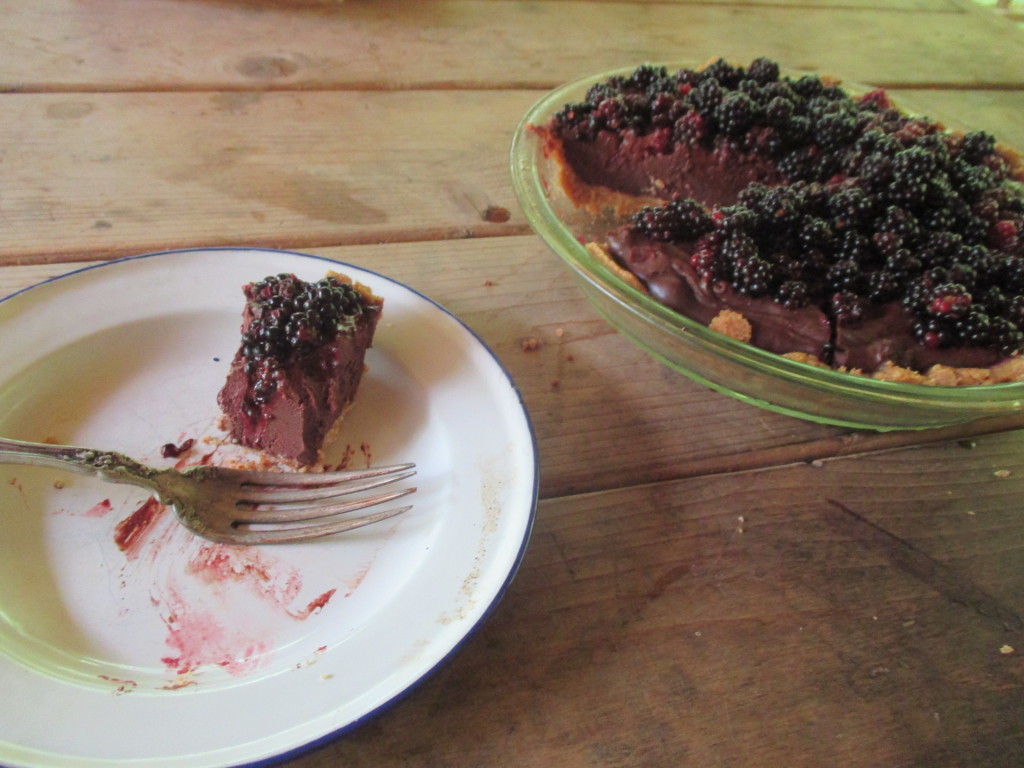
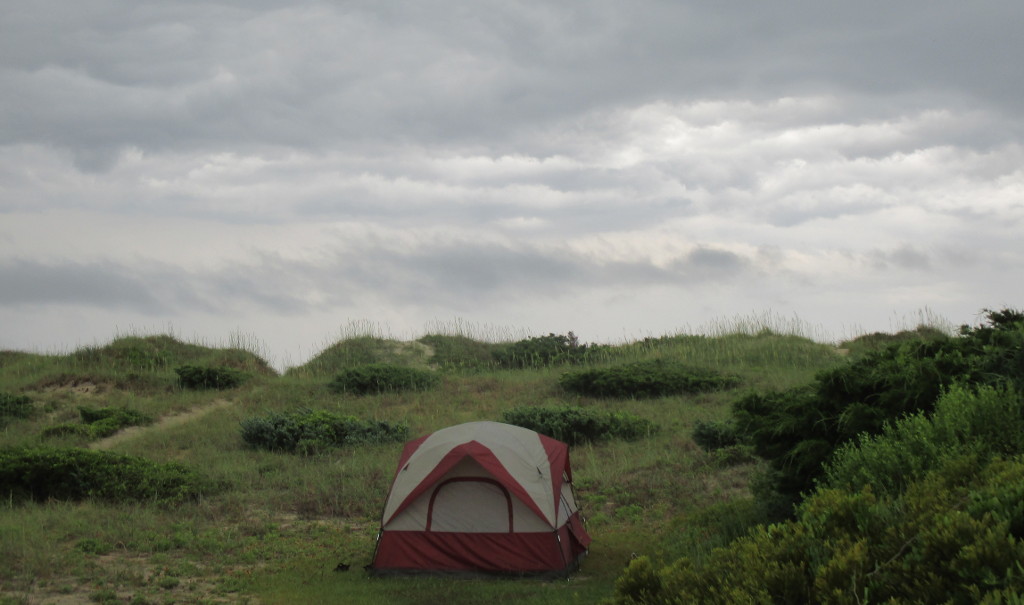
blackberrytart.jpg Having a wonderful summer, full of simple sweet pleasures. Mom visited today, and I made her this blackberry chocolate tart. Picking berries, swimming in the river, perfect summer day. dunetent.jpg Earlier this summer, camped at in the dunes on Ocracoke island with many family and friends. Thunderstorms away across the sound flashed and grumbled long in the night, but mostly missed us. Jupiter and Venus in conjunction overhead, and the arch of the milky way completed the show. beachselfie.jpg

Dirk Eddelbuettel: random 0.2.5

A few days ago and while we were traveling, an updated release of our random package for truly (hardware-based) random numbers as provided by random.org arrived on CRAN. Brian Ripley had pointed out to us that some of the curl implementations (which must now be used as https is mandatory at random.org) did not follow redirects. Which was bad luck, given that I had used a shortform https://random.org as opposed to the fuller-length https://wwwrandom.org variant providing the service. This has been rectified, and we used the opportunity to also update the DESCRIPTION and NAMESPACE file as R CMD check --as-cran now mandates more explicit imports. Courtesy of CRANberries comes a diffstat report for this release. Current and previous releases are available here as well as on CRAN.

This post by Dirk Eddelbuettel originated on his Thinking inside the box blog. Please report excessive re-aggregation in third-party for-profit settings.

10 July 2015

Chris Lamb: Where's the principled opposition to the "WhatsApp ban"?

The Independent reports that David Cameron wishes to ban the instant messaging application WhatsApp due its use of end-to-end encryption. That we might merely be pawns in manoeuvring for some future political compromise (or merely susceptible to cheap clickbait) should be cause for some concern, but what should worry us more is that if it takes scare stories about WhatsApp for our culture to awaken on the issues of privacy and civil liberties, then the central argument against surveillance was lost a long time ago. However, the situation worsens once you analyse the disapproval in more detail. One is immediately struck by a predominant narrative of technical considerations; a ban would be "unworkable" or "impractical". A robust defence of personal liberty or a warning about the insidious nature of chilling effects? Perhaps a prescient John Locke quote to underscore the case? No. An encryption ban would "cause security problems." The argument proceeds in a tediously predictable fashion: it was already difficult to keep track whether one should ipso facto be in favour of measures that benefit the economy, but we are suddenly co-opted as technocrats to consider the "damage" it could to do the recovery or the impact on a now-victimised financial sector. The coup-de-gr ce finally appeals to our already inflated self-regard and narcissism: someone could "steal your identity." Perhaps even more disappointing is the reaction from more technically-minded circles who, frankly, should know better. Here, they give the outward impression of metaphorically stockpiling copies of the GnuPG source code in their bunkers, perhaps believing the shallow techno-utopianist worldview that all social and cultural problems can probably be solved with Twitter and a JavaScript intepreter. The tragedy here is that I suspect that this isn't what the vast majority of people really believe. Given a hypothetical ban that could, somehow, bypass all of the stated concerns, I'm pretty upbeat and confident that most people would remain uncomfortable with it on some level. So what, exactly, does it take for us to oppose this kind of intervention on enduring principled grounds instead of transient and circumventable practical ones? Is the problem just a lack of vocabulary to discuss these issues on a social scale? A lack of courage? Whilst it's certainly easier to dissect illiberal measures on technical merit than to make an impassioned case for abstract freedoms, every time we gleefully cackle "it won't work" we are, in essence, conceding the central argument to the authoritarian and the censorious. If one is right but for the wrong reasons, were we even right to begin with?

Joey Hess: our beautiful fake histories

Here's an odd thing about the git bisect command: It has only 1 option (--no-checkout). Compare with eg git commit, which has 36 options by my count. The difference is largely down to git having a pervasive culture of carefully edited history. We need lots of git commit options to carefully produce commits that look Just Right. Staging only some of the files we've edited, perhaps even staging only some of the changes within a file. Amend that commit if we notice we made a mistake. Create a whole series of beautiful commits, and use rebase later to remix them into a more beautiful whole. Beautiful fake histories. Because coding is actually messy; our actual edit history contains blind alleys and doublings back on itself; contains periods of many days the code isn't building properly. We want to sweep that complexity away, hide it under the rug. This works well except when it doesn't, when some detail airbrushed out of the only remaining history turns out to be important. Once we have these beautiful fake histories of changes, we can easily bisect them and find the commit that introduced a bug. So bisect doesn't need a lot of options to control how it works. I'd like to suggest a new option though. At least as a thought experiment. --merges-only would make bisect only check the merge commits in the range of commits being bisected. The bisection would result in not a single commit, but in the set of commits between two merges. I suspect this would be useful for faster bisecting some histories of the beautiful fake kind. But I know it would be useful when the history is messy and organic and full of false starts and points where the code doesn't build. Merges, in such histories, are often the points where things reach a certian level of beauty, where that messy feature branch got to the point it all built again (please let this happen today) and was merged into master. Bisecting such points in a messy organic history should work about as well as bisecting carefully gardened histories. I think I'll save the full rant about beautiful fake history vs messy real history for some other day. Or maybe I've already ranted that rant here before, I can't remember. Let's just say that I personally come down on the side of liking my git history to reflect the actual code I was working on, even if it was broken and even if I threw it away later. I've indeed taken this to extreme lengths with propellor; in its git history you can see every time I've ever run it, and the version of my config file and code at that point. Apologies to anyone who's been put off by that... But oddly, propellor gets by far more contributions from others than any of my other haskell programs. All in the form of beaufiully constructed commits, naturally.

Norbert Preining: Gaming: Portal 2

It took me ages to finish Portal (1), but Portal 2 was different I moved through the games in high speed. Actually playing time was the same, but I played a bit more often then before  More details below, but tl;dr: Nice extension of Portal, which feels a bit different. Graphics are great, but for my feeling the chambers are too easy and too short. portal2-by-browen2o Image by user browen2o on the Steam Portal community center. Portal 2, the successor of Portal, brings not only many new levels (test chambers) interspersed with funny running sequences and out of normal problems to solve, but adds also a set of new devices to solve the problems. But the basic mechanics are the same: Shoot portals to solve puzzles. The added devices are as follows (thanks to this blog): portal2-devices They include light-rings that carry you over empty space, and also lift you up (first and second icon), light reflectors (forth), jumping and running color (9th and 10th), catapults (12th), light bands to walk on (lower left) and of course enough turrets and other devices that might find you smashed, shot, or drowned. Things I liked at Portal 2: and what I didn t like too much was What I haven t tried till now, unfortunately, is the cooperative mode. I need some partners, but my buddy is too many time zones away :-( All in all, a really great game, and I enjoyed it a lot.

Gunnar Wolf: Finishing the course on "Free Software and Open Standards"

A couple of months ago, I was invited to give the starting course for the Masters degree in Free Software in the Universidad Andina Sim n Bol var university. UASB is a multinational university, with campuses in (at least) Ecuador, Chile, Bolivia and Colombia; I was doubtful at first regarding the seriousness of this proposal and the viability of the program, but time made my doubts disappear. Bolivia is going through an interesting process, as they have one of the strongest worded government mandates for migration to free software for the public administration in the next couple of years; this migration has prompted the interest of many professionals in the country. In particular, we have over 40 registered people for this Masters degree. Studying a Masters degree is a long-term commitment which signifies a big time investment, and although many of the student are quite new to the idea of free software, they are willing to spend this time (and money, as the university is privately owned and charges for its enrollment). I gave this class together with Alejandro Miranda (a.k.a. @pooka), as we have a very good pair-teaching dynamics; we had already given many conferences together, but this is the first time we had the opportunity to share a whole course and the experience was very good. We have read the students' logs, and many of them clearly agree with this. I had to skip two of the (ten) lessons, as I travelled from Mexico to Argentina halfway through it (of course, we brought the babies to meet my wife's family and friends!), so we had also the honor of having Esteban Lima fill in for those sessions. I am very happy and grateful that the University took care to record our presentations and intend to record and put online all of the classes; as we were the first in the program, there were some understandable hiccups and some sessions were lost, but most are available. Here they are, in case you are interested in refering to them:
Topic Video (my server) Video (Youtube)
Introduction to free software Watch Watch
History Watch Watch
Free culture N/A N/A
The effects of free software Watch Watch
Free software and open standards related to technologic soverignity Watch Watch
The free software ecosystem Watch Watch
Free software implementation in Bolivia Watch Watch
Introduction to intelectual property: Copyright, patents, trademarks, etc. Watch Watch
Who is "the community" and why do we speak about it? Watch Watch
Current status and challenges for the movement N/A N/A
We have yet another video file (which I have not fully followed through) titled ADSIB - Migration plan. It can also be downloaded from my server or watched online at Youtube. All in all: This was a great opportunity and a joy to do. I think the material we used and developed fit well what was expected from us, and we had fun giving somewhat heterodox readings on our movement.

9 July 2015

Sven Hoexter: Ubuntu 14.04 upstart and bonding

As usual when you add something new to your technology stack you'll find a "new" issue. A bit late in the game I made my first contact today with Ubuntu in the 14.04 incarnation when a colleague tried to stop and start a bond with:
ifdown bond0 && ifup bond0
About an hour later I had a virtual machine running and found the same bug in the pre-up ifenslave script which I later found to be already described in LP1269921. Apparantly Ubuntu integrated parts of the networking stuff with upstart and udev but did not care about how to cater people with bonding setups. At least the official documentation is very sparse on that topic. While someone from sysEleven rewrote the ifenslave script, I found that way too invasive and not well to handle. You can either push it via a configuration management system and overwrite a package owned script, or you roll you own package. So after some tinkering I decided to go with a different dirty workaround and setup the bond itself via pre-up snippets. In my test case it looks like this:
auto eth1 eth2 bond0
iface eth1 inet manual
  bond-master bond0
iface eth2 inet manual
  bond-master bond0
iface bond0 inet static
  address 192.168.1.1
  netmask 255.255.255.0
  bond-primary eth1
  bond-slaves eth1 eth2
  pre-up echo +bond0 > /sys/class/net/bonding_masters   true
  pre-up ifenslave bond0 eth1 eth2
I'm not yet sure if that breaks some other features of the ifenslave integration in ifupdown, but it seems to work so far. Let's see how far I can get with it.

Simon Kainz: DUCK challenge: week 1

After announcing the DUCK challenge last week the following packages were fixed and uploaded into unstable: A big "Thank You" to you. The list of the fixed and updated packages is availabe here. I will try to update this ~daily. If I missed one of your uploads, please drop me a line. There is still lots of time till the end of DebConf15 and the end of the DUCK Challenge, so please get involved.

8 July 2015

Lars Wirzenius: Obnam 1.12 released (backup software)

I have just released version 1.12 of Obnam, my backup program. See the website at http://obnam.org for details on what it does. The new version is available from git (see http://git.liw.fi) and as Debian packages from http://code.liw.fi/debian, and uploaded to Debian, and soon in unstable. The NEWS file extract below gives the highlights of what's new in this version. It includes the changes for version 1.11, which was a bug fix for 1.10 and not announced separately. Version 1.12, released 2015-07-08 Bug fixes: Improvements: Version 1.11, released 2015-07-02

Sven Hoexter: for the reproducible builds gang

I gave up maintaining the LyX package about five years ago, but I still care. So I filled #9414 some time ago and it should be fixed for the next major release 2.2.0. So in case someone from the reproducible builds gang starts to look at LyX please hold the line and wait for the next major release instead.

Sven Hoexter: F5 BigIP and 1K DH parameter vs SSL Labs

So as a consequence of the weakdh issue(s) Qualys SSL Labs started to cap the rating at a B level if you provide DH cipher suites with 1K DH parameter. Now if you're terminating your TLS connections on F5s BigIP you're currently not able to change the DH parameter (they're random but of a fixed size). Finally there is a public comment from F5 written by Brian McHenry which is worth reading if you're running those boxes. As a side note, what most people running on TMOS 11.6.x should've already done is preferring ECDHE over DHE, which would look like this:
ciphers "!LOW:!SSLv3:!MD5:!RC4-SHA:!EXPORT:ECDHE+AES-GCM:ECDHE+AES:DHE+AES-GCM:DHE+AES:DHE+3DES:AES-GCM+RSA:RSA+AES:RSA+3DES"
That of course does not bring back the somewhat overrated A grade on the SSL Labs site. That boils down to choosing to provide DHE with 1K DH parameter or let everyone else, who does not yet support ECDHE, use RSA with your 2K public key. Honestly, for a public portal with a very wide range of users, I'm far from sure which one is the better choice. Looking at the weakest link "RSA+3DES" with TLSv1.0 is nothing that can convince the paranoid, but this cipher setting would bring you back the A grade:
ciphers "!LOW:!SSLv3:!MD5:!RC4-SHA:!EXPORT:ECDHE+AES-GCM:ECDHE+AES:AES-GCM+RSA:RSA+AES:RSA+3DES"

7 July 2015

Lunar: Reproducible builds: week 10 in Stretch cycle

What happened about the reproducible builds effort this week: Media coverage Daniel Stender published an English translation of the article which originally appeared in Linux Magazin in Admin Magazine. Toolchain fixes Fixes landed in the Debian archive: Lunar submitted to Debian the patch already sent upstream adding a --clamp-mtime option to tar. Patches have been submitted to add support for SOURCE_DATE_EPOCH to txt2man (Reiner Herrmann), epydoc (Reiner Herrmann), GCC (Dhole), and Doxygen (akira). Dhole uploaded a new experimental debhelper to the reproducible repository which exports SOURCE_DATE_EPOCH. As part of the experiment, the patch also sets TZ to UTC which should help with most timezone issues. It might still be problematic for some packages which would change their settings based on this. Mattia Rizzolo sent upstream a patch originally written by Lunar to make the generate-id() function be deterministic in libxslt. While that patch was quickly rejected by upstream, Andrew Ayer came up with a much better one which sadly could have some performance impact. Daniel Veillard replied with another patch that should be deterministic in most cases without needing extra data structures. It's impact is currently being investigated by retesting packages on reproducible.debian.net. akira added a new option to sbuild for configuring the path in which packages are built. This will be needed for the srebuild script. Niko Tyni asked Perl upstream about it using the __DATE__ and __TIME__ C processor macros. Packages fixed The following 143 packages became reproducible due to changes in their build dependencies: alot, argvalidate, astroquery, blender, bpython, brian, calibre, cfourcc, chaussette, checkbox-ng, cloc, configshell, daisy-player, dipy, dnsruby, dput-ng, dsc-statistics, eliom, emacspeak, freeipmi, geant321, gpick, grapefruit, heat-cfntools, imagetooth, jansson, jmapviewer, lava-tool, libhtml-lint-perl, libtime-y2038-perl, lift, lua-ldoc, luarocks, mailman-api, matroxset, maven-hpi-plugin, mknbi, mpi4py, mpmath, msnlib, munkres, musicbrainzngs, nova, pecomato, pgrouting, pngcheck, powerline, profitbricks-client, pyepr, pylibssh2, pylogsparser, pystemmer, pytest, python-amqp, python-apt, python-carrot, python-crypto, python-darts.lib.utils.lru, python-demgengeo, python-graph, python-mock, python-musicbrainz2, python-pathtools, python-pskc, python-psutil, python-pypump, python-repoze.sphinx.autointerface, python-repoze.tm2, python-repoze.what-plugins, python-repoze.what, python-repoze.who-plugins, python-xstatic-term.js, reclass, resource-agents, rgain, rttool, ruby-aggregate, ruby-archive-tar-minitar, ruby-bcat, ruby-blankslate, ruby-coffee-script, ruby-colored, ruby-dbd-mysql, ruby-dbd-odbc, ruby-dbd-pg, ruby-dbd-sqlite3, ruby-dbi, ruby-dirty-memoize, ruby-encryptor, ruby-erubis, ruby-fast-xs, ruby-fusefs, ruby-gd, ruby-git, ruby-globalhotkeys, ruby-god, ruby-hike, ruby-hmac, ruby-integration, ruby-ipaddress, ruby-jnunemaker-matchy, ruby-memoize, ruby-merb-core, ruby-merb-haml, ruby-merb-helpers, ruby-metaid, ruby-mina, ruby-net-irc, ruby-net-netrc, ruby-odbc, ruby-packet, ruby-parseconfig, ruby-platform, ruby-plist, ruby-popen4, ruby-rchardet, ruby-romkan, ruby-rubyforge, ruby-rubytorrent, ruby-samuel, ruby-shoulda-matchers, ruby-sourcify, ruby-test-spec, ruby-validatable, ruby-wirble, ruby-xml-simple, ruby-zoom, ryu, simplejson, spamassassin-heatu, speaklater, stompserver, syncevolution, syncmaildir, thin, ticgit, tox, transmissionrpc, vdr-plugin-xine, waitress, whereami, xlsx2csv, zathura. The following packages became reproducible after getting fixed: Some uploads fixed some reproducibility issues but not all of them: Patches submitted which have not made their way to the archive yet: reproducible.debian.net A new package set for the X Strike Force has been added. (h01ger) Bugs tagged with locale are now visible in the statistics. (h01ger) Some work has been done add tests for NetBSD. (h01ger) Many changes by Mattia Rizzolo have been merged on the whole infrastructure: debbindiff development Version 26 has been released on June 28th fixing the comparison of files of unknown format. (Lunar) A missing dependency identified in python-rpm affecting debbindiff installation without recommended packages was promptly fixed by Michal iha . Lunar also started a massive code rearchitecture to enhance code reuse and enable new features. Nothing visible yet, though. Documentation update josch and Mattia Rizzolo documented how to reschedule packages from Alioth. Package reviews 142 obsolete reviews have been removed, 344 added and 107 updated this week. Chris West (Faux) filled 13 new bugs for packages failing to build from sources. The following new issues have been added: snapshot_placeholder_replaced_with_timestamp_in_pom_properties, different_encoding, timestamps_in_documentation_generated_by_org_mode and timestamps_in_pdf_generated_by_matplotlib.

Petter Reinholdtsen: MPEG LA on "Internet Broadcast AVC Video" licensing and non-private use

After asking the Norwegian Broadcasting Company (NRK) why they can broadcast and stream H.264 video without an agreement with the MPEG LA, I was wiser, but still confused. So I asked MPEG LA if their understanding matched that of NRK. As far as I can tell, it does not. I started by asking for more information about the various licensing classes and what exactly is covered by the "Internet Broadcast AVC Video" class that NRK pointed me at to explain why NRK did not need a license for streaming H.264 video:
According to a MPEG LA press release dated 2010-02-02, there is no charge when using MPEG AVC/H.264 according to the terms of "Internet Broadcast AVC Video". I am trying to understand exactly what the terms of "Internet Broadcast AVC Video" is, and wondered if you could help me. What exactly is covered by these terms, and what is not? The only source of more information I have been able to find is a PDF named AVC Patent Portfolio License Briefing, which states this about the fees:
  • Where End User pays for AVC Video
    • Subscription (not limited by title) 100,000 or fewer subscribers/yr = no royalty; > 100,000 to 250,000 subscribers/yr = $25,000; >250,000 to 500,000 subscribers/yr = $50,000; >500,000 to 1M subscribers/yr = $75,000; >1M subscribers/yr = $100,000
    • Title-by-Title - 12 minutes or less = no royalty; >12 minutes in length = lower of (a) 2% or (b) $0.02 per title
  • Where remuneration is from other sources
    • Free Television - (a) one-time $2,500 per transmission encoder or (b) annual fee starting at $2,500 for > 100,000 HH rising to maximum $10,000 for >1,000,000 HH
    • Internet Broadcast AVC Video (not title-by-title, not subscription) no royalty for life of the AVC Patent Portfolio License
Am I correct in assuming that the four categories listed is the categories used when selecting licensing terms, and that "Internet Broadcast AVC Video" is the category for things that do not fall into one of the other three categories? Can you point me to a good source explaining what is ment by "title-by-title" and "Free Television" in the license terms for AVC/H.264? Will a web service providing H.264 encoded video content in a "video on demand" fashing similar to Youtube and Vimeo, where no subscription is required and no payment is required from end users to get access to the videos, fall under the terms of the "Internet Broadcast AVC Video", ie no royalty for life of the AVC Patent Portfolio license? Does it matter if some users are subscribed to get access to personalized services? Note, this request and all answers will be published on the Internet.
The answer came quickly from Benjamin J. Myers, Licensing Associate with the MPEG LA:
Thank you for your message and for your interest in MPEG LA. We appreciate hearing from you and I will be happy to assist you. As you are aware, MPEG LA offers our AVC Patent Portfolio License which provides coverage under patents that are essential for use of the AVC/H.264 Standard (MPEG-4 Part 10). Specifically, coverage is provided for end products and video content that make use of AVC/H.264 technology. Accordingly, the party offering such end products and video to End Users concludes the AVC License and is responsible for paying the applicable royalties. Regarding Internet Broadcast AVC Video, the AVC License generally defines such content to be video that is distributed to End Users over the Internet free-of-charge. Therefore, if a party offers a service which allows users to upload AVC/H.264 video to its website, and such AVC Video is delivered to End Users for free, then such video would receive coverage under the sublicense for Internet Broadcast AVC Video, which is not subject to any royalties for the life of the AVC License. This would also apply in the scenario where a user creates a free online account in order to receive a customized offering of free AVC Video content. In other words, as long as the End User is given access to or views AVC Video content at no cost to the End User, then no royalties would be payable under our AVC License. On the other hand, if End Users pay for access to AVC Video for a specific period of time (e.g., one month, one year, etc.), then such video would constitute Subscription AVC Video. In cases where AVC Video is delivered to End Users on a pay-per-view basis, then such content would constitute Title-by-Title AVC Video. If a party offers Subscription or Title-by-Title AVC Video to End Users, then they would be responsible for paying the applicable royalties you noted below. Finally, in the case where AVC Video is distributed for free through an "over-the-air, satellite and/or cable transmission", then such content would constitute Free Television AVC Video and would be subject to the applicable royalties. For your reference, I have attached a .pdf copy of the AVC License. You will find the relevant sublicense information regarding AVC Video in Sections 2.2 through 2.5, and the corresponding royalties in Section 3.1.2 through 3.1.4. You will also find the definitions of Title-by-Title AVC Video, Subscription AVC Video, Free Television AVC Video, and Internet Broadcast AVC Video in Section 1 of the License. Please note that the electronic copy is provided for informational purposes only and cannot be used for execution. I hope the above information is helpful. If you have additional questions or need further assistance with the AVC License, please feel free to contact me directly.
Having a fresh copy of the license text was useful, and knowing that the definition of Title-by-Title required payment per title made me aware that my earlier understanding of that phrase had been wrong. But I still had a few questions:
I have a small followup question. Would it be possible for me to get a license with MPEG LA even if there are no royalties to be paid? The reason I ask, is that some video related products have a copyright clause limiting their use without a license with MPEG LA. The clauses typically look similar to this:
This product is licensed under the AVC patent portfolio license for the personal and non-commercial use of a consumer to (a) encode video in compliance with the AVC standard ("AVC video") and/or (b) decode AVC video that was encoded by a consumer engaged in a personal and non-commercial activity and/or AVC video that was obtained from a video provider licensed to provide AVC video. No license is granted or shall be implied for any other use. additional information may be obtained from MPEG LA L.L.C.
It is unclear to me if this clause mean that I need to enter into an agreement with MPEG LA to use the product in question, even if there are no royalties to be paid to MPEG LA. I suspect it will differ depending on the jurisdiction, and mine is Norway. What is MPEG LAs view on this?
According to the answer, MPEG LA believe those using such tools for non-personal or commercial use need a license with them:
With regard to the Notice to Customers, I would like to begin by clarifying that the Notice from Section 7.1 of the AVC License reads: THIS PRODUCT IS LICENSED UNDER THE AVC PATENT PORTFOLIO LICENSE FOR THE PERSONAL USE OF A CONSUMER OR OTHER USES IN WHICH IT DOES NOT RECEIVE REMUNERATION TO (i) ENCODE VIDEO IN COMPLIANCE WITH THE AVC STANDARD ("AVC VIDEO") AND/OR (ii) DECODE AVC VIDEO THAT WAS ENCODED BY A CONSUMER ENGAGED IN A PERSONAL ACTIVITY AND/OR WAS OBTAINED FROM A VIDEO PROVIDER LICENSED TO PROVIDE AVC VIDEO. NO LICENSE IS GRANTED OR SHALL BE IMPLIED FOR ANY OTHER USE. ADDITIONAL INFORMATION MAY BE OBTAINED FROM MPEG LA, L.L.C. SEE HTTP://WWW.MPEGLA.COM The Notice to Customers is intended to inform End Users of the personal usage rights (for example, to watch video content) included with the product they purchased, and to encourage any party using the product for commercial purposes to contact MPEG LA in order to become licensed for such use (for example, when they use an AVC Product to deliver Title-by-Title, Subscription, Free Television or Internet Broadcast AVC Video to End Users, or to re-Sell a third party's AVC Product as their own branded AVC Product). Therefore, if a party is to be licensed for its use of an AVC Product to Sell AVC Video on a Title-by-Title, Subscription, Free Television or Internet Broadcast basis, that party would need to conclude the AVC License, even in the case where no royalties were payable under the License. On the other hand, if that party (either a Consumer or business customer) simply uses an AVC Product for their own internal purposes and not for the commercial purposes referenced above, then such use would be included in the royalty paid for the AVC Products by the licensed supplier. Finally, I note that our AVC License provides worldwide coverage in countries that have AVC Patent Portfolio Patents, including Norway. I hope this clarification is helpful. If I may be of any further assistance, just let me know.
The mentioning of Norwegian patents made me a bit confused, so I asked for more information:
But one minor question at the end. If I understand you correctly, you state in the quote above that there are patents in the AVC Patent Portfolio that are valid in Norway. This make me believe I read the list available from <URL: http://www.mpegla.com/main/programs/AVC/Pages/PatentList.aspx > incorrectly, as I believed the "NO" prefix in front of patents were Norwegian patents, and the only one I could find under Mitsubishi Electric Corporation expired in 2012. Which patents are you referring to that are relevant for Norway?
Again, the quick answer explained how to read the list of patents in that list:
Your understanding is correct that the last AVC Patent Portfolio Patent in Norway expired on 21 October 2012. Therefore, where AVC Video is both made and Sold in Norway after that date, then no royalties would be payable for such AVC Video under the AVC License. With that said, our AVC License provides historic coverage for AVC Products and AVC Video that may have been manufactured or Sold before the last Norwegian AVC patent expired. I would also like to clarify that coverage is provided for the country of manufacture and the country of Sale that has active AVC Patent Portfolio Patents. Therefore, if a party offers AVC Products or AVC Video for Sale in a country with active AVC Patent Portfolio Patents (for example, Sweden, Denmark, Finland, etc.), then that party would still need coverage under the AVC License even if such products or video are initially made in a country without active AVC Patent Portfolio Patents (for example, Norway). Similarly, a party would need to conclude the AVC License if they make AVC Products or AVC Video in a country with active AVC Patent Portfolio Patents, but eventually Sell such AVC Products or AVC Video in a country without active AVC Patent Portfolio Patents.
As far as I understand it, MPEG LA believe anyone using Adobe Premiere and other video related software with a H.264 distribution license need a license agreement with MPEG LA to use such tools for anything non-private or commercial, while it is OK to set up a Youtube-like service as long as no-one pays to get access to the content. I still have no clear idea how this applies to Norway, where none of the patents MPEG LA is licensing are valid. Will the copyright terms take precedence or can those terms be ignored because the patents are not valid in Norway?

Russ Allbery: INN 2.6.0 release candidate

In more INN-related news (and catching up on my substantial backlog), a second release candidate for the INN 2.6.0 release is now available. (The first one was only circulated on the inn-workers mailing list.) INN 2.6.0 is the next major release of INN, with lots of improvements to the build system, protocol support, and the test suite, among many other things. Changes have been accumulating slowly for quite some time. There are a lot of changes, so I won't go into all the details here. If you're curious, take a look at the NEWS file. You can get the release candidate from ftp.isc.org. (Note that this link will be removed once INN 2.6.0 is released.) As always, thanks to Julien LIE for preparing this release and doing most of the maintenance work on INN! For more information about INN, see the official ISC download page or from my personal INN pages. The latter also has links to the full changelog and the other INN documentation.

Matthew Palmer: It's 10pm, do you know where your SSL certificates are?

The Internet is going encrypted. Revelations of mass-surveillance of Internet traffic has given the Internet community the motivation to roll out encrypted services the biggest of which is undoubtedly HTTP. The weak point, though, is SSL Certification Authorities. These are trusted third parties who are supposed to validate that a person requesting a certificate for a domain is authorised to have a certificate for that domain. It is no secret that these companies have failed to do the job entrusted to them, again, and again, and again. Oh, and another one. However, at this point, doing away with CAs and finding some other mechanism isn t feasible. There is no clear alternative, and the inertia in the current system is overwhelming, to the point where it would take a decade or more to migrate away from the CA-backed SSL certificate ecosystem, even if there was something that was widely acknowledged to be superior in every possible way. This is where Certificate Transparency comes in. This protocol, which works as part of the existing CA ecosystem, requires CAs to publish every certificate they issue, in order for the certificate to be considered valid by browsers and other user agents. While it doesn t guarantee to prevent misissuance, it does mean that a CA can t cover up or try to minimise the impact of a breach or other screwup their actions are fully public, for everyone to see. Much of Certificate Transparency s power, however, is diminished if nobody is looking at the certificates which are being published. That is why I have launched sslaware.com, a site for searching the database of logged certificates. At present, it is rather minimalist, however I intend on adding more features, such as real-time notifications (if a new cert for your domain or organisation is logged, you ll get an e-mail about it), and more advanced searching capabilities. If you care about the security of your website, you should check out SSL Aware and see what certificates have been issued for your site. You may be unpleasantly surprised.

6 July 2015

Matthew Garrett: Anti Evil Maid 2 Turbo Edition

The Evil Maid attack has been discussed for some time - in short, it's the idea that most security mechanisms on your laptop can be subverted if an attacker is able to gain physical access to your system (for instance, by pretending to be the maid in a hotel). Most disk encryption systems will fall prey to the attacker replacing the initial boot code of your system with something that records and then exfiltrates your decryption passphrase the next time you type it, at which point the attacker can simply steal your laptop the next day and get hold of all your data.

There are a couple of ways to protect against this, and they both involve the TPM. Trusted Platform Modules are small cryptographic devices on the system motherboard[1]. They have a bunch of Platform Configuration Registers (PCRs) that are cleared on power cycle but otherwise have slightly strange write semantics - attempting to write a new value to a PCR will append the new value to the existing value, take the SHA-1 of that and then store this SHA-1 in the register. During a normal boot, each stage of the boot process will take a SHA-1 of the next stage of the boot process and push that into the TPM, a process called "measurement". Each component is measured into a separate PCR - PCR0 contains the SHA-1 of the firmware itself, PCR1 contains the SHA-1 of the firmware configuration, PCR2 contains the SHA-1 of any option ROMs, PCR5 contains the SHA-1 of the bootloader and so on.

If any component is modified, the previous component will come up with a different measurement and the PCR value will be different, Because you can't directly modify PCR values[2], this modified code will only be able to set the PCR back to the "correct" value if it's able to generate a sequence of writes that will hash back to that value. SHA-1 isn't yet sufficiently broken for that to be practical, so we can probably ignore that. The neat bit here is that you can then use the TPM to encrypt small quantities of data[3] and ask it to only decrypt that data if the PCR values match. If you change the PCR values (by modifying the firmware, bootloader, kernel and so on), the TPM will refuse to decrypt the material.

Bitlocker uses this to encrypt the disk encryption key with the TPM. If the boot process has been tampered with, the TPM will refuse to hand over the key and your disk remains encrypted. This is an effective technical mechanism for protecting against people taking images of your hard drive, but it does have one fairly significant issue - in the default mode, your disk is decrypted automatically. You can add a password, but the obvious attack is then to modify the boot process such that a fake password prompt is presented and the malware exfiltrates the data. The TPM won't hand over the secret, so the malware flashes up a message saying that the system must be rebooted in order to finish installing updates, removes itself and leaves anyone except the most paranoid of users with the impression that nothing bad just happened. It's an improvement over the state of the art, but it's not a perfect one.

Joanna Rutkowska came up with the idea of Anti Evil Maid. This can take two slightly different forms. In both, a secret phrase is generated and encrypted with the TPM. In the first form, this is then stored on a USB stick. If the user suspects that their system has been tampered with, they boot from the USB stick. If the PCR values are good, the secret will be successfully decrypted and printed on the screen. The user verifies that the secret phrase is correct and reboots, satisfied that their system hasn't been tampered with. The downside to this approach is that most boots will not perform this verification, and so you rely on the user being able to make a reasonable judgement about whether it's necessary on a specific boot.

The second approach is to do this on every boot. The obvious problem here is that in this case an attacker simply boots your system, copies down the secret, modifies your system and simply prints the correct secret. To avoid this, the TPM can have a password set. If the user fails to enter the correct password, the TPM will refuse to decrypt the data. This can be attacked in a similar way to Bitlocker, but can be avoided with sufficient training: if the system reboots without the user seeing the secret, the user must assume that their system has been compromised and that an attacker now has a copy of their TPM password.

This isn't entirely great from a usability perspective. I think I've come up with something slightly nicer, and certainly more Web 2.0[4]. Anti Evil Maid relies on having a static secret because expecting a user to remember a dynamic one is pretty unreasonable. But most security conscious people rely on dynamic secret generation daily - it's the basis of most two factor authentication systems. TOTP is an algorithm that takes a seed, the time of day and some reasonably clever calculations and comes up with (usually) a six digit number. The secret is known by the device that you're authenticating against, and also by some other device that you possess (typically a phone). You type in the value that your phone gives you, the remote site confirms that it's the value it expected and you've just proven that you possess the secret. Because the secret depends on the time of day, someone copying that value won't be able to use it later.

But instead of using your phone to identify yourself to a remote computer, we can use the same technique to ensure that your computer possesses the same secret as your phone. If the PCR states are valid, the computer will be able to decrypt the TOTP secret and calculate the current value. This can then be printed on the screen and the user can compare it against their phone. If the values match, the PCR values are valid. If not, the system has been compromised. Because the value changes over time, merely booting your computer gives your attacker nothing - printing an old value won't fool the user[5]. This allows verification to be a normal part of every boot, without forcing the user to type in an additional password.

I've written a prototype implementation of this and uploaded it here. Do pay attention to the list of limitations - without a bootloader that measures your kernel and initrd, you're still open to compromise. Adding TPM support to grub is on my list of things to do. There are also various potential issues like an attacker being able to use external DMA-capable devices to obtain the secret, especially since most Linux distributions still ship kernels that don't enable the IOMMU by default. And, of course, if your firmware is inherently untrustworthy there's multiple ways it can subvert this all. So treat this very much like a research project rather than something you can depend on right now. There's a fair amount of work to do to turn this into a meaningful improvement in security.

[1] I wrote about them in more detail here, including a discussion of whether they can be used for general purpose DRM (answer: not really)

[2] In theory, anyway. In practice, TPMs are embedded devices running their own firmware, so who knows what bugs they're hiding.

[3] On the order of 128 bytes or so. If you want to encrypt larger things with a TPM, the usual way to do it is to generate an AES key, encrypt your material with that and then encrypt the AES key with the TPM.

[4] Is that even a thing these days? What do we say instead?

[5] Assuming that the user is sufficiently diligent in checking the value, anyway

comment count unavailable comments

Matthew Garrett: Internet abuse culture is a tech industry problem

After Jesse Frazelle blogged about the online abuse she receives, a common reaction in various forums[1] was "This isn't a tech industry problem - this is what being on the internet is like"[2]. And yes, they're right. Abuse of women on the internet isn't limited to people in the tech industry. But the severity of a problem is a product of two separate factors: its prevalence and what impact it has on people.

Much of the modern tech industry relies on our ability to work with people outside our company. It relies on us interacting with a broader community of contributors, people from a range of backgrounds, people who may be upstream on a project we use, people who may be employed by competitors, people who may be spending their spare time on this. It means listening to your users, hearing their concerns, responding to their feedback. And, distressingly, there's significant overlap between that wider community and the people engaging in the abuse. This abuse is often partly technical in nature. It demonstrates understanding of the subject matter. Sometimes it can be directly tied back to people actively involved in related fields. It's from people who might be at conferences you attend. It's from people who are participating in your mailing lists. It's from people who are reading your blog and using the advice you give in their daily jobs. The abuse is coming from inside the industry.

Cutting yourself off from that community impairs your ability to do work. It restricts meeting people who can help you fix problems that you might not be able to fix yourself. It results in you missing career opportunities. Much of the work being done to combat online abuse relies on protecting the victim, giving them the tools to cut themselves off from the flow of abuse. But that risks restricting their ability to engage in the way they need to to do their job. It means missing meaningful feedback. It means passing up speaking opportunities. It means losing out on the community building that goes on at in-person events, the career progression that arises as a result. People are forced to choose between putting up with abuse or compromising their career.

The abuse that women receive on the internet is unacceptable in every case, but we can't ignore the effects of it on our industry simply because it happens elsewhere. The development model we've created over the past couple of decades is just too vulnerable to this kind of disruption, and if we do nothing about it we'll allow a large number of valuable members to be driven away. We owe it to them to make things better.

[1] Including Hacker News, which then decided to flag the story off the front page because masculinity is fragile

[2] Another common reaction was "But men get abused as well", which I'm not even going to dignify with a response

comment count unavailable comments

Next.

Previous.