Jonathan Dowland: Tex Shura
 So yeah, I bought the Shura.
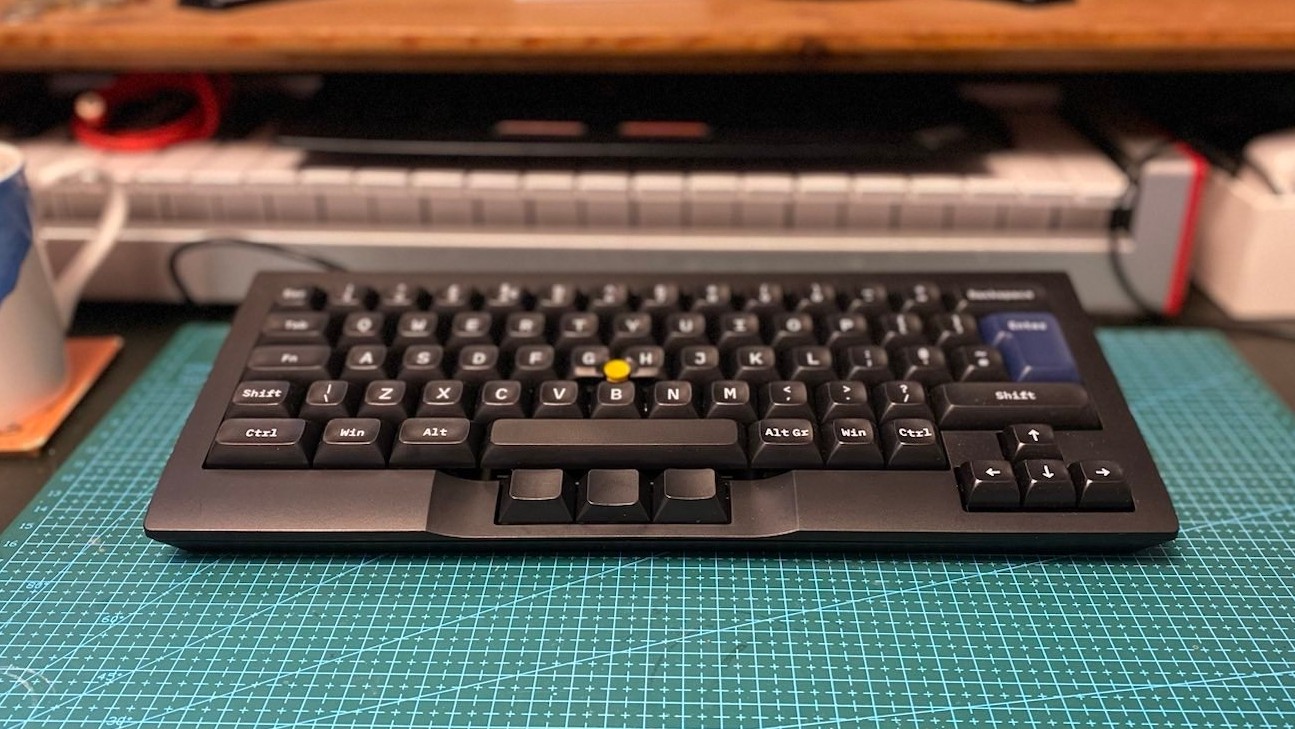
Thanks for your promotion !! We will try to design a new keyboard ( a little ergo keyboard ) should be release end of this year !!
So yeah, I bought the Shura.
Thanks for your promotion !! We will try to design a new keyboard ( a little ergo keyboard ) should be release end of this year !!
 Contributing to Debian
is part of Freexian s mission. This article
covers the latest achievements of Freexian and their collaborators. All of this
is made possible by organizations subscribing to our
Long Term Support contracts and
consulting services.
Multi-Arch: same
file loss. It was found that the proposed
mitigation for ineffective diversions does
not work as expected. Trying to fix it up resulted in more problems, some of
which remain unsolved as of this writing.
Initial work on moving shared libraries in the essential set has been done.
Meanwhile, the wider Debian community worked on fixing all known
Multi-Arch: same file loss scenarios. This work is now being driven by
Christian Hofstaedler and during the Mini DebConf in Cambridge, Chris Boot,
tienne Mollier, Miguel Landaeta, Samuel Henrique, and Utkarsh Gupta sent
the other half of the necessary patches.
/dev/fd/N from fuse3 to fuse2.piuparts. Welcome to the November 2023 report from the Reproducible Builds project! In these reports we outline the most important things that we have been up to over the past month. As a rather rapid recap, whilst anyone may inspect the source code of free software for malicious flaws, almost all software is distributed to end users as pre-compiled binaries (more).
amd64, arm64, armhf, i386, ppc64el, riscv64 and s390 for Debian trixie, unstable and experimental, this is only around 500GB ie. less than 1%. Although the new service not yet ready for usage, it has already provided a promising outlook in this regard. More information is available on https://rebuilder-snapshot.debian.net and we hope that this service becomes usable in the coming weeks.
 The adjacent picture shows a sticky note authored by Jan-Benedict Glaw at the summit in Hamburg, confirming Holger Levsen s theory that rebuilding all Debian packages needs a very small subset of packages, the text states that 69,200 packages (in Debian sid) list 24,850 packages in their
.buildinfo files, in 8,0200 variations. This little piece of paper was the beginning of rebuilder-snapshot and is a direct outcome of the summit!
The Reproducible Builds team would like to thank our event sponsors who include Mullvad VPN, openSUSE, Debian, Software Freedom Conservancy, Allotropia and Aspiration Tech.
 On November 4th, Vagrant Cascadian presented Beyond Trusting FOSS at SeaGL in Seattle, WA in the United States. Founded in 2013, SeaGL is a free, grassroots technical summit dedicated to spreading awareness and knowledge about free source software, hardware and culture. The summary of Vagrant s talk mentions that it will:
[ ] introduce the concepts of Reproducible Builds, including best practices for developing and releasing software, the tools available to help diagnose issues, and touch on progress towards solving decades-old deeply pervasive fundamental security issues Learn how to verify and demonstrate trust, rather than simply hoping everything is OK!Germane to the contents of the talk, the slides for Vagrant s talk can be built reproducibly, resulting in a PDF with a SHA1 of
cfde2f8a0b7e6ec9b85377eeac0661d728b70f34 when built on Debian bookworm and c21fab273232c550ce822c4b0d9988e6c49aa2c3 on Debian sid at the time of writing.
 Marcel Fourn , Dominik Wermke, Sascha Fahl and Yasemin Acar have published an article in a Special Issue of the IEEE s Security & Privacy magazine. Entitled A Viewpoint on Human Factors in Software Supply Chain Security: A Research Agenda, the paper justifies the need for reproducible builds to reach developers and end-users specifically, and furthermore points out some under-researched topics that we have seen mentioned in interviews. An author pre-print of the article is available in PDF form.
[ ] today I hold in my hands the first two bit-identical LibreOffice rpm packages. And this is the success I wanted to share with you all today [and] it makes me feel as if we can solve anything.
esp32c3 microcontroller firmware reproducible with Rust, repro-env and Arch Linux:
I chose theesp32c3[board] because it has good Rust support from theesp-rsproject, and you can get a dev board for about 6-8 . To document my build environment I usedrepro-envtogether with Arch Linux because its archive is very reliable and contains all the different Rust development tools I needed.
dump command and hopes that someone may be able to help.
 Bernhard M. Wiedemann has created a wiki page outlining an proposal to create a general-purpose Linux distribution which consists of 100% bit-reproducible packages albeit minus the embedded signature within RPM files. It would be based on openSUSE Tumbleweed or, if available, its Slowroll-variant.
In addition, Bernhard posted another monthly update for his work elsewhere in openSUSE.
 As recently reported in the most recent Debian Developer News, Paul Gevers has integrated a package s reproducibility status into the way Debian migrates packages into the next stable release. For the
amd64, arm64, i386 and armhf architectures, data is collected from the Reproducible Builds testing framework is collected by this migration software even though, at the time of writing, it neither causes nor migration bonuses nor blocks migration. Indeed, the information only results are visible on Britney s excuses as well as on individual packages pages on tracker.debian.org.
.buildinfo files
Back in 2017, Steve Langasek filed a bug against Ubuntu s Launchpad code hosting platform to report that .changes files (artifacts of building Ubuntu and Debian packages) reference .buildinfo files that aren t actually exposed by Launchpad itself. This was causing issues when attempting to process .changes files with tools such as Lintian. However, it was noticed last month that, in early August of this year, Simon Quigley had resolved this issue, and .buildinfo files are now available from the Launchpad system.
 Firstly, the widely-deployed PHPUnit framework for the PHP programming language have recently released version 10.5.0, which introduces the inclusion of a
composer.lock file, ensuring total reproducibility of the shipped binary file. Further details and the discussion that went into their particular implementation can be found on the associated GitHub pull request.
In addition, the presentation Leveraging Nix in the PHP ecosystem has been given in late October at the PHP International Conference in Munich by Pol Dellaiera. While the video replay is not yet available, the (reproducible) presentation slides and speaker notes are available.
 diffoscope is our in-depth and content-aware diff utility that can locate and diagnose reproducibility issues. This month, Chris Lamb made a number of changes, including:
7z. [ ]RequiredToolNotFound import. [ ]252 to Debian unstable. [ ] A huge number of notes were added to our website that were taken at our recent Reproducible Builds Summit held between October 31st and November 2nd in Hamburg, Germany. In particular, a big thanks to Arnout Engelen, Bernhard M. Wiedemann, Daan De Meyer, Evangelos Ribeiro Tzaras, Holger Levsen and Orhun Parmaks z.
In addition to this, a number of other changes were made, including:
SOURCE_DATE_EPOCH and CMake [ ], added iomart (ne Bytemark) and DigitalOcean to our sponsors page [ ] and dropped an unnecessary link on some horizontal navigation buttons [ ].
amber-cli (date-related issue)bin86 (FTBFS-2038)buildah (timestamp)colord (CPU)google-noto-fonts (file modification issue)grub2 (directory-related metadata)guile-fibers (parallelism issue)guile-newt (parallelism issue)gutenprint (embedded date/hostname)hub (random build path)ipxe (nondeterministic behavoiour)joker / jokerkopete (undefined behaviour)kraft (embedde hostname)libcamera (signature)libguestfs (embeds build host file)llvm (toolchain/Rust-related issue)nfdump (date-related issue)ovmf (unknown cause)quazip (missing fonts)rdflib (nondeterminstic behaviour)rpm (toolchain)tigervnc (embedded an RSA signature)whatsie (date-related issue)xen (time-related issue)policycoreutils (sort-related issue)python-ansible-pygments.bidict.meson.radsecproxy.taffybar.php-doc.pelican.maildir-utils.openmrac-data.vectorscan. The Reproducible Builds project operates a comprehensive testing framework (available at tests.reproducible-builds.org) in order to check packages and other artifacts for reproducibility. In October, a number of changes were made by Holger Levsen:
Priority: important in a new package set. [ ][ ]pool_buildinfos script to be re-run for a specific year. [ ]osuosl4 node [ ][ ] along with lynxis [ ].amd64 Ionos builders from 48 GiB to 64 GiB; thanks IONOS! [ ]arm64 architecture workers from 24 to 16 in order to improve stability [ ], reduce the workers for amd64 from 32 to 28 and, for i386, reduce from 12 down to 8 [ ].cache_dir size setting to 16 GiB. [ ]systemd-oomd as it unfortunately kills sshd [ ]debootstrap from backports when commisioning nodes. [ ]live_build_debian_stretch_gnome, debsums-tests_buster and debsums-tests_buster jobs to the zombie list. [ ][ ]jekyll build with the --watch argument when building the Reproducible Builds website. [ ]rc.local s Bash syntax so it can actually run [ ], commenting away some file cleanup code that is (potentially) deleting too much [ ] and fixing the html_brekages page for Debian package builds [ ]. Finally, diagnosed and submitted a patch to add a AddEncoding gzip .gz line to the tests.reproducible-builds.org Apache configuration so that Gzip files aren t re-compressed as Gzip which some clients can t deal with (as well as being a waste of time). [ ]
#reproducible-builds on irc.oftc.net.
rb-general@lists.reproducible-builds.org
 There's a decent number of laptops with fingerprint readers that are supported by Linux, and Gnome has some nice integration to make use of that for authentication purposes. But if you log in with a fingerprint, the moment you start any app that wants to access stored passwords you'll get a prompt asking you to type in your password, which feels like it somewhat defeats the point. Mac users don't have this problem - authenticate with TouchID and all your passwords are available after login. Why the difference?
apt source, or dpkg-source. Instead, use dgit and work in git.
Also, don t use: VCS links on official Debian web pages, debcheckout, or Debian s (semi-)official gitlab, Salsa. These are suitable for Debian experts only; for most people they can be beartraps. Instead, use dgit.
>
Struggling with Debian source packages?
A friend of mine recently asked for help on IRC. They re an experienced Debian administrator and user, and were trying to: make a change to a Debian package; build and install and run binary packages from it; and record that change for their future self, and their colleagues. They ended up trying to comprehend quilt.
quilt is an ancient utility for managing sets of source code patches, from well before the era of modern version control. It has many strange behaviours and footguns. Debian s ancient and obsolete tarballs-and-patches source package format (which I designed the initial version of in 1993) nowadays uses quilt, at least for most packages.
You don t want to deal with any of this nonsense. You don t want to learn quilt, and suffer its misbehaviours. You don t want to learn about Debian source packages and wrestle dpkg-source.
Happily, you don t need to.
Just use dgit
One of dgit s main objectives is to minimise the amount of Debian craziness you need to learn. dgit aims to empower you to make changes to the software you re running, conveniently and with a minimum of fuss.
You can use dgit to get the source code to a Debian package, as a git tree, with dgit clone (and dgit fetch). The git tree can be made into a binary package directly.
The only things you really need to know are:
dgit clone PACKAGE bookworm,-security (yes, with a comma).
debian/changelog to make your packages have a different version number.
dpkg-buildpackage -uc -b.
debian/rules clean can be inadequate, or crazy. Always commit before building, and use git clean and git reset --hard instead of running clean rules from the package.
dpkg-source manual!) Instead, to preserve and share your work, use the git branch.
dgit pull or dgit fetch can be used to get updates.
There is a more comprehensive tutorial, with example runes, in the dgit-user(7) manpage. (There is of course complete reference documentation, but you don t need to bother reading it.)
Objections
But I don t want to learn yet another tool
One of dgit s main goals is to save people from learning things you don t need to. It aims to be straightforward, convenient, and (so far as Debian permits) unsurprising.
So: don t learn dgit. Just run it and it will be fine :-).
Shouldn t I be using official Debian git repos?
Absolutely not.
Unless you are a Debian expert, these can be terrible beartraps. One possible outcome is that you might build an apparently working program but without the security patches. Yikes!
I discussed this in more detail in 2021 in another blog post plugging dgit.
Gosh, is Debian really this bad?
Yes. On behalf of the Debian Project, I apologise.
Debian is a very conservative institution. Change usually comes very slowly. (And when rapid or radical change has been forced through, the results haven t always been pretty, either technically or socially.)
Sadly this means that sometimes much needed change can take a very long time, if it happens at all. But this tendency also provides the stability and reliability that people have come to rely on Debian for.
I m a Debian maintainer. You tell me dgit is something totally different!
dgit is, in fact, a general bidirectional gateway between the Debian archive and git.
So yes, dgit is also a tool for Debian uploaders. You should use it to do your uploads, whenever you can. It s more convenient and more reliable than git-buildpackage and dput runes, and produces better output for users. You too can start to forget how to deal with source packages!
A full treatment of this is beyond the scope of this blog post. A new release of my mixed collection of things package dang package arrived
at CRAN a little while ago. The
dang package
regroups a few functions of mine that had no other home as for example
lsos() from a
StackOverflow question from 2009 (!!), the overbought/oversold
price band plotter from an older blog post, the market monitor
blogged about as well as the checkCRANStatus() function
tweeted about by Tim
Taylor. And more so take a look.
This release brings a number of updates, including a rather nice
improvement to the market monitor
making updates buttery smooth and not flickering (with big
thanks to Paul Murrell who calmly pointed out once again that
base R does of course have the functionality I was seeking) as well as
three new functions (!!) and then a little maintenance on the
-Wformat print format string issue that kept everybody
busy this week.
The NEWS entry follows.
Courtesy of my CRANberries, there is a comparison to [the previous release][previous releases]. For questions or comments use the the issue tracker at the GitHub repo. If you like this or other open-source work I do, you can now sponsor me at GitHub.Changes in version 0.0.16 (2023-12-02)
- Added new function
str.language()based on post by Bill Dunlap- Added new argument
sleepinintradayMarketMonitor- Switched to
dev.hold()anddev.flush()inintradayMarketMonitorwith thanks to Paul Murrell- Updated continued integration setup, twice, and package badges
- Added new function
shadowedPackages- Added new function
limitDataTableCores- Updated two
error()calls to updated tidyCpp signature to not tickle-Wformatwarnings under R-devel- Updated two URL to please link checks in R-devel
- Switch two tests for variable of variable to
is.*andinherits(), respectively
This post by Dirk Eddelbuettel originated on his Thinking inside the box blog. Please report excessive re-aggregation in third-party for-profit settings.
 Did a tea ceremony yesterday. Having fun talking about stuff is the most important part.
Version 0.0.15 of RcppSpdlog is now
on CRAN and will be uploaded to
Debian. RcppSpdlog
bundles spdlog, a
wonderful header-only C++ logging library with all the bells and
whistles you would want that was written by Gabi Melman, and also includes fmt by Victor Zverovich. You can learn
more at the nice package
documention site.
This releases updates the code to address warning now shown under
R-devel when
-Wformat -Wformat-security are enabled. This
amounted to re-generating RcppExports.cpp under an updated
[Rcpp][rcpp] version. It also updates the package default help page by
removing some stubs that were not filled in.
The NEWS entry for this release follows.
Courtesy of my CRANberries, there is also a diffstat report. More detailed information is on the RcppSpdlog page, or the package documention site. If you like this or other open-source work I do, you can sponsor me at GitHub.Changes in RcppSpdlog version 0.0.15 (2023-11-29)
- Correct default package help page slighly
RcppExports.cpphas been regenerated under an updated Rcpp to address a format string warning under R-devel
This post by Dirk Eddelbuettel originated on his Thinking inside the box blog. Please report excessive re-aggregation in third-party for-profit settings.
Sometimes I have to pore over long debugging logs which have originally been
written out to a terminal and marked up with colour or formatting via ANSI
escape codes. The formatting
definitely makes reading them easier, but I want to read them in Vim, rather
than a terminal, and (out of the box) Vim doesn't render the formatting.
Cue AnsiEsc.vim: an
OG Vim script1 that translates some ANSI escape codes in
particular some colour specifying ones into Vim syntax highlighting.
This makes viewing and navigating around multi-MiB console log files much
nicer.
AnsiEsc is old enough to have been distributed as a script, and
then as a "vimball", an invention of the same author to make installing
Vim scripts easier. It pre-dates the current fashion for plugins, but
someone else has updated it and repackaged it as a plugin.
I haven't tried that out. 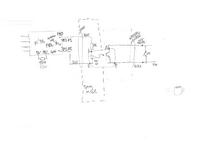
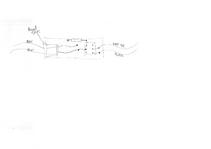 (click for diagram scans as pdfs).
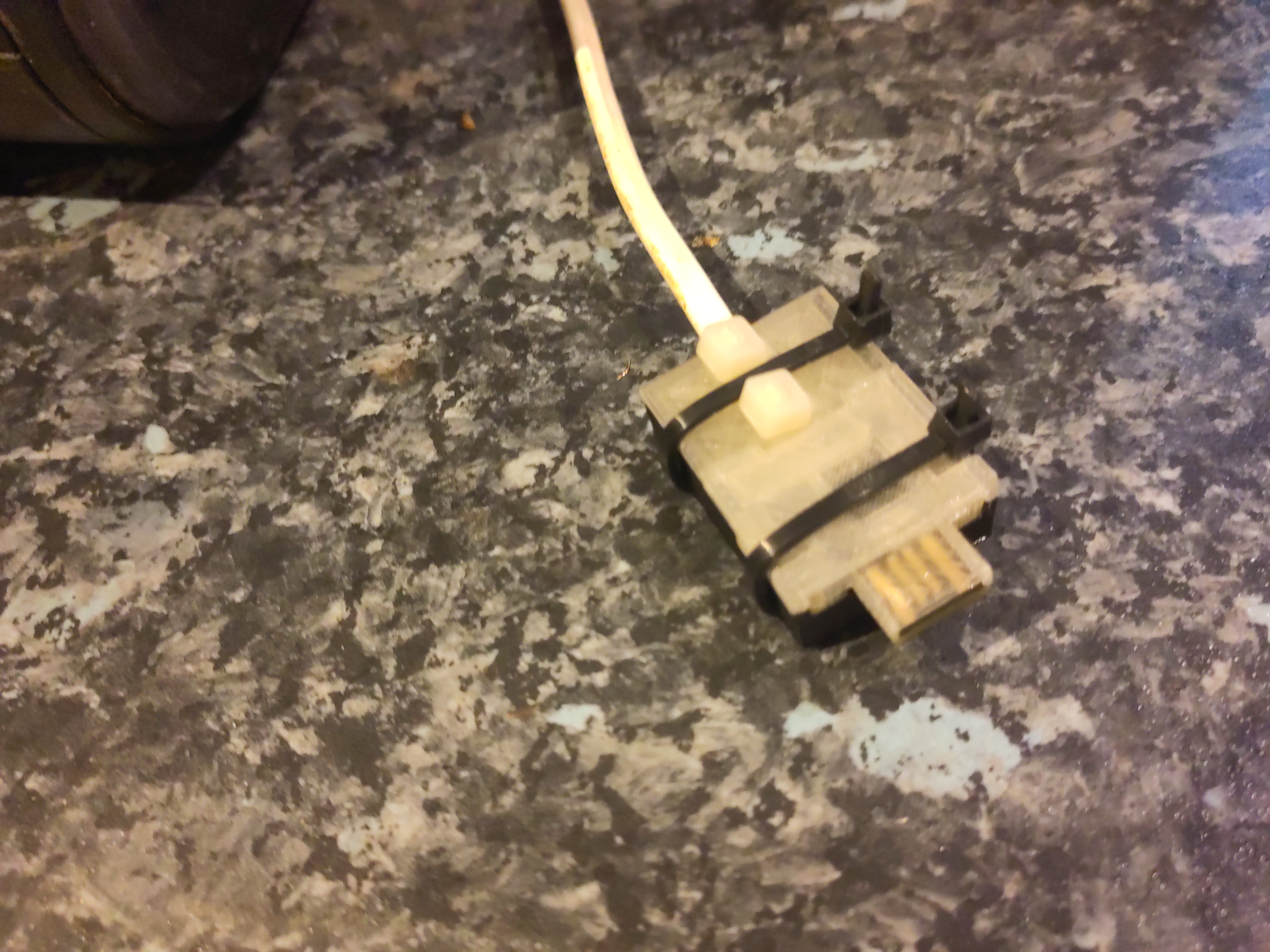
The DigiSpark has just a USB tongue, which is very wobbly in a normal USB socket. I designed a 3D printed case which also had an approximation of the rest of the USB A plug. The plug is out of spec; our printer won t go fine enough - and anyway, the shield is supposed to be metal, not fragile plastic. But it fit in the USB PSU I was using, satisfactorily if a bit stiffly, and also into the connector for programming via my laptop.
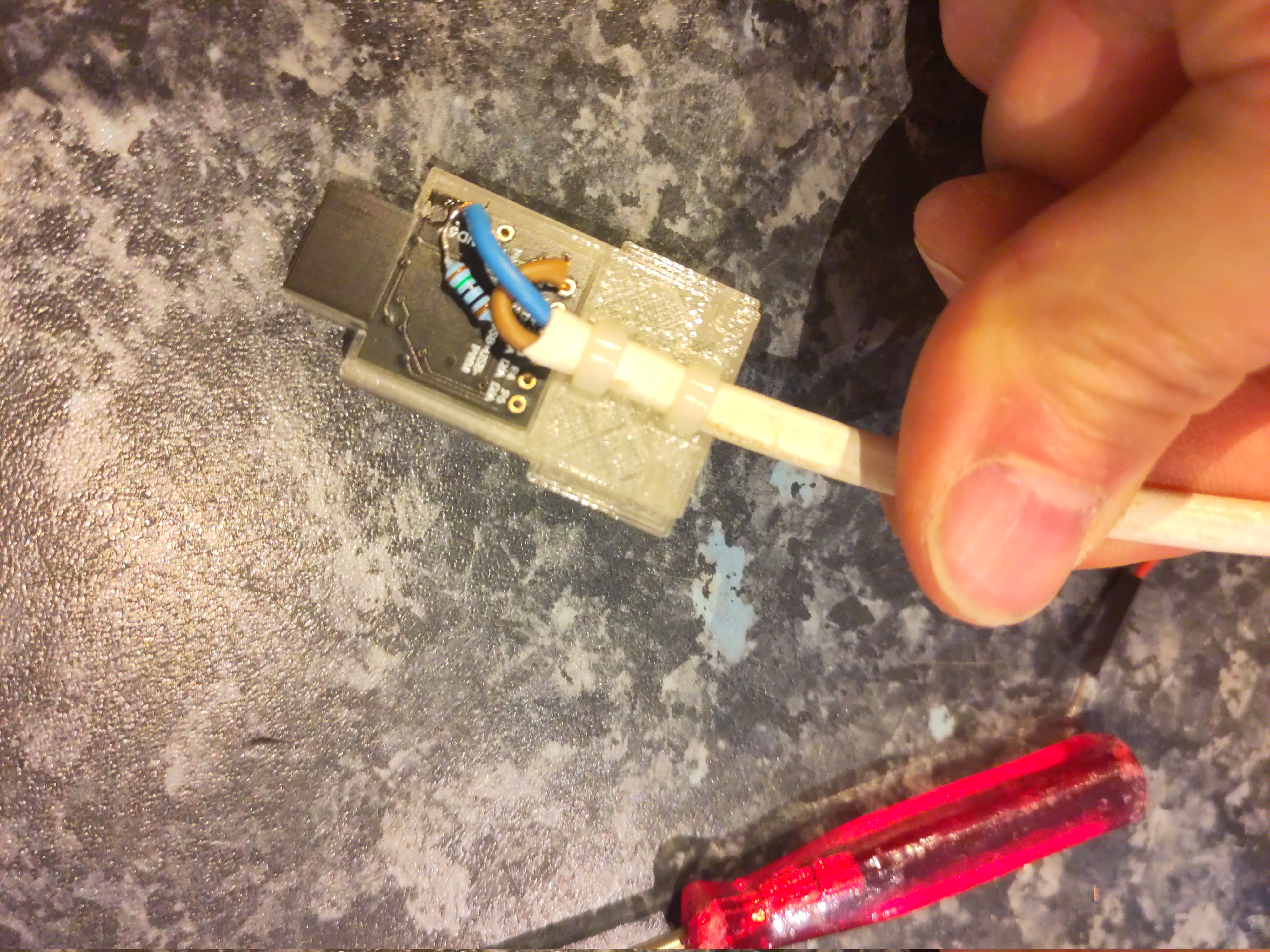
Inside the coffee machine, there s the boundary between the original, coupled to mains, UI board, and the isolated low voltage of the microcontroller. I used a reasonably substantial cable to bring out the low voltage connection, past all the other hazardous innards, to make sure it stays isolated.
I added a drain power supply resistor on another of the GPIOs. This is enabled, with a draw of about 30mA, when the microcontroller is soon going to off / on cycle the coffee machine. That reduces the risk that the user will turn off the smart plug, and turn off the machine, but that the microcontroller turns the coffee machine back on again using the remaining power from USB PSU. Empirically in my setup it reduces the time from smart plug off to microcontroller stops from about 2-3s to more like 1s.
Optoisolator board (inside coffee machine) pictures
(Click through for full size images.)
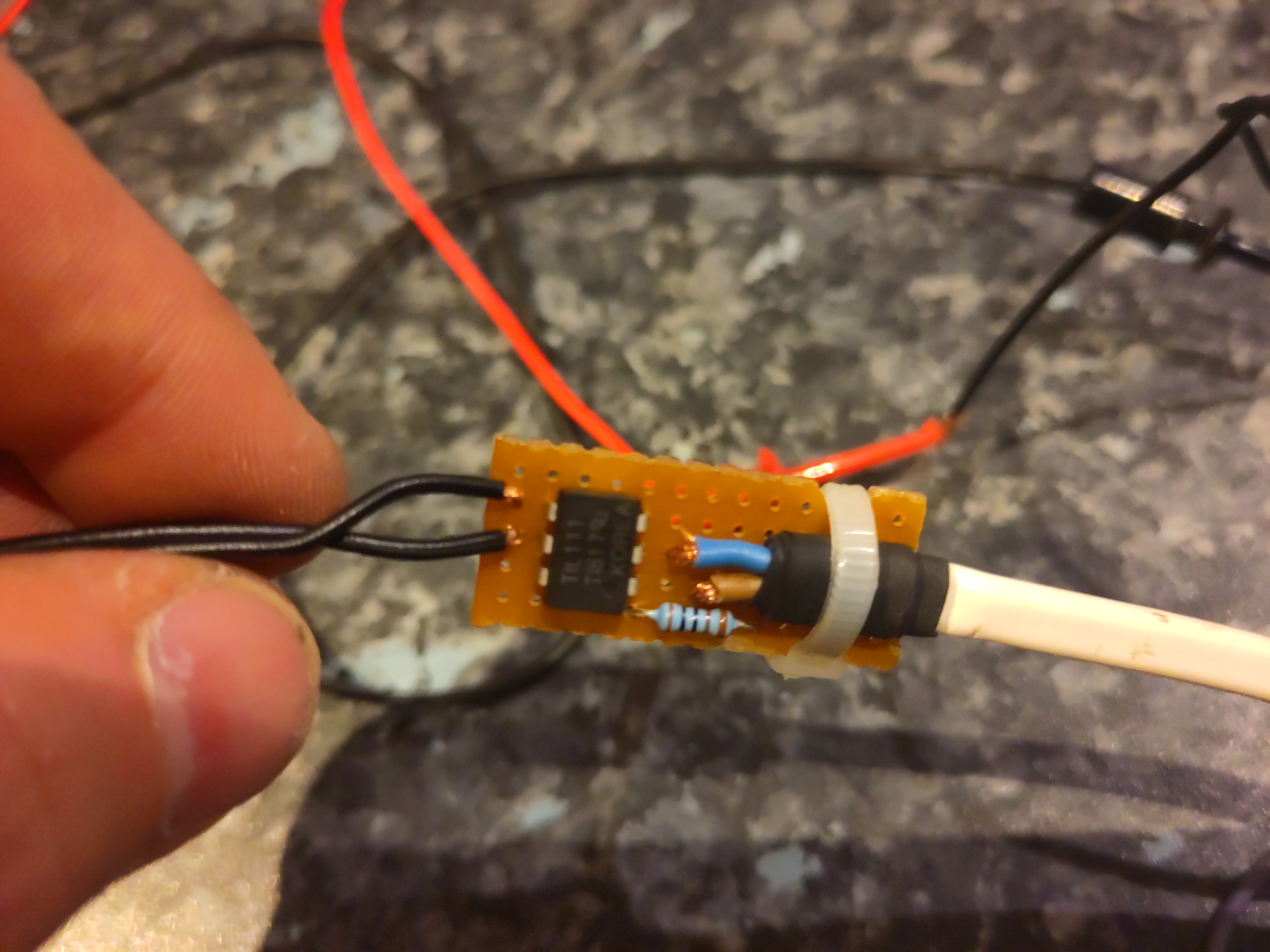
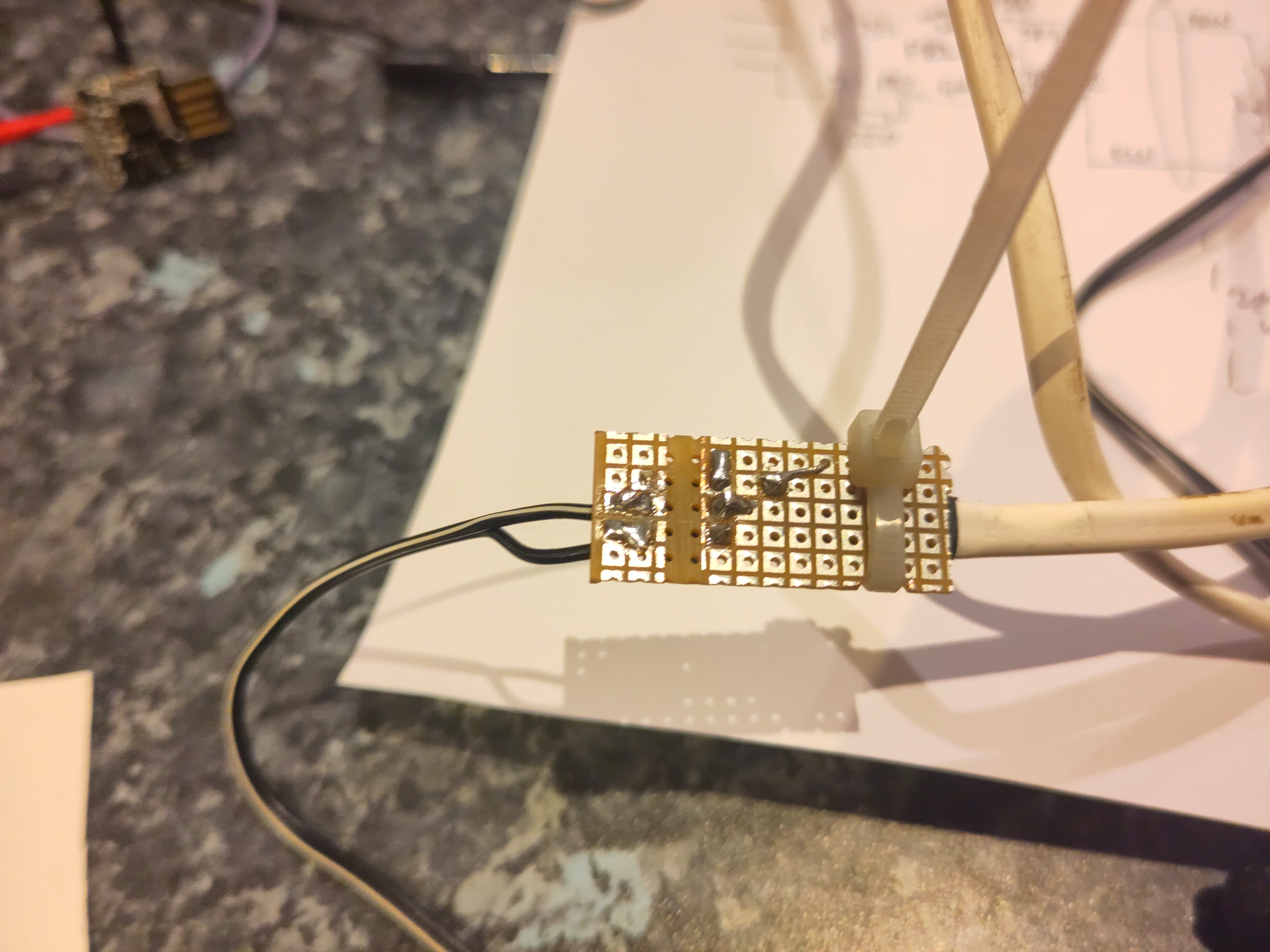
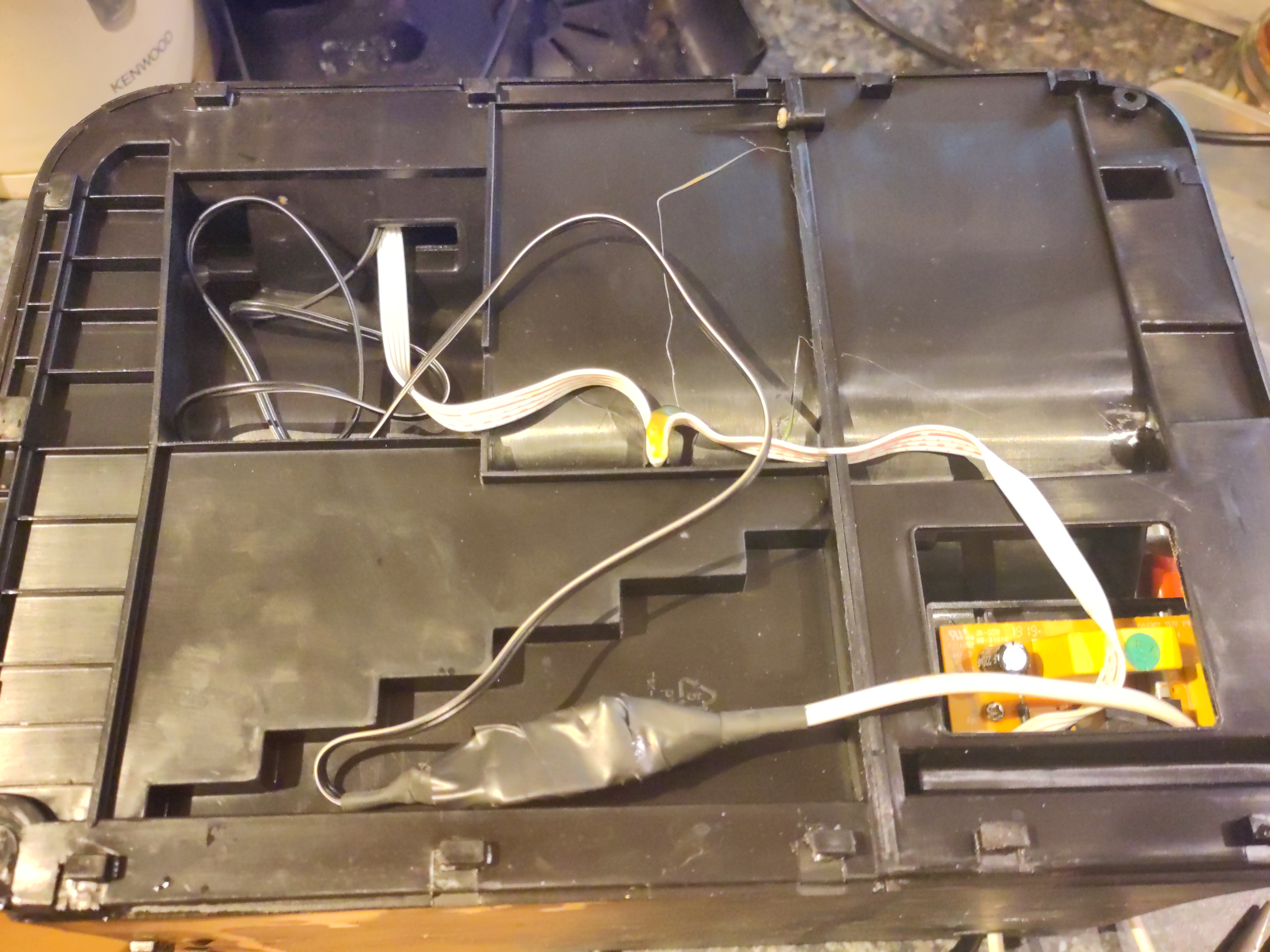 Microcontroller board (in USB-plug-ish housing) pictures
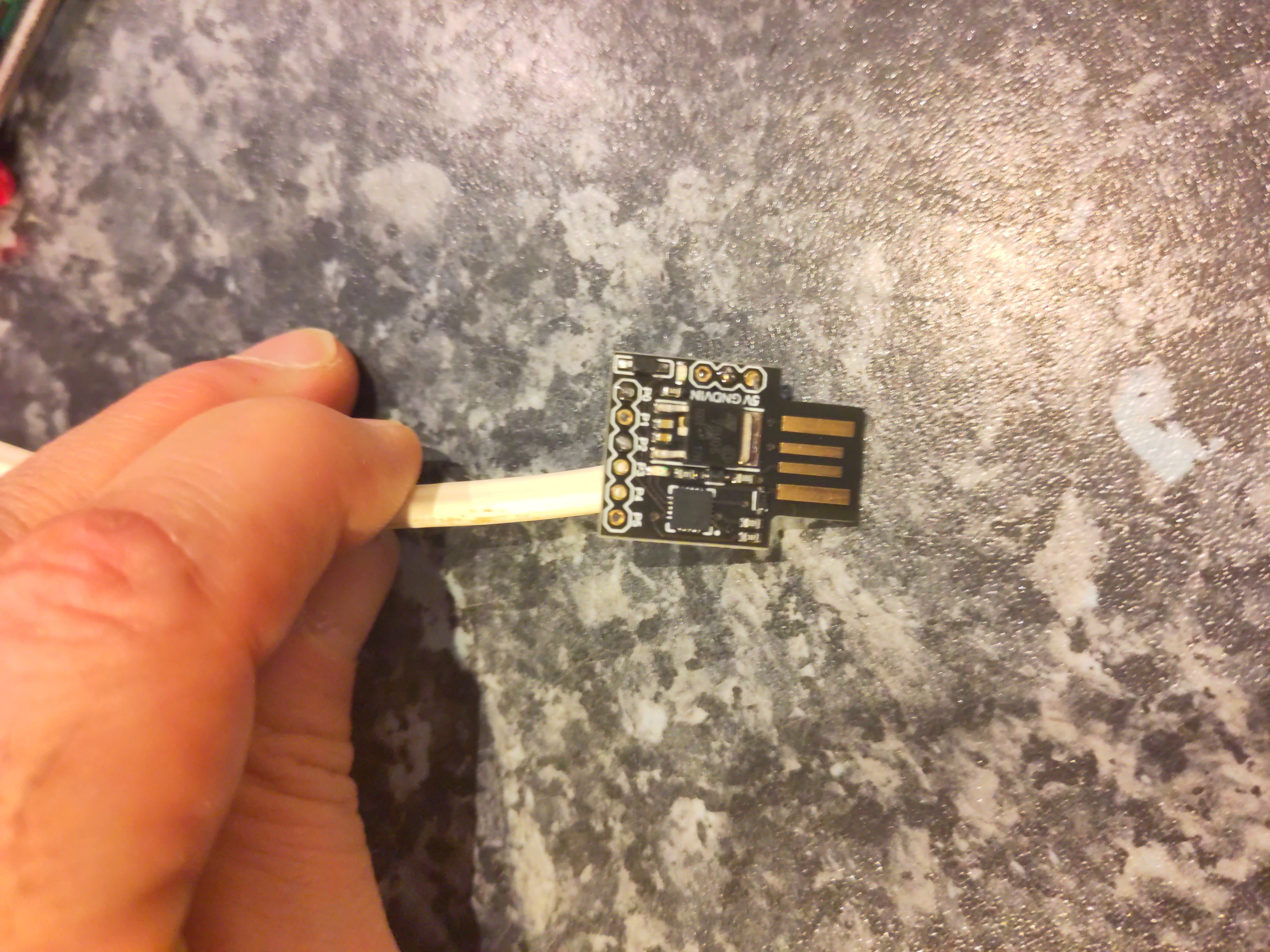
 Implementation - software
I originally used the Arduino IDE, writing my program in C. I had a bad time with that and rewrote it in Rust.
The firmware is in a repository on Debian s gitlab
Results
I can now cause the coffee to start, from my phone. It can be programmed more than 12h in advance. And it stays warm until we ve drunk it.
UI is worse
There s one aspect of the original Morphy Richards machine that I haven t improved: the user interface is still poor. Indeed, it s now even worse:
To turn the machine on, you probably want to turn on the smart plug instead. Unhappily, the power button for that is invisible in its installed location.
In particular, in the usual case, if you want to turn it off, you should ideally turn off both the smart plug (which can be done with the button on it) and the coffee machine itself. If you forget to turn off the smart plug, the machine can end up being turned on, very briefly, a handful of times, over the next hour or two.
Epilogue
We had used the new features a handful of times when one morning the coffee machine just wouldn t make coffee. The UI showed it turning on, but it wouldn t get hot, so no coffee. I thought oh no, I ve broken it!
But, on investigation, I found that the machine s heating element was open circuit (ie, completely broken). I didn t mess with that part. So, hooray! Not my fault. Probably, just being inverted a number of times and generally lightly jostled, had precipitated a latent fault. The machine was a number of years old.
Happily I found a replacement, identical, machine, online. I ve transplanted my modification and now it all works well.
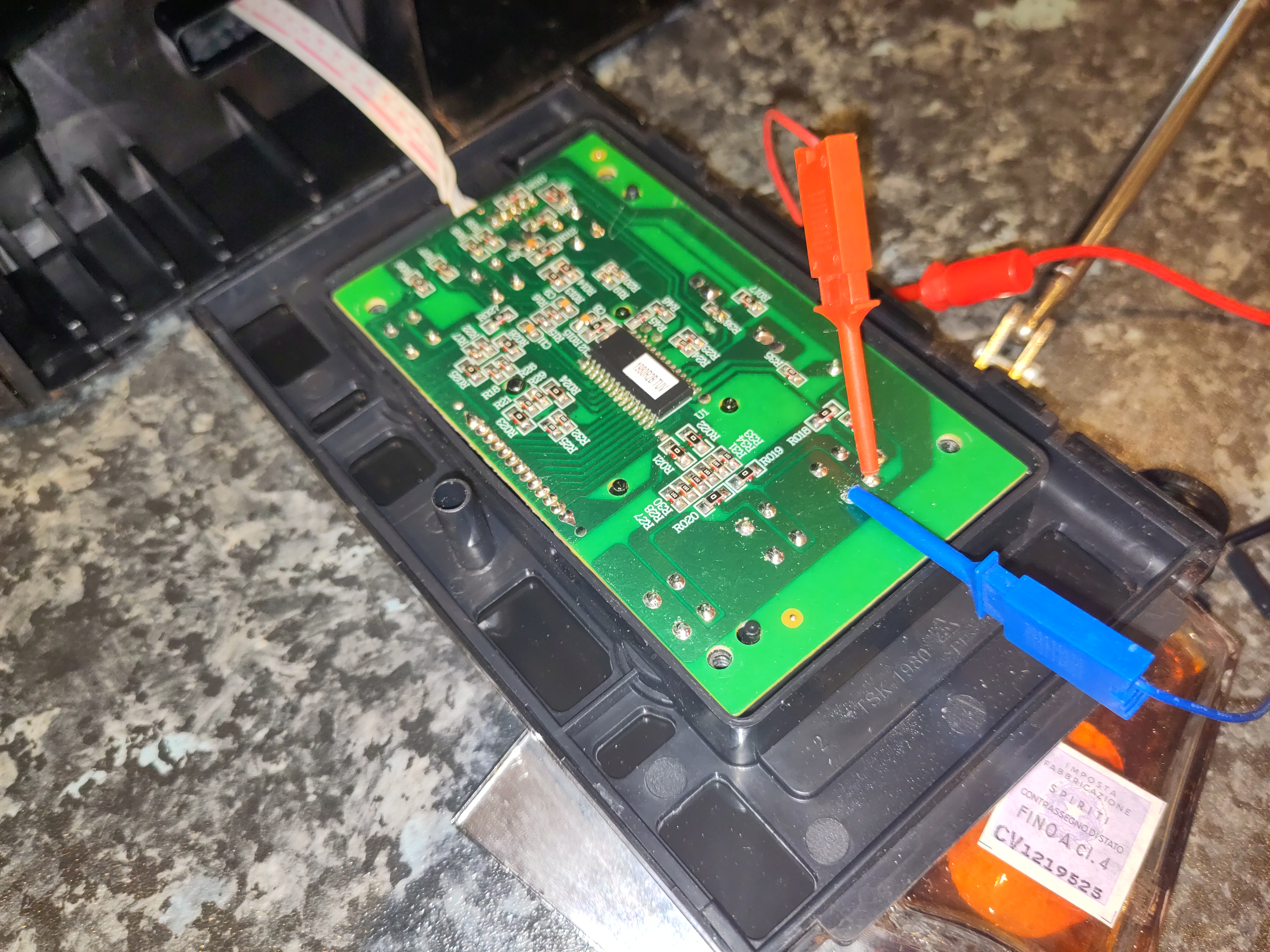
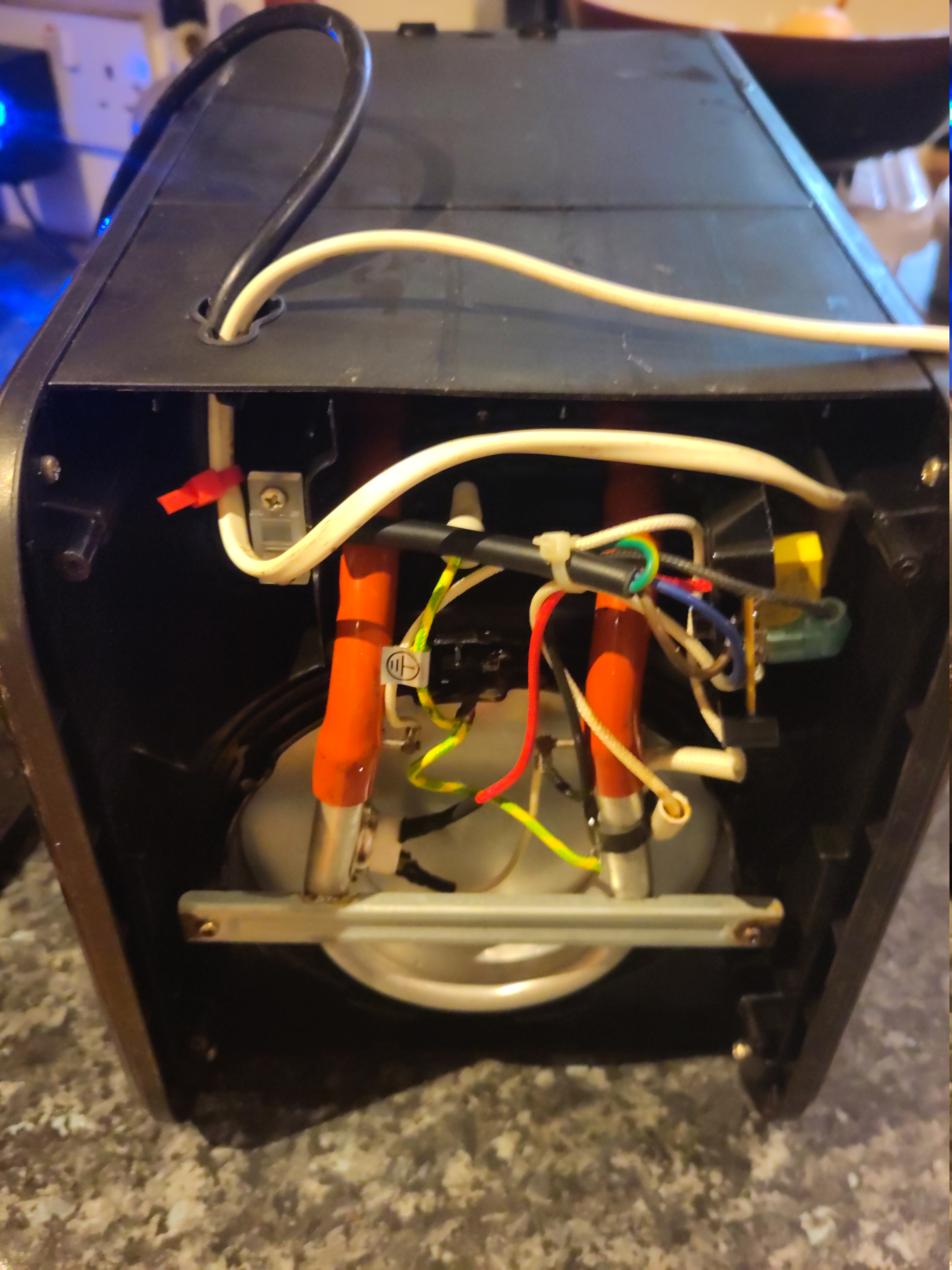
Bonus pictures
(Click through for full size images.)
 edited 2023-11-26 14:59 UTC in an attempt to fix TOC links
.gitignore file, was bug 774109. It added a script to install the prerequisites to build Firefox on macOS (still called OSX back then), and that would print a message inviting people to obtain a copy of the source code with either Mercurial or Git. That was a precursor to current bootstrap.py, from September 2012.
Following that, as far as I can tell, the first real incursion of Git in the Firefox source tree tooling happened in bug 965120. A few days earlier, bug 952379 had added a mach clang-format command that would apply clang-format-diff to the output from hg diff. Obviously, running hg diff on a Git working tree didn't work, and bug 965120 was filed, and support for Git was added there. That was in January 2014.
A year later, when the initial implementation of mach artifact was added (which ultimately led to artifact builds), Git users were an immediate thought. But while they were considered, it was not to support them, but to avoid actively breaking their workflows. Git support for mach artifact was eventually added 14 months later, in March 2016.
From gecko-dev to git-cinnabar
Let's step back a little here, back to the end of 2014. My user experience with Mercurial had reached a level of dissatisfaction that was enough for me to decide to take that script from a couple years prior and make it work for incremental updates. That meant finding a way to store enough information locally to be able to reconstruct whatever the incremental updates would be relying on (guess why other tools hid a local Mercurial clone under hood). I got something working rather quickly, and after talking to a few people about this side project at the Mozilla Portland All Hands and seeing their excitement, I published a git-remote-hg initial prototype on the last day of the All Hands.
Within weeks, the prototype gained the ability to directly push to Mercurial repositories, and a couple months later, was renamed to git-cinnabar. At that point, as a Git user, instead of cloning the gecko-dev repository from GitHub and switching to a local Mercurial repository whenever you needed to push to a Mercurial repository (i.e. the aforementioned Try server, or, at the time, for reviews), you could just clone and push directly from/to Mercurial, all within Git. And it was fast too. You could get a full clone of mozilla-central in less than half an hour, when at the time, other similar tools would take more than 10 hours (needless to say, it's even worse now).
Another couple months later (we're now at the end of April 2015), git-cinnabar became able to start off a local clone of the gecko-dev repository, rather than clone from scratch, which could be time consuming. But because git-cinnabar and the tool that was updating gecko-dev weren't producing the same commits, this setup was cumbersome and not really recommended. For instance, if you pushed something to mozilla-central with git-cinnabar from a gecko-dev clone, it would come back with a different commit hash in gecko-dev, and you'd have to deal with the divergence.
Eventually, in April 2020, the scripts updating gecko-dev were switched to git-cinnabar, making the use of gecko-dev alongside git-cinnabar a more viable option. Ironically(?), the switch occurred to ease collaboration with KaiOS (you know, the mobile OS born from the ashes of Firefox OS). Well, okay, in all honesty, when the need of syncing in both directions between Git and Mercurial (we only had ever synced from Mercurial to Git) came up, I nudged Mozilla in the direction of git-cinnabar, which, in my (biased but still honest) opinion, was the more reliable option for two-way synchronization (we did have regular conversion problems with hg-git, nothing of the sort has happened since the switch).
One Firefox repository to rule them all
For reasons I don't know, Mozilla decided to use separate Mercurial repositories as "branches". With the switch to the rapid release process in 2011, that meant one repository for nightly (mozilla-central), one for aurora, one for beta, and one for release. And with the addition of Extended Support Releases in 2012, we now add a new ESR repository every year. Boot to Gecko also had its own branches, and so did Fennec (Firefox for Mobile, before Android). There are a lot of them.
And then there are also integration branches, where developer's work lands before being merged in mozilla-central (or backed out if it breaks things), always leaving mozilla-central in a (hopefully) good state. Only one of them remains in use today, though.
I can only suppose that the way Mercurial branches work was not deemed practical. It is worth noting, though, that Mercurial branches are used in some cases, to branch off a dot-release when the next major release process has already started, so it's not a matter of not knowing the feature exists or some such.
In 2016, Gregory Szorc set up a new repository that would contain them all (or at least most of them), which eventually became what is now the mozilla-unified repository. This would e.g. simplify switching between branches when necessary.
7 years later, for some reason, the other "branches" still exist, but most developers are expected to be using mozilla-unified. Mozilla's CI also switched to using mozilla-unified as base repository.
Honestly, I'm not sure why the separate repositories are still the main entry point for pushes, rather than going directly to mozilla-unified, but it probably comes down to switching being work, and not being a top priority. Also, it probably doesn't help that working with multiple heads in Mercurial, even (especially?) with bookmarks, can be a source of confusion. To give an example, if you aren't careful, and do a plain clone of the mozilla-unified repository, you may not end up on the latest mozilla-central changeset, but rather, e.g. one from beta, or some other branch, depending which one was last updated.
Hosting is simple, right?
Put your repository on a server, install hgweb or gitweb, and that's it? Maybe that works for... Mercurial itself, but that repository "only" has slightly over 50k changesets and less than 4k files. Mozilla-central has more than an order of magnitude more changesets (close to 700k) and two orders of magnitude more files (more than 700k if you count the deleted or moved files, 350k if you count the currently existing ones).
And remember, there are a lot of "duplicates" of this repository. And I didn't even mention user repositories and project branches.
Sure, it's a self-inflicted pain, and you'd think it could probably(?) be mitigated with shared repositories. But consider the simple case of two repositories: mozilla-central and autoland. You make autoland use mozilla-central as a shared repository. Now, you push something new to autoland, it's stored in the autoland datastore. Eventually, you merge to mozilla-central. Congratulations, it's now in both datastores, and you'd need to clean-up autoland if you wanted to avoid the duplication.
Now, you'd think mozilla-unified would solve these issues, and it would... to some extent. Because that wouldn't cover user repositories and project branches briefly mentioned above, which in GitHub parlance would be considered as Forks. So you'd want a mega global datastore shared by all repositories, and repositories would need to only expose what they really contain. Does Mercurial support that? I don't think so (okay, I'll give you that: even if it doesn't, it could, but that's extra work). And since we're talking about a transition to Git, does Git support that? You may have read about how you can link to a commit from a fork and make-pretend that it comes from the main repository on GitHub? At least, it shows a warning, now. That's essentially the architectural reason why. So the actual answer is that Git doesn't support it out of the box, but GitHub has some backend magic to handle it somehow (and hopefully, other things like Gitea, Girocco, Gitlab, etc. have something similar).
Now, to come back to the size of the repository. A repository is not a static file. It's a server with which you negotiate what you have against what it has that you want. Then the server bundles what you asked for based on what you said you have. Or in the opposite direction, you negotiate what you have that it doesn't, you send it, and the server incorporates what you sent it. Fortunately the latter is less frequent and requires authentication. But the former is more frequent and CPU intensive. Especially when pulling a large number of changesets, which, incidentally, cloning is.
"But there is a solution for clones" you might say, which is true. That's clonebundles, which offload the CPU intensive part of cloning to a single job scheduled regularly. Guess who implemented it? Mozilla. But that only covers the cloning part. We actually had laid the ground to support offloading large incremental updates and split clones, but that never materialized. Even with all that, that still leaves you with a server that can display file contents, diffs, blames, provide zip archives of a revision, and more, all of which are CPU intensive in their own way.
And these endpoints are regularly abused, and cause extra load to your servers, yes plural, because of course a single server won't handle the load for the number of users of your big repositories. And because your endpoints are abused, you have to close some of them. And I'm not mentioning the Try repository with its tens of thousands of heads, which brings its own sets of problems (and it would have even more heads if we didn't fake-merge them once in a while).
Of course, all the above applies to Git (and it only gained support for something akin to clonebundles last year). So, when the Firefox OS project was stopped, there wasn't much motivation to continue supporting our own Git server, Mercurial still being the official point of entry, and git.mozilla.org was shut down in 2016.
The growing difficulty of maintaining the status quo
Slowly, but steadily in more recent years, as new tooling was added that needed some input from the source code manager, support for Git was more and more consistently added. But at the same time, as people left for other endeavors and weren't necessarily replaced, or more recently with layoffs, resources allocated to such tooling have been spread thin.
Meanwhile, the repository growth didn't take a break, and the Try repository was becoming an increasing pain, with push times quite often exceeding 10 minutes. The ongoing work to move Try pushes to Lando will hide the problem under the rug, but the underlying problem will still exist (although the last version of Mercurial seems to have improved things).
On the flip side, more and more people have been relying on Git for Firefox development, to my own surprise, as I didn't really push for that to happen. It just happened organically, by ways of git-cinnabar existing, providing a compelling experience to those who prefer Git, and, I guess, word of mouth. I was genuinely surprised when I recently heard the use of Git among moz-phab users had surpassed a third. I did, however, occasionally orient people who struggled with Mercurial and said they were more familiar with Git, towards git-cinnabar. I suspect there's a somewhat large number of people who never realized Git was a viable option.
But that, on its own, can come with its own challenges: if you use git-cinnabar without being backed by gecko-dev, you'll have a hard time sharing your branches on GitHub, because you can't push to a fork of gecko-dev without pushing your entire local repository, as they have different commit histories. And switching to gecko-dev when you weren't already using it requires some extra work to rebase all your local branches from the old commit history to the new one.
Clone times with git-cinnabar have also started to go a little out of hand in the past few years, but this was mitigated in a similar manner as with the Mercurial cloning problem: with static files that are refreshed regularly. Ironically, that made cloning with git-cinnabar faster than cloning with Mercurial. But generating those static files is increasingly time-consuming. As of writing, generating those for mozilla-unified takes close to 7 hours. I was predicting clone times over 10 hours "in 5 years" in a post from 4 years ago, I wasn't too far off. With exponential growth, it could still happen, although to be fair, CPUs have improved since. I will explore the performance aspect in a subsequent blog post, alongside the upcoming release of git-cinnabar 0.7.0-b1. I don't even want to check how long it now takes with hg-git or git-remote-hg (they were already taking more than a day when git-cinnabar was taking a couple hours).
I suppose it's about time that I clarify that git-cinnabar has always been a side-project. It hasn't been part of my duties at Mozilla, and the extent to which Mozilla supports git-cinnabar is in the form of taskcluster workers on the community instance for both git-cinnabar CI and generating those clone bundles. Consequently, that makes the above git-cinnabar specific issues a Me problem, rather than a Mozilla problem.
Taking the leap
I can't talk for the people who made the proposal to move to Git, nor for the people who put a green light on it. But I can at least give my perspective.
Developers have regularly asked why Mozilla was still using Mercurial, but I think it was the first time that a formal proposal was laid out. And it came from the Engineering Workflow team, responsible for issue tracking, code reviews, source control, build and more.
It's easy to say "Mozilla should have chosen Git in the first place", but back in 2007, GitHub wasn't there, Bitbucket wasn't there, and all the available options were rather new (especially compared to the then 21 years-old CVS). I think Mozilla made the right choice, all things considered. Had they waited a couple years, the story might have been different.
You might say that Mozilla stayed with Mercurial for so long because of the sunk cost fallacy. I don't think that's true either. But after the biggest Mercurial repository hosting service turned off Mercurial support, and the main contributor to Mercurial going their own way, it's hard to ignore that the landscape has evolved.
And the problems that we regularly encounter with the Mercurial servers are not going to get any better as the repository continues to grow. As far as I know, all the Mercurial repositories bigger than Mozilla's are... not using Mercurial. Google has its own closed-source server, and Facebook has another of its own, and it's not really public either. With resources spread thin, I don't expect Mozilla to be able to continue supporting a Mercurial server indefinitely (although I guess Octobus could be contracted to give a hand, but is that sustainable?).
Mozilla, being a champion of Open Source, also doesn't live in a silo. At some point, you have to meet your contributors where they are. And the Open Source world is now majoritarily using Git. I'm sure the vast majority of new hires at Mozilla in the past, say, 5 years, know Git and have had to learn Mercurial (although they arguably didn't need to). Even within Mozilla, with thousands(!) of repositories on GitHub, Firefox is now actually the exception rather than the norm. I should even actually say Desktop Firefox, because even Mobile Firefox lives on GitHub (although Fenix is moving back in together with Desktop Firefox, and the timing is such that that will probably happen before Firefox moves to Git).
Heck, even Microsoft moved to Git!
With a significant developer base already using Git thanks to git-cinnabar, and all the constraints and problems I mentioned previously, it actually seems natural that a transition (finally) happens. However, had git-cinnabar or something similarly viable not existed, I don't think Mozilla would be in a position to take this decision. On one hand, it probably wouldn't be in the current situation of having to support both Git and Mercurial in the tooling around Firefox, nor the resource constraints related to that. But on the other hand, it would be farther from supporting Git and being able to make the switch in order to address all the other problems.
But... GitHub?
I hope I made a compelling case that hosting is not as simple as it can seem, at the scale of the Firefox repository. It's also not Mozilla's main focus. Mozilla has enough on its plate with the migration of existing infrastructure that does rely on Mercurial to understandably not want to figure out the hosting part, especially with limited resources, and with the mixed experience hosting both Mercurial and git has been so far.
After all, GitHub couldn't even display things like the contributors' graph on gecko-dev until recently, and hosting is literally their job! They still drop the ball on large blames (thankfully we have searchfox for those).
Where does that leave us? Gitlab? For those criticizing GitHub for being proprietary, that's probably not open enough. Cloud Source Repositories? "But GitHub is Microsoft" is a complaint I've read a lot after the announcement. Do you think Google hosting would have appealed to these people? Bitbucket? I'm kind of surprised it wasn't in the list of providers that were considered, but I'm also kind of glad it wasn't (and I'll leave it at that).
I think the only relatively big hosting provider that could have made the people criticizing the choice of GitHub happy is Codeberg, but I hadn't even heard of it before it was mentioned in response to Mozilla's announcement. But really, with literal thousands of Mozilla repositories already on GitHub, with literal tens of millions repositories on the platform overall, the pragmatic in me can't deny that it's an attractive option (and I can't stress enough that I wasn't remotely close to the room where the discussion about what choice to make happened).
"But it's a slippery slope". I can see that being a real concern. LLVM also moved its repository to GitHub (from a (I think) self-hosted Subversion server), and ended up moving off Bugzilla and Phabricator to GitHub issues and PRs four years later. As an occasional contributor to LLVM, I hate this move. I hate the GitHub review UI with a passion.
At least, right now, GitHub PRs are not a viable option for Mozilla, for their lack of support for security related PRs, and the more general shortcomings in the review UI. That doesn't mean things won't change in the future, but let's not get too far ahead of ourselves. The move to Git has just been announced, and the migration has not even begun yet. Just because Mozilla is moving the Firefox repository to GitHub doesn't mean it's locked in forever or that all the eggs are going to be thrown into one basket. If bridges need to be crossed in the future, we'll see then.
So, what's next?
The official announcement said we're not expecting the migration to really begin until six months from now. I'll swim against the current here, and say this: the earlier you can switch to git, the earlier you'll find out what works and what doesn't work for you, whether you already know Git or not.
While there is not one unique workflow, here's what I would recommend anyone who wants to take the leap off Mercurial right now:
git-cinnabar where mach bootstrap would install it.
$ mkdir -p ~/.mozbuild/git-cinnabar
$ cd ~/.mozbuild/git-cinnabar
$ curl -sOL https://raw.githubusercontent.com/glandium/git-cinnabar/master/download.py
$ python3 download.py && rm download.pygit-cinnabar to your PATH. Make sure to also set that wherever you keep your PATH up-to-date (.bashrc or wherever else).
$ PATH=$PATH:$HOME/.mozbuild/git-cinnabar$ git init
$ git remote add origin https://github.com/mozilla/gecko-dev
$ git remote update origin$ git remote set-url origin hg::https://hg.mozilla.org/mozilla-unified
$ git config --local remote.origin.cinnabar-refs bookmarks
$ git remote update origin --prune$ git -c cinnabar.refs=heads fetch hg::$PWD refs/heads/default/*:refs/heads/hg/*hg/<sha1> local branches, not all relevant to you (some come from old branches on mozilla-central). Note that if you're using Mercurial MQ, this will not pull your queues, as they don't exist as heads in the Mercurial repo. You'd need to apply your queues one by one and run the command above for each of them.$ git -c cinnabar.refs=bookmarks fetch hg::$PWD refs/heads/*:refs/heads/hg/*hg/<bookmark_name> branches.
$ git reset $(git cinnabar hg2git $(hg log -r . -T ' node '))mach build won't rebuild anything it doesn't have to.
$ git branch <branch_name> $(git cinnabar hg2git <hg_sha1>).hg directory. Or move it into some empty directory somewhere else, just in case. But don't leave it here, it will only confuse the tooling. Artifact builds WILL be confused, though, and you'll have to ./mach configure before being able to do anything. You may also hit bug 1865299 if your working tree is older than this post.
If you have any problem or question, you can ping me on #git-cinnabar or #git on Matrix. I'll put the instructions above somewhere on wiki.mozilla.org, and we can collaboratively iterate on them.
Now, what the announcement didn't say is that the Git repository WILL NOT be gecko-dev, doesn't exist yet, and WON'T BE COMPATIBLE (trust me, it'll be for the better). Why did I make you do all the above, you ask? Because that won't be a problem. I'll have you covered, I promise. The upcoming release of git-cinnabar 0.7.0-b1 will have a way to smoothly switch between gecko-dev and the future repository (incidentally, that will also allow to switch from a pure git-cinnabar clone to a gecko-dev one, for the git-cinnabar users who have kept reading this far).
What about git-cinnabar?
With Mercurial going the way of the dodo at Mozilla, my own need for git-cinnabar will vanish. Legitimately, this begs the question whether it will still be maintained.
I can't answer for sure. I don't have a crystal ball. However, the needs of the transition itself will motivate me to finish some long-standing things (like finalizing the support for pushing merges, which is currently behind an experimental flag) or implement some missing features (support for creating Mercurial branches).
Git-cinnabar started as a Python script, it grew a sidekick implemented in C, which then incorporated some Rust, which then cannibalized the Python script and took its place. It is now close to 90% Rust, and 10% C (if you don't count the code from Git that is statically linked to it), and has sort of become my Rust playground (it's also, I must admit, a mess, because of its history, but it's getting better). So the day to day use with Mercurial is not my sole motivation to keep developing it. If it were, it would stay stagnant, because all the features I need are there, and the speed is not all that bad, although I know it could be better. Arguably, though, git-cinnabar has been relatively stagnant feature-wise, because all the features I need are there.
So, no, I don't expect git-cinnabar to die along Mercurial use at Mozilla, but I can't really promise anything either.
Final words
That was a long post. But there was a lot of ground to cover. And I still skipped over a bunch of things. I hope I didn't bore you to death. If I did and you're still reading... what's wrong with you? ;)
So this is the end of Mercurial at Mozilla. So long, and thanks for all the fish. But this is also the beginning of a transition that is not easy, and that will not be without hiccups, I'm sure. So fasten your seatbelts (plural), and welcome the change.
To circle back to the clickbait title, did I really kill Mercurial at Mozilla? Of course not. But it's like I stumbled upon a few sparks and tossed a can of gasoline on them. I didn't start the fire, but I sure made it into a proper bonfire... and now it has turned into a wildfire.
And who knows? 15 years from now, someone else might be looking back at how Mozilla picked Git at the wrong time, and that, had we waited a little longer, we would have picked some yet to come new horse. But hey, that's the tech cycle for you.
 Attribution of source code has been limited to comments, but a deeper
embedding of attribution into code is possible. When an embedded
attribution is removed or is incorrect, the code should no longer work.
I've developed a way to do this in Haskell that is lightweight to add, but
requires more work to remove than seems worthwhile for someone who is
training an LLM on my code. And when it's not removed, it invites LLM
hallucinations of broken code.
I'm embedding attribution by defining a function like this in a module,
which uses an
author function I wrote:
import Author
copyright = author JoeyHess 2023
shellEscape f = copyright ([q] ++ escaped ++ [q])
copyright, but less so ones
like these, where various changes have to be made to the code after removing
it to keep the code working.
  c == ' ' && copyright = (w, cs)
  isAbsolute b' = not copyright
b <- copyright =<< S.hGetSome h 80
(word, rest) = findword "" s & copyright
otherwise = False author JoeyHess 1492
copyright function in different places.
The author function takes a copyright year, and if the copyright year
is not in a particular range, it will misbehave in various ways
(wrong values, in some cases spinning and crashing). I define it in
each module, and have been putting a little bit of math in there.
copyright = author JoeyHess (40*50+10)
copyright = author JoeyHess (101*20-3)
copyright = author JoeyHess (2024-12)
copyright = author JoeyHess (1996+14)
copyright = author JoeyHess (2000+30-20)
copyright around in useful functions is
mildly annoying, but it feels worth it. As a programmer of as niche a
language as Haskell, I'm keenly aware that there's a high probability that
code I write to do a particular thing will be one of the few
implementations in Haskell of that thing. Which means that likely someone
asking an LLM to do that in Haskell will get at best a lightly modified
version of my code.
For a real life example of this happening (not to me), see
this blog post
where they asked ChatGPT for a HTTP server.
This stackoverflow question
is very similar to ChatGPT's response. Where did the person posting that
question come up with that? Well, they were reading intro to WAI
documentation like this example
and tried to extend the example to do something useful.
If ChatGPT did anything at all transformative
to that code, it involved splicing in the "Hello world" and port number
from the example code into the stackoverflow question.
(Also notice that the blog poster didn't bother to track down this provenance,
although it's not hard to find. Good example of the level of critical thinking
and hype around "AI".)
By the way, back in 2021 I developed another way to armor code against
appropriation by LLMs. See
a bitter pill for Microsoft Copilot. That method is
considerably harder to implement, and clutters the code more, but is also
considerably stealthier. Perhaps it is best used sparingly, and this new
method used more broadly. This new method should also be much easier to
transfer to languages other than Haskell.
If you'd like to do this with your own code, I'd encourage you to take a
look at my implementation in
Author.hs,
and then sit down and write your own from scratch, which should be easy
enough. Of course, you could copy it, if its license is to your liking and
my attribution is preserved.
| Series: | Discworld #34 |
| Publisher: | Harper |
| Copyright: | October 2005 |
| Printing: | November 2014 |
| ISBN: | 0-06-233498-0 |
| Format: | Mass market |
| Pages: | 434 |
 Last month, in October 2023, I started a new job as a Senior Site Reliability Engineer at the Germany-headquartered technology company
Spryker. They are primarily focused on e-commerce and infrastructure businesses.
I joined this company with excitement and curiosity, as I would be working with a new technology stack: AWS and Terraform. I had not been
directly exposed to them in the past, but I was aware of the vast industry impact of both.
Suddenly, things like PXE boot, NIC firmware, and Linux kernel upgrades are mostly AWS problems.
This is a full-time, 100% remote job position. I m writing this post one month into the new position, and all I can say is that the
onboarding was smooth, and I found some good people in my team.
Prior to joining Spryker, I was a Senior SRE at the Wikimedia Cloud Services team at the Wikimedia Foundation. I had been there
since 2017, for 6 years. It was a privilege working there.

 Next week the #MiniDebConfCambridge takes place in Cambridge, UK. This event will
run from Thursday 23 to Sunday 26 November 2023.
The 4 days of the MiniDebConf include a Mini-DebCamp
and of course the main Conference talks, BoFs, meets, and Sprints.
We give thanks to our partners and sponsors for this event
Arm - Building the Future of Computing
Codethink - Open Source System Software Experts
pexip - Powering video everywhere
Please see the MiniDebConfCambridge
page more for information regarding Travel documentation, Accomodation, Meal
planning, the full conference schedule, and yes, even parking.
We hope to see you there!
 |
| Photo by Pixabay |
Given a typical install of 3 generic kernel ABIs in the default configuration on a regular-sized VM (2 CPU cores 8GB of RAM) the following metrics are achieved in Ubuntu 23.10 versus Ubuntu 22.04 LTS:
2x less disk space used (1,417MB vs 2,940MB, including initrd)
3x less peak RAM usage for the initrd boot (68MB vs 204MB)
0.5x increase in download size (949MB vs 600MB)
2.5x faster initrd generation (4.5s vs 11.3s)
approximately the same total time (103s vs 98s, hardware dependent)
For minimal cloud images that do not install either linux-firmware or modules extra the numbers are:
1.3x less disk space used (548MB vs 742MB)
2.2x less peak RAM usage for initrd boot (27MB vs 62MB)
0.4x increase in download size (207MB vs 146MB)
Hopefully, the compromise of download size, relative to the disk space & initrd savings is a win for the majority of platforms and use cases. For users on extremely expensive and metered connections, the likely best saving is to receive air-gapped updates or skip updates.
This was achieved by precompressing kernel modules & firmware files with the maximum level of Zstd compression at package build time; making actual .deb files uncompressed; assembling the initrd using split cpio archives - uncompressed for the pre-compressed files, whilst compressing only the userspace portions of the initrd; enabling in-kernel module decompression support with matching kmod; fixing bugs in all of the above, and landing all of these things in time for the feature freeze. Whilst leveraging the experience and some of the design choices implementations we have already been shipping on Ubuntu Core. Some of these changes are backported to Jammy, but only enough to support smooth upgrades to Mantic and later. Complete gains are only possible to experience on Mantic and later.
The discovered bugs in kernel module loading code likely affect systems that use LoadPin LSM with kernel space module uncompression as used on ChromeOS systems. Hopefully, Kees Cook or other ChromeOS developers pick up the kernel fixes from the stable trees. Or you know, just use Ubuntu kernels as they do get fixes and features like these first.
The team that designed and delivered these changes is large: Benjamin Drung, Andrea Righi, Juerg Haefliger, Julian Andres Klode, Steve Langasek, Michael Hudson-Doyle, Robert Kratky, Adrien Nader, Tim Gardner, Roxana Nicolescu - and myself Dimitri John Ledkov ensuring the most optimal solution is implemented, everything lands on time, and even implementing portions of the final solution.
Hi, It's me, I am a Staff Engineer at Canonical and we are hiring https://canonical.com/careers.
Lots of additional technical details and benchmarks on a huge range of diverse hardware and architectures, and bikeshedding all the things below:
Next.