
Internationalization support in Picolibc
There are two major internationalization APIs in the C library:
locales and iconv. Iconv is an isolated component which only performs
charset conversion in ways that don't interact with anything else in
the library. Locales affect pretty much every API that deals with
strings and covers charset conversion along with a huge range of
localized information from character classification to formatting of
time, money, people's names, addresses and even standard paper sizes.
Picolibc inherits it's implementation of both of these from
newlib. Given that embedded applications rarely need advanced
functionality from either these APIs, I hadn't spent much time
exploring this space.
Newlib locale code
When run on Cygwin, Newlib's locale support is quite complete as it
leverages the underlying Windows locale support. Without Windows
support, everything aside from charset conversion and character
classification data is stubbed out at the bottom of the stack. Because
the implementation
can support full locale functionality, the
implementation is designed for that, with large data structures and
lots of code.
Charset conversion and character classification data for locales is
all built-in; none of that can be loaded at runtime. There is support
for all of the ISO-8859 charsets, three JIS variants, a bunch of
Windows code pages and a few other single-byte encodings.
One oddity in this code is that when using a JIS locale, wide
characters are stored in EUC-JP rather than Unicode. Every other
locale uses Unicode. This means APIs like wctype are implemented by
mapping the JIS-encoded character to Unicode and then using the
underlying Unicode character classification tables. One consequence of
this is that there isn't any Unicode to JIS mapping provided as it
isn't necessary.
When testing the charset conversion and Unicode character
classification data, I found numerous minor errors and a couple of
pretty significant ones. The JIS conversion code had the most serious
issue I found; most of the conversions are in a 2d array which is
manually indexed with the wrong value for the length of each row. This
led to nearly every translated value being incorrect.
The charset conversion tables and Unicode classification data are now
generated using python charset support and the standard Unicode data
files. In addition, tests have been added which compare Picolibc to
the system C library for every supported charset.
Newlib iconv code
The iconv charset support is completely separate from the locale
charset support with a much wider range of supported targets. It also
supports loading charset data from files at runtime, which reduces the
size of application images.
Because the iconv and locale implementations are completely separate,
the charset support isn't the same. Iconv supports a lot more
charsets, but it doesn't support all of those available to
locales. For example, Iconv has Big5 support which locale
lacks. Conversely, locale has Shift-JIS support which iconv does not.
There's also a difference in how charset names are mapped in the two
APIs. The locale code has a small fixed set of aliases, which doesn't
include things like US-ASCII or ANSI X3.4. In contrast, the iconv
code has an extensive database of charset aliases which are compiled
into the library.
Picolibc has a few tests for the iconv API which verify charset names
and perform some translations. Without an external reference, it's
hard to know if the results are correct.
POSIX vs C internationalization
In addition to including the iconv API, POSIX extends locale support
in a couple of ways:
- Exposing locale objects via the newlocale, uselocale, duplocale
and freelocale APIs.
- uselocale sets a per-thread locale, rather than the process-wide
locale.
Goals for Picolibc internationalization support
For charsets, supporting UTF-8 should cover the bulk of embedded
application needs, and even that is probably more than what most
applications require. Most (all?) compilers use Unicode for wide
character and string constants. That means wchar_t needs to be Unicode
in every locale.
Aside from charset support, the rest of the locale infrastructure is
heavily focused on creating human-consumable strings. I don't think
it's a stretch to say that none of this is very useful these days,
even for systems with sophisticated user interactions. For picolibc,
the cost to provide any of this would be high.
Having two completely separate charset conversion datasets makes
for a confusing and error-prone experience for developers. Replacing
iconv with code that leverages the existing locale support for
translating between multi-byte and wide-character representations will
save a bunch of source code and improve consistency.
Embedded systems can be very sensitive to memory usage, both read-only
and read-write. Applications not using internationalization
capabilities shouldn't pay a heavy premium even when the library
binary is built with support. For the most sensitive targets, the
library should be configurable to remove unnecessary functionality.
Picolibc needs to be conforming with at least the C language standard,
and as much of POSIX as makes sense. Fortunately, the requirements for
C are modest as it only includes a few locale-related APIs and doesn't
include iconv.
Finally, picolibc should test these APIs to make sure they conform
with relevant standards, especially character set translation and
character classification. The easiest way to do this is to reference
another implementation of the same API and compare results.
Switching to Unicode for JIS wchar_t
This involved ripping the JIS to Unicode translations out of all of
the wide character APIs and inserting them into the translations
between multi-byte and wide-char representations. The missing Unicode
to JIS translation was kludged by iterating over all JIS code points
until a matching Unicode value was found. That's an obvious place for
a performance improvement, but at least it works.
Tiny locale
This is a minimal implementation of locales which conforms with the C
language standard while providing only charset translation and
character classification data. It handles all of the existing
charsets, but splits things into three levels
- ASCII
- UTF-8
- Extended, including any or all of:
a. ISO 8859
b. Windows code pages and other 8-bit encodings
c. JIS (JIS, EUC-JP and Shift-JIS)
When built for ASCII-only, all of the locale support is
short-circuited, except for error checking. In addition, support in
printf and scanf for wide characters is removed by default (it can be
re-enabled with the
-Dio-wchar=true meson option). This offers the
smallest code size. Because the wctype APIs (e.g. iswupper) are all locale-specific,
this mode restricts them to ASCII-only, which means they become
wrappers on top of the ctype APIs with added range checking.
When built for UTF-8, character classification for wide characters
uses tables that provide the full Unicode range. Setlocale now selects
between two locales, "C" and "C.UTF-8". Any locale name other than "C"
selects the UTF-8 version. If the locale name contains "." or "-",
then the rest of the locale name is taken to be a charset name and
matched against the list of supported charsets. In this mode, only
"us_ascii", "ascii" and "utf-8" are recognized.
Because a single byte of a utf-8 string with the high-bit set is not a
complete character, all of the ctype APIs in this mode can use the
same implementation as the ASCII-only mode. This means the small ctype
implementation is available.
Calling setlocale(LC_ALL, "C.UTF-8") will allow the application to use
the APIs which translate between multi-byte and wide-characters to
deal with UTF-8 encoded strings. In addition, scanf and printf can
read and write UTF-8 strings into wchar_t strings.
Locale names are converted into locale IDs, an enumeration which lists
the available locales. Each ID implies a specific charset as that's
the only thing which differs between them. This means a locale can be
encoded in a few bytes rather than an array of strings.
In terms of memory usage, applications not using locales and not using
the wctype APIs should see only a small increase in code space. That's
due to the wchar_t support added to printf and scanf which need to
translate between multi-byte and wide-character representations. There
aren't any tables required as ASCII and UTF-8 are directly convertible
to Unicode. On ARM-v7m, The added code in printf and scanf add up to
about 1kB and another 32 bytes of RAM is used.
The big difference when enabling extended charset support is that all
of the charset conversion and character classification operations
become table driven and dependent on the locale. Depending on the
extended charsets supported, these can be quite large. With all of the
extended charsets included, this adds an additional 30kB of code and
static data and uses another 56 bytes of RAM.
There are two known gaps in functionality compared with the newlib
code:
- Locale strings that encode different locales for different
categories. That's nominally required by POSIX as LC_ALL is
supposed to return a string sufficient to restore the locale, but
the only category which actually matters is LC_CTYPE.
- No nl_langinfo support. This would be fairly easy to add,
returning appropriate constant values for each parameter.
Tiny locale was merged to picolibc main in
this PR
Tiny iconv
Replacing the bulky newlib iconv code was far easier than swapping
locale implementations. Essentially all that iconv does is compute two
functions, one which maps from multi-byte to wide-char in one locale
and another which maps from wide-char to multi-byte in another locale.
Once the JIS locales were fixed to use Unicode, the new iconv
implementation was straightforward. POSIX doesn't provide any _l
version of mbrtowc or wcrtomb, so using standard C APIs would have
been clunky. Instead, the implementation uses the internal
APIs to compute the correct charset conversion functions. The entire
implementation fits in under 200 lines of code.
Tiny iconv is in process in
this PR
Future directions
Right now, both of these new bits of code sit in the source tree
parallel to the old versions. I'm not seeing any particular reason to
keep the old versions around; they have provided a useful point of
comparison in developing the new code, but I don't think they offer
any compelling benefits going forward.
 Apparently somebody managed to resell Seagate hard disks that have 2-5 years of operations on them as brand new.
They did this by using some new shrink wrap bags and resetting the used hard disk SMART attributes to factory-new values.
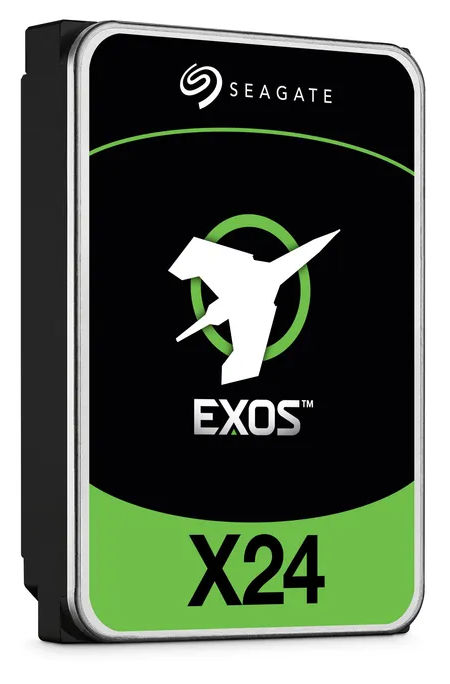 Luckily Seagate has a proprietary extension "Seagate FARM (Field Access Reliability Metrics)" implemented in their disks that ... the crooks did not reset.
Luckily ... because other manufacturers do not have that extension. And you think the crooks only re-sell used Seagate disks? Lol.
The get access to the Seagate FARM extension, you need
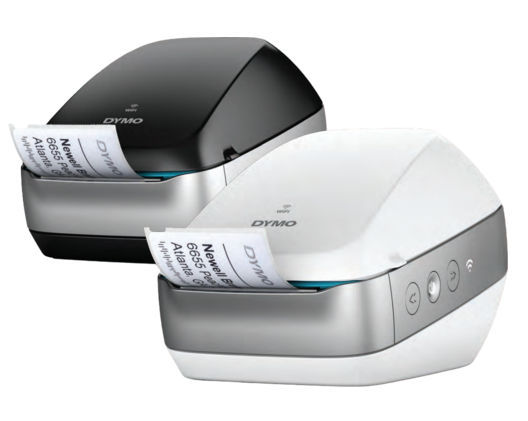 This year I have had a new look at the situation as we still use the LabelWriter Wireless printers a lot and the company runs fully on Linux. So it is always a chore to run a Windows VM just to run DYMO Connect.

 A new maintenance release of
 With all the recent buzz about
 The following contributors got their Debian Developer accounts in the last two
months:

 Becoming a
 I keep saying I'm "done" with my

 I watch a lot of films. Since completing the
 This release chiefly adds support for visual diff plots. As we extend
 Happy 20th birthday,

