Search Results: "ag"

2 January 2015

Jeff Licquia: Happy 2015!

[en] Look, it s 2015. How d that happen? Blogging has been pretty much nonexistent this year, apart from a public service announcement about the Heartbleed bug and a public statement about boring encryption stuff. (Which, if you re actually interested in that sort of thing: I did finally get the requisite number of signatures and replaced my key in Debian just in time to avoid the Great Key Purge of 2014.) It s a new world. Social media has made blogs obsolete, supposedly, except that they re now too busy competing with each other (and, sometimes, their own fans) to be terribly useful. I ve tried to write a blog post about that a few times, only to delete it out of frustration and long-windedness. So there s a resolution for 2015: get past these social media issues and get back to regular communication. Maybe what I need is a good social media rant. I m sure you re all waiting on pins and needles for that one. Lots has been going on. I m an empty-nester now; the youngest kid started college this fall. I ve been busy at work and busy at skill freshening, including getting on this funky Haskell bandwagon that seems to be all the rage among the cool kids. And plenty of other things going on, some of which probably deserve their own blog posts. Maybe those will get written in 2015. Plan: write. Journey of a thousand miles starting with single steps, and all that.

Steve McIntyre: UEFI Debian installer work for Jessie, part 3

Time for another update on my work for UEFI improvements in Jessie! I've got an i386-only UEFI netinst up and running right now, which will boot and install on the Asus X205TA machine I have. I've got the required i2c modules included in this build so that the installer can use the keyboard and trackpad on the machine - useful...! See #772578 for more details about that. Visit http://cdimage.debian.org/cdimage/unofficial/efi-development/jessie-upload1/ to download and test the image. There are a few other missing pieces of hardware support for this machine yet, but the basics are there. See the wiki for more information. My initial i386 test CD is not yet going to do an amd64 installation for you, but it should let you get going with Debian on these machines! I'm going to continue working on that 32-64 support next. WARNING: this CD is provided for testing only. Use at your own risk! If you try this on an early Intel-based Mac, it will not work. Otherwise, this should likely work for most folks using 32-bit x86 hardware just like any other Debian Jessie daily netinst build. If you have appropriate (U)EFI hardware, please try this image and let me know how you get on, via the debian-cd and debian-boot mailing lists.

John Goerzen: Sound players: Adventures with Ampache, mpd, pulseaudio, Raspberry Pi, and Logitech Media Server

I finally decided it was about time to get my whole-house sound project off the ground. As an added bonus, I d like to be able to stream music from my house to my Android phone. Some Background It was about 2.5 years ago that I last revisited the music-listening picture on Linux. I used Spotify for awhile, but the buggy nature of its support for local music eventually drove me up the wall. I have a large collection of music that will never be on Spotify (local choirs, for instance) and this was an important feature. When Google Play Music added the feature of uploading your local collection, I used that; it let me stream music from my phone in my car (using the Bluetooh link to the car). I could also listen at home on a PC, or plug my phone into various devices to play. But that was a hassle, and didn t let me have music throughout the house. Google Play is reasonable for that, but it has a number of really glaring issues. One is that it often gets album artwork wrong; it doesn t use the ID3 tags embedded in the files, but rather tries to guess . Another is that the sync is only add . Move files to another place in your collection, or re-rip them to FLAC and replace your old MP3s, and suddenly they re in Google Play twice. It won t ever see updated metadata, either quite a hassle for someone that uses Musicbrainz and carefully curates metadata. My Hardware I already have an oldish PC set up as a entertainment box running MythTV. It is a diskless system (boots PAE over the network and has NFS root) and very quiet. It has video output to my TV, and audio output via S/PDIF to my receiver. It is one logical audio frontend. My workstation in my office is another obvious place. My kitchen has a radio with a line in jack, and I also have a small portable speaker with a line in jack to make the last two options. I also have a Raspberry Pi model B that I bought awhile ago and was looking for a purpose, so I thought this should be cheap and easy, right? Well. Cheap, yes. Easy, not so much. First attempt: Ampache The Ampache project produces quite a nice piece of software. Ampache has matured significantly in the last 2.5 years, and the usability of its web-interface with HTML5 and Flash players as options is quite impressive. It is easily as usable as Google s, though its learning curve is rather more steep. There are multiple Android apps for Ampache to stream remotely. And, while most are terribly buggy and broken, there is at least one that seems to work well. Ampache can also output m3u/pls files for a standalone player. It does on-the-fly transcoding. There are some chinks in the armor, however. The set of codecs that are transcoded or passed through is a global setting, not a per-device setting. The bitrates are per-account, so you can t easily have it transcode FLAC into 320Kbps mp3 for streaming on your LAN and 128Kbps MP3 for streaming to your phone. (There are some hacks involving IP address ranges and multiple accounts, but they are poorly documented and cumbersome.) Ampache also has a feature called localplay in which it drives local players instead of remote ones. I tried to use this in combination with mpd to drive music to the whole house. Ampache s mpd interface is a bit odd; it actually loads things up into mpd s queue. Sadly it shares the same global configs as the rest. Even though mpd is perfectly capable of handling FLAC audio, the Ampache web player isn t, so you have to either make it transcode mp3 for everything or forego the web player (or use a second account that has transcode everything set). Frustratingly, not one of the Android clients for Ampache is even remotely compatible with Localplay, and some will fail in surprising ways if you have been using Localplay on the web client. So let s see how this mpd thing worked out. Ampache with mpd for whole-house audio The primary method here is to use mpd s pulseaudio driver. I configured it like so:
audio_output
type "pulse"
name "MPD stream"
#server "remote_server" # optional
sink "rtp" # optional
mixer_type "software"

Then in /etc/pulse/system.pa:
load-module module-null-sink sink_name=rtp format=s16be channels=2 rate=44100 sink_properties="device.description='RTP Multicast Sink'"
load-module module-rtp-send source=rtp.monitor
This tells Pulse to use multicast streaming to the LAN for the audio packets. Pulse is supposed to have latency synchronization to achieve perfect audio everywhere. In practice, this works somewhat poorly. Plus I have to install pulse everywhere, which inserts its tentacles way too deeply into the ALSA stack for my taste. (alsamixer suddenly turns useless by default, for instance.) But I gave it a try. After much fiddling Pulse is rather poorly documented and the interactions of configuration tools with it even more so I found a working configuration. On my MythTV box, I added:
load-module module-rtp-recv
load-module module-native-protocol-tcp auth-ip-acl=127.0.0.1;x.x.x.x
The real annoyance was getting it to set the output through the S/PDIF digital port. Finally I figured out the magic potion:
set-card-profile 0 output:iec958-stereo+input:analog-stereo
This worked reasonably well. The Raspberry Pi was a much bigger challenge, however. I put Raspbian on it easily enough, and installed Pulse. But apparently it is well-known in the Pulse community that Pulse s RTP does not work well with wifi. Multicast itself works poorly with wifi in general, and Pulse won t do unicast RTP. However, Pulse assumes very low latency and just won t work well with wifi at all. Morever, pulseaudio on the rpi is something of a difficult beast to tame. It has crackling audio, etc. I eventually got it working decently with: daemon.conf:
realtime-scheduling = yes
realtime-priority = 5
resample-method = src-sinc-fastest
default-sample-rate = 44100
default-fragments = 4
default-fragment-size-msec=20
and in system.pa, commented out the module-udev-detect and module-detect, and added:
load-module module-alsa-card device_id=0 tsched=0 fragments=10 fragment_size=640 tsched_buffer_size=4194384 tsched_buffer_watermark=262144
plus the rtp-recv and tcp protocol lines as before. This got it working with decent quality, but it was always out of sync by at least a few tenths of a second, if not a whole second, with the other rooms. Brief diversion: mplayer Many players besides pulseaudio can play the RTP streams that pulseaudio generates. mplayer, for instance, can. I found this worked on the Raspberry Pi:
mplayer -really-quiet -cache 64 -cache-min 95 -demuxer rawaudio -rawaudio format=0x20776172 rtp://224.0.0.56:46510
But this produced even worse sync. It became clear that Ampache was not going to be the right solution. Logitech Media Server I have looked at this a few times over the years, but I ve somehow skipped it. But I looked at it again now. It is an open source (GPL) server, and was originally designed to work with Logitech hardware. There are now all sorts of software clients out there. There is a helpful wiki about it, although Logitech has rebranded the thing so many times, it s not even consistent internally on what the heck it s called (is it LMS? or Squeezebox Server? or Slimserver? The answer is: yes.) LMS does no web-based streaming. At all. But I thought I d give it a try. Installation is a little weird (its .deb packages up binary perl modules for things that are already in Debian, for half a dozen architectures and many Perl versions.) I had some odd issues but eventually it worked. It scanned my media collection. I installed squeezelite on my workstation as my first player, and things worked reasonably well out of the box. I proceeded to install squeezelite on the Raspberry Pi and MythTV server (where I had to compile libsoxr for wheezy, due to an obscure error I couldn t find the cause of until I used strace). Log in to the LMS web interface, tell it to enable synchronization, and bam! Perfect synchronization! Incredible. But I ran into two issues: one was that it used a lot of CPU even on my workstation (50% or more, even when idle). Strangely, it used far less CPU on the pi than did pulseaudio. Secondly, I d get annoying clicks from it from time to time. Some debugging and investigation revealed that they were both somewhat related; it was getting out of sync with the pi and correcting. Initially I assumed this to be an issue with the pi, but tracked it down to something else. I told it to upsample to 48kHz and this made the problem go away. My command on PC hardware is:
squeezelite -a 200:10 -o dmix -u hLX -z
And on the Raspberry Pi:
squeezelite -a 800:10:16:0 -n kitchen -z
It is working perfectly now. LMS even has an Android remote control app that can control all devices together, queue up playlists, etc. Very slick. The Raspberry Pi The Raspberry Pi, even the model B+, apparently has notoriously bad audio output. I noticed this first as very low volume on the output. I found a $11 USB DAC on Amazon that seems to do the trick, so we will see. I am also using the $10 Edimax USB Wifi and it seems to work well. Other Options The big-name other option here is Sonos. They have perfect sync audio already working. But they re pricy, closed, and proprietary; you have to buy Sonos speakers, transmitters, etc. for the entire house. Their receivers start at $200, and it s at least $350 to integrate an existing stereo into the system. I d be shelling out over $1000 to use Sonos for this setup. As it is, I ve bought less than $100 of equipment (a second Pi and its accessories) and getting output that, while no doubt not quite as pristine, it still quite nice and acceptable. Quite nice. Update: LMS with Apache It turns out that Logitech Media Server can automatically save created playlists to a spot where Ampache can find them. So an Ampache streaming player can be used to access the same collection LMS uses, with full features. Nice!

1 January 2015

Russ Allbery: 2014 Book Reading in Review

This year, after a series of catastrophically horrible and unethical management decisions, I walked away from my job of seventeen years and found a new job. As you might expect, reading wasn't the top priority for much of the year. I'm moderately surprised that I read as much as I did. The good side is that I'm now in a much better place both professionally and personally and no longer have to put up with draining and demoralizing nonsense happening on a regular basis. The downside for my review output is that the new job is more engrossing and is, in some ways, harder work, so I expect my reading totals going forward to stabilize somewhere below where they were in the past (although it's possible that the daily commute will change that equation somewhat). As mentioned last year, I had a feeling that something like this would happen (although not that it would be anywhere near this bad), so I had no specific reading goals for the year. Next year, I'm going to see how it goes for the first few months, and might then consider setting some goals if I want to encourage myself to take more time for reading. The below statistics are confined to the books I reviewed in 2014. I read three more books that I've not yet reviewed, partly because the end of the year isn't as packed with vacation as it was at Stanford. Those will be counted in 2014. Despite the low reading totals for the year, I read two 10 out of 10 books. My favorite book of the year was Ann Leckie's Ancillary Justice, which was one of the best science fiction novels I've ever read. Highly recommended if you like the space opera genre at all. A close second was my favorite non-fiction book of the year and the other 10 out of 10: Allie Brosh's collection Hyperbole and a Half. Those of you who have read her blog already know her brilliant and insightful style of humor. Those who haven't are in for a treat. I read a lot of non-fiction this year and not as much fiction, partly for mood reasons, so I don't have honorable mentions in the fiction department. In the non-fiction department, though, there are four more books worth mentioning. Cryptography Engineering, by Niels Ferguson, Bruce Schneier, and Tadayoshi Kohno, was the best technical book that I read last year, and a must-read for anyone who works on security or crypto software. David Graeber's Debt was the best political and economic book of the year and the book from which I learned the most. It changed the way that you think about debt and loans significantly. A close second, though, was David Roodman's Due Diligence, which is a must-read for anyone who has considered investing in microfinance or is curious about the phenomenon. We need more data-driven, thoughtful, book-length analysis like this in the world. Finally, The Knowledge, by Lewis Dartnell, is an entertaining and quixotic project. The stated goal of the book is to document the information required to rebuild civilization after a catastrophe, with hopefully fewer false starts and difficult research than was required the first time. I'm dubious about its usefulness for that goal, but it's a fascinating and entertaining book in its own right, full of detail about industrial processes and the history of manufacturing and construction that are otherwise hard to come by without extensive (and boring) research. Recommended, even if you're dubious about the efficacy of the project. The full analysis includes some additional personal reading statistics, probably only of interest to me.

Tim Retout: Looking back at 2014

I have a tendency to forget what I've been up to - so I made a list for 2014. I started the year having recently watched many 30c3 videos online - these were fantastic, and I really should get round to the ones from 31c3. January is traditionally the peak time for the recruitment industry, so at work we were kept busy dealing with all the traffic. We'd recently switched the main job search to use Solr rather than MySQL, which helped - but we did spend a lot of time during the early months of the year converting tables from MyISAM to InnoDB. At the start of February was FOSDEM, and Kate and I took Sophie (then aged 10 months) to her first software conference. I grabbed a spot in the Go devroom for the Sunday afternoon, which was awesome. Downside: we got horribly ill while in Brussels. At work I was sorting out configuration management - this led to some Perl module backporting for Debian, and I uploaded Zookeeper at some point during the year as well. We currently make use of vagrant, chef and a combination of Debian packages and cpanm for Perl modules, but I have big plans to improve on that this year. Over a break from work I hacked up apt-transport-tor, which lets you install Debian packages over the Tor network. (This was inspired by videos from 30c3 and/or LibrePlanet, I think?) Continuing the general theme of paranoia, I attended the Don't Spy On Us campaign's day of action in June. Over the summer at work I was experimenting with Statsd and Graphite for monitoring. I also wrote Toggle, a Perl module for feature flags. In July I attended a London.pm meeting for the first time, and heard Thomas Klausner talk about OX - this nudged me into various talks at LPW (see below). Pubs have a lot to answer for. At some point I got an IPv6 tunnel working at home (although my ISP-provided router's wireless doesn't forward it), and I had an XBMC install going on a Raspberry Pi as another fun hack. In August and September I worked on packaging pump.io for Debian, and attended IndieWebCamp Brighton, where I delivered a talk/workshop on setting up TLS. (This all ties in to the paranoia theme.) I stalled the work on pump.io, partly because of licensing issues at build-dependency time (if you want to run all the tests) - but I expect I'll pick this up in 2015 once jessie is released. November was the London Perl Workshop, where I presented my work from the summer on statsd/graphite and Toggle, and a Bread::Board lightning talk. LPW was more enjoyable for me this year than previous years, probably because of the interesting people discussing various aspects of how feature flags ought to work. Simultaneously was the Cambridge MiniDebConf (why do these always clash?) where I think I fixed at least one RC bug. This is not an exhaustive list of everything I've done this year - there are more changes now lined up for 2015 which I haven't shared yet. But looking back, I'm pleased that the many small experiments I get up to do add up to something over time, and I can see that I'm achieving something. Here's to another year!

Dirk Eddelbuettel: (Belated) 2014 Running Recap

Having just blogged about today's 5k, I noticed that I did not blog at all about running in 2014. There wasn't much, but another Ragnar Relay in February, again as an Ultra team. I more-or-less live tweeted this though: Pre-race warning (and that was my route!), Team photo at start, Leg 1, Leg 2, Leg 3, Leg 4, Leg 5, Leg 6, and Chilling I also ran the Philly Half-Marathon in November following up on the Penn R Workshop, and posted some tweets: Post race selfie, Strava result (thinking it was a 13.5 miler race--WTF), and Post-race chill.

This post by Dirk Eddelbuettel originated on his Thinking inside the box blog. Please report excessive re-aggregation in third-party for-profit settings.

Dirk Eddelbuettel: New Year's Run 2015

Nice, crisp and pretty cold morning for the 2015 New Year's 5k. I had run this before with friends: 2003, 2005, 2006 and 2007. Needless to say, I am a little slower now: A hand-stopped 23:13 for a 7:27 min/mile pace is fine by me given the weather, lack of speedwork in the last few months, and generally reduced running---but also almost a minute slower than the last time I ran this. In case you're a fellow running geek and into this, Strava has my result nicely aggregated.

This post by Dirk Eddelbuettel originated on his Thinking inside the box blog. Please report excessive re-aggregation in third-party for-profit settings.

Simon Kainz: Pigs-in-a-mud-pond Cake

In lack of some New-Years-Charms, this is our attempt at creating something by ourselves: Step 1 Make some pigs (Pigs being a symbol of luck!) 1 2 (Closeup, probably NSFW :-) ) Step 2 Make some pie. We made a simple, two layeres chocolate pie, topped with some jam to prevent that is all gets very dry. We then made the pond "walls" by sticking KitKat on the side of the pie. We used molten chocolate as "glue". 3 Step 3 Add some more chocolate and add the pigs! 4 5 (Piggy relaxing in liquid chocolate! :-) Step 4 Enjoy! Happy 2015!

Lars Wirzenius: The shape of a solution

Each software tool exists to solve some problem. For each problem, there are many possible solutions. Even when different programs basically do the same thing, they can have quite different shapes. As an example, this morning I was wondering if it would be possible for me to use notmuch to index my entire mail archive. For that, I needed to convert a number of mbox folders to Maildir format. That's a resonably easy problem, given access to suitable programming libraries, but there's an existing tool for that, called mb2md. Unfortunately, it has the wrong shape for my needs. mb2md doesn't just convert one mbox to one maildir. It's designed to for a mail admin converting all server-side mbox folders for a user into a corresponding structure of Maildir folders. This seems to be necessary when switching IMAP servers. That's a fairly specialised problem, and the program has been written to make it easy for a mail admin to do that. What I need is part of the problem solved by mb2md and indeed it can do just that part. However, the overall shape of mb2md is such that my part is hard to do. The incantation is quite unintuitive and requires careful reading of the documentation. The shape of a solution matters. mb2md could easily have been written in a way that provides a simple tool for the single folder conversion, and then a more complex tool for the mail admin's more complicated problem. This would have resulted in a much more general tool, and that would make it easier for more people to use it without much effort. Mail folder format conversions are a fairly esoteric thing to do. However, the lack of generality is a frequent issue with how programs are designed. It is easy to fall into the trap of writing a highly specialised tool, instead of taking a step back and making a more general purpose tool. The specialised tool will help a small number of people. The general tool will help many people. Examples of this are fairly common. Debian has a set of tools for making Debian live CDs; they are not quite able to make a bootable hard disk image as well (thus, vmdebootstrap). There's programs for computing cyclomatic complexity, which produce HTML reports, rather than something that can be processed by other programs without too much effort. There's tools for managing address books that are limited to specific cultures, e.g., by hardcoding assumptions of what a person's name looks like (thus, clab). One of my favourite examples is xargs, which by default does the wrong thing by assuming its input is whitespace delimited. Any whitespace, not just newlines. Any sensible use requires adding the -0 option, which makes xargs that much more tedious to use. Furthermore, I've often found that the more general tool is simpler. It's functional specification is simpler; it's implementation is simpler, and has fewer special cases; it's user experience is simpler. That's not always true, but often it is. Sometimes the general solution shape is not worth it. But it's always worth considering whether it might be. One of the parts of the Unix culture I really like is the preference for general tools that are easy to combine together.

Thorsten Alteholz: My Debian Activities in December 2014

FTP assistant This month at the end of the year has been rather quiet as well. The holiday season is not suited for lots of REJECTs, so all in all I marked 91 packages for accept and rejected only 14 packages. But be aware, the period of grace is over now. Squeeze LTS This was my sixth month that I did some work for the Squeeze LTS initiative, started by Raphael Hertzog at Freexian. This month I got assigned a workload of 20.5h and I spent these hours to upload new versions of: This month I also sponsored the upload of [DLA 126-1] ettercap security update. As far as I know, this has been the first time that someone who is not (yet?) involved in Debian as a Debian Maintainer or Debian Developer prepared a patch for Squeeze LTS. So many thanks to Nguyen Cong for doing the work. Thanks to Toshiba as well, who allowed him to work on this package. I am sure there is more to come. As December is the time of gifts, I also uploaded [DLA 104-1] pdns-recursor security update although no LTS sponsor indicated any interest. Other packages Unfortunately the Debian Med Advent Calendar wasn t as successful as the years before. Only five bugs in packages python-mne, avifile , biomaj-watcher, trimmomatic and uc-echo have been closed. Things can only get better

Russ Allbery: Review: Three Parts Dead

Review: Three Parts Dead, by Max Gladstone
Series: Craft #1
Publisher: Tor
Copyright: October 2012
ISBN: 1-4668-0203-0
Format: Kindle
Pages: 336
Tara Abernathy was a student in the Hidden Schools, learning Craft, until she was expelled. Literally expelled: thrown from the floating schools to crash painfully to earth in the Badlands, left to return to her family and village and a life of small workings of Craft and contracts on behalf of local farmers. She had largely resigned herself to that life until raiders started killing people. Tara is not the sort of person who could stand by and watch that, or someone to refrain from using Craft to fix the world. The result was undead guardians for the town, perhaps unwisely formed from the town's risen dead, and only a job offer saves Tara from the ungrateful attention of her neighbors. That's how Tara finds herself employed by the firm of Kelethras, Albrecht, and Ao, in the person of partner Elayne Kevarian. Provisionally, depending on her performance on their job: the investigation of the death of a god. It's possible to call Three Parts Dead urban fantasy if you squint at it the right way. It is fantasy that takes place largely in cities, it features the investigation of a crime (and, before long, several crimes), and Tara's attitude is reminscent of an urban fantasy heroine. But this is considerably different from the normal fare of supernatural creatures. In this world, magic, called Craft, is an occupation that requires a great deal of precision and careful construction. Small workings are described similar to magic, although with an emphasis on metaphor. Larger workings more often come in the form of energy flows, contracts, and careful hedging, and the large Craft firms bear more resemblence to mergers and acquisitions specialists than to schools of wizards. This means that the murder investigation of the god of Alt Coulumb involves a compelling mix of danger, magic, highly unusual library investigations, forensic accounting, hidden Craft machinery, unexpected political alliances, and an inhuman police force. Rather than the typical urban fantasy approach of being beaten up until the resolution of the mystery becomes obvious, Tara and her companions do quite a lot of footwork and uncover a more complex political situation than they were expecting. And, in keeping with this take on magic, the story culminates in a courtroom drama (of a sort). I really enjoyed this. It combines the stylistic elements of urban fantasy that I like with some complex and original world-building and a great take on magical contracts. I prefer worlds like this one, where any source of power people have lived with for a long time is surrounded by the controls, formal analysis, and politics that humans create around anything of value. Tara is also a great protagonist. This is a coming of age story in a sense, and Tara is sometimes unsure of her abilities, but it's refreshingly devoid of worry or angst over new-found abilities. Tara enjoys her work, and approaches it with a well-written mix of uncertainty, impulsiveness, and self-confidence (sometimes warranted, sometimes not). I've read some good stories where the protagonist gets dragged into the story against their will, and some of them are quite good, but it's refreshing to read a book about someone who takes to the story like a duck to water. This is a believable protrayal of a character with a lot of native ability and intelligence, not much wisdom (yet), but a lot of thoughtful enthusiasm. I was disappointed to learn that she isn't the protagonist of the next book in the series. The biggest flaw I found in this book is that Gladstone doesn't stick reliably to his world conception. At times, Craft collapses into something more like typical fantasy magical battles, instead of legal procedure and contract made concrete. I suppose this makes parts of the book more exciting, but I would have preferred a plot resolution that involved less combat and more argument. This isn't helped by the utterly hissable villain. There's a lot of complexity in understanding what happened and who was going to benefit (and how), but there is absolutely no doubt who the enemy is, and he's essentially without redeeming qualities. I would have preferred more nuance, given how satisfyingly complex the rest of the world-building is. Three Parts Dead also occasionally suffers from the typical first novel problem of being a bit overstuffed. The world-building comes fast and thick, and nearly everything Tara does involves introducing new concepts. But the world does have a coherent history, and quite a lot of it. It used to be a more typical fantasy world ruled by gods, each with their own territory and worshippers (and Alt Coulumb is a throwback to this era), but an epic war between gods and Craft is in Tara's past, leading to the defeat or destruction of many of the gods. She lives in a time of uneasy truce between human and inhuman powers, featuring some very complex political and economic alliances. There's a lot of material here for an ongoing series. This is a great first novel. It's not without its flaws, but I enjoyed it from beginning to end, and will definitely keep reading the series. Recommended. Followed by Two Serpents Rise. Rating: 8 out of 10

31 December 2014

Riku Voipio: Crowdfunding better GCompris graphics

GCompris is the most established open source kids educational game. Here we practice use of mouse with an Efika smartbook. In this subgame, mouse is moved around to uncover a image behind.

While GCompris is nice, it needs nice graphics badly. Now the GCompris authors are running a indiegogo crowfund exactly for that - to get new unified graphics.

Why should you fund? Apart from the "I want to be nice for any oss project", I see a couple of reasons specific for this crowdfund.

First, to show kids that apps can be changed! Instead of just using existing iPad apps as a consumer, Gcompris allows you to show kids how games are built and modified. With the new graphics, more kids will play longer, and eventually some will ask if something can be changed/added..

Second, GCompris has recently become QT/QML based, making it more portable than before. Wouldn't you like to see it in your Jolla tablet or a future Ubuntu phone? The crowfund doesn't promise to make new ports, but if you are eager to show your friends nice looking apps on your platform, this probably one of the easiest ways to help them happen.

Finally, as a nice way to say happy new year 2015 :)

Chris Lamb: 2014: Selected highlights

Previously: 2012 & 2013.


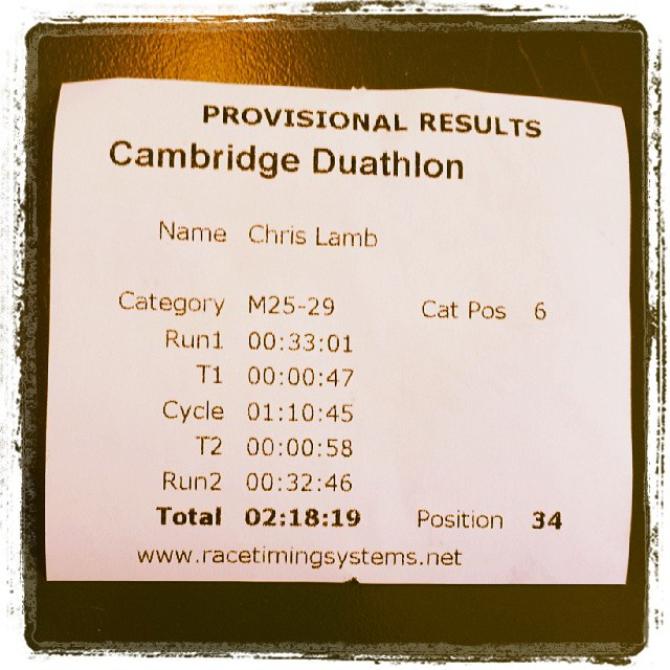
January https://d1icoid1cnixnp.cloudfront.net/yadt/blog.Image/image/cropped/15.jpeg Was lent a 15-course baroque lute. February https://d1icoid1cnixnp.cloudfront.net/yadt/blog.Image/image/cropped/19.jpeg Grandpa's funeral. In December he was posthumously awarded the Ushakov Medal (pictured) for his service in the Royal Navy's Arctic Convoys during the Second World War. March https://d1icoid1cnixnp.cloudfront.net/yadt/blog.Image/image/cropped/14.jpeg A lot of triathlon training but also got back into cooking. April https://d1icoid1cnixnp.cloudfront.net/yadt/blog.Image/image/cropped/2.jpeg Returned to the Cambridge Duathlon. May https://d1icoid1cnixnp.cloudfront.net/yadt/blog.Image/image/cropped/13.jpeg Raced 50 and 100 mile cycling time trials & visited the Stratford Olympic pool (pictured). June https://d1icoid1cnixnp.cloudfront.net/yadt/blog.Image/image/cropped/1.jpeg Ironman Austria. July https://d1icoid1cnixnp.cloudfront.net/yadt/blog.Image/image/cropped/9.jpeg Paced my sister at the Downtow-Upflow Half-marathon. Also released the first version of the Strava Enhancement Suite. August https://d1icoid1cnixnp.cloudfront.net/yadt/blog.Image/image/cropped/3.jpeg Visited Cornwall for my cousin's wedding (pictured). Another month for sport including my first ultramarathon and my first sub-20 minute 5k. September https://d1icoid1cnixnp.cloudfront.net/yadt/blog.Image/image/cropped/11.jpeg Entered a London Oxford London cycling brevet, my longest single-ride to date (269 km). Also visited the Tour of Britain and the Sri Chomnoy 24-hour endurance race. October https://d1icoid1cnixnp.cloudfront.net/yadt/blog.Image/image/cropped/10.jpeg London Paris London cycling tour (588 km). November https://d1icoid1cnixnp.cloudfront.net/yadt/blog.Image/image/cropped/5.jpeg Performed Handel's Messiah in Kettering. December https://d1icoid1cnixnp.cloudfront.net/yadt/blog.Image/image/cropped/18.jpeg Left Thread.com.

Wouter Verhelst: Perl 'issues'

I just watched a CCC talk in which the speaker claims Perl is horribly broken. Watching it was fairly annoying however, since I had to restrain myself from throwing things at the screen. If you're going to complain about the language, better make sure you actually understand the language first. I won't deny that there are a few weird constructions in there, but hey. The talk boils down to a claim that perl is horrible, because the list "data type" is "broken". First of all, Netanel, in Perl, lists are not arrays. Yes, that's confusing if you haven't done more than a few hours of Perl, but hear me out. In Perl, a list is an enumeration of values. A variable with an '@' sigil is an array; a construct consisting of an opening bracket ('(') followed by a number of comma- or arrow-separated values (',' or '=>'), followed by a closing bracket, is a list. Whenever you assign more than one value to an array or a hash, you need to use a list to enumerate the values. Subroutines in perl also use lists as arguments or return values. Yes, that last bit may have been a mistake. Perl has a concept of "scalar context" and "list context". A scalar context is what a sub is in when you assign the return value of your sub to a scalar; a list context is when you assign the return value of your sub to an array or a hash, or when you use the list construct (the thing with brackets and commas) with sub calls (instead of hardcoded values or variables) as the individual values. This works as follows:
sub magic  
    if (wantarray())  
        print "You're asking for a list!";
        return ('a', 'b', 'c');
      else  
        print "You're asking for a scalar!";
        return 'a';
     
 
print ("list: ", magic(), "\n");
print "scalar: " . magic() . "\n";
The above example will produce the following output:
You're asking for a list!
list: abc
You're asking for a scalar!
scalar: a
What happens here? The first print line creates a list (because things are separated by commas); the second one does not (the '.' is perl's string concatenation operator; as you can only concatenate scalars, the result is that you call the magic() sub in scalar context). Yes, seen as how arrays are not lists, the name of the wantarray() sub is horribly chosen. Anyway. It is documented that lists cannot be nested. Lists can only be one-dimensional constructs. If you create a list, and add another list as an element (or something that can be converted to a list, like an array or a hash), then the result is that you get a flattened list. If you don't want a flattened list, you need to use a reference instead. A reference is a scalar value that, very much like a pointer in C, contains a reference to another variable. This other variable can be an array, a hash, or a scalar. But it cannot be a list, because it must be a variable -- and lists cannot be variables. If you need to create multi-dimensional constructs, you need to use references. Taking a reference is done by prepending a backslash to whatever it is you're trying to take a reference of; or, in the case of arrays of hashes, one can create an anonymous array or hash with [] resp . E.g., if you want to add a non-flattened array to a list, you instead create a reference to an array, like so:
$arrayref = [ 'this', 'is', 'an', 'anonymous', 'array'];
you can now create a multi-dimensional construct:
@multiarray = ('elem1', $arrayref);
Or you can do that in one go:
@multiarray = ('elem1', [ 'this', 'is', 'an', 'anonymous', 'array']);
Alternatively, you can create a non-anonymous array first:
@onedimarray = ('this', 'is', 'not', 'an', 'anonymous', 'array');
@multiarray = ('elem1', \@onedimarray);
In perl, curly brackets can be used to create a reference to anonymous hashes, whereas square brackets can be used to create a reference to anonymous arrays. This is all a basic part of the language; if you don't understand that, you simply don't understand Perl. In other words, whenever you see someone doing this:
%hash =  'a' => 'b' ;
or
@array = [ '1', '2' ];
you can say that they don't understand the language. For reference, the assignment to %hash will result in an (unusable) hash with a single key that is a reference to an anonymous hash (which cannot be accessed anymore) and a value of undef; the assignment to @array will result in a two-dimensional array with one element in the first dimension, and two elements in the second. The CGI.pm fix which Natanel dismisses in the Q&A part of the talk as a "warning" which won't help (because it would be too late) is actually a proper fix, which should warn people in all cases. That is, if you do this:
%hash =   'name' => $name, 'password' => $cgi->param('password')  ;
then CGI.pm's param() sub will notice that it's being called in list context, and issue a warning -- regardless of whether the user is passing one or two password query-parameters. It uses the wantarray() sub, and produces a warning if that returns true. In short, Perl is not the horribly broken construct that Natanel claims it to be. Yes, there are a few surprises (most of which exist for historical reasons), and yes, those should be fixed. This is why the Perl community has redone much of perl for Perl 6. But the fact that there are a few surprises doesn't mean the whole language is broken. There are surprises in most languages; that is a fact of life. Yes, the difference between arrays and hashes on the one hand, and lists on the other hand, is fairly confusing; it took me a while to understand this. But once you get the hang of it, it's not all that difficult. And then these two issues that Natanel found (which I suppose could be described as bugs in the core modules) aren't all that surprising anymore. So, in short: What I do agree with is that if you want to use a language, you should understand its features. Unfortunately, this single line in the final slide of Natanel's talk is just about the only thing in the whole talk that sortof made sense to me. Ah well.

Dirk Eddelbuettel: digest 0.6.8

Release 0.6.8 of digest package is now on CRAN and will get to Debian shortly. This release opens the door to also providing the digest functionality at the C level to other R packages. Wush Wu is going to use the murmurHash C implementation in his recently-created FeatureHashing package. We plan to export the other hashing function as well. Another small change attempts to overcome a build limitation on that other largely-irrelevant-but-still-check-by-CRAN OS. CRANberries provides the usual summary of changes to the previous version.

This post by Dirk Eddelbuettel originated on his Thinking inside the box blog. Please report excessive re-aggregation in third-party for-profit settings.

Michal Čihař: No Windows builds for Gammu and Wammu

For quite some time I used to produce Windows builds for both Wammu and Gammu using cross compiling on Linux. But this has proven to produce some errors and needed my time to maintain the cross compilation environment. I've decided to stop producing Windows binaries and I don't expect to get back to that anytime soon. This is actually no news for Wammu, where I've removed Windows builds some about two years ago as they proven to be too broken for normal usage, but for Gammu it's new as previous release had Windows builds. I've lost the cross compilation environment due to hard drive failure and restoring it is simply too much of work and still will not allow me to build complete release (I've not managed to build Python modules properly). So if anybody is interested in Windows binaries, he needs to produce them on Windows. I can help with fixing code or existing setup scripts (they probably need adjustments as they were tweaked for cross compiling), but somebody has to setup the environment with all dependencies and test the build on Windows.

Filed under: English Gammu Wammu 0 comments Flattr this!

30 December 2014

Petter Reinholdtsen: Updated version of the Norwegian web service FiksGataMi

I am very happy that we in the Norwegian Unix User group (NUUG), spearheaded by Marius Halden from NUUG and Matthew Somerville from mySociety, finally managed to upgrade the code base for the Norwegian version of FixMyStreet. This was the first major update since 2011. The refurbished FiksGataMi is already live, and seem to hold up the pressure. The press release and announcement went out this morning. FixMyStreet is a web platform for allowing the citizens to easily report problems with public infrastructure to the responsible authorities. Think of it as a shared mail client with map support, allowing everyone to see what already was reported and comment on the reports in public.

Niels Thykier: Status on Jessie (December 2014)

Here is a slightly overdue status on Jessie. Stricter freeze policy per January 5th The next timed change of the freeze policy will apply per January 5th. After that date, we will only accept RC bugs fixes. Which means it is final chance for translation updates. More on RC bugs In absolute numbers, the RC bugs have declined quite well. We are below 150 now. We lost quite a bit of traction in December compared to November. However, November was an extremely efficient month. However, we still need the final push here. Debian installer release pending Yesterday, we received a list of packages that needed to be unblocked for d-i with a remark that a release of d-i might follow. Based on what we have unblocked previously, it will likely contain some (improved?) UEFI support. Pending Debian 7.8 release While not directly relevant to Jessie, we also got a pending Wheezy release planned for the 10th of January. The window for getting changes into the 7.8 release closes this weekend. Want to help? Thank you, [RN source]: https://anonscm.debian.org/viewvc/ddp/manuals/trunk/release-notes/ svn co https://anonscm.debian.org/viewvc/ddp/manuals/trunk/release-notes/ Git Repo: http://anonscm.debian.org/cgit/users/jcristau/release-notes.git/
Filed under: Debian, Release-Team

Michael Prokop: Installing Debian in UEFI mode with some stunts

For a recent customer setup of Debian/wheezy on a IBM x3630 M4 server we used my blog entry State of the art Debian/wheezy deployments with GRUB and LVM/SW-RAID/Crypto as a base. But this time we wanted to use (U)EFI instead of BIOS legacy boot. As usual we went for installing via Grml and grml-debootstrap. We started by dd-ing the Grml ISO to a USB stick ( dd grml64-full_2014.11.iso of=/dev/sdX bs=1M ). The IBM server couldn t boot from it though, as far as we could identify it seems to be related to a problem with the IBM server not being able to properly recognize USB sticks that are registering themselves as mass storage device instead of removable storage devices (you can check your device via the /sys/devices/ /removable setting). So we enabled Legacy Boot and USB Storage in the boot manager of the server to be able to boot Grml in BIOS/legacy mode from this specific USB stick. To install the GRUB boot loader in (U)EFI mode you need to be able to execute modprobe efivars . But our system was booted via BIOS/legacy and in that mode the modprobe efivars doesnt work. We could have used a different USB device for booting Grml in UEFI mode but because we are lazy sysadmins and wanted to save time we went for a different route instead: First of all we write the Grml 64bit ISO (which is (U)EFI capable out-of-the-box, also when dd-ing it) to the local RAID disk (being /dev/sdb in this example):
root@grml ~ # dd if=grml64-full_2014.11.iso of=/dev/sdb bs=1M
Now we should be able to boot in (U)EFI mode from the local RAID disk. To verify this before actually physically rebooting the system (and possibly getting into trouble) we can use qemu with OVMF:
root@grml ~ # apt-get update
root@grml ~ # apt-get install ovmf
root@grml ~ # qemu-system-x86_64 -bios /usr/share/qemu/OVMF.fd -hda /dev/sdb
The Grml boot splash comes up as expected, perfect. Now we actually reboot the live system and boot the ISO from the local disks in (U)EFI mode. Then we put the running Grml live system into RAM to not use and block the local disks any longer since we want to install Debian there. This can be achieved not just by the toram boot option, but also by executing grml2ram on-demand as needed from user space:
root@grml ~ # grml2ram
Now having the local disks available we verify that we re running in (U)EFI mode by executing:
root@grml ~ # modprobe efivars
root@grml ~ # echo $?
0
Great, so we can install the system in (U)EFI mode now. Starting with the according partitioning (/dev/sda being the local RAID disk here):
root@grml ~ # parted /dev/sda
GNU Parted 3.2
Using /dev/sda
Welcome to GNU Parted! Type 'help' to view a list of commands.
(parted) mklabel gpt
(parted) mkpart primary fat16 2048s 4095s
(parted) name 1 "EFI System"
(parted) mkpart primary 4096s 100%
(parted) name 2 "Linux LVM"
(parted) print
Model: IBM ServeRAID M5110 (scsi)
Disk /dev/sda: 9000GB
Sector size (logical/physical): 512B/4096B
Partition Table: gpt
Disk Flags:
  Number  Start   End     Size    File system  Name        Flags
   1      1049kB  2097kB  1049kB  fat16        EFI System
   2      2097kB  9000GB  9000GB               Linux LVM
(parted) quit
Information: You may need to update /etc/fstab.
Then setting up LVM with a logical volume for the root fs and installing Debian via grml-debootstrap on it:
root@grml ~ # pvcreate /dev/sda2
  Physical volume "/dev/sda2" successfully created
root@grml ~ # vgcreate vg0 /dev/sda2
  Volume group "vg0" successfully created
root@grml ~ # lvcreate -n rootfs -L16G vg0
  Logical volume "rootfs" created
root@grml ~ # grml-debootstrap --target /dev/mapper/vg0-rootfs --password secret --hostname foobar --release wheezy
[...]
Now finally set up the (U)EFI partition and properly install GRUB in (U)EFI mode:
root@grml ~ # mkfs.fat -F 16 /dev/sda1
mkfs.fat 3.0.26 (2014-03-07)
WARNING: Not enough clusters for a 16 bit FAT! The filesystem will be
misinterpreted as having a 12 bit FAT without mount option "fat=16".
root@grml ~ # mount /dev/mapper/vg0-rootfs /mnt
root@grml ~ # grml-chroot /mnt /bin/bash
Writing /etc/debian_chroot ...
(foobar)root@grml:/# mkdir -p /boot/efi
(foobar)root@grml:/# mount /dev/sda1 /boot/efi
(foobar)root@grml:/# apt-get install grub-efi-amd64
[...]
(foobar)root@grml:/# grub-install /dev/sda
Timeout: 10 seconds
BootOrder: 0003,0000,0001,0002,0004,0005
Boot0000* CD/DVD Rom
Boot0001* Hard Disk 0
Boot0002* PXE Network
Boot0004* USB Storage
Boot0005* Legacy Only
Boot0003* debian
Installation finished. No error reported.
(foobar)root@grml:/# ls /boot/efi/EFI/debian/
grubx64.efi
(foobar)root@grml:/# update-grub
[...]
(foobar)root@grml:/# exit
root@grml ~ # umount /mnt/boot/efi
root@grml ~ # umount /mnt/
root@grml ~ # vgchange -an
  0 logical volume(s) in volume group "vg0" now active
That s it. Now rebooting the system should bring you to your Debian installation running in (U)EFI mode. You can verify this before actually rebooting into the system by using the qemu/OVMF trick from above once again.

Next.

Previous.