Search Results: "will"

29 January 2011

Russell Coker: Egypt

Gunnar Wolf has written an interesting post about the current situation in Egypt, which includes references to Israel (where he lived for a few years) and Mexico (where he has spent most of his life) [1].Gunnar included a copy of Mohammed Sameer s blog post on the topic [2], which is a good idea as we can t rely on Mohammed s post remaining online.The Reid Report has an interesting summary of various news sources [3].I hope that the end result of this is a democratically elected government that respects human rights and offers fair trials to people accused of crimes and humane punishments those found guilty. It would be ideal if the transition could happen in a way that involves little violence and no interruptions to the food supply etc.Update: Chris Samuel provided some information on free PPP access in other countries for people in Egypt [4]. This will probably be of short-term use as the Egypten regime will probably cut International phone access too.Update2: Lars has written some interesting comments including links to articles about the US government wanting the power to cut off Internet access in the same way as the Egyptian government [5].

28 January 2011

John Goerzen: Slices of 2010

A lot of people look back on their year in December. I think it doesn t make sense to look back on a year until it s done. And then take a little time to let it simmer. That s my excuse for not doing this until almost February, anyhow. 2010 started with a 3-day ordeal of taking out the trash, nearly snapping the hood off my pickup while closing it, and Greek poetry. I then dived right into reading the Odyssey, and my post suggesting we read the Old Testament of the Bible like we read Greek mythology generated almost 100 comments. I guess I said something controversial I also read a number of other books last year. Our family had quite the year. In March, Terah and I got to visit Europe for the first time. A few months later, we visited New York City for the first time and I attended Debconf10. Jacob predictably loved our train trip to NYC, calling our room in the sleeper the best place of ever. Terah had thyroid surgery, and Jacob survived a tractor accident with amazingly minor injuries. But as I look back at my posts from last year, I m struck that most of them were about more everyday, ordinary events of life. Jacob loved the switchbox he and I built, Oliver somtimes acts like Yoda, and they both loved camping. I have made probably way too many posts with photos of them last year, but I m making no promises to slow down this year! Jacob and I built a computer together, and he loves bashing random words at the Linux shell. He also developed an interest in some half-broken FRS radios, and had tons of fun with them. Eventually this kindled in interest in amatuer radio in me. At the end of 2009, I finally completed my computer science degree and mused about what I might do next. I m a curious, inquisitive person that enjoys both challenge and knowledge. I thought that perhaps I would dive into reading more, or perhaps take some more college classes. Turns out I instead picked up amateur radio one of the big unexpected twists of the year. Jacob really did kindle that interest in me, and by July I had passed my technician and general exams and was on the air. I continued to study, and passed my extra class exam in October. Since then, I ve rigged up my bicycle for amateur radio operation, made some fun contacts, set up outdoor antennas, and got going with digital operation. It has been a lot of fun, and will keep providing opportunities for a challenge for me for a very long time. Also on the technical side, I made my archive of Gopherspace available for download. It s hard to cut off the list I have dozens of other things I could mention but I suppose I should end it with the Christmas gathering / piano moving episode.

Richard Darst: DebConf communication channels and decisions

This post is designed to describe communications channels and decision processes of DebConf. This is mostly designed to help new team members integrate into the team better and be able to contribute substantially. This only describes internal communication channels, not between DebConf and attendees.I should emphasize that this is the ideal process. Since time is so limited, things get rushed. You shouldn't worry about the steps above slowing you down, they are mostly what you'd do anyway if you are working transparently. Furthermore, once something has been delegated to you, just try to be public in your discussions and document what you will do. This is supposed to be a guide to help you take initiative, not slow you down.
#debconf-team (on OFTC) is the primary IRC channel. Most people idle here. Discussion and decisions often happen here, but saying things only in IRC isn't enough. IRC is ephemeral, so important information and decisions should be on the website, wiki, or mailing lists. IRC is good for getting advice from past members and keeping people up to date, and real-time communication among teams. Groups actively talking among each other usually use this channel. Not everyone can be expected to watch IRC all the time.The mailing lists, in particular debconf-team@ are for permanent records of meetings, and for getting feedback from all team members. For a decision to have weight, there should be a chance given for this list to provide feedback.The wiki is the place for permanent and organized documentation. Ideally, the wiki is a place for team members and others to go to find out just what we are doing. (Official information for attendees goes on the website, not the wiki.)Decisions in DebConf are hopefully made by delegation or rough consensus, but often time gets short and things have got to get done. Tradition and historical precedent play a big part: not everything can be re-designed every year. What follows below is a rough best-practice for a decision process, but I'm not saying that everything always is or has to be like this. Things get faster once you get more familiar with people.People first should read historical documents or chat with people and learn how things have worked in the past. People should know what you are working on, either through IRC or a mail to debconf-team@. This will get you feedback early and perhaps some additional advice and help.The group discusses and decides on some sort of proposal or course of action. This could be by IRC, lists, or whatever they need. It should be some public forum so that other people can watch and give feedback.The group's proposal is sent to list for feedback. Hopefully, they would have a preliminary write-up on the wiki so others can add to it there. Perhaps there is more than one proposal and they can be given side by side. Sending a proposal isn't just so that people can object: even if everyone thinks it looks good, it is important that there is some record of the process. You can get other opinions on the proposal here, and if it seems there is rough consensus, then you could consider it decided - just let someone know that you are implementing it.If it's not clear that there is agreement on the proposal, you should bring it up in a IRC meeting. Add it to an agenda, and we can discuss it. Discussing it at a meeting has the advantage that most people are there, so we can make sure that the idea isn't lost due to indecision. We want meetings to be efficient, so try to have at least a description on the lists first.Finally, things should be documented on the wiki or website. This is important to maintain transparency, and since this will be the first place people look for reference in future years.

Michal Čihař: phpMyAdmin improvements

As my Gammu Hackweek 6 project went smoothly, I've decided to spend some time today on phpMyAdmin as well. My work was mostly inspired by (IMHO unfair) comparing of Adminer and phpMyAdmin. I could surely create similar comparing where would be dozens of things why is phpMyAdmin better, but I don't want to go that way and I rather decided to spend my time on coding. First and easy task was bit which is in comparing described as "Status variables", where I've added documentation links, so phpMyAdmin now has both short executive summary and link to the official documentation. While looking at server status page, I've categorized some newly added variables, so they now appear in right place. I also reconsidered formatting of numbers and hopefully current solution will work for everybody and not produce contradicting bug reports like the old one. Then I did focus a little bit on testing AJAX and fixed some minor issues, mostly affecting Chrome/Chromium browsers, because they are strict in case of some errors. Last but not least I've added URL redirector inside phpMyAdmin, so no external links will now reveal what did user actually was doing in phpMyAdmin, but rather the url of the redirector. And when speaking about phpMyAdmin, I need to mention one thing as well: contribute yourself! You don't have to be developer, there is currently ongoing themes contest and we're always looking for translators.

Filed under: English Phpmyadmin Suse 0 comments Flattr this!

Lars Wirzenius: Egypt blocks all communication: thoughts

The government of Egypt has blocked almost all Internet and mobile phone access, and, probably, every other form of communication as well. The government wants to prevent its citizens from protesting and demanding the president to resign. I wish the people of Egypt well. When the blocks are taken down, I hope the people report that the country is peaceful and that they have finally gotten some freedom. The government of Egypt claims to be democratic, but what they are doing should not be possible in a democracy. The fundamental aspect of a democracy is that every citizen should have the right to vote, but it is not the only necessary right for a democracy. Making your concerns heard to the government, and to other people, is also a fundamental right. As is hearing what other people have to say. Riots and violence are not acceptable ways to protest. Cutting everyone off is not going to prevent that, however, and it greatly harms any chance of peaceful resolution. But that's hard to see, when you're effectively a dictator, sitting at the top of a high tower, looking down at the common people. If the government is actively, and violently, hostile towards its people, the people have three choices: they can submit and accept the situation and continue suffering; they can oppose peacefully; or they can oppose violently. It requires great wisdom to oppose peacefully, and quite a lot of patience. It's easy, from my northern European point of view, to look at Egypt from afar, and think lofty thoughts. We here in the cold are not safe from such oppression, however. Evil people in the US have already tried to give the US president similar powers months ago. They're trying again. It is only a matter of time until this will be proposed in the EU, too, if it hasn't been already. In a crisis, people need timely access to reliable information, otherwise the crisis gets made worse by rumors and people making bad decisions based on bad data. Switching off communications is never the right solution, from the people's point of view. Those in power obviously think differently. See also: Information on how to bypass some of the blocks in Egypt.

Amaya Rodrigo: Indignez Vous!

If There is any sort of food for thought worth reading, this is it.
INDIGNEZ-VOUS! GET ANGRY! CRY OUT by St phane Hessel


St phane Hessel, author of Indignez-vous!
After 93 years, it is almost the final act. The end for me is not very far off any more. But it still leaves me a chance to be able to remind others of what acted as the basis of my political engagement. It was the years of resistance to the Nazi occupation -- and the program of social rights worked out 66 years ago by the National Council of the Resistance!

It is to Jean Moulin [murdered founder of the Council] that we owe, as part of this Council, the uniting of all elements of occupied France -- the movements, the parties, the labor unions -- to proclaim their membership in Fighting France, and we owe this to the only leader that it acknowledged, General de Gaulle. From London, where I had joined de Gaulle in March 1941, I learned that this Council had completed a program and adopted it on March 15th, 1944, that offered for liberated France a group of principles and values on which would rest the modern democracy of our country.

These principles and these values, we need today more than ever. It is up to us to see to it, all together, that our society becomes a society of which we are proud, not this society of immigrants without papers -- expulsions, suspicion regarding the immigrants. Not this society where they call into question social security and national retirement and health plans. Not this society where mass media are in the hands of the rich. These are things that we would have refused to give in to if we had been the true heirs of the National Council of the Resistance.


From 1945, after a dreadful drama [WWII], it was an ambitious
resurrection of society to which the remaining contingent of the Council
of the Resistance devoted itself. Let us remember them while creating
national health and pensions plans such as the Resistance wished, as its
program stipulated, "a full plan of French national health and social
security, aimed at assuring all citizens the means of existence whenever
they are unable to obtain them by a job; a retirement allowing the old
workers to finish their days with dignity."

The sources of energy, electricity, and gas, mines, the big banks, were
nationalized. Now this was as the program recommended: "... the return
to the nation of big monopolized means of production, fruits of common
labor, sources of energy, wealth from the mines, from insurance
companies and from big banks; the institution of a true economic and
social democracy involving the ousting of the big economic and financial
fiefdoms from the direction of the economy."

General interest must dominate over special interest. The just man
believes that wealth created in the realm of labor should dominate over
the power of money.

The Resistance proposed, "a rational organization of the economy
assuring the subordination of special interests to general interest, and
the emancipation of 'slaves' of the professional dictatorship that was
instituted just as in the fascist states," which had used the interim
[for two years after the war] government of the Republic as an agent.

A true democracy needs an independent press, and the Resistance
acknowledged it, demanded it, by defending "the freedom of the press,
its honor, and its independence from the State, the power of money and
foreign influence." This is what relieved restrictions on the press from
1944 on. And press freedom is definitely what is in danger today.

The Resistance called for a "real possibility for all French children to
benefit from the most advanced education," without discrimination.
Reforms offered in 2008 go contrary to this plan. Young teachers, whose
actions I support, went so far as refusing to apply them, and they saw
their salaries cut by way of punishment. They were indignant,
"disobeyed," judging these reforms too far from the ideal of the
democratic school, too much in the service of a society of commerce and
not developing the inventive and critical mind enough. 2

All the foundations of the social conquests of the Resistance are
threatened today.

The motive of the Resistance: indignation (Indignez-vous!)

Some dare to say to us that the State cannot afford the expenses of
these measures for citizens any more. But how can there be today a lack
of money to support and extend these conquests while the production of
wealth has been considerably augmented since the Liberation period when
Europe was in ruins? On the contrary, the problem is the power of money,
so much opposed by the Resistance, and of the big, boldfaced, selfish
man, with his own servants in the highest spheres of the State.

Banks, since privatized again, have proved to be concerned foremost for
their dividends and for the very high salaries of their leaders, not the
general interest. The disparity between the poorest and the richest has
never been so great, and amassing money, competition, so encouraged.

The basic motive of the Resistance was indignation!

We, the veterans of the resistance movements and combat forces of Free
France, we call on the young generation to live by, to transmit, the
legacy of the Resistance and its ideals. We say to them: Take our place,
"Indignez-vous!" [Get angry! or Cry out!].

The political, economic, intellectual leaders, and the whole society do
not have to give in, nor allow oppression by an actual international
dictatorship of the financial markets, which threatens peace and
democracy.

I wish for you all, each of you, to have your own motive for
indignation. It is precious. When something outrages you as I was
outraged by Nazism, then people become militant, strong, and engaged.
They join this current of history, and the great current of history must
continue thanks to each individual. And this current goes towards more
justice, more freedom, but not this unbridled freedom of the fox in the
henhouse. The rights contained in the UN Universal Declaration of Human
Rights of 1948 are just that, universal.

If you meet somebody who does not benefit from it, feel sorry for them
but help them to win their rights.

Two visions of history

When I try to understand what caused fascism, what made it so we were
overcome by Hitler and the Vichy [French government that collaborated
with Hitler], I tell myself that the propertied, with their selfishness,
were terrifically afraid of Bolshevik revolution. They were allowed to
lead with their fear.

But if, today as then, an active minority stands up, it will be enough;
we shall be the leavening that makes the bread rise. Certainly, the
experience of a very old person like me, born in 1917, is different from
the experience of the today's young persons. I often ask professors for
the opportunity to interact with their students, and I say to them: You
don't have the same obvious reasons to engage you. For us, to resist was
not to accept German occupation, defeat. It was comparatively simple.
Simple as what followed, decolonization. Then the war in Algeria.

It was necessary that Algeria become independent, it was obvious. As for
Stalin, we all applauded the victory of the Red Army against the Nazis
in 1943. But already we had known about the big Stalinist trials of
1935, and even if it was necessary to keep an ear open towards communism
to compensate against American capitalism, the necessity to oppose this
unbearable form of totalitarianism had established itself as an
obviousness. My long life presented a succession of reasons to outrage
me.

These reasons were born less from an emotion than a deliberate
commitment. As a young student at normal school [teachers college] I was
very influenced by Sartre, a fellow student. His "Nausea" [a novel],
"The Wall," [play], and "The Being and Nothingness" [essay] were very
important in the training of my thought. Sartre taught us, "You are
responsible as individuals." It was a libertarian message. The
responsibility of a person can not be assigned by a power or an
authority. On the contrary, it is necessary to get involved in the name
of one's responsibility as a human being.

When I entered the French Ecole Normale Superieure, Ulm Street, in Paris
in 1939, I entered it as a fervent adherent of the philosopher Hegel,
and I adhered to the thought of Maurice Merleau-Ponty. His teaching
explored concrete experience, that of the body and of its relations with
the senses, one big singular sense faced with a plurality of senses. But
my natural optimism, which wants all that is desirable to be possible,
carried me rather towards Hegel. Hegelism interprets the long history of
humanity as having a meaning: It is the freedom of man progressing step
by step. History is made of successive shocks, and the taking into
account of challenges. The history of societies thus advances; and in
the end, man having attained his full freedom, we have the democratic
state in its ideal form.

There is certainly another understanding of history. It says progress is
made by "freedom" of competition, striving for "always more"; it can be
as if living in a devastating hurricane. That's what it represented to a
friend of my father, the man who shared with him an effort to translate
into German "The Search for Time Lost" [novel] by Marcel Proust.

That was the German philosopher Walter Benjamin. He had drawn a
pessimistic view from a painting by the Swiss painter Paul Klee,
"Angelus Novus," where the face of the angel opens arms as if to contain
and push back a tempest, which he identifies with progress. For
Benjamin, who would commit suicide in September 1940 to escape Nazism,
the sense of history is the overpowering progression of disaster upon
disaster.

Indifference: the worst of attitudes

It is true the reasons to be indignant can seem today less clearly
related or the world too complex. Who's doing the ordering, who decides?
It is not always easy to differentiate between all the currents that
govern us. We are not any more dealing with a small elite whose joint
activities can be clearly seen. It is a vast world, of which we have a
feeling of interdependence.

We live in an interconnectivity as never before. But in this world there
still are intolerable things. To see them, it is well and necessary to
look, to search. I say to the young people, Search little, and that is
what you are going to find. The worst of attitudes is indifference, to
say "I can do nothing there, I'll just manage to get by." By including
yourself in that, you lose one of the essential elements that makes the
human being: the faculty of indignation and the commitment that is a
consequence of it.

They [young people] can already identify two big new challenges:

1. The huge gap which exists between the very poor and the very rich and
that does not cease increasing. It is an innovation of the 20th and 21st
centuries. The very poor in the today's world earn barely two dollars a
day. The new generation cannot let this gap become even greater. The
official reports alone should provoke a commitment.

2. Human rights and state of the planet: I had the chance after the
Liberation to join in the writing of the Universal Declaration of Human
Rights, adopted by the United Nations organization, on December 10th,
1948, in Paris at the palace of Chaillot. It was as principal private
secretary of Henry Laugier, the adjunct general-secretary of the UN, and
as and secretary of the Commission on Human Rights that I with others
was led to participate in the writing of this statement. I wouldn't know
how to forget the role in its elaboration of Ren Cassin, who was
national commissioner of justice and education in the government of Free
France in London in 1941 and won the Nobel peace prize in 1968, nor that
of Pierre Mend s-France in the Economic and Social Council, to whom the
text drafts we worked out were submitted before being considered by the
Third Committee (Social, Humanitarian and Cultural) of the General
Assembly. It was ratified by the 54 member states in session of the
United Nations, and I certified it as secretary.

It is to Ren Cassin that we owe the term "universal rights" instead of
"international rights" as offered by our American and British friends.
This [universal versus international] was key because, at the end of the
Second World War, what was at stake was to becomeereignty," which a
nation can emphasize while it devotes itself to crimes against humanity
on its own soil. Such was the case of Hitler, who felt himself supreme
and authorized to carry out a genocide. This universal statement owed
much to universal revulsion towards Nazism, fascism, and totalitarianism
-- and owes a lot, in our minds, to the spirit of the Resistance.

I had a feeling that it was necessary to move quickly so as not to be
dupes of the hypocrisy that there was in the UN membership, some whom
claimed these values already won but had no intention at all to promote
them faithfully -- claimed that we were trying to impose values on them.

I can not resist the desire to quote Article 15 of the Universal
Declaration of Human Rights (1948): "Everyone has the right to a
nationality." Article 22 says, "Everyone, as a member of society, has
the right to social security and is entitled to realization, through
national effort and international cooperation and in accordance with the
organization and resources of each State, of the economic, social and
cultural rights indispensable for his dignity and the free development
of his personality." And if this statement has a declarative scope, and
not statutory, the Declaration nevertheless has played a powerful role
since 1948. It saw colonized people take it up in their fight for
independence; it sowed minds in a battle for freedom.

I note with pleasure that in the course of last decades there has been
an increase in nongovernmental organizations (NGOs) and social movements
such as ATTAC (Association for the Taxation of Financial Transactions);

also FIDH (International Federation for Human Rights) and Amnesty
International, which are active and competitive. It is obvious that to
be effective today it is necessary to act in a network, to use all
modern means of communication.

To the young people, I say: Look around you, you will find topics that
justify your indignation facts about treatment of immigrants, of
"illegal" immigrants, of the Roma [aka Gypsies]. You will find concrete
situations that lead you to strong citizen action. Search and you shall
find!

My indignation regarding Palestine outrages by Israel [Indignez-vous!]

Today, my main indignation concerns Palestine, the Gaza Strip, and the
West Bank of Jordan. This conflict is outrageous. It is absolutely
essential to read the report by Richard Goldstone, of September 2009, on
Gaza, in which this South African, Jewish judge, who claims even to be a
Zionist, accuses the Israeli army of having committed "acts comparable
to war crimes and perhaps, in certain circumstances, crimes against
humanity" during its "Operation Cast Lead," which lasted three weeks.

I went back to Gaza in 2009 myself, when I was able to enter with my
wife thanks to our diplomatic passports, to study first-hand what this
report said. People who accompanied us were not authorized to enter the
Gaza Strip. There and in the West Bank of Jordan. We also visited the
Palestinian refugee camps set up from 1948 by the United Nations agency
UNRWA, where more than three million Palestinians expelled off their
lands by Israel wait even yet for a more and more problematical return.

As for Gaza, it is a roofless prison for one and a half million
Palestinians. A prison where people get organized just to survive.
Despite material destruction such as that of the Red Crescent hospital
by Operation Cast Lead, it is the behavior of the Gazans, their
patriotism, their love of the sea and beaches, their constant
preoccupation for the welfare of their children, who are innumerable and
cheerful, that haunt our memory. We were impressed by how ingeniously
they face up to all the scarcities that are imposed on them. We saw them
making bricks, for lack of cement, to rebuild the thousands of houses
destroyed by tanks. They confirmed to us that there had been 1400 deaths
including women, children, and oldsters in the Palestinian camp
during this Operation Cast Lead led by the Israeli army, compared to
only 50 injured men on the Israeli side. I share conclusions of the
South African judge. That Jews can, themselves, perpetrate war crimes is
unbearable. Alas, history does not give enough examples of people who
draw lessons from their own history. [The author, St phane Hessel, had
a Jewish father.]

Terrorism, or exasperation?

I know that Hamas [party of Palestine freedom fighters], which had won
the last legislative elections, could not help it that rockets were
launched on Israeli cities in response to the situation of isolation and
blockade in which Gazans exist. I think, naturally, that terrorism is
unacceptable; but it is necessary to acknowledge (from experience in
France) that when people are occupied by forces immensely superior to
their own, popular reaction cannot be altogether bloodless.

Does it serve Hamas to send rockets onto the town of Sd rot [Israeli
town across the border from Gaza]?

The answer is no. This does not serve their purpose, but they can
explain this gesture by the exasperation of Gazans. In the notion of
exasperation, it is necessary to understand violence as the regrettable
conclusion of situations not acceptable to those who are subjected them.

Thus, they can tell themselves, terrorism is a form of exasperation. And
that this "terrorism" is a misnomer. One should not have to resort to
this exasperation, but it is necessary to have hope. Exasperation is a
denial of hope. It is comprehensible, I would say almost natural, but it
still is not acceptable. Because it does not allow one to acquire
results that hope can possibly, eventually produce.

Nonviolence: the way we must learn to follow

I am persuaded that the future belongs to nonviolence, to reconciliation
of different cultures. It is by this way that humanity will have to
enter its next stage. But on this I agree with Sartre: We cannot excuse
the terrorists who throw bombs, but we can understand them. Sartre wrote
in 1947: "I recognize that violence in whatever form it may manifest
itself is a setback. But it is an inevitable setback because we are in a
world of violence. And if it is true that recourse to violence risks
perpetuating it, it is also true it is the sure means to make it stop."

To that I would add that nonviolence is a surer means of making violence
stop. One can not condone the terrorism, using Sartre or in the name of
this principle, during the war of Algeria, nor during the Munich Games
of 1972 the murder attempt made against Israeli athletes. Terrorism is
not productive, and Sartre himself would end up wondering at the end of
his life about the sense of violence and doubt its reason for being.

However, to proclaim "violence is not effective" is more important than
to know whether one must condemn or not those who devote themselves to
it. Terrorism is not effective. In the notion of effectiveness, a
bloodless hope is needed. If there is a violent hope, it is in the poem
of William Apollinaire "that hope is violent," and not in policy.

Sartre, in March 1980, within three weeks of his death, declared: "It is
necessary to try to explain why the world of today, which is horrible,
is only an instant in a long historical development, that hope always
has been one of the dominant forces in revolutions and insurrections,
and how I still feel hope as my conception of the future." [Note 5]

It is necessary to understand that violence turns its back on hope. It
is necessary to prefer to it hope, hope over violence. Nonviolence is
the way that we must learn to follow. So must the oppressors.
10

It is necessary to arrive at negotiations to remove oppression; it is
what will allow you to have no more terrorist violence. That's why you
should not let too much hate pile up.

The message of Mandela and Martin Luther King finds all its pertinence
in the world that overcame the confrontation of ideologies [e.g.,
Nazism] and conquered totalitarianism [e.g.,Hitler]. It is also a
message of hope in the capacity of modern societies to overcome
conflicts by a mutual understanding and a vigilant patience. To reach
that point is necessarily based on rights, against es, such as the
military intervention in Iraq.

We had this economic crisis, but we still did not initiate a new policy
of development. Also, the summit of Copenhagen against climatic warming
did not bring about a true policy for the preservation of the planet.

We are on a threshold between the terror of the first decade and the
possibilities of following decades. But it is necessary to hope, it is
always necessary to hope. The previous decade, that of 1990s, had been a
time of great progress. The United Nations had enough wisdom to call
conferences such as those of Rio on environment, in 1992, and that of
Beijing on women, in 1995. In September 2000, on the initiative of the
general secretary of United Nations, Kofi Annan, the 191 member
countries adopted a statement on the "eight objectives of the millennium
for development," by which they notably promised to reduce poverty in
the world by half before 2015.

My big regret is that neither Obama nor the European Union has yet
committed themselves to what should be the provision for a useful forum
bearing on the fundamental values.

Conclusion

How to conclude this call to be indignant? By saying still what, on the
occasion of the sixtieth anniversary of the program of the National
Council of the Resistance, we said on March 8th, 2004 -- we veterans of
the resistance movements and combat forces of Free France (1940-1945) --
that certainly "Nazism was conquered, thanks to the sacrifice of our
brothers and sisters of the Resistance and United Nations against
fascist barbarism. But this threat did not completely disappear, and our
anger against injustice is ever intact." [Note 6] Also, let us always be
called in "a truly peaceful insurrection against means of mass
communication that offer as a vista for our youth only the consumption
of mass trivia, contempt of the weakest and the culture, a generalized
amnesia, and the hard competition of all against all."

To those who will make the 21st century, we say with our affection:

TO CREATE IS TO RESIST; TO RESIST IS TO CREATE.

Michal Čihař: Gammu supports Symbian (and going for Android)

Hackweek 6 is over and my project is done - Gammu can now talk to Symbian phones. All the work is based on Series60 - remote applet. The changes on Gammu side were not just to implement new protocol, but also some more general improvements it enforced. I think the diffstat summary tells how much was changed:
166 files changed, 23126 insertions(+), 15738 deletions(-)
All code is is available in our Git repository and check documentation for information how to set it up. There will be testing release incorporating these changes next week to give broader audience chance to test it. So now Gammu has long requested support for Symbian and we need other challenge. That seems to be Android right now and there are already two approaches which might help there. One of them is porting Series60 applet to Android, what is planned by Series60-remote author. There is also other promising way, where I can not share much details right now, but I can give you a little teaser:
$ gammu identify
Device               : 192.168.1.4 5210
Manufacturer         : HTC
Model                : unknown (HTC Nexus One)
Firmware             : FRG**
IMEI                 : **************8
SIM IMSI             : **************7
Yes, getting basic information already works for the developer working on it :-).

Filed under: English Gammu Suse 0 comments Flattr this!

Raphaël Hertzog: 3 ways to not clutter your Debian source package with autogenerated files

It s quite common that the upstream build system generates/updates some files but does not clean them up properly when you call make clean. In that case, when you rebuild the package a second time in the same tree, the generated Debian source package will contain those changes. You usually don t want those changes. They make your package harder to review because they contain unneeded modifications (either directly in the .diff.gz with the old source format, or in a new patch in debian/patches/debian-changes-<ver> with the 3.0 (quilt) source format). I ll show you 3 ways to avoid this problem. They are all workarounds, the proper fix would be to improve the upstream build system to really clean up the generated files. This is usually possible for files that are created , but it s much more cumbersome for files that are updated (you would have to keep a backup of the original file so that you can restore it). The traditional fix Instead of relying on the upstream build system to do the work, we modify the clean target in debian/rules to remove the files that are left-over. Since debian/rules clean is always called before a source package is built, those generated files are not included as changes compared to what upstream provided. A common work-around: always build from a clean state As you have noted, the problem only happens when you build (source and binaries) twice in a row in the same tree. Some VCS-helper tools always build the Debian package in a temporary tree which is exported from the VCS. This is the case of svn-buildpackage by default and of git-buildpackage if you use its --git-export-dir option. I don t like this solution because it solves the problem only for the maintainer. Anyone else who is working on top of the package without using the same VCS-helper tool would be affected by the problem. A new way to avoid the problem Since it s now possible to store dpkg-source options in the source package itself, we can conveniently have everybody use the --extend-diff-ignore option. It tells dpkg-source to ignore some files when checking whether we have made changes to upstream files. For example if you want to ignore changes made on the files config.sub , config.guess and Makefile you could put this in debian/source/options:
# Don't store changes on autogenerated files
extend-diff-ignore = "(^ /)(config\.sub config\.guess Makefile)$"
You need to know a bit about Perl regular expressions since that s what is used by dpkg-source to match the filenames to exclude. Note that this approach always works, even when you can t remove the file. So it saves you having to make a backup of the unmodified file just to be able to restore it before the next build.
Found it useful? Be sure to not miss other packaging tips (or lessons), click here to subscribe to my free newsletter and get new articles by email.

No comment Liked this article? Click here. My blog is Flattr-enabled.

Wouter Verhelst: Good news and bad news

... in the world of Belgian Tennis. I learned yesterday that Justine Henin, ex-number 1 tennis player and still one of the great talents amongst women's tennis, is forced to stop her come-back attempt due to an elbow injury which she had been dealing with since the last Wimbledon. I don't want to guess what's going through her mind at this point in time, but it must be terrible. She'd been working so hard for tennis for all her life, but took a break from the sport because she realized that she needed to give her life apart from the sport a serious boost. And when she'd done that and realized that she still loves tennis and wants to do a come-back, this happens before she'd even been able to accomplish even one of her goals that she'd set for her come-back. Terrible. Justine, on the off chance that you read this: you have my greatest possible sympathies. The slightly better news also involves an injury; but this time it's not a Belgian player, but it involves Venus Williams. Now I'm not one to gloat at sportspeople's problems, and I do wish Venus all the best and a speedy recovery; but since her injury means she won't be able to make it for the Fed Cup tie against Belgium, slightly over a week from now, the result is that Belgium is now favourite for winning this tie. Of course, the team can't claim having won until the tie is over, but hey. Too bad I can't be there. But there's this other thing that I'm involved with, which just happens to be in the same weekend. Oh well.

Martin F. Krafft: The Phoenix Foundation in Switzerland

We ve known for a while and want to keep it no longer secret: New Zealand s famous band The Phoenix Foundation are in Europe at the moment, and will come to Switzerland on 17 and 18 February to play in Lausanne and Zurich. Penny went ecstatic when she found out and joined the street team, and we now have no excuses but to go to both shows. I am certainly looking forward. Even though I haven t really warmed up to their last two outputs (Buffalo and the Merry Kriskmass EP), their earlier stuff is heart-warming good-mood music that should put me back into chilled NZ summer mode. Choice! NP: The Phoenix Foundation: Buffalo

Gunnar Wolf: Echoing Mohammed

For those of you who follow me through anything other than Planet Debian (who will surely tolerate this repetition): Interesting but frightful things are happening in North African countries. We saw what happened in Tunisia some days ago. Now, Egypt is a way larger, way more populous... And, dare I say, way more important country. Also, it is a country which borders Israel, where I lived in for ~18 months, and to which although I am today unaffiliated is very important for me. And what happens in Egypt will surely shape the whole mid-East. So, here goes a copy of Mohammed Sameer's post Not just a link to it, as he might have to take it down. Of course, Mohammed, if you in any way think I should delete this, please please tell me, and I will comply immediately.
Egypt has been fighting for freedom already for 3 days now. The whole country has experienced a large number of street demonstrations and protests within the last 3 days to be continued also on Friday, the 28th of January and afterwards. The protests' main goal is to oust dictator Hosni Mubarak's regime, which has been in power for almost 30 years. We want him out. A massacre has happened in Suez. Police used live ammunition and tear gas. There are unconfirmed rumors that the army might interfere. Even a bigger protest is supposed to take place a few hours from now. After the Prayer on Friday. The internet has been shutdown completely. Egypt is no longer online since Friday, the 28th of January 00:45 AM. Text messages to cell phones have been cut off too and all cell phones services will be following. No one knows exactly the intentions of the regime but it doesn't sound good. Please help us.
Please blog about it in English and in all languages.
Please spread the news everywhere.
Please talk to media.
Please petition your government if that will help. If there's anything that you can do, please do it and help us save the country and the people. More news from twitter #jan25.
...From what I read from Israeli sources, what worries them and many people around the world is that, although Egypt is formally a democratic country, the ruling party has seen towards having basically no oposition Besides the stubborn Islamic Brotherhood (very akin to Hamas). Now, the Islamic Brotherhood (as well as Hamas, and as well as most other Islamic regimes I know off, although I might be way mistaken) have got huge popular support because... They are true to their beliefs. In short, they are not corrupt Something that cannot be said about many political organizations around the globe. They are true to their word. And although many of us shiver at thinking of their word getting more power... It is only the Egyptians who should have a say on who rules Egypt. I honestly hope the Egyptian people get their long-owed self-determination. Of course, I hope Tunisians also get it, and not just a mirage of it. And every people, including us poor Mexicans who have neither had a chance to rule our destiny. And I hope it is a change for good, for tolerance, for peaceful coexistance with the neighbours, even if they are in many ways the rivals. [Update] I just found out that, as expected, the news have reached Slashdot: Egypt shuts off all Internet access. I'm sure you will find lots of more information there.

27 January 2011

Mohammed Sameer: Egypt, Internet cut off. A massacre will follow. Please help.

Egypt has been fighting for freedom already for 3 days now.

The whole country has experienced a large number of street demonstrations and protests within the last 3 days to be continued also on Friday, the 28th of January and afterwards.

The protests' main goal is to oust dictator Hosni Mubarak's regime, which has been in power for almost 30 years.

We want him out.

A massacre has happened in Suez. Police used live ammunition and tear gas. There are unconfirmed rumors that the army might interfere.

Even a bigger protest is supposed to take place a few hours from now. After the Prayer on Friday.

The internet has been shutdown completely. Egypt is no longer online since Friday, the 28th of January 00:45 AM.

Text messages to cell phones have been cut off too and all cell phones services will be following. No one knows exactly the intentions of the regime but it doesn't sound good.

Please help us.
Please blog about it in English and in all languages.
Please spread the news everywhere.
Please talk to media.
Please petition your government if that will help.

If there's anything that you can do, please do it and help us save the country and the people.

More news from twitter #jan25. read more

26 January 2011

Martin Pitt: Na zdrav PyGI!

(Update: Link to Tomeu s blog post, repost for planet.gnome.org) Last week I was in Prague to attend the GNOME/Python 2011 Hackfest for gobject-introspection, to which Tomeu Vizoso kindly invited me after I started working with PyGI some months ago. It happened at a place called brmlab which was quite the right environment for a bunch of 9 hackers: Some comfy couches and chairs, soldering irons, lots of old TV tubes, chips, and other electronics, a big Pirate flag, really good Wifi, plenty of Club Mate and Coke supplies, and not putting unnecessary effort into mundane things like wallpapers. It was really nice to get to know the upstream experts John (J5) Palmieri and Tomeu Vizoso (check out Tomeu s blog post for his summary and some really nice photos). When sitting together in a room, fully focussing on this area for a full week, it s so much easier to just ask them about something and getting things done and into upstream than on IRC or bugzilla, where you don t know each other personally. I certainly learned a lot this week (and not only how great Czech beer tastes :-) )! So what did I do? Application porting After already having ported four Ubuntu PyGTK applications to GI before (apport, jockey, aptdaemon, and language-selector),
my main goal and occupation during this week was to start porting a bigger PyGTK application. I picked system-config-printer, as it s two magnitudes bigger than the previous projects, exercises quite a lot more of the GTK GI bindings, and thus also exposes a lot more GTK annotation and pygobject bugs. This resulted in a new pygi s-c-p branch which has the first 100 rounds of test, break, fix iterations. It now at least starts, and you can do a number of things with it, but a lot of functionality is still broken. As a kind of finger exercise and also to check for how well pygi-convert works for small projects now, I also ported computer-janitor. This went really well (I had it working after about 30 minutes), and also led me to finally fixing the unicode vs. str mess for GtkTreeView that you got so far with Python 2.x. pygobject and GTK fixes Porting system-config-printer and computer-janitor uncovered a lot of opportunities to improve pygi-convert.sh, a big perl -e kind of script to do the mechanical grunt work of the porting process. It doesn t fix up changed signatures (such as adding missing arguments which were default arguments in PyGTK, or the ubiquitous user_data argument for signal handlers), but at least it gets a lot of namespaces, method, and constant names right. I also fixed three annotation fixes in GTK+. We also collaboratively reviewed and tested Pavel s annotation branch which helped to fix tons of problems, especially after Steve Fr cinaux s excellent reference leak fix, so if you play around with current pygobject git head, you really also have to use the current GTK+ git head. Speaking of which, if you want to port applications and always stay on top of the pygobject/GTK development without having to clutter your package system with make install s of those, it works very well to have this in your ~/.bashrc:
export GI_TYPELIB_PATH=$HOME/projects/gtk/gtk:$HOME/projects/gtk/gdk
export PYTHONPATH=$HOME/projects/pygobject
Better GVariant/GDBus support The GNOME world is moving from the old dbus-glib python bindings to GDBus, which is integrated into GLib. However, dbus-python exposed a really nice and convenient way of doing D-Bus calls, while using GDBus from Python was hideously complicated, especially for nontrivial arguments with empty or nested arrays:
from gi.repository import Gio, GLib
from gi._gi import variant_type_from_string
d = Gio.bus_get_sync(Gio.BusType.SESSION, None)
notify = Gio.DBusProxy.new_sync(d, 0, None, 'org.freedesktop.Notifications',
    '/org/freedesktop/Notifications', 'org.freedesktop.Notifications', None)
vb = GLib.VariantBuilder()
vb.init(variant_type_from_string('r'))
vb.add_value(GLib.Variant('s', 'test'))
vb.add_value(GLib.Variant('u', 1))
vb.add_value(GLib.Variant('s', 'gtk-ok'))
vb.add_value(GLib.Variant('s', 'Hello World!'))
vb.add_value(GLib.Variant('s', 'Subtext'))
# add an empty array
eavb = GLib.VariantBuilder()
eavb.init(variant_type_from_string('as'))
vb.add_value(eavb.end())
# add an empty dict
eavb = GLib.VariantBuilder()
eavb.init(variant_type_from_string('a sv '))
vb.add_value(eavb.end())
vb.add_value(GLib.Variant('i', 10000))
args = vb.end()
result = notify.call_sync('Notify', args, 0, -1, None)
id = result.get_child_value(0).get_uint32()
print id
So I went to making the GLib.Variant constructor work properly with nested types and boxed variants, adding Pythonic GVariant iterators and indexing (so that you can treat GVariant dictionaries/arrays/tuples just like their Python equivalents), and finally a Variant.unpack() method for converting the return value of a D-Bus call back into a native Python data type. This looks a lot friendlier now:
from gi.repository import Gio, GLib
d = Gio.bus_get_sync(Gio.BusType.SESSION, None)
notify = Gio.DBusProxy.new_sync(d, 0, None, 'org.freedesktop.Notifications',
    '/org/freedesktop/Notifications', 'org.freedesktop.Notifications', None)
args = GLib.Variant('(susssasa sv i)', ('test', 1, 'gtk-ok', 'Hello World!',
    'Subtext', [],  , 10000))
result = notify.call_sync('Notify', args, 0, -1, None)
id = result.unpack()[0]
print id
I also prepared another patch in GNOME#640181 which will provide the icing on the cake, i. e. handle the variant building/unpacking transparently and make the explicit call_sync() unnecessary:
from gi.repository import Gio, GLib
d = Gio.bus_get_sync(Gio.BusType.SESSION, None)
notify = Gio.DBusProxy.new_sync(d, 0, None, 'org.freedesktop.Notifications',
    '/org/freedesktop/Notifications', 'org.freedesktop.Notifications', None)
result = notify.Notify('(susssasa sv i)', 'test', 1, 'gtk-ok', 'Hello World!',
            'Subtext', [],  , 10000)
print result[0]
I hope that I can get this reviewed and land this soon. Thanks to our sponsors! Many thanks to the GNOME Foundation and Collabora for sponsoring this event!

Michal &#268;iha&#345;: Sending SMS on Symbian phone using Gammu

Third Hackweek 6 day went a bit differently than I planned, but there is still lot of progress. I've added some more calls to the Series60 remote protocol, so that some things now work much faster (eg. getting number of contacts, calendar entries). The applet now also has a function to toggle Bluetooth so it does not have to be done elsewhere in phone menus. On Gammu side I focused on messaging support, so now Gammu can list messages in the phone or send new message. Modification of calendar entries is left for tomorrow, hopefully I will get to it and the support will be more or less complete and I will have Friday for final cleanup. And as usual - all code is is available in our Git repository and check documentation for information how to set it up.

Filed under: English Gammu Suse 2 comments Flattr this!

Rapha&#235;l Hertzog: My Debian related goals for 2011

Like last year, here s a list of Debian related projects that I d like to tackle this year. I might not do them all, but I like to write them down, I am more productive when I have concrete objectives.
  1. Translate my Debian book into English.
    I will run a fundraising campaign with Ulule.com and if enough people are interested, I will spend a few months with Roland Mas to translate the book. Hopefully this project can be completed until the summer.
  2. Finish multiarch support in dpkg.
    I m working on this with Guillem Jover right now, thanks to Linaro who is sponsoring my work.
  3. Make deb files use XZ compression by default.
    It s a simple change in dpkg-deb and it would literally save gigabytes of space on mirrors. It s particularly important so that single CD/DVD can have a more complete set of software. #556407 (on DAK) needs to be fixed first though and a project-wide discussion is in order. Some archs might want to have a different default.
  4. Be more reactive to review/merge dpkg patches.
    While we welcome help, we have a backlog of patches sitting in the BTS and it happened several times that we failed to review/merge submitted branches in a decent time. It s very frustrating for the contributor. I already tried to improve the situation by creating the Review/Merge Queue but nobody stepped up to help review and update the patches.
    As I am getting more familiar with the C part of dpkg, I hope to be able to jump in when Guillem doesn t have the time or the interest.
  5. Implement the rolling distribution proposed as part of the CUT project and try to improve the release process.
    I really want the new rolling distribution but it will inevitably have an impact on the release process. It can t be done as a standalone project. I would also like to see progress in the way we deal with transitions (see discussion here).
  6. Work more regularly on the developers-reference.
    Hopefully I will be able to combine this with my blog writing activities, i.e. write blog articles on the topics that the developers-reference shall cover and then adapt my articles with some docbook markup.
To the above list, I shall add a few supplementary goals related to funding my Debian work:
  1. Write a 10-lesson course called Smart Package Management .
    It will delivered by email to my newsletter subscribers.
  2. Create an information product (most likely an ebook or an online training) and sell it on my blog.
    The precise topic has not yet been defined although I have a few ideas. Is there something that you would like me to teach you? Leave your suggestions in a comment.
  3. By the end of the year, have at least 1/3 of my time funded by donations and/or earnings of my information products.
    More concretely it means 700 each month or a 9-fold increase compared to the current income level (around 80 /month mostly via Flattr).
That makes up lots of challenges for this year. You can help me reach those goals, join my Debian Supporters Guild and you ll be informed every time that I start something new or when you can help in specific ways.

6 comments Liked this article? Click here. My blog is Flattr-enabled.

Francois Marier: Serving pre-compressed files using Apache

The easiest way to compress the data that is being served to the visitors of your web application is to make use of mod_deflate. Once you have enabled that module and provided it with a suitable configuration file, it will compress all releant files on the fly as it is serving them.

Given that I was already going to minify my Javascript and CSS files ahead of time (i.e. not using mod_pagespeed), I figured that there must be a way for me to serve gzipped files directly.

"Compiling" Static FilesI decided to treat my web application like a c program. After all, it starts as readable source code and ends up as an unreadable binary file.

So I created a Makefile to minify and compress all CSS and Javascript files using YUI Compressor and gzip:

all: build

build:
find static/css -type f -name "[^.]*.css" -execdir yui-compressor -o .css \;
find static/js -type f -name "[^.]*.js" -execdir yui-compressor -o .js \;
cd static/css && for f in *.css.css ; do gzip -c $$f > basename $$f .css .gz ; done
cd static/js && for f in *.js.js ; do gzip -c $$f > basename $$f .js .gz ; done

clean:
find static/css -name "*.css.css" -delete
find static/js -name "*.js.js" -delete
find static/css -name "*.css.gz" -delete
find static/js -name "*.js.gz" -delete
find -name "*.pyc" -delete

This leaves the original files intact and adds minified .css.css and .js.js files as well as minified and compressed .css.gz and .js.gz files.

How browsers advertise gzip supportThe nice thing about serving compressed content to browsers is that browsers that support receiving gzipped content (almost all of them nowadays) include the following HTTP header in their requests:
Accept-Encoding = gzip,deflate
(Incidently, if you want to test what non-gzipped enable browsers see, just browse to about:config and remove what's in the network.http.accept-encoding variable.)

Serving compressed files to clientsTo serve different files to different browsers, all that's needed is to enable Multiviews in our Apache configuration (as suggested on the Apache mailing list):

<Directory /var/www/static/css>
AddEncoding gzip gz
ForceType text/css
Options +Multiviews
SetEnv force-no-vary
Header set Cache-Control "private"
</Directory>

<Directory /var/www/static/js>
AddEncoding gzip gz
ForceType text/javascript
Options +Multiviews
SetEnv force-no-vary
Header set Cache-Control "private"
</Directory>

The ForceType directive is there to force the mimetype (as described in this solution) and to make sure that browsers (including Firefox) don't download the files to disk.

As for the SetEnv directive, it turns out that on Internet Explorer, most files with a Vary header (added by Apache) are not cached and so we must make sure it gets stripped out before the response goes out.

Finally, the Cache-Control headers are set to private to prevent intermediate/transparent proxies from caching our CSS and Javascript files, while allowing browsers to do so. If intermediate proxies start caching compressed content, they may incorrectly serve it to clients without gzip support.

25 January 2011

Paul van Tilburg: Also Giving up on Ruby Packaging

I have just sent a mail to the Debian/Ruby Extras mailing list stating that I will also give up most of my Ruby packaging efforts and reduce my involvement in the team. I am following Lucas Nussbaum in his decision. Although our reasons are slightly different, I subscribe most of what he says in his blog post. Besides that, I haven t done much Ruby programming in the past years, making me lose the motivation for the huge load of packages I am responsible for and thus subconsciously perceive that as a burden, as I feel guilty not having/making time to work on them. So, what does this mean? I will handover (co)maintainership of over 50 libraries. Many of which have dead upstream, unfortunately. Also will I be looking for someone to take over the administrative tasks of heading the team such as mailing list moderation and Alioth repository access. I will keep maintaining some programs that I still use, such as Camping, and am approachable for (mentor) uploads. Meanwhile I will continue my work on my PhD thesis, which is progressing well and should lead to my defence (hopefully) somewhere around September this year. That said, I will try to keep tinkering with Ruby and other F/OSS projects. Oh, and also to get more motivated and some inspiration

Michal &#268;iha&#345;: Gammu has calendar and screenshot support for Symbian

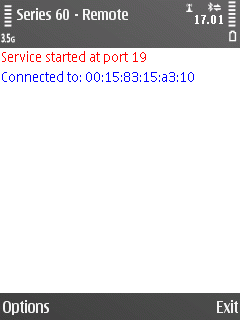
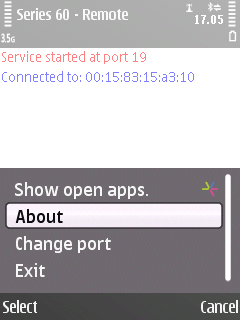
I've spent second day of Hackweek 6 on more different tasks. First I tried to add some improvements to Series60 applet. First things to fix were crashes on requesting non existing contact or calendar entry. After that I started to improve user experience a bit, for example by making the menu work and contain some useful things. After that I've added new functionality to capture screenshots of the device. So you can see how the applet actually looks like: S60 main screen S60 menu On the Gammu side, I've implemented reading of contacts and todos. No write support yet, that will be done tomorrow. And of course counterpart for the screenshot function. I've also spent some time on writing documentation, so now there is some documentation on setting up the S60 connection or the new gammu screenshot command. All code is is available in our Git repository.

Filed under: English Gammu Suse 0 comments Flattr this!

John Goerzen: rdiff-backup, ZFS, and rsync scripts

rdiff-backup vs. ZFS As I ve been writing about backups, I ve gone ahead and run some tests with rdiff-backup. I have been using rdiff-backup personally for many years now probably since 2002, when I packaged it up for Debian. It s a nice, stable system, but I always like to look at other options for things every so often. rdiff-backup stores an uncompressed current mirror of the filesystem, similar to rsync. History is achieved by the use of compressed backwards binary deltas generated by rdiff (using the rsync algorithm). So, you can restore the current copy very easily a simple cp will do if you don t need to preserve permissions. rdiff-backup restores previous copies by applying all necessary binary deltas to generate the previous version. Things I like about rdiff-backup:
  1. Bandwidth-efficient
  2. Reasonably space-efficient, especially where history is concerned
  3. Easily scriptable and nice CLI
  4. Unlike tools such as duplicity, there is no need to periodically run full backups old backups can be deleted without impacting the ability to restore more current backups
Things I don t like about it:
  1. Speed. It can be really slow. Deleting 3 months worth of old history takes hours. It has to unlink vast numbers of files and that s pretty much it, but it does it really slowly. Restores, backups, etc. are all slow as well. Even just getting a list of your increment sizes so you d know how much space would be saved can take a very long time.
  2. The current backup copy is stored without any kind of compression, which is not at all space-efficient
  3. It creates vast numbers of little files that take forever to delete or summarize
So I thought I would examine how efficient ZFS would be. I wrote a script that would replay the rdiff-backup history first it would rsync the current copy onto the ZFS filesystem and make a ZFS snapshot. Then each previous version was processed by my script (rdiff-backup s files are sufficiently standard that a shell script can process them), and a ZFS snapshot created after each. This lets me directly compare the space used by rdiff-backup to that used by ZFS using actual history. I enabled gzip-3 compression and block dedup in ZFS. My backups were nearly 1TB in size and the amount of space I had available for ZFS was roughly 600GB, so I couldn t test all of them. As it happened, I tested the ones that were the worst-case scenario for ZFS: my photos, music collection, etc. These files had very little duplication and very little compressibility. Plus a backup of my regular server that was reasonably compressible. The total size of the data backed up with rdiff-backup was 583 GB. With ZFS, this came to 498GB. My dedup ratio on this was only 1.05 (meaning 5% or 25GB saved). The compression ratio was 1.12 (60GB saved). The combined ratio was 1.17 (85GB saved). Interestingly 498 + 85 = 583. Remember that the data under test here was mostly a worst-case scenario for ZFS. It would probably have done better had I had the time to throw the rest of my dataset at it (such as the 60GB backup of my iPod, which would have mostly deduplicated with the backup of my music server). One problem with ZFS is that dedup is very memory-hungry. This is common knowledge and it is advertised that you need to use roughly 2GB of RAM per TB of disk when using dedup. I don t have quite that much to dedicate to it, so ZFS got VERY slow and thrashed the disk a lot after the ARC grew to about 300MB. I found some tweakables in zfsrc and the zfs command that let me tweak the ARC cache to grow bigger. But the machine in question only has 2GB RAM, and is doing lots of other things as well, so this barely improved anything. Note that this dedup RAM requirement is not out of line with what is expected from these sorts of solutions. Even if I got absolutely stellar dedup ratio of 2:1, that would get me at most 1TB. The cost of buying a 1TB disk is less than the cost of upgrading my system to 4GB RAM, so dedup isn t worth it here. I think the lesson is: think carefully about where dedup makes sense. If you re storing a bunch of nearly-identical virtual machine images the sort of canonical use case for this go for it. A general fileserver well, maybe you should just add more disk instead of more RAM. Then that raises the question: if I don t need dedup from ZFS, do I bother with it at all, or just use ext4 and LVM snapshots? I think ZFS still makes sense, given its built-in support for compression and very fast snapshots LVM snapshots are known to cause serious degradation to write performance once enabled, which ZFS doesn t. So I plan to switch my backups to use ZFS. A few observations on this:
  1. Some testing suggests that the time to delete a few months of old snapshots will be a minute or two with ZFS compared to hours with rdiff-backup.
  2. ZFS has shown itself to be more space-efficient than rdiff-backup, even without dedup enabled.
  3. There are clear performance and convenience wins with ZFS.
  4. Backup Scripts So now comes the question of backup scripts. rsync is obviously a pretty nice choice here and if used with inplace perhaps even will play friendly with ZFS snapshots even if dedup is off. But let s say I m backing up a few machines at home, or perhaps dozens at work. There is a need to automate all of this. Specifically, there s a need to:
    1. Provide scheduling, making sure that we don t hammer the server with 30 clients all at once
    2. Provide for run before jobs to do things like snapshot databases
    3. Be silent on success and scream loudly via emails to administrators on any kind of error and keep backing up other systems when there is an error
    4. Create snapshots and provide an automated way to remove old snapshots (or mount them for reading, as ZFS-fuse doesn t support the .zfs snapshot directory yet)
    To date I haven t found anything that looks suitable. I found a shell script system called rsbackup that does a large part of this, but something about using a script whose homepage is a forum makes me less than 100% confident. On the securing the backups front, rsync comes with a good-looking rrsync script (inexplicably installed under /usr/share/doc/rsync/scripts instead of /usr/bin on Debian) that can help secure the SSH authorization. GNU rush also looks like a useful restricted shell.

Benjamin Mako Hill: Annual Free Software Foundation Fundraiser

<script type="text/javascript"> var fsf_widget_text = "Help protect your freedom!"; var fsf_widget_d_btn = "Donate"; var fsf_widget_share = "Share this widget."; var fsf_widget_size = "normal"; var fsf_associate_id = "3427"; </script> <script src="http://gplv3.fsf.org/static/widget/widget.js" type="text/javascript"></script>
The Free Software Foundation is in the last week of its annual fundraiser and has still has a bit of ground to make up. The FSF needs members and donations to merely sustain its basic activity protecting free software and engaging in minimal outreach. So as I've done in the last couple years, I've written a fundraising appeal for the organization. That why today my face is plastered, Jimmy Wales style, all over the FSF website. (For the record, the last bit was not my idea and I find it a little embarrassing.) My appeal this year begins with my feeling that as our lives become increasingly mediated by technology, the question of who controls technology becomes another way of asking "Who controls us?" Read the appeal for more. That statement, like much of the FSF's work, is not going to get very far with most users today. Most people don't think of technology as the source of control, power, or autonomy. They don't understand why software should be free or even what that might mean. Making this argument widely is something the FSF works hard to do. But supporting this work is a bit of a chicken-egg problem. The users we most need to reach have never heard our message and it can take some time to turn even the most receptive into supporters. For those of us that do care about technology and the power it has over its users, it's hugely important that we take action to support software freedom and organizations like the FSF that play a key place in this struggle. If we don't, nobody else will. The pool of people who might support the FSF today is small -- there are currently about 3,000 members -- but the stakes are huge: A choice between a world of DRM, locked down mobile phones, and non-free network services on one hand, and the possibility of a world where there are free alternatives on the other. The FSF won't win this fight alone, but it plays a critical role in it. The FSF is a small, humble, and responsible non-profit and a little money can have a big impact. If you are not an FSF associate member, now would be a great time to join. Membership is $120 per year ($60 for students) and payable monthly. In preparing this appeal, I realized that my membership had lapsed a couple months ago and that my partner Mika was still donating at the reduced student price. We've personally fixed both these things and made an addition donation. If you are a member, you can check your status or make a donation. If you are not yet, Please consider joining us.

Next.

Previous.