
Search Results: "ag"

6 January 2015

Joey Hess: a bug in my ear

True story: Two days ago, as I was about to drift off to sleep at 2 am, a tiny little bug flew into my ear. Right down to my eardrum, which it fluttered against with its wings. It was a tiny little moth-like bug, the kind you don't want to find in a bag of flour, and it had been beating against my laptop screen a few minutes before. This went on for 20 minutes, in which I failed to get it out with a cue tip and shaking my head. It is very weird to have a bug flapping in your head. I finally gave up and put in eardrops, and stopped the poor thing flapping. I happen to know these little creatures mass almost nothing, and rapidly break up into nearly powder when dead. So while I've not had any bug bits come out, I'm going by the way my ear felt a little stopped up yesterday, and just fine today, and guessing it'll be ok. Oh, and I've been soaking it in the tub and putting in eardrops for good measure. If I've seemed a little distracted lately, now you know why!

Steve Kemp: Here we go again.

Once upon a time I worked from home for seven years, for a company called Bytemark. Then, due to a variety of reasons, I left. I struck out for adventures and pastures new, enjoyed the novelty of wearing clothes every day, and left the house a bit more often. Things happened. A year passed. Now I'm working for Bytemark again, although there are changes and the most obvious one is that I'm working in a shared-space/co-working setup, renting a room in a building near my house instead of being in the house. Shame I have to get dressed, but otherwise it seems to be OK.

5 January 2015

Dirk Eddelbuettel: BH release 1.55.0-3

Right on the heels of yesterday's BH release 1.55.0-2 bringing Boost Fusion, we now have release 1.55.0-3 bringing Boost Graph. To recap, BH is our CRAN package providing (a large part of the) Boost C++ libraries as a set of template headers for use by R and of course Rcpp. And as a small project I am working on--and which should now be so much closer to release--needed not only Boost Fusion but also Boost Graph, I had to bother the CRAN maintainers twice in two days. This new version closes issue ticket 9, and may be of interest to other packages such as the venerable RBGL formerly on CRAN and now a BioConductor package which includes its own copy of this graph library (plus depends). A brief summary of changes from the NEWS file is below.
Changes in version 1.55.0-3 (2015-01-04)
  • Added Boost Graph requested in GH ticket #9 by Dirk for RcppStreams
Courtesy of CRANberries, there is also a diffstat report for the most recent release. Comments and suggestions are welcome via the mailing list or the issue tracker at the GitHubGitHub repo.

This post by Dirk Eddelbuettel originated on his Thinking inside the box blog. Please report excessive re-aggregation in third-party for-profit settings.

Ben Hutchings: Debian LTS work, December 2014

This was my first month working on Debian LTS. My first project at Codethink was winding down, so Freexian's Debian LTS initiative was able to hire me via Codethink. I spent all of the assigned 11.5 hours working on an update to the kernel package (linux-2.6, version 2.6.32-48squeeze9). We had stopped following the upstream stable branch maintained by Willy Tarreau after 2.6.32.60 (released October 2012). Since then, we have only applied specific security fixes and other critical fixes. Rapha l Hertzog and Holger Levsen started to rebase our package on 2.6.32.64 (released November 2014), bringing in a few security fixes we didn't yet have and a larger number of fixes for functional and performance issues. I spent most of my time reviewing the several hundred changes from the upstream stable branch. I found a number of mistakes that would have caused regressions. Those should all be fixed in the update to linux-2.6, though I did not have nearly enough time for a thorough regression test. I sent my fixes to Willy for inclusion in 2.6.32.65. I also reviewed and applied fixes for several security flaws in the kernel entry and exit paths. Andy Lutomirski identified and fixed a number of problems upstream, the most serious of which was CVE-2014-9322 (though this is not listed in the changelog because the details weren't yet public). Willy found and backported the upstream fixes for inclusion in 2.6.32.65. I checked that these make sense (so far as I understand this code) and verified that Andy's test cases now have the expected results when run on the new kernel version. Updated: Added references to Codethink and Freexian.

Raphaël Hertzog: My Free Software Activities for December 2014

My monthly report covers a large part of what I have been doing in the free software world. I write it for my donators (thanks to them!) but also for the wider Debian community because it can give ideas to newcomers and it s one of the best ways to find volunteers to work with me on projects that matter to me. Debian LTS This month I have been paid to work 20 hours on Debian LTS. I did the following tasks: Not in the paid hours, but still related to Debian LTS, I kindly asked Linux Weekly News to cover Debian LTS in their security page and this is now live. You will see DLA on the usual security page and there s also a dedicated page tracking this: http://lwn.net/Alerts/Debian-LTS/ I modified the LTS wiki page to have a dedicated Funding sub-page. This avoids having a direct link to Freexian s offer on the main LTS page (which surprised a few persons) and allows to give some more background information and makes it possible for other persons/companies to also get listed in the same way (since there s no exclusive relationship between Debian and Freexian here!). And I also answered some questions of Nguyen Cong (a new LTS contributor, employed by Toshiba with explicit permission to contribute to LTS during work hours! \o/), on IRC, on ask.debian.net (again) and on the mailing list! It s great to see the LTS project expanding beyond current members of the Debian project. Distro Tracker I want to give again some more priority to Distro Tracker at least to complete the transition from the old PTS to this new service last month has been a bit better than November but not by much. I reviewed a patch in #771604 (about displaying long descriptions), I merged another patch in #757443 (fixing bad markup which rendered the page unusable with Konqueror), I fixed #760382 where package gone through NEW would never lose their version in NEW. Kali related contributions I m not covering my Kali work here but only some things which got contributed upstream (or to Debian). First I ensured that we could build the Kali ISO with live-build 4.x in jessie. This resulted in multiple patches merged to the Debian live project (1 2 3 4). I also submitted a patch for a regression in the handling of conditionals in package lists, it got dropped and has been fixed differently instead. I also filed #772651 to report a problem in how live-build decided of the variant of the live-config package to install. Kali has forked the sysvinit package to be able to disable the services by default and I was investigating how to port this feature in the new systemd world. It turns out systemd has such a feature natively: it s called Preset files. Unfortunately it s not usable in Debian because Debian does not call systemctl preset during package installation. I filed bug #772555 to get this fixed (in Stretch, it s too late for Jessie :-(). Saltstack I m using salt to automate some administration task in Kali, at home and at work. I discovered recently that the project tries to collect Salt Formulas : those are ready to use instructions for as many services as possibles. I started using this for some simple services and quickly felt the need to extend salt-formula , the set of states used to configure salt with salt. I submitted 5 pull requests (#73 and #74 to configure salt in standalone mode, #75 to enable the upstream package repositories, #76 to automatically download and enable the desired salt formulas, #77 for some bugfixes) and they have all been merged in less than 24 hours (that s the kind of thing that motivates you to contribute again in the future!). I also submitted a bug fix for samba-formula and a bug report in salt itself (#19180). BTW I have some salt states to setup schroot and sbuild. I will try to package those as proper salt formulas in the future Misc stuff Mailing list governance. In Debian, we often complain about meta-discussion on mailing lists (i.e. discussions about how we discuss together) and at the same time we need to have that kind of discussions from time to time. So I suggested to host those discussions in a new mailing list and to get this new list setup, our rules require to have other people interested in having this list. The idea had some support when we discussed it on debian-private, so I relaunched it on debian-project while filing the official request in the BTS: #772645. Unfortunately, I only got one second. So if you re interested in pursuing this idea, speak up now Sponsorship. I sponsored another Galette plugin this month: galette-plugin-fullcard. Thanks to Fran ois-R gis Vuillemin for his work. Publican. Following one of my bug report against Publican and with the help of the upstream author, we identified the problem and I submitted a patch. Thanks See you next month for a new summary of my activities.

One comment Liked this article? Click here. My blog is Flattr-enabled.

NOKUBI Takatsugu: Use Module::Build::Tiny as Debian policy compliant

I tried to make Google::API::Client deb package, it requires Module::Build::Tiny, and dh-make-perl don t suppot it, so I worte a override code in debian/rules. [sourcecode]
override_dh_auto_install:
./Build install destdir=$$(pwd)/debian/$pkgname installdirs=vendor
[/sourcecode] More elegant answer should be to add Module::Build::Lite support to dh-make-perl. Update: This probrem is only wheezy, I don t need such workaround on sid. Thank you greoga.

Russ Allbery: Review: Ancillary Sword

Review: Ancillary Sword, by Ann Leckie
Series: Imperial Radch #2
Publisher: Orbit
Copyright: October 2014
ISBN: 0-316-24665-4
Format: Trade paperback
Pages: 354
This is the second book in the Imperial Radch series and a direct sequel to Ancillary Justice. You don't want to read this book out of order, since the previous book sets up the background of everything that happens here. Besides, Ancillary Justice is an amazing book. It's going to be challenging to review Ancillary Sword without spoiling the previous book. If you're planning on reading Ancillary Justice but haven't gotten to it, you may want to stop here and come back to this review after you've read it. Or, even better, just read both books. They're some of the best science fiction I've read. Ancillary Justice started small, with one person and their quixotic search for revenge, and grew large, to encompass conflicts and confrontations that would shake the Radch. Ancillary Sword returns to a smaller scale and stays there. This means that much of what was left unresolved at the end of the previous book is still unresolved; Leckie does not continue escalating into large-scale conflict. It also means that we see a lot more of Breq making personal choices and trying to work out her own sense of morality, plus semi-adopting a couple more injured people along the way. One of my favorite types of stories is where I get to watch someone who is very good at something do the thing that they're very good at. Breq's unique background and experience makes her a wildcard outsider with vast experience in her new role. (Not to mention the special advantages she has from her implants.) Her long experience with people, similarly from a unique perspective, lets her use her power to effectively navigate political situations while keeping people slightly off-balance. And now she has some real power, made more potent for being somewhat ill-defined. In short, this is a story of political agency, given to someone who hasn't had it before but who is very good at using it. It's immensely satisfying, in part because it's not a simple wish fulfillment. Breq can't just reshape the world to her preferences; in fact, she can't do much about one of the social conflicts she runs into, except treat the people involved with unexpected respect. But she can occasionally do something, and she can always upset existing power structures in subtle ways, and the way Leckie writes this makes it so much fun to read. I think one of the reasons why I enjoyed this so much is that Breq is not relentlessly introspective. She just acts. Usually this sort of book involves lots of soul-searching and analysis, and the lack is refreshing. The other people in the story analyze Breq much more than she analyzes herself, sometimes incorrectly, and Breq finds the whole thing faintly amusing. Not only does this keep the story from bogging down in too much internal drama, it means that Breq frequently surprises the reader, usually in ways that had me grinning. And, despite not mulling things over incessantly, she is growing and developing, finding her own sense of morality and and ethics in a way that's sometimes only apparent in retrospect. The one caveat I will mention is that this is a book that concerns itself a great deal with colonialism and racial slavery, but it's a fantasy of political agency focused on someone who's part of the dominant culture. While it's not quite accurate to say that Breq is this world's equivalent of white, she can pass, and she's Radchaai. I thought the book handles the issues reasonably well, but it is still using oppressed cultures to focus on the agency and power of someone who is, comparatively, privileged. This didn't bother me while I was reading the story, but it started to bother me a little afterwards once it was pointed out. There's nothing inherently wrong with that story, but it's a rather common pattern, and I'm afraid Ancillary Sword doesn't do much to broaden the pattern. That said, it's a caveat rather than a fatal flaw, at least for me. Ancillary Sword is obviously the middle book of a trilogy, and normally the lack of forward progress on the overarching story and the sense of filling in background and setting the scene would undermine the book. But Breq and the other characters in this world are so fascinating that I didn't mind. The ending was not quite what I expected, but worked better the more that I thought about it. I'm really looking forward to the next book. Followed by Ancillary Mercy. Rating: 9 out of 10

4 January 2015

Russ Allbery: faq2html 1.33 and release 1.48

These changes to a couple of my scripts were done some time ago, but I never pushed them out or announced them. faq2html, which I use to convert package README files and other documentation to something suitable for the web, no longer tries to parse the document for leading headers when a title is specified with -t. This makes the web page generation for new copyright-format 1.0 LICENSE files a little less awful, although I really need to write an HTML converter specifically for that file format. (That will require me to figure out what a reasonable web conversion of that file format actually is.) You can get the latest version of faq2html from my web tools page. The release script I use to prepare and move around copies of my software releases has been updated to handle Perl distributions that use Build.PL a little better, and to generate xz-compressed tarballs if the upstream build system only generates gzip-compressed tarballs (as Perl's does). I'm moving towards standardizing on xz compression for all of my software releases, although I'll also provide gzip-compressed tarballs for the forseeable future. You can get the latest version of release from my scripts page.

Dirk Eddelbuettel: BH release 1.55.0-2

A new release of BH, our package providing (a large part of the) Boost C++ libraries as a set of template headers for use by R, is now on CRAN. This is a relatively minor change which expands the set of Boost libraries included in the package to Boost Fusion per issue ticket 7. Boost Fusion is a very clever library providing a fusion of both compile-time meta-programming and run-time programming to provide something similar to the STL (i.e. containers, algorithms, ...) for heterogenous tuples. I also added pointers to both the mailing list and the GitHub issue tracker to the DESCRIPTION file, README and main manual page. A brief summary of changes from the NEWS file is below.
Changes in version 1.55.0-2 (2015-01-03)
  • Added Boost Fusion requested in GH ticket #7 by Dirk for RcppStreams
Courtesy of CRANberries, there is also a diffstat report for the most recent release. Comments and suggestions are welcome via the mailing list or the issue tracker at the GitHubGitHub repo.

This post by Dirk Eddelbuettel originated on his Thinking inside the box blog. Please report excessive re-aggregation in third-party for-profit settings.

Russ Allbery: Review: Programming Ruby

Review: Programming Ruby, by Dave Thomas, et al.
Publisher: Pragmatic Bookshelf
Copyright: 2005
Printing: May 2006
ISBN: 0-9745140-5-5
Format: Trade paperback
Pages: 785
There are a few different editions of this book. The version I read is the second edition, written by Dave Thomas with Chad Fowler and Andy Hunt and published in 2005, covering Ruby 1.8.2. There's now a fourth edition, covering Ruby 1.9 and 2.0, which is probably what you'd want if you were buying this book today. This book, in whatever edition, is called the Pickaxe in the Ruby community after its cover. I've used a lot of different programming languages, so I can usually pick one up on the fly reasonably well, but I still like to read a good introductory book before using one seriously. It's a bit too easy to get lost or to fall into habits that don't match the best practices of the language community without a solid introduction. I've been using a bit of Ruby off and on since I started using Puppet, but I'm looking at doing more serious development using Chef, so I decided it was time to get that introduction. (It helped that I had this book sitting around, although that's also why I read an older edition.) Programming Ruby starts with the obligatory introduction to installing and running Ruby, and then provides a high-level introduction to the language and its basic types just enough to make Ruby comprehensible before starting into the object system. Everything is an object in Ruby, so the book introduces the object system as early as possible, and then shows the rest of the language from constants up in the light of that object system. The rest of part one follows the normal language introduction path, building up from constants and methods to exceptions, modules, and basic IO. It closes with chapters about threads and processes, unit testing, and the debugger. Part two is a grab-bag of one-chapter topics describing how to use Ruby in a particular setting, or showing one angle of the language. The best of those chapters for me was the one on RDoc, partly because I'm quite impressed by Ruby's documentation system. A few of these chapters are oddly in-depth for an introductory book I doubt I'm ever going to use all the details about special irb configuration, and if I do, I'd just look them up but I greatly appreciated the solid chapter on how to write Ruby extensions in C. There is also the obligatory chapter on writing GUI applications with Tk, which always seems to show up in these sorts of introductions and which always baffles me. Does anyone actually do this any more instead of writing a web application? Part three dives back into the language and provides a more complete and formal description. The authors aren't afraid to get into some of the internals, which I appreciated. There is a good chapter here on the details of the type system and how objects and classes interact, and a much-needed extended discussion of duck typing. This type of weak typing and runtime binding is fundamental to how Ruby approaches objects, for better or worse. (I have mixed opinions; it makes some things easier, but I increasingly appreciate strong typing and more formal interface definitions.) Some discussion of marshalling and introspection closes out the discussion portion of the book. That's about 420 pages of the material. The rest of the book is a detailed reference on all of the core classes, and a quicker overview of the standard library. Normally, this sort of thing is thrown into language introductions to pad out the page count, but usually the language's official documentation is better at this sort of reference. But I found Programming Ruby to be an exception. The reference is succinct, sticking to a paragraph or two for each method, and did a great job of providing enough cross-reference and discussion to put each class into a broader perspective. It's the most useful example of this type of reference section I've seen. I still probably won't use it after this initial reading, but I think I got a better feel for the language from reading through it. It's hard to review a book like this without reviewing the language it documents, at least a little bit. I'll indulge: it entertains me how much Ruby is obviously based on Perl, including borrowing some of Perl's more dubious ideas. The global punctuation variables will look familiar to any Perl programmer, and the oddly-named global variables for the interpreter flags are in the same spirit. The language unfortunately has similar problems as Perl with safely running commands without using the shell; it's possible, but not the default and not what the built-ins do. There are places where I wish Ruby were a little less like Perl. The plus side for an experienced Perl programmer is that Ruby feels quite familiar and has made some clear improvements. The ? and ! convention for methods that return booleans or modify objects in-place is brilliant in its simplicity, and something I'd love to see in more languages. And the way Ruby implements ubiquitous code blocks for both iterators and for any temporary objects is lovely once one gets used to it. It's similar to Python's context managers, except more general and built deeper into the language. Returning to the review of the book, rather than the topic, Programming Ruby has a good, clear explanation of blocks, iterators, and yield. If you're interested in getting a grounding in Ruby, this book still feels like a solid introduction. The edition I read is getting a bit long in the tooth now that we're on Ruby 2.1, but the pace of language change has slowed, and most of the book is still applicable. (If you're buying it new, you should, of course, get the later edition.) The table of contents makes it seem like the book is covering the same ground multiple times, but that organizational strategy worked better than I expected. Ruby is not the most organized language in the world, so I still felt a bit overwhelmed with random method names in places, but I never felt lost in the mechanics of the language. In short, recommended if you want a good introduction to the language, although probably in a later edition. Rating: 8 out of 10

3 January 2015

NOKUBI Takatsugu: New year 2015

In Japan, winter holiday is a special for many people, they go back to their hometown, and take a time with family. Of cause, I do too. Last weekend I went back to Nagoya and now I still in there. Tomorrow I ll go to Tokyo and work after this weekend. Many asian countries have same practice, but almost celebrate the lunar(Asian) New Year. Some countrysides in Japan people also celebrate the luna New Year, but not major in Japan. I can take a good holiday, and I hope this year is good for everyone.

Rhonda D'Vine: Gossip

Happy New Year everyone! How did you celebrate the year change? I've been at the Seestadt Aspern listening to electric:indigo (who is also part of the open:sounds project powered by artists of the female:pressure collective), watching a show called "Laser-City", enjoying the really chilly air. With so much female power mentioned in the former paragraph, it is almost hard to find a matching artist/band to present you today. Almost I said, because Beth Ditto and her band Gossip are definitely up for the challenge. That woman is pure power and has a uniquely great voice. They are definitely worth listening into closer, and here are my suggestions: Like always, enjoy!

/music permanent link Comments: 0 Flattr this

Russ Allbery: Review: The Ring of Charon

Review: The Ring of Charon, by Roger MacBride Allen
Series: Hunted Earth #1
Publisher: Tor
Copyright: December 1990
ISBN: 0-8125-3014-4
Format: Mass market
Pages: 500
Larry Chao is a junior scientist at a gravity research on Pluto, at the very outer limits of human reach in the solar system. The facility is for researching artificial gravity, which is one reason it's in the middle of nowhere. Another is that their experimental generator is built in a ring around Charon, and the close proximity of the two bodies is useful for scientific observation. Unfortunately, there hasn't been much to observe. They can create very short-lived gravity fields in very small areas, but nothing like the artificial gravity that was the original promise of the facility. As a result, the government is shutting the facility down. The authoritarian director, Simon Raphael, is... not exactly happy with that decision, but resigned to it and running the facility to completion with a sullen anger. When Larry makes a startling breakthrough at nearly the last minute for the society, Simon is uninterested and hostile. This leads Larry and his fellow scientist Sondra Berghoff to attempt a more radical demonstration of Larry's success and prove to the rest of the solar system that the facility should be kept open. That decision has a far deeper impact on humanity and the solar system than they could have possibly imagined. The Ring of Charon and its sequel, Shattered Sphere, were recommended to me as good harder science fiction. It took me a while to track down copies in fact, it took an in-person trip to Powell's. Once I found them, a relatively straightforward, old-school science fiction novel seemed like just the thing to read during my commute. Allen delivers there. I'm not spoiling the main plot driver of the book even though it's given away on the back cover, since it's some time in coming in the novel. But The Ring of Charon turns into a multi-viewpoint cross between a disaster novel and a scientific investigation. Larry and Sondra stay central to the plot, of course, but Allen adds a variety of other characters who are attempting to figure out what happened to the solar system and then deal with the consequences: everyone from scientists to pilots to communications officers in weird surrealistic stations. The science is mostly believable, apart from the scientific breakthrough that motivates the plot. Characterization isn't absent completely, but it's simple and unsubtle; dialogue is a bit wooden, characters aren't entirely multidimensional, but Allen does a reasonably good job with both pacing and the sense of mystery and investigation, and a surprisingly good job portraying organizational politics. As you might guess from the tone of my review, this is not the book to reach for if you want something ground-breaking. It's a very conventional, multi-viewpoint SF novel full of scientists and investigation of unknown and possibly hostile phenomena. If you've read much science fiction, you've read books like this before. But one thing that Allen does surprisingly well, which makes The Ring of Charon stand a bit above the pack, is that he doesn't write villains. Even Simon, who goes out of his way to make the reader hate him at the start of the book, becomes a surprisingly sympathetic character. The characters who are usually villains or at least foils in books like this the smooth PR person, the religious man, the blindly-focused scientist who isn't interested in anyone else's theories never turn into caricatures, play important roles in the plot, and turn out to be competent in their fields of expertise. There are actual villains, sort of, but I found myself feeling sympathetic even towards them, at least in places. Allen takes a rather old SF dodge to achieve conflict without an evil enemy, and, because of that, the end of the book felt like a bit of an anticlimax. But I did like the feel of the book where there isn't a good versus evil fight, just a wide variety of people (and others) trying to understand and control the universe in the best ways they know how. I'm not sure I can quite recommend this book. The quality of the writing is not particularly high, and I'm not generally a fan of the disaster novel style of storytelling. But despite not being very original, there's just something likable about it. It moves along reasonably well for a 500 page book, and it's refreshingly light on irritating stereotypes. I think one has to be in the right mood when reading it and set expectations accordingly, but it fit what I was looking for when I picked it up. One warning, though: although The Ring of Charon reaches a climax, the major plot conflict is not resolved at the end of this book, so you may want to have the sequel around. Followed by Shattered Sphere. Rating: 6 out of 10

2 January 2015

Simon Josefsson: OpenPGP Smartcards and GNOME

The combination of GnuPG and a OpenPGP smartcard (such as the YubiKey NEO) has been implemented and working well for around a decade. I recall starting to use it when I received a FSFE Fellowship card long time ago. Sadly there has been some regressions when using them under GNOME recently. I reinstalled my laptop with Debian Jessie (beta2) recently, and now took the time to work through the issue and write down a workaround. To work with GnuPG and smartcards you install GnuPG agent, scdaemon, pscsd and pcsc-tools. On Debian you can do it like this:
apt-get install gnupg-agent scdaemon pcscd pcsc-tools
Use the pcsc_scan command line tool to make sure pcscd recognize the smartcard before continuing, if that doesn t recognize the smartcard nothing beyond this point will work. The next step is to make sure you have the following line in ~/.gnupg/gpg.conf:
use-agent
Logging out and into GNOME should start gpg-agent for you, through the /etc/X11/Xsession.d/90gpg-agent script. In theory, this should be all that is required. However, when you start a terminal and attempt to use the smartcard through GnuPG you would get an error like this:
jas@latte:~$ gpg --card-status
gpg: selecting openpgp failed: unknown command
gpg: OpenPGP card not available: general error
jas@latte:~$
The reason is that the GNOME Keyring hijacks the GnuPG agent s environment variables and effectively replaces gpg-agent with gnome-keyring-daemon which does not support smartcard commands (Debian bug #773304). GnuPG uses the environment variable GPG_AGENT_INFO to find the location of the agent socket, and when the GNOME Keyring is active it will typically look like this:
jas@latte:~$ echo $GPG_AGENT_INFO 
/run/user/1000/keyring/gpg:0:1
jas@latte:~$ 
If you use GnuPG with a smartcard, I recommend to disable GNOME Keyring s GnuPG and SSH agent emulation code. This used to be easy to achieve in older GNOME releases (e.g., the one included in Debian Wheezy), through the gnome-session-properties GUI. Sadly there is no longer any GUI for disabling this functionality (Debian bug #760102). The GNOME Keyring GnuPG/SSH agent replacement functionality is invoked through the XDG autostart mechanism, and the documented way to disable system-wide services for a normal user account is to invoke the following commands.
jas@latte:~$ mkdir ~/.config/autostart
jas@latte:~$ cp /etc/xdg/autostart/gnome-keyring-gpg.desktop ~/.config/autostart/
jas@latte:~$ echo 'Hidden=true' >> ~/.config/autostart/gnome-keyring-gpg.desktop 
jas@latte:~$ cp /etc/xdg/autostart/gnome-keyring-ssh.desktop ~/.config/autostart/
jas@latte:~$ echo 'Hidden=true' >> ~/.config/autostart/gnome-keyring-ssh.desktop 
jas@latte:~$ 
You now need to logout and login again. When you start a terminal, you can look at the GPG_AGENT_INFO environment variable again and everything should be working again.
jas@latte:~$ echo $GPG_AGENT_INFO 
/tmp/gpg-dqR4L7/S.gpg-agent:1890:1
jas@latte:~$ echo $SSH_AUTH_SOCK 
/tmp/gpg-54VfLs/S.gpg-agent.ssh
jas@latte:~$ gpg --card-status
Application ID ...: D2760001240102000060000000420000
...
jas@latte:~$ ssh-add -L
ssh-rsa AAAAB3NzaC1yc2EAAAADAQABAAABAQDFP+UOTZJ+OXydpmbKmdGOVoJJz8se7lMs139T+TNLryk3EEWF+GqbB4VgzxzrGjwAMSjeQkAMb7Sbn+VpbJf1JDPFBHoYJQmg6CX4kFRaGZT6DHbYjgia59WkdkEYTtB7KPkbFWleo/RZT2u3f8eTedrP7dhSX0azN0lDuu/wBrwedzSV+AiPr10rQaCTp1V8sKbhz5ryOXHQW0Gcps6JraRzMW+ooKFX3lPq0pZa7qL9F6sE4sDFvtOdbRJoZS1b88aZrENGx8KSrcMzARq9UBn1plsEG4/3BRv/BgHHaF+d97by52R0VVyIXpLlkdp1Uk4D9cQptgaH4UAyI1vr cardno:006000000042
jas@latte:~$ 
That s it. Resolving this properly involves 1) adding smartcard code to the GNOME Keyring, 2) disabling the GnuPG/SSH replacement code in GNOME Keyring completely, 3) reorder the startup so that gpg-agent supersedes gnome-keyring-daemon instead of vice versa, so that people who installed the gpg-agent really gets it instead of the GNOME default, or 4) something else. I don t have a strong opinion on how to solve this, but 3) sounds like a simple way forward.

Vincent Fourmond: Release 0.11 of ctioga2

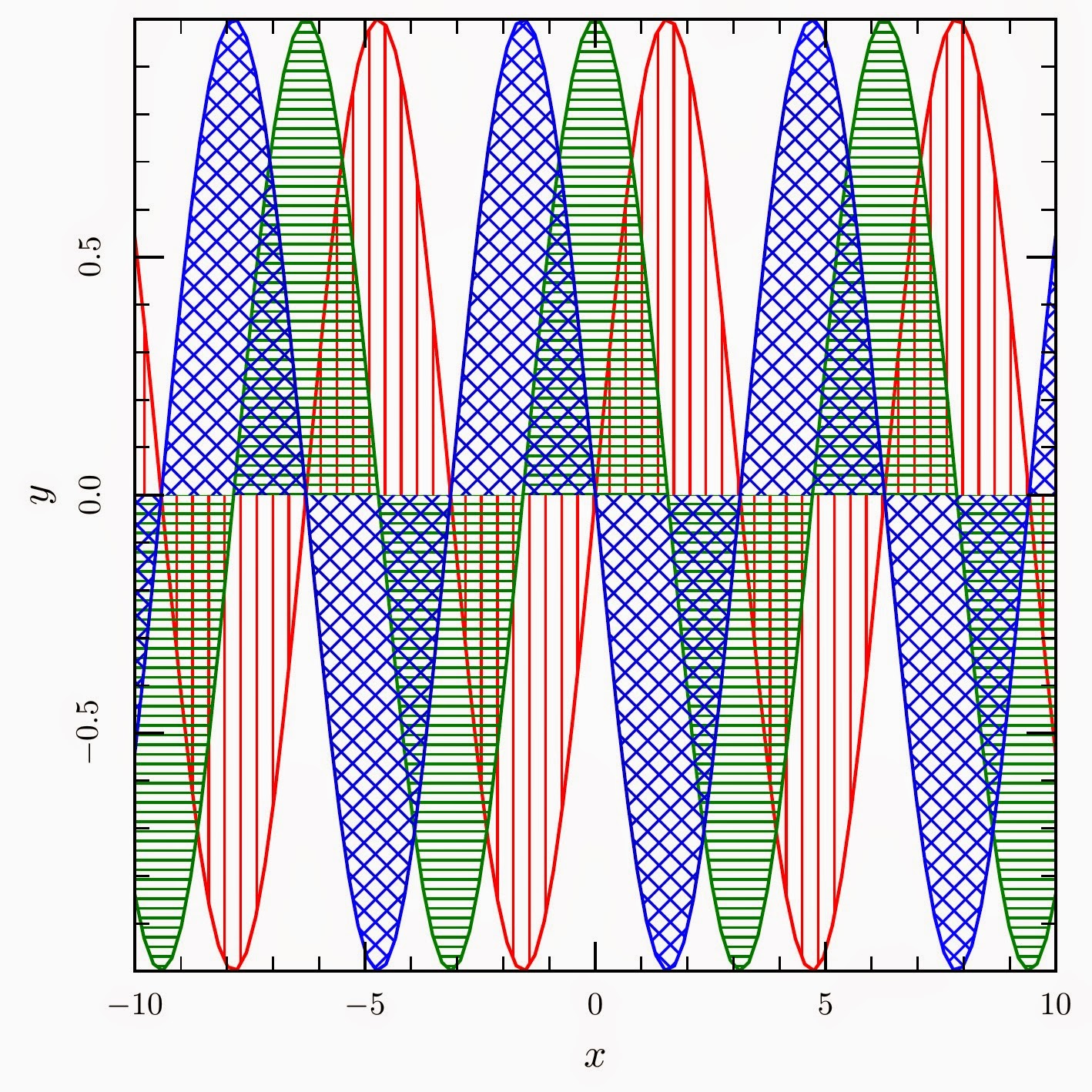
The new year is starting with a new release of ctioga2, with a lot of new features, such as:
The new release is of course available using rubygems:
~ gem update ctioga2
It can also be downloaded from sourceforge.The possibilities of the new styling system are particularly interesting, and I'm working on ways to make it more powerful, and providing series of default style files that anyone could use as they want. Among other future changes, I want to improve the position of ticks, especially when using non-linear axes, and add functions to draw vector fields (though this still needs some thinking). Enjoy, and a happy new year to everyone !

Gunnar Wolf: Status of the OpenPGP keyring: 1024D is a thing of the past!

Having seen the end of December and the beginning of January, this is the time of year where we say "Happy new year!" But this is a very interesting new year: We have also went past our much announced deadline for the <2048 bit keys to be removed from the Debian keyrings. And yes, our highly efficient keyring-maint team managed to deliver on the promised time And, I'd say, with much success. Lets see the numbers Only before that, refer to Jonathan's mail to debian-devel-announce for further, fuller information. So, first of all, how do overall numbers look? Just remember, the following are not the number of DDs, just the number of active keys. That is, the holders to the 252 DD and 35 DM keys we removed are still valid Debian Developers/Maintainers, but have to get a new key accepted to perform many of their tasks in the project. The graph above shows the sharp change between tags 2014.12.31 and 2015.01.01. But my definition of success is that we managed to get the number down to just 252+35=287 from what we had back in August, when we did our DebConf presentation and started the aggressive push: 490 DD keys and 49 DM keys. Since then, 34 DDs requested their retirement, becoming emeritus, and practically all of the rest managed to get their key transition done! So, lets go again easiest-to-hardest. First, the Non-uploading Debian Developers keyring: As this is the newest keyring in existence, and is also the smallest one, we were already without <2048 keys since 2011. Nothing to see, move along. Then, as for the Debian Maintainers: We did have a sensible migration from weaker to stronger keys, but it was not as sharp as I'd have liked. That makes sense, after all, since DMs have less involvement and compromise in the project in regard to DDs. So, we only processed 15 DM keys since August, which is almost a third of the keys we needed to process to reach the ideal 100% migration. Now, as for our biggest and oldest keyring, and the one that denotes more project involvement, here is the graph for the uploading Debian Developers: And yes, here you can see the sharp turn we saw in the second half of this year: By DebConf time, we were happy because the red and yellow lines had just crossed. But we were still sitting at 490 DD keys needing to be migrated. Half of the DD keys (compared to almost a fourth for the DM keys). I'm almost sure we anticipated in our presentation (I know, I should check the video) that, by January 1st, we would have to retire around 300 keys. And I'm very, very happy and proud that we managed to get the number down to 252. And, yes, people leave things to the end: We already have some more pending requests in the Request Tracker to introduce new keys for our fellow friends who were disabled. We will be working to make keyring pushes more frequent than our usual monthly uploads until requests go back to a sane level. So, if everything runs smoothly, this will probably be the last of my posts in this regard. This has been quite an interesting (and exhausting!) experience!

Russell Coker: DNSSEC

reason= verification failed; insecure key I ve recently noticed OpenDKIM on systems I run giving the above message when trying to verify a DKIM message from my own domain. According to Google searches this is due to DNSSEC not being enabled. I m not certain that I really need DNSSEC for this reason (I can probably make DKIM work without it), but the lack of it does decrease the utility of DKIM and DNSSEC is generally a good thing to have. Client (Recursive) Configuration The Debian Wiki page about DNSSEC is really good for setting up recursive resolvers [1]. Basically if you install the bind9 package on Debian/Wheezy (current stable) it will work by default. If you have upgraded from an older release then it might not work (IE if you modified the BIND configuration and didn t allow the upgrade to overwrite your changes). The Debian Wiki page is also quite useful if you aren t using Debian, most of it is more Linux specific than Debian specific. dig +short test.dnssec-or-not.net TXT tail -1 After you have enabled DNSSEC on a recursive resolver the above command should return Yes, you are using DNSSEC . dig +noall +comments dnssec-failed.org The above command queries a zone that s deliberately misconfigured, it will fail if DNSSEC is working correctly. Signing a Zone Digital Ocean has a reasonable tutorial on signing a zone [2]. dnssec-keygen -a NSEC3RSASHA1 -b 2048 -n ZONE example.com The above command creates a Zone Signing Key. dnssec-keygen -f KSK -a NSEC3RSASHA1 -b 4096 -n ZONE example.com The above command creates a Key Signing Key. This will take a very long time if you don t have a good entropy source, on my systems it took a couple of days. Run this from screen or tmux. $INCLUDE ksk/Kexample.com.+123+12345.key
$INCLUDE zsk/Kexample.com.+123+34567.key When you have created the ZSK and KSK you need to add something like the above to your zone file to include the DNSKEY records. all: example.com.signed %.signed: %
dnssec-signzone -A -3 $(shell head -c 100 /dev/random sha1sum cut -b 1-16) -k $(shell echo ksk/K$<*.key) -N INCREMENT -o $< -t $< $(shell echo zsk/K$<*.key)
rndc reload Every time you change your signed zone you need to create a new signed zone file. Above is the Makefile I m currently using to generate the signed file. This relies on storing the KSK files in a directory named ksk/ and the ZSK files in a directory named zsk/. Then BIND needs to be configured to use example.com.signed instead of example.com. The Registrar Every time you sign the zone a file with a name like dsset-example.com. will be created, it will have the same contents every time which are the DS entries you send to the registrar to have your zone publicly known as being signed. Many registrars don t support DNSSEC, if you use such a registrar (as I do) then you need to transfer your zone before you can productively use DNSSEC. Without the DS entries being signed by a registrar and included in the TLD no-one will recognise your signatures on zone data. ICANN has a list of registrars that support DNSSEC [3]. My next task is to move some of my domains to such registrars, unfortunately they cost more so I probably won t transfer all my zones. Some of my zones don t do anything that s important enough to need DNSSEC.

Richard Hartmann: Release Critical Bug report for Week 01

The UDD bugs interface currently knows about the following release critical bugs: How do we compare to the Squeeze release cycle?
Week Squeeze Wheezy Jessie
43 284 (213+71) 468 (332+136) 319 (240+79)
44 261 (201+60) 408 (265+143) 274 (224+50)
45 261 (205+56) 425 (291+134) 295 (229+66)
46 271 (200+71) 401 (258+143) 427 (313+114)
47 283 (209+74) 366 (221+145) 342 (260+82)
48 256 (177+79) 378 (230+148) 274 (189+85)
49 256 (180+76) 360 (216+155) 226 (147+79)
50 204 (148+56) 339 (195+144) ???
51 178 (124+54) 323 (190+133) 189 (134+55)
52 115 (78+37) 289 (190+99) 147 (112+35)
1 93 (60+33) 287 (171+116) 140 (104+36)
2 82 (46+36) 271 (162+109)
3 25 (15+10) 249 (165+84)
4 14 (8+6) 244 (176+68)
5 2 (0+2) 224 (132+92)
6 release! 212 (129+83)
7 release+1 194 (128+66)
8 release+2 206 (144+62)
9 release+3 174 (105+69)
10 release+4 120 (72+48)
11 release+5 115 (74+41)
12 release+6 93 (47+46)
13 release+7 50 (24+26)
14 release+8 51 (32+19)
15 release+9 39 (32+7)
16 release+10 20 (12+8)
17 release+11 24 (19+5)
18 release+12 2 (2+0)
Graphical overview of bug stats thanks to azhag:

Vincent Fourmond: New home for Tioga

Now, it's been a long time since Rubyforge has become unusable, and the Tioga project (on which ctioga2 is based) was still hosted there. I first wanted to thanks Rubyforge for hosting our projects for so long, and then say that Tioga is now maintained in sourceforge in a git repository. The web page is hosted by sourceforge as well, and that includes the documentation. A clone of the git repository is available on github. Enjoy !

Russ Allbery: Review: An Imaginary Tale

Review: An Imaginary Tale, by Paul J. Nahin
Publisher: Princeton University
Copyright: 1998, 2007
Printing: 2010
ISBN: 0-691-14600-4
Format: Trade paperback
Pages: 259
Subtitled The Story of -1, An Imaginary Tale is a history of the use of the number mathematicians normally call i. Nahin starts in the 15th century with the discussion of the time on solving cubic equations, specifically del Ferro's solution to the depressed cubic. He walks through how to approach that solution with imaginary numbers, provides a brief introduction to the complex number plane, and then explains that del Ferro didn't follow the logic in those directions at all. Mathematicians at the time were dubious about negative numbers because they were not intuitive representations of real-world quantities. The square root of negative numbers was considered simply impossible. Nahin continues on in this historical vein for three chapters, walking through the mathematical problems that arose from analysis of cubics and the constant appearance of imaginary numbers, the early attempts to find a geometric interpretation, and then the slow development of the modern conception of imaginary numbers in the 19th century. The emphasis throughout is on the specifics of the math, not on the personalities, although there are a few personal tidbits. Along the way, he takes frequent side journeys to highlight the various places complex numbers are useful in solving otherwise-intractable problems. After that initial history come two chapters of applications of complex numbers: vector analysis, Kepler's laws, applications in electrical engineering, and more. He does win a special place in my heart by walking through the vector analysis problem that George Gamow uses to demonstrate complex numbers in One Two Three... Infinity: a treasure map whose directions depend on landmarks that no longer exist. Following that is a great chapter on deeper mathematical wizardry involving i, including Euler's identity, ii, and a pretty good explanation of hyperbolic functions. The final chapter is an introduction to complex function theory. One's opinion of this book is going to vary a lot depending on what type of history of math you like to read. Unfortunately, it wasn't what I was hoping for. That doesn't make it a bad book other reviewers have recommended it highly, and I think it would be a great book for someone with slightly different interests. But it's a very mathematical book. It's full of proofs, calculations, and analysis, and assumes that you remember a reasonable amount of algebra and calculus to follow along. It's been a long time since I studied math, and while I probably could have traced the links between steps of his proofs and derivations with some effort, I found myself skimming through large chunks of this book. I love histories of mathematics, and even popularizations of bits of it (particularly number theory), but with the emphasis on the popularization. If you're like me and are expecting something more like The Music of the Primes, or even One Two Three... Infinity, be warned that this is less about the people or the concepts and more about the math itself. If you've read books like that and thought they needed more equations, more detail, and more of the actual calculations, this may be exactly what you're looking for. Nahin is fun to read, at least when I wasn't getting lost in steps that are obvious to him. He's quite enthusiastic about the topic and clearly loves being able to show how to take apart a difficult mathematical equation using a novel technique. His joy reminds me of when I was most enjoying my techniques of integration class in college. Even when I started skimming past the details, I liked his excitement. This wasn't what I was looking for, so I can't exactly recommend it, but hopefully this review will help you guess whether you would like it. It's much heavier on the mathematics and lighter on the popularization, and if that's the direction you would have preferred the other similar books I've reviewed to go, this may be worth your attention. Rating: 6 out of 10

Next.

Previous.

