
In the last few days, I have replaced the two 20 inch CRT monitors that I have hardly used the last years with two 20
inch TFT displays, and my company (finally) gave me a 19 inch TFT display to accompany my notebook display at work.
Maybe I should take that as a hint that they want to see me in the office more frequently rather than in my home office
which I generously use these days. At home, I built a “new” computer from mainly used parts to drive the two
20 inchers.
I have learned a lot about X in the last days, but spent too much time with it.
I have been running my Desktop with older X and two CRTs for quite some time, but I hardly ever used it due to the
setup of my now ex-flat. Back then, I learned that the “two monitors, one display, one screen, one desktop”
option of X was called Xinerama and statically configured: You write down your display layout in xorg.conf and it uses
it. Configuration changes mean restarting the X server.
KDE notices Xinerama automatically, designates one monitor the “main monitor” and displays its panel there.
You can move windows from one monitor to the other one, but changing virtual desktops always changes what both monitors
display. This is not really what I want, since I often have “static” contents (news reader, mail reader,
chat windows, help screens etc) on one monitor while I do my normal work on the other monitor, which involves changing
virtual desktops.
So I was rather happy when I learned upon the arrival of the external TFT display for the notebook that you can work
without Xinerama. In that case, the X server comes up with one display and two screens, which KDE uses to display two
independent desktops which can be independently configured, but can both be accessed with one mouse and one keyboard.
For me, this means that I finally can independently change virtual desktops on both monitors, but pay the price that I
cannot display a certain virtual desktop on monitor 1 now, and on monitor 2 in five minutes, and that a window opened on
monitor 1 is never going to be shown on monitor 2 without serious interference. This looked ok for me. Additionally, you
can use different font sizes on the different monitors as defaults, which comes in handy if both monitors are blatantly
different in size (which is the case with the notebook and its external monitor).
However, with that setup, KDE seems to be challenged when it comes to saving the configuration. Some things (such as
desktop background and panel config) seem to save fine, desktop independent, other things (such as open windows and
their position) are lost when the session exitst. My daily visit to Kevin&Kell (which used to be in a browser window
that was saved with my session) has badly suffered since then.
Then, a few weeks ago, somebody talked me into trying the X server from experimental. Which is when my dual-desktop
setup ceased working.
The nice people on #debian-x told me that Xinerama is a thing of the past, and is currently in the process of being
replaced by Xrandr 1.2. The removal of “my” two monitor, two screens, two desktop setup is collateral
damage, and if I still want that behavior, the X.org upstream considers this an issue to be handled by the Window
Manager / Desktop Environment now. Gee, thanks. That’s what I call a regression.
After spending half a day cursing and ranting, and even considering to go back to lenny’s (or even etch’s)
X.org, I finally settled on going with the “new” way as I was going to lose my independent desktops sooner
or later anyway. Again, with the friendly help of the people on #debian-x, I found out about a lot of advantages of the
latest X servers.
In most basic cases, the latest X server does not need a configuration file any more. It autodetects your hardware and
chooses whatever modes it finds optimal. It does a pretty decent job in doing so. If one wants to influence how the X
system comes up, once can always write an Xorg.conf file - the configfileless server even writes the “virtual
config file” it uses to the log as a starting point.
Additionally, almost everything regarding screen layout can be reconfigured at run time using the xrandr binary from a
command line. Even a hardware change (such a new monitor plugged into the powered on notebook) is correctly detected.
Cute. This allows me to reconfigure my notebook depending on where it currently is and which external monitor (or
projector) is connected.
This can be perfected if I find out whether X offers a hook to plug a reconfiguration script into that is called when
the X server starts or when the system is waking up from standby or hibernation with the X server running. A lot to do,
and great potential for elegant stuff.
However, while I am talking about hibernation, this is a downside of the new driver: When the system wakes up from
hibernation, the X server sometimes confuses itself enough to become nearly unuseable: I had it become psychotic when
plugging in the external monitor (which can do 1600x1200 points) after waking it up from hibernation at the office. The
internal display can only do 1400x1050, and the box thought that the external monitor only had 1050 y axis pixels,
displaying bit garbage in the lower part of the big monitor, and showing a useable, but unintelligible panel. When
opening any browser or any other application with considerable text amounts in the window, all fonts become unreadable
once one scrolls down. Restarting the X server helps and everyting is fine. But I do not use hibernation to force myself
to log out of X after waking up. After going back to the “one monitor mode”, the X server now thinks that my
virtual desktop is 1600x1200 and only shows 1400x1050, with dead space at the right and lower side of the virtual
desktop. xrandr does not allow me to reisize the FB below 1600x1200. No idea what’s going on here.
In most of the cases, calling xrandr --auto for each output will fix the issues at run time, but sometimes a session
restart is needed. Code needs to stabilize quite a bit before becoming useable in production.
There are a few disadvantages that will remain: Both monitors will change their contents when the virtual desktop is
changed, and both displays will use the same default font size (which might be inappropriate if both displays are of
different size). But I think, when the issues are cleared up, that I can live with these disadvantages.
The “new” desktop system that I built has a Matrox G450 dual head graphics card, and unfortunately, the
Xrandr 1.2 enabled X server from experiemental has shown to be unuseable: Upon some mode changes, the X server goes into
an endless loop and proves itself to be unkillable short of SIGKILL. And if it dies, it sometimes pulls the entire
system with it. There is a corresponding
bug in the
upstream BTS, but it hasn’t received any noticeable attention by the
upstream developers.
So I might find myself configuring one last Xinerama config before I can finally completly migrate to Xrandr 1.2 on the
desktop as well.
Then I’ll probably need to bug the KDE upstream people to implement a two-desktops-on-a-single-screen feature in
one of their future versions so that I can get my independent-desktop-things back. But that’s a far far away
future.
 Since I never really found a nice overview of which CPU flags (see /proc/cpuinfo) mean what, so I gathered some information using the web, with the most notable sources being the BOINC FAQ entry on CPU Register Acronyms at [1] and the output of the nice little (though seemingly mostly unmaintained) cpuid utility. See my results at [2]. Any suggestions for enhancements and completions are highly welcome, just leave a comment to this post.
[1]: href=”http://boincfaq.mundayweb.com/index.php?language=1&view=176
 Gofernet.net 466395
(or is it gofernet.co.uk? They
seemed confused about that - maybe it's
Jekyll and Hyde, one spammy, one not?)
of Sutton Coldfield
spammed an associate on 5 Oct 2007.
The spam
claimed it was sent to their client list.
That associate is not and
has never been a client of gofernet.
The spam claimed to be "in full compliance with the Privacy and Electronic Commerce Statutory Instrument 2003, No 2426".
I think they mean the
 On Saturday I turned into Mr. Handy Man. Our CD collection is
getting rather large (~270 CDs), and the current CD rack is filled
to capacity, with a 3 foot tall tower of CDs next to it. I decided
to build a new one myself, there being no decent and cheap CD
racks designed for this many CDs.
I measured and planned and drew, and eventually had a design for a
rack nearly 6 feet high, and more than a foot wide [1]. My Dad and
me went down the local timber yard, bought the pine (which they
cut for us) for a mere £10, and set about building it.
The building went very well. My Dad is pretty damn good at DIY so
we had all of the tools we needed, and a few hours later we had
our new CD rack, and Vicky had caught the sun [2]. We did have a
few minor problems -- one shelf was sticking slightly out (five
minutes with a chisel sorted that), and the MDF back was put on
backwards, showing the huge price sticker to the world, but on the
whole its a damn fine and solid CD rack, which holds a grand total
of 350 CDs, for £15. We have two and bit shelves free, so have
space for another 80 or so CDs... shouldn't take long to fill
that.
Of course, we then spend much of Sunday afternoon filling the damn
thing... To celebrate we bought Solid Bronze, the Best of
Beautiful South, and a Black Sunday by Cyprus Hill.
[1] The exact measurements for anyone wanting to build their own:
1700mm x 370mm x 150mm, in 15mm pine.
 A few days after the
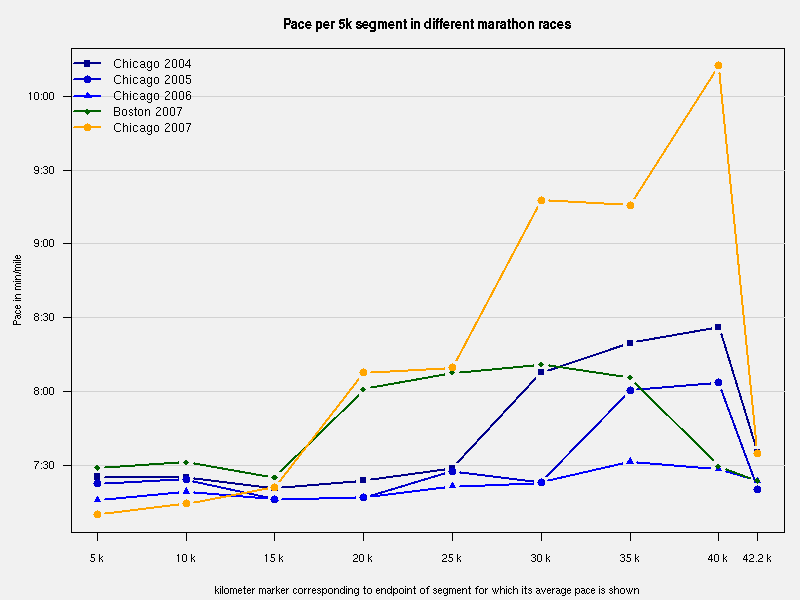 The chart shows a few things quite nicely:
 One of the common criticisms of the war in Iraq is that it was just an excuse to plunder that nations' oil. Of course
 I just released new version of



 Today is
 ...and, really, we nearly never thought that Argentina could win tonight.
South Africa was really too strong for them.
The only domain where Argentinians dominated were scrums but this was much
compensated by their great weakness on line-outs, losing something like 5 or
6 of them.
South Africa thus logical won very easily...and Bryan Habana is now the best
try scorer all along RWCs, along with Jonah Lomu. He is a really great
player, indeed.
Much much impressive South Africa: they'll be by far the favourites of the
final against England, which they beated already during that World Cup. I
said several times that I'm not a deep fan of RSA's play, but I could become
one. Their game improved all along the World Cup and today, they probably
played their best match.
Two remakes next week-end: France-Argentina for the 3rd place and South
Africa-England as final. That will be good matches, no doubt...and I hope
that Bernard Laporte will change the French team to play against Argentina.
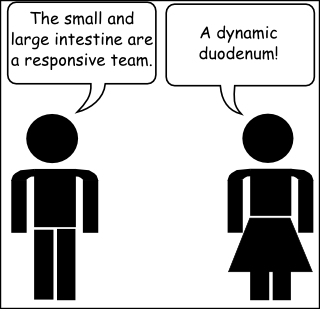
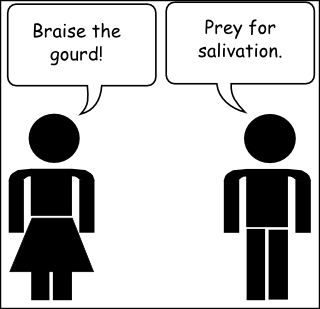
 When it comes to puns about digestion,


 Apologies to Daf if he is embarassed by my public acknowledgement of his
contributions in this endeavor.
