Search Results: "ag"

18 January 2015

Mark Brown: Heating the Internet of Things

Internet of Things seems to be trendy these days, people like the shiny apps for controlling things and typically there are claims that the devices will perform better than their predecessors by offloading things to the cloud but this makes some people worry that there are potential security issues and it s not always clear that internet usage is actually delivering benefits over something local. One of the more widely deployed applications is smart thermostats for central heating which is something I ve been playing with. I m using Tado, there s also at least Nest and Hive who do similar things, all relying on being connected to the internet for operation. The main thing I ve noticed has been that the temperature regulation in my flat is better, my previous thermostat allowed the temperature to vary by a couple of degrees around the target temperature in winter which got noticeable, with this the temperature generally seems to vary by a fraction of a degree at most. That does use the internet connection to get the temperature outside, though I m fairly sure that most of this is just a better algorithm (the thermostat monitors how quickly the flat heats up when heating and uses this when to turn off rather than waiting for the temperature to hit the target then seeing it rise further as the radiators cool down) and performance would still be substantially improved without it. The other thing that these systems deliver which does benefit much more from the internet connection is that it s easy to control them remotely. This in turn makes it a lot easier to do things like turn the heating off when it s not needed you can do it remotely, and you can turn the heating back on without being in the flat so that you don t need to remember to turn it off before you leave or come home to a cold building. The smarter ones do this automatically based on location detection from smartphones so you don t need to think about it. For example, when I started this post this I was sitting in a coffee shop so the heating had been turned off based on me taking my phone with me and as a result the temperature gone had down a bit. By the time I got home the flat was back up to normal temperature all without any meaningful intervention or visible difference on my part. This is particularly attractive for me given that I work from home I can t easily set a schedule to turn the heating off during the day like someone who works in an office so the heating would be on a lot of the time. Tado and Nest will to varying extents try to do this automatically, I don t know about Hive. The Tado one at least works very well, I can t speak to the others. I ve not had a bill for a full winter yet but I m fairly sure looking at the meter that between the two features I m saving a substantial amount of energy (and hence money and/or the environment depending on what you care about) and I m also seeing a more constant temperature within the flat, my guess would be that most of the saving is coming from the heating being turned off when I leave the flat. For me at least this means that having the thermostat internet connected is worthwhile.

Dirk Eddelbuettel: Running UBSAN tests via clang with Rocker

Every now and then we get reports from CRAN about our packages failing a test there. A challenging one concerns UBSAN, or Undefined Behaviour Sanitizer. For background on UBSAN, see this RedHat blog post for gcc and this one from LLVM about clang. I had written briefly about this before in a blog post introducing the sanitizers package for tests, as well as the corresponding package page for sanitizers, which clearly predates our follow-up Rocker.org repo / project described in this initial announcement and when we became the official R container for Docker. Rocker had support for SAN testing, but UBSAN was not working yet. So following a recent CRAN report against our RcppAnnoy package, I was unable to replicate the error and asked for help on r-devel in this thread. Martyn Plummer and Jan van der Laan kindly sent their configurations in the same thread and off-list; Jeff Horner did so too following an initial tweet offering help. None of these worked for me, but further trials eventually lead me to the (already mentioned above) RedHat blog post with its mention of -fno-sanitize-recover to actually have an error abort a test. Which, coupled with the settings used by Martyn, were what worked for me: clang-3.5 -fsanitize=undefined -fno-sanitize=float-divide-by-zero,vptr,function -fno-sanitize-recover. This is now part of the updated Dockerfile of the R-devel-SAN-Clang repo behind the r-devel-ubsan-clang. It contains these settings, as well a new support script check.r for littler---which enables testing right out the box. Here is a complete example:
docker                              # run Docker (any recent version, I use 1.2.0)
  run                               # launch a container 
    --rm                            # remove Docker temporary objects when dome
    -ti                             # use a terminal and interactive mode 
    -v $(pwd):/mnt                  # mount the current directory as /mnt in the container
    rocker/r-devel-ubsan-clang      # using the rocker/r-devel-ubsan-clang container
  check.r                           # launch the check.r command from littler (in the container)
    --setwd /mnt                    # with a setwd() to the /mnt directory
    --install-deps                  # installing all package dependencies before the test
    RcppAnnoy_0.0.5.tar.gz          # and test this tarball
I know. It is a mouthful. But it really is merely the standard practice of running Docker to launch a single command. And while I frequently make this the /bin/bash command (hence the -ti options I always use) to work and explore interactively, here we do one better thanks to the (pretty useful so far) check.r script I wrote over the last two days. check.r does about the same as R CMD check. If you look inside check you will see a call to a (non-exported) function from the (R base-internal) tools package. We call the same function here. But to make things more interesting we also first install the package we test to really ensure we have all build-dependencies from CRAN met. (And we plan to extend check.r to support additional apt-get calls in case other libraries etc are needed.) We use the dependencies=TRUE option to have R smartly install Suggests: as well, but only one level (see help(install.packages) for details. With that prerequisite out of the way, the test can proceed as if we had done R CMD check (and additional R CMD INSTALL as well). The result for this (known-bad) package:
edd@max:~/git$ docker run --rm -ti -v $(pwd):/mnt rocker/r-devel-ubsan-clang check.r --setwd /mnt --install-deps RcppAnnoy_0.0.5.tar.gz 
also installing the dependencies  Rcpp ,  BH ,  RUnit 
trying URL 'http://cran.rstudio.com/src/contrib/Rcpp_0.11.3.tar.gz'
Content type 'application/x-gzip' length 2169583 bytes (2.1 MB)
opened URL
==================================================
downloaded 2.1 MB
trying URL 'http://cran.rstudio.com/src/contrib/BH_1.55.0-3.tar.gz'
Content type 'application/x-gzip' length 7860141 bytes (7.5 MB)
opened URL
==================================================
downloaded 7.5 MB
trying URL 'http://cran.rstudio.com/src/contrib/RUnit_0.4.28.tar.gz'
Content type 'application/x-gzip' length 322486 bytes (314 KB)
opened URL
==================================================
downloaded 314 KB
trying URL 'http://cran.rstudio.com/src/contrib/RcppAnnoy_0.0.4.tar.gz'
Content type 'application/x-gzip' length 25777 bytes (25 KB)
opened URL
==================================================
downloaded 25 KB
* installing *source* package  Rcpp  ...
** package  Rcpp  successfully unpacked and MD5 sums checked
** libs
clang++-3.5 -fsanitize=undefined -fno-sanitize=float-divide-by-zero,vptr,function -fno-sanitize-recover -I/usr/local/lib/R/include -DNDEBUG -I../inst/include/ -I/usr/local/include    -fpic  -pipe -Wall -pedantic -
g  -c Date.cpp -o Date.o
[...]
* checking examples ... OK
* checking for unstated dependencies in  tests  ... OK
* checking tests ...
  Running  runUnitTests.R 
 ERROR
Running the tests in  tests/runUnitTests.R  failed.
Last 13 lines of output:
  +     if (getErrors(tests)$nFail > 0)  
  +         stop("TEST FAILED!")
  +      
  +     if (getErrors(tests)$nErr > 0)  
  +         stop("TEST HAD ERRORS!")
  +      
  +     if (getErrors(tests)$nTestFunc < 1)  
  +         stop("NO TEST FUNCTIONS RUN!")
  +      
  +  
  
  
  Executing test function test01getNNsByVector  ... ../inst/include/annoylib.h:532:40: runtime error: index 3 out of bounds for type 'int const[2]'
* checking PDF version of manual ... OK
* DONE
Status: 1 ERROR, 2 WARNINGs, 1 NOTE
See
   /tmp/RcppAnnoy/..Rcheck/00check.log 
for details.
root@a7687c014e55:/tmp/RcppAnnoy# 
The log shows that thanks to check.r, we first download and the install the required packages Rcpp, BH, RUnit and RcppAnnoy itself (in the CRAN release). Rcpp is installed first, we then cut out the middle until we get to ... the failure we set out to confirm. Now having a tool to confirm the error, we can work on improved code. One such fix currently under inspection in a non-release version 0.0.5.1 then passes with the exact same invocation (but pointing at RcppAnnoy_0.0.5.1.tar.gz):
edd@max:~/git$ docker run --rm -ti -v $(pwd):/mnt rocker/r-devel-ubsan-clang check.r --setwd /mnt --install-deps RcppAnnoy_0.0.5.1.tar.gz
also installing the dependencies  Rcpp ,  BH ,  RUnit 
[...]
* checking examples ... OK
* checking for unstated dependencies in  tests  ... OK
* checking tests ...
  Running  runUnitTests.R 
 OK
* checking PDF version of manual ... OK
* DONE
Status: 1 WARNING
See
   /mnt/RcppAnnoy.Rcheck/00check.log 
for details.
edd@max:~/git$
This proceeds the same way from the same pristine, clean container for testing. It first installs the four required packages, and the proceeds to test the new and improved tarball. Which passes the test which failed above with no issues. Good. So we now have an "appliance" container anybody can download from free from the Docker hub, and deploy as we did here in order to have fully automated, one-command setup for testing for UBSAN errors. UBSAN is a very powerful tool. We are only beginning to deploy it. There are many more useful configuration settings. I would love to hear from anyone who would like to work on building this out via the R-devel-SAN-Clang GitHub repo. Improvements to the littler scripts are similarly welcome (and I plan on releasing an updated littler package "soon").

This post by Dirk Eddelbuettel originated on his Thinking inside the box blog. Please report excessive re-aggregation in third-party for-profit settings.

EvolvisForge blog: Debian/m68k hacking weekend cleanup

OK, time to clean up tarent so people can work again tomorrow. Not much to clean though (the participants were nice and cleaned up after themselves ), so it s mostly putting stuff back to where it belongs. Oh, and drinking more of the cool Belgian beer Geert (Linux upstream) brought We were productive, reporting and fixing kernel bugs, fixing hardware, swapping and partitioning discs, upgrading software, getting buildds (mostly Amiga) back to work, trying X11 (kdrive) on a bare metal Atari Falcon (and finding a window manager that works with it), etc. I hope someone else writes a report; for now we have a photo and a screenshot (made with trusty xwd). Watch the debian-68k mailing list archives for things to come. I think that, issues with electric cars aside, everyone liked the food places too ;-)

Andreas Metzler: Another new toy

Given that snow is yet a little bit sparse for snowboarding and the weather could be improved on I have made myself a late christmas present: Torggler TS 120 Tourenrodel Spezial It is a rather sporty rodel (Torggler TS 120 Tourenrodel Spezial 2014/15, 9kg weight, with fast (non stainless) "racing rails" and 22 angle of the runners) but not a competition model. I wish I had bought this years ago. It is a lot more comfortable than a classic sled ("Davoser Schlitten"), since one is sitting in instead of on top of the sled somehow like in a hammock. Being able to steer without putting a foot into the snow has the nice side effect that the snow stays on the ground instead of ending up in my face. Obviously it is also faster which is a huge improvement even for recreational riding, since it makes the difference between riding the sledge or pulling it on flattish stretches. Strongly recommended. FWIW I ordered this via rodelfuehrer.de (they started with a guidebook of luge tracks, which translates to "Rodelf hrer"), where I would happily order again.

Chris Lamb: Adjusting a backing track with SoX

Earlier today I came across some classical sheet music that included a "playalong" CD, just like a regular recording except it omits the solo cello part. After a quick listen it became clear there were two problems: SoX, the "Swiss Army knife of sound processing programs", can easily adjust the latter, but to remedy the former it must be provided with a dimensionless "cent" unit ie. 1/100th of a semitone rather than the 442Hz and 440Hz reference frequencies. First, we calculate the cent difference with: https://d1icoid1cnixnp.cloudfront.net/yadt/blog.Image/image/original/24.jpeg Next, we rip the material from the CD:

$ sudo apt-get install ripit flac
[..]
$ ripit --coder 2 --eject --nointeraction
[..]
And finally we adjust the tempo and pitch:
$ apt-get install sox libsox-fmt-mp3
[..]
$ sox 01.flac 01.mp3 pitch -7.85 tempo 1.00 # (Tuning notes)
$ sox 02.flac 02.mp3 pitch -7.85 tempo 0.95 # Too fast!
$ sox 03.flac 03.mp3 pitch -7.85 tempo 1.01 # Close..
$ sox 04.flac 04.mp3 pitch -7.85 tempo 1.03 # Too slow!
(I'm converting to MP3 at the same time it'll be more convenient on my phone.)

Ian Campbell: Using Grub 2 as a bootloader for Xen PV guests on Debian Jessie

I recently wrote a blog post on using grub 2 as a Xen PV bootloader for work. See Using Grub 2 as a bootloader for Xen PV guests over on https://blog.xenproject.org. Rather than repeat the whole thing here I'll just briefly cover the stuff which is of interest for Debian users (if you want all full background and the stuff on building grub from source etc then see the original post). TL;DR: With Jessie, install grub-xen-host in your domain 0 and grub-xen in your PV guests then in your guest configuration, depending on whether you want a 32- or 64-bit PV guest write either:
kernel = "/usr/lib/grub-xen/grub-i386-xen.bin"
or
kernel = "/usr/lib/grub-xen/grub-x86_64-xen.bin"
(instead of bootloader = ... or other kernel = ..., also omit ramdisk = ... and any command line related stuff (e.g. root = ..., extra = ..., cmdline = ... ) and your guests will boot using Grub 2, much like on native. In slightly more detail: The forthcoming Debian 8.0 (Jessie) release will contain support for both host and guest pvgrub2. This was added in version 2.02~beta2-17 of the package (bits were present before then, but -17 ties it all together). The package grub-xen-host contains grub binaries configured for the host, these will attempt to chainload an in-guest grub image (following the Xen x86 PV Bootloader Protocol) and fall back to searching for a grub.cfg in the guest filesystems. grub-xen-host is Recommended by the Xen meta-packages in Debian or can be installed by hand. The package grub-xen-bin contains the grub binaries for both the i386-xen and x86_64-xen platforms, while the grub-xen package integrates this into the running system by providing the actual pvgrub2 image (i.e. running grub-install at the appropriate times to create an image tailored to the system) and integration with the kernel packages (i.e. running update-grub at the right times), so it is the grub-xen which should be installed in Debian guests. At this time the grub-xen package is not installed in a guest automatically so it will need to be done manually (something which perhaps could be addressed for Stretch).

Guido G nther: whatmaps 0.0.9

I have released whatmaps 0.0.9 a tool to check which processes map shared objects of a certain package. It can integrate into apt to automatically restart services after a security upgrade. This release fixes the integration with recent systemd (as in Debian Jessie), makes logging more consistent and eases integration into downstream distributions. It's available in Debian Sid and Jessie and will show up in Wheezy-backports soon. This blog is flattr enabled.

Rog rio Brito: Uploading SICP to Youtube

Intro I am not alone in considering Harold Abelson and Gerald Jay Sussman's recorded lectures based on their book "Structure and Interpretation of Computer Programs" is a masterpiece. There are many things to like about the content of the lectures, beginning with some pearls and wisdom about the craft of writing software (even though this is not really a "software enginneering" book), the clarity with which the concepts are described, the Freedom-friendly aspects of the authors regarding the material that they produced and much, the breadth of the subjects covered and much more.

The videos, their length, and splitting them The course consists of 20 video files and they are all uploaded on Youtube already. There is one thing, though: while the lectures are naturally divided into segments (the instructors took a break in after every 30 minutes or so worth of lectures), the videos corresponding to each lecture have all the segments concatenated. To better watch them, accounting for the easier possibility to put a few of the lectures in a mobile device or to avoid fast forwarding long videos from my NAS when I am watching them on my TV (and some other factors), I decided to sit down, take notes for each video of where the breaks where, and write a simple Python script to help split the videos in segments, and, then, reencode the segments. I decided not to take the videos from Youtube to perform my splitting activities, but, instead, to operate on one of the "sources" that the authors once had in their homepage (videos encoded in DivX and audio in MP3). The videos are still available as a torrent file (with a magnet link for the hash 650704e4439d7857a33fe4e32bcfdc2cb1db34db), with some very good souls still seeding it (I can seed it too, if desired). Alas, I have not found a source for the higher quality MPEG1 videos, but I think that the videos are legible enough to avoid bothering with a larger download. I soon found out that there are some beneficial side-effects of splitting the videos, like not having to edit/equalize the entire audio of the videos when only a segment was bad (which is understandable, as these lectures were recorded almost 30 years ago and technology was not as advanced as things are today). So, since I already have the split videos lying around here, I figured out that, perhaps, other people may want to download them, as they may be more convenient to watch (say, during commutes or whatever/whenever/wherever it best suits them). Of course, uploading all the videos is going to take a while and I would only do it if people would really benefit from them. If you think so, let me know here (or if you know someone who would like the split version of the videos, spread the word).

17 January 2015

Tim Retout: CPAN PR Challenge - January - IO-Digest

I signed up to the CPAN Pull Request Challenge - apparently I'm entrant 170 of a few hundred. My assigned dist for January was IO-Digest - this seems a fairly stable module. To get the ball rolling, I fixed the README, but this was somehow unsatisfying. :) To follow-up, I added Travis-CI support, with a view to validating the other open pull request - but that one looks likely to be a platform-specific problem. Then I extended the Travis file to generate coverage reports, and separately realised the docs weren't quite fully complete, so fixed this and added a test. Two of these have already been merged by the author, who was very responsive. Part of me worries that Github is a centralized, proprietary platform that we now trust most of our software source code to. But activities such as this are surely a good thing - how much harder would it be to co-ordinate 300 volunteers to submit patches in a distributed fashion? I suppose you could do something similar with the list of Debian source packages and metadata about the upstream VCS, say...

Ulrike Uhlig: Updating a profile in Debian s apparmor-profiles-extra package

I have gotten my first patch to the Pidgin AppArmor profile accepted upstream. One of my mentors thus suggested that I d patch the updated profile in the Debian package myself. This is fairly easy and requires simply that one knows how to use Git. If you want to get write access to the apparmor-profiles-extra package in Debian, you first need to request access to the Collaborative Maintenance Alioth project, collab-maint in short. This also requires setting up an account on Alioth. Once all is set up, one can export the apparmor-profiles-extra Git repository.
If you simply want to submit a patch, it s sufficient to clone this repository anonymously.
Otherwise, one should use the auth parameter with debcheckout . The debcheckout command is part of the devscripts package:
debcheckout --auth apparmor-profiles-extra
Go into the apparmor-profiles-extra folder and create a new working branch:
git branch workingtitle
git checkout workingtitle
Get the latest version of profiles from upstream. In profiles , one can edit the profiles. Test. The debian/README.Debian file should be edited: add what relevant changes one just imported from upstream. Then, one could either push the branch to collab-maint:
git commit -a
git push origin workingtitle
or simply submit a patch to the Debian Bug Tracking System against the apparmor-profiles-extra package. The Debian AppArmor packaging team mailing list will receive a notification of this commit. This way, commits can be peer reviewed and merged by the team.

Guido G nther: krb5-auth-dialog 3.15.4

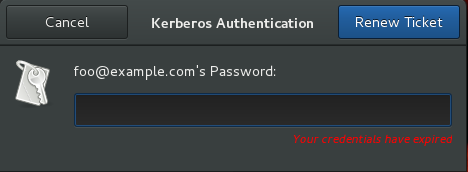
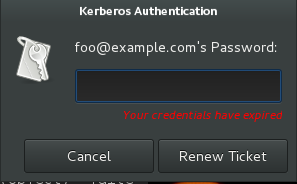
To keep up with GNOMEs schedule I've released krb5-auth-dialog 3.15.4. The changes of 3.15.1 and 3.15.4 include among updated translations, the replacement of deprecated GTK+ widgets, minor UI cleanups and bug fixes a header bar fix that makes us only use header bar buttons iff the desktop environment has them enabled: krb5-auth-dialog with header bar krb5-auth-dialog without header bar This makes krb5-auth-dialog better ingtegrated into other desktops again thanks to mclasen's awesome work. This blog is flattr enabled.

Diego Escalante Urrelo: Link Pack #03

What s that? The third edition of Link Pack of course!
Playing with Power (7 minutes, Vimeo)
A super awesome story about a stop motion animator that turned a Nintendo Power Glove into the perfect animation tool. It s a fun, inspiring video :-). I love the Power Glove, it s so bad. The Power Glove Angry Video Game Nerd Episode 14 (12 minutes, YouTube)
On the topic of the Power Glove, here s the now classic Angry Video Game Nerd video about it. James Rolfe is funny. Ship Your Enemies Glitter
A rising star in the internet business landscape. You pay them $9.99 and they send an envelope full of glitter to your worst enemy. They promise it will jump into everything, as usual. Damn you glitter. A Guide to Practical Contentment
Be happy with what you have, but understand why:
( ) if you start in this place of fixing what s wrong with you, you keep looking for what else is wrong with you, what else you need to improve. So maybe now feel like you don t have enough muscles, or six pack abs, or you think your calves don t look good, or if it s not about your body, you ll find something else. So it s this never-ending cycle for your entire life. You never reach it. If you start with a place of wanting to improve yourself and feeling stuck, even if you re constantly successful and improving, you re always looking for happiness from external sources. You don t find the happiness from within, so you look to other things.
The Comments Section For Every Video Where Someone Does A Pushup
Comments. From YouTube. Enough said.
These are dips. Not pushups. In the entire history of the world, no one has ever successfully performed a pushup. They re all just dips. STOP DRIVING WITH YOUR HIPS. IF YOU RE DOING A PUSHUP CORRECTLY, YOUR HIPS SHOULD CEASE TO EXIST. You could do 100 pushups like this and it wouldn t improve your strength at all. You re just bending your arms.
Self-Taught Chinese Street Photographer Tao Liu Has an Eye for Peculiar Moments
This Chinese photog uses his lunch break to snap interesting street photography. Funny selection by PetaPixel, his Flickr page has even more stuff. Even more in his photoblog.
From https://www.flickr.com/photos/58083590@N05/14613273495/By Liu Tao. https://www.flickr.com/photos/58083590@N05/14613273495/
Enrique Castro-Mendivil s Agua Dulce photo set
Another interesting photo link. This time it s the most popular beach in Lima, with most people coming from low income neighborhoods, it shows how fragmented the city is.
By Enrique Castro-Mendivil. http://www.castromendivilphoto.com/index.php/component/content/article/11-work/69-agua-dulceBy Enrique Castro-Mendivil. http://www.castromendivilphoto.com/index.php/component/content/article/11-work/69-agua-dulce

Also on Link Pack

16 January 2015

Erich Schubert: Year 2014 in Review as Seen by a Trend Detection System

We ran our trend detection tool Signi-Trend (published at KDD 2014) on news articles collected for the year 2014. We removed the category of financial news, which is overrepresented in the data set. Below are the (described) results, from the top 50 trends (I will push the raw result to appspot if possible due to file limits). The top 10 trends are highlighted in bold.
January
2014-01-29: Obama's State of the Union address
February
2014-02-05..23: Sochi Olympics (11x, including the four below)
2014-02-07: Gay rights protesters arrested at Sochi Olympics
2014-02-08: Sochi Olympics begins
2014-02-16: Injuries in Sochi Extreme Park
2014-02-17: Men's Snowboard cross finals called of because of fog
2014-02-19: Violence in Ukraine and Kiev
2014-02-22: Yanukovich leaves Kiev
2014-02-23: Sochi Olympics close
2014-02-28: Crimea crisis begins
March
2014-03-01..06: Crimea crisis escalates futher (3x)
2014-03-08: Malaysia Airlines machine missing in South China Sea (2x)
2014-03-18: Crimea now considered part of Russia by Putin
2014-03-28: U.N. condemns Crimea's secession
April
2014-04-17..18: Russia-Ukraine crisis continues (3x)
2014-04-20: South Korea ferry accident
May
2014-05-18: Cannes film festival
2014-05-25: EU elections
June
2014-06-13: Islamic state fighting in Iraq
2014-06-16: U.S. talks to Iran about Iraq
July
2014-07-17..19: Malaysian airline shot down over Ukraine (3x)
2014-07-20: Israel shelling Gaza kills 40+ in a day
August
2014-08-07: Russia bans EU food imports
2014-08-20: Obama orders U.S. air strikes in Iraq against IS
2014-08-30: EU increases sanctions against Russia
September
2014-09-04: NATO summit
2014-09-23: Obama orders more U.S. air strikes against IS
Oktober
2014-10-16: Ebola case in Dallas
2014-10-24: Ebola patient in New York is stable
November
2014-11-02: Elections: Romania, and U.S. rampup
2014-11-05: U.S. Senate elections
2014-11-25: Ferguson prosecution
Dezember
2014-12-08: IOC Olympics sport additions
2014-12-11: CIA prisoner center in Thailand
2014-12-15: Sydney cafe hostage siege
2014-12-17: U.S. and Cuba relations improve unexpectedly
2014-12-19: North Korea blamed for Sony cyber attack
2014-12-28: AirAsia flight 8501 missing

Richard Hartmann: Release Critical Bug report for Week 03

The UDD bugs interface currently knows about the following release critical bugs: How do we compare to the Squeeze release cycle?
Week Squeeze Wheezy Jessie
43 284 (213+71) 468 (332+136) 319 (240+79)
44 261 (201+60) 408 (265+143) 274 (224+50)
45 261 (205+56) 425 (291+134) 295 (229+66)
46 271 (200+71) 401 (258+143) 427 (313+114)
47 283 (209+74) 366 (221+145) 342 (260+82)
48 256 (177+79) 378 (230+148) 274 (189+85)
49 256 (180+76) 360 (216+155) 226 (147+79)
50 204 (148+56) 339 (195+144) ???
51 178 (124+54) 323 (190+133) 189 (134+55)
52 115 (78+37) 289 (190+99) 147 (112+35)
1 93 (60+33) 287 (171+116) 140 (104+36)
2 82 (46+36) 271 (162+109) 157 (124+33)
3 25 (15+10) 249 (165+84) 172 (128+44)
4 14 (8+6) 244 (176+68)
5 2 (0+2) 224 (132+92)
6 release! 212 (129+83)
7 release+1 194 (128+66)
8 release+2 206 (144+62)
9 release+3 174 (105+69)
10 release+4 120 (72+48)
11 release+5 115 (74+41)
12 release+6 93 (47+46)
13 release+7 50 (24+26)
14 release+8 51 (32+19)
15 release+9 39 (32+7)
16 release+10 20 (12+8)
17 release+11 24 (19+5)
18 release+12 2 (2+0)
Graphical overview of bug stats thanks to azhag:

Rhonda D'Vine: Polygons

I stumbled upon this site thanks to Helga: Parable of the Polygons. On the site you can interactively find out how harmless choices can make a harmful world. I found it quite eye opening. And what most catched me but isn't part of the site is that only unhappy polygons are willing to move. Those who are just ok with their neighbourhood but not really happy about it aren't willing to move. Which made me try it out in my own way: Trying to create the most diverse possible environment by temporarily making as many polygons unhappy to find out if it's possible to make as many polygons happy in the long run as possible. ... which is actually part of the way I see my own life. I always sort-of tried to confront people to think. I mean, it's not that common that you see a by-the-looks male person wearing a skirt. And ... since I moved out in July into a small intermediate flat and thus a new neighbourhood, I found the confidence (in parts also to be attributed to the confidence built up at these fine feministic conferences) to walk my hometown in a skirt. Only on some few occations, when meeting up with friends, mostly at evening/night, but it was always a nice experience. And I only felt once uncomfortable to be honest, when there was a probably right-winged skinhead at the subway station. Too many other people around, so I tried to avoid eye contact, but it didn't feel good. Diversity is something that society needs. In all aspects. Also within the Debian project. I believe strongly in that there can't be much of innovation and moving forward if all people do think the same direction. That only means that potential alternative paths won't even get considered, and potentially get lost. That's one of the core parts of what makes the Free Software community lively and useful. People try different approaches, and in the end there will be adopters of what they believe is the better project. Projects pop up every now and then, others starve because of loss of interest, users not picking it up, developers spending their time on other stuff, and that's absolutely fine too. There is always something to be learned even from those situations. Speaking of diversity, there is this protest going on later today because the boss of a cafe here in Vienna considered it a good idea to kick out a lesbian couple because they kissed each other for greeting and told them that they don't have a place for their "otherness" in her traditional viennese cafe and they rather should take it to a brothel. She excused yesterday for her tone that she used, she said she should have been more relaxed as the CEO of that cafe. Which literally means that she only exused for the tone she used in her role, but not at all for the message she transported. So meh, hope there will be many people at the protest. Yes, there is some anti discrimination law around, but that only covers the workplace, and not service areas. Welcome to Austria.
On the upside, court striked down ban on same-sex couple adoption just the other day. Hopefully there is still hope for this country. :)

/personal permanent link Comments: 2 Flattr this

Rapha&#235;l Hertzog: Freexian s fifth report about Debian Long Term Support

Like each month, here comes a report about the work of paid contributors to Debian LTS. Individual reports In December 46 work hours have been equally split among 4 paid contributors (note that Thorsten and Rapha l have actually spent more hours because they took over some hours that Holger did not do over the former months). Their reports are available: Evolution of the situation Compared to last month, the number of paid work hours has almost not increased (we are at 48 hours per month). We still have a couple of new sponsors in the pipe but with the new year they did not complete the process yet. Hopefully next month will see a noticeable increase. As usual, we are looking for more sponsors to reach our our minimal goal of funding the equivalent of a half-time position. Those of you who are struggling to spend money in the last quarter due to budget overrun, now is a good time to see if you want to include Debian LTS support in your 2015 budget! In terms of security updates waiting to be handled, the situation looks similar to last month: the dla-needed.txt file lists 30 packages awaiting an update (3 more than last month), the list of open vulnerabilities in Squeeze shows about 56 affected packages in total. We do not manage to clear the backlog but it s not getting significantly worse either. Thanks to our sponsors

No comment Liked this article? Click here. My blog is Flattr-enabled.

15 January 2015

Junichi Uekawa: Opposite to strong typing.

Opposite to strong typing. Maybe weak typing is too discriminatory, we should call it typing challenged. Like: sqlite is a typing challenged language.

Daniel Pocock: Disk expansion

A persistent problem that I encounter with hard disks is the capacity limit. If only hard disks could expand like the Tardis. My current setup at home involves a HP Microserver. It has four drive bays carrying two SSDs (for home directories) and two Western Digital RE4 2TB drives for bulk data storage (photos, source tarballs and other things that don't change often). Each pair of drives is mirrored. I chose the RE4 because I use RAID1 and they offer good performance and error recovery control which is useful in any RAID scenario. When I put in the 2TB drives, I created a 1TB partition on each for Linux md RAID1 and another 1TB partition on each for BtrFs. Later I added the SSDs and I chose BtrFs again as it had been working well for me. Where to from here? Since getting a 36 megapixel DSLR that produces 100MB raw images and 20MB JPEGs I've been filling up that 2TB faster than I could have ever imagined. I've also noticed that vendors are offering much bigger NAS and archive disks so I'm tempted to upgrade. First I looked at the Seagate Archive 8TB drives. 2TB bigger than the nearest competition. Discussion on Reddit suggests they don't have Error Recovery Control / TLER however and that leaves me feeling they are not the right solution for me. Then I had a look at WD Red. Slightly less performant than the RE4 drives I run now, but with the possibility of 6TB per drive and a little cheaper. Apparently they have TLER though, just like the RE4 and other enterprise drives. Will 6 or 8TB create new problems? This all leaves me scratching my head and wondering about a couple of things though:
  • Will I run into trouble with the firmware in my HP Microserver if I try to use such a big disk?
  • Should I run the whole thing with BtrFs and how well will it work at this scale?
  • Should I avoid the WD Red and stick with RE4 or similar drives from Seagate or elsehwere?
If anybody can share any feedback it would be really welcome.

Michal &#268;iha&#345;: Weblate UI polishing

After releasing Weblate 2.0 with Bootstrap based UI, there was still lot of things to improve. Weblate 2.1 brought more consistency in using buttons with colors and icons. Weblate 2.2 will bring some improvements in other graphics elements. One of thing which was for quite long in our issue tracker is to provide own renderer for SVG status badge. So far Weblate has offered either PNG badge or external SVG rendered by shields.io. Relying on external service was not good in a long term and also caused requests to third party server on many pages, what could be considered bad privacy wise. Since this week, Weblate can render SVG badge on it's own and they are also matching current style used by other services (eg. Travis CI): Translation status One last thing which really did not fit into new UI were activity charts. In past they were rendered as PNG on server side, but for upcoming releases we have switched to use Chartist javascript library and render them as SVG on client side. This way we can nicely style them to fit into page, they scale properly and also reduce server load. You can see them in action on Hosted Weblate server: Weblate activity chart

Filed under: English phpMyAdmin SUSE Weblate 0 comments Flattr this!

Lunar: 80%

Unfortunately I could not go on stage at the 31st Chaos Communication Congress to present reproducible builds in Debian alongside Mike Perry from the Tor Project and Seth Schoen from the Electronic Frontier Foundation. I've tried to make it up for it, though and we have made amazing progress. Wiki reorganization What was a massive and frightening wiki page now looks really more welcoming: Screenshot of ReproducibleBuilds on Debian wiki Depending on what one is looking for, it should be much easier to find. There's now a high-level status overview given on the landing page, maintainers can learn how to make their packages reproducible, enthusiasts can more easily find what can help the project, and we have even started writing some history. .buildinfo for all packages New year's eve saw me hacking Perl to write dpkg-genbuildinfo. Similar to dpkg-genchanges, it's run by dpkg-buildpackage to produce .buildinfo control files. This is where the build environment, and hash of source and binary packages are recorded. This script, integrated with dpkg, replace the previous debhelper interim solution written by Niko Tyni. We used to fix mtimes in control.tar and data.tar using a specific addition to debhelper named dh_fixmtimes. To better support the ALWAYS_EXCLUDE environment variable and for pragramtic reasons, we moved the process in dh_builddeb. Both changes were quickly pushed to our continuous integration platform. Before, only packages using dh would create a .buildinfo and thus eventually be considered reproducible. With these modifications, many more packages had their chance and this shows: Growing amount of packages considered reproducible Yes, with our experimental toolchain we are now at more than eighty percent! That's more than 17200 source packages! srebuild Another big item on the todo-list was crossed over by Johannes Schauer. srebuild is a wrapper around sbuild:
Given a .buildinfo file, it first finds a timestamp of Debian Sid from snapshot.debian.org which contains the requested packages in their exact versions. It then runs sbuild with the right architecture as given by the .buildinfo file and the right base system to upgrade from, as given by the version of the base-files package version in the .buildinfo file. Using two hooks it will install the right package versions and verify that the installed packages are in the right version before the build starts.
Understanding problems Over 1700 packages have now been reviewed to understand why build results could not be reproduced on our experimental platform. The variations between the two builds are currently limited to time and file ordering, but this still has uncovered many problems. There are still toolchain fixes to be made (more than 180 packages for the PHP registry) which can make many packages reproducible at once, but others like C pre-processor macros will require many individual changes. debbindiff, the main tool used to understand differences, has gained support for .udeb, TrueType and OpenType fonts, PNG and PDF files. It's less likely to crash on problems with encoding or external tool. But most importantly for large package, it has been made a lot faster, thanks to Reiner Herrmann and Helmut Grohne. Helmut has also been able to spot cross-compilation issues by using debbindiff! Targeting our efforts It gives warm fuzzy feelings to hit the 80% mark, but it would be a bit irrelevant if this would not concern packages that matter. Thankfully, Holger worked on producing statistics for more specific package sets. Mattia Rizzolo has also done great work to improve the scripts generating the various pages visible on reproducible.debian.net. All essential and build-esential packages, except gcc and bash, are considered reproducible or have patches ready. After some lengthy builds, I also managed to come up with a patch to make linux build reproducibly. Miscellaneous After my initial attempt to modify r-base to remove a timestamp in R packages, Dirk Eddelbuettel discussed the issue with upstream and came up with a better patch. The latter has already been merged upstream! Dirk's solution is to allow timestamps to be set using an external environment variable. This is also how I modified FontForge to make it possible to reproduce fonts. Identifiers generated by xsltproc have also been an issue. After reviewing my initial patch, Andrew Awyer came up with a much nicer solution. Its potential performance implications need to be evaluated before submission, though. Chris West has been working on packages built with Maven amongst other things. PDF generated by GhostScript, another painful source of troubles, is being worked on by Peter De Wachter. Holger got X.509 certificates signed by the CA cartel for jenkins.debian.net and reproducible.debian.net. No more scary security messages now. Let's hope next year we will be able to get certificates through Let's Encrypt! Let's make a difference together As you can imagine with all that happened in the past weeks, the #debian-reproducible IRC channel has been a cool place to hang out. It's very energizing to get together and share contributions, exchange tips and discuss hardest points. Mandatory quote:
* h01ger is very happy to see again and again how this is a nice
         learning circle...! i've learned a whole lot here too... in
         just 3 months... and its going on...!
Reproducible builds are not going to change anything for most of our users. They simply don't care how they get software on their computer. But they care to get the right software without having to worry about it. That's our responsibility, as developers. Enabling users to trust their software is important and a major contribution, we as Debian, can make to the wider free software movement. Once Jessie is released, we should make a collective effort to make reproducible builds an highlight of our next release.

Next.

Previous.