Matthew Garrett: Client-side filtering of private data is a bad idea
 (The issues described in this post have been fixed, I have not exhaustively researched whether any other issues exist)
Feeld is a dating app aimed largely at alternative relationship communities (think "classier Fetlife" for the most part), so unsurprisingly it's fairly popular in San Francisco. Their website makes the claim:
Can people see what or who I'm looking for?
No. You're the only person who can see which genders or sexualities you're looking for. Your curiosity and privacy are always protected.
which is based on you being able to restrict searches to people of specific genders, sexualities, or relationship situations. This sort of claim is one of those things that just sits in the back of my head worrying me, so I checked it out.
First step was to grab a copy of the Android APK (there are multiple sites that scrape them from the Play Store) and run it through apk-mitm - Android apps by default don't trust any additional certificates in the device certificate store, and also frequently implement certificate pinning. apk-mitm pulls apart the apk, looks for known http libraries, disables pinning, and sets the appropriate manifest options for the app to trust additional certificates. Then I set up mitmproxy, installed the cert on a test phone, and installed the app. Now I was ready to start.
What became immediately clear was that the app was using graphql to query. What was a little more surprising is that it appears to have been implemented such that there's no server state - when browsing profiles, the client requests a batch of profiles along with a list of profiles that the client has already seen. This has the advantage that the server doesn't need to keep track of a session, but also means that queries just keep getting larger and larger the more you swipe. I'm not a web developer, I have absolutely no idea what the tradeoffs are here, so I point this out as a point of interest rather than anything else.
Anyway. For people unfamiliar with graphql, it's basically a way to query a database and define the set of fields you want returned. Let's take the example of requesting a user's profile. You'd provide the profile ID in question, and request their bio, age, rough distance, status, photos, and other bits of data that the client should show. So far so good. But what happens if we request other data?
graphql supports introspection to request a copy of the database schema, but this feature is optional and was disabled in this case. Could I find this data anywhere else? Pulling apart the apk revealed that it's a React Native app, so effectively a framework for allowing writing of native apps in Javascript. Sometimes you'll be lucky and find the actual Javascript source there, but these days it's more common to find Hermes blobs. Fortunately hermes-dec exists and does a decent job of recovering something that approximates the original input, and from this I was able to find various lists of database fields.
So, remember that original FAQ statement, that your desires would never be shown to anyone else? One of the fields mentioned in the app was "lookingFor", a field that wasn't present in the default profile query. What happens if we perform the incredibly complicated hack of exporting a profile query as a curl statement, add "lookingFor" into the set of requested fields, and run it?
Oops.
So, point 1 is that you can't simply protect data by having your client not ask for it - private data must never be released. But there was a whole separate class of issue that was an even more obvious issue.
Looking more closely at the profile data returned, I noticed that there were fields there that weren't being displayed in the UI. Those included things like "ageRange", the range of ages that the profile owner was interested in, and also whether the profile owner had already "liked" or "disliked" your profile (which means a bunch of the profiles you see may already have turned you down, but the app simply didn't show that). This isn't ideal, but what was more concerning was that profiles that were flagged as hidden were still being sent to the app and then just not displayed to the user. Another example of this is that the app supports associating your profile with profiles belonging to partners - if one of those profiles was then hidden, the app would stop showing the partnership, but was still providing the profile ID in the query response and querying that ID would still show the hidden profile contents.
Reporting this was inconvenient. There was no security contact listed on the website or in the app. I ended up finding Feeld's head of trust and safety on Linkedin, paying for a month of Linkedin Pro, and messaging them that way. I was then directed towards a HackerOne program with a link to terms and conditions that 404ed, and it took a while to convince them I was uninterested in signing up to a program without explicit terms and conditions. Finally I was just asked to email security@, and successfully got in touch. I heard nothing back, but after prompting was told that the issues were fixed - I then looked some more, found another example of the same sort of issue, and eventually that was fixed as well. I've now been informed that work has been done to ensure that this entire class of issue has been dealt with, but I haven't done any significant amount of work to ensure that that's the case.
You can't trust clients. You can't give them information and assume they'll never show it to anyone. You can't put private data in a database with no additional acls and just rely on nobody ever asking for it. You also can't find a single instance of this sort of issue and fix it without verifying that there aren't other examples of the same class. I'm glad that Feeld engaged with me earnestly and fixed these issues, and I really do hope that this has altered their development model such that it's not something that comes up again in future.
(Edit to add: as far as I can tell, pictures tagged as "private" which are only supposed to be visible if there's a match were appropriately protected, and while there is a "location" field that contains latitude and longitude this appears to only return 0 rather than leaking precise location. I also saw no evidence that email addresses, real names, or any billing data was leaked in any way)


 Kudos to everybody involved!


 Like each month, have a look at the work funded by



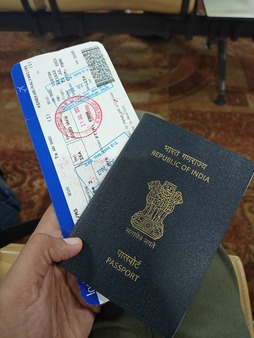 To ease my nerves, I struck up a conversation with a man seated nearby who was
also traveling to Abu Dhabi for work. He provided helpful information about
safety and transportation in Abu Dhabi, which reassured me. With the boarding
process complete and my anxiety somewhat eased. I found my window seat on the
flight and settled in, excited for the journey ahead. Next to me was a young
man from Ranchi(Zarkhand, India), heading to Abu Dhabi for work at a mining
factory. We had an engaging conversation about work culture in Abu Dhabi and
recruitment from India.
Upon arriving in Abu Dhabi, I completed my transit, collected my luggage, and
began finding my way to the hotel
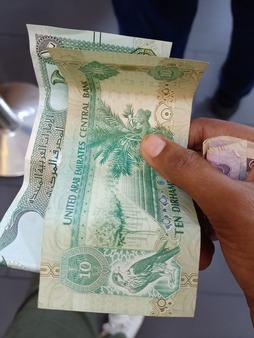
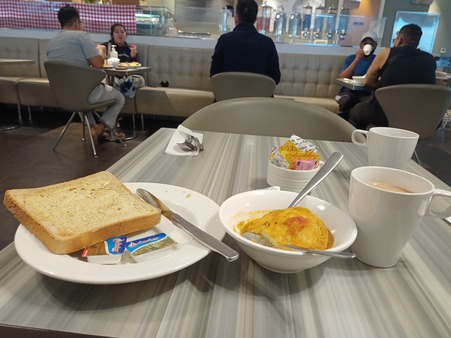
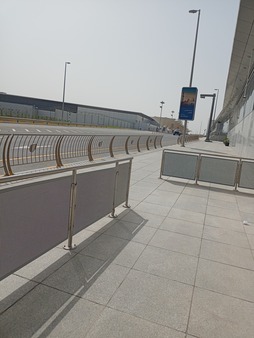 I reached Tirana, Albania after a six hours flight, feeling exhausted and I was
suffering from a headache. The air pressure had blocked my ears, and jet lag
added to my fatigue. After collecting my checked luggage, I headed to the first
ATM machine at the airport. Struggling to insert my card, I asked a nearby
gentleman for help. He tried his best, but my card got stuck inside the
machine. Panic set in as I worried about how I would survive without money.
Taking a deep breath, I found an airport employee and explained the situation.
The gentleman stayed with me, offering support and repeatedly apologizing for
his mistake. However, it wasn t his fault, the ATM was out of order, which I
hadn t noticed. My focus was solely on retrieving my ATM card. The airport
employee worked diligently, using a hairpin to carefully extract my card.
Finally, the card was freed, and I felt an immense sense of relief, grateful
for the help of these kind strangers. I used another ATM, successfully withdrew
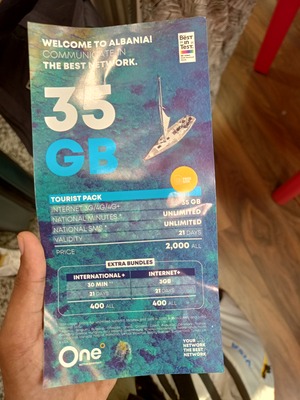
money, and then went to an airport mobile SIM shop to buy a new SIM card for
local internet and connectivity.
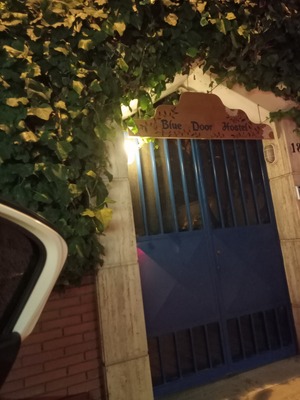
 I found my top bunk bed, only to realize I had booked a mixed-gender
dormitory. This detail had completely escaped my notice during the booking
process. I felt unsure about how to handle the situation. Coincidentally,
my experience mirrored what Kangana faced in the movie Queen .
Feeling acidic due to an empty stomach and the exhaustion of heavy
traveling, I wasn t up to cooking in the hostel s kitchen.
I asked the front desk about the nearest restaurant. It was nearly 9:30 PM,
and the streets were deserted. To avoid any mishaps like in the movie
Queen, I kept my passport securely locked in my bag, ensuring it wouldn t
be a victim of theft.
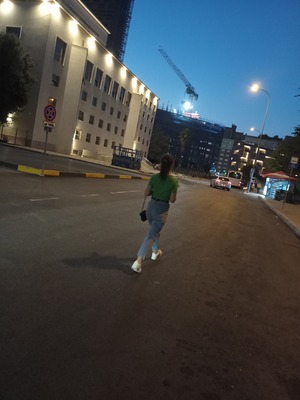
Venturing out for dinner, I felt uneasy on the quiet streets. I eventually
found a restaurant recommended by the hostel, but the menu was almost
entirely non-vegetarian. I struggled to ask about vegetarian options and was
uncertain if any dishes contained eggs, as some people consider eggs to be
vegetarian. Feeling frustrated and unsure, I left the restaurant without
eating.
I noticed a nearby grocery store that was about to close and managed to get
a few extra minutes to shop. I bought some snacks, wafers, milk, and tea
bags (though I couldn t find tea powder to make Indian-style tea). Returning
to the hostel, I made do with wafers, cookies, and milk for dinner. That day
was incredibly tough for me, I filled with exhaustion and struggle in a new
country, I was on the verge of tears .
I made a video call home before sleeping on the top bunk bed. It was a new
experience for me, sharing a room with both unknown men and women. I kept my
passport safe inside my purse and under my pillow while sleeping, staying
very conscious about its security.
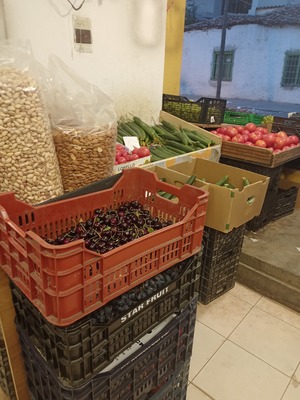
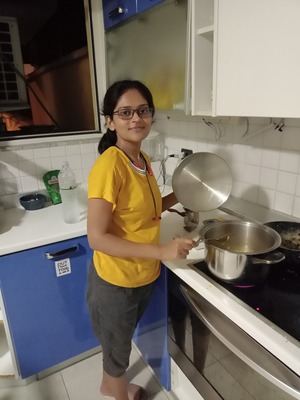
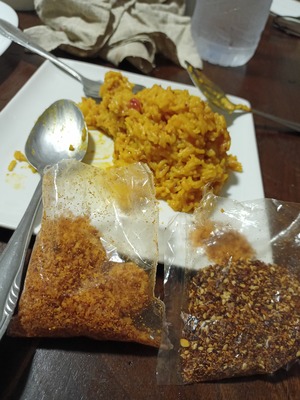

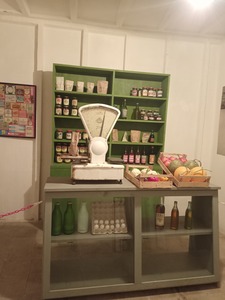

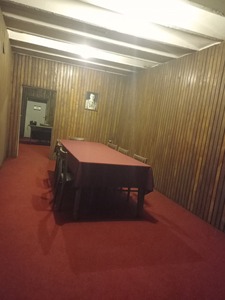
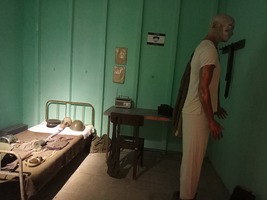
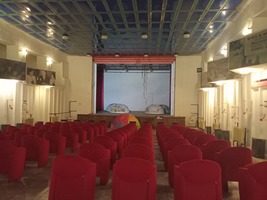
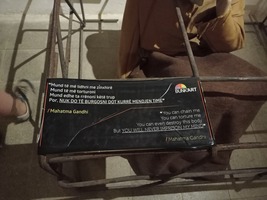
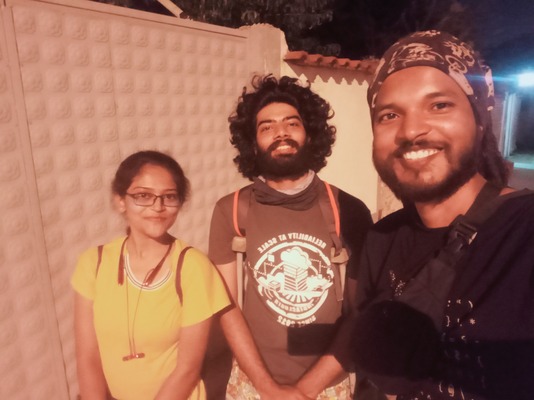
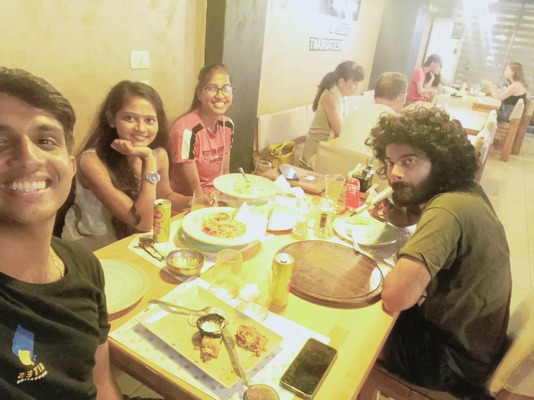
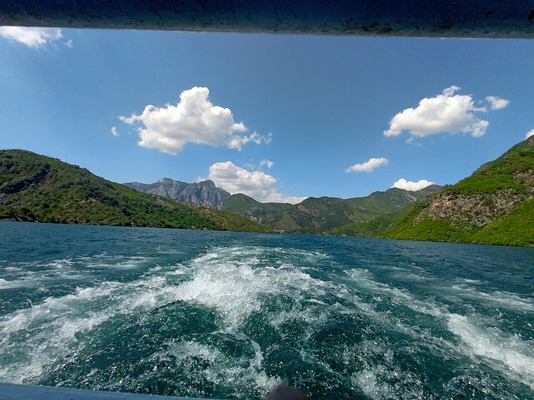

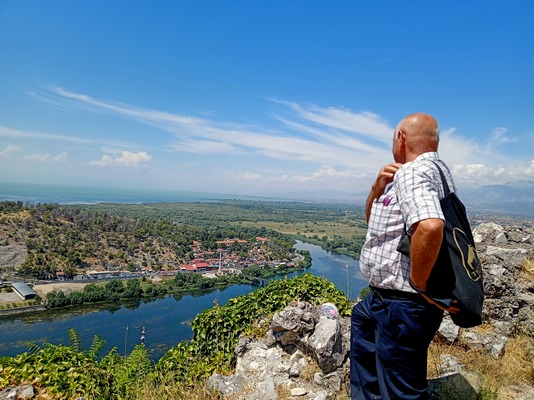
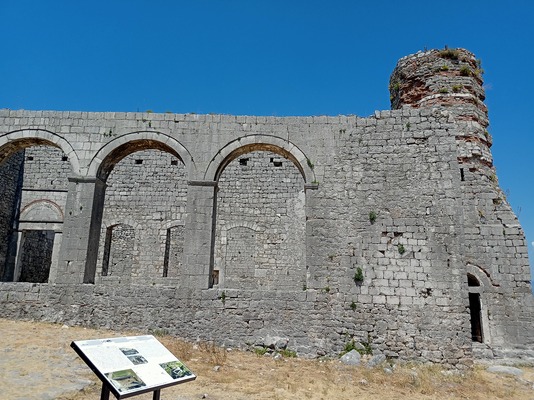 I took a bus from Shkod r to the southern part of Albania, heading to
Sarand . The journey lasted about five to six hours, and I had booked a stay
at






 I m finishing typing up this blog entry hours before my last 13 hour leg back home, after I spent 2 weeks in
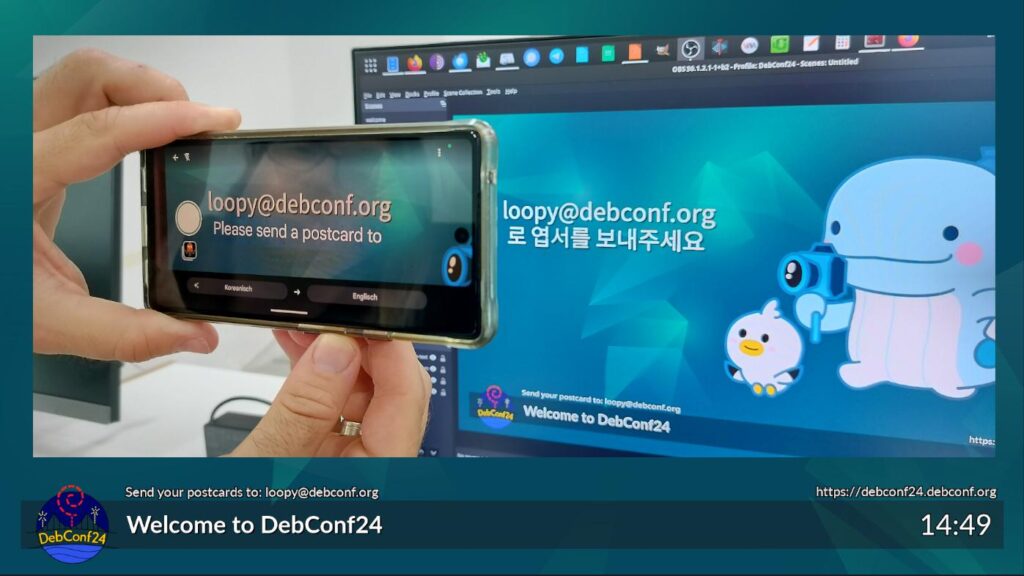

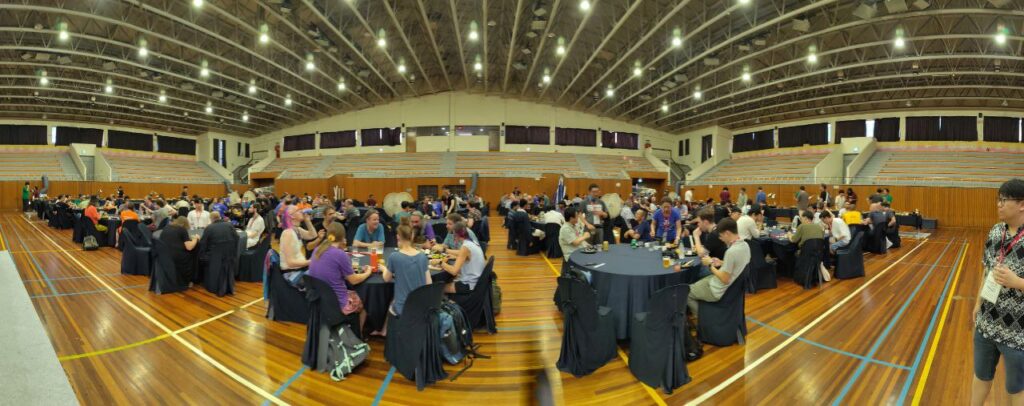 Conference Dinner Photo from Santiago




 A short status update on what happened on my side last month. Looking
at unified push support for Chatty prompted some libcmatrix fixes and
Chatty improvements (benefiting other protocols like SMS/MMS as well).
The Bluetooth status page in Phosh was a slightly larger change code
wise as we also enhanced our common widgets for building status pages,
simplifying the Wi-Fi status page and making future status pages
simpler. But as usual investigating bugs, reviewing patches (thanks!)
and keeping up with the changing world around us is what ate most of
the time.
Phosh
A Wayland Shell for mobile devices
 This is one of those posts that s more for my own reference than likely to be helpful for others. If you re unlucky it ll have some useful tips for you. If I m lucky then I ll get a bunch of folk pointing out some optimisations.
First, what I m trying to achieve. I want a virtual machine environment where I can manually do tests on random kernels, and also various TPM related experiments. So I don t want something as fixed as a