Search Results: "jam"

12 September 2008

Benjamin Mako Hill: What I'm Up To

It's been a year or so since I last reported what I was up to in my "day job." The last year has been a productive, if sometimes schizophrenic, period. I've had a good time working with Eric von Hippel (innovation and free and open source software research guru) and have decided I'd like to do a bit more of that. So I'm taking classes again -- mostly sociological methods courses -- to try to learn a bit about becoming a social scientist. To do so, I've enrolled in the Technology, Innovation and Entrepreneurship PhD program at the MIT Sloan School of Management and am working on putting together an interdisciplinary -- probably even interdepartmental -- research program. My basic research questions remain the ones that have motivated all my work: How can I get a better understanding of communities producing free stuff? How can I help those communities do so more effectively? MIT has a large number of people who share these goals and interests. Who knows, if I can put together enough of them and an academically rigorous research proposal that will provide a real benefit to the free software and free culture communities I care about, I might even manage to get a degree out of it! I'll also be staying on as a fellow at the MIT Center for Future Civic Media where I'll continue to maintain and expand Selectricity, work on Revealing Errors, and more.
6 September 2008

Benjamin Mako Hill: Happy Birthday GNU

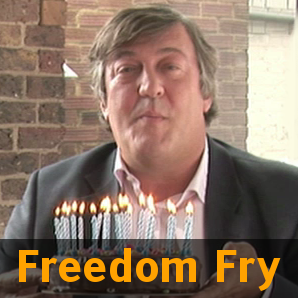
Nearly a week after its release, I suspect most of my audience has seen the FSF's Freedom Fry video of Stephen Fry wishing the GNU project and the free software movement a happy birthday. While I'm not usually one for birthdays, I thought I'd at least reflect on it briefly. Certainly, it's a wonderful video -- for which Matt Lee at others at the FSF should be proud. But it's fact that the GNU project is now twenty-five years old that is truly noteworthy. /copyrighteous/images/freedom_fry.png Wikipedia says that a generation (i.e., the average interval between the birth of parents and of their offspring) is somewhere between 25-30 years in most of the Western world. Twenty-five years isn't just a big number divisible by five, it marks a generational shift. Certainly, GNU has matured and accomplished wonderful things in last quarter-century. More importantly perhaps, it's produced wonderful progeny. It has spawned hundreds of thousands of free software projects, thousands of free or nearly-free operating systems, and an unbelievably vibrant global free and open source software community. Beyond the software realm, the free culture movement, most free licensing projects, and much of the access to knowledge movement can trace a connection back to GNU. We are living, and building, a new generation of the free software movement. It's not been an entirely smooth ride, feelings have been hurt, and it's hard for GNU's proponents -- myself included -- to not wince at some of what has been done in GNU's name and because of its example. But even cynics must admit: the world is an undeniably better place because of GNU and the efforts and ideas that it has motivated. I turn 28 in December and have spent my entire computing life in world where free software was a viable option and an active form of resistance. Here's to another generation! May we be half as productive and positive as the last!

2 September 2008

Runa Sandvik: I heart London

While sitting on a bench in Hyde Park, watching the leaves fall from the trees, thinking that fall is just around the corner, I started to write on the back of an old receipt. One that says 108,- for a Banana Passion Split and a bottle of Coca Cola. It’s just something I do when I’m nervous, excited, lonely, happy or all of the above. Sometimes I spend so long thinking about how to express myself, that I forget what I was going to write. I spend too long trying to find the right adjectives. And I wish I could find the right words to describe some of the best moments. My trip to London was more than just Big Ben, The London Eye, Madame Tussauds and Oxford Street. A lot more. Another receipt says 590,- for a haircut. It’s from July 15th, 2008. My ramblings on the back, blue ink, some words crossed out, some misspelled; at least 1 of the 268 Underground stations has a staircase with 78 steps, a shop on Oxford Street sells salt from the Dead Sea, and some very big soap bubbles were seen in Camden Town. There are some keywords at the bottom of the second receipt. Just to remember all the other things that happened. Like the time we almost got lost on the Underground, the elevator with no buttons, the Kanye West sunglasses in white and pink, and the lack of a proper breakfast - even though I don’t mind white bread and strawberry jam. There was just one small thing I wasn’t too happy about; you can’t write on receipts from Tesco. They have THANK YOU FOR SHOPPING WITH US printed all over it. And it took me a while to find that piece of paper in my bag. This time I saw fall in London, and a white pigeon. I will make sure I have my notebook with me next time.

31 August 2008

James Morrison: Professional Slide Installer

So the Google SF office now has a slide. Unfortunatly, this slide is not well tuned. So our discussion over dinner was based around the question: Do professional slide installers exist? If they do, are there professional slide testers? Can I be one?

27 August 2008

Benjamin Mako Hill: Feminism in Practice

When my friends Karen and Annina were confronted with an offensive sticker on the laptop of someone working at our lab, they organized a very constructive and effective intervention. I was so impressed that I made a short illustrated write-up of the story on my wiki.

25 August 2008

Jeff Licquia: Standards and Conversations, Part 1

So it looks like the project I’ve been laboring on has been getting some attention:
Ever thought it was difficult to write software for Linux? For multiple distros? InternetNews reports that the LSB is making a push for their next release (due out later this year) that should help make all that much easier.
They even link to our project status page. Cool! Of course, good publicity invites criticism. This time, there seem to be two themes. William Pitcock seems to have the most succinct summary:
To put things simply, the LSB sucks. Here s why:
  • The LSB spec depends on RPM. I mean, come on. Seriously. Why do they need to require a specific package manager? If package handling is really required, then why not create a simple package format that can be converted on demand into the system package format? Or why care about packages at all?
  • The LSB spec invents things without consulting distros. Like the whole init scripts thing. But that s not as bad as depending on RPM or requiring a specific layout.
(See also Scott James Remnant.) Let’s take this one part at a time. Today’s topic: packaging. Part of William’s problem may be that he doesn’t understand the spec. The LSB doesn’t require a specific package manager, or a specific package format. It doesn’t even require that the distribution be set up using package management at all! The spec only requires that LSB-compliant software be distributed so that any LSB-compliant distribution can install it. That could be tarballs with POSIX-compliant install scripts, an LSB-compliant install binary, a shar archive, a Python script with embedded base64 binaries, whatever. One of the options allowed is an RPM package, with a number of restrictions. The restrictions are key, because they effectively define a subset of RPM that acts as, to quote William again:
…a simple package format that can be converted on demand into the system package format…
The difference being, of course, that we didn’t reinvent the wheel and create our own; we used a popular format as the basis for ours. Scott raises another concern:
While much of the LSB can be hacked into a different distribution through compatibility layers and tools, such as alien, what ISV or other vendor wants to provide a support contract against a distribution that has such kludges?
I’m not sure if he’s referring specifically to packaging or to the standard in general. As regards packaging: the reason we specify a strict subset is because we can test that subset, and we’ve tailored it to the needs of tools such as alien. The theory goes that alien isn’t a kludge when it comes to LSB packages. But, as already mentioned, if vendors aren’t comfortable with supporting RPM, they have a number of other options. As it turns out, most of them are doing just that; the feedback we’re getting from most ISVs is that packaging (whether LSB-subset RPM, full RPM, or Debian) is just not worth the effort. Coming up: part 2…

23 August 2008

James Morrison: How not to find a friends blog

A while ago I started using Google Reader. Reader has a nice social feature where you can share articles with your friends. This is nicer than posted items in an activity stream since you don't have to click on anything, the article is right there. Anyway, I got a shared item in my stream of articles today with the second sentence as "She somehow got her own claw stuck into her paw.". Then it struck me, I've heard this story before. My dinner guests last week told this same story. So it seems I've found Michelle's blog. Thanks Tony.

22 August 2008

Benjamin Mako Hill: Free Software Project Management HOWTO

I took a little time today to make a new release of the Free Software Project Management HOWTO. Nearly eight years after I wrote it, much of the document is out of date or has been replaced with better, more comprehensive write-ups. In particular, I think Karl Fogel's book, Producing Open Source Software says everything insightful I say in the HOWTO, a whole lot clearly -- plus adds a lot I missed. That said, my HOWTO is short and is apparently still useful to folks. I updated it to include links to a new German translation courtesy to Robert F. Schmitt, to fix a bunch of links that time broke, and to address a few obvious mistakes that readers have pointed out. Thinking about the documents' future, I'm happy to release it under Creative Commons BY-SA in addition to GFDL and would love to help out on a wiki book project to merge a few of related efforts into a comprehensive wiki reference work.

21 August 2008

Benjamin Mako Hill: Story of Josephville

After a late-night IRC conversation about egg corns, shaggy dog stories and feghoots the idea for a short story came to me in the bathtub this morning. I give you, The Story of Josephville. Apologies in advance.

18 August 2008

Benjamin Mako Hill: Charles Kane and Jim Gettys

I watched Citizen Kane several weeks ago and was shocked to learn that the major villian in the film is a political boss named Jim Gettys. Of course, a real Jim Gettys is a well known X Window System contributor who is currently working at an OLPC manager. Last night someone reminded me that OLPC's new President and COO -- who I'd always just thought of as Chuck -- is named Charles Kane! Here's a short clip from a video of the fictional Charles Kane giving a rather long speech decrying the fictional Jim Gettys! (Also in Ogg.) I haven't been this amused since I learned that the head villian in the cartoon Jem was named Eric Raymond!

14 August 2008

Benjamin Mako Hill: Vaporizer

Nothing is more embarrassing than a website announcing that something will happen on a particular date -- e.g., a product will be released, a feature will be turned on -- after the date has come and gone! Even worse, putting things off repeatedly can be a lot of work! To help such people, I just did a very quick 10 minute hack I'm calling The Vaporizer. It looks like just a date on a webpage. However, if the date originally listed has come and gone, a little bit of Javascript will change the site so that it shows tomorrow's date instead. Vaporware providers of all types can use it to safely (and effortlessly) put things off without worrying about looking overdue! I have seen the future, and the future is tomorrow.

11 August 2008

Benjamin Mako Hill: Making Wiki Images More Wiki

One thing that has always annoyed me about most wiki is the way they handle images. MediaWiki, like most wikis, allows users to upload images and embed pictures. However, if you want to change an image, you need to download the file, open it up in GIMP, Inkscape, or Photoshop, edit it, save it, and re-upload it. Somewhere in this long process, the ease of editing that makes wikis so wonderful gets lost. Basically, I'm annoyed because images in wikis aren't very "wiki." I had a talk with Brianna Laugher at Wikimania about ways to make it easier to folks to edit pictures from within the browser -- even if it is only simple stuff. Yesterday I took the afternoon to write a new MediaWiki extension which gives a working example of in-browser image editing. It provides the ability to crop images using David Spurr's wonderful Javascript cropping user interface and uses ImageMagick to do the actual image manipulation. It is in the form of an extension to Mediawiki I've called EditImage. It's an afternoon hack from an under-qualified PHP hacker so it's nothing special. You can read it about on its page in the Mediawiki wiki and you can try it out on my personal wiki where I have it installed. I'm certainly not the first person to think about doing this. In fact, some old pages in the MediaWiki wiki imply that I'm not even the first person to play around with the idea of using Spurr's code to do image cropping for MediaWiki. Hopefully though, my code can act as a nice first step and a framework for folks wanting to add additional image manipulation features. For example, I think it would be quick to add the ability to do in-browser brightness and contrast manipulation and I would love to see this in a future version of the extension.

8 August 2008

Benjamin Mako Hill: Revealing Errors OSCON Keynote

When I gave a Revealing Errors talk at Lug Radio Live USA, I had the misfortune of being up against Robert Love's talk on Android which many people at the conference wanted to see -- myself included! One person who showed up to my talk anyway was Allison Randall. She was apparently entertained enough to invite me to give a short version of the talk as one of the keynote presentations at OSCON 2008! In the talk, I covered the ideas behind my Revealing Errors project and quickly walked through a few examples that showcase what I'm trying to do. I'm happy with the result: a couple thousand people showed up for the talk despite the fact that it was at 8:45 AM after the biggest "party night" of the conference! For those that missed it for whatever reason, you can watch a video recording that O'Reilly made and that I've embedded below. A larger version of the Flash video as well as a QuickTime version is over on blip.tv and I've created an OGG Theora version for all my freedom loving readers.

6 August 2008

Stefano Zacchiroli: yay from debcamp8

DebCamp8, shakiness, planes, python-debian Well, not unexpected news, but since I've been rather quite lately it is worth reminding that I'm now at DebConf8, enjoying the DebCamp. I've arrived today after a quite long trip made of unexpected extra plane stops in Madrid (thanks Iberia for not declaring it and letting me ponder about how can it possibly take 16 hours from Barcelona to Buenos Aires, now I know the reason ...) and shaky bus hours. First tiny teeny achievement of DebCamp (among a handful of beers already) is an upload of python-debian 0.1.11, implementing among other things support for parsed dependencies and a major overhaul changelog parsing (thanks to James Westby). Unfortunately we are going to miss Lenny with this release, but after all it is a package mostly meant for Debian Developers, so it is probably not a big deal.

5 August 2008

Petr Rockai: adept 3.0 alpha 6

Hi, it’s that time again: new alpha version of Adept hits the block. For the unaware, Adept is an APT front-end for KDE. You can do all the cool stuff with it that the other kids can’t. Join the fun! New features since Alpha 5 (the list is a little less staggering than the last time, sorry about that, but it’s only been a week) Where to get I have again prepared binary packages, this time even more of them (a Hardy backport is included). Traditionally, in Debian, you can install alpha 6 from experimental:
apt-get install -t experimental adept
The sources.list goes:
deb http://ftp.debian.org/debian experimental main
If you are on Kubuntu Intrepid, the line is:
deb http://ppa.launchpad.net/mornfall/ubuntu intrepid main
and finally, on Kubuntu Hardy, the lines are (BUT: read below!)
deb http://ppa.launchpad.net/kubuntu-members-kde4/ubuntu hardy main
deb http://ppa.launchpad.net/mornfall/ubuntu hardy main
Big fat warning: Due to somewhat unexpected difficulties, Adept requires newer APT than available in Hardy. This means, adding the above sources.list lines will upgrade your apt to a version from Intrepid, that’s also completely untested on anything resembling a Hardy installation. Be wary. Moreover, installing Adept means means KDE 4.1 for Hardy users. (This does not apply to Intrepid users, they are already on the cutting edge and no extra dangers lie this way.) (For all Kubuntu users, there are more instructions to be found on https://launchpad.net/~mornfall/+archive.) Heroes of Alpha 6 I hereby nominate the “Heroes of Alpha 6”, for their deeds that helped Adept move forward: (And a totally flirtless wink towards Blauzahl, who somehow inspired me to actually do some bugzilla sorting…) And now, it’s easy to join the ranks of these heroes — just test the new alpha version and find bugs. Immortality won’t escape your grasp. Also, please don’t forget to read the next section. Jobs for Alpha 6 Sorting through Launchpad for bugs that have been fixed in alpha 6 (compared to 2.1) would be really awesome. It is a big list and many of them are likely to need testing. (I can take care of that for the KDE bugzilla, but launchpad is a task just too daunting for me and my time possibilities, so help would be very much appreciated). Notifier is still not included. The components to test are (if you have sudo, kdesu for the rest):
sudo adept
sudo adept installer
sudo adept updater
Please give a go to all of them, report rough edges, crashes and all that, either through IRC (mornfall at freenode, oftc) or mail me-at-mornfall-dot-net or use KDE Bugzilla. Known Issues

2 August 2008

Russell Coker: On Talking to Police

The lecture by Professor James Duane about why you should not talk to the police (in the US at least) is doing the rounds at the moment. The Google video site doesn’t work for me, so I downloaded it from youtube with the following references:
part 1 [rVq6N0xAEEM]
part 2 [-Z0bpj3EEHI]
part 3 [44-GSZofXIE]
part 4 [zSvxiaO-TG8]
part 5 [gzYHnWrqfWg]
part 6 [BErNzdOnWGY] The first thing that struck me about this is that it’s the first time I’ve ever seen someone clearly state the problem with the excessive number and complexity of the laws. It’s impossible to know whether you are breaking the law. This is obviously wrong and it should be a legislative priority to reduce the number of laws and the complexity of the laws. If for every law they sought evidence regarding whether it helped people or helped preserve the state then that would be a good start. The excessive number of laws is not just a problem due to the risk of accidentally breaking a law, but also due to the fact that a malicious cop could arrest anyone that they wished - it would merely be a matter of following them for long enough. In the second half of the lecture Officer George Bruch from the Virginia Beach Police Department gives his side of the story. At one point he cites an example of the road laws where he can follow a car and find a legitimate reason for booking the driver if he wishes. Virginian law allows the police to destroy primary evidence. If they tape an interview then they can transcribe it to a written record and then destroy the original tape. If the transcription removes some of the content that has meaning then the defendant is probably going to suffer for it. It’s often stated that on the net you have to make extra effort to make your meaning clear as jokes can’t be recognised by the tone of voice. It seems that the same effort would need to be made in a police interview (but without the possibility of going back and saying “sorry I was misunderstood” that you have in email). It’s also legal for police to lie to suspects. While I can imagine some situations where this could be reasonable, it seems that at a minimum there should be some protection for child suspects against being lied to by police (there have been some travesties of justice stemming from children trusting police in an interview room). It seems that if someone doesn’t get a good lawyer and refuse to talk to the police then they will be likely to be convicted regardless of whether they are guilty or innocent. Officer Bruch says that he tries to avoid interviewing innocent people. So I guess whether someone ends up in jail or not will depend to some extent on the opinion of a cop who may or may not interview them. While I guess a high rate of success at securing convictions is in most cases a good thing, the fact that convicting an innocent person is the absolute best way of letting a criminal escape justice seems to be forgotten. Another issue is the fact that a witness may have reason to believe that they could be a suspect. The advice that a suspect should never talk to a police officer seems to logically imply that intelligent people will be hesitant about providing witness statements in situations where they may be a suspect. I wonder how the legal system in Australia compares to the US in regard to these issues. I know that we have far too many laws and too many complex laws which can not be understood and obeyed by a reasonable person.

31 July 2008

Jaldhar Vyas: Don't Copy That Colloquoy

It seems I have been wrong about the origins of the Seville Orange joke Rather than Algernon Sidney It would appear to have been quipped by an 18th century Anglo-Irish actor named James Quin as recounted in "Lives of the Players" by John Galt (not that John Galt but this one) in 1831.
Quin once, in the character of Cato, received a blow in his face by an orange thrown from the upper gallery; such a circumstance would have disconcerted many an actor possessed of less presence of mind, but instead of being disturbed, he wiped his face, and taking it up, observed, "It was not a Seville orange."
A proto-version of the joke does date back to Sidney's time. It was made by none less than William Shakespeare in "Much Ado About Nothing" Act II, Scene 1:
DON PEDRO: Why, how now, count! wherefore are you sad?
CLAUDIO: Not sad, my lord.
DON PEDRO: How then? Sick?
CLAUDIO: Neither, my lord.
BEATRICE: The count is neither sad, nor sick, nor merry, nor well; but civil count, civil as an orange, and something of that jealous complexion.
Note Don Pedro is from Aragon which is close enough to Seville for Elizabethan comedy purposes. But while 300+ years is impressive, this joke from Sumeria c. 19th-16th centuries BC is older by far:
Something which has never occurred since time immemorial: a young woman did not fart in her husband's lap.
See The world's ten oldest jokes

22 July 2008

MJ Ray: LugRadio Live Event Review


LUGRadioLive 2008 by sheilaellen (cc-by-2.0) This weekend, I learnt lots of things while at LugRadio Live in Wolverhampton. One thing was the surprising delay between posting something on this site and it actually appearing in the feed on my mobile phone. Another is that I can’t post to my new blog hosting from my mobile phone, which I’ll debug Real Soon Now. So, this is a bit later than when I first wrote it and it’s now one post instead of seven or so… Thanks to some unexplained delay travelling through Birmingham, I walked into LugRadio Live during the Introduction. The venue was generally pretty good, but the stage obstructed the entrance the acoustics in the atrium only seemed to work for the four gents. No idea what they said: I got past the stage into the audience and it finished almost immediately. For the first talk session, I went to see Rufus Pollock of Open Knowledge Foundation introduce a plan for the Comprehensive Knowledge Archive Network. Seems like a good idea. I’ve tons of questions, but I can’t quite get them into words, I don’t know when I’ll have time for this and I’m not sure they really matter anyway. I think I’ll mention CKAN to some librarians anyway and see what they make of it. I expected Emma Jane Hogbin’s “Form an orderly queue, ladies” to start an argument with the usual chix silliness but I was pleasantly surprised by how reasonable the advice was. In fact, the speaker also criticised the “chix” movements, although it appeared she participates in some women-only clubs, so not a 100% win for equality there. Sadly, much of the talk has been overshadowed in my mind by the memory of a giant furry racoon walking in unexpectedly, so I’ll probably grab the video of the LRL-USA version sometime soon. James Hooker’s talk titled “Taming the dragons — entrepreneurship and VCs” launched venturex as described on his own site already (along with more talk descriptions). It was an interesting demo, but it requires hackers to sell some votes in their companies to Venture Capitalists, which I believe is a bad thing for free software developers to do. We need to look more at a form of social entrepreneurism.</soapbox> I tried to ask a question, but the terrible atrium acoustics did funny things with my not-so-good hearing and I lost my way somewhat. At the end of that talk, I got chatting to an interesting web developer from Leicester who also forsook The Gong-a-Thong Lightbulb Talk Extravaganza and headed up to the Lightning Stage for Robert Collins and the Bzr talk. As well as some glimpses of how it’s changed since forking from tla, it was interesting to see a real (imperfect) demo and a non-Emacs version control GUI. The web interface for casual users to submit patches sounded very interesting and I also learned that some people pronounce “svn” like “Sven”. Most things that Robert thought were benefits sounded like drawbacks to me, so I’ll stay with git for now. Steve Lamb’s Green IT talk was the last presentation I saw. This talk really disappointed me because it seemed to be skewed towards the corporate governance nonsense instead of seeing Green IT as a vital pragmatic step, mentioning points I’d seen put more clearly elsewhere, as well as advertising Vista virtualisation and some panoramic webcam from Microsoft (who employ him) that doesn’t work with any free software, according to a deserved verbal shoe-ing in the Q+A. Only thing I remember that seems useful: charging from USB is more efficient than using wallwarts. Is that right? Finally, the main event: LugRadio Live and Unleashed. It opened with the shock announcement that LRL will continue into 2009, as announced elsewhere already. The rest of the madness will presumably appear online shortly and I don’t remember it well enough to do it justice… A tech conference crossed with a rocking gig by the strangest boyband ever, with a cheerleading racoon and some very cool people. I’ll try to be at LRL 2009. Will you be there? Were you at LRL this last weekend?

21 July 2008

Benjamin Mako Hill: OSCON and More

I'm in Portland, Oregon for the week where I'll be at OSCON. I'll be giving two talks on the final day of the conference (July 25): the first will be a 15 minute keynote on Revealing Errors at 8:45 in the Portland Ballroom; the second is a full-length normal talk on Selectricity at 11:35AM in Portland 255. It will be my first long-form talk about Selectricity and I'm looking forward to it. Because myself, a few Free Software Foundation staff members including Campaign Manager Joshua Gay, and quite a few FSF associate members will be in town, we're going to hold a small FSF Associate Members event in Portland (the first outside Boston!). It's going to be in the form of a pizza party with a few small talks from FSF folk including myself. Here are the details:
FSF Associate Members (& friends!) Event
July 22nd 6:30-9:00PM
Old Town Pizza
226 NW Davis St
Portland, OR 97209
It's free and open to all but is designed to provide a forum for members and friends. If you are an FSF member, please consider coming. If you're not a member yet, please don't let it keep you away; staff will be able to sign up new members there. RSVPs to Deborah Nicholson aren't necessary to attend but would be welcome. I'll be heading to Seattle right after the conference for a few days. If you would like to meet up in Seattle or Portland this week, please don't hesitate to get in contact.

Benjamin Mako Hill: I Will Revise

Once again, Wikimania was wonderful. I gave my scheduled talk on Autonomo.us and network freedom and network services. I also filled in for a few speakers to give a "Zotero for Wikipedians" demo and to say a few words about the BY-SA/FDL work as part of a Creative Commons panel. Perhaps the most memorable part of the conference was the writing and performance of I Will Revise. A couple days before the conference, a small group of Wikipedians -- The Difftones -- wrote the song at a karaoke bar in Alexandria. We had a wonderful time leading a room full of lightning talk attendees in song and a final rendition by a massive, fully-packed, stage at the party on the final night! It's online on meta.wikimedia.org. You should feel free to revise it, add verses, and improve it!

Next.

Previous.