Search Results: "cas"

11 October 2023

Russell Coker: PinePhone Status

4 months ago I got my PinePhonePro [1]. Since then I have got SE Linux working on it to the stage of allowing it to boot correctly with Debian/Unstable, login with the user_t domain (minimum privilege for the graphical user) and make and receive calls. I finished getting SE Linux working reasonably well 3 days ago and most (but not all) of the SE Linux policy is in Debian now. I ve been getting good at Github PRs and I m sending a lot of policy upstream, so the next version of Debian will have a much smaller diff from the upstream Refpolicy. I have been running the PinePhone with Plasma Mobile because I prefer KDE, I would run GNOME/Phoc if it gave significantly better functionality. 3 days ago I moved my main SIM (the one with the number that people call about work etc) to my PinePhone and tried running it as my main phone. Today I gave up on that. My Android History The last phone I had that did everything I needed was a Huawei Mate 10 Pro that I bought refurbished in June 2019 for $389. The Mate 10 Pro runs Android with the Google Play store and has been quite unremarkable which is presumably why I forgot to blog about it when I got it, it was a slight upgrade over the Huawei Mate 9 [2] that I had used for 2 years before that. In April 2022 I tried using a Huawei Nova 7i as my main phone without Google Play programs or services [3]. That experiment was a failure as I couldn t get NextCloud to work for Calendaring and Contacts. It could be that I stuffed something up when trying that, but I put more skill and effort into trying to get it to work than most people ever would. The Nova 7i is a very slick phone, faster and nicer than the Mate 10 Pro (as expected being 2 years newer) while also having ridiculously long battery life. The Nova 7i when always on running the SchildiChat Matrix client and the Conversations Jabber client it will use less than 10% battery in a 8 hour work day. As nice as the Nova 7i is for the core functions I still need to have Play Store apps for LinkedIn, Twitter, Facebook, Zoom, etc. Which meant connecting the Mate 10 Pro via Wifi. As slick as the Nova 7i is for non-Google stuff running it and the Mate 10 Pro is a medium amount of pain for a small amount of freedom. So now I have for the moment abandoned the Nova 7i and gone back to the Mate 10 Pro. What I will try to do is to either forcibly install Google Play on the Nova 7i to make it my proprietary phone or to install an open distribution of Linux (IE not Android) to make it at least a small tablet which incidentally is much more powerful than a PinePhonePro. Issues With the PinePhonePro The battery charges very slowly (as much as 50 hours estimated charge time) and discharges fast. When used in a typical way in Caffeine mode to stop suspend so I can ssh to it etc it won t come close to lasting an 8 hour day. Also it will only take 5V charging and ideally wants 5V 3A charging which most chargers won t do. The charging speed over regular USB ports is very slow, sometimes stating it will take as much as 50 hours to charge. A phone that gets below 50% charge in less than 4 hours and can t be charged at a reasonable speed from a USB port on a laptop or monitor is going to be a major pain to use in the office. I don t think this can be fixed in software, we can alleviate it by making software more CPU efficient and by enabling various hardware sleep modes more effectively but the slow charging is a hardware issue that can t be fixed. The phone call quality is poor. Usually when on a call I hear static and sometimes the person at the other end appears to hear nothing. Also the UI for calls is different from Android which makes it take longer to answer a call and gives more missed calls. The UI issue is a combination of software and habits, both of which can be changed. But the call quality may be a hardware issue. I don t know if it s a hardware issue specific to my phone or something related to the PinePhonePro on the Telstra network. Clicking on notification in the drop-down doesn t take me to the app. I don t know if this is regarded as a bug by the Plasma-Mobile developers. Also notifications aren t displayed on the lock screen and there doesn t seem to be a configuration option to enable this. The Plasma-Mobile configuration for the wifi hotspot is difficult. There is no button for it in the drop-down menu (called Quicksettings in Plasma-Mobile) and no way of easily determining whether it s in hotspot or wifi client mode. This isn t an insurmountable problem and the worst-case is that I could write a script to do it, but it s still annoying. There is apparent support in the desktop version of KDE for syncing contacts from Google and I could probably get that working (although I failed last time I tried on the desktop), but it is a pain. Conclusion Most of the problems are software related and therefore I can get involved in solving them. I plan to keep working on these things. If all the software had worked in an ideal manner then I would have spent more time investigating the hardware issues of battery life and charge time and the quality of calls. I now have my Librem5 [4] running Debian so I will be able to compare call quality with the PinePhonePro. If I m unable to get the PinePhonePro working adequately then maybe making the Librem5 my main phone will be an option. I hope that by early next year I will be able to make another test at using a FOSS phone my main phone. In the mean time I can still work on convergence and other things.

10 October 2023

Julian Andres Klode: Divergence - A case for different upgrade approaches

APT currently knows about three types of upgrades: All of these upgrade types are necessary to deal with upgrades within a distribution release. Yes, sometimes even removals may be needed because bug fixes require adding a Conflicts somewhere. In Ubuntu we have a third type of upgrades, handled by a separate tool: release upgrades. ubuntu-release-upgrader changes your sources.list, and applies various quirks to the upgrade. In this post, I want to look not at the quirk aspects but discuss how dependency solving should differ between intra-release and inter-release upgrades. Previous solver projects (such as Mancoosi) operated under the assumption that minimizing the number of changes performed should ultimately be the main goal of a solver. This makes sense as every change causes risks. However it ignores a different risk, which especially applies when upgrading from one distribution release to a newer one: Increasing divergence from the norm. Consider a person installs foo in Debian 12. foo depends on a b, so a will be automatically installed to satisfy the dependency. A release later, a has some known issues and b is prefered, the dependency now reads: b a. A classic solver would continue to keep a installed because it was installed before, leading upgraded installs to have foo, a installed whereas new systems have foo, b installed. As systems get upgraded over and over, they continue to diverge further and further from new installs to the point that it adds substantial support effort. My proposal for the new APT solver is that when we perform release upgrades, we forget which packages where previously automatically installed. We effectively perform a normalization: All systems with the same set of manually installed packages will end up with the same set of automatically installed packages. Consider the solving starting with an empty set and then installing the latest version of each previously manually installed package: It will see now that foo depends b a and install b (and a will be removed later on as its not part of the solution). Another case of divergence is Suggests handling. Consider that foo also Suggests s. You now install another package bar that depends s, hence s gets installed. Upon removing bar, s is not being removed automatically because foo still suggests it (and you may have grown used to foo s integration of s). This is because apt considers Suggests to be important - they won t be automatically installed, but will not be automatically removed. In Ubuntu, we unset that policy on release upgrades to normalize the systems. The reasoning for that is simple: While you may have grown to use s as part of foo during the release, an upgrade to the next release already is big enough that removing s is going to have less of an impact - breakage of workflows is expected between release upgrades. I believe that apt release-upgrade will benefit from both of these design choices, and in the end it boils down to a simple mantra:

Russ Allbery: Review: Chilling Effect

Review: Chilling Effect, by Valerie Valdes
Series: Chilling Effect #1
Publisher: Harper Voyager
Copyright: September 2019
Printing: 2020
ISBN: 0-06-287724-0
Format: Kindle
Pages: 420
Chilling Effect is a space opera, kind of; more on the genre classification in a moment. It is the first volume of a series, although it reaches a reasonable conclusion on its own. It was Valerie Valdes's first novel. Captain Eva Innocente's line of work used to be less than lawful, following in the footsteps of her father. She got out of that life and got her own crew and ship. Now, the La Sirena Negra and its crew do small transport jobs for just enough money to stay afloat. Or, maybe, a bit less than that, when the recipient of a crate full of psychic escape-artist cats goes bankrupt before she can deliver it and get paid. It's a marginal and tenuous life, but at least she isn't doing anything shady. Then the Fridge kidnaps her sister. The Fridge is a shadowy organization of extortionists whose modus operandi is to kidnap a family member of their target, stuff them in cryogenic suspension, and demand obedience lest the family member be sold off as indentured labor after a few decades as a popsicle. Eva will be given missions that she and her crew have to perform. If she performs them well, she will pay off the price of her sister's release. Eventually. Oh, and she's not allowed to tell anyone. I found it hard to place the subgenre of this novel more specifically than comedy-adventure. The technology fits space opera: there are psychic cats, pilots who treat ships as extensions of their own body, brain parasites, a random intergalactic warlord, and very few attempts to explain anything with scientific principles. However, the stakes aren't on the scale that space opera usually goes for. Eva and her crew aren't going to topple governments or form rebellions. They're just trying to survive in a galaxy full of abusive corporations, dodgy clients, and the occasional alien who requires you to carry extensive documentation to prove that you can't be hunted for meat. It is also, as you might guess from that description, occasionally funny. That part of the book didn't mesh for me. Eva is truly afraid for her sister, and some of the events in the book are quite sinister, but the antagonist is an organization called The Fridge that puts people in fridges. Sexual harassment in a bar turns into obsessive stalking by a crazed intergalactic warlord who frequently interrupts the plot by randomly blasting things with his fleet, which felt like something from Hitchhiker's Guide to the Galaxy. The stakes for Eva, and her frustrations at being dragged back into a life she escaped, felt too high for the wacky, comic descriptions of the problems she gets into. My biggest complaint, though, is that the plot is driven by people not telling other people critical information they should know. Eva is keeping major secrets from her crew for nearly the entire book. Other people are also keeping information from Eva. There is a romance subplot driven almost entirely by both parties refusing to talk to each other about the existence of a romance subplot. For some people, this is catnip, but it's one of my least favorite fictional tropes and I found much of the book both frustrating and stressful. Fictional characters keeping important secrets from each other apparently raises my blood pressure. One of the things I did like about this book is that Eva is Hispanic and speaks like it. She resorts to Spanish frequently for curses, untranslatable phrases, aphorisms, derogatory comments, and similar types of emotional communication that don't feel right in a second language. Most of the time one can figure out the meaning from context, but Valdes doesn't feel obligated to hold the reader's hand and explain everything. I liked that. I think this approach is more viable in these days of ebook readers that can attempt translations on demand, and I think it does a lot to make Eva feel like a real person. I think the characters are the best part of this book, once one gets past the frustration of their refusal to talk to each other. Eva and the alien ship engineer get the most screen time, but Pink, Eva's honest-to-a-fault friend, was probably my favorite character. I also really enjoyed Min, the ship pilot whose primary goal is to be able to jack into the ship and treat it as her body, and otherwise doesn't particularly care about the rest of the plot as long as she gets paid. A lot of books about ship crews like this one lean hard into found family. This one felt more like a group of coworkers, with varying degrees of friendship and level of interest in their shared endeavors, but without the too-common shorthand of making the less-engaged crew members either some type of villain or someone who needs to be drawn out and turned into a best friend or love interest. It's okay for a job to just be a job, even if it's one where you're around the same people all the time. People who work on actual ships do it all the time. This is a half-serious, half-comic action romp that turned out to not be my thing, but I can see why others will enjoy it. Be prepared for a whole lot of communication failures and an uneven emotional tone, but if you're looking for a space-ships-and-aliens story that doesn't take itself very seriously and has some vague YA vibes, this may work for you. Followed by Prime Deceptions, although I didn't like this well enough to read on. Rating: 6 out of 10

9 October 2023

Aigars Mahinovs: Figuring out finances part 1

I have been managing my finances and getting an overview of where I am financially and where I am going month-to-month for a few years already. That means that I already have a method of doing my finances and a method of thinking about them. So far this has been supported by a commerical tool called MoneyWiz. I was happy to pay them for the ability to have a solid product and be able to easily access my finances from my phone (to enter cash transactions directly in the field) and sync data across multiple devices with their cloud offering. However, MoneyWiz development stalled. So much so that they stopped updating their Android app and cancelled web version plans to just focus on a iPhone and MacOS clients. And even there the development did not seem very successful over the last year. So I am cancelling their subscription, extracting all my data (as CSV) and looking for alternatives. So let's start with the basics - what I want from finace software?
  • Open source and self-hosted
  • Accounts to represent real accounts in my bank, credit cards, cash account
  • Transactions to represent money moving in/out/between accounts
  • Tree of categories for transactions to categorise spending
  • Category reports on arbitrary time periods
  • Ability to see the expected balance on each account at any historic point in time from given transactions
  • Ability to do a corrective transaction - hmm, I don't know what happened, but right now I have X in cash
  • Adding past transactions before a corrective transaction should not change balance after correction
  • Ability to automatically import transactions from my bank
  • Ability to plan future, recurring transactions
  • Incoming transactions from bank import should be auto-matched with planned recuring transactions
  • Ability to see missed planned recurring transactions
  • Ability to see value deviations in planned recuring transactions
  • Ability to manually match a transaction with a planned recurring transaction for that month or skip a month
  • Ability to see a projected balance on my accounts at any future date given planned transactions
  • Credit card fully refilling its current (negative) balance to zero (from a given account) should be a plannable transaction
  • Accessible from multiple devices, like Linux, Android, iPhone, MacOS. Most likely that means web-based
  • Achiving accounts without loosing their past transactions with active accounts
  • API to access data, so that I could wire that up to a Home Assistant dashboard
I don't care about currencies (thanks Euro!), localization, taxes and double-entry bookkeeping. I don't have much use for tags, budgets or savings targets. It could be useful to be able to track stock investment values (but I do have a pretty good from the bank that does that anyway). And tracking loans (incoming and outgoing) could be a worthwhile thing as well, but that can also be simulated with separate accounts for each loan. Tracking refundable expenses (like medical expenses that insurances should refund later on) would also be nice. Could also be simulated by having a separate expense category (Medical - refundable) and putting the refund as a negative expense into that category. One weird feature that I really like is having transfer transactions that have arbitrary incoming and outgoing dates. For some transactions it is a simple transfer delay - money leaves the account A on Friday and only appears in the destination account B on Monday morning. However, this can also happen the other way around - a few credit cards I have seen work in a way that on 14th of each month the balance of the credit card gets reset to zero and then a week later the negative balance that was on that credit card gets taken from the base account that the card is bound to. So the money leaves the base account a week later than it arrives in the credit card account. Financial systems really are magic sometimes :D Ideally that should be represented by a single transaction with two dates - one date when money leaves one account and another date when it arrives in a different account, so that balances on both accounts in the days between would be correct (as in matching what the bank says they were on those dates). And it should automatch such transaction from bank data imports. And predict its value from the negative balance of the credit card. And a pony! But in worst case this could be simulated using a separate "In transfer" account. When I am thinking about my finances, the key metric for me is - how much will I spend this month - both in fixed spending (rent, Internet and phone bills, health insurance, subscriptions, ...) and in variable spending (groceries, eating out, clothing, ...). In theory that should be trivial, but in practice a simple calendar month view will fail because a bunch of fixed expenses occur at the month end/start boundary and can happen either at the end of previous month or at start on next month, depending on how the weekends happen to fall and how the systems of various providers decided to do direct debits this month. So 1st of month is not a good snapshoting time. Any date between 6th (last possible days for monthly bills) and 20th (earliest possible salary day) would be a better cut off point. Looking at the balance of my main account at that time point lets me know what was the difference between income and expenses for the past month. And that is the number I want the financial app to be able to predict as soon as possible. And additional complication is the way credit cards work here. The expenses booked to a credit card after 14th of September will only appear in the main account on 20th of October and thus will actually only count towards the expenses of month of October. That makes it very confusing to see a larger overspend in the main account on 6th of October and then use the categories to try to figure out where the money went, because all the spending that happened on the credit card after the 14th of September should not really be looked at in that context, but spending on the main account or cash account should be counted all the way to 6th of October. :D I am not optimistic that any finance software would able to doea with this mess correctly. So far I am tending to consider Firefly III which has most of what I need and looks great and well maintained, but has the tiny drawback of being written in PHP, so that basically excludes me from ability to contribute anything beyond ideas and feedback. :D I already did a quick test of Firefly via local Docker containers, so the next step would be to try to set it up as a production instance (using the same always-on mini PC that is running my Home Assistant instance), get the database up and working, get the Firefly III itself up and running, get account importer working for bank connection, import historical transactions from there, setup my categories and recurring transactions, import past data dumped out of MoneyWiz and see if this works well and gives me the insights I need. If you know a better solution, please let me know on any social or email channel!

8 October 2023

Niels Thykier: A new Debian package helper: debputy

I have made a new helper for producing Debian packages called debputy. Today, I uploaded it to Debian unstable for the first time. This enables others to migrate their package build using dh +debputy rather than the classic dh. Eventually, I hope to remove dh entirely from this equation, so you only need debputy. But for now, debputy still leverages dh support for managing upstream build systems. The debputy tool takes a radicially different approach to packaging compared to our existing packaging methods by using a single highlevel manifest instead of all the debian/install (etc.) and no hook targets in debian/rules. Here are some of the things that debputy can do or does: There are also some features that debputy does not support at the moment: There are all limitations of the current work in progress. I hope to resolve them all in due time.

Trying debputy With the limitations aside, lets talk about how you would go about migrating a package:
# Assuming here you have already run: apt install dh-debputy
$ git clone https://salsa.debian.org/rra/kstart
[...]
$ cd kstart
# Add a Build-Dependency on dh-sequence-debputy
$ perl -n -i -e \
   'print; print " dh-sequence-debputy,\n" if m/debhelper-compat/;' \
    debian/control
$ debputy migrate-from-dh --apply-changes
debputy: info: Loading plugin debputy (version: archive/debian/4.3-1) ...
debputy: info: Verifying the generating manifest
debputy: info: Updated manifest debian/debputy.manifest
debputy: info: Removals:
debputy: info:   rm -f "./debian/docs"
debputy: info:   rm -f "./debian/examples"
debputy: info: Migrations performed successfully
debputy: info: Remember to validate the resulting binary packages after rebuilding with debputy
$ cat debian/debputy.manifest 
manifest-version: '0.1'
installations:
- install-docs:
    sources:
    - NEWS
    - README
    - TODO
- install-examples:
    source: examples/krenew-agent
$ git add debian/debputy.manifest
$ git commit --signoff -am"Migrate to debputy"
# Run build tool of choice to verify the output.
This is of course a specific example that works out of the box. If you were to try this on debianutils (from git), the output would look something like this:
$ debputy migrate-from-dh
debputy: info: Loading plugin debputy (version: 5.13-13-g9836721) ...
debputy: error: Unable to migrate automatically due to missing features in debputy.
  * The "debian/triggers" debhelper config file (used by dh_installdeb is currently not supported by debputy.
Use --acceptable-migration-issues=[...] to convert this into a warning [...]
And indeed, debianutils requires at least 4 debhelper features beyond what debputy can support at the moment (all related to maintscripts and triggers).

Rapid feedback Rapid feedback cycles are important for keeping developers engaged in their work. The debputy tool provides the following features to enable rapid feedback.

Immediate manifest validation It would be absolutely horrible if you had to do a full-rebuild only to realize you got the manifest syntax wrong. Therefore, debputy has a check-manifest command that checks the manifest for syntactical and semantic issues.
$ cat debian/debputy.manifest
manifest-version: '0.1'
installations:
- install-docs:
    sources:
    - GETTING-STARTED-WITH-dh-debputy.md
    - MANIFEST-FORMAT.md
    - MIGRATING-A-DH-PLUGIN.md
$ debputy check-manifest
debputy: info: Loading plugin debputy (version: 0.1.7-1-gf34bd66) ...
debputy: info: No errors detected.
$ cat <<EOF >> debian/debputy.manifest
- install:
    sourced: foo
    as: usr/bin/foo
EOF
# Did I typo anything?
$ debputy check-manifest
debputy: info: Loading plugin debputy (version: 0.1.7-2-g4ef8c2f) ...
debputy: warning: Possible typo: The key "sourced" at "installations[1].install" should probably have been 'source'
debputy: error: Unknown keys " 'sourced' " at installations[1].install".  Keys that could be used here are: sources, when, dest-dir, source, into.
debputy: info: Loading plugin debputy (version: 0.1.7-2-g4ef8c2f) ...
$ sed -i s/sourced:/source:/ debian/debputy.manifest
$ debputy check-manifest
debputy: info: Loading plugin debputy (version: 0.1.7-2-g4ef8c2f) ...
debputy: info: No errors detected.
The debputy check-manifest command is limited to the manifest itself and does not warn about foo not existing as it could be produced as apart of the upstream build system. Therefore, there are still issues that can only be detected at package build time. But where debputy can reliably give you immediate feedback, it will do so.

Idempotence: Clean re-runs of dh_debputy without clean/rebuild If you read the fine print of many debhelper commands, you may see the following note their manpage:
This command is not idempotent. dh_prep(1) should be called between invocations of this command Manpage of an anonymous debhelper tool
What this usually means, is that if you run the command twice, you will get its maintscript change (etc.) twice in the final deb. This fits into our single-use clean throw-away chroot builds on the buildds and CI as well as dpkg-buildpackage s no-clean (-nc) option. Single-use throw-away chroots are not very helpful for debugging though, so I rarely use them when doing the majority of my packaging work as I do not want to wait for the chroot initialization (including installing of build-depends). But even then, I have found that dpkg-buildpackage -nc has been useless for me in many cases as I am stuck between two options:
  • With -nc, you often still interact with the upstream build system. As an example, debhelper will do a dh_prep followed by dh_auto_install, so now we are waiting for upstream s install target to run again. What should have taken seconds now easily take 0.5-1 minute extra per attempt.
  • If you want to by-pass this, you have to manually call the helpers needed (in correct order) and every run accumulates cruft from previous runs to the point that cruft drowns out the actual change you want to see. Also, I am rarely in the mood to play human dh, when I am debugging an issue that I failed to fix in my first, second and third try.
As you can probably tell, neither option has worked that well for me. But with dh_debputy, I have made it a goal that it will not self-taint the final output. If dh_debputy fails, you should be able to tweak the manifest and re-run dh_debputy with the same arguments.
  • No waiting for dpkg-buildpackage -nc nor anything implied by that.
  • No self-tainting of the final deb. The result you get, is the result you would have gotten if the previous dh_debputy run never happened.
  • Because dh_debputy produces the final result, I do not have to run multiple tools in the right order.
Obviously, this is currently a lot easier, because debputy is not involved in the upstream build system at all. If this feature is useful to you, please do let me know and I will try to preserve it as debputy progresses in features.

Packager provided files On a different topic, have you ever wondered what kind of files you can place into the debian directory that debhelper automatically picks up or reacts too? I do not have an answer to that beyond it is over 80 files and that as the maintainer of debhelper, I am not willing to manually maintain such a list manually. However, I do know what the answer is in debputy, because I can just ask debputy:
$ debputy plugin list packager-provided-files
+-----------------------------+---------------------------------------------[...]
  Stem                          Installed As                                [...]
+-----------------------------+---------------------------------------------[...]
  NEWS                          /usr/share/doc/ name /NEWS.Debian           [...]
  README.Debian                 /usr/share/doc/ name /README.Debian         [...]
  TODO                          /usr/share/doc/ name /TODO.Debian           [...]
  bug-control                   /usr/share/bug/ name /control               [...]
  bug-presubj                   /usr/share/bug/ name /presubj               [...]
  bug-script                    /usr/share/bug/ name /script                [...]
  changelog                     /usr/share/doc/ name /changelog.Debian      [...]
  copyright                     /usr/share/doc/ name /copyright             [...]
[...]
This will list all file types (Stem column) that debputy knows about and it accounts for any plugin that debputy can find. Note to be deterministic, debputy will not auto-load plugins that have not been explicitly requested during package builds. So this list could list files that are available but not active for your current package. Note the output is not intended to be machine readable. That may come in later version. Feel free to chime in if you have a concrete use-case.

Take it for a spin As I started this blog post with, debputy is now available in unstable. I hope you will take it for a spin on some of your simpler packages and provide feedback on it.  For documentation, please have a look at: Thanks for considering PS: My deepest respect to the fakeroot maintainers. That game of whack-a-mole is not something I would have been willing to maintain. I think fakeroot is like the Python GIL in the sense that it has been important in getting Debian to where it is today. But at the same time, I feel it is time to let go of the crutch and find a proper solution.

6 October 2023

Junichi Uekawa: Sick with COVID-19 and flu.

Sick with COVID-19 and flu. This time around we had two different things going around the household. Failure to isolate the second case in the household resulted in more cases.

Emanuele Rocca: Custom Debian Installer and Kernel on a USB stick

There are many valid reasons to create a custom Debian Installer image. You may need to pass some special arguments to the kernel, use a different GRUB version, automate the installation by means of preseeding, use a custom kernel, or modify the installer itself.
If you have a EFI system, which is probably the case in 2023, there is no need to learn complex procedures in order to create a custom Debian Installer stick.
The source of many frustrations is that the ISO format for CDs/DVDs is read-only, but you can just create a VFAT filesystem on a USB stick, copy all ISO contents onto the stick itself, and modify things at will.

Create a writable USB stick
First create a FAT32 filesystem on the removable device and mount it. The device is sdX in the example.
$ sudo parted --script /dev/sdX mklabel msdos
$ sudo parted --script /dev/sdX mkpart primary fat32 0% 100%
$ sudo mkfs.vfat /dev/sdX1
$ sudo mount /dev/sdX1 /mnt/data/
Then copy to the USB stick the installer ISO you would like to modify, debian-testing-amd64-netinst.iso here.
$ sudo kpartx -v -a debian-testing-amd64-netinst.iso
# Mount the first partition on the ISO and copy its contents to the stick
$ sudo mount /dev/mapper/loop0p1 /mnt/cdrom/
$ sudo rsync -av /mnt/cdrom/ /mnt/data/
$ sudo umount /mnt/cdrom
# Same story with the second partition on the ISO
$ sudo mount /dev/mapper/loop0p2 /mnt/cdrom/
$ sudo rsync -av /mnt/cdrom/ /mnt/data/
$ sudo umount /mnt/cdrom
$ sudo kpartx -d debian-testing-amd64-netinst.iso
$ sudo umount /mnt/data
Now try booting from the USB stick just to verify that everything went well and we can start customizing the image.

Boot loader, preseeding, installer hacks
The easiest things we can change now are the shim, GRUB, and GRUB s configuration. The USB stick contains the shim under /EFI/boot/bootx64.efi, while GRUB is at /EFI/boot/grubx64.efi. This means that if you want to test a different shim / GRUB version, you just replace the relevant files. That s it. Take for example /usr/lib/grub/x86_64-efi/monolithic/grubx64.efi from the package grub-efi-amd64-bin, or the signed version from grub-efi-amd64-signed and copy them under /EFI/boot/grubx64.efi. Or perhaps you want to try out systemd-boot? Then take /usr/lib/systemd/boot/efi/systemd-bootx64.efi from the package systemd-boot-efi, copy it to /EFI/boot/bootx64.efi and you re good to go. Figuring out the right systemd-boot configuration needed to start the Installer is left as an exercise.
By editing /boot/grub/grub.cfg you can pass arbitrary arguments to the kernel and the Installer itself. See the official Installation Guide for a comprehensive list of boot parameters.
One very commong thing to do is automating the installation using a preseed file. Add the following to the kernel command line: preseed/file=/cdrom/preseed.cfg and create a /preseed.cfg file on the USB stick. As a little example:
d-i time/zone select Europe/Rome
d-i passwd/root-password this-is-the-root-password
d-i passwd/root-password-again this-is-the-root-password
d-i passwd/user-fullname string Emanuele Rocca
d-i passwd/username string ema
d-i passwd/user-password password lol-haha-uh
d-i passwd/user-password-again password lol-haha-uh
d-i apt-setup/no_mirror boolean true
d-i popularity-contest/participate boolean true
tasksel tasksel/first multiselect standard
See Steve McIntyre s awesome page with the full list of available settings and their description: https://preseed.einval.com/debian-preseed/.
Two noteworthy settings are early_command and late_command. They can be used to execute arbitrary commands and provide thus extreme flexibility! You can go as far as replacing parts of the installer with a sed command, or maybe wgetting an entirely different file. This is a fairly easy way to test minor Installer patches. As an example, I ve once used this to test a patch to grub-installer:
d-i partman/early_command string wget https://people.debian.org/~ema/grub-installer-1035085-1 -O /usr/bin/grub-installer
Finally, the initrd contains all early stages of the installer. It s easy to unpack it, modify whatever component you like, and repack it. Say you want to change a given udev rule:
$ mkdir /tmp/new-initrd
$ cd /tmp/new-initrd
$ zstdcat /mnt/data/install.a64/initrd.gz   sudo cpio -id
$ vi lib/udev/rules.d/60-block.rules
$ find .   cpio -o -H newc   zstd --stdout > /mnt/data/install.a64/initrd.gz

Custom udebs
From a basic architectural standpoint the Debian Installer can be seen as an initrd that loads a series of special Debian packages called udebs. In the previous section we have seen how to (ab)use early_command to replace one of the scripts used by the Installer, namely grub-installer. It turns out that such script is installed by a udeb, so let s do things right and build a new Installer ISO with our custom grub udeb.
Fetch the code for the grub-installer udeb, make your changes and build it with a classic dpkg-buildpackage -rfakeroot.
Then get the Installer code and install all dependencies:
$ git clone https://salsa.debian.org/installer-team/debian-installer/
$ cd debian-installer/
$ sudo apt build-dep .
Now add the grub-installer udeb to the localudebs directory and create a new netboot image:
$ cp /path/to/grub-installer_1.198_arm64.udeb build/localudebs/
$ cd build
$ fakeroot make clean_netboot build_netboot
Give it some time, soon enough you ll have a brand new ISO to test under dest/netboot/mini.iso.

Custom kernel
Perhaps there s a kernel configuration option you need to enable, or maybe you need a more recent kernel version than what is available in sid.
The Debian Linux Kernel Handbook has all the details for how to do things properly, but here s a quick example.
Get the Debian kernel packaging from salsa and generate the upstream tarball:
$ git clone https://salsa.debian.org/kernel-team/linux/
$ ./debian/bin/genorig.py https://git.kernel.org/pub/scm/linux/kernel/git/stable/linux-stable.git
For RC kernels use the repo from Linus instead of linux-stable.
Now do your thing, for instance change a config setting by editing debian/config/amd64/config. Don t worry about where you put it in the file, there s a tool from https://salsa.debian.org/kernel-team/kernel-team to fix that:
$ /path/to/kernel-team/utils/kconfigeditor2/process.py .
Now build your kernel:
$ export MAKEFLAGS=-j$(nproc)
$ export DEB_BUILD_PROFILES='pkg.linux.nokerneldbg pkg.linux.nokerneldbginfo pkg.linux.notools nodoc'
$ debian/rules orig
$ debian/rules debian/control
$ dpkg-buildpackage -b -nc -uc
After some time, if everything went well, you should get a bunch of .deb files as well as a .changes file, linux_6.6~rc3-1~exp1_arm64.changes here. To generate the udebs used by the Installer you need to first get a linux-signed .dsc file, and then build it with sbuild in this example:
$ /path/to/kernel-team/scripts/debian-test-sign linux_6.6~rc3-1~exp1_arm64.changes
$ sbuild --dist=unstable --extra-package=$PWD linux-signed-arm64_6.6~rc3+1~exp1.dsc
Excellent, now you should have a ton of .udebs. To build a custom installer image with this kernel, copy them all under debian-installer/build/localudebs/ and then run fakeroot make clean_netboot build_netboot as described in the previous section. In case you are trying to use a different kernel version from what is currently in sid, you will have to install the linux-image package on the system building the ISO, and change LINUX_KERNEL_ABI in build/config/common. The linux-image dependency in debian/control probably needs to be tweaked as well.
That s it, the new Installer ISO should boot with your custom kernel!
There is going to be another minor obstacle though, as anna will complain that your new kernel cannot be found in the archive. Copy the kernel udebs you have built onto a vfat formatted USB stick, switch to a terminal, and install them all with udpkg:
~ # udpkg -i *.udeb
Now the installation should proceed smoothly.

5 October 2023

Scarlett Gately Moore: KDE: Why KDE snaps Love KDE neon and the Big Move.

KDE neonKDE neon
KDE neon: KDE neon is extremely important to the KDE snaps eco-system as I briefly mentioned in my last post. Why? KDE neon is based on Jammy LTS which is the same as Core 22 base for snaps. Neon has a very useful continuous integration system in place that tests all the things, including dependencies, qml, cmake errors, debian packaging lintian tool and the list go on. This is very important to get packages out that don t break things on user desktops. Once the packages are a lovely shade of green on the neon CI ( or at least all the important issues are resolved ) it is in good shape for snapping. I have scripts that pull the build and runtime dependency information for our application package to use in the snapcraft.yaml. We know this list is complete, because it passed the tests! As applications gain features, they requires newer dependencies than what is provided in the ubuntu jammy repositories. Neon builds those newer dependencies and provides them to our users in the neon aptly repositories. It is much easier and more reliable than tracking down PPAs and hoping they stay maintained. We use the neon user edition repository in our snapcraft file to ensure we are up to date on KDE applications dependency needs. This week my work in Neon included turning jobs green and fixing kio-gdrive which is still qt5, but it s dependency libkgapi is qt6! We have to provide both versions in cases like this which entails tracking both master and the qt5 release branch. Snaps:
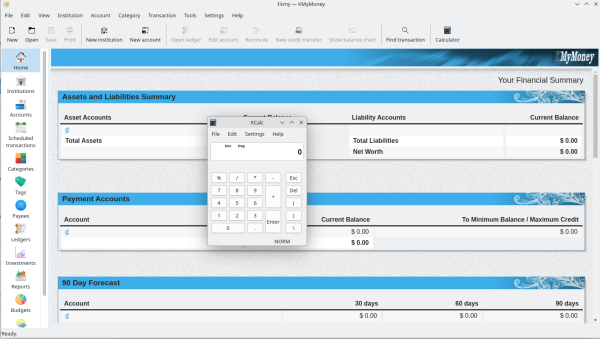
KMymoney 5.1
This week begun the big transition from single repository remote-builds to per repository snapcraft and using snap recipes on launchpad. This is an important move for a couple of reasons. We were having major issues with build failures as I pointed out in this bug report on launchpad: https://bugs.launchpad.net/launchpad/+bug/2031307 . This was due to the way remote-build works. It creates temporary snap recipes that builds once and sends back the snap or failure status. This made it very difficult to debug build failures as once the failure status was sent the job disappeared off of launchpad, taking all build logs with it. Now with the per repository snapcraft files, I have set up proper snap recipes on launchpad and the builds are automated by polling the github mirror for changes and it publishes the shiny new snap to candidate for testing or sends me the failure log that I can view at my convenience. This of course is a work in progress as we have 186 snaps currently and there are a few steps to get each one done. But once it is done, it will reduce my workload immensely and make debugging build issues faster. While making the move, I am also updating the snapcraft files for changes within snapcraft, adding cleanup to decrease bloat and fixing bugs! Snap move complete:
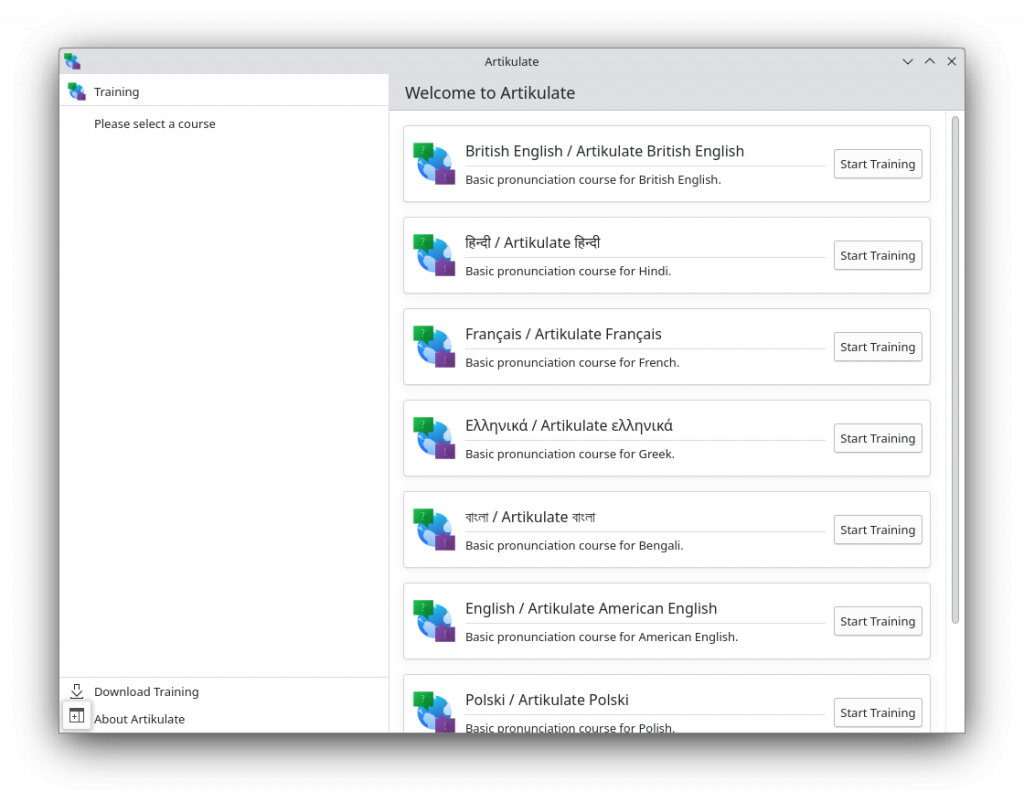
Artikulate with Courses
Current WIP: Audiotube, Digikam, Cantor, Neochat I also made a new content pack with KDE frameworks 5.110, but a new Qt 5.15.11 was just released so I will be making a new one tomorrow. The kf6 content snap has come to a halt as the qt6 content snap has stalled. I asked to be given access to the snapcraft file so that I may collaborate, but have not heard back. My mysterious project has reached its end for me. I might get a part time gig doing snaps out of it, but I do not meet the requirements to do any of the engineering of it. It is what it is. Thank you to all who vouched for me, alas it wasn t meant to be. If you can spare some change, I would appreciate it, especially to pay my phone/Internet bill so I can do more Neon and snaps  Thank you for stopping by. Donate https://gofund.me/b8b69e54

3 October 2023

Junichi Uekawa: Electronic receipt storage in Japan.

Electronic receipt storage in Japan. Japan also started allowing electronic data for receipts, but had some red tape associated with it. Presumably they were worried about increase in fraud cases. Law amendment that went in effet Jan 2022 made the last annoying bits simpler. We used to be required to sign the paper receipt and scan within 3 days of receiving the receipt. This special requirement is now gone. It took a few years to reach this state but now we are at a similar state as our colleagues in the US. Nice.

30 September 2023

Ian Jackson: DKIM: rotate and publish your keys

If you are an email system administrator, you are probably using DKIM to sign your outgoing emails. You should be rotating the key regularly and automatically, and publishing old private keys. I have just released dkim-rotate 1.0; dkim-rotate is a tool to do this key rotation and publication. If you are an email user, your email provider ought to be doing this. If this is not done, your emails are non-repudiable , meaning that if they are leaked, anyone (eg, journalists, haters) can verify that they are authentic, and prove that to others. This is not desirable (for you). Non-repudiation of emails is undesirable This problem was described at some length in Matthew Green s article Ok Google: please publish your DKIM secret keys. Avoiding non-repudiation sounds a bit like lying. After all, I m advising creating a situation where some people can t verify that something is true, even though it is. So I m advocating casting doubt. Crucially, though, it s doubt about facts that ought to be private. When you send an email, that s between you and the recipient. Normally you don t intend for anyone, anywhere, who happens to get a copy, to be able to verify that it was really you that sent it. In practical terms, this verifiability has already been used by journalists to verify stolen emails. Associated Press provide a verification tool. Advice for all email users As a user, you probably don t want your emails to be non-repudiable. (Other people might want to be able to prove you sent some email, but your email system ought to serve your interests, not theirs.) So, your email provider ought to be rotating their DKIM keys, and publishing their old ones. At a rough guess, your provider probably isn t :-(. How to tell by looking at email headers A quick and dirty way to guess is to have a friend look at the email headers of a message you sent. (It is important that the friend uses a different email provider, since often DKIM signatures are not applied within a single email system.) If your friend sees a DKIM-Signature header then the message is DKIM signed. If they don t, then it wasn t. Most email traversing the public internet is DKIM signed nowadays; so if they don t see the header probably they re not looking using the right tools, or they re actually on the same email system as you. In messages signed by a system running dkim-rotate, there will also be a header about the key rotation, to notify potential verifiers of the situation. Other systems that avoid non-repudiation-through-DKIM might do something similar. dkim-rotate s header looks like this:
DKIM-Signature-Warning: NOTE REGARDING DKIM KEY COMPROMISE
 https://www.chiark.greenend.org.uk/dkim-rotate/README.txt
 https://www.chiark.greenend.org.uk/dkim-rotate/ae/aeb689c2066c5b3fee673355309fe1c7.pem
But an email system might do half of the job of dkim-rotate: regularly rotating the key would cause the signatures of old emails to fail to verify, which is a good start. In that case there probably won t be such a header. Testing verification of new and old messages You can also try verifying the signatures. This isn t entirely straightforward, especially if you don t have access to low-level mail tooling. Your friend will need to be able to save emails as raw whole headers and body, un-decoded, un-rendered. If your friend is using a traditional Unix mail program, they should save the message as an mbox file. Otherwise, ProPublica have instructions for attaching and transferring and obtaining the raw email. (Scroll down to How to Check DKIM and ARC .) Checking that recent emails are verifiable Firstly, have your friend test that they can in fact verify a DKIM signature. This will demonstrate that the next test, where the verification is supposed to fail, is working properly and fails for the right reasons. Send your friend a test email now, and have them do this on a Linux system:
    # save the message as test-email.mbox
    apt install libmail-dkim-perl # or equivalent on another distro
    dkimproxy-verify <test-email.mbox
You should see output containing something like this:
    originator address: ijackson@chiark.greenend.org.uk
    signature identity: @chiark.greenend.org.uk
    verify result: pass
    ...
If the output ontains verify result: fail (body has been altered) then probably your friend didn t manage to faithfully save the unalterered raw message. Checking old emails cannot be verified When you both have that working, have your friend find an older email of yours, from (say) month ago. Perform the same steps. Hopefully they will see something like this:
    originator address: ijackson@chiark.greenend.org.uk
    signature identity: @chiark.greenend.org.uk
    verify result: fail (bad RSA signature)
or maybe
    verify result: invalid (public key: not available)
This indicates that this old email can no longer be verified. That s good: it means that anyone who steals a copy, can t verify it either. If it s leaked, the journalist who receives it won t know it s genuine and unmodified; they should then be suspicious. If your friend sees verify result: pass, then they have verified that that old email of yours is genuine. Anyone who had a copy of the mail can do that. This is good for email thieves, but not for you. For email admins: announcing dkim-rotate 1.0 I have been running dkim-rotate 0.4 on my infrastructure, since last August. and I had entirely forgotten about it: it has run flawlessly for a year. I was reminded of the topic by seeing DKIM in other blog posts. Obviously, it is time to decreee that dkim-rotate is 1.0. If you re a mail system administrator, your users are best served if you use something like dkim-rotate. The package is available in Debian stable, and supports Exim out of the box, but other MTAs should be easy to support too, via some simple ad-hoc scripting. Limitation of this approach Even with this key rotation approach, emails remain nonrepudiable for a short period after they re sent - typically, a few days. Someone who obtains a leaked email very promptly, and shows it to the journalist (for example) right away, can still convince the journalist. This is not great, but at least it doesn t apply to the vast bulk of your email archive. There are possible email protocol improvements which might help, but they re quite out of scope for this article.
Edited 2023-10-01 00:20 +01:00 to fix some grammar


comment count unavailable comments

Adnan Hodzic: auto-cpufreq v2.0

Almost 4 years after initial auto-cpufreq release, 4200 Github stars, 65 contributors & 42 releases, tool being topic of numerous Linux podcasts and shows, and... The post auto-cpufreq v2.0 appeared first on FoolControl: Phear the penguin.

Russell Coker: Choosing Exclusion

There is an article The Inappropriately Excluded by the Polymath Archives [1] that gets cited a lot. Mainly by Mensa types who think that their lack of success is due to being too smart. The Main Claim is Wrong The main claim is:
The probability of entering and remaining in an intellectually elite profession such as Physician, Judge, Professor, Scientist, Corporate Executive, etc. increases with IQ to about 133. It then falls by about 1/3 at 140. By 150 IQ the probability has fallen from its peak by 97%! The first thing to consider is whether taking those professions is a smart thing to do. These are the types of jobs that a school career adviser would tell you are good choices for well paying jobs, but really there s lots of professional positions that get similar pay with less demanding work. Physicians have to deal with people who are sick and patients who die including cases where the physician needs to make a recommendation on incomplete information where the wrong choice will result in serious injury or death, there are significant benefits to being a medical researcher or doing biological engineering. Being a Judge has a high public profile and has a reasonable amount of pressure, good for status but you can probably earn more money with less work as a corporate lawyer. Being a professor is a position that is respected but which in many countries is very poorly paid. In a mid-size company executives probably get about $300k compared to $220k for middle managers and $100k-$180k for senior professional roles in the same company. There has been research on how much happyness is increased by having more money, here is one from CBS saying that income up to $500K can increase happiness[2] which contradicts previous research suggesting that income over $75K didn t provide much benefit. I think that part of this is determined by the conditions that you live in, if you live in a country like Australia with cheap healthcare then you won t feel as great a need to hoard money. Another part is whether you feel obliged to compete with other people for financial status, if driving an old car of a non-prestige brand while my neighbours have new BMWs concerned me then I might desire an executive position. I think that the smart thing to do is to get work that is relatively enjoyable, pays enough for all the essentials and some reasonable luxury, and doesn t require excessive effort or long hours. Unless you have a great need for attention from other people then for every job with a high profile there will be several with similar salaries but less attention. The main point of the article is that people with high IQs all want to reach the pinnacle of their career path and don t do so because they are excluded. It doesn t consider the possibility that smart people might have chosen the option that s best for them. For example I ve seen what my manager and the CIO of my company do and it doesn t look like fun for me. I m happy to have them earn more than me as compensation for doing things I don t want to do. Why is This Happening? This section of the article starts with Because of the dearth of objective evidence, the cause of the exclusion cannot be determined directly which is possibly where they should have given up. Also I could have concluded this blog post with I m not excluded from this list of jobs that suck , but I will continue listing problems with the article. One claim in the article is:
Garth Zietsman has said, referring to people with D15IQs over 152, A common experience with people in this category or higher is that they are not wanted the masses (including the professional classes) find them an affront of some sort. The question I have is whether it s being smart or being a jerk that the masses find to be an affront, I m guessing the latter. I don t recall seeing evidence outside high school of people inherently disliking smarter people. The article claims that We have no reason to conclude that this upper limit on IQ differences changes in adulthood . Schools don t cater well to smart kids and it isn t good for kids to have no intellectual peers. One benefit I ve found in the Free Software community is that there are a lot of smart people. Regarding leadership it claims D.K. Simonton found that persuasiveness is at its maximum when the IQ differential between speaker and audience is about 20 points . A good counter example is Julius Sumner Miller who successfully combined science education and advertising for children s chocolate [3]. Maybe being a little smarter than other people makes it more difficult to communicate with them but being as smart as Julius Sumner Miller can outweigh that. The article goes on to claim that the intellectual elites have an average IQ of 125 because they have to convince people who have an average IQ of 105. I think that if that 20 point difference was really a thing then you would have politicians with an IQ of 125 appointing leaders of the public service with an IQ of 145 who would then hire scientific advisers with an IQ of 165. In a corporate environment a CEO with an IQ of 125 could hire a CIO with an IQ of 145 who could then hire IT staff with an IQ of 165. If people with 165 IQs wanted to be Prime Minister or CEO that might suck for them, but if they wanted to have the most senior technical roles in public service or corporations then it would work out well. For the work I do I almost never speak to a CEO and rarely speak to anyone who regularly speaks to them, if CEOs don t like me and won t hire people like me then it doesn t matter to me as I won t meet them. Inappropriate Educational Options The section on Inappropriate Educational Options is one where I almost agree with the author. I say almost because I don t think that schools are good for anyone. Yes schools have some particular problems for smart kids, but they also have serious problems for kids who are below average IQ, kids who have problems at home, kids who are disabled, etc. Most schools fail so many groups of kids in so many ways that the overall culture of schools can t be functional. Social Isolation The section on Social Isolation is another where I almost agree with the author. But as with schools I think that society overall is poorly structured to support people such that people on the entire range of IQs have more difficulty in finding friends and relationships than they should. One easy change to make would be to increase the minimum wage such that one minimum wage job can support a family without working more than 35 hours a week and to set the maximum work week to something less than 40 hours Atlassian has a good blog post about the data on working weeks [4]. Wired has an article suggesting that 5 hours a day is an ideal work time for some jobs [5]. We also need improvements in public transport and city design to have less wasted time and better options for socialising. Conclusion The blogspot site hosting the article in question also has a very complex plan for funding a magazine for such articles [6]. The problems with that funding model start with selling advertising that converts to shares in a Turks & Caicos company in an attempt to circumvent securities regulations (things don t work that way). Then it goes in to some complex formulas for where money will go. This isn t the smart way to start a company, the smart way is to run a kickstarter with fixed rewards for specific amounts of contributions and then possibly have an offer of profit sharing with people who donate extra or something. As a general rule when doing something that s new to you it s a good idea to look at how others have succeeded at it in the past. Devising an experimental new way of doing something is best reserved to people who have some experience withe the more common methods. Mentioning this may seem like an ad hominem attack, but I think it s relevant to consider this in the context of people who score well in IQ tests but don t do so well in other things. Maybe someone who didn t think that they were a lot smarter than everyone else would have tried to launch a magazine in a more common way and actually had some success at it. In a more general sense I think that people who believe that they are suffering because of being too smart are in a similar category as incels. It s more of a psychological problem than anything else and one that they could solve for themselves.

27 September 2023

Antoine Beaupr : How big is Debian?

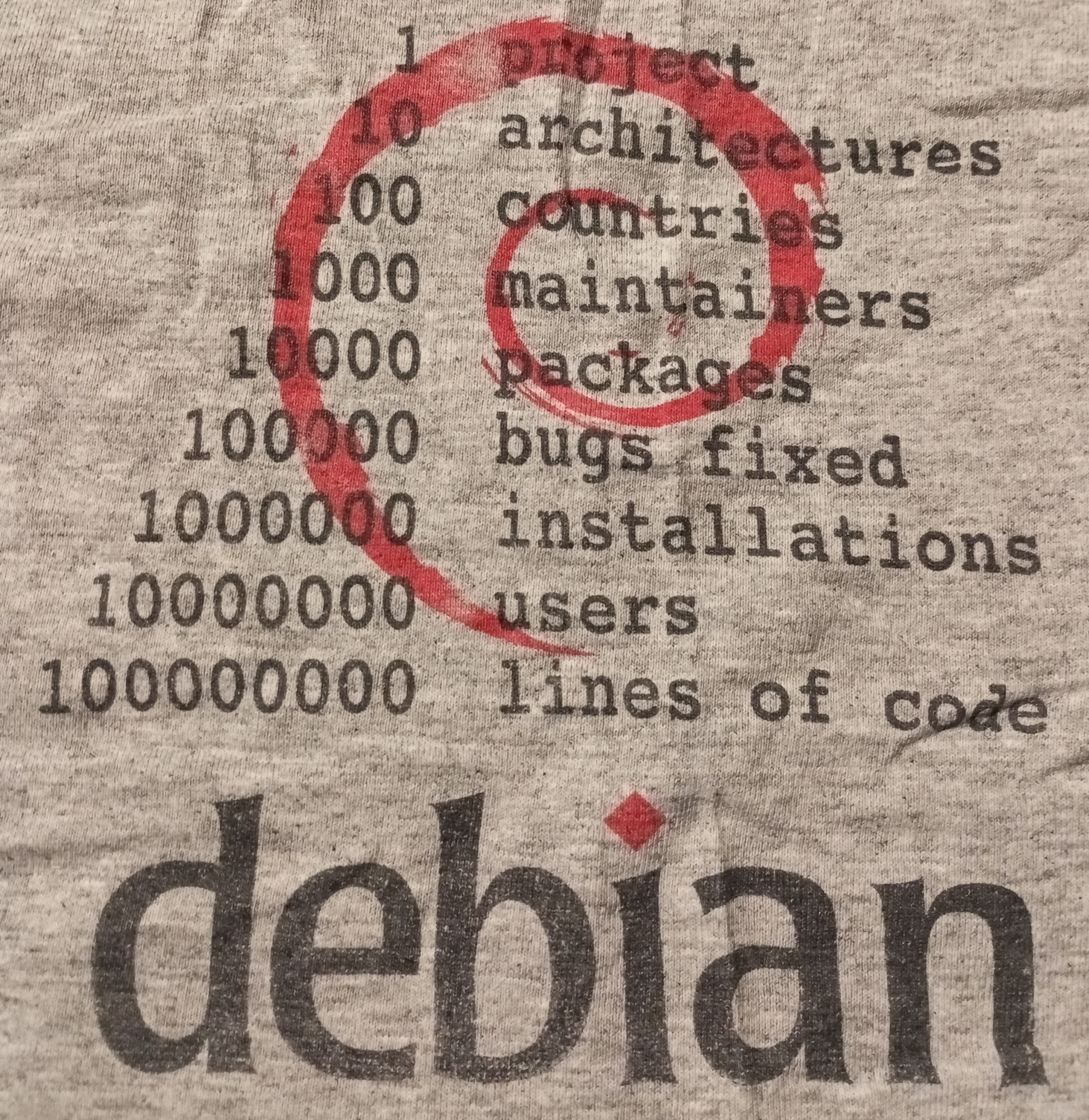
Now this was quite a tease! For those who haven't seen it, I encourage you to check it out, it has a nice photo of a Debian t-shirt I did not know about, to quote the Fine Article:
Today, when going through a box of old T-shirts, I found the shirt I was looking for to bring to the occasion: [...] For the benefit of people who read this using a non-image-displaying browser or RSS client, they are respectively:
   10 years
  100 countries
 1000 maintainers
10000 packages
and
        1 project
       10 architectures
      100 countries
     1000 maintainers
    10000 packages
   100000 bugs fixed
  1000000 installations
 10000000 users
100000000 lines of code
20 years ago we celebrated eating grilled meat at J0rd1 s house. This year, we had vegan tostadas in the menu. And maybe we are no longer that young, but we are still very proud and happy of our project! Now How would numbers line up today for Debian, 20 years later? Have we managed to get the bugs fixed line increase by a factor of 10? Quite probably, the lines of code we also have, and I can only guess the number of users and installations, which was already just a wild guess back then, might have multiplied by over 10, at least if we count indirect users and installs as well
Now I don't know about you, but I really expected someone to come up with an answer to this, directly on Debian Planet! I have patiently waited for such an answer but enough is enough, I'm a Debian member, surely I can cull all of this together. So, low and behold, here are the actual numbers from 2023! So it doesn't line up as nicely, but it looks something like this:
         1 project
        10 architectures
        30 years
       100 countries (actually 63, but we'd like to have yours!)
      1000 maintainers (yep, still there!)
     35000 packages
    211000 *binary* packages
   1000000 bugs fixed
1000000000 lines of code
 uncounted installations and users, we don't track you
So maybe the the more accurate, rounding to the nearest logarithm, would look something like:
         1 project
        10 architectures
       100 countries (actually 63, but we'd like to have yours!)
      1000 maintainers (yep, still there!)
    100000 packages
   1000000 bugs fixed
1000000000 lines of code
 uncounted installations and users, we don't track you
I really like how the "packages" and "bugs fixed" still have an order of magnitude between them there, but that the "bugs fixed" vs "lines of code" have an extra order of magnitude, that is we have fixed ten times less bugs per line of code since we last did this count, 20 years ago. Also, I am tempted to put 100 years in there, but that would be rounding up too much. Let's give it another 30 years first. Hopefully, some real scientist is going to balk at this crude methodology and come up with some more interesting numbers for the next t-shirt. Otherwise I'm available for bar mitzvahs and children parties.

24 September 2023

Thomas Goirand: Searching for a Ryzen 9, 16 cores, small laptop

The new 7945HX CPU from AMD is currently the most powerful. I d love to have one of them, to replace the now aging 6 core Xeon that I ve been using for more than 5 years. So, I ve been searching for a laptop with that CPU. Absolutely all of the laptops I found with this CPU also embed a very powerful RTX 40 0 series GPU, that I have no use: I don t play games, and I don t do AI. I just want something that builds Debian packages fast (like Ceph, that takes more than 1h to build for me ). The more cores I get, the faster all OpenStack unit tests are running too (stestr does a moderately good job at spreading the tests to all cores). That d be ok if I had to pay more for a GPU that I don t need, and I would have deal with the annoyance of the NVidia driver, if only I could find something with a correct size. But I can only find 16 or bigger laptops, that wont fit in my scooter back case (most of the time, these laptops have an 17 inch screen: that s a way too big). Currently, I found: If one of the readers of this post find a smaller laptop with a 7945HX CPU, please let me know! Even better if I can get rid of the expensive NVidia GPU.
Sahil Dhiman: Abraham Raji

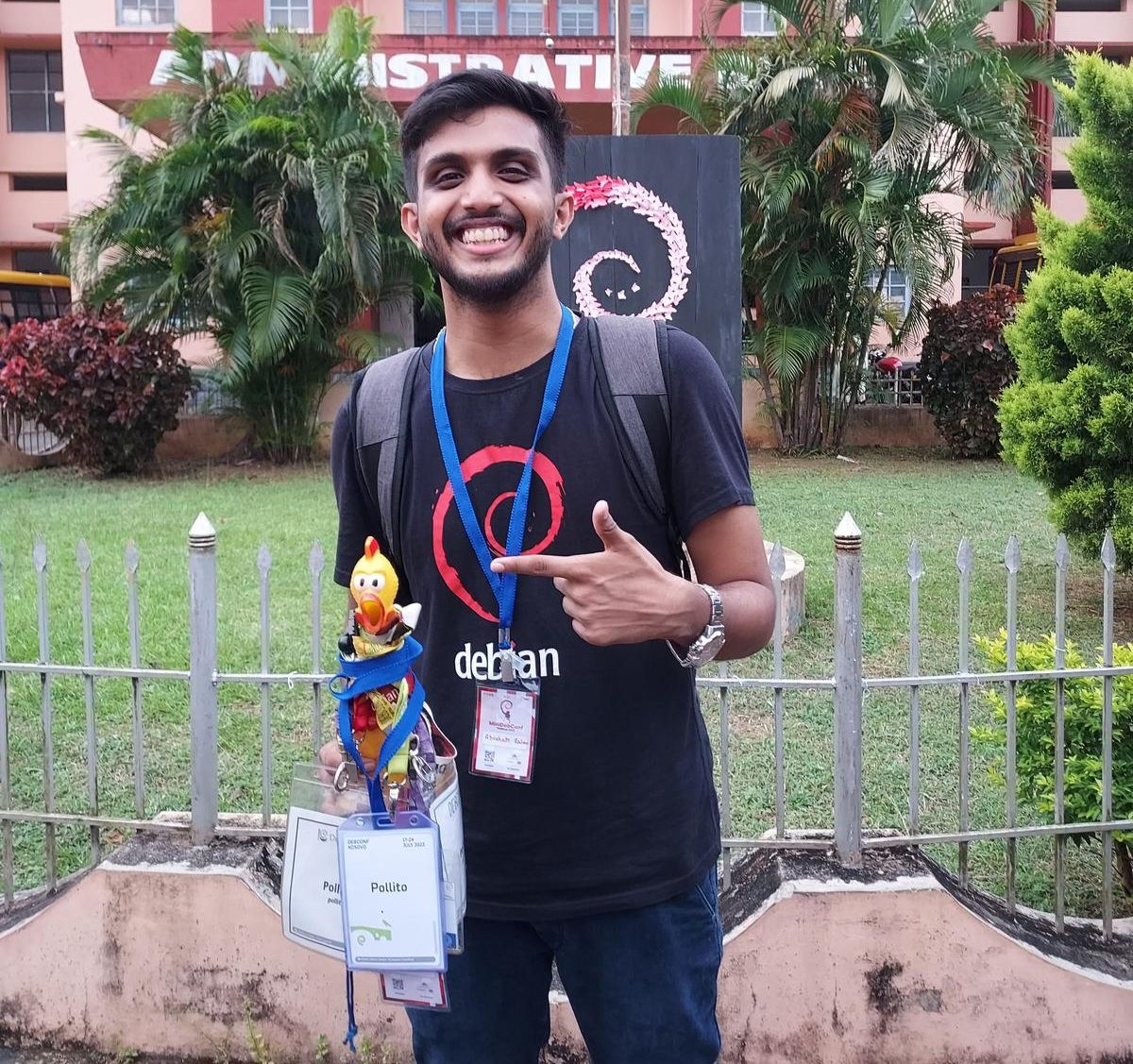
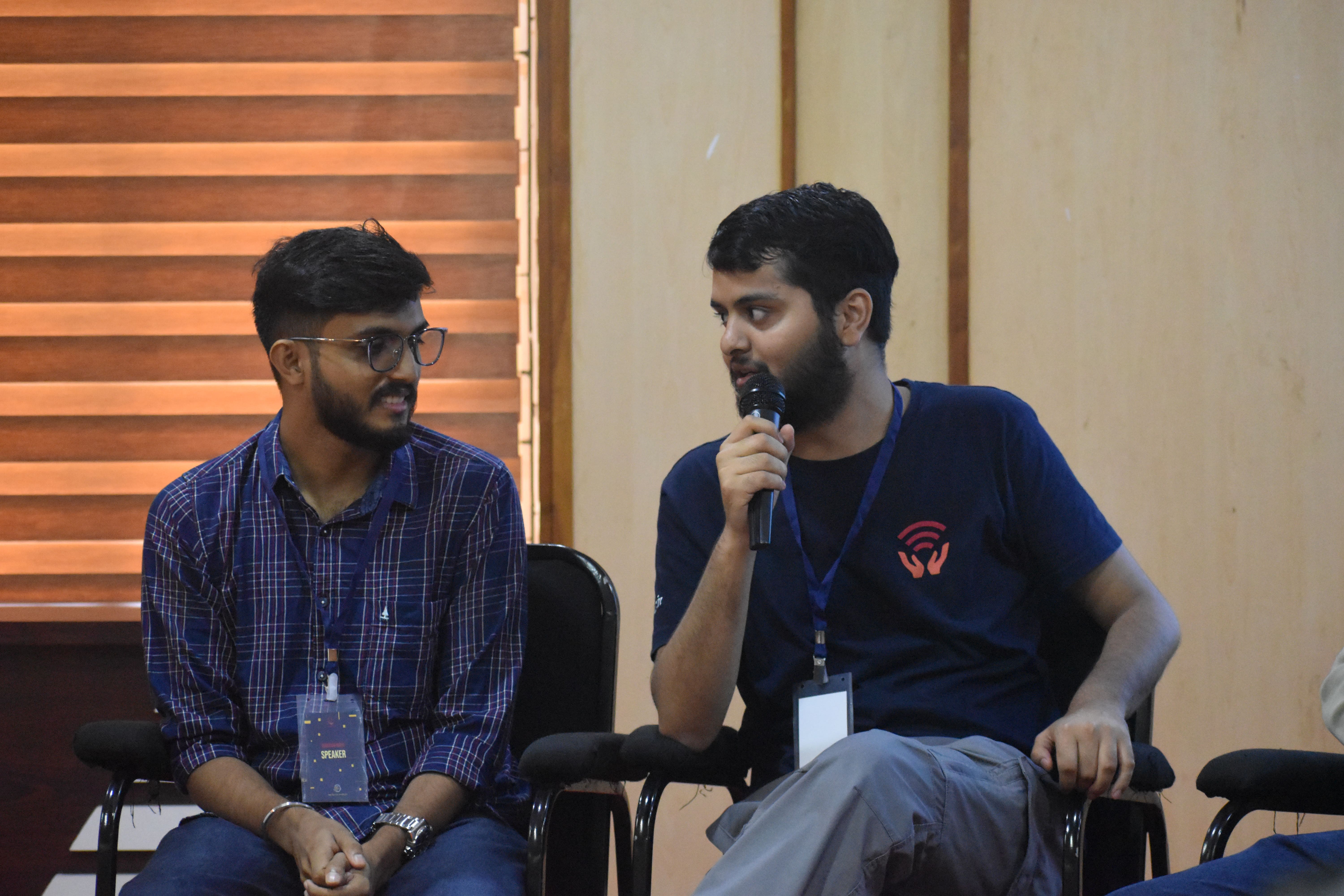
Abraham with Polito Man, you re no longer with us, but I am touched by the number of people you have positively impacted. Almost every DebConf23 presentations by locals I saw after you, carried how you were instrumental in bringing them there. How you were a dear friend and brother. It s a weird turn of events, that you left us during one thing we deeply cared and worked towards making possible since the last 3 years together. Who would have known, that Sahil, I m going back to my apartment tonight and casual bye post that would be the last conversation we ever had. Things were terrible after I heard the news. I had a hard time convincing myself to come see you one last time during your funeral. That was the last time I was going to get to see you, and I kept on looking at you. You, there in front of me, all calm, gave me peace. I ll carry that image all my life now. Your smile will always remain with me. Now, who ll meet and receive me on the door at almost every Debian event (just by sheer co-incidence?). Who ll help me speak out loud about all the Debian shortcomings (and then discuss solutions, when sober :)). Abraham and me during Debian discussion in DebUtsav Kochi It was a testament of the amount of time we had already spent together online, that when we first met during MDC Palakkad, it didn t feel we were physically meeting for the first time. The conversations just flowed. Now this song is associated with you due to your speech during post MiniDebConf Palakkad dinner. Hearing it reminds me of all the times we spent together chilling and talking community (which you cared deeply about). I guess, now we can t stop caring for the community, because your energy was contagious. Now, I can t directly dial your number to listen - Hey Sahil! What s up? from the other end, or Tell me, tell me on any mention of the problem. Nor would I be able to send reference usage of your Debian packaging guide in the wild. You already know how popular this guide of yours. How many people that guide has helped with getting started with packaging. Our last telegram text was me telling you about guide usage in Ravi s DebConf23 presentation. Did I ever tell you, I too got my first start with packaging from there. I started looking up to you from there, even before we met or talked. Now, I missed telling you, I was probably your biggest fan whenever you had the mic in hand and started speaking. You always surprised me all the insights and idea you brought and would kept on impressing me for someone who was just my age but was way more mature. Reading recent toots from Raju Dev made me realize how much I loved your writings. You wrote How the Future will remember Us , Doing what s right and many more. The level of depth in your thought was unparalleled. I loved reading those. That s why I kept pestering you to write more, which you slowly stopped. Now I fully understand why though. You were busy; really busy helping people out or just working for making things better. You were doing Debian, upstream projects, web development, designs, graphics, mentoring, free software evangelism while being the go-to person for almost everyone around. Everyone depended on you, because you were too kind to turn down anyone. Abraham and me just chilling around. We met for the first time there Man, I still get your spelling wrong :) Did I ever tell you that? That was the reason, I used to use AR instead online. You ll be missed and will always be part of our conversations, because you have left a profound impact on me, our friends, Debian India and everyone around. See you! the coolest man around. In memory: PS - Just found you even had a Youtube channel, you one heck of a talented man.

23 September 2023

Sergio Talens-Oliag: GitLab CI/CD Tips: Using Rule Templates

This post describes how to define and use rule templates with semantic names using extends or !reference tags, how to define manual jobs using the same templates and how to use gitlab-ci inputs as macros to give names to regular expressions used by rules.

Basic rule templatesI keep my templates in a rules.yml file stored on a common repository used from different projects as I mentioned on my previous post, but they can be defined anywhere, the important thing is that the files that need them include their definition somehow. The first version of my rules.yml file was as follows:
.rules_common:
  # Common rules; we include them from others instead of forcing a workflow
  rules:
    # Disable branch pipelines while there is an open merge request from it
    - if: >-
        $CI_COMMIT_BRANCH &&
        $CI_OPEN_MERGE_REQUESTS &&
        $CI_PIPELINE_SOURCE != "merge_request_event"
      when: never
.rules_default:
  # Default rules, we need to add the when: on_success to make things work
  rules:
    - !reference [.rules_common, rules]
    - when: on_success
The main idea is that .rules_common defines a rule section to disable jobs as we can do on a workflow definition; in our case common rules only have if rules that apply to all jobs and are used to disable them. The example includes one that avoids creating duplicated jobs when we push to a branch that is the source of an open MR as explained here. To use the rules in a job we have two options, use the extends keyword (we do that when we want to use the rule as is) or declare a rules section and add a !reference to the template we want to use as described here (we do that when we want to add additional rules to disable a job before evaluating the template conditions). As an example, with the following definitions both jobs use the same rules:
job_1:
  extends:
    - .rules_default
  [...]
job_2:
  rules:
    - !reference [.rules_default, rules]
  [...]

Manual jobs and rule templatesTo make the jobs manual we have two options, create a version of the job that includes when: manual and defines if we want it to be optional or not (allow_failure: true makes the job optional, if we don t add that to the rule the job is blocking) or add the when: manual and the allow_failure value to the job (if we work at the job level the default value for allow_failure is false for when: manual, so it is optional by default, we have to add an explicit allow_failure = true it to make it blocking). The following example shows how we define blocking or optional manual jobs using rules with when conditions:
.rules_default_manual_blocking:
  # Default rules for optional manual jobs
  rules:
    - !reference [.rules_common, rules]
    - when: manual
      # allow_failure: false is implicit
.rules_default_manual_optional:
  # Default rules for optional manual jobs
  rules:
    - !reference [.rules_common, rules]
    - when: manual
      allow_failure: true
manual_blocking_job:
  extends:
    - .rules_default_manual_blocking
  [...]
manual_optional_job:
  extends:
    - .rules_default_manual_optional
  [...]
The problem here is that we have to create new versions of the same rule template to add the conditions, but we can avoid it using the keywords at the job level with the original rules to get the same effect; the following definitions create jobs equivalent to the ones defined earlier without creating additional templates:
manual_blocking_job:
  extends:
    - .rules_default
  when: manual
  allow_failure: false
  [...]
manual_optional_job:
  extends:
    - .rules_default
  when: manual
  # allow_failure: true is implicit
  [...]
As you can imagine, that is my preferred way of doing it, as it keeps the rules.yml file smaller and I see that the job is manual in its definition without problem.

Rules with allow_failure, changes, exists, needs or variablesUnluckily for us, for now there is no way to avoid creating additional templates as we did on the when: manual case when a rule is similar to an existing one but adds changes, exists, needs or variables to it. So, for now, if a rule needs to add any of those fields we have to copy the original rule and add the keyword section. Some notes, though:
  • we only need to add allow_failure if we want to change its value for a given condition, in other cases we can set the value at the job level.
  • if we are adding changes to the rule it is important to make sure that they are going to be evaluated as explained here.
  • when we add a needs value to a rule for a specific condition and it matches it replaces the job needs section; when using templates I would use two different job names with different conditions instead of adding a needs on a single job.

Defining rule templates with semantic namesI started to use rule templates to avoid repetition when defining jobs that needed the same rules and soon I noticed that giving them names with a semantic meaning they where easier to use and understand (we provide a name that tells us when we are going to execute the job, while the details of the variables names or values used on the rules are an implementation detail of the templates). We are not going to define real jobs on this post, but as an example we are going to define a set of rules that can be useful if we plan to follow a scaled trunk based development workflow when developing, that is, we are going to put the releasable code on the main branch and use short-lived branches to test and complete changes before pushing things to main. Using this approach we can define an initial set of rule templates with semantic names:
.rules_mr_to_main:
  rules:
    - !reference [.rules_common, rules]
    - if: $CI_MERGE_REQUEST_TARGET_BRANCH_NAME == 'main'
.rules_mr_or_push_to_main:
  rules:
    - !reference [.rules_common, rules]
    - if: $CI_MERGE_REQUEST_TARGET_BRANCH_NAME == 'main'
    - if: >-
        $CI_COMMIT_BRANCH == 'main'
        &&
        $CI_PIPELINE_SOURCE != 'merge_request_event'
.rules_push_to_main:
  rules:
    - !reference [.rules_common, rules]
    - if: >-
        $CI_COMMIT_BRANCH == 'main'
        &&
        $CI_PIPELINE_SOURCE != 'merge_request_event'
.rules_push_to_branch:
  rules:
    - !reference [.rules_common, rules]
    - if: >-
        $CI_COMMIT_BRANCH != 'main'
        &&
        $CI_PIPELINE_SOURCE != 'merge_request_event'
.rules_push_to_branch_or_mr_to_main:
  rules:
    - !reference [.rules_push_to_branch, rules]
    - if: >-
         $CI_MERGE_REQUEST_SOURCE_BRANCH_NAME != 'main'
         &&
         $CI_MERGE_REQUEST_TARGET_BRANCH_NAME == 'main'
.rules_release_tag:
  rules:
    - !reference [.rules_common, rules]
    - if: $CI_COMMIT_TAG =~ /^([0-9a-zA-Z_.-]+-)?v\d+.\d+.\d+$/
.rules_non_release_tag:
  rules:
    - !reference [.rules_common, rules]
    - if: $CI_COMMIT_TAG !~ /^([0-9a-zA-Z_.-]+-)?v\d+.\d+.\d+$/
With those names it is clear when a job is going to be executed and when using the templates on real jobs we can add additional restrictions and make the execution manual if needed as described earlier.

Using inputs as macrosOn the previous rules we have used a regular expression to identify the release tag format and assumed that the general branches are the ones with a name different than main; if we want to force a format for those branch names we can replace the condition != 'main' by a regex comparison (=~ if we look for matches, !~ if we want to define valid branch names removing the invalid ones). When testing the new gitlab-ci inputs my colleague Jorge noticed that if you keep their default value they basically work as macros. The variables declared as inputs can t hold YAML values, the truth is that their value is always a string that is replaced by the value assigned to them when including the file (if given) or by their default value, if defined. If you don t assign a value to an input variable when including the file that declares it its occurrences are replaced by its default value, making them work basically as macros; this is useful for us when working with strings that can t managed as variables, like the regular expressions used inside if conditions. With those two ideas we can add the following prefix to the rules.yaml defining inputs for both regular expressions and replace the rules that can use them by the ones shown here:
spec:
  inputs:
    # Regular expression for branches; the prefix matches the type of changes
    # we plan to work on inside the branch (we use conventional commit types as
    # the branch prefix)
    branch_regex:
      default: '/^(build ci chore docs feat fix perf refactor style test)\/.+$/'
    # Regular expression for tags
    release_tag_regex:
      default: '/^([0-9a-zA-Z_.-]+-)?v\d+.\d+.\d+$/'
---
[...]
.rules_push_to_changes_branch:
  rules:
    - !reference [.rules_common, rules]
    - if: >-
        $CI_COMMIT_BRANCH =~ $[[ inputs.branch_regex ]]
        &&
        $CI_PIPELINE_SOURCE != 'merge_request_event'
.rules_push_to_branch_or_mr_to_main:
  rules:
    - !reference [.rules_push_to_branch, rules]
    - if: >-
         $CI_MERGE_REQUEST_SOURCE_BRANCH_NAME =~ $[[ inputs.branch_regex ]]
         &&
         $CI_MERGE_REQUEST_TARGET_BRANCH_NAME == 'main'
.rules_release_tag:
  rules:
    - !reference [.rules_common, rules]
    - if: $CI_COMMIT_TAG =~ $[[ inputs.release_tag_regex ]]
.rules_non_release_tag:
  rules:
    - !reference [.rules_common, rules]
    - if: $CI_COMMIT_TAG !~ $[[ inputs.release_tag_regex ]]

Creating rules reusing existing onesI m going to finish this post with a comment about how I avoid defining extra rule templates in some common cases. The idea is simple, we can use !reference tags to fine tune rules when we need to add conditions to disable them simply adding conditions with when: never before referencing the template. As an example, in some projects I m using different job definitions depending on the DEPLOY_ENVIRONMENT value to make the job manual or automatic; as we just said we can define different jobs referencing the same rule adding a condition to check if the environment is the one we are interested in:
deploy_job_auto:
  rules:
    # Only deploy automatically if the environment is 'dev' by skipping this job
    # for other values of the DEPLOY_ENVIRONMENT variable
    - if: $DEPLOY_ENVIRONMENT != "dev"
      when: never
    - !reference [.rules_release_tag, rules]
  [...]
deploy_job_manually:
  rules:
    # Disable this job if the environment is 'dev'
    - if: $DEPLOY_ENVIRONMENT == "dev"
      when: never
    - !reference [.rules_release_tag, rules]
  when: manual
  # Change this to  false  to make the deployment job blocking
  allow_failure: true
  [...]
If you think about it the idea of adding negative conditions is what we do with the .rules_common template; we add conditions to disable the job before evaluating the real rules. The difference in that case is that we reference them at the beginning because we want those negative conditions on all jobs and that is also why we have a .rules_default condition with an when: on_success for the jobs that only need to respect the default workflow (we need the last condition to make sure that they are executed if the negative rules don t match).

22 September 2023

Gunnar Wolf: Debian@30 Found the shirt I was looking for last month

Almost a month ago, I went to my always loved Rancho Electr nico to celebrate the 30th anniversary of the Debian project. Hats off to Jathan for all the work he put into this! I was there for close to 3hr, and be it following up an install, doing a talk, or whatever he was doing it. But anyway, I only managed to attend with one of my (great, beautiful and always loved) generic Debian or DebConf T-shirts. Today, when going through a box of old T-shirts, I found the shirt I was looking for to bring to the occasion. A smallish print, ~12cm wide, over the heart: And as a larger print, ~25cm wide, across the back: For the benefit of people who read this using a non-image-displaying browser or RSS client, they are respectively:
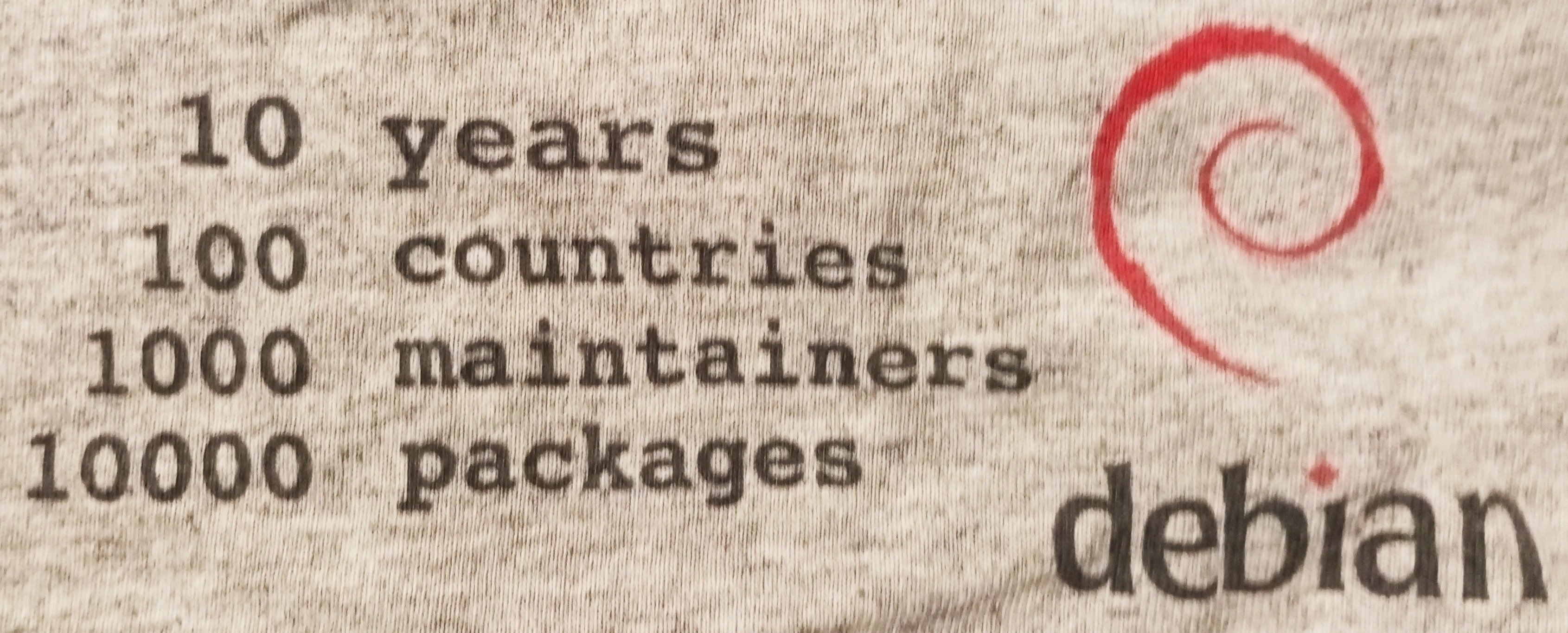
   10 years
  100 countries
 1000 maintainers
10000 packages
and
        1 project
       10 architectures
      100 countries
     1000 maintainers
    10000 packages
   100000 bugs fixed
  1000000 installations
 10000000 users
100000000 lines of code
20 years ago we celebrated eating grilled meat at J0rd1 s house. This year, we had vegan tostadas in the menu. And maybe we are no longer that young, but we are still very proud and happy of our project! Now How would numbers line up today for Debian, 20 years later? Have we managed to get the bugs fixed line increase by a factor of 10? Quite probably, the lines of code we also have, and I can only guess the number of users and installations, which was already just a wild guess back then, might have multiplied by over 10, at least if we count indirect users and installs as well

21 September 2023

Jonathan Carter: DebConf23

I very, very nearly didn t make it to DebConf this year, I had a bad cold/flu for a few days before I left, and after a negative covid-19 test just minutes before my flight, I decided to take the plunge and travel. This is just everything in chronological order, more or less, it s the only way I could write it.
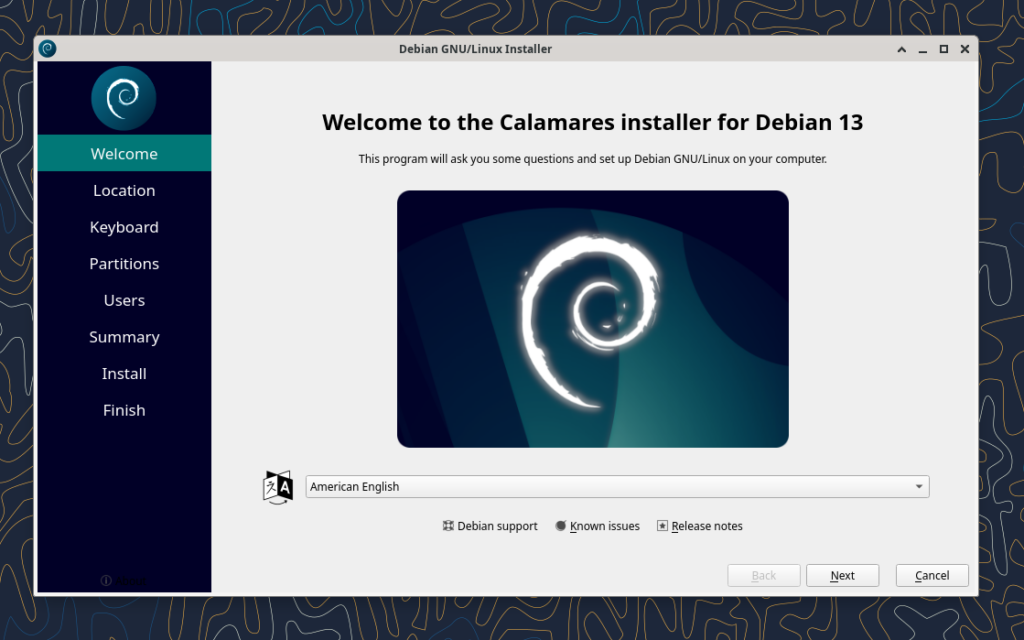
DebCamp I planned to spend DebCamp working on various issues. Very few of them actually got done, I spent the first few days in bed further recovering, took a covid-19 test when I arrived and after I felt better, and both were negative, so not sure what exactly was wrong with me, but between that and catching up with other Debian duties, I couldn t make any progress on catching up on the packaging work I wanted to do. I ll still post what I intended here, I ll try to take a few days to focus on these some time next month: Calamares / Debian Live stuff:
  • #980209 installation fails at the install boot loader phase
  • #1021156 calamares-settings-debian: Confusing/generic program names
  • #1037299 Install Debian -> Untrusted application launcher
  • #1037123 Minimal HD space required too small for some live images
  • #971003 Console auto-login doesn t work with sysvinit
At least Calamares has been trixiefied in testing, so there s that! Desktop stuff:
  • #1038660 please set a placeholder theme during development, different from any release
  • #1021816 breeze: Background image not shown any more
  • #956102 desktop-base: unwanted metadata within images
  • #605915 please mtheake it a non-native package
  • #681025 Put old themes in a new package named desktop-base-extra
  • #941642 desktop-base: split theme data files and desktop integrations in separate packages
The Egg theme that I want to develop for testing/unstable is based on Juliette Taka s Homeworld theme that was used for Bullseye. Egg, as in, something that hasn t quite hatched yet. Get it? (for #1038660) Debian Social:
  • Set up Lemmy instance
    • I started setting up a Lemmy instance before DebCamp, and meant to finish it.
  • Migrate PeerTube to new server
    • We got a new physical server for our PeerTube instance, we should have more space for growth and it would help us fix the streaming feature on our platform.
Loopy: I intended to get the loop for DebConf in good shape before I left, so that we can spend some time during DebCamp making some really nice content, unfortunately this went very tumbly, but at least we ended up with a loopy that kind of worked and wasn t too horrible. There s always another DebConf to try again, right?
So DebCamp as a usual DebCamp was pretty much a wash (fitting with all the rain we had?) for me, at least it gave me enough time to recover a bit for DebConf proper, and I had enough time left to catch up on some critical DPL duties and put together a few slides for the Bits from the DPL talk.

DebConf Bits From the DPL I had very, very little available time to prepare something for Bits fro the DPL, but I managed to put some slides together (available on my wiki page). I mostly covered:
  • A very quick introduction of myself (I ve done this so many times, it feels redundant giving my history every time), and some introduction on what it is that the DPL does. I declared my intent not to run for DPL again, and the reasoning behind it, and a few bits of information for people who may intend to stand for DPL next year.
  • The sentiment out there for the Debian 12 release (which has been very positive). How we include firmware by default now, and that we re saying goodbye to architectures both GNU/KFreeBSD and mipsel.
  • Debian Day and the 30th birthday party celebrations from local groups all over the world (and a reminder about the Local Groups BoF later in the week).
  • I looked forward to Debian 13 (trixie!), and how we re gaining riscv64 as a release architecture, as well as loongarch64, and that plans seem to be forming to fix 2k38 in Debian, and hopefully largely by the time the Trixie release comes by.
  • I made some comments about Enterprise Linux as people refer to the RHEL eco-system these days, how really bizarre some aspects of it is (like the kernel maintenance), and that some big vendors are choosing to support systems outside of that eco-system now (like CPanel now supporting Ubuntu too). I closed with the quote below from Ian Murdock, and assured the audience that if they want to go out and make money with Debian, they are more than welcome too.
Job Fair I walked through the hallway where the Job Fair was hosted, and enjoyed all the buzz. It s not always easy to get this right, but this year it was very active and energetic, I hope lots of people made some connections! Cheese & Wine Due to state laws and alcohol licenses, we couldn t consume alcohol from outside the state of Kerala in the common areas of the hotel (only in private rooms), so this wasn t quite as big or as fun as our usual C&W parties since we couldn t share as much from our individual countries and cultures, but we always knew that this was going to be the case for this DebConf, and it still ended up being alright. Day Trip I opted for the forest / waterfalls daytrip. It was really, really long with lots of time in the bus. I think our trip s organiser underestimated how long it would take between the points on the route (all in all it wasn t that far, but on a bus on a winding mountain road, it takes long). We left at 8:00 and only found our way back to the hotel around 23:30. Even though we arrived tired and hungry, we saw some beautiful scenery, animals and also met indigenous river people who talked about their struggles against being driven out of their place of living multiple times as government invests in new developments like dams and hydro power. Photos available in the DebConf23 public git repository. Losing a beloved Debian Developer during DebConf To our collective devastation, not everyone made it back from their day trips. Abraham Raji was out to the kayak day trip, and while swimming, got caught by a whirlpool from a drainage system. Even though all of us were properly exhausted and shocked in disbelief at this point, we had to stay up and make some tough decisions. Some initially felt that we had to cancel the rest of DebConf. We also had to figure out how to announce what happened asap both to the larger project and at DebConf in an official manner, while ensuring that due diligence took place and that the family is informed by the police first before making anything public. We ended up cancelling all the talks for the following day, with an address from the DPL in the morning to explain what had happened. Of all the things I ve ever had to do as DPL, this was by far the hardest. The day after that, talks were also cancelled for the morning so that we could attend his funeral. Dozens of DebConf attendees headed out by bus to go pay their final respects, many wearing the t-shirts that Abraham had designed for DebConf. A book of condolences was set up so that everyone who wished to could write a message on how they remembered him. The book will be kept by his family.
Today marks a week since his funeral, and I still feel very raw about it. And even though there was uncertainty whether DebConf should even continue after his death, in hindsight I m glad that everyone pushed forward. While we were all heart broken, it was also heart warming to see people care for each other in all of this. If anything, I think I needed more time at DebConf just to be in that warm aura of emotional support for just a bit longer. There are many people who I wanted to talk to who I barely even had a chance to see. Abraham, or Abru as he was called by some people (which I like because bru in Afrikaans is like bro in English, not sure if that s what it implied locally too) enjoyed artistic pursuits, but he was also passionate about knowledge transfer. He ran classes at DebConf both last year and this year (and I think at other local events too) where he taught people packaging via a quick course that he put together. His enthusiasm for Debian was contagious, a few of the people who he was mentoring came up to me and told me that they were going to see it through and become a DD in honor of him. I can t even remember how I reacted to that, my brain was already so worn out and stitching that together with the tragedy of what happened while at DebConf was just too much for me. I first met him in person last year in Kosovo, I already knew who he was, so I think we interacted during the online events the year before. He was just one of those people who showed so much promise, and I was curious to see what he d achieve in the future. Unfortunately, we was taken away from us too soon. Poetry Evening Later in the week we had the poetry evening. This was the first time I had the courage to recite something. I read Ithaka by C.P. Cavafy (translated by Edmund Keely). The first time I heard about this poem was in an interview with Julian Assange s wife, where she mentioned that he really loves this poem, and it caught my attention because I really like the Weezer song Return to Ithaka and always wondered what it was about, so needless to say, that was another rabbit hole at some point. Group Photo Our DebConf photographer organised another group photo for this event, links to high-res versions available on Aigar s website.
BoFs I didn t attend nearly as many talks this DebConf as I would ve liked (fortunately I can catch up on video, should be released soon), but I did make it to a few BoFs. In the Local Groups BoF, representatives from various local teams were present who introduced themselves and explained what they were doing. From memory (sorry if I left someone out), we had people from Belgium, Brazil, Taiwan and South Africa. We talked about types of events a local group could do (BSPs, Mini DC, sprints, Debian Day, etc. How to help local groups get started, booth kits for conferences, and setting up some form of calendar that lists important Debian events in a way that makes it easier for people to plan and co-ordinate. There s a mailing list for co-ordination of local groups, and the irc channel is -localgroups on oftc.
If you got one of these Cheese & Wine bags from DebConf, that s from the South African local group!
In the Debian.net BoF, we discussed the Debian.net hosting service, where Debian pays for VMs hosted for projects by individual DDs on Debian.net. The idea is that we start some form of census that monitors the services, whether they re still in use, whether the system is up to date, whether someone still cares for it, etc. We had some discussion about where the lines of responsibility are drawn, and we can probably make things a little bit more clear in the documentation. We also want to offer more in terms of backups and monitoring (currently DDs do get 500GB from rsync.net that could be used for backups of their services though). The intention is also to deploy some form of configuration management for some essentials across the hosts. We should also look at getting some sponsored hosting for this. In the Debian Social BoF, we discussed some services that need work / expansion. In particular, Matrix keeps growing at an increased rate as more users use it and more channels are bridged, so it will likely move to its own host with big disks soon. We might replace Pleroma with a fork called Akkoma, this will need some more home work and checking whether it s even feasible. Some services haven t really been used (like Writefreely and Plume), and it might be time to retire them. We might just have to help one or two users migrate some of their posts away if we do retire them. Mjolner seems to do a fine job at spam blocking, we haven t had any notable incidents yet. WordPress now has improved fediverse support, it s unclear whether it works on a multi-site instance yet, I ll test it at some point soon and report back. For upcoming services, we are implementing Lemmy and probably also Mobilizon. A request was made that we also look into Loomio. More Information Overload There s so much that happens at DebConf, it s tough to take it all in, and also, to find time to write about all of it, but I ll mention a few more things that are certainly worth of note. During DebConf, we had some people from the Kite Linux team over. KITE supplies the ICT needs for the primary and secondary schools in the province of Kerala, where they all use Linux. They decided to switch all of these to Debian. There was an ad-hoc BoF where locals were listening and fielding questions that the Kite Linux team had. It was great seeing all the energy and enthusiasm behind this effort, I hope someone will properly blog about this! I learned about the VGLUG Foundation, who are doing a tremendous job at promoting GNU/Linux in the country. They are also training up 50 people a year to be able to provide tech support for Debian. I came across the booth for Mostly Harmless, they liberate old hardware by installing free firmware on there. It was nice seeing all the devices out there that could be liberated, and how it can breathe new life into old harware.
Some hopefully harmless soldering.
Overall, the community and their activities in India are very impressive, and I wish I had more time to get to know everyone better. Food Oh yes, one more thing. The food was great. I tasted more different kinds of curry than I ever did in my whole life up to this point. The lunch on banana leaves was interesting, and also learning how to eat this food properly by hand (thanks to the locals who insisted on teaching me!), it was a fruitful experience? This might catch on at home too less dishes to take care of! Special thanks to the DebConf23 Team I think this may have been one of the toughest DebConfs to organise yet, and I don t think many people outside of the DebConf team knows about all the challenges and adversity this team has faced in organising it. Even just getting to the previous DebConf in Kosovo was a long and tedious and somewhat risky process. Through it all, they were absolute pro s. Not once did I see them get angry or yell at each other, whenever a problem came up, they just dealt with it. They did a really stellar job and I did make a point of telling them on the last day that everyone appreciated all the work that they did. Back to my nest I bought Dax a ball back from India, he seems to have forgiven me for not taking him along.
I ll probably take a few days soon to focus a bit on my bugs and catch up on my original DebCamp goals. If you made it this far, thanks for reading! And thanks to everyone for being such fantastic people.

Jonathan McDowell: DebConf23 Writeup

DebConf2023 Logo (I wrote this up for an internal work post, but I figure it s worth sharing more publicly too.) I spent last week at DebConf23, this years instance of the annual Debian conference, which was held in Kochi, India. As usual, DebConf provides a good reason to see a new part of the world; I ve been going since 2004 (Porto Alegre, Brazil), and while I ve missed a few (Mexico, Bosnia, and Switzerland) I ve still managed to make it to instances on 5 continents. This has absolutely nothing to do with work, so I went on my own time + dime, but I figured a brief write-up might prove of interest. I first installed Debian back in 1999 as a machine that was being co-located to operate as a web server / email host. I was attracted by the promise of easy online upgrades (or, at least, upgrades that could be performed without the need to be physically present at the machine, even if they naturally required a reboot at some point). It has mostly delivered on this over the years, and I ve never found a compelling reason to move away. I became a Debian Developer in 2000. As a massively distributed volunteer project DebConf provides an opportunity to find out what s happening in other areas of the project, catch up with team mates, and generally feel more involved and energised to work on Debian stuff. Also, by this point in time, a lot of Debian folk are good friends and it s always nice to catch up with them. On that point, I felt that this year the hallway track was not quite the same as usual. For a number of reasons (COVID, climate change, travel time, we re all getting older) I think fewer core teams are achieving critical mass at DebConf - I was the only member physically present from 2 teams I m involved in, and I d have appreciated the opportunity to sit down with both of them for some in-person discussions. It also means it s harder to use DebConf as a venue for advancing major changes; previously having all the decision makers in the same space for a week has meant it s possible to iron out the major discussion points, smoothing remote implementation after the conference. I m told the mini DebConfs are where it s at for these sorts of meetings now, so perhaps I ll try to attend at least one of those next year. Of course, I also went to a bunch of talks. I have differing levels of comment about each of them, but I ve written up some brief notes below about the ones I remember something about. The comment was made that we perhaps had a lower level of deep technical talks, which is perhaps true but I still think there were a number of high level technical talks that served to pique ones interest about the topic. Finally, this DebConf was the first I m aware of that was accompanied by tragedy; as part of the day trip Abraham Raji, a project member and member of the local team, was involved in a fatal accident.

Talks (videos not yet up for all, but should appear for most)
  • Opening Ceremony
    Not much to say here; welcome to DebConf!
  • Continuous Key-Signing Party introduction
    I ended up running this, as Gunnar couldn t make it. Debian makes heavy use of the OpenPGP web of trust (no mass ability to send out Yubikeys + perform appropriate levels of identity verification), so making sure we re appropriately cross-signed, and linked to local conference organisers, is a dull but important part of the conference. We use a modified keysigning approach where identity verification + fingerprint confirmation happens over the course of the conference, so this session was just to explain how that works and confirm we were all working from the same fingerprint list.
  • State of Stateless - A Talk about Immutability and Reproducibility in Debian
    Stateless OSes seem to be gaining popularity, so I went along to this to see if there was anything of note. It was interesting, but nothing earth shattering - very high level.
  • What s missing so that Debian is finally reproducible?
    Reproducible builds are something I ve been keeping an eye on for a long time, and I continue to be impressed by the work folks are putting into this - both for Debian, and other projects. From a security standpoint reproducible builds provide confidence against trojaned builds, and from a developer standpoint knowing you can build reproducibly helps with not having to keep a whole bunch of binary artefacts around.
  • Hello from keyring-maint
    In the distant past the process of getting your OpenPGP key into the Debian keyring (which is used to authenticate uploads + votes, amongst other things) was a clunky process that was often stalled. This hasn t been the case for at least the past 10 years, but there s still a residual piece of project memory that thinks keyring is a blocker. So as a team we say hi and talk about the fact we do monthly updates and generally are fairly responsive these days.
  • A declarative approach to Linux networking with Netplan
    Debian s /etc/network/interfaces is a fairly basic (if powerful) mechanism for configuring network interfaces. NetworkManager is a better bet for dynamic hosts (i.e. clients), and systemd-network seems to be a good choice for servers (I m gradually moving machines over to it). Netplan tries to provide a unified mechanism for configuring both with a single configuration language. A noble aim, but I don t see a lot of benefit for anything I use - my NetworkManager hosts are highly dynamic (so no need to push shared config) and systemd-network (or /etc/network/interfaces) works just fine on the other hosts. I m told Netplan has more use with more complicated setups, e.g. when OpenVSwitch is involved.
  • Quick peek at ZFS, A too good to be true file system and volume manager.
    People who use ZFS rave about it. I m naturally suspicious of any file system that doesn t come as part of my mainline kernel. But, as a longtime cautious mdraid+lvm+ext4 user I appreciate that there have been advances in the file system space that maybe I should look at, and I ve been trying out btrfs on more machines over the past couple of years. I can t deny ZFS has a bunch of interesting features, but nothing I need/want that I can t get from an mdraid+lvm+btrfs stack (in particular data checksumming + reflinks for dedupe were strong reasons to move to btrfs over ext4).
  • Bits from the DPL
    Exactly what it says on the tin; some bits from the DPL.
  • Adulting
    Enrico is always worth hearing talk; Adulting was no exception. Main takeaway is that we need to avoid trying to run the project on martyrs and instead make sure we build a sustainable project. I ve been trying really hard to accept I just don t have time to take on additional responsibilities, no matter how interesting or relevant they might seem, so this resonated.
  • My life in git, after subversion, after CVS.
    Putting all of your home directory in revision control. I ve never made this leap; I ve got some Ansible playbooks that push out my core pieces of configuration, which is held in git, but I don t actually check this out directly on hosts I have accounts on. Interesting, but not for me.
  • EU Legislation BoF - Cyber Resilience Act, Product Liability Directive and CSAM Regulation
    The CRA seems to be a piece of ill informed legislation that I m going to have to find time to read properly. Discussion was a bit more alarmist than I personally feel is warranted, but it was a short session, had a bunch of folk in it, and even when I removed my mask it was hard to make myself understood.
  • What s new in the Linux kernel (and what s missing in Debian)
    An update from Ben about new kernel features. I m paying less attention to such things these days, so nice to get a quick overview of it all.
  • Intro to SecureDrop, a sort-of Linux distro
    Actually based on Ubuntu, but lots of overlap with Debian as a result, and highly customised anyway. Notable, to me, for using OpenPGP as some of the backend crypto support. I managed to talk to Kunal separately about some of the pain points around that, which was an interesting discussion - they re trying to move from GnuPG to Sequoia, primarily because of the much easier integration and lack of requirement for the more complicated GnuPG features that sometimes get in the way.
  • The Docker(.io) ecosystem in Debian
    I hate Docker. I m sure it s fine if you accept it wants to take over the host machine entirely, but when I ve played around with it that s not been the case. This talk was more about the difficulty of trying to keep a fast moving upstream with lots of external dependencies properly up to date in a stable release. Vendoring the deps and trying to get a stable release exception seems like the least bad solution, but it s a problem that affects a growing number of projects.
  • Chiselled containers
    This was kinda of interesting, but I think I missed the piece about why more granular packaging wasn t an option. The premise is you can take an existing .deb and chisel it into smaller components, which then helps separate out dependencies rather than pulling in as much as the original .deb would. This was touted as being useful, in particular, for building targeted containers. Definitely appealing over custom built userspaces for containers, but in an ideal world I think we d want the information in the main packaging and it becomes a lot of work.
  • Debian Contributors shake-up
    Debian Contributors is a great site for massaging your ego around contributions to Debian; it s also a useful point of reference from a data protection viewpoint in terms of information the project holds about contributors - everything is already public, but the Contributors website provides folk with an easy way to find their own information (with various configurable options about whether that s made public or not). T ssia is working on improving the various data feeds into the site, but realistically this is the responsibility of every Debian service owner.
  • New Member BOF
    I m part of the teams that help get new folk into Debian - primarily as a member of the New Member Front Desk, but also as a mostly inactive Application Manager. It s been a while since we did one of these sessions so the Front Desk/Debian Account Managers that were present did a panel session. Nothing earth shattering came out of it; like keyring-maint this is a team that has historically had problems, but is currently running smoothly.

19 September 2023

Valhalla's Things: Installing minidlna

Posted on September 19, 2023
I ve found the draft of this article I almost completely wrote (checks) more than 3 months ago, and I guess it s time to finish and publish it. The very first A10 based device that entered our home, before they started to use it for SBCs, was a Chinese media server with a slot for a 3.5" hard disk and a few analogue audio outputs. Of course from the time it entered our home it has always been running Debian. Now that we may have a few, more powerful, A20 SBCs available, it has been fully dedicated to music: it is connected to the stereo, the hard disk has a clone of the git-annex repository where I ve ripped all of my CDs1 and is played by connecting via ssh and running alsaplayer. It s simple (for my tastes). it works. Unless you re in a different room than the one with the stereo. And then I read this post on the fediverse that suggested installing minidlna on an old Raspberry Pi, and on a whim I decided I needed it. I installed the package from Debian, set a few easy settings in the configuration file (such as which directories to serve), restarted the service. And that s it, it just worked. The only thing I had to take care about is that to use git-annex repositories as the source of media files either the root of the repository should be used as media-dir, or the wide_links options should be set to yes, otherwise the symbolic links that point outside of the media-dir won t be served. As a client I used VLC (note for myself in case I ever forget, it s under View Playlist and then Local Network Universal Plug n Play), mostly because I already had it around. Now that I ve used it for a few months I have to say that it isn t a perfect solution: the main format I store my music in is in flac 2, which isn t supported by dlna; for a significant part of it I ve also already generated single-song ogg files for convenience 3, and at least it works for those. I don t store (yet?) my video collection on the A10 device, but I did a quick test, and no, of course a raw dump of a DVD as generated by dvdbackup isn t supported, so I would have to convert those too. And there is some support for subtitles as a separate file (which is something else I tend to have around), but only one file, with strict requirements for the name, which is a bit restrictive. On the other hand, the hassle to set this up was so low that the functionality / hassle ratio is most definitely worth, and I m quite happy I did and plan to continue using it.

  1. (yes, I m still using CDs, I have objections to those newfangled streaming services)
  2. full CD rip in a single file, with an embedded cuesheet, to preserve as much as possible of the original disc.
  3. in theory the flac was supposed to be future-proof storage, with the ogg files for actual use, but then I always listen to full albums, so the flac just work, and I only tend to bother generating the ogg when I m already generating mp3 for the car.

Next.

Previous.