Pandemic Situation in India.
I don t know from where I should start. This is probably a good start. I actually would recommend Indiacable as they do attempt to share some things happening in India from day to day but still there is a lot thatt they just can t cover, nobody can cover. There were two reports which kind of shook me all inside. One which sadly came from the UK publication Independent, probably as no Indian publication would dare publish it. The other from Rural India. I have been privileged in many ways, including friends who have asked me if I need any financial help. But seeing reports like above, these people need more help, guidance and help than I.
While I m never one to say give to Foundations. If some people do want to help people from Maharashtra, then moneylifefoundation could be a good place where they could donate. FWIW, they usually use the foundation to help savers and investors be safe and help in getting money when taken by companies with dubious intentions. That is their drive. Two articles show their bent. The first one is about the Algo scam which I have written previously about the same in this blog. Interestingly, when I talk about this scam, all Modi supporters are silent. The other one does give some idea as to why the Govt. is indifferent. That is going to a heavy cross for all relatives to bear. There has been a lot that has been happening. Now instead of being limited to cities, Covid has now gone hinterland in a big way. One could ask also Praveen as he probably knows what would be good for Kerala and surrounding areas.
The biggest change, however, has been that India is now battling not just the pandemic but also Mucormycosis also known as black fungus and its deadlier cousin the white fungus. Mucormycosis came largely due to an ill-advise given that applying cow dung gives protection to Corona. And many applied it due to faith. And people who know science do know that in fact it has that bacteria.
Sadly, those of us who are and were more interested in law, computer science etc. has now also have to keep on top of what is happening in the medical field. It isn t that I hate it, but it has a lot of costs. From what I could gather on various social media and elsewhere, a single injection of anti-fungal for the above costs INR 3k/- and that needs to be 5 times in a day and that course has to be for three weeks. So even the relatively wealthy people can and will become poor in no time. No wonder thousands of those went to UK, US, Dubai or wherever they could find safe-harbor from the pandemic with no plans of arriving back soon.
There was also the whole bit about FBS or Fetal Bovin Serum. India ordered millions of blood serum products from abroad and continues to. This was quickly shut down as news on Social Media. Apparently, it is only the Indian cow which is worthy of reverence. All other cows and their children are fair game according to those in power. Of course, that discussion was quickly shut down as was the discussion about IGP (Indian Genome Project). People over the years had asked me why India never participated for the HGP (Human Gnome Project). I actually had no answer for that. Then in 2020, there was idea of IGP which was put up and then it was quickly shot down as the results could damage a political party s image. In fact, a note to people who want to join Indian civil services tells the reason exactly. While many countries in the world are hypocrites, including the U.S. none can take the place that India has made for itself in that field.
The Online experience
The vaccination process has been made online and has led to severe heartburn and trouble for many including many memes. For e.g.
Daily work, get up, have a bath, see if you got a slot on the app, sleep. People trying desperately to get a slot, taken from Hindi Movie Dilwale Dulhania Le Jaygenge.
Just to explain what is happening, one has to go to the website of cowin. Sharing a screenshot of the same.
Cowin app. sceeenshot
I have deliberately taken a screenshot of the cowin app. in U.P. which is one of the areas where the ruling party, BJP has. I haven t taken my state for the simple reason, even if a slot is open, it is of no use as there are no vaccines. As have been shared in India Cable as well as in many newspapers, it is the Central Govt. which holds the strings for the vaccines. Maharashtra did put up an international tender but to no effect. All vaccine manufacturers want only Central Govt. for purchases for multiple reasons. And GOI is saying it has no money even though recently it got loans as well as a dividend from RBI to the tune of 99k crore. For what all that money is, we have no clue.
Coming back though, to the issue at hand. the cowin app. is made an open api. While normally, people like us should and are happy when an API is open, it has made those who understand how to use git, compile, etc. better than others. A copy of the public repo. of how you can do the same can be found on Github. Now, obviously, for people like me and many others it has ethical issues.
Kiran s Interview in Times of India (TOI)
There isn t much to say apart from I haven t used it. I just didn t want to. It just is unethical. Hopefully, in the coming days GOI does something better. That is the only thing we are surviving on, hope.
The Toolkit saga
A few days before, GOI shared a toolkit apparently made by Congress to defame the party in power. That toolkit was shared before the press and Altnews did the investigation and promptly shredded the claims. Congress promptly made an FIR in Chhattisgarh where it is in power. The gentleman who made the claims Mr. Sambit Patra refused to appear against the police without evidence citing personal reasons and asking 1 week to appear before them. Apart from Altnews which did a great job, sadly many people didn t even know that there is something called WYSIWYG. I had to explain that so many Industries, whether it is politics, creative industries, legal, ad industries, medical transcription, and imaging all use this, and all the participants use the same version of the software. The reason being that in most Industries, there is a huge loss and issue of legal liabilities if something untoward happens. For e.g. if medical transcription is done in India is wrong (although his or her work will be checked by a superior in the West), but for whatever reason is not, and a wrong diagnosis is put (due to wrong color or something) then a patient could die and the firm who does that work could face heavy penalties which could be the death of them.
There is another myth that Congress has unlimited wealth or huge wealth. I asked if that was the case, why didn t they shift to Mac. Of course, none have answers on this one.
There is another reason why they didn t want to appear. The Rona Wilson investigation by Arsenal Experts also has made them cautious. Previously, they had a free run. Nowadays, software forensic tools are available to one and all. For e.g. Debian itself has a good variety of tools for the same. I remember Vipin s sharing few years back. For those who want to start, just install the apps. and try figuring out. Expertise on using the tools takes years though, as you use the tool day in night.
Update 25/05/2021 Apparently because Twitter made and showcased few tweets as Manipulated Media , those in Govt. are and were dead against it. So they conducted a raid against Twitter India headquarters, knowing fully well that there would be nobody except security. The moment I read this, my mind went to the whole Fruit of the poisonous tree legal doctrine. Sadly though, India doesn t recognize it and in fact, still believes in the pre-colonial era that evidence however collected is good. A good explanation of the same can be found here. There are some exceptions to the rule, but they are done so fine that more often than not, they can t be used in the court of law in India. Although a good RTI was shared by Mr. Saket Gokhale on the same issue, which does raise some interesting points
Twitter India Raid, Saket Gokhale RTI 1 Saket Gokhale RTI query , Twitter India Raid 2
FWIW, Saket has been successful in getting his prayers heard either as answers to RTI queries or then following it up in the various High Courts of India. Of course, those who are in the ruling party ridicule him but are unable to find faults in his application of logic. And quite a few times, I have learned from his applications as well as nuances or whatever is there in law, a judgment or a guideline which he invokes in his prayer. For e.g. the Lalitha Kumari Guidelines which the gentleman has shared in his prayer can be found here. Hence now, it would be upto the Delhi Police Cell to prove their case in response to RTI. He has also trapped them as he has shared they can t give excuses/exemptions which they have tried before.
As I had shared earlier, High Courts in India have woken up, whether it is Delhi, Mumbai, Aurangabad, Madhya Pradesh, Uttar Pradesh, Odisha or Kerala. Just today i.e. on 25th May 2021, Justices Bela Trivedi and Justice Kalra had asked how come all the hospitals don t have NOC from the Fire De[partment. They also questioned the ASG (Assistant Solicitor General) as how BU (Building Use Certificate) has been granted as almost all the 400 hospitals are in residential area. To which the ASG replies, it is the same state in almost 4000 schools as well as 6000 odd factories in Ahemdabad alone, leave the rest of the district and state alone. And this is when last year strict instuctions were passed. They chose to do nothing sadly. I will share a link on this when bar and bench gives me
The Hindu also shared the whole raid on twitter saga.
Conclusion
In conclusion, I sincerely do not where we are headed. The only thing I know is that we cannot expect things to be better before year-end and maybe even after that. It all depends on the vaccines and their availability.
After that ruralindia article, I had to see quite a few movies and whatnot just to get that out of my head. And this is apart from the 1600 odd teachers and workers who have died in the U.P. poll duty. Now, what a loss, not just to the family members of the victims, but a whole generation of school children who would not be able to get quality teaching and be deprived of education. What will be their future, God only knows.
The only good Bollywood movie which I saw was Ramprasad ki Teravi . The movie was an accurate representation of most families in and around me. There was a movie called Sansar (1987) which showed the breakup of the joint family and into a nuclear family. This movie could very well have been a continuation of the same. Even Marathi movies which at one time were very progressive have gone back to the same boy, girl love story routine. Sameer, though released in late 2020, was able to see it only recently. Vakeel Saab was an ok copy of Pink . I loved Sameer as, unlike Salman Khan films, it showed pretty much an authentic human struggle of a person who goes to the Middle East without any qualifications and works as a laborer and the trials he goes through. Somehow, Malayalam movies have a knack for showing truth without much of budget. Most of the Indian web series didn t make an impact. I think many of them were just going through the motions, it seems as everybody is concerned with the well-being of their near and dear ones. There was also this (Trigger Warning: This story discusses organized campaigns glorifying and advocating sexual violence against Muslim women.) Hoping people somehow make it to the other side of the pandemic.
My newsletter Le Courrier du hacker (3,800 subscribers, 176 issues) is 3 years old and Mailchimp costs were becoming unbearable for a small project ($50 a month, $600 a year), with still limited revenues nowadays. Switching to the Open Source Mailtrain plugged to the AWS Simple Email Service (SES) will dramatically reduce the associated costs.
First things first, thanks a lot to Pierre-Gilles Leymarie for his own article about switching to Mailtrain/SES. I owe him (and soon you too) so much. This article will be a step-by-step about how to set up Mailtrain/SES on a dedicated server running Linux.
What s the purpose of this article?
Mailchimp is more and more expensive following the growth of your newsletter subscribers and you need to leave it. You can use Mailtrain, a web app running on your own server and use the AWS SES service to send emails in an efficient way, avoiding to be flagged as a spammer by the other SMTP servers (very very common, you can try but you have been warned against
Prerequisites
You will need the following prerequisites :
An AWS account with admin rights
Full control over the domain name you use to send your newsletter
A baremetal or virtual Linux Debian server you have the root access to
NodeJS installed (8x and 10x are ok with Mailtrain)
A MySQL/MariaDB instance with the root access to
Redis 3x (not 5) if you want to use Redis (not mandatory)
Steps
This is a fairly straightforward setup if you know what you re doing. In the other case, you may need the help of a professional sysadmin.
You will need to complete the following steps in order to complete your setup:
Configure AWS SES
Configure your server by:
configuring your database
install Mailtrain
configuring your web server
Configure your Mailtrain setup
Configure AWS SES
Verify your domain
You need to configure the DKIM to certify that the emails sent are indeed from your own domain. DKIM is mandatory, it s the de-facto standard in the mail industry.
Ask to verify your domain
Ask AWS SES to verify a domain
Generate the DKIM settings
Generate the DKIM settings
Use the DKIM settings
Now you have your DKIM settings and Amazon AWS is waiting for finding the TXT field in your DNS zone.
Configure your DNS zone to include DKIM settings
I can t be too specific for this section because it varies A LOT depending on your DNS provider. The keys is: as indicated by the previous image you have to create one TXT record and two CNAME records in your DNS zone. The names, the types and the values are indicated by AWS SES.
If you don t understand what s going here, there is a high probabiliy you ll need a system administrator to apply these modifications and the next ones in this article.
Am I okay for AWS SES ?
As long as the word verified does not appear for your domain, as shown in the image below, something is wrong. Don t wait too long, you have a misconfiguration somewhere.
AWS SES pending verification
When your domain is verified, you ll also receive an email to inform you about the successful verification.
SMTP settings
The last step is generating your credentials to use the AWS SES SMTP server. IT is really straightforward, providing the STMP address to use, the port, and a pair of username/password credentials.
AWS SES SMTP settings and credentials
Just click on Create My SMTP Credentials and follow the instructions. Write the SMTP server address somewhere and store the file with credentials on your computer, we ll need them below.
Configure your server
As we said before, we need a baremetal server or a virtual machine running a recent Linux.
Configure your MySQL/MariaDB database
We create a user mailtrain having all rights on a new database mailtrain.
MariaDB [(none)]> create database mailtrain;
Query OK, 1 row affected (0.00 sec)
MariaDB [(none)]> CREATE USER 'mailtrain' IDENTIFIED BY 'V3rYD1fF1cUlTP4sSW0rd!';
Query OK, 0 rows affected (0.01 sec)
MariaDB [(none)]> GRANT ALL PRIVILEGES ON mailtrain.* TO 'mailtrain'@localhost IDENTIFIED BY 'V3rYD1fF1cUlTP4sSW0rd!';
Query OK, 0 rows affected (0.00 sec)
MariaDB [(none)]> FLUSH PRIVILEGES;
Query OK, 0 rows affected (0.00 sec)
MariaDB [(none)]> show databases;
+--------------------+
  Database
+--------------------+
  information_schema
  mailtrain
  mysql
  performance_schema
+--------------------+
6 rows in set (0.00 sec)
MariaDB [(none)]> Bye
Configure your web server
I use Nginx and I ll give you the complete setup for it, including generating Let s Encrypt.
Configure Let s Encrypt
You need to stop Nginx as root:
systemctl stop nginx
Then get the certificate only, I ll give the Nginx Vhost configuration:
certbot certonly -d mailtrain.toto.com
Install Mailtrain
On your server create the following directory:
mkdir -p /var/www/
cd /var/www
wget https://github.com/Mailtrain-org/mailtrain/archive/refs/tags/v1.24.1.tar.gz
tar zxvf v1.24.1.tar.gz
Modify the file /var/www/mailtrain/config/production.toml to use the MySQL settings:
Now Mailtrain is launched and should be running. Yeah I know it s ugly to launch like this (root process in a screen, etc) you can improve security with the following commands:
To register the following systemd unit and to launch the new Mailtrain daemon, use the following commands (do not forget to kill your screen session if you used it before):
Now Mailtrain is running under the classic user mailtrain of the mailtrain system group.
Configure the Nginx Vhost configuration for your domain
Here is my configuration for the Mailtrain Nginx Vhost:
This Nginx vhost will redirect all http requests coming to the Mailtrain process running on the 3000 port. Now it s time to setup Mailtrain!
Setup Mailtrain
You should be able to access your Mailtrain at https://mailtrain.toto.com
Mailtrain is quite simple to configure, Here is my mailer setup. Mailtrain just forwards emails to AWS SES. We only have to plug Mailtrain to AWS SES.
Mailtrain mailer setup
The hostname is provided by AWS SES in the STMP Settings section. Use the 465 port and USE TLS option. Next is providing your AWS SES username and password you generated above and stored somewhere on your computer.
One of the issues I encountered is the AWS SES rate limit. Send too many emails too fast will get you flagged as a spammer.
So I had to throttle Mailtrain. Because I m a lazy man, I asked Pierre-Gilles Leymarie his setup. Quite easier than determining myself the good one. Here is my setup. Works fine for my soon-to-be 4k subscribers. The idea is: if your AWS SES lets you know you send too fast then just slow down.
Mailtrain to throttle sending emails to AWS SES
Conclusion
That s it! You re ready! Almost. You need an HTML template for your newsletter and a list of subscribers. Buf if you re not new in the newsletter field, fleeing Mailchimp because of their expensive prices, you should have them both already.
After sending almost ten issues with this setup, I m really happy with it. Open/click rates are the same.
When leaving Mailchimp, do not leave any list of subscribers because they ll charge you $8 for a 0 to 500 contacts, that s crazy expensive!
About the author
Redox-dependent inactivations are actually rather common in the field of metalloenzymes, and electrochemistry can be an extremely powerful tool to study them, providing one can analyze the data quantitatively. The point of this point is to teach the reader how to do so using QSoas. For more general information about redox inactivations and how to study them using electrochemical techniques, the reader is invited to read the review del Barrio and Fourmond, ChemElectroChem 2019.
This post is a tutorial to learn the analysis of data coming from the study of the redox-dependent substrate inhibition of periplasmic nitrate reductase NapAB, which has the advantage of being relatively simple. The whole processed is discussed in Jacques et al, BBA, 2014. What you need to know in order to follow this tutorial is the following:
the whole inactivation/reactivation process can be modelled by a simple reversible reaction:
$$ \mathrm A \rightleftharpoons \mathrm I $$
A is the active form, I the inactive form;
the forward rate constant is \(k_i(E)\) (dependent on potential) and the backward rate constant is \(k_a(E)\), also dependent on potential;
the experiment is done in a series of 5 steps at 3 different potentials: \(E_0\) then \(E_1\) then \(E_2\) then \(E_1\) then, finally, \(E_0\);
the enzyme is assumed to be fully active at the beginning of the first step;
a single experiment is used to obtain the values of \(k_i\) and \(k_a\) for the three potentials (although not reliably for the value at \(E_0\)
the current given by the active species depends on potential (and it is negative because the enzyme catalyzes a reduction), and the inactive species gives no current;
in addition to the reversible reaction above, there is an irreversible, potential-dependent loss.
You can download the data files from the GitHub repository. Before fitting the data to determine the values of the rate constants at the potentials of the experiment, we will first subtract the background current, assuming that the respective contributions of faradaic and non-faradaic currents is additive. Start QSoas, go to the directory where you saved the files, and load both the data file and the blank file thus:
QSoas> cd
QSoas> load 27.oxw
QSoas> load 27-blanc.oxw
QSoas> S 1 0
(after the first command, you have to manually select the directory in which you downloaded the data files). The S 1 0 command just subtracts the dataset 1 (the first loaded) from the dataset 0 (the last loaded), see more there. blanc is the French for blank...
Then, we remove a bit of the beginning and the end of the data, corresponding to one half of the steps at \(E_0\), which we don't exploit much here (they are essentially only used to make sure that the irreversible loss is taken care of properly). This is done using strip-if:
QSoas> strip-if x<30 x>300
Then, we can fit ! The fit used is called fit-linear-kinetic-system, which is used to fit kinetic models with only linear reactions (like here) and steps which change the values of the rate constants but do not instantly change the concentrations. The specific command to fit the data is:
The /species=2 indicates that there are two species (A and I). The /steps=0,1,2,1,0 indicates that there are 5 steps, with three different conditions (0 to 2) in order 0,1,2,1,0. This fits needs a bit of setup before getting started. The species are numbered, 1 and 2, and the conditions (potentials) are indicated by #0, #1 and #2 suffixes.
The I_1 and I_2 are the currents for the species 1 and 2, so something for 1 (active form) and 0 for 2 (inactive form).
Moreover, the parameters I_2_#0 (and _#1, _#2) should be fixed and not free (since we don't need to adjust a current for the inactive form).
The k_11 and k_22 correspond to species-specific irreversible loss. It is generally best to leave them fixed to 0.
k_12 is the formation of 2 (I) from 1 (A), and k_21 is the formation of A from I. Their values will be determined for the three conditions. The default values should work here.
The k_loss parameters are the rates of irreversible loss that apply indiscriminately on all species (unlike k_11 and k_22). They are adjusted and ther default values should work too.
alpha_1_0 and alpha_2_0 are the initial concentrations of species 1 and 2, so they should be fixed to 1 and 0.
Last, the xstart_a and (_b, _c, _d and _e) correspond to the starting times for the steps, here, 0, 60, 120, 210 and 270.
For the sake of simplicity, you can also simply load the starting-parameters.params parameters to have all setup the correct way. Then, just hit Fit, enjoy this moment when QSoas works and you don't have to... The screen should now look like this:
Now, it's done ! The fit is actually pretty good, and you can read the values of the inactivation and reactivation rate constants from the fit parameters.
You can train also on the 21.oxw and 21-blanc.oxw files. Usually, re-loading the best fit parameters from other potentials as starting parameters work really well. Gathering the results of several fits into a real curve of rate constants as a function of potentials is left as an exercise for the reader (or maybe a later post), although you may find these series of posts useful in this context !
About QSoas
QSoas is a powerful open source data analysis program that focuses on flexibility and powerful fitting capacities. It is released under the GNU General Public License. It is described in Fourmond, Anal. Chem., 2016, 88 (10), pp 5050 5052. Current version is 3.0. You can download its source code there (or clone from the GitHub repository) and compile it yourself, or buy precompiled versions for MacOS and Windows there.
Today marks the 90th day of me joining Canonical to work on Ubuntu full-time! So since
it s been a while already, this blog post is long due. :)
The News
I joined Canonical, this February, to work on Ubuntu full-time! \o/
Those who know, they know that this is really very exciting for me because Canonical has
been a dream company for me, for real (more about this below!). And hey, this is my first
job, ever, so all the more reason to be psyched about, isn t it? ^_^
P.S. Keep reading and we ll meet my squad really sooon!
The Story
Being an undergrad student (batch 2017-2021), I ve been slightly worried during my last
two semesters, naturally, thinking about how s it all gonna pan out and what will I be doing,
et al, because I ve been seeing all my friends and batchmates getting placed in companies
or going for masters or at least having some sort of plans for their future and I, on the
other hand, was hopelessly clueless. :D
Well, to be fair, I did Google Summer of Code twice,
in 2019 and
2020, became a
Debian Developer in 2019, been a part of
GCI and Outreachy, contributed
to over dozens of open-source projects, et al, et al. So I wasn t all completely hopeless
but for sure was completely clueless , heh.
And for full disclosure, I was only slightly panicking because firstly, I did get placed
in several companies and secondly, I didn t really need a job immediately since I was already
getting paid to work on Debian stuff by Freexian, which was good enough. :)
(and honestly, Freexian has my whole heart! - more on that later sometime.)
But that s not the point. I was still confused and worried and my mom & dad, more so than
anyone. Ugh. We were all figuring out and she asked me places that I was interested to work
in. And whilst I wasn t clear about things I wanted to do (and still am!) but I was (very)
clear about this and so I told her about Canonical and also did tell her that it s a bit too
ambitious for me to think about it now so I ll probably apply after some experience or something.
and as they say, the world works in mysterious ways and well, it did for me! So back during
the Ruby sprints (Feb 20), Kanashiro, the guy ( ), mentioned that his team was hiring and
has a vacant position but I won t be eligible since I was still in my junior year. It was
since then I ve been actively praying for Cronus, the god of time, to wave his magic wand and
align it in such a way that the next opening should be somewhere near my graduation. And guess
what? IT HAPPENED!
9 months later, in November 20, Kanashiro told me his team is hiring yet again and that I
could apply this time! Without much (since there was some ) delay, I applied and started
asking all sorts of questions to Kanashiro. No words are enough for him, he literally helped
me throughout the process; from referring me to answering all sorts of doubts I had!
And roughly after 2 months of interviewing, et al, my ambitious dream did come true and I
finalyyyy signed my contract! \o/
(the interview process and what went on during those 10 weeks is a story for later ;))
The Server Team! \o
This position, which I didn t mention earlier, was for the Server Team which is a team of
15 people, working to make Ubuntu server the best! And as I
tweeted sometime back, the team
is absolutely lovely, super kind, and consists of the best of teammates one could possibly
ask for!
Here s a quick sneak peek into our weekly team meeting. Thanks to
Rafael for taking such a lovely picture. And yes,
the cat Luna is a part of our squad!
And oh, did I mention that we re completely remote and distributed?
FUN FACT: Our team covers all the TZs, that is, at any point of time (during weekdays),
you ll find someone or the other from the team around! \o/
Anyway, our squad, managed by Rick is divided into two halves: Squeaky Wheels and
Table Flip. Cool names, right?
Squeaky Wheels does the distro side of stuff and consists of Christian, Andreas, Rafael, Robie,
Bryce, Sergio, Kanashiro, Athos, and now myself as well! And OTOH, Table Flip consists of Dan,
Chad, Paride, Lucas, James, and Grant.
Even though I interact w/ Squeaky Wheels more (basically daily), each of my teammates is
absolutely lovely and equally awesome!
Whilst I ll talk more about things here in the upcoming months, this is it for now! If there s
anything, in particular, you d like to know more about, let me know!
And lastly, here s us vibing our way through, making Ubuntu server better, cause that s how
we roll!
Until next time. :wq for today.
The Population Issue and its many facets
Another couple of weeks passed. A Lot of things happening, lots of anger and depression in folks due to handling in pandemic, but instead of blaming they are willing to blame everybody else including the population. Many of them want forced sterilization like what Sanjay Gandhi did during the Emergency (1975). I had to share So Long, My son . A very moving tale of two families of what happened to them during the one-child policy in China. I was so moved by it and couldn t believe that the Chinese censors allowed it to be produced, shot, edited, and then shared worldwide. It also won a couple of awards at the 69th Berlin Film Festival, silver bear for the best actor and the actress in that category. But more than the award, the theme, and the concept as well as the length of the movie which was astonishing. Over a 3 hr. something it paints a moving picture of love, loss, shame, relief, anger, and asking for forgiveness. All of which can be identified by any rational person with feelings worldwide.
Girl child
What was also interesting though was what it couldn t or wasn t able to talk about and that is the Chinese leftover men. In fact, a similar situation exists here in India, only it has been suppressed. This has been more pronounced more in Asia than in other places. One big thing in this is human trafficking and mostly women trafficking. For the Chinese male, that was happening on a large scale from all neighboring countries including India. This has been shared in media and everybody knows about it and yet people are silent. But this is not limited to just the Chinese, even Indians have been doing it. Even yesteryear actress Rupa Ganguly was caught red-handed but then later let off after formal questioning as she is from the ruling party. So much for justice.
What is and has been surprising at least for me is Rwanda which is in the top 10 of some of the best places in equal gender. It, along with other African countries have also been in news for putting quite a significant amount of percentage of GDP into public healthcare (between 20-10%), but that is a story for a bit later. People forget or want to forget that it was in Satara, a city in my own state where 220 girls changed their name from nakusha or unwanted to something else and that had become a piece of global news. One would think that after so many years, things would have changed, the only change that has happened is that now we have two ministries, The Ministry of Women and Child Development (MoWCD) and The Ministry of Health and Welfare (MoHFW). Sadly, in both cases, the ministries have been found wanting, Whether it was the high-profile Hathras case or even the routine cries of help which given by women on the twitter helpline. Sadly, neither of these ministries talks about POSH guidelines which came up after the 2012 gangrape case. For both these ministries, it should have been a pinned tweet. There is also the 1994 PCPNDT Act which although made in 1994, actually functioned in 2006, although what happens underground even today nobody knows .
On the global stage, about a decade ago, Stephen J. Dubner and Steven Levitt argued in their book Freakonomics how legalized abortion both made the coming population explosion as well as expected crime rates to be reduced. There was a huge pushback on the same from the conservatives and has become a matter of debate, perhaps something that the Conservatives wanted. Interestingly, it hasn t made them go back but go forward as can be seen from the Freakonomics site.
Climate Change
Another topic that came up for discussion was repeatedly climate change, but when I share Shell s own 1998 Confidential report titled Greenhouse effect all become strangely silent. The silence here is of two parts, there probably is a large swathe of Indians who haven t read the report and there may be a minority who have read it and know what already has been shared with U.S. Congress. The Conservative s argument has been for it is jobs and a weak we need to research more . There was a partial debunk of it on the TBD podcast by Matt Farell and his brother Sean Farell as to how quickly the energy companies are taking to the coming change.
Health Budget
Before going to Covid stories. I first wanted to talk about Health Budgets. From the last 7 years the Center s allocation for health has been between 0.34 to 0.8% per year. That amount barely covers the salaries to the staff, let alone any money for equipment or anything else. And here by allocation I mean, what is actually spent, not the one that is shared by GOI as part of budget proposal. In fact, an article on Wire gives a good breakdown of the numbers. Even those who are on the path of free markets describe India s health business model as a flawed one. See the Bloomberg Quint story on that. Now let me come to Rwanda. Why did I chose Rwanda, I could have chosen South Africa where I went for Debconf 2016, I chose because Rwanda s story is that much more inspiring. In many ways much more inspiring than that South Africa in many ways. Here is a country which for decades had one war or the other, culminating into the Rwanda Civil War which ended in 1994. And coincidentally, they gained independence on a similar timeline as South Africa ending Apartheid in 1994. What does the country do, when it gains its independence, it first puts most of its resources in the healthcare sector. The first few years at 20% of GDP, later than at 10% of GDP till everybody has universal medical coverage.
Coming back to the Bloomberg article I shared, the story does not go into the depth of beyond-expiry date medicines, spurious medicines and whatnot. Sadly, most media in India does not cover the deaths happening in rural areas and this I am talking about normal times. Today what is happening in rural areas is just pure madness. For last couple of days have been talking with people who are and have been covering rural areas. In many of those communities, there is vaccine hesitancy and why, because there have been whatsapp forwards sharing that if you go to a hospital you will die and your kidney or some other part of the body will be taken by the doctor. This does two things, it scares people into not going and getting vaccinated, at the same time they are prejudiced against science. This is politics of the lowest kind. And they do it so that they will be forced to go to temples or babas and what not and ask for solutions. And whether they work or not is immaterial, they get fixed and property and money is seized. Sadly, there are not many Indian movies of North which have tried to show it except for oh my god but even here it doesn t go the distance. A much more honest approach was done in Trance . I have never understood how the South Indian movies are able to do a more honest job of story-telling than what is done in Bollywood even though they do in 1/10th the budget that is needed in Bollywood. Although, have to say with OTT, some baggage has been shed but with the whole film certification rearing its ugly head through MEITY orders, it seems two steps backward instead of forward. The idea being simply to infantilize the citizens even more. That is a whole different ball-game which probably will require its own space.
Vaccine issues
One good news though is that Vaccination has started. But it has been a long story full of greed by none other than GOI (Government of India) or the ruling party BJP. Where should I start with. I probably should start with this excellent article done by Priyanka Pulla. It is interesting and fascinating to know how vaccines are made, at least one way which she shared. She also shared about the Cutter Incident which happened in the late 50 s. The response was on expected lines, character assassination of her and the newspaper they published but could not critique any of the points made by her. Not a single point that she didn t think about x or y. Interestingly enough, in January 2021 Bharati Biotech was supposed to be share phase 3 trial data but hasn t been put up in public domain till May 2021. In fact, there have been a few threads raised by both well-meaning Indians as well as others globally especially on twitter to which GOI/ICMR (Indian Council of Medical Research) is silent. Another interesting point to note is that Russia did say in its press release that it is possible that their vaccine may not be standard (read inactivation on their vaccines and another way is possible but would take time, again Brazil has objected, but India hasn t till date.)
What also has been interesting is the homegrown B.1.617 lineage or known as double mutant . This was first discovered from my own state, Maharashtra and then transported around the world. There is also B.1.618 which was found in West Bengal and is same or supposed to be similar to the one found in South Africa. This one is known as Triple mutant . About B.1.618 we don t know much other than knowing that it is much more easily transferable, much more infectious. Most countries have banned flights from India and I cannot fault them anyway. Hell, when even our diplomats do not care for procedures to be followed during the pandemic then how a common man is supposed to do. Of course, now for next month, Mr. Modi was supposed to go and now will not attend the G7 meeting. Whether, it is because he would have to face the press (the only Prime Minister and the only Indian Prime Minister who never has faced free press.) or because the Indian delegation has been disinvited, we would never know.
A good article which shares lots of lows with how things have been done in India has been an article by Arundhati Roy. And while the article in itself is excellent and shares a bit of the bitter truth but is still incomplete as so much has been happening. The problem is that the issue manifests in so many ways, it is difficult to hold on. As Arundhati shared, should we just look at figures and numbers and hold on, or should we look at individual ones, for e.g. the one shared in Outlook India. Or the one shared by Dr. Dipshika Ghosh who works in Covid ICU in some hospital
Dr. Dipika Ghosh sharing an incident in Covid Ward
Interestingly as well, while in the vaccine issue, Brazil Anvisa doesn t know what they are doing or the regulator just isn t knowledgeable etc. (statements by various people in GOI, when it comes to testing kits, the same is an approver.)
ICMR/DGCI approving internationally validated kits, Press release.
Twitter
In the midst of all this, one thing that many people have forgotten and seem to have forgotten that Twitter and other tools are used by only the elite. The reason why the whole thing has become serious now than in the first phase is because the elite of India have also fallen sick and dying which was not the case so much in the first phase. The population on Twitter is estimated to be around 30-34 million and people who are everyday around 20 odd million or so, which is what 2% of the Indian population which is estimated to be around 1.34 billion. The other 98% don t even know that there is something like twitter on which you can ask help. Twitter itself is exclusionary in many ways, with both the emoticons, the language and all sorts of things. There is a small subset who does use Twitter in regional languages, but they are too small to write anything about. The main language is English which does become a hindrance to lot of people.
Censorship
Censorship of Indians critical of Govt. mishandling has been non-stop. Even U.S. which usually doesn t interfere into India s internal politics was forced to make an exception. But of course, this has been on deaf ears. There is and was a good thread on Twitter by Gaurav Sabnis, a friend, fellow Puneite now settled in U.S. as a professor.
Gaurav on Trump-Biden on vaccination of their own citizens
Now just to surmise what has been happened in India and what has been happening in most of the countries around the world. Most of the countries have done centralization purchasing of the vaccine and then is distributed by the States, this is what we understand as co-operative federalism. While last year, GOI took a lot of money under the shady PM Cares fund for vaccine purchase, donations from well-meaning Indians as well as Industries and trade bodies. Then later, GOI said it would leave the states hanging and it is they who would have to buy vaccines from the manufacturers. This is again cheap politics. The idea behind it is simple, GOI knows that almost all the states are strapped for cash. This is not new news, this I have shared a couple of months back. The problem has been that for the last 6-8 months no GST meeting has taken place as shared by Punjab s Finance Minister Amarinder Singh. What will happen is that all the states will fight in-between themselves for the vaccine and most of them are now non-BJP Governments. The idea is let the states fight and somehow be on top. So, the pandemic, instead of being a public health issue has become something of on which politics has to played. The news on whatsapp by RW media is it s ok even if a million or two also die, as it is India is heavily populated. Although that argument vanishes for those who lose their dear and near ones. But that just isn t the issue, the issue goes much more deeper than that
Oxygen:12% Remedisivir:12% Sanitiser:12% Ventilator:12% PPE:18% Ambulances 28%
Now all the products above are essential medical equipment and should be declared as essential medical equipment and should have price controls on which GST is levied. In times of pandemic, should the center be profiting on those. States want to let go and even want the center to let go so that some relief is there to the public, while at the same time make them as essential medical equipment with price controls. But GOI doesn t want to. Leaders of opposition parties wrote open letters but no effect. What is sad to me is how Ambulances are being taxed at 28%. Are they luxury items or sin goods ? This also reminds of the recent discovery shared by Mr. Pappu Yadav in Bihar. You can see the color of ambulances as shared by Mr. Yadav, and the same news being shared by India TV news showing other ambulances. Also, the weak argument being made of not having enough drivers. Ideally, you should have 2-3 people, both 9-1-1 and Chicago Fire show 2 people in ambulance but a few times they have also shown to be flipped over. European seems to have three people in ambulance, also they are also much more disciplined as drivers, at least an opinion shared by an American expat.
Pappu Yadav, President Jan Adhikar Party, Bihar May 11, 2021
What is also interesting to note is GOI plays this game of Health is State subject and health is Central subject depending on its convenience. Last year, when it invoked the Epidemic and DMA Act it was a Central subject, now when bodies are flowing down the Ganges and pyres being lit everywhere, it becomes a State subject. But when and where money is involved, it again becomes a Central subject. The States are also understanding it, but they are fighting on too many fronts.
Snippets from Karnataka High Court hearing today, 13th March 2021
One of the good things is most of the High Courts have woken up. Many of the people on the RW think that the Courts are doing Judicial activism . And while there may be an iota of truth in it, the bitter truth is that many judges or relatives or their helpers have diagnosed and some have even died due to Covid. In face of the inevitable, what can they do. They are hauling up local Governments to make sure they are accountable while at the same time making sure that they get access to medical facilities. And I as a citizen don t see any wrong in that even if they are doing it for selfish reasons. Because, even if justice is being done for selfish reasons, if it does improve medical delivery systems for the masses, it is cool. If it means that the poor and everybody else are able to get vaccinations, oxygen and whatever they need, it is cool. Of course, we are still seeing reports of patients spending in the region of INR 50k and more for each day spent in hospital. But as there are no price controls, judges cannot do anything unless they want to make an enemy of the medical lobby in the country. A good story on medicines and what happens in rural areas, see no further than Laakhon mein ek.
Allahabad High Court hauling Uttar Pradesh Govt. for lack of Oxygen is equal to genocide, May 11, 2021
The censorship is not just related to takedown requests on twitter but nowadays also any articles which are critical of the GOI s handling. I have been seeing many articles which have shared facts and have been critical of GOI being taken down. Previously, we used to see 404 errors happen 7-10 years down the line and that was reasonable. Now we see that happen, days weeks or months. India seems to be turning more into China and North Korea and become more anti-science day-by-day
Fake websites
Before going into fake websites, let me start with a fake newspaper which was started by none other than the Gujarat CM Mr. Modi in 2005 .
Gujarat Satya Samachar 2005 launched by Mr. Modi.
And if this wasn t enough than on Feb 8, 2005, he had invoked Official Secrets Act
Mr. Modi invoking Official Secrets Act, Feb 8 2005 Gujarat Samachar
The headlines were In Modi s regime press freedom is in peril-Down with Modi s dictatorship. So this was a tried and tested technique. The above information was shared by Mr. Urvish Kothari, who incidentally also has his own youtube channel.
Now cut to 2021, and we have a slew of fake websites being done by the same party. In fact, it seems they started this right from 2011. A good article on BBC itself tells the story. Hell, Disinfo.eu which basically combats disinformation in EU has a whole pdf chronicling how BJP has been doing it. Some of the sites it shared are
Times of New York Manchester Times Times of Los Angeles Manhattan Post Washington Herald and many more.
The idea being take any site name which sounds similar to a brand name recognized by Indians and make fool of them. Of course, those of who use whois and other such tools can easily know what is happening. Two more were added to the list yesterday, Daily Guardian and Australia Today. There are of course, many features which tell them apart from genuine websites. Most of these are on shared hosting rather than dedicated hosting, most of these are bought either from Godaddy and Bluehost. While Bluehost used to be a class act once upon a time, both the above will do anything as long as they get money. Don t care whether it s a fake website or true. Capitalism at its finest or worst depending upon how you look at it. But most of these details are lost on people who do not know web servers, at all and instead think see it is from an exotic site, a foreign site and it chooses to have same ideas as me. Those who are corrupt or see politics as a tool to win at any cost will not see it as evil. And as a gentleman Raghav shared with me, it is so easy to fool us. An example he shared which I had forgotten. Peter England which used to be an Irish brand was bought by Aditya Birla group way back in 2000. But even today, when you go for Peter England, the way the packaging is done, the way the prices are, more often than not, people believe they are buying the Irish brand. While sharing this, there is so much of Naom Chomsky which comes to my mind again and again
Caste Issues
I had written about caste issues a few times on this blog. This again came to the fore as news came that a Hindu sect used forced labor from Dalit community to make a temple. This was also shared by the hill. In both, Mr. Joshi doesn t tell that if they were volunteers then why their passports have been taken forcibly, also I looked at both minimum wage prevailing in New Jersey as a state as well as wage given to those who are in the construction Industry. Even in minimum wage, they were giving $1 when the prevailing minimum wage for unskilled work is $12.00 and as Mr. Joshi shared that they are specialized artisans, then they should be paid between $23 $30 per hour. If this isn t exploitation, then I don t know what is.
And this is not the first instance, the first instance was perhaps the case against Cisco which was done by John Doe. While I had been busy with other things, it seems Cisco had put up both a demurrer petition and a petition to strike which the Court stayed. This seemed to all over again a type of apartheid practice, only this time applied to caste. The good thing is that the court stayed the petition.
Dr. Ambedkar s statement if Hindus migrate to other regions on earth, Indian caste would become a world problem given at Columbia University in 1916, seems to be proven right in today s time and sadly has aged well. But this is not just something which is there only in U.S. this is there in India even today, just couple of days back, a popular actress Munmun Dutta used a casteist slur and then later apologized giving the excuse that she didn t know Hindi. And this is patently false as she has been in the Bollywood industry for almost now 16-17 years. This again, was not an isolated incident. Seema Singh, a lecturer in IIT-Kharagpur abused students from SC, ST backgrounds and was later suspended. There is an SC/ST Atrocities Act but that has been diluted by this Govt. A bit on the background of Dr. Ambedkar can be found at a blog on Columbia website. As I have shared and asked before, how do we think, for what reason the Age of Englightenment or the Age of Reason happened. If I were a fat monk or a priest who was privileges, would I have let Age of Enlightenment happen. It broke religion or rather Church which was most powerful to not so powerful and that power was more distributed among all sort of thinkers, philosophers, tinkers, inventors and so on and so forth.
Situation going forward
I believe things are going to be far more complex and deadly before they get better. I had to share another term called Comorbidities which fortunately or unfortunately has also become part of twitter lexicon. While I have shared what it means, it simply means when you have an existing ailment or condition and then Coronavirus attacks you. The Virus will weaken you. The Vaccine in the best case just stops the damage, but the damage already done can t be reversed. There are people who advise and people who are taking steroids but that again has its own side-effects. And this is now, when we are in summer. I am afraid for those who have recovered, what will happen to them during the Monsoons. We know that the Virus attacks most the lungs and their quality of life will be affected. Even the immune system may have issues. We also know about the inflammation. And the grant that has been given to University of Dundee also has signs of worry, both for people like me (obese) as well as those who have heart issues already. In other news, my city which has been under partial lockdown since a month, has been extended for another couple of weeks. There are rumors that the same may continue till the year-end even if it means economics goes out of the window.There is possibility that in the next few months something like 2 million odd Indians could die
The above is a conversation between Karan Thapar and an Oxford Mathematician Dr. Murad Banaji who has shared that the under-counting of cases in India is huge. Even BBC shared an article on the scope of under-counting. Of course, those on the RW call of the evidence including the deaths and obituaries in newspapers as a narrative . And when asked that when deaths used to be in the 20 s or 30 s which has jumped to 200-300 deaths and this is just the middle class and above. The poor don t have the money to get wood and that is the reason you are seeing the bodies in Ganges whether in Buxar Bihar or Gajipur, Uttar Pradesh. The sights and visuals makes for sorry reading Pandit Ranjan Mishra son on his father s death due to unavailability of oxygen, Varanasi, Uttar Pradesh, 11th May 2021.
For those who don t know Pandit Ranjan Mishra was a renowned classical singer. More importantly, he was the first person to suggest Mr. Modi s name as a Prime Ministerial Candidate. If they couldn t fulfil his oxygen needs, then what can be expected for the normal public.
Conclusion
Sadly, this time I have no humorous piece to share, I can however share a documentary which was shared on Feluda . I have shared about Feluda or Prodosh Chandra Mitter a few times on this blog. He has been the answer of James Bond from India. I have shared previously about The Golden Fortress . An amazing piece of art by Satyajit Ray. I watched that documentary two-three times. I thought, mistakenly that I am the only fool or fan of Feluda in Pune to find out that there are people who are even more than me. There were so many facets both about Feluda and master craftsman Satyajit Ray that I was unaware about. I was just simply amazed. I even shared few of the tidbits with mum as well, although now she has been truly hooked to Korean dramas. The only solace from all the surrounding madness. So, if you have nothing to do, you can look up his books, read them and then see the movies. And my first recommendation would be the Golden Fortress. The only thing I would say, do not have high hopes. The movie is beautiful. It starts slow and then picks up speed, just like a train. So, till later.
Update The Mass surveillance part I could not do justice do hence removed it at the last moment. It actually needs its whole space, article. There is so much that the Govt. is doing under the guise of the pandemic that it is difficult to share it all in one article. As it is, the article is big
I just started looking at the Kubernetes documentation and interactive tutorial [1], which incidentally is really good. Everyone who is developing a complex system should look at this to get some ideas for online training. Here are some notes on setting it up on Debian.
Add Kubernetes Apt Repository
deb https://apt.kubernetes.io/ kubernetes-xenial main
First add the above to your apt sources configuration (/etc/apt/sources.list or some file under /etc/apt/sources.list.d) for the kubectl package. Ubuntu Xenial is near enough to Debian/Buster and Debian/Unstable that it should work well for both of them. Then install the GPG key 6A030B21BA07F4FB for use by apt:
The Google key in question is not signed.
Install Packages for the Tutorial
The online training is based on minikube which uses libvirt to setup a KVM virtual machine to do stuff. To get this running you need to have a system that is capable of running KVM (IE the BIOS is set to allow hardware virtualisation). It MIGHT work on QEMU software emulation without KVM support (technically it s possible but it would be slow and require some code to handle that), I didn t test if it does. Run the following command to install libvirt, kvm, and dnsmasq (which minikube requires) and kubectl on Debian/Buster:
To run libvirt as non-root without needing a password for everything you need to add the user in question to the libvirt group. I recommend running things as non-root whenever possible. In this case entering a password for everything will probably be more pain than you want. The Debian Wiki page about KVM [2] is worth reading.
Install Minikube Test Environment
Here is the documentation for installing Minikube [3]. Basically just download a single executable from the net, put it in your $PATH, and run it. Best to use non-root for that. Also you need at least 3G of temporary storage space in the home directory of the user that runs it.
After installing minikube run minikube start which will download container image data and start it up. Then you can run commands like the following to see what it has done.
# get overview of virsh commands
virsh help
# list domains
virsh --connect qemu:///system list
# list block devices a domain uses
virsh --connect qemu:///system domblklist minikube
# show stats on block device usage
virsh --connect qemu:///system domblkstat minikube hda
# list virtual networks
virsh --connect qemu:///system net-list
# list dhcp leases on a virtual network
virsh --connect qemu:///system net-dhcp-leases minikube-net
# list network filters
virsh --connect qemu:///system nwfilter-list
# list real network interfaces
virsh --connect qemu:///system iface-list
C Thi Nguyen wrote an interesting article about the difficulty of escaping from Echo Chambers and also mentions Epistemic Bubbles [1].
An Echo Chamber is a group of people who reinforce the same ideas and who often preemptively strike against opposing ideas (for example the right wing denigrating mainstream media to prevent their followers from straying from their approved message). An Epistemic Bubble is a group of people who just happen to not have contact with certain different ideas.
When reading that article I wondered about what bubbles I and the people I associate with may be in. One obvious issue is that I have little communication with people who don t write in English and also little communication with people who are poor. So people who are poor and who can t write in English (which means significant portions of the population of India and Africa) are out of communication range for me. There are many situations that are claimed to be bubbles such as white people who are claimed to be innocent of racial issues because they only associate with other white people and men in the IT industry who are claimed to be innocent of sexism because they don t associate with women in the IT industry. But I think they are more of an echo chamber issue, if a white American doesn t access any of the variety of English language media produced by Afro Americans and realise that there s a racial problem it s because they don t want to see it and deliberately avoid looking at evidence. If a man in the IT industry doesn t access any of the media produced by women in tech and realise there are problems with sexism then it s because they don t want to see it.
When is it OK to Reject a Group?
The Ad Hominem Wikipedia page has a good analysis of different types of Ad Hominem arguments [2]. But the criteria for refuting a point in a debate are very different to the criteria used to determine which sources you should trust when learning about a topic.
For example it s theoretically possible for someone to be good at computer science while also thinking the world is flat. In a debate about some aspect of computer programming it would be a fallacious Ad Hominem argument to say you think the Earth is flat therefore you can t program a computer . But if you do a Google search for information on computer programming and one of the results is from earthisflat.com then it would probably save time to skip reading that one. If only one person supports an idea then it s quite likely to be wrong. Good ideas tend to be supported by multiple people and for any good idea you will find a supporter who doesn t appear to have any ideas that are obviously wrong.
One of the problems we have as a society now is determining the quality of data (ideas, claims about facts, opinions, communication/spam, etc). When humans have to do that it takes time and energy. Shortcuts can make things easier. Some shortcuts I use are that mainstream media articles are usually more reliable than social media posts (even posts by my friends) and that certain media outlets are untrustworthy (like Breitbart). The next step is that anyone who cites a bad site like Breitbart as factual (rather than just an indication of what some extremists believe) is unreliable. For most questions that you might search for on the Internet there is a virtually endless supply of answers, the challenge is not finding an answer but finding a correct answer. So eliminating answers that are unlikely to be correct is an important part of the search.
If someone is citing references to support their argument and they can only cite fringe or extremist sites then I won t be convinced. Now someone could turn that argument around and claim that a site I reference such as the New York Times is wrong. If I find that my ideas were based on a claim that can only be found on the NYT then I will reconsider the issue. While I think that the NYT is generally accurate they are capable of making mistakes and if they are the sole source for claims that go against other claims then I will be hesitant to accept such claims. Newspapers often have exclusive articles based on their own research, but such articles always inspire investigation from other newspapers so other articles appear either supporting or questioning the claims in the exclusive.
Saving Time When Interacting With Members of Echo Chambers
Convincing a member of a cult or echo chamber of anything is not likely. When in discussions with them the focus should be on the audience and on avoiding wasting much time while also not giving them the impression that you agree with them.
A common thing that members of echo chambers say is I don t have time to read about that when you ask if they have read a research paper or a news article. I don t have time to listen to people who can t or won t learn before speaking, there just isn t any value in that. Also if someone has a list of memes that takes more than 15 minutes to recite then they have obviously got time for reading things, just not reading outside their echo chamber.
Conversations with members of echo chambers seem to be state free. They make a claim and you reject it, but regardless of the logical flaws you point out or the counter evidence you cite they make the same claim again the next time you speak to them. This seems to be evidence supporting the claim that evangelism is not about converting other people but alienating cult members from the wider society [3] (the original Quora text seems unavailable so I ve linked to a Reddit copy). Pointing out that they had made a claim previously and didn t address the issues you had with it seems effective, such discussions seem to be more about performance so you want to perform your part quickly and efficiently.
Be aware of false claims about etiquette. It s generally regarded as polite not to disagree much with someone who invites you to your home or who has done some favour for you, but that is no reason for tolerating an unwanted lecture about their echo chamber. Anyone who tries to create a situation where it seems rude of you not to listen to them saying things that they know will offend you is being rude, much ruder than telling them you are sick of it.
Look for specific claims that can be disproven easily. The claim that the Roman Salute is different from the Hitler Salute is one example that is easy to disprove. Then they have to deal with the issue of their echo chamber being wrong about something.
Back in my last post on this topic, I'd got shell on my doorbell but hadn't figured out why the HTTP callbacks weren't always firing. I still haven't, but I have learned some more things.
Doorbird sell a chime, a network connected device that is signalled by the doorbell when someone pushes a button. It costs about $150, which seems excessive, but would solve my problem (ie, that if someone pushes the doorbell and I'm not paying attention to my phone, I miss it entirely). But given a shell on the doorbell, how hard could it be to figure out how to mimic the behaviour of one?
Configuration for the doorbell is all stored under /mnt/flash, and there's a bunch of files prefixed 1000eyes that contain config (1000eyes is the German company that seems to be behind Doorbird). One of these was called 1000eyes.peripherals, which seemed like a good starting point. The initial contents were "Peripherals":[] , so it seemed likely that it was intended to be JSON. Unfortunately, since I had no access to any of the peripherals, I had no idea what the format was. I threw the main application into Ghidra and found a function that had debug statements referencing "initPeripherals and read a bunch of JSON keys out of the file, so I could simply look at the keys it referenced and write out a file based on that. I did so, and it didn't work - the app stubbornly refused to believe that there were any defined peripherals. The check that was failing was pcVar4 = strstr(local_50[0],PTR_s_"type":"_0007c980);, which made no sense, since I very definitely had a type key in there. And then I read it more closely. strstr() wasn't being asked to look for "type":, it was being asked to look for "type":". I'd left a space between the : and the opening " in the value, which meant it wasn't matching. The rest of the function seems to call an actual JSON parser, so I have no idea why it doesn't just use that for this part as well, but deleting the space and restarting the service meant it now believed I had a peripheral attached.
The mobile app that's used for configuring the doorbell now showed a device in the peripherals tab, but it had a weird corrupted name. Tapping it resulted in an error telling me that the device was unavailable, and on the doorbell itself generated a log message showing it was trying to reach a device with the hostname bha-04f0212c5cca and (unsurprisingly) failing. The hostname was being generated from the MAC address field in the peripherals file and was presumably supposed to be resolved using mDNS, but for now I just threw a static entry in /etc/hosts pointing at my Home Assistant device. That was enough to show that when I opened the app the doorbell was trying to call a CGI script called peripherals.cgi on my fake chime. When that failed, it called out to the cloud API to ask it to ask the chime[1] instead. Since the cloud was completely unaware of my fake device, this didn't work either. I hacked together a simple server using Python's HTTPServer and was able to return data (another block of JSON). This got me to the point where the app would now let me get to the chime config, but would then immediately exit. adb logcat showed a traceback in the app caused by a failed assertion due to a missing key in the JSON, so I ran the app through jadx, found the assertion and from there figured out what keys I needed. Once that was done, the app opened the config page just fine.
Unfortunately, though, I couldn't edit the config. Whenever I hit "save" the app would tell me that the peripheral wasn't responding. This was strange, since the doorbell wasn't even trying to hit my fake chime. It turned out that the app was making a CGI call to the doorbell, and the thread handling that call was segfaulting just after reading the peripheral config file. This suggested that the format of my JSON was probably wrong and that the doorbell was not handling that gracefully, but trying to figure out what the format should actually be didn't seem easy and none of my attempts improved things.
So, new approach. Rather than writing the config myself, why not let the doorbell do it? I should be able to use the genuine pairing process if I could mimic the chime sufficiently well. Hitting the "add" button in the app asked me for the username and password for the chime, so I typed in something random in the expected format (six characters followed by four zeroes) and a sufficiently long password and hit ok. A few seconds later it told me it couldn't find the device, which wasn't unexpected. What was a little more unexpected was that the log on the doorbell was showing it trying to hit another bha-prefixed hostname (and, obviously, failing). The hostname contains the MAC address, but I hadn't told the doorbell the MAC address of the chime, just its username. Some more digging showed that the doorbell was calling out to the cloud API, giving it the 6 character prefix from the username and getting a MAC address back. Doing the same myself revealed that there was a straightforward mapping from the prefix to the mac address - changing the final character from "a" to "b" incremented the MAC by one. It's actually just a base 26 encoding of the MAC, with aaaaaa translating to 00408C000000.
That explained how the hostname was being generated, and in return I was able to work backwards to figure out which username I should use to generate the hostname I was already using. Attempting to add it now resulted in the doorbell making another CGI call to my fake chime in order to query its feature set, and by mocking that up as well I was able to send back a file containing X-Intercom-Type, X-Intercom-TypeId and X-Intercom-Class fields that made the doorbell happy. I now had a valid JSON file, which cleared up a couple of mysteries. The corrupt name was because the name field isn't supposed to be ASCII - it's base64 encoded UTF16-BE. And the reason I hadn't been able to figure out the JSON format correctly was because it looked something like this: "Peripherals":[] "prefix": "type":"DoorChime","name":"AEQAbwBvAHIAYwBoAGkAbQBlACAAVABlAHMAdA==","mac":"04f0212c5cca","user":"username","password":"password" ]
Note that there's a total of one [ in this file, but two ]s? Awesome. Anyway, I could now modify the config in the app and hit save, and the doorbell would then call out to my fake chime to push config to it. Weirdly, the association between the chime and a specific button on the doorbell is only stored on the chime, not on the doorbell. Further, hitting the doorbell didn't result in any more HTTP traffic to my fake chime. However, it did result in some broadcast UDP traffic being generated. Searching for the port number led me to the Doorbird LAN API and a complete description of the format and encryption mechanism in use. Argon2I is used to turn the first five characters of the chime's password (which is also stored on the doorbell itself) into a 256-bit key, and this is used with ChaCha20 to decrypt the payload. The payload then contains a six character field describing the device sending the event, and then another field describing the event itself. Some more scrappy Python and I could pick up these packets and decrypt them, which showed that they were being sent whenever any event occurred on the doorbell. This explained why there was no storage of the button/chime association on the doorbell itself - the doorbell sends packets for all events, and the chime is responsible for deciding whether to act on them or not.
On closer examination, it turns out that these packets aren't just sent if there's a configured chime. One is sent for each configured user, avoiding the need for a cloud round trip if your phone is on the same network as the doorbell at the time. There was literally no need for me to mimic the chime at all, suitable events were already being sent.
Still. There's a fair amount of WTFery here, ranging from the strstr() based JSON parsing, the invalid JSON, the symmetric encryption that uses device passwords as the key (requiring the doorbell to be aware of the chime's password) and the use of only the first five characters of the password as input to the KDF. It doesn't give me a great deal of confidence in the rest of the device's security, so I'm going to keep playing.
[1] This seems to be to handle the case where the chime isn't on the same network as the doorbell
I have uploaded most of my Machine Learning lecture to YouTube.
The slides are in English, but the audio is in German.
Some very basic contents (e.g., a demo of standard k-means clustering) were left out from this advanced class,
and instead only a link to recordings from an earlier class were given. In this class, I wanted to focus
on the improved (accelerated) algorithms instead. These are not included here (yet).
I believe there are some contents covered in this class you will find nowhere else (yet).
The first unit is pretty long (I did not split it further yet). The later units are shorter recordings.
ML F1: Principles in Machine Learning
I decided to start work on repeating the tests for my 2006 OSDC paper on Benchmarking Mail Relays [1] and discover how the last 15 years of hardware developments have changed things. There have been software changes in that time too, but nothing that compares with going from single core 32bit systems with less than 1G of RAM and 60G IDE disks to multi-core 64bit systems with 128G of RAM and SSDs. As an aside the hardware I used in 2006 wasn t cutting edge and the hardware I m using now isn t either. In both cases it s systems I bought second hand for under $1000. Pedants can think of this as comparing 2004 and 2018 hardware.
BIND
I decided to make some changes to reflect the increased hardware capacity and use 2560 domains and IP addresses, which gave the following errors as well as a startup time of a minute on a system with two E5-2620 CPUs.
May  2 16:38:37 server named[7372]: listening on IPv4 interface lo, 127.0.0.1#53
May  2 16:38:37 server named[7372]: listening on IPv4 interface eno4, 10.0.2.45#53
May  2 16:38:37 server named[7372]: listening on IPv4 interface eno4, 10.0.40.1#53
May  2 16:38:37 server named[7372]: listening on IPv4 interface eno4, 10.0.40.2#53
May  2 16:38:37 server named[7372]: listening on IPv4 interface eno4, 10.0.40.3#53
[...]
May  2 16:39:33 server named[7372]: listening on IPv4 interface eno4, 10.0.47.0#53
May  2 16:39:33 server named[7372]: listening on IPv4 interface eno4, 10.0.48.0#53
May  2 16:39:33 server named[7372]: listening on IPv4 interface eno4, 10.0.49.0#53
May  2 16:39:33 server named[7372]: listening on IPv6 interface lo, ::1#53
[...]
May  2 16:39:36 server named[7372]: zone localhost/IN: loaded serial 2
May  2 16:39:36 server named[7372]: all zones loaded
May  2 16:39:36 server named[7372]: running
May  2 16:39:36 server named[7372]: socket: file descriptor exceeds limit (123273/21000)
May  2 16:39:36 server named[7372]: managed-keys-zone: Unable to fetch DNSKEY set '.': not enough free resources
May  2 16:39:36 server named[7372]: socket: file descriptor exceeds limit (123273/21000)
The first thing I noticed is that a default configuration of BIND with 2560 local IPs (when just running in the default recursive mode) takes a minute to start and needed to open over 100,000 file handles. BIND also had some errors in that configuration which led to it not accepting shutdown requests. I filed Debian bug report #987927 [2] about this. One way of dealing with the errors in this situation on Debian is to edit /etc/default/named and put in the following line to allow BIND to access to many file handles:
OPTIONS="-u bind -S 150000"
But the best thing to do for BIND when there are many IP addresses that aren t going to be used for DNS service is to put a directive like the following in the BIND configuration to specify the IP address or addresses that are used for the DNS service:
listen-on 10.0.2.45; ;
I have just added the listen-on and listen-on-v6 directives to one of my servers with about a dozen IP addresses. While 2560 IP addresses is an unusual corner case it s not uncommon to have dozens of addresses on one system.
dig
When doing tests of Postfix for relaying mail I noticed that mail was being deferred with DNS problems (error was Host or domain name not found. Name service error for name=a838.example.com type=MX: Host not found, try again . I tested the DNS lookups with dig which failed with errors like the following:
Making that change (and having rebooted because I didn t need to run the server overnight) didn t entirely solve the problems. I have seen some DNS errors from Postfix since then but they are less common than before. When they happened I didn t have that error from dig. At this stage I m not certain that the ARP change fixed the dig problem although it seems likely (it s always difficult to be certain that you have solved a race condition instead of made it less common or just accidentally changed something else to conceal it). But it is clearly a good thing to have a large enough ARP cache so the above change is probably the right thing for most people (with the possibility of changing the numbers according to the required scale). Also people having that dig error should probably check their kernel message log, if the ARP cache isn t the cause then some other kernel networking issue might be related.
Preliminary Results
With Postfix I m seeing around 24,000 messages relayed per minute with more than 60% CPU time idle. I m not sure exactly how to count idle time when there are 12 CPU cores and 24 hyper-threads as having only 1 process scheduled for each pair of hyperthreads on a core is very different to having half the CPU cores unused. I ran my script to disable hyper-threads by telling the Linux kernel to disable each processor core that has the same core ID as another, it was buggy and disabled the second CPU altogether (better than finding this out on a production server). Going from 24 hyper-threads of 2 CPUs to 6 non-HT cores of a single CPU didn t change the thoughput and the idle time went to about 30%, so I have possibly halved the CPU capacity for these tasks by disabling all hyper-threads and one entire CPU which is surprising given that I theoretically reduced the CPU power by 75%. I think my focus now has to be on hyper-threading optimisation.
Since 2006 the performance has gone from ~20 messages per minute on relatively commodity hardware to 24,000 messages per minute on server equipment that is uncommon for home use but which is also within range of home desktop PCs. I think that a typical desktop PC with a similar speed CPU, 32G of RAM and SSD storage would give the same performance. Moore s Law (that transistor count doubles approximately every 2 years) is often misquoted as having performance double every 2 years. In this case more than 1024* the performance over 15 years means the performance doubling every 18 months. Probably most of that is due to SATA SSDs massively outperforming IDE hard drives but it s still impressive.
Notes
I ve been using example.com for test purposes for a long time, but RFC2606 specifies .test, .example, and .invalid as reserved top level domains for such things. On the next iteration I ll change my scripts to use .test.
My current test setup has a KVM virtual machine running my bhm program to receive mail which is taking between 20% and 50% of a CPU core in my tests so far. While that is happening the kvm process is reported as taking between 60% and 200% of a CPU core, so kvm takes as much as 4* the CPU of the guest due to the virtual networking overhead even though I m using the virtio-net-pci driver (the most efficient form of KVM networking for emulating a regular ethernet card). I ve also seen this in production with a virtual machine running a ToR relay node.
I ve fixed a bug where Postal would try to send the SMTP quit command after encountering a TCP error which would cause an infinite loop and SEGV.
Review: The Voyage of the Dawn Treader, by C.S. Lewis
Illustrator:
Pauline Baynes
Series:
Chronicles of Narnia #3
Publisher:
Collier Books
Copyright:
1952
Printing:
1978
ISBN:
0-02-044260-2
Format:
Mass market
Pages:
216
There was a boy named Eustace Clarence Scrubb and he almost deserved
it.
The Voyage of the Dawn Treader is the third Narnia book in original
publication order (see my review of The
Lion, the Witch and the Wardrobe for more about reading order). You
could arguably start reading here; there are a lot of references to the
previous books, but mostly as background material, and I don't think any
of it is vital. If you wanted to sample a single Narnia book to see if
you'd get along with the series, this is the one I'd recommend.
Since I was a kid, The Voyage of the Dawn Treader has held the spot
of my favorite of the series. I'm happy to report that it still holds up.
Apart from one bit that didn't age well (more on that below), this is the
book where the story and the world-building come together, in part because
Lewis picks a plot shape that works with what he wants to write about.
The younger two Pevensie children, Edmund and Lucy, are spending the
summer with Uncle Harold and Aunt Alberta because their parents are in
America. That means spending the summer with their cousin Eustace.
C.S. Lewis had strong opinions about child-raising that crop up here and
there in his books, and Harold and Alberta are his example of everything
he dislikes: caricatured progressive, "scientific" parents who don't
believe in fiction or mess or vices. Eustace therefore starts the book as
a terror, a whiny bully who has only read boring practical books and is
constantly scoffing at the Pevensies and making fun of their stories of
Narnia. He is therefore entirely unprepared when the painting of a ship
in the guest bedroom turns into a portal to the Narnia and dumps the three
children into the middle of the ocean.
Thankfully, they're in the middle of the ocean near the ship in the
painting. That ship is the Dawn Treader, and onboard is Caspian
from the previous book, now king of Narnia. He has (improbably) sorted
things out in his kingdom and is now on a sea voyage to find seven
honorable Telmarine lords who left Narnia while his uncle was usurping the
throne. They're already days away from land, headed towards the Lone
Islands and, beyond that, into uncharted seas.
MAJOR SPOILERS BELOW.
Obviously, Eustace gets a redemption arc, which is roughly the first half
of this book. It's not a bad arc, but I am always happy when it's over.
Lewis tries so hard to make Eustace insufferable that it becomes tedious.
As an indoor kid who would not consider being dumped on a primitive
sailing ship to be a grand adventure, I wanted to have more sympathy for
him than the book would allow.
The other problem with Eustace's initial character is that Lewis wants it
to stem from "modern" parenting and not reading the right sort of books,
but I don't buy it. I've known kids whose parents didn't believe in
fiction, and they didn't act anything like this (and kids pick up a lot
more via osmosis regardless of parenting than Lewis seems to realize).
What Eustace acts like instead is an entitled, arrogant rich kid who is
used to the world revolving around him, and it's fascinating to me how
Lewis ignores class to focus on educational philosophy.
The best part of Eustace's story is Reepicheep, which is just setup for
Reepicheep becoming the best part of The Voyage of the Dawn
Treader.
Reepicheep, the leader of Narnia's talking mice, first appears in
Prince Caspian, but there he's mostly
played for laughs: the absurdly brave and dashing mouse who rushes into
every fight he sees. In this book, he comes into his own as the courage
and occasionally the moral conscience of the party. Caspian wants to
explore and to find the lords of his past, the Pevensie kids want to have
a sea adventure, and Eustace is in this book to have a redemption arc, but
Reepicheep is the driving force at the heart of the voyage. He's going to
Aslan's country beyond the sea, armed with a nursemaid's song about his
destiny and a determination to be his best and most honorable self every
step of the way, and nothing is going to stop him.
Eustace, of course, takes an immediate dislike to a talking rodent.
Reepicheep, in return, is the least interested of anyone on the ship in
tolerating Eustace's obnoxious behavior and would be quite happy to duel
him. But when Eustace is turned into a dragon, Reepicheep is the one who
spends hours with him, telling him stories and ensuring he's not alone.
It's beautifully handled, and my only complaint is that Lewis doesn't do
enough with the Eustace and Reepicheep friendship (or indeed with Eustace
at all) for the rest of the book.
After Eustace's restoration and a few other relatively short incidents
comes the second long section of the book and the part that didn't age
well: the island of the Dufflepuds. It's a shame because the setup is
wonderful: a cultivated island in the middle of nowhere with no one in
sight, mysterious pounding sounds and voices, the fun of trying to figure
out just what these invisible creatures could possibly be, and of course
Lucy's foray into the second floor of a house, braving the lair of a
magician to find and read one of the best books of magic in fantasy.
Everything about how Lewis sets this scene is so well done. The kids are
coming from an encounter with a sea serpent and a horrifically dangerous
magic island and land on this scene of eerily normal domesticity. The
most dangerous excursion is Lucy going upstairs in a brightly lit house
with soft carpet in the middle of the day. And yet it's incredibly tense
because Lewis knows exactly how to put you in Lucy's head, right down to
having to stand with her back to an open door to read the book.
And that book! The pages only turn forward, the spells are beautifully
illustrated, and the sense of temptation is palpable. Lucy reading the
eavesdropping spell is one of the more memorable bits in this series, at
least for me, and makes a surprisingly subtle moral point about the
practical reasons why invading other people's privacy is unwise and can
just make you miserable. And then, when Lucy reads the visibility spell
that was her goal, there's this exchange, which is pure C.S. Lewis:
"Oh Aslan," said she, "it was kind of you to come."
"I have been here all the time," said he, "but you have just made me
visible."
"Aslan!" said Lucy almost a little reproachfully. "Don't make fun of
me. As if anything I could do would make you visible!"
"It did," said Aslan. "Did you think I wouldn't obey my own rules?"
I love the subtlety of what's happening here: the way that Lucy is much
more powerful than she thinks she is, but only because Aslan decided to
make the rules that way and chooses to follow his own rules, making
himself vulnerable in a fascinating way. The best part is that Lewis
never belabors points like this; the characters immediately move on to
talk about other things, and no one feels obligated to explain.
But, unfortunately, along with the explanation of the thumping and the
magician, we learn that the Dufflepuds are (remarkably dim-witted)
dwarfs, the magician is their guardian (put there by Aslan, no less!), he
transformed them into rather absurd shapes that they hate, and all of this
is played for laughs. Once you notice that these are sentient creatures
being treated essentially like pets (and physically transformed against
their will), the level of paternalistic colonialism going on here is very
off-putting. It's even worse that the Dufflepuds are memorably funny
(washing dishes before dinner to save time afterwards!) and are arguably
too dim to manage on their own, because Lewis made the authorial choice to
write them that way. The "white man's burden" feeling is very strong.
And Lewis could have made other choices! Coriakin the magician is a
fascinating and somewhat morally ambiguous character. We learn later in
the book that he's a star and his presence on the island is a punishment
of sorts, leading to one of my other favorite bits of theology in this
book:
"My son," said Ramandu, "it is not for you, a son of Adam, to know
what faults a star can commit."
Lewis could have kept most of the setup, kept the delightfully silly
things the Dufflepuds believe, changed who was responsible for their
transformation, and given Coriakin a less authoritarian role, and the
story would have been so much stronger for it.
After this, the story gets stranger and wilder, and it's in the last part
that I think the true magic of this book lies. The entirety of The
Voyage of the Dawn Treader is a progression from a relatively mundane sea
voyage to something more awe-inspiring. The last few chapters are a tour
de force of wonder: rejuvenating stars, sunbirds, the Witch's stone knife,
undersea kingdoms, a sea of lilies, a wall of water, the cliffs of Aslan's
country, and the literal end of the world. Lewis does it without much
conflict, with sparse description in a very few pages, and with
beautifully memorable touches like the quality of the light and the hush
that falls over the ship.
This is the part of Narnia that I point to and wonder why I don't see more
emulation (although I should note that it is arguably an
immram). Tolkien-style
fantasy, with dwarfs and elves and magic rings and great battles, is
everywhere, but I can't think of many examples of this sense of awe and
discovery without great battles and detailed explanations. Or of
characters like Reepicheep, who gets one of the best lines of the series:
"My own plans are made. While I can, I sail east in the Dawn
Treader. When she fails me, I paddle east in my coracle. When she
sinks, I shall swim east with my four paws. And when I can swim no
longer, if I have not reached Aslan's country, or shot over the edge
of the world in some vast cataract, I shall sink with my nose to the
sunrise and Peepiceek shall be the head of the talking mice in
Narnia."
The last section of The Voyage of the Dawn Treader is one of my
favorite endings of any book precisely because it's so different than the
typical ending of a novel. The final return to England is always a bit
disappointing in this series, but it's very short and is preceded by so
much wonder that I don't mind. Aslan does appear to the kids as a lamb at
the very end of the world, making Lewis's intended Christian context a bit
more obvious, but even that isn't belabored, just left there for those who
recognize the symbolism to notice.
I was curious during this re-read to understand why The Voyage of
the Dawn Treader is so much better than the first two books in the
series. I think it's primarily due to two things: pacing, and a story
structure that's better aligned with what Lewis wants to write about.
For pacing, both The Lion, the Witch and the Wardrobe and
Prince Caspian have surprisingly long
setups for short books. In The Voyage of the Dawn Treader, by
contrast, it takes only 35 pages to get the kids in Narnia, introduce all
the characters, tour the ship, learn why Caspian is off on a sea voyage,
establish where this book fits in the Narnian timeline, and have the kids
be captured by slavers. None of the Narnia books are exactly slow, but
Dawn Treader is the first book of the series that feels like it
knows exactly where it's going and isn't wasting time getting there.
The other structural success of this book is that it's a semi-episodic
adventure, which means Lewis can stop trying to write about battles and
political changes whose details he's clearly not interested in and instead
focus wholeheartedly on sense-of-wonder exploration. The island-hopping
structure lets Lewis play with ideas and drop them before they wear out
their welcome. And the lack of major historical events also means that
Aslan doesn't have to come in to resolve everything and instead can play
the role of guardian angel.
I think The Voyage of the Dawn Treader has the most compelling
portrayal of Aslan in the series. He doesn't make decisions for the kids
or tell them directly what to do the way he did in the previous two books.
Instead, he shows up whenever they're about to make a dreadful mistake and
does just enough to get them to make a better decision. Some readers may
find this takes too much of the tension out of the book, but I have always
appreciated it. It lets nervous child readers enjoy the adventures while
knowing that Aslan will keep anything too bad from happening. He plays
the role of a protective but non-interfering parent in a genre that
usually doesn't have parents because they would intervene to prevent
adventures.
I enjoyed this book just as much as I remembered enjoying it during my
childhood re-reads. Still the best book of the series.
This, as with both The Lion, the Witch and the Wardrobe and
Prince Caspian, was originally intended to be the last book of the
series. That, of course, turned out to not be the case, and The
Voyage of the Dawn Treader is followed (in both chronological and
original publication order) by The Silver Chair.
Rating: 9 out of 10
Having destroyed the third Cherry Stream keyboard in 4 years, I wanted to try
a more substantial keyboard for a change. After some research I decided that I
want a mechanical, wired, tenkeyless keyboard without any fancy LEDs.
At the end I settled for a Keychron C1 with red switches. It meets all
requirements, looks very nice and the price is reasonable.
Surprise!
After the keyboard was delivered, I connected it to my Debian machine and was
unpleasantly surprised to notice that the Function-keys did not work at all.
The keyboard shares the Multimedia keys with the F-keys and you have an fn
key that supposedly switches between the two modes, like you re used to on a
laptop. On Linux, however you cannot access the F-keys at all: pressing fn
+ F1 or F1 makes no difference, you ll always get the Multimedia key.
Switching the keyboard between Windows and Mac mode makes no difference
either, in both modes the F-keys are not accessible.
Apparently Keychron is aware of the problem, because the quick start manual
tells you:
We have a Linux user group on facebook. Please search Keychron Linux
Group on facebook. So you can better experience with our keyboard.
Customer support at its finest!
So at this point you should probably just send the keyboard back, get the
refund and buy a proper one with functioning F-keys.
The fix
Test if this command fixes the issue and enables the Fn + F-key-combos:
# as root:echo2 > /sys/module/hid_apple/parameters/fnmode
Depending on the mode the keyboard is in, you should now be able to use the
F-keys by simply pressing them, and the Multimedia keys by pressing fn +
F-key (or the other way round). To switch the default mode of the F-keys to
Function- or Multimedia-mode, press and hold fn + X + L for 4 seconds.
If everything works as expected, you can make the change permanent by creating
the file /etc/modprobe.d/hid_apple.conf and adding the line:
options hid_apple fnmode=2
This works regardless if the keyboard is in Windows- or Mac-mode, and that
might hint at the problem: in both cases the Linux thinks you re connecting a
Mac keyboard.
The rant
Although the fix was not very hard to find and apply, this experience still
leaves a foul taste. I naively assumed the problem of having a properly
functioning keyboard that simply works when you plug it in, has been
thoroughly solved by 2021.
To make it worse, I assume Keychron must be aware of the problem because the
other Keychron models have the same issue! But instead of fixing it
on their end, they forward you to a facebook community and expect you to
somehow fix it yourself.
So dear Keychron, you do make really beautiful keyboards! But before you
release your next model with the same bug, maybe invest a bit on fixing the
basics? I see that your keyboards support firmware updates for Windows and Mac
maybe you can talk to the folks over at the Linux Vendor Firmware
Service and support Linux as well? Maybe you can even fix this
annoying bug for the keyboards you ve already sold? I found it really cute
that you sent different keycaps for Windows and Mac setups a few
disappointed Linux users might accept an apology in form of a Linux cap
Like each month, have a look at the work funded by Freexian s Debian LTS offering.
Debian project funding
In March, we put aside 3225 EUR to fund Debian projects but sadly nobody picked up anything, so this one of the many reasons Raphael posted as series of blog posts titled Challenging times for Freexian , posted in 4 parts on the last two days of March and the first two of April. [Part one, two, three and four]
So we re still looking forward to receive more projects from various Debian teams! Learn more about the rationale behind this initiative in this article!
Debian LTS contributors
In March, 11 contributors have been paid to work on Debian LTS, their reports are available:
Abhijith PA did 9.0h (out of 9h assigned and 12h from February), thus carrying over 12h to April.
Evolution of the situation
In March we released 28 DLAs and held our second LTS team meeting for 2021 on IRC, with the next public IRC meeting coming up at the end of May.
At that meeting Holger announced that after 2.5 years he wanted to step back from his role helping Rapha l in coordinating/managing the LTS team. We would like to thank Holger for his continuous work on Debian LTS (which goes back to 2014) and are happy to report that we already found a successor which we will introduce in the upcoming April report from Freexian.
Finally, we would like to remark once again that we are constantly looking for new contributors. For a last time, please contact Holger if you are interested!
The security tracker currently lists 42 packages with a known CVE and the dla-needed.txt file has 28 packages needing an update.
We are also pleased to report that we got 4 new sponsors over the last 2 months : thanks to sipgate GmbH, OVH US LLC, Tilburg University and Observatoire des Sciences de l Univers de Grenoble !
Thanks to our sponsors
Sponsors that joined recently are in bold.
Setting wake-on-lan in Debian way.
There's several ways that your network interfaces can be configured. The Debian way is to use ifup/ifdown.
Make sure your network is configured with it by checking ifquery.
nmcli d and networkctl list are NM and systemd equivalents of commands.
After you know which one is managing your device you can go ahead and set up WoL configuration appropriately.
Default Debian installation would probably start with a ifup/ifdown config.
I read this book as part of the Beyond Series Bundle (Books 1-3),
which is what the sidebar information is for.
Noelle is a child of Eden, the rich and technologically powerful city of a
post-apocalyptic world. As the daughter of a councilman, she had
everything she wanted except the opportunity to feel. Eden's religious
elite embrace a doctrine of strict Puritanism: Even hugging one's children
was frowned upon, let alone anything related to sex. Noelle was too
rebellious to settle for that, which is why this book opens with her
banished from Eden, ejected into Sector Four. The sectors are the city
slums, full of gangs and degenerates and violence, only a slight step up
from the horrific farming communes. Luckily for her, she literally
stumbles into one of the lieutenants of the O'Kane gang, who are just as
violent as their reputations but who have surprising sympathy for a
helpless city girl.
My shorthand distinction between romance and erotica is that romance mixes
some sex into the plot and erotica mixes some plot into the sex.
Beyond Shame is erotica, specifically BDSM erotica. The forbidden
sensations that Noelle got kicked out of Eden for pursuing run strongly
towards humiliation, which is tangled up in the shame she was taught to
feel about anything sexual. There is a bit of a plot surrounding the
O'Kanes who take her in, their leader, some political skulduggery that
eventually involves people she knows, and some inter-sector gang warfare,
but it's quite forgettable (and indeed I've already forgotten most of it).
The point of the story is Noelle navigating a relationship with Jasper
(among others) that involves a lot of very graphic sex.
I was of two minds about reviewing this. Erotica is tricky to review,
since to an extent it's not trying to do what most books are doing. The
point is less to tell a coherent story (although that can be a bonus) than
it is to turn the reader on, and what turns the reader on is absurdly
personal and unpredictable. Erotica is arguably more usefully marked with
story codes
(which in this case would be something like MF, MMFF, FF, Mdom, Fdom, bd,
ds, rom, cons, exhib, humil, tattoos) so that the reader has an idea
whether the scenarios in the story are the sort of thing they find hot.
This is particularly true of BDSM erotica, since the point is arousal from
situations that wouldn't work or might be downright horrifying in a
different sort of book. Often the forbidden or taboo nature of the scene
is why it's erotic. For example, in another genre I would complain about
the exaggerated and quite sexist gender roles, where all the men are
hulking cage fighters who want to control the women, but in male-dominant
BDSM erotica that's literally the point.
As you can tell, I wrote a review anyway, primarily because of how I came
to read this book. Kit Rocha (which is a pseudonym for the writing team
of Donna Herren and Bree Bridges) recently published Deal with the
Devil, a book about mercenary librarians in a post-apocalyptic future.
Like every right-thinking person, I immediately wanted to read a book
about mercenary librarians, but discovered that it was set in an existing
universe. I hate not starting at the beginning of things, so even though
there was probably no need to read the earlier books first, I figured out
Beyond Shame was the first in this universe and the bundle of the
first three books was only $2.
If any of you are immediately hooked by mercenary librarians but are
back-story completionists, now you know what you'll be getting into.
That said, there are a few notable things about this book other than it
has a lot of sex. The pivot of the romantic relationship was more
interesting and subtle than most erotica. Noelle desperately wants a man
to do all sorts of forbidden things to her, but she starts the book unable
to explain or analyze why she wants what she wants, and both Jasper and
the story are uncomfortable with that and unwilling to leave it alone.
Noelle builds up a more coherent theory of herself over the course of the
book, and while it's one that's obviously designed to enable lots of
erotic scenes, it's not a bad bit of character development.
Even better is Lex, the partner (sort of) of the leader of the O'Kane gang
and by far the best character in the book. She takes Noelle under her
wing from the start, and while that relationship is sexualized like nearly
everything in this book, it also turns into an interesting female
friendship that I would have also enjoyed in a different genre. I liked
Lex a lot, and the fact she's the protagonist of the next book might keep
me reading.
Beyond Shame also has a lot more female gaze descriptions of the
men than is often the case in male-dominant BDSM. The eye candy is fairly
evenly distributed, although the gender roles are very much not. It even
passes the Bechdel
test, although it is still erotica and nearly all the conversations end
up being about sex partners or sex eventually.
I was less fond of the fact that the men are all dangerous and violent and
the O'Kane leader frequently acts like a controlling, abusive psychopath.
A lot of that was probably the BDSM setup, but it was not my thing. Be
warned that this is the sort of book in which one of the (arguably) good
guys tortures someone to death (albeit off camera).
Recommendations are next to impossible for erotica, so I won't try to give
one. If you want to read the mercenary librarian novel and are dubious
about this one, it sounds like (although I can't confirm) that it's a bit
more on the romance end of things and involves a lot fewer group orgies.
Having read this book, I suspect it was entirely unnecessary to have done
so for back-story. If you are looking for male-dominant BDSM,
Beyond Shame is competently written, has a more thoughtful story
than most, and has a female friendship that I fully enjoyed, which may
raise it above the pack.
Rating: 6 out of 10
I wrote for LWN for about two years. During that
time, I wrote (what seems to me an impressive) 34
articles, but I always had a pile of ideas in the back of my
mind. Those are ideas, notes, and scribbles lying around. Some were
just completely abandoned because they didn't seem a good fit for LWN.
Concretely, I stored those in branches in a git repository, and used
the branch name (and, naively, the last commit log) as indicators of
the topic.
This was the state of affairs when I left:
remotes/private/attic/novena                    822ca2bb add letter i sent to novena, never published
remotes/private/attic/secureboot                de09d82b quick review, add note and graph
remotes/private/attic/wireguard                 5c5340d1 wireguard review, tutorial and comparison with alternatives
remotes/private/backlog/dat                     914c5edf Merge branch 'master' into backlog/dat
remotes/private/backlog/packet                  9b2c6d1a ham radio packet innovations and primer
remotes/private/backlog/performance-tweaks      dcf02676 config notes for http2
remotes/private/backlog/serverless              9fce6484 postponed until kubecon europe
remotes/private/fin/cost-of-hosting             00d8e499 cost-of-hosting article online
remotes/private/fin/kubecon                     f4fd7df2 remove published or spun off articles
remotes/private/fin/kubecon-overview            21fae984 publish kubecon overview article
remotes/private/fin/kubecon2018                 1edc5ec8 add series
remotes/private/fin/netconf                     3f4b7ece publish the netconf articles
remotes/private/fin/netdev                      6ee66559 publish articles from netdev 2.2
remotes/private/fin/pgp-offline                 f841deed pgp offline branch ready for publication
remotes/private/fin/primes                      c7e5b912 publish the ROCA paper
remotes/private/fin/runtimes                    4bee1d70 prepare publication of runtimes articles
remotes/private/fin/token-benchmarks            5a363992 regenerate timestamp automatically
remotes/private/ideas/astropy                   95d53152 astropy or python in astronomy
remotes/private/ideas/avaneya                   20a6d149 crowdfunded blade-runner-themed GPLv3 simcity-like simulator
remotes/private/ideas/backups-benchmarks        fe2f1f13 review of backup software through performance and features
remotes/private/ideas/cumin                     7bed3945 review of the cumin automation tool from WM foundation
remotes/private/ideas/future-of-distros         d086ca0d modern packaging problems and complex apps
remotes/private/ideas/on-dying                  a92ad23f another dying thing
remotes/private/ideas/openpgp-discovery         8f2782f0 openpgp discovery mechanisms (WKD, etc), thanks to jonas meurer
remotes/private/ideas/password-bench            451602c0 bruteforce estimates for various password patterns compared with RSA key sizes
remotes/private/ideas/prometheus-openmetrics    2568dbd6 openmetrics standardizing prom metrics enpoints
remotes/private/ideas/telling-time              f3c24a53 another way of telling time
remotes/private/ideas/wallabako                 4f44c5da talk about wallabako, read-it-later + kobo hacking
remotes/private/stalled/bench-bench-bench       8cef0504 benchmarking http benchmarking tools
remotes/private/stalled/debian-survey-democracy 909bdc98 free software surveys and debian democracy, volunteer vs paid work
Wow, what a mess! Let's see if I can make sense of this:
Attic
Those are articles that I thought about, then finally rejected, either
because it didn't seem worth it, or my editors rejected it, or I just
moved on:
novena: the project is ooold now, didn't seem to fit a LWN
article. it was basically "how can i build my novena now" and "you
guys rock!" it seems like the MNT Reform is the brain child of
the Novena now, and I dare say it's even cooler!
secureboot: my LWN editors were critical of my approach, and
probably rightly so - it's a really complex subject and I was
probably out of my depth... it's also out of date now, we did
manage secureboot in Debian
wireguard: LWN ended up writingextensive coverage, and
I was biased against Donenfeld because of conflicts in a previous
project
Backlog
Those were articles I was planning to write about next.
dat: I already had written Sharing and archiving data sets with
Dat, but
it seems I had more to say... mostly performance issues, beaker, no
streaming, limited adoption... to be investigated, I guess?
packet: a primer on data communications over ham radio, and the
cool new tech that has emerged in the free software world. those
are mainly notes about Pat, Direwolf, APRS and so
on... just never got around to making sense of it or really using
the tech...
performance-tweaks: "optimizing websites at the age of http2",
the unwritten story of the optimization of this website with HTTP/2
and friends
serverless: god. one of the leftover topics at Kubecon, my notes
on this were thin, and the actual subject, possibly even
thinner... the only lie worse than the cloud is that there's no
server at all! concretely, that's a pile of notes about
Kubecon which I wanted to sort
through. Probably belongs in the attic now.
Fin
Those are finished articles, they were published on my website and
LWN, but the branches were kept because previous drafts had private
notes that should not be published.
backups-benchmarks: review of backup software through performance
and features, possibly based on those benchmarks, maybe based
on this list from restic although they refused
casync. benchmark articles are hard though, especially when
you want to "cover them all"... I did write a silly Attic vs
Bup back when those programs existed (2014), in a related
note...
ideas/on-dying: "what happens when a hacker dies?" rather grim
subject, but a more and more important one... joeyh has ideas
again, phk as well, then there's a protocol for dying
(really grim)... then there are site policies like GitHub,
Facebook, etc... more in the branch, but that one I can't help but
think about now that family has taken a bigger place in my life...
ideas/openpgp-discovery: OpenPGP discovery mechanisms (WKD, etc),
suggested by Jonas Meurer (somewhere?), only links to
Mailveloppe, LEAP, WKD (or is it WKS?), another
standard, probably would need to talk about OpenPGP CA now
and how Debian and Tor manage their keyrings... pain in the back.
ideas/password-bench: bruteforce estimates for various password
patterns compared with RSA key sizes, spinoff of my smartcard
article, in
the crypto-bench, look at this shiny graph, surely that
must mean an article, right?
ideas/prometheus-openmetrics: "Evolving the Prometheus exposition
format into a standard", seems like this happened
ideas/telling-time: telling time to users is hard. xclock vs
ttyclock, etc. maybe gameclock and undertime as well? syncing time
is hard, but it turns out showing it is non trivial as
well... basically turning this bug report into an article. for
some reason I linked to this meme, derived from this
meme, presumably a premonition of my stupid idea of writing
undertime TIMEZONES!
ideas/wallabako: "talk about wallabako, read-it-later + kobo
hacking", that's it, not even a link to the project!
A lot of those branches were actually just an empty commit, with the
commitlog being the "pitch", more or less. I'd send that list to my
editors, sometimes with a few more links (basically the above), and
they would nudge me one way or the other.
Sometimes they would actively discourage me to write about something,
and I would do it anyways, send them a draft, and they would patiently
make me rewrite it until it was a decent article. This was especially
hard with the terminal emulatorseries, which took forever to
write and even got my editors upset when they realized I had never
installed Fedora (I ended up installing it, and I was proven wrong!)
Stalled
Oh, and then there's those: those are either "ideas" or "backlog" that
got so far behind that I just moved them out of the way because I was
tired of seeing them in my list.
stalled/bench-bench-bench benchmarking http benchmarking tools, a
horrible mess of links, copy-paste from terminals, and ideas about
benchmarking... some of this trickled out into this benchmarking
guide at Tor, but not much more than the list of tools
stalled/debian-survey-democracy: "free software surveys and
Debian democracy, volunteer vs paid work"... A long standing
concern of mine is that all Debian work is supposed to be
volunteer, and paying explicitly for work inside Debian has
traditionally been frowned upon, even leading to serious drama and
dissent (remember Dunc-Tank)? back when I was writing for LWN,
I was also doing paid work for Debian LTS. I also learned
that a lot (most?) Debian Developers were actually being paid by
their job to work on Debian. So I was confused by this apparent
contradiction, especially given how the LTS project has been mostly
accepted, while Dunc-Tank was not... See also this talk at Debconf
16. I had hopes that this study would show the "hunch"
people have offered (that most DDs are paid to work on Debian) but
it seems to show the reverse (only 36% of DDs, and 18% of all
respondents paid). So I am still confused and worried about the
sustainability of Debian.
What do you think?
So that's all I got. As people might have noticed here, I have much
less time to write these days, but if there's any subject in there I
should pick, what is the one that you would find most interesting?
Oh! and I should mention that you can write to LWN! If you think
people should know more about some Linux thing, you can get paid to
write for it! Pitch it to the editors, they won't bite. The worst
that can happen is that they say "yes" and there goes two years of
your life learning to write. Because no, you don't know how to write,
no one does. You need an editor to write.
That's why this article looks like crap and has a smiley.
Back in 2005 we had Debconf in Helsinki. Earlier in the year I'd ended up invited to Canonical's Ubuntu Down Under event in Sydney, and one of the things we'd tried to design was a reasonable graphical boot environment that could also display status messages. The design constraints were awkward - we wanted it to be entirely in userland (so we didn't need to carry kernel patches), and we didn't want to rely on vesafb[1] (because at the time we needed to reinitialise graphics hardware from userland on suspend/resume[2], and vesa was not super compatible with that). Nothing currently met our requirements, but by the time we'd got to Helsinki there was a general understanding that Paul Sladen was going to implement this.
The Helsinki Debconf ended being an extremely strange event, involving me having to explain to Mark Shuttleworth what the physics of a bomb exploding on a bus were, many people being traumatised by the whole sauna situation, and the whole unfortunate water balloon incident, but it also involved Sladen spending a bunch of time trying to produce an SVG of a London bus as a D-Bus logo and not really writing our hypothetical userland bootsplash program, so on the last night, fueled by Koff that we'd bought by just collecting all the discarded empty bottles and returning them for the deposits, I started writing one.
I knew that Debian was already using graphics mode for installation despite having a textual installer, because they needed to deal with more complex fonts than VGA could manage. Digging into the code, I found that it used BOGL - a graphics library that made use of the VGA framebuffer to draw things. VGA had a pre-allocated memory range for the framebuffer[3], which meant the firmware probably wouldn't map anything else there any hitting those addresses probably wouldn't break anything. This seemed safe.
A few hours later, I had some code that could use BOGL to print status messages to the screen of a machine booted with vga16fb. I woke up some time later, somehow found myself in an airport, and while sitting at the departure gate[4] I spent a while staring at VGA documentation and worked out which magical calls I needed to make to have it behave roughly like a linear framebuffer. Shortly before I got on my flight back to the UK, I had something that could also draw a graphical picture.
Usplash shipped shortly afterwards. We hit various issues - vga16fb produced a 640x480 mode, and some laptops were not inclined to do that without a BIOS call first. 640x400 worked basically everywhere, but meant we had to redraw the art because circles don't work the same way if you change the resolution. My brief "UBUNTU BETA" artwork that was me literally writing "UBUNTU BETA" on an HP TC1100 shortly after I'd got the Wacom screen working did not go down well, and thankfully we had better artwork before release.
But 16 colours is somewhat limiting. SVGALib offered a way to get more colours and better resolution in userland, retaining our prerequisites. Unfortunately it relied on VM86, which doesn't exist in 64-bit mode on Intel systems. I ended up hacking the X.org x86emu into a thunk library that exposed the same API as LRMI, so we could run it without needing VM86. Shockingly, it worked - we had support for 256 colour bootsplashes in any supported resolution on 64 bit systems as well as 32 bit ones.
But by now it was obvious that the future was having the kernel manage graphics support, both in terms of native programming and in supporting suspend/resume. Plymouth is much more fully featured than Usplash ever was, but relies on functionality that simply didn't exist when we started this adventure. There's certainly an argument that we'd have been better off making reasonable kernel modesetting support happen faster, but at this point I had literally no idea how to write decent kernel code and everyone should be happy I kept this to userland.
Anyway. The moral of all of this is that sometimes history works out such that you write some software that a huge number of people run without any idea of who you are, and also that this can happen without you having any fucking idea what you're doing.
Write code. Do crimes.
[1] vesafb relied on either the bootloader or the early stage kernel performing a VBE call to set a mode, and then just drawing directly into that framebuffer. When we were doing GPU reinitialisation in userland we couldn't guarantee that we'd run before the kernel tried to draw stuff into that framebuffer, and there was a risk that that was mapped to something dangerous if the GPU hadn't been reprogrammed into the same state. It turns out that having GPU modesetting in the kernel is a Good Thing.
[2] ACPI didn't guarantee that the firmware would reinitialise the graphics hardware, and as a result most machines didn't. At this point Linux didn't have native support for initialising most graphics hardware, so we fell back to doing it from userland. VBEtool was a terrible hack I wrote to try to re-execute the system's graphics hardware through a range of mechanisms, and it worked in a surprising number of cases.
[3] As long as you were willing to deal with 640x480 in 16 colours
[4] Helsinki-Vantaan had astonishingly comfortable seating for time
I had a twitter fight few days back with a gentleman and the article is a result of that fight. Sadly, I do not know the name of the gentleman as he goes via a psuedo name and then again I ve not taken permission from him to quote him in either way. So I will just state the observations I was able to make from the conversations we had. As people who read this blog regularly would know, I am and have been against Railway Privatization which is happening in India. And will be sharing some of the case studies from other countries as to how it panned out for them.
UK Railways
How Privatization Fails : Railways
The Above video is by a gentleman called Shaun who basically shared that privatization as far as UK is concerned is nothing but monopolies and while there are complex reasons for the same, the design of the Railways is such that it will always be a monopoly structure. At the most what you can do is have several monopolies but that is all that can happen. The idea of competition just cannot happen. Even the idea that subsidies will be less or/and trains will run on time is far from fact. Both of thesefacts have been checked and found to be truthful by fullfact.org. It is and argued that UK is small and perhaps it doesn t have the right conditions. It is probably true but still we do deserve to have a glance at the UK railway map.
UK railway map with operators
The above map is copyrighted to Map Marketing where you could see it today . As can be seen above most companies had their own specified areas. Now if you had looked at the facts then you would have seen that UK fares have been higher. In fact, an oldish article from Metro (a UK publication) shares the same. In fact, UK nationalized its railways effectively as many large rail operators were running in red. Even Scotland is set to nationalised back in March 2022. Remember this is a country which hasn t seen inflation go upwards of 5% in nearly a decade. The only outlier was 2011 where they indeed breached the 5% mark. So from this, what we see is Private Gains and Private Gains Public Losses perhaps seem fit. But then maybe we didn t use the right example. Perhaps Japan would be better. They have bullet trains while UK is still thinking about it. (HS2).
Japanese Railway
Below is the map of Japanese Railway
Railway map of Japan with private ownership courtesy Wikimedia commons
Japan started privatizing its railway in 1987 and to date it has not been fully privatized. And on top of it, amount as much as 24 trillion of the long-term JNR debt was shouldered by the government at the expense of taxpayers of Japan while also reducing almost 1/4th of it employees. To add to it, while some parts of Japanese Railways did make profits, many of them made profits by doing large-scale non-railway business mostly real estate of land adjacent to railway stations. In many cases, it seems this went all the way up to 60% of the revenue. The most profitable has been the Shinkansen though. And while it has been profitable, it has not been without safety scandals over the years, the biggest in recent years was the 2005 Amagasaki derailment. What was interesting to me was the Aftermath, while the Wikipedia page doesn t share much, I had read at the time and probably could be found how a lot of ordinary people stood up to the companies in a country where it is a known fact that most companies are owned by the Yakuza. And this is a country where people are loyal to their corporation or company no matter what. It is a strange culture to west and also here in India where people change jobs on drop of hat, although nowadays we have record unemployment. So perhaps Japan too does not meet our standard as it doesn t do competition with each other but each is a set monopoly in those regions. Also how much subsidy is there or not is not really transparent.
U.S. Railways
Last, but not the least I share the U.S. Railway map. This is provided by A Mr. Tom Alison on reddit on channel maporn. As the thread itself is archived and I do not know the gentleman concerned, nor have taken permission for the map, hence sharing the compressed version
U.S. Railway lines with the different owners
Now the U.S. Railways is and has always been peculiar as unlike the above two the U.S. has always been more of a freight network. Probably, much of it has to do that in the 1960 s when oil was cheap, the U.S. made zillions of roadways and romanticized the road trip and has been doing it ever since. Also the creation of low-cost airlines definitely didn t help the railways to have more passenger services, in fact the opposite.
There are and have been smaller services and attempts of privatization in both New Zealand and Australia and both have been failures. Please see papers in that regard. My simple point is this, as can be seen above, there have been various attempts at privatization of railways and most of them have been a mixed bag. The only one which comes close to what we think as good is Japanese but that also used a lot of public debt which we don t know what will happen on next. Also for higher-speed train services like a bullet train or whatever, you need to direct, no hair pen bends. In fact, a good talk on the topic is the TBD podcast which while it talks about hyperloop, the same questions is and would be asked if were to do in India. Another thing to be kept in mind is that the Japanese have been exceptional builders and this is because they have been forced to. They live in a seismically active zone which made Fukushima disaster a reality but at the same time, their buildings are earthquake-resistant.
Standard Disclaimer The above is a simplified version of things. I could have added in financial accounts but that again has no set pattern. For e.g. some Railways use accrual, some use cash and some use hybrid. I could have also shared in either the guage or electrification but all have slightly different standards, although uniguage is something that all Railways aspire for and electrification is again something that all Railways want although in many cases it just isn t economically feasible.
Indian Railways
Indian Railways itself recently made the move from Cash to Accrual couple of years back. In-between for a couple of years, it was hybrid. The sad part is and was you can now never measure against past performance in the old way because it is so different. Hence, whether the Railways will be making a loss or a profit, we would come to know only much later. Also, most accountants don t know the new system well, so it is gonna take more time, how much unknown. Sadly, what GOI did a few years back is merge the Railway budget into the Union Budget. Of course, the excuse they gave is too many pressures of new trains, while the truth is, by doing this, they decreased transparency about the whole thing. For e.g. for the last few years, the only state which had significant work being done is in U.P. (Uttar Pradesh) and a bit in Goa, although that is has been protested time and again. I being from the neighborly state of Maharashtra , and have been there several times. Now it does feels all like a dream, going to Goa :(.
Covid news
Now before I jump on the news, I should share the movie Virus (2019) which was made by the talented Aashiq Abu. Even though, am not a Malayalee, I still have enjoyed many of his movies simply because he is a terrific director and Malayalam movies, at least most of them have English subtitles and lot of original content.. Interestingly, unlike the first couple of times when I saw it a couple of years back. The first time I saw it, I couldn t sleep a wink for a week. Even the next time, it was heavy. I had shared the movie with mum, and even she couldn t see it in one go. It is and was that powerful Now maybe because we are headlong in the pandemic, and the madness is all around us. There are two terms that helped me though understand a great deal of what is happening in the movie, the first term was altered sensorium which has been defined here. The other is saturation or to be more precise oxygen saturation . This term has also entered the Indian twitter lexicon quite a bit as India has started running out of oxygen. Just today Delhi High Court did an emergency hearing on the subject late at night. Although there is much to share about the mismanagement of the center, the best piece on the subject has been by Miss Priya Ramani. Yup, the same lady who has won against M.J. Akbar and this is when Mr. Akbar had 100 lawyers for this specific case. It would be interesting to see what happens ahead.
There are however few things even she forgot in her piece, For e.g. reverse migration i.e. from urban to rural migration started again. Twoarticles from different entities sharing a similar outlook.Sadly, the right have no empathy or feeling for either the poor or the sick. Even the labor minister Santosh Gangwar s statement that around 1.04 crores were the only people who walked back home. While there is not much data, however some work/research has been done on migration to cites that the number could be easily 10 times as much. And this was in the lockdown of last year. This year, again the same issue has re-surfaced and migrants learning lessons started leaving cities. And I m ashamed to say I think they are doing the right thing. Most State Governments have not learned lessons nor have they done any work to earn the trust of migrants. This is true of almost all state Governments. Last year, just before the lockdown was announced, me and my friend spent almost 30k getting a cab all the way from Chennai to Pune, how much we paid for the cab, how much we bribed the various people just so we could cross the state borders to return home to our anxious families. Thankfully, unlike the migrants, we were better off although we did make a loss. I probably wouldn t be alive if I were in their situation as many didn t. That number is still in the air undocumented deaths Vaccine issues
Currently, though the issue has been the Vaccine and the pricing of the same. A good article to get a summation of the issues outlined has been shared on Economist. Another article that goes to the heart of the issue is at scroll. To buttress the argument, the SII chairman had shared this few weeks back
Adar Poonawala talking to Vishnu Som on Left, right center, 7th April 2021.
So, a licensee manufacturer wants to make super-profits during the pandemic. And now, as shared above they can very easily do it. Even the quotes given to nearby countries is smaller than the quotes given to Indian states
Prices of AstraZeneca among various states and countries.
The situation around beds, vaccines, oxygen, anything is so dire that people could go to any lengths to save their loved ones. Even if they know if a certain medicine doesn t work. For e.g. Remdesivir, 5 WHO trials have concluded that it doesn t increase mortality. Heck, even AIIMS chief said the same. But both doctors and relatives desperation to cling on hope has made Remdesivir as a black market drug with unoffical prices hovering anywhere between INR 14k/- to INR30k/- per vial. One of the executives of a top firm was also arrested in Gujarat. In Maharashtra, the opposition M.P. came to the rescue of the officials of Bruick pharms in Mumbai.
Sadly, this strange affliction to the party in the center is also there in my extended family. At one end, they will heap praise on Mr. Modi, at the same time they can t get wait to get fast out of India. Many of them have settled in horrors of horror Dubai, as it is the best place to do business, get international schools for the young ones at decent prices, cheaper or maybe a tad more than what they paid in Delhi or elsewhere. Being an Agarwal or a Gupta makes it easier to compartmentalize both things. Ease of doing business, 5 days flat to get a business registered, up and running. And the paranoia is still there. They won t talk on the phone about him because they are afraid they may say something which comes back to bite them. As far as their decision to migrate, can t really blame them. If I were 20-25 yeas younger and my mum were in a better shape than she is, we probably would have migrated as well, although would have preferred Europe than anywhere else.
Internet Freedom and Aarogya Setu App.
Internet Freedom had shared the chilling effects of the Aarogya Setu App. This had also been shared by FSCI in the past, and recently had their handle being banned on Twitter. This was also apparent in a legal bail order which the high court judge gave. While I won t go into the merits and demerits of the bail order, it is astounding for the judge to say that the accused, even though he would be on bail install an app. so he can be surveilled. And this is a high court judge, such a sad state of affairs. We seem to be putting up new lows every day when it comes to judicial jurisprudence. One interesting aspect of the whole case was shared by Aishwarya Iyer. She shared a story that she and her team worked on quint which raises questions on the quality of the work done by Delhi Police. This is of course, up to Delhi Police to ascertain the truth of the matter because unless and until they are able to tie in the PMO s office in for a leak or POTUS s office it hardly seems possible. For e.g. the dates when two heads of state can meet each other would be decided by the secretaries of the two. Once the date is known, it would be shared with the press while at the same time some sort of security apparatus would kick in place. It is incumbent, especially on the host to take as much care as he can of the guest. We all remember that World War 1 (the war to end all wars) started due to the murder of Archduke Ferdinand.
As nobody wants that, the best way is to make sure that a political murder doesn t happen on your watch. Now while I won t comment on what it would be, it would be safe to assume that it would be z+ security along with higher readiness. Especially if it as somebody as important as POTUS. Now, it would be quite a reach for Delhi Police to connect the two dates. They either will have to get creative with the dates or some other way. Otherwise, with practically no knowledge in the public domain, they can t work in limbo. In either case, I do hope the case comes up for hearing soon and we see what the Delhi Police says and contends in the High Court about the same. At the very least, it would be irritating for them to talk of the dates unless they can contend some mass conspiracy which involves the PMO (and would bring into question the constant vetting done by the Intelligence dept. of all those who work in PMO). And this whole case is to kind of shelter to the Delhi riots which happened in which majorly the Muslims died but their deaths lay unaccounted till date
Conclusion
In Conclusion, I would like to share a bit of humor because right now the atmosphere is humorless, both with authoritarian tendencies of the Central Govt. and the mass mismanagement of public health which they now have left to the state to do as they fit. The peice I am sharing is from arre, one of my goto sites whenever I feel low.
I ve mostly had the preference of controlling my data rather than depend on someone else. That s one reason why I still believe email to be my most reliable medium for data storage, one that is not plagued/locked by a single entity. If I had the resources, I d prefer all digital data to be broken down to its simplest form for storage, like email format, and empower the user with it i.e. their data.
Yes, there are free services that are indirectly forced upon common users, and many of us get attracted to it. Many of us do not think that the information, which is shared for the free service in return, is of much importance. Which may be fair, depending on the individual, given that they get certain services without paying any direct dime.
New age communication
So first, we had email and usenet. As I mentioned above, email was designed with fine intentions. Intentions that make it stand even today, independently.
But not everything, back then, was that great either. For example, instant messaging was very closed and centralised then too. Things like: ICQ, MSN, Yahoo Messenger; all were centralized. I wonder if people still have access to their ICQ logs.
Not much has chagned in the current day either. We now have domination by: Facebook Messenger, Google Whatever the new marketing term they introdcue, WhatsApp, Telegram, Signal etc. To my knowledge, they are all centralized.
Over all this time, I m yet to see a product come up with good (business) intentions, to really empower the end user. In this information age, the most invaluable data is user activity. That s one data everyone is after. If you decline to share that bit of free data in exchange for the free services, mind you, that that free service like Facebook, Google, Instagram, WhatsApp, Truecaller, Twitter; none of it would come to you at all. Try it out.
So the reality is that while you may not be valuating the data you offer in exchange correctly, there s a lot that is reaped from it. But still, I think each user has (and should have) the freedom to opt in for these tech giants and give them their personal bit, for free services in return. That is a decent barter deal. And it is a choice that one if free to choose
Retaining my data
I m fond of keeping an archive folder in my mailbox. A folder that holds significant events in the form of an email usually, if documented. Over the years, I chose to resort to the email format because I felt it was more reliable in the longer term than any other formats.
The next best would be plain text.
In my lifetime, I have learnt a lot from the internet; so it is natural that my preference has been with it. Mailing Lists, IRCs, HOWTOs, Guides, Blog posts; all have helped. And over the years, I ve come across hundreds of such content that I d always like to preserve.
Now there are multiple ways to preserving data. Like, for example, big tech giants. In most usual cases, your data for your lifetime, should be fine with a tech giant. In some odd scenarios, you may be unlucky if you relied on a service provider that went bankrupt. But seriously, I think users should be fine if they host their data with Microsoft, Google etc; as long as they abide by their policies.
There s also the catch of alignment. As the user, you should ensure to align (and transition) with the product offerings of your service provider. Otherwise, what may look constant and always reliable, will vanish in the blink of an eye. I guess Google Plus would be a good example. There was some Google Feed service too. Maybe Google Photos in the near decade future, just like Google Picasa in the previous (or current) decade.
History what is
On the topic of retaining information, lets take a small drift. I still admire our ancestors. I don t know what went in their mind when they were documenting events in the form of scriptures, carvings, temples, churches, mosques etc; but one things for sure, they were able to leave a fine means of communication. They are all gone but a large number of those events are evident through the creations that they left. Some of those events have been strong enough that further rulers/invaders have had tough times trying to wipe it out from history. Remember, history is usually not the truth, but the statement to be believed by the teller. And the teller is usually the survivor, or the winner you may call.
But still, the information retention techniques were better.
I haven t visited, but admire whosoever built the Kailasa Temple, Ellora, without which, we d be made to believe what not by all invaders and rulers of the region. But the majestic standing of the temple, is a fine example of the history and the events that have occured in the past.
Ellora Temple - The majectic carving believed to be carved out of a single stone
Dominance has the power to rewrite history and unfortunately that s true and it has done its part. It is just that in a mere human s defined lifetime, it is not possible to witness the transtion from current to history, and say that I was there then and I m here now, and this is not the reality.
And if not dominance, there s always the other bit, hearsay. With it, you can always put anything up for dispute. Because there s no way one can go back in time and produce a fine evidence.
There s also a part about religion. Religion can be highly sentimental. And religion can be a solid way to get an agenda going. For example, in India - a country which today consitutionally is a secular country, there have been multiple attempts to discard the belief, that never ever did the thing called Ramayana exist. That the Rama Setu, nicely reworded as Adam s Bridge by who so ever, is a mere result of science. Now Rama, or Hanumana, or Ravana, or Valmiki, aren t going to come over and prove that that is true or false. So such subjects serve as a solid base to get an agenda going. And probably we ve even succeeded in proving and believing that there was never an event like Ramayana or the Mahabharata. Nor was there ever any empire other than the Moghul or the British Empire.
But yes, whosoever made the Ellora Temple or the manymanymore of such creations, did a fine job of making a dent for the future, to know of what the history possibly could also be.
Enough of the drift
So, in my opinion, having events documented is important. It d be nice to have skills documented too so that it can be passed over generations but that s a debatable topic. But events, I believe should be documented. And documented in the best possible ways so that its existence is not diminished.
A documentation in the form of certain carvings on a rock is far more better than links and posts shared on Facebook, Twitter, Reddit etc. For one, these are all corporate entities with vested interests and can pretext excuse in the name of compliance and conformance.
So, for the helpless state and generation I am in, I felt email was the best possible independent form of data retention in today s age. If I really had the resources, I d not rely on digital age. This age has no guarantee of retaining and recording information in any reliable manner. Instead, it is just mostly junk, which is manipulative and changeable, conditionally.
Email and RSS
So for my communication, I like to prefer emails over any other means. That doesn t mean I don t use the current trends. I do. But this blog is mostly about penning my desires. And desire be to have communication over email format.
Such is the case that for information useful over the internet, I crave to have it formatted in email for archival.
RSS feeds is my most common mode of keeping track of information I care about. Not all that I care for is available in RSS feeds but hey such is life. And adaptability is okay.
But my preference is still RSS.
So I use RSS feeds through a fine software called feed2imap. A software that fits my bill fairly well.
feed2imap is:
An rss feed news aggregator
Pulls and extracts news feeds in the form of an email
Can push the converted email over pop/imap
Can convert all image content to email mime attachment
In a gist, it makes the online content available to me offline in the most admired email format
In my mail box, in today s day, my preferred email client is Evolution. It does a good job of dealing with such emails (rss feed items). An image example of accessing the rrs feed item through it is below
RSS News Item through Evolution
The good part is that my actual data is always independent of such MUAs. Tomorrow, as technology - trends - economics evolve, something new would come as a replacement but my data would still be mine.
Mobile trends
Trends have shown. Data mobility is a commodity expectation now. As such, I wanted to have something fill in that gap for me. So that I could access my information - which I ve preferred in a format - easily in today s trendy options.
I tried multiple options on my current preferred platform of choice for mobiles, i.e. Android. Finally I came across Aqua Mail, which fits in most of my requirements.
Aqua Mail does
Connect to my laptop over imap
Can sync the requested folders
Can sync requested data for offlince accessibility
Can present the synchronized data in a quite flexible and customizable manner, to match my taste
Has a very extensible User Interface, allowing me to customize it to my taste
Pictures can do a better job of describing my english words.
Aqua Mail Message List Interface
Aqua Mail Message View Normal
Aqua Mail Message View Zoomed - Fit to Screen
All of this done with no dependence on network connectivity, post the sync. And all information is stored is best possible simple format.
One of the things that I found most vexing about lockdown was that I was unable to play some of my favourite board games. There are online systems for many games, but not all. And online systems cannot support games like Mao where the players make up the rules as we go along.
I had an idea for how to solve this problem, and set about implementing it. The result is Otter (the Online Table Top Environment Renderer).
We have played a number of fun games of Penultima with it, and have recently branched out into Mao. The Otter is now ready to be released!
More about Otter
(cribbed shamelessly from the README)
Otter, the Online Table Top Environment Renderer, is an online game system.
But it is not like most online game systems. It does not know (nor does it need to know) the rules of the game you are playing. Instead, it lets you and your friends play with common tabletop/boardgame elements such as hands of cards, boards, and so on.
So it s something like a tabletop simulator (but it does not have any 3D, or a physics engine, or anything like that).
This means that with Otter:
Supporting a new game, that Otter doesn t know about yet, would usually not involve writing or modifying any computer programs.
If Otter already has the necessary game elements (cards, say) all you need to do is write a spec file saying what should be on the table at the start of the game. For example, most Whist variants that start with a standard pack of 52 cards are already playable.
You can play games where the rules change as the game goes along, or are made up by the players, or are too complicated to write as a computer program.
House rules are no problem, since the computer isn t enforcing the rules - you and your friends are.
Everyone can interact with different items on the game table, at any time. (Otter doesn t know about your game s turn-taking, so doesn t know whose turn it might be.)
Installation and usage
Otter is fully functional, but the installation and account management arrangements are rather unsophisticated and un-webby. And there is not currently any publicly available instance you can use to try it out.
Users on chiark will find an instance there.
Other people who who are interested in hosting games (of Penultima or Mao, or other games we might support) will have to find a Unix host or VM to install Otter on, and will probably want help from a Unix sysadmin.
Otter is distributed via git, and is available on Salsa, Debian's gitlab instance.
There is documentation online.
Future plans
I have a number of ideas for improvement, which go off in many different directions.
Quite high up on my priority list is making it possible for players to upload and share game materials (cards, boards, pieces, and so on), rather than just using the ones which are bundled with Otter itself (or dumping files ad-hoc on the server). This will make it much easier to play new games. One big reason I wrote Otter is that I wanted to liberate boardgame players from the need to implemet their game rules as computer code.
The game management and account management is currently done with a command line tool. It would be lovely to improve that, but making a fully-featured management web ui would be a lot of work.
Screenshots!
(Click for the full size images.)

 Daily work, get up, have a bath, see if you got a slot on the app, sleep.
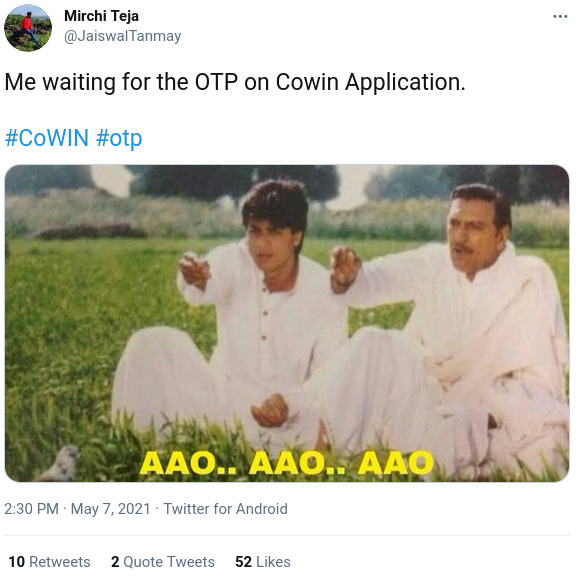 People trying desperately to get a slot, taken from Hindi Movie Dilwale Dulhania Le Jaygenge.
 Cowin app. sceeenshot
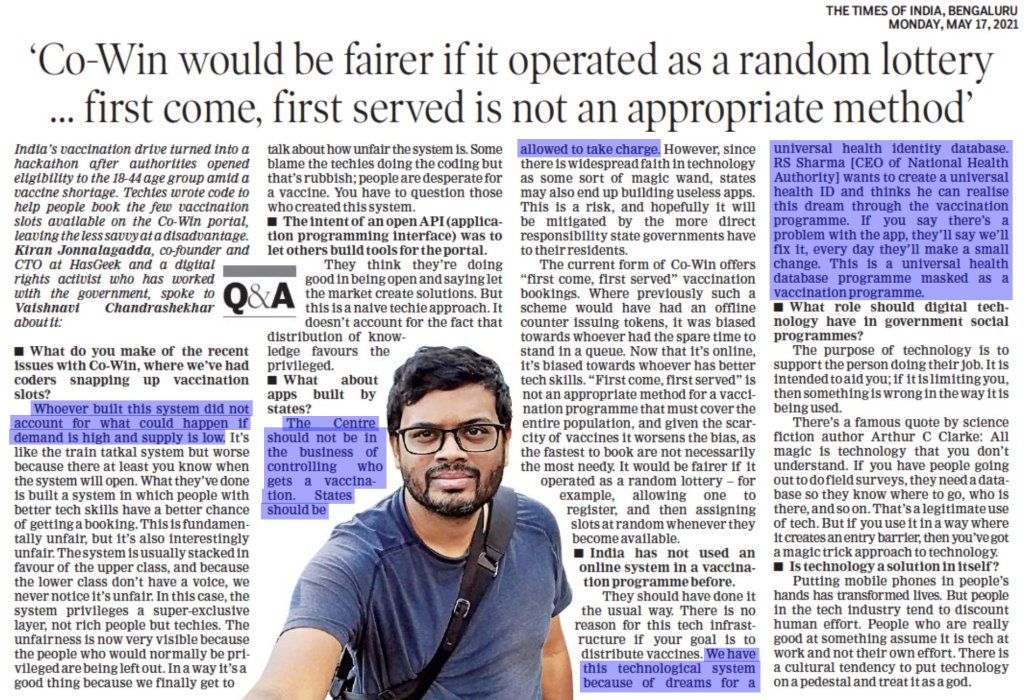
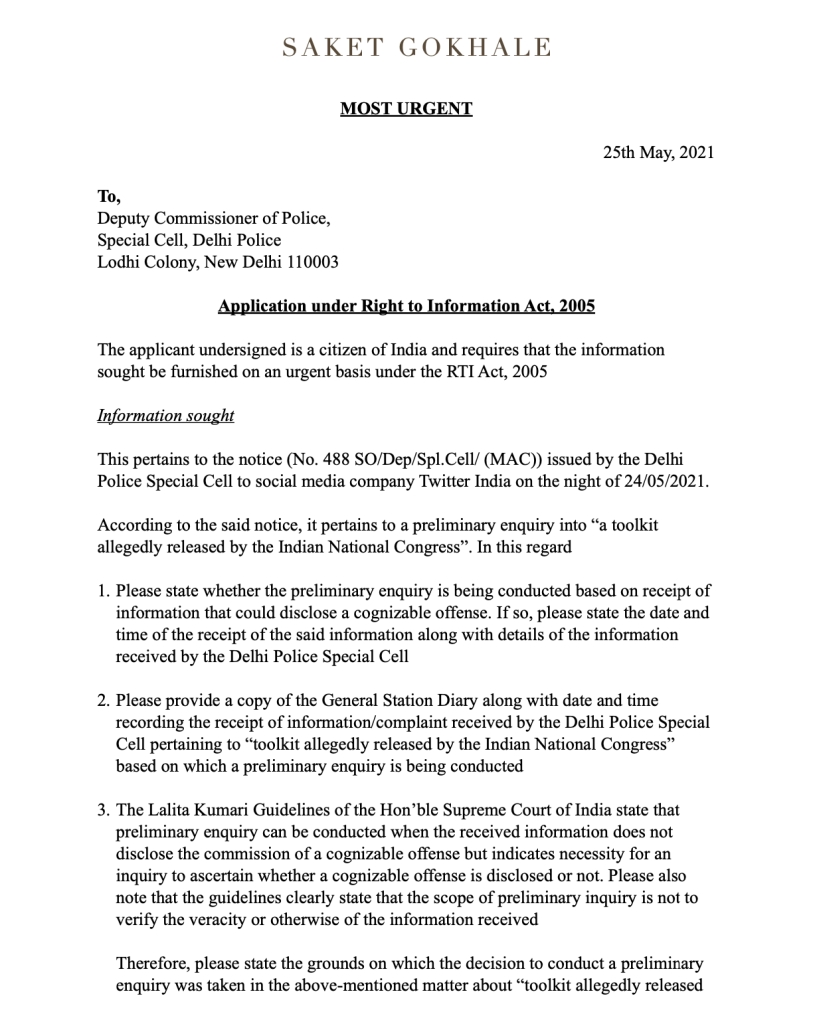 Twitter India Raid, Saket Gokhale RTI 1
 Saket Gokhale RTI query , Twitter India Raid 2
 The Hindu also shared the whole raid on twitter saga.
 Prerequisites
You will need the following prerequisites :
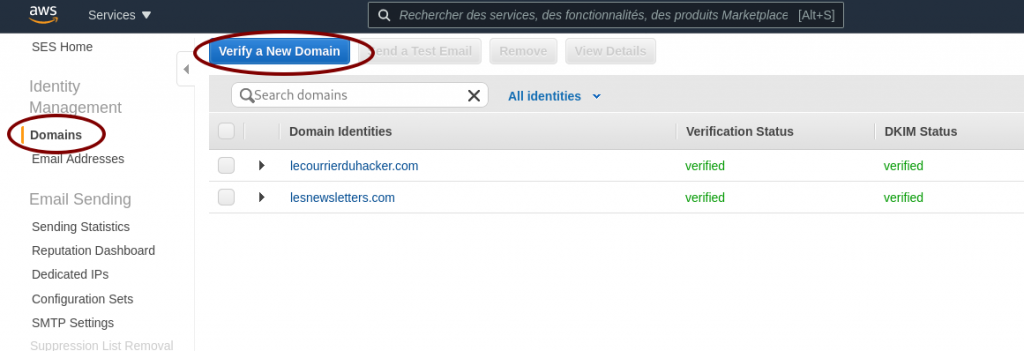 Ask AWS SES to verify a domain
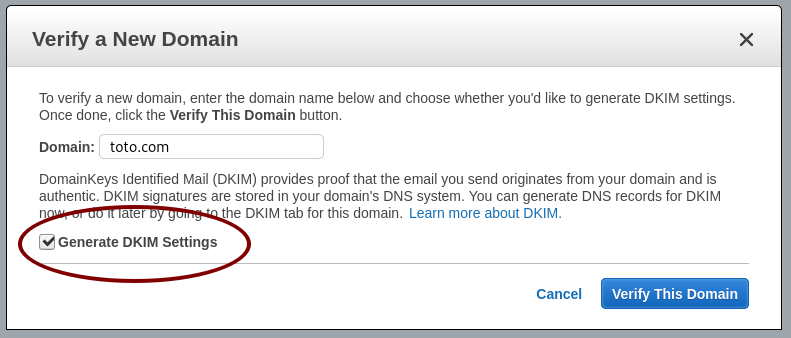 Generate the DKIM settings
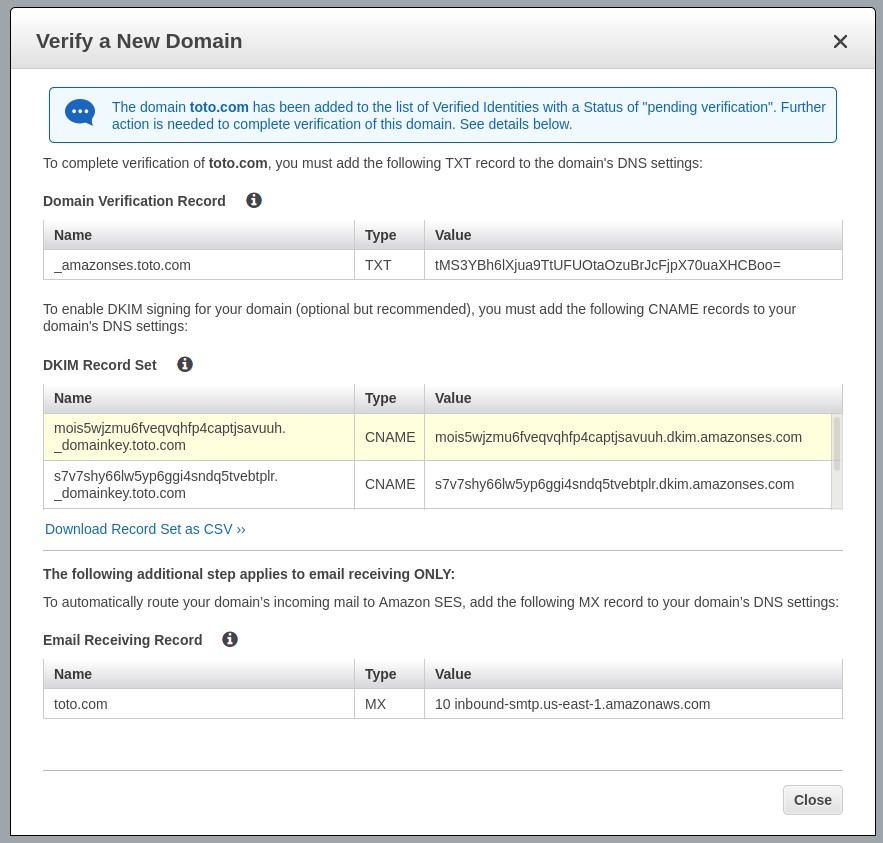
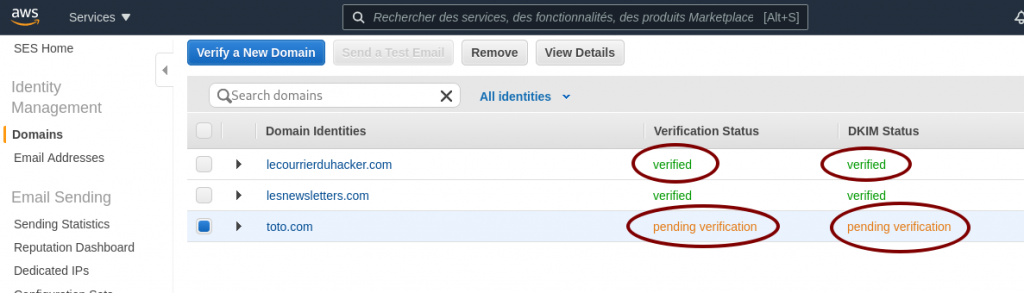 AWS SES pending verification
 AWS SES SMTP settings and credentials
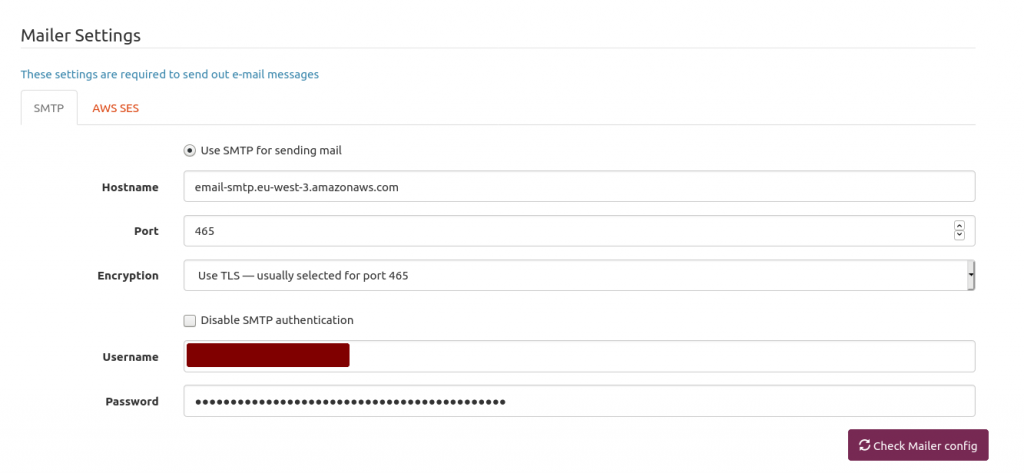 Mailtrain mailer setup
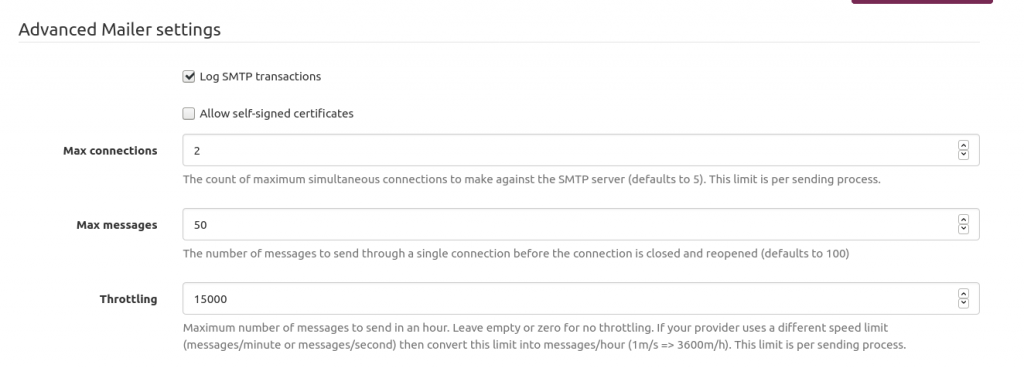 Mailtrain to throttle sending emails to AWS SES


 And oh, did I mention that we re completely remote and distributed?

 .
On the global stage, about a decade ago, Stephen J. Dubner and Steven Levitt argued in their book

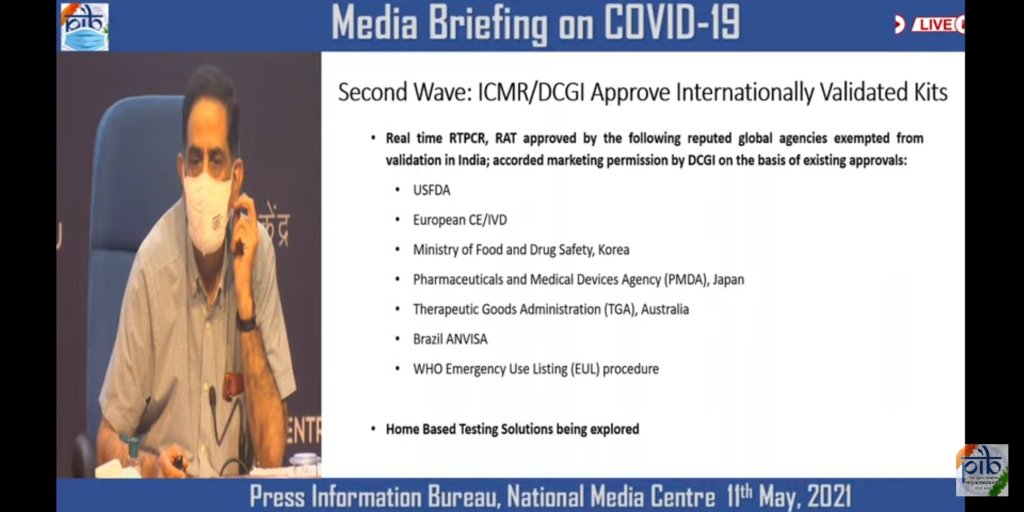
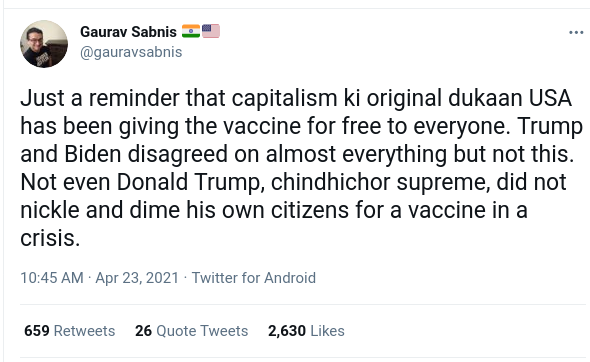
 Pappu Yadav, President Jan Adhikar Party, Bihar May 11, 2021


 Back in
 I have uploaded most of my Machine Learning lecture to YouTube.
The slides are in English, but the audio is in German.
Some very basic contents (e.g., a demo of standard k-means clustering) were left out from this advanced class,
and instead only a link to recordings from an earlier class were given. In this class, I wanted to focus
on the improved (accelerated) algorithms instead. These are not included here (yet).
I believe there are some contents covered in this class you will find nowhere else (yet).
The first unit is pretty long (I did not split it further yet). The later units are shorter recordings.
ML F1: Principles in Machine Learning
 Having destroyed the third Cherry Stream keyboard in 4 years, I wanted to try
a more substantial keyboard for a change. After some research I decided that I
want a mechanical, wired, tenkeyless keyboard without any fancy LEDs.
At the end I settled for a


 Setting wake-on-lan in Debian way.
There's several ways that your network interfaces can be configured. The Debian way is to use ifup/ifdown.
Make sure your network is configured with it by checking ifquery.
nmcli d and networkctl list are NM and systemd equivalents of commands.
After you know which one is managing your device you can go ahead and set up WoL configuration appropriately.
Default Debian installation would probably start with a ifup/ifdown config.

 UK railway map with operators
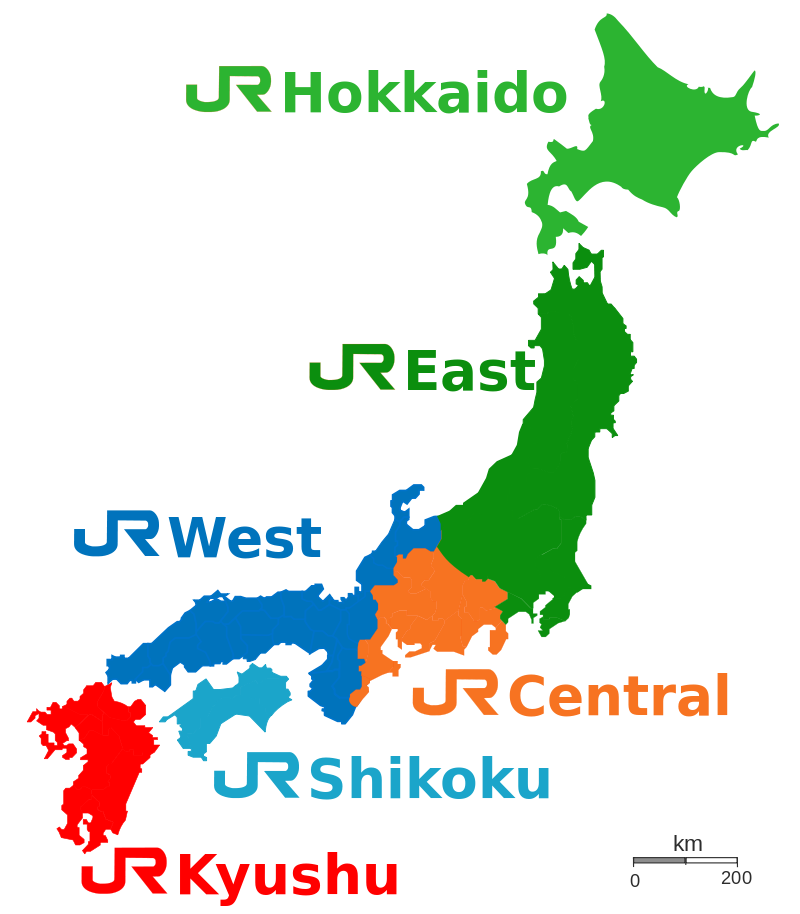 Railway map of Japan with private ownership courtesy Wikimedia commons
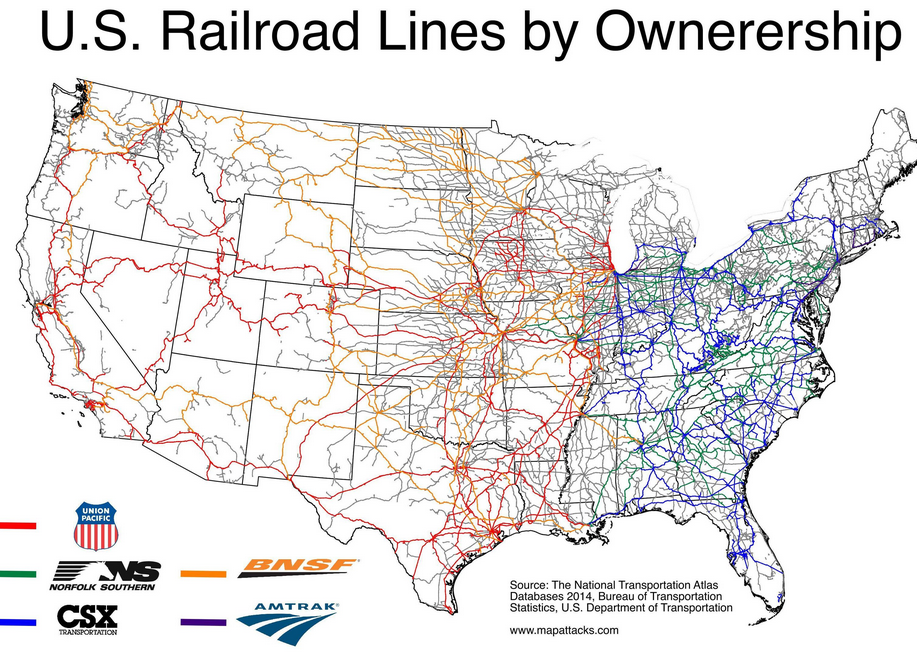


 I ve mostly had the preference of controlling my data rather than depend on someone else. That s one reason why I still believe email to be my most reliable medium for data storage, one that is not plagued/locked by a single entity. If I had the resources, I d prefer all digital data to be broken down to its simplest form for storage, like email format, and empower the user with it i.e. their data.
Yes, there are free services that are indirectly forced upon common users, and many of us get attracted to it. Many of us do not think that the information, which is shared for the free service in return, is of much importance. Which may be fair, depending on the individual, given that they get certain services without paying any direct dime.