Niels Thykier: Numbers and lintian
Lintian uses some small scripts to collect data from packages. In daily talk, they are usually referred to as collection scripts. Lintian uses files to track the status of collection scripts between runs. Consider the following directory listing on lintian.d.o:
I hope we can get the branch merged into master within 2-3 weeks, though there are still a few issues that needs to be worked out before then. Footnotes: [1] Actually it had 18 collections, but one of them are "auto-removed" so it is better not to include it in this case. [2] Content alone - metadata like permissions and such is ignored. [3] I admit it was more luck than intention! [4] The limit comes from the "32 000 hardlink per inode" limitation.


$ ls -al laboratory/binary/eclipse/.*-*
-rw-r--r-- 1 user group  45 Jul 18 01:21 laboratory/binary/eclipse/.ar-info-1
-rw-r--r-- 1 user group  45 Jul 18 01:21 laboratory/binary/eclipse/.bin-pkg-control-1
-rw-r--r-- 1 user group  45 Jul 18 01:21 laboratory/binary/eclipse/.changelog-file-1
-rw-r--r-- 1 user group  45 Jul 18 01:21 laboratory/binary/eclipse/.copyright-file-1
-rw-r--r-- 1 user group  45 Jul 18 01:21 laboratory/binary/eclipse/.debian-readme-1
-rw-r--r-- 1 user group  45 Jul 18 01:21 laboratory/binary/eclipse/.doc-base-files-1
-rw-r--r-- 1 user group  45 Jul 18 01:21 laboratory/binary/eclipse/.fields-1
[...]
du -h should confirm this
$ du -h laboratory/binary/eclipse/.*-*
4.0K    laboratory/binary/eclipse/.ar-info-1
4.0K    laboratory/binary/eclipse/.bin-pkg-control-1
4.0K    laboratory/binary/eclipse/.changelog-file-1
4.0K    laboratory/binary/eclipse/.copyright-file-1
4.0K    laboratory/binary/eclipse/.debian-readme-1
4.0K    laboratory/binary/eclipse/.doc-base-files-1
4.0K    laboratory/binary/eclipse/.fields-1
[...]
sub _mark_coll_finished
    my ($self, $collname, $collver) = @_;
    # In the "old days" we would also write the Lintian version and the time
    # stamp in these files, but since we never read them it seems like overkill.
    #  - for the timestamp we could use the mtime of the file anyway
    return touch_file "$self-> base_dir /.$collname-$collver";
du -h:
$ du -h laboratory/binary/lintian/.*-*
0       laboratory/binary/lintian/.ar-info-1
0       laboratory/binary/lintian/.bin-pkg-control-1
0       laboratory/binary/lintian/.changelog-file-1
0       laboratory/binary/lintian/.copyright-file-1
0       laboratory/binary/lintian/.debian-readme-1
0       laboratory/binary/lintian/.doc-base-files-1
[...]
$ grep -i "too many links" logs/lintian.log
mkdir: cannot create directory  /srv/lintian.debian.org/laboratory/binary/aces3': Too many links
mkdir: cannot create directory  /srv/lintian.debian.org/laboratory/binary/boinc-cgi-stripchart': Too many links
mkdir: cannot create directory  /srv/lintian.debian.org/laboratory/binary/libbrailleutils-java': Too many links
mkdir: cannot create directory  /srv/lintian.debian.org/laboratory/binary/libbrailleutils-java-doc': Too many links
mkdir: cannot create directory  /srv/lintian.debian.org/laboratory/binary/libclippoly0': Too many links
mkdir: cannot create directory  /srv/lintian.debian.org/laboratory/binary/libclippoly-dev': Too many links
mkdir: cannot create directory  /srv/lintian.debian.org/laboratory/binary/xul-ext-cookie-monster': Too many links
mkdir: cannot create directory  /srv/lintian.debian.org/laboratory/binary/cucumber': Too many links
[...]
$ grep -i "too many links" logs/lintian.log   wc -l
3274
I hope we can get the branch merged into master within 2-3 weeks, though there are still a few issues that needs to be worked out before then. Footnotes: [1] Actually it had 18 collections, but one of them are "auto-removed" so it is better not to include it in this case. [2] Content alone - metadata like permissions and such is ignored. [3] I admit it was more luck than intention! [4] The limit comes from the "32 000 hardlink per inode" limitation.
 A fresh maintenance release version 0.9.7 of
 Hope a few of my readers got it from the title of this blog post.
And maybe many others didn't. So let's talk about "Stop Making Sense".
You're warned: nothing to do with free software...or running, this
time. This is all about music.
Music from the 80's.
"Stop Making Sense" is indeed, in my opinion, one of the best achieved
musical movie. It is simple: it features a gig by the Talking Heads,
back in 1983, when this band was among the most innovative ones that
ever appeared in the late 70's.
And I finally managed to take time to actually buy the DVD and see it
again as I didn't see it since 1985.
For many people, Talking Heads is the incredible person that's David
Byrne. That's certainly true for some parts (and this is what lead to
their split in 1991), but the movie really gives credit to all members
of the band, either the "regular" ones (Tina Weymouth, Chris Frantz,
Jerry Harrison) or the tour musicians (Bernie Worrell, Alex Weir,
Steven Scales, Lynn Mabry, Edna Holt).
The construction of the movie is simple: it just starts with Byrne
bringing a music box on an empty stage, with his acoustic guitar and
playing an incredible tense "Psycho Killer" (there are so many
different version of that mythical piece but this one is among the
best). Then Tina joins for a not-so-often played "Heaven" and brings
her so inimitable bass line (I count Tina among my very favourite bass
player, immediately after Tony Levin). At the end of the piece, the
crew quietly brings a full drum set, then Chris Frantz joins, smiling
as ever, and the rhythm increases with "Thank you for sending me an
angel".
Then Jerry Harrison joins, to make the original Heads line-up for a
really funky "Found a Job", where Jerry shows that he was THE Heads
lead guitar (and Tina is still keeping the foundations so strong).
Continuing the increasing tension, the rest of the musicians join for
Slippery People, then Burning Down the House ("Who's got a
match?"). All this culmminates in a crazy joggin on stage during "Life
During Wartime" and Byrne performing incredible and stellar movements
on stage. THis one surely makes the band entirely exhausted. How can
they survive this?
The few next songs are a little bit less stunning (oh, well, "Making
Flippy Floppy" still features a dream bass line)...until
a really special "Once in a Lifetime" that...has just to be seen (SAME
AS IT EVER WAS), then
a break
where....the Tom Tom Club (namely Chris, Tina and the rest of the
band) perform a giant "Genius of Love", so funky.
All this is indeed meant for Byrne to prepare for his top appearance,
in "Girlfriend is Better", in a giant suit, that makes his head over
his long neck yet more...strange. This leads to a crazy "Take me to
the River" which has always been the top of the Heads shows during the
80's and a tireless encore on "Crosseyed and Painless".
The movie ends up and you nearly never had a breath. So, yes, if you
think you enjoy the Heads music and have never seen that movie, just
try doing it once. That's how music was in the 80's..and, doh, these
folks were so good! By the way, all parts of the movie can be seen on
YouTube in case you just want to see what *I* enjoy.
Ah, and yes I share the love of the Heads with Danese "we never meet
often enough" Cooper, by the
way. We once made a promise ourselves to sing Psycho Killer in karaoke
if we're happy (and drunk) enough to meet again before we're too old for
this..:-).






 Triaging bugs is one of the easiest way to start
 To ensure that this email address is consistently used by the various tools that we re going to use, it s a good idea to put this email address in the DEBEMAIL environment variable. You can also specify your full name in DEBFULLNAME (in case you don t want to use the name associated with your Unix account). You usually do this by modifying
 3. Triage bugs!
Bug triaging is all about making sure that bugs are correctly classified so that when a developer looks at the bug list, he can quickly find bugs with all the information required to be able to fix them!
3.1 Adding information to bug
Adding supplementary information is easily done just by sending a mail to XXXX@bugs.debian.org (replace XXXX with the bug number).
But often you want to reply to a message in the bug history, in that case










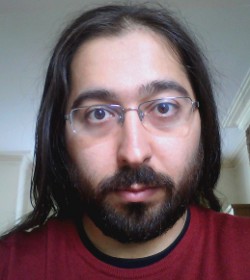 Even though Enrico is not smiling on this picture, he s one of the friendliest Debian person that I know. I always enjoy his presentations because he can t refrain from inserting jokes or other funny tricks.
 That said he s serious too, there s lots of good stuff that he has developed over the years (starting with Debtags) and he has put a lot of effort in reforming the New Maintainer process. Read on to learn more about his various projects.
Raphael: Who are you?
Enrico: Hi, I m Enrico Zini, a DD from Italy. I m 35 and I work as a freelance Free Software developer. One of my historical roles in Debian is taking care of Debtags, but that is not all I do: my paid work led me to write and maintain some weather forecast related software in Debian, and recently I gained a Front Desk hat, and then a DAM hat.
Raphael: How did you start contributing to Debian?
Enrico: It was 2001, I was at uni, I was using Debian. At some point I wanted to
learn packaging so I read through the whole Policy from top to bottom.
Then I thought: why package only for myself? . There were many DDs at
my uni, and it only seemed natural to me to join Debian as well.
Evidently this was also natural for Zack [Note from editor: Stefano Zacchiroli], who had become DD 6 months
earlier and didn t hesitate to advocate me.
I found the Policy and the Developer s Reference to be very interesting
things to read, and I welcomed my AM s questions as an excuse to learn
more. I completely understand those people who have fun trying to answer
all the questions in the NM templates while they wait for an AM.
With my super DAM powers I can see that my AM report was submitted on
October 16, 2001 by my AM Martin Michlmayr, and that James Troup created
my account 9 days later, on October 25.
Raphael: You have a special interest in the New Maintainer (NM) Process
since you are a Debian Account Manager (DAM) and a member of the NM Frontdesk.
Thanks to your work the process is much less academic/bureaucratic than it
used to be. Can you remember us the main changes?
Enrico: One of the first things I noticed when I become a Front Desk member is
that there was a tendency to advocate people too early, thinking by
the time they ll get an AM, they ll know enough .
Unfortunately, this didn t always work, and once the real NM process
started it would turn into a very long and demotivating experience both
for the applicant and for the AM. So we tried
 PostgreSQL 9.1 has had its first release candidate out for some two weeks without major problem reports, so it s time to promote this more heavily. If you use PostgreSQL, now is the time to try it out and report problems.
We always strive to minimize the number of major versions which we have to support. They not only mean more maintenance for developers, but also more upgrade cycles for the users.
9.0 has not been in any stable Debian or Ubuntu release, and 9.1 final will be released soon. So we recently updated the current Ubuntu development release for 11.10 ( oneiric )