Search Results: "sto"

12 May 2009

James Morrison: Sita Sings the Blues

Sita sings the blues is playing at the red vic. I went to see it tonight, it was really cool. There are 4 styles of animation and the narration is a lot of fun. The narration style is 3 people sitting around chatting trying to remember a story. The really cool part is most of the music is recordings of Annette Hanshaw from the 20s.

My part in tonight was using 2 rolls of dimes to pay to get into the movie :) That's two rolls of dimes now back in circulation.

11 May 2009

Joey Hess: old photos

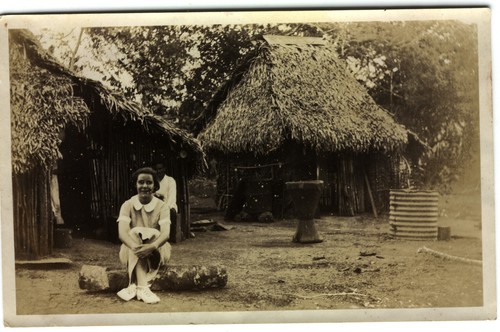
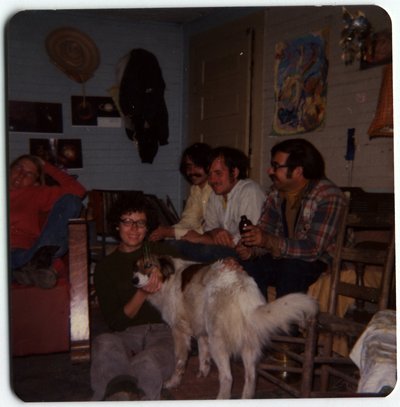
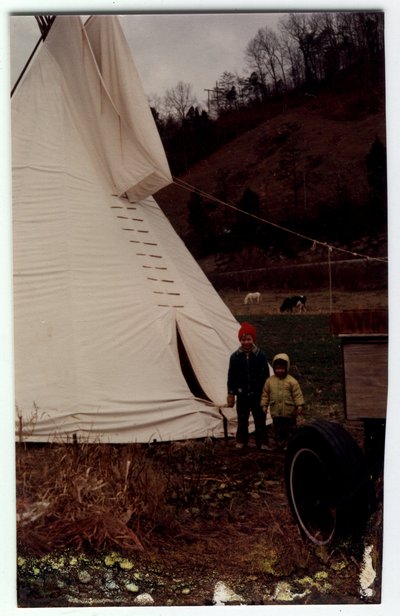
I was given a lot of old photos and scanned them in. The most interesting are from my grandparents' time in Panama, and old family photos from as far back as 1918. For me though, the gold mine are these pictures of our wacky life at the store and the farm. Follow the links to many more..

Martin F. Krafft: GPG-key mania

Would all the paranoid crypto-users please stop flooding Planet Debian with GPG output? And if you just cannot avoid it, please tag those posts meme, because that s what they are. If you really think there s a need for a new key, you re one step ahead of me, because so far, there s only a theoretical attack and the valid question of whether this is actually something to worry about in the context of GPG (or in the context of Git, for that matter). There is no practical exploit out there, and I don t expect one that would endanger your use of GPG any time soon. Of course, we ought to replace the current crypto infrastructure with a new one before the current one is compromised, but that should really be motivated by careful consideration and planning, not by lemming-like behaviour and the infamous tipping point. I ve long been meaning to clean up my key and may also switch to using a new one in the near future. However, I don t think there is an immediate need and I ll take time first to investigate the options RSA is hardly free from problems or an optimal choice. For instance, why would I want to use an RSA key, which is limited in GPG to 4096 bit keys? Do we really want to deal with signatures that are 4-10 times longer than their DSA counterparts? When RSA is broken, will we see a replay of this whole key-replacing frenzy? Wouldn t it make more sense to leverage the current situation and work on pushing/improving the DSA algorithm with larger keys, and to strive towards better algorithms in general, e.g. through SHA-3. If you still need to replace your key, revoke the old one, point at the new one in the revocation reason, and please refrain from abusing feed aggregators from letting the world know. If gpg cannot follow the trust chain after the revocation, please fix it. In the mean time, it is a good idea to use RIPEMD160 instead of SHA-1 for signing, with the following lines in ~/.gnupg/gpg.conf:
personal-digest-preferences SHA512 SHA384 SHA256 SHA224 RIPEMD160
default-preference-list [ ] H10 H9 H8 H11 H3 [ ]

and to set the preferences on your key accordingly:
% gpg --edit-key $KEYID
> setpref [ ] H10 H9 H8 H11 H3 [ ]
> save
% gpg --send-key

Then, make sure RIPEMD160 is being used:
% gpg --clearsign -a </dev/null   grep '^Hash:'

I ll end with a link to a decent write-up on the cryptographic basics of GPG.

10 May 2009

Steve Kemp: Did you feel it in your knees

This post is being made from my EEEEEeeee PC, using a 3G modem plugged into the USB port. The fact that I'm sat on my sofa, within easy reach of both a network cable and multiple WiFi access points is irrelevant! I started my adventure yesterday evening, getting pretty annoyed along the way that that it wasn't just plug and go. It turns out I was suffering from two problems: In short from my Lenny installation I had to upgrade to Sid to get a copy of Network Manager with a "Mobile Broadband" section in its preferences. (I looked for backports, to no avail, and I didn't have the patience to make one mysefl). The new connection looks like this:
Number*99#
Username[blank]
Passwordpassword
APNm-bb.o2.co.uk
PIN0000
PUK0000
Once I added the connection discovered the USB modem device (/dev/ttyUSB0) just didn't work - and I learned about the dual-nature of the device. Thankfully switching is nice and easy "apt-get install usb-modeswitch" then:
# disable storage
usb_modeswitch -v 12d1 -p 1003 -d 1
# enable modem
usb_modeswitch -v 12d1 -p 1003 -H 1
Once that was done the connection worked almost immediately. (I just had to upgrade to a 2.6.29 kernel because I got panics on the Lenny kernel; something the upgrade installed but I'd previously ignored. Kernels: Bane of my life.) Update: I do see some kernel weirdness talking about timeouts talking to the USB-serial device. Perhaps something to investigate in the future. Anyway running a 3G O2 PAYG (pay as you go) modem on Debian, on an EEEPC is possible, it is justfiddlier than I had expected, and it required an upgrade to Sid - since Lenny didn't have a network manager with mobile broadband support. For google's benefit the modem is described by O2 as a "mobile broadband USB modem - E160". This appears under lsusb as :
Bus 001 Device 005: ID 12d1:1003 Huawei Technologies Co., Ltd.
E220 HSDPA Modem / E270 HSDPA/HSUPA Modem
Hope that helps somebody else spend less than 5 hours getting it working. I guess the friends who said "It just worked" were running Ubuntu and so had a slightly newer network manager by default - and possibly their modems didn't need to toggle between "dumb storage" and "actual modem" modes. Anyway it works now, and even though it was fiddly the issue wasn't insurmountable. I'm just a little grumpy because I've gotten used to a world in which Debian just works - the last time I struggled to get new hardware toys playing nice was .. a long time ago. ObFilm: Pretty In Pink

Ond&#345;ej &#268;ert&iacute;k: My experience with running an opensource project

Nir Aides, the author of the excellent winpdb debugger, sent me the following email on September 21, 2008, so I asked him if I can copy his email and reply in form of a blog post (so that other people can comment and join the discussion) and he agreed. It took me almost a year to reply, but I made it. :)

Hi Ondrej,

How are you?

I am about to publish a new free software project, a new simple PHP framework, and I am interested in your advice.

You started SymPy and were able to make other people join you and develop it with you.
How did you do it?
How did it happen?
Did you actively call for other people or they spontaneously showed interest and joined you?
Are the other major contributor people who were your friends before you started the project?
Did you need to create or manage the project in a particular way to make it attractive to other people?
Are there things you are aware of that promote collaboration or demote it?

I was never successful in doing the same with Winpdb, which while it became reasonably popular, no one has ever joined me to develop it, except for a notable tutorial contribution by Chris Lasher which was developed independently.

Now with the new project, I am wondering what are my chances of making other people try it and take it on. On the one hand it is a new and fresh code base in an interesting field, on the other hand, why would anyone bother to spend their energy on this new project when they have Symfony or Drupal?

What do you think?

BTW, Ohloh believes you have a median of 19,000 lines of changed code per month since the start of their log. Can this be true? Is this humanly possible? According to it SymPy has over 1,000,000 lines of code? I can't understand these numbers. Winpdb has about 25,000 lines after 3 years of development. And from my experience 1,000,000 lines of code projects need about 20-50 full time developers to work on for 2-5 years which is about 40-250 man years. And as if this is not enough you are listed as owner in a dozen other projects in Google code and have enough time to become an awarded scientist. How is this possible?

http://www.ohloh.net/p/sympy/contributors/

BTW2, do you still use Winpdb? If you find yourself using it less, can you say what are the reasons, or what it would take to make it more useful?

BTW3, How is SymPy doing?

Cheers,
Nir


So my most honest answer how to run a successful opensource project is: I don't know.

But nevertheless I tried to summarize some of my ideas and experience and some guidelines that I try to follow, maybe it will be useful to you Nir, or anyone else.

First of all, there has to be a public mailinglist (easily accessible), public bug tracker, nice webpage, easy to find downloads, frequent releases (once a month is good, but in the worst case at least 4 times a year) and a set of guidelines to follow in order to contribute. So that's a must, if the project doesn't have the above, it's almost impossible to become successful. However, that is just a start, just a playground. There are still many projects that have the above and yet they totally fail to attract developers.

So I think the most important principle is that I always think how to employ other people in what I do. If I have some plan in my head how to do something, e.g. how to move some things forward, I always create exact steps and put it to issues, or our mailinglist, so that each step can be done by someone who is completely new to sympy. So I try to look at things from other people's perspective and think -- ok, I quite like this SymPy project and I'd like to get this done (for example a new release, or something fixed, or implemented), but I have no idea how to start and what exactly needs to be done.

So what I try to do if someone comes to our list and asks for something, is that I create a new issue for it and think how I would fix it if I had time. Then write the necessary steps in the issue and invite the submitter to fix it and I offer help with explaining anything and guiding. Now there are two things that can happen. Either the submitter has time and a will to go forward and in this case he starts wrestling with it and whenever he has some code or a question, I need to find time, review it and offer some way out. Or the submitter is too busy, in which case the instructions simply rest in the issues and the next time someone asks for the feature, the instructions are already there. I don't have estimates how frequent either case is.

When I am working on something myself, I try not to code privately, but also put up issues first and put the steps needed in the issues, so that it's easy for other people to join in.

In general, the most precious value for me is the fact that someone else had to sit down at his computer and wrote the patch. So I do everything possible to get new (or more) people interested in the development. Some people think that only super programmers can do a decent job and it's useless to invest time in people that may just have started with Python. They are wrong. Among the SymPy developers (around 65 people total have contributed patches so far at the time of writing this post), we have all kinds of people. We have people from high school, we have a retired US army engineer, we have physicists, mathematicians, biologists, engineers, teachers, or just hobbyists, who do it for fun. Unfortunately, we do not have many women (I think no patch that made it into sympy was contributed by a woman, but I may be wrong), so if anyone has any ideas how to get more women involved, let me know (I know we have several women fans, so that's a good start:). We have people whose first open source project they ever contributed to was sympy and people who are new to Python.

Many times the first patch that a new potential developer submits is not perfect, usually it's faster for me to write it myself, than to help with the first patch, however my rule is to always help the submitter do that. Sometimes he sends a second patch, or a third, and usually it needs less and less work on my side and it already pays off, because he is then able to fix things himself, if he discovers a bug and sympy has just won a one more contributor.

So I came to the conclusion that all that is needed is an enthusiasm. You don't even have to know Python (as you can learn all these things on the way) and you can still do useful things for us and really spare our time.

To answer another question from Nir's email, SymPy has about 130000 lines of code and another about 20000 lines of tests, so I think those stats are wrong. Also the changed lines of code is in my opinion wrong, we usually have about 250 new patches per release (this depends how often we release and other things).

Yes, I am involved in couple other projects, e.g. Debian, Sage, ipython, scipy, hpfem.org (and couple more), basically everything that has to do with numeric simulation and Python, but my activity there varies. The most time consuming thing in the last couple years was definitely school, I was finishing my master in Theoretical Physics in Prague and then moved to the Nevada/Reno and I just finished my first semester here at PhD in Chemical Physics, and sometimes it was just crazy, e.g. I finished teaching at 7pm and instead of going home and sleep, I stayed in my office, fixed 10 sympy issues that were holding off a release, finished at 1am, went home (by bike, since I don't have a car yet), slept couple hours and then did just school again for a week, other people reviewed the issues in the meantime, and then I made the release (instead of sleeping again). In the last semester it was not unusual that I got home at 1am every week day, then slept most of Saturday to catch up, on Sunday I did some laundry and shopping, and the rest of time I did grading and homeworks for all my classes and teaching, no time for anything else (e.g. no friends, no girls, no rest, no hobby, no opensource stuff, nothing). So sometimes one has to work pretty hard to get through it, but fortunately it's behind me finally, if all goes well, I should be just doing research from now on and have a real life too. Also I am sorry I didn't manage to reply sooner. :)

To answer the other questions:
Are the other major contributor people who were your friends before you started the project?
No, not a single major contributor was my friend before I started the project. Every single one of them become a developer using the procedure I described above, e.g. first showed on the list or in the issues, and maybe even the very first patch was not a high quality one (and if I was stupid and arrogant, or didn't see the big potential, I would just ignore them). But when given a chance, they became extremely good developers and sympy would simply just not be here without them.

Did you actively call for other people or they spontaneously showed interest and joined you?
I very much encourage everyone to contribute, but the initial interest must be in them, e.g. they at least have to show around the mailinglist/issues, so that I know about them. But once I know they are interested in some issue, yes, I try to invite them to fix it, with my help.

One observation I made is that I have to always think in the spirit "how to earn new money, not how to spare the money I already have", e.g. when applied to sympy, how to get new developers, how to develop the new great things etc. Even if I am super busy as I was, I still have to think this way. Once I start thinking how to conserve and preserve what we already have, I am done, finished and that's the road to hell.

If I am open, positive, full of energy, I can see people joining me and we can do great things together. It probably sounds obvious, but it was not for me, when for example some people I worked with, started their own projects, when I got busy, and started to compete, instead of helping sympy out. And I felt betrayed, after so much work that I invested into it and started to become protective. And then I realised that's wrong. I can never stop other people do what they want to do. If they want to have their own project, they will have it. If they don't want to help sympy out, they won't (and what is more important, there is nothing wrong with either of that). It's that simple and being protective only makes things worse.

There is also a question of the license that you use for the project, e.g. one should basically only choose between BSD (maybe also MIT or Apache), LGPL and GPL (there are also several versions of the GPL licenses). Unfortunately the fact is, that there are people who will never contribute a code under a permissive BSD license (because it's not protecting their work enough) and there are also other people who really want to code to be BSD (or other permissive license) so they can sell it and they don't need to consult with lawyers what they are or aren't allowed to do and also so that they can combine it with any other code (opensource or not). It also depends if one wants to combine (and distribute) other codes together. So choosing a license is also important. I believe that for sympy BSD is the best and for other projects (like Sage) GPL is the best and one has to decide on a case by case basis. For Winpdb, I would make it BSD too, since you can get more people using it.

To conclude, SymPy is a little more than 2 years old, and it has been a great ride so far and more things are coming, e.g. this summer we have 5 Google Summer of Code students and people are starting it to use in their research and we plan to use it in our codes at our group here in Reno too, so things look promising. I am really glad, we managed to build such a community, so that when I am busy, as I was the last semester, other people help out with patches, reviews and other things, so that the project doesn't stall and when I got rid of my school duties now, we can move things forward a lot.

So maybe you can get inspired by some of the ideas above. I am also interested in any discussion about this (feel free to post a comment below, or send me an email, or just write to a sympy list about what you think).

9 May 2009

Andrew Pollock: [life] A few days in British Columbia

We got back from our brief visit to Canada last night. We had a great time, Vancouver and Victoria were both very nice. YVR (Vancouver Airport) This airport has to win the award for nicest airport I've seen. Clearly they pulled out all the stops in preparation for the Winter Olympics next year. The airport is very bright, airy and open. Before you even hit the immigration line, you pass through a couple of water features, some indigenous art, all of that jazz. Immigration is done in the open in a huge hall, instead of in the dark bowels of the airport, which was a pleasant change from the usual US airport immigration experience. (That said, Houston airport had a pretty nice immigration experience). Oh, and it was blanketed with free WiFi, which was a nice touch. Ferry to Victoria The brief geography lesson I got was that Victoria is on Vancouver Island, and Vancouver (the city) is not on Vancouver (the island). Go figure. Getting to Victoria from the airport via BC Ferries was a very seamless experience. You board a bus from the side of the airport terminal, and it drives to Tsawwassen, drives onto the ferry, and then you get off the bus and go sit on one of the passenger levels of the ferry. BC Ferries BC Ferries deserves special mention. The ferry itself is huge - 7 decks (three of them for vehicles). It's a veritable shopping mall on water. It's got some stores, buffets, exclusive $10 entry lounges, video arcades, cellular payphones, the works. The trip to Victoria The ferry ride took about 1.5 hours, and was very scenic. We passed by a few smaller islands, and I had an instant flashback to the TV show The Beachcombers that I used to watch as a kid, particularly the opening sequence. Victoria Victoria is a beautiful city. It's the capital of the province of British Columbia, and I likened it to Canberra in a lot of ways. It had more modern conveniences than a town with a population of its size would otherwise normally have. It was a government and university town. Nice houses, very green in general, and being an island, there was water everywhere. It seemed to have lots of bays, and harbours and rivers. It was very nice. Flight back to Vancouver We took a Harbour Air seaplane back to Vancouver on Sunday afternoon. That was fun. I've never been on a seaplane before. It took about 35 minutes. Vancouver First order of business in Vancouver was the purpose of the whole trip: renewing our visas. That went fine, I'll write a separate post about the process. Afterwards, we bought tickets for the Big Bus, and toured the city for the remainder of Monday and Tuesday. Drive to Whistler For Wednesday and Thursday, we hired a car, and went a bit further afield. On Wednesday, we drove up to Whistler to check it out. The drive up took about 5 hours, because we stopped at every scenic spot we came by. Waterfalls abounded. There was a lot of work being done on the roads between Vancouver and Whistler, upgrading them for the Olympics. Whistler itself was pretty spectacular. Some crazy looking ski runs. The village looked like Squaw Village on steroids. The drive back only took about 2 hours. Cleveland Dam, Lynn Canyon suspension bridge For the last day, we drove to Cleveland Dam, where there was a salmon hatchery, and checked out the dam, hatchery and surrounding area. It was lovely and green. After that, we drove to Lynn Canyon to check out the suspension bridge there (unlike the Capilano Suspension Bridge, which costs $26 a pop, the Lynn Canyon one is free). That was all we had time for really. The weather wasn't fantastic during our stay, but it didn't really prevent us from doing anything either. I'd have liked to have checked out Stanley Park if we had more time, and Sarah wanted to go to Grouse Mountain. We had a near-100% success rate at being picked as Australians, unlike when we're in the US, where more often than not, people ask us if we're British. Apparently this is mainly attributed to the fact that Australians run all of the ski lifts at Whistler. We certainly heard a lot of Australian accents while we were getting around. I'd also never seen such a saturation of Starbucks before. In Vancouver, there were literally Starbucks across the road from Starbucks, and around the corner from another one. Whistler village had two. The Canadian accent is cute. They really do tack "eh?" on the end of everything, although it's phonetically more like "ay?". "House" and "about" are also pronounced distinctively differently. Overall, Vancouver wasn't what I'd call bursting at the seams with tourist attractions, but seemed like a nice city. It was fairly flat. The beggars were well dressed. Everyone was very friendly. A lot of the taxis were Priuses. It seemed pretty clean. I could handle living there. Not sure how bad it gets in winter.

8 May 2009

Christoph Haas: Thanks for the great time, KDE

After years of being a dedicated KDE user it seems like it s finally time for me to go back to Gnome. I once tried KDE 4.x from the Debian experimental branch knowing that it s probably unstable and will require a lot of patience. But I was willing to report bugs and dive into new things. It didn t take long though to find out that graphics were extraordinarily slow with the new desktop effects . The worst was resizing a konsole (KDE terminal window). It took 25 seconds until the window was resized and redrawn! On the interweb I found KDE developers rant about NVidia who didn t support some special extension they needed. They suggested to get an ATI card instead. (No, thanks, I was struggling with the crappy radeon and fglrx drivers on my new work laptop and am sick of ATI for Xorg.) Or I could use a bare XTerm instead. Yeah, right. So I couldn t use the desktop effects. After all I used the non-free NVidia driver for years and it never let me down. I don t mind doing without eye candy. But the desktop effects were about the only serious way to switch between virtual desktops. Point the mouse into a corner or edge of the screen and get a zoom-out bird s view of the virtual desktops. Nice but quickly annoying. Besides you had to push the mouse pointer a few pixels into the edge (it s not sufficient to just hit the edge) which means that after 10 desktop switches I had to lift the mouse and set it back on the mousepad. Another annoying issue is that up to now I can t assign functionality to every key on my keyboard any more. I had a neat trick by having 3 3=9 virtual desktops and use my numpad keys 1 to 9 to page through them. 0 on the numpad opened a new shell window. + on the numpad maximized a window. But now I couldn t assign any of those numpad keys. I pressed the 1 but KDE didn t detect Numpad_1 but just 1 . Guess how useful it is to not be able to type the 1 any more. There is a low-priority bug report for KDE from users who want this fixed but it will likely not happen any time soon. So the only way to switch desktops was to poke on the tiny pager widget in my panel. Yuk. Not to mention that I couldn t put icons on the desktop any longer. There was just a sissy widget that I could use for that purpose but it didn t work like a conqueror or dolphin at all. It was pretty amusing when in KDE 4.2 there was suddenly a feature to re-enable the old behavior. Let me guess, KDE developers - I wasn t the only user you couldn t persuade of the new paradigm? Next evil thing was performance. KDE 4 takes ages to load. Simple window managers get me started within seconds. Even Gnome. But KDE takes 30 seconds until it s loaded plus some disk grinding in the background. And memory usage wasn t nice either. And what finally made me mad was stabilty - or rather lack thereof. Everytime the screen saver ran my kbluetooth module crashed. kmail crashed even more frequently than before. (I loved kmail for it s great customizability and feature set.) plasma (the actual window manager) died at least twice a day. Suddenly the panels were looking ugly or crashing. As a Debian developer I have to follow the unstable branch on my workstation. And there is no distinction between KDE 3 and KDE 4 any more so a dist-uprade inevitably gets all of my applications upgraded to KDE 4 (plus an hour of manual engineering in aptitude because half of my applications weren t upgraded automatically due to different application names and I had a mixed environment). So there I was with KDE 4.2. I really worked with it for a month. I tried hard to get acquainted to its bloatedness and instability. It s really a nice technological preview of what might be possible in the future. Everything is really automatic. Mounting external media. New ways to find programs (although I m not happy with the new K start menu). Funny effects and nice eye candy. But it s far from the rock solid desktop environment that I was used from KDE 3.5.8. So there I am on Gnome now. I was switching back and forth. One day working on KDE 4.2 and the other day using Gnome 2.26. And although it makes me feel sad I think it s finally time to say goodbye to KDE 4. I have invested a good amount of time and energy into it - even just from a user perspective. But it s not ready. And I finally need to get some work done. A number of projects suffered from my playfulness (my ispmail tutorial, screenshots.debian.net, debexpo, my kids) and it s time to get back to work. And Gnome was pretty surprising. With compiz I have the KDE desktop effects working (here they really do) and they are all customizable. I can assign keys properly again (even the numpad). Everything is pretty fast and stable. I have replaced kmail and its buggy shared calendar feature by Icedove (aka Thunderbird) with the Lightning plugin. Worked from the first minute and hasn t crashed in a week (just have to remember next time to install libstdc++5 to be able to use Lightning). With enigmail I finally have a proper simple working PGP key management that doesn t die and is buggy like hell like in kgpg. And there s the nice Nostalgy add-on that allows me to file emails into IMAP folder quickly again - a feature that just kmail seemed to support so far. Oh, and I see new mail instantly because Icedove supports the IDLE command while kmail has never learned that neat little trick. The Gnome file manager isn t really great for my taste but it s doing its job (dolphin is just much nicer). It s not as nice as KDE but I had to learn that working and stable weighs more than nice. The hard way. And many things I liked about KDE 4 (like starting a new program with Alt-F2 and having a smart application finder and simple calculator in one) are built into Gnome, too. So why bother. Thanks, KDE, for the years of fun and service. I ll surely miss you. Get back to me should you grow up one day.

Antti-Juhani Kaijanaho: Star Trek

It is curious to see that the eleventh movie in a series is the first to bear the series name with no adornment. It is apt, however: Star Trek is a clear attempt at rebooting the universe and basically forgetting most of the decades-heavy baggage. It seems to me that the reboot was fairly well done, too. The movie opens with the birth of James Tiberius Kirk, and follows his development into the Captain of the Enterprise. Along the way, we also see the growth of Spock from adolescence into Kirk s trusted sidekick and also into well. Despite the fact that the action plot macguffins are time travel and planet-killer weaponry, it is mainly a story of personal vengeance, personal tragedy, and personal growth. Curiously enough, although Kirk gets a lot of screen time, it is really the personal story of Spock. Besides Kirk and Spock, we also get to meet reimagined versions of Uhura (I like!), McCoy, Sulu, Chekov and Scott. And Christopher Pike, the first Captain of the Enterprise. The appearance of Leonard Nimoy as the pre-reboot Spock merits a special mention and a special thanks. I overheard someone say in the theatre, after the movie ended, that the movie was a ripoff and had nothing to do with anything that had gone before. I respectfully disagree. The old Star Trek continuum had been weighed down by all the history into being a 600-pound elderly man who is unable to leave the couch on his own. This movie provided a clearn reboot, ripping out most of the baggage, retaining the essence of classic Star Trek and giving a healthy, new platform for good new stories. One just hopes Paramount is wise enough not to foul it up again. It was worth it, I thought.

Alastair McKinstry: Funding Public Health care : the bigger picture

Adrian von Bidder raises an interesting discussion on why public health care is difficult. Basically, it comes back to the challenge:
How much money should be spent on this person's illness? which is a very, very bad question. We try to sidestep it by only taking about statistics etc., but no matter how you look at it, you either do 20'000  per week medications for 80 year old patients who will die soon anyway and get a system society can't pay, or you don't and you get a system where the rich are better off than the poor.
The problem is, the majority of health costs are in the last few years of a persons life: when the body is breaking down. If viewed from the problem of health-care funding vs. eg. education, you have an ethical dilemma: is it worth it ? Here there are no easy answers. Nick Bostrom wrote a very interesting and persuasive essay a while back, The fable of the Dragon Tyrant. In short, we are getting somewhere with regenerative medicine While cures are hard to come by at this stage, there is a growing realization in medicine that senesence, what we used to call "old age", is curable. But we have a lot of psychological defensive mechanisms to help us cope with the carnage of old age that make us deny the problem: if we look afresh at "old age" knowing it to be curable, any delay in doing so is abhorrent. From a public, societal perspective, we spend a fortune every year on health. But we do so in a very disjointed way: we pay colossal amounts for health care, but also for basic health science: in the US, for example, the budget for the National Institutes of Health is about 30 billion dollars. Nearly twice that of NASA. Similar figures are spent in Europe, but there is this strange gap in the middle: the drug companies and medical industry. We start the development of new drugs with public money, and we buy the drugs with public money, but the choice of what drugs and treatments are developed are left to private industry, that is, a profit motive. This results in many cases in expensive treatments to treat symptoms rather than necessarily cure the problem. Faced with the huge costs of geriatric medicine and senesence, the response should be co-ordinated: funding a cure will be expensive, but save a fortune (Think, instead of a pensioner slowly dying and 'being a drain on resources', of 'experienced citizen in the prime of their productive, tax-paying years'). Instead of funding the basic science alone, we should be funding the complete drug and treatment development publically, only farming out the actual manufacture to private industry. It is silly to spend a fortune to keep merely keep someone alive at the age of eighty or so, when we know for a larger investment (bigger than a private company can do), we can cure them properly. The solution to the dilemma, then, is to stop thinking of the elderly being a drain, but actually applying our public efforts in a co-ordinated manner to solving the carnage of old age. Tags ,

Sandro Tosi: Oh GMail, where did you put my colors?

After the short outage of GMail just suffered, all my colored labels are gone. Oh what a PITA! I love all those colors in my window, and they help a lot focus on important stuff.

Ok, it's an extension in GMail Labs that enables them, but I hope they'll be restored (yeah, the same I had before) really soon! It would be very boring to redefine them all.

/me crossing fingers

UPDATE: colors are back now \o/

Eddy Petri&#537;or: I bought a folding bicycle

For some time I've been pondering about buying a bicycle since it seems my weight has been increasing lately up to about 90 kg, which, for my height and age, is about 20 kilograms too much.


But since I am living in a rented apartment, storing the bicycle was a problem, until I realized I could buy a folding bicycle. When that idea hit me, I literally couldn't sleep until about 6 am and I searched the internet about the options, issues to expect, things to check.

In the end I found a Dahon Mu P8 bicycle someone was selling on a bidding site and, after seeing it I concluded that was in mint shape, so there was no reason not to buy it since the price was half of a new one, while this one was only a year old.

I bought the bike yesterday and rode it to work from the place where I met the person who sold it to me and it was quite an enjoyable experience. I still have to do some minor adjustments (saddle is a little bit loose and folding could be better if the handle bar was in another position) before I can ride it regularly to work, but that's just, well, a minor problem :-P.


Now I have a way to do regular exercise without feeling is a drag, so I expect to lose some weight soon after I start riding it to work regularly :-) . Maybe I'll manage to lose about 5 kilos until DebConf, which would be great.

7 May 2009

Joey Hess: passing mp3s from firefox to mpd

I have finally figured out how to make clicking on a mp3 link in firefox cause the url to be instantly passed to mpd and played. If this seems like it should be easy, think again.. Firefox makes it hard, because while it lets you configure an program to run for a mp3, if the mp3 is not streamed, it will first download the whole mp3, and then run your program, passing it the local file. That's not what we want: It's slow, and it's much easier to queue an url in mpd than a new file. The trick to making it work is an addon called MediaPlayerConnectivity. Confusingly, this addon sometimes refers to itself as "MPC" -- not to be confused with "mpc(1)". Warning: This addon is a ugly mess that wants to do a lot of other stuff than play mp3s, so make sure to disable all that. MediaPlayerConnectivity's preferences allows you to specify a command to run for mp3 files (but annoyingly, not ogg vorbis). This command will be passed the url to the mp3. So you need to write a little script that runs mpc add and starts the queued url playing. My take on that is mpqueue, which uses the mpinsert command from mpdtoys to add the url just after the currently playing song in the playlist. Then it uses mpc next to skip to it. This way, after whatever you clicked on finishes playing, mpd continues with whatever was next in your playlist, and the music never stops. BTW, since I use a mpd proxy this is all done on whatever remote mpd the proxy is currently set to use, rather than my laptop. Clicking on a link and having the sound system in the next room switch to playing it is pretty nice. :) Previously: My mpd setup

Joey Hess: sha-1

So, sha-1 is looking increasingly insecure in applications where birthday attacks are possible. ("Birthday attacks" ... what a phrase ... I hope my non-technical readers stopped at "sha-1".) Two things about that:
First, I wanted to mention that I've today released jetring 0.15, which adds support for arbitrary hashes in the index file, and deprecates use of sha-1, going to sha-256 by default. There is a jetring-checksum -u utility that can be used to upgrade sha-1 hashes in existing jetring index files. If you're using jetring in an application where changesets are provided by third paries, then a birthday attack could be possible (though not easy?), and you should upgrade your index. debian-maintainer is a good example of such a jetring user.
Secondly, our beloved git uses sha-1, and this seems unlikely to change soon or without significant pain. So, what kinds of collision attacks would you need to watch out for when using git? Here is a real-world example I've been pondering. Is it accurate? Here's a different scenario.. This seems more plausible. This sort of attack is easy to accomplish with a subversion repository, and was one of the reasons I was glad to switch to git, since its checksums and signed tags seemed to prevent this kind of mischief. So, worrying, especially if your project uses such a build server. Update: Thanks to the commenters for helping me correct my example. (I hope!)

6 May 2009

Tiago Bortoletto Vaz: Homage to Augusto Boal


The 9 may, 2009 at 20:00 UTC, the Center of The Theater of the Oppressed in Rio de Janeiro will pay homage to Augusto Boal. There will be a live video and audio streaming available at: http://aovivo.pontaodaeco.org:8000/homenagemboal.ogg.m3u It s recommended using the free software VLC to watch it: http://www.videolan.org/vlc/ There will also be an IRC chat room open for everyone in FreeNode, channel #homenagemboal. Posted in english Tagged: augusto boal, theater, theater of the oppressed

Ingo Juergensmann: Fixing RAID Issues

Well, yesterday I wrote about a looping RAID1 rebuild:

Usually I would wait for the rebuild to be finished and asking the hosting provider to replace the second disk (sdb), but as the medium error causes just another rebuild process, this won't work for obvious reasons. So, the next plan is to fail the drive sdb and get a replacement disk then. Hopefully the first disk won't fail as well then... but well, Murphy, Backup, stuff... sigh


Speaking of Murphy... it happened, of course, as it had to happen. I failed one of the drives of one of the RAIDs, did a pvmove to move all data from one RAID1 device to another and ... then Murphy came along! The machine hang after I went to bed late in the night.

The next morning greeted me with a instant messenger notice from my coworker that the disks stopped working and he rebooted the machine. From the rescue system one could see SMART errors on both disks, so replacing one disk and then the other wouldn't have worked. Sadly the hosting provider requested 69.- for a temporary third disks. So we went right away with backupping the data from the still working RAID and LVM, then requested the replacement disks and restored the machine from scratch.

Now the machine is back and working normally again. pheeew

5 May 2009

Ingo Juergensmann: Non-Stop re-syncing RAID1

Ok, since a few days there is always the same going on on one of the companies (hosted) servers: the RAID1 syncs in a loop because a medium error always happen during the rebuild progress:

May 5 21:55:28 spion29 kernel: [2339524.778339] md: md2: recovery done.
May 5 21:55:28 spion29 mdadm: RebuildFinished event detected on md device /dev/md2, component device mismatches found: 512
May 5 21:55:30 spion29 kernel: [2339526.287680] RAID1 conf printout:
May 5 21:55:30 spion29 kernel: [2339526.287702] --- wd:1 rd:2
May 5 21:55:30 spion29 kernel: [2339526.287712] disk 0, wo:1, o:1, dev:sda3
May 5 21:55:30 spion29 kernel: [2339526.287721] disk 1, wo:0, o:1, dev:sdb3
May 5 21:55:30 spion29 mdadm: RebuildStarted event detected on md device /dev/md2
May 5 21:55:30 spion29 kernel: [2339526.295476] RAID1 conf printout:
May 5 21:55:30 spion29 kernel: [2339526.295487] --- wd:1 rd:2
May 5 21:55:30 spion29 kernel: [2339526.295497] disk 1, wo:0, o:1, dev:sdb3
May 5 21:55:30 spion29 kernel: [2339526.295515] RAID1 conf printout:
May 5 21:55:30 spion29 kernel: [2339526.295523] --- wd:1 rd:2
May 5 21:55:30 spion29 kernel: [2339526.295531] disk 0, wo:1, o:1, dev:sda3
May 5 21:55:30 spion29 kernel: [2339526.295541] disk 1, wo:0, o:1, dev:sdb3
May 5 21:55:30 spion29 kernel: [2339526.295589] md: recovery of RAID array md2
May 5 21:55:30 spion29 kernel: [2339526.295598] md: minimum guaranteed speed: 1000 KB/sec/disk.
May 5 21:55:30 spion29 kernel: [2339526.295608] md: using maximum available idle IO bandwidth (but not more than 200000 KB/sec) for recovery.
May 5 21:55:30 spion29 kernel: [2339526.295625] md: using 128k window, over a total of 390628416 blocks.
May 5 22:11:52 spion29 kernel: [2340506.396514] ata3.00: exception Emask 0x0 SAct 0x0 SErr 0x0 action 0x0
May 5 22:11:52 spion29 kernel: [2340506.396539] ata3.00: irq_stat 0x40000001
May 5 22:11:52 spion29 kernel: [2340506.396552] ata3.00: cmd 25/00:00:a2:20:ed/00:04:0e:00:00/e0 tag 0 dma 524288 in
May 5 22:11:52 spion29 kernel: [2340506.396553] res 51/40:00:c9:21:ed/18:00:0e:00:00/e0 Emask 0x9 (media error)
May 5 22:11:52 spion29 kernel: [2340506.396601] ata3.00: status: DRDY ERR
May 5 22:11:52 spion29 kernel: [2340506.396611] ata3.00: error: UNC
May 5 22:11:54 spion29 kernel: [2340507.733453] ata3.00: configured for UDMA/133
May 5 22:11:54 spion29 kernel: [2340507.733795] ata3: EH complete
May 5 22:11:54 spion29 kernel: [2340507.844814] sd 2:0:0:0: [sdb] 1465149168 512-byte hardware sectors (750156 MB)
May 5 22:11:54 spion29 kernel: [2340507.851787] sd 2:0:0:0: [sdb] Write Protect is off
May 5 22:11:54 spion29 kernel: [2340507.851809] sd 2:0:0:0: [sdb] Mode Sense: 00 3a 00 00
May 5 22:11:54 spion29 kernel: [2340507.852536] sd 2:0:0:0: [sdb] Write cache: enabled, read cache: enabled, doesn't support DPO or FUA


Usually I would wait for the rebuild to be finished and asking the hosting provider to replace the second disk (sdb), but as the medium error causes just another rebuild process, this won't work for obvious reasons. So, the next plan is to fail the drive sdb and get a replacement disk then. Hopefully the first disk won't fail as well then... but well, Murphy, Backup, stuff... sigh

Jan Hauke Rahm: Avelsieve 1.9.8

Today the SquirrelMail plugin avelsieve happened to be released with version 1.9.8. Thanks and kudos to Alexandros who after so long time still was in the mood to put things together. The new features promise to be amazing: a new user interface, much code rewriting, and an entirely new SPAM handling. Unfortunately after installing it my SquirrelMail installation went badly down somehow. While everything alse is delivered properly by apache2, SquirrelMail now runs into one timeout after another. I need to figure out what s actually going on there. The error.log is quiet so far Anyways, for all you people who are looking forward to see this new fancy and shiny version in sid, I have to ask for patience. I think the package is ready but before testing no uploading! Until then you can (if you re brave) test the package by installing it from http://downloads.jhr-online.de/avelsieve_1.9.8-1_all.deb And all you others just have a look at the changelog that s probably (hopefully) hitting sid in a few days:
  * New upstream release
     + A large part of the code has been rewritten.
     + A new-style SPAM rule has been implemented.
     + A new, global Whitelist rule has been implemented, for
       the SPAM rules to take advantage of.
     + New, "Custom Sieve Code" rule has been implemented; this allows users
       to enter directly Sieve code snippets as a rule. (experimental)
     + Miscellaneous code movement and restructuring.
     + UI: The "Add New Rule" buttons are now links, and are displayed
       both at the top and at the bottom of the rule table.
     + UI: Major rework in the UI of both the Rules Table and the Add New
       Rule / Edit Rule pages.
     + UI: If a vacation rule is active, then display a notice in the
       rules table page and upon logging in to Squirrelmail, that reminds
       the user.
     + UI: Vacation options have been aligned properly; text has been
       changed accordingly.
     + Sieve: Vacation Subject is now supported.
     + New functionality: "Insert New Rule Here"
     + New functionality: "Move Rule to Position" (requires Javascript)
     + Avelsieve now highly recommends the use of javascript_libs plugin
       for some visual effects / UI improvements.
     + UI: Added new icons and used different ones, to improve usability.
       Icons are provided by Mark James' famfamfam.com.
     + UI: Added new icon "theme" based also on famfamfam.com. This theme
       is the default from now on.
     + UI: Removed unnecessary text / clutter from rules table page.
     + UI: The notify action options have been aligned in a table.
     + Added an LDAP Sieve storage backend, compatible with Sun Messaging
       Server's Sieve features.
     + The DO_Sieve_* backends should have a separate retrieve() method
       for retrieving the raw Sieve script. Currently, only the Managesieve
       backend has it.

Biella Coleman: David Bollier at NYU

TIME: Monday, May 18, 7:00pm VENUE: Courant Institute
251 Mercer Street (Warren Weaver Hall)
Room 109 TITLE: The Struggle to Build a Digital Republic ABSTRACT: David Bollier will speak about the themes of his new book, Viral
Spiral: How the Commoners Built a Digital Republic of Their Own (New
Press). The book is the first comprehensive history of the free
culture movement and sharing economy that is empowering ordinary
people, disrupting markets and changing politics and culture. Bollier
will talk about the rise of free and open source software, Creative
Commons licenses, the new forms of non-market creativity (Wikipedia,
blogs, remix music, videos) as well as fascinating innovations in open
science, open education and open business models. More about the
book can be found at the website www.viralspiral.cc. More about
Bollier can be found at www.bollier.org. Bio
David Bollier is a leading American activist, author, blogger and
proponent of free culture on the Internet and the commons. He is an
editor of Onthecommons.org and Senior Fellow at the USC Annenberg
School for Communication. Bollier is also co-founder of Public
Knowledge, a Washington, D.C., organization that advocates for the
public s stake in the Internet and copyright law, and the author of
Silent Theft, Brand Name Bullies, and four other books. He lives in
Amherst, Massachusetts. VENUE: Courant Institute
251 Mercer Street (Warren Weaver Hall)
Room 109

4 May 2009

Daniel Kahn Gillmor: NYC public services require Microsoft software

Providing city services only to users of specific proprietary software is bad public policy. I just discovered that New York City's 2009 Summer Youth Employment Program requires Internet Explorer in order to apply online. Even downloading the pdf version of the application to print out from the site is impossible under non-IE browsers because the actual pdf link is wrapped in some IE-only javascript. And even if you could download the PDF directly, any additional "online information to help you select a SYEP provider" is inaccessible for the same reason. I just called 311 and filed an official complaint against the NYC Dept. of Youth and Community Development (DYCD), who sponsor the program. I also called the number on the application page (1-800-246-4646), and spoke with "Karen" from the DYCD, who explained that the site was a New York City web site, and that it had been created by DoITT (the Department of Information Technology and Telecommunications) at the request of the DYCD, but that the DYCD didn't program it directly. She seemed to misunderstand the tech behind the situation, saying "we can't bring it to a higher level (like Firefox) because then it wouldn't work for everyone". I was happy that she understood that Firefox was a concern here, but the point is not to build the site "higher" to Firefox, but to use standard technology that all browsers can access for a public site. Karen also seemed to think the situation was acceptable because the city youth "can always use IE on local public library computers" to access the site. Note that the applications involve submitting very detailed information (SSN, health insurance, family income, criminal record, selective service registration #, etc), which are things that i would personally be unwilling to submit over a shared public computer if i had any other choice. Furthermore, this crappy implementation decision encourages the NYPL to continue to spend limited resources on proprietary software to an out-of-state monopolist to run their computer labs, which is money that could be better spent locally (or even spent on books or something similarly quaint and library-like). I'm frustrated. This is 2009. The application process for public services here should not require any proprietary technology, but it uses it gratuitously. This excludes legitimate citizens, and encourages Microsoft in its ongoing pursuit of monopoly status. Both of these are bad things. I submitted feedback on the DYCD customer survey web site, and submitted two 150-word-limited(!) complaints to Commissioner Mulgrav of the DYCD and Commissioner Cosgrave of DoITT. I'm sure they'd be interested in hearing from other people about this. Is this kind of proprietary lock-in what we should expect from a Mayor who cuts budgets city-wide except for IT? Where is all that money going? What is the city getting out of it?Tags: policy

Manoj Srivastava: Manoj: Reflections on streetcars

Recently, I have made fairly major changes to kernel-package, and there were some reports that I had managed to mess up cross compilation. And, not having a cross-compilation tool chain handy, I had to depend on the kindness of strangers to address that issue. And, given that I am much less personable than Ms Vivien Leigh, this is not something I particularly look forward to repeating. At the onset, building a cross compiling tool chain seems a daunting task. This is not an activity one does frequently, and so one may be pardoned for being non-plussed by this. However, I have done this before, the most recent effort being creating one to compile rockbox binaries, so I had some idea where to start. Of course, since it is usually years between attempts to create cross-compiling tool chains, I generally forget how it is all done, and have to go hunting for details. Thank god for google. Well, I am not the only one in the same pickle, apparently, for there are gobs of articles and HOWTOs out there, including some pretty comprehensive (and intimidating) general tool sets to designed to create cross compilers in the most generic fashion possible. Using them was not really an option, since I would forget how to drive them in a few months, and have a miniature version of the current problem again. Also, you know, I don t feel comfortable using scripts that are too complex for me to understand I mean, without understanding, how can there be trust? Also, this time around, I could not decide whether to cross compile for arm-elf, as I did the last time, or for the newfangled armel target. A need for quickly changing the target for the cross compiler build mechanism would be nice. Manually building the tool chain makes a wrong decision here expensive, and I hate that. I am also getting fed up with having to root around on the internet every time I wanted to build a cross compiler. I came across a script by Uwe Hermann, which started me down the path of creating a script, with a help option, to store the instructions, without trying to be too general and thus getting overly complex. However, Uwe s script hard coded too many things like version numbers and upstream source locations, and I know I would rapidly find updating the script irritating. Using Debian source packages would fix both of these issues. I also wanted to use Debian sources as far as I could, to ensure that my cross compiler was as compatible as I could make it, though I did want to use newlib (I don t know why, except that I can, and the docs sound cool). And of course the script should have a help option and do proper command line parsing, so that editing the script would be unnecessary. Anyway, all this effort culminated in the following script: build cross toolchain, surprisingly compact. So I am now all set to try and cross compile a kernel the next time a kernel-package bug comes around. I thought that I would share this with the lazy web, while I was at it. Enjoy. The next thing, of course, is to get my script to create a qemu base image every week so I can move from user mode Linux to the much more nifty kvm, which is what all the cool kids use. And then I can even create an arm virtual machine to test my kernels with, something that user mode linux can t easily do.

Next.

Previous.