Search Results: "mak"

12 August 2010

Gerfried Fuchs: Why new Design isn't deployed yet

This blog post is actually a response to a talk that was given at the debconf last week. It was marga's talk about Making Debian Rule, again. Now that the beta versions of the talks are available for download I'm able to proper quote what I want to respond to: Is there a reason why we haven't yet updated the website?, perhaps someone can answer. I feel the need to respond to this as I am the main person driving that effort. Unfortunately the question was asked in a talk with no-one involved in that work around instead of addressing those people directly, and the question wasn't brought to my attention before the talk so that I could have provided an answer to offer in the presentation already. Also, as disclaimer, this is my personal story for it and doesn't need to get shared by the other people involved. I hope it can be seen as an answer anyway. As a little of background, Kalle's proposal went a long path before even I found out about it. I was simply in awe in several ways about it because it wasn't just a great mockup of the page (which it actually is, IMHO) but was accompanied by thoughts about not only the main site but also about several sub sites. Also, it was accompanied by patches, so it was seemingly ready to get deployed right ahead. I started working on it, got accused of being discouraging while doing that, got told that it would require a proper vote for a decision and can't happen just as, but those are just the Debian way of communication. I nevertheless did set up several test sites for some over the time to play with it. Some did work out better (like the git one, though this one came last and Kalle improved the CSS over time a fair bit), some weren't ready yet (like wiki, missing e.g. the coloring for the version diff, or the packages one where the separation between the different sections isn't that visible yet). Time passed, other things demanded their attention too. Like the thing where our system administrators did send me a request along about a new www-master server that needs to get set up from scratch. Given that the documentation about the required packages for the website was lacking a fair bit (to say the least) it did require a lot of attention, especially when doing things from scratch the wish to document the dependencies properly is just natural. There are still some issues with that as can e.g. be seen on this page in the empty table at the bottom. The same issue also appears on my testsite for the new design. The last part though is currently the biggest blocking issue for both efforts. There is no way to move forward with either without having that addressed. Simon Paillard did a great job on helping the move along so far, keeping the thread about the server move requirements that I started on the debian-www mailinglist updated with information about what's still pending. Unfortunately Kalle, Simon and me are also facing some private time constraints (amongst other duties that require attention) which weren't helping to move forward at a bigger pace. Unfortunately not very many people actually has shown interest in helping out neither, after all it's easier to go and ask questions about why it's not done yet to the completely wrong audience. My plan is to switch many sites at the same time instead of one after the other simply for the effect but also for less distraction for our users, including less people repeatedly pestering about when this or that site gets done, too. At least we need a final discussion on what should go into the header links and what should be at the bottom before a switch can be made anyway. And for some there is still the opinion that such a switch is nothing that we are rightfully allowed to decide without a vote, so that's also part of the reason to not just deploy it. I hope this answers the question to some extend and like said, if only I would had been addressed about this before the talk was given an answer to it would had been ready for presentation right ahead instead of having a pretty terse statement getting relayed through IRC (thanks, Yoe!) because I was fortunate enough to be around and watching the talk at that time. Feel free to discuss it further or offer your help on debian-www, especially if you are familiar with working on CSS files.

/debian permanent link Comments: 3 Flattr this

David Bremner: Batch processing mails from caff

What is it? I was a bit daunted by the number of mails from people signing my gpg keys at debconf, so I wrote a script to mass process them. The workflow, for those of you using notmuch is as follows:
$ notmuch show --format=mbox tag:keysign > sigs.mbox
$ ffac sigs.mbox
where previously I have tagged keysigning emails as "keysign" if I want to import them. You also need to run gpg-agent, since I was too lazy/scared to deal with passphrases. This will import them into a keyring in ~/.ffac; uploading is still manual using something like
$ gpg --homedir=$HOME/.ffac --send-keys $keyid 
UPDATE Before you upload all of those shiny signatures, you might want to use the included script fetch-sig-keys to add the corresponding keys to the temporary keyring in ~/.ffac. After
$ fetch-sig-keys $keyid
then
$ gpg --homedir ~/.ffac --list-sigs $keyid  
should have a UID associated with each signature. How do I use it At the moment this is has been tested once or twice by one person. More testing would be great, but be warned this is pre-release software until you can install it with apt-get. I have a patched version of the debian package that I could make available if there was interest.

David Moreno: DebConf 10

I was in New York for three full weeks, before, during and after DebConf 10 took place. Unfortunately, I wasn't able to attend talks or go hang out with folks as much as I would've wanted. Most of the time I was busy at the office with a new product launch we have been preparing for the last few months. However, I was able to come and say hi to a few people, attend the C&W party and talk with friends and ran into. I was, however, following all conversations on IRC so I was pretty informed of all of what was going on. Some random thoughts: DebConf 10 rocked and I appreciate everybody's participation in it. See you in Banja Luka, next year!

11 August 2010

Russell Coker: Ethernet Interface Naming

As far as I recall the standard for naming Linux Ethernet devices has always been ethX where X is a number starting at 0. Until fairly recently the interface names were based on the order that device drivers were loaded or the order in which the PCI bus was scanned. This meant that after hardware changes (replacing network cards or changing the BIOS settings related to the PCI bus) it was often necessary to replace Ethernet cables or change the Linux network configuration to match the renumbering. It was also possible for a hardware failure to cause an Ethernet card to fail to be recognised on boot and thus change the numbers of all the others! In recent times udev has managed the interface naming. In Debian the file /etc/udev/rules.d/70-persistent-net.rules can be edited to change the names of interfaces, so no matter the scanning order as long as an interface retains it s MAC address it will get the correct name or at least the name it initially had. One of the down-sides to the way this operates is that if you remove an old Ethernet card and replace it with a new one then you might find that eth1 is your first interface and there is no eth0 on the system this is annoying for many humans but computers work quite well with that type of configuration. I ve just renamed the interfaces on one of my routers by editing the /etc/udev/rules.d/70-persistent-net.rules file and rebooting (really we should have a utility like /sbin/ip with the ability to change this on a running system). I have decided to name the Ethernet port on the motherboard mb0. The PCI slots are named A, B, and C with A being the bottom one and when there are two ports on a PCI card the one closest to the left side of the system (when viewed from the front the right side when viewed from the read) is port 0 on that card. So I have interfaces pcia0, pcia1, pcib0, pcib1, and pcic0. Now when I see a kernel message about the link going down on one of my ports I won t have to wonder which port has the interface name eth4. I did idly consider naming the Ethernet devices after their service, in which case I could have given names such as adsl and voip (appending a digit is not required). Also as the names which are permitted are reasonably long I could have used names such as mb0-adsl, although a hyphen character might cause problems with some of the various utilities and boot scripts I haven t tested out which characters other than letters and digits work. I may use interface names such as adsl for systems that run at client sites, if a client phoned me to report Internet problems and messages on the console saying things like adsl NIC Link is Down then my process of diagnosing the problem would become a lot easier! Does anyone else have any good ideas for how to rename interfaces to make things easier to manage? I have filed Debian bug report #592607 against ppp requesting that it support renaming interfaces. I have also filed Debian bug report #592608 against my Portslave package requesting that provide such support although it may be impossible for me to fix the bug against Portslave without fixing pppd first (I haven t looked at the pppd code in question for a while). Thanks to Rusty for suggesting this feature during the Q/A part of my talk about Portslave for the Debian mini-conf in LCA 2002 [1].

Marco Túlio Gontijo e Silva: Immix on GHC Summer of Code report #11

My project. This post assumes that the reader has read my last post. I ve been trying to find a reasonable method (which computer to use, single user or multi user) to benchmark for some time, and now an e-mail from Simon Marlow calmed me down. He suggests that in this stage it s not necessary to run a long benchmark, but only a short one, that will be enought to have an idea about what each change is causing to performance. For some time I was struggling with the benchmarks to get a reasonable result. I ve started more than once to write a blog post analysing the results I ve got, until in the middle of the post I notice the results are not consistent. This usually happens when there s a big distortion in benchmarks that shouldn t present no change. For instance, in a patch that only changes code that is executed with +RTS -w -RTS, there was a difference of 50% on execution time in default mode, that is, without +RTS -w -RTS. I think that only disabling CPU scaling and running a small number of tests, which make it easier to reproduce a possibly inconsistent result, will be enough to get a good data. I ve made a stack of patches, splitting each part of my work. The stack does not reflect my preferences between the patches, that is, the complete stack applied is not what I think that is the best change to GHC. It s only a set of patches applied linearly, in a way that it s easy to see the impact in performance of each change. The patches are: Don t check for swept blocks in -DS.
The checkHeap function assumed the allocated part of the block contained only alive objects and slops. This was not true for blocks that are collected using mark sweep. The code in this patch skip the test for this kind of blocks.
This patch is only needed to make it possible to run the binary with the parameters +RTS -w -DS -RTS. I ve already explained this patch. I didn t measure the difference in performance before this patch, since it only changes code that is not going to be executed in the benchmarks, since none of them are runned with -DS. Immix: allocate and free memory on lines. This is the main patch with the initial implementation of Immix. As it is the initial implementation, it has it s problems, that will be treated in the following patches. The comparison was done using 3 programs from nofib/gc: fibheaps, fulsom and constraints, as suggested by Simon Marlow. Two tests were made for each version of the compiler code: one using the default GC strategie (copy-collection with mark-compact if there s few heap space left), another one using mark-sweep (or Immix after my changes). When comparing the default GC strategie between before and after this change, the program got 0.4% slower, with the collection of the generation 0 being 0.1% slower and the collection of the generation 1 0.4% slower. Comparing the mark-sweep with Immix, it got 13.7% slower, 15% in GC0 and 7.2% in GC1. The change in memory used is irrelevant. Chose between allocating in line or blocks in todo_block_full The first improvement I ve made is to change the place where the allocation was searching for free lines. Most of the changes were done in the function alloc_for_copy(), in rts/sm/Evac.c. This is bad because this function is called a lot of times, and should be kept fast. So I moved them to ctodo_block_full() in rts/sm/GCUtils.c. It got about 9.9% and 9.6% faster in default and sweep, which makes it 1% faster and 2.8% slower than in the original code. Improvements in sweep() I was bothered that the code I ve written to free memory in lines was messy, and I thought it could be simplified and maybe even turn faster. The general execution time increased 0.4%, but the GC1 time, which is the only one that should be affected, was reduced by 0.6%. In the default GC strategie, there was also a 0.2% increase in time, so I guess this is inside the margin of change. I have to investigate better on this one, but it seems to have improved slightly the performance. Line before inscresing block size. In a conversatio with Simon Marlow, we thought about these two options: one is to search for a line after trying to increase the block size, and that s what I did in Chose between allocating in line or blocks in todo_block_full; the other is trying to search a line first, and just increase the block size if a block (and not a line) was being used for allocation and there is no line available. With this patch I ve changed it to use the second one. Using sweep, the GC time got 0.5% slower, and with default it got 0.1%. rts/sm/Sweep.c: Mark all BF_MEDIUM blocks as BF_FRAGMENTED In my first implementation, the blocks that contain objects bigger than a line (of medium size) are marked with BF_MEDIUM, and are treated as the usual block in mark-sweep: if the block is empty, it s freed; if it s very fragmented, it s marked to be collected using copy-collection. In this patch, instead of making it use the rules of mark-sweep, I just mark it as fragmented and make it be collected by copy-collection. This made the GC0 time be reduced by 3%, but caused an increase of 509.7% in the GC1 time. This was also the first time the memory used was reduced, by 25.4%. The results in the default mode are insignificant. What it seems to me is that the copy-collection code is more efficient with memory usage, but also more slow. Marking objects as BF_FRAGMENTED make this algorithm be used even for full objects. rts/sm/Sweep.c: Don t use 3/4 heuristics to mark as BF_FRAGMENTED The mark-sweep algorithm considered that an object was fragmented if more than 1/4 of the word groups are completely unmarked. I kept using this heuristic, and this change removes it, making more use of the Immix, and less use of copy-collection. This didn t change the memory used, and made the code 10.4% slower in sweep. In default GC mode, there was no relevant difference, as expected. Allocate in lines in minor GCs. In the initial implementation I was only allocating on lines only in major GCs, because I needed the mark stack, which was only available in these kind of allocations. In this change, I created the mark stack on all GCs, and used the allocation on lines. The results for the default mode are insignificant, and the code got 9.0% faster in sweep, using the same memory. Selection I ve made a selection with the presumably better patches, which are: Don t check for swept blocks in -DS, Immix: allocate and free memory on lines, Chose between allocating in line or blocks in todo_block_full, Improvements in sweep() and Allocate in lines in minor GCs. This is an attempt to achieve the best set of patches possible, to see how it improved the original code. Comparing the default strategie for this selection and the original code, it got 3.7% slower. Comparing both sweep, it got 3.9% slower. Comparing the original default with the final sweep, it got 4.2% slower and uses 4.7% more memory. There s a lot of room for improvement, and I m willing to hear suggestions of what I could change in the code to achieve this improvement.
The results are available. Every time I had doubt about a comparison, I d run both versions again to check. This is way there are some backup files. The data presented here is not from all the most recent versions of each measurement, but from the ones that I thought were more similar in conditions.

Kapil Paranjape: Science, Technology, Computing and Monads

(This blog has slept since I wrote the previous post. That post had to wait for a year to be made public! Anyway, here I go again ) One of the ways people characterise science and technology is by saying that science is about prediction and technology is about design. This is not wrong but I feel that it misses something. An astrologer too claims to predict the future and claims to tell you how to re-design your future. So the above explanation of science and technology could make it indistinguishable from magic! One thing that does distinguish science is that the prediction and design is done by calculation ; this is not restricted to mathematical calculation but includes recipes like mix so much of this reagent with so much of that solvent . In fact, the notion of calculation can be expanded to anything that I can teach someone else to do even an idiot like a computer. This leads us to the view that science is not only about making predictions and designing things but also about teaching others to do the same. At the very first level, this is done by providing formulas which other people can use to make predictions and design things. However, this is not quite far enough, since it would still make the act of creating these formulas a magical thing! So we must take this a step further and be able to teach others how to create their own formulas. In other words, we want to provide formulas for creating new formulas. It does look as if we could be in infinite regression here, for who will then create formulas to provide formulas for creating new formulas! Luckily, the monadic thinking of Turing helps us here. He realised that formulas for creating new formuals are themselves just (slightly more complicated) formulas. Just as a gift-wrapped box containing a gift can be thought of as just a box containing a gift.

10 August 2010

Asheesh Laroia: "Debian for Shy People": What's next

What do you do when you have a technical question that you're embarrassed to ask? The first Sunday of Debconf, I led a birds of a feather (BoF) session called Debian for Shy People. The conference team scheduled it on "Debian Day," a pre-conference day that was open to the public and still had plenty of Debian Developers in attendance. I just uploaded the slides to the "Penta" page for the talk. I led it because of my own experience. In 2004 or so, I saw Debian as the cool kids' club, that awesome project that I wished I could be a part of. By 2006, I managed to get over myself, read the New Maintainer's Guide, and find a way to get involved. As of mid 2009, I am a full-blown Debian Developer. I have real ultimate power. But I sometimes do still feel hesitation akin to "Imposter Syndrome". (A bunch of people at Debconf didn't really believe I'm "shy," since I asked a lot of questions at the conference. At core, I don't naturally believe that the things I say are worth hearing, but I patch over this hesitation. Sometimes I speak too much, and then I feel ashamed of burdening everyone. But anyway, this is about Debconf not, me -- so moving on....) In the past year of being a Developer, one thing I've seen is that other contributors ask me privately for help. Rather than blast the public lists like debian-mentors, they email or IRC private-message me, or SMS me, or find me at a Linux Users Group event. I'm lucky to know these people, and they're lucky to have me as a safe person to ask questions of. Moreover, Debian is better because these people could move past their confusion to make a technical contribution. I began the BoF session by talking about when someone asked me for help. Then I asked, "How many of you have someone you can ask embarrassing questions of?" Of the forty people crammed into Schapiro 414, two people' raised their hands. One person put it plainly, "I don't know anyone else who does Debian." It reminded me of a fact that Karen discovered when she was doing market research for us at OpenHatch: the vast majority of free software programmers know zero other people who do free software. I had seen the figure; we even used it in a talk to try and convince venture capitalists to fund OpenHatch last year. But I didn't really feel it until I heard it from a room full of Debian contributors. I structured the BoF in two parts: First, I talked in front of some slides to set the tone properly, and then we enjoyed open discussion. As I was preparing thoes slides, Daniel Morais asked me, "What's the point of having the session? Why not just come up with some ideas, implement them, and not bother also talking about it at the conference?" I had considered this; I decided I wasn't self-confident enough to start implementing ideas without talking to people to make sure I wasn't the only one who saw a problem. But I discovered another benefit of giving the talk: people who want to make Debian more welcoming knew to reach out to me. So here are some thoughts that came from our discussion (and later discussions during the conference): I set up an Etherpad document on cjb's OpenEtherpad.org. This is what we learned together: One idea I had before the BoF was to create a discussion area that was safe for all questions, even if they seem silly. We talked for a while about what name that would take, if it were to become a new IRC channel. We reached something of a conclusion, but in the conference that followed Emmet Hickory offered to help make the debian-mentors IRC channel friendlyer. I think that's the best direction to take things, so the next step is for him and me to write up what we want and send a note to the debian-mentors email list explaining our vision. In the Etherpad document, people discussed the idea of doing Debian discussion over XMPP (also known as Google Talk, also known as Jabber). We weren't sure how such a place would get critical mass; someone briefly mentioned the idea of an IRC/XMPP gateway. I actually think this discussion is along a very reeasonable path, namely discovering what discussion method(s) Debian contributors want to use. (That might explain why I'm now an admin on forums.debian.net.) We also briefly discussed the idea of an anonymous question-answering service. I realize now that I'm not going to be able to have time to run that, but I still think it'd be a really cool idea. Biella would remind me that Debian is already successful at bringing in new contributors. I agree! As a free software project, we have an enormous number of participants. This is a really good thing, and we're clearly doing something right. The purpose of this talk was to figure out how to make contributing to Debian less stressful for those who participate. Truly, a "Debian for Shy People" effort isn't about shy people. It's about the moments of self-doubt we all have in which we don't know what to do and are too embarrassed to ask. I think that if the project more friendly, we can find more participants, make better use of our current ones, and see improvements to our diversity. Whew, that was long. What do you think of all this?

Gustavo Noronha Silva: Google s User-Agent sniffing makes one more victim

Remember when I said Epiphany worked out of the box with Youtube s WebM? Well, Google has recently decided to deny us WebM, like it did before with Wave, the Pacman doodle, and who knows what else? \o/ Wouldn t it be nice if Google practiced what they preach? Update: so it looks like my message went through to the people who needed to see it, and they found a filtering error in the User Agent sniffing code that made it think Epiphany was a too old Safari - I m told the change will land in Youtube soon, thanks for those paying attention, and working on this! User Agent sniffing keeps being a problem, of course, and there are other stuff to fix, so I will probably still push my patch to spoof the user agent to google services which are still mishandling Epiphany, but it s good to see some progress being made! Update2: I started shipping a patch to send the Chrome user agent string to google domains in the Debian package for WebKitGTK+, when the enable-site-specific-quirks setting is enabled (which is the case for Epiphany); I already found something we were missing out on =D Google Images seems to have been greatly improved, and now faking being Chrome we are also able to enjoy it:

Google Images improved

Gunnar Wolf: Back home, back from DebConf And, hopefully, cleaner than ever!

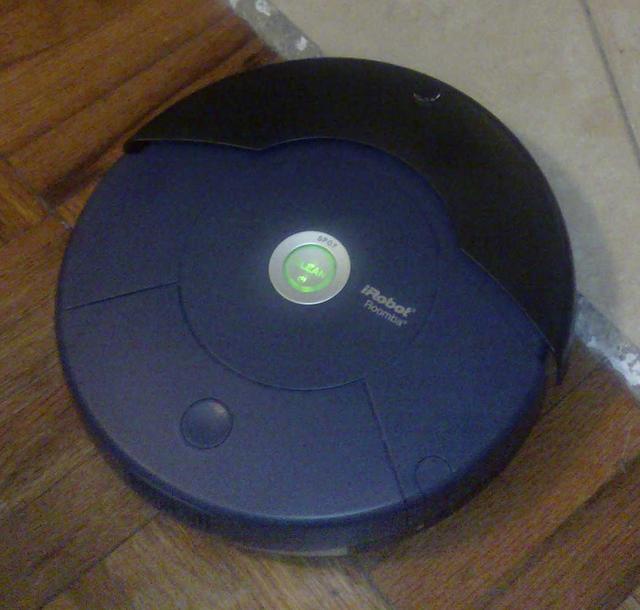
So, DebConf time is over once again. The two weeks worth of fifty weeks waiting are left behind once again, and it's back to get back to normal. DebConf was great Yes, it always is, and that's what we are all saying, but hey - Seriously! Being in the same building than 300 crazed developers is always fun, and it's always better than last year's fun. A good highlight this year is that, given the number of Free Software and Free Culture groups that exist in USA's north-eastern coast, we had the opportunity to join a large crowd which has never been part of DebConf. Also, I must agree that the USA bid for DebConf was aiming to attract as many Debian people (developers, maintainers, or just happy users) which had not yet been to a DebConf before as possible. And it was a great success! I finally met several people I have long read in the mailing lists, in blogs or in IRC. A much higher proportion than usual, I'd venture to say. Another interesting phenomenon /methinks is that this year's DebCamp started much more staffed than usual: I arrived on the first day, Sunday 25, and there were ~40 people there already; I don't have the actual numbers, but we quickly grew, and the number started to stabilize past mid-week, only to (sharply) rise in the weekend, in time for DebianDay and DebConf start. Great time! But, they say, nobody can go to the USA without buying some sweet toys, right? Well, being the proud owner of six very hairy cats, I have thought into entering the looming and weaving industry... But cat hair, while abundant, I have heard is untreadable... Maybe due to the indisciplined, natural and independent personality of the cats (catonality should I say?)... So I had two choices: Clean up my home quite often, or live in a literally hairy mess. Enter choice #3: The Roomba! I had been waiting to buy this thing for several years, as they refuse to send to Mexico or charge Mexican cards. So, I walked across Manhattan and got my very own robot cleaner! For my further surprise, although I have not yet tried it (I don't even have a suitable cable yet), I found this: Yay, the Roomba is actually hackable (via a 7 pin miniDIN serial port)! Wikipedia says that:
Roomba comes with a Mini-DIN TTL serial interface, which is incompatible with standard PC/Mac serial ports and cables, both electrically and physically. However, third-party adapters are available to access the Roomba's computer via Bluetooth, USB, or RS-232 (PC/Mac serial). New, 500-series, and 410/420 series Roombas upgraded with the OSMO hacker device allow the user to monitor Roomba's many sensors and modify its behavior. The Roomba Open Interface (formerly "Roomba Serial Command Interface") API allows programmers and roboticists to create their own enhancements to Roomba. ( )
My first impressions? Well, the Roomba lazily charged its battery throughout the day today, and was hungry and ready when I arrived home. It is a but louder than what I expected, and of course my cats were not thrilled by the presence of a eighth animated and apparently sentient being at home. Their initial reaction was of course to be verrry alert of the thing. Twelve eyes were constantly pointing at the Roomba while mine alternated between them. As they measured the thing's speed and (I guess) inferred its movement patterns, they started escaping upstairs A flat, round thing with no legs to be seen will not likely be able to climb the stairs. And they were completely right. At first, only Chupchic remained downstairs. After a bit, I went up to show them the Roomba didn't jump on us to eat our brains, and after a bit, Santa and Macusa joined. The Roomba roombed for maybe 90 minutes (this space is large, and decided it was enough... And slowly, the rest of them started coming down. I would not say Roomba's cleaning is perfect, of course. Its room discovery algorithm is funny, and it even seems it's based on the mere chance of covering most (never all) of the space it has to clean. I had, of course, not fully studied it (after a single run, how could I?). It does make a honestly good attempt at cleaning under coaches, chairs and tables. It collected a fair amount of dust (on a house that seemed quite clean to me, I cannot imagine what would happen on a messy one). I have not yet played with the virtual walls (infrared transmitters which limit rooms as if a door was closed), but given the size of this house (and that I don't want it to clean around the cats' designated bathroom area), I guess I will end up using them regularly. During DebConf, I heard one bad (stupid useless noisy thing) and two very good (it has radically changed my life) comments on the Roomba. I hope to shift the balance towards 3/4 and not towards 2/2! Anyways... Thanks to each and every one of you. DebConf is great. Always great. Always a success. I cannot even thank specific teams. Debian Rules, and DebConf Rocks!

Dirk Eddelbuettel: RQuantLib 0.3.4

A fresh release of RQuantLib is now on CRAN and in Debian. RQuantLib combines (some of) the quantitative analytics of QuantLib with the R statistical computing environment and language. This follows the 0.3.3 release from last week and has again a number of internal changes. All uses of objects from external namespaces are now explicit as I removed the remaining using namespace QuantLib;. This makes things a little more verbose, but should be much clearer to read, especially for those not yet up to speed on whether a given object comes from any one of the Boost, QuantLib or Rcpp namespaces. We also generalized an older three-dimensional plotting function used for option surfaces -- which had already been used in the demo() code -- and improved the code underlying this: arrays of option prices and analytics given two input vectors are now computed at the C++ level for a nice little gain in efficiency. This also illustrates the possible improvements from working with the new Rcpp API that is now used throughout the package, Full changelog details, examples and more details about this package are at my RQuantLib page.

Russell Coker: Cyborgs solving Protein Folding problems

Arstechnica has an interesting article about protein folding problems being solved by a combination of brute-force software and human pattern recognition in the form of a computer game [1]. Here is a link to the primary source which also mentions the fact that players can design their own proteins which could potentially cure some diseases [2]. This is very similar to Garry Kasparov s observations about ideal methods for playing chess given computers and humans [3]. It is also similar to Jane McGoningal s ideas about using online gaming to make a better world [4] which inspired my post about choosing a free software mission [5]. What other serious problems can we solve via computer games and screen-savers?

9 August 2010

Steve Kemp: OepnBSD rocks. Until it doesn't.

Recently I've been jumping upon the LDAP bandwagon, with one of my aims to consolidate a lot of different login systems. Configuring Linux, Apache, OpenVPN and similar things to authenticate against an LDAP server was almost painless. Unfortunately OpenBSD is being a bit more painful, primarily because it doesn't use PAM. Instead you have two choices: Neither solution is particularly pleasant, but the former is marginally less effort. The downside? I still have to run "adduser" to add the user to the system - which makes me think "why did I bother in the first place?" Otherwise I spent the tail end of last week in York, taking pictures of ducks, geese, the city walls and similar things of fun. ObQuote: "Well, well I see we have visitors... " - Hot Fuzz

Petter Reinholdtsen: No hardcoded config on Debian Edu clients

As reported earlier, the last few days I have looked at how Debian Edu clients are configured, and tried to get rid of all hardcoded configuration settings on the clients. I believe the work to be mostly done, and the clients seem to work just fine with dynamically generated configuration. What is the point, you might ask? The point is to allow a Debian Edu desktop to integrate into an existing network infrastructure without any manual configuration. This is what happens when installing a Debian Edu client here at the University of Oslo using PXE. With the PXE installation, I am asked for language (Norwegian Bokm l), locality (Norway) and keyboard layout (no-latin1), Debian Edu profile (Roaming Workstation), if I accept to reformat the hard drive (yes), if I want to submit info to popcon.debian.org (no) and root password (secret). After answering these questions, the installer goes ahead and does its thing, and after around 50 minutes it is done. I press enter to finish the installation, and the machine reboots into KDE. When the machine is ready and kdm asks for login information, I enter my university username and password, am told by kdm that a local home directory has been created and that I must log in again, and finally log in with the same username and password to the KDE 4.4 desktop. At no point during this process did it ask for university specific settings, and all the required configuration was dynamically detected using information fetched via DHCP and DNS. The roaming workstation is now ready for use. How was this done, you might wonder? First of all, here is the list of things that need to be configured on the client to get it working properly out of the box: (Hm, did I forget anything? Let me knew if I did.) The points marked (*) are not required to be able to use the machine, but needed to provide central storage and allowing system administrators to track their machines. Since yesterday, everything but the sitesummary collector URL is dynamically discovered at boot and installation time in the svn version of Debian Edu. The IP and DNS setup is fetched during boot using DHCP as usual. When a DHCP update arrives, the proxy setup is updated by looking for http://wpat/wpad.dat and using the content of this WPAD file to configure the http and ftp proxy in /etc/environment and /etc/apt/apt.conf. I decided to update the proxy setup using a DHCP hook to ensure that the client stops using the Debian Edu proxy when it is moved outside the Debian Edu network, and instead uses any local proxy present on the new network when it moves around. The DNS names of the LDAP, Kerberos and syslog server and related configuration are generated using DNS information at boot. First the installer looks for a host named ldap in the current DNS domain. If not found, it looks for _ldap._tcp SRV records in DNS instead. If an LDAP server is found, its root DSE entry is requested and the attributes namingContexts and defaultNamingContext are used to determine which LDAP base to use for NSS. If there are several namingContexts attibutes and the defaultNamingContext is present, that LDAP subtree is used as the base. If defaultNamingContext is missing, the subtrees listed as namingContexts are searched in sequence for any object with class posixAccount or posixGroup, and the first one with such an object is used as the LDAP base. For Kerberos, a similar search is done by first looking for a host named kerberos, and then for the _kerberos._tcp SRV record. I've been unable to find a way to look up the Kerberos realm, so for this the upper case string of the current DNS domain is used. For the syslog server, the hosts syslog and loghost are searched for, and the _syslog._udp SRV record is consulted if no such host is found. This algorithm works for both Debian Edu and the University of Oslo. A similar strategy would work for locating the sitesummary server, but have not been implemented yet. I decided to fetch and save these settings during installation, to make sure moving to a different network does not change the set of users being allowed to log in nor the passwords required to log in. Usernames and passwords will be cached by sssd when the user logs in on the Debian Edu network, and will not change as the laptop move around. For a non-roaming machine, there is no caching, but given that it is supposed to stay in place it should not matter much. Perhaps we should switch those to use sssd too? The user's SMB mount point for the network home directory is located when the user logs in for the first time. The LDAP server is consulted to look for the user's LDAP object and the sambaHomePath attribute is used if found. If it isn't found, the home directory path fetched from NSS is used instead. Assuming the path is of the form /site/server/directory/username, the second part is looked up in DNS and used to generate a SMB URL of the form smb://server.domain/username. This algorithm works for both Debian edu and the University of Oslo. Perhaps there are better attributes to use or a better algorithm that works for more sites, but this will do for now. :) This work should make it easier to integrate the Debian Edu clients into any LDAP/Kerberos infrastructure, and make the current setup even more flexible than before. I suspect it will also work for thin client servers, allowing one to easily set up LTSP and hook it into a existing network infrastructure, but I have not had time to test this yet. If you want to help out with implementing these things for Debian Edu, please contact us on debian-edu@lists.debian.org. Update 2010-08-09: Simon Farnsworth gave me a heads-up on how to detect Kerberos realm from DNS, by looking for _kerberos TXT entries before falling back to the upper case DNS domain name. Will have to implement it for Debian Edu. :)

Gerfried Fuchs: On BTS usage

You might remember that I started to work on closing RC bugs for stable. This effort hasn't died off so I joined the RC Bug Squashing Contest that was going on during the Debian conference (which I was unable to attend). The rules did permit it, even though I was aware that it can't (and shouldn't) be compared to the unstable/testing squashers and thus it was split of into its own Special category. There still seems to be a lot of confusion on how our BTS works, especially with respect to version tracking. I was even accused of falsely claiming bug closing because the bug has been closed by someone else already. This wasn't the case, otherwise the bugs would had been archived a long time ago already[1] given that I had expected that person to know how bug archival works and also given the sheer amount of bugs that I simply had closed for stable, I guess it is needed to shine a light upon why some bugs won't get archived as expected. If you followed my IRC talk on BTS usage last month you might already have an idea of what's going on. There might be several different reasons why bugs aren't marked for archival yet. I'll try to explain them as I understand it (given that I neither have taken a look at the debbugs code nor am involved with its development) through my working on bugs over the last 10 years. I hope this will get others also interested to fix stuff for stable. Actually when I see something that potential falls into the last group I ping the maintainers of those packages to let them know about having them fixed. Some of you might already have received such a ping and I am thankful for those that received them well and actually already fixed some of those, too. Thanks for making stable a better place! Coming back to the RCBC, it was an interesting small competition (if only in my brain) between myself and the testing/unstable RC squashers going on. It would had been nice to get at least as many bugs in stable addressed as in testing/unstable because the amount is still a lot higher, but I can still be happy about the things done. And it is good to know that not everything seems to think that it's wasted effort to work on getting the RC count lower for stable, too (like I also was told about my effort). So thanks from that point of view!
[1] There are currently 2688 bugs still unarchived that were closed last year already! This UDD query helps you:
select count(*) from bugs where status = 'done' and last_modified <= '2009-12-31';

/debian permanent link Comments: 0 Flattr this

Gustavo Noronha Silva: WebKitGTK+ and the Web Inspector

When I started working on WebKitGTK+ I was a web developer, writing IT applications using Python and Django, and building features for content portals running Plone (argh). Even though I was an Epiphany user ever since it was forked off Galeon, I still had to use Firefox for my work, because I couldn t really live without Firebug. It should come as no surprise, then, that one of my first patches to WebKitGTK+ was actually making the awesome Web Inspector work in our port. After the initial support, though, not a lot has been done to further improve it, partly because it was already good enough for many uses, partly because I somehow started doing non-web development again ;). These last weeks, through my R&D efforts in Collabora, I have been able to push Web Inspector features and integration a bit further. A simple change that boosts the Inspector s usability quite a bit is having the nodes that are being hovered highlighted. Along with that, the ability to attach the inspector to Epiphany s window should make it easier to use for poking the DOM. The Web Inspector has a number of settings that control its behaviour. Since, for instance, enabling javascript debugging may slow down javascript performance, the inspector usually has it disabled by default, and provides a button to enable it. It also provides an option for always enabling that feature, but that does not work right now, because we are not saving/restoring the relevant settings. A solution to that is in the works using the GSettings infrastructure that was recently merged into glib. Here s a simple screencast, showing these improvements in action (click the video to check it out in full size): <video controls="controls" src="http://kov.eti.br/media/webkit/inspector.ogv" width="400"></video>

Russell Coker: The Lord of the Fries

Today I bought a box of fries from The Lord of the Fries [1]. I bought it from their new stand at Flinders St station because I was going past and saw no queue. In the past I had considered buying from their store on Elizabeth St but the queues were too long. The fries were nice probably among the best fries that I ve had from local fish and chip shops. Way better than any other fries that you can find in the center of Melbourne. The range of sauces is quite good if you like that thing (I just like vinegar on mine). However it should be noted that the quantity of chips that you would get for the same price at a local fish and chip shop is usually a lot greater. Overall I was a bit disappointed, sure it s nice to have someone hand-cut fresh potatoes and to actually care about making a quality product. But when compared to the other options for relatively fast food in the CBD it didn t seem that great to me. I m never going to join a queue that has more than 20 people to buy them! But I probably will buy from them on occasion if they don t have big queues. It seems to me that the best thing that they have done is to create a strong commitment to food quality and document it on their web site. I hope that this will inspire other fast-food companies to do the same thing and result in an overall increase in the food quality. On a related note Jamie Oliver has an IDEO project running with the aim of getting kids into fresh food [2].

8 August 2010

DebConf team: DebConf10: beta versions of the recordings are up (Posted by DebConf10 Videoteam)

For your enjoyment and enlightment, 85 videos in low and high encoding quality are available at the usual location already, which I think is totally superimpressive, even though the videos are relased as betas (or maybe alphas?) - so you might find issues. We will continue to work on them the next days and^w^w weeks, if you re on the team you can use the reviewing interface in penta like you did in NYC. More information about the work still to be done should be available on our mailing list in a few days
As previously said, please leave a thanks-message in our wiki. We truely love to hear your stories, where, what, how and why you watched our videos and how you benefit from our work. Your feedback is truely very important to us!
It is important to leave your thanks mesaage on the wiki, as our team consisted of about 40 wonderful people this year, so if you just say thanks to a few members, your message will not be as powerful and motivating as it could be :-)
So much for now, big thanks to everyone who help make DebConf10 a wonderful experience and great conference! You rock!

Petter Reinholdtsen: Testing if a file system can be used for home directories...

A few years ago, I was involved in a project planning to use Windows file servers as home directory servers for Debian Edu/Skolelinux machines. This was thought to be no problem, as the access would be through the SMB network file system protocol, and we knew other sites used SMB with unix and samba as the file server to mount home directories without any problems. But, after months of struggling, we had to conclude that our goal was impossible. The reason is simply that while SMB can be used for home directories when the file server is Samba running on Unix, this only work because of Samba have some extensions and the fact that the underlying file system is a unix file system. When using a Windows file server, the underlying file system do not have POSIX semantics, and several programs will fail if the users home directory where they want to store their configuration lack POSIX semantics. As part of this work, I wrote a small C program I want to share with you all, to replicate a few of the problematic applications (like OpenOffice.org and GCompris) and see if the file system was working as it should. If you find yourself in spooky file system land, it might help you find your way out again. This is the fs-test.c source:
/*
 * Some tests to check the file system sematics.  Used to verify that
 * CIFS from a windows server do not work properly as a linux home
 * directory.
 * License: GPL v2 or later
 * 
 * needs libsqlite3-dev and build-essential installed
 * compile with: gcc -Wall -lsqlite3 -DTEST_SQLITE fs-test.c -o fs-test
*/
#define _FILE_OFFSET_BITS 64
#define _LARGEFILE_SOURCE 1
#define _LARGEFILE64_SOURCE 1
#define _GNU_SOURCE /* for asprintf() */
#include <errno.h>
#include <fcntl.h>
#include <stdio.h>
#include <string.h>
#include <stdlib.h>
#include <sys/file.h>
#include <sys/stat.h>
#include <sys/types.h>
#include <unistd.h>
#ifdef TEST_SQLITE
/*
 * Test sqlite open, as done by gcompris require the libsqlite3-dev
 * package and linking with -lsqlite3.  A more low level test is
 * below.
 * See also <URL: http://www.sqlite.org./faq.html#q5 >.
 */
#include <sqlite3.h>
#define CREATE_TABLE_USERS                                              \
  "CREATE TABLE users (user_id INT UNIQUE, login TEXT, lastname TEXT, firstname TEXT, birthdate TEXT, class_id INT ); "
int test_sqlite_open(void)  
  char *zErrMsg;
  char *name = "testsqlite.db";
  sqlite3 *db=NULL;
  unlink(name);
  int rc = sqlite3_open(name, &db);
  if( rc ) 
    printf("error: sqlite open of %s failed: %s\n", name, sqlite3_errmsg(db));
    sqlite3_close(db);
    return -1;
   
  /* create tables */
  rc = sqlite3_exec(db,CREATE_TABLE_USERS, NULL,  0, &zErrMsg);
  if( rc != SQLITE_OK ) 
    printf("error: sqlite table create failed: %s\n", zErrMsg);
    sqlite3_close(db);
    return -1;
   
  printf("info: sqlite worked\n");
  sqlite3_close(db);
  return 0;
 
#endif /* TEST_SQLITE */
/*
 * Demonstrate locking issue found in gcompris using sqlite3.  This
 * work with ext3, but not with cifs server on Windows 2003.  This is
 * done in the sqlite3 library.
 * See also
 * <URL:http://www.cygwin.com/ml/cygwin/2001-08/msg00854.html> and the
 * POSIX specification
 * <URL:http://www.opengroup.org/onlinepubs/009695399/functions/fcntl.html>.
 */
int test_gcompris_locking(void)  
  struct flock fl;
  char *name = "testsqlite.db";
  unlink(name);
  int fd = open(name, O_RDWR O_CREAT O_LARGEFILE, 0644);
  printf("info: testing fcntl locking\n");
  fl.l_whence = SEEK_SET;
  fl.l_pid    = getpid();
  printf("  Read-locking 1 byte from 1073741824");
  fl.l_start  = 1073741824;
  fl.l_len    = 1;
  fl.l_type   = F_RDLCK;
  if (0 != fcntl(fd, F_SETLK, &fl) ) printf(" - error!\n"); else printf("\n");
  printf("  Read-locking 510 byte from 1073741826");
  fl.l_start  = 1073741826;
  fl.l_len    = 510;
  fl.l_type   = F_RDLCK;
  if (0 != fcntl(fd, F_SETLK, &fl) ) printf(" - error!\n"); else printf("\n");
  printf("  Unlocking 1 byte from 1073741824");
  fl.l_start  = 1073741824;
  fl.l_len    = 1;
  fl.l_type   = F_UNLCK;
  if (0 != fcntl(fd, F_SETLK, &fl) ) printf(" - error!\n"); else printf("\n");
  printf("  Write-locking 1 byte from 1073741824");
  fl.l_start  = 1073741824;
  fl.l_len    = 1;
  fl.l_type   = F_WRLCK;
  if (0 != fcntl(fd, F_SETLK, &fl) ) printf(" - error!\n"); else printf("\n");
  printf("  Write-locking 510 byte from 1073741826");
  fl.l_start  = 1073741826;
  fl.l_len    = 510;
  if (0 != fcntl(fd, F_SETLK, &fl) ) printf(" - error!\n"); else printf("\n");
  printf("  Unlocking 2 byte from 1073741824");
  fl.l_start  = 1073741824;
  fl.l_len    = 2;
  fl.l_type   = F_UNLCK;
  if (0 != fcntl(fd, F_SETLK, &fl) ) printf(" - error!\n"); else printf("\n");
  close(fd);
  return 0;
 
/*
 * Test if permissions of freshly created directories allow entries
 * below them.  This was a problem with OpenOffice.org and gcompris.
 * Mounting with option 'sync' seem to solve this problem while
 * slowing down file operations.
 */
int test_subdirectory_creation(void)  
#define LEVELS 5
  char *path = strdup("test");
  char *dirs[LEVELS];
  int level;
  printf("info: testing subdirectory creation\n");
  for (level = 0; level < LEVELS; level++)  
    char *newpath = NULL;
    if (-1 == mkdir(path, 0777))  
      printf("  error: Unable to create directory '%s': %s\n",
	     path, strerror(errno));
      break;
     
    asprintf(&newpath, "%s/%s", path, "test");
    free(path);
    path = newpath;
   
  return 0;
 
/*
 * Test if symlinks can be created.  This was a problem detected with
 * KDE.
 */
int test_symlinks(void)  
  printf("info: testing symlink creation\n");
  unlink("symlink");
  if (-1 == symlink("file", "symlink"))
    printf("  error: Unable to create symlink\n");
  return 0;
 
int main(int argc, char **argv)  
  printf("Testing POSIX/Unix sematics on file system\n");
  test_symlinks();
  test_subdirectory_creation();
#ifdef TEST_SQLITE
  test_sqlite_open();
#endif /* TEST_SQLITE */
  test_gcompris_locking();
  return 0;
 
When everything is working, it should print something like this:
Testing POSIX/Unix sematics on file system
info: testing symlink creation
info: testing subdirectory creation
info: sqlite worked
info: testing fcntl locking
  Read-locking 1 byte from 1073741824
  Read-locking 510 byte from 1073741826
  Unlocking 1 byte from 1073741824
  Write-locking 1 byte from 1073741824
  Write-locking 510 byte from 1073741826
  Unlocking 2 byte from 1073741824
I do not remember the exact details of the problems we saw, but one of them was with locking, where if I remember correctly, POSIX allow a read-only lock to be upgraded to a read-write lock without unlocking the read-only lock (while Windows do not). Another was a bug in the CIFS/SMB client implementation in the Linux kernel where directory meta information would be wrong for a fraction of a second, making OpenOffice.org fail to create its deep directory tree because it was not allowed to create files in its freshly created directory. Anyway, here is a nice tool for your tool box, might you never need it. :)

Lior Kaplan: I miss meeting the debian people

This year I couldn t attend Debconf, making it the third in a row Debian conference I miss. I watched Aigars group photo carefully to see who do I recognize, and just thought to myself that I just miss too many of the people. Especially ones I met in 2005 and 2006 which were years I had the chance to see some of the members twice a year. I hope to see you all next year!
Filed under: Debian GNU/Linux

Michael Banck: 8 Aug 2010

So, DebConf is over and it was a blast. I wanted to blog about my talks for a couple of days, but the conference was so great that I did not get around to it until now. The unique thing about this year's conference were the outstanding contributions by non-Debian FLOSS people from the east coast. I am really glad the organizers decided to reach out to the communi ty and take this opportunity when a lot of great minds were just a couple of hours away. Also, discussing and hanging out with the local team people was so much fun and interesting that it was wor th the visit alone. The venue was just perfect, the dorms were on campus, the cafeteria had an all-you-can-eat buffet, everything was in short walking distance and the Columbia campus is beautiful. I would have liked to go to a couple more places in the evenings, but hanging out in the Carman basement lounge with awesome people was just as good. A big thanks to Richard Darst, Biella, Micah and the rest of the crew. The Debian GNU/Hurd talk went quite well, I was pleasantly surprised so many people made it to the Davis auditorium. I wanted to do the presentation on Debian GNU/Hurd (and I had it working before the talk), but as my notebook has a different resolution than the projector, I decided to play it safe and just show a d-i run in qemu. Nevertheless, Jeremie's wo rk on debian-installer is impressive, I got it installed on my ThinkPad without a problem (using qemu) and it automatically installed and setup grub2. Unfortunately, grub2 seems to be having issues when booting my notebook natively, but I got it to work with grub-legacy, including X and evince. There were quite a few comments and I had interesting conversations afterwards with a couple of people. It is a shame Emilio Pozuelo Monfort (pochu) could not make it to DebConf to give the talk himself, he did lots of great work on porting packages and fixing the Hurd and glibc for various testsuites over the last couple of months. My other talk about GOsa and FAI was a bit rougher, I scrambled to get FAI integration in GOsa to work based on Mark Pavlichuk'sinstallation scripts which I fixed up over the last couple of weeks to the point where one can install a client using the FAI simple demo classes (which I ported to GOsa's FAI LDAP). There were some problems with the demonstration during the talk and I guess it was a tough audience for a web-based admin tool but I hopefully got my point across that we should salvage this work done for the city of Munich. Indeed, I had great discussions with Andreas Mundt from debian-edu afterwards who posted a summary and call for discussion to the debian-edu mailing list.

Next.

Previous.
