Search Results: "ag"

20 March 2015

Antonio Terceiro: rrg: visualize the require hierarchy in Ruby projects

Yesterday I was hacking on some Ruby code and getting a weird error which I thought was caused by mutually recursive require statements (i.e. A requires B, and B requires A). Later I realized that this is not an issue in Ruby, since the intepreter keeps track of what has already been required and will not enter a loop. But during the investigation I came up with something that turned out to be useful. rrg will read the source code of a Ruby project and generate a graph based on the require statements in the code; nodes represent the source files and an arrow from A to B means that A contains a require B statement. From the README:
Just run rrg at the root of your project. rrg will parse the code inside lib/, and generate a graph description in the Graphviz format. You can pipe the output to Graphviz directly, or store it in a file and process it to generate an image.
If you call rrgv instead, it will automatically process the graph with Graphviz, generate a PNG image, and open it.
Let s see some examples. First the classical analysing itself example, the require graph for rrg itself: Not very interesting, since all of the logic is currently in the main binary and not on library code. But 1) when I do the refactorings I want to, there will be more library code and 2) while writing this I implemented also parsing scripts in bin/. Now chake which is a slightly larger project: An even larger (but still not that big) project, gem2deb: Note that these visualizations may not be accurate representations of the actual source code. In Ruby, nothing stops one from implementing class A::B in lib/x/y.rb, but most reasonable code will make sure that filenames and the classes namespaces actually match. If you are working on a sane codebase, though, visualizing graphs like this helps understand the general structure of the code and perceive possible improvements. The gem2deb graph gave me some ideas already and I didn t even paid much attention to it yet.

Zlatan Todori : My journey into Debian

Notice: There were several requests for me to more elaborate on my path to Debian and impact on life so here it is. It's going to be a bit long so anyone who isn't interested in my personal Debian journey should skip it. :) In 2007. I enrolled into Faculty of Mechanical Engineering (at first at Department of Industrial Management and later transfered to Department of Mechatronics - this was possible because first 3 semesters are same for both departments). By the end of same year I was finishing my tasks (consisting primarily of calculations, some small graphical designs and write-ups) when famous virus, called by users "RECYCLER", sent my Windows XP machine into oblivion. Not only it took control over machine and just spawned so many processes that system would crash itself, it actually deleted all from hard-disk before it killed the system entirely. I raged - my month old work, full of precise calculations and a lot of design details, was just gone. I started cursing which was always continued with weeping: "Why isn't there an OS that can whithstand all of viruses, even if it looks like old DOS!". At that time, my roommate was my cousin who had used Kubuntu in past and currently was having SUSE dual-booted on his laptop. He called me over, started talking about this thing called Linux and how it's different but de facto has no viruses. Well, show me this Linux and my thought was, it's probably so ancient and not used that it probably looks like from pre Windows 3.1 era, but when SUSE booted up it had so much more beautiful UI look (it was KDE, and compared to XP it looked like the most professional OS ever). So I was thrilled, installed openSUSE, found some rough edges (I knew immediately that my work with professional CAD systems will not be possible on Linux machines) but overall I was bought. After that he even talked to me about distros. Wait, WTF distros?! So, he showed me distrowatch.com. I was amazed. There is not only a better OS then Windows - there where dozens, hundreds of them. After some poking around I installed Debian KDE - and it felt great, working better then openSUSE but now I was as most newbies, on fire to try more distros. So I was going around with Fedora, Mandriva, CentOS, Ubuntu, Mint, PCLinuxOS and in beginning of 2008 I stumbled upon Debian docs which where talking about GNU and GNU Manifesto. To be clear, I was always as a high-school kid very much attached to idea of freedom but started loosing faith by faculty time (Internet was still not taking too much of time here, youth still spent most of the day outside). So the GNU Manifesto was really a big thing for me and Debian is a social bastion of freedom. Debian (now with GNOME2) was being installed on my machine. As all that hackerdom in Debian was around I started trying to dig up some code. I never ever read a book on coding (until this day I still didn't start and finish one) so after a few days I decided to code tetris in C++ with thought that I will finish it in two days at most (the feeling that you are powerful and very bright person) - I ended it after one month in much pain. So instead I learned about keeping Debian system going on, and exploring some new packages. I got thrilled over radiotray, slimvolley (even held a tournament in my dorm room), started helping on #debian, was very active in conversation with others about Debian and even installed it on few laptops (I became de facto technical support for users of those laptops :D ). Then came 2010 which with negative flow that came in second half of 2009, started to crush me badly. I was promised to go to Norway, getting my studies on robotics and professor lied (that same professor is still on faculty even after he was caught in big corruption scandal over buying robots - he bought 15 years old robots from UK, although he got money from Norway to buy new ones). My relationship came to hard end and had big emotional impact on me. I fell a year on faculty. My father stopped financing me and stopped talking to me. My depression came back. Alcohol took over me. I was drunk every day just not to feel anything. Then came the end of 2010, I somehow got to the information that DebConf will be in Banja Luka. WHAT?! DebConf in city where I live. I got into #debconf and in December 2010/January 2011 I became part of the famous "local local organizers". I was still getting hammered by alcohol but at least I was getting out of depression. IIRC I met Holger and Moray in May, had a great day (a drop of rakia that was too much for all of us) and by their way of behaving there was something strange. Beatiful but strange. Both were sending unique energy of liberty although I am not sure they were aware of it. Later, during DebConf I felt that energy from almost all Debian people, which I can't explain. I don't feel it today - not because it's not there, it's because I think I integrated so much into Debian community that it's now a natural feeling which people here, that are close to me are saying that they feel it when I talk about Debian. DebConf time in Banja Luka was awesome - firstly I met Phil Hands and Andrew McMillan which were a crazy team, local local team was working hard (I even threw up during the work in Banski Dvor because of all heat and probably not much of sleep due to excitement), met also crazy Mexican Gunnar (aren't all Mexicans crazy?), played Mao (never again, thank you), was hanging around smart but crazy people (love all) from which I must notice Nattie (a bastion of positive energy), Christian Perrier (which had coordinated our Serbian translation effort), Steve Langasek (which asked me to find physiotherapist for his co-worker Mathias Klose, IIRC), Zach (not at all important guy at that time), Luca Capello (who gifted me a swirl on my birthday) and so many others that this would be a post for itself just naming them. During DebConf it was also a bit of hard time - my grandfather died on 6th July and I couldn't attend the funeral so I was still having that sadness in my heart, and Darjan Prtic, a local team member that came from Vienna, committed suicide on my birthday (23 July). But DebConf as conference was great, but more importantly the Debian community felt like a family and Meike Reichle told me that it was. The night it finished, me and Vedran Novakovic cried. A lot. Even days after, I was getting up in the morning having the feeling I need something to do for DebConf. After a long time I felt alive. By the end of year, I adopted package from Clint Adams and Moray became my sponsor. In last quarter of 2011 and beginning of 2012, I (as part of LUG) held talks about Linux, had Linux installation in Computer Center for the first time ever, and installed Debian on more machines. Now fast forwarding with some details - I was also on DebConf13 in Switzerland, met some great new friends such as Tincho and Santiago (and many many more), Santiago was also my roommate in Portland on the previous DebConf. In Switzerland I had really great and awesome time. Year 2014 - I was also at DebConf14, maintain a bit more packages and have applied for DD, met some new friends among which I must put out Apollon Oikonomopoulos and Costas Drogos which friendship is already deep for such a short time and I already know that they are life-long friends. Also thanks to Steve Langasek, because without his help I wouldn't be in Portland with my family and he also gave me Arduino. :) 2015. - I am currently at my village residence, have a 5 years of working experince as developer due to Debian and still a lot to go, learn and do but my love towards Debian community is by magnitude bigger then when I thought I love it at most. I am also going through my personal evolution and people from Debian showed me to fight for what you care, so I plan to do so. I can't write all and name all the people that I met, and believe me when I say that I remember most and all of you impacted my life for which I am eternally grateful. Debian, and it's community effect literally saved my life, spring new energy into me and changed me for better. Debian social impact is far bigger then technical, and when you know that Debian is a bastion of technical excellence - you can maybe picture the greatness of Debian. Some of greatest minds are in Debian but most important isn't the sheer amount of knowledge but the enormous empathy. I just hope I can in future show to more people what Debian is and to find all lost souls as me to give them the hope, to show them that we can make world a better place and that everyone is capable to live and do what they love. P.S. I am still hoping and waiting to see Bdale writing a book about Debian's history to this day - in which I think many of us would admire the work done by project members, laugh about many situations and have fun reading a book about project that was having nothing to do but fail and yet it stands stronger then ever with roots deep into our minds.

Richard Hartmann: Release Critical Bug report for Week 12

The UDD bugs interface currently knows about the following release critical bugs: How do we compare to the Squeeze and Wheezy release cycles?
Week Squeeze Wheezy Jessie
43 284 (213+71) 468 (332+136) 319 (240+79)
44 261 (201+60) 408 (265+143) 274 (224+50)
45 261 (205+56) 425 (291+134) 295 (229+66)
46 271 (200+71) 401 (258+143) 427 (313+114)
47 283 (209+74) 366 (221+145) 342 (260+82)
48 256 (177+79) 378 (230+148) 274 (189+85)
49 256 (180+76) 360 (216+155) 226 (147+79)
50 204 (148+56) 339 (195+144) ???
51 178 (124+54) 323 (190+133) 189 (134+55)
52 115 (78+37) 289 (190+99) 147 (112+35)
1 93 (60+33) 287 (171+116) 140 (104+36)
2 82 (46+36) 271 (162+109) 157 (124+33)
3 25 (15+10) 249 (165+84) 172 (128+44)
4 14 (8+6) 244 (176+68) 187 (132+55)
5 2 (0+2) 224 (132+92) 175 (124+51)
6 release! 212 (129+83) 161 (109+52)
7 release+1 194 (128+66) 147 (106+41)
8 release+2 206 (144+62) 147 (96+51)
9 release+3 174 (105+69) 152 (101+51)
10 release+4 120 (72+48) 112 (82+30)
11 release+5 115 (74+41) 97 (68+29)
12 release+6 93 (47+46) 87 (71+16)
13 release+7 50 (24+26)
14 release+8 51 (32+19)
15 release+9 39 (32+7)
16 release+10 20 (12+8)
17 release+11 24 (19+5)
18 release+12 2 (2+0)
Graphical overview of bug stats thanks to azhag:

Steve McIntyre: Tour of Australia

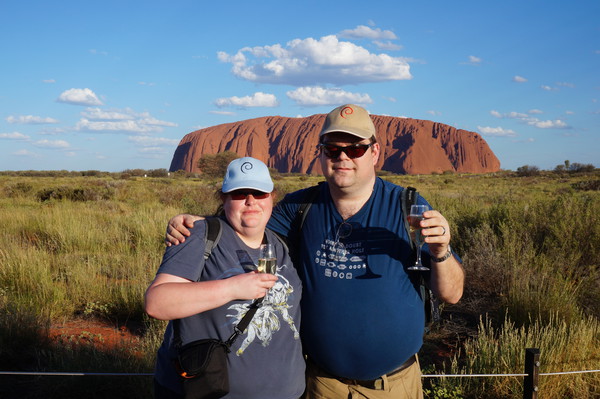
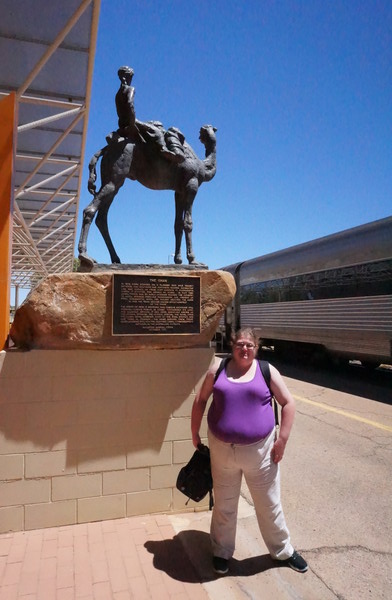
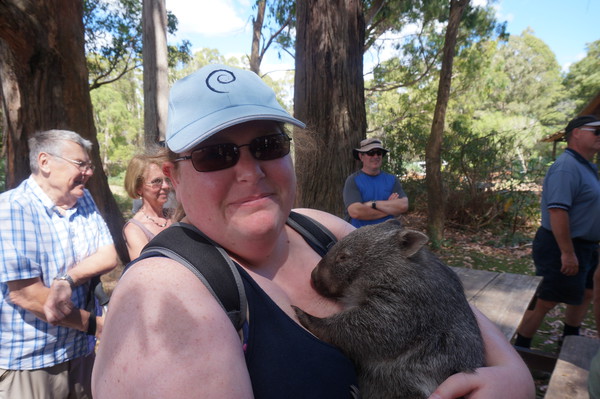
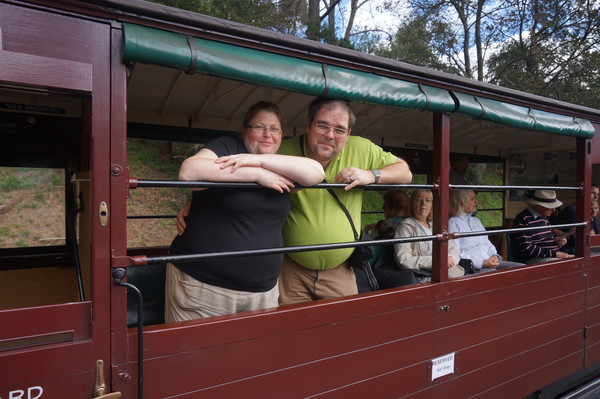
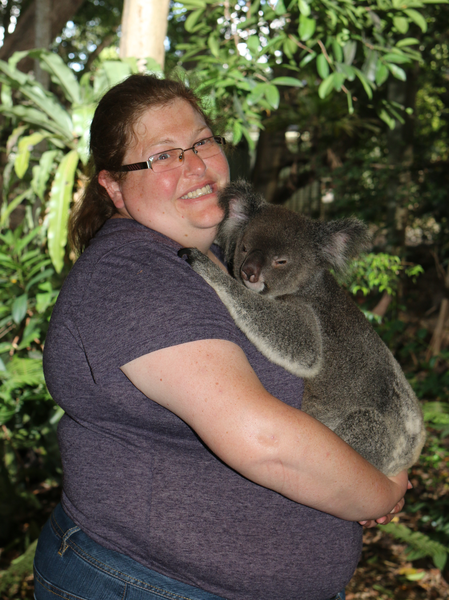
Jo and I just got back from our massive holiday in Australia. We had an awesome time overall, fitting in lots of stuff in 4 weeks. Time for a quick write-up and some photos! Ayers Rock We flew into Sydney, then straight onto Uluru for the obligatory sunset and sunrise viewings. We didn't climb the Rock, both for sensitivity reasons and (to be more honest!) it looked way too much like hard work in 40-plus degree heat. Ghan train Coach over to Alice Springs, where we had a very quick look around before taking the Ghan train down to Adelaide. The train was fun for a day, and we got to see a lot of desert. In Adelaide, we had a look around the city (lovely colonial feel!) and got a couple of evenings in fun comedy shows at the Fringe. Great fun! Cuddling a sleepy wombat! On to Tasmania, where we did a quick (3 days) run around the island by car: into Hobart, up the east coast. Stopped in Swansea (a nice version!) for some heavenly Devonshire teas, then on up to Grindelwald near Launceston. Visited Trowunna Wildlife Park to see (and cuddle!) lots of local animals, which was amazing - Jo's favourite day of the holiday. Then on to Queenstown and drive back down to Hobart past some impossibly beautiful views around Cradle Mountain. Tassie's gorgeous - like the best bits of Scotland, Wales and Cornwall but with even fewer people and better weather. Sydney Opera House Next, on to Sydney for Harry and Cath's wedding. We stayed up in Chatswood. Not knowing anything about the area beforehand, we were a little surprised to basically find ourselves back in Hong Kong! We spent most of the weekend catching up with friends from the wedding group, and the wedding itself was at Quarantine Station, overlooking the harbour. It couldn't have been a more perfect location / weather / view for our friends' big day! We squeezed in a couple of the open-top bus tours of Sydney on the Sunday, but got caught in the horrendous storm that hit and ended up sheltering downstairs under cover on the bus. I'm told Bondi is lovely, but it all looked grey from the bus. :-P Puffing Billy, Yarra Valley Down to Melbourne on the train (bit of a wasted day, in hindsight), where we wandered around the city quite a bit. Caught up with an old friend who lives there for a day, and we did a wine tour up the Yarra Valley which was fun too. Snorkelling at the Reef - all OK! Up to Port Douglas, where we headed out to the Reef for my highlight of the holiday: a snorkelling tour with some local marine experts who showed us the local flora and fauna. We also visited a local Aboriginal cultural centre, skyrail and scenic railway around Kuranda village. Koala! :-) Down to Hervey Bay and a 1-day tour of Fraser Island - an amazing place in combination with quite a thrill-ride experience just being driven around on the sand tracks. Finally, down to Brisbane where we wandered around and visited both the Lone Pine Koala Sanctuary (more cuddles!) and the Gold Coast. Then the long flights home. Whew! We're knackered now. We knew we could't fit everything in, but we're glad we travelled all over and got tastes of almost everything. Now we can work out where we want to spend more time on our future visit(s). We'll definitely want to head over and see Perth and some of WA next time, and definitely more time in Tasmania, Sydney and Adelaide.

Lucas Nussbaum: Several improvements to UDD s Bug Search and Maintainer Dashboard

Several improvements have been made to UDD s Bug Search and Maintainer Dashboard recently. On the Maintainer Dashboard side, the main new feature is a QA checks table that provides an overview of results from lintian, reproducible builds, piuparts, and ci.debian.net. Check the dashboard for the Ruby team for an example. Also, thanks to Daniel Pocock, the TODO items can now be exported as iCalendar tasks. Bugs Search now has much better JSON and YAML outputs. It s probably a good start if you want to do some data-mining on bugs. Packages can now be selected using the same form as the Maintainer Dashboard s one, which makes it easy to build your own personal bug list, and will suppress the need for some of the team-specific listings. Many bugs have been fixed too. More generally, thanks to the work of Christophe Siraut, the code is much better now, with a clean separation of the data analysis logic and the rendering sides that will make future improvements easier. As the reminder, it s quite easy to hack on UDD (even if you are not a DD). Please report bugs, including about additional features you would like to see!

Noah Meyerhans: Building OpenWRT with Docker

I've run OpenWRT on my home router for a long time, and these days I maintain a couple of packages for the project. In order to make most efficient use of the hardware resources on my router, I run a custom build of the OpenWRT firmware with some default features removed and others added. For example, I install bind and ipsec-tools, while I disable the web UI in order to save space. There are quite a few packages required for the OpenWRT build process. I don't necessarily want all of these packages installed on my main machine, nor do I want to maintain a VM for the build environment. So I investigated using Docker for this. Starting from a base jessie image, which I created using the Docker debootstrap wrapper, the first step was to construct a Dockerfile containing instructions on how to set up the build environment and create a non-root user to perform the build:
FROM jessie:latest
MAINTAINER Noah Meyerhans <frodo@morgul.net>
RUN DEBIAN_FRONTEND=noninteractive apt-get update && apt-get -y install \
asciidoc bash bc binutils bzip2 fastjar flex git-core g++ gcc
util-linux gawk libgtk2.0-dev intltool jikespg zlib1g-dev make \
genisoimage libncurses5-dev libssl-dev patch perl-modules \
python2.7-dev rsync ruby sdcc unzip wget gettext xsltproc \
libboost1.55-dev libxml-parser-perl libusb-dev bin86 bcc sharutils \
subversion
RUN adduser --disabled-password --uid 1000 --gecos "Docker Builder,,," builder
And we generate a docker image based on this Dockerfile per the docker build documentation. At this point, we've got a basic image that does what we want. To initialize the build environment (download package sources, etc), I might run: docker run -v ~/src/openwrt:/src/openwrt -u builder -t -i jessie/openwrt sh -c "cd /src/openwrt/openwrt && scripts/feeds update -a" Or configure the system: docker run -v ~/src/openwrt:/src/openwrt -u builder -t -i jessie/openwrt make -C /src/openwrt/openwrt menuconfig And finally, build the OpenWRT image itself: docker run -v ~/src/openwrt:/src/openwrt -u builder -t -i jessie/openwrt make -C /src/openwrt/openwrt -j3 The -v ~/src/openwrt:/src/openwrt flags tell docker to bind mount my ~/src/openwrt directory (which I'd previously cloned using git) to /src/openwrt inside the running container. Without this, one might be tempted to clone the git repo directly into the container at runtime, but the changes to non-bind-mount filesystems are lost when the container terminates. This could be suitable for an autobuild environment, in which the sources are cloned at the start of the build and any generated artifacts are archived externally at the end, but it isn't suitable for a dev environment where I might be making and testing small changes at a relatively high frequency. The -u builder flags tell docker to run the given commands as the builder user inside the container. Recall that builder was created with UID 1000 in the Dockerfile. Since I'm storing the source and artifacts in a bind-mounted directory, all saved files will be created with this UID. Since UID 1000 happens to be my UID on my laptop, this is fine. Any files created by builder inside the container will be owned by me outside the container. However, this container should not have to rely on a user with a given UID running it! I'm not sure what the right way to approach this problem is within Docker. It may be that someone using my image should create their own derivative image that creates a user with the appropriate UID (creation of this derivative image is a cheap operation in Docker). Alternatively, whatever Docker init system is used could start as root, add a new user with a specific UID, and execute the build commands as that new user. Neither of these seems as clean as it could be, though. In general, Docker seems quite useful for such a build environment. It's easy to set up, and it makes it very easy to generate and share a common collection of packages and configuration. Because images are self-contained, I can reclaim a bunch of disk space by simple executing "docker rmi".

19 March 2015

Lior Kaplan: CVE assignment without upstream knowledge

In the past few months I ve been dealing with aligning PHP CVE information to enable easier tracking of security fixes. The two main locations are the NEWS file which is part of each release and the changelog available on the website which is more popular (and easier to update). Usually the CVE are assigned per PHP.net security team request or with cooperation with one of the Linux distribution s teams (either PHP or security), as should be in a good ecosystem. Recently I got a few notifications issued by Debian about its PHP package, which I wasn t familiar with these CVE IDS. When checking this, I found out a few CVE assigned per 3rd party (Linux distribution, bug reporter, etc ) request without upstream knowledge. Digging deeper I found out that some CVE were assigned a month after the fixes were released, while others were only a week or two after. While this makes sure the security information is documented, it s harder to add the information after tagging and releasing. In another case, while discussing about a CVE for a specific bug, we found out one was already assigned per the reporter s request but without the our or the upstream library knowledge. Even if the issue isn t severe, upstream should get a fair chance to fix issue before making them public. Which also leads to a problem with requesting CVE IDs on a public mailing list which in some cases leads to security information leakage. We should balance transparency with some grace period for upstreams (as projects share code).
Filed under: Debian GNU/Linux, PHP

Patrick Matth i: Egypt 2015

Hi, until the end of last week I were my first time in Egypt at Hurghada. Interesting country and culture but I have to think about it if I would travel again to Egypt :D I also travelled to Luxor to visit the city itself, to drive on the Nil river and to visit some attractions like the Luxor-Temple and the Totent11017433_1796663110558337_7374756648991575472_n11008408_1796659850558663_2925510544698606712_nempel of Hatschepsut .10403407_1796662590558389_1133044057957090257_n11050726_1796659530558695_8174734951625786041_n11036989_1796654460559202_4279833744609842255_n 20150305_11585310818350_1796654457225869_5757796598030450751_o10818350_1796654453892536_4219854051826227153_o10818350_1796654450559203_1302840257479631236_o20150305_12500010818350_1796654463892535_7726453475719800892_o13371_1796660463891935_6860209192560525302_n

18 March 2015

Bits from Debian: DebConf15 welcomes new sponsors

The organization of DebConf15 (from 15 to 22 August 2015, in Heidelberg, Germany) is going smoothly, the call for proposals is open and today we want to provide some updates about our sponsors. Twelve more companies have joined our nine first sponsors in supporting DebConf15. Thank you to all of them! Our third Gold sponsor is the Matanel Foundation, which encourages social entrepreneurship in all over the world. IBM, the technology and consulting corporation, has also joined the DebConf15 sponsorship at a Gold level. Google, the search engine and advertising company, has increased its sponsorship level from Silver to Gold. Mirantis, 1&1 (which is also one of Debian's service partners), MySQL and Hudson River Trading have committed sponsorship at Silver level. And last but not least, six more sponsors have agreed to support us at Bronze level: Godiug.net, the University of Zurich, Deduktiva, Docker, DG-i (which is also one of Debian's service partners), and PricewaterhouseCoopers (which also provides consultancy support for DebConf15). The DebConf15 team is very thankful to all the DebConf sponsors for their support. Become a sponsor too! DebConf15 is still accepting sponsors. Interested companies and organizations may contact the DebConf team through sponsors@debconf.org, and visit the DebConf15 website at http://debconf15.debconf.org.

Mario Lang: Call for Help: BMC -- Braille Music Compiler

Since 2009, I am persuing a personal programming project. As I am not a professional programmer, I have spent quite a lot of that time exploring options. I have thrown out about three or four prototype implementations already. My last implementation seems to contain enough accumulated wisdom to be actually useful. I am far from finished, but the path I am walking now seems relatively sound. So, what is this project about? I have set myself a rather ambitious goal: I am trying to implement a two-way bridge between visual music notation and braille music code. It is called BMC (Braille Music Compiler). My problem: I am, as some of you might remember, 100% blind. So I am trying to write a translator between something I will never see directly, and its counterpart representation in a tactile encoding I had to learn from scratch to be able to work on this project. Braille music code is probably the most cryptic thing I have ever tried to learn. It basically is a method to represent a 2-dimensional structure like staff-notation as a stream of characters encoded in 6-dot braille. As the goal above states, I am ultimately trying to implement a converter that works both ways. One of my prototypes already implemented reading digital staff notation (MusicXML) and transcribing it to Braille. However, to be able to actually understand all the concepts involved, I ended up starting from the other end of the spectrum with my new implementation: parsing braille music code and emitting digital staff notation (LilyPond and MusicXML). This is a rather unique feature, since while there is commercial (and very expensive) software out there to convert MusicXML to braille music code, there is, as far as I know, no system that allows to input un-annotated braille music code and have it automatically converted to sighted music notation. So the current state of things is, that we are able to read certain braille music code formats, and output either reformatted (to new line-width) braille music code, LilyPond or MusicXML. The ultimate goal is to also implement a MusicXML reader, and convert the data to something that can be output as braille music code. While the initial description might not sound very hard, there are a lot of complications arising from how braille music code works, which make this quite a programming challenge. For one, braille music note and rest values are ambigious. A braille music note or rest that looks like a whole can mean a whole or 16th. A braille music note or rest that looks like a half can mean a half or a 32nd. And so on. So each braille music code value can have two meanings. The actual value can be caluclated with a recursive algorithm that I have worked out from scratch over the years. The original implementation was inspired by Samuel Thibault (thanks!) and has since then evolved into something that does what we need, while trying to do that very fast. Most input documents can be processed in almost no time, however, time signatures with a value > 1 (such as 12/8) tend to make the number of possible choices exploed quite heavily. I have found so far one piece from J.S. Bach (BWV988 Variation 3) which takes about 1.5s on my 3GHz AMD (and the code is already using several CPU cores). Additionally, braille music code supports a form of "micro"-repetitions which are not present in visual staff notation which effectively allow certain musical patterns to be compressed if represented in braille. Another algorithmically interesting part of BMC that I have started to taclke just recently is the linebreaking problem. Braille music code has some peculiar rules when it comes to breaking a measure of musical material into several lines. I ended up adapting Donald E. Knuth's algorithm from Breaking Paragraphs into Lines for fixed-width text. In other words, I am ignoring the stretch/shrink factors, while making use of different penalty values to find the perfect solution for the problem of breaking a paragraph of braille music code into several lines. One thing that I have learnt from my perivous prototype (which was apparently useful enough to already acquire some users) is that it is not enough to just transcribe one format to another. I ultimately want to store meta information about the braille that is presented to the user such that I can implement interactive querying and editing features. Braille music code is complicated, and one of the original motivations to work on software to deal with it was to ease the learning curve. A user of BMC should be able to ask the system for a description of a character at a certain position. The user interface (not implemented yet) should allow to play a certain note interactively, or play the measure under the cursor, or play the whole document, and if possible, have the cursor scroll along while playback plays notes. These features are not implemented in BMC yet, but they have been impleemnted in the previous prototype and their usefulness is apparent. Also, when viewing a MusicXML document in braille music code, certain non-structural changes like adding/removing fingering annotations should be possible while preserving unhandled features of the original MusicXML document. This also has been implemented in the previous prototype, and is a goal for BMC.
I need your help The reason why I am explaining all of this here is that I need your help for this project to succeed. Helping the blind to more easily work with traditional music notation is a worthwhile goal to persue. There is no free system around that really tries to adhere to the braille music code standard, and aims to cover converting both ways. I have reached a level of conformance that surpasses every implementation of the same problem that I have seen so far on the net. However, the primary audience of this software is going to be using Windows. We desperately need a port to that OS, and a user interface resembling NotePad with a lot fewer menu entires. We also need a GTK interface that does the same thing on Linux. wxWindows is unfortunately out of question, since it does not provide the same level of Accessibility on all the platforms it supports. Ideally, we'd also have a Cocoa interface for OS X. I am afraid there is no platform independent GUI framework that offers the same level of Accessibility on all supported platforms. And since much of our audience is going to rely on working Accessibility, it looks like we need to implement three user interfaces to achieve this goal :-(. I also desperately need code reviews and inspiration from fellow programmers. BMC is a C++11 project heavily making use of Boost. If you are into one of these things, please give it a whirl, and emit pull requests, no matter how small they are. While I have learnt a lot in the last years, I am sure there are many places that could use some fresh winds of thought by people that are not me. I am suffering from what I call "the lone coder syndrome". I also need (technical) writers to help me complete the pieces of documentation that are already lying around. I have started to write a braille music tutorial based on the underlying capabilities of BMC. In other words, the tutorial includes examples which are being typeset in braille and staff notation, using LilyPond as a rendering engine. However, something like a user manual is missing, basically, because the user interface is missing. BMC is currently "just" a command-line tool (well enough for me) that transcribes input files to STDOUT. This is very good for testing the backend, which is all that has been important to me in the last years. However, BMC has reached a stage now where its functionality is likely useful enough to be exposed to users. While I try to improve things steadily as I can, I realize that I really need to put out this call for help to make any useful progress in a foreseeable time. If you think it is a worthwhile goal to help the blind to more easily work with music notation, and also enable communication between blind and sighted musicians in both ways, please take the time and consider how you could help this project to advance. My email address can be found on my GitHub page. Oh, and while you are over at GitHub, make sure to star BMC if you think it is a nice project. It would be nice if we could produce a end-user oriented release before the end of this year.

DebConf team: DebConf15 Call for Proposals (Posted by Michael Banck)

We re now calling for proposals for DebConf15. Proposals are accepted from now until 15 June 2015. To submit an event, go to the Propose an Event page once you are registered for the conference. The DebConf Content Team will decide on a first round of submissions in May, so be sure to submit your proposal soon if you need it to be accepted by then, e.g. for sponsorship requests. The current, non-exhaustive list of proposed topics is: For all further information, please see the Proposals page of the DebConf15 website.

17 March 2015

Rapha&#235;l Hertzog: Freexian s report about Debian Long Term Support, February 2015

Like each month, here comes a report about the work of paid contributors to Debian LTS. Individual reports In February, 58 work hours have been equally split among 4 paid contributors. Their reports are available: Evolution of the situation During the last month, we gained 3 paid work hours: we re now at 61 hours per month sponsored by 28 organizations and we have one supplementary sponsor in the pipe that should bring 4 more hours. The increase is not very quick but seems to be steady. Hopefully at some point, we will have enough resources to do a more exhaustive job. For now, the paid contributors handle in priority the most popular packages used by the sponsors and there are some packages in the end of the queue which have open security issues for months already (example: CVE-2012-6685 on libnokogiri-ruby). So, as usual, we are looking for more sponsors. In terms of security updates waiting to be handled, the situation looks a little bit worse than last month: the dla-needed.txt file lists 40 packages awaiting an update (3 more than last month), the list of open vulnerabilities in Squeeze shows about 58 affected packages in total (5 less than last month). We are getting a bit more effective with CVE triage. A logo for the LTS project? Every time that I write an LTS report, I remember that it would be nice if my LTS related articles could feature a nice picture/logo that reminds people of the LTS team/initiative. Is there anyone up for the challenge of creating that logo? :-) Thanks to our sponsors The new sponsors of the month are in bold.

No comment Liked this article? Click here. My blog is Flattr-enabled.

16 March 2015

Daniel Kahn Gillmor: Bootable grub USB stick (EFI and BIOS for Intel)

I'm using grub version 2.02~beta2-2. I want to make a USB stick that's capable of booting Intel architecture EFI machines, both 64-bit (x86_64) and 32-bit (ia32). I'm starting from a USB stick which is attached to a running debian system as /dev/sdX. I have nothing that i care about on that USB stick, and all data on it will be destroyed by this process. I'm also going to try to make it bootable for traditional Intel BIOS machines, since that seems handy.I'm documenting what I did here, in case it's useful to other people. Set up the USB stick's partition table:
parted /dev/sdX -- mktable gpt
parted /dev/sdX -- mkpart biosgrub fat32 1MiB 4MiB
parted /dev/sdX -- mkpart efi fat32 4MiB -1
parted /dev/sdX -- set 1 bios_grub on
parted /dev/sdX -- set 2 esp on
After this, my 1GiB USB stick looks like:
0 root@foo:~# parted /dev/sdX -- print
Model:  USB FLASH DRIVE (scsi)
Disk /dev/sdX: 1032MB
Sector size (logical/physical): 512B/512B
Partition Table: gpt
Disk Flags: 
Number  Start   End     Size    File system  Name      Flags
 1      1049kB  4194kB  3146kB  fat32        biosgrub  bios_grub
 2      4194kB  1031MB  1027MB               efi       boot, esp
0 root@foo:~# 
make a filesystem and mount it temporarily at /mnt:
mkfs -t vfat -n GRUB /dev/sdX2
mount /dev/sdX2 /mnt
ensure we have the binaries needed, and add three grub targets for the different platforms:
apt install grub-efi-ia32-bin grub-efi-amd64-bin grub-pc-bin grub2-common
grub-install --removable --no-nvram --no-uefi-secure-boot \
     --efi-directory=/mnt --boot-directory=/mnt \
     --target=i386-efi
grub-install --removable --no-nvram --no-uefi-secure-boot \
     --efi-directory=/mnt --boot-directory=/mnt \
     --target=x86_64-efi
grub-install --removable --boot-directory=/mnt \
     --target=i386-pc /dev/sdX
At this point, you should add anything else you want to /mnt here! For example: And don't forget to cleanup:
umount /mnt
sync
Tags: bios, efi, grub, tip

Bits from Debian: Debian is now welcoming applicants for Outreachy and GSoC Summer 2015

We'd like to reshare a post from Nicolas Dandrimont. Hi all, I am delighted to announce that Debian will be participating in the next round of Outreachy and GSoC, and that we are currently welcoming applications! Outreachy logo Outreachy helps people from groups underrepresented in free and open source software get involved. The current round of internships is open to women (cis and trans), trans men, genderqueer people, and all participants of the Ascend Project regardless of gender. GSoC 2015 logo Google Summer of Code is a global program, sponsored by Google, that offers post-secondary student developers ages 18 and older stipends to write code for various open source software projects. Interns for both programs are granted a $5500 stipend (in three installments) allowing them to dedicate their summer to working full-time on Debian. Our amazing team of mentors has listed their project ideas on the Debian wiki, and we are now welcoming applicants for both programs. If you want to apply for an internship with Debian this summer, please fill out the template for either Outreachy or GSoC. If you re eligible to both programs, we ll encourage you to apply to both (using the same application), as Debian only has funds for a single Outreachy intern this round. Don t wait up! The application period for Outreachy ends March 24th, and the GSoC application period ends March 27th. We really want applicants to start contributing to their project before making our selection, so that mentors can get a feel of how working with their intern will be like for three months. The small task is a requirement for Outreachy, and we re strongly encouraging GSoC applicants to abide by that rule too. To contribute in the best conditions, you shouldn t wait for the last minute to apply :-) I hope we ll work with a lot of great interns this summer. If you think you re up for the challenge, it s time to apply! If you have any doubts, or any question, drop us a line on the soc-coordination mailing list or come by on our IRC channel (#debian-soc on irc.debian.org) and we ll do our best to guide you.

Enrico Zini: screen-dependent-geometry

Screen-dependent window geometry I have an external monitor for my laptop in my work desk at home, and when I work I keep a few windows like IRC on my laptop screen, and everything else on the external monitor. Then maybe I transfer on the sofa to watch a movie or in the kitchen to cook, and I unplug from the external monitor to bring the laptop with me. Then maybe I go back to the external monitor to resume working. The result of this (with openbox) is that when I disconnect the external monitor all the windows on my external monitor get moved to the right edge of the laptop monitor, and when I reconnect the external monitor I need to rearrange them all again. I would like to implement something that does the following:
  1. it keeps a dictionary mapping screen geometry to window geometries
  2. every time a window geometry and virtual desktop number changes, it gets recorded in the hash for the current screen geometry
  3. every time the screen geometry changes, for each window, if there was a saved window geometry + wirtual desktop number for it for the new screen geometry, it gets restored.
Questions:
  1. Is anything like this already implemented? Where?
  2. If not, what would be a convenient way to implement it myself, ideally in a wmctrl-like way that does not depend on a specific WM?
Note: I am not interested in switching to a different WM unless it is openbox with this feature implemented in it.

Russ Allbery: Another haul post

Wow, it's been quite a long time since I've posted something here. Everything is going well -- I'm just very, very engrossed with the new job, since I'm still in exponential ramp-up mode. It's lasting for longer than I expected, although my expectations didn't have much basis since this is the first time I've started a new job in 17 years. I'm feeling more and more capable every day, but the combination of a very heavily social learning process, a lot of new technical areas to learn, and not having taken a vacation since last June means that my weekends are spent just passively watching things and zoning. Not sure yet how long that will last, and I don't want to make any predictions, although I do have my first significant vacation coming up next month. Anyway, book reading and buying has continued, although I'm again far behind on writing reviews. With luck, I'll be writing one of those (for posting later) right after writing this post. Michelle Alexander The New Jim Crow (non-fiction)
Elizabeth Bear Karen Memory (sff)
Becky Chambers The Long Way to a Small, Angry Planet (sff)
Fred Clark The Anti-Christ Handbook (non-fiction)
Charles de Lint The Very Best of Charles de Lint (sff)
S.L. Huang A Neurological Study on the Effects... (sff)
S.L. Huang Half Life (sff)
Kameron Hurley The Mirror Empire (sff)
Sophie Lack Dissonance (sff)
Sophie Lack Imbalance (sff)
Susan R. Matthews An Exchange of Hostages (sff)
Kaoru Mori A Bride's Story #1 (graphic novel)
Donald Shoup The High Cost of Free Parking (non-fiction)
Jo Walton The Just City (sff) Pretty nice variety of different stuff from a huge variety of recommendation sources. I've already read the Chambers (and can recommend it). A review will be forthcoming.

15 March 2015

Dimitri John Ledkov: My IDE needs a makeover

Current SetupI am a Linux Distribution Engineer and work on arbitrary open source projects. Mostly I'm patching/packaging existing things, and sometimes start fresh projects.

My "IDE", or rather I shall say "toolbox" is rather sparse:

  • GNOME Terminal
  • Google Chrome
  • GNU Emacs
  • GCC toolcahin with GDB
  • Python3 - iPython, iPdb, pyflakes
  • git, GNU bazaar
There are a few things that annoy me, and should be done better these days.

Documentation
I lookup documentation mostly with Google Chrome. This includes the texinfo renderings of the docs. There are a few reasons for that. First of all my developer machine is not polluted with all the dev packages under the sun, instead I compile practically everything in a chroot. And most of the time chroots have much newer versions of everything (from gcc & automake, to boost and whatever other dependencies are in use). However I would like to have easy generic lookup builtin for common things that I lookup in the references and which have not changed for a long time:
  • gcc builtins & defines
  • glibc functions
  • automake/autoconf functions definitions
Given that my preferred editor is Emacs, it should be natural to use info' mode to look things up. However, the rendering there is archaic and is really hard to read. At least when visiting the HTML renderings, the function names are in bold and stand out from the rest of the description.

Ideally I would have unified place to lookup docs, instead of using Google Chrome and navigating: gnu.org, gnome.org, readthedocs.org, freedesktop.org.

Project Management
I really hate "traditional" IDEs that create and pollute the working directories with random extra files. My project management tool is VCS, thus .git should be automatically recognized as a "project". I should be able to navigate repository files, have them scanned for tab-completion and jumping to symbols and the like. At the moment, I exit the editor and use git grep to find things and open those files in the editor again. I don't use any tagging systems at the moment, ideally git repository would be scanned and Exuberant Tags (this seems to be the latest hotness in tagging space) stored inside the .git directory automatically.

"SDK" aware aka chroot support
The IDE should be aware of chroots, how to compile things in a chroot and ideally how to compile packages with sbuild, mock or obs build (these are apt, yum and zypper preferred solutions for package compilation). Most importantly to use those chroots to tag includes headers for tab completion.

Shell
Gnome Terminal is good enough for my needs. I do have a problem of too many terminal windows... I have tried Terminator (a tiling single-window / multiple-tabs terminal). However during development the things I use shell for, should be part of the IDE directly: changing projects, opening/closing/navigating/creating files, invoking build, invoking debug, "refactoring" (sed). I think I do want to try out a pull-down terminal for temporal look-ups together with a tiling "main" terminal. Or ideally ditch it all together. Emacs does provide multiple terminals, but when I did that I ended up with "inception" -> launching an instance of emacs, inside the terminal, inside emacs...

Conclusion
If anybody has tips or suggestions do share. I will investigate and experiment with all of the above, and see if I can experiment and find new cool things that work better than my current setup.


14 March 2015

Bits from Debian: apt install dpl-candidate: Mehdi Dogguy

0. Who are you and what is your history with Debian Project? I guess this part is well covered in my platform. 1. What is your most proud moment as Debian Developer? I am pretty proud of having been part of the few who implemented the first automatic dependency resolver for OCaml programs and libraries in Debian packages. It was really the first one in the OCaml community and we were quite proud of it. But that was done before I become a Debian Developer. As a DD, I have to admit I am quite proud to be part of the Release Team. It is a fantastic team where there is so much to do. Helping the team means something to me, and I invested a considerable amount of time (a few months) working on reviewing patches for Squeeze and helping to get it ready by our standards. My best moment was Squeeze's release, my first Debian release as Release Team member. 2. In your opinion what is the strongest part of Debian Project? I am not sure we can identify one single strength of the Debian project. But, when I think about your question, I remember something I've heard many times: Debian is about people . I have to admit that I didn't realize it myself until I heard it for the first time and I completely share the idea! For me, all the technical side of the project comes after the community. With time, I think we managed to build a strong community. Many contributors became friends with time. We are seeing many Developers having babies and bringing them to Debian events. I find that really amazing. 3. And what is the weakest part of Debian Project? Our strength is somehow also our weakness. We are humans and make mistakes. We have feelings and some discussions get heated sometimes. It is not easy to keep everyone calm and focused. We have seen the damage that was caused to our core community last year with all the flamewars. Many people lost their motivation and we have seen some of them stepping down. We are also having troubles on-boarding new contributors, which is a problem today because some teams are under-staffed and could become an even bigger issue on the longer term. 4. How do you intend to resolve the weakest part? An effort has already been made on this front. We can mention the introduction of the Code of Conduct and the diversity statement, for example. Both are important and make us a more welcoming and caring community. In my platform, I mentioned some ideas about recruitment and change management. I believe that both sides will help us to get a stronger community. Moreover, a DPL should act as a mediator to help some situation get through. This is one of the DPL tasks that is not formally identified and is usually under-estimated. 5. DPL term lasts for one year - what would you challenge during that term and what have you learned from previous DPL's? Personally, the main thing I have learned from past DPLs is that communication is very important. A DPL should dedicate time to communicate about ongoing actions and achievements. It is also important to remind a few things even if it may sound repetitive or trivial: If the communication is only about listing some actions, many people will miss its essence and its goals. It is even more important when we know that some actions may take years (thus, several DPL terms) to complete. If I am elected as DPL, I'd really like to help the project to publish a roadmap. I think it is very important to set goals to the project to better explain our philosophy and approach in the Free Software world. This may also help to attract new contributors which may be interested by one or some items. Of course, I will not work on that subject only. I invite you to read the rest of my platform to see the other ideas. 6. What motivates you to work in Debian and run for DPL? Many many things. And more importantly, many many people As many of us, I like programming and socializing. It feels nice to be part of such a big project and where you can do many different things. I contribute to Debian because I find it fun and let me meet people I will not have been able to meet elsewhere. In my platform, I tried to identify ideas I'd like to see implemented, or at least started. Since Debian is a do-ocracy, I thought I could try to get them implemented by myself. I think that those ideas are important for the Debian community and will help us moving forward. Running for DPL is also another way of contributing to Debian and I'd feel honored to represent Debian.

Bits from Debian: apt install dpl-candidate: Gergely Nagy

0. Who are you and what's your history with Debian Project? I'm a little mouse behind a keyboard, going by the nickname "algernon". I used to be a lot of things: a flaming youth, an application manager, package maintainer, upstream, ftp-assistant, a student, a mentor, a hacker. In the end, however, I am but a simple, albeit sometimes crazy person. I did a number of things within Debian - mostly small and marginal things, mind you. With a little break, I've been here for over a decade, and am planning to stay for at least another. 1. What's your most proud moment as Debian Developer? At last year's LinuxTag, I was wandering around a stand where they sold Raspberry Pis (with cases and other accessories). I had a nice chat with one of the staffers there, inquired about the price (including the case, of course), and a few other things. He asked a few things back: what I'll be using it for, and so on. After it turned out that I'm a Debian Developer, and syslog-ng hacker, he went to the back, and emerged a few minutes later with a boxed up Pi, and gave it to me as a gift, for working on Debian. This was an incredibly touching moment, in many, many ways. 2. In your opinion what is the strongest part of Debian Project? That's hard to say, to be honest. There are a good number of things Debian is incredibly strong at, and it would be hard to arbitrarily pick one. Quality, responsibility, safety, predictability are all areas we are very good at. But those are the qualities of the OS. As a project, we are remarkably well organised, given the volunteer & distributed nature of the project. 3. And what is the weakest part of Debian Project? While we can resolve and work with technical issues in a reasonable manner, the project as a whole is rather lacking in all other areas. To grow beyond being the creators of the Universal OS, we, as a project, need to pursue goals beyond the OS. Being part of GSoC and Outreachy are great steps forward. But we still have a lot of internal issues that need to be resolved. Areas such as innovation, team work, where we're in dire need of improvement. 4. How do you intend to resolve the weakest part? As explained in my platform, my primary goal is to remove roadblocks. The DPL can do very little alone, his time and powers are better spent on enabling those who have the required skills and desires, to pursue those. 5. DPL term lasts for one year - what would you challenge during that term and what have you learned from previous DPL's? The most valuable thing I learned from past DPLs is that the expectations are sky-high, yet, a significant portion of what the DPL does is very different than what I imagined in past years. I'd like to challenge the status quo of the DPL being a nearly full-time job. 6. What motivates you to work in Debian and run for DPL? I'm in it for the fame and glory, of course! And because my Tamagotchi told me to. But on a more serious tone, my main motivation to work on Debian is because contributing makes me happy. It satisfies my hunger for doing useful work. Debian is - in my opinion - the perfect platform to give back to the wider Free Software community. Similarly, my motivation to run for DPL is to allow Debian to be a stronger member of that greater

Bits from Debian: apt install dpl-candidate: Neil McGovern

0. Who are you and what's your history with Debian Project? My name's Neil, I've been involved with Debian for over 10 years now. I've held a variety of roles, from the SPI board, writing policy and secure testing team, to being one of the Release Managers for Squeeze and Wheezy. 1. What's your most proud moment as Debian Developer? Probably the release of Squeeze, my first as RM. It was the end of a great effort to get the release out. I particularly remember at the end of DebConf 10 in New York going to the local Disney store and buying every single small squeeze plush toy they had, so I could send a thank you gift to the rest of the release team! Another perhaps was when I first got my Debian kilt. 2. In your opinion what is the strongest part of Debian Project? I think this is our social contract. It guides us, and is what we all agree on. This is our promise to ourselves, to the wider open source community and to our users. 3. And what is the weakest part of Debian Project? At a push, I'd say it's the variety of packages we have in the archive. I'm not sure it's weakness, but it's certainly a challenge. It becomes exponentially harder to ensure that everything integrates well as you add more packages. To have made it do so this far is quite impressive. 4. How do you intend to resolve the weakest part? Well, see the section in my platform on PPAs, and modernising our build and infrastructure system Wouldn't it be great if you could stage a package against all of stable, testing and unstable, and see what fails to build and where, with live build logs on all architectures? 5. DPL term lasts for one year - what would you challenge during that term and what have you learned from previous DPL's? I think my primary role as DPL for 2015 would be to get a great start of development for Stretch. The start of a new release cycle is the exact time to implement wide changes that are potentially disruptive. Every couple of years we seem to relax after the release, rather than get geared up for the next one, and then time passes, and plans slip, and before we know it, the freeze is fast approaching. If we start planning /now/, then we can hopefully enter the freeze with fewer RC bugs, which should be great news for everyone! For the second part, I've talked to a lot of the previous DPLs, and worked with them in one role or another. The main thing I was told was that I shouldn't try and do everything I planned on. It's hard work, and all sorts of things pop up that derail your original plans. 6. What motivates you to work in Debian and run for DPL? The people involved. I've met and worked with some of my greatest friends due to the project. The work, dedication and commitment of those over the years is outstanding. Most of these people are still with us, and unfortunately, a few are not. Whenever I'm feeling disheartened or annoyed, usually due to a giant flame-war then I simply remember that what we're doing is truly remarkable, and the effort that everyone has put in over the years isn't something that should be taken for granted.

Next.

Previous.