Jonathan Dowland: Tex Shura
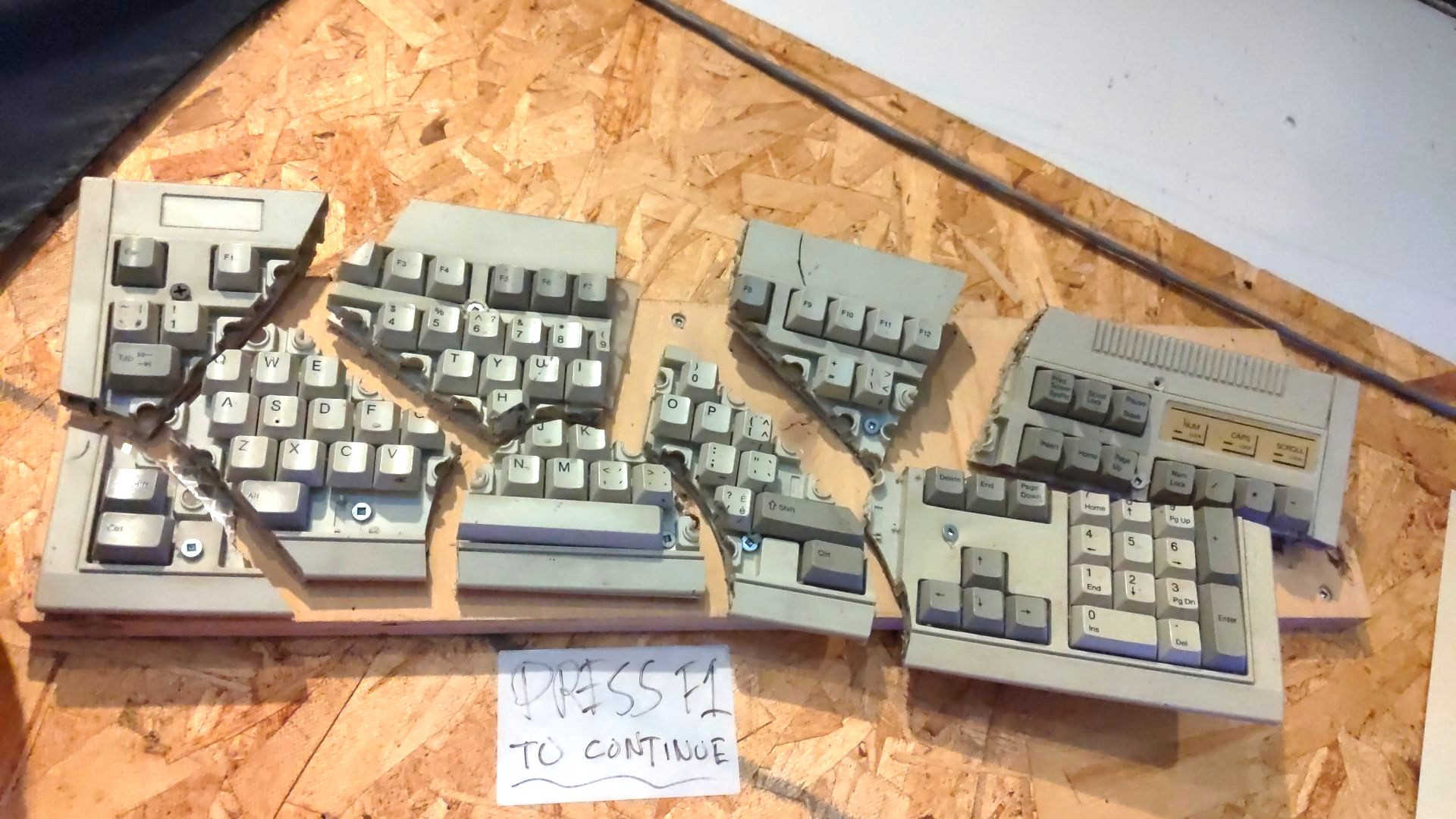
 So yeah, I bought the Shura.

Thanks for your promotion !! We will try to design a new keyboard ( a little ergo keyboard ) should be release end of this year !!
So yeah, I bought the Shura.
Thanks for your promotion !! We will try to design a new keyboard ( a little ergo keyboard ) should be release end of this year !!
 KDE PIM Kaddressbook snap
roslaunch PACKAGE THING.launch
PACKAGE (using some rules that nobody understands),
and tries to find the file THING.launch within this package. The .launch
file contains inscrutable xml, which includes other inscrutable xml. And
if you dig, you eventually find stuff like
<node pkg="PACKAGE"
      name="NAME"
      type="TYPE"
      args="...."
      ...>
TYPE.
I know that my particular program is broken, and needs an LD_PRELOAD (exciting
details described in another rant in the near future). But the above definition
doesn't have a clear way to add that. Adding it to the type fails (with a very
mysterious error message). Reading the docs tells you about launch-prefix,
which sounds exactly like what I want. But when I add
LD_PRELOAD=/tmp/whatever.so I get
RLException: Roslaunch got a 'No such file or directory' error while attempting to run:
LD_PRELOAD=/tmp/whatever.so ..../TYPE .....
But this is how you're supposed to be attaching gdb and such! Presumably it looks at the first token, and makes sure it's a file, instead of simply prepending it to the string it passes to the shell. So your options are:
launch-prefix="/lib64/ld-linux-x86-64.so.2 --preload /tmp/whatever.so"

Daniel Kahn Gillmor<dkg@debian.org><dkg@fifthhorseman.net>-----BEGIN PGP PUBLIC KEY BLOCK-----
xjMEZXEJyxYJKwYBBAHaRw8BAQdA5BpbW0bpl5qCng/RiqwhQINrplDMSS5JsO/Y
O+5Zi7HCwAsEHxYKAH0FgmVxCcsDCwkHCRC7fpEBSV5r90cUAAAAAAAeACBzYWx0
QG5vdGF0aW9ucy5zZXF1b2lhLXBncC5vcmfUAgfN9tyTSxpxhmHA1r63GiI4v6NQ
mrrWVLOBRJYuhQMVCggCmwECHgEWIQTUdwQMcMIValwphUm7fpEBSV5r9wAAmaEA
/3MvYJMxQdLhIG4UDNMVd2bsovwdcTrReJhLYyFulBrwAQD/j/RS+AXQIVtkcO9b
l6zZTAO9x6yfkOZbv0g3eNyrAs0QPGRrZ0BkZWJpYW4ub3JnPsLACwQTFgoAfQWC
ZXEJywMLCQcJELt+kQFJXmv3RxQAAAAAAB4AIHNhbHRAbm90YXRpb25zLnNlcXVv
aWEtcGdwLm9yZ4l+Z3i19Uwjw3CfTNFCDjRsoufMoPOM7vM8HoOEdn/vAxUKCAKb
AQIeARYhBNR3BAxwwhVqXCmFSbt+kQFJXmv3AAALZQEAhJsgouepQVV98BHUH6Sv
WvcKrb8dQEZOvHFbZQQPNWgA/A/DHkjYKnUkCg8Zc+FonqOS/35sHhNA8CwqSQFr
tN4KzRc8ZGtnQGZpZnRoaG9yc2VtYW4ubmV0PsLACgQTFgoAfQWCZXEJywMLCQcJ
ELt+kQFJXmv3RxQAAAAAAB4AIHNhbHRAbm90YXRpb25zLnNlcXVvaWEtcGdwLm9y
ZxLvwkgnslsAuo+IoSa9rv8+nXpbBdab2Ft7n4H9S+d/AxUKCAKbAQIeARYhBNR3
BAxwwhVqXCmFSbt+kQFJXmv3AAAtFgD4wqcUfQl7nGLQOcAEHhx8V0Bg8v9ov8Gs
Y1ei1BEFwAD/cxmxmDSO0/tA+x4pd5yIvzgfGYHSTxKS0Ww3hzjuZA7NE0Rhbmll
bCBLYWhuIEdpbGxtb3LCwA4EExYKAIAFgmVxCcsDCwkHCRC7fpEBSV5r90cUAAAA
AAAeACBzYWx0QG5vdGF0aW9ucy5zZXF1b2lhLXBncC5vcmd7X4TgiINwnzh4jar0
Pf/b5hgxFPngCFxJSmtr/f0YiQMVCggCmQECmwECHgEWIQTUdwQMcMIValwphUm7
fpEBSV5r9wAAMuwBAPtMonKbhGOhOy+8miAb/knJ1cIPBjLupJbjM+NUE1WyAQD1
nyGW+XwwMrprMwc320mdJH9B0jdokJZBiN7++0NoBM4zBGVxCcsWCSsGAQQB2kcP
AQEHQI19uRatkPSFBXh8usgciEDwZxTnnRZYrhIgiFMybBDQwsC/BBgWCgExBYJl
cQnLCRC7fpEBSV5r90cUAAAAAAAeACBzYWx0QG5vdGF0aW9ucy5zZXF1b2lhLXBn
cC5vcmfCopazDnq6hZUsgVyztl5wmDCmxI169YLNu+IpDzJEtQKbAr6gBBkWCgBv
BYJlcQnLCRB3LRYeNc1LgUcUAAAAAAAeACBzYWx0QG5vdGF0aW9ucy5zZXF1b2lh
LXBncC5vcmcQglI7G7DbL9QmaDkzcEuk3QliM4NmleIRUW7VvIBHMxYhBHS8BMQ9
hghL6GcsBnctFh41zUuBAACwfwEAqDULksr8PulKRcIP6N9NI/4KoznyIcuOHi8q
Gk4qxMkBAIeV20SPEnWSw9MWAb0eKEcfupzr/C+8vDvsRMynCWsDFiEE1HcEDHDC
FWpcKYVJu36RAUlea/cAAFD1AP0YsE3Eeig1tkWaeyrvvMf5Kl1tt2LekTNWDnB+
FUG9SgD+Ka8vfPR8wuV8D3y5Y9Qq9xGO+QkEBCW0U1qNypg65QHOOARlcQnLEgor
BgEEAZdVAQUBAQdAWTLEa0WmnhUmDBdWXX0ZlYAa4g1CK/fXg0NPOQSteA4DAQgH
wsAABBgWCgByBYJlcQnLCRC7fpEBSV5r90cUAAAAAAAeACBzYWx0QG5vdGF0aW9u
cy5zZXF1b2lhLXBncC5vcmexrMBZe0QdQ+ZJOZxFkAiwCw2I7yTSF2Ox9GVFWKmA
mAKbDBYhBNR3BAxwwhVqXCmFSbt+kQFJXmv3AABcJQD/f4ltpSvLBOBEh/C2dIYa
dgSuqkCqq0B4WOhFRkWJZlcA/AxqLWG4o8UrrmwrmM42FhgxKtEXwCSHE00u8wR4
Up8G
=9Yc8
-----END PGP PUBLIC KEY BLOCK-----
 Hello from a snowy Montr al! My life has been pretty busy lately1 so
please forgive this late report.
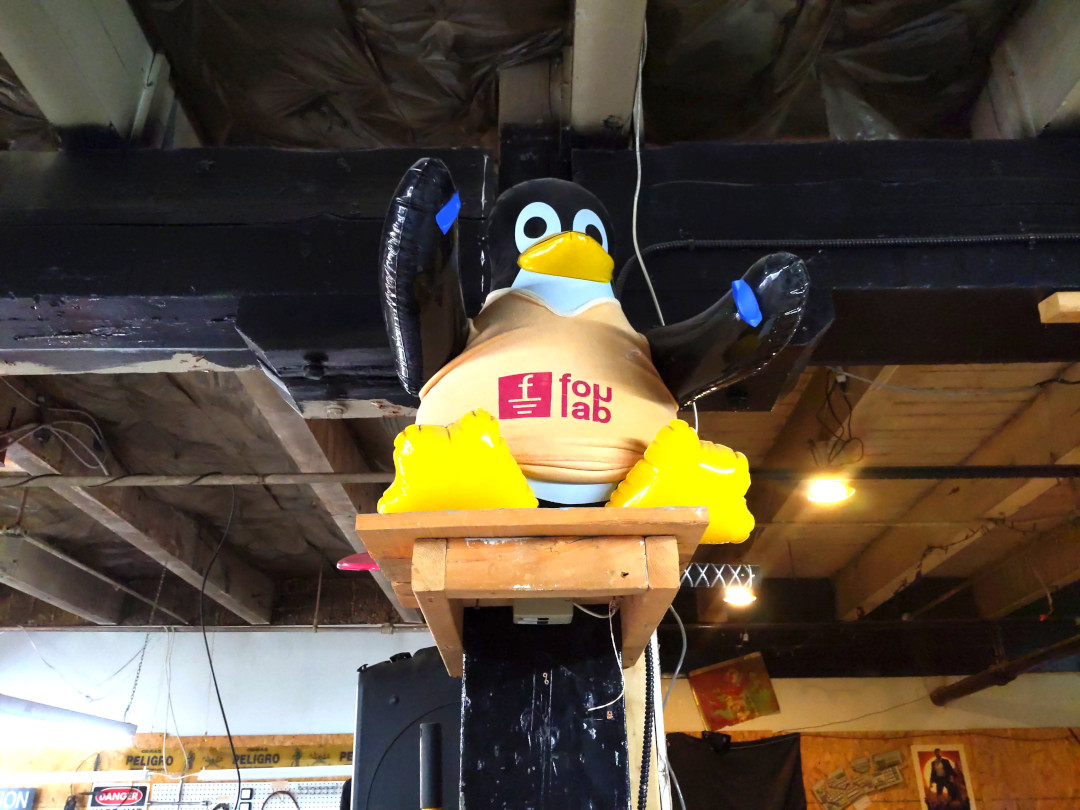
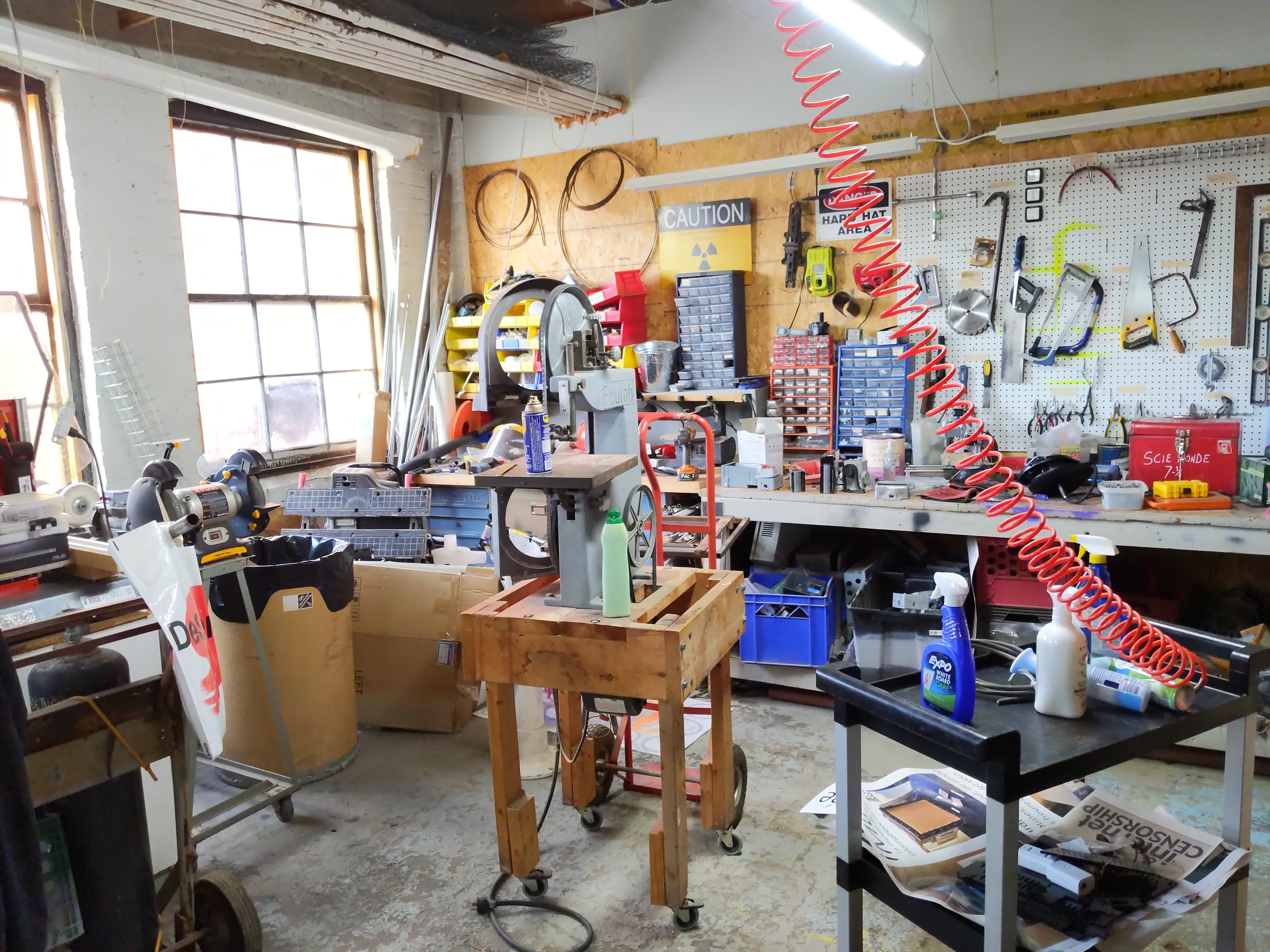
On November 19th, our local Debian User Group met at Montreal's most
prominent hackerspace, Foulab. We've been there a few times already, but
since our last visit, Foulab has had some membership/financial troubles. Happy
to say things are going well again and a new team has taken over the space.
This meetup wasn't the most productive day for me (something about being
exhausted apparently makes it hard to concentrate), but other people did a
bunch of interesting stuff :)
sbuild...dcf.debian.net to make daily updates on the data sources in the
dc-sources repository.
 A new release of my mixed collection of things package dang package arrived
at CRAN a little while ago. The
dang package
regroups a few functions of mine that had no other home as for example
lsos() from a
StackOverflow question from 2009 (!!), the overbought/oversold
price band plotter from an older blog post, the market monitor
blogged about as well as the checkCRANStatus() function
tweeted about by Tim
Taylor. And more so take a look.
This release brings a number of updates, including a rather nice
improvement to the market monitor
making updates buttery smooth and not flickering (with big
thanks to Paul Murrell who calmly pointed out once again that
base R does of course have the functionality I was seeking) as well as
three new functions (!!) and then a little maintenance on the
-Wformat print format string issue that kept everybody
busy this week.
The NEWS entry follows.
Courtesy of my CRANberries, there is a comparison to [the previous release][previous releases]. For questions or comments use the the issue tracker at the GitHub repo. If you like this or other open-source work I do, you can now sponsor me at GitHub.Changes in version 0.0.16 (2023-12-02)
- Added new function
str.language()based on post by Bill Dunlap- Added new argument
sleepinintradayMarketMonitor- Switched to
dev.hold()anddev.flush()inintradayMarketMonitorwith thanks to Paul Murrell- Updated continued integration setup, twice, and package badges
- Added new function
shadowedPackages- Added new function
limitDataTableCores- Updated two
error()calls to updated tidyCpp signature to not tickle-Wformatwarnings under R-devel- Updated two URL to please link checks in R-devel
- Switch two tests for variable of variable to
is.*andinherits(), respectively
This post by Dirk Eddelbuettel originated on his Thinking inside the box blog. Please report excessive re-aggregation in third-party for-profit settings.
 Version 0.0.15 of RcppSpdlog is now
on CRAN and will be uploaded to
Debian. RcppSpdlog
bundles spdlog, a
wonderful header-only C++ logging library with all the bells and
whistles you would want that was written by Gabi Melman, and also includes fmt by Victor Zverovich. You can learn
more at the nice package
documention site.
This releases updates the code to address warning now shown under
R-devel when
-Wformat -Wformat-security are enabled. This
amounted to re-generating RcppExports.cpp under an updated
[Rcpp][rcpp] version. It also updates the package default help page by
removing some stubs that were not filled in.
The NEWS entry for this release follows.
Courtesy of my CRANberries, there is also a diffstat report. More detailed information is on the RcppSpdlog page, or the package documention site. If you like this or other open-source work I do, you can sponsor me at GitHub.Changes in RcppSpdlog version 0.0.15 (2023-11-29)
- Correct default package help page slighly
RcppExports.cpphas been regenerated under an updated Rcpp to address a format string warning under R-devel
This post by Dirk Eddelbuettel originated on his Thinking inside the box blog. Please report excessive re-aggregation in third-party for-profit settings.
A minor release of RcppQuantuccia
arrived on CRAN today. RcppQuantuccia
started from the Quantuccia header-only
subset / variant of QuantLib which it
brings it to R. This project
validated the idea of making the calendaring functionality of QuantLib available in a
more compact and standalone project which we now do with qlcal which can be seen as a
successor to this.
This releases updates the code to address warning now shown under
R-devel when -Wformat -Wformat-security are enabled. This
amounted to re-generating RcppExports.cpp under an updated
Rcpp version. We also no longer set
C++14 explicitly as a compilation standard.
The complete list changes for this release follows.
Courtesy of CRANberries, there is also a diffstat report relative to the previous release. More information is on the RcppQuantuccia page. Issues and bugreports should go to the GitHub issue tracker. If you like this or other open-source work I do, you can now sponsor me at GitHub.Changes in version 0.1.2 (2023-11-29)
RcppExports.cpphas been regenerated under an updated Rcpp to address a format string warning under R-devel- The compilation standard is no longer set to C++14
This post by Dirk Eddelbuettel originated on his Thinking inside the box blog. Please report excessive re-aggregation in third-party for-profit settings.
A new maintenance release 0.1.11 of the RcppSimdJson
package is now on CRAN.
RcppSimdJson
wraps the fantastic and genuinely impressive simdjson library by Daniel Lemire and collaborators. Via
very clever algorithmic engineering to obtain largely branch-free code,
coupled with modern C++ and newer compiler instructions, it results in
parsing gigabytes of JSON parsed per second which is quite
mindboggling. The best-case performance is faster than CPU speed as
use of parallel SIMD instructions and careful branch avoidance can lead
to less than one cpu cycle per byte parsed; see the video of the talk by Daniel Lemire
at QCon.
This release responds to a CRAN request to address issues now
identified by -Wformat -Wformat-security. These are
frequently pretty simple changes as it was here: all it took was an call
to compileAttributes() from an updated Rcpp version which now injects
"%s" as a format string when calling
Rf_error().
The (very short) NEWS entry for this release follows.
Courtesy of my CRANberries, there is also a diffstat report for this release. For questions, suggestions, or issues please use the issue tracker at the GitHub repo. If you like this or other open-source work I do, you can now sponsor me at GitHub.Changes in version 0.1.11 (2023-11-28)
RcppExports.cpphas been regenerated under an update Rcpp to address a
This post by Dirk Eddelbuettel originated on his Thinking inside the box blog. Please report excessive re-aggregation in third-party for-profit settings.
A new release 0.4.20 of RQuantLib
arrived at CRAN earlier today,
and has already been uploaded to Debian as well.
QuantLib is a rather
comprehensice free/open-source library for quantitative
finance. RQuantLib
connects (some parts of) it to the R environment and language, and has
been part of CRAN for more than
twenty years (!!) as it was one of the first packages I uploaded
there.
This release of RQuantLib
brings a few more updates for nags triggered by recent changes in the
upcoming R release (aka r-devel , usually due in April). The Rd parser
now identifies curly braces that lack a preceding macro, usually a typo
as it was here which affected three files. The printf (or
alike) format checker found two more small issues. The run-time checker
for examples was unhappy with the callable bond example so we only run
it in interactive mode now. Lastly I had alread commented-out the
setting for a C++14 compilation (required by the remaining Boost
headers) as C++14 has been the default since R 4.2.0 (with suitable
compilers, at least). Those who need it explicitly will have to
uncomment the line in src/Makevars.in. Lastly, the expand
printf format strings also found a need for a small change
in Rcpp so the development version
(now 1.0.11.5) has that addressed; the change will be part of Rcpp
1.0.12 in January.
Courtesy of my CRANberries, there is also a diffstat report for the this release 0.4.20. As always, more detailed information is on the RQuantLib page. Questions, comments etc should go to the rquantlib-devel mailing list. Issue tickets can be filed at the GitHub repo. If you like this or other open-source work I do, you can now sponsor me at GitHub.Changes in RQuantLib version 0.4.20 (2023-11-26)
- Correct three help pages with stray curly braces
- Correct two printf format strings
- Comment-out explicit selection of C++14
- Wrap one example inside 'if (interactive())' to not exceed total running time limit at CRAN checks
This post by Dirk Eddelbuettel originated on his Thinking inside the box blog. Please report excessive re-aggregation in third-party for-profit settings.
$ debputy plugin list automatic-discard-rules
+-----------------------+-------------+
  Name                    Provided By
+-----------------------+-------------+
  python-cache-files      debputy
  la-files                debputy
  backup-files            debputy
  version-control-paths   debputy
  gnu-info-dir-file       debputy
  debian-dir              debputy
  doxygen-cruft-files     debputy
+-----------------------+-------------+
$ debputy plugin show automatic-discard-rules la-files
Automatic Discard Rule: la-files
================================
Documentation: Discards any .la files beneath /usr/lib
Example
-------
    /usr/lib/libfoo.la        << Discarded (directly by the rule)
    /usr/lib/libfoo.so.1.0.0
api.automatic_discard_rule(
    "la-files",
    _debputy_prune_la_files,
    rule_reference_documentation="Discards any .la files beneath /usr/lib",
    examples=automatic_discard_rule_example(
        "usr/lib/libfoo.la",
        ("usr/lib/libfoo.so.1.0.0", False),
    ),
)
# Output if the code or example is broken
$ debputy plugin show automatic-discard-rules la-files
[...]
Automatic Discard Rule: la-files
================================
Documentation: Discards any .la files beneath /usr/lib
Example
-------
    /usr/lib/libfoo.la        !! INCONSISTENT (code: keep, example: discard)
    /usr/lib/libfoo.so.1.0.0
debputy: warning: The example was inconsistent. Please file a bug against the plugin debputy
$ debputy plugin list plugable-manifest-rules
+-------------------------------+------------------------------+-------------+
  Rule Name                       Rule Type                      Provided By
+-------------------------------+------------------------------+-------------+
  install                         InstallRule                    debputy
  install-docs                    InstallRule                    debputy
  install-examples                InstallRule                    debputy
  install-doc                     InstallRule                    debputy
  install-example                 InstallRule                    debputy
  install-man                     InstallRule                    debputy
  discard                         InstallRule                    debputy
  move                            TransformationRule             debputy
  remove                          TransformationRule             debputy
  [...]                           [...]                          [...]
  remove                          DpkgMaintscriptHelperCommand   debputy
  rename                          DpkgMaintscriptHelperCommand   debputy
  cross-compiling                 ManifestCondition              debputy
  can-execute-compiled-binaries   ManifestCondition              debputy
  run-build-time-tests            ManifestCondition              debputy
  [...]                           [...]                          [...]
+-------------------------------+------------------------------+-------------+
$ debputy plugin show plugable-manifest-rules install
Generic install ( install )
===========================
The generic  install  rule can be used to install arbitrary paths into packages
and is *similar* to how  dh_install  from debhelper works.  It is a two "primary" uses.
  1) The classic "install into directory" similar to the standard  dh_install
  2) The "install as" similar to  dh-exec 's  foo => bar  feature.
Attributes:
 -  source  (conditional): string
    sources  (conditional): List of string
   A path match ( source ) or a list of path matches ( sources ) defining the
   source path(s) to be installed. [...]
 -  dest-dir  (optional): string
   A path defining the destination *directory*. [...]
 -  into  (optional): string or a list of string
   A path defining the destination *directory*. [...]
 -  as  (optional): string
   A path defining the path to install the source as. [...]
 -  when  (optional): manifest condition (string or mapping of string)
   A condition as defined in [Conditional rules](https://salsa.debian.org/debian/debputy/-/blob/main/MANIFEST-FORMAT.md#Conditional rules).
This rule enforces the following restrictions:
 - The rule must use exactly one of:  source ,  sources
 - The attribute  as  cannot be used with any of:  dest-dir ,  sources
[...]
$ debputy plugin list manifest-variables
+----------------------------------+----------------------------------------+------+-------------+
  Variable (use via:   NAME  )   Value                                    Flag   Provided by
+----------------------------------+----------------------------------------+------+-------------+
  DEB_HOST_ARCH                      amd64                                           debputy
  [... other DEB_HOST_* vars ...]    [...]                                           debputy
  DEB_HOST_MULTIARCH                 x86_64-linux-gnu                                debputy
  DEB_SOURCE                         debputy                                         debputy
  DEB_VERSION                        0.1.8                                           debputy
  DEB_VERSION_EPOCH_UPSTREAM         0.1.8                                           debputy
  DEB_VERSION_UPSTREAM               0.1.8                                           debputy
  DEB_VERSION_UPSTREAM_REVISION      0.1.8                                           debputy
  PACKAGE                            <package-name>                                  debputy
  path:BASH_COMPLETION_DIR           /usr/share/bash-completion/completions          debputy
+----------------------------------+----------------------------------------+------+-------------+
+-----------------------+--------+-------------------------------------------------------+
  Variable type           Value    Option
+-----------------------+--------+-------------------------------------------------------+
  Token variables         hidden   --show-token-variables OR --show-all-variables
  Special use variables   hidden   --show-special-case-variables OR --show-all-variables
+-----------------------+--------+-------------------------------------------------------+
$ debputy plugin show manifest-variables path:BASH_COMPLETION_DIR
Variable: path:BASH_COMPLETION_DIR
==================================
Documentation: Directory to install bash completions into
Resolved: /usr/share/bash-completion/completions
Plugin: debputy
 (click for diagram scans as pdfs).
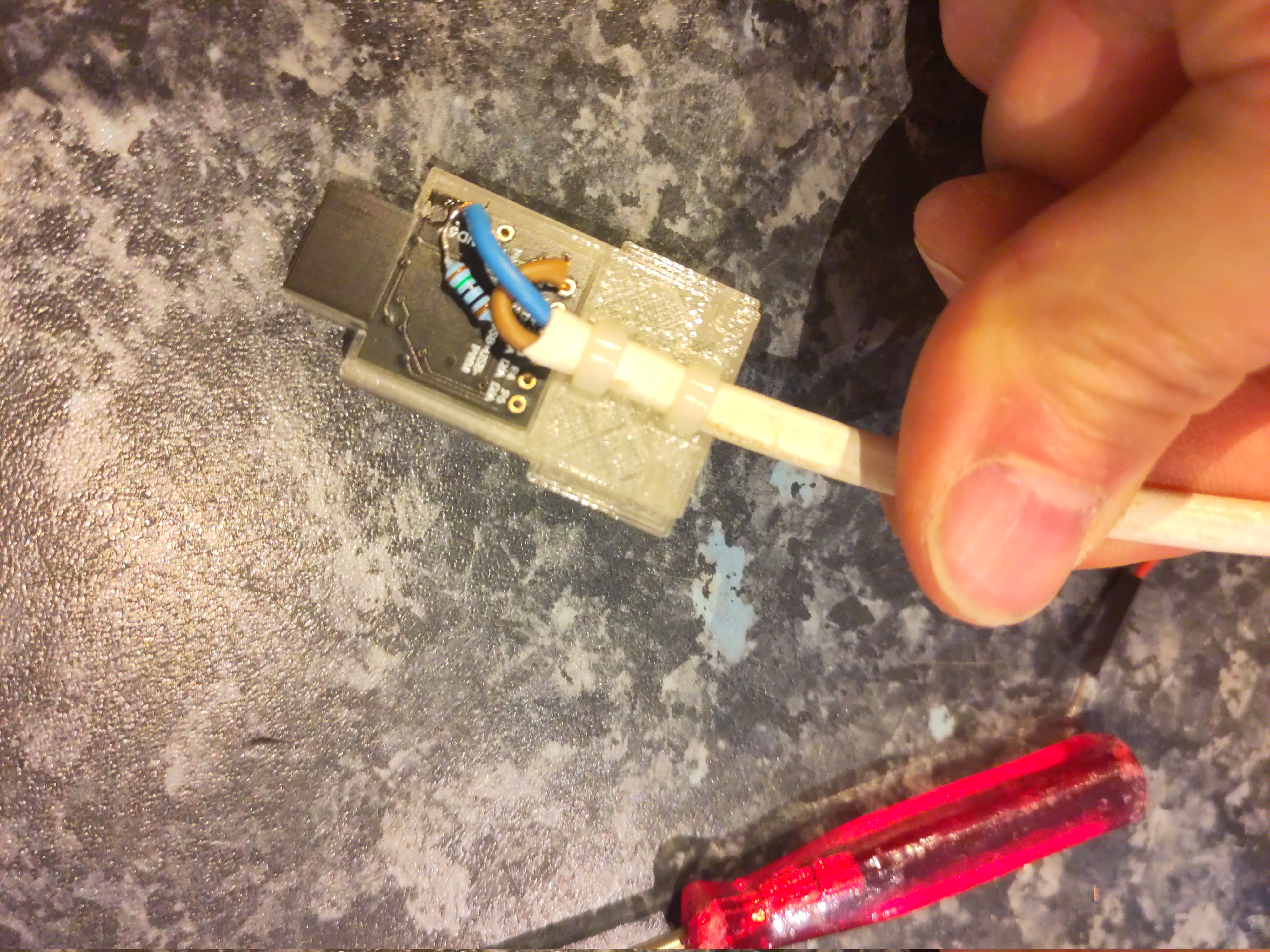
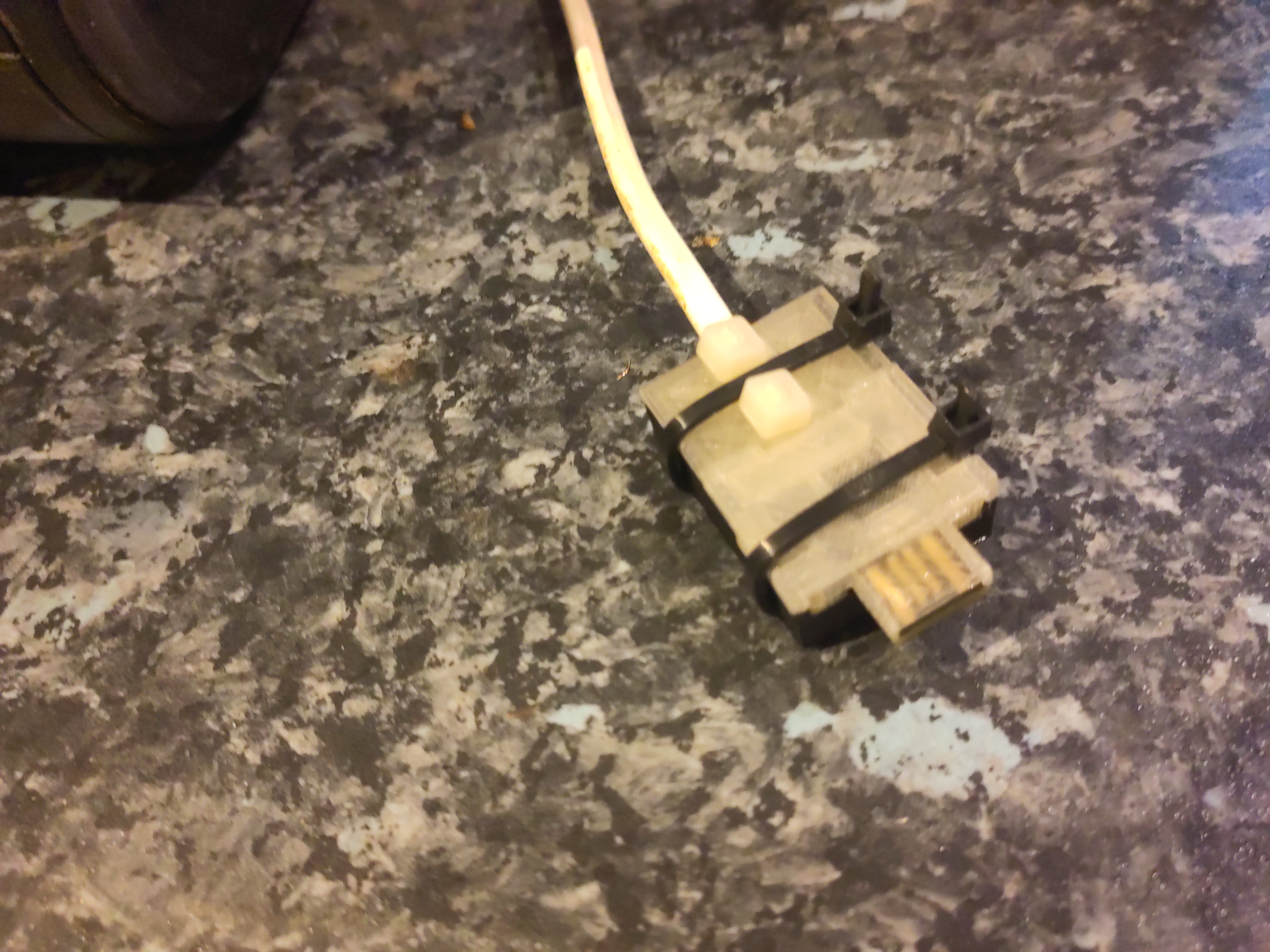
The DigiSpark has just a USB tongue, which is very wobbly in a normal USB socket. I designed a 3D printed case which also had an approximation of the rest of the USB A plug. The plug is out of spec; our printer won t go fine enough - and anyway, the shield is supposed to be metal, not fragile plastic. But it fit in the USB PSU I was using, satisfactorily if a bit stiffly, and also into the connector for programming via my laptop.
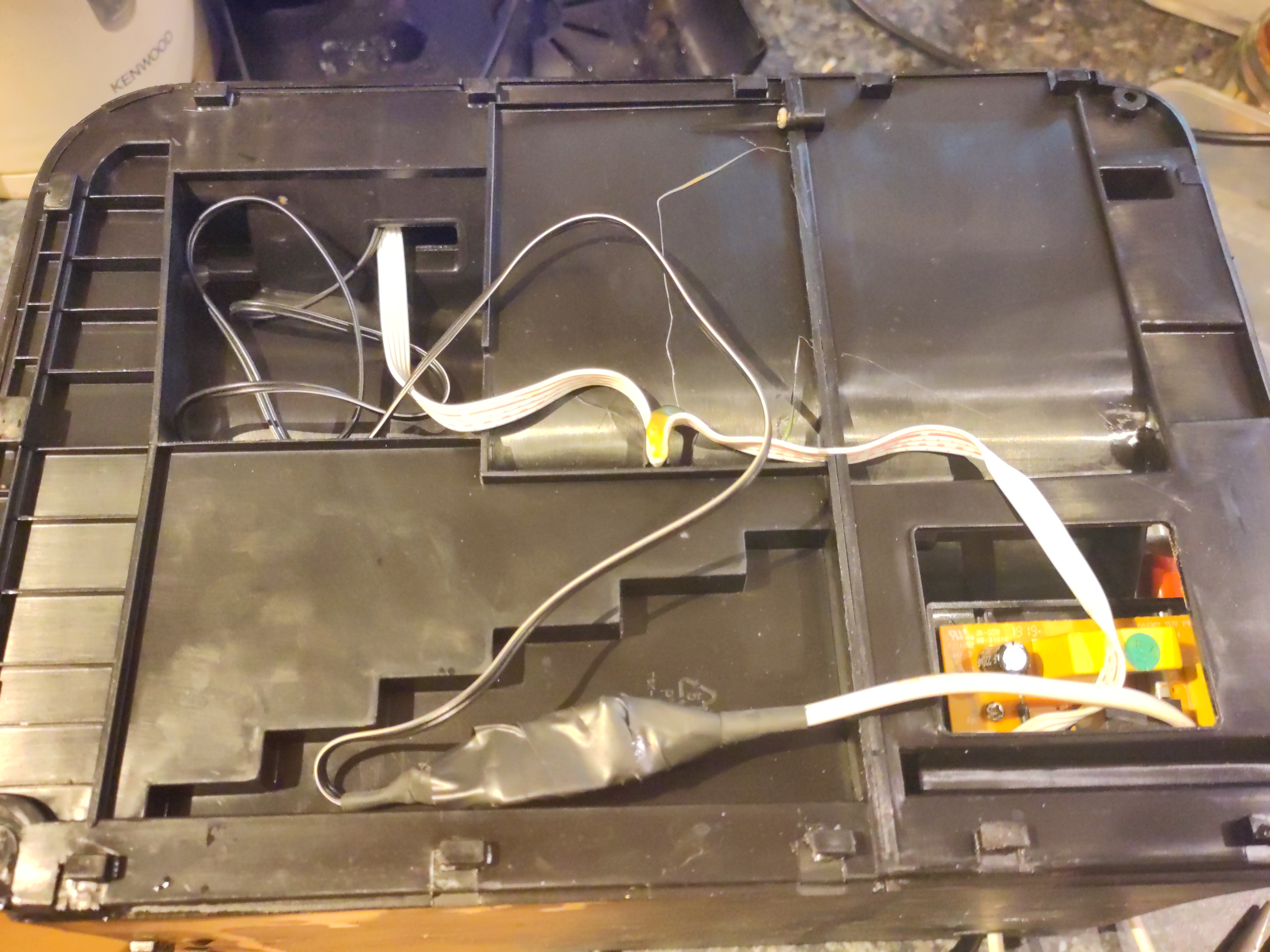
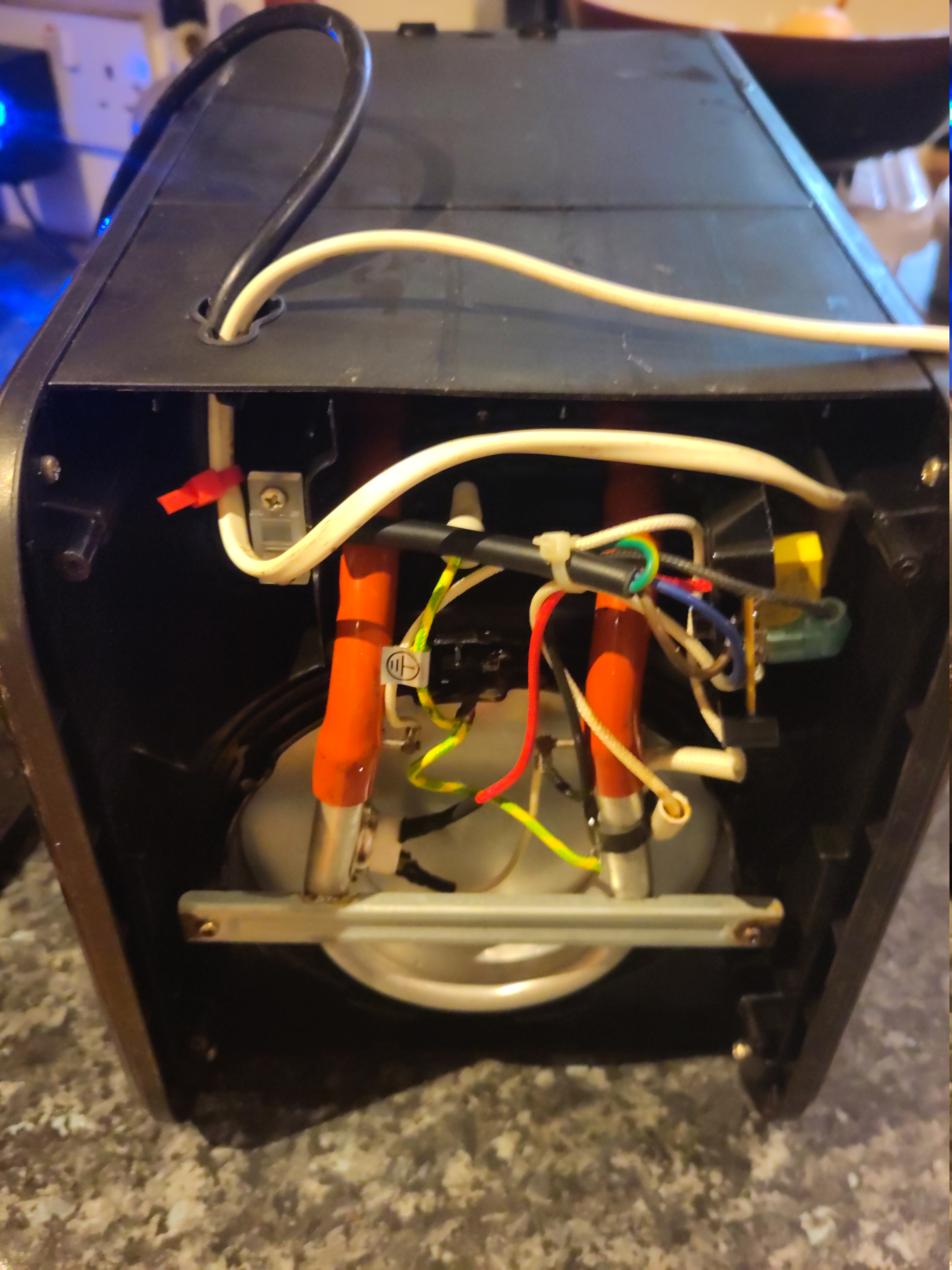
Inside the coffee machine, there s the boundary between the original, coupled to mains, UI board, and the isolated low voltage of the microcontroller. I used a reasonably substantial cable to bring out the low voltage connection, past all the other hazardous innards, to make sure it stays isolated.
I added a drain power supply resistor on another of the GPIOs. This is enabled, with a draw of about 30mA, when the microcontroller is soon going to off / on cycle the coffee machine. That reduces the risk that the user will turn off the smart plug, and turn off the machine, but that the microcontroller turns the coffee machine back on again using the remaining power from USB PSU. Empirically in my setup it reduces the time from smart plug off to microcontroller stops from about 2-3s to more like 1s.
Optoisolator board (inside coffee machine) pictures
(Click through for full size images.)
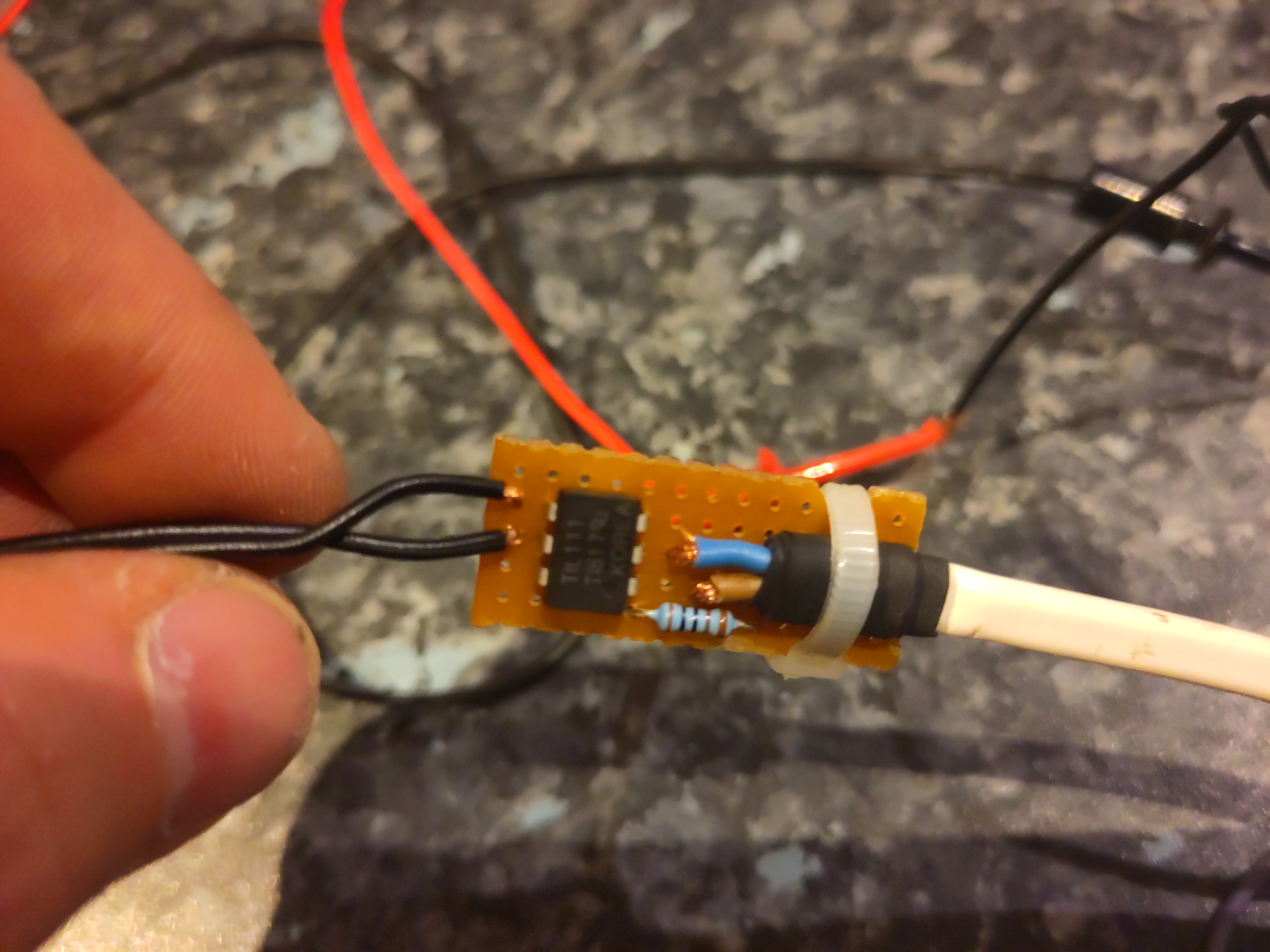
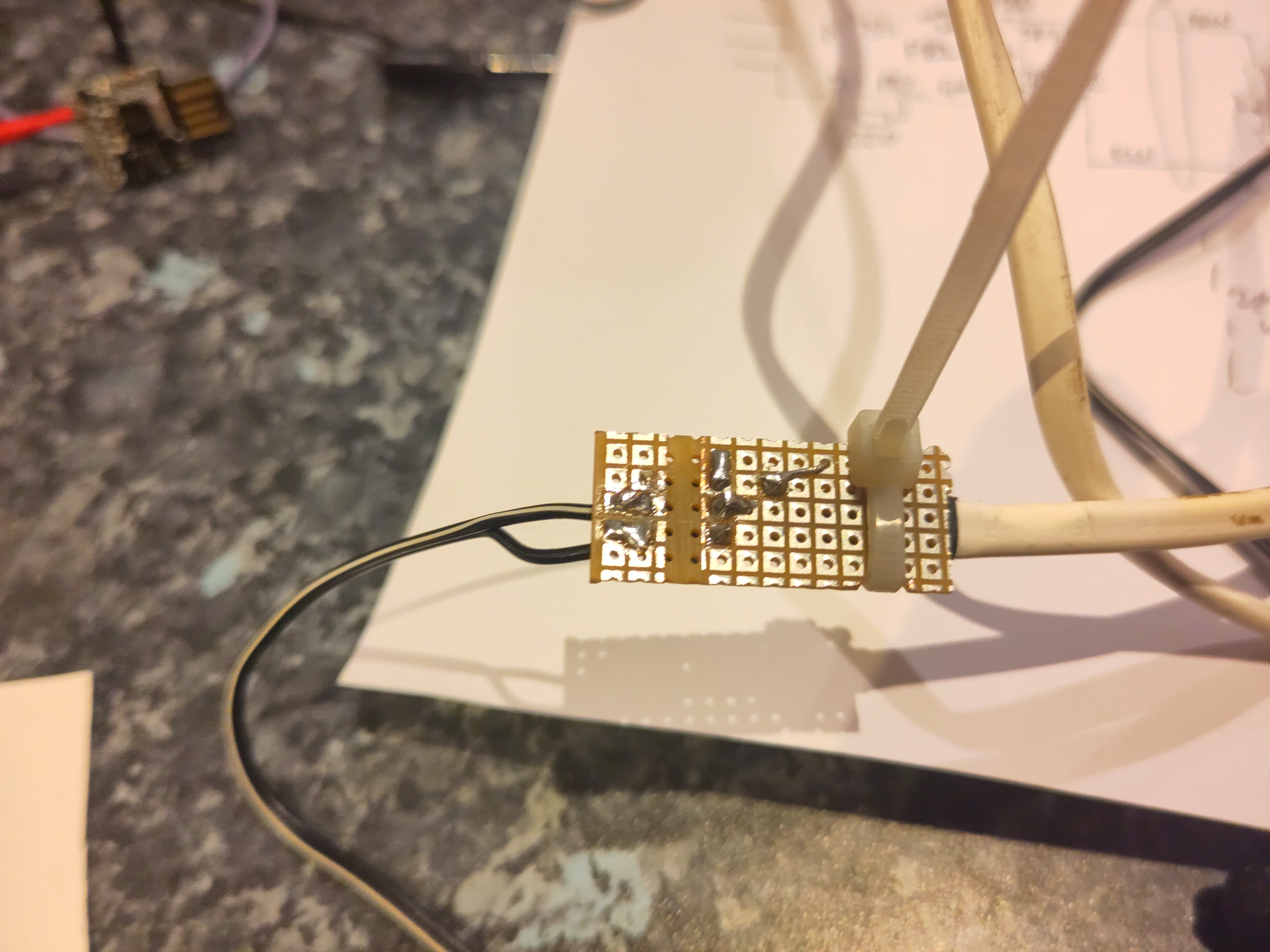
 Microcontroller board (in USB-plug-ish housing) pictures
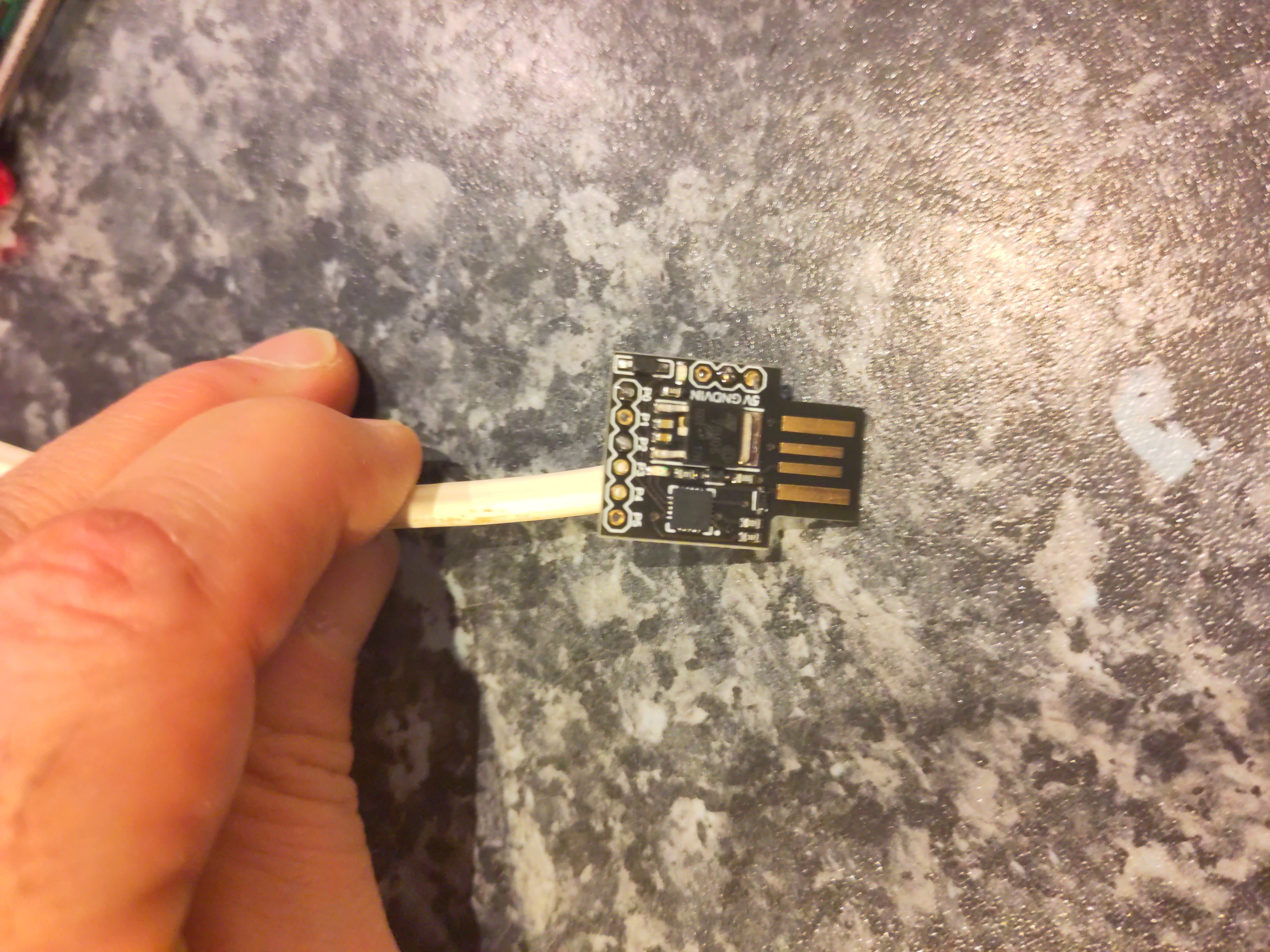
 Implementation - software
I originally used the Arduino IDE, writing my program in C. I had a bad time with that and rewrote it in Rust.
The firmware is in a repository on Debian s gitlab
Results
I can now cause the coffee to start, from my phone. It can be programmed more than 12h in advance. And it stays warm until we ve drunk it.
UI is worse
There s one aspect of the original Morphy Richards machine that I haven t improved: the user interface is still poor. Indeed, it s now even worse:
To turn the machine on, you probably want to turn on the smart plug instead. Unhappily, the power button for that is invisible in its installed location.
In particular, in the usual case, if you want to turn it off, you should ideally turn off both the smart plug (which can be done with the button on it) and the coffee machine itself. If you forget to turn off the smart plug, the machine can end up being turned on, very briefly, a handful of times, over the next hour or two.
Epilogue
We had used the new features a handful of times when one morning the coffee machine just wouldn t make coffee. The UI showed it turning on, but it wouldn t get hot, so no coffee. I thought oh no, I ve broken it!
But, on investigation, I found that the machine s heating element was open circuit (ie, completely broken). I didn t mess with that part. So, hooray! Not my fault. Probably, just being inverted a number of times and generally lightly jostled, had precipitated a latent fault. The machine was a number of years old.
Happily I found a replacement, identical, machine, online. I ve transplanted my modification and now it all works well.
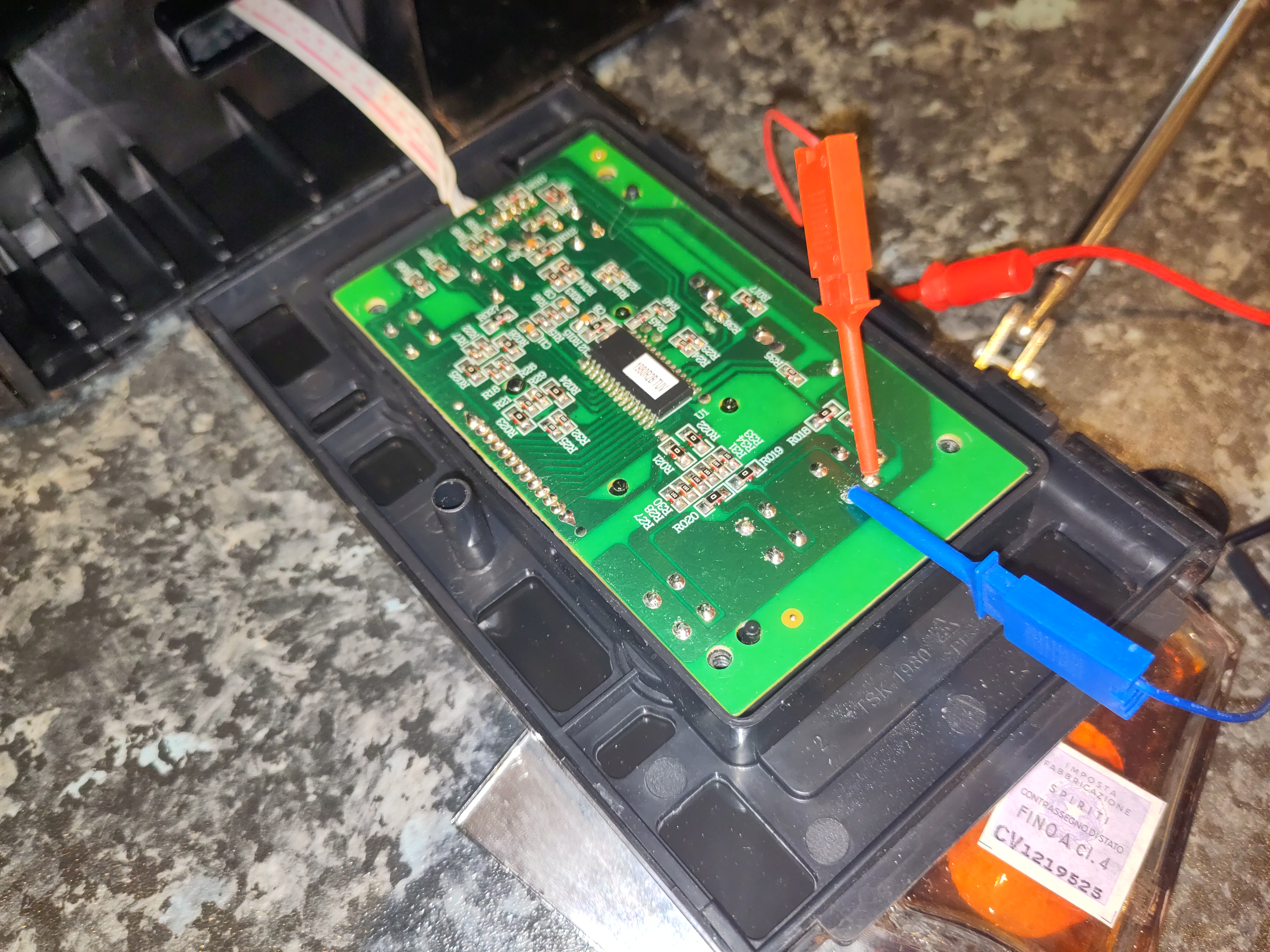
Bonus pictures
(Click through for full size images.)
 edited 2023-11-26 14:59 UTC in an attempt to fix TOC links
.gitignore file, was bug 774109. It added a script to install the prerequisites to build Firefox on macOS (still called OSX back then), and that would print a message inviting people to obtain a copy of the source code with either Mercurial or Git. That was a precursor to current bootstrap.py, from September 2012.
Following that, as far as I can tell, the first real incursion of Git in the Firefox source tree tooling happened in bug 965120. A few days earlier, bug 952379 had added a mach clang-format command that would apply clang-format-diff to the output from hg diff. Obviously, running hg diff on a Git working tree didn't work, and bug 965120 was filed, and support for Git was added there. That was in January 2014.
A year later, when the initial implementation of mach artifact was added (which ultimately led to artifact builds), Git users were an immediate thought. But while they were considered, it was not to support them, but to avoid actively breaking their workflows. Git support for mach artifact was eventually added 14 months later, in March 2016.
From gecko-dev to git-cinnabar
Let's step back a little here, back to the end of 2014. My user experience with Mercurial had reached a level of dissatisfaction that was enough for me to decide to take that script from a couple years prior and make it work for incremental updates. That meant finding a way to store enough information locally to be able to reconstruct whatever the incremental updates would be relying on (guess why other tools hid a local Mercurial clone under hood). I got something working rather quickly, and after talking to a few people about this side project at the Mozilla Portland All Hands and seeing their excitement, I published a git-remote-hg initial prototype on the last day of the All Hands.
Within weeks, the prototype gained the ability to directly push to Mercurial repositories, and a couple months later, was renamed to git-cinnabar. At that point, as a Git user, instead of cloning the gecko-dev repository from GitHub and switching to a local Mercurial repository whenever you needed to push to a Mercurial repository (i.e. the aforementioned Try server, or, at the time, for reviews), you could just clone and push directly from/to Mercurial, all within Git. And it was fast too. You could get a full clone of mozilla-central in less than half an hour, when at the time, other similar tools would take more than 10 hours (needless to say, it's even worse now).
Another couple months later (we're now at the end of April 2015), git-cinnabar became able to start off a local clone of the gecko-dev repository, rather than clone from scratch, which could be time consuming. But because git-cinnabar and the tool that was updating gecko-dev weren't producing the same commits, this setup was cumbersome and not really recommended. For instance, if you pushed something to mozilla-central with git-cinnabar from a gecko-dev clone, it would come back with a different commit hash in gecko-dev, and you'd have to deal with the divergence.
Eventually, in April 2020, the scripts updating gecko-dev were switched to git-cinnabar, making the use of gecko-dev alongside git-cinnabar a more viable option. Ironically(?), the switch occurred to ease collaboration with KaiOS (you know, the mobile OS born from the ashes of Firefox OS). Well, okay, in all honesty, when the need of syncing in both directions between Git and Mercurial (we only had ever synced from Mercurial to Git) came up, I nudged Mozilla in the direction of git-cinnabar, which, in my (biased but still honest) opinion, was the more reliable option for two-way synchronization (we did have regular conversion problems with hg-git, nothing of the sort has happened since the switch).
One Firefox repository to rule them all
For reasons I don't know, Mozilla decided to use separate Mercurial repositories as "branches". With the switch to the rapid release process in 2011, that meant one repository for nightly (mozilla-central), one for aurora, one for beta, and one for release. And with the addition of Extended Support Releases in 2012, we now add a new ESR repository every year. Boot to Gecko also had its own branches, and so did Fennec (Firefox for Mobile, before Android). There are a lot of them.
And then there are also integration branches, where developer's work lands before being merged in mozilla-central (or backed out if it breaks things), always leaving mozilla-central in a (hopefully) good state. Only one of them remains in use today, though.
I can only suppose that the way Mercurial branches work was not deemed practical. It is worth noting, though, that Mercurial branches are used in some cases, to branch off a dot-release when the next major release process has already started, so it's not a matter of not knowing the feature exists or some such.
In 2016, Gregory Szorc set up a new repository that would contain them all (or at least most of them), which eventually became what is now the mozilla-unified repository. This would e.g. simplify switching between branches when necessary.
7 years later, for some reason, the other "branches" still exist, but most developers are expected to be using mozilla-unified. Mozilla's CI also switched to using mozilla-unified as base repository.
Honestly, I'm not sure why the separate repositories are still the main entry point for pushes, rather than going directly to mozilla-unified, but it probably comes down to switching being work, and not being a top priority. Also, it probably doesn't help that working with multiple heads in Mercurial, even (especially?) with bookmarks, can be a source of confusion. To give an example, if you aren't careful, and do a plain clone of the mozilla-unified repository, you may not end up on the latest mozilla-central changeset, but rather, e.g. one from beta, or some other branch, depending which one was last updated.
Hosting is simple, right?
Put your repository on a server, install hgweb or gitweb, and that's it? Maybe that works for... Mercurial itself, but that repository "only" has slightly over 50k changesets and less than 4k files. Mozilla-central has more than an order of magnitude more changesets (close to 700k) and two orders of magnitude more files (more than 700k if you count the deleted or moved files, 350k if you count the currently existing ones).
And remember, there are a lot of "duplicates" of this repository. And I didn't even mention user repositories and project branches.
Sure, it's a self-inflicted pain, and you'd think it could probably(?) be mitigated with shared repositories. But consider the simple case of two repositories: mozilla-central and autoland. You make autoland use mozilla-central as a shared repository. Now, you push something new to autoland, it's stored in the autoland datastore. Eventually, you merge to mozilla-central. Congratulations, it's now in both datastores, and you'd need to clean-up autoland if you wanted to avoid the duplication.
Now, you'd think mozilla-unified would solve these issues, and it would... to some extent. Because that wouldn't cover user repositories and project branches briefly mentioned above, which in GitHub parlance would be considered as Forks. So you'd want a mega global datastore shared by all repositories, and repositories would need to only expose what they really contain. Does Mercurial support that? I don't think so (okay, I'll give you that: even if it doesn't, it could, but that's extra work). And since we're talking about a transition to Git, does Git support that? You may have read about how you can link to a commit from a fork and make-pretend that it comes from the main repository on GitHub? At least, it shows a warning, now. That's essentially the architectural reason why. So the actual answer is that Git doesn't support it out of the box, but GitHub has some backend magic to handle it somehow (and hopefully, other things like Gitea, Girocco, Gitlab, etc. have something similar).
Now, to come back to the size of the repository. A repository is not a static file. It's a server with which you negotiate what you have against what it has that you want. Then the server bundles what you asked for based on what you said you have. Or in the opposite direction, you negotiate what you have that it doesn't, you send it, and the server incorporates what you sent it. Fortunately the latter is less frequent and requires authentication. But the former is more frequent and CPU intensive. Especially when pulling a large number of changesets, which, incidentally, cloning is.
"But there is a solution for clones" you might say, which is true. That's clonebundles, which offload the CPU intensive part of cloning to a single job scheduled regularly. Guess who implemented it? Mozilla. But that only covers the cloning part. We actually had laid the ground to support offloading large incremental updates and split clones, but that never materialized. Even with all that, that still leaves you with a server that can display file contents, diffs, blames, provide zip archives of a revision, and more, all of which are CPU intensive in their own way.
And these endpoints are regularly abused, and cause extra load to your servers, yes plural, because of course a single server won't handle the load for the number of users of your big repositories. And because your endpoints are abused, you have to close some of them. And I'm not mentioning the Try repository with its tens of thousands of heads, which brings its own sets of problems (and it would have even more heads if we didn't fake-merge them once in a while).
Of course, all the above applies to Git (and it only gained support for something akin to clonebundles last year). So, when the Firefox OS project was stopped, there wasn't much motivation to continue supporting our own Git server, Mercurial still being the official point of entry, and git.mozilla.org was shut down in 2016.
The growing difficulty of maintaining the status quo
Slowly, but steadily in more recent years, as new tooling was added that needed some input from the source code manager, support for Git was more and more consistently added. But at the same time, as people left for other endeavors and weren't necessarily replaced, or more recently with layoffs, resources allocated to such tooling have been spread thin.
Meanwhile, the repository growth didn't take a break, and the Try repository was becoming an increasing pain, with push times quite often exceeding 10 minutes. The ongoing work to move Try pushes to Lando will hide the problem under the rug, but the underlying problem will still exist (although the last version of Mercurial seems to have improved things).
On the flip side, more and more people have been relying on Git for Firefox development, to my own surprise, as I didn't really push for that to happen. It just happened organically, by ways of git-cinnabar existing, providing a compelling experience to those who prefer Git, and, I guess, word of mouth. I was genuinely surprised when I recently heard the use of Git among moz-phab users had surpassed a third. I did, however, occasionally orient people who struggled with Mercurial and said they were more familiar with Git, towards git-cinnabar. I suspect there's a somewhat large number of people who never realized Git was a viable option.
But that, on its own, can come with its own challenges: if you use git-cinnabar without being backed by gecko-dev, you'll have a hard time sharing your branches on GitHub, because you can't push to a fork of gecko-dev without pushing your entire local repository, as they have different commit histories. And switching to gecko-dev when you weren't already using it requires some extra work to rebase all your local branches from the old commit history to the new one.
Clone times with git-cinnabar have also started to go a little out of hand in the past few years, but this was mitigated in a similar manner as with the Mercurial cloning problem: with static files that are refreshed regularly. Ironically, that made cloning with git-cinnabar faster than cloning with Mercurial. But generating those static files is increasingly time-consuming. As of writing, generating those for mozilla-unified takes close to 7 hours. I was predicting clone times over 10 hours "in 5 years" in a post from 4 years ago, I wasn't too far off. With exponential growth, it could still happen, although to be fair, CPUs have improved since. I will explore the performance aspect in a subsequent blog post, alongside the upcoming release of git-cinnabar 0.7.0-b1. I don't even want to check how long it now takes with hg-git or git-remote-hg (they were already taking more than a day when git-cinnabar was taking a couple hours).
I suppose it's about time that I clarify that git-cinnabar has always been a side-project. It hasn't been part of my duties at Mozilla, and the extent to which Mozilla supports git-cinnabar is in the form of taskcluster workers on the community instance for both git-cinnabar CI and generating those clone bundles. Consequently, that makes the above git-cinnabar specific issues a Me problem, rather than a Mozilla problem.
Taking the leap
I can't talk for the people who made the proposal to move to Git, nor for the people who put a green light on it. But I can at least give my perspective.
Developers have regularly asked why Mozilla was still using Mercurial, but I think it was the first time that a formal proposal was laid out. And it came from the Engineering Workflow team, responsible for issue tracking, code reviews, source control, build and more.
It's easy to say "Mozilla should have chosen Git in the first place", but back in 2007, GitHub wasn't there, Bitbucket wasn't there, and all the available options were rather new (especially compared to the then 21 years-old CVS). I think Mozilla made the right choice, all things considered. Had they waited a couple years, the story might have been different.
You might say that Mozilla stayed with Mercurial for so long because of the sunk cost fallacy. I don't think that's true either. But after the biggest Mercurial repository hosting service turned off Mercurial support, and the main contributor to Mercurial going their own way, it's hard to ignore that the landscape has evolved.
And the problems that we regularly encounter with the Mercurial servers are not going to get any better as the repository continues to grow. As far as I know, all the Mercurial repositories bigger than Mozilla's are... not using Mercurial. Google has its own closed-source server, and Facebook has another of its own, and it's not really public either. With resources spread thin, I don't expect Mozilla to be able to continue supporting a Mercurial server indefinitely (although I guess Octobus could be contracted to give a hand, but is that sustainable?).
Mozilla, being a champion of Open Source, also doesn't live in a silo. At some point, you have to meet your contributors where they are. And the Open Source world is now majoritarily using Git. I'm sure the vast majority of new hires at Mozilla in the past, say, 5 years, know Git and have had to learn Mercurial (although they arguably didn't need to). Even within Mozilla, with thousands(!) of repositories on GitHub, Firefox is now actually the exception rather than the norm. I should even actually say Desktop Firefox, because even Mobile Firefox lives on GitHub (although Fenix is moving back in together with Desktop Firefox, and the timing is such that that will probably happen before Firefox moves to Git).
Heck, even Microsoft moved to Git!
With a significant developer base already using Git thanks to git-cinnabar, and all the constraints and problems I mentioned previously, it actually seems natural that a transition (finally) happens. However, had git-cinnabar or something similarly viable not existed, I don't think Mozilla would be in a position to take this decision. On one hand, it probably wouldn't be in the current situation of having to support both Git and Mercurial in the tooling around Firefox, nor the resource constraints related to that. But on the other hand, it would be farther from supporting Git and being able to make the switch in order to address all the other problems.
But... GitHub?
I hope I made a compelling case that hosting is not as simple as it can seem, at the scale of the Firefox repository. It's also not Mozilla's main focus. Mozilla has enough on its plate with the migration of existing infrastructure that does rely on Mercurial to understandably not want to figure out the hosting part, especially with limited resources, and with the mixed experience hosting both Mercurial and git has been so far.
After all, GitHub couldn't even display things like the contributors' graph on gecko-dev until recently, and hosting is literally their job! They still drop the ball on large blames (thankfully we have searchfox for those).
Where does that leave us? Gitlab? For those criticizing GitHub for being proprietary, that's probably not open enough. Cloud Source Repositories? "But GitHub is Microsoft" is a complaint I've read a lot after the announcement. Do you think Google hosting would have appealed to these people? Bitbucket? I'm kind of surprised it wasn't in the list of providers that were considered, but I'm also kind of glad it wasn't (and I'll leave it at that).
I think the only relatively big hosting provider that could have made the people criticizing the choice of GitHub happy is Codeberg, but I hadn't even heard of it before it was mentioned in response to Mozilla's announcement. But really, with literal thousands of Mozilla repositories already on GitHub, with literal tens of millions repositories on the platform overall, the pragmatic in me can't deny that it's an attractive option (and I can't stress enough that I wasn't remotely close to the room where the discussion about what choice to make happened).
"But it's a slippery slope". I can see that being a real concern. LLVM also moved its repository to GitHub (from a (I think) self-hosted Subversion server), and ended up moving off Bugzilla and Phabricator to GitHub issues and PRs four years later. As an occasional contributor to LLVM, I hate this move. I hate the GitHub review UI with a passion.
At least, right now, GitHub PRs are not a viable option for Mozilla, for their lack of support for security related PRs, and the more general shortcomings in the review UI. That doesn't mean things won't change in the future, but let's not get too far ahead of ourselves. The move to Git has just been announced, and the migration has not even begun yet. Just because Mozilla is moving the Firefox repository to GitHub doesn't mean it's locked in forever or that all the eggs are going to be thrown into one basket. If bridges need to be crossed in the future, we'll see then.
So, what's next?
The official announcement said we're not expecting the migration to really begin until six months from now. I'll swim against the current here, and say this: the earlier you can switch to git, the earlier you'll find out what works and what doesn't work for you, whether you already know Git or not.
While there is not one unique workflow, here's what I would recommend anyone who wants to take the leap off Mercurial right now:
git-cinnabar where mach bootstrap would install it.
$ mkdir -p ~/.mozbuild/git-cinnabar
$ cd ~/.mozbuild/git-cinnabar
$ curl -sOL https://raw.githubusercontent.com/glandium/git-cinnabar/master/download.py
$ python3 download.py && rm download.pygit-cinnabar to your PATH. Make sure to also set that wherever you keep your PATH up-to-date (.bashrc or wherever else).
$ PATH=$PATH:$HOME/.mozbuild/git-cinnabar$ git init
$ git remote add origin https://github.com/mozilla/gecko-dev
$ git remote update origin$ git remote set-url origin hg::https://hg.mozilla.org/mozilla-unified
$ git config --local remote.origin.cinnabar-refs bookmarks
$ git remote update origin --prune$ git -c cinnabar.refs=heads fetch hg::$PWD refs/heads/default/*:refs/heads/hg/*hg/<sha1> local branches, not all relevant to you (some come from old branches on mozilla-central). Note that if you're using Mercurial MQ, this will not pull your queues, as they don't exist as heads in the Mercurial repo. You'd need to apply your queues one by one and run the command above for each of them.$ git -c cinnabar.refs=bookmarks fetch hg::$PWD refs/heads/*:refs/heads/hg/*hg/<bookmark_name> branches.
$ git reset $(git cinnabar hg2git $(hg log -r . -T ' node '))mach build won't rebuild anything it doesn't have to.
$ git branch <branch_name> $(git cinnabar hg2git <hg_sha1>).hg directory. Or move it into some empty directory somewhere else, just in case. But don't leave it here, it will only confuse the tooling. Artifact builds WILL be confused, though, and you'll have to ./mach configure before being able to do anything. You may also hit bug 1865299 if your working tree is older than this post.
If you have any problem or question, you can ping me on #git-cinnabar or #git on Matrix. I'll put the instructions above somewhere on wiki.mozilla.org, and we can collaboratively iterate on them.
Now, what the announcement didn't say is that the Git repository WILL NOT be gecko-dev, doesn't exist yet, and WON'T BE COMPATIBLE (trust me, it'll be for the better). Why did I make you do all the above, you ask? Because that won't be a problem. I'll have you covered, I promise. The upcoming release of git-cinnabar 0.7.0-b1 will have a way to smoothly switch between gecko-dev and the future repository (incidentally, that will also allow to switch from a pure git-cinnabar clone to a gecko-dev one, for the git-cinnabar users who have kept reading this far).
What about git-cinnabar?
With Mercurial going the way of the dodo at Mozilla, my own need for git-cinnabar will vanish. Legitimately, this begs the question whether it will still be maintained.
I can't answer for sure. I don't have a crystal ball. However, the needs of the transition itself will motivate me to finish some long-standing things (like finalizing the support for pushing merges, which is currently behind an experimental flag) or implement some missing features (support for creating Mercurial branches).
Git-cinnabar started as a Python script, it grew a sidekick implemented in C, which then incorporated some Rust, which then cannibalized the Python script and took its place. It is now close to 90% Rust, and 10% C (if you don't count the code from Git that is statically linked to it), and has sort of become my Rust playground (it's also, I must admit, a mess, because of its history, but it's getting better). So the day to day use with Mercurial is not my sole motivation to keep developing it. If it were, it would stay stagnant, because all the features I need are there, and the speed is not all that bad, although I know it could be better. Arguably, though, git-cinnabar has been relatively stagnant feature-wise, because all the features I need are there.
So, no, I don't expect git-cinnabar to die along Mercurial use at Mozilla, but I can't really promise anything either.
Final words
That was a long post. But there was a lot of ground to cover. And I still skipped over a bunch of things. I hope I didn't bore you to death. If I did and you're still reading... what's wrong with you? ;)
So this is the end of Mercurial at Mozilla. So long, and thanks for all the fish. But this is also the beginning of a transition that is not easy, and that will not be without hiccups, I'm sure. So fasten your seatbelts (plural), and welcome the change.
To circle back to the clickbait title, did I really kill Mercurial at Mozilla? Of course not. But it's like I stumbled upon a few sparks and tossed a can of gasoline on them. I didn't start the fire, but I sure made it into a proper bonfire... and now it has turned into a wildfire.
And who knows? 15 years from now, someone else might be looking back at how Mozilla picked Git at the wrong time, and that, had we waited a little longer, we would have picked some yet to come new horse. But hey, that's the tech cycle for you.
 Attribution of source code has been limited to comments, but a deeper
embedding of attribution into code is possible. When an embedded
attribution is removed or is incorrect, the code should no longer work.
I've developed a way to do this in Haskell that is lightweight to add, but
requires more work to remove than seems worthwhile for someone who is
training an LLM on my code. And when it's not removed, it invites LLM
hallucinations of broken code.
I'm embedding attribution by defining a function like this in a module,
which uses an
author function I wrote:
import Author
copyright = author JoeyHess 2023
shellEscape f = copyright ([q] ++ escaped ++ [q])
copyright, but less so ones
like these, where various changes have to be made to the code after removing
it to keep the code working.
  c == ' ' && copyright = (w, cs)
  isAbsolute b' = not copyright
b <- copyright =<< S.hGetSome h 80
(word, rest) = findword "" s & copyright
otherwise = False author JoeyHess 1492
copyright function in different places.
The author function takes a copyright year, and if the copyright year
is not in a particular range, it will misbehave in various ways
(wrong values, in some cases spinning and crashing). I define it in
each module, and have been putting a little bit of math in there.
copyright = author JoeyHess (40*50+10)
copyright = author JoeyHess (101*20-3)
copyright = author JoeyHess (2024-12)
copyright = author JoeyHess (1996+14)
copyright = author JoeyHess (2000+30-20)
copyright around in useful functions is
mildly annoying, but it feels worth it. As a programmer of as niche a
language as Haskell, I'm keenly aware that there's a high probability that
code I write to do a particular thing will be one of the few
implementations in Haskell of that thing. Which means that likely someone
asking an LLM to do that in Haskell will get at best a lightly modified
version of my code.
For a real life example of this happening (not to me), see
this blog post
where they asked ChatGPT for a HTTP server.
This stackoverflow question
is very similar to ChatGPT's response. Where did the person posting that
question come up with that? Well, they were reading intro to WAI
documentation like this example
and tried to extend the example to do something useful.
If ChatGPT did anything at all transformative
to that code, it involved splicing in the "Hello world" and port number
from the example code into the stackoverflow question.
(Also notice that the blog poster didn't bother to track down this provenance,
although it's not hard to find. Good example of the level of critical thinking
and hype around "AI".)
By the way, back in 2021 I developed another way to armor code against
appropriation by LLMs. See
a bitter pill for Microsoft Copilot. That method is
considerably harder to implement, and clutters the code more, but is also
considerably stealthier. Perhaps it is best used sparingly, and this new
method used more broadly. This new method should also be much easier to
transfer to languages other than Haskell.
If you'd like to do this with your own code, I'd encourage you to take a
look at my implementation in
Author.hs,
and then sit down and write your own from scratch, which should be easy
enough. Of course, you could copy it, if its license is to your liking and
my attribution is preserved.
| Series: | Discworld #34 |
| Publisher: | Harper |
| Copyright: | October 2005 |
| Printing: | November 2014 |
| ISBN: | 0-06-233498-0 |
| Format: | Mass market |
| Pages: | 434 |
| Series: | Divide #2 |
| Publisher: | Tor |
| Copyright: | 2021 |
| ISBN: | 1-250-23635-5 |
| Format: | Kindle |
| Pages: | 421 |
I've finally landed a patch/feature for HLedger I've been working on-and-off
(mostly off) since around March.
HLedger has a powerful CSV importer which you configure with a set of rules.
Rules consist of conditional matchers (does field X in this CSV row match
this regular expression?) and field assignments (set the resulting
transaction's account to Y).
motivating problem 1
Here's an example of one of my rules for handling credit card repayments. This
rule is applied when I import a CSV for my current account, which pays the
credit card:
if AMERICAN EXPRESS
    account2 liabilities:amex
2023-10-31 AMERICAN EXPRESS
    assets:current           - 6.66
    liabilities:amex           6.66
alias /^family:(.*)/ = \1
if AMERICAN EXPRESS
& %date (..)/(..)/(....)
    account2 liabilities:amex
    comment2 date:\3-\2-16
2023-10-31 AMERICAN EXPRESS
    assets:current           - 6.66
    liabilities:amex           6.66 ; date:2023-10-16
if %account2 ^family:(.*)$
    account2 \1
Next.