Search Results: "eric"

11 February 2014

Erich Schubert: Debian chooses systemd as default init

It has been all over the place. The Debian CTTE has chosen systemd over upstart as default init system by chairman call. This decision was overdue, as it was pretty clear that the tie will not change, and thus it will be up to chairman. There were no new positions presented, and nobody was being convinced of a different preference. The whole discussion had been escalating, and had started to harm Debian. Some people may not want to hear this, but another 10 ballots and options would not have changed this outcome. Repating essentially the same decision (systemd, upstart, or "other things nobody prefers") will do no good, but turn out the same result, a tie. Every vote counting I saw happen would turn out this tie. Half of the CTTE members prefer systemd, the other half upstart. The main problems, however, are these: So please, everybody get back to work now. If there ever is enough reason to overturn this decision, there are formal ways to do this, and there are people in the CTTE (half of the CTTE, actually) that will take care of this. Until then, live with the result of a 0.1 votes lead for systemd. Instead of pursuing a destructive hate campaign, why not improve your favorite init system instead. Oh, and don't forget about the need to spell out a policy for init system support requirements of packages.

10 February 2014

Mario Lang: Neurofunkcasts

I have always loved Drum and Bass. In 2013 I rediscovered my love for Darkstep and Neurofunk, and found that these genres have developed quite a lot in the recent years. Some labels like Black Sun Empire and Evol Intent produce mixes/sets on a regular basis as podcasts these days. This article aggregates some neurofunk podcasts I like a lot, most recent first. Enjoy 33 hours and 57 minutes of fun with dark and energizing beats. Thanks to BSE Contrax and Evol Intent for providing such high quality sets. You can also see the Python source for the program that was used to generate this page.

9 February 2014

Erich Schubert: Minimizing usage of debian-multimedia packages

How to reduce your usage of debian-multimedia packages: As you might be aware, the "deb-multimedia" packages have seen their share of chaos. Originally, they were named "debian-multimedia", but it was then decided that they should better be called "deb-multimedia" as they are not an official part of Debian. The old domain was then grabbed by cybersquatters when it expired. While a number of packages remain indistributable for Debian due to legal issues - such as decrypting DVDs - and thus "DMO" remains useful to many desktop users, please note that for many of the packages, a reasonable version exists within Debian "main". So here is a way to prevent automatically upgrading to DMO versions of packages that also exist in Debian main: We will use a configuration option known as apt pinning. We will modify the priority of DMO package to below 100, which means they will not be automatically upgraded to; but they can be installed when e.g. no version of this package exists within Debian main. I.e. the packages can be easily installed, but it will prefer using the official versions. For this we need to create a file I named /etc/apt/preferences.d/unprefer-dmo with the contents:
Package: *
Pin: release o=Unofficial Multimedia Packages
Pin-Priority: 123
As long as the DMO archive doesn't rename itself, this pin will work; it will continue to work if you use a mirror of the archive, as it is not tied to the URL. It will not downgrade packages for you. If you want to downgrade, this will be a trickier process. You can use aptitude for this, and start with a filter (l key, as in "limit") of ?narrow(~i,~Vdmo). This will only show packages installed where the version number contains dmo. You can now patrol this list, enter the detail view of each package, and check the version list at the end for a non-dmo version. I cannot claim this will be an easy process. You'll probably have a lot of conflicts to clear up, due to different libavcodec* API versions. If I recall correctly, I opted to uninstall some dmo packages such as ffmpeg that I do not really need. In other cases, the naming is slightly different: Debian main has handbrake, while dmo has handbrake-gtk. A simple approach is to consider uninstalling all of these packages. Then reinstall as needed; since installing Debian packages is trivial, it does not hurt to deinstall something, does it? When reinstalling, Debian packages will be preferred over DMO packages. I prefer to use DFSG-free software wherever possible. And as long as I can watch my favorite series (Tatort, started in 1970 and airing episode 900 this month) and the occasional DVD movie, I have all I need. An even more powerful aptitude filter to review installed non-Debian software is ?narrow(~i,!~ODebian), or equivalently ?narrow(?installed,?not(?origin(Debian))). This will list all package versions, which cannot be installed from Debian sources. In particular, this includes versions that are no longer available (they may have been removed because of security issues!), software that has been installed manually from .deb files, or any other non-Debian source such as Google or DMO. (You should check the output of aptitude policy that no source claims to be o=Debian that isn't Debian though). This filter is a good health check for your system. Debian packages receive a good amount of attention with respect to packaging quality, maintainability, security and all of these aspects. Third party packages usually failed the Debian quality check in at least one respect. For example, Sage isn't in Debian yet; mostly because it has so many dependencies, that making a reliable and upgradeable installation is a pain. Similarly, there is no Hadoop in Debian yet. If you look at Hadoop packaging efforts such as Apache Bigtop, they do not live up to Debian quality yet. In particular, the packages have high redundancy, and re-include various .jar copies instead of sharing access to an independently packaged dependency. If a security issue arises with any of these jars, all the Hadoop packages will need to be rebuilt. As you can see, it is usually not because of Debian being too strict or too conservative about free software when software is not packaged. More often than not, it's because the software in question itself currently does not live up to Debian packaging quality requirements. And of course sometimes because there is too little community backing the software in question, that would improve the packaging. If you want your software to be included in Debian, try to make it packaging friendly. Don't force-include copies of other software, for example. Allow the use of system-installed libraries where possible, and provide upgrade paths and backwards compatibility. Make dependencies optional, so that your software can be pacakged even if a dependency is not yet available - and does not have to be removed if the dependency becomes a security risk. Maybe learn how to package yourself, too. This will make it easier for you to push new features and bug fixes to your userbase: instead of requiring your users to manually upgrade, make your software packaging friendly. Then your users will be auto-upgraded by their operating system to the latest version. Update: If you are using APT::Default-Release or other pins, these may override above pin. You may need to use apt-cache policy to find out if the pins are in effect, and rewrite your default-release pin into e.g.
Package: *
Pin: release a=testing,o=Debian
Pin-Priority: 912
for debugging, use a different priority for each pin, so you can see which one is in effect. Notice the o=Debian in this pin, which makes it apply only to Debian repositories.

3 February 2014

Dirk Eddelbuettel: Rcpp 0.11.0

A new major release 0.11.0 of Rcpp is now on the CRAN network for GNU R and binaries for Debian have been uploaded as well. Before you read on, please note that this release will most likely require a reinstallation of all your packages using Rcpp as it now works without a user-facing shared library. The biggest change in this version is that it is now effectively headers-only. Before you wonder, there is still compiled code provided by Rcpp for use by packages. But this uses the function registration mechanism of GNU R instead via instantiation at package startup. This does make package building easier, will remove the need to query GNU R for the Rcpp library file in src/Makevars when compiling, and should generally avoid building issues such as the dreaded fails on paths with spaces still annoying users of a certain OS. There are a number of other fixes, upgrades and other extensions detailed in NEWS file extract below, in the ChangeLog file in the package and on the Rcpp Changelog page as well as in a release announcement I'll post later.
Changes in Rcpp version 0.11.0 (2014-02-02)
  • Changes in Rcpp API:
    • Functions provided/used by Rcpp are now registered with R and instantiated by client package alleviating the need for explicit linking against libRcpp which is therefore no longer created.
    • Updated the Rcpp.package.skeleton() function accordingly.
    • New class StretchyList for pair lists with fast addition of elements at the front and back. This abstracts the 3 functions NewList, GrowList and Insert used in various packages and in parsers in R.
    • The function dnt, pnt, qnt sugar functions were incorrectly expanding to the no-degree-of-freedoms variant.
    • Unit tests for pnt were added.
    • The sugar table function did not handle NAs and NaNs properly for numeric vectors. Fixed and tests added.
    • The internal coercion mechanism mapping numerics to strings has been updated to better match R (specifically with Inf, -Inf, and NaN.)
    • Applied two bug fixes to Vector sort() and RObject definition spotted and corrected by Kevin Ushey
    • New checkUserInterrupt() function that provides a C++ friendly implementation of R_CheckUserInterrupt.
  • Changes in Rcpp attributes:
    • Embedded R code chunks in sourceCpp are now executed within the working directory of the C++ source file.
    • Embedded R code chunks in sourceCpp can now be disabled.
  • Changes in Rcpp documentation:
    • The Rcpp-FAQ and Rcpp-package vignettes have been updated and expanded.
    • Vignettes are now typeset with grey background for code boxes.
    • The bibtex reference file has been update to reflexct current package versions.
  • Changes in Rcpp unit tests:
    • The file tests/doRUnit.R was rewritten following the pattern deployed in RProtoBuf which is due to Murray Stokely
    • The function test() was rewritten; it provides an easy entry point to running unit tests of the installed package
Thanks to CRANberries, you can also look at a diff to the previous release 0.10.6. As always, even fuller details are on the Rcpp Changelog page and the Rcpp page which also leads to the downloads, the browseable doxygen docs and zip files of doxygen output for the standard formats. A local directory has source and documentation too. Questions, comments etc should go to the rcpp-devel mailing list off the R-Forge page

This post by Dirk Eddelbuettel originated on his Thinking inside the box blog. Please report excessive re-aggregation in third-party for-profit settings.

1 February 2014

Keith Packard: No Fosdem

Missing FOSDEM I m afraid Eric and I won t be at FOSDEM this weekend; our flight got canceled, and the backup they offered would have gotten us there late Saturday night. It seemed crazy to fly to Brussels for one day of FOSDEM, so we decided to just stay home and get some work done. Sorry to be missing all of the fabulous FOSDEM adventures and getting to see all of the fun people who attend one of the best conferences around. Hope everyone has a great time, and finds only the best chocolates.

30 January 2014

Russell Coker: The Movie Experience

Phandroid has one of many articles about a man being detained for wearing Google Glass in a cinema [1]. The article states as a fact that it s probably not smart to bring a recording device into a movie theater which is totally bogus. I ve visited a government office where recording devices were prohibited, they provided a locker for me to store everything that could be used for electronic storage outside their main security zone, that s what you do when you ban recording devices. Any place that doesn t have such facilities really isn t banning recording. The Gadgeteer has the original story with more detail with an update showing that the Department of Homeland Security were responsible for detaining the victim [2]. There are lots of issues here with DHS continuing to do nothing good and more bad things than most people suspect and with the music and film industry organisations attacking innocent people. But one thing that seems to be ignored is that movies are a recreational activity, so it s an experience that they are selling not just a movie. Any organisation that wants to make money out of movies really should be trying to make movies fun. The movie experience has always involved queuing, paying a lot of money for tickets ($20 per seat seems common), buying expensive drinks/snacks, and having to waste time on anti-piracy adverts. Now they are adding the risk of assault, false-arrest, and harassment under color of law to the down-sides of watching a movie. Downloading a movie via Bittorrent takes between 20 minutes and a few hours (depending on size and internet connectivity). Sometimes it can be quicker to download a movie than to drive to a cinema and if you are organising a group to watch a movie it will definitely be easier to download it. When you watch a movie at home you can pause it for a toilet break and consume alcoholic drinks while watching (I miss the Dutch cinemas where an intermission and a bar were standard features). It s just a better experience to download a movie via Bittorrent. I ve previously written about the way that downloading movies is better than buying a DVD [3], now they are making the cinema a worse experience too. I sometimes wonder if groups like the MPAA are actually trying to make money from movies or whether they just want to oppress their audiences for fun or psychological research. I could imagine someone like the young Phillip Zimbardo working for the MPAA and doing experiments to determine how badly movie industry employees can treat their customers before the customers revolt. Anyone who watches a Jack Ryan movie (or any movie with a Marty-Stu/Gary-Stu character) obviously doesn t even want to experience the stress of an unhappy ending to a movie. It seems obvious that such people won t want the stress of potentially being assaulted in the cinema. In terms of economics it seems a bad idea to do anything about recording in the cinema. When I was 11 I was offered the opportunity to watch a movie that had been recorded by a video camera in the US before it was released in Australia, I wasn t interested because watching a low quality recording wouldn t be fun. It seems to me that if The Pirate Bay (the main site for Bittorrent downloads of movies) [4] was filled with awful camera recordings of movies then it would discourage people from using it. A quick search shows some camera recordings on The Pirate Bay, it seems that if you want to download a movie of reasonable quality then you have to read the Wikipedia page about Pirated Movie Release Types [5] to make sure that you get a good quality download. But if you buy a DVD in a store or visit a cinema then you are assured of image and sound quality. If the movie industry were smarter they would start uploading camera recordings of movies described as Blue-Ray rips to mess with Bittorrent users and put newbies off downloading movies.

25 January 2014

Russell Coker: Links January 2014

Fast Coexist has an interesting article about the art that Simon Beck creates by walking in snow [1]. If you are an artist you can create art in any way, even by walking in patterns in the snow. Russ Altman gave an interesting TED talk about using DNA testing before prescribing drugs [2]. I was surprised by the amount of variation in effects of codeine based on genetics, presumably many other drugs have a similar range. Helen Epstein wrote an interesting article about Dr. Sara Josephine Baker who revolutionised child care and saved the lives of a huge number of children [3]. Her tenacity is inspiring. Also it s interesting to note that the US Republican party was awful even before the Southern Strategy . The part about some doctors opposing child care because it s the will of God for children to die and keep them in employment is chilling. Jonathan Weiler wrote an insightful article about the problems with American journalism in defending the government [4]. He criticises the media for paying more attention to policing decorum than to content. Tobias Buckell wrote an interesting post about the so-called socialised health-care in the US [5]. He suggests that Ronald Reagan socialised health-care by preventing hospitals from dumping dying people on the street. I guess if doing nothing for people until they have a medical emergency counts as socialised health-care then the US has it. Kelvin Thomson MP made some insightful comments about climate change, the recent heat-wave in Australia, and renewable energy [6]. Iwan Baan gave an interesting TED talk about ways that people have built cheap homes in unexpected places [7], lots of good pictures. Racialicious has an interesting article by Arturo R. Garc a about research into the effects of concussion and the way the NFL in the US tried to prevent Dr. Bennet Omalu publicising the results of his research [8]. Stani (Jan Schmidt) wrote an interesting post about how they won a competition to design a commemerative Dutch 5 Euro coin [9]. The coin design is really good (a candidate for the geekiest coin ever), I want one! Seriously if anyone knows how to get one at a reasonable price (IE close to face value for circulated or not unreasonably expensive for uncirculated) then please let me know. When writing about Edward Snowden, Nathan says Imagine how great a country would be if if it were governed entirely by people who Dick Cheney would call Traitor [10]. That s so right, that might make the US a country I d be prepared to live in. Andrew Solomon gave an interesting TED talk Love No Matter What about raising different children [11]. Aditi Shankardass gave an interesting TED talk about using an ECG to analyse people diagnosed wit severe Autism and other developmental disorders [12]. Apparently some severe cases of Autism have a root cause that can be treated with anti-seizure medication. George Monbiot wrote an insightful article about the way that Bono and Bob Geldoff promote G8 government intervention in Africa and steal air-time that might be given to allow Africans to represent themselves in public debates [13]. Daniel Pocock wrote an informative article about racism in Australian politics and how it is bad for job-seekers and the economy (in addition to being horribly wrong) [14]. Aeon Magazine has an interesting article by Anne Buchanan about the difference between scientists and farmers [15]. She has some interesting points about the way that the lack of general knowledge impacts research, but misses the point that in most fields of study there is a huge problem of people not knowing about recent developments in their own field. I don t think it s a pipe dream to be well educated in humanities and science, but I guess that depends on the definition of well educated . Brian Cox gave an interesting TED talk titled Why We Need the Explorers about the benefits of scientific research [16]. Yupu Zhang, Abhishek Rajimwale, Andrea C. Arpaci-Dusseau, and Remzi H. Arpaci-Dusseau from the University of Wisconsin-Madison wrote an interesting paper about ZFS corruption in the face of disk and memory errors [17]. One thing to note is that turning off atime can reduce the probability of a memory error leading to corrupt data being written to disk, run zfs set atime=off tank to fix this. The comedian Solomon Georgio celebrated Martin Luther King day by tweeting I love you to racists [18]. It s an interesting approach and appears to have worked well.

24 January 2014

Erich Schubert: Definition of Data Science

Everything is "big data" now, and everything is "data science". Because these terms lack a proper, falsifiable definition.
A number of attempts to define them exist, but they usually only consist of a number of "nice to haves" strung together. For Big Data, it's the 3+ V's, and for Data Science, this diagram on Wikipedia is a typical example.
This is not surprising: effectively these term are all marketing, not scientific attempts at definiting a research domain.
Actually, my favorite definition is this, except that it should maybe read pink pony in the middle, instead of unicorn.
Data science has been called "the sexiest job" so often, this has recently led to an integer overflow.
The problem with these definitions is that they are open-ended. They name some examples (like "volume") but they essentially leave it open to call anything "big data" or "data science" that you would like to. This is, of course, a marketers dream buzzword. There is nothing saying that "picking my nose" is not big data science.

If we ever want to get to a usable definition and get rid of all the hype, we should consider a more precise definition; even when this means making it more exclusive (funnily enough, some people already called above open-ended definitions "elitist" ...).
Big data:
  • Must involve distributed computation on multiple servers
  • Must intermix computation and data management
  • Must advance over the state-of-the-art of relational databases, data warehousing and cloud computing in 2005
  • Must enable results that were unavailable with earlier approaches, or that would take substantially longer (runtime or latency)
  • Must be disruptively more data-driven
Data science:
  • Must incorporate domain knowledge (e.g. business, geology, etc.).
  • Must take computational aspects into account (scalability etc.).
  • Must involve scientific techniques such as hypothesis testing and result validation.
  • Results must be falsifiable.
  • Should involve more mathematics and statistics than earlier approaches.
  • Should involve more data management than earlier approaches (indexing, sketching&hashing etc.).
  • Should involve machine learning, AI or knowledge discovery algorithms.
  • Should involve visualization and rapid prototyping for software development.
  • Must satisfy at least one of these shoulds in a disruptive level.
But this is all far from a proper definition. Partially because these fields are so much in flux; but largely because they're just too ill-defined.
There is a lot of overlap, that we should try to flesh out. For example, data science is not just statistics. Because it is much more concerned with how data is organized and how the computations can be made efficiently. Yet often, statistics is much better at integrating domain knowledge. People coming from computation, on the other hand, usually care too little about the domain knowledge and falsifiability of their results - they're happy if they can compute anything.
Last but not least, nobody will be in favor of such a rigid definition and requirements. Because most likely, you will have to strip that "data scientist" label off your business card - and why bite the hand that feeds? Most of what I do certainly would not qualify as data science or big data anymore with an "elitist" definition. While this doesn't lessen my scientific results, it makes them less marketable.
Essentially, this is like a global "gentlemans agreement". Buzz these words while they last, then move on to the next similar "trending topic".

Maybe we should just leave these terms to the marketing folks, and let them bubble them till it bursts. Instead, we should just stick to the established and better defined terms...
Thank you.
Of course, sometimes you will have to play Buzzword Bingo. Nobody is going to stop you. But I will understand that you are doing "playing buzzword bingo", unless you get more precise.
Once you then have results that are so massively better, and really disrupted science, then you can still call it "data science" later on.
You have been seeing, I've been picking on the word "disruptive" a lot. As long as you are doing "business as usual", and focusing on off-the-shelf solution, it will not be disruptive. And it then won't be big data science, or a big data approach that yields major gains. It will be just "business as usual" with different labels, and return results as usual.
Let's face it. We don't just want big data or data science. What everybody is looking for is disruptive results, which will require a radical approach, not a slight modification involving slightly more computers of what you have been doing all along.

22 January 2014

Erich Schubert: The init wars

The init wars have recently caught a lot of media attention (e.g. heise, prolinux, phoronix). However, one detail that is often overlooked: Debian is debating over the default, while all of them are already supported to a large extend, actually. Most likely, at least two of them will be made mandatory to support IMHO.
The discussion seems to be quite heated, with lots of people trying to evangelize for their preferred system. This actually only highlights that we need to support more than one, as Debian has always been about choice. This may mean some extra work for the debian-installer developers, because choosing the init system at install time (instead of switching later) will be much easier. More often than not, when switching from one init system to another you will have to perform a hard reset.
If you want to learn about the options, please go to the formal discussion page, which does a good job at presenting the positions in a neutral way.
Here is my subjective view of the init systems:
  • SysV init is the current default, and thus deserves to be mentioned first. It is slow, because it is based on a huge series of shell scripts. It can often be fragile, but at the same time it is very transparent. For a UNIX system administrator, SysV init is probably the preferred choice. You only reboot your servers every year anyway.
  • upstart seems to be a typical Canonical project. It solves a great deal of problems, but apparently isn't good enough at it for everybody, and they fail at including anyone in their efforts. Other examples of these fails include Unity and Mir, where they also announced the project as-is, instead of trying to get other supporters on board early (AFAICT). The key problem to widespread upstart acceptance seems to be the Canonical Contributor License Agreement that many would-be contributors are unwilling to accept. The only alternative would be to fork upstart completely, to make it independent of Canonical. (Note that upstart nevertheless is GPL, which is why it can be used by Debian just fine. The CLA only makes getting patches and enhancements included in the official version hard.)
  • systemd is the rising star in the init world. It probably has the best set of features, and it has started to incorporate/replace a number of existing projects such as ConsoleKit. I.e. it not only manages services, but also user sessions. It can be loosely tied to the GNOME project which has started to rely on it more and more (much to the unhappyness of Canonical, who used to be a key player for GNOME; note that officially, GNOME chose to not depend on systemd, yet I see this as the only reliable combination to get a complete GNOME system running, and since "systemd can eventually replace gnome-session" I foresee this tie to become closer). As the main drawback, systemd as is will (apparently) only work with the Linux kernel, whereas Debian has to also support kFreeBSD, NetBSD, Hurd and the OpenSolaris kernels (some aren't officially supported by Debian, but by separate projects).
So my take: I believe the only reasonable default is systemd. It has the most active development community and widest set of features. But as it cannot support all architectures, we need mandatory support for an alternative init system, probably SysV. Getting both working reliably will be a pain, in particular since more and more projects (e.g. GNOME) tie themselves closely to systemd, and would then become Linux-only or require major patches.
I have tried only systemd on a number of machines, and unfortunately I cannot report it as "prime time ready" yet. You do have the occasional upgrade problems and incompatibilities, as it is quite invasive. From screensavers activating during movies to double suspends, to being unable to shutdown my system when logged in (systemd would treat the login manager as separate session, and not being the sole user it would not allow me to shut down), I have seen quite a lot of annoyances happen. This is an obvious consequence of the active development on systemd. This means that we should make the decision early, because we will need a lot of time to resolve all these bugs for the release.
There are more disruptions coming on the way. Nobody seems to have talked about kDBUS yet, the integration of an IPC mechanism like DBUS into the Linux kernel. It IMHO has a good chance of making it into the Linux kernel rather soon, and I wouldn't be surprised if it became mandatory for systemd soon after. Which then implies that only a recent kernel (say, mid-2014) version might be fully supported by systemd soon.
I would also like to see less GNOME influence in systemd. I have pretty much given up on the GNOME community, which is moving into a UI direction that I hate: they seem to only care about tablet and mobile phones for dumb users, and slowly turn GNOME into an android UI; selling black background as major UI improvements. I feel that the key GNOME development community does not care about developers and desktop users like me anymore (but dream of being the next Android), and therefore I have abandoned GNOME and switched to XFCE.
I don't give upstart much of a chance. Of course there are some Debian developers already involved in its development (employed by Canonical), so this will cause some frustration. But so far, upstart is largely an Ubuntu-only solution. And just like Mir, I don't see much future in it; instead I foresee Ubuntu going systemd within a few years, because it will want to get all the latest GNOME features. Ubuntu relies on GNOME, and apparently GNOME already has chosen systemd over upstart (even though this is "officially" denied).
Sticking with SysV is obviously the easiest choice, but it does not make a lot of sense to me technically. It's okay for servers, but more and more desktop applications will start to rely on systemd. For legacy reasons, I would however like to retain good SysV support for at least 5-10 more years.

But what is the real problem? After all, this is a long overdue decision.
  • There is too much advocacy and evangelism, from either side. The CTTE isn't really left alone to do a technical decision, but instead the main factors have become of political nature, unfortunately. You have all kinds of companies (such as Spotify) weigh in on the debate, too.
  • The tone has become quite aggressive and emotional, unfortunately. I can already foresee some comments on this blog post "you are a liar, because GNOME is now spelled Gnome!!1!".
  • Media attention. This upcoming decision has been picked up by various Linux media already, increasing the pressure on everybody.
  • Last but not least, the impact will be major. Debian is one of the largest distributions, last but not least used by Ubuntu and Steam, amongst others. Debian preferring one over the other will be a slap in somebodys face, unfortunately.
So how to solve it? Let the CTTE do their discussions, and stop flooding them with mails trying to influence them. There has been so much influencing going on, it may even backfire. I'm confident they will find a reasonable decision, or they'll decide to poll all the DDs. If you want to influence the outcome provide patches to anything that doesn't yet fully support your init system of choice! I'm sure there are hundreds of packages which do neither have upstart nor systemd support yet (as is, I currently have 27 init.d scripts launched by systemd, for example). IMHO, nothing is more convincing than have things just work, and of course, contributing code. We are in open source development, and the one thing that gets you sympathy in the community is to contribute code to someone elses project. For example, contribute full integrated power-management support into XFCE, if you include power management functionality.
As is, I have apparently 7 packages installed with upstart support, and 25 with systemd support. So either, everybody is crazy about systemd, or they have the better record of getting their scripts accepted upstream. (Note that this straw poll is biased - with systemd, the benefits of not using "legacy" init.d script may just be larger).

21 January 2014

John Goerzen: Married!

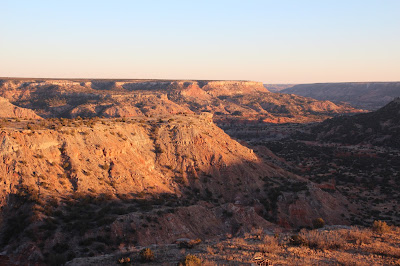
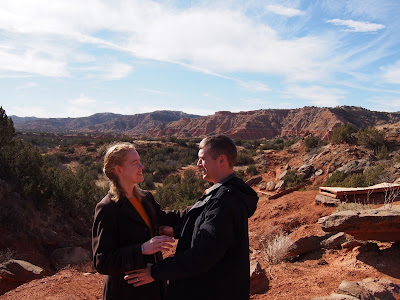
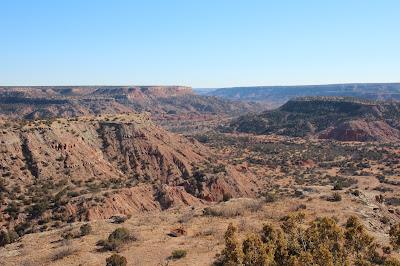
One week before the wedding, to Laura: Mono won t just clear up right away. One week before the wedding, to me: That s going to need stitches. Yes, not long before the wedding, Laura had come down with mononucleosis and I had cut into my finger with a very sharp knife while cutting bread requiring a trip to the emergency room to get stitches. Two days before we got married, instead of moving furniture, I was getting stitches out of my finger. It wasn t the kind of week we had planned. But it was the happiest, most amazing occasion I could have ever imagined. As I wrote last month, I am richly blessed indeed. Our wedding was three days after Christmas. The church was still decorated for Christmas, with the tree in on corner, glittering stars suspended in mid-air on cables from the walls, wreaths and candles in the windows, and it was a joy-filled day. Before the ceremony, we took pictures the only part of the day Jacob and Oliver weren t thrilled with. Nevertheless, we got some fun ones. Laura and I seem to know quite a few pastors between us and not just because Laura is a pastor. My brother officiated with the wedding vows, his wife with scripture and a prayer of blessing, and the church s pastor gave the message. Laura and I wrote in our wedding program, Music has long been a thread running through both our lives. We have enjoyed singing together, playing piano and pennywhistle duets, attending concerts, and even exploring old hymnals. Music is also one of the best ways to have a conversation even a conversation with God. We wrote a page in the program about each of the hymns that were a part of the wedding, and why we picked them. The combined church choirs of my home church and Laura s church sang John Rutter s beautiful arrangement of For the Beauty of the Earth (click here to listen to a different choir). Hearing For the beauty of each hour , For the joy of human love , and Lord of all, to thee we raise this our joyful hymn of praise was perfect for the day. It was with such great happiness that we walked out of the sanctuary, a married couple, to the sound of the congregation singing Joy to the World! Jacob and Oliver were so very excited on our wedding day. They happily explored the church while waiting for things to happen. We had them help us light our unity candle, and they were pleased with that. Jacob loved his suit, which made him look just like me. And they were, of course, delighted with the cake and in the middle of it all. For our honeymoon, we managed to get two weeks of vacation, and spent about half of it at home. We had looked at various options for retreats in the country, but eventually concluded that our house is a retreat in the country, so might as well enjoy it at home. We also went to the Palo Duro Canyon area near Amarillo in the Texas panhandle, staying in a small B&B in Canyon, TX. Palo Duro is the second-largest canyon in North America, and quite colorful year-round. What a beautiful place to go for our honeymoon! By the time we got there, Laura was getting past mono, and we went for hikes in the canyon on two different days hiking a total of 10 miles, including a hike up the side of the canyon. After we got back home, on the last weekday of our honeymoon, we went back to the Flint Hills of Kansas, to some of the same places we had spent our third date. We climbed the windy staircase at the Chase County Courthouse, the oldest courthouse still in use in Kansas. And peered out its famous oval window. We found the last remnant of the old ghost town of Elk, ate at the same restaurant we had that day. It brought back wonderful memories, and it was a good day in itself. Because even though it was a gold, drizzly, overcast day in January, this time, we were married. And this year, Thanksgiving is all year.

20 January 2014

Dirk Eddelbuettel: RProtoBuf 0.4.0: A whole lot of goodies and Windoze support

A new major release 0.4.0 of RProtoBuf, is now on CRAN. RProtoBuf provides GNU R bindings for the Google Protocol Buffers ("Protobuf") data encoding library used and released by Google, and deployed as a language and operating-system agnostic protocol by numerous projects. With this release, we are welcoming Jeroen Ooms to the team. Jeroen had already worked on some RProtoBuf extensions in the context of his OpenCPU project; we have now integrated those Protocol Buffers functions. And Jeroen pushed all the right buttons to finally get RProtoBuf built on everybody's least-favourite operating system by provding a static library for use by win-builder and CRAN. Murray once again did a lot of work on internals. His use of the LLVM tool llvm-format was particular helpful to make our coding style a little more consistent. The complete NEWS file entry for this release follows:
Changes in RProtoBuf version 0.4.0 (2014-01-14)
  • Changes to support CRAN builds for MS Windows.
  • Added functions serialize_pb, unserialize_pb, and can_serialize_pb plus documentation from Jeroen Ooms RProtoBufUtils package.
  • New dir inst/python with some Python examples.
  • Added Jeroen Ooms as author.
  • Vignettes have been converted to the R 3.0.0 or later use of external vignette builders, no longer need a Makefile
  • Added missing methods to dollar completion list for Message, Descriptor, EnumValueDescriptor, and FileDescriptor classes.
  • Add missing export for .DollarNames EnumValueDescriptor to allow completion on that class.
  • Add more than 15 additional pages to the main Intro vignette documenting better all of the S4 classes implemented by RProtoBuf, updating the type mapping tables to take into account 64-bit support, and documenting advanced features such as Extensions.
  • Added better error checking in EnumDescriptors to catch the case when wrong types are provided.
  • Updated the FileDescriptor name() method to accept a boolean for full paths just like the generic name() method.
  • Correct a bug that incorrectly dispatched as.character() when as.list() was called on Descriptor objects.
  • Update FileDescriptor $ dispatch to work properly for the names of fields defined in the FileDescriptor, instead of just returning NULL even for types returned by $ completion.
  • Added a reservation for extension fields in the example tutorial.Person schema.
  • Support setting int32 fields with character representations and raise an R-level stop() error if the provided string can not be parsed as a 32-bit integer, rather than crashing the R instance.
  • Update the project TODO file.
  • Add better documentation and tests for all of the above.
  • Corrected the handling of uint32 and fixed32 types in protocol buffers to ensure that they work with numbers as large as 2^32 - 1, which is larger than an integer can hold in R since R does not have an unsigned integer class. These values are stored as doubles internally now to avoid losing precision.
  • Added unit tests to verify behavior of RProtoBuf with extreme values for uint32 types.
  • Removed old exception handling code and instead rely on the more modern Rcpp::stop method maintained in Rcpp.
  • Add better error messages when setting a repeated field of messages to inform the user which element index was of the wrong type and what the expected type was.
  • Add an optional 'partial' argument to readASCII allowing uninitialized message fragments to be read in.
  • (internal) Added const qualifiers in more places throughout the C++ code for type safety.
  • (internal) Standardize coding conventions of the C++ files and run them through clang-format for consistency. A STYLE file has been submitted to R-Forge with details about the coding standards and how they are enforced with Emacs and clang-format.
  • Applied changes suggested by Kevin Ushey to the S4 class handling to support both the currently released Rcpp as well as the currently pending next version.
CRANberries also provides a diff to the previous release 0.3.2. More information is at the RProtoBuf page which has a draft package vignette, a 'quick' overview vignette and a unit test summary vignette. Questions, comments etc should go to the rprotobuf mailing list off the RProtoBuf page at R-Forge.

This post by Dirk Eddelbuettel originated on his Thinking inside the box blog. Please report excessive re-aggregation in third-party for-profit settings.

17 January 2014

Chris Lamb: Captain Phillips: Pontius Pirate

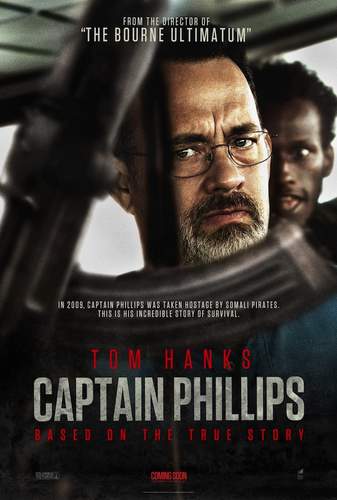
https://chris-lamb.co.uk/wp-content/2014/phillips_b.jpg Somalia's chief exports appear to be morally-ambiguous Salon articles about piracy and sophomoric evidence against libertarianism. However, it is the former topic that Captain Phillips concerns itself with, inspired by the hijacking of the Maersk Alabama container ship in 2009. What is truth? In the end, Captain Phillips does not rise above Pontius Pilate in providing an answer, but it certainly tries using more refined instruments than irony or leaden sarcasm. This motif pervades the film. Obviously, it is based on a "true story" and brings aboard that baggage, but it also permeates the plot in a much deeper sense. For example, Phillips and the US Navy lie almost compulsively to the pirates, whilst the pirates only really lie once (where they put Phillips in greater danger). Notice further that Phillips only starts to tell the truth when he thinks all hope is lost. These telling observations become even more fascinating when you realise that they must be based on the testimony of the, well, liars. Clearly, deception is a weapon to be monopolised and there are few limits on what good guys can or should lie about if they believe they can save lives.
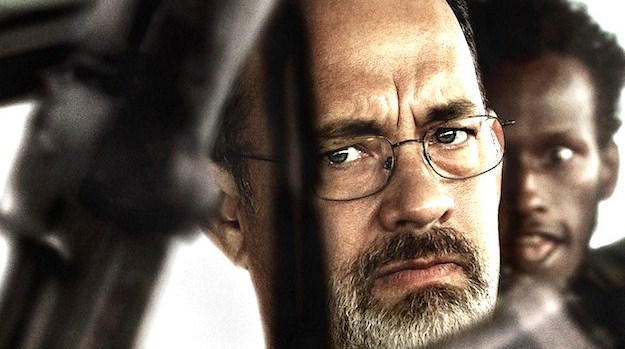
https://chris-lamb.co.uk/wp-content/2014/phillips_c.jpg

Even Phillip's nickname ("Irish") is a falsehood he straight-up admits he is an American citizen.

Futhermore, there is an utterly disarming epilogue where Phillips is being treated for shock by clinical efficient medical staff. Not only will this scuttle any "blanket around the shoulders" clich but is probably a highly accurate portrayal of what actually happens post-trauma. This echoes the kind of truth Werner Herzog aims for in his filmmaking as well his guilt-inducing duality between uncomfortable lingering and compulsive viewing. Lastly, a starter for a meta-discussion: can a film based on real-world events even be "spoilered"? Hearing headlines on the radio before you read your newspaper hardly robs you of a literary journey... Captain Phillips does have some quotidian problems. Firstly, the only tool for ratcheting up tension is for the Somalians to launch verbal broadsides at the Americans, with each compromise somehow escalating the situation. This technique is effective but well before the climatic rescue scene where it is really needed it has been subject to the most extreme diminishing returns. (I cannot be the first to notice the "Africans festooned with guns shouting incomphensively" trope I hope it is based on a Babel-esque mechanism of disorientation from miscommunication rather than anything more unsavoury.)
https://chris-lamb.co.uk/wp-content/2014/phillips_a.jpg

The racist idea that Africans prefer an AK-47 rotated about the Z-axis is socially constructed.

Secondly, the US Navy acts like a teacher with an Ofsted inspector observing quietly from the corner of the classroom; far too well-behaved it suspends belief, with no post-kill gloating or even the tiniest of post-arrest congratulations. Whilst nobody wants to see the Navy overreact badly to other military branches getting all the glory, nobody wants to see a suspiciously bland recruitment vehicle either. Paradoxically, this hermetic treatment made me unduly fascinated by them as if they were part of some military "uncanny valley". Two quick observations:
https://chris-lamb.co.uk/wp-content/2014/phillips_d.jpg

The drone footage: I'd love to write an essay about how Call of Duty might have influenced (or even be) cinema.

Finally, despite the title, the film is actually about two captains; the skillful liar Phillips and ... well, that's the real problem. Whilst Captain Muse is certainly no caricatured Hook, we are offered little depth beyond a "You're not just a fisherman" faux-revelation that leads nowhere. I was left inventing reasons for his akrasia so that he made any sense whatsoever. One could charitably argue that the film attempts to stay objective on Muse, but the inability for the film to take any obvious ethical stance actually seems to confuse and then compromise the narrative. What deeper truth is actually being revealed? Is this film or documentary? Worse still, the moral vacuum is invariably filled by the viewer's existing political outlook: are Somali pirates victims of circumstance who are forced into (alas, regrettable) swashbuckling adventures to pacify plank-threatening warlords? Or are they violent and dangerous criminals who habour an irrational resentment against the West, flimsily represented by material goods in shipping containers? Your improvised answer to this Rorschach test will always sit more haphazardly in the film than any pre-constructed treatment ever could. 6/10

Chris Lamb: Review: Captain Phillips (2013)

https://chris-lamb.co.uk/wp-content/2014/phillips_b.jpg Somalia's chief exports appear to be morally-ambiguous Salon articles about piracy and sophomoric evidence against libertarianism. However, it is the former topic that Captain Phillips concerns itself with, inspired by the hijacking of the Maersk Alabama container ship in 2009. What is truth? In the end, Captain Phillips does not rise above Pontius Pilate in providing an answer, but it certainly tries using more refined instruments than irony or leaden sarcasm. This motif pervades the film. Obviously, it is based on a "true story" and brings aboard all that well-travelled baggage, but it also permeates the plot in a much deeper sense. For example, Phillips and the US Navy lie almost compulsively to the pirates, whilst the pirates only really lie once where they put Phillips in greater danger. Notice further that Phillips only starts to tell the truth when he thinks all hope is lost. These telling observations become even more fascinating when you realise that they must be based on the testimony of the, well, liars. Clearly, deception is a weapon to be monopolised and there are few limits on what good guys can or should lie about if they believe they can save lives.

https://chris-lamb.co.uk/wp-content/2014/phillips_c.jpg

Even Phillip's nickname ("Irish") is a falsehood he straight-up admits he is an American citizen.

Lastly, there is an utterly disarming epilogue where Phillips is being treated for shock by clinical efficient medical staff. Not only will it scuttle any "blanket around the shoulders" clich but is probably a highly accurate portrayal of what actually happens post-trauma. This echoes the kind of truth Werner Herzog often aims for in his filmmaking as well his guilt-inducing duality between uncomfortable lingering and compulsive viewing. Another angle worthy of discussion: can a film based on real-world events even be "spoilered"? Hearing headlines on the before you read the newspaper hardly robs you of a literary journey... Captain Phillips does have some quotidian problems. Firstly, the only tool for ratcheting up tension is for the Somalians to launch verbal broadsides at the Americans, with each compromise somehow escalating the situation further. This technique is genuinely effective but well before the climatic rescue scene where it is really needed it has been subject to the most extreme diminishing returns. (I cannot be the first to notice the "Africans festooned with guns shouting incomphensively" trope I hope it is based on a Babel-esque mechanism of disorientation and miscommunication rather than anything, frankly, unsavoury.)
https://chris-lamb.co.uk/wp-content/2014/phillips_a.jpg

The racist idea that Africans prefer a AK-47 rotated about the Z-axis is socially constructed.

Secondly, the US Navy acts like a teacher with an Ofsted inspector observing quietly from the corner of the classroom; far too well-behaved it suspends belief, with no post-kill gloating or even the tiniest of post-arrest congratulations. Whilst nobody wants to see the Navy overreact badly to other military branches getting all the glory, nobody wants to see a suspiciously bland recruitment vehicle either. Paradoxically, this hermetic treatment made me unduly fascinated by them, as if they were part of some military "uncanny valley". Two quick observations:
https://chris-lamb.co.uk/wp-content/2014/phillips_d.jpg

The drone footage: I'd love to read (or write) an essay about how Call of Duty might have influenced cinema.

Finally, despite the title, the film is actually about two captains; the skillful liar Phillips and ... well, that's the real problem. Whilst Captain Muse is certainly no caricatured Hook, we are offered little depth beyond a "You're not just a fisherman" faux-revelation that leads nowhere. I was left inventing reasons for his akrasia so that he made any sense whatsoever. One could charitably argue that the film attempts to stay objective on Muse, but the inability for the film to take any obvious ethical stance actually seems to confuse and then compromise the narrative. What deeper truth is actually being revealed? Is this film or documentary? Worse still, the moral vacuum is invariably filled by the viewer's existing political outlook: are Somali pirates victims of circumstance who are forced into (alas, regrettable) swashbuckling adventures to pacify plank-threatening warlords? Or are they violent and dangerous criminals who habour an irrational resentment against the West, flimsily represented by material goods in shipping containers? Your improvised answer to this Rorschach test will always sit more haphazardly in the film than any pre-constructed treatment ever could. 6/10

Steve Kemp: So I found a job.

Just to recap my life since December:
I had worked with Bytemark for seven years and left for reasons which made sense. I started working for "big corp" with a job that on-paper sounded good, but ultimately turned out to be a poor fit for my tastes. I spent a month trying to decide "Is this bad, or is this just not what I'm used to?", because I was aware that there would obviously be big differences as well as little ones. At the point I realized some of the niggles could be fixed but most couldn't then I resigned, rather than prolong the initial probationary training period - because I knew I wouldn't stay, and it seemed unfair and misleading to stay for the full duration of the probationary period knowing full well I'd leave the moment it concluded - and the notice period switched from seven days to one month.
A couple of people were kind enough to get in touch and discuss potential offers, both locally, remotely in the UK, and from abroad (the latter surprised me, but pleased me too). I spent a couple of days "contracting", by which I really mean doing a few favours for friends, some of whom paid me in Amazon vouchers, and some of whom paid me in beer.
e.g. I tweaked the upcoming death Knight site to handle 3000 simultaneous HTTP connections, then I upgraded some servers from Squeeze to Wheezy for some other folk.
That aside I've largely been idle for about 10 days and have now picked the company to work for - so I'm going to be a contractor with a day-rate for an American firm for the next couple of months. If that goes well then I'll become a full-time employee, hopefully.

16 January 2014

Daniel Pocock: Get ready to try Debian SIP

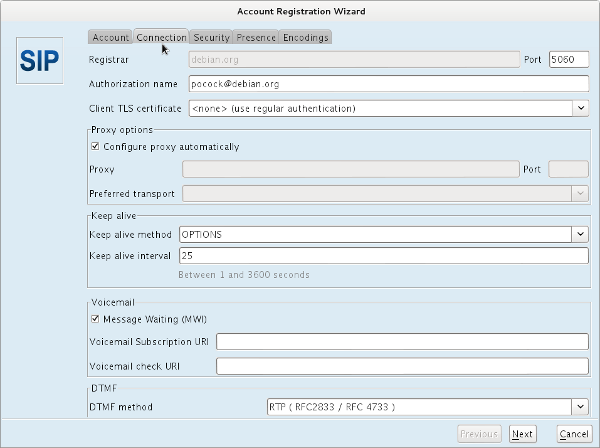
Before going on to talk about SIP, there is one really important thing that must be emphasized: XMPP/Jabber is also in the roadmap. Some of the infrastructure that has already been deployed (the new RTC passwords in ud-ldap, the TURN server and the RADIUS server) is good for both SIP and XMPP use cases. All to be revealed on Sunday As mentioned in my recent blog about the Debian.org NAPTR record, more details will be coming in my talk at mini-DebConf Paris this weekend. Today I'm just going to describe some things to install for those who want a head start. Jitsi Jitsi has been around for many years (originally as SIP Communicator) and it is probably the most advanced desktop softphone in the free software world. Jitsi packages are in jessie and sid - why not install them now. If you don't want to pull in dependencies from jessie on your wheezy system, you can also download from upstream and run it standalone. WebRTC browsers I've prepared a JSCommunicator implementation based on the jscommunicator-web-phone package. To use it, you need the latest version of Iceweasel/Firefox or Chromium. As HTML5 WebRTC / RTCPeerConnection is an evolving standard, using a recent browser is essential. Jitsi configuration for sip:debian.org It is not open for users just yet, but this is how you will configure it when it is available. More details to come...
AttachmentSize
step-4-setup-connection-scaled.png59.66 KB

15 January 2014

Russ Allbery: kadmin-remctl 3.6

Another minor tweak to the remctl backend for Kerberos administrative functions that we use at Stanford. This still isn't the long-awaited rewrite that might make this more generally useful outside of Stanford's specific requirements. This release adds support for setting a password expiration on newly-created accounts via a configuration setting in the local configuration file. The password expiration period can be configured per-instance. (Eventually, this should be handled via policy support instead, but this was easier for my immediate purposes.) This release also maps password quality error messages on create or reset_passwd to generic messages in the Heimdal backend. This is only of interest to sites such as ours that have patched Heimdal to do password quality checks for administrative actions as well as user-initiated password changes. The kadmin protocol unfortunately doesn't have a way to pass back the verbose password quality error. You can get the latest version from the kadmin-remctl distribution page.

14 January 2014

Keith Packard: gl-and-bitmaps

X bitmaps vs OpenGL Of course, you all know that X started life as a monochrome window system for the VS100. Back then, bitmaps and rasterops were cool; you could do all kinds of things simple bit operations. Things changed, and eventually X bitmaps became useful only off-screen for clip masks, text and stipples. These days, you ll rarely see anyone using a bitmap everything we used to use bitmaps for has gone all alpha-values on us. In OpenGL, there aren t any bitmaps. About the most bitmap-like object you ll find is an A8 texture, holding 8 bits of alpha value for each pixel. There s no way to draw to or texture from anything where each pixel is represented as a single bit. So, as Eric goes about improving Glamor, he got a bit stuck with bitmaps. We could either: I thought the latter choice would be the best plan directly share the same object between CPU and GPU rendering, avoiding all reformatting as things move around in the server. Why is this non-trivial? Usually, you can flip formats around with reckless abandon in X, it has separate bits-per-pixel and depth values everywhere. That s how we do things like 32 bits-per-pixel RGB surfaces; we just report them as depth 24 and everyone is happy. Bitmaps are special though. The X protocol has separate (and overly complicated) image formats for single bit images, and those have to be packed 1 bit per pixel. Within the server, bitmaps are used for drawing core text, stippling and creating clip masks. They re the lingua franca of image formats, allowing you to translate between depths by pulling a single plane out of a source image and painting it into a destination of arbitrary depth. As such, the frame buffer rendering code in the server assumes that bitmaps are always 1 bit per pixel. Given that it must deal with 1bpp images on the wire, and given the history of X, it certainly made sense at the time to simplify the code with this assumption. A blast from the past I d actually looked into doing this before. As part of the DECstation line, DEC built the MX monochrome frame buffer board, and to save money, they actually created it by populating a single bit in each byte rather than packed into 8 pixels per byte. I have this vague memory that they were able to use only 4 memory chips this way. The original X driver for this exposed a depth-8 static color format because of the assumptions made by the (then current) CFB code about bitmap formats. Jim Gettys wandered over to MIT while the MX frame buffer was in design and asked how hard it would be to support it as a monochrome device instead of the depth-8 static color format. At the time, fixing CFB would have been a huge effort, and there wasn t any infrastructure for separating the wire image format from the internal pixmap format. So, we gave up and left things looking weird to applications. Hacking FB These days, the amount of frame buffer code in the X server is dramatically less; CFB and MFB have been replaced with the smaller (and more general) FB code. It turns out that the number of places which need to deal with individual bits in a bitmap are now limited to a few stippling and CopyPlane functions. And, in those functions, the number of individual read operations from the bitmap are few in number. Each of those fetches looked like:
bits = READ(src++)
All I needed to do was make this operation return 32 bits by pulling one bit from each of 8 separate 32-bit chunks and merge them together. The first thing to do was to pad the pixmap out to a 32 byte boundary, rather than a 32 bit boundary. This ensured that I would always be able to fetch data from the bitmap in 8 32-bit chunks. Next, I simply replaced the READ macro call with:
    bits = fb_stip_read(src, srcBpp);
    src += srcBpp;
The new fb_stip_read function checks srcBpp and packs things together for 8bpp images:
/*
 * Given a depth 1, 8bpp stipple, pull out
 * a full FbStip worth of packed bits
 */
static inline FbStip
fb_pack_stip_8_1(FbStip *bits)  
    FbStip      r = 0;
    int         i;
    for (i = 0; i < 8; i++)  
        FbStip  b;
        uint8_t p;
        b = FB_READ(bits++);
#if BITMAP_BIT_ORDER == LSBFirst
        p = (b & 1)   ((b >> 7) & 2)   ((b >> 14) & 4)   ((b >> 21) & 8);
        r  = p << (i << 2);
#else
        p = (b & 0x80000000)   ((b << 7) & 0x40000000)  
            ((b << 14) & 0x20000000)   ((b << 21) & 0x10000000);
        r  = p >> (i << 2);
#endif
     
    return r;
 
/*
 * Return packed stipple bits from src
 */
static inline FbStip
fb_stip_read(FbStip *bits, int bpp)
 
    switch (bpp)  
    default:
        return FB_READ(bits);
    case 8:
        return fb_pack_stip_8_1(bits);
     
 
It turns into a fairly hefty amount of code, but the number of places this ends up being used is pretty small, so it shouldn t increase the size of the server by much. Of course, I ve only tested the LSBFirst case, but I think the MSBFirst code is correct. I ve sent the patches to do this to the xorg-devel mailing list, and they re also on the depth1 branch in my repository
git://people.freedesktop.org/~keithp/xserver.git
Testing Eric also hacked up the test suite to be runnable by piglit, and I ve run it in that mode against these changes. I had made a few mistakes, and the test suite caught them nicely. Let s hope this adventure helps Eric out as he continues to improve Glamor.

6 January 2014

Julien Danjou: Databases integration testing strategies with Python

The Ceilometer project supports various database backend that can be used as storage. Among them are MongoDB, SQLite MySQL, PostgreSQL, HBase, DB2 All Ceilometer's code is unit tested, but when dealing with external storage services, one cannot be sure that the code is really working. You could be inserting data with an incorrect SQL statement, or in the wrong table. Only having the real database storage running and being used can tell you that.
Over the months, we developed integration testing on top of our unit testing to validate that our storage drivers are able to deal with real world databases. That is not really different from generic integration testing. Integration testing is about plugging all the pieces of your software all together and running. In what I call "database integration testing", the pieces will be both your software and the database system that you are going to rely on. The only difference here is that one of the module is not coming from the application itself but is an external project. The type of database that you use (RDBMS, NoSQL ) does not matter. Taking a step back, what I will describe here could also apply to a lot of other different software modules, even something that would not be a database sytem at all. Writing tests for integration Presumably, your Python application has unit tests. In order to test against a database back-end, you need to write a few specific classes of tests that will use the database subsystem for real. For example:
import unittest
import os
import sqlalchemy

class TestDB(unittest.TestCase):
def setUp(self):
url = os.getenv("DB_TEST_URL")
if not url:
self.skipTest("No database URL set")
self.engine = sqlalchemy.create_engine(url)

This code will try to fetch the database URL to use from an environment variable, and then will rely on SQLAlchemy to create a database connection.
import unittest
import os
import sqlalchemy

import myapp

class TestDB(unittest.TestCase):
def setUp(self):
url = os.getenv("DB_TEST_URL")
if not url:
self.skipTest("No database URL set")
self.engine = sqlalchemy.create_engine(url)

def test_foobar(self):
self.assertTrue(myapp.store_integer(self.engine, 42))

You can then add as many tests as you want using the connection stored in self.engine. If no test database URL is, the tests will be skipped; however that decision is up to you. You may want to have these tests always run and fail if they can't be run. In the setUp() method, you may also need to do more work, like create a database and delete a database.
import unittest
import os
import sqlalchemy

class TestDB(unittest.TestCase):
def setUp(self):
url = os.getenv("DB_TEST_URL")
if not url:
self.skipTest("No database URL set")
self.engine = sqlalchemy.create_engine(url)
self.connection = self.engine.connect()
self.connection.execute("CREATE DATABASE testdb")

def tearDown(self):
self.connection.execute("DROP DATABASE testdb")

This will make sure that the database you need is clean and ready to be used to testing. Launching modules, a.k.a. databases
The main problem we encountered when building integration testing with databases, is to find a way to start them. Most users are used to start them system-wide with some sort of init script, but when running sandboxed tests, that is not really a good option. Browsing the documentation of each storage allowed us to find a way to start them in foreground and control them "interactively" via a shell script. The following is a script that you can use to run Python tests using nose and is heavily inspired by the one we wrote for Ceilometer.
#!/bin/bash
set -e

clean_exit()
local error_code="$?"
kill -9 $(jobs -p) >/dev/null 2>&1 true
rm -rf "PGSQL_DATA"
return $error_code


check_for_cmd ()
if ! which "$1" >/dev/null 2>&1
then
echo "Could not find $1 command" 1>&2
exit 1
fi


wait_for_line ()
while read line
do
echo "$line" grep -q "$1" && break
done < "$2"
# Read the fifo for ever otherwise process would block
cat "$2" >/dev/null &


check_for_cmd mongod

trap "clean_exit" EXIT

# Start PostgreSQL process for tests
PGSQL_DATA= mktemp -d /tmp/PGSQL-XXXXX
PGSQL_PATH= pg_config --bindir
PGSQL_PATH /initdb $ PGSQL_DATA
mkfifo $ PGSQL_DATA /out
$ PGSQL_PATH /postgres -F -k $ PGSQL_DATA -D $ PGSQL_DATA &> $ PGSQL_DATA /out &
# Wait for PostgreSQL to start listening to connections
wait_for_line "database system is ready to accept connections" $ PGSQL_DATA /out
export DB_TEST_URL="postgresql:///?host=$ PGSQL_DATA &dbname=template1"

# Run the tests
nosetests

If you use tox to automatize your test run, you can use this scripts (I call it run-test.sh) in your tox.ini file.
[testenv]
commands = toxinidir /run-tests.sh posargs

Most databases are able to be run in some sort of standalone mode where you can connect to them using a either a Unix domain socket, or a fixed port. Here are the snippet used in Ceilometer to run with MongoDB and MySQL:
# Start MongoDB process for tests
MONGO_DATA=$(mktemp -d /tmp/MONGODB-XXXXX)
MONGO_PORT=29000
mkfifo $ MONGO_DATA /out
mongod --maxConns 32 --nojournal --noprealloc --smallfiles --quiet --noauth --port $ MONGO_PORT --dbpath "$ MONGO_DATA " --bind_ip localhost &>$ MONGO_DATA /out &
# Wait for Mongo to start listening to connections
wait_for_line "waiting for connections on port $ MONGO_PORT " $ MONGO_DATA /out
export DB_TEST_URL="mongodb://localhost:$ MONGO_PORT /testdb"

# Start MySQL process for tests
MYSQL_DATA=$(mktemp -d /tmp/MYSQL-XXXXX)
mkfifo $ MYSQL_DATA /out
mysqld --datadir=$ MYSQL_DATA --pid-file=$ MYSQL_DATA /mysql.pid --socket=$ MYSQL_DATA /mysql.socket --skip-networking --skip-grant-tables &> $ MYSQL_DATA /out &
# Wait for MySQL to start listening to connections
wait_for_line "mysqld: ready for connections." $ MYSQL_DATA /out
export DB_TEST_URL="mysql://root@localhost/testdb?unix_socket=$ MYSQL_DATA /mysql.socket&charset=utf8"

The mechanism is always the same. We create a fifo with mkfifo, and then run the database daemon with the output redirected to that fifo. We then read from it until we find a line stating the the database is ready to be used. At that point, we can continue and start running the tests. You have to read continuously from the fifo, otherwise the process writing to it will block. We redirect the output to /dev/null, but you could also redirect it to a different log file, or not at all. One step further: using parallelism and scenarios The described approach is quite simple, as it only support one database type. When using an abstraction layer, such as SQLAlchemy, it would be a good idea to run all these tests against different RDBMS, such as MySQL and PostgreSQL for example. The snippet above allows to run both RDBMS in parallel, but the classic approach of unit tests does not allow that. Using one scenario for each database backend would be a great idea. To that end, you can use the testscenarios library.
import unittest
import os
import sqlalchemy
import testscenarios

load_tests = testscenarios.load_tests_apply_scenarios

class TestDB(unittest.TestCase):
scenarios = [
('mysql', dict(database_connection=os.getenv("MYSQL_TEST_URL")),
('postgresql', dict(database_connection=os.getenv("PGSQL_TEST_URL")),
]

def setUp(self):
if not self.database_connection:
self.skipTest("No database URL set")
self.engine = sqlalchemy.create_engine(self.database_connection)
self.connection = self.engine.connect()
self.connection.execute("CREATE DATABASE testdb")

def tearDown(self):
self.connection.execute("DROP DATABASE testdb")

$ python -m subunit.run test_scenario   subunit2pyunit
test_scenario.TestDB.test_foobar(mysql)
test_scenario.TestDB.test_foobar(mysql) ... ok
test_scenario.TestDB.test_foobar(postgresql)
test_scenario.TestDB.test_foobar(postgresql) ... ok

---------------------------------------------------------
Ran 2 tests in 0.061s

OK

To speed up tests run, you could also run the test in parallel. It can be intesting as you'll be able to spread the workload among a lot of different CPUs. However, note that it can require a different database for each test or a locking mechanism to be in place. It's likely that your tests won't be able to work altogether at the same time on only one database. (Both usage of scenarios and parallelism in testing will be covered in The Hacker's Guide to Python, in case you wonder.)
The Hacker's Guide to Python
A book I'm writing that will be launched soon, talking about designing Python applications, state of the art, and various Python tips. If you want to be the first to hear about the launch, subscribe now.

Gunnar Wolf: Pan Latin American Hashomer, 18 years later

Pan Latin American Hashomer, 18 years later
In 1994/1995, I spent probably the most unique and memorable year of my life with the people of several Zionist youth movements in Israel, working in a kibutz, learning in Jerusalem... In 1995, after most of my group returned to Mexico, I stuck with the newly arrived South American group of Hashomer Hatzair (plus some affiliates). We were 18-19. And 18-19 years later, here we are: Fabi n (from Buenos Aires) and Fabiana (from Montevideo), living in Buenos Aires, with two kids. Regina (from Paran ) and me (from Mexico), living in Mexico, no kids yet. Two couples. Three countries. Four cities. And a lovely evening. And the hopes to stay in touch, to meet every year when we come to visit Argentina.

5 January 2014

Jonathan Carter: Happy 2014!

So, it s 2014 and I still haven t migrated away from WordPress to using something fancy written in Python. But who cares? Life is great and I ve made good progress in lots of other areas :) I m getting fitter by the day, last year I joined a running club and I now play squash too, which is working so much better than just going to the gym. Also finally making progress with learning how to play guitar, another ancient goal of mine that had slow progress for a while. It helps that I now live on my own and can make noise whenever I want to. I m also going for lessons every Wednesday and have some plans to convert my spare room in to a music room. I ve also gotten into beer brewing. I attended Beerschool via Beerlab, my first batch of American Pale Ale is just about ready for bottling and I ll probably do that next weekend. What else? Well, this year I definitely want to be more focused in my free software contributions than in 2013. I want to get my Debian contributions flowing well again with the aim of becoming a Debian Maintainer. Also planning to go to Debconf in Portland, Oregon in August. Then there s LTSP which is working towards LTSP 6, which will see a huge shift in proper support for local processing and less on thin client support. Not sure how far my involvement will stretch there but I m certainly very interested and will do my best to make the LTSP hackfest later in the year. The next 2-3 months will need the most focus on Edubuntu. The 14.04 LTS release will be a big release and the single-sign-on directory infrastructure that will be released along with it will mark a big milestone for the project. Well, to anyone still reading my blog, have a great 2014!

Next.

Previous.