Search Results: "mak"

1 September 2010

Raphaël Hertzog: Free and opensource software to Flattr

Flattr FOSS LogoSince I published How to make 110.28 EUR in one month with free software and Flattr , quite a few people joined the movement and I had less troubles finding projects to Flattr. That s great! :-) Without further ado, here are my recommendations for september:
  1. Smuxi is an IRC application that integrates from the start the need to be permanently connected. You can run the engine on a server and the graphical interface connects there. The engine has all the intelligence so it remembers what message you last saw in each channel (including highlights) and you won t miss anything. I recently switched to it and I like it. It s not perfect but it s improving quickly. The next version even supports Ubuntu s messaging indicator for better integration with the desktop.
  2. Geshi is a PHP class used by many other software to provide enhanced views of code on web pages by coloring the various parts based on the syntax of the respective programming language. It s used by Wikipedia, many blog plugins and lots of other web applications.
  3. Git-buildpackage is a set of tools developed by Guido G nther to make it easier to maintain Debian packages in Git repositories. I use it for several packages that I maintain.
  4. Mixare is an augmented reality browser. Take your Android phone and it will incrust information in the (camera) view of the environment. Impressive video on the website.
  5. Lightspark is is a modern flash player implementation targetting ActionScript 3.0 support (while Gnash only supports older versions). It s one of those few projects that are really needed to get rid of the non-free Adobe plugin that almost everybody installs because there s nothing else that work well enough.
This article is part of the Flattr FOSS project.
Flattr this Share/Bookmark 10 comments Support my work

Russell Coker: Optimising the How To Vote Process

I previously wrote about my experience handing out How To Vote (HTV) cards at the federal election a couple of weeks ago [1]. One comment noted that at one polling place all the volunteers for different candidates had combined into a single team, handing out all the cards together , which makes sense. There is some advantage in forcing cards on people, some people decide who to vote for once they are inside the polling booth based on information on the HTV cards (a couple of voters stated an intention to do so which disappointed the politically aware people who hand out the HTV cards). But for most voters there is no benefit in competing to hand them a HTV card. Some of the comments expressed a dislike of being subjected to people handing out HTV cards. As a voter I don t particularly like having a group of conflicting people wanting to hand me a HTV card either. Also it is obviously a waste of resources to hand out so much cardboard that goes to waste (particularly the Liberal and Labor parties that use glossy non-recycled paper). I think that the ideal solution would be to have the officials at the polling booths hand out HTV cards on request. A voter would have to specifically request the card from a party and the poll officials would not be able to offer them a selection, sorry I can t tell you who is running for election, but if you express a desire to vote for a particular party I can give you a card instructing you how to do so . The parties would be responsible for providing the HTV cards (according to strict specifications regarding the acceptable sizes), and if the supply runs out then the officials would decline requests. This could even be made self-financing by making the parties who want their cards distributed pay for a fraction of the wages of the people who hand out the cards, if each polling place had one person handing out the HTV cards at a salary of $500 for the day and there were 5 parties cards to hand out then each party would have to pay $100. The reduced print runs for HTV cards would probably save each party more than $100. Something like this should satisfy the real need of voters who want advice on how to support their preferred party while not annoying the voters who know how to vote without any assistance. I expect that most members of the parties would be in favor of this idea. The only reason we go to the significant amount of effort and expense to hand out the HTV cards is because everyone else is doing so.

Maximilian Attems: fjp

Frans Pop contributions to Debian has already been honoured: Frans Pop obituary by Steve McIntyre. One less known fact is that he hacked in upstream linux-2.6 too. Latest linux-2.6 git lists him with 80 commits. A bigger part of his work was testing latest linux-2.6 on different architectures. There are lots of patches with "Reported-by: Frans Pop <elendil>" and "Tested-by: Frans Pop <elendil>". Also in this field he was aiming for big coverage and a special responsive tester. I am very sad to have missed the opportunity to meet you in person. You are missed. Rest in peace, my friend.

31 August 2010

Luke Faraone: Generating manpages with help2man

To quote the ftp-masters REJECT-FAQ :

What may not be obvious to the recently REJECTed developer is actually how to use help2man. To try t0 explain the process a bit more verbosely, I took the liberty of writing a tutorial on the Debian wiki. Comments and corrections are welcome.

Of course, help2man-generated manpages are no substitute for real, hand-written manpages made of sweat, blood, and the Maintainer s tears, and it won t work for all packages. This is just a start, and is much better than no manpages at all.

There was a discussion on #debian-devel a couple of days ago when I brought up my creation of the above, and some wondered if it wouldn t be better to add hooks to man-db to allow package maintainers to enable manpage generation at runtime. I m not sure if that idea will ever make it into a proposal, but, if the details of the implementation were worked out, would be much better than the above, manually generated method.

Joey Hess: swarmnation story

Swarmnation is a neat game, but I'm not sure if it's for the reasons its authors intended. It may be interesting mostly because of its bugs. Read on for spoilers and the story that developed from an apparently abstract time waster game. When I first saw the game, I saw a grid of squares moving around. I was obviously one: A (Blue) Square. There seemed to be no pattern to the movements. So, it seemed the game represented random passers-in-the-night on the net, unable to communicate except by dashing back and forth. Then after a few minutes, a geometric shape was highlighted in yellow from out of the mass of squares. Woah! I'd been missing something here. It turned out my display was too small, and I had not noticed that the gameboard scolled over to show a tetris-style "next shape" display. Which the other squares had been busily trying to make before time ran out. Now all their movements made sense. Now with a shared goal, we could communicate. Some of us were trolls and blocked shapes from forming. A few of us became leaders, boldly taking that center position in the hollow-square-with-spot-in-the-middle shape. Most of us herded into place as soon as a shape began to form, and stayed there, frantically hoping our neighbors would also conform and keep property values high. We were playing the game. We were accumulating scores. We split into two groups, both playing the game, and then some of us defected from one group to the other, which seemed to be doing better at making a particular shape, and there was no reason to go back to that first group, I felt strongly that I was part of the second, better, group. Then, as I was getting bored and feeling the neighbors all around stifling, I noticed my square highlighted yellow for a shape that I was not currently part of. Oh, this must be a bug I thought. I hacked around, and got it to happen again. I thought maybe it was just being a bit fuzzy in accepting shapes, but no, it turned out to be more interesting. The game didn't care if we stayed in the shape. Just being part of the shape for an instant was enough. With this realization, whole new ways to play the game opened up. Dash left and right, near a forming shape, and you'll probably, for an instant, be part of it. Hang back and have your fun, spot an instant to plug a hole, and then get out and let someone else also take part. Try to form the same shape in both groups. And so on. So a grid of squares hooked up to keyboards on the net has let me watch the invention of politics, rebel from conformity and hack the system, in an hour? That's what games are about!

Iustin Pop: Spooky harddrive

For a couple of weeks, one of the harddrives in my server has started to behave strangely. The RAID controller has started first reporting some drive timeouts (daily, when the drive runs a short or long smart test), and now it even kicks it out of the (RAID1) array. And yet, during normal operation, there's no read error or write error that I can trigger, and there are no reallocated sectors (according to smart). The only time when I can reproduce the error is: What happens when both these conditions are met? The the SMART query is taking ages (as in ~20-30 seconds). This might cause some such high delays that the drive itself will report a timeout error (if any I/O takes place at the same time), and log an error in its internal error log. Another harddrive (identical brand): ~3s for SMART query during selftest and I/O load, no issues whatsoever. For this harddrive, smartctl -a reads a while, and then:
Error SMART Error Self-Test Log Read failed: Input/output error
Smartctl: SMART Self Test Log Read Failed
 
real    0m39.029s
The timeout above also has generated lots of errors in the drive's error log. I don't know how to read these properly, but in any case they don't seem too scary:
Error 144 occurred at disk power-on lifetime: 13552 hours (564 days + 16 hours)
  When the command that caused the error occurred, the device was doing SMART Offline or Self-test.
  After command completion occurred, registers were:
  ER ST SC SN CL CH DH
  -- -- -- -- -- -- --
  10 51 00 80 ae 39 40
  Commands leading to the command that caused the error were:
  CR FR SC SN CL CH DH DC   Powered_Up_Time  Command/Feature_Name
  -- -- -- -- -- -- -- --  ----------------  --------------------
  61 80 70 80 ae 39 1c 08  41d+08:07:45.052  WRITE FPDMA QUEUED
  b0 d0 01 00 4f c2 00 08  41d+08:07:45.038  SMART READ DATA
  ec 00 01 00 00 00 00 08  41d+08:07:44.958  IDENTIFY DEVICE
  2f 00 01 10 00 00 00 08  41d+08:07:44.957  READ LOG EXT
  61 80 70 80 ae 39 1c 08  41d+08:07:37.960  WRITE FPDMA QUEUED
For some of the errors, all preceding commands are WRITE FPDMA QUEUED, but all are during a "SMART Offline or Self-test" phase. When a self-test is not being done, reading all the SMART data (smartctl -a) is very very quick, taking half a second. The only thing I can think of is that the drive's own area for storing SMART data is unhealthy, and reading it takes time, and a concurrent SMART test and I/O load makes it hard for the drive to do so. But again, I can't trigger any real I/O error, nor at the beginning of the drive neither at the end, so This also happens when the drives is connected to a plain SATA port, skipping the RAID controller, so it's not just the controller playing games on me. I'm really confused now. Given my previous experience, this drive will die, should already have died, and yet, no I/O errors, just some timeouts. Do I just need to wait a couple more weeks?

30 August 2010

Steve Kemp: jQuery in use upon this blog

Blog Update
I've just updated the home-grown javascript I was using upon this blog to be jQuery powered. This post is a test. I'll need to check but I believe I'm almost 100% jQuery-powered now.
AJAX Proxies
It is a well-known fact that AJAX requests are only allowed to be made to the server the javascript was loaded from. The so-called same-origin security restriction. To pull content from other sites users are often encouraged to write a simple proxy:
  • http://example.com/ serves Javascript & HTML.
  • http://example.com/proxy/http://example.com allows arbitrary fetching.
Simples? No. Too many people write simple proxies which use PHP's curl function, or something similar, with little restriction on either the protocol or the destination of the requested resource. Consider the following requests:
  • http://example.com/proxy.php?url=/etc/passwd
  • http://example.com/proxy.php?url=file:///etc/passwd
If you're using some form of Javascript/AJAX proxy make sure you test for this. (ObRandom: Searching google for inurl:"proxy.php?url=http:" shows this is a real problem. l33t.)
ObQuote: "You're asking me out? That's so cute! What's your name again? " - 10 things I hate about you.

Tim Retout: Hacking

Here in the UK we've had a bank holiday weekend. Usually I would have gone to Cambridge for the Debian BBQ, but this year I joined forces with Thomas Adam for some SmoothWall Express on Debian hacking. There are several challenges involved in moving the SWE3 code from its native distribution to Debian; this weekend we worked around some of the permissions problems. On SWE3, the web server and most of the service daemons run as the user 'nobody'. This means that the web server can write out configuration files as the same user as everything else; it can also read the system log files. When the web interface needs to run a privileged action (like setting firewall rules), it sends a command to 'smoothd', which is a daemon running as root. (Admin ssh access is always directly as the root user.) However, web servers in Debian tend to run as user 'www-data', which does not have permission to read log files. Similarly, writing out configuration files as that user would mean that any cgi script (not just ones in the swe3 package) could modify them. I would prefer to run the swe3 cgi scripts as a separate user, and grant this user permission to view logs etc. This debian-webapps thread makes it sound very easy, but if you want to do that with cgi scripts rather than fastcgi, I think you have to run a separate web server for each user. On Sunday afternoon, in a dramatic display of corner-cutting, I gave up on that approach and added www-data to the 'adm' and 'proxy' groups in the postinst. Thomas heroically patched all the cgis to call the "config writers" via smoothd, although I'm wondering whether some careful use of the chgrp command in the postinst might be better than running that code as root. Another hack: in order to actually start a firewall, we needed to know which network card is the "RED" interface, in SWE3 terms; i.e. which one is meant to be the public-facing network device. It's also nice to know which one is "GREEN". So two debconf questions and some hardcoded magic numbers later, we have a basic firewall init script. Lovely. Oh, and at some point I removed the htaccess file, so any user on your network can mess with your firewall. Should probably fix that. Today I started some awful scripts which use Simple-CDD to build an iso containing all the packages we want. We are going to need to extend the networking configuration in the installer to set up multiple network cards. Then we need to figure out a nicer way of assigning IP addresses to devices; unlike on the proprietary version of the product, there seems to be no web configuration of network settings in Express. I've not figured all of this out yet. So, in summary: we are deliberately trading some technical debt in order to quickly produce an initial release that might interest people. (But please note the disclaimer of warranty in the README file in that directory.) And in other news, I've been working at Smoothwall Ltd. for just over one year. Hmm. So this is what they call 'experience'.

Mart&iacute;n Ferrari: Some LaTeX stuff

The last few weeks I have been using LaTex a lot, to write the final report for my master's course. During that period I found a couple of LaTeX goodies that might be interesting to share: the memoir class, gnuplot integration, and some stuff to help preparing cover pages. The memoir class is a kind of all-in-one package. It is meant to be used in place of the book and report classes, but it can also replace simpler environments, such as article. It provides many ready-to-use templates, and loads of commands to easily customize them. It seems to be specially tailored for dead-tree publication, dedicating an entire chapter in the manual to page layout. It also aims at removing the usual cruft you have to add into any medium sized project, it is macro-compatible with: abstract, appendix, array, booktabs, ccaption, chngcntr, chngpage, dcolumn, delarray, enumerate, epigraph, framed, ifmtarg, ifpdf, index, makeidx, moreverb, needspace, newfile, nextpage, parskip, patchcmd, setspace, shortvrb, showidx, tabularx, titleref , titling, tocbibind, tocloft, verbatim, and verse. Furthermore, it provides functionality equivalent to the following packages: crop, fancyhdr, geometry, sidecap, subfigure, titlesec. In the end, you have a project that only needs a couple of packages, and a few customisation commands, which is nice and also eases distribution. Other nice thing I have found is that there is not one, but many ways of merging gnuplot graphs into your text while having LaTeX typeset all the labels. There is some LaTeX packages aimed at this, but I have more success using a special gnuplot terminal. Again, there is more than one option: eepic, epslatex, latex, lua, mp, pslatex, pstex, pstricks, texdraw, and tpic. While I could not try them all, I tried a few and the easiest and prettiest was epslatex. This terminal creates two files: a EPS file, as would have been created with the usual postscript terminal, except that it does not contain any text; and a LaTeX snippet meant to be included with \input foo . Finally, I could generate graphs that match the rest of the document! To end this post, a couple of things about creating the dreaded cover page. First, a suggestion: don't fret too much about finding a ready-made template, once you understood the basics of how to insert arbitrary spaces around text, it is quite easy to roll your own cover! Having said that, the memoir manual has some sample cover pages that can be useful to use as a base, and there is another really useful resource I have found: titlepages.pdf, a collection of 40 sample title pages with source code for you to choose. Tags: Planet Debian, Planet Lugfi, latex

Rapha&#235;l Hertzog: Understanding Membership Structures in Debian and Ubuntu

Debian and Ubuntu have a set of official membership roles that can be granted to regular contributors. Those roles come with rights that enable the contributors to do their work and to participate in the project governance (elections and other official decision-making processes). It s also a way for the distributions to acknowledge the work done: most contributors are proud of the status they reached. The membership structure plays an important role in the development of a distribution: it defines the kind of contributors that are welcome in the project, it sets expectations of the project towards its contributors and defines their rights. In the end, this shapes the project s ability to recruit new contributors to keep the project alive and kicking. This article introduces the existing statuses in Debian and Ubuntu, and defines the sometimes confusing jargon associated with them. The Debian Case Debian only has two types of official members: Debian Developers (DD) and Debian Maintainers (DM). The rights of the developers are codified in the Debian Constitution while those of the maintainers have been defined in a general resolution of 2007. The Debian Maintainer status is still mostly documented in a wiki page. The integration of this new status in Debian s official processes has been slow to come largely because it was introduced at that time without enough negotiation with the involved parties. Nowadays, it is preferred that people get the DM status before applying for DD. DM is a very limited role: maintainers can only upload packages that already have their name on them (either in the Maintainer or Uploaders field) and a specific flag (DM-Upload-Allowed: yes) that only Debian Developers can add. They have no other rights and limited access to Debian s resources. Besides those official roles, there are also maintainers of packages that have no official status within Debian except that they are listed in the Maintainer field of the package. They are doing the maintenance work but all uploads are done by a Debian Developer after verification of the work done (this is called sponsorship and is the only way to start with official packaging work). Once the DD trusts the maintainer, the developer will typically ask the maintainer to apply for DM status in order to be relieved from the sponsorship work. In the end, that makes three different kind of package maintainers and a lot of confusion when you discuss membership issues in particular when the New Maintainer process is the path that you follow to become a Debian Developer. Don t be fooled by the names when reading Debian s documentation! The Ubuntu Case Ubuntu had, from the start, an official Ubuntu Member status that includes all contributors: developers of course, but also documentation writers, artists, translators, etc. This status notably grants the right to vote in elections of the Community Council, the right to participate on Planet Ubuntu, and the @ubuntu.com email alias. For developers, the situation is more complicated: the wiki page lists no less than five different statuses. Initially, developers were split between Ubuntu Core Developers and the MOTU (Masters Of The Universe). The latter were responsible of the universe/multiverse sections of the archive while the former also had upload rights for the main/restricted sections. But, inspired by the Debian Maintainers concept and facing concrete problems in terms of archive management, they changed their infrastructure to offer more fine-grained control on package uploads. Ubuntu can now grant upload permissions on a package-per-package basis, but it can also delegate the right to grant upload permissions with the same granularity. This lead to the new Per-Package Uploader status which is simply an Ubuntu Member with upload rights on a limited set of packages where they have a specific expertise. The more generic Ubuntu Developers status now encompasses members of various development teams that have been delegated the right to manage upload permissions on a (usually large) package set (the current teams are Ubuntu Desktop, Mythubuntu, Kubuntu, and Edubuntu). Those teams can define their own policy to add new members provided they follow the basic rules defined by the Developer Membership Board (see this wiki page). Ubuntu Contributing Developer is an intermediate status for someone who is not yet ready for one of the other developer statuses but who has still shown enough commitment to be an Ubuntu Member. All those statuses can be obtained in a similar way: you prepare a wiki page listing your past contributions, you collect testimonials from existing members that you have worked with, you add yourself in the agenda of the next meeting of the board (or council) that grants the status that you seek, and you attend the meeting. The members of the board will decide whether you are ready for the status (or not) based on what you provided in the wiki, based on your answers during the meeting (and on a mailing-list for developers), and based on what others have to say about you. The most important boards are usually elected by the community while others are commonly appointed by the community council. Those governance bodies include Canonical employees but not as many as one would expect: two out of eight in the Developer Membership Board, two out of eight in the Community Council, but all six members of the Technical Board. The last figure, while not intended, is not surprising given the high expectations set on potential members of the technical board. Mark, as the founder, is the only person to have a permanent seat on both the Community Council and the Technical Board. Comparison of the Statuses Between Debian and Ubuntu The following table summarizes the rights given to each developer role in the two projects (Put the mouse over the abbreviations to know what they are referring to).
Rights Debian Ubuntu
DM DD UM PPU/UD MOTU UCD
Package maintenance via sponsorshipYN/AYYYN/A
Official email alias-YYYYY
Participate in votes for members-YYYYY
Participate in votes for developers-Y-YYY
Upload rights restricted to pre-approved packagesY--Y--
Upload rights restricted to a section of the archive----Y-
Unlimited upload rights-Y---Y
Number of contributors (as of 2010-07-27)117904462278563
Please note that the number of contributors are not 100% accurate for Ubuntu. A contributor can have multiple statuses (direct membership to a launchpad group) granted over time (while gaining experience). The problem has been mostly avoided by calculating differences between number of members of the various groups but it s not perfect and it can t be: some MOTU are also PPU for packages in main and it s legitimate (but I only counted them as MOTU and not as PPU). Another limitation is that members of some administrative teams are included indirectly in many teams and thus appear in the count while they should not. Anyway, this simple table makes it obvious that Ubuntu s structure offers a broader choice of statuses. They acknowledge the work of all contributors from the start while still giving the most critical rights only to those who have proven that they deserve them. Despite this difference, Debian still has a significant advantage in terms of number of developers. That number does not tell the whole story though: the Ubuntu contributors include many Canonical employees (e.g. 36 out of 63 core developers have a @canonical.com email registered on their launchpad account) that are likely to spend more time working on the distribution than the average Debian member. But even if comparing person-hours would be a challenging thought experiment, in practice it s of not much interest if both projects continue to cooperate and if more and more of the contributions flow in both directions. Debian is aware of the shortcomings of its structure. Changes to better accommodate non-packagers have been discussed several times already. The last efforts in that direction were unfortunately perceived as a solution ready to go rather than a proposal to be discussed, and the project got quickly buried by a general resolution (GR). Even if that resolution invited for further discussion and a new proposal, the truth is that when someone s initiative is corrected by way of GR, it usually kills any motivation to go forward. Possible Evolution? On the Ubuntu side, the infrastructural changes were completed recently and they don t expect any further change in the near future. They do plan, however, to expand usage of those new features so that more teams benefit from the possibility to control upload rights on packages that are relevant to them, and so that more individuals developers apply to become Per-Package Uploaders on packages that they know very well. On the Debian side, a recent discussion on the debian-project list brought back the topic of the bad terminology and it was agreed that the New Maintainer process should be renamed into something else ( New Developer process has been suggested). But Christoph Berg Debian Account Manager and hence heavily involved in the New Maintainer Team suggested that Debian would be better off implementing the long-awaited membership changes before trying to update all the documentation. It would certainly imply some more vocabulary updates. Later in the discussion, he confirmed that membership reform is on the top of the TODO list of the new maintainer team (just after the rewrite of the nm.debian.org website). What can be expected from this reform? The following answers are my own guesses based on my experience of Debian, but the project hasn t decided anything yet. Almost two years have elapsed since the previous efforts in that direction, the new maintainer team has recruited new members and is in a general better shape. Hopefully, the next episode of this saga will have a better outcome.
This article was first published in Linux Weekly News. In a comment, Mark Shuttleworth tried to explain how the Ubuntu community is being setup.
Flattr this Share/Bookmark 10 comments Support my work

29 August 2010

Steve Kemp: Proxies and Robots

I don't like repeating myself, but I'm very tempted to past my mini-review of the Roomba Vacuum Cleaner robot into this blog. Instead I will practise restraint and summerise: 250. Worth. Every. Penny. In more Debian-friendly news I've been fighting HTTP proxies today. I've noticed a lot of visitors to the various websites I host are logged as 127.0.0.1 - which is an irritation. My personal machine looks like this:
Internet -> Apache listening on *:80 -> thttpd on 127.0.0.1:xxxx
(This has been documented previously - primarily it is a security restriction. It means I can run per-UID web-servers.) I had previous added a patch to thttpd to honour the X-Forwarded-For: header - so that it would receive the correct remote address passed on from Apache. However the fact that so many visitors are logged as coming from 127.0.0.1 meant it wasn't working 100% correctly, and I wanted to understand why. Today I used ngrep to capture the incoming headers and the source of the problem became apparent:
skx:~# ngrep  -d lo  X-For ' port 1007'
..
T 127.0.0.1:41886 -> 127.0.0.1:1007 [AP]
  GET /about/ HTTP/1.1..Host: images.steve.org.uk..If-Modified-Since: Mon, 07
   Jun 2010 15:24:33 GMT..User-Agent: Mozilla/5.0 (X11; U; Linux x86_64; en-U
  S; rv:1.9.1.10) Gecko/20100701 Iceweasel/3.5.10 (like Firefox/3.5.10)..Acce
  pt: text/html,application/xhtml+xml,application/xml;q=0.9,*/*;q=0.8..Accept
  -Language: en-us,en;q=0.5..Accept-Encoding: gzip,deflate..Accept-Charset: I
  SO-8859-1,utf-8;q=0.7,*;q=0.7..Referer: http://images.steve.org.uk/2009/11/
  20/img_0471.html..X-Forwarded-For: 127.0.0.1, 11.22.33.123..Cache-Control:
  max-age=0..X-Forwarded-Host: images.steve.org.uk..X-Forwarded-Server: image
  s.steve.org.uk..Connection: Keep-Alive....
I bolded the important input; just in case that didn't jump out it was:
X-Forwarded-For: 127.0.0.1, 11.22.33.123
My patch to thttpd was making it read the first address, rather than the second - which meant that requests were being logged as coming from 127.0.0.1 and avoiding my efforts to track sources. Now I understand the problem - The X-Forwarded-Host header is being tweaked by a proxy server, such as Squid, upstream of my server. For the moment I've updated the thttpd patch to read:
        else if ( strncasecmp( buf, "X-Forwarded-For:", 16 ) == 0 )
            char *tmp = NULL;
            /* Jump to the header-value  */
            cp = &buf[16];
            cp += strspn( cp, " \t" );
            /*
             * If the first change is a 127.0.0.1, then we'll
             * jump over it.  Cope with Squid, et al.
             */
            if (  ( tmp = strstr( cp, "127.0.0.1, " ) ) != NULL )
              cp = tmp + strlen( "127.0.0.1, " );
            /* Parse the IP */
           inet_aton( cp, &(hc->client_addr.sa_in.sin_addr) );
         
That's not perfect, but the alternative would be: Or something equally hacky and security-by-obscurity-alike. Really I just want a simple way of always getting the correct remote IP. Shouldn't be so hard, should it? *pout*. ObQuote: "You don't mess with fate, Peanut. People die when they are meant to die. There's no discussion. There's no negotiation. When life's done, it's done." - Dead Like Me.

Bastian Blank: New software: python-dvdvideo

After a long time, I decided to write again. I decided to start with software I wrote for my own usage that could be usefull for other people. I'll start with python-dvdvideo, a DVD-Video reader written in Python 3, and the reference tool dvd-video-backup-image, a generic DVD-Video dumper. Lets see, if this blog will see more postings in the future.
Intention I started to write this software, because libdvdread was often unable to decipher my newly purchased video DVDs. libdvdread expects a rather valid structure of the filesystem and other metadata on the disk. It will forcefully bail out on several error conditions. So I often ended patching libdvdread to make dvdbackup able to read the new disks. Usually there are two ways to create backups of such DVDs, as files or complete images. Dumping them as files have large problems if there are certain defects in the filesystem, like some space is referenced in several titlesets. I have a disk that produces 25GiB of output during such a dump. So the less problematic way to do that is to dump the complete image. That is the way I used in the tool I built on top of this.
Parts The software is devided into several parts. First a small UDF reader. On top of this comes a DVD video reader. It makes use of libdvdcss wrapper. All of this is used to implement a small tool to dump whole images. I will describe this parts here.
UDF reader The UDF reader implements a minimal set of features. I implemented only the stuff I found as needed and used in the available DVDs. This reader allows to read the lowlevel UDF, used as base of all video DVDs.
DVD video reader The dvd video reader uses the UDF reader to get the necessary information from the disk. Again this reader is quiet smallish. It only trusts the UDF for the starts of titlesets and expects that anything else is listed in the info files. This allows to read even discs with broken filesystems, which are really common.
libdvdcss wrapper The libdvdcss wrapper is implemented using ctypes. The ctypes library allows easy access to functions defines in shared object. The library allows calling of the functions and maps arguments and return values to the Python datatypes. This wrapper allows me to read also encrypted DVDs.
Image dumper This tool allows to dump a encrypted video DVD into a file. It tries to detect encrypted (video/vob files) and unencrypted (info files, otherwise used space) parts of the disk. This way it is able to dump anything, as long as it can read the filesystem and info files. However, some discs contains overlapping areas, which can't be that easily deguised. The tool includes a small conflict resolver that handles overlapping parts. It uses a set of rules to allow some types to coexist and some to be modified. On of the rules relabels things included in an info files but also a title vob as always unencrypted. With this resolver, most of the problems can be handled and we get a playable result.
License and distribution This package is licensed GPL 3 or later. It is for new distributed via Alioth.
Conclusion This tool allows me to dump all video DVDs I got my hands on in the last time. It allows me to watch the videos on my notebook that have no optical disc reader on its own. Maybe someone may need such a tool also.

Bernd Zeimetz: the guruplug server plus - major design and qa fail

As a lot of people are coming to my blog to read the installing instructions for Debian on the GuruPlug Server Plus, I shall not hide my opinion about it: It is a major design and QA fail. Don't waste your money on it.
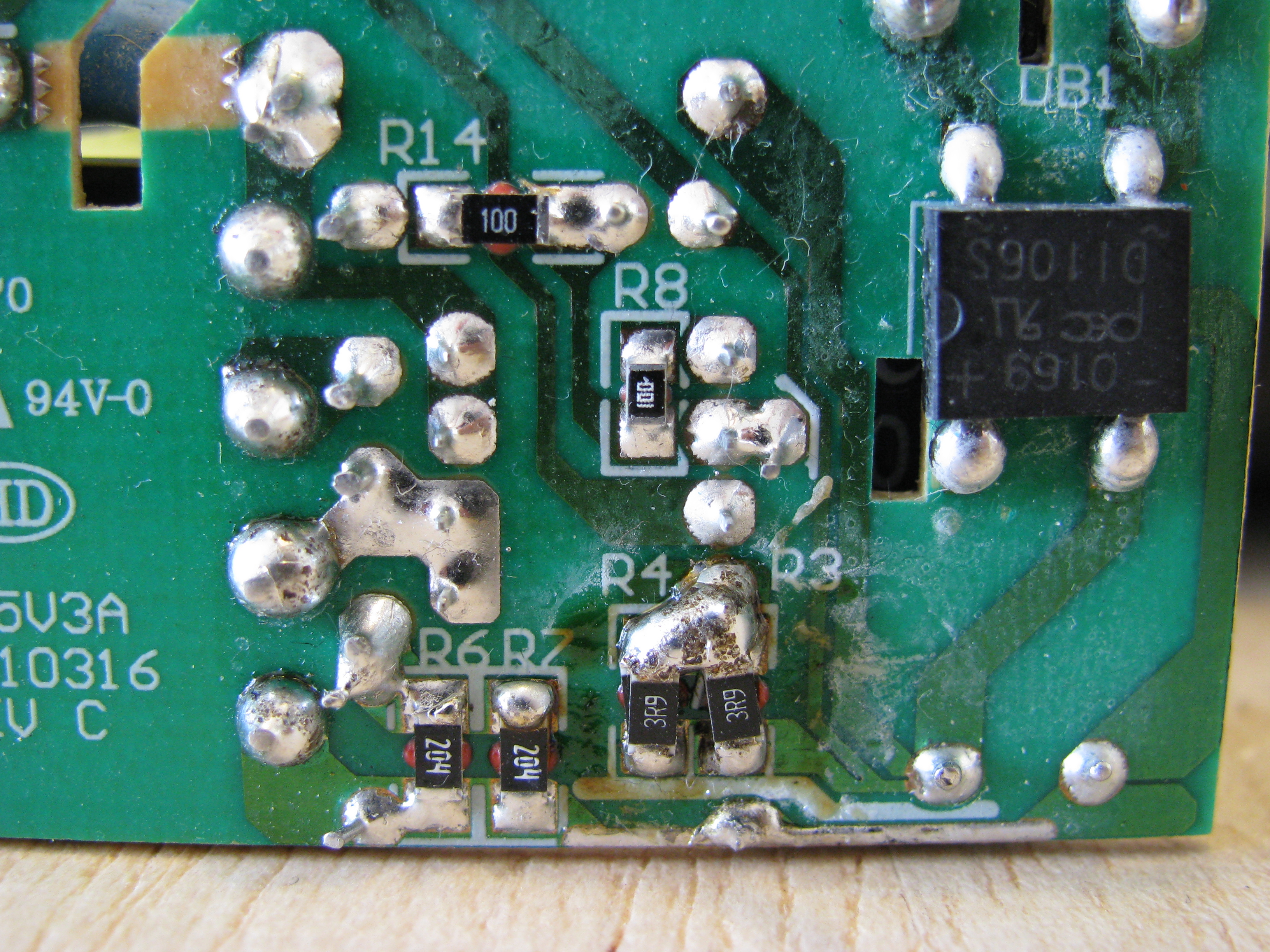
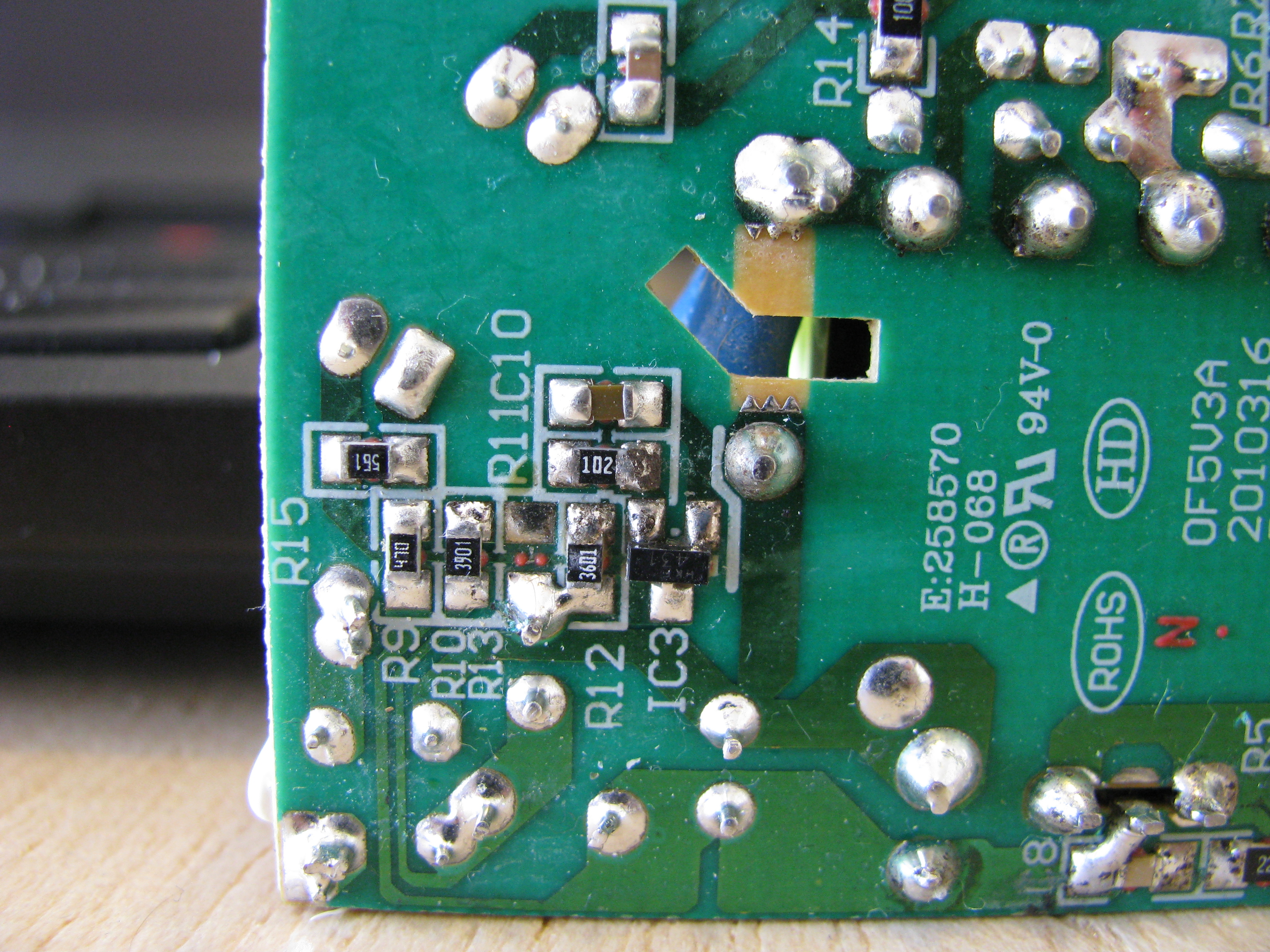
The power supply Although I've ordered the Guruplug pretty early with the promise, that I'd have it in April, it arrived at the end of May due to QA issues with the power supply. While I appreciate that they didn't deliver broken power supplies, I would have preferred not to receive one which was "fixed" by somebody who uses the soldering iron like an axe. Here are some macro photos to show the gory details: GuruPlug Server Plus PSU 1 GuruPlug Server Plus PSU 2 GuruPlug Server Plus PSU 3

Software issues The version of UBoot which shipped with the device was only able to boot from NAND and network. Booting from USB failed and ext2 support was missing, too. Didn't have a look if the community came up with a fixed UBoot version yet, but in my opinion a piece of hardware for >100 EUR should not have such flaws.

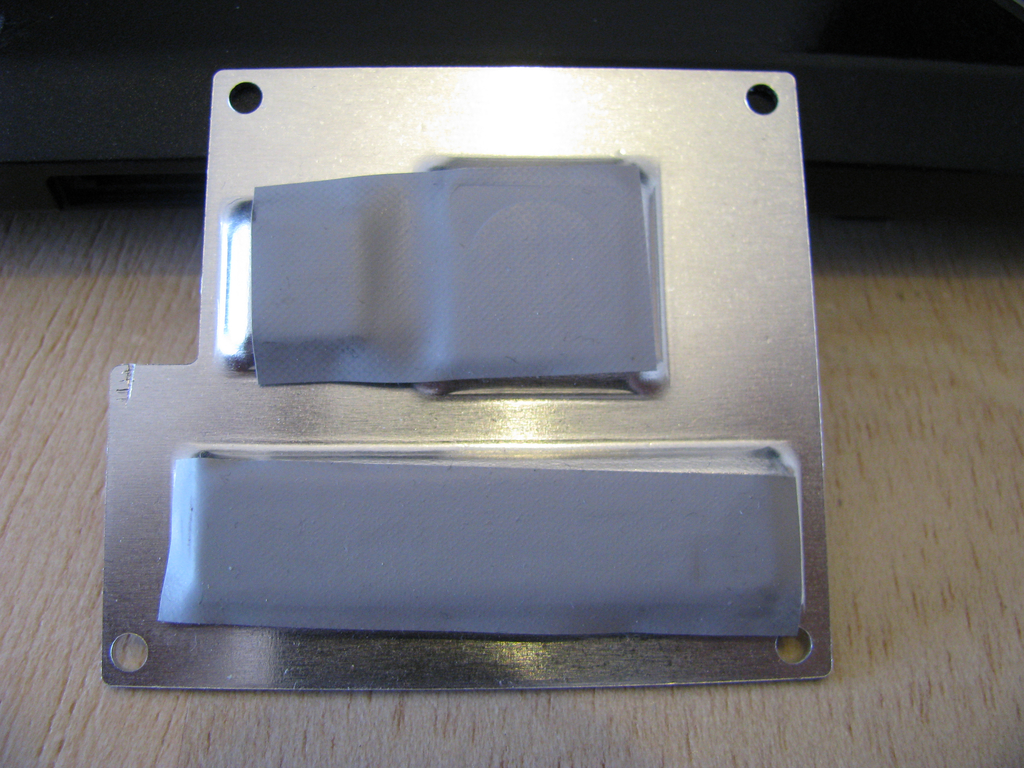
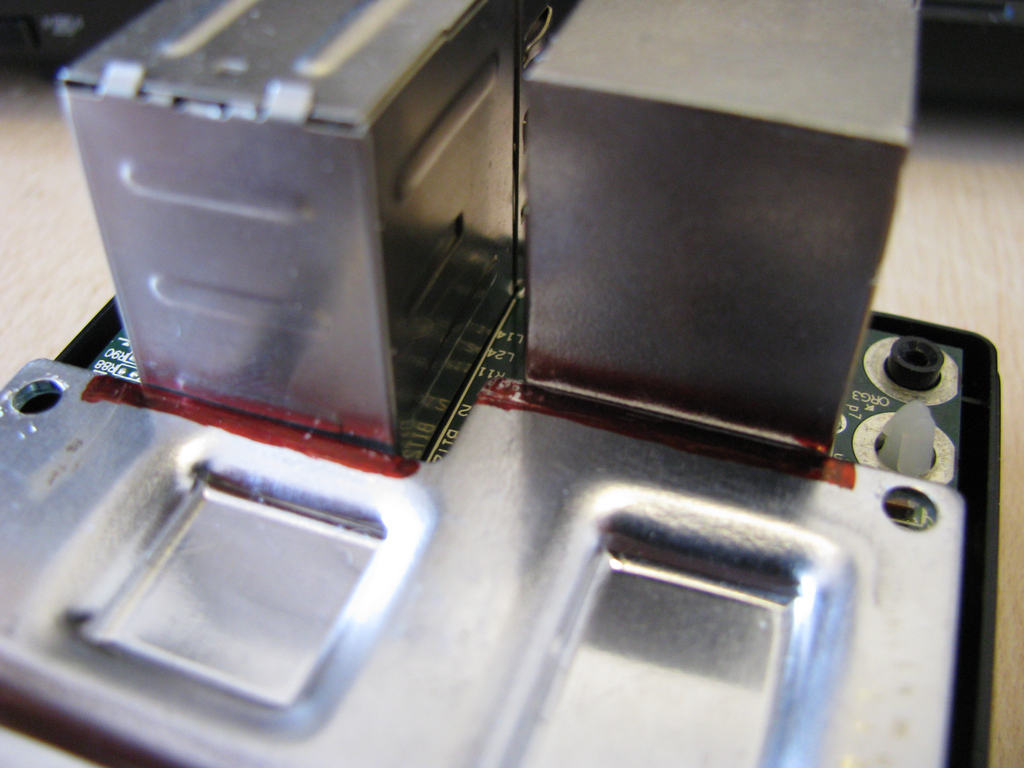
Thermal issues Using the Guruplug with more than one 100 MBit/s connection is just not possible, as it would toast itself to death. For the details have a look at this discussion in the NewIT forum, it links to a lot of interesting photos and postings. This issue is a major design and QA failure. Even without knowing what the datasheets say, it is easy to imagine that a thin piece of alloy is not the proper way to cool a CPU and network chip. Especially not when it is mounted with cheapish pads instead of a proper paste. GuruPlug Server Plus Cooling 1 As it seems the plan was to send the heat to the shielding of the network/USB/eSata ports (the area is marked red as my first plan was to remove that part of the alloy and reuse the heat-spreader), a strong indication for that is that this is the only area with holes for air circulation. I could imagine that it was not possible to have these holes next to the PSU, which was mounted above the heat-spreader, to avoid electrical shocks. GuruPlug Server Plus Cooling 2 As there was no other opening for the heat to leave the case, even the microSD card became pretty hot - I've measured temperatures around 60 deg. C next to the card - while CPU and 100MB/s network were idling. The official information from GlobalScale Technologies is that only 10/100MBit/s should be used as workaround to avoid overheating until a "Professional Upgrade Kit" is released. As mentioned here the upgrade kit announcement was removed silently from GST's website. To be honest, this doesn't make me wonder. There is no way to fix the Guruplug with an external fan or any other external magic as the only way to fix it is to cool the CPU and networking chip properly. There are various workarounds for the cooling issues posted to the forums. I've decided to rip out the power supply and heat spreader out of the case and get a nice external PSU. The new connector is mounted, ready to supply the GuruPlug's board with power. GuruPlug Server Plus power connector Currently I'm waiting for the new heat sinks and glue to arrive. Then I'll give it a try to mount eveything in the small case again, probably with some additional air holes. As soon as I have a workign solution, I'll blog about it again.

Bernd Zeimetz: the guruplug server plug - major design and qa fail

As a lot of people are coming to my blog to read the installing instructions for Debian on the GuruPlug Server Plus, I shall not hide my opinion about the Guruplug Server Plus: It is a major design and QA fail. Don't waste your money on it.
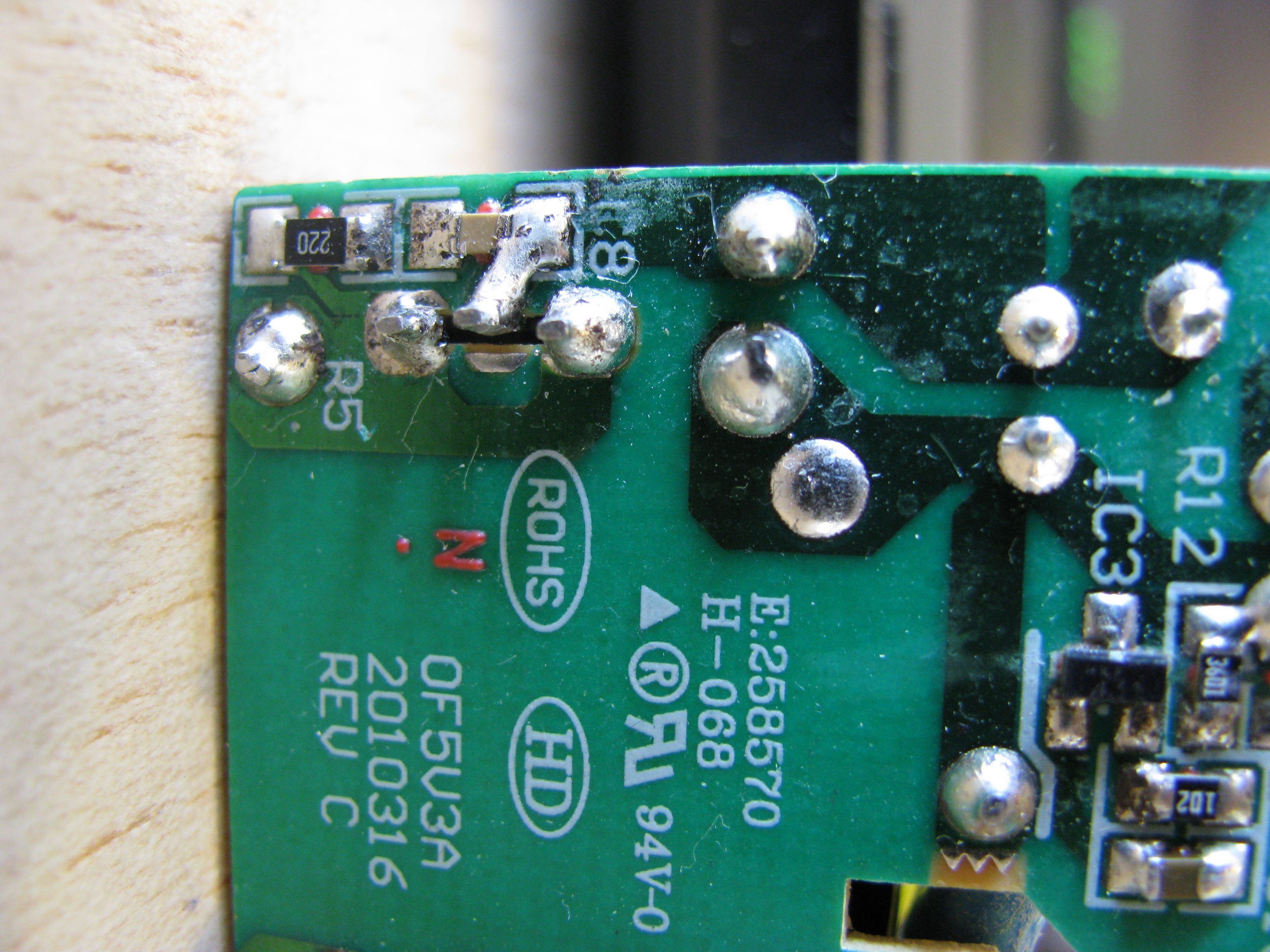
The power supply Although I've ordered the Guruplug pretty early with the promise, that I'd have it in April, it arrived at the end of March due to QA issues with the power supply. While I appreciate that they didn't deliver broken power supplies, I would have preferred not to receive one which was "fixed" by somebody who uses the soldering iron like an axe. Here are some macro photos to show the gory details: GuruPlug Server Plus PSU 1 GuruPlug Server Plus PSU 2 GuruPlug Server Plus PSU 3

Software issues The version of UBoot which shipped with the device was only able to boot from NAND and network. Booting from USB failed and ext2 support was missing, too. Didn't have a look if the community came up with a fixed UBoot version yet, but in my opinion a piece of hardware for >100 EUR should not have such flaws.

Thermal issues Using the Guruplug with more than one 100 MBit/s connection is just not possible, as it would toast itself to death. For the details have a look at this discussion in the NewIT forum, it links to a lot of interesting photos and postings. This issue is a major design and QA failure. Even without knowing what the datasheets say, it is easy to imagine that a thin piece of alloy is not the proper way to cool a CPU and network chip. Especially not when it is mounted with cheapish pads instead of a proper paste. GuruPlug Server Plus Cooling 1 As it seems the plan was to send the heat to the shielding of the network/USB/eSata ports (the area is marked red as my first plan was to remove that part of the alloy and reuse the heat-spreader), a strong indication for that is that this is the only area with holes for air circulation. I could imagine that it was not possible to have these holes next to the PSU, which was mounted above the heat-spreader, to avoid electrical shocks. GuruPlug Server Plus Cooling 2 As there was no other opening for the heat to leave the case, even the microSD card became pretty hot - I've measured temperatures around 60 deg. C next to the card - while CPU and 100MB/s network were idling. The official information from GlobalScale Technologies is that only 10/100MBit/s should be used as workaround to avoid overheating until a "Professional Upgrade Kit" is released. As mentioned here the upgrade kit announcement was removed silently from GST's website. To be honest, this doesn't make me wonder. There is no way to fix the Guruplug with an external fan or any other external magic as the only way to fix it is to cool the CPU and networking chip properly. There are various workarounds for the cooling issues posted to the forums. I've decided to rip out the power supply and heat spreader out of the case and get a nice external PSU. The new connector is mounted, ready to supply the GuruPlug's board with power. GuruPlug Server Plus power connector Currently I'm waiting for the new heat sinks and glue to arrive. Then I'll give it a try to mount eveything in the small case again, probably with some additional air holes. As soon as I have a workign solution, I'll blog about it again.

28 August 2010

Romain Francoise: An update on md5sums, and Debian's growth

Back in August 2007 I looked at the state of embedded md5sums in Debian packages and found that approximately 3% of the files in the archive didn't have checksums. Three years later, things have improved: only 0.76% of the archive is now missing checksums (sid, main/contrib/non-free). (See this lintian report for the list of affected packages.) Since then there's also been various discussions on this subject and there is now a policy bug open to make md5sums a requirement (at the "should" level). There is also a wishlist bug against debhelper to turn dh_md5sums into dh_checksums with a stronger hash algorithm, but MD5 still being good enough for simple integrity checking, it seems rather pointless to upgrade the algorithm without a trust path in the form of in-package signatures ala RPM... Anyway, what's perhaps more surprising is the growth of the distribution in only three years: sid has gone from 20774 to 30314 packages, a 45% increase. Similarly, the number of regular files has gone from approximately 2 million to just above 2.9 million. Indeed, looking at our last five releases, the distribution's growth is impressive: Whether or not that is a good thing is, of course, yet to be determined. As a data point, I used the UDD to know how many of these thousands of packages are actually used, and to my surprise, 22321 binary packages have a popcon installation count that is less than 500! (By comparison, dpkg's installation count is 89393.) So while each new release adds lots of packages, the majority of them have very few users. (If you want to check yourself, the query I used is select p.package, version, insts from packages p, popcon where (p.architecture = 'i386' or p.architecture = 'all') and p.release = 'squeeze' and p.package = popcon.package and popcon.insts < 500 order by insts;.)

Maximilian Attems: Release of klibc-1.5.20

This release fixes an important ipconfig regression from Lenny due to a badly tested monster patch 4efbcf90f60. ipconfig should now perform better then ever, thanks to the inflow of fixes since Lenny release. This RC fixes are scheduled for Squeeze and it already landed in Sid. 1.5.19 had no release announcement, but fixed compilation on x86_32, the syscall handling on sh4 (initramfs-tools is said to boot fine with it), valgrind ipconfig warnings and added getrusage() for the mksh port. Thanks to hpa for giving me the official co-maintenance of klibc. Thanks to all contributors. P.S.: See klibc git repo.

27 August 2010

Colin Watson: Windows applications making GRUB 2 unbootable

If you find that running Windows makes a GRUB 2-based system unbootable (Debian bug, Ubuntu bug), then I'd like to hear from you. This is a bug in which some proprietary Windows-based software overwrites particular sectors in the gap between the master boot record and the first partition, sometimes called the "embedding area". GRUB Legacy and GRUB 2 both normally use this part of the disk to store one of their key components: GRUB Legacy calls this component Stage 1.5, while GRUB 2 calls it the core image (comparison). However, Stage 1.5 is less useful than the core image (for example, the latter provides a rescue shell which can be used to recover from some problems), and is therefore rather smaller: somewhere around 10KB vs. 24KB for the common case of ext[234] on plain block devices. It seems that the Windows-based software writes to a sector which is after the end of Stage 1.5, but before the end of the core image. This is why the problem appears to be new with GRUB 2. At least some occurrences of this are with software which writes a signature to the embedding area which hangs around even after uninstallation (even with one of those tools that tracks everything the installation process did and reverses it, I gather), so that you cannot uninstall and reinstall the application to defeat a trial period. This seems like a fine example of an antifeature, especially given its destructive consequences for free software, and is in general a poor piece of engineering; what happens if multiple such programs want to use the same sector, I wonder? They clearly aren't doing much checking that the sector is unused, not that that's really possible anyway. While I do not normally think that GRUB should go to any great lengths to accommodate proprietary software, this is a case where we need to defend ourselves against the predatory practices of some companies making us look bad: a relatively small number of people do enough detective work to realise that it's the fault of a particular Windows application, but many more simply blame our operating system because it won't start any more. I believe that it may be possible to assemble a collection of signatures of such software, and arrange to avoid the disk sectors they have stolen. Indeed, I have a first draft of the necessary code. This is not a particularly pleasant solution, but it seems to be the most practical way around the problem; I'm hoping that several of the programs at fault are using common "licence manager" code or something like that, so that we can address most of the problems with a relatively small number of signatures. In order to do this, I need to hear from as many people as possible who are affected by this problem. If you suffer from this problem, then please do the following: I hope that this will help me to assemble enough information to fix this bug at least for most people, and of course if you provide this information then I can make sure to fix your particular version of this problem. Thanks in advance!

Gunnar Wolf: No sense in caring for a hard disk

  1. Aug 27 06:00:15 lafa kernel: [7218302.960003] sd 1:0:0:0: [sdb] Add. Sense: No additional sense information
  2. Aug 27 06:00:15 lafa kernel: [7218302.960003] sd 1:0:0:0: [sdb] Sense Key : No Sense [current]
My hard drive does not currently make any additional sense.

Richard Darst: DebConf budgeting for a single conference

My last post discussed the year-to-year budgeting of DebConf. This post discusses what makes budgeting difficult within one particular DebConf. Since every DebConf is unique in its arrangements, the particular difficulties always vary year-to-year. For example, DebConf10 was easy in that Software in the Public Interest was in the same country so that we had easy access to bank accounts, but more difficult venue payment logistics. I'll use DebConf10 as an example below.
For DebConf10, we get our venue "for free" thanks to the support of the Columbia Computer Science department. However, we had to pay for guard costs after building hours, and custodial costs. For custodial costs at least, we had to go through many layers of bureaucracy, and people kept insisting it would be more than they quoted. (It ended up being about half, since DebConf attendees were so responsible!)DebConf sponsors many attendees. This means that all their food and accommodation costs are paid by us. We have sponsored registration and reconfirmation deadlines to set a maximum of the number of people we have to sponsor, but people are continually dropping out and it's hard to know just how many people to reserve for. Sponsored people won't always eat every meal with us, and usually won't decide until the day before - so figuring out food amounts is hard, too. Furthermore, we have unsponsored people who will want food and accommodations (paying themselves) which we must somehow plan for.Different venues operate on different payment rules. This year, CU Housing was fairly strict on asking for attendee counts and room assignments two weeks in advance. Then, as time gets closer, they got more flexible, and in the end told us that they will, in fact, only charge based on number of people actually attending - a huge win for us. Similarly with CU Dining, we had to go through great lengths to make sure that we would pay only for meals we ate. At CU, food had to be paid in advance, but accommodation and other costs are paid afterwards.We have to guess how much will be spent on miscellaneous supplies once DebConf starts. We have to then decide how much to spend on extras such as the day trip or conference dinner, and how to sponsor those, if possible.Debian (and thus DebConf) has money held in trust in many currencies in different accounts. Different sponsors will pay to different currencies, depending on what is convenient for them. This means that we need to consider fluctuating currency conversion rates, and decide if and when to transfer money. In general, DebConf hasn't transfer money just to make sure the DebConf-tagged money gets spent first. Some surpluses are best left in other countries to help pay future travel sponsorship since it is expensive to move money out of the country. Some conferences may result in a net movement of money from USA to Europe (more donors in one, more expenses in the other), some the other way around.Travel sponsorship is in the form of reimbursement. These can take many months to have the documentation received from attendees and the reimbursements all sent out, and thus finalizing the budget and surplus for next year.The overall principle we've tried to stick to is plan for a balanced budget in the worst case scenario, and then be happy when it ends up better than that.
At the DebConf&Debian BOF, someone mentioned how budgeting for any (free software) conference is hard. I think that's certainly true. Some of the registration fluctuations could be made easier by being less flexible, but DebConf wants to serve our attendees even if it is a bit of extra work for us. Each DebConf will have its own ways budgeting is difficult, but things have always work out, and usually with a bigger surplus than we were expecting.Tags: debconf

Russell Coker: Links August 2010

Urban Honking has an insightful article about the Arduino and suggests that it is one of the most important factors for the development of the computer industry in the near future [1]. It compares the Arduino to the Altair. Wired has an interesting article about a company that provides a satellite kit and a launch into low Earth orbit for $8000 [2]. Arduino in space? Linux Journal has an interesting article by David Rowe about the Mesh Potato which is a Wifi mesh router that also runs VOIP [3]. One particularly interesting aspect of this article is the explanation of the way they designed and tested it. Susan Shaw gave an informative TED talk about the toxic effects of the attempts to clean up the oil spill in the Gulf of Mexico [4]. It seems that trying to disperse the oil just makes it worse, and the chemical companies are refusing to disclose the chemicals that are being used. The New York Times has an interesting article by David Leonhardt about the value of pre-school teachers [5]. Some research on the difference that good teachers can make in economic terms suggests that the make an economic difference to the children to the value of $320,000 per annum (IE a class of 16 children who were taught for a year would on average each receive a benefit of $20,000 over their lifetime). Also there are social benefits which aren t counted by that study. While I can t imagine pre-school teachers getting paid $320,000 any time soon, it does seem obvious that good teachers deserve significantly better pay. Of course one problem is how to determine which teachers are good, better test results are not a reliable indication. Paul Krugman describes America as being on the unlit, unpaved road to nowhere due to the policies of saving money by cutting funding for schools, street-lights, and roads [6]. The Chive has an amusing post about how to quit a bad job [7]. It would be good if someone really did this, I m sure that there are enough creative people who don t like their job. Hell Pizza in New Zealand published a zombie themed choose your own adventure on Youtube [8]. Unfortunately the options to choose the next segment don t work on HTML5 with Chromium so if you don t have flash you miss out. AskThePilot.com has an informative essay about airline security written by a commercial pilot [9]. The anecdote about the pilot not being allowed to take the type of knife that is issued to first and business class passengers is rather amusing. FredOnEverything.net has an interesting analysis of Wikileaks and why the Pentagon and Fox News hate it [10]. Fred is a very skillful writer, while he s not the first person to say some of these things he may have said it best. The Wikipedia page on Borosilicate glass (which is best known under the trademark Pyrex) is really interesting [11]. Borsilicate glass was formerly known as Duran and it s main characteristic that makes it suitable for lab use is resistance to Thermal Shock, but it s also harder and has a higher melting point. Apparently you can get Pyrex drinking glasses, I want some! Eben Moglen gave an interesting talk Freedom in the Cloud about the development of free servers to manage personal data and replace Facebook etc (among many other things) [12]. The Debian Wiki has an articla about designing such a system [13]. The APNIC published an interesting paper on IPv4 background radiation [14]. Apparently some /24 s receive so much random traffic (from broken applications and viruses) that they can t be delegated. IPv6 will solve this problem by making it infeasible to scan all IP addresses. Also it s interesting to note the excessive amounts of traffic to 1.0.168.192 which is from applications too broken to correctly send data to 192.168.0.1 which have been installed by sysadmins who are too incompetent to watch what is being sent out of their network.

Next.

Previous.