Search Results: "ag"

6 April 2015

Eddy Petrișor: HOWTO: Dnsmasq server for network booting using TFTP and DHCP

Dnsmasq is a very lightweight server that besides the expected DNS caching functionality, it also offers DHCP and TFTP functionality in a single binary.

This makes it very useful if one needs to network boot a system since you can have the TFTP and DHCP part of the setup done easily, and only add NFS for a complete network boot.

Add to that that

One extra nice thing dnsmasq has is that it can mark specific hosts, addresses or ranges with some internal markers, then use those markers as symbolic names to apply settings based for classes of devices.

In the configuration snippet below, there is a rule I set up to make sure I would apply the 'netbsd' label to any system connecting through specific ethernet interfaces (one is the interface of the system, the other is a USB NIC I use from time to time):
#You will need a range for static IPs in the main file
dhcp-range=192.168.77.250,192.168.77.254,static

# give the name 'kinder' to any machine connecting through the given ethernet nics and apply 'netbsd' label
dhcp-host=00:1a:70:99:60:BB,00:06:4F:0D:B1:95, kinder, 192.168.77.251, set:netbsd

# Machines tagged 'netbsd' shall use the given NFS root path
dhcp-option=tag:netbsd, option:root-path,/export/netbsd-nslu2/root
# Enable dnsmasq's built-in TFTP server
enable-tftp

# Set the root directory for files available via FTP.
tftp-root=/srv/tftp
Saving this configuration file in /etc/dnsmasq.d/kinder-netboot will enable this to be used by dnsmasq if this line is present in /etc/dnsmasq.conf
conf-dir=/etc/dnsmasq.d
Commenting it will disable the netbsd part easily.

5 April 2015

Ingo Juergensmann: It has been 30 years now...

Sometimes you happen to realize how old you are when listening to the radio where they announce hits from your days of youth as "oldies". Or when todays youth asking you what a music casette or a 5.25" floppy disk is. You're even older than that when you still know 8" disks. We have one of those on our pin board. Or you may realize your age when your favorite computer of your youth will celebrate its 30th anniversary this year! In 1985 the Amiga was introduced to the public - and 30 years later Amigas around the world are still running! Some are still operated under AmigaOS, some are running maybe NetBSD, but some are running the Debian m68k port - even though the port was expelled from Debian years ago! But some people still take care of this port and it is keeping up with building packages, although mostly due to emulators doing the most work. But anyway, the Amiga is turning 30 this year! And what a great machine this was! It brought multitasking, colorful graphics and multi-channel audio to the masses. It was years ahead of its competitors, but it was doomed to fail because of management failures by the producing company Commodore, which went bankrupt in 1994. The "30th Anniversary Event" will take place on July 25th at the Computer History Museum in Mountain View, California, USA - if the kickstarting the event will be successful during the next two weeks. So, when you earned your first merits in computing on an Amiga as well, you might want to give your Amiga history another kickstart! Not the Kickstart floppy as the A1000 needed to boot up, but fundraising the event on kickstart.org! I think this event is not only important to old Amiga users from the good old days, but for the rememberance of computing history in general. Without doubt the Amiga set new standards in computer history and is an important part of industrial heritage.
Kategorie:

Dominique Dumont: Improving creation of debian copyright file

Hello In my opinion, creating and maintaining Debian copyright file is the most boring task required to create a Debian package. Unfortunately, this file is also one of the most important of a package: it specifies some legal aspect regarding the use of the software. Debian copyright file is scrutinized by ftp masters gatekeepers when accepting a new package in Debian project: this file must accurately describe the copyright and licenses of all files of a source package, preferably using a specific syntax. (Kudos to the ftp-masters team: reading copyright files must be even more boring than writing them). The content of the copyright file must reflect accurately the license of all files. This license is often specified in the comments of a source files. The licencecheck command is able to scan sources files and reports the copyright and licenses declared in there. But it does not summarize this information: a copyright line is generated for each file of a package. licensecheck2dep5 (provided by cdbs package as /usr/lib/cdbs/licensecheck2dep5) does better: the output of licensecheck is consolidated and translated in Debian copyright format. The result is better, but must be heavily edited to be reviewable by ftp-masters team. The new update subcommand of cme (available with libconfig-model-dpkg-perl 2.061 currently in experimental) goes further than licensecheck2deb: For instance, here s the (slightly edited) output of cme run for pan package starting without debian/copyright file:
$ cme update dpkg-copyright -quiet
Adding dummy license text for license public-domain 
for path pan/general/sorted-vector.h
Adding dummy license text for license BSD-2-clause 
for path pan/usenet-utils/MersenneTwister.h
$ cat debian/copyright
Format: https://www.debian.org/doc/packaging-manuals/copyright-format/1.0/
Files: *
Copyright: 1994-2001, Frank Pilhofer. The author may
License: GPL-2+
Files: pan/*
Copyright: 2002-2007, Charles Kerr 
License: GPL-2
Files: pan/data/cert-store.cc
  pan/data/cert-store.h
Copyright: 2011, Heinrich M ller 
  2002-2006, Charles Kerr 
License: GPL-2
Files: pan/general/e-util.cc
  pan/general/e-util.h
Copyright: 2000, 2001, Ximian, Inc
License: LGPL-2
Files: pan/general/locking.h
  pan/general/worker-pool.cc
  pan/general/worker-pool.h
Copyright: 2007, Calin Culianu 
  2002-2007, Charles Kerr 
License: LGPL-2+
Files: pan/general/sorted-vector.h
Copyright: 2002, Martin Holzherr (holzherr@infobrain.com).
License: public-domain
 Please fill license public-domain from header
 of pan/general/sorted-vector.h
[ about 100 more lines including license text for Zlib and several 
  GPL licenses ]
This is a good start, but some modifications must be applied to get a correct license file: These modifications can be done: This post has mentioned creation of Debian copyright file, but does not address the problem of updating an existing copyright file when packaging a new version of a software. This will be the subject of a next post. I hope this new feature of cme will save hours of work for Debian packagers. As usual comments and suggestions are welcome All the best

Daniel Pocock: Australian wildlife

Here are some of the animals we have seen so far during our trip to Australia. Kookaburra Some kookaburras flying into the trees around a friend's beach house at Kennett River on the Great Ocean Road. Koala's in the wild It is easy to find koala bears in many of the trees around Kennett River: Python At the Moonlit Sanctuary, we were introduced to a python: BBQ My cousin Hagen prepares the BBQ for lunch at the sanctuary: More koala bears It was also possible to get up close to one of the koala bears at the sanctuary. Be careful not to get so close to them in the wild. Wallaby The wallaby is like a small kangaroo: Kangaroo Carla was able to get up close to a family of kangaroos and feed them some snacks: Tasmanian Devil Saving the best for last, the Tasmanian devil is not just a cartoon character. His jaw is strong enough to crush your finger as if you had been run over by a train and he can run faster than just about anybody except for a trained sprinter. Consequently, we didn't jump in the enclosure to pose with him for this photo:

4 April 2015

Petter Reinholdtsen: Proof reading the Norwegian translation of Free Culture by Lessig

During eastern I had some time to continue working on the Norwegian docbook version of the 2004 book Free Culture by Lawrence Lessig. At the moment I am proof reading the finished text, looking for typos, inconsistent wordings and sentences that do not flow as they should. I'm more than two thirds done with the text, and welcome others to check the text up to chapter 13. The current status is available on the github project pages. You can also check out the PDF, EPUB and HTML version available in the archive directory. Please report typos, bugs and improvements to the github project if you find any.

Elena 'valhalla' Grandi: Leap second on 31 march

Leap second on 31 march

A couple of days ago this appeared in my system logs


Mar 31 23:59:59 kernel: Clock: inserting leap second 23:59:60 UTC


my first reaction of course was "great! they gave us one second more of sleep! MY PRECIOUSSSS", but then I realized that yes, this year there was supposed to be a leap second, but it should have been in June, not in March.

Other people I know noticed the message, but nobody knew anything else about it, and duckduckgoing didn't find anything, so I'm asking the lazyweb: does anybody know what happened?

Update: it seems that this has been traced to a single layer1 ntp server.

3 April 2015

Thorsten Alteholz: My Debian Activities in March 2015

FTP assistant Recently the NEW queue grew due to lots of uploads of new KDE software and several smaller node-packages. The KDE-stuff will be processed one after another, but the node-stuff seems to be rather strange. After the last discussion I was told that all those small packages can be accumulated into bigger chunks. I hope this discussion doesn t need to be repeated again Anyway, this month I marked 117 packages for accept and rejected 51 packages. Squeeze LTS This was my ninth month that I did some work for the Squeeze LTS initiative, started by Raphael Hertzog at Freexian. This month I got assigned a workload of 15.25h and I spent these hours to upload new versions of: Finally I was also able to upload the binutils package. Up to now, I got no complaints that something is not working anymore, so yeah, I seem to make it. The next big adventure will be a new upload of PHP. I already started with some patches, but it is still a good piece of work. I also uploaded update for DLA 164-1] unace security update, [DLA 168-1] konversation security update and [DLA 172-1] libextlib-ruby security update although no LTS sponsor indicated any interest. Other packages This month the severity of one bug in greylistd had been raised from normal to severe and such I had to upload a new version. Thanks to Andreas Beckmann for raising and for providing a patch. I also uploaded a new version of dict-elements and closed a bug related to reproducible builds. As I am the maintainer of libkeepalive, I got an email from Andreas Florath. He wanted to persuade me to create a package for his library libdontdie, which is rather similar to libkeepalive but has some improvements. As I promised to do some more packaging work, he didn t have to argue much and voila, there now is a new package libdontdie available. As the cooperation with him is really pleasant, I also created a package for his other project: pipexec. Donations Thanks alot to all donors, this month I got 30 in total. I really appreciate this and hope that everybody is pleased with my commitment. Don t hesitate to make suggestions for improvements.

2 April 2015

Rudy Godoy: No SSH for you how to fix OpenRG routers

I find interesting when faced a taken-for-granted situation, in particular in the tech world. This time s history is about an Internet ADSL connection that allows all traffic but SSH. Yes, you read it correctly. It was very bizarre confirming such event was a real-life situation. I don t claim to be a networking expert but at least I want to think I m well educated. After few minutes I ve focused my efforts on dealing with the ADSL router/modem s networking configuration. The device is provided by Movistar (formerly Telefonica) and it runs OpenRG. I ve discovered that other people have experienced the same issue and what Movistar did was basically replacing the device. Of course the problem is gone after that. So, this post is dedicated to those who don t give up. Following the steps below will allow SSH outbound traffic for a OpenRG-based device. OpenRG device specs
Software Version: 6.0.18.1.110.1.52 Upgrade
Release Date: Oct 7 2014
Diagnostic When you do the command below, it shows nothing but timeout. Even when you SSH the router it doesn t establish connection to it.
ssh -vv host.somewhere.com
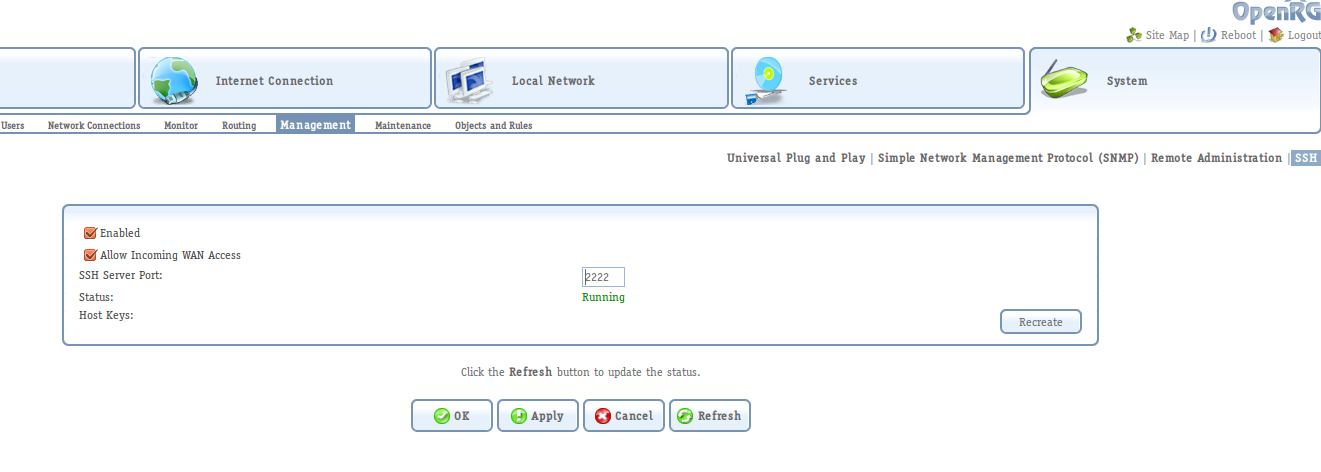
Solution Change router s SSH service port. This step will allow you to access the console-based configuration for the router (since I haven t found any way to do the steps described below from the web management interface). To do so, go to System > Management > SSH. Update the service port to something else than 22, for instance 2222.
OpenRG SSH service configuration

OpenRG SSH service configuration

Connect to the SSH interface Once you have changed the SSH service port, you can access it from a SSH client.
ssh -p 2222 admin@192.168.1.1
admin@192.168.1.1's password: 
OpenRG>
Once you have the console prompt, issue the following commands to allow SSH outbound traffic coming from the LAN and Wifi networks. After the last command, which saves and updates the device s configuration, you should be able to do SSH from any computer in your network to the Internet (thanks to tips from inkhorn).
OpenRG> conf set fw/policy/0/chain/fw_br0_in/rule/0/enabled 0
Returned 0
OpenRG> conf set fw/policy/0/chain/fw_br1_in/rule/0/enabled 0
Returned 0
OpenRG> conf reconf 1
Returned 0

Ben Hutchings: Debian LTS work, March 2015

This was my fourth month working on Debian LTS. I was assigned 14.5 hours by Freexian's Debian LTS initiative, but I only worked 11.5 as I had a week's holiday and then was ill for part of this week. eglibc My first task was to complete the eglibc update that I began at the end of February. There were a few unexpected failures in the regression test suite, but on inspection these turned out to be quirks of the build environment: With those changes, the regression test results are the same as for previous package versions. (There is still one 'unexpected' failure, but I didn't investigate because it is not a regression within squeeze.) I reviewed the backported patches again to check as well as I could that they did not depend on other upstream changes, and they did not seem to. I also received positive feedback from further testing - I can't find the message now, but I think it was that the Univention application test suite passed with the updated eglibc package installed. With that confirmation and no regressions reported, I uploaded eglibc 2.11.3-4+deb6u5 and issued DLA 165-1. freetype A large number of vulnerabilities in font file parsing in Freetype were reported by Mateusz Jurczyk. I think these were less critical in squeeze than in wheezy, because while current web browsers use Freetype to render untrusted 'web fonts' we don't support any web browsers in squeeze LTS. But it seemed like they ought to be fixed anyway, and it was not too hard to backport the patches included in the wheezy security update. Freetype doesn't have a regression test suite and I didn't have samples of the broken fonts, so I came up with some ad hoc tests for regressions. I viewed several of each of the affected font formats with the ftview demo application. I then wrote a script to match up the dependencies of a package (in this case, libfreetype6) with those used by Freexian's customers; the top results were fontconfig, xfonts-utils and imagemagick. So I ran some basic tests against each of the affected formats with each of these (fc-list, mkfontscale, and the simple text label recipe for ImageMagick) and found no regression. Uploaded freetype 2.4.2-2.1+squeeze5 and issued DLA 185-1.

Zlatan Todori : Programmers life

Picture of Java

Paul Tagliamonte: Oatmeal Raisin Cookies

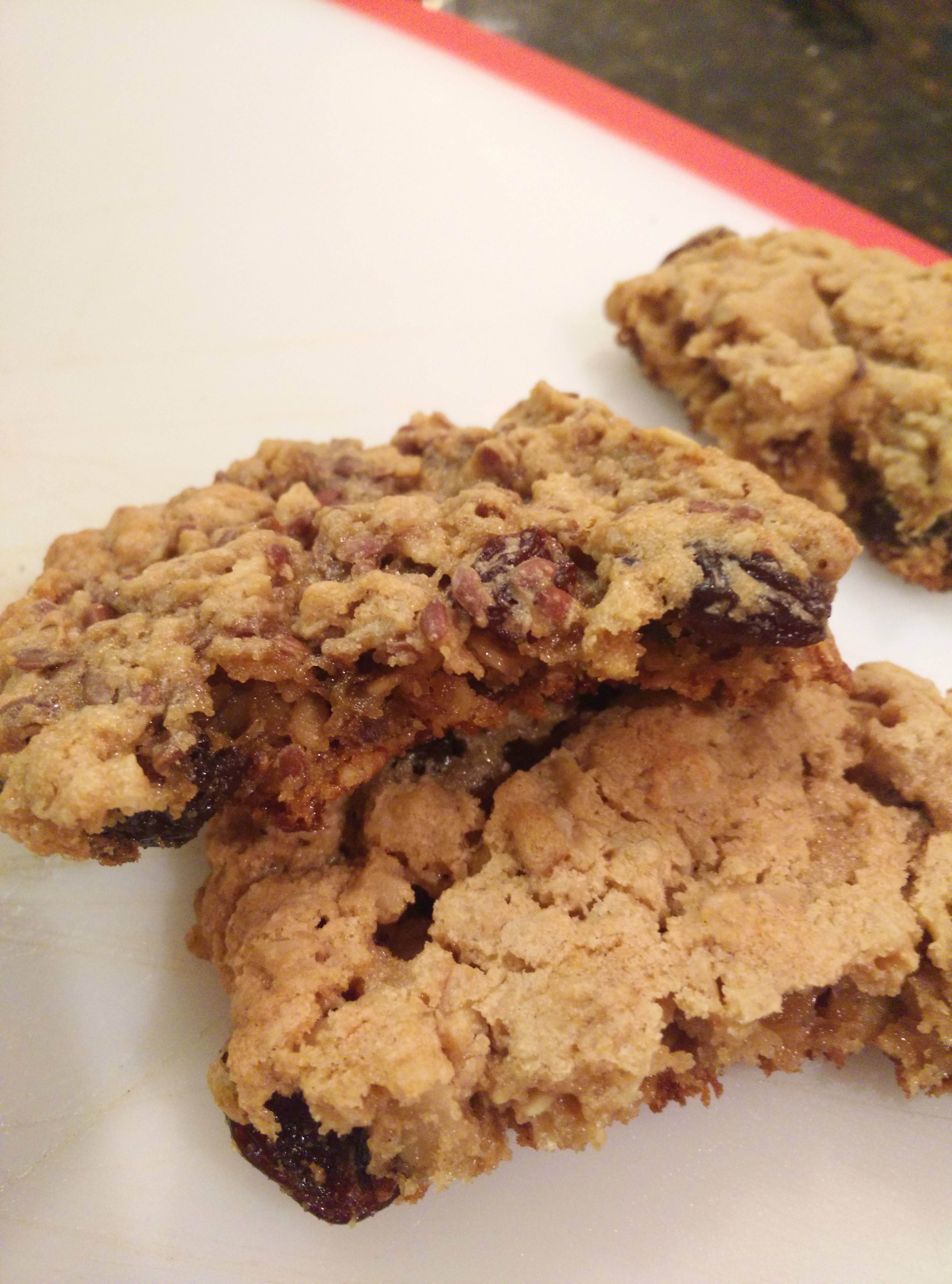
Oatmeal Raisin Cookies: paultagskitchen:
DELICIOUS COOKIE PHOTOIngredients
  • cups soylent
  • 1 cups rolled oats
  • cup sugar (white & dark brown)
  • cup flour
  • cup raisins
  • tsp baking soda & powder
  • tsp salt
  • 1 stick butter (roomtemp - NOT melted. Don t even try that. Stop. You. I see you.)
  • 1 egg
  • 1 tsp vanilla
Assembly Combine butter,

Michal Čihař: GSoC 2015 applications for phpMyAdmin

As usual, I look at the application stats for phpMyAdmin just after student application period of Google Summer of Code is over. First of all we got way more proposals than in last years, but also number of bogus proposals went up (you can see them as ignored in the chart). Same as in past years, people leave the submission to the last moment, even though we encourage them to submit early so that they can adjust the application based on our feedback. But still we got more than half of the proposals in last three days. Number of applications over time Anyway we're just working on evaluation and will finalize it in upcoming days. Of course you will know the results from Google on April 27th. PS: You can compare to our 2014, 2013 and 2012 numbers.

Filed under: English phpMyAdmin SUSE 0 comments

1 April 2015

Holger Levsen: 20150401-reproducible-jessie

Testing jessie for reproducibility or "here, have some 8 cores and 25 GB RAM extra..." So three weeks ago it occurred to me that it would be useful to test the reproducibility of Jessie too (until then we only tested unstable and experimental), as this will give us a nice data point to compare future developments against and also because we wanted to test "testing" in future anyway, so we could as well start while "testing" is still jessie... (because then we will have to test less once stretch development has started, as in the beginning stretch will be jessie anyway.) Quite quickly I then realized that building all packages twice on the current, quite heavily loaded jenkins.debian.net machine, would take 4-6 weeks and that it might well happen that we'll release Jessie before this has finished. (And I do want a Jessie release rather sooner than later!) So I've asked Profitbricks, who have been sponsoring the jenkins.debian.net setup since October 2012, for some more resources temporarily, and once again they quickly helped out and the next day I could add eight cores and 25 GB of RAM to the existing VM, for a total of 23 Cores and 75 GB RAM. So currently jenkins.d.n runs eight reproducible build jobs simultaneously, each of them is pbuilding packages in tmpfs in RAM. Thus these builds are really fast: for small packages without additional build depends build times as low as 40 seconds can be seen, which doesn't sound impressive at first, but this includes the source download and building twice and it includes untar'ing the base.tgz twice as well as running debbindiff on the resulting binary packages. (And all this is while quite many other jobs continue to hammer the machine as well.) (BTW: I doubt using LVM snapshots is faster then running this in tmpfs, but if you think LVM is faster I'd be curious to see some numbers.) Interestingly this rebuild also discovered a rather unexpected result as we found an RC bug in jessie, which caused build failures for >20 packages: "#781076 cdbs: perlmodule-vars.mk LDDLFLAGS quoting problem". And then there were some unexpected but really expectable results: testing turned out to "only" give reproducible results for 79.4% of all packages in main, while unstable has 82.6% reproducible packages. This was unexpected, as our (few) fixed packages in our repo are also used for testing testing and as testing is smaller than sid, I at first believed the reproducible percentage should be higher, as testing has 1000 packages less. So why was the lower percentage to be expected? This is due to two factors: since FOSDEM we have introduced a number of new variations for the second build, that is we now build with a.) a different domainname, b.) with a different umask, c.) a different timezone and d.) a different kernel version (using 'linux64 --uname-2.6'). And secondly, most packages in sid haven't been rebuild since FOSDEM. Thus we'll now reschedule all packages in testing which are unreproducible in unstable, which should decrease the current reproducibility of sid a bit... For those wondering about the 622 packages failing to build in testing: at least 453 are due to our test setup, categorized in (currently) three issues: timestamps_from_cpp_macros, ftbfs_werror_equals and ocaml_configure_not_as_root. The ones in this third issue category are rather trivial to fix, so this leaves 622-453=169 minus those fixed by #781076, so roughly 150 packeges which fail to build in our setup which need to be investigated... And for those wondering about other missing variations, there is at least one big one missing: changing the build date. Current guestimate is that this will make 1-2000 packages unreprdoucible again but we'll only know for sure once we tested them. So I would like to once again thank Profitbricks for supporting jenkins.d.n in the last 2.5 years and making reproducible.d.n possible so smoothly. Being able to painlessly add more resources when we needed them was incredible useful and I hope we can count on their support in the future. (I have some more ideas how to burn resources usefully in future. Stay tuned and btw, if you know how to put more hours in the day, please do tell me. ;) And, of course: thanks for your work on Debian, no matter whether you've been working on Jessie, reproducibility or something totally different! To finish this post I'd like to remind everyone that currently all this is just about the prospects of reproducible builds for Debian. Debian is not 80% reproducible yet - but it easily could be! And I certainly hope it will be "soon", and hopefully "soon" will only mean a few months. We will rebuild and see.

Joey Hess: I am ArchiveTeam

This seems as good a day as any to mention that I am a founding member of ArchiveTeam. ArchiveTeam logo Way back, when Geocities was closing down, I was one of a small rag-tag group who saved a copy of most of it. That snapshot has since generated more publicity than most other projects I've worked on. I've heard many heartwarning stories of it being the only remaining copy of baby pictures and writings of deceased friends, and so on. It's even been the subject of serious academic study as outlined in this talk, which is pretty awesome. Jason Scott in full stage regalia I'm happy to let this guy be the public face of ArchiveTeam in internet meme-land. It's a 0.1% project for me, and has grown into a well-oiled machine, albeit one that shouldn't need to exist. I only get involved these days when there's another crazy internet silo fire drill and/or I'm bored. (Rumors of me being the hand model for ArchiveTeam are, however, unsubstantiated.) Relevant XKCD

Benjamin Mako Hill: RomancR: The Future of the Sharing-Your-Bed Economy

romancer_logo Today, Aaron Shaw and I are pleased to announce a new startup. The startup is based around an app we are building called RomancR that will bring the sharing economy directly into your bedrooms and romantic lives. When launched, RomancR will bring the kind of market-driven convenience and efficiency that Uber has brought to ride sharing, and that AirBnB has brought to room sharing, directly into the most frustrating and inefficient domain of our personal lives. RomancR is Uber for romance and sex. Here s how it will work: Of course, there are many existing applications like Tinder and Grindr that help facilitate romance, dating, and hookups. Unfortunately, each of these still relies on old-fashion intrinsic ways of motivating people to participate in romantic endeavors. The sharing economy has shown us that systems that rely on these non-monetary motivations are ineffective and limiting! For example, many altruistic and socially-driven ride-sharing systems existed on platforms like Craigslist or Ridejoy before Uber. Similarly, volunteer-based communities like Couchsurfing and Hospitality Club existed for many years before AirBnB. None of those older systems took off in the way that their sharing economy counterparts were able to! The reason that Uber and AirBnB exploded where previous efforts stalled is that this new generation of sharing economy startups brings the power of markets to bear on the problems they are trying to solve. Money both encourages more people to participate in providing a service and also makes it socially easier for people to take that service up without feeling like they are socially in debt to the person providing the service for free. The result has been more reliable and effective systems for proving rides and rooms! The reason that the sharing economy works, fundamentally, is that it has nothing to do with sharing at all! Systems that rely on people s social desire to share without money projects like Couchsurfing are relics of the previous century. RomancR, which we plan to launch later this year, will bring the power and efficiency of markets to our romantic lives. You will leave your pitiful dating life where it belongs in the dustbin of history! Go beyond antiquated non-market systems for finding lovers. Why should we rely on people s fickle sense of taste and attractiveness, their complicated ideas of interpersonal compatibility, or their sense of altruism, when we can rely on the power of prices? With RomancR, we won t have to! Note: Thanks to Yochai Benkler whose example of how leaving a $100 bill on the bedside table of a person with whom you spent the night can change the nature of the a romantic interaction inspired the idea for this startup.

Raphael Geissert: Special guest for the Lyon minidebconf, 2015

It appears that this year's MiniDebconf in Lyon, France is going to have a very special guest. After enjoying so much the Q&A held at Debconf14, Linus Torvalds has decided to make a quick detour from a trip to Europe to bring the opportunity for another session with the Debian community.

The event has yet to appear in the MiniDebconf agenda. Rumor has it that the hurds of fans that tend to attend his events pose a logistics and safety challenge, reason why the event might only appear in the agenda a couple of days before the event.
Lyon being such an easy place to get by train, flight, car, and even by boat, it is understandable and should be expected that a great number of people attend the minidebconf only for his very session.

If you have not yet registered, I'd recommend you to do so now and to book your travel and accommodation ASAP, before everything is overpriced due to high demand.

See you in ten days!

P.S. kudos to the organizers!

Raphaël Hertzog: My Free Software Activities in March 2015

My monthly report covers a large part of what I have been doing in the free software world. I write it for my donators (thanks to them!) but also for the wider Debian community because it can give ideas to newcomers and it s one of the best ways to find volunteers to work with me on projects that matter to me. Debian LTS This month I have been paid to work 15.25 hours on Debian LTS. In that time I did the following: That s it for the paid work. But still about LTS, I proposed two events for Debconf 15: A Debian LTS logoIn my last Freexian LTS report, I mentioned briefly that it would be nice to have a logo for the LTS project. Shortly after I got a first logo prepared by Damien Escoffier and a few more followed: they are available on a wiki page (and the logo you see above is from him!). Following a suggestion of Paul Wise, I registered the logo request on another wiki page dedicated to artwork requests. That kind of collaboration is awesome! Thanks to all the artists involved in Debian. Debian packaging Django. This month has seen no less than 3 upstream point releases packaged for Debian (1.7.5, 1.7.6 and 1.7.7) and they have been accepted by the release team into Jessie. I m pleased with this tolerance as I have argued the case for it multiple times in the past given the sane upstream release policy (bugfix only in a given released branch). Python code analysis. I discovered a few months ago a tool combining the power of multiple Python code analysis tools: it s prospector. I just filed a Request for Package for it (see #781165) and someone already volunteered to package it, yay \o/ update-rc.d and systemd. While working on a Kali version based on Jessie, I got hit by what boils down to a poor interaction between systemd and update-rc.d (see #746580) and after some exchanges with other affected users I raised the severity to serious as we really ought to do something about it before release. I also opened #781155 on openbsd-inetd as its usage of inetd.service instead of openbsd-inetd.service (which is only provided as a symlink to the former) leads to multiple small issues. Misc Debian France. The general assembly is over and the new board elected its new president: it s now official, I m no longer Debian France s president. Good luck to Nicolas Dandrimont who took on this responsibility. Salt s openssh formula. I improved salt s openssh formula to make it possible to manage the /etc/ssh/ssh_known_hosts file referencing the public SSH keys of other managed minions. Tendenci.com. I was looking for a free software solution to handle membership management of a large NPO and I discovered Tendenci. It looked very interesting feature wise and written with a language/framework that I enjoy (Python/Django). But while it s free software, there s no community at all. The company that wrote it released it under a free software license and it really looks like that they did intend to build a community but they failed at it. When I looked their development forums were web-based and mostly empty with only initial discussion of the current developers and no reply from anybody there s also no mention of an IRC channel or a mailing list. I sent them a mail to see what kind of collaboration we could expect if we opted for their software and got no reply. A pity, really. What free software membership management solution would you use when you have more than 10000 members to handle and when you want to use the underlying database to offer SSO authentication to multiple external services? Thanks See you next month for a new summary of my activities.

2 comments Liked this article? Click here. My blog is Flattr-enabled.

Benjamin Mako Hill: More Community Data Science Workshops

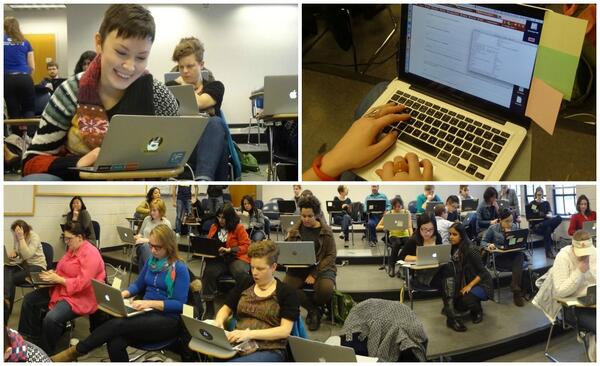
Pictures from the CDSW sessions in Spring 2014Pictures from the CDSW sessions in Spring 2014
After two successful rounds in 2014, I m helping put on another round of the Community Data Science Workshops. Last year, our 40+ volunteer mentorss taught more than 150 absolute beginners the basics of programming in Python, data collection from web APIs, and tools for data analysis and visualization and we re still in the process of improving our curriculum and scaling up. Once again, the workshops will be totally free of charge and open to anybody. Once again, they will be possible through the generous participation of a small army of volunteer mentors. We ll be meeting for four sessions over three weekends: If you re interested in attending, or interested in volunteering as mentor, you can go to the information and registration page for the current round of workshops and sign up before April 3rd.

Lars Wirzenius: Obnam 4.1 released

It is with great pleasure and satisfaction that I release version 4.1 of Obnam, my backup program. This version includes a radically innovative approaches to data compression and de-duplication, as well as some other changes and bug fixes. Major user-visible changes: Minor user-visible changes: Bug fixes:

Next.

Previous.