Search Results: "ina"

3 December 2010

Russell Coker: Aspie Social Skills and the Free Software Community

LWN has an article by Valerie Aurora titled The dark side of open source conferences [1] which is about sexual harassment and sexual assault at Free Software conferences. Apparently some conferences create such a bad environment that some people won t attend, it s a well researched article that everyone in the community should read.The Autism DerailmentThe comments have the usual mix of insight, foolishness, and derailment that you expect from such discussions. One derailment thread that annoyed me is the discussion about men on the Autism Spectrum started by Joe Buck [2]. Joe seems to believe that the 1% of males on the Autism Spectrum (and something greater than 1% but a lot less than 50% in the Free Software community) are a serious part of the problem because they supposedly hit on women who aren t interested in them in spite of the fact that the article in question is about women who are being insulted, harassed, and groped at at open source conferences . The article had no mention of men who try to chat up women presumably this was a deliberate decision to focus on sexual assault and harassment rather than what Joe wanted to talk about.In response Mackenzie made the following insightful point:I don t think any autistic person who is high-functioning enough to A) contribute to open source B) want to be at an event with so many people and C) carry on any sort of conversation is low-functioning enough not to understand stop or no. If you can understand your patch has been rejected, you can likely understand don t do that again. Understanding how Other People FeelBruce Perens claimed What they [Aspies] don t understand is how the other person in the situation feels . Like many (possibly most) people Bruce doesn t seem to get the fact that no-one can really understand how other people feel. The best logical analysis of this seems to be the Changing Emotions article on Less Wrong [3]. While Less Wrong deals with Male to Female conversion as the example (which may be relevant to the discussion about the treatment of women) the same logic also applies to smaller changes. Anyone who even thinks that if they would always be able understand how their identical twin felt (if they had one) probably hasn t considered these issues much. As an aside, having a psychologist diagnose you as being on the Autism Spectrum and therefore by implication thinking differently to 99% of the population really makes you consider the ways in which other people might have different thought processes and experiences.Every time we have a discussion about issues related to sexism in the Free Software community we get a lot of documented evidence that there are many people who are apparently neuro-typical (IE not Autistic) who don t understand how other people think in many cases they go so far as to tell other people what their emotional state should be.What Really HappensNix said However, in that situation our natural reflex is to *get out of there*, not to jump on women like some sort of slobbering caveman which is a really good summary.In more detail, I think that the vast majority of guys who are on the Autism Spectrum and who are able to do things like attend computer conferences (*) realise that chatting up a random girl that they meet is something that just isn t going to work out. Generally people don t attempt things that they expect to fail so I don t think that Autistic guys are going to be hitting on girls at conferences.(*) Having never met any Autistic people who aren t capable of attending such conferences I can t speak for them. I really doubt that the Low Functioning Autistic guys are as much of a problem as some people claim, but lack evidence. In any case the actions of people who don t attend conferences aren t relevant to a discussion about things that happen at conferences.Update: It Keeps GoingDion claims that the misogyny at conferences is due to socially inept people, he also casually switches between discussing people who misunderstand when someone is flirting and people who hire almost-naked booth-babes (two very different classes of action) [4]. Several people asked for supporting evidence, naturally none was provided.In response njs posted a link to Marissa Lingen s blog post Don t blame autism, dammit [5]. Marissa points out that people who offend other people due to lacking social skills will tend to do so in times and places that are likely to get a bad reaction if you don t know that you are doing something wrong then there s no reason to hide it. If someone offends a senior manager at a corporate event then it could be because they are on the Autism Spectrum (I ve apparently done that). If someone offends junior people at a times and places where there are no witnesses but is always nice to managers and other powerful people then it s not related to Autism.One final note, I have little tolerance for anyone who claims to be an Aspie when they do something wrong. You are either on the Autism Spectrum all the time or none of it. Anyone who wants any sympathy for me for an occasion where they stuffed up due to being an Aspie can start by making a clear statement about where they are on the Autism Spectrum.Update2: Yet More from Bruce PerensBruce wrote IMO, the kind of men who go in to software engineering suffer a lack of healthy interaction with women who are their peers, and it may be that the high incidence of empathy disorders in our field is involved (which seems to be part of the inspiration for Joe Buck later in that thread) and now claims Nobody here was trying to connect Asperger s or autism with the touching incidents or violent crime .Matthew Garrett responded to that with If you weren t trying to say that the high incidence of empathy disorders in our field was related to a lack of healthy interaction with women who are their peers, and that that has something to do with incidents of sexual harassment or assault at conferences, what were you trying to say? Because that sounds awfully like We wouldn t have so many problems if it weren t for all the autists .Bruce s latest comment is If you choose to read something that nasty into my writing, that s your problem. Get therapy .Through this discussion I ve been unsure of whether to interpret the statements by Bruce et al the way Matthew does or whether I should consider them as merely a desperate attempt to derail the discussion. I can t imagine any possible way of interpreting such comments in connection with the discussion of sexual assault as anything other than either trivialising violent crimes against women (suggesting that they are no worse than asking out someone who s not interested) or claiming that anyone who lacks social skills should be treated as a violent sexual predator. It s just not reasonable to believe that every single person who wrote such comments referring to Autism was misunderstood and really meant something nice.As a general rule I don t think that it s the responsibility of other people to try and find a non-offensive interpretation of something that one might say. I don t think that all the people who strongly disagree with the most obvious and reasonable interpretations of Bruce s comments should get therapy. I think that Bruce should explain what he means clearly.

2 December 2010

Biella Coleman: If I could have, I would have

As I previously blogged about, I wrote an Annual Review of Anthropology on digital media last year. About a month ago, I found out that anyone can download it thanks to a link provided by the ARA, which we are allowed to put on one institutional web page. So go here (and go to the citation for the link) for those who are interested in a way too short review of some of the ethnographic literature on digital media. Writing the piece left me many psychological wounds and scars, one of which had to do with the fact that I probably overlooked some folks. I have been left out of review type essays and honestly, it sucks. I tried to be as comprehensive as possible: I chose not to massively whittle down the scope (which was an option) and was able to smuggle in more citations than originally allowed and yet I still cut out 200 citations. But in the end I overlooked some folks as I found out about them too late. If I could go back in time, this is who I would include (well there are others but I have chosen these for now). So Shaka McGlotten: not only does he have a cool name, he studies some cool stuff like DIY online porn, race, and zombies. He has published a bunch of articles and a book is forthcoming. Check out his work here. I missed this book Online a Lot of the Time: Ritual, Fetish, and Sign by Ken Hills which looks quite pertinent and a great read. Jonathan Marshall is an anthropologist in Sydney who has been working on digital stuff for a long while now and recently published Living Cybermind, which covers in detail modes of interacting and communicating in a detailed examination of a mailing list by the name of Cybermind. Although this book is not out yet, it will be soon and looks fascinating: Digital Jesus (great cover). From what I understand, and one of the reasons I want to dive into the book , is because it is so longitudinal, at least when measured in Internet years. Rob Howard has studied Christians online since the days of Usenet to the present and thus this ethnography promises to have some real meat to it. I am eagerly anticipating the forthcoming book by Beth Coleman . I had a chance to read a chapter recently and it looks fantastic. While in some respects grounded in virtual worlds, it is far more expansive than that topic, addressing a range of issues from desire, experience, emotion and race. Can t wait. I cite four dissertations in the ARA mostly because I read them, thought they were great, and material based on the dissertation is en route to being published in some form in the next future. The one dissertation I wish I had read is Jenny Cool s thesis on cyberorganic.

1 December 2010

Leo 'costela' Antunes: Screenshots on unrooted Android

A few weeks ago I noticed an image on my Froyo phone which appeared to be a screenshot. This came as a surprise, since I don t have any screenshot applications installed and am generally economic when it comes to the amount of fluff on my phone. I did a few searches and there doesn t seem to be any visible mention of this feature out there, only mentions of how to do it with the SDK or with specific apps. Since today I finally managed to discover how to actually do it again (holding the Back button and pressing Home), I took these screenshots using different launchers to be sure it wasn t some feature of ADW.Laucher. I still haven t beat my laziness to actually reset to factory settings and make sure it s not some other random app (which would be a bit unsettling, actually) and it could also be a Samsung specific feature, implemented as one of those pesky unremovable apps. Can anybody out there confirm this (not particularly useful) feature? Did I miss it being published somewhere? [UPDATE]: I found a couple of hidden apps that probably have something to do with this (through Settings Applications Manage applications All). The first one is an obvious suspect, but since it isn t named after Samsung (which admittedly doesn t mean much) I figured it might be activated by the second one, which in my overly-creative and not-really-investigative mind could be a sort of hotkey-daemon. [UPDATE 2: well, that's ignoring the obvious fact that SEC stands for "Samsung Electronics Corporation". D'oh!]
I don t think the feature is important or interesting enough for me to investigate much further, but still I thought I might leave some pointers if people want to get this on their ROMs.

Josselin Mouette: Getting user switching to not suck

We ve come a long way since the times when you needed to configure 2 X servers in XDM just to be able to use 2 X sessions at once. However there was still some way to go until recently. A number of bugs that could be wrongly attributed to bugs in the X server or in the desktop environment were actually caused by the display manager doing crap. GDM up to 2.20 Since the introduction of the flexible X servers feature, GDM hadn t evolved much on the matter of user switching. What it used to do was pretty straightforward: It is interesting to note that VT (console) switching is purely handled by the X server. When starting, the new server switches the current VT to where it is. When exiting, it automatically switches back to the VT from which it was launched. While very simple, this idea fails to work correctly every time you try to do something more complicated than starting a temporary session for a guest and exiting it. For example, if you start two of them, there is a chance that, when the X server switches back to the console it was run from, there is nothing left running in this console, leaving you with the funny Control-Alt-Fn shortcuts to find your way back to a X server. You will also meet interesting race conditions when trying to switch back to an existing session from the login window. GDM 2.28 and above In the process of rewriting the code entirely, the GDM developers tried to address a number of those shortcomings, making use of D-Bus and ConsoleKit. The new design is slightly more complicated, however. Not killing the X server in some cases partly addresses the problems caused by letting it switch back to the original VT when exiting. However in several ways the cure is worse than the disease. Getting it to work The modular architecture of GDM makes it possible to improve the situation. (Possible but not easy because of the millefeuille of classes.) However, it is merely a band-aid unless you fix the root issue: the X server knowing better than you which VT it should switch to when exiting. Fortunately Xorg now features an option to avoid that behavior: -novtswitch. So the first step is to enable it, and let the GDM daemon (or slave) handle VT switching through ConsoleKit. With that, the following changes are possible. The result With all these changes the behavior of the display manager is finally completely consistent. Interestingly enough, this is very similar to what user switching looks like on Vista or MacOS X. So what now? These changes are stabilized for Debian squeeze, but of course it has been long overdue to get them accepted upstream, along with the very large number of Debian-specific changes that still lie in our packages.

Pietro Abate: bypassing the apt-get solver

Here at mancoosi we have been working for quite a while to promote and advance solver technology for FOSS distributions. We are almost at the end of the project and it is important to make the mancoosi technology relevant for the community. On goal of the project is to provide a prototype that uses part of the results of mancoosi that can based to install/remove/upgrade packages on a user machine. We certainly don't want to create yet another meta installer. This would be very time consuming and certainly going beyond the scope of the project. The idea is to create a prototype, that can work as an apt-get drop in replacement that will allow everybody to play with different solvers and installation criteria. A very first integration step is a small shell script apt-mancoosi that tries to put together different tools that we have implemented during the project. Roberto wrote extensively about his experience with apt-mancoosi a while ago showing that somehow the mancoosi tools are already usable, as proof of concept, to experiment with all solvers participating to the Misc competition. On notable obstacle we encountered with apt-mancoosi is how to pipe the result of an external solver to apt-get to effectively install the packages proposed as solution. Apt-mancoosi fails to be a drop-in replacement for apt-get exactly for this reason. The "problem" is quite simple : The idea at the beginning was to pass to apt-get, on the command line, a request that effectively represents a complete solution. We expected that, since this was already a locked-down solution, apt-get would have just installed all packages without any further modification to the proposed installation set. Of course, since apt-get is designed to satisfy a user request, and not just to install packages, we quickly realized that our evil plan was doomed to failure. The only option left, was to use libapt directly, but the idea of programming in c++ quickly made me to desist. After a bit of research (not that much after all), I finally found a viable solution to our problems in ''python-apt'' that is a low level and wrapper around libapt. This definitely made my day. Now the juicy details. the problem was to convince apt to completely bypass the solver part and just call the installer. First a small intro. python-apt has an extensive documentation with a couple of tutorials. Using python-apt is actually pretty easy (some snippet from the python-apt doco) :
import apt

# First of all, open the cache
cache = apt.Cache()
# Now, lets update the package list
cache.update()
here we open the cache (apt.Cache is a wrapper around the low level binding in the apt_pkg module), then we update the package list. This is equivalent to apt-get update . Installing a package is equally easy :
import apt
cache = apt.Cache()
pkg = cache['python-apt']

# Mark python-apt for install
pkg.mark_install()

# Now, really install it
cache.commit()
Now, the method mark_install of the module package will effectively run the solver to resolve and mark all the dependencies of the package python-apt. This is the default behavior when apt-get is used on the command line. This method has however three optional arguments that are just what I was looking for, that is autoFix, autoInst and fromUser . The explanation from the python-apt doco is quite clear.
mark_install(*args, **kwds)
Mark a package for install.
If autoFix is True, the resolver will be run, trying to fix broken packages. This is the default.
If autoInst is True, the dependencies of the packages will be installed automatically. This is the default.
If fromUser is True, this package will not be marked as automatically installed. This is the default. Set it to False if you want to be able to automatically remove the package at a later stage when no other package depends on it.
What we want is to set autoFix and autoInst to false to completely bypass the solver. So imagine that an external solver can give use a string of the form : bash+ dash=1.4 baobab- that basically asks to install bash to the newest version, dash at version 1.4 and remove baobab. Suppose also that this is a complete solution, that is, all dependencies are satisfied and there are no conflicts. The work flow of mpm (mancoosi package manager) is as follows : We already have a first prototype on the mancoosi svn. It's not released yet as we are waiting to do more testing, add more options and make it stable enough for testing. Maybe one day, this will be uploaded to debian. This is the trace of a successful installation of a package in a lenny chroot. The solver used here is the p2 solver
dev:~/mpm# ./mpm.py -c apt.conf install baobab
Running p2cudf-paranoid-1.6 solver ...
Validate solution ...
loading CUDF ...
loading solution ...
Summary of proposed changes:
new: 30
removed: 0
replaced: 0
upgraded: 0
downgraded: 0
unsatisfied recommends:: 8
changed: 30
uptodate: 322
notuptodate: 116

New packages: baobab (2.30.0-2) dbus-x11 (1.2.24-3) gconf2 (2.28.1-5)
gconf2-common (2.28.1-5) gnome-utils-common (2.30.0-2)
libatk1.0-0 (1.30.0-1) libcairo2 (1.8.10-6) libdatrie1 (0.2.4-1)
libdbus-glib-1-2 (0.88-2) libgconf2-4 (2.28.1-5) libgtk2.0-0 (2.20.1-2)
libgtk2.0-common (2.20.1-2) libgtop2-7 (2.28.1-1) libgtop2-common (2.28.1-1)
libidl0 (0.8.14-0.1) libjasper1 (1.900.1-7+b1) liborbit2 (1:2.14.18-0.1)
libpango1.0-0 (1.28.3-1) libpango1.0-common (1.28.3-1)
libpixman-1-0 (0.16.4-1) libthai-data (0.1.14-2) libthai0 (0.1.14-2)
libtiff4 (3.9.4-5) libxcb-render-util0 (0.3.6-1) libxcb-render0 (1.6-1)
libxcomposite1 (1:0.4.2-1) libxcursor1 (1:1.1.10-2) libxrandr2 (2:1.3.0-3)
psmisc (22.11-1) shared-mime-info (0.71-3)
Removed packages:
Replaced packages:
Upgraded packages:

Selecting previously deselected package libatk1.0-0.
(Reading database ... 28065 files and directories currently installed.)
Unpacking libatk1.0-0 (from .../libatk1.0-0_1.30.0-1_i386.deb) ...
Selecting previously deselected package libpixman-1-0.
Unpacking libpixman-1-0 (from .../libpixman-1-0_0.16.4-1_i386.deb) ...
Selecting previously deselected package libxcb-render0.
Unpacking libxcb-render0 (from .../libxcb-render0_1.6-1_i386.deb) ...
Selecting previously deselected package libxcb-render-util0.
Unpacking libxcb-render-util0 (from .../libxcb-render-util0_0.3.6-1_i386.deb) ...
Selecting previously deselected package libcairo2.
Unpacking libcairo2 (from .../libcairo2_1.8.10-6_i386.deb) ...
Selecting previously deselected package libdbus-glib-1-2.
Unpacking libdbus-glib-1-2 (from .../libdbus-glib-1-2_0.88-2_i386.deb) ...
Selecting previously deselected package libidl0.
Unpacking libidl0 (from .../libidl0_0.8.14-0.1_i386.deb) ...
Selecting previously deselected package liborbit2.
Unpacking liborbit2 (from .../liborbit2_1%3a2.14.18-0.1_i386.deb) ...
Selecting previously deselected package gconf2-common.
Unpacking gconf2-common (from .../gconf2-common_2.28.1-5_all.deb) ...
Selecting previously deselected package libgconf2-4.
Unpacking libgconf2-4 (from .../libgconf2-4_2.28.1-5_i386.deb) ...
Selecting previously deselected package libgtk2.0-common.
Unpacking libgtk2.0-common (from .../libgtk2.0-common_2.20.1-2_all.deb) ...
Selecting previously deselected package libjasper1.
Unpacking libjasper1 (from .../libjasper1_1.900.1-7+b1_i386.deb) ...
Selecting previously deselected package libpango1.0-common.
Unpacking libpango1.0-common (from .../libpango1.0-common_1.28.3-1_all.deb) ...
Selecting previously deselected package libdatrie1.
Unpacking libdatrie1 (from .../libdatrie1_0.2.4-1_i386.deb) ...
Selecting previously deselected package libthai-data.
Unpacking libthai-data (from .../libthai-data_0.1.14-2_all.deb) ...
Selecting previously deselected package libthai0.
Unpacking libthai0 (from .../libthai0_0.1.14-2_i386.deb) ...
Selecting previously deselected package libpango1.0-0.
Unpacking libpango1.0-0 (from .../libpango1.0-0_1.28.3-1_i386.deb) ...
Selecting previously deselected package libtiff4.
Unpacking libtiff4 (from .../libtiff4_3.9.4-5_i386.deb) ...
Selecting previously deselected package libxcomposite1.
Unpacking libxcomposite1 (from .../libxcomposite1_1%3a0.4.2-1_i386.deb) ...
Selecting previously deselected package libxcursor1.
Selecting previously deselected package libxrandr2.
Unpacking libxrandr2 (from .../libxrandr2_2%3a1.3.0-3_i386.deb) ...
Selecting previously deselected package shared-mime-info.
Unpacking shared-mime-info (from .../shared-mime-info_0.71-3_i386.deb) ...
Selecting previously deselected package libgtk2.0-0.
Unpacking libgtk2.0-0 (from .../libgtk2.0-0_2.20.1-2_i386.deb) ...
Selecting previously deselected package libgtop2-common.
Unpacking libgtop2-common (from .../libgtop2-common_2.28.1-1_all.deb) ...
Selecting previously deselected package libgtop2-7.
Unpacking libgtop2-7 (from .../libgtop2-7_2.28.1-1_i386.deb) ...
Selecting previously deselected package psmisc.
Unpacking psmisc (from .../psmisc_22.11-1_i386.deb) ...
Selecting previously deselected package dbus-x11.
Unpacking dbus-x11 (from .../dbus-x11_1.2.24-3_i386.deb) ...
Selecting previously deselected package gconf2.
Unpacking gconf2 (from .../gconf2_2.28.1-5_i386.deb) ...
Selecting previously deselected package gnome-utils-common.
Unpacking gnome-utils-common (from .../gnome-utils-common_2.30.0-2_all.deb) ...
Selecting previously deselected package baobab.
Unpacking baobab (from .../baobab_2.30.0-2_i386.deb) ...
Processing triggers for man-db ...
Setting up libatk1.0-0 (1.30.0-1) ...
Setting up libpixman-1-0 (0.16.4-1) ...
Setting up libxcb-render0 (1.6-1) ...
Setting up libxcb-render-util0 (0.3.6-1) ...
Setting up libcairo2 (1.8.10-6) ...
Setting up libdbus-glib-1-2 (0.88-2) ...
Setting up libidl0 (0.8.14-0.1) ...
Setting up liborbit2 (1:2.14.18-0.1) ...
Setting up gconf2-common (2.28.1-5) ...

Creating config file /etc/gconf/2/path with new version
Setting up libgconf2-4 (2.28.1-5) ...
Setting up libgtk2.0-common (2.20.1-2) ...
Setting up libjasper1 (1.900.1-7+b1) ...
Setting up libpango1.0-common (1.28.3-1) ...
Cleaning up font configuration of pango...
Updating font configuration of pango...
Cleaning up category xfont..
Updating category xfont..
Setting up libdatrie1 (0.2.4-1) ...
Setting up libthai-data (0.1.14-2) ...
Setting up libthai0 (0.1.14-2) ...
Setting up libpango1.0-0 (1.28.3-1) ...
Setting up libtiff4 (3.9.4-5) ...
Setting up libxcomposite1 (1:0.4.2-1) ...
Setting up libxcursor1 (1:1.1.10-2) ...
Setting up libxrandr2 (2:1.3.0-3) ...
Setting up shared-mime-info (0.71-3) ...
Setting up libgtk2.0-0 (2.20.1-2) ...
Setting up libgtop2-common (2.28.1-1) ...
Setting up libgtop2-7 (2.28.1-1) ...
Setting up psmisc (22.11-1) ...
Setting up dbus-x11 (1.2.24-3) ...
Setting up gconf2 (2.28.1-5) ...
update-alternatives: using /usr/bin/gconftool-2 to provide /usr/bin/gconftool (gconftool) in auto mode.
Setting up gnome-utils-common (2.30.0-2) ...
Setting up baobab (2.30.0-2) ...
Broken: 0
InstCount: 30
DelCount: 0
dev:~/mpm#
I think we'll keep working on this python prototype for a while, but this is not certainly what we want to propose to the community. The mancoosi package manager is probably going to be written in Ocaml and integrated with dose3 and libcudf. This will allow us to gain speed and have a solid language to develop with (nothing against python, but we don't feel that a scripting language is suitable for an essential component as a package manager). Time will tell. For the moment this is just vapor-ware ...

30 November 2010

Sergio Talens-Oliag: The FreakyWall (Part 3: Packages)

In this post I'll describe the changes made to the kernel and some of the Squeeze packages for the Freaky Wall. The plan is to submit whishlist bugs to the BTS on the hope of having all what is needed for this project available on Debian after the Squeeze release, as my feeling is that a freeze is not the right time to push this changes... ;) I'm giving access here to all the changes made to the source packages, but if anyone wants the binary packages (amd64 only) send me an email and I'll give you the URL of an apt repository that contains all the modified packages (it's the one at work, that contains other modified packages) or, if there is interest, I can put them on people.debian.org. Kernel To be able to build the firewall we need a kFreeBSD kernel with some options not compiled on the version distributed with Debian. To compile the kernel I've followed the procedure described on the following debian-bsd mailing list post: http://lists.debian.org/debian-bsd/2010/09/msg00023.html Basically I've done the following:
    apt-get build-dep kfreebsd-8
    apt-get source kfreebsd-8
    cd kfreebsd-8-8.1
    cat >> debian/arch/amd64/amd64.config << EOF
    # Add pflog, pfsync, ALTQ and CARP support
    # ----------------------------------------
    # http://www.freebsd.org/doc/en_US.ISO8859-1/books/handbook/firewalls-pf.html
    device      pf
    device      pflog
    device      pfsync
    options         ALTQ
    options         ALTQ_CBQ        # Class Bases Queuing (CBQ)
    options         ALTQ_RED        # Random Early Detection (RED)
    options         ALTQ_RIO        # RED In/Out
    options         ALTQ_HFSC       # Hierarchical Packet Scheduler (HFSC)
    options         ALTQ_PRIQ       # Priority Queuing (PRIQ)
    options         ALTQ_NOPCC      # Required for SMP build
    # http://www.freebsd.org/doc/en_US.ISO8859-1/books/handbook/carp.html
    device      carp
    EOF
    vi debian/changelog 
    dpkg-buildpackage -B -uc
Once the package was built I installed the new kernel package and rebooted the machine. Utilities To be able to use some utilities related to pf I have built patched versions of three packages: On the next post I'll describe how I've configured the system, the network interfaces and the different utilities patched and compiled on this post.

Jordi Mallach: The unforeseen consequences of our GR 11 Summer walk

I knew walking all over the Pyrenees during a whole month would come with some side effects. I could imagine having a few muscular issues in my legs and some back pain for a while after getting back; after all we did over 7 hours of exercise every single day during a month. What I got after our hike was totally unexpected... I should have run a half marathon in Gandia on the 21st, and instead I stayed at home doing some assignments. When we came back, I was in a really good condition, and wanted to keep the good shape we had built the month before. Given I haven't been able to swim for nearly a year now, due to the Misterious Shoulder Injury and I don't have enough time to go out cycling regularly, I centered my efforts in running, with the idea of starting to get prepared for cross/mountain races this season. Training had to wait a little because some days after getting back, I got a sudden pain on both knees, which even made climbing stairs difficult. It stuck for a while, and when it finally went away, more or less, I went ahead and tried going out for a run. I haven't been training for over two years, so I indended to increase the distances proggressively. The first day I went out, I ran really nicely for the first 25 minutes, and suddenly I started getting an intense pain in the outer side of my right knee, to the point I could barely walk back home. I've tried letting them rest for weeks, and every time I try them, the pain comes back. My physiotherapist says my body has developed quite a few asymmetries, probably caused by the many days I had to walk crippled by a big blister in my right foot. As time passes, I feel I'm losing all the physical improvements I had developed during the summer, and I can't do anything about it. The new approach to tackle this is yoga. I know my body isn't too elastic, and the lack of stretching during the walk made it even worse, so I'll try to forget about real traning during some time and focus on healing my muscles. Hopefully, this will help me resolve the nastiest physical problem I've ever come across.

Joey Hess: debugging musings

Debugging a computer program is such an interesting activity because it's not really a matter of fixing a program. It's a matter of fixing your own understanding to the point that the cause of the bug becomes obvious. So debugging means constantly challenging your assumptions, constantly looking for the overlooked insignificant thing that turns out to be crucial. I mostly debug by print statements. I don't like it much, but it works. I add some print statements around the problem area and see if what's going on matches what the model in my head thinks should be going on. If it doesn't, I try to fix the model, and if it does, I focus the print statements in tighter and tighter, deeper and deeper, until I finally reach the bug. It's nasty and ah-hoc, but it works really well, mostly. And I know I'm in good company doing it. But that method can fail; I myself can end up caught in a loop. Like today, tracking down an obscure bug in Branchable's auditing subsystem, when I found myself at what was apparantly the point of a bug: Function A was supposed to call function B, but B never seemed to be called. So surely A was buggy, and I instrumented it to bits with print statements and stuff, and started wondering if the libraries it relied on were somehow breaking it in non-obvious ways before it could call B, or maybe there was a bug in the runtime language that was breaking the call to B. Going deeper and deeper didn't help, because the thing I was overlooking was up at the top level -- one of the first print statements I inserted showed that all this code was running twice. Why? Didn't seem relevant to the bug so I ignored it. Of course what I was ignoring was a symptom of the real problem: The first run was by another subsystem, that happened to redefine function B temporarily.. Actually, one of the nice things about Haskell is that print statements are not very helpful in debugging pure code. Pure code tends to get loaded up in ghci and tested interactively, and the bug is then clear. Or a quickcheck test case gets written with an invariant that the pure code should satisfy. I spent a whole day a few weeks ago writing an inverse form of a buggy function in git-annex just so I could feed them both into quickcheck and automate debugging. (Most of that time was spent wrestling with unicode decomposition .. ugh.) Being used to getting down in the buggy code with print statements, that at the time felt rather like a waste of time unrelated to getting on with making my program work, but it was very much worth it since I got my program working 100% in even crazy edge cases, and got a test suite for free, too. Most of my debugging of Haskell code so far has not involved bugs in pure code. The most memorable bug was actually a bug in ghc's IO manager, which I'd have never tracked down without Josh's help. The problem with finding bugs in the runtime environment or compiler is that after you've found enough over the years, you're more likely to go down false paths distrusting runtime environments, like I did with the bug today. The beginner's assumption is that the runtime environment just works, but I by now may have over-challenged that assumption. :)

Debian News: DebConf 11 to take place July 24-30, 2011

DebConf 11 will take place from July 24 to 30, 2011, in the city of Banja Luka, Republika Srpska, Bosnia and Herzegovina.

The final calendar of the event is:

The call for papers and registration dates are still to be decided.

More information at the DebConf 11 website.

Michal &#268;iha&#345;: New phpMyAdmin features - AJAX and Javascript

phpMyAdmin 3.4 is just in the alpha state (second alpha release being done right now), so it's time to continue in presenting new features. As usual, just download 3.4 alpha or try them on our demo server. If you find any problems while playing with it, do not hesitate and ask or report bug. phpMyAdmin is now much faster in modern browsers, thanks to using AJAX in lot of places instead of loading whole new page. This is probably the most intrusive change made in 3.4 and at time of writing this post, there are still some rough edges, but the developers are polishing them right now. Also there is not only AJAX, but lot of user input can be validated on client side now allowing faster reactions on invalid input. This feature was implemented by Ninad Pundalik during Google Summer of Code 2010.

Filed under: Phpmyadmin 0 comments Flattr this!

Sam Hartman: Implementation Progress

At the end of September, things were quite exciting as we had our first project meeting. At that meeting those in the room saw a demonstration of the Moonshot GSS EAP mechanism and we discussed a number of open issues and began to plan for our test infrastructure. We ve made significant progress on the specification front and on explaining Moonshot to important communities since then. However there has been little public progress on the implementation front. Unfortunately, getting the necessary legal clearance and agreements to release code often takes longer than anyone would like; that is what is happening here. We re all eagerly awaiting final approval from the lawyers and JANET(UK) management. However, things have been moving behind the scenes. Throughout much of October, Luke Howard and Linus Nordberg were working on their respective parts of the code. I ve also been working on putting together the test and build infrastructure. As we discussed at the meeting, we re going to use Debian and Ubuntu as the basis for our testing. For example, we hope to release virtual machine images for these platforms for the major Moonshot components. Thus the primary build environment for our testing and virtualization will be for Debian. I ve been putting together that here. Right now, that branch will pull together packages of the SAML infrastructure that we need. I ve also been looking into virtualized test frameworks and believe I ve found one that meets our needs. I ve also put together some primitive build infrastructure that is independent of packaging available here. I ve set up a buildbot that builds both environments. So, as the code becomes available we ll be in a good position to start making it available.

Sam Hartman: Abfab at IETF 79

The ABFAB working group, which will be standardizing technologies that Moonshot depends on, had its first meeting at IETF 79 in Beijing, China. The meeting was quite productive. Because the meeting was the first of the working group, there were some introductory presentations. A group of authors are putting together a proposed architecture document; we presented the current state of our work. However things have evolved significantly since the working group meeting and I think it will make more sense to wait a couple of weeks to discuss the architecture document. Most of the time was spent on two presentations. The first was the status of the GSS mechanism. We discussed issues that were discovered while implementing the EAP GSS-API mechanism. Discussion in the room tended to support the proposals made in the slides. A few issues will need to come to the list. We had the most interesting discussion of SAML AAA integration. Minutes are available.

29 November 2010

Axel Beckert: Useful but Unknown Unix Tools: colored cal(endar)

Another thing I regard as useful on the commandline are colors. (Others commonly refer to my color preferences as eye cancer, but that s not relevant here. ;-) Colors help to easily distinguish between relevant and non-relevant things or to separate different things. One colored command line program I use nearly everyday is the colored fork of bsdmainutils s well know (or at least better known) cal program whose output looks like this:
$ cal
    November 2010    
Su Mo Tu We Th Fr Sa
    1  2  3  4  5  6
 7  8  9 10 11 12 13
14 15 16 17 18 19 20
21 22 23 24 25 26 27
28 29 30
$ 
Since the colored fork calls itself still cal (as the Debian source package is called), to avoid conflicts with bsdmainutils s cal, the binary package and the binary itself are called ccal (short for colored cal) and its output looks like this:
$ ccal
    November 2010     
 Mo Tu We Th Fr Sa Su 
  1  2  3  4  5  6  7 
  8  9 10 11 12 13 14 
 15 16 17 18 19 20 21 
 22 23 24 25 26 27 28 
 29<30>               
                      
$ 
ccal also use the locale definitions (LC_TIME), if available, that s why the one screenshot is Sun-Sat and the other one is Mon-Sun. According to the man page, ccal has some more improvements over the classic cal: If displaying the single-month format, ccal will look for a date file (the default file or whatever you specify with the -d option). If found, ccal will read the file, looking for special date descriptions for that month which will be displayed to the right of the calendar. By default, up to 24 appointments (number may be changed with -m) may be displayed per month. If the current date happens to fall on one of these special dates, it will be flagged by an asterisk. If there is room, appointments for the next month may also be displayed (next month s dates having definitions like 2nd Thursday will be skipped). But I must admit, I don t use that feature. I just use it as on-demand calendar sheet. The colored screenshot above is btw. generated with Adam Borowski s ansi2html which popped up after I published my Intent to package aha (for Ansi HTML Adapter), the first ANSI colors to HTML converter I found on the net. (And yes I searched for it because of this and some yet to come blog postings. No spoilers here though. ;-) While capturing colored output of ls and some other tools was easy, it needed a little hack to capture ccal s output, because if you pipe ccal output to anything, it drops its colors. Always. The solution was to run it in GNU Screen, log the output and then pipe the log file through aha or ansi2html :
$ screen -c /dev/null -L ccal; cat screenlog.0   ansi2html > ccal.html
Probably the output of every program which drops colors when writing to a pipe instead of a terminal can be fetched that way. Update, 2:04 CET: As Adam Borowski points out in message 62 of #605380, script is the better tool for making tools believe they talk to a terminal:
$ script -q /dev/null -c "ccal"   ansi2html
Catching the output of a whole year s calender ( ccal 2011 ) failed with GNU screen though, as it was truncated on the 24th of September by GNU screen (as it was already truncated in the screenlog.0), so no screenshot of that for the moment. And with script, I d get the whole output, but would have to manually fix the styles so they don t get posted literally to Planet Debian. So look for yourself how the output of ccal 2011 looks like by installing ccal. ;-)

Theodore Ts'o: Google has a problem retaining great engineers? Bullcrap.

Once again, there s been another story about how Google is having trouble retaining talent. Despite all Eric Schmidt s attempts to tell folks that Google s regretted attrition rate has not changed in seven years, this story just doesn t want to seem to die. (And those stories about Google paying $3.5 million and $7 million to keep an engineer from defecting to Facebook? As far as I know, total bull. I bet it s something made up by some Facebook recruiter who needed to explain how she let a live prospect get away. :-) At least for me, the complete opposite is true. There are very few companies where I can do the work that I want to do, and Google is one of them. A startup is totally the wrong place for me. Why? Because if you talk to any venture capitalist, a startup has one and only one reason to exist: to prove that it has a scalable, viable business model. Take diapers.com for example. As Business Week described, while they were proving that they had a business model that worked, they purchased their diapers at the local BJ s and shipped them via Fedex. Another startup, Chegg, proved its business model by using Amazon.com to drop ship text books to their first customers. (The venture capitalist Mark Maples talked about this in a brilliant talk at the Founders Showcase; the Chegg example starts around 20:50 minutes in, but I d recommend listening to the whole thing, since it s such a great talk.) You don t negotiate volume discounts with textbook publishers, or build huge warehouses to hold all of the diapers that you re going to buy until you prove that you have a business model that works. Similarly, you don t work on great technology at a startup. Startups, by and large, aren t about technology at least, not the Web 2.0 startups like Facebook, Foursquare, Twitter, Groupon, etc. They are about business model discovery. So if you are fundamentally a technologist at heart, whose heart sings when you re making a better file system, or fixing a kernel bug, you re not going to be happy at a startup. At least, not if the startup is run competently. If you have the heart of an entrepreneur, and you are willing to roll the dice (since 9 out of 10 startups go belly up; those are the ones that failed to find a viable business model), then sure, go for a startup. And understand that your job will be to make something that works well at a small scale, quick, dirty, and cheap. If that means using some proprietary software, then that s what you should do. Hopefully you ll get lucky and win the IPO lottery. But if your primary interest is to doing great engineering work, then you want go to company that has a proven business model. Google has enough scale that I can sleep well knowing that improvements I am making to Linux and the ext4 file system are saving enough money for the company that Google is making a profit on me. That is, the value Google is getting out of my work is worth many multiples of my total compensation. And that s a position that every engineer should strive for, since that s how you can be confident that you will remain gainfully employed. The fact that I can do what I love, and go to conferences, and all of my work is open source that s just total icing on the cake. :-) No related posts.

Martin-&#201;ric Racine: New GPG key released - signatures welcome

Having rediscovered the wonders of GPG, I finally got around generating myself a 4096R key, signing it with my old key and issuing a transition statement. Given this, if
  1. You happen to have signed my old 1E0CB9CD key at DebConf5 in 2005, at Solutions Linux 2008 or at some Free Software event in Finland or in the Baltic countries over the past 7 years and
  2. You're satisfied with the content of the transitions statement,
your signature would be appreciated on my new C4B4D7B6 key.

Vincent Sanders: Mobile Telecommunication Luddite

Actually I can not really be called a Luddite because I am not really against telecommunication progress nor do I fear it will negatively effect my employment...but the title sounded good? ;-)
Anyhow, I have a strange relationship with mobile phones. My ability to have a functioning device has historically limited their usefulness to me.

Because of my low usage and odd attitude for a techie I have always used PAYG for my personal phone. Work may have provided me with a device with a contract for being on-call etc. but in general its been PAYG all the way. My first phone was a Nokia 1610 back in the late nineties, second user after my employer at the time contract upgraded and had a load of "leftovers". I paid 50quid for it and bought a ten quid SIM and ten pounds credit.

My phones
The standing joke among my friends for the next decade has been that whatever provider I moved to they would go out of business within the year. I went through about eight providers in ten years. And for the first six the same tenner credit went with me! Each time the PAYG provider folded etc. I would be moved on to someone new with a tenners credit and a new SIM and number.

After Easy Mobile closed they did not have an option of a new provider with credit and the "recommended" provider was very poor, so this time I shopped around and went with Tesco mobile but remembered to take my number, which did at least stop my colleagues making fun of me for another move.

During this period my phones were no better than my providers. I bought a Nokia 1100 and used other peoples leftovers. Culminating in Daniel Silverstone taking pity on me and giving me his Sony Ericsson K800 at the end of his contract, despite acquiring an ADP1 and a G1 (both have which have dropped dead) this is the phone I have been using for three years now.

Due to my dreadful relationship I did not get the most from the technology and felt like I was missing out. Over the last few years to try and address this I have set myself a target of having a phone physically with me, turned on and in credit at all times. This I have finally managed for a whole six month stretch and as a reward I have bought myself a nice Android based smartphone on contract with T-Mobile.

I have done all the administrative things to port the number so no-one will need to alter their address books :-)

After only a few days of usage I have already discovered why the combination of smart phone and decent contract are so appealing. The freedom to just call and text and use the internet wherever you are without stopping to worry if you have enough credit is a wonderful thing. And decent hardware with the guarantee that if it breaks all I have to do is go into the store and they give me a new one.

I went for the HTC Wildfire instead of the Desire on cost grounds (100 pounds up front instead of 290) which seems perfectly reasonable hardware performance wise. My one and only niggle is T-mobile have nobbled the media player so it only plays some mp3s and not oggs or flacs. No real challenge, just a bit disappointing that vendurs seem to think they need to fiddle.


Adnan Hodzic: DebConf11 final and official dates

If you thought you saw this post already, you re right, since this is our second time announcing official DebConf11 dates. First time announced dates can be found on: DebConf11 official dates deprecated (Nov 29th update)
Official and Final DebConf11 dates in Banja Luka, Bosnia and Herzegovina are:
DebCamp: 17 23 July 2011
DebConf: 24 30 July 2011

On behalf of whole DebConf11 team I would like to apologize to everybody who already organized and booked their vacation after initial announcement, reasons why these dates were altered can be found on debconf-team discussion on Let s decide DebConf11 final dates .
These dates will be announced on Debian website as official announcment as well.
See you in Bosnia? Smile

http://wiki.debconf.org/wiki/DebConf11/BanjaLuka

Rapha&#235;l Hertzog: How to find the right Debian packages: high-level search interface

The Debian archive is known to be one of the largest software collections available in the free software world. With more than 16,000 source packages and 30,000 binary packages, users sometimes have trouble finding packages that are relevant to them. Debian developer Enrico Zini has been working on infrastructure to solve this problem. During the recent mini-debconf Paris, Enrico gave a talk presenting what he has been working on in the last few years, which hasn t gotten yet the attention it deserves . Enrico is known in the Debian community for the introduction of debtags, a system used to classify all packages using facets. Each facet describes a specific kind of property: type of user-interface, programming language it s written in, type of document manipulated, purpose of the software, etc. His most recent work builds on that. It is available in Debian and Ubuntu in the apt-xapian-index package. Its purpose is to allow advanced queries over the database of available packages. Users of apt-xapian-index He started by presenting some early users of the infrastructure. The most widely know is Ubuntu s software center. Its search feature provides results almost instantly thanks to apt-xapian-index. But it is a very simple interface that doesn t exploit many of the advanced features provided by the apt-xapian-index. Another early adopter, making use of some more advanced features, is GoPlay!. It s a graphical user interface to find games. It makes use of debtags to classify games so that you can browse, for example, all 3D action/arcade games related to cars. GoPlay has even been extended to be a more generic debtags based package browser and the package now also provides GoLearn!, GoAdmin!, GoNet!, GoOffice!, GoSafe!, and GoWeb!. Fuss-launcher is an application launcher and not a package browser, but by using apt-xapian-index, it s able to reuse information provided at the package level to make it easier to find installed applications. Package descriptions tend to be more verbose than those embedded in .desktop files. Enrico also showed another nice feature to the audience: if you drag a document onto its window, it will show you a list of applications that can open it. Last but not least, apt-xapian-index provides a command line search tool that is vastly superior to the traditional apt-cache search: it s axi-cache search (axi stands for apt-xapian-index). Enrico compared the output of a search on the letter r . While apt-cache spits out an infinite list of packages containing this letter somewhere in the description, axi-cache only listed packages related to GNU R. He also demonstrated the contextual tab completion. It makes it easy to use debtags and to refine your search. Once you have typed a first keyword, the tab-completion for the second one only contains keywords or debtags that are actually able to provide more restrictive results. Advanced queries with logical operations (AND, OR, NOT, XOR) are also supported. Features of the backend Enrico then dived into the internals. Xapian s search engine is at the root of this infrastructure. He likes it because it s a simple library (i.e. no daemon) and it has nice Python bindings. While apt-xapian-index s core work is to index the descriptions of all the packages, it actually stores much more and can be easily extended with plugins (written in Python). For instance, the information stored encompasses: He already has plans to store more: adding popularity contest data (see wishlist bugs #602180 and #602182) will make it possible to sort query results in a useful way. The most widely used applications are good choices when it comes to community support, and they are likely of better quality due to the larger user base. Adding timestamps of the last installation/upgrade/removal, will make it easier to pin-point a regression to a specific package update. The generated index is world-readable and can be used from any application provided it can use the Xapian library which is written in C++ but has bindings for Perl, Python, PHP, Java, Tcl, C#, and Ruby. Call for experimentation Enrico believes that many useful applications have yet to be invented on top of apt-xapian-index s features. He s calling for experimentation and asking for new ideas. The only practical limit that he has encountered is the size of the index: currently it varies between 50 Mb (Debian unstable without translation) and 70 Mb (Debian stable/testing/unstable with one translation). He would like it to not grow over 100 Mb since it s installed by default (due to aptitude recommending it) and he s not comfortable with the idea of using more than 20% of the disk footprint of a basic install just for this service. That s why the index was configured to not store the position of the terms: it s thus not possible to find out packages whose description contains the word statistical immediately followed by the word computing . You can however find those which have both terms somewhere in their description. Enrico wondered if apt-xapian-index offers too much freedom. That could explain why few people experimented with it despite his numerous blog posts with code samples and information on how to get started using it. But it s not difficult to imagine use cases for this data. It could be used to extend tools like rc-alert or wnpp-alert, for example. They provide a long list of Debian packages that are looking for some help and are installed on the machine. With apt-xapian-index, it would be possible to restrict the results to the set of packages written in a specific programming language or for a particular desktop environment. The more likely explanation is that too few people know about the tool. There are many more itches to scratch where apt-xapian-index s features could be very useful, and my guess is that Enrico s wishes will eventually come true.
This article was first published in Linux Weekly News. Click here to subscribe to my newsletter and keep up with the Debian/Ubuntu news thanks to my monthly digest.

No comment Liked this article? Click here. My blog is Flattr-enabled.

Keith Packard: Altos0.8

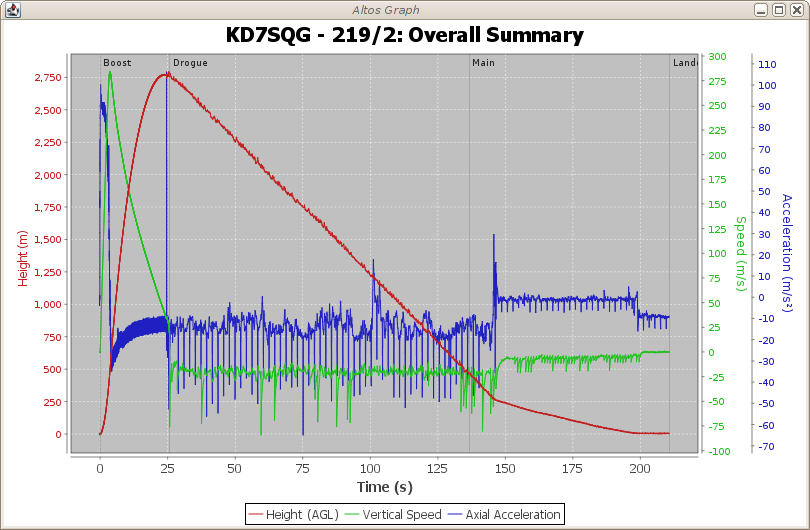
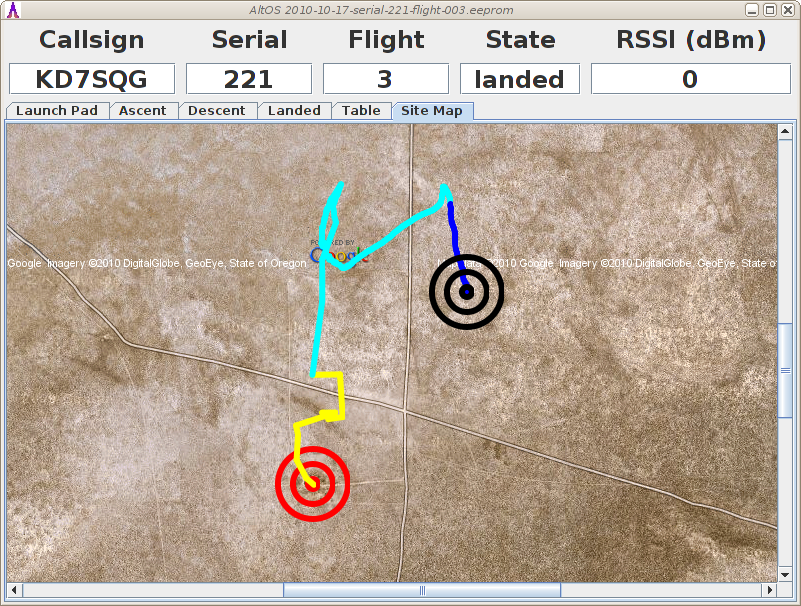
AltOS 0.8 New Software and Firmware for Altus Metrum Devices Bdale and I are pleased to announce the release of AltOS version 0.8. AltOS is the core of the software for all of the Altus Metrum products. It consists of cc1111-based microcontroller firmware and Java-based ground station software. AltosUI New Features in the AltusMetrum Ground Station AltOS version 0.8 contains significant upgrades to the ground station software, AltosUI: Continuing Features AltOS version 0.8 continues to provide the following features: AltOS Firmware Update AltOS version 0.8 contains a minor firmware update for TeleMetrum to resolve an issue with main deployment. A mis-feature in the igniter firing code would delay main deployment by 2 seconds in some cases. Thanks to our contributors! We had a lot of help with this release: Future Plans A number of features are implemented or in process in the sources available in our publicly visible repository that are not part of the current stable release. There are any number of additions that could be made to this list; feel free to send along ideas that you ve got. Of course, all of this software is licensed under the GNU General Public License, so you can get the source and hack on it in the comfort of your own home.

28 November 2010

Axel Beckert: Useful but Unknown Unix Commandline Options of cat

Yesterday in Harald K nig s commandline talk at LinuxDay.at, I first heard of cat s -e option, and noticed that cat has quite some interesting options. From the man page of cat:
-A, --show-all
equivalent to -vET
-b, --number-nonblank
number nonempty output lines
-e
equivalent to -vE
-E, --show-ends
display $ at end of each line
-n, --number
number all output lines
-s, --squeeze-blank
suppress repeated empty output lines
-t
equivalent to -vT
-T, --show-tabs
display TAB characters as ^I
-v, --show-nonprinting
use ^ and M- notation, except for LFD and TAB
Some examples made on an UTF-8 terminal:
user@host:demo $ cat bla
            
abc
user@host:demo $ cat -Ab bla
     1  M-CM-$  M-CM-6  M-CM-<^IM-CM-^_   $
$
$
     2  abc$
user@host:demo $ cat -Ens bla
     1              $
     2	$
     3  abc$
user@host:demo $ 
I hope this blog posting will reduce the percentage of useless uses of cat by raising the amount of useful uses of cat . :-)

Next.

Previous.