Search Results: "tim"

1 October 2012

Mark Brown: regulator updates in 3.6

Linux 3.6, which was released earlier today, saw continuing improvements in the factoring out of common code in the API lots of new features making drivers smaller and easier to write!

Jonas Smedegaard: Building a remote-control for real cars

SMS is used to lock car doors Copenhagen Carpool soon receive a new batch of electric cars. The new cars will contain a cellphone tied to the door locks, to only let into the car the member who booked its current timeslot. I am setting up the system to connect the cars with their booking calendar. The general idea is to
  1. Connect a standard cellphone to a computer.
  2. Forward sms messages received on the phone to the calendar.
  3. Send messages from the calendar through the phone.
  4. Leave the system in a corner, turned on 24/7.
Most of my work is in trying to avoid ways things might go wrong which so often happens when computers are involved. What if
  • messages are delayed or lost?
  • a chain of messages arrive out of order?
  • messages are sent faster than they can be delivered?

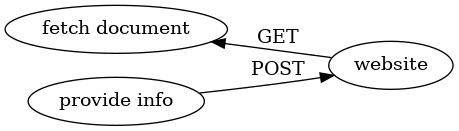
Reliable conversation Human conversation is most reliable when using plain speak. Slang, sarcasm or jokes raise the risk of misunderstandings. This is quite similar in computer conversation. When surfing the Web, you normally "GET" a web page or "POST" new data like a search query. The words "GET" and "POST" are "plain speak" of the World Wide Web defined as a principle called "REST" or "RESTful design". I use the Kannel tool to talk directly to the phones. When an sms arrives on the phone, Kannel "GET"s it to the calendar. That's weakly expressed better if it had "POST"ed the message instead. Kannel is a quite reliable tool, but not RESTful in conversations. That requires extra attention at other parts of the setup to avoid breakage in special situations. That worries me.

Each car has a blog So I setup a gateway from Kannel to RESTful conversation. And choose classic blogging as style of conversation:
  • The carpool fleet is a blogroll
  • each car has a blog
  • each sms emitted from a car is a blog entry
Blogging comes in two flavors, RSS and Atom. Both cover distribution of messages. I use Atom because it is newest and coolest, and because it also covers creating and editing meesages with the AtomPub extension. AtomPub allows the calendar to create an empty message which then triggers an sms from the car which "fills it in." AtomPub also let the calendar "PUT" tags onto existing messages, to mark them as processed, read etc., and let an admin or a cleanup script "DELETE" outdated entries or blogs. The words "PUT" and "DELETE" are RESTful conversation as well.

The system is dancing! My sms-to-blog gateway is written in Perl, using the Dancer toolkit. Dancer makes it simple to setup a RESTful web conversation, and when I contacted the authors on IRC, they swiftly added support for the non-RESTful quirk that I needed. My sms-to-blog gateway is not yet ready, but basic routines work. The project is public, and code is Free Software.

30 September 2012

Russell Coker: Links September 2012

Scott Adams has an interesting idea for political debates he calls Fact Bubbler [1]. It sounds implausible the first time you read it, but then so did Wikipedia. Arstechnica has an interesting article on software defined radio [2]. This could change many things. The Nieder Family has another update on the way patents threaten their daughter s ability to communicate [3]. Also Apple is making things worse by taking pre-emptive strikes against iPhone apps which are involved in legal disputes never use an iPhone (or other proprietary system) for anything important if you have a choice. In more positive news crowd-funded gene sequencing has found an explanation for Maya Nieder s developmental delays [4]. This will revolutionise medicine! Steven Cherry of IEEE Spectrum has an interesting interview with Peter Cappelli about the difficulties that computer and engineering companies have in hiring talented people [5]. The Guardian has an interesting article about the non-profit investigative reporting organisation ProPublica [6]. See the ProPublica.org site for some quality news reports [7]. Michael O.Church wrote an interesting and insightful article about the fate of a Just a Programmer in a startup funded by Venture Capitalists [8]. It doesn t sound good at all. EyeNetra is developing a smart-phone based system for testing eyes [9]. It s apparently possible to manufacture glasses for $0.75 so the cost and difficulty of performing eye tests is the main factor that prevents poor people in developing countries from getting glasses. So a cheap portable eye testing system is going to help many people get the glasses they need. Bryan Gardiner wrote an interesting article for Wired about the Gorilla glass that is used in most mobile phones and tablets [10]. Maco wrote an interesting article about crochet and reverse-engineering along with a Python program to print a crochet pattern [11]. I wonder whether anyone has tried to make a crochet robot, something like a 3D printer but which crochet s things rather than printing them. Holding the wool would be a real challenge, it s not nearly as easy as printing on something that s stuck down and incapable of movement.
  1. [1] http://dilbert.com/blog/entry/fact_bubbler/
  2. [2] http://arstechnica.com/tech-policy/2012/07/how-software-defined-radio-could-revolutionize-wireless/
  3. [3] http://niederfamily.blogspot.com.au/2012/06/silencing-of-maya.html
  4. [4] http://blog.ted.com/2012/07/17/newly-discovered-gene-may-explain-4-year-olds-rare-disease-thanks-to-ted-fellow-jimmy-lin/
  5. [5] http://spectrum.ieee.org/podcast/at-work/tech-careers/why-bad-jobsor-no-jobshappen-to-good-workers
  6. [6] http://www.guardian.co.uk/technology/2012/jul/02/propublica-investigative-reporting
  7. [7] http://www.propublica.org/
  8. [8] http://michaelochurch.wordpress.com/2012/07/08/dont-waste-your-time-in-crappy-startup-jobs/
  9. [9] http://eyenetra.com/
  10. [10] http://www.wired.com/wiredscience/2012/09/ff-corning-gorilla-glass/all/
  11. [11] http://ubuntulinuxtipstricks.blogspot.com.au/2010/10/algorithms-reverse-engineering-and.html
Related posts:
  1. Links April 2012 Karen Tse gave an interesting TED talk about how to...
  2. Links May 2012 Vijay Kumar gave an interesting TED talk about autonomous UAVs...
  3. Links July 2012 The New York Times has an interesting article about hacker...

29 September 2012

Jonathan Carter: LLXC: My little python3-lxc based project


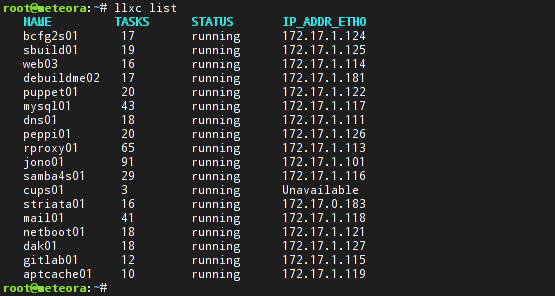
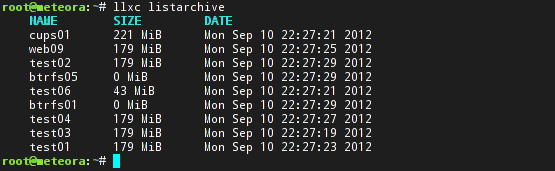
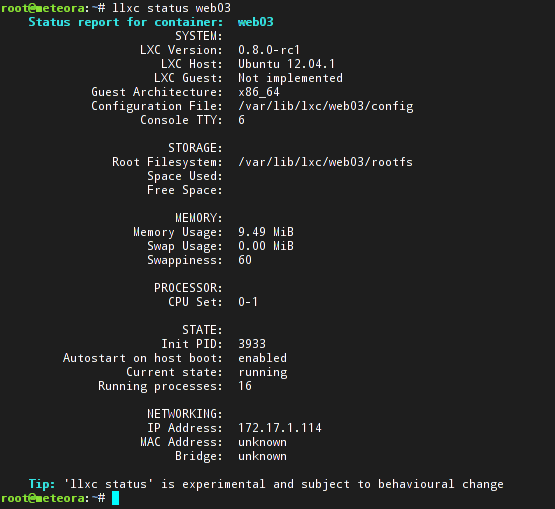
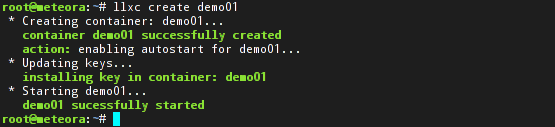
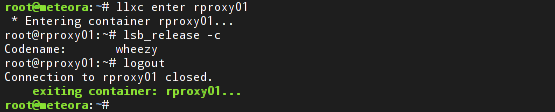
My foray into the world of LXC and RLXC A few months ago, I started trying out LXC (Linux Containers). Before that I used to use OpenVZ, which is an older and more mature contextualization implementation. I was pleased with how well LXC worked and started replacing my personal OpenVZ hosts with LXC. It worked great, but it had a few quirks. While LXC itself works well, the user scripts that ship with it has some space for improvement. The lxc-list command lists anything that s a directory in /var/lib/lxc, so if you have a lost+found directory, it will list it as a container (This has since been fixed upstream). Also, in some cases it would list containers twice or not at all. I was a bit annoyed with that, since OpenVZ s vzlist tool prints out a nice table of your containers along with their IP addresses and other information. Since it s very trivial to implement what I want in a shell script, I went ahead and did just that and called it RLXC. I also missed the vzctl exec <containername> command to execute commands in containers and vzctl enter <containername> to gain a shell inside the container, so I added some more functionality to it so that I could configure ssh keys for these containers and use rlxc enter and rlxc exec like I used to do with the OpenVZ tools, but by using SSH. I also realised that there are others too who wanted similar improvements in the LXC scripts and decided to continue improving RLXC and making it public. Enter LLXC I spoke to St phane about my ideas at the time and he introduced me to python3-lxc that he introduced on his blog yesterday. It provides Python bindings for liblxc, so I took the advantage of that and mostly re-implemented RLXC in Python and called it LLXC. The name doesn t particularly mean anything, I m open to suggestions for what to call it, if anyone cares. Here are some screenshots that explains some of it better than I could do in words: How to get it As St phane mentioned in the python3-lxc blog entry, the API hasn t yet been finalized and llxc itself is in an early state and many changes are planned, so it s definitely not meant for production use yet, but since we believe in release early, release often in the free software community, here goes Currently, llxc.py itself is *very* Ubuntu specific and its only been tested on Ubuntu 12.04, but that will be fixed once more of its kinks have been ironed out. Some people are also working on getting python3-lxc on other distributions, which will help a lot. The llxc.py script itself is hosted on Github: https://github.com/highvoltage/llxc For python3-lxc and friends, you need to enable St phane s experimental PPA: https://launchpad.net/~stgraber/+archive/experimental You will then need to install the following packages: lxc, python3-lxc, python3-crypto, lvm, btrfs-tools To generate the ssh keys used for ssh interaction between the containers, you need to run llxc gensshkeys . The enter and exec commands also rely on your containers being in dns or in your /etc/hosts file, at least for now, which you may have to configure manually. The Future There is a lot that I m planning to add, mostly to scratch my own itches. These include: I ll have some packaging for this available soon and work on making more things work right out of the box, updates will follow. Also, feedback and patches are very welcome!

28 September 2012

Don Armstrong: Switching to KGB from CIA

CIA.vc has unfortunately disappeared, and is unlikely to return any time soon. I personally have decided to switch to KGB, but other alternatives such as FBI and irker exist. To switch, you first need to find or set up a kgb bot. If this is a Debian associated FOSS project, feel free to contact me or join #kgb-devel on irc.oftc.net and ask for someone to allow your project to talk to their bot. Once you've found a bot, we need to set up the client. [I'll talk about bot set up at the end.]

kgb-client configuration Install the kgb-client and kgb-client-git packages. Currently, kgb only supports subversion and git, but I suspect this will be rectified shortly. For git repositories, add a post-receive hook like the following:
#!/bin/sh
tee hooks/reflog   kgb-client --conf /path/to/kgbclient.conf --repository git --git-reflog -
For subversion repositories, add a post-commit hook like the following:
#!/bin/sh
kgb-client --conf /path/to/kgbclient.conf --repository svn "$1" "$2"
Then update the configuration file /path/to/kgbclient.conf:
---
repo-id: my-repository
servers:
 - uri: http://servername:9999/
   password: verysecret
# optional link to a website where the commits are;
# needs newish kgb-client and server
web-link: http://example.com/?p=my-repository;a=commitdiff;h=$ commit 
Then, send the bot owner the password, repo-id, channel, and network you'd like the changes to be reported to.

Configuring kgb-bot The bots just listen to soap requests and if the password matches, sends the commit to the appropriate IRC channel. To set one up, install kgb-bot. Then, enable the bot (set BOT_ENBALED=1 in /etc/default/kgb-bot), and configure the bot's configuration file /etc/kgb-bot/kgb.conf:
---
soap:
  server_addr: 0.0.0.0
  server_port: 9999
  service_name: KGB
queue_limit: 150
log_file: "/var/log/kgb-bot.log"
repositories:
  # just a name to identify it
  my-repository:
    # needs to be the same on the client
    password: verysecret
networks:
  oftc:
    nick: KGB-you
    ircname: KGB bot
    username: kgb
    password: ~
    nickserv_password: yournickservpassword
    server: irc.oftc.net
    port: 6667
  freenode:
    nick: KGB-you
    ircname: KGB bot
    username: kgb
    password: ~
    nickserv_password: yournickservpassword
    server: irc.freenode.net
    port: 6667
channels:
  - name: '#your-channel'
    network: oftc
    repos:
     - your-repo
  - name: '#commits'
    network: freenode
    repos:
     - your-repo
Then start the bot (/etc/init.d/kgb-bot start), and watch as it joins channels and reports your changes! You'll probably actually want to register whatever nick you are using on the networks, etc... but you can figure that out yourself!

Keith Packard: DRI-Next

Thoughts about DRI.Next On the way to the X Developer s Conference in Nuremberg, Eric and I chatted about how the DRI2 extension wasn t really doing what we wanted. We came up with some fairly rough ideas and even held an informal presentation about it. We didn t have slides that day, having come up with the content for the presentation in the hours just before the conference started. This article is my attempt to capture both that discussion and further conversations held over roast pork dinners that week. A brief overview of DRI2 Here s a list of the three things that DRI2 currently offers. Application authentication. The current kernel DRM authentication mechanism restricts access to the GPU to applications connected to the DRM master. DRI2 implements this by having the application request the DRM cookie from the X server which can then be passed to the kernel to gain access to the device. This is fairly important because once given access to the GPU, an application can access any flink d global buffers in the system. Given that the application sends screen data to the X server using flink d buffers, that means all screen data is visible to any GPU-accessing application. This bypasses any GPU hardware access controls. Allocating buffers. DRI2 defines a set of attachment points for buffers which can be associated with an X drawable. An application needing a specific set of buffers for a particular rendering operation makes a request of the X server which allocates the buffers and passes back their flink names. The server automatically allocates new buffers when window sizes change, sending an event to the application so that it knows to request the new buffers at some point in the future. Presenting data to the user. The original DRI2 protocol defined only the DRI2CopyRegion request which copied data between the allocated buffers. SwapBuffers was implemented by simply copy data from the back buffer to the front buffer. This didn t provide any explicit control over frame synchronization, so a new request, DRI2SwapBuffers, was added to expose controls for that. This new request only deals with the front and back buffers, and either copies from back to front or exchanges those two buffers. Along with DRI2SwapBuffers, there are new requests that wait for various frame counters and expose those to GL applications through the OMLsynccontrol extension What s wrong with DRI2? DRI2 fixed a lot of the problems present with the original DRI extension, and made reliable 3D graphics on the Linux desktop possible. However, in the four years since it was designed, we ve learned a lot, and the graphics environment has become more complex. Here s a short list of some DRI2 issues that we d like to see fixed. Proposed changes for DRI.Next Given the three basic DRI2 operations (authentication, allocation, presentation), how can those be improved? Eliminate DRI/DRM magic-cookie based authentication Kristian H gsberg, Martin Peres, Timoth e Ravier & Daniel Vetter gave a talk on DRM2 authentication at XDC this year that outlined the problems with the current DRM access control model and proposed some fairly simple solutions, including using separate device nodes one for access to the GPU execution environment and a separate, more tightly controlled one, for access to the display engine. Combining that with the elimination of flink for communicating data between applications and there isn t a need for the current magic-cookie based authentication mechanism; simple file permissions should suffice to control access to the GPU. Of course, this ignores the whole memory protection issue when running on a GPU that doesn t provide access control, but we already have that problem today, and this doesn t change that, other than to eliminate the global uncontrolled flink namespace. Allocate all buffers in the application DRI2 does buffer allocation in the X server. This ensures that that multiple (presumably cooperating) applications drawing to the same window will see the same buffers, as is required by the GLX extension. We suspected that this wasn t all that necessary, and it turns out to have been broken several years ago. This is the traditional way in X to phase out undesirable code, and provides an excellent opportunity to revisit the original design. Doing buffer allocations within the client has several benefits: Present buffers through DMA-buf The new DMA-buf infrastructure provides a cross-driver/cross-process mechanism for sharing blobs of data. DMA-buf provides a way to take a chunk of memory used by one driver and pass it to another. It also allows applications to create file descriptors that reference these objects. For our purposes, it s the file descriptor which is immediately useful. This provides a reliable and secure way to pass a reference from an underlying graphics buffer from the client to the X server by sending the file descriptor over the local X socket. An additional benefit is that we get automatic integration of data from other devices in the system, like video decoders or non-primary GPUs. The Prime support added in DRI version 2.8 hacks around this by sticking a driver identifier in the driverType value. Once the buffer is available to the X server, we can create a request much like the current DRI2SwapBuffers request, except instead of implicitly naming the back and front buffers, we can pass an arbitrary buffer and have those contents copied or swapped to the drawable. We also need a way to copy a region into the drawable. I don t know if that needs the same level of swap control, but it seems like it would be nice. Perhaps the new SwapBuffers request could take a region and offset as well, copying data when swapping isn t possible. Managing buffer allocations One trivial way to use this new buffer allocation mechanism would be to have applications allocate a buffer, pass it to the X server and then simply drop their reference to it. The X server would keep a reference until the buffer was no longer in use, at which point the buffer memory would be reclaimed. However, this would eliminate a key optimization in current drivers the ability to re-use buffers instead of freeing and allocating new ones. Re-using buffers takes advantage of the work necessary to setup the buffer, including constructing page tables, allocating GPU memory space and flushing caches. Notifying the application of idle buffers Once the X server is finished using a buffer, it needs to notify the application so that the buffer can be re-used. We could send these notifications in X events, but that ends up in the twisty mess of X client event handling which has already caused so much pain with Invalidate events. The obvious alternative is to send them back in a reply. That nicely controls where the data are delivered, but causes the application to block waiting for the X server to send the reply. Fortunately, applications already want to block when swapping buffers so that they get throttled to the swap buffers rate. That is currently done by having them wait for the DRI2SwapBuffers reply. This provides a nice place to stick the idle buffer data. We can simply list buffers which have become idle since the last SwapBuffers reply was delivered. Releasing buffer memory Applications which update only infrequently end up with a back buffer allocated after their last frame which can t be freed by the system. The fix for this is to mark the buffer purgable, but that can only be done after all users of the buffer are finished with it. With this new buffer management model, the application effectively passes ownership of its buffers to the X server, and the X server knows when all use of the buffer are finished. It could mark buffers as purgable at that point. When the buffer was sent back in the SwapBuffers reply, the application would be able to ask the kernel to mark it un-purgable again. A new extension? Or just a new DRI2 version? If we eliminate the authentication model and replace the buffer allocation and presentation interfaces, what of the existing DRI2 protocol remains useful? The only remaining bits are the other synchronization requests: DRI2GetMSC, DRI2WaitMSC, DRI2WaitSBC and DRI2SwapInterval. Given this, does it make more sense to leave DRI2 as it is and plan on deprecating, and eventually eliminating, it? Doing so would place a support burden on existing applications, as they d need to have code to use the right extension for the common requests. They ll already need to support two separate buffer management versions though, so perhaps this burden isn t that onerous?

Joachim Breitner: The might applicative left fold

Just about three years ago, I created the automatic rule-based time tracker (arbtt), a tool that quietly runs in the background, records your current windows and their titles, and allows you to later process this data using, well, rules. By now, I have almost half a million records, spanning 317 days of me working at the computer. Processing this amount of data has become very memory-hungry: It takes 1G of RAM to process my data. Other users, with a presumably higher sampling rate, report even worse performance, which finally made me approach the problem again. Naturally, one wonders why it is such a memory hog, after all it takes just one run over the data to produce a report. The data itself is a lazy list so the garbage collector should the be able to drop the seen elements immediately. But arbtt is able to print several reports in one run; there is even an option (--each-category) that creates a number of reports based on the data itself. The code was structured that first a number of values that are possibly used by several reports are first created one and then re-used by the reports. And then there is the issue of the filters: The user specifies a what predicates are interesting (e.g., those where he was active) and some reports need to know not only which samples were matched, but also distinguish the consecutive runs of selected samples. Lots of reasons that made it hard to not use the list of of samples several times, which causes it to be completely retained in memory. The idea of completely rewriting everything in a much more imperative way was not appealing. But luckily Haskell s good abstraction possibilities can help here. What is the correct way to traverse a lazy list and calculate some information about it? It is a strict left fold, i.e. an algorithm that can be represented as arguments to
foldl' :: (s -> x -> s) -> s -> [x] -> s
For those who are new to folds: The first argument is a function that processes one element from the list, returning the new state of the processing. The second argument is the initial state. And foldl' can apply such an algorithm to a list to return a final state. So obviously I had to express my reports as left folds. To think clearer about it, I gave them a name. I also added a finishing step to the mix, which is handy:
data LeftFold x a = forall s. LeftFold  
  start :: s,
  process :: s -> x -> s,
  finish :: s -> a
   
A value of type LeftFold x a is then an algorithm that traverses a list of xes and returns something of type a. The forall s. means that the user of such a processor must not make any assumptions about the type of the state. I also have a function that runs such a list processor, simply by invoking foldl' with the arguments stored in the LeftFold constructor:
runLeftFold :: LeftFold x a -> [x] -> a
runLeftFold (LeftFold st1 p1 f1) xs = f1 (foldl' p1 st1 xs)
Now, as a Haskell programmer, I am searching for monads everywhere, and it really would have been nice if this were a monad, as they are very easy to compose. But unfortunately, they do not form a monad. If they did then I could decide after running one processor and looking at the result how I would want to process the list now, but this obviously contradicts with the desire to traverse the list only once. But there is the monad s smaller ugly sibling, the applicative functor. One can still somewhat nicely compose them to form more complex algorithms, just with more restrictions. Here is my instance:
instance Functor (LeftFold x) where
  fmap f (LeftFold st1 p1 f2) = LeftFold st1 p1 (f . f2)
instance Applicative (LeftFold x) where
  pure x = LeftFold () const (const x)
  LeftFold st1 p1 f1 <*> LeftFold st2 p2 f2 = LeftFold  
  start  =  st1 :!: st2,
  process = \(s1 :!: s2) x -> p1 s1 x :!: p2 s2 x,
  finish  = \(s1 :!: s2)  -> f1 s1 (f2 s2)
   
The :!: operator is a strict tuple constructor. This is important, as otherwise the fold would be come a lazy one, I would be building up huge numbers of thunks and performance would be very bad. For the same reason every list processor should make sure that its state does not build thunks once it is in weak head normal form. Now I am at a abstraction level that I feel comfortable working in, by writing functions that combine the list processors in various ways. Probably the most important one for me is already present in the libraries (here with a specialized type):
sequenceA :: [LeftFold x a] -> LeftFold x [a]
This is the whole trick: Now I can, based on the user input, run any number and selection of reports in one single list traversal. I find it very elegant that under the hood , the strict tuples are nested at precisely the right depth depending on the length of the list. As hinted at before, I do some interesting stuff that was previously represented as lists of lists of values. Expressing these as left folds was a bit tricky, but again, the complexity is contained in the combinators that I wrote (although it still gets confusing, check out processIntervalReport in Stats.hs):
monoidFold :: Monoid m => LeftFold m m
mapElems :: LeftFold y a -> (x -> y) -> LeftFold x a 
filterWith :: (x -> Bool) -> LeftFold (Bool :!: x) a -> LeftFold x a
onSelected :: LeftFold x a -> LeftFold (Bool :!: x) a
onJusts :: LeftFold x a -> LeftFold (Maybe x) a
onAll :: LeftFold x a -> LeftFold (Bool :!: x) a
runOnGroups :: (x -> x -> Bool) -> LeftFold x y -> LeftFold y z -> LeftFold x z
runOnIntervals :: LeftFold x y -> LeftFold y z -> LeftFold (Bool :!: x) z
lfLength :: LeftFold x Int
lfFirst :: LeftFold x (Maybe x)
lfLast :: LeftFold x (Maybe x)
toList :: LeftFold x [x]
concatFold :: LeftFold [x] [x]
As a result, the program now only requires 10MB and runs 18% faster. If you wonder why, in the definition of runLeftFold, I do not apply the finish function strictly: That is intentional; I am actually passing the result of a processor that calculates some often required data (e.g. total time recorded) as an argument to all the list processors. (Near the end of the main function in stats-main.hs) This loop works fine as long as I am using these only in the finish functions.
There is one downside to this approach: I cannot easily calculate stuff on demand and share it between two reports. Previously, I could just bind this to a variable, pass it to all reports, only if at least one is interested it would be evaluated and if several are interested, the result would be shared. I do not have a good solution for this yet. The code above is in the self-contained module LeftFold.hs in the arbtt sources.
Several People have had this idea before, here is one blog post by Max Rabkin.
Flattr this post

Steve Kemp: So about that off-site encrypted backup idea ..

I'm just back from having spent a week in Helsinki. Despite some minor irritations (the light-switches were always too damn low) it was a lovely trip. There is a lot to be said for a place, and a culture, where shrugging and grunting counts as communication. Now I'm back, catching up on things, and mostly plotting and planning how to handle my backups going forward. Filesystem backups I generally take using backup2l, creating local incremental backup archives then shipping them offsite using rsync. For my personal stuff I have a bunch of space on a number of hosts and I just use rsync to literally copy my ~/Images, ~/Videos, etc.. In the near future I'm going to have access to a backup server which will run rsync, and pretty much nothing else. I want to decide how to archive my content to that - securely. The biggest issue is that my images (.CR2 + .JPG) will want to be encrypted remotely, but not locally. So I guess if I re-encrypt transient copies and rsync them I'll end up having to send "full" changes each time I rsync. Clearly that will waste bandwidth. So my alternatives are to use incrementals, as I do elsewhere, then GPG-encrypt the tar files that are produced - simple to do with backup2l - and us rsync. That seems like the best plan, but requires that I have more space available locally since : I guess I will ponder. It isn't horrific to require local duplication, but it strikes me as something I'd rather avoid - especially given that we're talking about rsync from a home-broadband which will take weeks at best for the initial copy.

Steve McIntyre: Anniversary trip to Scotland

Back at the beginning of September, Jo and I were invited up to Aberdeen for a weekend for a party to celebrate the 50th wedding anniversary of some friends. Then we decided to stay around for a few days - it was our 1st anniversary just two days later. :-) We had a great time at the party, and had some awesome weather for the weekend (especially considering the time of year!). We travelled around a bit for the next few days, visiting Crathes Castle, John O' Groats and Culloden amongst other places. We stayed in a hotel overlooking Loch Ness for the evening of our own anniversary, but no sign of Nessie! We headed back via Gretna Green and visited the famous (if tacky!) Blacksmith's there, then headed home. Having done both Land's End and John O' Groats in one year, we've covered the length of Great Britain. We thoroughly enjoyed ourselves for a few days, especially the lovely roads with very few people on them! Also we got to see some very unusual road signs that made us chuckle...

Stanes!

Otters! We'll definitely go back again soon!

Roland Mas: FusionForge news, September 2012

Hey, long time no see! Okay, so what's new in FusionForge land these days? Well, I guess the most prominent news is that we've just declared 5.2 stable. It's been uploaded to fusionforge.org already, and Debian packages are on their way to Debian unstable. Yay! Not-yay: the final weeks convinced us that the state of the 5.2 release candidates, and especially the packages in Debian Wheezy, wasn't near good enough for inclusion in a stable Debian release. So the packages won't be officially part of Wheezy when it comes out, to our great shame. The packages from unstable should work fine however, and we'll provide backports via the official Debian channel, backports.debian.org as soon as possible. And finally: the developers (and some users) of FusionForge will gather for a work session in Paris on the 10th of October, as described on the Meeting/Oct2012 page on the FusionForge wiki. Join us if you're interested!

Johannes Schauer: visit at Paris IRILL

Last week, I was invited to give a talk about my Debian bootstrapping efforts at IRILL in Paris. The slides of my talk are online as pdf. The time I spent in Paris with Pietro Abate was very fruitful. I have to thank him and Roberto di Cosmo for inviting me and even compensating for my travel expenses. The things we actually managed to implement during my visit: The two most important things (in my opinion) that we came up with for future implementation, were the idea to harvest reduced build dependency information from Gentoo as well as finding a flaw in the way the current dependency graph relates to binary packages and their installation sets. I am still busy with evaluating output from my trials with Gentoo, so I will cover this topic in a later blog post once I generated the actual impact on the dependency graph. The current status is, that Gentoo USE flags allow me to find possibly droppable build dependencies for 250 out of the 350 interesting Debian source packages that are part of the main scc. Pietro also found a current flaw in how the dependency graph is generated. While source package A and B might both depend on binary package C (and its installation set), it is wrong to add a dependency to C from both source packages without further verification. Due to virtual packages and disjunctive dependencies, C might have many possible installation sets. Only one of them is chosen in the current code. The problem is, that this one chosen set might conflict with the other build dependencies of source packages depending on C. Therefor, there must exist multiple binary package nodes C, each with a different installation set, dynamically generated as they are needed. Source packages must point to the node for C that possesses an installation set that doesnt conflict with its own build dependencies. Other TODO notes that we came up with and that I will be implementing are: As I cannot always depend on new dose3 versions being pushed to Debian Sid right after their release, I will do the dose3 git submodule integration over the weekend. This will allow me to evaluate the results I got from my evaluation of Gentoo USE flags that I gathered over the past week.

26 September 2012

Jon Dowland: Delete! Delete!

I prefer the classic Cybermen. I prefer the classic Cybermen.
The only mail-filing feature that is consistently available across all mail clients (web, mobile, desktop) and most often via a convenient button, keypress or gesture, is Delete. For a long time, I've had an email work-flow that involved archiving most mail: saving both sent and received mails to a series of folders, so I could refer back to them if necessary (and they turned up in search results). Lots of mail clients make this easy: Thunderbird supports defining an Archive folder and pressing 'a' when a mail is highlighted will move it into Archive/YYYY. Mutt, of course, can be configured to do almost anything, and I've had it set up to move mail into =archive when you hit 'a' for a long time. Sadly, other clients are not as friendly. Outlook doesn't support anything quite so convenient. Mobile clients on Android, iPhone etc. don't have easy archiving support. Neither do webmail clients like OWA. Increasingly, I check my work mail on the go: waiting for a lift, on the train to work, in a irrelevant part of a meeting, waiting for a coffee refill, etc. However, I can rarely file mail this way: I learn facts, I can react to things quickly, but I can't keep my inbox under control. For this reason I'm adjusting my workflow around 'Delete'. For work, I've set up an Exchange filter to automatically copy any message that lands in my Inbox into an Archive folder. This was surprisingly difficult to get right, and there are ongoing problems with conversation view and other things. However, once that is in place, I can merrily delete stuff from my Inbox with impunity, safe in the knowledge that I can still get stuff via search if needed. I'll need a separate process to further organise filtered mail, but that's fine. Launching mutt or Thunderbird specifically to shuffle mail into e.g. archive/2012 works for me. I still need to run my mail archiving script to extract attachments on occasion anyway.

Russell Coker: Server Use Per Person

I ve just read Diego s response to an ill-informed NYT article about data-center power efficiency [1]. This makes me wonder, how much server use does each person have? Google Almost everyone uses Google, most of us use it a lot. The main Google product is also probably the most demanding, their search engine. In a typical day I probably do about 50 to 100 Google searches, that sounds like a lot, but half of them would probably be for one topic that is difficult to find. I don t think that I do that many Google searches because I generally know what I m doing and when I find what I need I spend a lot of time reading it. I m sure that many people do a lot more. Each Google search takes a few seconds to complete (or maybe more if it s an image search and I m on a slow link), but I think it s safe to assume that more than a few seconds of CPU time are involved. How much work would each Google search take if performed on a single system? Presumably Google uses the RAM of many systems as cache which gives a result more similar to a NUMA system than one regular server working for a longer time so there is no way of asking how long it would take to do a Google search with a single server. But I m sure that Google has some ratio of servers to the rate of requests coming in, it s almost certainly a great secret, but we can make some guesses. If the main Google user base comprises people who collectively do an average of 100 searches per day then we can probably guess at the amount of server use required for each search based on the number of servers Google would run. I think it s safe to assume that Google doesn t plan to buy one server for every person on the planet and that they want to have users significantly outnumbering servers. So even for core users they should be aiming to have each user only take a fraction of the resources that one server adds to the pool. So 100 searches probably each take more than 1 second of server use. But they almost certainly take a lot less than 864 seconds (the server use if Google had one server for every 100 daily requests which would imply one server for each of the heavier users). Maybe it takes 10 seconds of server use (CPU, disk, or network whichever is the bottleneck) to complete one search request. That would mean that if the Google network was at 50% utilisation on average then they would have 86400*.5/10/100 == 43 users per server for the core user base who average 100 daily requests. If there are 80M core users that would be about 2M servers, and then maybe something like another 4M servers for the rest of the world. So I could be using 1000 seconds of server time per day on Google searches. I also have a Gmail account which probably uses a few seconds for storing email and giving it to Fetchmail, and I have a bunch of Android devices which use Google calendars, play store, etc. The total Google server use on my behalf for everything other than search is probably a rounding error. But I could be out by an order of magnitude, if it only took 1 second of server use for a Google search then I would be at 100 server seconds per day and Google would only need one server for every 430 users like me. Google also serves lots of adverts on web sites that I visit, I presume that serving the adverts doesn t take much resources by Google standards. But accounting for it, paying the people who host content, and detecting fraud probably takes some significant resources. Other Big Services There are many people who spend hours per day using services such as Facebook. No matter how I try to estimate the server requirements it s probably going to be fairly wrong. But I ll make a guess at a minute of server time per hour. So someone who averages 3 hours of social networking per day (which probably isn t that uncommon) would be using 180 seconds of server time. Personal Servers The server that hosts my blog is reasonably powerful and has two other people as core users. So that could count as 33% of a fairly powerful server in my name. But if we are counting server use per USER then most of the resources of my blog server would be divided among the readers. My blog has about 10,000 people casually reading it through Planet syndication, that could mean that each person who casually reads my blog has 1/30,000 of a server allocated to them for that. Another way of considering it is that 10% of a server (8640 seconds) is covered by me maintaining my blog and writing posts, 20% is for users who visit my blog directly, and 3% is for the users who just see a Planet feed. That would mean that a Planet reader gets 1/330,000 of a server (250ms per day) and someone who reads directly gets 1/50,000 of a server (1.72s per day) as I have about 10,000 people visiting my blog directly in a month. My mail server which is also shared by a dozen or so people (maybe that counts as 5% of a server for me or 4320 seconds per day). Then there s the server I use for SE Linux development (including my Play Machine) and a server I use as a DNS secondary and a shell server for various testing and proxying. Other People s Servers If every reader of a Planet instance like Planet Debian and Planet Linux Australia counts as 1/330,000 of a server for their usage of my blog, then how would that count for my own use of blogs? I tend to read blogs written by the type of people who like to run things themselves, so there would be a lot of fairly under-utilised servers that run blogs. Through Planet Debian and Planet Linux Australia I could be reading 100 or more blogs which are run in the same manner as mine, and in a typical day I probably directly visit a dozen blogs that are run in such a manner. This could give me 50 seconds of server time for blog reading. Home Servers I have a file server at home which is also a desktop system for my wife. In terms of buying and running systems that doesn t count as an extra server as she needs to have a desktop system anyway and using bigger disks doesn t make much difference to the power use (7W is the difference between a RAID-1 server and a single disk desktop system). I also have a PC running as an Internet gateway and firewall. Running servers at home isn t making that much of an impact on my computer power use as there is only one dedicated 24*7 server and that is reasonably low power. But having two desktop systems on 24*7 is a significant factor. Where Power is Used/Wasted No matter how things are counted or what numbers we make up it seems clear that having a desktop system running 24*7 is the biggest use of power that will be assigned to one person. Making PCs more energy efficient through better hardware design and better OS support for suspending would be the best way of saving energy. Nothing that can be done at the server side can compare. Running a server that is only really used by three people is a significant waste by the standards of the NYT article. Of course the thing is that Hetzner is really cheap (and I m not contributing any money) so there isn t a great incentive to be more efficient in this regard. Even if I allocate some portion of the server use to blog readers then there s still a significant portion that has to be assigned to me for my choice to not use a managed service. Running a mail server for a small number of users and running a DNS server and a SE Linux development server are all ways of wasting more power. But the vast majority of the population don t have the skills to run their own server directly, so this sort of use doesn t affect the average power use for the population. Nothing else really matters. No matter what Google does in terms of power use it just doesn t matter when compared to all the desktop systems running 24*7. Small companies may be less efficient, but that will be due to issues of how to share servers among more people and the fact that below a certain limit you can t save money by using less resources particularly if you pay people to develop software. Conclusion I blame Intel for most of the power waste. Android phones and tablets can do some amazing things, which is hardly surprising as by almost every measure they are more powerful than the desktop systems we were all using 10 years ago and by many measures they beat desktop systems from 5 years ago. The same technology should be available in affordable desktop systems. I d like to have a desktop system running Debian based on a multi-core ARM CPU that can drive a monitor at better than FullHD resolution and which uses so little power that it is passively cooled almost all the time. A 64bit ARM system with 8G of RAM a GPU that can decode video (with full Linux driver support) and a fast SSD should compete well enough with typical desktop systems on performance while being quiet, reliable, and energy efficient. Finally please note that most of this post relies on just making stuff up. I don t think that this is wrong given the NYT article that started this. I also think that my estimates are good enough to draw some sensible conclusions. Related posts:
  1. Name Server IP and a Dead Server About 24 hours ago I rebooted the system that runs...
  2. Google Custom Search Engine I ve just been experimenting with Google Custom Search [1]. Below...
  3. Google Server Design Cnet has an article on the design of the Google...

25 September 2012

Arnaud Quette: Power management and NUT #1: an introduction

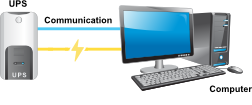
in this series of articles, I will be talking in depth about power management through the NUT project, its packaging on Debian, how to use it in general and how I see it being part of the GreenIT thing. So, let's start with an introduction: NUT is a Free Software (GPL v2+ and 3 to be precise), originally created for power protection using UPS, from home to data-centers:
To shortly describe the main features, I would say that NUT: NUT used to stand for Network UPS Tools. That is, a software for talking to your UPS and shutting down your systems when needed. This definition is a bit limited nowadays, since NUT supports 4 types of power device: Considering this, is the name Network UPS Tools still suitable? Not really! But the acronym NUT is well known! So, for the time being, I just stick using it, and focus on other more important things, until a better opportunity (ideas and comments are welcome!). That said, what can you do exactly with NUT? Currently, you can: All the above is available in a standardized way: Well, this is already a long and dense post, so I will stop there for today. In the next post, we will have a deeper dive into using NUT, for various use cases: submit yours if you can ;-) cheers,
-- Arno

Antoine Beaupr : Improvements to spam filtering after a year of tests

It seems I am still having problems with spam on this site now. Instead of getting tons of spam comments posted, I get false positive, that is legitimate content marked as spam. First off, I wish to apologize for the people that haven't seen their comments published immediately. Next, I will work on improving this and explaining the current situation. Here are the statistics that the spam module gives me: Another way to put it: In other words, the filter works very well at marking spam, so well in fact that it also marks non-spammy comments as spam... Which is a shame because it breaks the interactivity of the site. Basically, you have one chance out of 3 of not seeing your content posted online, which leads people to try to submit it three times, which actually gets them blocked even more. And this is only the spam module filters: the CAPTCHA module tells me it's blocked 26535 attempts (26 thousand) - amazing. So overall, the solutions I put in place a year ago work, somehow, but are too aggressive. I have therefore bumped the threshold from 65% to 80%, hopefully that will help with this. I have also updated the Honeypot module since they have done lots of releases since 1.5, fixed the issue I reported and it's now in use on Drupal.org after some tweaking by our venerable webmaster killes. If this fails, I will look again at other solutions, like the blogspam plugin that relies on the communnity-run blogspam.net site which powers, amongst other things, Debian Administration and Ikiwiki sites. Back then, I also was considering the Bad Behavior and Block Anonymous links modules. (Note to self: I have also removed around 150 comments sitting in the spam module moderation queue, that it didn't seem to remove as it should have done.)

24 September 2012

Felipe Augusto van de Wiel: 24 Sep 2012

A new journey ahead
Changing jobs and moving to a new country... it's just the beginning.

On September 30th, 2012 I'm moving to Menlo Park, CA, USA because back in December 2011 I accepted a job offer as a sysadmin (the name is fancier: Operations Engineer) in Silicon Valley. Since then I'm working on the required documentation, so far everything had worked out. I'm starting at the new work on October 8th, and as I'm arriving on October 1st, I'll have a week to take a look around and get to know a tiny bit of San Francisco Bay Area.


In different levels and aspects it is a big opportunity for me, and I'm confident it'll be an unique experience, not only professional, which of course involves working in a bigger company with more complex scenarios and bigger challenges, and on the personal side, I'll live abroad, be an expat.


As you may imagine, I'm working on this process for more or less 10 months, but in the last 30 days it got more intense. Quitting my jobs, organizing my stuff, cleaning part of backlog (and finding out a have a huge to-do list awaiting for me). Spending quality time with family and friends, and also saying goodbye to them. Finishing some aspects of the move (travel tickets, temporary living).


It's new, it's different! I'm super excited and I do want to change a few things to make it easier for family and friends to keep up, make it easier to follow the news, which might help with the distance.
And now for something completely different! See you all pretty soon! :-)

Mart&iacute;n Ferrari: Report from the Dublin BSP

I should have posted this a few days ago, better late than never they say... On Saturday, 8/9/12, a BSP was held in Dublin for the first time. Google kindly offered office space and some food and refreshments for the event, so we had a nice room with good Internet access and two big screens to project IRC activity. I consider the event to be a big success. There was a good attendance: 15 people showed up, with most of them staying a solid 8 hours. There was a good balance of experienced Debian people and newcomers, as well as a few DDs that work for Google. Even if the squashed bug count was not huge, it was great to see people helping each other, people who had never done any Debian work getting up to speed with the basics and getting excited about helping. I think the biggest outcome of this BSP is that after we packed up, we had already agreed on holding a second BSP in October, and to bootstrap a local Debian community! (Now we need to convince the listmasters to create the mailing list at #687430). A few stats:
  1. 15 people attended.
  2. 7 DDs, 2 DM, and 6 unaffiliated contributors.
  3. 6 out of 15 attendees were Googlers.
  4. 8 different nationalities.
  5. 2 people came from Germany to attend the event.
  6. And the most important stat: 25 bugs were closed, lowered severity, received patches, or got worked on.
I would like to thank everybody who participated, to Google for sponsoring the event (and sponsoring the next one too!), and to marga@ and maxy@ for coming from M nchen, and helping with the organisation and with the introductory talk. I hope to see you all again in the next BSP, tentative date: October, 20th. Tags: Planet Debian, Debian

Wouter Verhelst: Questions

Last weekend, I was a member of the off-stage choir in the Cinderella production in Wilrijk. As the off-stage choir didn't have all that much to do (out of 24 scenes, only five of them had music with the off-stage choir; and then, one of them only required women, and another only required male voices for about 8 bars out of 200+), I had a lot of spare time on my hands; and since I'm in the possession of a laptop with 8h+ of battery life, I used some of that time for hacking on dvswitch. Obviously, when you're typing away on a computer using an uncommon user interface (I use awesome as my window manager), questions will arise. I expected this; and luckily, dvswitch is not the kind of code that requires a lot of explanation for people to understand how it's useful a short demonstration is very enlightening. For most people, that simple demonstration would be enough. But one person asked me a question that I've heard other people ask me in the past (albeit in relation to different projects), and that I've always found the most baffling question people can ask someone who's writing some computer program: "Why?" Setting aside the fact that no, his example of Adobe Premiere cannot do what dvswitch can, I've never understood the thought train that leads to "it's been done already, so that's useless." Why does a poet write poems, when they'll never get something similar to Shakespeare's works on paper? Why does my father insist on painting portraits of people including their hands, when he knows he's not very good at it? Why does my mother teach a bunch of amateurs in the ways of floristry? Hasn't that been done before? Because it's fun, that's why.

Gerfried Fuchs: I hate my life

This poem was triggered by a discussion with a special person not special in the sense I address in the poem though.
My life's hating me
But it is not a one-way:
I'm hating my life Hate being special
I know I can help others
But what about me? All quite supportive
Respect for my openness
And encouraging Though, no step further
No clue how to handle me
Afraid to ask me Hooking up with me?
Suddenly embarrassing
Just scolding words left Want to be normal
Maybe I'll lie to myself
Though that won't work out I am what I am
And sometimes it just pains me:
Hate being special I'm hating my life
But it is not a one-way:
My life's hating me
Please refrain from asking whether I feel fine, I am in good mood. :) But I haven't written anything in a way too long time, I noticed how little actually during selecting poems for the International Poetry Night during debconf. So I picked up the idea and caressed it until I came up with the above piece about with which I am quite happy. Think about it, and ... try to enjoy. Potential interesting sidenote, if you wonder: the title refers to this snippet from the first Futurama episode: I hate my life I hate my life I hate my life. :)

/personal permanent link Comments: 1 Flattr this

Russell Coker: Australian Mobile Phone Costs

I previously wrote about the changes to bundling prices by Virgin (which are similar to changes by other telcos) which make it uneconomical to take a bundled phone [1]. This makes it a little easier to compare telcos as there is no need to be concerned about which telcos offer phones you like. Now it s just a matter of call costs and this is easier to assess when the cost of a phone isn t adding to the confusion. Comparing Australian Telcos I m currently with Virgin and I ve found them to be OK in every way. They use the Optus network which isn t as good as the Telstra network but which supports more phones. Virgin charge $19 per month for a SIM without a phone, that gives you $450 worth of calls at a rate of $0.99 per minute + $0.40 connection and $0.28 SMS as well as free calls to other Virgin customers [2]. If the people you call most are on Virgin it s going to be almost impossible to use the $450 at those rates. The $19 plan only includes 250MB of data per month, for an extra $5 you can get another 500MB or for $10 you can get 2GB. For my use $29 is probably the right plan, for my wife $19 would do. Vodafone doesn t offer free calls to other Vodafone customers unless you are on a $30 per month plan, but that plan only gives 500MB of data measured in 12KB increments so that s going to be expensive. Also Vodafone have had some quality problems recently so I m not going to link to them. Optus has some interesting options, they start with a $14 per month plan that includes 50MB of data and 500SMS that could be good value if you do lots of SMS [3]. Also all their plans give free 5 minute calls to other phones on the same account this would be good if your SO is on the same phone account as you. Their plans offer small amounts of data and no apparent option for adding more which is a real problem for anyone who wants to use the Internet seriously. Telstra are really expensive, their web site is poorly designed, and they tell me to use Windows or a Mac. Everyone who spends most of their time in urban areas shouldn t consider them, the only reason for using Telstra is their coverage of rural areas. Internode have a new mobile phone service based on the Optus network which offers good value for money [4]. They start with a $10 per month plan that includes $165 of calls and SMS. The call cost is $0.90 per minute plus $0.35 flagfall and the SMS cost is $0.25. It also includes 100MB of data charged at 1KB increments. The $20 per month plan from Internode includes $450 of calls $1000 of free calls to other Internode mobile phones, and 1.5G of data transfer. Internode also has a $15 charge for sale and delivery of the SIM. Internode also offer 150GB of free social networking traffic, I wonder whether it would be viable to tunnel some other protocol over Twitter or Facebook TPG also has some good offers, $18 per month gives you 1.5GB of data measured in 10KB increments and $550 of phone calls at a cost of $0.90 per minute with $0.35 flagfall and $0.253 SMS cost and unlimited calls and SMS to other TPG mobile and land-line phones [5]. The $10 plan from TPG offers $2000 of free calls to other TPG phones, so if you only need 250MB of data in 10KB increments (which is a lot less than 250MB in 1KB increments) and want lots of free calls to your SO then TPG could be really good. I d rather pay an extra $2 to Internode and get data measured in 1KB increments. Conclusion My usage pattern includes a reasonably large number of calls to my wife and more than 500MB of data use every month. For this pattern the Internode plan is the cheapest for me and for my wife. It seems that a large portion of the phone using population who use the Internet a lot would find this to be an ideal plan. TPG is another good option, particularly for people who use TPG ADSL as they get a discount on the call rates and free calls to their land-line. It seems to me that anyone who uses a mobile phone enough that a pre-paid option isn t cheaper and who doesn t need the coverage that only Telstra can provide will be best served by Internode or TPG. I plan to transition to Internode some time after my current Virgin contract ends. I will probably delay the transition until the contracts for some of my wife s relatives expire. If we all migrate at the same time then we keep getting free calls to each other my relatives don t use mobile phones much so there s no money to save on calling them for free. Related posts:
  1. Is Lebara the Cheapest Mobile Phone company in Australia? My parents have just got a mobile phone with a...
  2. Choosing an Australian Mobile Telco for use with Android Since playing with the IBM Seer augmented reality software [1]...
  3. Changing Phone Prices in Australia 18 months ago when I signed up with Virgin Mobile...

Next.

Previous.