Search Results: "ina"

13 January 2011

Matthew Garrett: EFI implementation bugs

I'm working on improving various bits of Apple hardware support, which includes trying to make EFI booting on Macs more sensible. One of my test machines is an 11" Macbook Air, which is a beautiful piece of hardware. If you want something small and light that's approximately a proper computer rather than a netbook, there's nothing else in the x86 market to touch it. Nothing.

So it's a shame that while Apple employs hardware designers who are absolutely the best in their field, their firmware developers are utterly incompetent. The EFI spec describes a protocol called GOP (Graphics Output Protocol) which allows the operating system to find out things like the screen resolution, framebuffer location and stride. This machine kindly passes everything back correctly, except for stride being wrong. Like, utterly wrong. Implausibly wrong. Obviously, terrifyingly wrong. So wrong that if you trust it, your screen image looks like it's been involved in some sort of awful pasta making accident. But never mind, that's a single line workaround.

But there's far, far worse. EFI has three modes of operation - boot services, runtime services, and runtime services with a virtual memory map. Boot services are, as the name implies, intended to be used by the bootloader. They're contained within memory marked with a type of either BOOT_SERVICES_CODE or BOOT_SERVICES_DATA. Once the bootloader has loaded the OS, just before handing over to it, it calls ExitBootServices() and the firmware is then at liberty to clear those areas of memory. The OS never executes boot services code and can use the memory that was allocated to them.

So then we have runtime services. EFI is, depending on how you want to look at it, either saner or much less sane than traditional BIOS access. The firmware gives you a bunch of function pointers and you then simply call them with native calling convention (this, incidentally, is why it's pretty much impossible to run a 32-bit OS on 64-bit EFI, or a 64-bit OS on a 64-bit system that happens to have 32-bit EFI). To begin with the firmware assumes flat physical mapping, which isn't entirely ideal when you're an OS with virtual address space - so there's a SetVirtualAddressMap() call which lets the OS pass a memory map to the firmware, and from then on everything just works.

Except on this machine. On this machine, you call SetVirtualAddressMap() and the kernel faults because it's just tried to execute code from a region of address space that's marked as non-executable. Closer examination revealed that, yes, this area of address space is marked as RAM and so the kernel's doing the right thing. Except, obviously, the right thing generally doesn't involve crashing the machine at boot time, so there was something else up.

That something else turned out to be SetVirtualAddressMap() calling into boot services code. The boot services code that's not supposed to be touched after ExitBootServices() has been called. The boot services code that's flagged as BOOT_SERVICES_CODE and was therefore mapped as RAM by us because, well, nothing's there any more. The boot services code that we're ignoring exactly as the spec says we should.

So, a quick change to the bootloader to pass us an e820 map[1] that marks the boot services regions as reserved, a quick change to the kernel to mark BOOT_SERVICES_CODE regions as executable and we're in business. Except that when we call SetVariable() to configure the bootloader, the firmware tries to read from an address that's approximately 54TB above anything else.

BlApple.

[1] Oh, yes, despite E820 being an x86 BIOS-specific thing, we use it for the in-kernel representation of the address map under EFI as well. So despite the EFI memory map being available to the kernel, the bootloader has to construct something that looks like an E820 map, losing information in the process. So even though it's been given the E820 map, the kernel has to look through the EFI memory map in order to find the EFI runtime services section in order to mark it executable. This is, arguably, insane, but so is the entirety of EFI so that's ok then.

Wouter Verhelst: DVD's ready

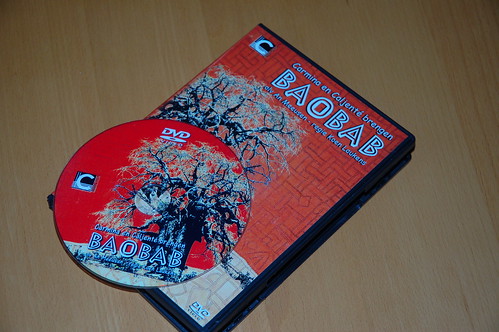
Yesterday, I was finally able to fetch this: Baobab DVD (plus 99 more like it) It's been a while since the concert back in march, which we recorded (with dvswitch); the reason it took that long was mainly due to a few organizational reasons where people who needed to order couldn't because someone else was delaying (you don't want to know). But the DVD's are now, finally, ready. I (really) like what they look like. There'll probably be a few leftovers, but I can deal with those.

Dominique Dumont: Debian copyright DEP5 parser/editor/validator/migrator is released

Hello The new version of libconfig-model-perl 1.229 is now available in Debian/Sid. This new version provides a model of Debian s DEP-5 copyright file specification updated according to the CANDIDATE version. (Among other features, like editor/validator for debian/control). The DEP-5 editor must be run in the source package directory (I ll provide an example below) with the following command:
config-edit -application dpkg-copyright
Features: Known issues: Example: The copyright file of libconfig-model-backend-augeas-perl needs to be updated: Here s the original copyright file (slightly edited to protect my mail box and save electrons) :
$ cat debian/copyright
Format-Specification: http://wiki.debian.org/Proposals/CopyrightFormat?action=recall&rev=196 Upstream-Maintainer: Dominique Dumont (ddumont at cpan.org)
Upstream-Source: http://search.cpan.org/dist/Config-Model-Backend-Augeas/
Upstream-Name: Config-Model-Backend-Augeas Copyright: 2008-2009, Dominique Dumont (ddumont at cpan.org)
License: LGPL-2+ Files: debian/*
Copyright: 2009, Dominique Dumont
License: LGPL-2+ License: LGPL-2+
This program is free software; you can redistribute it and/or
[snip]
First, let s just check issues:
$ config-edit -application dpkg-copyright -ui none
Element Upstream-Maintainer of node Debian::Dpkg::Copyright is deprecated
Element Upstream-Source of node Debian::Dpkg::Copyright is deprecated
Element Upstream-Name of node Debian::Dpkg::Copyright is deprecated
Missing Files: specification at top of section number 2. Adding Files: * spec
Then, let s see what s config-edit can fix all by itself:
$ config-edit -application dpkg-copyright -ui none -save
[ same warnings displayed ]
Let s check the result of the migration:
$ config-edit -application dpkg-copyright -ui none
[ good: no more warnings ]
And here s the content of the upgraded file (drum rolls, please):
$ cat debian/copyright
Format: http://dep.debian.net/deps/dep5/
Upstream-Name: Config-Model-Backend-Augeas
Upstream-Contact: Dominique Dumont (ddumont at cpan.org)
Source: http://search.cpan.org/dist/Config-Model-Backend-Augeas/ Files: *
Copyright: 2008-2009, Dominique Dumont (ddumont at cpan.org)
License: LGPL-2+ Files: debian/*
Copyright: 2009, Dominique Dumont
License: LGPL-2+ License: LGPL-2+
This program is free software; you can redistribute it and/or
[snip]
You can see that: Please provide feedback! If you have problem migrating DEP5 files, yell, and we ll fix them. If this migration works fine, don t be shy, please say so. Under the hood:

Most of the migration work is specified in DEP-5 model [2]. Using config-model s GUI [3] to update DEP-5 model, about one hour was spent to: This shows one important feature of Config::Model: maintenance and evolution of a model is not a huge task. Even though copyright files are not configuration files, the same approach can be used to specify model and migration of other configuration files. Now comes the question of the migration as seen by the user. Well, it s your turn now. Try it and tell us how it works! Hopefully, encouraged by your feedback, other people will apply config-model to other specifications or other configuration. All the best (*) E.g, in the text format produced by the model editor GUI: 'Upstream-Contact',

'value_type' => 'string',
'migrate_from' =>
'formula' => '$old_maintainer',
'variables' =>
'old_maintainer' => '- Maintainer'

,
'type' => 'leaf',
'description' => '* Syntax: line based list [snip]'
,

12 January 2011

Mike Hommey: Attempting to track I/O with systemtap

There are several ways a program can hit the disk, and it can be hard to know exactly what s going on, especially when you want to take into account the kernel caches. This includes, but is not limited to: There are various ways to track system calls (e.g. strace) allowing to track what a program is doing with files and directories, but that doesn t tell you if you re actually hitting the disk or not. There are also various ways to track block I/O (e.g. blktrace) allowing to track actual I/O on the block devices, but it is then hard to back-track what part of which files or directories these I/O relate to. To the best of my knowledge, there are unfortunately no tools to do such tracking easily. Systemtap, however, allows to access the kernel s internals and to gather almost any kind of information from any place in a running kernel. The downside is that it means you need to know how the kernel works internally to gather the data you need ; that will limit the focus of this post. I had been playing, in the past, with Taras script, which he used a while ago to track I/O during startup. Unfortunately, it became clear something was missing in the picture, so I had to investigate what s going on in the kernel. Setting up systemtap On Debian systems, you need to install the following packages: That should be enough to pull all the required dependencies. You may want to add yourself to the stapdev and stapusr groups, if you don t want to run systemtap as root. If, like in my case, you don t have enough space left for all the files in /usr/lib/debug, you can trick dpkg into not unpacking files you don t need:
# echo path-exclude /usr/lib/debug/lib/modules/*/kernel/drivers/* > /etc/dpkg/dpkg.cfg.d/kernel-dbg
The file in /etc/dpkg/dpkg.cfg.d can obviously be named as you like, and you can adjust the path-exclude pattern to what you (don t) want. In the above case, kernel drivers debugging symbols will be ignored. Please note that this feature requires dpkg version 1.15.8 or greater. Small digression One of the first problems I had with Taras script is that systemtap would complain that it doesn t know the kernel.function("ext4_get_block") probe. It is due to a very unfortunate misfeature of systemtap, where the kernel.* probes refer to whatever is in the vmlinux image. Modules probes have a separate namespace, namely module("name").*. So for the ext4_get_block() function, this means you need to set a probe for either kernel.function("ext4_get_block") or module("ext4").function("ext4_get_block"), depending how your kernel was compiled. And you can t even use both in your script, because systemtap will complain about either being an unknown probe Tracking the right thing I was very recently pointed to a Red Hat document containing 4 useful systemtap scripts ported from dtrace, which gives me a good occasion to explain the issue at hand with the first of these scripts. This script attempts to track I/O by following read() and write() system calls. Which is not tracking I/O, it is merely tracking some system calls (Taras script had the same kind of problem with read()/write() induced I/O). You could just do the very same with existing tools like strace, and that wouldn t even require some system privileges. To demonstrate the script doesn t actually track the use of storage devices as the document claims, consider the following source code:
#include <fcntl.h>
#include <sys/stat.h>
#include <unistd.h>
/* Ensure the resulting binary is decently sized */
const char dummy[1024 * 1024] = "a";
int main(int argc, char *argv[])  
  struct stat st;
  char buf[65536];
  int i, fd = open(argv[0], O_RDONLY);
  for (i = 0; i < 100000; i++)  
    read(fd, buf, 65536);
    lseek(fd, 0, SEEK_SET);
    read(fd, buf, 65536);
    lseek(fd, 512 * 1024, SEEK_SET);
   
  close(fd);
  return 0;
 
All it does is reading some parts of the executable a lot of times (notice the trick to make the executable size at least 1MB). Not a lot of programs will actually do something as bold as reading the same data again and again (though we could probably be surprised), but this easily points the problem. Here is what the output of the systemtap script looks like for this program (stripping other unrelevant processes):
         process     read   KB tot    write   KB tot
            test   400002 25600001        0        0
Now, do you really believe 25MB have actually been read from the disk? (Note that the read() count seems odd as well, as there should only be around 200000 calls) Read-ahead, page cache and mmap() What the kernel actually does is that a read() on a file is going to check the page cache first. If there is nothing corresponding to the read() request in the page cache, then it goes down to the disk, and fills page cache. But as loading only a few bytes or kilobytes from the disk could be wasteful, the kernel also reads a few more blocks ahead, apparently with some heuristic. But read() and write() aren t the sole way a program may hit the disk. On UNIX systems, a file can be mapped in memory with the mmap() system call, and all accesses in the memory range corresponding to this mapping will be reflected on the file. There are exceptions, depending on how the mapping is established, but let s keep it simple. There is a lot of litterature on the subject if you want to document yourself on mmap(). The way the kernel will read from the file, however, is quite similar to that of read(), and uses page cache and read ahead. The systemtap script debunked above doesn t track these. I ll skip write accesses, because for now, they haven t been in my scope. Tracking some I/O with systemtap What I ve been trying to track so far has been limited to disk reads, which happen to be the only accesses occurring on shared library files. Programs and shared libraries are first being read() from, so that the dynamic linker gets the ELF headers and knows what to load, and then are mmap()ed following PT_LOAD entries in these headers. As far as my investigation in the Linux kernel code goes, fortunately, both accesses, before they end up actually hitting the disk, go through the __do_page_cache_readahead kernel function (this function was tracked in Taras script). Unfortunately, while it is called with an offset and a number of pages to read for a given file, it turns out the last pages in that number are not necessarily being read from the disk. I don t know for sure, because the latter had an effect on my observations, but some might even already be in the page cache. Going further down, we reach the VFS layer, which ends up being file-system specific. But fortunately, a bunch of (common) file-systems actually share page mapping code, and commonly use the mpage_readpage and mpage_readpages functions, both calling do_mpage_readpage to do the actual work. And this function seems to be properly called only once for each page not in the page cache already. If my reading of the kernel source is right, this however is not really where it ends, and do_mpage_readpage doesn t actually hit the disk. It seems to only gather some information (basically, a mapping between storage blocks and memory) that is going to be submitted to the block I/O layer, which itself may do some fancy stuff with it, such as reordering the I/Os depending on other requests it got from other processes, the position of the disk heads, etc. And when I say do_mpage_readpage doesn t actually hit the disk, I m again simplifying the issue, because it actually might, as there might be a need to read some metadata from the disk to know where some blocks are located. But tracking metadata reads is much harder, and I haven t investigated it. Anyways, skipping metadata, going further down after do_mpage_readpage is hard because it s difficult to back-track which block I/O is related to which read-ahead, corresponding to what read at what position in which file. do_mpage_readpage already has part of this problem because it is not called with any reference to the corresponding file. But __do_page_cache_readahead is. So knowing all the above, here is my script, the one I used to get the most recent Firefox startup data you can find in my last posts:
global targetpid;
global file_path;
probe begin  
  targetpid = target();
 
probe kernel.function("__do_page_cache_readahead")  
  if (targetpid == pid())
    file_path[tid()] = d_path(&$filp->f_path);
 
probe kernel.function("do_mpage_readpage")  
  if (targetpid == pid() && (tid() in file_path))  
    now = gettimeofday_us();
    printf("%d %s %d\n", now, file_path[tid()], $page->index*4096);
   
 
probe kernel.function("__do_page_cache_readahead").return  
  if (targetpid == pid())
    delete file_path[tid()];
 
This script needs to be used with a command given to systemtap, with the -c option, such as in the following command line:
# stap readpage.stp -c firefox
Each line of output represents a page (i.e. 4,096 bytes) being read, and contains a timestamp, the name of the file being read, and the offset in the file. As discussed above, do_mpage_readpage is not really the place the I/O actually occurs, so the timestamps are not entirely accurate, and the actual read order from disk might be slightly different, but it still is a quite reliable view in that the result should be reproducible with the same files even when they re not located on the same blocks on disk, and provided their page cache status is the same when starting the program. This systemtap script ignores writes, as well as metadata accesses (including but not limited to inodes, dentries, bitmap blocks and indirect blocks). It also doesn t account accesses to files opened with the O_DIRECT flag or similar constructs (raw devices, etc.) Read-ahead in action Back to the small example program, my systemtap script records 102 page accesses, that is, 417,792 bytes, much less than the actual binary size on my system (1,055,747 bytes). We are still far from the 25MB figure from the other systemtap script. But we are also far from the 128KiB the program actively reads (64KiB twice, leaving a hole between the two blocks). At this point, it is important to note that the ELF headers and program code all fit within a single page (4 KiB), and following the 1MiB section corresponding to the dummy variable, there are only 5,219 bytes of other ELF sections, including the .dynamic section. So even counting everything the dynamic linker needs to read, and the program code itself, we re still far from what my systemtap script records. Grouping consecutive blocks with consecutive timestamps, here is what can be observed:
Offset Length
0 16,384
983,040 73,728
16,384 262,144
524,288 65,536
(By now, you should have guessed why I wanted that big hole between the read()s ; if you want to reproduce at home, I suggest you also use my page cache flush helper) As earlier investigations showed, the first accesses by the dynamic loader are to read the ELF headers and .dynamic section. As mentioned above, these are really small. Yet, the kernel actually reads much more: 16KiB at the beginning of the file when reading the ELF headers, and 72KiB at the end when reading the .dynamic section. Subsequent accesses from the dynamic loader are obviously already covered by these accesses. Next accesses are those due to the program itself. The program actively reads 64KiB at the beginning of the file, then 64KiB starting at offset 524,288. For the first read, the kernel already had 16KiB in the page cache, so it didn t read them again, but instead of reading the remainder, it reads 256KiB. For the second read, however, it only reads the requested 64KiB. As you can see, this is far from being something like you wanted n KiB, I ll read that fixed amount now . Further testing with different read patterns (e.g. changing the hole size, read size, or reading from the dummy variable directly instead of read()ing the binary) is left as an exercise to the reader.

Dirk Eddelbuettel: RProtoBuf 0.2.2

Thanks to two patches by Murray Stokely, we have a nice new minor release 0.2.2 of RProtoBuf out on CRAN. RProtoBuf provides GNU R bindings for the Google Protobuf data encoding library used and released by Google. The NEWS file entry follows below:
0.2.2   2011-01-11
   o    Applied two patches by Murray Stokely which 
         - correct a typo preventing some functions from being called, 
         - add bounds checking in call to google protobuf library, 
         - add a new name method 
         - add a tiny unit test for the above
         - add more graceful error handling
         - add support for import patterns other than .proto$, 
         - add simple reading file that does not exist (exception) test
         - add simple repeated field unit test
And courtesy of CRANberries, here is the diff to the previous release 0.2.1:
 ChangeLog                                               35 
 DESCRIPTION                                              8 
 R/00classes.R                                           11 
 R/internals.R                                            7 
 R/wrapper_EnumDescriptor.R                               6 
 inst/NEWS                                               12 
 inst/THANKS                                          only
 inst/doc/Makefile                                        4 
 inst/doc/RProtoBuf-quickref.pdf                      binary
 inst/doc/RProtoBuf-unitTests.pdf                     binary
 inst/doc/RProtoBuf.pdf                                2362 +++++++++-----------
 inst/doc/unitTests-results/RProtoBuf-unitTests.html     20 
 inst/doc/unitTests-results/RProtoBuf-unitTests.txt      23 
 inst/unitTests/runit.addressbook.R                      11 
 inst/unitTests/runit.enums.R                         only
 inst/unitTests/runit.golden.message.R                    7 
 inst/unitTests/runit.import.R                        only
 man/EnumDescriptor-class.Rd                             42 
 man/EnumValueDescriptor-class.Rd                        23 
 man/readProtoFiles.Rd                                    3 
 src/DescriptorPoolLookup.cpp                            26 
 src/S4_classes.h                                         6 
 src/wrapper_EnumDescriptor.cpp                          25 
 src/wrapper_EnumValueDescriptor.cpp                     25 
 24 files changed, 1357 insertions(+), 1299 deletions(-)
As always, there is more information at the RProtoBuf page which has a draft package vignette, a 'quick' overview vignette and a unit test summary vignette. Questions, comments etc should go to the rprotobuf mailing list off the RProtoBuf page at R-Forge.

10 January 2011

Christoph G hre: Shredder (aka Thunderbird/Icedove) Nightly Builds

Last August I listened to Axel Beckert's (abe) talk at FrOSCon about Automated building .deb packages from VCS snapshots. Axel builds the web browser Conkeror this way and I daydreamed from a nightly built Icedove. Mozilla provides nightly snapshots of Thunderbird, but these are compressed tar files and I'm too lazy to do things (download, extract, remove, purge, ...) which a package manager does better and faster than me. Today, four months later, I want to announce my nightly build service for Icedove. It provides binary packages - shredder-nightly - for i386 and amd64 in a signed APT repository.

Michal &#268;iha&#345;: phpMyAdmin theme contest

If you like phpMyAdmin and have web design skills, this is a chance for you. The question for new default theme has been opened for a while and in last weeks we've finally decided to rather make open contest than to stick with choosing from existing themes. All you need to do is to submit theme (compatible with phpMyAdmin 3.4) till 13th February 2011. You can find more details on our wiki.

Filed under: English Phpmyadmin 0 comments Flattr this!

Wouter Verhelst: Going

I'm going to FOSDEM, the Free and Open Source Software Developers' European Meeting Obviously. In contrast to what I claimed a few years ago, I am now also part of the FOSDEM info team, the central team that organizes this great meeting that happens every year in Brussels, Belgium. Currently, my involvement is limited to doing the same things that I did last year (except then by actually being part of the team rather than talking to them through mail), but this might change for future editions. These "things" involve organizing the cross-distro development room. The schedule isn't finalized yet (that'll happen sometime later this week), but interested parties can go have a look at the list of proposed talks for the cross-distro devroom. There's an interesting lot, IMO.

Michal &#268;iha&#345;: GPL violation - finding the culprit

After finding that Sonim's software uses GPL licensed Gammu, the obvious step was to ask them for sources of the software. They quickly transferred their responsibility to company which made software for them - A&W (Anwsoft). It took some iterations to explain them that I'm pretty sure that their software is based on Gammu and finally they gave up pointing to some external contributor for being guilty of this:
Due to the product was developed years ago, and the source code was bought from a SOHO programmer on the first beginning, so we didn t notice it included some open source code inside.
The good thing in the same thing was that they were willing to cooperate:
We are willing to cooperate with you to follow GPL License and provide corresponding sources.
As it turned out in upcoming communication, they didn't have (and still don't have) idea what GPL license contains and what they should publish. But that's story for the next post.

Filed under: English Gammu Gpl 0 comments Flattr this!

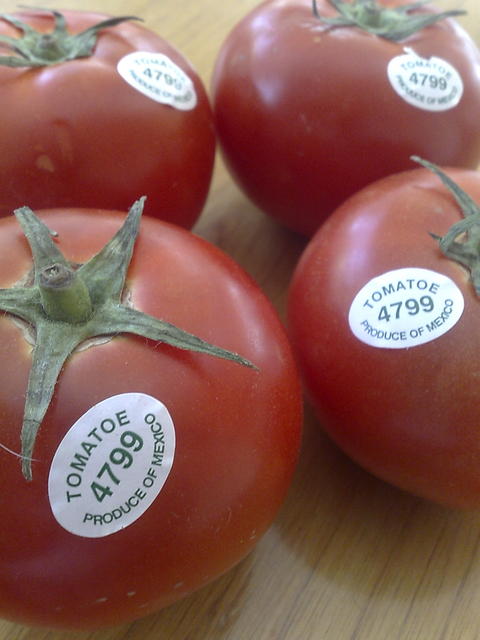
Gunnar Wolf: Tomatoes produced in Mexico

Tomatoes produced in Mexico
So this is that misterious red type of produce known only to a certain US ex-vicepresident? (seen at a Mexico City supermarket. Note that there was no label stating what the misterious thing was in Spanish)

9 January 2011

Ana Beatriz Guerrero Lopez: KOffice 2.3.0 and future

It took a bit of time due to the holidays, but KOffice 2.3.0 is finally available from Debian experimental (give some hours to your mirror to sync!). If you are unstable user don t be afraid to fetch it from experimental, it is there only because the Squeeze freeze. Squeeze will ship with KOffice 2.2.1, while not all the applications are so polished as it would be desirable, it clearly offers huge improvements over old KOffice 1.6.3. I do not know if there will be a KOffice 2.3.1 upload but I know for sure the future is with Calligra :)

8 January 2011

Dirk Eddelbuettel: RcppArmadillo 0.2.11

Just before Xmas, Conrad Sanderson released version 1.1.0 of Armadillo, his templated C++ library for linear algebra. Which I only noticed this week, so here comes version 0.2.11 of RcppArmadillo, our Rcpp-based integration into R. The only other change is the addition of an unexported function SHLIB which can be used to compiled a single source file into a loadable shared library file for R, while automagically find Rcpp and RcppArmadillo headers and the Rcpp library. The short NEWS file extract follows, also containing Conrad's entry for 1.1.0:
0.2.11  2011-01-06
    o   Upgraded to Armadillo Version 1.1.0    Climate Vandal 
         * Extended submatrix views, including access to elements whose
           indices are specified in a separate vector
         * Added handling of raw binary files by save/load functions
         * Added cumsum()
         * Added interpretation of matrices as triangular via
           trimatu()/trimatl() 
         * Faster solve(), inv() via explicit handling of triangular matrices 
         * The stream for logging of errors and warnings can now be changed 
    o   New unexported R function SHLIB, a small wrapper around R CMD SHLIB,
        which can be used as   Rscript -e "RcppArmadillo:::SHLIB('foo.cpp')"
And courtesy of CRANberries, here is the diff to the previous release 0.2.10:
 ChangeLog                                                   17 
 DESCRIPTION                                                 12 
 R/SHLIB.R                                                only
 inst/NEWS                                                   13 
 inst/doc/Makefile                                            5 
 inst/doc/RcppArmadillo-unitTests.pdf                     binary
 inst/doc/unitTests-results/RcppArmadillo-unitTests.html     16 
 inst/doc/unitTests-results/RcppArmadillo-unitTests.txt      34 
 inst/include/armadillo                                       9 
 inst/include/armadillo_bits/Col_meat.hpp                    25 
 inst/include/armadillo_bits/Col_proto.hpp                    5 
 inst/include/armadillo_bits/Cube_meat.hpp                   54 +
 inst/include/armadillo_bits/Cube_proto.hpp                   7 
 inst/include/armadillo_bits/Mat_meat.hpp                   469 ++++++++++++
 inst/include/armadillo_bits/Mat_proto.hpp                   54 +
 inst/include/armadillo_bits/Proxy.hpp                       63 +
 inst/include/armadillo_bits/Row_meat.hpp                    25 
 inst/include/armadillo_bits/Row_proto.hpp                    3 
 inst/include/armadillo_bits/arma_version.hpp                11 
 inst/include/armadillo_bits/auxlib_meat.hpp                102 ++
 inst/include/armadillo_bits/auxlib_proto.hpp                13 
 inst/include/armadillo_bits/debug.hpp                      101 +-
 inst/include/armadillo_bits/diskio_meat.hpp                280 +++++++
 inst/include/armadillo_bits/diskio_proto.hpp                 9 
 inst/include/armadillo_bits/field_meat.hpp                  23 
 inst/include/armadillo_bits/field_proto.hpp                  3 
 inst/include/armadillo_bits/fn_cumsum.hpp                only
 inst/include/armadillo_bits/fn_dot.hpp                      66 +
 inst/include/armadillo_bits/fn_elem.hpp                  only
 inst/include/armadillo_bits/fn_inv.hpp                      27 
 inst/include/armadillo_bits/fn_max.hpp                      17 
 inst/include/armadillo_bits/fn_mean.hpp                     17 
 inst/include/armadillo_bits/fn_median.hpp                   15 
 inst/include/armadillo_bits/fn_min.hpp                      21 
 inst/include/armadillo_bits/fn_misc.hpp                    604 ----------------
 inst/include/armadillo_bits/fn_prod.hpp                     15 
 inst/include/armadillo_bits/fn_solve.hpp                    22 
 inst/include/armadillo_bits/fn_stddev.hpp                   15 
 inst/include/armadillo_bits/fn_sum.hpp                      25 
 inst/include/armadillo_bits/fn_trimat.hpp                only
 inst/include/armadillo_bits/fn_var.hpp                      15 
 inst/include/armadillo_bits/forward_proto.hpp                7 
 inst/include/armadillo_bits/glue_solve_meat.hpp             32 
 inst/include/armadillo_bits/glue_solve_proto.hpp            12 
 inst/include/armadillo_bits/lapack_proto.hpp               103 ++
 inst/include/armadillo_bits/op_cumsum_meat.hpp           only
 inst/include/armadillo_bits/op_cumsum_proto.hpp          only
 inst/include/armadillo_bits/op_dot_meat.hpp                 46 +
 inst/include/armadillo_bits/op_dot_proto.hpp                 9 
 inst/include/armadillo_bits/op_find_meat.hpp                59 -
 inst/include/armadillo_bits/op_inv_meat.hpp                 13 
 inst/include/armadillo_bits/op_inv_proto.hpp                14 
 inst/include/armadillo_bits/op_trimat_meat.hpp           only
 inst/include/armadillo_bits/op_trimat_proto.hpp          only
 inst/include/armadillo_bits/podarray_meat.hpp                7 
 inst/include/armadillo_bits/span.hpp                         9 
 inst/include/armadillo_bits/subview_elem1_meat.hpp       only
 inst/include/armadillo_bits/subview_elem1_proto.hpp      only
 inst/include/armadillo_bits/subview_meat.hpp               321 ++++++--
 inst/include/armadillo_bits/subview_proto.hpp                1 
 inst/include/armadillo_bits/typedef.hpp                      4 
 inst/include/armadillo_bits/unwrap.hpp                     135 +++
 62 files changed, 2155 insertions(+), 829 deletions(-)
More information is on the RcppArmadillo page. Questions, comments etc should go to the rcpp-devel mailing list off the R-Forge page.

7 January 2011

Steve McIntyre: Isohybrid CDs being produced

New feature for Debian CDs We've had a wishlist bug (#551951) open against debian-cd for some time, asking for the creation of "isohybrid" CD images for i386 and amd64. These are special in that as well as the normal CD-based ISO9660 filesystem they also contain a valid-looking DOS-style partition table. Thus, if you simply copy one of these images raw to a USB stick a normal PC BIOS will boot the image directly. This would be a neat feature, making it much easier for people to use standard Debian installer images on their USB sticks without having to follow a lot more instructions. Support for this feature was added in syslinux/isolinux quite a while back (thanks to H Peter Anvin and the other syslinux contributors), but this depended on post-processing images with the isohybrid program. Due to the special way that we make our CD and DVD images to produce jigdo images as well, that wouldn't work for us: the jigdo files would no longer match the ISO files. Bugger...! Recently, along came more help in the form of Thomas Schmitt (author of xorriso) and George Danchev, its Debian maintainer. Recent versions of xorriso support creating isohybrid images directly, which is very handy. We've worked together in the last few months on porting my old JTE code (which creates our jigdo images) from cdrkit to xorriso, and after a lot of testing and debugging we now have things working fully. I've added a small amount of code in debian-cd to use the new xorriso features, and for the last couple of weeks all of the i386, amd64 and i386-amd64 multi-arch CDs and DVDs have been built as hybrids. It's been a delight working with Thomas and George - they're enthusiastic, helpful and friendly. Thanks, guys! What does this mean for end users? Instead of having to specially prepare USB sticks for the installer, you can now simply use dd to write the image straight to the raw stick, e.g.:
# dd if=debian-testing-i386-netinst.iso of=/dev/sdX
The USB stick should now boot directly, showing exactly the same bootup screen as if you'd written the image directly to a CD. Yay! I'm expecting to be using this code from now on for new releases, i.e. d-i beta and RC releases and for Squeeze itself when we get there. I'm not planning on backporting this code into the Lenny branch of debian-cd as it's a lot of work and I don't want to destabilise things there. What's next? We need to clear up some of the maintenance around the code as it stands; I'm planning on moving libjte inside my existing jigit package, as that's a sensible place to put it. That will come after the Squeeze release, though. We need to finalise boot support for other architectures in xorriso; I added support for them into mkisofs/genisoimage a long time ago and we've already moved some of that into xorriso. Thomas and George have also been working hard to give me faster/better size estimation code, useful for making debian-cd run faster. Finally: I'd like to add support into xorriso for creating the nasty HFS hybrid images that are needed for booting Macs. The code that does this in cdrkit is probably some of the worst that I've ever worked with, and I'd like to get away from it. If only Apple hadn't stupidly built their proprietary platform around this shit and had used open standards instead. :-( Once we have these bits in xorriso, I'll be able to move production of all of the CDs across from genisoimage to xorriso. Very nearly there for being able to drop the last remnants of Schily-ware from the Debian archive...

Amaya Rodrigo: The Debian empanada

http://es.wikipedia.org/wiki/Empanada

Cod fish, fried tomato, green and red peppers. Home made from scratch. And delicious.

I wonder why I feel the need to swirl everything up :)


Originally uploaded by Amayita.

I will one day learn how to propperly cook.

Simon Josefsson: On Password Hashing and RFC 6070

The RFC Editor has announced a new document, RFC 6070, with test vectors for PKCS5 PBKDF2. The document grow out of my implementation of SCRAM for GNU SASL. During interop testing, more than one other implementation turned out to have mistakes in the PBKDF2 implementation. It didn t help that there weren t any stable test vectors for PBKDF2, so that we could do black-box testing of our PBKDF2 implementations against well-known and stable test vectors. Debugging this was time consuming. The document addresses this problem. So what is PBKDF2?

Briefly, the PBKDF2 is the state of the art way to convert a password string into a cryptographic binary key. There are many ways to design such an algorithm. To understand why PBKDF2 is designed the way it is we need some basic understanding. The typical attack you would be concerned with is if someone compromises your authentication servers and steals the credential database. This is what happened with the recent Gawker attack, where passwords were apparently stored in clear text. The first security improvement compared to storing passwords in clear text is to only store a hashed or encrypted form of the password. Hashing is preferable over encryption in this context, because with encryption it is possible to go back to the unencrypted form (if you know the key) whereas with a hash it is computationally infeasible to do so. The downside of hashing is that it is impossible to be compatible with all kind of authentication systems: the hash of the password in the database needs to be computed using the same algorithm as the system will be using. Unfortunately there are many different schemes out there to do password hashing, including the old Unix crypt(3) algorithm and the Windows LM-hash. You normally never know in advance what kind of systems your hashed credential database needs to work for, so you have to pick some set of algorithms and hope for the best. The next security improvements are iterations and salting. Iterations means to run the hash function not once, but hundreds or even thousands of times, on the input data (e.g., password). The extra time is hardly noticeable for the user, but for an attacker who is testing an entire dictionary of common passwords against your hash, making the work cost thousand times higher quickly makes the attack vector computationally infeasible. Salting means to include something other than the password in the input to the hash function, typically a random string. Without salting, a pre-computed rainbow table would provide a dictionary attack against all hashed password databases (one rainbow table per hashing algorithm). By using a sufficiently long and random salt, a rainbow table for one system is not applicable to another system. Since generating a rainbow table is time consuming, this adds another barrier to the attacker. PBKDF2 combines these three concepts hashing, iteration and salting into one construct, and it is designed flexible enough so that it can work on any pseudo-random function. In practice, I ve only ever seen HMAC-SHA1 be used. Some final words on the publication behind RFC 6070: Out of my earlier publications, this was the document that (by a large margin) spent the least time in the IETF process. You see various milestones of the document in the RFC 6070 datatracker history page. The time in the publication process was from 2010-08-09 to 2011-01-06. One month was in the AUTH48 state, of which the initial 20 days were waiting for me to respond. Thank you to my sponsoring AD, Sean Turner, for making this possible!

Michal &#268;iha&#345;: Gammu supports Samsung phone through m-obex

The main part of the code was in Gammu for almost two months, but now it was finally debugged and confirmed working. For now you need to use version from git, but upcoming 1.28.95 will include it as well. The support is implemented through m-obex protocol, which can be switched on from standard AT commands, giving transparent support for all supporting phones without need to change existing configuration. The code was heavily based on documentation and code created by samsyncro project, thought their documentation missed some important bits. I'd really like to thank to Matthieu Patou for debugging problems of code I blindly wrote, because there were lot of issues (well it's hard to write code if you have no chance to test it).

Filed under: English Gammu 0 comments Flattr this!

Paul Wise: Another year, another log entry

It has been almost a full year since my last log entry. It has been a busy work year, I attended some nice conferences and did minimal FLOSS stuff. On the work side of things I was a third of an Australian VoIP startup that came and went. I setup Debian servers, installed OpenSIPS and associated software, wrote OpenSIPS scripts, wrote peripheral software and did customer support. We had a good thing going there for a while, some fans on the Whirlpool forums but in the end there wasn't enough money for the requisite marketing and local market circumstances were squeezing Australian VoIP providers anyway. On the conference side of things I went to LCA 2010, the Thai Mini-DebCamp 2010, DebConf10 and FOSSASIA 2010. Had a great time at all of them. At LCA 2010 in windy Wellington, New Zealand the distributions summit organised by Martin Krafft was one of the highlights. It was dominated by Debian/Ubuntu talks but there were some other interesting ones, especially the one on GoboLinux's integration of domain-specific package managers. Also excellent were the keynotes given by Gabriella Coleman (Best & worst of times), Mako Hill (Antifeatures) and others, which I felt gave LCA an improved and very welcome focus on software freedom. There were quite a few Debian folks at LCA, it was great to hang out with them during the week and afterwards. Monopedal sumo with mako and others was hilarious fun. At the Thailand Mini-DebCamp 2010 in Khon Kaen, I was glad to see Andrew Lee (Taiwan) and Christian Perrier (France) again and meet Yukiharu YABUKI (Japan) and Daiki Ueno (Japan). In addition to the five international folks, there were quite a few locals, including Thailand's currently sole Debian member, Theppitak Karoonboonyanan. The event was hosted at Khon Kaen University and opened with my talk about the Debian Social Contract and the Debian Free Software Guidelines. This was followed by a number of talks about Debian package building, a 3-day BSP where we touched 57 bugs, a great day of sightseeing and talks about i18n, derivative distros, keysigning, mirrors, contribution and a discussion about DebConf. During the week there was also the usual beersigning, combined with eating of unfamiliar and "interesting" Thai snacks. After the conference Andrew and I roamed some markets in Bangkok and got Thai massages. Beforehand I also visited a friend from my travels on the RV Heraclitus in Chiang Mai, once again experiencing the awesomeness of trains in Asia, unfortunately during the dry season this time. I took a lot of photos during my time in Thailand and ate a lot of great and spicy food. As a vegetarian I especially appreciated the organiser's efforts to accommodate this during the conference. At DebConf10 in New York City, by far the highlight was Eben Moglen's vision of the FreedomBox. Negotiating the hot rickety subways was fun, the party at the NYC Resistor space was most excellent, Coney Island was hot and the water a bit yuck, zack threw a ball, the food and campus was really nice. Really enjoyed the lintian BoF, ARM discussions, shy folks, GPLv3 question time, paulproteus' comments & insights, wiki BoF, puppet BoF, derivatives BoF, Sita, astronomy rooftop, cheese, virt BoF, Libravatar, DebConf11, Brave new Multimedia World, bagels for breakfast, CUT, OpenStreetMap & lightning talks. Having my power supply die was not fun at all. Afterwards I hung out with a couple of the exhausted organisers, ate awesome vegan food and fell asleep watching a movie about dreams. One weird thing about DebConf10 was that relatively few folks used the DebConf gallery to host their photos, months later only myself and Aigars Mahinovs posted any photos there. At FOSSASIA 2010 in H Ch Minh City (HCMC) was a mini-DebConf. I arrived at the HCMC airport and was greeted by Huyen (thanks!!), one of FOSSASIA's numerous volunteers, who bundled me into a taxi bound for the speakers accommodation and pre-event meetup at The Spotted Cow Bar. The next day the conference opened at the Raffles International College and after looking at the schedule I noticed that I was to give a talk about Debian that day. Since I didn't volunteer for such a talk and had nothing prepared, the schedule took me by surprise. So shortly after an awesome lunch of Vietnamese pancakes we gathered some Debian folks and a random Fedora dude and prepared a short intro to Debian. The rest of the day the highlights were the intro, video greetings and the fonts, YaCy and HTML5 talks. The next day the Debian MiniConf began with Arne Goetje and everyone trying to get Debian Live LXDE USB keys booted on as many machines in the classroom as possible (many didn't boot). Once people started showing up we kicked off with Thomas Goirand's introduction to the breadth of Debian. Others talked about Debian pure blends, Gnuk and building community and packages. The second last session was about showing the Vietnamese folks in the room how to do l10n and translation since Debian had only one Vietnamese translator (Clytie Siddall). After manually switching keyboard layouts (seems LXDE doesn't have a GUI for that) on the English LXDE installs, the two Cambodian folks were able to do some Khmer translation too. This was a great session and it resulted in two extra Vietnamese translators joining Debian. It went over time so I didn't end up doing my presentation about package reviewing. We rushed off to a university where the random Fedora ch^Wambassador was hosting a Fedora 14 release party in a huge packed classroom. There were a lot of excited faces, interesting and advanced questions and it was in general a success. Afterwards we had some food, joined up with some other speakers and ended up in a bar in the gross tourist zone. On the final day we hung around in the Debian room, went downstairs for the group photo and final goodbyes. Later we found a place with baked goods, coffee and juices and navigated the crazy traffic to a nice local restaurant. The next morning Arne & I went to the airport, others went on a Mekong Delta tour and Jonas hung out with the organisers. I took less photos than at other events but got a few interesting ones. I avoided doing a lot of FLOSS stuff over the last year, I hope to work on some things in the coming months; I'm also planning some interesting travel and acquiring some new technological goods, more on those in some later posts.

6 January 2011

Gunnar Wolf: Back with Ruby on Debian polemics

Once again, a polemic regarding how to properly integrate the Ruby language and libraries with the Debian distribution has been ignited. Similar arguments were presented in November and December 2008 and September 2010 And excuse me for just refering to my own blog, but there are links to some other posts from there... and there will surely be many others I just missed. There were even nice collaboration attempts (such as DebGem, announced in January 2009... But which apparently never stuck on, as it is still listed as in its public Beta period and lists only support for Debian 4.0 and Ubuntu 8.04 and 8.10). Some days ago, while I was on vacation, I received a mail from Lucas Nussbaum expressing the burnout he had been suffering from this situation. Some days after that, he posted a corresponding blog post - Giving up on Ruby packaging. The comments following his post are most interesting The one comment I'd like to highlight (noting I skimmed a whole deal of them) is by Paul Brannan, one of the original RubyGems authors. Yes, possibly the design criteria for Gems included some mutually-conflicting goals, and they cover some of Debian's goals. Unfortunately, this conflicting criteria... Was resolved to the opposite way we would have wanted (specifically, that a sysadmin should be able to install software with the same tools he was already familiar with). And of course, there are deeper disagreements, which are rightly stemmed from different priorities: Debian (+derivatives) is meant to make user's and sysadmin's lifes simpler. Gems are meant to make developers' lifes simpler. And while all developers are some sort of users, and sysadminsthe reverse is (obviously) not so. A developer maintaining several different codebases will surely suffer (well, this particular developer has surely suffered) if he has to maintain them all using coherent versions of system libraries. When a system is programmed, its developers want to use the greatest, latest tools to offer the best experience and functionality. And it's natural for libraries to evolve over time. However, any sysadmin will grind their teeth at the prospect of having many different versions of libraries, as the Gem model proposes. Why? Well, I was bitten by a minor example of it Bug fixes do not get backported. Of course, if simple bugs are not backported, security and stability of the system as a whole suffers. Often, new software versions will not only add functionality, but improve on how things are done. Not only bugs get corrected, but we get better response times, better memory handling, etc. It might sound harsh to say this, and even more, as a developer it feels I am talking against myself But while development time should be minimized during the system design/implementation, once systems are in production, it should be used to allow for friendlier sysadmin relations. I have to wear both hats at my real-life job. So, what is my take on this? Of course, blaming myself for choosing the wrong version is a no-go. When evaluating a library before using it in my projects, I try to look at its history and API-stability. APIs that change often speak about immature libraries which are still trying to get the right way to implement their functionality; just-started projects might be great and revolutionary, but they do not yet show any kind of long-term committment... And can lead (and have often led me) to painful rewrites when the Next Big Thing is reached. As for the users: Even if your favorite language has the best and friendliest distribution method, users just do not care about what language was a particular piece of software implemented in. Users want to be able to install and uninstall with their system's usual tools. Directly using Gems, CPAN, PEAR and whatnot is just unnatural for users, however convenient they are for developers. Distributions offer a non-technical advantage in this regard as well: A human filter. As an example, as I write this there are 19392 Ruby Gems and 19092 Perl modules in CPAN (note that CPAN stores some older versions but discourages authors from keeping too many - So no, they are still very different in size). Debian has around 30,000 packages. Why is that? Because all Debian packages _must_ be human-generated, human-reviewed, human-submitted. This means, a person must think each packaged piece of code is worth packaging, is stable enough and provides value to users as it is, and is fit for being part of a stable release. I am not saying with this that 90% of CPAN and Gems are crap I am saying that they are probably early implementations, to be installed, tested and improved by developers, and still not apt for general public use. Or maybe not interesting enough to be packaged as a service for the non-techie public at large. Oh, and one last point: Ruby is not a new language anymore. It is a mature, powerful language with different implementations, every time more stable... But it is a language deeply affected by the (not so new anymore either) the appearance of Rails. Why do I say this? Because although the language is in no way tied to Web development, many of its strongest uses are Web-oriented. How does this affect the current discussion? Well, because many people argue that users are no longer needed to install the software. Web systems are installed by sysadmins and used via a Web browser, and sysadmins are expected be more skilled than casual users. Still, in Debian (and in other distributions, surely) we try to make sysadmin's lives simpler I have (again, talking out of personal experience) installed several webapps (and system tools, and whatnot) for which I never followed any instructions besides aptitude install foo Using different languages, frameworks, and so on. Can I troubleshoot their installs? Probably, as there is a common logic for how the distribution I have chosen and specialized in works. Can I find causes for bugs in them? Possibly, although there are some languages and frameworks I dare not touch. Can I get help on getting them out of a tight spot? Surely, as there is a central bug tracking system for my distribution And one of the maintainer's tasks is to separate the problems related to the distribution (packaging, installing, simple user questions and misconceptions) to those derived from real bugs upstream. Anyway I am not saying that our way is the best way. No, by a long shot. Again, developers should have an easy, convenient way for installing whatever they want to play with. And to publish it without jumping through hoops. With this post, I'm only trying to express again why Debian works the way it does. And hope for better cooperation in the future. And as for several comments of what I read in Lucas' post, I think that there is interest for this synergy among some of the most committed Ruby people.

Eugene V. Lyubimkin: cupt: 2.0.0~alpha3

Notable changes since 2.0.0~alpha2:

Full changelog is available in debian/changelog, as usual.

binary packages for i386, source package and README

5 January 2011

Wouter Verhelst: Substituting gdb debug paths

Gdb is a debugger with many, many, many(1) options. Some of them are rather obscure, others... less so. While it's always had the ability to read source files and do useful stuff with them, recent versions of gdb have gained another interface (which you get by calling "gdb -tui") that makes it a bit easier to watch the source as you step through the code. Additionally (and I don't know how long that feature's been there), you can do some interesting things with source paths. Such as substituting a source path prefix by another prefix -- useful if you've moved sources around. This is accomplished by way of the 'set substitute-path' command:
(gdb) set substitute-path /home/buildd /home/wouter
Now whenever gdb is told by the debugging info to search for a file /home/buildd/foo/bar/baz.c, it will instead search for /home/wouter/foo/bar/baz.c. Very useful. One problem with the above approach, however, is that you need to know what the original path is the /home/buildd in our example. If you've built the binary yourself, you just need to remember where you built it, and you're all set. But what if you haven't built the binary yourself? I used to use strings for that, and look for any likely candidates, but that isn't very reliable and requires a bit of hunting through many many lines that just happen to look like strings to what really is a fairly naive program. Additionally, it doesn't work when the debugging symbols are in a separate file (as implemented by dh_strip), amongst others. But no worries! There's a simple solution. Rather than using strings, use readelf -w instead, and grep for DW_AT_comp_dir, which will give you the correct source directory to substitute. I'm happily single-stepping through a library now. If that isn't nice. 1 no really, many

Next.

Previous.