Search Results: "angel"

16 March 2012

Matt Brown: Kindle Reading Stats

I ve written before about my initial investigations into the Kindle, and I ve learnt much more about the software and how it communicates with the Amazon servers since then, but it all requires detailed technical explanation which I can never seem to find the motivation to write down. Extracting reading data out of the system log files is however comparatively simple. I m a big fan of measurement and data so my motivation and goal for the Kindle log files was to see if I could extract some useful information about my Kindle use and reading patterns. In particular, I m interested in tracking my pace of reading, and how much time I spend reading over time. You ll recall from the previous post that the Kindle keeps a fairly detailed syslog containing many events, including power state changes, and changes in the Booklet software system including opening and closing books and position information. You can eyeball any one of those logfiles and understand what is going on fairly quickly, so the analysis scripts are at the core just a set of regexps to extract the relevant lines and a small bit of logic to link them together and calculate time spent in each state/book. You can find the scripts on Github: https://github.com/mattbnz/kindle-utils Of course, they re not quite that simple. The Kindle doesn t seem to have a proper hardware clock (or mine has a broken hardware clock). My Kindle comes back from every reboot thinking it s either at the epoch or somewhere in the middle of 2010, the time doesn t get corrected until it can find a network connection and ping an Amazon server for an update, so if you have the network disabled it might be many days or weeks of reading before the system time is updated to reality. Once it has a network connection it uses the MCC reported by the 3G modem to infer what timezone it should be in, and switches the system clock to local time. Unfortunately the log entries all look like this:
110703:193542 cvm[7908]: I TimezoneService:MCCChanged:mcc=310,old=GB,new=US:
110703:193542 cvm[7908]: I TimezoneService:TimeZoneChange:offset=-25200,zone=America/Los_Angeles,country=US:
110703:193542 cvm[7908]: I LipcService:EventArrived:source=com.lab126.wan,name=localTimeOffsetChanged,arg0=-25200,arg1=1309689302:
110703:193542 cvm[7908]: I TimezoneService:LTOChanged:time=1309689302000,lto=-25200000:
110703:183542 system: I wancontrol:pc:processing "pppstart"
110703:193542 cvm[7908]: I LipcService:EventArrived:source=com.lab126.wan,name=dataStateChanged,arg0=2,arg1=:
110703:183542 cvm[7908]: I ConnectionService:LipcEventArrived:source=com.lab126.cmd,name=intfPropertiesChanged,arg0=
,arg1=wan:
110703:183542 cvm[7908]: W ConnectionService:UnhandledLipcEvent:event=intfPropertiesChanged:
110703:193542 wifid[2486]: I wmgr:event:handleWpasupNotify(<2>CTRL-EVENT-DISCONNECTED), state=Searching:
110703:113542 wifid[2486]: I spectator:conn-assoc-fail:t=374931.469106, bssid=00:00:00:00:00:00:
110703:113542 wifid[2486]: I sysev:dispatch:code=Conn failed:
110703:183542 cvm[7908]: I LipcService:EventArrived:source=com.lab126.wifid,name=cmConnectionFailed,arg0=Failed to connect to WiFi network,arg1=
:
Notice how there is no timezone information associated with the date/time information on each line. Worse still the different daemons are logging in at least 3 different timezones/DST offsets all interspersed within the same logfile. Argh!! So our simple script that just extracts a few regexps and links them together nearly doubles in size to handle the various time and date convolutions that the logs present. Really, the world should just use UTC everywhere. Life would be so much simpler. The end result is a script that spits out information like:

B000FC1PJI: Quicksilver: Read 1 times. Last Finished: Fri Mar 16 18:30:57 2012
- Tue Feb 21 11:06:24 2012 => Fri Mar 16 18:30:57 2012. Reading time 19 hours, 29 mins (p9 => p914)
... Read 51 books in total. 9 days, 2 hours, 29 mins of reading time
I haven t got to the point of actually calculating reading pace yet, but the necessary data is all there and I find the overall reading time stats interesting enough for now. If you have a jailbroken Kindle, I d love for you to have a play and let me know what you think. You ll probably find logs going back at least 2-3 weeks still on your Kindle to start with, and you can use the fetch-logs script to regularly pull them down to more permanent storage if you desire.

11 March 2012

Mohammed Sameer: Justin TV without flash!

Justin TV is a streaming service that uses the broken flash concept in order to allow you to view channels.

Unfortunately it's the only source of Arabic movies, series and shows.

I wrote a GStreamer source that retrieves the channel information and uses libRTMP to connect to the Justin streaming server. The rest is handled by GStreamer ;-)

If you want to watch http://www.justin.tv/ammartv for example, you simply do

gst-launch-0.10 playbin uri=jtv://ammartv

The 2nd plugin is a Totem plugin that indirectly utilizes the GStreamer source.
Given a language code (ar or en or ...), it will download the list of channels in that language and shows them in Totem's side panel. One can then easily double click on a channel and simply watch it. I originally wanted to do the Totem plugin in python but the inability to do asynchronous callback based HTTP requests prevented me :-(

Be warned that the code is of course a bit buggy and needs a lot of cleanups, it's been years since I coded anything in Gtk and that Justin might find out and either block the source somehow or even change the protocol but let's wait until that happens ;-) read more

9 March 2012

John Goerzen: Dear FedEx: I Live Here

FedEx has had some issues in my area. There for awhile, they kept returning packages as undeliverable, saying the address was bad. It wasn t. Just because their GPS can t find it or their driver doesn t know it doesn t mean it doesn t exist. A map, a real map, would have done it. I had this kind of conversation with them once. Me: So you re returning my package to the sender. FedEx: Yes sir, the address was wrong. Me: No, it wasn t. [ we confirm we're talking about the same address. ] FedEx: Our driver says it doesn t exist. Me: I ve lived here for [x] years. I do know my address. FedEx: Maybe it s just new. Me: Someone has lived at this spot since the 1890s. FedEx: Hmm. I don t know then. Me: How about I give you directions? FedEx: Well, OK, I guess I could send directions. But they probably won t see them for three days. Me: Where will my package be by then? FedEx: Hard to say. Me: Do you people have cell phones maybe? FedEx: No. Me: Well, OK then Lately we have been noticing that the driver throws the package from the truck without stopping. We find them all over the yard. Unless it s big, in which case he puts it on the porch, puts a completely useless sticker on the door saying We delivered your package to right here! , and doesn t ring the doorbell. And panics due to the muddy road. The FedEx driver once told Terah, I almost got stuck on that muddy road! What s the good one? Terah: Well, which one did you take? [ he describes ] Terah: [ serious ] That IS the good road. FedEx: [ turning pale ] Oh my. I don t know if I can make it back to the highway. Terah: Well, I suppose I could get the boys in the car and drive you into town FedEx: [ embarrassed and more pale ] Uhm that s OK uhm I think A *month* later, we got another FedEx package. The driver called me at work, saying, I just don t know how I m going to get down those roads. Can I deliver the package to you here? (10 miles away). I said yes, and managed to suppress a significant snicker at his obvious relief. FedEx drivers seem to come and go. The UPS driver, on the other hand, knows the names of our boys, our cat, and puts anything small behind the storm door so it won t blow away if we re not home. And he gets a great big laugh when I tell him that the FedEx drivers are afraid of our roads. Haha, he thinks THAT S mud? Obviously he never drives in Butler County.

4 March 2012

John Goerzen: Unreported Disk Data Corruption Kernel Bug?

Well this is new, and I m utterly baffled. Here s a file that s not in use by anything.
$ md5sum xppro.vdi
589cbb5501dcddda047344a3550aaa95 xppro.vdi
$ md5sum xppro.vdi
a69806ec60d39e06473edbb0abd71637 xppro.vdi
Every time I run md5sum on it, I get a different answer. Same story with sha256sum. If I grab just the first 100MB, it gives the same answer each time. dmesg doesn t show any sort of errors whatsoever during the time I m running the tools. The file is 13GB, and was copied from one laptop to another (the new one being a Thinkpad T420s). The old laptop gives the same answer every time. The new one doesn t. I ve put the file on different ext4 filesystems on the same machine (one using LUKS encryption, the other not, both under LVM) same result. This will have also guaranteed different placement on the underlying hard disk. I verified that nothing is modifying the file by using lsof and inotify. The system is a freshly-installed Debian wheezy running kernel 3.2.0-1-amd64. Any ideas how I go about troubleshooting/fixing this? So far I don t know if it s hardware or software, though my gut says software; SMART isn t showing issues here, and the kernel didn t log hardware issues, either.

1 March 2012

Rapha&#235;l Hertzog: My Debian Activities in February 2012

This is my monthly summary of my Debian related activities. If you re among the people who made a donation to support my work (384.14 , thanks everybody!), then you can learn how I spent your money. Otherwise it s just an interesting status update on my various projects. Dpkg and multiarch The month started with a decision of the technical committee which allowed me to proceed with an upload of a multiarch dpkg even if Guillem had not yet finished his review (and related changes). Given this decision, Guillem made the experimental upload himself. I announced the availability of this test version and invited people to test it. This lead to new discussions on debian-devel. We learned in those discussions that Guillem changed his mind about the possibility of sharing (identical) files between multiple Multi-Arch: same packages, and that he dropped that feature. But if this point of the multiarch design had been reverted, it would mean that we had to update again all library packages which had already been updated for multi-arch. The discussions mostly stalled at this point with a final note of Guillem explaining that there was a tension between convenience and doing the right things every time that we discuss far-reaching changes. After a few weeks (and a helpful summary from Russ Allbery), Guillem said that he remained unconvinced but that he put back the feature. He also announced that he s close to having completed the work and that he would push the remaining parts of the multiarch branch to master this week (with the 1.16.2 upload planned next week). That s it for the summary. Obviously I participated in the discussions but I didn t do much besides this I have a mandate to upload a multiarch dpkg to sid but I did not want to make use of it while those discussions remained pretty unconclusive. Also Guillem made it pretty clear that the multiarch implementation was buggy , not right and not finished and that he had reworked code fixing at least some of the issues since he never shared that work in progress, I also had no way to help even just by reviewing what he s doing. We also got a few multiarch bug reports, but I couldn t care to get them fixed since Guillem clearly held a lock on the codebase having done many private changes it s not quite like this that I expect to collaborate on a free software project but life is full of surprises! I ll be relieved once this story is over. In the mean time, I have added one new thing on my TODO list since I made a proposal to handle bin-nmu changelogs and it s something that could also fix #440094. Misc dpkg stuff After a discussion with Guillem, we agreed that copyright notices should only appear in the sources and not in manual pages or --version output, both of which are translated and cause useless work to translators when updated. Guillem already had some code to do it for --version strings, and I took care of the changes for the manual pages. I merged some minor documentation updates, fixed a bug with a missing manpage. Later I discovered that some recent changes lead to the loss of all the translated manual pages. I suggested an improvement to dh_installman to fix this (and even prepared a patch). In the end, Guillem opted for another way of installing translated manual pages. Triggered by a discussion on debian-devel, I added a new entry to my TODO list: implementing dpkg-maintscript-helper rm_conffile_if_owner to deal with the case where a conffile is taken over by another package which might (or might not) be installed. Misc packaging At the start of the month, I packaged quilt 0.51. The number of Debian specific patches is slowly getting down. With version 0.51, we dropped 5 patches and introduced a new one. Later in the month I submitted 4 supplementary patches upstream which have been accepted for version 0.60. This new version (just released, I will package it soon) is an important milestone since it s the first version without any C code (Debian had this for a long time but we were carrying an intrusive patch for this). Upstream developer Jean Delvare worked on this and based his work on our patch, but he went further to make it much more efficient. Besides quilt, I also uploaded dh-linktree 0.2 (minor doc update), sql-ledger 2.8.36 (new upstream version), logidee-tools 1.2.12 (minor fixes) and publican 2.8-2 (to fix release critical bug #660795). Debian Consultants The Debian Project Leader is working on federating Debian Companies. As the owner of Freexian SARL, I was highly interested in it since Freexian contributes to Debian, offers support for Debian and has a strategic interest in Debian . There s only one problem, you need to have at least 2 Debian developers on staff but I have no employees (it s me only). I tried to argue that I have already worked with multiple Debian developers (as contractors) when projects were too big for me alone (or when I did not have enough time). Alas this argument was not accepted. Instead, and since our fearless leader is never afraid to propose compromises, he suggested me (and MJ Ray who argued something similar than me) to try to bring life to the Debian Consultants list which (in his mind) would be more appropriate for one-man companies like mine. I accepted to help animate the list, and on his side, he s going to promote both the Debian Companies and the Debian Consultants lists. In any case, the list has seen some traffic lately and you re encouraged to join if you re a freelancer offering services around Debian. The most promising thing is that James Bromberger offered to implement a real database of consultants instead of the current static page. Book update We made quite some progress this month. There s only one chapter left to translate. I thus decided to start with proofreading. I made a call for volunteers and I submitted one (different) chapter to 5 proofreaders. The liberation campaign made a nice leap forwards thanks to good coverage on barrapunto.com. We have reached 80% while we were only at 72% at the start of the month (thanks to the 113 new supporters!). There s thus less than 5000 EUR to raise before the book gets published under a free license. Looking at the progression in the past months, this is unlikely to be completed on time for the release of the book in April. It would be nice though so please share the news around you. Speaking of the book s release, I m slowly preparing it. Translating docbook files is not enough, I must be able to generate HTML, ePub and PDF versions of the book. I m using Publican for most formats, but for the PDF version Publican is moving away of fop and the replacement (webkit-based) is far from being satisfactory to generate a book ready for print. So I plan to use dblatex and get Publican to support dblatex as a backend. I have hired Beno t Guillon, the upstream author of dblatex, to fix some annoying bugs and to improve it to suit my needs for the book (some results are already in the upstream CVS repository). I m also working with a professional book designer to get a nice design. I have also started to look for a Python Django developer to build the website that I will use to commercialize the book. The website will have a larger goal than just this though ( helping to fund free software developers ) but in free software it s always good to start with your own case. :-) Hopefully everything will be ready in April. I m working hard to meet that deadline (you might have noticed that my blog has been relatively quiet in the last month ). Thanks See you next month for a new summary of my activities.

No comment Liked this article? Click here. My blog is Flattr-enabled.

26 February 2012

John Goerzen: Timelessness of an Old Pickup

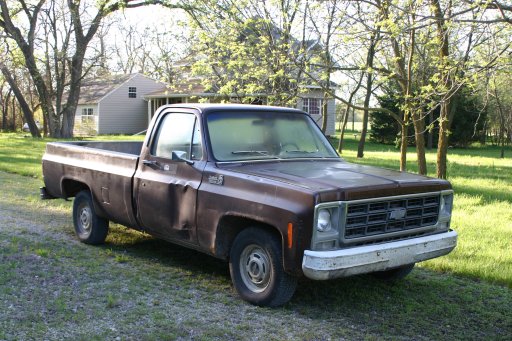
Our society is one that is pretty well defined by timeliness. TV programs start at a precise time, down to the second. Schools have elaborate timekeeping systems. Even church services are carefully timed. We know how fast we re going, and our GPS or phones tell us when we ll get there. And we re pretty confident that we will, in fact, get there. Somehow this doesn t apply to our pickup. This pickup, in case you re wondering, is a thing of stories, shall we say. After a particularly frustrating experience with it one week (oh yes, the battle extended several days), I likened it to the Greek gods. And Terah had a good laughing fit when I began a sentence with The reason there s a towel connecting the brake pedal to the steering wheel But I guess the thrifty side of me won out, and somewhere along the line, I relented. My brother fixed up the carburetor. I got it a new battery. The flat tire is repaired. The starter broke, and I got it replaced. And I even got an oil change. Fancy, I know. So today, when I needed to take some backbreaking junk off the yard, I was hoping the pickup would work. I hadn t driven it in months, and any manner of catastrophe could have struck it in that time. So I was mildly relieved when it started on the 6th try. That is, quite seriously, quite the improvement, and shows how skilled a mechanic my brother is. The speedometer, of course, isn t working. The odometer stupidly reads 21531 or something like that (it was only a 5-digit odometer, broke long ago, so who knows how many miles it really has.) And I like to keep things like grease and heavy ancient air conditioners (one of the things I was hauling) away from my watch, so I wasn t wearing it. The result: I have no idea what time it is, how fast I m going, when I ll get there, IF I ll get there, or all those things. I set out, and made it a good half mile before it died as I was rounding a corner at the bottom of the hill. Always a great place for a finicky old stick-shift vehicle to die, right? Anyhow, a few random adjustments to the choke later, and the thing sputtered then roared (and I do mean roared) back to life. A little lurching up the hill and I was back on my way. Now, I was stuck there in the middle of the road, but it was a country road, so I d have probably had a good hour to get it fixed before worrying about blocking anybody s way. My first stop: my great uncle s place. He has a scrap metal for charity project going on. He is looking for old motors, air conditioners, dehumidifiers, etc. He takes them apart, separates out the metals, sells them, and donates the result to MCC, a world relief agency. I knew I had an old dehumidifier in the basement, and thought I remembered seeing an old window air conditioner in the elevator. That thing is probably the single heaviest object I have ever moved without help. I have a bandaid to prove it. It was way too heavy to carry, so I kind of rolled it, side to side, from the side of the elevator on to the pickup. If you were watching, you d have heard me making struggling noises, followed by BANG rattle rattle rattle pause struggling noises . BANG rattle rattle rattle as I rolled it along the ground, and waited for the internal bits to settle after each quarter turn. So anyway, eventually I got it to the pickup, and then had the sickening realization: I have no way to get this thing up there. Oops. I eventually placed it on top of an old tire rim, balanced it there as I knelt down, and somehow still not quite sure how managed to lift the entire thing a few feet until I could get some leverage to shove it onto the pickup. I later commented to my dad that it was a Chrysler brand air conditioner, somewhat to my surprise, and he said that it was probably my great-grandpa s. That was a surprise. Anyhow, back to the pickup. I drove down the few miles to my great grandpa s place, not really knowing how fast I was going. I smelled the familiar smells of the old pickup: exhaust fumes, oil on hot surfaces it shouldn t be on, a touch of hot antifreeze. You never have any doubt about whether the engine is running. It was sort of nice to not know, or particularly care, how fast I was going, or what time it was. Sometimes I d idly wonder, but you know, it didn t really matter and there wasn t a thing I could do about it anyhow. I got to uncle s place, unloaded the junk sorta dropped the air conditioner off the back of the pickup with a terrific BANG, then rolled it all the way to his trailer and got back in. On to town. I hadn t put gas in the pickup in a few years, and I suspected it was getting low. (The gas gauge, you guessed it, doesn t work right either.) Plus we had some large recyclables built up and it was time to get rid of them. And for that, I had to drive on the highway a ways. The speed limit there is 65MPH. I have no idea how fast I was going, but it wasn t 65. Maybe it was 45. I got passed a lot, but nobody looked particularly surprised that a pickup that looks like mine wasn t going 65. Partway there, I smelled a different smoke smell. Not an oil smoke, but more of a grassy or wood smoke. Hmm, I thought. That s odd. Hope it s not coming from the pickup. I didn t really see smoke anywhere else, so I just drove on until I couldn t smell it anymore. I unloaded the recyclables, then went to the gas station. As the pump readout neared $50, I decided: 1) the gas tank really was pretty empty, and 2) I just can t put more gas in it anymore. That would be more than the truck s worth. So I drove home. The drive home was into the wind. My face got pretty cold I always drive with the windows open to prevent carbon monoxide poisoning (remember the fumes?) I got home and prepared to pack up the pickup close the windows, replace the bungee cord holding the brake pedal up, etc. I then thought I d have a look under the hood to see if there was anything, well, on fire. Nope, but there was a packrat nest that fell down as soon as the wind hit it. Source of grassy-smelling smoke identified. It s amazing what difference simple lack of knowledge makes sometimes. Not knowing what time it is or how fast I m going means I don t have to worry about those things. I wonder how society has changed simply because accurate and cheap watches are available. I kind of like driving the old truck. It s a bit of an adventure, a bit of a challenge, a bit of randomness, and a bit of an escape from the normal and predictable. Not a bad deal for a $75 vehicle.

23 February 2012

Jordi Mallach: alsaconf

Removing alsaconf was one of the very few rewarding moments of these ten years of taking care of ALSA in Debian. Not everyone agreed back then, and we still get some retaliation. :)
Date: Thu, 23 Feb 2012 02:59:31 +0100
From: <CENSORED>
To: jordi@debian.org
Subject: sabotage!
the removing of alsaconf without working(!) alternatives  was (AND IS!)  an
act of sabotage against millions of debian/alsa - users who needs stable
productive systems
you and all those proponents of removing this still needed alsaconf - program
will have to take the responsibility in front of an (us-) court for damages in
millions of dollars - amounts (lost man hours) all over the world
only a short while and we will have enough sponsors and witnesses around the
globe (and a very specialised, international labouring bureau of advocates) to
go to the court for prosecution.
we will not tolerate such an betray ("stable"? - do you believe, we're
fools??!!) against broad sections of the population and against the spirit of
free software!
it will be intresting to investigate, in whoms interests you've done so and
who the beneficiaries are ...
L.B.
conductor, publicist, whistleblower

21 February 2012

Aigars Mahinovs: Le Camp Le DebConf Le 2013!

The meeting was as long as the kernel changelog, the decision was as difficult as a Debian release, but in the end Le Camp has won in the voting 5 to 4. It was lucky that one member of the 10 man committee was not present or we could have had a tie, just like there was one in the first round of voting. Well, congratulations to the poor sods of the Swiss team, who will now have to fulfil what they promised and also all the small things that everyone always forgets that also need to be done for every Debconf! I think that I will try again for 2015, but before that we will try to get a few people from Latvian community to go to Debconf13 to get the Debconf and Debian experience and exposure. Meanwhile, it looks like I will be skipping this years Debconf12 it is very far away for me and as I could not find a reasonable business rationale for me being there, it would be a far and expensive vacation for me. I don t think there is enough benefit from me being there to ask for any Debian funds for this either, especially hearing how tight money is this year. So if you re going, make sure to take a camera and take a bunch of pictures, so we at home can see it too :)

17 February 2012

Dirk Eddelbuettel: Rcpp 0.9.10

A new release 0.9.10 of Rcpp is now on CRAN and in Debian. This is mostly internal release with a little bit of code reorgination (some of which will be used by a forthcoming RcppArmadillo release), some changes to make R CMD check happy, and one or two new features. The complete NEWS entry for 0.9.10 is below; more details are in the ChangeLog file in the package and on the Rcpp Changelog page.
0.9.10  2012-02-16
    o   Rearrange headers so that Rcpp::Rcout can be used by RcppArmadillo et al
    o   New Rcpp sugar function mapply (for limited to two or three input vectors)
    o   Added custom version of the Rcpp sugar diff function for numeric vectors
        skipping unncesserry checks for NA
    o   Some internal code changes to reflect changes and stricter requirements
        in R CMD check in the current R-devel versions
    
    o   Corrected fixed-value initialization for IntegerVector (with thanks to
        Gregor Kastner for spotting this)
    o   New Rcpp-FAQ entry on simple way to a set compiler option for cxxfunction
Thanks to CRANberries, you can also look at a diff to the previous release 0.9.9. As always, even fuller details are on the Rcpp Changelog page and the Rcpp page which also leads to the downloads, the browseable doxygen docs and zip files of doxygen output for the standard formats. A local directory has source and documentation too. Questions, comments etc should go to the rcpp-devel mailing list off the R-Forge page

12 February 2012

John Goerzen: XMPP for Children

When Jacob was just born, I wondered how I might introduce them to computing. I thought over various things, but that wasn t really the most pressing thing right then. I don t suppose that I could have predicted installing an XMPP IM server (Prosody) for the boys. And I certainly couldn t have predicted creating accounts named: jacob, oliver, butterfly, bear. Because, as Jacob pointed out to me, if (Jacob s favorite toy) butterfly is typing with his wings, then he shouldn t be logged in as Jacob. I admire my 5-year-old s security consciousness Anyhow, as I mentioned yesterday, Jacob and Oliver enjoy their computer, which I recently put on the LAN. The firewall does not pass any of its traffic to the Internet, though, with very limited exceptions. Jacob can read, and is starting to enjoy typing as well. So I thought he would enjoy sending IMs to me. As his computer has no GUI, I needed a text-mode client. Something with an IRC-like interface that could be scripted to open up a window with me directly sounded perfect. Initially I tried irssi s XMPP plugin, but it proved to be too buggy (wanting to always latch on to a particular resource on the remote end, not having very predictable window behavior, etc.) So I switched to mcabber. With a couple of quick configuration bits to get him automatically logged in, remove superflous windows, and connect him directly to a chat with me, it was set. And well-loved. He sent me a mix of real words and random things he created by replacing letters in Jacob or by holding down keys. In the mcabberrc, besides the obvious setting of username and password, there is:
set log_win_height = 1
set hook-post-connect = source ~/.mcabber/post-connect.rc
The hook is simply:
roster search Dad
roster hide
After awhile, Jacob wanted to switch computers. He wanted to use my laptop, and me use his computer. He refused to switch back. I asked him why. Because on your computer, my name is red. I should have known. I set it to bright white on his computer, but I think tomorrow we may need to upgrade him to the color monitor I ve been saving for just such an occasion It will be a whole new set of discoveries, I m sure. Update: I also tried out freetalk, which looked like it would meet my goals nicely. The problem was it didn t have a dedicated everything typed goes to this person mode. It did have a mode where it put the person s JID on the command line by default, but excessive use of backspace key by a 5-year-old could wipe that out and leave it in a state where he d be confused.

11 February 2012

Bartosz Fe&#324;ski: Useful changelog

Here it goes: BIOS changelog Tell me if I should upgrade it or not

John Goerzen: Shell Scripts For Preschoolers

It probably comes as no surprise to anybody that Jacob has had a computer since he was 3. Jacob and I built it from spare parts, together. It may come as something of a surprise that it has no graphical interface, and Jacob uses the command line and loves it and did even before he could really read. A few months ago, I wrote about the fun Jacob had with speakers and a microphone, and posted a copy of the cheat sheet he has with his computer. Lately, Jacob has really enjoyed playing with the speech synthesizer both trying to make it say real words and nonsense words. Sometimes he does that for an hour. I was asked for a copy of the scripts I wrote. They are really simple. I gave them names that would be easy for a preschooler to remember and spell, even if they conflicted with existing Unix/Linux commands. I put them in /usr/local/bin, which occurs first on the PATH, so it doesn t matter if they conflict. First, for speech systhesis, /usr/local/bin/talk:
#!/bin/bash
echo "Press Ctrl-C to stop."
espeak -v en-us -s 150
espeak comes from the espeak package. It seemed to give the most consistenly useful response. Now, on to the sound-related programs. Here s /usr/local/bin/ssl, the sound steam locomotive . It starts playing a train sound if one isn t already playing:
#!/bin/bash
pgrep mpg321 > /dev/null mpg321 -q /usr/local/trainsounds/main.mp3 &
sl "$@"
And then there s /usr/local/bin/record:
#!/bin/bash
cd $HOME/recordings
echo "Now recording. Press Ctrl-C to stop."
DATE= date +%Y-%m-%dT%H-%M-%S
FILENAME="$DATE-$$.wav"
chmod a-w *.wav
exec arecord -c 1 -f S16_LE -c 1 -r 44100 "$FILENAME"
This simply records in a timestamped file. Then, its companion, /usr/local/bin/play. Sorry about the indentation; for whatever reason, it is being destroyed by the blog, but you get the idea.
#!/bin/bash
case "$1" in
train)
mpg321 /usr/local/trainsounds/main.mp3
;;
song)
/usr/bin/play /usr/local/trainsounds/traindreams.flac
;;
*)
cd $HOME/recordings
exec aplay ls -tr tail -n 1
;;
esac
So, Jacob can run just play , which will play back his most recent recording. As something of a bonus, the history of recordings is saved for us to listen to later. If he types play train , there is the sound of a train passing. And, finally, play song plays Always a Train in My Dreams by Steve Gillette (I heard it on the radio once and bought the CD). Some of these commands kick off sound playing in the background, so here is /usr/local/bin/bequiet:
#!/bin/bash
killall mpg321 &> /dev/null
killall play &> /dev/null
killall aplay &> /dev/null
killall cw &> /dev/null

9 February 2012

Lior Kaplan: Debian packaging for beginners @ FOSDEM

After not attending FOSDEM for a few years, this year I decided to attend and also give a talk about Debian packaging for beginners , a replay of a talk given by Gergely Nagy in Debconf11 (video). As the per distribution devrooms were replaced a few years ago with the cross-distributions rooms, I thought it might be a good chance to have this kind of introduction talk to help people started contributing to Debian (or derived distributions). The talk wasn t meant to replace reading the documentation (new maintainer s guide, developer s references and the debian policy), but it s a good start for those who want some hands-on experience. The idea is to start with a just the upstream directory and progress trough the various errors and warnings we get during the build process using dpkg-buildpackage. The outcome is of course very basic, but enough to get people ready to do things on their own, including various QA tests on the package (e.g. lintian and debdiff). The presentation covers the important points of the 3 main files in the debian directory: control, changelog and rules. It addition it holds some information about the various tools one can used to test the packages. I hope to make another version of the presentation to be more standalone than just having the main points during the talk itself.
Filed under: Debian GNU/Linux, FOSDEM

5 February 2012

John Goerzen: Rain, A Funeral, and Excitement

Rain Friday was something of a rare day for February in Kansas. Starting at about 2AM, the wind picked up, blowing so hard that our windows rattled. That part isn t so rare. Then the cold rain started, dropping almost 2.5 throughout the day. As I worked, I had the blinds on the windows open, but they didn t let in very much light. Still, the wind had calmed down, so the intermittent rain outside was peaceful. Jacob went out to play for a little while, so every so often I saw a warmly-dressed and excited-looking 5-year-old run past my window. A little while after he came in, I told Jacob, I saw you playing outside. His response: Oh good! I got wet! Which, despite the fact that it was about 50 degrees, seemed to excite him. After the blustery start, the calm, slow, and peaceful rain was a pleasant thing to see throughout the day. Funeral My great aunt Alice Goerzen passed away last Sunday. So today, for the third time in a little over a year, I was at the funeral of a Goerzen relative and neighbor. Alice s husband, Milt, passed away in late 2010, and it was while I was at his funeral that Jacob got run over by a tractor. That memory certainly came back to me today. But I think I should set the stage and explain what funerals are like in this small, rural Kansas community. At the church, while people file in, family and close friends generally defined as loosely as desired meet in some other room before the funeral. Memories may be shared, or songs sung, or maybe just a brief meditation or prayer. Then the man from the funeral home there s only one in town will step in. Ivan Miller owned the business for decades, and although he s now retired, his replacement seems pretty similar. Kindly, respectful, and pretty much unchanging. This group then files into the church sanctuary to sit up front, while the rest of the congregation is standing and music is played. We typically sing some hymns, hear memories from the family, a message from a pastor, and then do downstairs for faspa: an light meal with coffee, zwieback, funeral cheese , and some relishes and dessert. You can, by the way, go to the local grocery store and find a product labeled funeral cheese . It s a sharp cheddar, sliced thick and cut into pie piece-shaped wedges. After everyone has picked up their food, microphones are passed around, and anybody that wants to can share memories and stories. These are often hilarious, or touching, and can be more random than anyone could expect. Today we heard a lot about how Aunt Alice loved her flowers and garden. We even saw a video of her giving a tour of her garden, with Milt s mower in the background occasionally accidentally causing a distraction (or maybe it wasn t so accidental; he d never miss an opportunity to cause some mischief ) I tend to think of attending funerals around here as a good time. Sadness is inevitable, but there are so many amazing stories that it is hard to leave feeling sad. Excitement This afternoon, Jacob found me in the office and as he often does, said, Dad, I want to do something with you. Usually I ask him what he d like to do, but his first instinct is usually to ask for watching train videos on Youtube. So sometimes I make other suggestions. Today we played hide and seek with radios, in which the person that is counting is supposed to radio to the other person when they are done. Today was the first time that Jacob came up with the trick of talking into the radio while I was hiding so he could hear where I was. I was sort of proud of him, and he failed to completely hide his smile when I told him I had to turn off my radio or else he d find me too fast. Then later, we played with Jacob s computer, a Linux-based command-line-only machine. I have set up a few shell scripts and aliases for him. Since it doesn t play videos, he doesn t use it as much as he does mine, but it is really fun to watch how his interaction with it changes as he gets older. He can now read amazingly well for a 5-year-old, and is starting to learn how to spell. He loves word games, writing, and typing. I thought I would install an ASCII art program for him. I told Jacob I had some ideas for a new game, and he was irresistibly intrigued. I offered him a choice between figlet and toilet. And, as is probably no surprise to anyone with a 5-year-old, he chose toilet based on its name, Jacob and Oliver both loved typing things and seeing them displayed bigger. I showed Jacob how I could make a freight train by typing ,<@-[]-(*)-@> (that s the comma-shaped snowplow, engine, boxcar [], tank car (*), and caboose @>). Then toilet drew them big, and though abstract, caused great excitement. I hooked up one of the speech synthesizers in Debian to a simple shell script named talk , which is a huge hit with the boys. They enjoy typing in nonsense and hearing the funny result, or in typing in real words and hearing how the computer says them right (or doesn t). All told, we had a good hour s worth of excitement up there.

30 January 2012

Matthew Garrett: The ongoing fight against GPL enforcement

GPL enforcement is a surprisingly difficult task. It's not just a matter of identifying an infringement - you need to make sure you have a copyright holder on your side, spend some money sending letters asking people to come into compliance, spend more money initiating a suit, spend even more money encouraging people to settle, spend yet more money actually taking them to court and then maybe, at the end, you have some source code. One of the (tiny) number of groups involved in doing this is the Software Freedom Conservancy, a non-profit organisation that offers various services to free software projects. One of their notable activities is enforcing the license of Busybox, a GPLed multi-purpose application that's used in many embedded Linux environments. And this is where things get interesting

GPLv2 (the license covering the relevant code) contains the following as part of section 4:

Any attempt otherwise to copy, modify, sublicense or distribute the Program is void, and will automatically terminate your rights under this License.

There's some argument over what this means, precisely, but GPLv3 adds the following paragraph:

However, if you cease all violation of this License, then your license from a particular copyright holder is reinstated (a) provisionally, unless and until the copyright holder explicitly and finally terminates your license, and (b) permanently, if the copyright holder fails to notify you of the violation by some reasonable means prior to 60 days after the cessation

which tends to support the assertion that, under V2, once the license is terminated you've lost it forever. That gives the SFC a lever. If a vendor is shipping products using Busybox, and is found to be in violation, this interpretation of GPLv2 means that they have no license to ship Busybox again until the copyright holders (or their agents) grant them another. This is a bit of a problem if your entire stock consists of devices running Busybox. The SFC will grant a new license, but on one condition - not only must you provide the source code to Busybox, you must provide the source code to all other works on the device that require source distribution.

The outcome of this is that we've gained access to large bodies of source code that would otherwise have been kept by companies. The SFC have successfully used Busybox to force the source release of many vendor kernels, ensuring that users have the freedoms that the copyright holders granted to them. Everybody wins, with the exception of the violators. And it seems that they're unenthusiastic about that.

A couple of weeks ago, this page appeared on the elinux.org wiki. It's written by an engineer at Sony, and it's calling for contributions to rewriting Busybox. This would be entirely reasonable if it were for technical reasons, but it's not - it's explicitly stated that companies are afraid that Busybox copyright holders may force them to comply with the licenses of software they ship. If you ship this Busybox replacement instead of the original Busybox you'll be safe from the SFC. You'll be able to violate licenses with impunity.

What can we do? The real problem here is that the SFC's reliance on Busybox means that they're only able to target infringers who use that Busybox code. No significant kernel copyright holders have so far offered to allow the SFC to enforce their copyrights, with the result that enforcement action will grind to a halt as vendors move over to this Busybox replacement. So, if you hold copyright over any part of the Linux kernel, I'd urge you to get in touch with them. The alternative is a strangely ironic world where Sony are simultaneously funding lobbying for copyright enforcement against individuals and tools to help large corporations infringe at will. I'm not enthusiastic about that.

comment count unavailable comments

Christoph Berg: How not to edit files

When packaging new backport versions, I diff the old Debian package with the old backport package to extract the changes I did there, and then apply this patch to the new version. There is always a reject in debian/changelog because the topmost bpo entry won't apply cleanly to the new changelog. To fix this, I invoke "vi debian/changelog*" and manually copy the rejected hunk. Unfortunately, I regularly end up copying it from debian/changelog.rej (buffer 3) into debian/changelog.orig (buffer 2) instead of debian/changelog (buffer 1). Here's the fix in my .vimrc:
" Prevent accidental editing of patch .orig files
autocmd BufRead *.orig set readonly

28 January 2012

Bartosz Fe&#324;ski: dibbler 0.8.1

Can t believe its almost 7 years since my first sponsored upload of Dibbler to Debian archive. I did it cause upstream promised to maintain it and fix any bugs submitted by Debian users. Unfortunately after 3-4 years he stopped to do it. Well since I was the sponsor of it, then I should feel responsible for these packages after him. It s quite hard to do it, cause I m not using these packages at all ;) Anyway, I finally found some time and reviewed them. It wasn t easy cause in the meantime whole build process totally changed. To whom it may concern: Dibbler is an IPv6 DHCP client, relay and server. I ve just uploaded the newest upstream version. Changelog follows: dibbler (0.8.1-1) unstable; urgency=low * ACK previous NMUes thanks!

* New upstream version (Closes: #629685)
uses correct example adsress pool in examples (Closes: #544323)
corrects scope of stateless in manpage (Closes: #615165)
* Fix pending l10n issues. Debconf translations:
Danish courtesy of Joe Hansen (Closes: #597767)
Dutch courtesy of Jeroen Schot (Closes: #632628)
* Fixes handling of children processes using resolvconf (Closes: #627317)
* Doesn t conflict with other resolver configuration daemons (Closes: #627786)
* Correctly handles multiselect values from debconf (Closes: #629681)
* Debianized almost from scratch, uses new source format.
* New Standards-Version (no changes needed). Bartosz Fenski <fenio> Fri, 27 Jan 2012 14:37:13 +0100 Yep, it fixes 8 bugs, and brings the newest upstream version with huge number of new features to Debian. Enjoy!

26 January 2012

Guido G nther: git-buildpackage in experimental

I've started uploading snapshots of git-buildpackage to experimental recently. Here's a short list of what changed over the version in wheezy and sid: This blog is flattr enabled.

22 January 2012

Tore S. Bekkedal: Six months later

Today, six months have passed since the massacre I survived at Ut ya. It strangely feels simultaneously as if it happened ages ago, and as if it happened yesterday. I will write a longer post at some point, to try to sum up some thoughts, feelings and reflections I have made in the aftermath. But this post is actually intended to be somewhat, albeit weirdly, cheerful because today, of all dates, I was given a link to a web album by the Police where they post photographs of items they have recovered and cleared for re-release. And I got a kick out of this. Check it out!

I m getting my OpenVMS shirt back! Yay for conference T-shirts!

10 January 2012

John Goerzen: Social Overload

I m finding social media is becoming a bit annoying. I enjoy using it to keep in touch with all sorts of people, but my problem is the proliferation of services that don t integrate well with each other. Right now, I have: So my problems are:
  1. Posting things multiple places. I currently can post on identi.ca, which automatically posts to twitter, which automatically posts to Facebook. But then I d still have to post to Google+, assuming it s something that I d like to share with both my Facebook friends and my Google+ circles it usually is.
  2. The situation is even worse for re-tweeting/re-sharing other people s posts. That is barely possible between platforms and usually involves cutting and pasting. Though this is somewhat more rare.
  3. It s probably possible to make my blog posts automatically generate a tweet, but not to automatically generate a G+ post.
All the hassle of posting things multiple places leads me to just not bother at all some of the time, which is annoying too. There are some tools that would take G+ content and put it on Twitter, but without a character counter on G+, I don t think this would be useful. Anyone else having similar issues? How are you coping?

Next.

Previous.