Search Results: "ag"

17 May 2015

Lunar: Reproducible builds: week 3 in Stretch cycle

What happened about the reproducible builds effort for this week: Toolchain fixes Tomasz Buchert submitted a patch to fix the currently overzealous package-contains-timestamped-gzip warning. Daniel Kahn Gillmor identified #588746 as a source of unreproducibility for packages using python-support. Packages fixed The following 57 packages became reproducible due to changes in their build dependencies: antlr-maven-plugin, aspectj-maven-plugin, build-helper-maven-plugin, clirr-maven-plugin, clojure-maven-plugin, cobertura-maven-plugin, coinor-ipopt, disruptor, doxia-maven-plugin, exec-maven-plugin, gcc-arm-none-eabi, greekocr4gamera, haskell-swish, jarjar-maven-plugin, javacc-maven-plugin, jetty8, latexml, libcgi-application-perl, libnet-ssleay-perl, libtest-yaml-valid-perl, libwiki-toolkit-perl, libwww-csrf-perl, mate-menu, maven-antrun-extended-plugin, maven-antrun-plugin, maven-archiver, maven-bundle-plugin, maven-clean-plugin, maven-compiler-plugin, maven-ear-plugin, maven-install-plugin, maven-invoker-plugin, maven-jar-plugin, maven-javadoc-plugin, maven-processor-plugin, maven-project-info-reports-plugin, maven-replacer-plugin, maven-resources-plugin, maven-shade-plugin, maven-site-plugin, maven-source-plugin, maven-stapler-plugin, modello-maven-plugin1.4, modello-maven-plugin, munge-maven-plugin, ocaml-bitstring, ocr4gamera, plexus-maven-plugin, properties-maven-plugin, ruby-magic, ruby-mocha, sisu-maven-plugin, syncache, vdk2, wvstreams, xml-maven-plugin, xmlbeans-maven-plugin. The following packages became reproducible after getting fixed: Some uploads fixed some reproducibility issues but not all of them: Ben Hutchings also improved and merged several changes submitted by Lunar to linux. Currently untested because in contrib: reproducible.debian.net
Thanks to the reproducible-build team for running a buildd from hell. gregor herrmann
Mattia Rizzolo modified the script added last week to reschedule a package from Alioth, a reason can now be optionally specified. Holger Levsen splitted the package sets page so each set now has its own page. He also added new sets for Java packages, Haskell packages, Ruby packages, debian-installer packages, Go packages, and OCaml packages. Reiner Herrmann added locales-all to the set of packages installed in the build environment as its needed to properly identify variations due to the current locale. Holger Levsen improved the scheduling so new uploads get tested sooner. He also changed the .json output that is used by tracker.debian.org to lists FTBFS issues again but only for issues unrelated to the toolchain or our test setup. Amongst many other small fixes and additions, the graph colors should now be more friendly to red-colorblind people. The fix for pbuilder given in #677666 by Tim Landscheidt is now used. This fixed several FTBFS for OCaml packages. Work on rebuilding with different CPU has continued, a kvm-on-kvm build host has been set been set up for this purpose. debbindiff development Version 19 of debbindiff included a fix for a regression when handling info files. Version 20 fixes a bug when diffing files with many differences toward a last line with no newlines. It also now uses the proper encoding when writing the text output to a pipe, and detects info files better. Documentation update Thanks to Santiago Vila, the unneeded -depth option used with find when fixing mtimes has been removed from the examples. Package reviews 113 obsolete reviews have been removed this week while 77 has been added.

Andrew Pollock: [debian] Fixing some issues with changelogs.debian.net

I got an email last year pointing out a cosmetic issue with changelogs.debian.net. I think at the time of the email, the only problem was some bitrot in PHP's built-in server variables making some text appear incorrectly. I duly added something to my TODO list to fix it, and it subsequently sat there for like 13 months. In the ensuing time, Debian changed some stuff, and my code started incorrectly handling a 302 as well, which actually broke it good and proper. I finally got around to fixing it. I also fixed a problem where sometimes there can be multiple entries in the Sources file for a package (switching to using api.ftp-master.debian.org would also address this), which caused sometimes caused an incorrect version of the changelog to be returned. In the resulting tinkering, I learned about api.ftp-master.debian.org, which is totally awesome. I could stop maintaining and parsing a local copy of sid's Sources file, and just make a call to this instead. Finally, I added linking to CVEs, because it was a quick thing to do, and adds value. In light of api.ftp-master.debian.org, I'm very tempted to rewrite the redirector. The code is very old and hard for present-day Andrew to maintain, and I despise PHP. I'd rather write it in Python today, with some proper test coverage. I could also potentially host it on AppEngine instead of locally, just so I get some experience with AppEngine It's also been suggested that I fold the changes into the changelog hosting on ftp-master.debian.org. I'm hesitant to do this, as it would require changing the output from plain text to HTML, which would mess up consumers of the plain text (like the current implementation of changelogs.debian.net)

Lunar: Reproducible builds: week 2 in Stretch cycle

What happened about the reproducible builds effort for this week: Media coverage Debian's effort on reproducible builds has been covered in the June 2015 issue of Linux Magazin in Germany. Cover of Linux Magazin June 2015 Article about reproducible builds in Linux Magazin June 2015 Toolchain fixes josch rebased the experimental version of debhelper on 9.20150507. Packages fixed The following 515 packages became reproducible due to changes of their build dependencies: airport-utils, airspy-host, all-in-one-sidebar, ampache, aptfs, arpack, asciio, aspell-kk, asused, balance, batmand, binutils-avr, bioperl, bpm-tools, c2050, cakephp-instaweb, carton, cbp2make, checkbot, checksecurity, chemeq, chronicle, cube2-data, cucumber, darkstat, debci, desktop-file-utils, dh-linktree, django-pagination, dosbox, eekboek, emboss-explorer, encfs, exabgp, fbasics, fife, fonts-lexi-saebom, gdnsd, glances, gnome-clocks, gunicorn, haproxy, haskell-aws, haskell-base-unicode-symbols, haskell-base64-bytestring, haskell-basic-prelude, haskell-binary-shared, haskell-binary, haskell-bitarray, haskell-bool-extras, haskell-boolean, haskell-boomerang, haskell-bytestring-lexing, haskell-bytestring-mmap, haskell-config-value, haskell-mueval, haskell-tasty-kat, itk3, jnr-constants, jshon, kalternatives, kdepim-runtime, kdevplatform, kwalletcli, lemonldap-ng, libalgorithm-combinatorics-perl, libalgorithm-diff-xs-perl, libany-uri-escape-perl, libanyevent-http-scopedclient-perl, libanyevent-perl, libanyevent-processor-perl, libapache-session-wrapper-perl, libapache-sessionx-perl, libapp-options-perl, libarch-perl, libarchive-peek-perl, libaudio-flac-header-perl, libaudio-wav-perl, libaudio-wma-perl, libauth-yubikey-decrypter-perl, libauthen-krb5-simple-perl, libauthen-simple-perl, libautobox-dump-perl, libb-keywords-perl, libbarcode-code128-perl, libbio-das-lite-perl, libbio-mage-perl, libbrowser-open-perl, libbusiness-creditcard-perl, libbusiness-edifact-interchange-perl, libbusiness-isbn-data-perl, libbusiness-tax-vat-validation-perl, libcache-historical-perl, libcache-memcached-perl, libcairo-gobject-perl, libcarp-always-perl, libcarp-fix-1-25-perl, libcatalyst-action-serialize-data-serializer-perl, libcatalyst-controller-formbuilder-perl, libcatalyst-dispatchtype-regex-perl, libcatalyst-plugin-authentication-perl, libcatalyst-plugin-authorization-acl-perl, libcatalyst-plugin-session-store-cache-perl, libcatalyst-plugin-session-store-fastmmap-perl, libcatalyst-plugin-static-simple-perl, libcatalyst-view-gd-perl, libcgi-application-dispatch-perl, libcgi-application-plugin-authentication-perl, libcgi-application-plugin-logdispatch-perl, libcgi-application-plugin-session-perl, libcgi-application-server-perl, libcgi-compile-perl, libcgi-xmlform-perl, libclass-accessor-classy-perl, libclass-accessor-lvalue-perl, libclass-accessor-perl, libclass-c3-adopt-next-perl, libclass-dbi-plugin-type-perl, libclass-field-perl, libclass-handle-perl, libclass-load-perl, libclass-ooorno-perl, libclass-prototyped-perl, libclass-returnvalue-perl, libclass-singleton-perl, libclass-std-fast-perl, libclone-perl, libconfig-auto-perl, libconfig-jfdi-perl, libconfig-simple-perl, libconvert-basen-perl, libconvert-ber-perl, libcpan-checksums-perl, libcpanplus-dist-build-perl, libcriticism-perl, libcrypt-cracklib-perl, libcrypt-dh-gmp-perl, libcrypt-mysql-perl, libcrypt-passwdmd5-perl, libcrypt-simple-perl, libcss-packer-perl, libcss-tiny-perl, libcurses-widgets-perl, libdaemon-control-perl, libdancer-plugin-database-perl, libdancer-session-cookie-perl, libdancer2-plugin-database-perl, libdata-format-html-perl, libdata-uuid-libuuid-perl, libdata-validate-domain-perl, libdate-jd-perl, libdate-simple-perl, libdatetime-astro-sunrise-perl, libdatetime-event-cron-perl, libdatetime-format-dbi-perl, libdatetime-format-epoch-perl, libdatetime-format-mail-perl, libdatetime-tiny-perl, libdatrie, libdb-file-lock-perl, libdbd-firebird-perl, libdbix-abstract-perl, libdbix-class-datetime-epoch-perl, libdbix-class-dynamicdefault-perl, libdbix-class-introspectablem2m-perl, libdbix-class-timestamp-perl, libdbix-connector-perl, libdbix-oo-perl, libdbix-searchbuilder-perl, libdbix-xml-rdb-perl, libdevel-stacktrace-ashtml-perl, libdigest-hmac-perl, libdist-zilla-plugin-emailnotify-perl, libemail-date-format-perl, libemail-mime-perl, libemail-received-perl, libemail-sender-perl, libemail-simple-perl, libencode-detect-perl, libexporter-tidy-perl, libextutils-cchecker-perl, libextutils-installpaths-perl, libextutils-libbuilder-perl, libextutils-makemaker-cpanfile-perl, libextutils-typemap-perl, libfile-counterfile-perl, libfile-pushd-perl, libfile-read-perl, libfile-touch-perl, libfile-type-perl, libfinance-bank-ie-permanenttsb-perl, libfont-freetype-perl, libfrontier-rpc-perl, libgd-securityimage-perl, libgeo-coordinates-utm-perl, libgit-pureperl-perl, libgnome2-canvas-perl, libgnome2-wnck-perl, libgraph-readwrite-perl, libgraphics-colornames-www-perl, libgssapi-perl, libgtk2-appindicator-perl, libgtk2-gladexml-simple-perl, libgtk2-notify-perl, libhash-asobject-perl, libhash-moreutils-perl, libhtml-calendarmonthsimple-perl, libhtml-display-perl, libhtml-fillinform-perl, libhtml-form-perl, libhtml-formhandler-model-dbic-perl, libhtml-html5-entities-perl, libhtml-linkextractor-perl, libhtml-tableextract-perl, libhtml-widget-perl, libhtml-widgets-selectlayers-perl, libhtml-wikiconverter-mediawiki-perl, libhttp-async-perl, libhttp-body-perl, libhttp-date-perl, libimage-imlib2-perl, libimdb-film-perl, libimport-into-perl, libindirect-perl, libio-bufferedselect-perl, libio-compress-lzma-perl, libio-compress-perl, libio-handle-util-perl, libio-interface-perl, libio-multiplex-perl, libio-socket-inet6-perl, libipc-system-simple-perl, libiptables-chainmgr-perl, libjoda-time-java, libjsr305-java, libkiokudb-perl, liblemonldap-ng-cli-perl, liblexical-var-perl, liblingua-en-fathom-perl, liblinux-dvb-perl, liblocales-perl, liblog-dispatch-configurator-any-perl, liblog-log4perl-perl, liblog-report-lexicon-perl, liblwp-mediatypes-perl, liblwp-protocol-https-perl, liblwpx-paranoidagent-perl, libmail-sendeasy-perl, libmarc-xml-perl, libmason-plugin-routersimple-perl, libmasonx-processdir-perl, libmath-base85-perl, libmath-basecalc-perl, libmath-basecnv-perl, libmath-bigint-perl, libmath-convexhull-perl, libmath-gmp-perl, libmath-gradient-perl, libmath-random-isaac-perl, libmath-random-oo-perl, libmath-random-tt800-perl, libmath-tamuanova-perl, libmemoize-expirelru-perl, libmemoize-memcached-perl, libmime-base32-perl, libmime-lite-tt-perl, libmixin-extrafields-param-perl, libmock-quick-perl, libmodule-cpanfile-perl, libmodule-load-conditional-perl, libmodule-starter-pbp-perl, libmodule-util-perl, libmodule-versions-report-perl, libmongodbx-class-perl, libmoo-perl, libmoosex-app-cmd-perl, libmoosex-attributehelpers-perl, libmoosex-blessed-reconstruct-perl, libmoosex-insideout-perl, libmoosex-relatedclassroles-perl, libmoosex-role-timer-perl, libmoosex-role-withoverloading-perl, libmoosex-storage-perl, libmoosex-types-common-perl, libmoosex-types-uri-perl, libmoox-singleton-perl, libmoox-types-mooselike-numeric-perl, libmousex-foreign-perl, libmp3-tag-perl, libmysql-diff-perl, libnamespace-clean-perl, libnet-bonjour-perl, libnet-cli-interact-perl, libnet-daap-dmap-perl, libnet-dbus-glib-perl, libnet-dns-perl, libnet-frame-perl, libnet-google-authsub-perl, libnet-https-any-perl, libnet-https-nb-perl, libnet-idn-encode-perl, libnet-idn-nameprep-perl, libnet-imap-client-perl, libnet-irc-perl, libnet-mac-vendor-perl, libnet-openid-server-perl, libnet-smtp-ssl-perl, libnet-smtp-tls-perl, libnet-smtpauth-perl, libnet-snpp-perl, libnet-sslglue-perl, libnet-telnet-perl, libnhgri-blastall-perl, libnumber-range-perl, libobject-signature-perl, libogg-vorbis-header-pureperl-perl, libopenoffice-oodoc-perl, libparse-cpan-packages-perl, libparse-debian-packages-perl, libparse-fixedlength-perl, libparse-syslog-perl, libparse-win32registry-perl, libpdf-create-perl, libpdf-report-perl, libperl-destruct-level-perl, libperl-metrics-simple-perl, libperl-minimumversion-perl, libperl6-slurp-perl, libpgobject-simple-perl, libplack-middleware-fixmissingbodyinredirect-perl, libplack-test-externalserver-perl, libplucene-perl, libpod-tests-perl, libpoe-component-client-ping-perl, libpoe-component-jabber-perl, libpoe-component-resolver-perl, libpoe-component-server-soap-perl, libpoe-component-syndicator-perl, libposix-strftime-compiler-perl, libposix-strptime-perl, libpostscript-simple-perl, libproc-processtable-perl, libprotocol-osc-perl, librcs-perl, libreadonly-xs-perl, libreturn-multilevel-perl, librivescript-perl, librouter-simple-perl, librrd-simple-perl, libsafe-isa-perl, libscope-guard-perl, libsemver-perl, libset-tiny-perl, libsharyanto-file-util-perl, libshell-command-perl, libsnmp-info-perl, libsoap-lite-perl, libstat-lsmode-perl, libstatistics-online-perl, libstring-compare-constanttime-perl, libstring-format-perl, libstring-toidentifier-en-perl, libstring-tt-perl, libsub-recursive-perl, libsvg-tt-graph-perl, libsvn-notify-perl, libswish-api-common-perl, libtap-formatter-junit-perl, libtap-harness-archive-perl, libtemplate-plugin-number-format-perl, libtemplate-plugin-yaml-perl, libtemplate-tiny-perl, libtenjin-perl, libterm-visual-perl, libtest-block-perl, libtest-carp-perl, libtest-classapi-perl, libtest-cmd-perl, libtest-consistentversion-perl, libtest-data-perl, libtest-databaserow-perl, libtest-differences-perl, libtest-file-sharedir-perl, libtest-hasversion-perl, libtest-kwalitee-perl, libtest-lectrotest-perl, libtest-module-used-perl, libtest-object-perl, libtest-perl-critic-perl, libtest-pod-coverage-perl, libtest-script-perl, libtest-script-run-perl, libtest-spelling-perl, libtest-strict-perl, libtest-synopsis-perl, libtest-trap-perl, libtest-unit-perl, libtest-utf8-perl, libtest-without-module-perl, libtest-www-selenium-perl, libtest-xml-simple-perl, libtest-yaml-perl, libtex-encode-perl, libtext-bibtex-perl, libtext-csv-encoded-perl, libtext-csv-perl, libtext-dhcpleases-perl, libtext-diff-perl, libtext-quoted-perl, libtext-trac-perl, libtext-vfile-asdata-perl, libthai, libthread-conveyor-perl, libthread-sigmask-perl, libtie-cphash-perl, libtie-ical-perl, libtime-stopwatch-perl, libtk-dirselect-perl, libtk-pod-perl, libtorrent, libturpial, libunicode-japanese-perl, libunicode-maputf8-perl, libunicode-stringprep-perl, libuniversal-isa-perl, libuniversal-moniker-perl, liburi-encode-perl, libvi-quickfix-perl, libvideo-capture-v4l-perl, libvideo-fourcc-info-perl, libwiki-toolkit-plugin-rss-reader-perl, libwww-mechanize-formfiller-perl, libwww-mechanize-gzip-perl, libwww-mechanize-perl, libwww-opensearch-perl, libx11-freedesktop-desktopentry-perl, libxc, libxml-dtdparser-perl, libxml-easy-perl, libxml-handler-trees-perl, libxml-libxml-iterator-perl, libxml-libxslt-perl, libxml-rss-perl, libxml-validator-schema-perl, libxml-xpathengine-perl, libxml-xql-perl, llvm-py, madbomber, makefs, mdpress, media-player-info, meta-kde-telepathy, metamonger, mmm-mode, mupen64plus-audio-sdl, mupen64plus-rsp-hle, mupen64plus-ui-console, mupen64plus-video-z64, mussort, newpid, node-formidable, node-github-url-from-git, node-transformers, nsnake, odin, otcl, parsley, pax, pcsc-perl, pd-purepd, pen, prank, proj, proot, puppet-module-puppetlabs-postgresql, python-async, python-pysnmp4, qrencode, r-bioc-graph, r-bioc-hypergraph, r-bioc-iranges, r-bioc-xvector, r-cran-pscl, rbenv, rlinetd, rs, ruby-ascii85, ruby-cutest, ruby-ejs, ruby-factory-girl, ruby-hdfeos5, ruby-kpeg, ruby-libxml, ruby-password, ruby-zip-zip, sdl-sound1.2, stterm, systemd, taktuk, tcc, tryton-modules-account-invoice, ttf-summersby, tupi, tuxpuck, unknown-horizons, unsafe-mock, vcheck, versiontools, vim-addon-manager, vlfeat, vsearch, xacobeo, xen-tools, yubikey-personalization-gui, yubikey-personalization. The following packages became reproducible after getting fixed: Some uploads fixed some reproducibility issues but not all of them: Patches submitted which did not make their way to the archive yet: reproducible.debian.net Alioth now hosts a script that can be used to redo builds and test for a package. This was preliminary done manually through requests over the IRC channel. This should reduce the number of interruptions for jenkins' maintainers The graph of the oldest build per day has been fixed. Maintainance scripts will not error out when they are no files to remove. Holger Levsen started work on being able to test variations of CPU features and build date (as in build in another month of 1984) by using virtual machines. debbindiff development Version 18 has been released. It will uses proper comparators for pk3 and info files. Tar member names are now assumed to be UTF-8 encoded. The limit for the maximum number of different lines has been removed. Let's see on reproducible.debian.net how it goes for pathological cases. It's now possible to specify both --html and --text output. When neither of them is specified, the default will be to print a text report on the standard output (thanks to Paul Wise for the suggestion). Documentation update Nicolas Boulenguez investigated Ada libraries. Package reviews 451 obsolete reviews have been removed and 156 added this week. New identified issues: running kernel version getting captured, random filenames in GHC debug symbols, and timestamps in headers generated by qdbusxml2cpp. Misc. Holger Levsen went to re:publica and talked about reproducible builds to developers and users there. Holger also had a chance to meet FreeBSD developers and discuss the status of FreeBSD. Investigations have started on how it could be made part of our current test system. Laurent Guerby gave Lunar access to systems in the GCC Compile Farm. Hopefully access to these powerful machines will help to fix packages for GCC, Iceweasel, and similar packages requiring long build times.

16 May 2015

Ian Campbell: A vhosting git setup with gitolite and gitweb

Since gitorious' shutdown I decided it was time to start hosting my own git repositories for my own little projects (although the company which took over gitorious has a Free software offering it seems that their hosted offering is based on the proprietary version, and in any case once bitten, twice shy and all that). After a bit of investigation I settled on using gitolite and gitweb. I did consider (and even had a vague preference for) cgit but it wasn't available in Wheezy (even backports, and the backport looked tricky) and I haven't upgraded my VPS yet. I may reconsider cgit this once I switch to Jessie. The only wrinkle was that my VPS is shared with a friend and I didn't want to completely take over the gitolite and gitweb namespaces in case he ever wanted to setup git.hisdomain.com, so I needed something which was at least somewhat compatible with vhosting. gitolite doesn't appear to support such things out of the box but I found an interesting/useful post from Julius Plenz which included sufficient inspiration that I thought I knew what to do. After a bit of trial and error here is what I ended up with: Install gitolite The gitolite website has plenty of documentation on configuring gitolite. But since gitolite is in Debian its even more trivial than even the quick install makes out. I decided to use the newer gitolite3 package from wheezy-backports instead of the gitolite (v2) package from Wheezy. I already had backports enabled so this was just:
# apt-get install gitolite3/wheezy-backports
I accepted the defaults and gave it the public half of the ssh key which I had created to be used as the gitolite admin key. By default this added a user gitolite3 with a home directory of /var/lib/gitolite3. Since they username forms part of the URL used to access the repositories I want it to include the 3, so I edited /etc/passwd, /etc/groups, /etc/shadow and /etc/gshadow to say just gitolite but leaving the home directory as gitolite3. Now I could clone the gitolite-admin repo and begin to configure things. Add my user This was simple as dropping the public half into the gitolite-admin repo as keydir/ijc.pub, then git add, commit and push. Setup vhosting Between the gitolite docs and Julius' blog post I had a pretty good idea what I wanted to do here. I wasn't too worried about making the vhost transparent from the developer's (ssh:// URL) point of view, just from the gitweb and git clone side. So I decided to adapt things to use a simple $VHOST/$REPO.git schema. I created /var/lib/gitolite3/local/lib/Gitolite/Triggers/VHost.pm containing:
package Gitolite::Triggers::VHost;
use strict;
use warnings;
use File::Slurp qw(read_file write_file);
sub post_compile  
    my %vhost = ();
    my @projlist = read_file("$ENV HOME /projects.list");
    for my $proj (sort @projlist)  
        $proj =~ m,^([^/\.]*\.[^/]*)/(.*)$, or next;
        my ($host, $repo) = ($1,$2);
        $vhost $host  //= [];
        push @ $vhost $host  => $repo;
     
    for my $v (keys %vhost)  
        write_file("$ENV HOME /projects.$v.list",
                     atomic => 1  , join("\n",@ $vhost $v ));
     
 
1;
I then edited /var/lib/gitolite3/.gitolite.rc and ensured it contained:
LOCAL_CODE                =>  "$ENV HOME /local",
POST_COMPILE => [ 'VHost::post_compile', ],
(The first I had to uncomment, the second to add). All this trigger does is take the global projects.list, in which gitolite will list any repo which is configured to be accessible via gitweb, and split it into several vhost specific lists. Create first repository Now that the basics were in place I could create my first repository (for hosting qcontrol). In the gitolite-admin repository I edited conf/gitolite.conf and added:
repo hellion.org.uk/qcontrol
    RW+     =   ijc
After adding, committing and pushing I now have "/var/lib/gitolite3/projects.list" containing:
hellion.org.uk/qcontrol.git
testing.git
(the testing.git repository is configured by default) and /var/lib/gitolite3/projects.hellion.org.uk.list containing just:
qcontrol.git
For cloning the URL is:
gitolite@$ VPSNAME :hellion.org.uk/qcontrol.git
which is rather verbose ($ VPSNAME is quote long in my case too), so to simplify things I added to my .ssh/config:
Host gitolite
Hostname $ VPSNAME 
User gitolite
IdentityFile ~/.ssh/id_rsa_gitolite
so I can instead use:
gitolite:hellion.org.uk/qcontrol.git
which is a bit less of a mouthful and almost readable. Configure gitweb (http:// URL browsing) Following the documentation's advice I edited /var/lib/gitolite3/.gitolite.rc to set:
UMASK                           =>  0027,
and then:
$ chmod -R g+rX /var/lib/gitolite3/repositories/*
Which arranges that members of the gitolite group can read anything under /var/lib/gitolite3/repositories/*. Then:
# adduser www-data gitolite
This adds the user www-data to the gitolite group so it can take advantage of those relaxed permissions. I'm not super happy about this but since gitweb runs as www-data:www-data this seems to be the recommended way of doing things. I'm consoling myself with the fact that I don't plan on hosting anything sensitive... I also arranged things such that members of the groups can only list the contents of directories from the vhost directory down by setting g=x not g=rx on higher level directories. Potentially sensitive files do not have group permissions at all either. Next I created /etc/apache2/gitolite-gitweb.conf:
die unless $ENV GIT_PROJECT_ROOT ;
$ENV GIT_PROJECT_ROOT  =~ m,^.*/([^/]+)$,;
our $gitolite_vhost = $1;
our $projectroot = $ENV GIT_PROJECT_ROOT ;
our $projects_list = "/var/lib/gitolite3/projects.$ gitolite_vhost .list";
our @git_base_url_list = ("http://git.$ gitolite_vhost ");
This extracts the vhost name from $ GIT_PROJECT_ROOT (it must be the last element) and uses it to select the appropriate vhost specific projects.list. Then I added a new vhost to my apache2 configuration:
<VirtualHost 212.110.190.137:80 [2001:41c8:1:628a::89]:80>
        ServerName git.hellion.org.uk
        SetEnv GIT_PROJECT_ROOT /var/lib/gitolite3/repositories/hellion.org.uk
        SetEnv GITWEB_CONFIG /etc/apache2/gitolite-gitweb.conf
        Alias /static /usr/share/gitweb/static
        ScriptAlias / /usr/share/gitweb/gitweb.cgi/
</VirtualHost>
This configures git.hellion.org.uk (don't forget to update DNS too) and sets the appropriate environment variables to find the custom gitolite-gitweb.conf and the project root. Next I edited /var/lib/gitolite3/.gitolite.rc again to set:
GIT_CONFIG_KEYS                 => 'gitweb\.(owner description category)',
Now I can edit the repo configuration to be:
repo hellion.org.uk/qcontrol
    owner   =   Ian Campbell
    desc    =   qcontrol
    RW+     =   ijc
    R       =   gitweb
That R permission for the gitweb pseudo-user causes the repo to be listed in the global projects.list and the trigger which we've added causes it to be listed in projects.hellion.org.uk.list, which is where our custom gitolite-gitweb.conf will look. Setting GIT_CONFIG_KEYS allows those options (owner and desc are syntactic sugar for two of them) to be set here and propagated to the actual repo. Configure git-http-backend (http:// URL cloning) After all that this was pretty simple. I just added this to my vhost before the ScriptAlias / /usr/share/gitweb/gitweb.cgi/ line:
        ScriptAliasMatch \
                "(?x)^/(.*/(HEAD   \
                                info/refs   \
                                objects/(info/[^/]+   \
                                         [0-9a-f] 2 /[0-9a-f] 38    \
                                         pack/pack-[0-9a-f] 40 \.(pack idx))   \
                                git-(upload receive)-pack))$" \
                /usr/lib/git-core/git-http-backend/$1
This (which I stole straight from the git-http-backend(1) manpage causes anything which git-http-backend should deal with to be sent there and everything else to be sent to gitweb. Having done that access is enabled by editing the repo configuration one last time to be:
repo hellion.org.uk/qcontrol
    owner   =   Ian Campbell
    desc    =   qcontrol
    RW+     =   ijc
    R       =   gitweb daemon
Adding R permissions for daemon causes gitolite to drop a stamp file in the repository which tells git-http-backend that it should export it. Configure git daemon (git:// URL cloning) I actually didn't bother with this, git http-backend supports the smart HTTP mode which should be as efficient as the git protocol. Given that I couldn't see any reason to run another network facing daemon on my VPS. FWIW it looks like vhosting could have been achieved by using the --interpolated-path option. Conclusion There's quite a few moving parts, but they all seems to fit together quite nicely. In the end apart from adding www-data to the gitolite group I'm pretty happy with how things ended up.

Holger Levsen: 20150516-lts-march-and-april

My LTS March and April In March and April 2015 I sadly didn't get much LTS work done, for a variety of reasons. Most of these reasons make me happy, while at the same time I'm sad I had to reduce my LTS involvement and actually I even failed to allocate those few hours which were assigned to me. So I'll keep this blog post short too, as time is my most precious ressource atm. In March I only sponsored the axis upload for and wrote DLA-169-1, besides that I spent some hours to implement JSON output for the security-tracker, which was more difficult than anticipated, because a.) different people had different (first) unspoken assumptions what output they wanted and b.) since the security-trackers database schema has grown over years getting the data out in a logically structured fashion ain't as easy as one would imagine... In April I sponsored the openldap upload and wrote DLA-203-1 and then prepared debian-security-support 2015.04.04~~deb6u1 for squeeze-lts and triaged some of d-s-s's bugs. Adding support for oldoldstable (and thus keeping support for squeeze-lts) to the security-tracker was my joyful contribution for the very joyful Jessie release day. So in total I only spent 7.5 (paid) hours in these two months on LTS, despite I should have spent 10. The only thing I can say to my defense is that I've spent more time on LTS (supporting both users as well as contributors on the list as well as on IRC) but this time ain't billable. Which I think is right, but it still eats from my "LTS time" and so sometimes I wish I could more easily ignore people and just concentrate on technical fixes...

Craig Small: Debian, WordPress and Multi-site

For quite some time, the Debian version of WordPress has had a configuration tweak that made it possible to run multiple websites on the same server. This came from a while ago when multi-site wasn t available. While a useful feature, it does make the initial setup of WordPress for simple sites more complicated. I m looking at changing the Debian package slightly so that for a single-site use it Just Works. I have also looked into the way WordPress handles the content, especially themes and plugins, to see if there is a way of updating them through the website itself. This probably won t suit everyone but I think its a better default. The idea will be to setup Debian packages something like this by default and then if you want more fancier stuff its all still there, just not setup. It s not setup at the moment but the default is a little confusing which I hope to change. Multisite The first step was to get my pair of websites into one. So first it was backing up time and then the removal of my config-websitename.php files in /etc/wordpress. I created a single /etc/wordpress/config-default.php file that used a new database. This initial setup worked ok and I had the primary site going reasonably quickly. The second site was a little trickier. The problem is that multisite does things like foo.example.com and bar.example.com while I wanted example.com and somethingelse.com There is a plugin wordpress-mu-domain-mapping that almost sorta-kinda works. While it let me make the second site with a different name, it didn t like aliases, especially if the alias was the first site. Some evil SQL fixed that nicely. UPDATE wp_domain_mapping SET blog_id=1 WHERE id=2 So now I had: Files and Permissions We really three separate sets of files in wordpress. These files come from three different sources and are updated using three different ways with a different release cycle. The first is the wordpress code which is shipped in the Debian package. All of this code lives in /usr/share/wordpress and is only changed if you update the Debian package, or you fiddle around with it. It needs to be readable to the webserver but not writable. The config files in /etc/wordpress are in this lot too. Secondly, we have the user generated data. This is things like your pictures that you add to the blog. As they are uploaded through the webserver, it needs to be writable to it. These files are located in /var/lib/wordpress/wp-content/uploads Third, is the plugins and themes. These can either be unzipped and placed into a directory or directly loaded in from the webserver. I used to do the first way but are trying the second. These files are located in /var/lib/wordpress/wp-content Ever tried to update your plugins and get the FTP prompt? This is because the wp-content directory is not writable. I adjusted the permissions and now when a plugin wants to update, I click yes and it magically happens! You will have to reference the /var/lib/wordpress/wp-content subdirectory in two places: What broke Images did, in a strange way. My media library is empty, but my images are still there. Something in the export and reimport did not work. For me its a minor inconvenience and due to moving from one system to another, but it still is there.

Rog rio Brito: A Small Python Project (coursera-dl) Activites

Lately, I have been dedicating a lot of my time (well, at least compared to what I used to) to Free Software projects. In particular, I have spent a moderate amount of time with two projects written in Python. In this post, I want to talk about the first, more popular project is called coursera-dl. To be honest, I think that I may have devoted much more time to it than to any other project in particular. With it I started to learn (besides the practices that I already used in Debian), how to program in Python, how to use unit tests (I started with Python's built-in unittest framework, then progressed to nose, and I am now using pytest), hooking up the results of the tests with a continuous integration system (in this case, Travis CI). I must say that I am sold on this idea of testing software (after being a skeptical for way too long) and I can say that I find hacking on other projects without proper testing a bit uncomfortable, since I don't know if I am breaking unrelated parts of the project. My use/migration to pytest was the result of a campaign from pytest.org called Adopt Pytest Month which a kind user of the project let me know about. I got a very skilled volunteer assigned from pytest to our project. Besides learning from their pull requests, one side-effect of this whole story was that I spent a moderate amount of hours trying to understand how properly package and distribute things on PyPI. One tip learned along the way: contrary to the official documentation, use twine, not python setup.py upload. It is more flexible for uploading your package to PyPI. You can see the package on PyPI. Anyway, I made the first upload of the package to PyPI on the 1st of May and it already has almost 1500 downloads, which is far more than what I expected. A word of warning: there are other similarly named projects, but they don't seem to have as much following as we have. A speculation from my side is that this may be, perhaps, due to me spending a lot of time interacting with users in the bug tracker that github provides. Anyway, installation of the program is now as simple as:
pip install coursera
And all the dependencies will be neatly pulled in, without having to mess with multi-step procedures. This is a big win for the users. Also, I even had an offer to package the program to have it available in Debian! Well, despite all the time that this project demanded, I think that I have only good things to say, especially to the original author, John Lehmann. :) If you like the project, please let me know and consider yourselves invited to participate lending a hand, testing/using the program or triaging some bugs.

Norbert Preining: Plex Home Theater 1.4.1 for Debian Jessie and Sid

Recently Plex Plex Home Theater was updated to 1.4.1 with fixes for some errors, in particular concerning the new music handling introduced in 1.4.0. As with 1.4.0, I have compiled PHT for both jessie and sid, both for amd64 and i386. plex-debian-new Jessie Add the following lines to your sources.list:
deb http://www.preining.info/debian/ jessie pht
deb-src http://www.preining.info/debian/ jessie pht
You can also grab the binary for amd64 directly here for amd64 and i386, you can get the source package with
dget http://www.preining.info/debian/pool/pht/p/plexhometheater/plexhometheater_1.4.1-1~bpo8+1.dsc
Sid Add the following lines to your sources.list:
deb http://www.preining.info/debian/ sid pht
deb-src http://www.preining.info/debian/ sid pht
You can also grab the binary for amd64 directly here for amd64 and i386, you can get the source package with
dget http://www.preining.info/debian/pool/pht/p/plexhometheater/plexhometheater_1.4.1-1.dsc
The release file and changes file are signed with my official Debian key 0x860CDC13. Enjoy!
Email this to someonePrint this pageShare on FacebookShare on Google+Tweet about this on TwitterShare on LinkedInFlattr the author

15 May 2015

Sune Vuorela: Getting a Q_INVOKABLE C++ function reevaluated by QML engine

Unfortunately, with all the normal magic of QML property bindings, getting a property updated in a setup that involves return values from functions isn t really doable, like this:

Text
text: qtobject.calculatedValue()


I m told there is a low priority feature request for a way of signalling that a function now returns a different value and all properties using it should be reevaluated. I have so far discovered two different workarounds for that that I will be presenting here. Using an extra property Appending an extra property to trigger the reevaluation of the function is one way of doing it.

Text
text: qtobject.calculatedValue() + qtobject.emptyNotifierThing


with the following on the C++ side:

Q_PROPERTY(QString emptyNotifierThing READ emptyString NOTIFY valueChanged)
QString emptyString() const
return QString();

This is a bit more code to write and to remember to use, but it does get the job done. Intermediate layer
Another way is to inject an intermediate layer, an extra object, that has the function. It can even be simplified by having a pointer to itself.

Text
text: qtobject.dataAccess.calculatedValue()


with the following on the C++ side:

Q_PROPERTY(QObject* dataAccess READ dataAccess NOTIFY valueChanged)
QObject* dataAccess()
return this;

It seems a bit simpler for the reader on the QML side, but also gets the job done. I am not sure which way is the best one, but the intermediate layer has a nicer feeling to it when more complicated types are involved.

DebConf team: DebConf Open Weekend (Posted by DebConf Content Team )

The first two days of this year s DebConf (August 15th and 16th) will constitute the Open Weekend. On these days, we are planning to have the Debian 22nd Birthday party, a Job Fair, and more than 20 hours of events and presentations, including some special invited speakers. Given that we expect to have a broader and larger audience during the weekend, our goal is to have talks that are equally interesting for both Debian contributors and users. If you want to present something that might be interesting to the larger Debian community, please go ahead and submit it. It can be for a talk of either 45 or 20 minutes; if you don t have content for a full length talk, we encourage you to go for the half length one. If you consider that the event is better suited for either the OpenWeekend or the regular DebConf days, you may say so in the comment field. But keep in mind that all events might be rearranged by the content team to make sure they fit together nicely. Call for proposals The deadline to submit proposals is June 15th. Please submit your talk early with a good description and a catchy title. We look forward to seeing your proposals! If you want to submit an event please go ahead and read the original CfP on DebConf15 http://debconf15.debconf.org/proposals.xhtml.

14 May 2015

Ritesh Raj Sarraf: Drupal maintenance with Drush

Another of my articles for self. Writing it down on the website is much better than pushing it on a 3rd party social site. Your data is yours. My site runs on Drupal. Given I'm not a web designer, it is not my core area. Thus I've always wanted to have minimal engagement with it. My practices have paid me well so far. And I should thank all the free tools that help do that. I like to keep a running snapshot of my website on my local laptop, to keep it handy when trying anything new. This means that the setup has to be almost identical to what is running remotely. Thanks to Drush, managing Drupal is very easy. It allows me to easily try to out changes and push them from dev => staging => live withtout too much effort. It also helps me control the environment well. And since the whole transport is over SSH, no separate exceptions are required. For long, the theme on my site had some issues. The taxonomy terms did not have proper spacing. See bug for details. With the fix, this transformed into: I wish Drush had support for revision control. Or maybe it already has, and I need to check ? Bug Fixes and Customizations would have been well recorded with a revision control system.

Categories:

Keywords:

Images:

MJ Ray: Recorrecting Past Mistakes: Window Borders and Edges

A while ago, I switched from tritium to herbstluftwm. In general, it s been a good move, benefitting from active development and greater stability, even if I do slightly mourn the move from python scripting to a shell client. One thing that was annoying me was that throwing the pointer into an edge didn t find anything clickable. Window borders may be pretty, but they re a pretty poor choice as the thing that you can locate most easily, the thing that is on the screen edge. It finally annoyed me enough to find the culprit. The .config/herbstluftwm/autostart file said hc pad 0 26 (to keep enough space for the panel at the top edge) and changing that to hc pad 0 -8 -7 26 -7 and reconfiguring the panel to be on the bottom (where fewer windows have useful controls) means that throwing the pointer at the top or the sides now usually finds something useful like a scrollbar or a menu. I wonder if this is a useful enough improvement that I should report it as an enhancement bug.

Gunnar Wolf: Everybody seems to have an opinion on the taxis vs. Uber debate...

The discussion regarding the legality and convenience of Uber, Cabify and similar taxi-by-app services has come to Mexico City Over the last few days, I've seen newspapers talk about taxi drivers demonstrating against said companies, early attempts at regulating their service, and so on. I hold the view that every member of a society should live by its accepted rules (i.e. laws) and if they hold the laws as incorrect, unfair or wrong, they should strive to get the laws to change. Yes, it's a hard thing to do, most often filled with resistence, but it's the only socially responsible way to go. Private driver hiring applications have several flaws, but maybe the biggest one is that they are... How to put it? I cannot find a word better than illegal. Taxi drivers in our city (and in most cities, as far as I have read) undergo a long process to ensure they are fit for the task. Is the process incomplete? Absolutely. But the answer is not to abolish it in the name of the free market. The process must be, if anything, tightened. The process for granting a public driver license to an individual is way stricter than to issue me a driving license (believe it or not, Mexico City abolished taking driving tests several years ago). Taxis do get physical and mechanical review Is their status mint and perfect? No way. But compare them to taxis in other Mexican states, and you will see they are in general in a much better shape. Now... One of the things that angered me most about the comments to articles such as the ones I'm quoting is the middle class mentality they are written from. I have seen comments ranging from stupidly racist humor attempts (Mr. Mayor, the Guild of Kidnappers and Robbers of Iztapalapa demand the IMMEDIATE prohibition on UBER as we are running low on clients or the often repeated comment that taxi drivers are (...) dirty, armpit-smelly that listen to whatever music they want) to economic culture-based discrimination Uber is just for credit card users as if it were enough of an argument... Much to the opposite, it's just discrimination, as many people in this city are not credit subjects and do not exist in the banking system, or cannot have an always-connected smartphone Should they be excluded from the benefits of modernity just because of their economic difference? And yes, I'm by far not saying Mexico City's taxi drivers are optimal. I am an urban cyclist, and my biggest concern/fear are usually taxi drivers (more so than microbus drivers, which are a class of their own). Again , as I said at the beginning of the post, I am of the idea that if current laws and their enforcement are not enough for a society, it has to change due to that society's pressure It cannot just be ignored because nobody follows the rules anyway. There is quite a bit that can be learnt from Uber's ways, and there are steps that can be taken by the company to become formal and legal, in our country and in others where they are accused of the same lacking issues. We all deserve better services. Not just those of us that can pay for a smartphone and are entitled to credit cards. And all passenger-bearing services require strict regulations.

13 May 2015

Andrew Pollock: [tech] LWN Chrome extension published

I finally got around to finishing off and publishing the LWN Chrome extension that I wrote a couple of months ago. I received one piece of feedback from someone who read my blog via Planet Debian, but didn't appear to email me from a usable email address, so I'll respond to the criticisms here. I wrote a Chrome extension because I use Google Chrome. To the best of my knowledge, it will work with Chromium as well, but as I've never used it, I can't really say for sure. I've chosen to licence the source under the Apache Licence, and make it freely available. So the extension is available to anyone who cares to download the source and "side load" it, if they don't want to use the Chrome Web Store. As for whether a userscript would have done the job, maybe, but I have no experience with them. Basically, I had an itch, and I scratched it, for the browser I choose to use, and I also chose to share it freely.

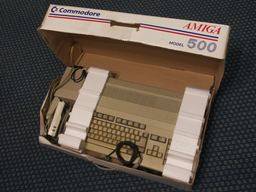
Jonathan Dowland: Amiga floppy recovery project

I've still got it! I've still got it!
Recovered floppy disks Recovered floppy disks
My first computer was an Amiga A500, and my brother and I spent a fair chunk of our childhoods creating things with it. These things are locked away on 3.5" floppy disks, but they were also lost a long time ago. A few weeks ago my dad found them in a box in his loft, so a disk-reading project is now on the horizon! Step one is to catalogue what we've got, which I've done here. Step two is to check which, if any, of these are not already in circulation amongst archivists. Thanks to Matthew Garrett for pointing me at the Software Preservation Society, which is a good first place to check. When we get to the reading step, there are quite a few approaches I could take. Which one to use depends to some extent on which disks we need to read, and whether they employ any custom sector layout or other copy protection schemes. I think the easiest method using equipment I already have is probably Amiga Explorer and a null-modem cable, as this approach will work on an A500 with Workbench 1.3. There are a variety of hardware tools and projects for reading Amiga floppies on a PC, but the most interesting one to me is DiscFerret, which is open hardware and software.

Ritesh Raj Sarraf: Gitolite and Gitweb

This article is for self, so that I don't again forget the specifics. The last time I did the same setup, it wasn't very important in terms of security. gitolite(3) + gitweb can give an impressive git tool with very simple user acls. After you setup gitolite, ensure that the umask value in gitolite is approriate, i.e. the gitolite group has r-x privilege. This is needed for the web view. Add your apache user to the gitolite group. With the umask changes, and the group association, apache's user will now be able to read gitolite repos. Now, imagine a repo setting like the following:
repo virtualbox
    RW+     =   admin
    R   =   gitweb
This allows 'R'ead for gitweb. But by Unix ACLs, now even www-data will have 'RX' on all (the ones created after the UMASK) the repositories.
rrs@chutzpah:~$ sudo ls -l /var/lib/gitolite3/repositories/
[sudo] password for rrs:
total 20
drwxr-x--- 7 gitolite3 gitolite3 4096 May 12 17:13 foo.git
drwx------ 8 gitolite3 gitolite3 4096 May 13 12:06 gitolite-admin.git
drwxr-x--- 7 gitolite3 gitolite3 4096 May 13 12:06 linux.git
drwx------ 7 gitolite3 gitolite3 4096 May 12 16:38 testing.git
drwxr-x--- 7 gitolite3 gitolite3 4096 May 12 17:20 virtualbox.git
13:10          
But just www-data. No other users. Because for 'O', there is no 'rwx'. And below shows gitolite's ACL in picture...
test@chutzpah:~$ git clone gitolite3@chutzpah:virtualbox
Cloning into 'virtualbox'...
Enter passphrase for key '/home/test/.ssh/id_rsa':
FATAL: R any virtualbox test DENIED by fallthru
(or you mis-spelled the reponame)
fatal: Could not read from remote repository.
Please make sure you have the correct access rights
and the repository exists.

Categories:

Keywords:

Lucas Nussbaum: systemd: Type=simple and avoiding forking considered harmful?

(This came up in a discussion on debian-user-french@l.d.o) When converting from sysvinit scripts to systemd init files, the default practice seems to be to start services without forking, and to use Type=simple in the service description. What Type=simple does is, well, simple. from systemd.service(5):

If set to simple (the default value if neither Type= nor BusName= are specified), it is expected that the process configured with ExecStart= is the main process of the service. In this mode, if the process offers functionality to other processes on the system, its communication channels should be installed before the daemon is started up (e.g. sockets set up by systemd, via socket activation), as systemd will immediately proceed starting follow-up units. In other words, systemd just runs the command described in ExecStart=, and it s done: it considers the service is started. Unfortunately, this causes a regression compared to the sysvinit behaviour, as described in #778913: if there s a configuration error, the process will start and exit almost immediately. But from systemd s point-of-view, the service will have been started successfully, and the error only shows in the logs:

root@debian:~# systemctl start ssh
root@debian:~# echo $?
0
root@debian:~# systemctl status ssh
  ssh.service - OpenBSD Secure Shell server
 Loaded: loaded (/lib/systemd/system/ssh.service; enabled)
 Active: failed (Result: start-limit) since mer. 2015-05-13 09:32:16 CEST; 7s ago
 Process: 2522 ExecStart=/usr/sbin/sshd -D $SSHD_OPTS (code=exited, status=255)
 Main PID: 2522 (code=exited, status=255)
mai 13 09:32:16 debian systemd[1]: ssh.service: main process exited, code=exited, status=255/n/a
mai 13 09:32:16 debian systemd[1]: Unit ssh.service entered failed state.
mai 13 09:32:16 debian systemd[1]: ssh.service start request repeated too quickly, refusing to start.
mai 13 09:32:16 debian systemd[1]: Failed to start OpenBSD Secure Shell server.
mai 13 09:32:16 debian systemd[1]: Unit ssh.service entered failed state.
With sysvinit, this error is detected before the fork(), so it shows during startup:
root@debian:~# service ssh start
 [....] Starting OpenBSD Secure Shell server: sshd/etc/ssh/sshd_config: line 4: Bad configuration option: blah
 /etc/ssh/sshd_config: terminating, 1 bad configuration options
 failed!
 root@debian:~#
It s not trivial to fix that. The implicit behaviour of sysvinit is that fork() sort-of signals the end of service initialization. The systemd way to do that would be to use Type=notify, and have the service signals that it s ready using systemd-notify(1) or sd_notify(3) (or to use socket activation, but that s another story). However that requires changes to the service. Returning to the sysvinit behaviour by using Type=forking would help, but is not really a solution: but what if some of the initialization happens *after* the fork? This is actually the case for sshd, where the socket is bound after the fork (see strace -f -e trace=process,network /usr/sbin/sshd), so if another process is listening on port 22 and preventing sshd to successfully start, it would not be detected. I wonder if systemd shouldn t do more to detect problems during services initialization, as the transition to proper notification using sd_notify will likely take some time. A possibility would be to wait 100 or 200ms after the start to ensure that the service doesn t exit almost immediately. But that s not really a solution for several obvious reasons. A more hackish, but still less dirty solution could be to poll the state of processes inside the cgroup, and assume that the service is started only when all processes are sleeping. Still, that wouldn t be entirely satisfying

Zlatan Todori : How to answer as a master

I have spent some fair amount of time during the life to explore making great responses to generic question (technical one included) and I can say without doubt that it is a pretty simple thing one could learn. First of all, answering question via email or in personal, it is very important that people feel that the person answering is there and is really "getting" their question. So a personal notice at beginning or at the end is not necessary but is a big plus. Particular part of answer should have 3 phases: straight yes or no answer, brief explaining why yes or no, and then explaining the opposite solution. Very important to keep it precise and simple as possible while explaining all what is needed for the person which asked question. For example Joe asks:
Can I install library libfoo1.2 without breaking software foo1.1
And Jane would answer:
Hi Joe, very good question as people often do try things like that and could end up in complicated situation. So the answer is NO. Pulling the libfoo1.2 would break foo1.1 because there were numerous changes from libfoo1.1 that break backward compatibility and there was also rewriting and porting to a newer version of language. Now having that out of way, you can safely pull also foo1.2 and install it with libfoo1.2 which is tested and should work for you without any problems. Best regards, Jane
And that's it. Lean, clean, cyborg.

12 May 2015

Simon Josefsson: Certificates for XMPP/Jabber

I am revamping my XMPP server and I ve written down notes on how to set up certificates to enable TLS. I will run Debian Jessie with JabberD 2.x, using the recent jabberd2 jessie-backport. The choice of server software is not significant for the rest of this post. Running XMPP over TLS is a good idea. So I need a X.509 PKI for this purpose. I don t want to use a third-party Certificate Authority, since that gives them the ability to man-in-the-middle my XMPP connection. Therefor I want to create my own CA. I prefer tightly scoped (per-purpose or per-application) CAs, so I will set up a CA purely to issue certificates for my XMPP server. The current XMPP specification, RFC 6120, includes a long section 13.7 that discuss requirements on Certificates. One complication is the requirement to include an AIA for OCSP/CRLs fortunately, it is not a strict MUST requirement but a weaker SHOULD . I note that checking revocation using OCSP and CRL is a MUST requirement for certificate validation some specification language impedence mismatch at work there. The specification demand that the CA certificate MUST have a keyUsage extension with the digitalSignature bit set. This feels odd to me, and I m wondering if keyCertSign was intended instead. Nothing in the XMPP document, nor in any PKIX document as far as I am aware of, will verify that the digitalSignature bit is asserted in a CA certificate. Below I will assert both bits, since a CA needs the keyCertSign bit and the digitalSignature bit seems unnecessary but mostly harmless. My XMPP/Jabber server will be chat.sjd.se and my JID will be simon@josefsson.org . This means the server certificate need to include references to both these domains. The relevant DNS records for the josefsson.org zone is as follows, see section 3.2.1 of RFC 6120 for more background.
_xmpp-client._tcp.josefsson.org.	IN	SRV 5 0 5222 chat.sjd.se.
_xmpp-server._tcp.josefsson.org.	IN	SRV 5 0 5269 chat.sjd.se.
The DNS records or the sjd.se zone is as follows:
chat.sjd.se.	IN	A	...
chat.sjd.se.	IN	AAAA	...
The following commands will generate the private key and certificate for the CA. In a production environment, you would keep the CA private key in a protected offline environment. I m asserting a expiration date ~30 years in the future. While I dislike arbitrary limits, I believe this will be many times longer than the anticipated lifelength of this setup.
openssl genrsa -out josefsson-org-xmpp-ca-key.pem 3744
cat > josefsson-org-xmpp-ca-crt.conf << EOF
[ req ]
x509_extensions = v3_ca
distinguished_name = req_distinguished_name
prompt = no
[ req_distinguished_name ]
CN=XMPP CA for josefsson.org
[ v3_ca ]
subjectKeyIdentifier=hash
basicConstraints = CA:true
keyUsage=critical, digitalSignature, keyCertSign
EOF
openssl req -x509 -set_serial 1 -new -days 11147 -sha256 -config josefsson-org-xmpp-ca-crt.conf -key josefsson-org-xmpp-ca-key.pem -out josefsson-org-xmpp-ca-crt.pem
Let s generate the private key and server certificate for the XMPP server. The wiki page on XMPP certificates is outdated wrt PKIX extensions. I will embed a SRV-ID field, as discussed in RFC 6120 section 13.7.1.2.1 and RFC 4985. I chose to skip the XmppAddr identifier type, even though the specification is somewhat unclear about it: section 13.7.1.2.1 says that it is no longer encouraged in certificates issued by certification authorities while section 13.7.1.4 says Use of the id-on-xmppAddr format is RECOMMENDED in the generation of certificates . The latter quote should probably have been qualified to say client certificates rather than certificates , since the latter can refer to both client and server certificates. Note the use of a default expiration time of one month: I believe in frequent renewal of entity certificates, rather than use of revocation mechanisms.
openssl genrsa -out josefsson-org-xmpp-server-key.pem 3744
cat > josefsson-org-xmpp-server-csr.conf << EOF
[ req ]
distinguished_name = req_distinguished_name
prompt = no
[ req_distinguished_name ]
CN=XMPP server for josefsson.org
EOF
openssl req -sha256 -new -config josefsson-org-xmpp-server-csr.conf -key josefsson-org-xmpp-server-key.pem -nodes -out josefsson-org-xmpp-server-csr.pem
cat > josefsson-org-xmpp-server-crt.conf << EOF
subjectAltName=@san
[san]
DNS=chat.sjd.se
otherName.0=1.3.6.1.5.5.7.8.7;UTF8:_xmpp-server.josefsson.org
otherName.1=1.3.6.1.5.5.7.8.7;UTF8:_xmpp-client.josefsson.org
EOF
openssl x509 -sha256 -CA josefsson-org-xmpp-ca-crt.pem -CAkey josefsson-org-xmpp-ca-key.pem -set_serial 2 -req -in josefsson-org-xmpp-server-csr.pem -out josefsson-org-xmpp-server-crt.pem -extfile josefsson-org-xmpp-server-crt.conf
With this setup, my XMPP server can be tested by the XMPP IM Observatory. You can see the c2s test results and the s2s test results. Of course, there are warnings regarding the trust anchor issue. It complains about a self-signed certificate in the chain. This is permitted but not recommended however when the trust anchor is not widely known, I find it useful to include it. This allows people to have a mechanism of fetching the trust anchor certificate should they want to. Some weaker cipher suites trigger warnings, which is more of a jabberd2 configuration issue and/or a concern with jabberd2 defaults. My jabberd2 configuration is simple in c2s.xml I add a <id> entity with the require-starttls , cachain , and pemfile fields. In s2s.xml, I have the <pemfile>, <resolve-ipv6>, and <require-tls> entities. Some final words are in order. While this setup will result in use of TLS for XMPP connections (c2s and s2s), other servers are unlikely to find my CA trust anchor, let alone be able to trust it for verifying my server certificate. I m happy to read about Peter Saint-Andre s recent SSL/TLS work, and in particular I will follow the POSH effort.

11 May 2015

Bits from Debian: Debian Ruby team sprint 2015

The Debian Ruby Ruby team had a first sprint in 2014. The experience was very positive, and it was decided to do it again in 2015. Last April, the team once more met at the IRILL offices, in Paris, France. The participants worked to improve the quality Ruby packages in Debian, including fixing release critical and security bugs, improving metadata and packaging code, and triaging test failures on the Debian Continuous Integration service. The sprint also served to prepare the team infrastructure for the future Debian 9 release: Group photo of sprint participants. Left to right: Christian Hofstaedtler, Tomasz Nitecki, Sebastien Badia and Antonio Terceiro Left to right: Christian Hofstaedtler, Tomasz Nitecki, Sebastien Badia and Antonio Terceiro. A full report with technical details has been posted to the relevant Debian mailing lists.

Next.

Previous.