Search Results: "gt"

6 January 2016

Norbert Preining: TeX Live security improvements

Today I committed a set of changes to the TeX Live subversion repository that should pave the way for better security handling in the future. Work is underway to use strong cryptographic signatures to verify that packages downloaded and installed into a TeX Live installation have not been tinkered with. texlive2015 While there is still a long way to go and to figure out, the current changes already improve the situation considerably. Status up to now Although we did ship size and checksum information within the TeX Live database, these information were only considered by the installer when re-starting an installation to make sure that the downloaded packages are the ones we should use. Neither the installer nor tlmgr did use the checksum to verify that the downloaded packages is correct, relying mostly on the fact that the packages are xz-compressed and would create rubbish when there is a transfer error. Although none of us believes that there is a serious interest in tinkering with the TeX Live distribution maybe to steal just another boring scientific paper? the door was still open. Changes implemented The changes committed to the repository today, which will be in a testing phase to get rid of bugs, consists of the following: Together these two changes will allow install-tl/tlmgr to verify that a package (.tar.xz) is according to the information in the accompanying texlive.tlpdb. This still leaves the option of tampering with a package and updating the texlive.tlpdb for the fixes checksums/sizes. Upcoming changes For the future we do plan mostly two things: The last step above will give a very high level of security, as it will be not practically possible to alter the information in the texlive.tlpdb, thus no tampering with the checksum information of the containers, and in turn no tampering with the actual containers will be possible. Restrictions Due to the wide range of supported architectures and operating systems, we will not make verification obligatory, but if a gpg binary is found, it will be used to verify the downloaded texlive.tlpdb.checksum. Details have to be hammered out and the actual programming has to be done, but we are on the way. Enjoy.

Gunnar Wolf: Starting work / call for help: Debianizing Drupal 8

I have helped maintain Drupal 7.x in Debian for several years (and am now the leading maintainer). During this last year, I got a small article published in the Drupal Watchdog, where I stated:
What About Drupal 8? Now... With all the hype set in the future, it might seem striking that throughout this article I only talked about Drupal 7. This is because Debian seeks to ship only production ready software: as of this writing, Drupal 8 is still in beta. Not too long ago, we still saw internal reorganizations of its directory structure. Once Drupal 8 is released, of course, we will take care to package it. And although Drupal 8 will not be a part of Debian 8, it will be offered through the Backports archive, following all of Debian's security and stability requirements.
Time passes, and I have to take care of following what I promise. Drupal 8 was released on November 18, so I must get my act together and put it in shape for Debian! So, prompted by a mail by a fellow Debian Developer, I pushed today to Alioth the (very little) work I have so far done to this effect; every DD can now step in and help (and I guess DMs and other non-formally-affiliated contributors, but I frankly haven't really read how you can be a part of collab-maint). So, what has been done? What needs to be done? Although the code bases are massively different, I took the (un?)wise step to base off the Drupal7 packaging, and start solving Lintian problems and installation woes. So far, I have an install that looks sane (but has not yet been tested), but has lots of Lintian warnings and errors. The errors are mostly of missing sources, as Drupal8 inlines many unrelated projects (fortunately documented and frozen to known-good versions) in it; there are two possible courses of action:
  1. Prefered way: Find which already made Debian package provides each of them, remove from the binary package, declare dependency.
  2. Pragmatic way: As the compatibility must sometimes be to a specific version level, just provide the needed sources in debian/missing-sources
We can, of course, first go pragmatic and later start reviewing what can be safely depended upon. But for this, we need people with better PHP experience than me (which is not much to talk about). This cleanup will correspond with cleaning up the extra license file Lintian warnings, as there is one for each such project Of course, documenting each such license in debian/copyright is also a must. Anyway, there is quite a bit of work to do. And later, we have to check that things work reliably. And also, quite probably, adapt any bits of dh-make-drupal to work with v8 as well as v7 (and I am not sure if I already deprecated v6, quite probably I have). So... If you are interested in working on this, please contact me directly. If we get more than a handful, building a proper packaging team might be in place, otherwise we can just go on working as part of collab-maint. I am very short on time, so any extra hands will be most helpful!

5 January 2016

Lior Kaplan: PHP 5 Support Timeline

With the new year starting the PHP project is being asked to decide about the PHP 5 support timeline. While Aligning PHP 5.6 support timeline with the release date of PHP 7.0 seems like common sense to keep the support schedule continuous, there s a big question whether to extend it further to an additional one year of security support till the end of 2018. This would make PHP 5.6, the last of the PHP 5 branch, to have 2 years of security support and de facto getting the same life span as PHP 7.0 would (ending support of both in Dec 2018). But beside of support issues, this also affects adoption rate of PHP 7.0, serving as a catalyst due to end of support for the PHP 5 branch. My concerns are that with the additional security support the project would need to deal with the many branches (5.6, 7.0, 7.1, 7.2 and then to be 7.3 branch). I think we should limit what we guarantee (meaning keeping only one year of security support till end of 2017), and encourage project members and the eco-system (e.g. Linux distributions) to maintain further security based on best effort. This is already the case for out of official support releases like the 5.3 and 5.4 branches (examples for backports done by Debian: 5.3 and 5.4). And of course, we also have companies that make their money out of long term support (e.g. RedHat). On the other hand, we should help the eco system in doing such extended support, and hosting backported fixes in the project s git repo instead of having each Linux disto do the same patch work on its own.
Filed under: PHP

Daniel Pocock: Promoting free software and free communications on popular social media networks

(You can Follow or Tweet about this blog on Twitter) Sites like Twitter and Facebook are not fundamentally free platforms, despite the fact they don't ask their users for money. Look at how Facebook's censors confused Denmark's mermaid statue with pornography or how quickly Twitter can make somebody's account disappear, frustrating public scrutiny of their tweets and potentially denying access to vital information in their "direct message" mailbox. Then there is the fact that users don't get access to the source code, users don't have a full copy of their own data and, potentially worst of all, if most people bothered to read the fine print of the privacy policy they would find it is actually a recipe for downright creepiness. Nonetheless, a significant number of people have accounts in these systems and are to some extent contactable there. Many marketing campaigns that have been successful today, whether they are crowdfunding, political activism or just finding a lost cat claim to have had great success because of Twitter or Facebook. Is this true? In reality, many users of those platforms follow hundreds of different friends and if they only check-in once a day, filtering algorithms show them only a small subset of what all their friends posted. Against these odds, just posting your great idea on Facebook doesn't mean that more than five people are actually going to see it. Those campaigns that have been successful have usually had something else going in their favour, perhaps it was a friend working in the media who gave their campaign a plug on his radio show or maybe they were lucky enough to be slashdotted. Maybe it was having the funds for a professional video production with models who pass off as something spontaneous. The use of Facebook or Twitter alone did not make such campaigns successful, it was just part of a bigger strategy where everything fell into place. Should free software projects, especially those revolving around free communications technology, use such platforms to promote themselves? It is not a simple question. In favour, you could argue that everything we promote through public mailing lists and websites is catalogued by Google anyway, so why not make it easier to access for those who are on Facebook or Twitter? On top of that, many developers don't even want to run their own mail server or web server any more, let alone a self-hosted social-media platform like pump.io. Even running a basic SIP proxy server for the large Debian and Fedora communities involved a lot of discussion about the approach to support it. The argument against using Facebook and Twitter is that you are shooting yourself in the foot, when you participate in those networks, you give them even more credibility and power (which you could quantify using Metcalfe's law). The Metcalfe value of their network, being quadratic rather than linear, shoots ahead of the Metcalfe value of your own solution, putting your alternative even further out of reach. On top of that, the operators of the closed platform are able to evaluate who is responding to your message and how they feel about it and use that intelligence to further undermine you. In some cases, there may be passive censorship, such as WhatsApp silently losing messages that link to rival Telegram. How do you feel about this choice? How and when should free software projects and their developers engage with mainstream social media technology? Please come and share your ideas on the Free-RTC mailing list or perhaps share and Tweet them.

Benjamin Mako Hill: Celebrate Aaron Swartz in Seattle (or Atlanta, Chicago, Dallas, NYC, SF)

I m organizing an event at the University of Washington in Seattle that involves a reading, the screening of a documentary film, and a Q&A about Aaron Swartz. The event coincides with the third anniversary of Aaron s death and the release of a new book of Swartz s writing that I contributed to. aaronsw-tiob_bwcstw The event is free and open the public and details are below:

WHEN: Wednesday, January 13 at 6:30-9:30 p.m.

WHERE: Communications Building (CMU) 120, University of Washington

We invite you to celebrate the life and activism efforts of Aaron Swartz, hosted by UW Communication professor Benjamin Mako Hill. The event is next week and will consist of a short book reading, a screening of a documentary about Aaron s life, and a Q&A with Mako who knew Aaron well details are below. No RSVP required; we hope you can join us.

Aaron Swartz was a programming prodigy, entrepreneur, and information activist who contributed to the core Internet protocol RSS and co-founded Reddit, among other groundbreaking work. However, it was his efforts in social justice and political organizing combined with his aggressive approach to promoting increased access to information that entangled him in a two-year legal nightmare that ended with the taking of his own life at the age of 26.

January 11, 2016 marks the third anniversary of his death. Join us two days later for a reading from a new posthumous collection of Swartz s writing published by New Press, a showing of The Internet s Own Boy (a documentary about his life), and a Q&A with UW Communication professor Benjamin Mako Hill a former roommate and friend of Swartz and a contributor to and co-editor of the first section of the new book. If you re not in Seattle, there are events with similar programs being organized in Atlanta, Chicago, Dallas, New York, and San Francisco. All of these other events will be on Monday January 11 and registration is required for all of them. I will be speaking at the event in San Francisco.

4 January 2016

Stig Sandbeck Mathisen: Munin 3 packaging

The Munin project is moving slowly closer to a Munin 3 release. In parallel, the Debian packaging is changing, too. The new web interface is looking much better than the traditional web-1.0 interface normally associated with munin.

New package layout

perl libraries All the Munin perl libraries are placed in libmunin-*-perl , and split into separate packages, where the split is decided mostly on dependencies. If you don t want to monitor samba, or SNMP, or MySQL, there should be no need to have those libraries installed. That does mean more binary packages, on the other hand.

Munin master Munin now runs as a standalone HTTPD, it no longer graphs from cron, nor does it run as CGI or FastCGI scripts. The user munin grants read-write access, while the group munin grants read only access. The new web interface runs as the munin-httpd user, which is member of the munin group. There is a munin service. For now, it runs rrdcached for the munin user and RRD directory.

munin node The perl munin-node and the compiled munin-node-c should be interchangeable, and be able to run the same plugins. Munin node, and Munin async node, should be wholly separate from the munin master. It should be possible to use the perl munin-node package, and the

munin plugins The munin plugins are placed separate packages named munin-plugins-* . The split is based on monitoring subject, or dependencies. They depend on appropriate libmunin-plugin-*-perl packages The munin-plugins-c package, which is is from the munin-node-c source, contains a number of compiled plugins which should use less resources than their shell, perl or python equivalents. Plugins from other sources than munin must work similar to the ones from munin . More work on this is needed.

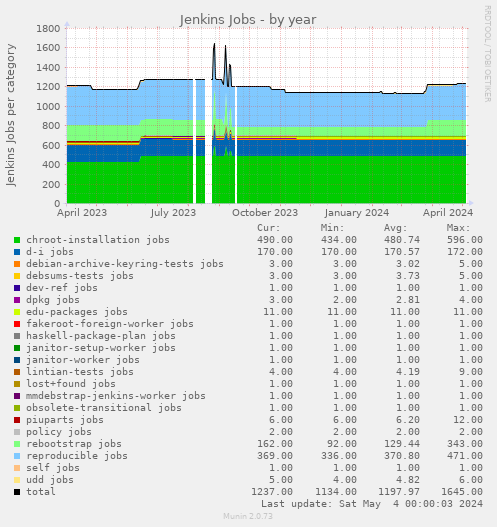
Testing Late December 2015, I set up Jenkins, with jenkins-debian-glue to build packages, test with autopkgtest and and update my development apt repository on each commit. That helped developing and testing the new Munin packages. The packages are not quite ready to upload to experimental, but they are continuously deployed to weed out bugs. They can be found in my packaging apt repo. (The usual non-guarantees apply, handle with care, keep away from small children, etc )

Comments Munin developers, packagers and users hang out on #munin on the OFTC network. Please drop by if you have questions or comments.

Clint Adams: Real world Cryptol

cryptol is now in testing. If you hurry, you can contribute to upstream implementations of CAST5 and Twofish before Christmas this Thursday.

Michal Čihař: Enca 1.17

Last version of Enca has been released more than year ago and now it's time for new release. There are various compatibility fixes which have been committed to the Git repository meanwhile. If you don't know Enca, it is an Extremely Naive Charset Analyser. It detects character set and encoding of text files and can also convert them to other encodings using either a built-in converter or external libraries and tools like libiconv, librecode, or cstocs. Full list of changes for 1.17 release: Still enca is in maintenance mode only and I have no intentions to write new features. However there is no limitation to other contributors :-). You can download from http://cihar.com/software/enca/.

Filed under: Enca English 2 comments

Mike Gabriel: My FLOSS activities in December 2015

December 2015 was a month mainly dedicated to work for local contractors (local schools mainly) and my employer (University of Kiel, Git server migration). At the end of the month I had the privilege of attending the 32c3 ([1]) where we had a little sprint for the Arctica Project. Thanks to my family and esp. to my wonderful wife for letting me attend this always fascinating event at the end of each year. Horde Hacking One of my local customers is really interested in using a non-gated-community mail provider, so he asked me to host his company's mail addresses on my mail company's server. Something I regularly don't offer (anymore) except for dear friends and very patient customers. This customer sponsored several more work hours on hacking on the Kolab_Storage code in Horde and proposing bug fixes upstream [2,3,4,5,6,7,8]. Thanks for supporting my work on the Horde Groupware Framework. Thanks to Horde upstream maintainers (esp. Michael Rubinsky) for reacting on my bug submissions so promptly. Debian and Debian LTS Locally, I did a lot of work for our Debian Edu / Skolelinux customers again this months. read more

Bernd Zeimetz: open-vm-tools updated

In January 2014 the open-vm-tools package was orphaned and I took the chance to take over the maintenance. Unfortunately the package is still not 100% in the shape I d like to see it, but I m getting closer. I have to say Thank You for a lot of good bug reports, especially for those use cases which are hard to test/reproduce for me (running Debian in a Windows-based VMware Workstation Player for example .). At conova communications GmbH, the company I work for, we are using the package on all of our Debian VMs, both for customer and internal use. It is essential for us to have properly working open-vm-tools - not only to be able to shutdown the VM from VMware vCenter, but also because tools like vSphere Data Protection and Veeam depend on it. Good thing is that I can work on and test the package at work and breakages are detected early and fast normally. Getting a good contact to the VMware upstream was easy and the developers there are helpful and reply pretty fast to their emails. Also as it seems there are finally real commits showing up in the open-vm-tools github repository again, not only huge single commits with a full release. It is not only nice to see that they are moving into the right direction again, but also this is really helpful in fixing (urgent) bugs before the next release of open-vm-tools - or to backport a fix to the versoin in stable/oldstable. Since a few days we have open-vm-tools 10.0.5-3227872 in If you are using VMware ESX 5.5 or newer, you should upgrade to the backports versions. Same if you use a recent VMware player version. Please note that since 10.0.0 the open-vm-dkms package is only necessary if you need the legacy vmxnet module. This is only the case if you are using very old VM hardware versions. vmxnet3 is shipped in the Debian kernel, so you don t need to compile extra modules to use it. The vmhgfs module was replaced by a fuse-based implementation. If you d like to help maintaining the package, please send bugs/patches via the Debian BTS or even better - send pull requests for pkg-open-vm-tools. The repository is mirrored to git.bzed.at in case you want to avoid github.

Alessio Treglia: Enterprise Innovation in a Transformative Society

Recent article by professors Karim Lakhani and Marco Iansiti on the Harvard Business Review, Digital Ubiquity: How Connection, Sensors and Data are Revolutionizing Business , gave me the opportunity for interesting insights and considerations.

Digital technology evolution and the development of modern Internet of Things devices are introducing huge transformative effects within social inter-relationships and its business models. These effects can not be ignored if we want to perceive with the right clarity and meaning the innovation process that inevitably comes with it.

The three fundamental properties of digital technology

<Read More >

Lunar: Reproducible builds: week 36 in Stretch cycle

What happened in the reproducible builds effort between December 27th and January 2nd: Infrastructure dak now silently accepts and discards .buildinfo files (commit 1, 2), thanks to Niels Thykier and Ansgar Burchardt. This was later confirmed as working by Mattia Rizzolo. Packages fixed The following packages have become reproducible due to changes in their build dependencies: banshee-community-extensions, javamail, mono-debugger-libs, python-avro. The following packages became reproducible after getting fixed: Some uploads fixed some reproducibility issues, but not all of them: Untested changes: reproducible.debian.net The testing distribution (the upcoming stretch) is now tested on armhf. (h01ger) Four new armhf build nodes provided by Vagrant Cascandian were integrated in the infrastructer. This allowed for 9 new armhf builder jobs. (h01ger) The RPM-based build system, koji, is now in unstable and testing. (Marek Marczykowski-G recki, Ximin Luo). Package reviews 131 reviews have been removed, 71 added and 53 updated in the previous week. 58 new FTBFS reports were made by Chris Lamb and Chris West. New issues identified this week: nondeterminstic_ordering_in_gsettings_glib_enums_xml, nondeterminstic_output_in_warnings_generated_by_breathe, qt_translate_noop_nondeterminstic_ordering. Misc. Steven Chamberlain explained in length why reproducible cross-building across architectures mattered, and posted results of his tests comparing a stage1 debootstrapped chroot of linux-i386 once done from official Debian packages, the others cross-built from kfreebsd-amd64.

Mike Gabriel: MATE 1.12 landed in Debian unstable

Yesterday, I did a bundle upload of all MATE 1.12 related packages to Debian unstable. Packages are currently building for the 22 architectures supported by Debian, build status can be viewed on the DDPO page of the Debian MATE Packaging Team [1] Again a big thanks to the packaging team. Martin Wimpress amongst others did a fabulous job in bumping all packages towards the 1.12 release series before the Christmas holidays. Over the holidays, I was able to review his work (99% perfect) and upload all binary packages to a staging repository. @Martin Wimpress: It is really time that we make a DM (Debian Maintainer) out of you!!! After testing all MATE 1.12 packages on a Debian unstable system, I decided to do a bundle upload yesterday. Lessons learned about bundling Debian uploads It absolutely makes sense to hold back package uploads of a project like the MATE desktop until all relevant packages are reviewed, pre-built and tested. When releasing MATE packages via the team's packaging Git [2], there are normally two actions to be taken on a package release: When reviewing so many Git projects, it is always problematic that people commit something else during the review phase. Especially, if the review work involves many packages (i.e., Git packaging repos) and requires several days or even weeks to get finished. read more

Benjamin Mako Hill: The Boy Who Could Change the World: The Writings of Aaron Swartz

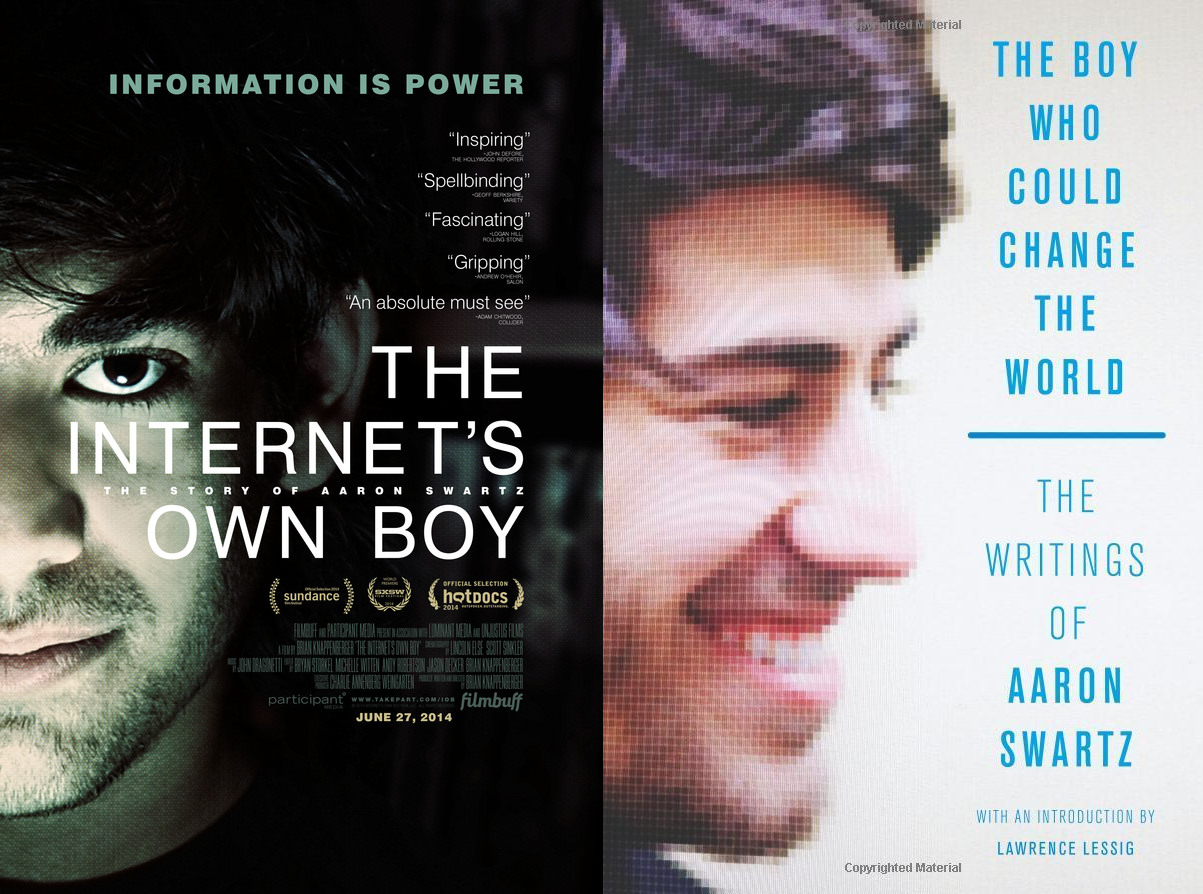
The New Press has published a new collection of Aaron Swartz s writing called The Boy Who Could Change the World: The Writings of Aaron Swartz. I worked with Seth Schoen to introduce and help edit the opening section of book that includes Aaron s writings on free culture, access to information and knowledge, and copyright. Seth and I have put our introduction online under an appropriately free license (CC BY-SA). aaronsw_book_coverOver the last week, I ve read the whole book again. I think the book really is a wonderful snapshot of Aaron s thought and personality. It s got bits that make me roll my eyes, bits that make me want to shout in support, and bits that continue to challenge me. It all makes me miss Aaron terribly. I strongly recommend the book. Because the publication is post-humous, it s meant that folks like me are doing media work for the book. In honor of naming the book their progressive pick of the week, Truthout has also published an interview with me about Aaron and the book. Other folks who introduced and/or edited topical sections in the book are David Auerbach (Computers), David Segal (Politics), Cory Doctorow (Media), James Grimmelmann (Books and Culture), and Astra Taylor (Unschool). The book is introduced by Larry Lessig.

John Goerzen: Hiking a mountain with Ian Murdock

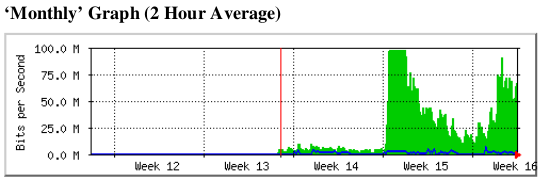
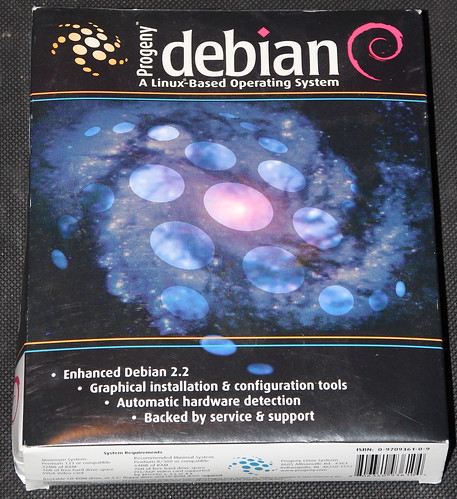
Would you like to hike a mountain? That question caught me by surprise. It was early in 2000, and I had flown to Tucson for a job interview. Ian Murdock was starting a new company, Progeny, and I was being interviewed for their first hire. Well, I thought, hiking will be fun. So we rode a bus or something to the top of the mountain and then hiked down. Our hike was full of well, everything. Ian talked about Tucson and the mountains, about his time as the Debian project leader, about his college days. I asked about the plants and such we were walking past. We talked about the plans for Progeny, my background, how I might fit in. It was part interview, part hike, part two geeks chatting. Ian had no HR telling him you can t go hiking down a mountain with a job candidate, as I m sure HR would have. And I am glad of it, because even 16 years later, that is still by far the best time I ever had at a job interview, despite the fact that it ruined the only pair of shoes I had brought along I had foolishly brought dress shoes for a, well, job interview. I guess it worked, too, because I was hired. Ian wanted to start up the company in Indianapolis, so over the next little while there was the busy work of moving myself and setting up an office. I remember those early days Ian and I went computer shopping at a local shop more than once to get the first workstations and servers for the company. Somehow he had found a deal on some office space in a high-rent office building. I still remember the puzzlement on the faces of accountants and lawyers dressed up in suits riding in the elevators with us in our shorts and sandals, or tie-die, next to them. Progeny s story was to be a complicated one. We set out to rock the world. We didn t. We didn t set out to make lasting friendships, but we often did. We set out to accomplish great things, and we did some of that, too. We experienced a full range of emotions there elation when we got hardware auto-detection working well or when our downloads looked very popular, despair when our funding didn t come through as we had hoped, being lost when our strategy had to change multiple times. And, as is the case everywhere, none of us were perfect. I still remember the excitement after we published our first release on the Internet. Our little server that could got pegged at 100Mb of outbound bandwidth (that was something for a small company in those days.) The moment must have meant something, because I still have the mrtg chart from that day on my computer, 15 years later. Progeny's Bandwidth Chart We made a good Linux distribution, an excellent Debian derivative, but commercial success did not flow from it. In the succeeding months, Ian and the company tried hard to find a strategy that would stick and make our big break. But that never happened. We had several rounds of layoffs when hoped-for funding never materialized. Ian eventually lost control of the company, and despite a few years of Itanium contract work after I left, closed for good. Looking back, Progeny was life compressed. During the good times, we had joy, sense of accomplishment, a sense of purpose at doing something well that was worth doing. I had what was my dream job back then: working on Debian as I loved to do, making the world a better place through Free Software, and getting paid to do it. And during the bad times, different people at Progeny experienced anger, cynicism, apathy, sorrow for the loss of our friends or plans, or simply a feeling to soldier on. All of the emotions, good or bad, were warranted in their own way. Bruce Byfield, one of my co-workers at Progeny, recently wrote a wonderful memoriam of Ian. He wrote, More than anything, he wanted to repeat his accomplishment with Debian, and, naturally he wondered if he could live up to his own expectations of himself. That, I think, was Ian s personal tragedy that he had succeeded early in life, and nothing else he did with his life could quite measure up to his expectations and memories. Ian was not the only one to have some guilt over Progeny. I, for years, wondered if I should have done more for the company, could have saved things by doing something more, or different. But I always came back to the conclusion I had at the time: that there was nothing I could do a terribly sad realization. In the years since, I watched Ubuntu take the mantle of easy-to-install Debian derivative. I saw them reprise some of the ideas we had, and even some of our mistakes. But by that time, Progeny was so thoroughly forgotten that I doubt they even realized they were doing it. I had long looked at our work at Progeny as a failure. Our main goal was never accomplished, our big product never sold many copies, our company eventually shuttered, our rock-the-world plan crumpled and forgotten. And by those traditional measurements, you could say it was a failure. But I have come to learn in the years since that success is a lot more that those things. Success is also about finding meaning and purpose through our work. As a programmer, success is nailing that algorithm that lets the application scale 10x more than before, or solving that difficult problem. As a manager, success is helping team members thrive, watching pieces come together on projects that no one person could ever do themselves. And as a person, success comes from learning from our experiences, and especially our mistakes. As J. Michael Straczynski wrote in a Babylon 5 episode, loosely paraphrased: Maybe this experience will be a good lesson. Too bad it was so painful, but there ain t no other kind. The thing about Progeny is this Ian built a group of people that wanted to change the world for the better. We gave it our all. And there s nothing wrong with that. Progeny did change the world. As us Progeny alumni have scattered around the country, we benefit from the lessons we learned there. And many of us were different , sort of out of place before Progeny, and there we found others that loved C compilers, bootloaders, and GPL licenses just as much as we did. We belonged, not just online but in life, and we went on to pull confidence and skill out of our experience at Progeny and use them in all sorts of ways over the years. And so did Ian. Who could have imagined the founder of Debian and Progeny would one day lead the cause of an old-guard Unix turning Open Source? I run ZFS on my Debian system today, and Ian is partly responsible for that and his time at Progeny is too. So I can remember Ian, and Progeny, as a success. And I leave you with a photo of my best memento from the time there: an original unopened boxed copy of Progeny Linux. IMG_6197_v1
3 January 2016

Carl Chenet: To be alerted if no more tweet is sent from your Twitter account: Twitterwatch

This version 0.1 of Twitterwatch is dedicated to Ian Murdock, Debian project Founder. If you use an automated system like Feed2tweet in order to feed your Twitter account from your website of any RSS feed, it is of the utmost important to know when this system is broken, because you are losing traffic because of this malfunction. At the Journal du hacker, a French-speaking FOSS website where people contribute weblinks like Hacker News or Lobste.rs, every new contribution is sent through the RSS feed to the Twitter account of the Journal du hacker. A lot of our readers only follow the news on Twitter. So if the link breaks, our readers are not fed any more :) To be alerted to this issue, I wrote a small self hosted and documented app. I m proud to introduce Twitterwatch ! It runs with Python 3.4 and the Tweepy library. You can install it from PyPI or from sources. The documentation is available on Readthedocs. You can read about how to install it, configure it and use it. It s the first release but the main features do the job already. In order to use it, you need a twitterwatch.ini file as following:
[twitter]
consumer_key=ml6jaiBnf3pkU9uIrKNIxAr3o
consumer_secret=4Cmljklzerkhfer4hlj3ljl2hfvc123rezrfsdatpokaelzerp
access_token=213416790-jgJnrJG5gz132nzerl5zerwi1ahmnwkfJFN9nr2j
access_token_secret=WjanlPgqDKlunJ4Knr11k2bnfk3jfnwkFjeriFZERj16Z
[schedule]
; duration between 2 checks in minutes
check_interval=60
[mail]
host=localhost
from=admin@myserver.org
to=foo@mylaptop.org
The most difficult part is now complete. To launch Twitterwatch, just launch the following command:
$ twitterwatch /path/to/twitterwatch.ini
Whenever no more new tweet is sent from your Twitter account during 60 minutes, you ll receive the following mail (here the user is @journalduhacker):
Title: Twitter stream of journalduhacker has stopped
Body: Twitter stream of journalduhacker has stopped since 23/12/2015 - 14:49:23
It is still pretty rough, but it does the job. New features will come whenever I need them (or if you require/open bugs/submit push requests ;) ). Write a comment to tell me what you think of it or why you use it!

Russ Allbery: control-archive 1.7.0

First new release in a while. There haven't been a lot of changes to Usenet hierarchies. The primary change is more aggressive dropping of control messages for reserved hierarchies, mostly to suppress pointless email to news administrators. There were also the following hierarchy updates: These changes are already live on the ftp.isc.org control.ctl file. You can get the latest version from the control-archive distribution page.

Gregor Herrmann: RC bugs 2015/53

& another round of RC bug fixes, still related to the perl 5.22 transition (& yay, 5.22 is in testing since some days!):

Lunar: Reproducible builds: week 35 in Stretch cycle

What happened in the reproducible builds effort between December 20th to December 26th: Toolchain fixes Mattia Rizzolo rebased our experimental versions of debhelper (twice!) and dpkg on top of the latest releases. Reiner Herrmann submited a patch for mozilla-devscripts to sort the file list in generated preferences.js files. To be able to lift the restriction that packages must be built in the same path, translation support for the __FILE__ C pre-processor macro would also be required. Joerg Sonnenberger submitted a patch back in 2010 that would still be useful today. Chris Lamb started work on providing a deterministic mode for debootstrap. Packages fixed The following packages have become reproducible due to changes in their build dependencies: bouncycastle, cairo-dock-plug-ins, darktable, gshare, libgpod, pafy, ruby-redis-namespace, ruby-rouge, sparkleshare. The following packages became reproducible after getting fixed: Some uploads fixed some reproducibility issues, but not all of them: Patches submitted which have not made their way to the archive yet: reproducible.debian.net Statistics for package sets are now visible for the armhf architecture. (h01ger) The second build now has a longer timeout (18 hours) than the first build (12 hours). This should prevent wasting resources when a machine is loaded. (h01ger) Builds of Arch Linux packages are now done using a tmpfs. (h01ger) 200 GiB have been added to jenkins.debian.net (thanks to ProfitBricks!) to make room for new jobs. The current count is at 962 and growing! diffoscope development Aside from some minor bugs that have been fixed, a one-line change made huge memory (and time) savings as the output of transformation tool is now streamed line by line instead of loaded entirely in memory at once. disorderfs development Andrew Ayer released disorderfs version 0.4.2-1 on December 22th. It fixes a memory corruption error when processing command line arguments that could cause command line options to be ignored. Documentation update Many small improvements for the documentation on reproducible-builds.org sent by Georg Koppen were merged. Package reviews 666 (!) reviews have been removed, 189 added and 162 updated in the previous week. 151 new fail to build from source reports have been made by Chris West, Chris Lamb, Mattia Rizzolo, and Niko Tyni. New issues identified: unsorted_filelist_in_xul_ext_preferences, nondeterminstic_output_generated_by_moarvm. Misc. Steven Chamberlain drew our attention to one analysis of the Juniper ScreenOS Authentication Backdoor: Whilst this may have been added in source code, it was well-disguised in the disassembly and just 7 instructions long. I thought this was a good example of the current state-of-the-art, and why we'd like our binaries and eventually, installer and VM images reproducible IMHO. Joanna Rutkowska has mentioned possible ways for Qubes to become reproducible on their development mailing-list.

Niels Thykier: Tor enabled MTA

As I posted earlier, I have migrated to use tor on my machine. Though I had a couple of unsolved issues back then. One of them being my Mail Transport Agent (MTA) did not support tor. A regular user might not have a lot of use for a MTA on their laptop. However, it is needed for a lot of Debian development scripts (bts, mass-bug, nmudiff), if they are to file/manipulate bugs for you. I have some requirements for my MTA I also have some non-requirements: Originally, I used postfix, which supported most of these requirements. Except: Per suggestion of Jakub Wilk, I tried msmtp, which turned out do what I wanted. The only feature I will probably miss is having a local queue, which can be rate limited. But all in all, I am quite happy with it so far. :)
Filed under: Debian

Next.

Previous.