Search Results: "cas"

5 June 2007

Martin-Éric Racine: Award to the Debian community of Finland

Open Source 2006 is a one-day seminar that provides Free Software actors of Finland with a forum to present their work and the current trends in Free Software development to a greater audience comprised mainly of decision-makers from the business and governmental sectors. Finnish Open Office localization team This year, a noticeable trend were governmental cases of transition to Open Office and other Free Software solutions on the municipal desktop. Thus, it was only fitting that Finnish localization took greater importance than before and, in concordance, that this year's Linux-tekij award went to the Finnish Open Office localization team. The jury invited 3 people from the localization team to receive the award on their team's behalf: Pastor Koskinen also gave a very stimulating lecture on the collaborative effort behind the localization, mentioning in passing that Czech Pavel Jani k also plays an important role in building the Open Office binaries for a number of Baltic and Scandinavian languages. Debian community of Finland The jury also granted an honorary mention to the Debian community of Finland to acknowledge years of achievements, reaching an important milestone in 2005 when Finland hosted the yearly Debian Conference. Another motivation was a number of nominations for Ubuntu, both as a distribution and for its extremely active local user community. Given how a majority of Ubuntu developers actually are Debian Developers, the jury unanimously decided to honor them collectively from the perspective of Debian and its derivatives. The jury invited 3 people to receive the honorary mention on the community's behalf: Lars gave the audience a very interesting perspective of his long involvement with Debian, while Tapio emphasized particular pride in seeing non-programmers that maintain documentation or localize software be acknowledged. Fabian gave a very emotional speech in which he praised the commendable efforts of dozens of volunteer DebConf5 organizers that discretely handled unpleasant tasks that were nonetheless essential to the success of the event. The Jury Yours truly was invited to join the jury on behalf of Linux Aktivaattori, alongside representatives from the academic, business and Free Software communities. During the prize ceremony, FLUG chairman Arto Ter s and myself took turns at describing the award's selection process and at introducing the winners.

Martin-Éric Racine: Buzzword opportunism won't do

Being involved in no less than four different projects, all with excellent prospects for a permanent job, reminds me of why riding the Free Software bandwagon as yet another opportunistic buzzword won't do: In three of the projects, people insist upon communicating using the closed source VoIP application Skype. There indeed is a crude port for Linux on i386 (though not for amd64, powerpc, or any other architecture), but the dependencies are broken and my friends at Skype emphasize that Linux is a non-market for them, so I should not expect any solution any time soon. Still, the people behind some of these projects regularly threaten that I'm wasting their time by "refusing" to install Skype on my computer. Free Software promoters who don't understand what "non-free" means. In two of the projects, the corporate homepage is made as a single Flash animation. Mentioning that Flash support is extremely broken and thus essentially non-existent on Free Software platforms is pointless: the people behind the project are Windows users and yet they insist that their project is about promoting the free circulation of ideas using Free Software. Free Software promoters who don't understand interoperability. In one particular project, the product follows the Googlesque model of "the Web as my application and file server". Great idea, except that ― once again ― the people behind the project are Windows users and they insist that the Thin Client hardware must have a standard set of applications pre-installed and some storage media, thus defeating the purpose of this business model. Promoters of "the Web as my application and file server" model who don't understand the implications of a Thin Client solution. In all cases, the people behind the project mean well, but ― not being Free Software users themselves ― they clearly don't understand the profound implications of the Free Software agenda; they only see it as a license-free technology to connect the masses for cheap and they evidently find it difficult to think outside the Windows PC framework. Free Software as a business model, in a nutshell: data interoperability and the client-server model. Either get it or you're wasting my time ...and yours too. Nothing personal; just business. PS: I sincerely hope that anybody who recognizes themselves in the above rant will acknowledge my honest concerns and embrace this opportunity to truly adopt Free Software. Just do it! It doesn't matter where you get the FOSS. Just make sure that the FOSS gets you! (inspired by a great Candy Dulfer song currently blasting through the headphones).

Ross Burton: Postr 0.6

Postr 0.6 is here! What is new I hear you ask. Well: The tarball is in the usual place, and I'll make Debian packages shortly. NP: Konfusion, Skalpel

Martin-Éric Racine: Life after Etch

This week, following the announce of the freeze, I upgraded most of my home cluster to Etch. The upgrade went surprisingly smoothly, although I had a bit of a scare when the kernel upgrade pulled in a bunch of dependencies that resulted in the forced removal of all previous kernels. This minor scare asides, kudos to everyone who made this new Debian release possible! My only disappointment about Etch is that we're stuck with Firefox 1.5.0.7 instead of 2.0.1 or Iceweasel. Then again, speaking of Iceweasel: Forget it! Breakages it introduces have been marked as pending or patched for a number of weeks and yet there's still no updated package. At this rate, better wait until Etch r1 or Lenny to introduce it, rather than release Etch with a browser fork that has not undergone several months of thorough testing! This got me thinking about life after Etch, or more specifically, about what I'm gonna do with the packages I maintain. The Dunc Tank debacle and similar other unfortunate events that overtook Debian this year have prompted me to reevaluate my motivation. Another unrelated issue is, I've been working in software development for more than 10 years and my guts are telling me that it's time to move on so, while my computers will still run on Debian or Ubuntu, I don't intend on doing any more development per-se. Thus, I have already taken the initiative of soliciting co-maintainers for most of my packages. The Debian GNOME team agreed to be added for Planner, which is nice given the sheer number of bugs that are regularly found against this package. CUPS-PDF, Gaim-IRChelper and NumlockX haven't seen a meaningful bug in ages and can be rebuilt using bin-NMU magic, so they're pretty much taken care of. This leaves the issue of the Estonian and Russian dictionaries (plus a large patch in my personal repository that would upgrade Aigars' Latvian dictionary to generate the Aspell wordlist from his MySpell wordlist) open. For these, native speakers that develop for Debian or Ubuntu would be welcome to join me. What next? I have a couple of interesting offers, one on the Business side of computer hardware manufacturing in Estonia and another one as the manager of a western company's Latvian office. The tricky part in either case would be the immigration process: despite close to 9 years of living right here in Europe, I am still perceived as foreign labor whose hiring must be thoroughly justified (in the case of Estonia, I even need to request an explicit exemption to the immigration quotas), whereas if I had been granted EC Long-Term Resident status or Finnish citizenship, I could just sign the contract and notify the local authorities of my change of address. Instead, 9 years later, I'm stuck at the passport control queues for non-EU citizens with its disgustingly suspicious border guards. Sigh! Thus, while I indeed have shares in Linutop (yes, we are finally shipping - stay tuned for details) that might eventually turn into gold, I also have close to zero motivation left in my personal life, because lingering European bureaucrazy prevents my talent from reaching its customers - turning all my attempts at having a career into a neverending series of bitter disappointments. Is it any wonder that I'm so adamant about getting out of the Rat Race to return to more gratifying creative activities like composing and photography, then? Post Scriptum Actually, there is a second disappointment about Etch: we are stuck with Evince 0.4.0, at a time where upstream just released 0.7.0 with strong recommendations that everyone upgrade to that. Heck, even Ubuntu has 0.6.0 already. I find the Evince situation way more annoying than the Firefox one, because, from a user's perspective, Evince 0.4.0 fails to display several PDF documents that more recent releases handle just fine.

Martin-Éric Racine: UTF-8 Migration Tool now in Debian unstable

I previously blogged about UTF-8 Migration Tool, a GTK2 wizard that helps users upgrade their legacy locale and recode text files to their UTF-8 equivalent. After merging a number of patches from Nicolas Fran ois to fix various parsing issues, I am now happy to report that the package has entered Debian's unstable distribution. Plenty of migration cases remain untested, though, and the Debian i18n team particularly welcomes testing for locales that utilize a non-default legacy encoding or that contain an @modifier part. If no major issue is found, the goal would be to release this package with Etch to help users migrate their system to UTF-8.

Martin-Éric Racine: Adventures in Business Setting

One funny thing about being a foreigner is the linguistic choices people make when communicating with me. Case in point: my new job at Artec. This being Estonia, there's a plethora of languages to choose from: Estonian, obviously, but also Russian, English and Finnish. Russian is possible because 30% of Estonians are ethnic Russians (or related Belorussians and Ukrainians) whose ancestors were relocated during Soviet times. Russian also remains strong as a language of trade, especially among the older generation, while English tends to replace it for the younger generation. Then, Finnish is widely spoken in Northern Estonia, because of Tallinn's proximity to Helsinki and despite Southern Estonian being linguistically closer to Finnish. People's choice, whenever discussing work-related matters with me, varies accordingly: some prefer to use English while, for others, Finnish comes naturally. Then there's a handful of older collegues who feel uneasy speaking either English or Finnish, so they address me in Estonian, placing special care on clearly articulating every word and on speaking at a slower pace than normal (to Finnish ears, Estonian essentially sounds like Finnish on fast-forward and with unusual choices of vocabulary). I have yet to see anyone try Russian with me, although a few people have noticed that I get the overall idea, just as long as they articulate clearly and speak slower than normal. Then again, our ethnic Russians are so well integrated that they speak Estonian all day long, even among themselves, and I have been able to observe the same pattern everywhere I've been in Estonia. From that perspective, I think that Russia's claims about "oppression of ethnic Russians in Estonia" are greatly exaggerated.

Martin-Éric Racine: Almost there: granny-friendly PDF writing

One aspect of Ubuntu that I really enjoy is the sheer amount of constructive feedback a maintainer gets about the usability of their packages. In my case, CUPS-PDF [1] [2] has been a landmark example of how beneficial this feedback can be: See, one long-standing goal at Ubuntu has been to include the capability to generate PDF documents "out of the box" and regardless of which Desktop Environment is used. Many people considered that CUPS-PDF would be an excellent tool, but various technical issues prevented this from working in a security-conscious way. Once that issue was taken care of, someone pondered how the PDF queue could be automatically created at installation time? It turns out that we're almost there: with the upload of version 2.4.6 into Debian today (which should propagate into Ubuntu within a few days), only one configuration step remains: the selection of a PPD driver. Everything else is automatically detected and configured by CUPS itself. Kudos to our friendly upstream, Volker, for implementing this driver magic in his back-end code! Enjoy!

Phil Hands: Debian Tartan Kilts expected to be ready on Friday

... which is a nice surprise, since when I phoned the weavers up last week, they said something like "You want the kilts by WHEN?!?" (and that despite me specifying the target date as the first thing I said to them in January -- good job I lied, and told them I wanted them by 1st June, eh?) Seems that was all due to an internal communications failure, and they've pulled all the stops out to get the order done by the end of the week, so no harm done. In related news, it seems that there's a few yards more cloth than was expected (due to it shrinking somewhat less between weaving and finishing than expected). That being the case, it's possible that we'll be able to get one more kilt made, so if you're reading this thinking "Damn, I wish I'd signed up for one of them" feel free to get in touch. Alternatively, if the ties we've had made prove popular, I'll use the spare cloth for making more of them. So, if you do fancy a kilt, if you can get your measurements to me pretty much immediately, it's just possible that the tailors will be able to make a kilt for you before the end of DebConf. Finally, if people are interested, but not desperate about the timing, there is a table on the wiki to which you could add yourself so that a critical mass for a second order can be accumulated.

4 June 2007

Lucas Nussbaum: Distributed SCM and branching a sub-directory ?

I am considering switching from SVN to a distributed SCM for my personal stuff. I had a look at git and mercurial, but neither really support branching a sub-directory: Often, I am working on a big private project, and, while working on a sub-project (stored inside the project’s repository), I’d like to share that sub-project with others. So there are actually two problems: SVN only partially meets my needs with that (it’s possible to checkout a sub-directory directly, for example with svn co svn://svn.debian.org/svn/pkg-ruby-extras/tools/ruby-pkg-tools). I think that it’s possible to do fine-grained access control
using libapache2-svn, but I haven’t tried yet. It seems that mercurial can do that, using the forest extension. But you have to convert the specific directory into a repository, with a complex step to keep the history. Amongst the distributed SCM, is there one that supports that ? (at least the sub-directory branching part)

Evan Prodromou: 15 Prairial CCXV

I'm sitting in our suite in the Doubletree on Times Square in New York City, catching up with some email and generally trying to pull myself together. It's been a remarkably busy week and this is the first time I've been able to sit down to blog for a while. We moved to our new house at 4690 rue Pontiac last Wednesday, and most of my time last week was taken up either packing things (clothes, computers, dishes), unpacking the same things, or taking things that I didn't want to pack/unpack to various charitable organizations. Our move-in went smoothly -- the hardest part was moving our old fridge and stove to our new house, then moving the fridge and stove and deep freeze from our new house to the old apartment for Julia and Antoine to use. The new house came with a lot of new goodies, too. We bought a new couch for our new livingroom, and a new king-size bed for our new bedroom. On top of all that, I signed us up for Vid otron cable Internet instead of our old reliable Bell Canada DSL, and it's turned out to be quite fast and easy to use. So on top of the excitement of having a new place to live, there have been a lot of new toys to play with. Thankfully, our cats and our daughter have adapted quite well to their new environment. Amita June has a new bedroom, but she's been through so much travel -- hotel rooms and friends' homes -- that she's able to sleep just about anywhere. Topaz and Xe (the cats) don't usually adapt very well, but Maj kept them in the upstairs bathroom for a few days The thing that's surprised me the most about moving into the new house is how seldom we go upstairs. All our bedrooms are downstairs, as well as the new office/den, and we seem to get a lot of our needs met down there. The upstairs area is really really nice, though: lots of light and air. But the stairs are a real energy barrier. I guess my legs are going to get stronger and I'll get used to running up and down them several times a day. Probably the biggest disappointment of the move-in was that our new paint job, which had been so lovingly planned, got pretty marked-up in certain parts of the house -- specifically, the halls and stairs. We'll be doing some touch-up painting ourselves, but it is still kind of a bummer to see all these nicks and scratches on the otherwise pristine walls. tags:

Train in vain We're in New York City for the awards ceremony for the Webby Awards. Wikitravel won the Webby award for best travel Web site of 2007 -- quite an honor. We came right after our move-in, so it feels a little rushed. We're just here for about 72 hours. We'd thought about going down to visit family in New Jersey, but we really need to finish getting unpacked and settled in to the new house. We're planning on coming down for a relaxed family visit in NJ later this summer, instead -- maybe combining it with a trip to the Jersey Shore. Although there are plenty of flights between Montreal and New York, and it's only about a 6- to 8-hour drive, we decided to try something different this time. We took the Adirondack (Amtrak) train, which runs down the shores of Lake Champlain and the Hudson River Valley. My theory was that the train trip would let us stretch our legs, read, and get some work done, and that AJ could run around and enjoy herself, rather than being cooped up in a car or airplane seat. Although the train was the slowest option (it's scheduled as a 9-hour trip), it might end up being the most comfortable. I think the results were mixed. Indeed, the trip was a comfortable one, and Amita June got to run up and down the aisles and climb all over the empty seats. However, we got stopped at the US border due to an elevated terror alert, and what was supposed to be a 30-minute scheduled customs stop dragged into a two-and-a-half hour inspection. By the time we got to New York, we were more than two hours late. Among other things, this meant that I missed the opening cocktail reception for the Webbies, which was kind of a bummer. It was dumping down rain in torrents when we finally got to Penn Station, though, so I think that the rooftop reception probably wasn't all that much fun. I got soaked trying to get us a cab, but we had a decent ride to our hotel -- the functional but unexciting DoubleTree Suites on Times Square. We had a hard time finding a hotel that would be even remotely affordable, in Manhattan, and had junior suite rooms. Suites are great when you're traveling with a toddler -- it means you can put them to bed at 8PM and then go in the other room to stay up the rest of the evening. We had a decent room-service dinner -- Caesar's, nachos, 2 Heinekens -- and crashed out. This morning I woke up to a text message from my friend Ben Cerveny. He's also in New York for a few days -- he figured out that we were both going to be here using the cool Dopplr service. I rousted up Maj and Amita June -- late sleepers, lately -- and we all went down to Greenwich Village to meet Ben at The Grey Dog. The caf had decent coffee and pretty hearty breakfasts. We stayed for about 2 hours. We ambled over to the Center for Architecture to check out a few exhibits and stretch our legs. It turned out to be a great place to bring a toddler -- not too crowded, and pretty noise-tolerant. Amita burned herself out running through the exhibits. We left Ben behind and headed back to the room for naps and computer time. I was going to try to go to the Webby event for film and video tonight, but there was some complicated signup thing I was supposed to do, and I ended up failing to do it. It's probably just as well -- Maj isn't feeling great. So we're going to just get some dinner together and call it an early evening. tags:

Certifi.ca re-certified For the last month I've had a TODO item on my list: New SSL cert for certifi.ca. Of course, I let it slide and slide -- definitely not an urgent item, right? Well, not until the cert expired last Sunday. Oops. It took me a while to get certifi.ca a new cert -- I wanted to get it with the name of the new corporation I've started to manage my OpenID sites, called Control Yourself, Inc. or, in French, Contr lez-vous, Inc.. (I'm not even sure if contr lez-vous makes any sense, actually.) The folks at Comodo had a hard time with the Quebec corporate registration and asked for a lot of extra documentation, which dragged things out a few days. On top of that, I got distracted by the move, so I haven't had much time to think about SSL certs. But I got the cert late last week, and ended up with another problem: when I replaced the old cert and "ca-bundle" files with the new ones, Apache mysteriously failed to start up -- at all. It just kerploded with no error log information. I was unable to find any documentation on why this would be the case. I spent some extra time debugging this afternoon, and came to an embarrassing conclusion. The program I used to feed a password to Apache (using SSLPassPhraseDialog) was giving it the password for the old key. Doh! Fixing that made Apache start up just fine. I wish I had a good way to attract Google searches for this, but maybe this sentence will work: If your Apache server with mod_ssl fails mysteriously right after startup, make sure that the passphrase is generated correctly. tags:

Creative Commons shrinks a bit Kudos to Creative Commons, who have retired their controversial Developing Nations and Sampling licenses. Critics have pointed out that all CC licenses allowed a basic universal right -- verbatim, non-commercial copying -- except for the Sampling and DevNations. I think the move has helped to focus CC somewhat. Although Creative Commons started as a way to explore novel methods for letting people share certain rights to their works, this move will set a baseline for what's an acceptable CC license and what's just not enough. As Lawrence Lessig says in the announcement: There is a strong movement to convince Creative Commons that our core licenses at least permit the freedom to share a work noncommercially. Creative Commons supports that movement. We will not adopt as a Creative Commons license any license that does not assure at least this minimal freedom at least not without substantial public discussion. It's a good idea, and I'm glad CC is taking this tack. I hope that those people who've criticized CC in the past for not having such a baseline will take the opportunity for a rapprochement. tags:

Funds for Standout Jobs Congrats to Montreal entrepreneurs Fred Ngo, Ben Yoskovitz, and Austin Hill. Their new high-high-end recruiting engine, Standout Jobs, just got an angel round of funding to the tune of $1.5 million. Yeah, they're only Canadian dollars (see Journal/1 Brumaire CCXV), but that means a lot more today. Fred, Ben and Austin have all done a lot to advance the local technology community. I'm glad to hear that their project is taking the first steps to success. tags:

Ross Burton: Sound Juicer Refactor: Testers Wanted

I've been slowly refactoring bits of Sound Juicer to make it more manageable and in the end usable with plugins, and I'm ready to commit a chunk of refactoring back into Subversion. However before I do so I'd appreciate it if some others would test the changes. The changes are in this Bazaar repository, branch, build and use it like you would any other Sound Juicer release. I've refactored the track store and view into separate objects, which meant that the spagehtti code that held the UI together had to be rewritten. I think I tested all of the cases, but if someone could give it a go, and check that the buttons are correctly enabled and disabled as you select tracks, that the sorting is correct and so on, I'd be very happy. Thanks! NP: Live EP, Bonobo

3 June 2007

Bernd Zeimetz: hi, planet && iso8859-15 to utf8 with netatalk magic

hi, planet && iso8859-15 to utf8 with netatalk magic Hi, Planet!
Welcome to my blog, and thanks to Martin for subscribing me. I m not going to bother you with any details about me, if you have any questions feel free to ask me on freenode or oftc (in case you re wondering: my nick is bzed).


After a longer time of planning we ve upgraded our main file server at work: New machine, new storage (7TB - woohoo!), Etch instead of Sarge and UTF-8 for file names instead of ISO8859-15. Everything not a too complicated thing, except for renaming the about 10,000,000 files from ISO8859-15 to UTF-8 in a proper way.
In theory this is easy, as convmv happily takes care of the problem. But this did not work for us unfortunately, as we re not only providing NFS and Samba services, but also AFP (Apple_Filing_Protocol) via netatalk. Years ago you had to choose ISO8859-15 if you wanted to allow your Apple and Windows users to see the same, non-broken file names - not only because AFP didn t support UTF8 before version 3, which came out with OSX1). Normally you d think that a server would not allow a client to write a file with a file name which includes not supported characters - again, OSX and netatalk go their own way here:
Characters which are not supported by the underlying file system are character(!)-wise encoded using the CAP encoding. So we had to find a way to Luckily netatalk ships the uniconv(1) util2) which is able to take care of this problem. It also updates the CNID3) Database at the same time. There s two things you need to take care of in case you re using the dbd CNID backend: Be careful: uniconv assumes that all colons in a file name are part of a CAP encoded character. That s not a problem as long as you have only Mac and Windows clients accessing your server, as both systems do not allow colons in file names. In our case we found a number of cache files from Nautilus (which is running on our sunray/Solaris web-surf terminals as default browser) with colons in the file name. I hope no user will miss them ;-) Including a final synchronisation of all files to the new storage, about two hours it took uniconv to convert the file names and a aunch break, we were finished after about 14 hours of work. Until now it seems that our users didn t notice the change at all, except for those who realized that they have much more free space now. Looks like a successful weekend so far! :-D 1) and uses a NFD variant of Unicode normalization (UTF-8#Mac_OS_X), but netatalk takes care of this and translates it into the NFC form, which is used on most other platforms 2) it s called netatalk-uniconv in Debian and shipped with netatalk 3) Catalog Node ID, another crust from old Mac OS versions

2 June 2007

Alexander Schmehl: Report from the LinuxTag -- Part I (A bit of DebianDay and my talk)

Before I start with my report I need to fulfill my promise for those who stumble here from kushaldas.in: The URL of the web interface for the package description translation framework is for now: ddtp.debian.net (It's easy: Debian Description translation pproject). There might be some changes after DebConf, our annual conference, which will take place this month. So keep an eye on your language's team mailing list. But more about Kushal Das later. The first part of my report will cover a bit of our DebianDay and of course especially my talk ;) More will follow later. Friday was DebianDay and I attended Holger's talk about debian-community. It's a quite interesting project, trying to solve the problem, that there's not much between real DDs and the rest of the world. It's more low level than the Debian maintainers idea floating around for a while: Look around, you'll see much contributors to Debian, who are not maintaining any package. The idea is basically to have kind of bonuses for contributing to Debian, as a more direct way to say Thanks!. Have look at the website, and think how you could help to get things rolling. After his talk it was my turn. I did a Debian package building for beginners talk... Well, actually it's a workshop stripped down by the practical part leaving only the slides of the introduction. But who cares ;) Again I was surprised how many people where interested in that topic. I always thought it's kind of special and not that interesting, but the room was quite stuffed. Some people where even sitting on the floor. I neither counted how many people attended my talk, nor how many seats where available. I guess I had something between 80 and 120? Perhaps Wolfgang Borgert, who moderated DebianDay, can correct me, if I'm wrong. Since I stripped down a workshop to a talk, I needed to take special care about the timing. Well... I didn't work perfectly. I took a bit too long while answering questions, but I think all in all it was quite right. As usual I took gnujump as example; easy package, works without much tweaking of the templates created by dh_make, and if you have some time left at the end, you can show some additional stuff, like splitting of a -data package. After the talk I got some quite interesting questions; the three most interesting ones were the following: So much for now; I'll write some more about the event in general, a goodie from an old friend from Treuchtlingen (rather short; the german entry is longer), and a small talk I had with an other J rg later... I'm kind of tired right now.

1 June 2007

Joachim Breitner: Unicode against Smileys

You probably all know how some IM clients convert text smileys like :-) to some more or less funny graphics. The problem with these is that every client has it s own graphics, and there are themes, so what looks like a secretly smiling face here might be laughing naughtily laughing grimace there. That s why I prefer text smilieys But my girlfriend uses one of those bad clients, so I tried to hack around it, using funny unicode characters. My first try was to add a zero-width space character like (U+200B) inside the smiley, so that it would be : -) instead of :-) . Indeed, her client was not replacing the text with an image, but it did not know the special character, so my girlfriend saw something like : -) (It was a square, in case your font looks different). The next best try was to replace the nose with a different character. Interestingly, while using the EN-DASH (U+2013) instead of the normal hyphen - (U+002D), the minus character (U+2212) worked, so now my girlfriend sees text smileys with a slightly longer nose but that s ok, after all they are from me : ). And thanks to a pidgin plugin, I can just type :-) and : ) will be sent.

31 May 2007

Kai Hendry: Chinese Web fonts

Webconverger Portal in Chinese I wanted to spill the discussion of fonts from Mark’s blog and share what little I know on the topic and learn from the lazyweb. :) So I am localising Webconverger for each locale and learning as I go. My aim is for each locale to have it’s own Webconverger i18n version. I hope this approach allows some focus, as making a distro that can hit every locale well is really hard. On my unstable system, I have somehow have 179 fonts installed.
monty$ fc-list   wc -l
179
Ok, 50 of them are ttf fonts. ttf fonts are what get used on the Web, so they count the most to Webconverger. I am going to ignore bitmap fonts et al for some simplicity and sanity. I am also not going to talk about hinting and anti-aliasing, though I do have opinions. :) Anyway, 50 ttfs is still too many considering the “free fonts” often don’t really replace the msttcorefonts, which I think they should really try do. The leading free fonts like Bitstream Vera Sans and DejaVu Sans look the same to me (actually they are the same, thnks Panthera!) and are seriously boring. I guess they’re comparable to msttcorefont’s Verdana. Great… one down. :) Update: Mike Day informs me this is what Red Hat are doing, developing a set of fonts that are metrically equivalent to the key Microsoft fonts. DejaVu Sans has really good i18n coverage, though unfortunately i18n coverage esp. with China/Japan/Korea (CJK) markets is difficult.
AFAIK there is no CJK msttcorefonts, so general ‘free software’ compatibility with proprietary font faces out there is really bad. There are free CJK fonts though many of these free fonts are really bad quality. Some are OK quality, though they aren’t comparable to the proprietary fonts and hence too often the Web page renders badly, as it was designed with some other proprietary font in mind. Ouch! Web designers please use ‘em’ units and this problem such as over lapping text could be avoided. Then some people in China prefer some font over another so this problem gets quite complex. Add Korea and Japan to the mix who also use Chinese characters in their own “special way”. I’ve been testing out sina.com.cn and taking screenshots. Sina test rendering, take 2 So I have a Chinese friend and asked him to try a special Chinese specific Debian live build of Webconverger. He says all the Ubuntu geeks use VeraSansYuanTi. However that’s non-free theft, sigh…. My friend also writes:

sorry for Chinese there is no best font..
because China government never try hard for this;
all kinds of fonts is some company create;
and u know China had so log history so many great beautiful font style
.. but not become computer free fonts…
I think the opensource evolution model doesn’t work very well with fonts. They need to be super high quality from the outset. Throwing a bunch of fonts at the problem gets us in our current confused situation. Update: Henri Sivonen wisely points out that “in the case of DejaVu, adding glyphs to Vera as an open source project seems to work”. I think it would be great if governments could settle on some cultural core fonts for their locality instead of being dictated to by Microsoft, or by whatever proprietary font gains acceptance in other markets.

Clint Adams: Lindsey Buckingham was nowhere to be found

In the middle of the forest on the hill is a ley, and through that ley runs a creek, and across that creek rests a weir, and by that weir stands a detached concrete wall. By that wall is a table of wrought iron, and surrounding that table are three wrought iron chairs, upon which there are no cushions. Were one to query a being seated upon one of these chairs, one might be told that it was a most uncomfortable place for one's hindquarters. In the days of yore, one Philip discovered this place, and this Philip did seek out his friend Paul to show him the glorious place that he had found. Paul was readily impressed, and the two of them appointed themselves the caretakers of this place by the weir in the creek in the ley in the forest on the hill. They built a shed next to the detached concrete wall, and in that shed they placed tools of the sort used for groundskeeping, and eventually they acquired an old riding mower that someone had been in the process of discarding, and they placed the mower also in the shed, and worried about the value of the mower in the shed, they procured a large combination lock for the door of the shed, and installed it hastily. As the trove in the shed burgeoned, Philip and Paul invited more friends to share enjoyment of their place by the weir in the creek in the ley in the forest on the hill. People would come every day and watch them cut the grass and kill the moss on the detached concrete wall. On rare occasions a guest would say, Need any help with that? and Philip would shout back, No, thanks, we've got it all under control! This golden age continued for quite some time, but as with all glorious things, one small event disturbs the balance, things spiral out of control, and despite anyone's efforts, nothing succeeds in restoring the state which many found so very acceptable. HOW IT HAPPEN: Philip had a dream about an angel on the beach. This dream plagued him day in and day out. It plagued him like the wind. Finally, sitting on the detached concrete wall, murdering some moss, he snapped. If I can't get an angel, I can still get a boy, and a boy'll be the next thing to an angel, he announced. The next best thing to an angel, he clarified. A boy'll be the next best thing. Then, to further illustrate the progress of his nervous breakdown, he leapt off the wall and ran into the forest. What? replied Paul, and continued his labors. Need any help? some guests inquired. No, we've got it all under control, Paul answered. The days went by, and Philip remained absent. Paul started to work more slowly, and neglected certain parts of their sanctuary. Soon he only showed up every other day. Hey, guys! Philip shouted, arriving to find most of the regulars there. Sorry I haven't had time to attend to things, but I've been busy. Do you need any help? someone grunted half-heartedly. Naw! Philip answered, I'll just catch up now. Thus he spake, and thus he did. Inspired by Philip's toil, Paul resumed his efforts more heartily, even though Philip disappeared again. The days went by, and Philip remained absent. Paul started to work more slowly, and neglected certain parts of their sanctuary. Eventually he was doing almost nothing at all. Is. There. Something. We. Can. Do. To. Help? asked the peanut gallery. I don't know, Paul snapped. If you want to help, ask Philip. He stormed off.

loldebian - Can I has a RC bug?: In case you were wondering

Yes, we had all this free time to post random Debian pics and write lol-captions on them, but we never managed to find time to introduce ourselves, until now, and by popular demmand: loldebian is brought to you by Jacobo and Amaya, in the same spirit as lolgeeks, I can has a Cheezburger and lolcats. No kittens were hurt in the making, and only healthy fun is intended. Do send your contributions our way, and help us make Debian fun again!
(For the gimp-impaired, there’s an online tool that might be helpful: LolCat Buildr)
Now, if you have complaints about flamefests in Debian mailing lists, make sure you check “passive-aggressive notes from roommates, neighbors, coworkers and strangers” and take a minute to realize RL is not that much better at resolving conflict. Happy loling!

Edd Dumbill: Small bundle of sluggy joy

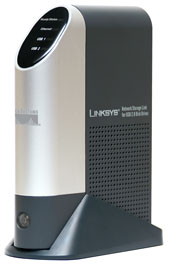
I'm a bit late to this party, but the NSLU2—affectionately known as the 'slug'—is a piece of kit you can't afford to be without on your home or small office network. NSLU2 image Not much bigger than the palm of my hand, and cheaper than a ticket for a Test at Lord's, the NSLU2 is a small fileserver that serves files from attached USB disks. What makes it particularly special is the large amount of alternative firmwares built by Linux open source developers, which allow you to extend the functionality of the NSLU2 beyond merely serving out files via SMB (the Windows file serving protocol.) Cheap NFS serving  So what's the big deal for me? Well, like most laptop-slinging folks whose home network is predominantly wireless, I want my backup disks to sit on the network, available when needed. It turns out it's very difficult to find a standalone network disk that properly supports Unix file system semantics such as symbolic links. Most just support SMB file sharing, with attendant limits such as no links and no files over 2GB. (I found this out the hard way with Apple's Airport Extreme.) With the NSLU2 I was able to install the "Unslung" alternative firmware, and install good old NFS, making my backup disks available in a normal way to Linux and OS X machines alike. (How we used to complain about NFS back in the early 90s, but Windows file sharing still makes it look good!) In the great tradition of open source there are multiple choices of Linux distributions you can install. As it was my first time round, I went for Unslung, which preserves as much as possible of the official Linksys interface, but lets you extend it. Next time, with a better idea of what I'd use the box for, I'd probably plump for Debian.  Constraints breed creativity Inside the case, the NSLU2 is in fact a tiny Linux machine with 32MB of RAM and an Intel XScale CPU. This turns out to be plenty enough resources to serve files on a small network. Aside from my prosaic needs, the NSLU2 has been put to several more innovative uses, such as a music server for Apple ITunes and a 4-line home telephone exchange. I've been astounded at the applications people have devised for this little box. Being fairly cheap makes it a great candidate for home automation projects. It's a great example of how limiting resources fosters innovation. Remember how games on 8-bit microcomputers were so much more ingenious than those on their more well-resourced successors?
So, I may be a little slow in finding this little hardware gem, but I wholeheartedly recommend it.

Antti-Juhani Kaijanaho: Announcing darcs-monitor 0.3.1

Darcs-monitor will send email to a specified recipient about new changes added to a specific darcs repository. It can be run as an apply posthook (resulting in near-instantaneous push emails), or periodically from Cron, or occasionally by hand, whatever seems most convenient. This new release (0.3) contains the following changes: The minor update 0.3.1 brings the documentation up to date. Benja Fallenstein and Benjamin Franksen provided some of the features and bug fixes in this release. My thanks to them :) You can get it by darcs at http://antti-juhani.kaijanaho.fi/darcs/darcs-monitor/ (darcsweb
available
), or as a tarball at http://antti-juhani.kaijanaho.fi/software/dist/. It depends on mtl and
HaXml and is written in Haskell, naturally. It has been tested only with GHC 6.6 so far. For installation and usage instructions, refer to the README at any of the locations above. Please note that this software is very new and thus can be buggy. As with any email-sending software, bugs can result in major annoyance; user caution is warranted.

Eric Dorland: Abusing Lazyweb

Dear Lazyweb,

I have a growing frustration with my current home desktop machine, so I would like to get a new one. I'm perfectly willing to build it myself, and I would like it if possible to have one of those spiffy G965 Intel chipsets so I can finally have some free 3D graphics drivers. All the motherboards I have seen have only a VGA port, but apparently you can get an SDVO card to add a DVI interface. Does anyone know if you can drive two monitors with this setup? My googling didn't really clarify if this was possible. I want to have two displays, but I don't mind if one of them has to hook up to a VGA interface.

Beyond that, I'd like it to be quiet. Any tips on quiet power supplies, CPU and case fans?

Next.

Previous.