Eduard Sanou: Reproducible builds on Debian for GSoC 2015, 1st update
This is the second blog post I m writing about my experiences contributing to Debian for Google Summer of Code 2015 (check my first post)
Status update
SOURCE_DATE_EPOCH that contains a known timestamp in Unix epoch format. With this variable exported, tools that would embed the localtime in their generated or processed files, can use this externally supplied date. This would happen only if SOURCE_DATE_EPOCH is exported, so the behaviour of the tool wouldn t change if the variable is not set.
The first package I patched to implement this behaviour was gcc. The reason behind this is that there are about 420 unreproducible packages due to using the __DATE__, __TIME__ and __TIMESTAMP__ C macros. My patch changes the behavior of the macros __DATE__ and __TIME__ if SOURCE_DATE_EPOCH is exported. I submitted this patch to the gcc-patches list. Even though there was some interesting discussions in the list, the patch has not been accepted yet. Seeing how the reproducible builds idea is gaining momentum and becoming widespread, I m positive that at some point the gcc people will be more receptive for such patch.
The second work with SOURCE_DATE_EPOCH was in debhelper; I patched this building tool to export the variable with the latest debian/changelog entry timestamp. With this patch, all the tools that run under dh will be able to use it to embed deterministic timestamps. Unfortunately some parts of the build process of some packages don t happen under debhelper, so the variable needs to be exported in a different way.
Having submitted the debhelper patch allowed many packages to become reproducible after the tools that embedded timestamps were patched to honour SOURCE_DATE_EPOCH. As of today, the toolchain packages I have patched to do that are: gcc, libxslt, gettext, ghostscript and qt4-x11 (qhelpgenerator).
I have also continued working on fixing individual packages affected by timestamps, random orderings (such as the ones from listing hash keys) and locale depending orderings; I have tagged packages in our infrastructure to note what kind of issue makes them unreproducible; I have updated some parts of the Reproducible Builds Wiki.
 TinyTiny-RSS has some nice failure
modes. And upstream
support forums aren't really helpfull so when you search for
your current problem, chances are that there is one mention
of it on the web, in the forum, and the only thing happening there
is people making fun of the reporter.
Anyway. This installation has seen lots of error messages from the
updater in the last several months:
Warning: Fatal error, unknown preferences key: ALLOW_DUPLICATE_POSTS (owner: 3) in /srv/www/tt-rss.faui2k9.de/root/classes/db/prefs.php on line 108
Warning: Fatal error, unknown preferences key: ALLOW_DUPLICATE_POSTS (owner: 3) in /srv/www/tt-rss.faui2k9.de/root/classes/db/prefs.php on line 108
Warning: Fatal error, unknown preferences key: ALLOW_DUPLICATE_POSTS (owner: 3) in /srv/www/tt-rss.faui2k9.de/root/classes/db/prefs.php on line 108
Warning: Fatal error, unknown preferences key: ALLOW_DUPLICATE_POSTS (owner: 3) in /srv/www/tt-rss.faui2k9.de/root/classes/db/prefs.php on line 108
And, more recently, the android app stopped working with
ERROR:JSON Parse failed.. Turns out both things are
related.
First thing I noticed was changing preferences in the web
panel stopped working until you use the reset to Defaults
option and then changed settings. Plugging wireshark in between
showed what was going on (Note: API was displayed as enabled in Preferences/Preferences):
HTTP/1.1 200 OK Server: nginx/1.8.0 Date: Thu, 06 Aug 2015 11:00:31 GMT Content-Type: text/json Transfer-Encoding: chunked Connection: keep-alive X-Powered-By: PHP/5.4.43 Content-Language: auto Set-Cookie: [...] Expires: Thu, 19 Nov 1981 08:52:00 GMT Cache-Control: no-store, no-cache, must-revalidate, post-check=0, pre-check=0 Pragma: no-cache Api-Content-Length: 234 eaSolution for fixing the Android app (and the logspam on the way as well) seems to be to reset the preferences and then configure tt-rss again (In the webapp, not in the android thing!). Also silences tt-rss update_daemon as well, yay! One last thing: someone out there who wants to explain to me how to fix
Warning: Fatal error, unknown preferences key: ENABLE_API_ACCESS (owner: 2) in /srv/www/tt-rss.faui2k9.de/root/classes/db/prefs.php on line 108
"seq":0,"status":1,"content": "error":"API_DISABLED" 0
Fatal error: Query INSERT INTO ttrss_enclosures
                                                        (content_url, content_type, title, duration, post_id, width, height) VALUES
                                                        ('https://2.gravatar.com/avatar/e6d6ceb7764252af8da058e30cd8cb5f?s=96&d=identicon&r=G', '', '', '', '0', 0, 0) failed: ERROR:  insert or update on table "ttrss_enclosures" violates foreign key constraint "ttrss_enclosures_post_id_fkey"
DETAIL:  Key (post_id)=(0) is not present in table "ttrss_entries". in /srv/www/tt-rss.faui2k9.de/root/classes/db/pgsql.php on line 46
TinyTiny-RSS has some nice failure
modes. And
upstream support forums aren't really helpfull so when you
search for your current problem, chances are that there
is one mention of it on the web, in the forum, and the only
thing happening there is people making fun of the reporter.
Anyway. This installation has seen lots of error messages from the
updater in the last several months:
Warning: Fatal error, unknown preferences key: ALLOW_DUPLICATE_POSTS (owner: 3) in /srv/www/tt-rss.faui2k9.de/root/classes/db/prefs.php on line 108
Warning: Fatal error, unknown preferences key: ALLOW_DUPLICATE_POSTS (owner: 3) in /srv/www/tt-rss.faui2k9.de/root/classes/db/prefs.php on line 108
Warning: Fatal error, unknown preferences key: ALLOW_DUPLICATE_POSTS (owner: 3) in /srv/www/tt-rss.faui2k9.de/root/classes/db/prefs.php on line 108
Warning: Fatal error, unknown preferences key: ALLOW_DUPLICATE_POSTS (owner: 3) in /srv/www/tt-rss.faui2k9.de/root/classes/db/prefs.php on line 108
And, more recently, the android app stopped working with
ERROR:JSON Parse failed.. Turns out both things are
related.
First thing I noticed was changing preferences in the web
panel stopped working until you use the reset to Defaults
option and then changed settings. Plugging wireshark in between
showed what was going on (Note: API was displayed as enabled in Preferences/Preferences):
HTTP/1.1 200 OK Server: nginx/1.8.0 Date: Thu, 06 Aug 2015 11:00:31 GMT Content-Type: text/json Transfer-Encoding: chunked Connection: keep-alive X-Powered-By: PHP/5.4.43 Content-Language: auto Set-Cookie: [...] Expires: Thu, 19 Nov 1981 08:52:00 GMT Cache-Control: no-store, no-cache, must-revalidate, post-check=0, pre-check=0 Pragma: no-cache Api-Content-Length: 234 eaSolution for fixing the Android app (and the logspam on the way as well) seems to be to reset the preferences and then configure tt-rss again (In the webapp, not in the android thing!). Also silences tt-rss update_daemon as well, yay! One last thing: someone out there who wants to explain to me how to fix
Warning: Fatal error, unknown preferences key: ENABLE_API_ACCESS (owner: 2) in /srv/www/tt-rss.faui2k9.de/root/classes/db/prefs.php on line 108
"seq":0,"status":1,"content": "error":"API_DISABLED" 0
Fatal error: Query INSERT INTO ttrss_enclosures
                                                        (content_url, content_type, title, duration, post_id, width, height) VALUES
                                                        ('https://2.gravatar.com/avatar/e6d6ceb7764252af8da058e30cd8cb5f?s=96&d=identicon&r=G', '', '', '', '0', 0, 0) failed: ERROR:  insert or update on table "ttrss_enclosures" violates foreign key constraint "ttrss_enclosures_post_id_fkey"
DETAIL:  Key (post_id)=(0) is not present in table "ttrss_entries". in /srv/www/tt-rss.faui2k9.de/root/classes/db/pgsql.php on line 46
 After long time of dear service, I have decided to exchange my Kobo Glo to a new device, the Kob GloHD. The reasons are simple: higher resolution, better reading quality.
 While the photos are not showing these details, the quality of the screen is definitely much better
I have now read a few hours with the new device, both Japanese and English books, and the crispness of the letters has definitely improved. Very nice. Together with the new device came a new firmware, only released in Japan, 3.16.10. Of course it can be found on MobileRead. As with previous version, I will prepare a MegaPack containing nickel patches, ssh, custom dicts, etc etc, please wait a bit longer until KSM compatibility with the new firmware is perfect again.
Talking of dictionaries: The new version brings a few more dicts, especially there are now two English-Japanese dictionaries, and a much more complete Japanese dictionary.
 Unfortunately, as before, there is no Japanese-English dictionary. Till now I have used Tshering s excellent Japanese dictionary which was enriched with English definitions. But the new version brought a new dictionary that is much more complete:
 I have already a script ready that enriches this new big dictionary automatically with definitions from the Edict project, so everyone can now update his own dictionary easily. I will write a blog entry about this soon.
That s it for the moment, back to reading. I love the new device, and will surely post many articles about it in the future!
 The interest to participate in DebConf15, which will start in 10 days, has
been overwhelming. Thank you so much!
We planned the conference for 350 people and we now expect more than 570. This
is fantastic and a wonderful support and encouragement for Debian and its
contributors. But we are getting to the point where we have to prioritise
considerations about the capacity of the venue and the safety of our
attendees.
We ve therefore had to close registrations until we have evaluated further
options for accomodating even more attendees. For those of you who did not
register for DebConf on time, but still want to participate, please bear with
us and make sure to check back soon.

 A new Armadillo release 5.300.4 was prepared by Conrad the other day, and we prepared a new corresponding RcppArmadillo release 0.5.300.4.0 which is now on CRAN and in way into Debian.
Armadillo is a powerful and expressive C++ template library for linear algebra aiming towards a good balance between speed and ease of use with a syntax deliberately close to a Matlab.
This release brings a considerable amount of new code extending support for sparse matrices, support for Schur decompositions, and much more as shown in the extract from
NEWS file:
Changes in RcppArmadillo version 0.5.300.4 (2015-08-03)Courtesy of CRANberries, there is also a diffstat report for the most recent CRAN release. As always, more detailed information is on the RcppArmadillo page. Questions, comments etc should go to the rcpp-devel mailing list off the R-Forge page.
- Upgraded to Armadillo 5.300.4 ("Plutocrazy Incorporated")
- added generalised Schur decomposition:
qz()- added
.has_inf()and.has_nan()- expanded
interp1()to handle out-of-domain locations- expanded sparse matrix class with
.set_imag()and.set_real()- expanded
imag(),real()andconj()to handle sparse matrices- expanded
diagmat(),reshape()andresize()to handle sparse matrices- faster sparse
sum()- faster row-wise
sum(),mean(),min(),max()- updated physical constants to NIST 2014 CODATA values
- fixes for handling sparse submatrix views
- Armadillo can make use of GPUs by linking with NVIDIA NVBLAS (a GPU-accelerated implementation of BLAS), or by linking with AMD ACML (which can use GPUs via OpenCL)
- Added
importFromstatements for R functions not from base- Added explicit
Rcpp::sourceCpp()reference as well- Updated one formatting detail in vignette to please TeXlive2015
This post by Dirk Eddelbuettel originated on his Thinking inside the box blog. Please report excessive re-aggregation in third-party for-profit settings.
 The TODO group is an industry body that appears to be trying to define community best practices or something. I don't really know what their backstory is and whether they're trying to do meaningful work or just provide a fig leaf of respectability to organisations that dislike being criticised for doing nothing to improve the state of online communities but don't want to have to actually do anything, and their initial work on codes of conduct was, perhaps, suboptimal. But they do appear to be trying to improve things - this commit added a set of inappropriate behaviours, and also clarified that reverseisms were not actionable behaviour.
 It's been a while since I talked about Ceilometer and its companions, so I
thought I'd go ahead and write a bit about what's going on this side of
OpenStack. I'm not going to cover new features and fancy stuff today, but
rather a shallow overview of the new project processes we initiated.
Ceilometer growing
Ceilometer has grown a lot since that time
when we started it 3 years ago. It has evolved from a system designed to fetch
and store measurements, to a more complex system, with agents, alarms, events,
databases, APIs, etc.
All those features were needed and asked for by users and operators, but let's
be honest, some of them should never have ended up in the Ceilometer code
repository, especially not all at the same time.
The reality is we picked a pragmatic approach due to the rigidity of the
OpenStack Technical Committee in regards to new projects to become OpenStack
integrated and, therefore, blessed projects. Ceilometer was actually the
first project to be incubated and then integrated. We had to go through the
very first issues of that process.
Fortunately, now that time has passed, and all those constraints have been
relaxed. To me, the
OpenStack Foundation is turning into
something that looks like the
Apache Foundation, and there's, therefore,
no need to tie technical solutions to political issues.
Indeed, the
Big Tent
now allows much more flexibility to all of that. Back a year ago, we were
afraid to bring Gnocchi into Ceilometer. Was the Technical Committee going to
review the project? Was the project going to be in the scope of Ceilometer for
the Technical Committee? Now we don't have to ask ourselves those questions,
now that we have that freedom, it empowers us to actually do what we think is
good in term of technical design without worrying too much about political
issues.
 Ceilometer development activity
 Aodh is an Irish word meaning
fire. A word picked so it also had some relation to Heat, and because we have
some Irish influence around the project .
defaults-from http-appmon
destination *:*
interval 9
recv "^HTTP/1\\.1 200 OK"
send "GET /mon/state HTTP/1.1\\r\\nHost: MON\\r\\nConnection: Close\\r\\n\\r\\n"
time-until-up 0
timeout 2
up-interval 1
ps -eFH and found this:
jamie    28499 28489  0  1082  1516   1 10:06 tty1     00:00:00     /bin/sh /usr/bin/startx
jamie    28542 28499  0  3987  1912   1 10:06 tty1     00:00:00       xinit /etc/X11/xinit/xinitrc -- /etc/X11/xinit/xserverrc :0 vt1 -auth /tmp/serverauth.gn3C5pYbPc
root     28543 28542  0 58065 25036   3 10:06 tty1     00:00:05         /usr/bin/X -nolisten tcp :0 vt1 -auth /tmp/serverauth.gn3C5pYbPc
jamie    28548 28542  0 69563 19980   0 10:06 tty1     00:00:00         /usr/bin/openbox --startup /usr/lib/x86_64-linux-gnu/openbox-autostart OPENBOX
jamie    28604 28548  0  2774   348   1 10:06 ?        00:00:00           /usr/bin/ssh-agent /usr/bin/gpg-agent --daemon --sh --write-env-file=/home/jamie/.gnupg/gpg-agent-info-animal /usr/bin/dbus-launch --exit-with-session /usr/bin/monkeysphere-validation-agent /usr/bin/im-launch /home/jamie/.xsession
jamie    28605 28548  0  4915   248   0 10:06 ?        00:00:00           /usr/bin/gpg-agent --daemon --sh --write-env-file=/home/jamie/.gnupg/gpg-agent-info-animal /usr/bin/dbus-launch --exit-with-session /usr/bin/monkeysphere-validation-agent /usr/bin/im-launch /home/jamie/.xsession
jamie    28610 28548  0 22402 34456   0 10:06 tty1     00:00:00           /usr/bin/perl -wT /usr/bin/monkeysphere-validation-agent /usr/bin/im-launch /home/jamie/.xsession
--enable-ssh-support option (and ssh-agent was running), so looks like ssh is handled by ssh-agent and gpg is handled by gpg-agent. So far so good.
Now, how do they get launched??
I start my graphical session by logging in at a console and running exec startx. In my home directory, I have ~/.xsession which contains the line exec /usr/bin/openbox-session. Therefore, I started by scouring all things openbox on my system and couldn't find any reference to these agents.
Next, I turned my attention to X. Based on my ps -eFH output, I started with /etc/X11/xinit/xinitrc, which led me to /etc/X11/Xsession which led me to /etc/X11/Xsession.d and presto, I found my answer: a series of shell scripts that modify a global variable STARTUP which is executed by X.
Thanks Debian developers for making it all work out of the box!
 What happened in the reproducible
builds effort this week:
Toolchain fixes
debian/control file with all locales. Original patch by Chris Lamb.SOURCE_DATE_EPOCH. She uploded a package with the enhancement to the experimental reproducible repository.
Packages fixed
The following 15 packages became reproducible due to changes in their
build dependencies:
dracut,
editorconfig-core,
elasticsearch,
fish,
libftdi1,
liblouisxml,
mk-configure,
nanoc,
octave-bim,
octave-data-smoothing,
octave-financial,
octave-ga,
octave-missing-functions,
octave-secs1d,
octave-splines,
valgrind.
The following packages became reproducible after getting fixed:
debian/changelog entry.debian/changelog entry in manpage.SOURCE_DATE_EPOCH.SOURCE_DATE_EPOCH.debian/changelog entry.armhf build hosts were provided by Vagrant Cascadian and have been configured to be used by jenkins.debian.net. Work on including armhf builds in the reproducible.debian.net webpages has begun. So far the repository comparison page just shows us which armhf binary packages are currently missing in our repo. (h01ger)
The scheduler has been changed to re-schedule more packages from stretch than sid, as the gcc5 transition has started This mostly affects build log age. (h01ger)
A new depwait status has been introduced for packages which can't be built because of missing build dependencies. (Mattia Rizzolo)
debbindiff development
Finally, on August 31st, Lunar released debbindiff 27 containing a complete overhaul of the code for the comparison stage. The new architecture is more versatile and extensible while minimizing code duplication. libarchive is now used to handle cpio archives and iso9660 images through the newly packaged python-libarchive-c. This should also help support a couple other archive formats in the future. Symlinks and devices are now properly compared. Text files are compared as Unicode after being decoded, and encoding differences are reported. Support for Sqlite3 and Mono/.NET executables has been added. Thanks to Valentin Lorentz, the test suite should now run on more systems. A small defiency in unquashfs has been identified in the process. A long standing optimization is now performed on Debian package: based on the content of the md5sums control file, we skip comparing files with matching hashes. This makes debbindiff usable on packages with many files. Fuzzy-matching is now performed for files in the same container (like a tarball) to handle renames. Also, for Debian .changes, listed files are now compared without looking the embedded version number. This makes debbindiff a lot more useful when comparing different versions of the same package.
Based on the rearchitecturing work has been done to allow parallel processing. The branch now seems to work most of the time. More test needs to be done before it can be merged.
The current fuzzy-matching algorithm, ssdeep, has showed disappointing results. One important use case is being able to properly compare debug symbols. Their path is made using the Build ID. As this identifier is made with a checksum of the binary content, finding things like CPP macros is much easier when a diff of the debug symbols is available. Good news is that TLSH, another fuzzy-matching algorithm, has been tested with much better results. A package is waiting in NEW and the code is ready for it to become available.
A follow-up release 28 was made on August 2nd fixing content label used for gzip2, bzip2 and xz files and an error on text files only differing in their encoding. It also contains a small code improvement on how comments on Difference object are handled.
This is the last release name debbindiff. A new name has been chosen to better reflect that it is not a Debian specific tool. Stay tuned!
Documentation update
Valentin Lorentz updated the patch submission template to suggest to write the kind of issue in the bug subject.
Small progress have been made on the Reproducible Builds HOWTO while preparing the related CCCamp15 talk.
Package reviews
235 obsolete
reviews have
been removed, 47 added and 113 updated this week.
42 reports for packages failing to build from source have been made by Chris West (Faux).
New issue added this week: haskell_devscripts_locale_substvars.
Misc.
Valentin Lorentz wrote a script to report packages tested as unreproducible installed on a system. We encourage everyone to run it on their systems and give feedback!
 This is the entire complaint that was received:
We are an IT security company from Spain. We have detected sensitive information belonging to Banesco Banco Universal, C.A. clientes. As authorized representative in the resolution of IT security incidents affecting Banesco Banco Universal, C.A., we demand the deletion of the content related to Banesco Banco Universal, C.A, clients. This content violates the law about electronic crime in Venezuela (see Ley Especial sobre Delitos Inform ticos de Venezuela , Chapter III, Articles 20 y 23).Note the complete lack of any information regarding what URLs, or even which site(s), they consider to be problematic. Nope, just delete all our stuff! and a wave of the against the law somewhere! stick.
 or Twitter
 or Diaspora*
 Here are the details of my Free activities in July 2015.
Carl Chenet s projects:

The airplane may be the closest thing we have to a time machine. Brian J. Terwilliger
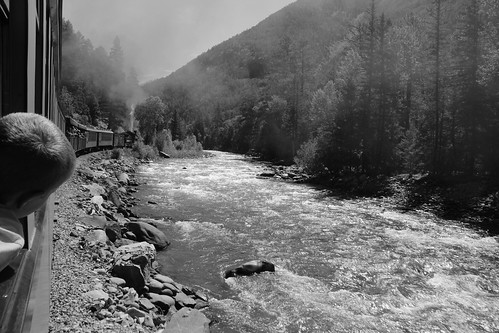 There is something about that moment. Hiking in the mountains near Durango, Colorado, with Laura and the boys, we found a beautiful spot with a view of the valley. We paused to admire, and then
The sound of a steam locomotive whistle from down below, sounding loud all the way up there, then echoing back and forth through the valley. Then the quieter, seemingly more distant sound of the steam engine heading across the valley, chugging and clacking as it goes. More whistles, the sight of smoke and then of the train full of people, looking like a beautiful model train from our vantage point.
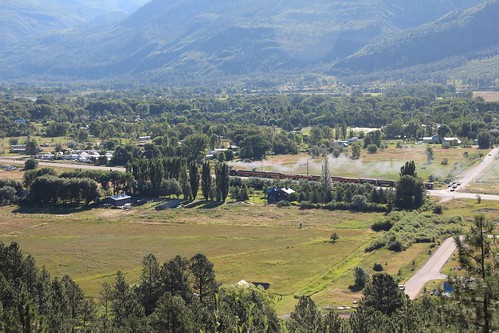 I ve heard that sound on a few rare recordings, but never experienced it. I ve been on steam trains a few times, but never spent time in a town where they still run all day, every day. It is a different sort of feeling to spend a week in a place where Jacob and Oliver would jump up several times a day and rush to the nearest window in an attempt to catch sight of the train.
 Airplanes really can be a time machine in a sense what a wondrous time to be alive, when things so ancient are within the reach of so many. I have been transported to L beck and felt the uneven 700-year-old stones of the Marienkirche underneath my feet, feeling a connection to the people that walked those floors for centuries. I felt the same in Prague, in St. George s Basilica, built in 1142, and at the Acropolis of Lindos, with its ancient Greek temple ruins. In Kansas, I feel that when in the middle of the Flint Hills rolling green hills underneath the pure blue sky with billowing white clouds, the sounds of crickets, frogs, and cicadas in my ears; the sights and sounds are pretty much as they ve been for tens of thousands of years. And, of course, in Durango, arriving on a plane but seeing the steam train a few minutes later.
 It was fitting that we were in Durango with Laura s parents to celebrate their 50th anniversary. As we looked forward to riding the train, we heard their stories of visits to Durango years ago, of their memories of days when steam trains were common. We enjoyed thinking about what our lives would be like should we live long enough to celebrate 50 years of marriage. Perhaps we would still be in good enough health to be able to ride a steam train in Durango, telling about that time when we rode the train, which by then will have been pretty much the same for 183 years. Or perhaps we would take them to our creek, enjoying a meal at the campfire like I ve done since I was a child.
Each time has its unique character. I am grateful for the cameras and airplanes and air conditioning we have today. But I am also thankful for those things that connect us with each other trough time, those rocks that are the same every year, those places that remind us how close we really are to those that came before.
 It s Seafair weekend in Seattle. As always, the centerpiece is the H1 Unlimited hydroplane races on Lake Washington.
 In my social circle, I m nearly the only person I know who grew up in area. None of the newcomers I know had heard of hydroplane racing before moving to Seattle. Even after I explain it to them i.e., boats with 3,000+ horse power airplane engines that fly just above the water at more than 320kph (200mph) leaving 10m+ (30ft) wakes behind them! most people seem more puzzled than interested.
I grew up near the shore of Lake Washington and could see (and hear!) the races from my house. I don t follow hydroplane racing throughout the year but I do enjoy watching the races at Seafair. Here s my attempt to explain and make the case for the races to new Seattleites.
Before Microsoft, Amazon, Starbucks, etc., there were basically three major Seattle industries: (1) logging and lumber based industries like paper manufacturing; (2) maritime industries like fishing, shipbuilding, shipping, and the navy; (3) aerospace (i.e., Boeing). Vintage hydroplane racing represented the Seattle trifecta: Wooden boats with airplane engines!
The wooden U-60 Miss Thriftway circa 1955 (Thriftway is a Washinton-based supermarket that nobody outside has heard of) below is a picture of old-Seattle awesomeness. Modern hydroplanes are now made of fiberglass but two out of three isn t bad.
 Although the boats are racing this year in events in Indiana, San Diego, and Detroit in addition to the two races in Washington, hydroplane racing retains deep ties to the region. Most of the drivers are from the Seattle area. Many or most of the teams and boats are based in Washington throughout the year. Many of the sponsors are unknown outside of the state. This parochialness itself cultivates a certain kind of appeal among locals.
In addition to old-Seattle/new-Seattle cultural divide, there s a class divide that I think is also worth challenging. Although the demographics of hydro-racing fans is surprisingly broad, it can seem like Formula One or NASCAR on the water. It seems safe to suggest that many of the demographic groups moving to Seattle for jobs in the tech industry are not big into motorsports. Although I m no follower of motorsports in general, I ve written before cultivated disinterest in professional sports, and it remains something that I believe is worth taking on.
It s not all great. In particular, the close relationship between Seafair and the military makes me very uneasy. That said, even with the military-heavy airshow, I enjoy the way that Seafair weekend provides a little pocket of old-Seattle that remains effectively unchanged from when I was a kid. I d encourage others to enjoy it as well!
It s Seafair weekend in Seattle. As always, the centerpiece is the H1 Unlimited hydroplane races on Lake Washington.
 In my social circle, I m nearly the only person I know who grew up in area. None of the newcomers I know had heard of hydroplane racing before moving to Seattle. Even after I explain it to them i.e., boats with 3,000+ horse power airplane engines that fly just above the water at more than 320kph (200mph) leaving 10m+ (30ft) wakes behind them! most people seem more puzzled than interested.
I grew up near the shore of Lake Washington and could see (and hear!) the races from my house. I don t follow hydroplane racing throughout the year but I do enjoy watching the races at Seafair. Here s my attempt to explain and make the case for the races to new Seattleites.
Before Microsoft, Amazon, Starbucks, etc., there were basically three major Seattle industries: (1) logging and lumber based industries like paper manufacturing; (2) maritime industries like fishing, shipbuilding, shipping, and the navy; (3) aerospace (i.e., Boeing). Vintage hydroplane racing represented the Seattle trifecta: Wooden boats with airplane engines!
The wooden U-60 Miss Thriftway circa 1955 (Thriftway is a Washinton-based supermarket that nobody outside has heard of) below is a picture of old-Seattle awesomeness. Modern hydroplanes are now made of fiberglass but two out of three isn t bad.
 Although the boats are racing this year in events in Indiana, San Diego, and Detroit in addition to the two races in Washington, hydroplane racing retains deep ties to the region. Most of the drivers are from the Seattle area. Many or most of the teams and boats are based in Washington throughout the year. Many of the sponsors are unknown outside of the state. This parochialness itself cultivates a certain kind of appeal among locals.
In addition to old-Seattle/new-Seattle cultural divide, there s a class divide that I think is also worth challenging. Although the demographics of hydro-racing fans is surprisingly broad, it can seem like Formula One or NASCAR on the water. It seems safe to suggest that many of the demographic groups moving to Seattle for jobs in the tech industry are not big into motorsports. Although I m no follower of motorsports in general, I ve written before cultivated disinterest in professional sports, and it remains something that I believe is worth taking on.
It s not all great. In particular, the close relationship between Seafair and the military makes me very uneasy. That said, even with the military-heavy airshow, I enjoy the way that Seafair weekend provides a little pocket of old-Seattle that remains effectively unchanged from when I was a kid. I d encourage others to enjoy it as well!
Next.