Search Results: "spa"

21 August 2007

Raphaël Hertzog: Deprecating cvs.debian.org in favor of Alioth

It’s very difficult to discuss with DSA and make things evolve if none of the DSA member express an interest in something related to your goal: here comes an example of a story like another in my desperate quest to try to help the DSA team. :-) Last time gluck ran out of space, a few non-DSA people (me, taggart, Ganneff, and others I might have forgotten) contacted people to ask them to clean their home directories. Following that discussion we discussed a bit about the opportunity to move some services from gluck on another host. Among the services on gluck, there’s cvs.debian.org. As an Alioth administrator, it struck me that cvs.debian.org is the only VCS service that’s handled by the DSA team. It seems logical to not duplicate the administrative work and have all the VCS repositories handled by the same team. The logical conclusion is that cvs.debian.org should be deprecated in favor of Alioth. So I made the suggestion in RT ticket #146 (login with guest/readonly). I got exactly zero response from DSA. No support and no opposition. So I went ahead and contacted the last users of cvs.debian.org: All in all, the debian-doc and debian-www folks are rather supportive of the move, but it requires adjustment to the build infrastructure, in particular to keep track of the status of translations. I have no answer from DSA and the buildd guys however. The web team started a wiki page to evaluate the VCS that they would switch to. Volunteers would be welcome to organize the conversion of the repositories and to fix the build infrastructure accordingly. This a nice little project for new contributors that want to learn. :-)

Theodore Ts'o: Thoughts about the Palm Foleo

I looked at the Foleo and played with one while I was at Linux World a few weeks ago, but it is so restrictive in what it can do that I was completely unimpressed. First of all, according to one of the people at the booth, it will only work with a select set of Treo's; mostly the newer ones. A colleague I was with had just gotten a Treo 650, and the person at the booth said that it wouldn't work with that model of Treo. (WTF?) Furthermore, it will only do e-mail (POP or IMAP) by linking with the Treo over bluetooth connection and letting the Treo pull down the e-mail and store it on the Treo. Given that it only has 128 megs of RAM and 256 megs of Flash, it just doesn't have enough storage apparently to run a stand-alone e-mail application, which is a little bit scary. The limited amount of memory is probably why it is using Opera as a web browser, which previous experience on the N800 has largely unimpressed me in terms of compatibility with Web 2.0 sites that aggressively use AJAX or flash. So OK, it's not supposed to be a laptop. But the problem is, for 0.2 pounds more, I can get a laptop. Let's review the critical statistics, shall we? The Foleo costs $499, weighs 2.5 pounds, and has a size of 10.5" by 6.7" by 0.9". As stated before it has 128 megs of RAM and 256 megs of flash, with a SD slot for expansion purposes, and it has a claimed 5-6 hours of battery life. But let's compare that with my IBM X41 which I recently purchased off of eBay for $800. It has 1.5 gigs of memory, and 60 gigs of hard disk. It has two batteries; with the 4 cell battery it weighs 2.7 pounds and delivers 2 hours of battery life, and with the 8 cell battery it weighs 3.2 pounds and delivers 4 hours of battery life. So true, even with the 8 cell battery the X41 is 1.7 pounds heavier and still has slightly less battery life. But you can do a lot more with the X41! Furthermore, the Foleo's weight advantage is somewhat nullified by the fact that you have to bring the Treo around to do certain activities, and the Treo has to be powered on since the Foleo is mostly designed around being a remote large screen for the Treo. At the end of the day it's all about tradeoffs. Perhaps if enough companies created enough killer apps that could fit in 128 meg of ram for the Foleo, it might be useful enough to justifying buying it. I hear for example, that even though the Foleo doesn't have any kind of PIM functionality, a 3rd party ISV is planning on making a product available that will provide calendar and contact functionality that can sync Palm PDA's. No word on how much it will cost or how usable it will be, but with enough applications, maybe Foleo could be useful enough to justify its size/weight. I imagine that these apps will probably be commercial ones, since open source apps like Evolution will probably have difficulty fitting in the Foleo's constrained environment. :-) And, of course, it's a lot cheaper than my used X41 laptop, never mind a brand-new Lenovo X61s, which could run 2 or 3 kilobucks fully outfitted with the 4 gigs of memory and 160 gig/7200 rpm drive. However, as a road warrior, my priorities are not just weight, but functionality. A 2.5 pound solid-state laptop with only 128 megs of memory which massively restricts what I can do is not a good use of the space in my laptop bag. What I'm waiting for is the next generation of the Thinkpad X series which has a solid state disk --- which shouldn't be that far off --- and the elimination of the spinning magnetic media would mean that we should have something with Foleo's battery life without the Foleo's limited usefulness. Sure, maybe I will need to wait another year or two for my perfect laptop (12", 1024x768 LED display, at least 60 gigs solid state disk, at least 2-4 gigs memory, Intel core 2 or follow-on processor, < 3 pounds, > 5 hours useful lifetime) to become available, but the technology to do this exists today; it's just a matter of making it affordable. But given that kind of long-term future, I'm willing to settle for now with either 2 or 4 hour battery life, and a slightly heavier laptop, than to use something today with a desperately slow ARM processor and only 128 megs of memory. The weight/size savings and the increased battery life of the Foleo isn't a fair tradeoff given its very limited capabilities. This is all really too bad, because if Palm is counting on the Foleo to allow it to succeed, I think the concept has some massive shortcomings, much like their claimed LifeDrive product, which didn't last very long. And I really like the Palm company; I still haven't found better PDA functionality on a decade-old Palm design compared to what is available on all of the Nokia phones I've looked at, the WinCE phones/PDA's, the N800, etc. So I want Palm as a company to stick around. But with Treo getting eclipsed by newer smart phones, and the Foleo not getting particularly good buzz by folks reviewing it --- and after I played with it, I have to agree with the majority of the reviewers that this is not the Next Big Thing --- I'm not sure how much longer Palm is going to be around.

20 August 2007

Russell Coker: Suggestions and Thanks

One problem with the blog space is that there is a lot of negativity. Many people seem to think that if they don’t like a blog post then the thing to do is to write a post complaining about it - or even worse a complaint that lacks specific details to such an extent that the subject of the complaint would be unable to change their writing in response. The absolute worst thing to do is to post a complaint in a forum that the blog author is unlikely to read - which would be a pointless whinge that benefits no-one. Of course an alternate way for the recipient to takeg such complaints as suggested by Paul Graham is “you’re on the right track when people complain that you’re unqualified, or that you’ve done something inappropriate” and “if they’re driven to such empty forms of complaint, that means you’ve probably done something good” (Paul was talking about writing essays not blogs, but I’m pretty sure that he intended it to apply to blogs too). If you want to actually get a blog author (or probably any author) to make a change in their material in response to your comments then trying to avoid empty complaints is a good idea. Another useful point Paul makes in the same essay is ““Inappropriate” is the null criticism. It’s merely the adjective form of “I don’t like it.”” - something that’s worth considering given the common criticism of particular blog content as being “inappropriate” for an aggregation feed that is syndicating it. Before criticising blog posts you should consider that badly written criticism may result in more of whatever it is that you object to. If you find some specific objective problem in the content or presentation of a blog the first thing to do is to determine the correct way of notifying the author. I believe that it’s a good idea for the author to have an about page which either has a mailto URL or a web form for sending feedback, I have a mailto on my about page - (here’s the link). Another possible method of contact is a comment on a blog post, if it’s an issue for multiple posts on the blog then writing a comment on the most recent post will do (unless of course it’s a comment about the comment system being broken). For those who are new to blogging, the blog author has full control over what happens to comments. If they decide that your comment about the blog color scheme doesn’t belong on a post about C programming then they can respond to the comment in the way that they think best (making a change or not and maybe sending you an email about it) and then delete the comment if they wish. If there is an issue that occurs on multiple blogs then a good option is to write a post about the general concept as I did in the case of column width in blogs where I wrote about one blog as an example of a problem that affects many blogs. I also described how I fixed my own blog in this regard (in sufficient detail to allow others to do the same). Note that most blogs have some degree of support for Linkback so any time you link to someone else’s blog post they will usually get notified in some way. On my blog I have a page for future posts where I invite comments from readers as to what I plan to write about next. Someone who prefers that I not write about topic A could write a comment requesting that I write about topic B instead. Wordpress supports pages as a separate type of item to posts. A post is a dated entry while pages are not sorted in date order and in most themes are displayed prominently on the front page (mine are displayed at the top). I suggest that other bloggers consider doing something comparable. One thing I considered is running a wiki page for the future posts. One of the problems with a wiki page is that I would need to maintain my own private list which is separate, while a page with comments allows only me to edit the page in response to comments and then use the page as my own to-do list. I may experiment with such a wiki page at some future time. One possibility that might be worth considering is a wiki for post requests for any blog that is syndicated by a Planet. For example a wiki related to Planet Debian might request a post about running Debian on the latest SPARC systems, the first blogger to write a post on this topic could then remove the entry from the wish-list (maybe adding the URL to a list of satisfied requests). If the person who made the original request wanted a more detailed post covering some specific area they could then add such a request to the wish-list page. If I get positive feedback on this idea I’ll create the wiki pages and add a few requests for articles that would interest me to start it up. Finally to encourage the production of content that you enjoy reading I suggest publicly thanking people who write posts that you consider to be particularly good. One way of thanking people is to cite their posts in articles on your own blog (taking care to include a link to at least one page to increase their Technorati rank) or web site. Another is to include a periodic (I suggest monthly at most) links post that contains URLs of blog posts you like along with brief descriptions of the content. If you really like a post then thank the author by not only giving a links with a description (to encourage other people to read it) but also describe why you think it’s a great post. Also if recommending a blog make sure you give a feed URL so that anyone who wants to subscribe can do it as easily as possible (particularly for the blogs with a bad HTML layout). Here are some recent blog posts that I particularly liked: Here are some blogs that I read regularly:
Finally I don’t read it myself, but CuteOverload.com is a good site to refer people to when they claim that the Internet is too nasty for children - the Internet has lots of pictures of cute animals!

Romain Francoise: Cornflakes Heroes: "Lifeline" video

Cornflakes Heroes (my sister's band) have released the video for their new single Lifeline, check it out:


(click here if the embedded player doesn't work)

Martin F. Krafft: Pay three times as much and get zero brain power

If you walk up to the Swiss railways customer service desk and tell them that you're a group of six looking to travel from Zurich to Munich and would thus like to make a reservation, they'll charge you 15 CHF (~ 9.50 ) for a little piece of paper which documents that the guy behind the desk put his brain to use and reserved six contiguous seats to keep the group together. Well, he actually asked me whether that's what I wanted. If you walk up to the German railways customer service desk and tell them that you're a group of (now) eight looking to travel from Munich to Zurich and would thus like to make a reservation, they'll charge you 28 for a little piece of paper which documents that the guy behind the desk does not have a brain or didn't bother to switch it on: instead of two adjacent groups of four seats, we got four pairs of aisle seats. Given that we mainly reserved to minimise the annoyance for the other travellers while we kept up a conversation for the five hours of the journey, it did piss me off quite a bit to have paid three times as much in Germany as the reservation cost in Switzerland and not be able to talk among each other without annoying the others. This reservation was made two days in advance. You may, of course, think that the train was already full and no space to sit eight was left; however, I did not have to go further than two wagons to find copious amounts of unreserved spaces for eight, which were then, unfortunately, already occupied (of course). It shames me to expose my peers (I made the travel arrangements) to the crap and blather one has to put up in German railways: the quality of the speaker system is crap, everything is repeated in English by non-English-speaking conductors, and after every stop, we're yet again alerted to the fact that we could be relaxing to high-quality cuisine in the board restaurant, or should watch out for the little trolley passing by and happy to collect our money. Oh, and of course the brainless and often unfriendly service employees. And all that for a price more than it would have cost the lot of us to rent a van and drive back and forth. Going by train is my most preferable means of transport, not only, but in large part due to environmental issues. I don't understand why the German government puts this important bit of infrastructure in the hands of imbeciles and lets them overcharge for their low-quality service and their delays. NP: Mono: Under the Pipal Tree Update: A guy from Berlin wrote:
The seats you found in the other wagons may as well have been reserved, too. The electronic reservation signs will extinguish about 15 minutes after the train departs from the station. Or, there was too little time between reservation and departure, so you could only get one of the few express-reservation seats.
I am aware of this. However, the train between Zurich and Munich is ancient (part of the way it still has to run on Diesel) and the reservation signs were paper slips. The seats of eight I found were definitely unreserved, especially because I checked immediately after departure.

Holger Levsen: Red Cross sued for using the red cross

Various newspapers report that the health product giant Johnson & Johnson is suing the Red Cross for using the red cross as a logo. Johnson & Johnson registered the trademark in 1887, six years after the us-american Red Cross started to use it. Needless to say, that a red cross has been in use for much longer and that european Red Cross associations also exist for quite some more years.

Manoj Srivastava: Mail Filtering with CRM114: Part 4

Training the Discriminators It has been a while since I posted on this category actually, it has been a long while since my last blog. When I last left you, I had mail (mbox format) folders called ham and/or junk, which were ready to be used for training either CRM114 or Spamassassin or both. Setting up Spamassassin This post lays the groundwork for the training, and details how things are set up. The first part is setting up Spamassassin. One of the things that bothered me about the default settings for Spamassassin was how swiftly Bayes information was expired; indeed, it seems really eager to dumb the Bayes information (don t they trust their engine?). I have spent some effort building a large corpus, and keeping ti clean, but Spamassassin would discard most of the information from the DB after training over my corpus, and the decrease in accuracy was palpable. To prevent this information from leeching away, I firstly increased the size of the database, and turned off automatic expiration, by putting the following lines into ~/.spamassassin/user_prefs:
bayes_expiry_max_db_size  4000000
bayes_auto_expire         0

I also have regularly updated spam rules from the spamassassin rules emporium to improve the efficiency of the rules; my current user_prefs is available as an example. Initial training I keep my Spam/Ham corpus under the directory /backup/classify/Done, in the subdirectories Ham and Spam. At the time of writing, I have approximately 20,000 mails in each of these subdirectories, for a total of 41,000+ emails. I have created a couple of scripts to train the discriminators from scratch using the extant Spam corpus; and these scripts are also used for re-learning, for instance, when I moved from a 32-bit machine to a 64-bit one, or when I change CRM114 discrimators. I generally run them from ~/.spamassassin/ and ~/var/lib/crm114 (which contains my CRM114 setup) directories. I have found that training Spamassassin works best if you alternate Spam and Ham message chunks; and this Spamassassin learning script delivers chunks of 50 messages for learning. With CRM114, I have discovered that it is not a good idea to stop learning based on the number of times the corpus has been gone over; since stopping before all messages i the Corpus are correctly handled is also disastrous. So I set the repeat count to a ridiculously high number, and tell mailtrainer to continue training until a streak larger than the sum of Spam and Ham messages has occurred. This CRM114 trainer script does the hob nicely; running it under screen is highly recommend. Routine updates Coming back to where we left off, we had mail (mbox format) folders called ham and/or junk sitting in the local mail delivery directory, which were ready to be used for training either CRM114 or Spamassassin or both. There are two scripts that help me automate the training. The first script, called mail-process, does most of the heavy listing. This processes a bunch of mail folders, which are supposed to contain mail which is either all ham or all spam, indicated by the command line arguments. We go looking though every mail, and any mail where either the CRM114 or the Spamassassin judgement was not what we expected, we strip out mail gathering headers, and then we save the mail, one to a file, and we train the approprite filter. This ensures that we only train on error, and it does not matter if we accidentally try to train on correctly classified mail, since that would be a no-op (apart from increasing the size of the corpus). The second script, called mproc is a convenience front-end; it just calls mail-process with the proper command line arguments, and feeds them the ham and junk in sequence; and takes no arguments. So, after human classification, just calling mproc does the classification. This pretty much finishes the series of posts I had in mind about spam filtering, I hope it has been useful.

19 August 2007

Kai Hendry: Sharing multimedia

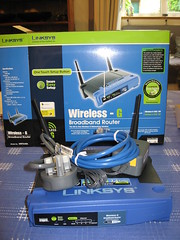
Every home should have a WRT54G-L Ok, I have the slug. It’s great because it allows me to easily & reliably share my multimedia collection. So I’ve moved my multimedia collection to a massive hard drive attached to the slug and now that hard drive is full. I could buy an even bigger NAS, though wait a minute… I have GIGs of (wasted) free space across my (flat mate’s) machines. Wtf happened to P2P? I need something like what Google has. I distantly recall mounting NFS shares of each of my (friend’s) machines and then mounting them on the central slug and trying to re-share them. I don’t think that works. I remember in University dorms (I’m not telling where!), students had a massive multimedia share with Windows file sharing. It actually worked quite well, including search. Any tips lazyweb? Or are centralised services really the future?

18 August 2007

Eddy Petri&#537;or: how did the Debian Games Team got rid of spam

How to get rid of most spam on Alioth mailing lists.

Until some Debian developer implements this idea in the BTS, the mailing list and in PTS, the quantities of spam that people get on the mail addresses they expose in the Debian world, the spam will keep on coming in huge quantities. I don't care that there will always be spam, I care that the amount of spam would be lower or probably nonexistent for one time sending (I sent just one mail to the BTS from two different mail addresses and it was enough to get huge amounts of spam on them).


The Debian Games Team's ML has suffered for a while, back in 2006, from spam bombing.
We thought that the easiest method to get rid of spam is to requires registration in order to be able to send mails to the list.

That was a big mistake because, as some people suspect, mails from the BTS needed to be allowed in and the reporters got an automated reply saying that the mail is waiting for approval, etc, etc - plain rude, people send you bug reports and you say "You are not listed, bla, bla bla". We changed the setting not to send any automatic reply and people were more content.

But still, we had to hand approve or white list valid mails/addresses. That worked for a while, but once the mail ended up on spammer lists, the thing blew out of proportions. We were desperate. We tweaked the settings of the lists in different ways, but in the end we ended up in having such a broken setup that we had to approve white listed addresses.

That did for me. I had to do something. So I started working on the ML setup and basically I did the following things to get rid of spam:

This solution allowed us to lighten the burden of manually white listing every email address that ever sent valid mails to the BTS and to focus only on real spam.

Try it your self on your lists, you'll be pleasantly surprised.

17 August 2007

John Goerzen: Linux Hardware Support Better Than Windows

Something I often hear from people that talk about Linux on the desktop is this: people want to be able to go to the store, buy hardware, and be confident that it will Just Work.

I would like to point out that things are rarely this simple on Windows. And, in fact, things are often simpler on Linux these days.

Here's the example that prompted this post.

I have a computer that's about 4 years old. It's my main desktop machine at home. It was still fast enough for me, but has been developing all sorts of weird behaviors. Certain USB ports stopped working altogether a few months ago. Then it started hanging during POST whenever I'd try to reboot -- but would still boot OK about 80% of the time after a power cycle. Then it started randomly losing contact with my USB mouse until a reboot. And the last straw was when the display started randomly going out. I've told everyone that my machine has cancer and is slowly dying.

The case is a pretty nice full tower -- solid and sturdy. I have an 160GB IDE drive in it. So I figured I will upgrade the motherboard, CPU, RAM, and add a 500GB SATA drive since they're so cheap these days and I'm running out of space. I'd also have to buy a new video card since my old one was AGP and the new motherboard only has PCI Express for video. So about $700 later from Newegg (I got a Core 2 Duo E6750), the parts arrived.

I spent some time installing it all. The motherboard had only one IDE channel, and I didn't have any IDE cable long enough to connect both the IDE hard disk and the optical drive, so I popped in an old Maxtor/Promise PCI Ultra133 controller I had sitting around to use with the DVD burner.

Now, to recap, the hardware that the OS would see as new/different is: CPU, RAM, IDE controller, SATA controller, Promise IDE controller, integrated NIC, sound, video.

Then the magic smoke test.

I turned on the machine. Grub appeared. Linux started booting.

Even though I had switched from the default Debian "supports everything" kernel to a K7 kernel, it still booted.

And every single piece of hardware was supported immediately. There was no "add new hardware" wizard that popped up, no "I've found new hardware" boxes. It just worked, silently, with no need to tell me anything or have me click on anything.

Only one piece required configuration: the NIC, thanks to some udev design flaws (it got renamed from eth0 to eth1 by udev). That took 20 seconds. Debian saw the IDE HDD, the SATA drive, the Promise controller, the DVD burner, the video card, the sound, and it all worked automatically. And Debian is not even a distro that occurs to a lot of people when they think of great hardware support.

Now let's turn to Windows.

The Windows Nightmare

I have a legal copy of Windows XP Home that was preinstalled on the machine when I got it. I resized its partition down to about 20GB so that I could use 140GB for Linux. I use it rarely, primarily for gaming, and I've bought about 3 games in the last 4 years. I usually disconnect the network when I boot to Windows, though I do keep it current with updates.

I did some research on what Windows was going to do when I replace the hardware. The general consensus from people on the 'net is that you can't just replace a motherboard and expect everything to be happy. There were generally three different approaches suggested: 1) don't even try, just reinstall; 2) do a rescue install after you move over; and 3) use sysprep. The rescue install has to be done by booting from an XP install CD, then picking a rescue install option somewhere. It will overwrite your installed Windows with the version from the CD. That means that I'd have to re-apply SP2, though bits of it that didn't get overwritten would still be on the hard disk, and who knows what would happen to the registry.

Option #3 was to download sysprep (must have the Genuine Disadvantage ActiveX to get the free download from MS). Sysprep is designed to be used just prior to taking an image with ghost for replication. It removes the hardware-specific config (but not the drivers), as well as the product key, from the machine, but otherwise leaves it untouched. On the next boot, you get the "Welcome to XP" wizard.

One other strike against #2 is that Compaq "helpfully" didn't ship any install CDs with the machine. Under Windows, they did have a "create rescue CD" tool, which burned 7 CDs for me. But they are full Compaq-specific CDs, not one of them an XP CD, *AND* they check on boot to see if you're using the same Compaq motherboard, and exit if not. Highly useless.

So I went with sysprep. Before my new hardware even arrived, I downloaded the Windows drivers for all of it. I burned them to a CD, and installed as many as I could on the system in advance. About half of them refused to install since the new hardware wasn't there yet. I then took a raw image of the partition with dd, just in case. Finally, right before I swapped the hardware, I ran sysprep and let it shut down the machine.

So after the new hardware was installed came the adventure.

Windows booted to the "welcome to XP" thingy. The video, keyboard, mouse, and IDE HDD worked. That's about it.

I went through the "welcome to XP wizard". But the network didn't work yet, so I couldn't activate it. So I popped my handy driver CD in the drive. But what's this? Windows doesn't recognize the DVD drive because it doesn't have drivers for this Promise controller that came out in, what, 2001? Sigh. Downloaded the drivers with the imac, copy them to a CF card, plug the USB CF reader into Windows.

While I was doing that, about 6 "found new hardware" dialogs got queued up. Not one of them could actually find a driver for my hardware, but that didn't prevent Windows from making me click through them all.

So, install Promise driver from CF card, reboot. Click through new hardware dialogs again. Install network driver, reboot, click through dialogs. Install sound driver. Install Intel "chipset" driver, click through dialogs. Reboot. Install SATA driver. Reboot.

So the hardware appears to all be working by this point, though I have a Creative volume control (from the old hardware) and a Realtek one in the tray. Minor annoyance to deal with later.

Now I have to re-activate XP. I dutifully key in the magic string from the sticker on my case. Surprise surprise, the Internet-based activation fails because my hardware is different. So I have to call the 800 number. I have to read in 7 blocks of 6 digits, one block at a time. Then I answer some questions: have I activated Windows before, have I changed hardware, was the old hardware defective (yes, yes, and yes). Then I get 7 blocks of 6 digits read to me. Finally Windows is activated. PHEW! Why they couldn't ask those questions with the online tool is beyond me.

Anyhow. Linux took me 20 seconds to get working. Windows, about 2 hours, plus another 2 hours for prep and research.

I did zero prep for Linux. I made one config change (GUI users could have just configured their machine to use eth1).

Other cool Linux HW features

Say you buy a new printer and want to get it set up. On Windows, you insert the CD, let it install 200MB of print drivers plus ads plus crap plus add something to your taskbar plus who knows what else. Probably reboot. Then the printer might actually print.

On Debian, you plug in the printer to the USB port. You type printconf. 5 seconds later, your printer works.

I have been unpleasantly surprised lately by just how difficult hardware support in Windows really is, especially since everyone keeps saying how good it is. It's not good. Debian's is better, in my opinion.

16 August 2007

MJ Ray: Vuelta a Burgos

Eurosport are broadcasting the Vuelta a Burgos at 19 east until Saturday. This can be an interesting race for seeing how well the ProTour teams are recovering from the Tour de France, ready for the Vuelta a Espa a. Barloworld's TdF revelation Juan Mauricio Soler has a 17-second lead into tomorrow's individual time trial. The 69th Volta a Portugal finished yesterday with an ~50-minute individual time trial that saw the lead change hands and Xavier Tondo of LA/MSS take the General Classification by a little under a minute. RTP's coverage was strangely subdued. It seemed like they only had cameras around the finish line, not on motorbikes following the riders. The bad weather may have caused that, though. Meanwhile, the Deutschland-Tour 2007 is broadcast to Europe until Saturday on ARD at 19 east and 13 east. Gerald Ciolek of T-Mobile won his second stage in a row today, while CSC's ever-popular Jens Voigt remains in yellow. Individual time trial there too tomorrow. ARD's coverage has been very swish so far this year. Widescreen with informative graphics, although the commentary is still a bit subdued for my taste. Overall, it's a shame there's not more airtime given to it.

Julien Danjou: Debian archive rebuild for nostrip finished

rebuildd BD So after rebuilding the whole archive with octave and rebuildd during 8 days, here are the results. Some stats: Direct side effect: a lot of packages updated with more fixes thans the nostrip ones: triggering a rebuild is also triggering DD's work. ;-) I'll do a rebuild in some weeks to check if fixed packages are really fixed and to rebuild packages that FTBFS and wil be fixed at that time. And thanks to Mike Hommey for this idea.

Eddy Petri&#537;or: too much to do, too little time

Short update:
ritter:/home/eddy# chroot /data/chroots/armel-root-fs/
Illegal instruction
ritter:/home/eddy# uname -a
Linux ritter 2.6.18-4-ixp4xx #1 Sun Aug 5 19:53:40 EEST 2007 armv5tel GNU/Linux

15 August 2007

Russell Coker: ARP

In the IP protocol stack the lowest level protocol is ARP (the Address Resolution Protocol). ARP is used to request the Ethernet hardware (MAC) address of the host which owns a particular IP address. # arping 192.168.0.43
ARPING 192.168.0.43
60 bytes from 00:60:b0:3c:62:6b (192.168.0.43): index=0 time=339.031 usec
60 bytes from 00:60:b0:3c:62:6b (192.168.0.43): index=1 time=12.967 msec
60 bytes from 00:60:b0:3c:62:6b (192.168.0.43): index=2 time=168.800 usec
— 192.168.0.43 statistics —
3 packets transmitted, 3 packets received, 0% unanswered One creative use of this is the program arping which will send regular ARP request packets for an IP address and give statistics on the success of getting responses. The above is the result of an arping command which shows that the machine in question can respond in 12.9msec or less. One of the features of arping (when compared to the regular ping which uses an ICMP echo) is that it will operate when the interface has no IP address assigned or when the IP address does not match the netmask for the network in question. This means that if you have a network which lacks DHCP and you want to find a spare IP address in the range that is used then you can use arping without assigning yourself an IP address first. If you wanted to use ping in that situation then you would have to first assign an IP address in which case you may have already broken the network! Another useful utility is arpwatch. This program listens to ARP traffic and will notify the sys-admin when new machines appear. The notification message will include the Ethernet hardware address and the name of the manufacturer of the device (if it’s known). When you use arpwatch you can say “who added the device with the Intel Ethernet card to the network at lunch time?” instead of “who did something recently to the network that made it break?”. The more specific question is more likely to get an accurate answer.

Stefano Zacchiroli: debcheckout

Introducing debcheckout Cute little tiny teeny new addition to devscripts: debcheckout (not yet uploaded though, in the mean time you can get it from here. It checks out the versioning repository used to maintain a given package. Sample usage:
$ debcheckout devscripts
declared svn repository at svn://svn.debian.org/devscripts/trunk
svn co svn://svn.debian.org/devscripts/trunk ...
A    trunk/debian
A    trunk/debian/control
A    trunk/debian/links
A    trunk/debian/dirs
A    trunk/debian/compat
<snip>
 U   trunk
Checked out revision 749.
$

The information about where to find a repository is extracted parsing (in a rather dumb way actually, but I really can't stand libapt-pkg API!) Vcs-XXX fields. Intended usages:
  1. NMU scenarios: when you're NMUing, please commit your patches (if possible of course: directly to the repository if it has already adhered to the open your VCS campaign I'm sponsoring, or somewhere else if you're using a distributed VCS); with debcheckout the first step it's easy
  2. ease the creation of patches: isn't it better to checkout a repository, fiddle around, and then just invoke svn (or whatever) diff instead of remembering (I always forgot that!) to first create a .orig copy of the debianized source tree?
  3. retrieving the bleeding edge version of a package which includes the patch for a pending bug you have been waiting for ages
RFC Let me know what you think of debcheckout, feature requests, whatever. In particular let me know if I did something wrong using some VCS, since I'm not proficient in all VCSs supported by debcheckout; for example: I'm quite sure the Arch part is not working ... help is appreciated! Vcs-Cvs proposed convention debcheckout can also give the ground for standardizing the VCS-specific meanings of the various Vcs-XXX fields. In writing it I've noticed that almost all VCSs have de facto standards about what to put in the field, with the notable exception of CVS. That's probably because all modern VCSs rely on some URL-like identifier for a repository location, while CVS does not. It needs a pair URL/module to be checkout. The format I'm currently supporting in debcheckout is a pair of space separated values "CVSROOT MODULENAME"; later on I'm using those values as in cvs -d CVSROOT checkout MODULENAME. Also please note that if you do not put the heading ":pserver:" string in the CVSROOT, users won't be able to checkout the repository without providing a password. Tip of the day: Pod::Usage Perl's Pod::Usage module is cool. Finally I can write the usage string only once instead of duplicating it in the manpage and in the string to be printed upon --help. Ruby had something similar, but the output on console was so horrible that I preferred duplicating stuff for Ruby scripts. Update: I've changed the link to debcheckout.pl so that it points to the "live" version in the devscripts repository, since some patches are already flowing in ...

Bastian Venthur: My top 5 Firefox/Thunderbird annoyances

Firefox is constantly gaining marked share (especially here in Europe) and it’s little not-yet-so-popular brother Thunderbird is evolving too. While I’m happy that they’re contributing their part to bring Free Software to the masses, I’m concerned that the quality of their software (especially Firefox under Linux) has decreased in the last months. Here are my top 5 annoyances for Firefox and Thunderbird. Some of them only apply to Debian’s version others are more visible on my fairly old and “slow” (1.5GHz/512MiB) Laptop than on current and therefor faster machines: Firefox Thunderbird While I’m still happy with Thunderbird (or Iceddove as we call it here) I’m really searching for an alternative to Firefox (Iceweasel). Unfortunately there is currently no alternative available which fits all my needs. Firefox has two extensions no other browser seems to provide and without which I wouldn’t want to work anymore (I wonder if that was a proper English sentence…): While other browsers have some ad-blocking functionality too, they all seem to lack the filter set updater. The next best alternatives are Konqueror and Epiphany but besides the lack of the above features every one of them has it’s own little quirks which doesn’t really motivate me to make the switch yet. But Konqueror is making progress and I’m really looking forward to KDE4 which will hopefully bring a usable web browser so I can finally get rid of Firefox. Update: Ooops, I nearly forgot my favorite pet annoyance of Firefox under Linux: Why does it have to insult the user’s eyes with this ugly toolkit when drawing check boxes, line edits, buttons etc? Firefox under Windows paints stuff like that according to Windows’ current theme, Konqueror under Linux as well, but what does Firefox for years?

14 August 2007

Antti-Juhani Kaijanaho: Local is global

The world has many wonders. Therefore, to read a newspiece of a man who had his thumbs surgically altered to suit the iPhone better is to think, this guy is crazy. But the story in itself is plausible. Generally, stories published in a straight news category are intended to be taken seriously. There is one exception: any story published on the 1st of April may be a jest, and everybody knows it. But it is not enough, generally, that people know that the day is a jest day: a serious paper litters the April’s Fool story with blatant clues. For example, a Finnish story last April said that the principals of the story enjoyed their traditional herring in muddy water – referring to the traditional Finnish April’s Fool refrain: “April’s Fool, April’s Fool, eat herring and wash it down with muddy water!” (”Aprillia aprillia, sy silli , juo kuravett p lle!”) Perhaps the original story, published by a community newspaper, contains clues that are visible to the local readers. Perhaps there is something about the locale of the story that tells the locals that this is a false story. Or perhaps the names are ridiculous to native speakers of the American language. Certainly, the paper seems to think that the story contains sufficient clues: Careful reading of the piece makes it clear to any critical consumer of information that the piece is pure humor and not news or reported as fact, the editor claims. The original story is in the “news” category. It is written in a flip style, but then again, many “the world is crazy” style stories are. I have now read the story twice, and I find in it no clue that the story is a hoax (or satire, as the newspaper in question likes to style it). The paper made an error in judgment, that the story would only be read in the community where the story is published. They forgot that we all like to read stories of crazy people who live far away. The editor ridicules us for not noticing the satire, but the real joke is on them: they did not have the balls to acknowledge their mistake. I acknowledge mine. I was fooled. Anybody got some muddy water to spice up the herring I’m having for dinner this evening?

Jonathan McDowell: SATA hotswap on Linux

One thing I forgot to mention in my post about newthe is that I had a play with SATA hotswap while testing it. I'd ordered the second drive separately, as it worked out a lot cheaper. The main machine arrived first so I configured it up and when the new drive arrived I pulled a spare drive caddy, screwed the drive into it and slotted the drive into the machine. And then wondered how to get it detected (I've memories of rescan-scsi-bus for SCSI drives). I didn't find anything conclusive, so I had a prod around. And eventually realised that it had Just Worked without any action on my part - the /dev/sdb device node had been created and I could setup the new drive and add it to the RAID array. Nice. Pulling the drive also got detected fine - on a reinsertion it became sdc but that's not an issue as I have MD and LVM sitting on top so raw device nodes don't matter so much. This is with the ahci driver on an Intel ICH7 chipset FWIW. And the decision for software RAID was a conscious one; I've seen drives fail more than once under RAID1/MD and get correctly kicked out of the array while the machine continues running. There are too many different interfaces to hardware RAID from what I've seen, such that you don't get the same level of control and information reporting.

Benjamin Mako Hill: Animals That Are Also Verbs

I recently met the wonderful Laura Norris. Inspired by that delightful sentence Buffalo buffalo Buffalo buffalo buffalo buffalo Buffalo buffalo, one of Laura's many worthy endeavors is the creation of a comprehensive list of animals that are also verbs. With help from Daf and a few other folks at Debconf, I've expanded the list considerably and put it into my user space in Wikipedia. You might want to help out with wiki formatting, links to relevant articles or, of course, additions of animals that are also verbs that we have missed. When it's done, I'll make a (foolhardy?) attempt to move it into the article namespace. The list has a temporary wiki-home here:
User:Benjamin Mako Hill/List of animals that are also verbs

Next.

Previous.