Antoine Beaupr : Minor outage at Teksavvy business
This morning, internet was down at home. The last time I had such an
issue was in February 2023, when my
provider was Oricom. Now I'm with a business service at Teksavvy
Internet (TSI), in which I pay 100$ per month for a 250/50 mbps
business package, with a static IP address, on which I run, well,
everything: email services, this website, etc.
Mitigation
Mitigation
Email
The main problem when the service goes down like this for prolonged
outages is email. Mail is pretty resilient to failures like this but
after some delay (which varies according to the other end), mail
starts to drop. I am actually not sure what the various settings are
among different providers, but I would assume mail is typically kept
for about 24h, so that's our mark.
Last time, I setup VMs at Linode and Digital Ocean to deal better with
this. I have actually kept those VMs running as DNS servers until now,
so that part is already done.
I had fantasized about Puppetizing the mail server configuration so
that I could quickly spin up mail exchangers on those machines. But
now I am realizing that my Puppet server is one of the service that's
down, so this would not work, at least not unless the manifests can be
applied without a Puppet server (say with puppet apply).
Thankfully, my colleague groente did amazing work to refactor our
Postfix configuration in Puppet at Tor, and that gave me the
motivation to reproduce the setup in the lab. So I have finally
Puppetized part of my mail setup at home. That used to be hand-crafted
experimental stuff documented in a couple of pages in this wiki, but
is now being deployed by Puppet.
It's not complete yet: spam filtering (including DKIM checks and
graylisting) are not implemented yet, but that's the next step,
presumably to do during the next outage. The setup should be
deployable with puppet apply, however, and I have refined that
mechanism a little bit, with the run script.
Heck, it's not even deployed yet. But the hard part / grunt work is
done.
Other
The outage was "short" enough (5 hours) that I didn't take time to
deploy the other mitigations I had deployed in the previous incident.
But I'm starting to seriously consider deploying a web (and caching)
reverse proxy so that I endure such problems more gracefully.
Side note on proper servics
Typically, I tend to think of a properly functioning service as having
four things:
- backups
- documentation
- monitoring
- automation
- high availability
Yes, I miscounted. This is why you have high availability.
Backups
Duh. If data is maliciously or accidentally destroyed, you need a copy
somewhere. Preferably in a way that malicious joe can't get to.
This is harder than you think.
Documentation
I have an entire template for this. Essentially, it boils down to
using https://diataxis.fr/ and this "audit" guide. For me, the
most important parts are:
- disaster recovery (includes backups, probably)
- playbook
- install/upgrade procedures (see automation)
You probably know this is hard, and this is why you're not doing
it. Do it anyways, you'll think it sucks, but you'll be really
grateful for whatever scraps you wrote when you're in trouble.
Monitoring
If you don't have monitoring, you'll know it fails too late, and you
won't know it recovers. Consider high availability, work hard to
reduce noise, and don't have machine wake people up, that's literally
torture and is against the Geneva convention.
Consider predictive algorithm to prevent failures, like "add storage
within 2 weeks before this disk fills up".
This is harder than you think.
Automation
Make it easy to redeploy the service elsewhere.
Yes, I know you have backups. That is not enough: that typically
restores data and while it can also include configuration, you're
going to need to change things when you restore, which is what
automation (or call it "configuration management" if you will) will do
for you anyways.
This also means you can do unit tests on your configuration, otherwise
you're building legacy.
This is probably as hard as you think.
High availability
Make it not fail when one part goes down.
Eliminate single points of failures.
This is easier than you think, except for storage and DNS (which, I
guess, means it's harder than you think too).
Assessment
In the above 5 items, I check two:
- backups
- documentation
And barely: I'm not happy about the offsite backups, and my
documentation is much better at work than at home (and even there, I
have a 15 year backlog to catchup on).
I barely have monitoring: Prometheus is scraping parts of the infra,
but I don't have any sort of alerting -- by which I don't mean
"electrocute myself when something goes wrong", I mean "there's a set
of thresholds and conditions that define an outage and I can look at
it".
Automation is wildly incomplete. My home server is a random collection
of old experiments and technologies, ranging from Apache with Perl and
CGI scripts to Docker containers running Golang applications. Most of
it is not Puppetized (but the ratio is growing). Puppet itself
introduces a huge attack vector with kind of catastrophic lateral
movement if the Puppet server gets compromised.
And, fundamentally, I am not sure I can provide high availability in
the lab. I'm just this one guy running my home network, and I'm
growing older. I'm thinking more about winding things down than
building things now, and that's just really sad, because I feel
we're losing (well that escalated
quickly).
Resolution
In the end, I didn't need any mitigation and the problem fixed
itself. I did do quite a bit of cleanup so that feels somewhat good,
although I despaired quite a bit at the amount of technical debt I've
accumulated in the lab.
Timeline
Times are in UTC-4.
- 6:52: IRC bouncer goes offline
- 9:20: called TSI support, waited on the line 15 minutes then was
told I'd get a call back
- 9:54: outage apparently detected by TSI
- 11:00: no response, tried calling back support again
- 11:10: confirmed bonding router outage, no official ETA but "today",
source of the 9:54 timestamp above
- 12:08: TPA monitoring notices service restored
- 12:34: call back from TSI; service restored, problem was with the
"bonder" configuration on their end, which was "fighting between
Montr al and Toronto"
puppet apply).
Thankfully, my colleague groente did amazing work to refactor our
Postfix configuration in Puppet at Tor, and that gave me the
motivation to reproduce the setup in the lab. So I have finally
Puppetized part of my mail setup at home. That used to be hand-crafted
experimental stuff documented in a couple of pages in this wiki, but
is now being deployed by Puppet.
It's not complete yet: spam filtering (including DKIM checks and
graylisting) are not implemented yet, but that's the next step,
presumably to do during the next outage. The setup should be
deployable with puppet apply, however, and I have refined that
mechanism a little bit, with the run script.
Heck, it's not even deployed yet. But the hard part / grunt work is
done.
Other
The outage was "short" enough (5 hours) that I didn't take time to
deploy the other mitigations I had deployed in the previous incident.
But I'm starting to seriously consider deploying a web (and caching)
reverse proxy so that I endure such problems more gracefully.
Side note on proper servics
Typically, I tend to think of a properly functioning service as having
four things:
- backups
- documentation
- monitoring
- automation
- high availability
Yes, I miscounted. This is why you have high availability.
Backups
Duh. If data is maliciously or accidentally destroyed, you need a copy
somewhere. Preferably in a way that malicious joe can't get to.
This is harder than you think.
Documentation
I have an entire template for this. Essentially, it boils down to
using https://diataxis.fr/ and this "audit" guide. For me, the
most important parts are:
- disaster recovery (includes backups, probably)
- playbook
- install/upgrade procedures (see automation)
You probably know this is hard, and this is why you're not doing
it. Do it anyways, you'll think it sucks, but you'll be really
grateful for whatever scraps you wrote when you're in trouble.
Monitoring
If you don't have monitoring, you'll know it fails too late, and you
won't know it recovers. Consider high availability, work hard to
reduce noise, and don't have machine wake people up, that's literally
torture and is against the Geneva convention.
Consider predictive algorithm to prevent failures, like "add storage
within 2 weeks before this disk fills up".
This is harder than you think.
Automation
Make it easy to redeploy the service elsewhere.
Yes, I know you have backups. That is not enough: that typically
restores data and while it can also include configuration, you're
going to need to change things when you restore, which is what
automation (or call it "configuration management" if you will) will do
for you anyways.
This also means you can do unit tests on your configuration, otherwise
you're building legacy.
This is probably as hard as you think.
High availability
Make it not fail when one part goes down.
Eliminate single points of failures.
This is easier than you think, except for storage and DNS (which, I
guess, means it's harder than you think too).
Assessment
In the above 5 items, I check two:
- backups
- documentation
And barely: I'm not happy about the offsite backups, and my
documentation is much better at work than at home (and even there, I
have a 15 year backlog to catchup on).
I barely have monitoring: Prometheus is scraping parts of the infra,
but I don't have any sort of alerting -- by which I don't mean
"electrocute myself when something goes wrong", I mean "there's a set
of thresholds and conditions that define an outage and I can look at
it".
Automation is wildly incomplete. My home server is a random collection
of old experiments and technologies, ranging from Apache with Perl and
CGI scripts to Docker containers running Golang applications. Most of
it is not Puppetized (but the ratio is growing). Puppet itself
introduces a huge attack vector with kind of catastrophic lateral
movement if the Puppet server gets compromised.
And, fundamentally, I am not sure I can provide high availability in
the lab. I'm just this one guy running my home network, and I'm
growing older. I'm thinking more about winding things down than
building things now, and that's just really sad, because I feel
we're losing (well that escalated
quickly).
Resolution
In the end, I didn't need any mitigation and the problem fixed
itself. I did do quite a bit of cleanup so that feels somewhat good,
although I despaired quite a bit at the amount of technical debt I've
accumulated in the lab.
Timeline
Times are in UTC-4.
- 6:52: IRC bouncer goes offline
- 9:20: called TSI support, waited on the line 15 minutes then was
told I'd get a call back
- 9:54: outage apparently detected by TSI
- 11:00: no response, tried calling back support again
- 11:10: confirmed bonding router outage, no official ETA but "today",
source of the 9:54 timestamp above
- 12:08: TPA monitoring notices service restored
- 12:34: call back from TSI; service restored, problem was with the
"bonder" configuration on their end, which was "fighting between
Montr al and Toronto"
- backups
- documentation
- monitoring
- automation
- high availability
Backups
Duh. If data is maliciously or accidentally destroyed, you need a copy
somewhere. Preferably in a way that malicious joe can't get to.
This is harder than you think.
Documentation
I have an entire template for this. Essentially, it boils down to
using https://diataxis.fr/ and this "audit" guide. For me, the
most important parts are:
- disaster recovery (includes backups, probably)
- playbook
- install/upgrade procedures (see automation)
You probably know this is hard, and this is why you're not doing
it. Do it anyways, you'll think it sucks, but you'll be really
grateful for whatever scraps you wrote when you're in trouble.
Monitoring
If you don't have monitoring, you'll know it fails too late, and you
won't know it recovers. Consider high availability, work hard to
reduce noise, and don't have machine wake people up, that's literally
torture and is against the Geneva convention.
Consider predictive algorithm to prevent failures, like "add storage
within 2 weeks before this disk fills up".
This is harder than you think.
Automation
Make it easy to redeploy the service elsewhere.
Yes, I know you have backups. That is not enough: that typically
restores data and while it can also include configuration, you're
going to need to change things when you restore, which is what
automation (or call it "configuration management" if you will) will do
for you anyways.
This also means you can do unit tests on your configuration, otherwise
you're building legacy.
This is probably as hard as you think.
High availability
Make it not fail when one part goes down.
Eliminate single points of failures.
This is easier than you think, except for storage and DNS (which, I
guess, means it's harder than you think too).
Assessment
In the above 5 items, I check two:
- backups
- documentation
And barely: I'm not happy about the offsite backups, and my
documentation is much better at work than at home (and even there, I
have a 15 year backlog to catchup on).
I barely have monitoring: Prometheus is scraping parts of the infra,
but I don't have any sort of alerting -- by which I don't mean
"electrocute myself when something goes wrong", I mean "there's a set
of thresholds and conditions that define an outage and I can look at
it".
Automation is wildly incomplete. My home server is a random collection
of old experiments and technologies, ranging from Apache with Perl and
CGI scripts to Docker containers running Golang applications. Most of
it is not Puppetized (but the ratio is growing). Puppet itself
introduces a huge attack vector with kind of catastrophic lateral
movement if the Puppet server gets compromised.
And, fundamentally, I am not sure I can provide high availability in
the lab. I'm just this one guy running my home network, and I'm
growing older. I'm thinking more about winding things down than
building things now, and that's just really sad, because I feel
we're losing (well that escalated
quickly).
Resolution
In the end, I didn't need any mitigation and the problem fixed
itself. I did do quite a bit of cleanup so that feels somewhat good,
although I despaired quite a bit at the amount of technical debt I've
accumulated in the lab.
Timeline
Times are in UTC-4.
- 6:52: IRC bouncer goes offline
- 9:20: called TSI support, waited on the line 15 minutes then was
told I'd get a call back
- 9:54: outage apparently detected by TSI
- 11:00: no response, tried calling back support again
- 11:10: confirmed bonding router outage, no official ETA but "today",
source of the 9:54 timestamp above
- 12:08: TPA monitoring notices service restored
- 12:34: call back from TSI; service restored, problem was with the
"bonder" configuration on their end, which was "fighting between
Montr al and Toronto"
- disaster recovery (includes backups, probably)
- playbook
- install/upgrade procedures (see automation)
Monitoring
If you don't have monitoring, you'll know it fails too late, and you
won't know it recovers. Consider high availability, work hard to
reduce noise, and don't have machine wake people up, that's literally
torture and is against the Geneva convention.
Consider predictive algorithm to prevent failures, like "add storage
within 2 weeks before this disk fills up".
This is harder than you think.
Automation
Make it easy to redeploy the service elsewhere.
Yes, I know you have backups. That is not enough: that typically
restores data and while it can also include configuration, you're
going to need to change things when you restore, which is what
automation (or call it "configuration management" if you will) will do
for you anyways.
This also means you can do unit tests on your configuration, otherwise
you're building legacy.
This is probably as hard as you think.
High availability
Make it not fail when one part goes down.
Eliminate single points of failures.
This is easier than you think, except for storage and DNS (which, I
guess, means it's harder than you think too).
Assessment
In the above 5 items, I check two:
- backups
- documentation
And barely: I'm not happy about the offsite backups, and my
documentation is much better at work than at home (and even there, I
have a 15 year backlog to catchup on).
I barely have monitoring: Prometheus is scraping parts of the infra,
but I don't have any sort of alerting -- by which I don't mean
"electrocute myself when something goes wrong", I mean "there's a set
of thresholds and conditions that define an outage and I can look at
it".
Automation is wildly incomplete. My home server is a random collection
of old experiments and technologies, ranging from Apache with Perl and
CGI scripts to Docker containers running Golang applications. Most of
it is not Puppetized (but the ratio is growing). Puppet itself
introduces a huge attack vector with kind of catastrophic lateral
movement if the Puppet server gets compromised.
And, fundamentally, I am not sure I can provide high availability in
the lab. I'm just this one guy running my home network, and I'm
growing older. I'm thinking more about winding things down than
building things now, and that's just really sad, because I feel
we're losing (well that escalated
quickly).
Resolution
In the end, I didn't need any mitigation and the problem fixed
itself. I did do quite a bit of cleanup so that feels somewhat good,
although I despaired quite a bit at the amount of technical debt I've
accumulated in the lab.
Timeline
Times are in UTC-4.
- 6:52: IRC bouncer goes offline
- 9:20: called TSI support, waited on the line 15 minutes then was
told I'd get a call back
- 9:54: outage apparently detected by TSI
- 11:00: no response, tried calling back support again
- 11:10: confirmed bonding router outage, no official ETA but "today",
source of the 9:54 timestamp above
- 12:08: TPA monitoring notices service restored
- 12:34: call back from TSI; service restored, problem was with the
"bonder" configuration on their end, which was "fighting between
Montr al and Toronto"
- backups
- documentation
Resolution
In the end, I didn't need any mitigation and the problem fixed
itself. I did do quite a bit of cleanup so that feels somewhat good,
although I despaired quite a bit at the amount of technical debt I've
accumulated in the lab.
Timeline
Times are in UTC-4.
- 6:52: IRC bouncer goes offline
- 9:20: called TSI support, waited on the line 15 minutes then was
told I'd get a call back
- 9:54: outage apparently detected by TSI
- 11:00: no response, tried calling back support again
- 11:10: confirmed bonding router outage, no official ETA but "today",
source of the 9:54 timestamp above
- 12:08: TPA monitoring notices service restored
- 12:34: call back from TSI; service restored, problem was with the
"bonder" configuration on their end, which was "fighting between
Montr al and Toronto"
- 6:52: IRC bouncer goes offline
- 9:20: called TSI support, waited on the line 15 minutes then was told I'd get a call back
- 9:54: outage apparently detected by TSI
- 11:00: no response, tried calling back support again
- 11:10: confirmed bonding router outage, no official ETA but "today", source of the 9:54 timestamp above
- 12:08: TPA monitoring notices service restored
- 12:34: call back from TSI; service restored, problem was with the "bonder" configuration on their end, which was "fighting between Montr al and Toronto"
 Almost two years ago, Twitter launched encrypted direct messages. I wrote about their technical implementation


 As promised on my previous
 Debian Med sprint in Berlin on 15 and 16 February
The Debian Med team works on software packages that are associated with
medicine, pre-clinical research, and life sciences, and makes them available
for the Debian distribution. Seven Debian developers and contributors to the
team gathered for their annual Sprint, in Berlin, Germany on 15 and 16 February
2025. The purpose of the meeting was to tackle bugs in Debian-Med packages,
enhance the quality of the team's packages, and coordinate the efforts of team
members overall.
This sprint allowed participants to fix dozens of bugs, including
release-critical ones. New upstream versions were uploaded, and the
participants took some time to modernize some packages. Additionally, they
discussed the long-term goals of the team, prepared a forthcoming invited talk
for a conference, and enjoyed working together.
More details on the event and individual agendas/reports can be found at
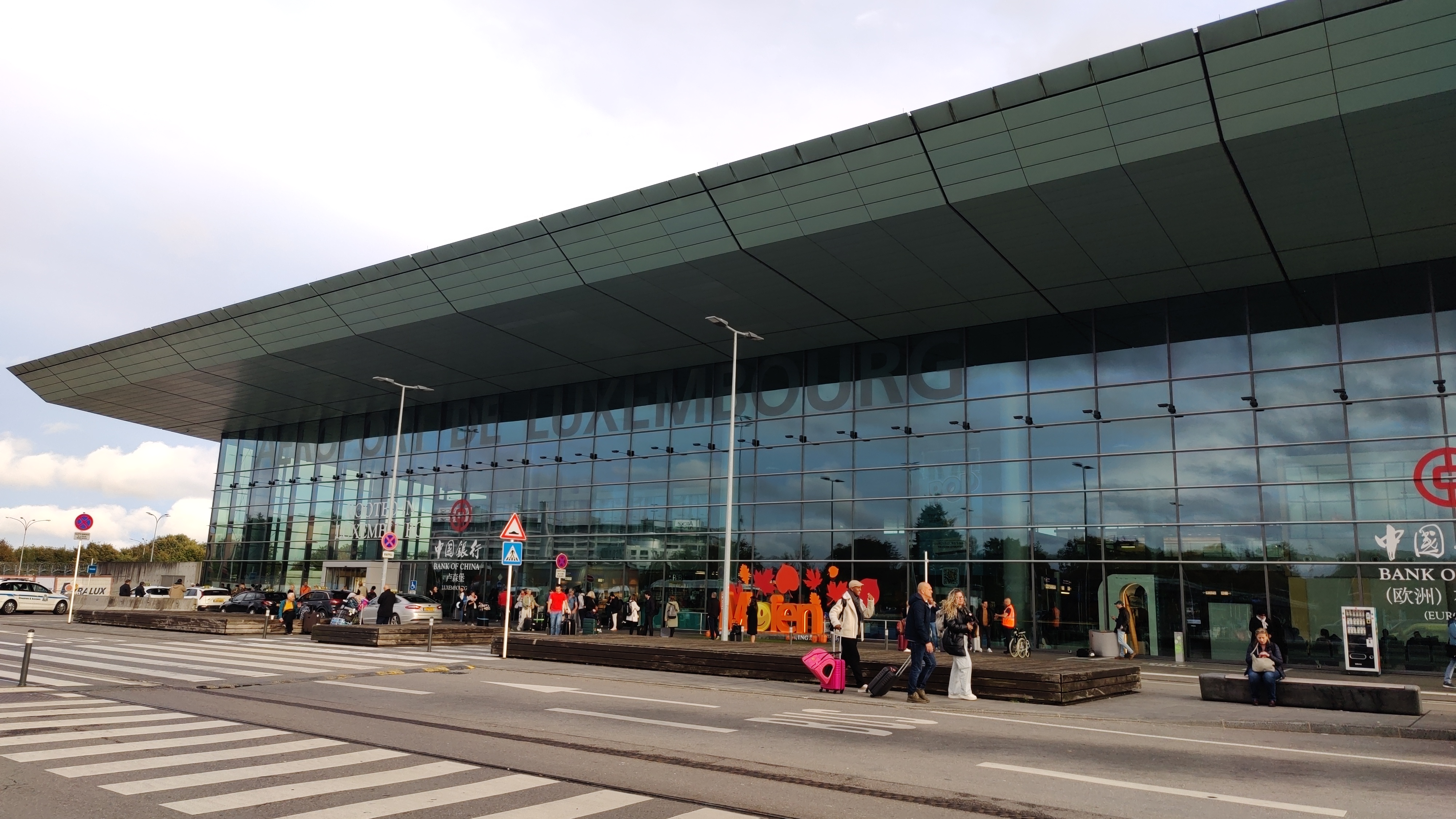 Luxembourg's Findel Airport
 Separate cycling tracks in Luxembourg
 This is what trains look like in Luxembourg
 Conference bag
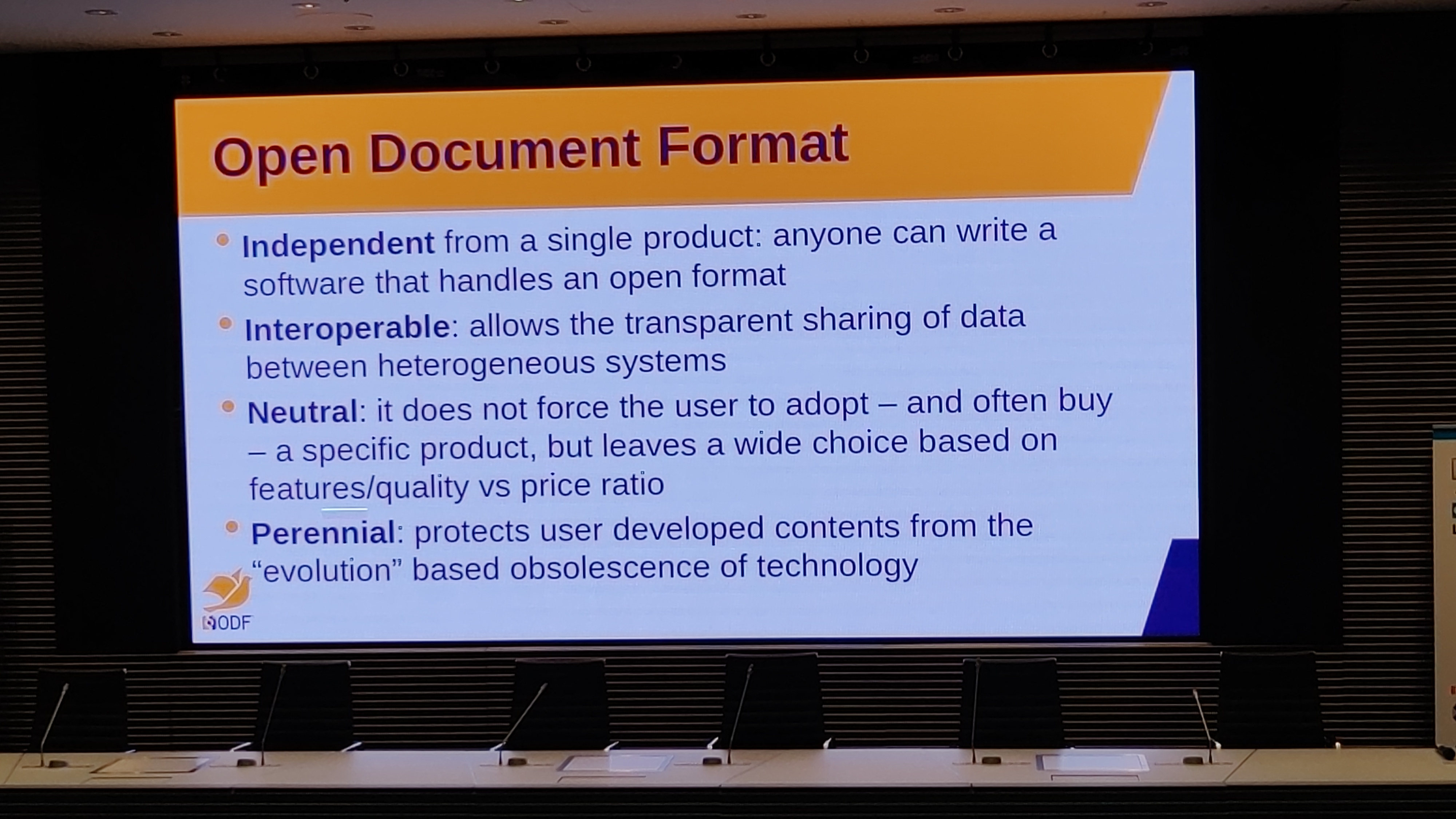 One of the slides of Italo's talk
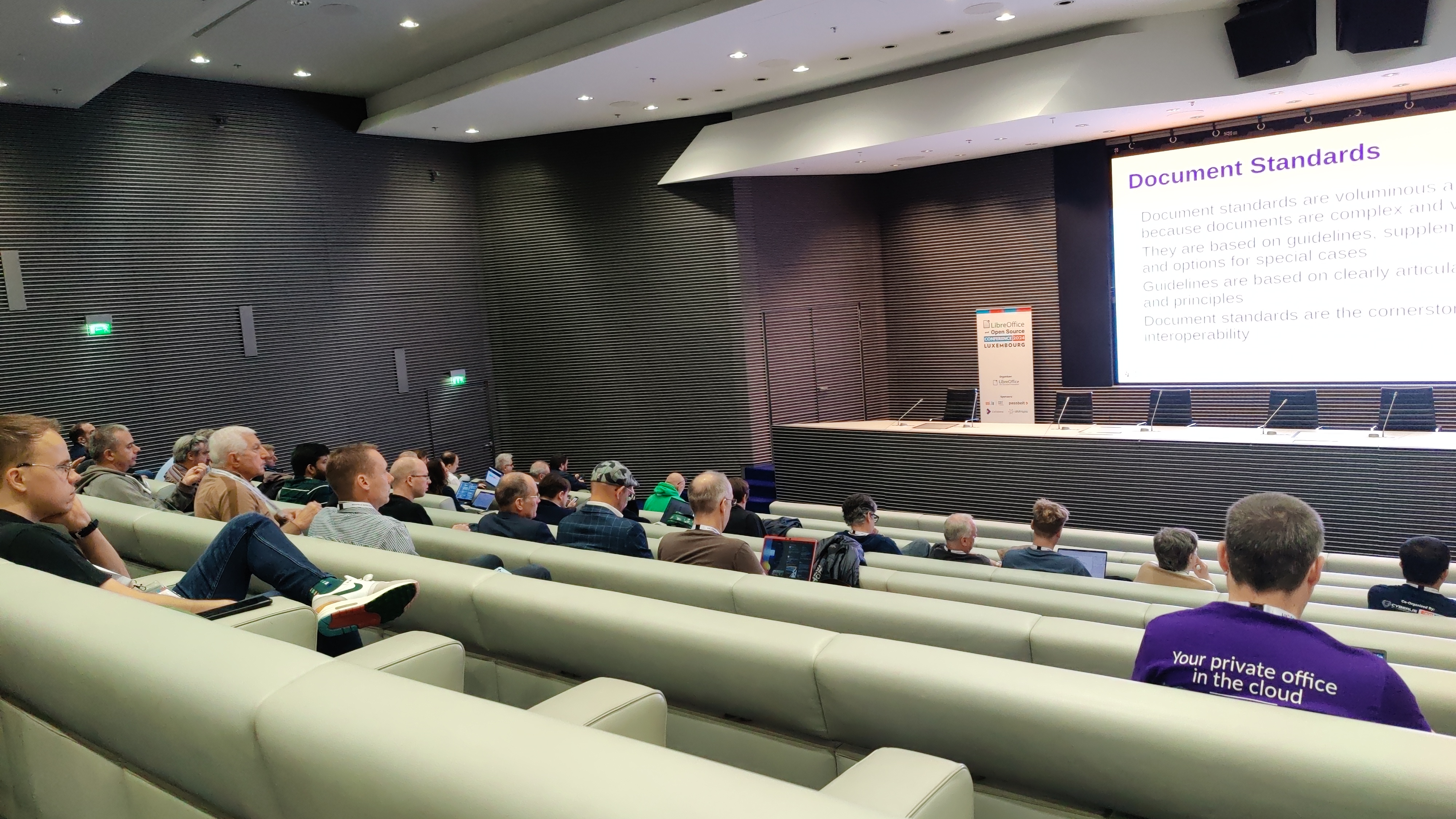 Picture of the hall in which talks were held
 We encountered such scenic views during our walk
 Another view of Luxembourg city area
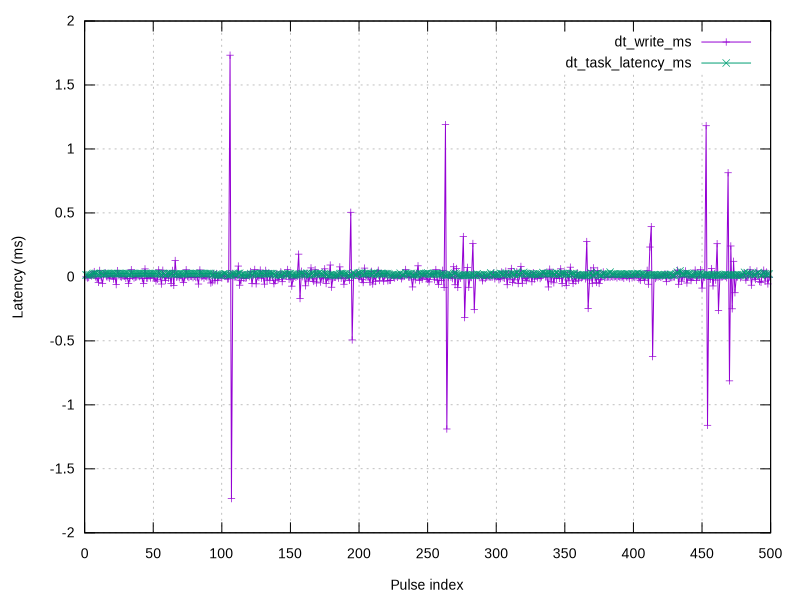
 Filing tax this year was really painful. But mostly because my home network.
It was ipv4 over ipv6 was not working correctly. First I swapped the Router which was trying to reinitialize the MAP-E table every time there was a dhcp client reconfiguration and overwhelming the server. Then I changed the DNS configuration not use ipv4 UDP lookup which was overwhelming the ipv4 ports.
Tax return itself is a painful process. Debugging network issues is making things was just making everything more painful.
