Search Results: "spa"

16 January 2024

Matthew Palmer: Pwned Certificates on the Fediverse

As well as the collection and distribution of compromised keys, the pwnedkeys project also matches those pwned keys against issued SSL certificates. I m excited to announce that, as of the beginning of 2024, all matched certificates are now being published on the Fediverse, thanks to the botsin.space Mastodon server. Want to know which sites are susceptible to interception and interference, in (near-)real time? Do you have a burning desire to know who is issuing certificates to people that post their private keys in public? Now you can.

How It Works The process for publishing pwned certs is, roughly, as follows:
  1. All the certificates in Certificate Transparency (CT) logs are hoovered up (using my scrape-ct-log tool, the fastest log scraper in the west!), and the fingerprint of the public key of each certificate is stored in an LMDB datafile.
  2. As new private keys are identified as having been compromised, the fingerprint of that key is checked against all the LMDB files, which map key fingerprints to certificates (actually to CT log entry IDs, from which the certificates themselves are retrieved).
  3. If one or more matches are found, then the certificates using the compromised key are forwarded to the tooter , which publishes them for the world to marvel at.
This makes it sound all very straightforward, and it is in theory. The trick comes in optimising the pipeline so that the five million or so new certificates every day can get indexed on the one slightly middle-aged server I ve got, without getting backlogged.

Why Don t You Just Have the Certificates Revoked? Funny story about that I used to notify CAs of certificates they d issued using compromised keys, which had the effect of requiring them to revoke the associated certificates. However, several CAs disliked having to revoke all those certificates, because it cost them staff time (and hence money) to do so. They went so far as to change their procedures from the standard way of accepting problem reports (emailing a generic attestation of compromise), and instead required CA-specific hoop-jumping to notify them of compromised keys. Since the effectiveness of revocation in the WebPKI is, shall we say, homeopathic at best, I decided I couldn t be bothered to play whack-a-mole with CAs that just wanted to be difficult, and I stopped sending compromised key notifications to CAs. Instead, now I m publishing the details of compromised certificates to everyone, so that users can protect themselves directly should they choose to.

Further Work The astute amongst you may have noticed, in the above How It Works description, a bit of a gap in my scanning coverage. CAs can (and do!) issue certificates for keys that are already compromised, including weak keys that have been known about for a decade or more (1, 2, 3). However, as currently implemented, the pwnedkeys certificate checker does not automatically find such certificates. My plan is to augment the CT scraping / cert processing pipeline to check all incoming certificates against the existing (2M+) set of pwned keys. Though, with over five million new certificates to check every day, it s not necessarily as simple as just hit the pwnedkeys API for every new cert . The poor old API server might not like that very much.

Support My Work If you d like to see this extra matching happen a bit quicker, I ve setup a ko-fi supporters page, where you can support my work on pwnedkeys and the other open source software and projects I work on by buying me a refreshing beverage. I would be very appreciative, and your support lets me know I should do more interesting things with the giant database of compromised keys I ve accumulated.

15 January 2024

Russ Allbery: Review: The Library of Broken Worlds

Review: The Library of Broken Worlds, by Alaya Dawn Johnson
Publisher: Scholastic Press
Copyright: June 2023
ISBN: 1-338-29064-9
Format: Kindle
Pages: 446
The Library of Broken Worlds is a young-adult far-future science fantasy. So far as I can tell, it's stand-alone, although more on that later in the review. Freida is the adopted daughter of Nadi, the Head Librarian, and her greatest wish is to become a librarian herself. When the book opens, she's a teenager in highly competitive training. Freida is low-wetware, without the advanced and expensive enhancements of many of the other students competing for rare and prized librarian positions, which she makes up for by being the most audacious. She doesn't need wetware to commune with the library material gods. If one ventures deep into their tunnels and consumes their crystals, direct physical communion is possible. The library tunnels are Freida's second home, in part because that's where she was born. She was created by the Library, and specifically by Iemaja, the youngest of the material gods. Precisely why is a mystery. To Nadi, Freida is her daughter. To Quinn, Nadi's main political rival within the library, Freida is a thing, a piece of the library, a secondary and possibly rogue AI. A disruptive annoyance. The Library of Broken Worlds is the sort of science fiction where figuring out what is going on is an integral part of the reading experience. It opens with a frame story of an unnamed girl (clearly Freida) waking the god Nameren and identifying herself as designed for deicide. She provokes Nameren's curiosity and offers an Arabian Nights bargain: if he wants to hear her story, he has to refrain from killing her for long enough for her to tell it. As one might expect, the main narrative doesn't catch up to the frame story until the very end of the book. The Library is indeed some type of library that librarians can search for knowledge that isn't available from more mundane sources, but Freida's personal experience of it is almost wholly religious and oracular. The library's material gods are identified as AIs, but good luck making sense of the story through a science fiction frame, even with a healthy allowance for sufficiently advanced technology being indistinguishable from magic. The symbolism and tone is entirely fantasy, and late in the book it becomes clear that whatever the material gods are, they're not simple technological AIs in the vein of, say, Banks's Ship Minds. Also, the Library is not solely a repository of knowledge. It is the keeper of an interstellar peace. The Library was founded after the Great War, to prevent a recurrence. It functions as a sort of legal system and grand tribunal in ways that are never fully explained. As you might expect, that peace is based more on stability than fairness. Five of the players in this far future of humanity are the Awilu, the most advanced society and the first to leave Earth (or Tierra as it's called here); the Mah m, who possess the material war god Nameren of the frame story; the Lunars and Martians, who dominate the Sol system; and the surviving Tierrans, residents of a polluted and struggling planet that is ruthlessly exploited by the Lunars. The problem facing Freida and her friends at the start of the book is a petition brought by a young Tierran against Lunar exploitation of his homeland. His name is Joshua, and Freida is more than half in love with him. Joshua's legal argument involves interpretation of the freedom node of the treaty that ended the Great War, a node that precedent says gives the Lunars the freedom to exploit Tierra, but which Joshua claims has a still-valid originalist meaning granting Tierrans freedom from exploitation. There is, in short, a lot going on in this book, and "never fully explained" is something of a theme. Freida is telling a story to Nameren and only explains things Nameren may not already know. The reader has to puzzle out the rest from the occasional hint. This is made more difficult by the tendency of the material gods to communicate only in visions or guided hallucinations, full of symbolism that the characters only partly explain to the reader. Nonetheless, this did mostly work, at least for me. I started this book very confused, but by about the midpoint it felt like the background was coming together. I'm still not sure I understand the aurochs, baobab, and cicada symbolism that's so central to the framing story, but it's the pleasant sort of stretchy confusion that gives my brain a good workout. I wish Johnson had explained a few more things plainly, particularly near the end of the book, but my remaining level of confusion was within my tolerances. Unfortunately, the ending did not work for me. The first time I read it, I had no idea what it meant. Lots of baffling, symbolic things happened and then the book just stopped. After re-reading the last 10%, I think all the pieces of an ending and a bit of an explanation are there, but it's absurdly abbreviated. This is another book where the author appears to have been finished with the story before I was. This keeps happening to me, so this probably says something more about me than it says about books, but I want books to have an ending. If the characters have fought and suffered through the plot, I want them to have some space to be happy and to see how their sacrifices play out, with more detail than just a few vague promises. If much of the book has been puzzling out the nature of the world, I would like some concrete confirmation of at least some of my guesswork. And if you're going to end the book on radical transformation, I want to see the results of that transformation. Johnson does an excellent job showing how brutal the peace of the powerful can be, and is willing to light more things on fire over the course of this book than most authors would, but then doesn't offer the reader much in the way of payoff. For once, I wish this stand-alone turned out to be a series. I think an additional book could be written in the aftermath of this ending, and I would definitely read that novel. Johnson has me caring deeply about these characters and fascinated by the world background, and I'd happily spend another 450 pages finding out what happens next. But, frustratingly, I think this ending was indeed intended to wrap up the story. I think this book may fall between a few stools. Science fiction readers who want mysterious future worlds to be explained by the end of the book are going to be frustrated by the amount of symbolism, allusion, and poetic description. Literary fantasy readers, who have a higher tolerance for that style, are going to wish for more focused and polished writing. A lot of the story is firmly YA: trying and failing to fit in, developing one's identity, coming into power, relationship drama, great betrayals and regrets, overcoming trauma and abuse, and unraveling lies that adults tell you. But this is definitely not a straight-forward YA plot or world background. It demands a lot from the reader, and while I am confident many teenage readers would rise to that challenge, it seems like an awkward fit for the YA marketing category. About 75% of the way in, I would have told you this book was great and you should read it. The ending was a let-down and I'm still grumpy about it. I still think it's worth your attention if you're in the mood for a sink-or-swim type of reading experience. Just be warned that when the ride ends, I felt unceremoniously dumped on the pavement. Content warnings: Rape, torture, genocide. Rating: 7 out of 10

12 January 2024

Freexian Collaborators: Monthly report about Debian Long Term Support, December 2023 (by Roberto C. S nchez)

Like each month, have a look at the work funded by Freexian s Debian LTS offering.

Debian LTS contributors In December, 18 contributors have been paid to work on Debian LTS, their reports are available:
  • Abhijith PA did 7.0h (out of 7.0h assigned and 7.0h from previous period), thus carrying over 7.0h to the next month.
  • Adrian Bunk did 16.0h (out of 26.25h assigned and 8.75h from previous period), thus carrying over 19.0h to the next month.
  • Bastien Roucari s did 16.0h (out of 16.0h assigned and 4.0h from previous period), thus carrying over 4.0h to the next month.
  • Ben Hutchings did 8.0h (out of 7.25h assigned and 16.75h from previous period), thus carrying over 16.0h to the next month.
  • Chris Lamb did 18.0h (out of 18.0h assigned).
  • Emilio Pozuelo Monfort did 8.0h (out of 26.75h assigned and 8.25h from previous period), thus carrying over 27.0h to the next month.
  • Guilhem Moulin did 25.0h (out of 18.0h assigned and 7.0h from previous period).
  • Holger Levsen did 5.5h (out of 5.5h assigned).
  • Jochen Sprickerhof did 0.0h (out of 0h assigned and 10.0h from previous period), thus carrying over 10.0h to the next month.
  • Lee Garrett did 0.0h (out of 25.75h assigned and 9.25h from previous period), thus carrying over 35.0h to the next month.
  • Markus Koschany did 35.0h (out of 35.0h assigned).
  • Roberto C. S nchez did 9.5h (out of 5.5h assigned and 6.5h from previous period), thus carrying over 2.5h to the next month.
  • Santiago Ruano Rinc n did 8.255h (out of 3.26h assigned and 12.745h from previous period), thus carrying over 7.75h to the next month.
  • Sean Whitton did 4.25h (out of 3.25h assigned and 6.75h from previous period), thus carrying over 5.75h to the next month.
  • Sylvain Beucler did 16.5h (out of 21.25h assigned and 13.75h from previous period), thus carrying over 18.5h to the next month.
  • Thorsten Alteholz did 14.0h (out of 14.0h assigned).
  • Tobias Frost did 10.25h (out of 12.0h assigned), thus carrying over 1.75h to the next month.
  • Utkarsh Gupta did 18.75h (out of 11.25h assigned and 13.5h from previous period), thus carrying over 6.0h to the next month.

Evolution of the situation In December, we have released 29 DLAs. A particularly notable update in December was prepared by LTS contributor Santiago Ruano Rinc n for the openssh package. The updated produced DLA-3694-1 and included a fix for the Terrapin Attack (CVE-2023-48795), which was a rather serious flaw in the SSH protocol itself. The package bluez was the subject of another notable update by LTS contributor Chris Lamb, which resulted in DLA-3689-1 to address an insecure default configuration which allowed attackers to inject keyboard commands over Bluetooth without first authenticating. The LTS team continues its efforts to have a positive impact beyond the boundaries of LTS. Several contributors worked on packages, preparing LTS updates, but also preparing patches or full updates which were uploaded to the unstable, stable, and oldstable distributions, including: Guilhem Moulin s update of tinyxml (uploads to LTS and unstable and patches submitted to the security team for stable and oldstable); Guilhem Moulin s update of xerces-c (uploads to LTS and unstable and patches submitted to the security team for oldstable); Thorsten Alteholz s update of libde265 (uploads to LTS and stable and additional patches submitted to the maintainer for stable and oldstable); Thorsten Alteholz s update of cjson (upload to LTS and patches submitted to the maintainer for stable and oldstable); and Tobias Frost s update of opendkim (sponsor maintainer-prepared upload to LTS and additionally prepared updates for stable and oldstable). Going beyond Debian and looking to the broader community, LTS contributor Bastien Roucari s was contacted by SUSE concerning an update he had prepared for zbar. He was able to assist by coordinating with the former organization of the original zbar author to secure for SUSE access to information concerning the exploits. This has enabled another distribution to benefit from the work done in support of LTS and from the assistance of Bastien in coordinating the access to information. Finally, LTS contributor Santiago Ruano Rinc n continued work relating to how updates for packages in statically-linked language ecosystems (e.g., Go, Rust, and others) are handled. The work is presently focused on more accurately and reliably identifying which packages are impacted in a given update scenario to enable notifications to be published so that users will be made aware of these situations as they occur. As the work continues, it will eventually result in improvements to Debian infrustructure so that the LTS team and Security team are able to manage updates of this nature in a more consistent way.

Thanks to our sponsors Sponsors that joined recently are in bold.

11 January 2024

Reproducible Builds: Reproducible Builds in December 2023

Welcome to the December 2023 report from the Reproducible Builds project! In these reports we outline the most important things that we have been up to over the past month. As a rather rapid recap, whilst anyone may inspect the source code of free software for malicious flaws, almost all software is distributed to end users as pre-compiled binaries (more).

Reproducible Builds: Increasing the Integrity of Software Supply Chains awarded IEEE Software Best Paper award In February 2022, we announced in these reports that a paper written by Chris Lamb and Stefano Zacchiroli was now available in the March/April 2022 issue of IEEE Software. Titled Reproducible Builds: Increasing the Integrity of Software Supply Chains (PDF). This month, however, IEEE Software announced that this paper has won their Best Paper award for 2022.

Reproducibility to affect package migration policy in Debian In a post summarising the activities of the Debian Release Team at a recent in-person Debian event in Cambridge, UK, Paul Gevers announced a change to the way packages are migrated into the staging area for the next stable Debian release based on its reproducibility status:
The folks from the Reproducibility Project have come a long way since they started working on it 10 years ago, and we believe it s time for the next step in Debian. Several weeks ago, we enabled a migration policy in our migration software that checks for regression in reproducibility. At this moment, that is presented as just for info, but we intend to change that to delays in the not so distant future. We eventually want all packages to be reproducible. To stimulate maintainers to make their packages reproducible now, we ll soon start to apply a bounty [speedup] for reproducible builds, like we ve done with passing autopkgtests for years. We ll reduce the bounty for successful autopkgtests at that moment in time.

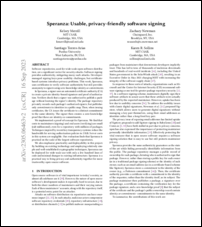
Speranza: Usable, privacy-friendly software signing Kelsey Merrill, Karen Sollins, Santiago Torres-Arias and Zachary Newman have developed a new system called Speranza, which is aimed at reassuring software consumers that the product they are getting has not been tampered with and is coming directly from a source they trust. A write-up on TechXplore.com goes into some more details:
What we have done, explains Sollins, is to develop, prove correct, and demonstrate the viability of an approach that allows the [software] maintainers to remain anonymous. Preserving anonymity is obviously important, given that almost everyone software developers included value their confidentiality. This new approach, Sollins adds, simultaneously allows [software] users to have confidence that the maintainers are, in fact, legitimate maintainers and, furthermore, that the code being downloaded is, in fact, the correct code of that maintainer. [ ]
The corresponding paper is published on the arXiv preprint server in various formats, and the announcement has also been covered in MIT News.

Nondeterministic Git bundles Paul Baecher published an interesting blog post on Reproducible git bundles. For those who are not familiar with them, Git bundles are used for the offline transfer of Git objects without an active server sitting on the other side of a network connection. Anyway, Paul wrote about writing a backup system for his entire system, but:
I noticed that a small but fixed subset of [Git] repositories are getting backed up despite having no changes made. That is odd because I would think that repeated bundling of the same repository state should create the exact same bundle. However [it] turns out that for some, repositories bundling is nondeterministic.
Paul goes on to to describe his solution, which involves forcing git to be single threaded makes the output deterministic . The article was also discussed on Hacker News.

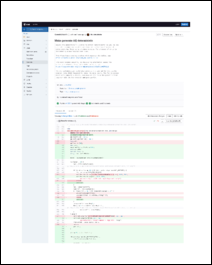
Output from libxlst now deterministic libxslt is the XSLT C library developed for the GNOME project, where XSLT itself is an XML language to define transformations for XML files. This month, it was revealed that the result of the generate-id() XSLT function is now deterministic across multiple transformations, fixing many issues with reproducible builds. As the Git commit by Nick Wellnhofer describes:
Rework the generate-id() function to return deterministic values. We use
a simple incrementing counter and store ids in the 'psvi' member of
nodes which was freed up by previous commits. The presence of an id is
indicated by a new "source node" flag.
This fixes long-standing problems with reproducible builds, see
https://bugzilla.gnome.org/show_bug.cgi?id=751621
This also hardens security, as the old implementation leaked the
difference between a heap and a global pointer, see
https://bugs.chromium.org/p/chromium/issues/detail?id=1356211
The old implementation could also generate the same id for dynamically
created nodes which happened to reuse the same memory. Ids for namespace
nodes were completely broken. They now use the id of the parent element
together with the hex-encoded namespace prefix.

Community updates There were made a number of improvements to our website, including Chris Lamb fixing the generate-draft script to not blow up if the input files have been corrupted today or even in the past [ ], Holger Levsen updated the Hamburg 2023 summit to add a link to farewell post [ ] & to add a picture of a Post-It note. [ ], and Pol Dellaiera updated the paragraph about tar and the --clamp-mtime flag [ ]. On our mailing list this month, Bernhard M. Wiedemann posted an interesting summary on some of the reasons why packages are still not reproducible in 2023. diffoscope is our in-depth and content-aware diff utility that can locate and diagnose reproducibility issues. This month, Chris Lamb made a number of changes, including processing objdump symbol comment filter inputs as Python byte (and not str) instances [ ] and Vagrant Cascadian extended diffoscope support for GNU Guix [ ] and updated the version in that distribution to version 253 [ ].

Challenges of Producing Software Bill Of Materials for Java Musard Balliu, Benoit Baudry, Sofia Bobadilla, Mathias Ekstedt, Martin Monperrus, Javier Ron, Aman Sharma, Gabriel Skoglund, C sar Soto-Valero and Martin Wittlinger (!) of the KTH Royal Institute of Technology in Sweden, have published an article in which they:
deep-dive into 6 tools and the accuracy of the SBOMs they produce for complex open-source Java projects. Our novel insights reveal some hard challenges regarding the accurate production and usage of software bills of materials.
The paper is available on arXiv.

Debian Non-Maintainer campaign As mentioned in previous reports, the Reproducible Builds team within Debian has been organising a series of online and offline sprints in order to clear the huge backlog of reproducible builds patches submitted by performing so-called NMUs (Non-Maintainer Uploads). During December, Vagrant Cascadian performed a number of such uploads, including: In addition, Holger Levsen performed three no-source-change NMUs in order to address the last packages without .buildinfo files in Debian trixie, specifically lorene (0.0.0~cvs20161116+dfsg-1.1), maria (1.3.5-4.2) and ruby-rinku (1.7.3-2.1).

Reproducibility testing framework The Reproducible Builds project operates a comprehensive testing framework (available at tests.reproducible-builds.org) in order to check packages and other artifacts for reproducibility. In December, a number of changes were made by Holger Levsen:
  • Debian-related changes:
    • Fix matching packages for the [R programming language](https://en.wikipedia.org/wiki/R_(programming_language). [ ][ ][ ]
    • Add a Certbot configuration for the Nginx web server. [ ]
    • Enable debugging for the create-meta-pkgs tool. [ ][ ]
  • Arch Linux-related changes
    • The asp has been deprecated by pkgctl; thanks to dvzrv for the pointer. [ ]
    • Disable the Arch Linux builders for now. [ ]
    • Stop referring to the /trunk branch / subdirectory. [ ]
    • Use --protocol https when cloning repositories using the pkgctl tool. [ ]
  • Misc changes:
    • Install the python3-setuptools and swig packages, which are now needed to build OpenWrt. [ ]
    • Install pkg-config needed to build Coreboot artifacts. [ ]
    • Detect failures due to an issue where the fakeroot tool is implicitly required but not automatically installed. [ ]
    • Detect failures due to rename of the vmlinuz file. [ ]
    • Improve the grammar of an error message. [ ]
    • Document that freebsd-jenkins.debian.net has been updated to FreeBSD 14.0. [ ]
In addition, node maintenance was performed by Holger Levsen [ ] and Vagrant Cascadian [ ].

Upstream patches The Reproducible Builds project detects, dissects and attempts to fix as many currently-unreproducible packages as possible. We endeavour to send all of our patches upstream where appropriate. This month, we wrote a large number of such patches, including:

If you are interested in contributing to the Reproducible Builds project, please visit our Contribute page on our website. However, you can get in touch with us via:

Matthias Klumpp: Wayland really breaks things Just for now?

This post is in part a response to an aspect of Nate s post Does Wayland really break everything? , but also my reflection on discussing Wayland protocol additions, a unique pleasure that I have been involved with for the past months1.

Some facts Before I start I want to make a few things clear: The Linux desktop will be moving to Wayland2 this is a fact at this point (and has been for a while), sticking to X11 makes no sense for future projects. From reading Wayland protocols and working with it at a much lower level than I ever wanted to, it is also very clear to me that Wayland is an exceptionally well-designed core protocol, and so are the additional extension protocols (xdg-shell & Co.). The modularity of Wayland is great, it gives it incredible flexibility and will for sure turn out to be good for the long-term viability of this project (and also provides a path to correct protocol issues in future, if one is found). In other words: Wayland is an amazing foundation to build on, and a lot of its design decisions make a lot of sense! The shift towards people seeing Linux more as an application developer platform, and taking PipeWire and XDG Portals into account when designing for Wayland is also an amazing development and I love to see this this holistic approach is something I always wanted! Furthermore, I think Wayland removes a lot of functionality that shouldn t exist in a modern compositor and that s a good thing too! Some of X11 s features and design decisions had clear drawbacks that we shouldn t replicate. I highly recommend to read Nate s blog post, it s very good and goes into more detail. And due to all of this, I firmly believe that any advancement in the Wayland space must come from within the project.

But! But! Of course there was a but coming  I think while developing Wayland-as-an-ecosystem we are now entrenched into narrow concepts of how a desktop should work. While discussing Wayland protocol additions, a lot of concepts clash, people from different desktops with different design philosophies debate the merits of those over and over again never reaching any conclusion (just as you will never get an answer out of humans whether sushi or pizza is the clearly superior food, or whether CSD or SSD is better). Some people want to use Wayland as a vehicle to force applications to submit to their desktop s design philosophies, others prefer the smallest and leanest protocol possible, other developers want the most elegant behavior possible. To be clear, I think those are all very valid approaches. But this also creates problems: By switching to Wayland compositors, we are already forcing a lot of porting work onto toolkit developers and application developers. This is annoying, but just work that has to be done. It becomes frustrating though if Wayland provides toolkits with absolutely no way to reach their goal in any reasonable way. For Nate s Photoshop analogy: Of course Linux does not break Photoshop, it is Adobe s responsibility to port it. But what if Linux was missing a crucial syscall that Photoshop needed for proper functionality and Adobe couldn t port it without that? In that case it becomes much less clear on who is to blame for Photoshop not being available. A lot of Wayland protocol work is focused on the environment and design, while applications and work to port them often is considered less. I think this happens because the overlap between application developers and developers of the desktop environments is not necessarily large, and the overlap with people willing to engage with Wayland upstream is even smaller. The combination of Windows developers porting apps to Linux and having involvement with toolkits or Wayland is pretty much nonexistent. So they have less of a voice.

A quick detour through the neuroscience research lab I have been involved with Freedesktop, GNOME and KDE for an incredibly long time now (more than a decade), but my actual job (besides consulting for Purism) is that of a PhD candidate in a neuroscience research lab (working on the morphology of biological neurons and its relation to behavior). I am mostly involved with three research groups in our institute, which is about 35 people. Most of us do all our data analysis on powerful servers which we connect to using RDP (with KDE Plasma as desktop). Since I joined, I have been pushing the envelope a bit to extend Linux usage to data acquisition and regular clients, and to have our data acquisition hardware interface well with it. Linux brings some unique advantages for use in research, besides the obvious one of having every step of your data management platform introspectable with no black boxes left, a goal I value very highly in research (but this would be its own blogpost). In terms of operating system usage though, most systems are still Windows-based. Windows is what companies develop for, and what people use by default and are familiar with. The choice of operating system is very strongly driven by application availability, and WSL being really good makes this somewhat worse, as it removes the need for people to switch to a real Linux system entirely if there is the occasional software requiring it. Yet, we have a lot more Linux users than before, and use it in many places where it makes sense. I also developed a novel data acquisition software that even runs on Linux-only and uses the abilities of the platform to its fullest extent. All of this resulted in me asking existing software and hardware vendors for Linux support a lot more often. Vendor-customer relationship in science is usually pretty good, and vendors do usually want to help out. Same for open source projects, especially if you offer to do Linux porting work for them But overall, the ease of use and availability of required applications and their usability rules supreme. Most people are not technically knowledgeable and just want to get their research done in the best way possible, getting the best results with the least amount of friction.
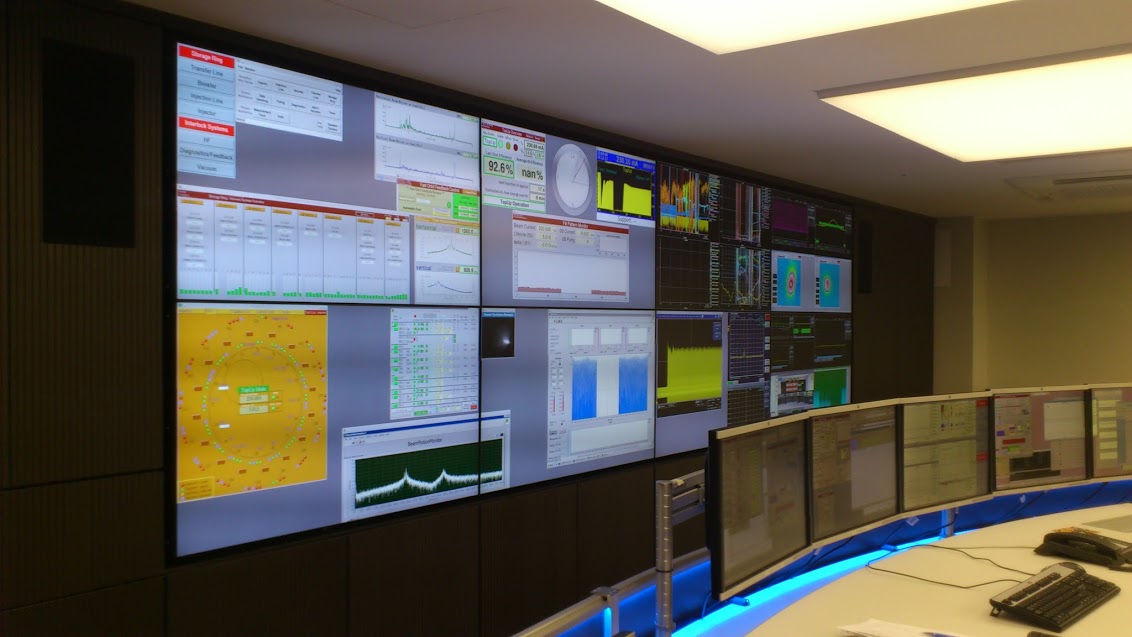
KDE/Linux usage at a control station for a particle accelerator at Adlershof Technology Park, Germany, for reference (by 25years of KDE)3

Back to the point The point of that story is this: GNOME, KDE, RHEL, Debian or Ubuntu: They all do not matter if the necessary applications are not available for them. And as soon as they are, the easiest-to-use solution wins. There are many facets of easiest : In many cases this is RHEL due to Red Hat support contracts being available, in many other cases it is Ubuntu due to its mindshare and ease of use. KDE Plasma is also frequently seen, as it is perceived a bit easier to onboard Windows users with it (among other benefits). Ultimately, it comes down to applications and 3rd-party support though. Here s a dirty secret: In many cases, porting an application to Linux is not that difficult. The thing that companies (and FLOSS projects too!) struggle with and will calculate the merits of carefully in advance is whether it is worth the support cost as well as continuous QA/testing. Their staff will have to do all of that work, and they could spend that time on other tasks after all. So if they learn that porting to Linux not only means added testing and support, but also means to choose between the legacy X11 display server that allows for 1:1 porting from Windows or the new Wayland compositors that do not support the same features they need, they will quickly consider it not worth the effort at all. I have seen this happen. Of course many apps use a cross-platform toolkit like Qt, which greatly simplifies porting. But this just moves the issue one layer down, as now the toolkit needs to abstract Windows, macOS and Wayland. And Wayland does not contain features to do certain things or does them very differently from e.g. Windows, so toolkits have no way to actually implement the existing functionality in a way that works on all platforms. So in Qt s documentation you will often find texts like works everywhere except for on Wayland compositors or mobile 4. Many missing bits or altered behavior are just papercuts, but those add up. And if users will have a worse experience, this will translate to more support work, or people not wanting to use the software on the respective platform.

What s missing?

Window positioning SDI applications with multiple windows are very popular in the scientific world. For data acquisition (for example with microscopes) we often have one monitor with control elements and one larger one with the recorded image. There is also other configurations where multiple signal modalities are acquired, and the experimenter aligns windows exactly in the way they want and expects the layout to be stored and to be loaded upon reopening the application. Even in the image from Adlershof Technology Park above you can see this style of UI design, at mega-scale. Being able to pop-out elements as windows from a single-window application to move them around freely is another frequently used paradigm, and immensely useful with these complex apps. It is important to note that this is not a legacy design, but in many cases an intentional choice these kinds of apps work incredibly well on larger screens or many screens and are very flexible (you can have any window configuration you want, and switch between them using the (usually) great window management abilities of your desktop). Of course, these apps will work terribly on tablets and small form factors, but that is not the purpose they were designed for and nobody would use them that way. I assumed for sure these features would be implemented at some point, but when it became clear that that would not happen, I created the ext-placement protocol which had some good discussion but was ultimately rejected from the xdg namespace. I then tried another solution based on feedback, which turned out not to work for most apps, and now proposed xdg-placement (v2) in an attempt to maybe still get some protocol done that we can agree on, exploring more options before pushing the existing protocol for inclusion into the ext Wayland protocol namespace. Meanwhile though, we can not port any application that needs this feature, while at the same time we are switching desktops and distributions to Wayland by default.

Window position restoration Similarly, a protocol to save & restore window positions was already proposed in 2018, 6 years ago now, but it has still not been agreed upon, and may not even help multiwindow apps in its current form. The absence of this protocol means that applications can not restore their former window positions, and the user has to move them to their previous place again and again. Meanwhile, toolkits can not adopt these protocols and applications can not use them and can not be ported to Wayland without introducing papercuts.

Window icons Similarly, individual windows can not set their own icons, and not-installed applications can not have an icon at all because there is no desktop-entry file to load the icon from and no icon in the theme for them. You would think this is a niche issue, but for applications that create many windows, providing icons for them so the user can find them is fairly important. Of course it s not the end of the world if every window has the same icon, but it s one of those papercuts that make the software slightly less user-friendly. Even applications with fewer windows like LibrePCB are affected, so much so that they rather run their app through Xwayland for now. I decided to address this after I was working on data analysis of image data in a Python virtualenv, where my code and the Python libraries used created lots of windows all with the default yellow W icon, making it impossible to distinguish them at a glance. This is xdg-toplevel-icon now, but of course it is an uphill battle where the very premise of needing this is questioned. So applications can not use it yet.

Limited window abilities requiring specialized protocols Firefox has a picture-in-picture feature, allowing it to pop out media from a mediaplayer as separate floating window so the user can watch the media while doing other things. On X11 this is easily realized, but on Wayland the restrictions posed on windows necessitate a different solution. The xdg-pip protocol was proposed for this specialized usecase, but it is also not merged yet. So this feature does not work as well on Wayland.

Automated GUI testing / accessibility / automation Automation of GUI tasks is a powerful feature, so is the ability to auto-test GUIs. This is being worked on, with libei and wlheadless-run (and stuff like ydotool exists too), but we re not fully there yet.

Wayland is frustrating for (some) application authors As you see, there is valid applications and valid usecases that can not be ported yet to Wayland with the same feature range they enjoyed on X11, Windows or macOS. So, from an application author s perspective, Wayland does break things quite significantly, because things that worked before can no longer work and Wayland (the whole stack) does not provide any avenue to achieve the same result. Wayland does break screen sharing, global hotkeys, gaming latency (via no tearing ) etc, however for all of these there are solutions available that application authors can port to. And most developers will gladly do that work, especially since the newer APIs are usually a lot better and more robust. But if you give application authors no path forward except use Xwayland and be on emulation as second-class citizen forever , it just results in very frustrated application developers. For some application developers, switching to a Wayland compositor is like buying a canvas from the Linux shop that forces your brush to only draw triangles. But maybe for your avant-garde art, you need to draw a circle. You can approximate one with triangles, but it will never be as good as the artwork of your friends who got their canvases from the Windows or macOS art supply shop and have more freedom to create their art.

Triangles are proven to be the best shape! If you are drawing circles you are creating bad art! Wayland, via its protocol limitations, forces a certain way to build application UX often for the better, but also sometimes to the detriment of users and applications. The protocols are often fairly opinionated, a result of the lessons learned from X11. In any case though, it is the odd one out Windows and macOS do not pose the same limitations (for better or worse!), and the effort to port to Wayland is orders of magnitude bigger, or sometimes in case of the multiwindow UI paradigm impossible to achieve to the same level of polish. Desktop environments of course have a design philosophy that they want to push, and want applications to integrate as much as possible (same as macOS and Windows!). However, there are many applications out there, and pushing a design via protocol limitations will likely just result in fewer apps.

The porting dilemma I spent probably way too much time looking into how to get applications cross-platform and running on Linux, often talking to vendors (FLOSS and proprietary) as well. Wayland limitations aren t the biggest issue by far, but they do start to come come up now, especially in the scientific space with Ubuntu having switched to Wayland by default. For application authors there is often no way to address these issues. Many scientists do not even understand why their Python script that creates some GUIs suddenly behaves weirdly because Qt is now using the Wayland backend on Ubuntu instead of X11. They do not know the difference and also do not want to deal with these details even though they may be programmers as well, the real goal is not to fiddle with the display server, but to get to a scientific result somehow. Another issue is portability layers like Wine which need to run Windows applications as-is on Wayland. Apparently Wine s Wayland driver has some heuristics to make window positioning work (and I am amazed by the work done on this!), but that can only go so far.

A way out? So, how would we actually solve this? Fundamentally, this excessively long blog post boils down to just one essential question: Do we want to force applications to submit to a UX paradigm unconditionally, potentially loosing out on application ports or keeping apps on X11 eternally, or do we want to throw them some rope to get as many applications ported over to Wayland, even through we might sacrifice some protocol purity? I think we really have to answer that to make the discussions on wayland-protocols a lot less grueling. This question can be answered at the wayland-protocols level, but even more so it must be answered by the individual desktops and compositors. If the answer for your environment turns out to be Yes, we want the Wayland protocol to be more opinionated and will not make any compromises for application portability , then your desktop/compositor should just immediately NACK protocols that add something like this and you simply shouldn t engage in the discussion, as you reject the very premise of the new protocol: That it has any merit to exist and is needed in the first place. In this case contributors to Wayland and application authors also know where you stand, and a lot of debate is skipped. Of course, if application authors want to support your environment, you are basically asking them now to rewrite their UI, which they may or may not do. But at least they know what to expect and how to target your environment. If the answer turns out to be We do want some portability , the next question obviously becomes where the line should be drawn and which changes are acceptable and which aren t. We can t blindly copy all X11 behavior, some porting work to Wayland is simply inevitable. Some written rules for that might be nice, but probably more importantly, if you agree fundamentally that there is an issue to be fixed, please engage in the discussions for the respective MRs! We for sure do not want to repeat X11 mistakes, and I am certain that we can implement protocols which provide the required functionality in a way that is a nice compromise in allowing applications a path forward into the Wayland future, while also being as good as possible and improving upon X11. For example, the toplevel-icon proposal is already a lot better than anything X11 ever had. Relaxing ACK requirements for the ext namespace is also a good proposed administrative change, as it allows some compositors to add features they want to support to the shared repository easier, while also not mandating them for others. In my opinion, it would allow for a lot less friction between the two different ideas of how Wayland protocol development should work. Some compositors could move forward and support more protocol extensions, while more restrictive compositors could support less things. Applications can detect supported protocols at launch and change their behavior accordingly (ideally even abstracted by toolkits). You may now say that a lot of apps are ported, so surely this issue can not be that bad. And yes, what Wayland provides today may be enough for 80-90% of all apps. But what I hope the detour into the research lab has done is convince you that this smaller percentage of apps matters. A lot. And that it may be worthwhile to support them. To end on a positive note: When it came to porting concrete apps over to Wayland, the only real showstoppers so far5 were the missing window-positioning and window-position-restore features. I encountered them when porting my own software, and I got the issue as feedback from colleagues and fellow engineers. In second place was UI testing and automation support, the window-icon issue was mentioned twice, but being a cosmetic issue it likely simply hurts people less and they can ignore it easier. What this means is that the majority of apps are already fine, and many others are very, very close! A Wayland future for everyone is within our grasp!  I will also bring my two protocol MRs to their conclusion for sure, because as application developers we need clarity on what the platform (either all desktops or even just a few) supports and will or will not support in future. And the only way to get something good done is by contribution and friendly discussion.

Footnotes
  1. Apologies for the clickbait-y title it comes with the subject
  2. When I talk about Wayland I mean the combined set of display server protocols and accepted protocol extensions, unless otherwise clarified.
  3. I would have picked a picture from our lab, but that would have needed permission first
  4. Qt has awesome platform issues pages, like for macOS and Linux/X11 which help with porting efforts, but Qt doesn t even list Linux/Wayland as supported platform. There is some information though, like window geometry peculiarities, which aren t particularly helpful when porting (but still essential to know).
  5. Besides issues with Nvidia hardware CUDA for simulations and machine-learning is pretty much everywhere, so Nvidia cards are common, which causes trouble on Wayland still. It is improving though.

10 January 2024

Dirk Eddelbuettel: BH 1.84.0-1 on CRAN: New Upstream

Boost Boost is a very large and comprehensive set of (peer-reviewed) libraries for the C++ programming language, containing well over one hundred individual libraries. The BH package provides a sizeable subset of header-only libraries for (easier, no linking required) use by R. It is fairly widely used: the (partial) CRAN mirror logs (aggregated from the cloud mirrors) show over 35.7 million package downloads. Version 1.84.0 of Boost was released in December following the regular Boost release schedule of April, August and December releases. As the commits and changelog show, we packaged it almost immediately and started testing following our annual update cycle which strives to balance being close enough to upstream and not stressing CRAN and the user base too much. The reverse depends check revealed five packages requiring changes or adjustments which is a pretty good outcome given the over three hundred direct reverse dependencies. So we opened issue #100 to coordinate the issue over the winter break during which CRAN also closes (just as we did in previous years). Our sincere thanks to the two packages that already updated before, and to the one that updated today within hours (!!) of the BH uploaded it needed. There are very few actual changes. We honoured one request (in issue #97) to add Boost QVM bringing quarternion support to R. No other new changes needed to be made. A number of changes I have to make each time in BH, and it is worth mentioning them. Because CRAN cares about backwards compatibility and the ability to be used on minimal or older systems, we still adjust the filenames of a few files to fit a jurassic constraints of just over a 100 characters per filepath present in some long-outdated versions of tar. Not a big deal. We also, and that is more controversial, silence a number of #pragma diagnostic messages for g++ and clang++ because CRAN insists on it. I have no choice in that matter. One warning we suppressed last year, but no longer do, concerns the C++14 standard that some Boost libraries now default to. Packages setting C++11 explicitly will likely get a note from CRAN changing this; in most cases that should be trivial to remove as we only had to opt into (then) newer standards under old compilers. These days newer defaults help; R itself now defaults to C++17.

Changes in version 1.84.0-0 (2024-01-09)

Via my CRANberries, there is a diffstat report relative to the previous release. Comments and suggestions about BH are welcome via the issue tracker at the GitHub repo. If you like this or other open-source work I do, you can now sponsor me at GitHub.

This post by Dirk Eddelbuettel originated on his Thinking inside the box blog. Please report excessive re-aggregation in third-party for-profit settings.

Colin Watson: Going freelance

I ve mentioned this in a couple of other places, but I realized I never got round to posting about it on my own blog rather than on other people s services. How remiss of me. Anyway: after much soul-searching, I decided a few months ago that it was time for me to move on from Canonical and the Launchpad team there. Nearly 20 years is a long time to spend at any company, and although there are a bunch of people I ll miss, Launchpad is in a reasonable state where I can let other people have a turn. I m now in business for myself as a freelance developer! My new company is Columbiform, and I m focusing on Debian packaging and custom Python development. My services page has some self-promotion on the sorts of things I can do. My first gig, and the one that made it viable to make this jump, is at Freexian where I m helping with an exciting infrastructure project that we hope will start making Debian developers lives easier in the near future. This is likely to take up most of my time at least through to the end of 2024, but I may have some spare cycles. Drop me a line if you have something where you think I could be a good fit, and we can have a talk about it.

Russell Coker: SAS vs SATA and Recovery

SAS and SATA are electrically compatible to a degree that allows connecting a SATA storage device to a SAS controller. The SAS controller understands the SATA protocol so this works. A SAS device can t be physically connected to a SATA controller and if you did manage to connect it then it wouldn t work. Some SAS RAID controllers don t permit mixing SAS and SATA devices in the same array, this is a software issue and could be changed. I know that the PERC controllers used by Dell (at least the older versions) do this and it might affect many/most MegaRAID controllers (which is what PERC is). If you have a hardware RAID array of SAS disks and one fails then you need a spare SAS disk and as the local computer store won t have any you need some on hand. The Linux kernel has support for the MegaRAID/PERC superblocks so for at least some of the RAID types supported by MegaRAID/PERC you can just connect the disks to a Linux system and have it work (I ve only tested on JBOD AKA a single-disk RAID-0). So if you have a server from Dell or IBM or any other company that uses MegaRAID which fails you can probably just put the disks into a non-RAID SAS controller and have them work. As Linux doesn t care about the difference between SAS and SATA at the RAID level you could then add a SATA disk to an array of SAS disks. If you want to move an array from a dead Dell to a working IBM server or the other way around then you need it to be all SATA or all SAS. You can use a Linux system to mount an array used by Windows or any other OS and then migrate the data to a different array. If you have an old array of SAS disks and one fails then it might be a reasonable option to just migrate the data to a new array of SATA SSDs. EG if you had 6*600G SAS disks you could move to 2*4TB SATA SSDs and get more storage, much higher performance, less power use, and less noise for a cost of $800 or so (you can spend more to get better performance) and some migration time. Having a spare SAS controller for data recovery is convenient. Having a spare SAS disk for any RAID-5/RAID-6 is a good thing. Having lots of spare SAS disks probably isn t useful as migrating to SATA is a better choice. SATA SSDs are bigger and faster than most SAS disks that are in production. I m sure that someone uses SAS SSDs but I haven t yet seen them in production, if you have a SAS system and need the performance that SSDs can give then a new server with U.2 (the SAS equivalent of NVMe) is the way to go). SATA hard drives are also the solution for seriously large storage, 16TB SATA hard drives are cheap and work in all the 3.5 SAS systems. It s hard to sell old SAS disks as there isn t much use for them.

7 January 2024

Jonathan McDowell: Free Software Activities for 2023

This year was hard from a personal and work point of view, which impacted the amount of Free Software bits I ended up doing - even when I had the time I often wasn t in the right head space to make progress on things. However writing this annual recap up has been a useful exercise, as I achieved more than I realised. For previous years see 2019, 2020, 2021 + 2022.

Conferences The only Free Software related conference I made it to this year was DebConf23 in Kochi, India. Changes with projects at work meant I couldn t justify anything work related. This year I m planning to make it to FOSDEM, and haven t made a decision on DebConf24 yet.

Debian Most of my contributions to Free software continue to happen within Debian. I started the year working on retrogaming with Kodi on Debian. I got this to a much better state for bookworm, with it being possible to run the bsnes-mercury emulator under Kodi using RetroArch. There are a few other libretro backends available for RetroArch, but Kodi needs some extra controller mappings packaged up first. Plenty of uploads were involved, though some of this was aligning all the dependencies and generally cleaning things up in iterations. I continued to work on a few packages within the Debian Electronics Packaging Team. OpenOCD produced a new release in time for the bookworm release, so I uploaded 0.12.0-1. There were a few minor sigrok cleanups - sigrok 0.3, libsigrokdecode 0.5.3-4 + libsigrok 0.5.2-4 / 0.5.2-5. While I didn t manage to get the work completed I did some renaming of the ESP8266 related packages - gcc-xtensa-lx106 (which saw a 13 upload pre-bookworm) has become gcc-xtensa (with 14) and binutils-xtensa-lx106 has become binutils-xtensa (with 6). Binary packages remain the same, but this is intended to allow for the generation of ESP32 compiler toolchains from the same source. onak saw 0.6.3-1 uploaded to match the upstream release. I also uploaded libgpg-error 1.47-1 (though I can claim no credit for any of the work in preparing the package) to help move things forward on updating gnupg2 in Debian. I NMUed tpm2-pkcs11 1.9.0-0.1 to fix some minor issues pre-bookworm release; I use this package myself to store my SSH key within my laptop TPM, so I care about it being in a decent state. sg3-utils also saw a bit of love with 1.46-2 + 1.46-3 - I don t work in the storage space these days, but I m still listed as an uploaded and there was an RC bug around the library package naming that I was qualified to fix and test pre-bookworm. Related to my retroarch work I sponsored uploads of mgba for Ryan Tandy: 0.10.0+dfsg-1, 0.10.0+dfsg-2, 0.10.1+dfsg-1, 0.10.2+dfsg-1, mgba 0.10.1+dfsg-1+deb12u1. As part of the Data Protection Team I responded to various inbound queries to that team, both from project members and those external to the project. I continue to keep an eye on Debian New Members, even though I m mostly inactive as an application manager - we generally seem to have enough available recently. Mostly my involvement is via Front Desk activities, helping out with queries to the team alias, and contributing to internal discussions as well as our panel at DebConf23. Finally the 3 month rotation for Debian Keyring continues to operate smoothly. I dealt with 2023.03.24, 2023.06.26, 2023.06.29, 2023.09.10, 2023.09.24 + 2023.12.24.

Linux I had a few minor patches accepted to the kernel this year. A pair of safexcel cleanups (improved error logging for firmware load fail and cleanup on load failure) came out of upgrading the kernel running on my RB5009. The rest were related to my work on repurposing my C.H.I.P.. The AXP209 driver needed extended to support GPIO3 (with associated DT schema update). That allowed Bluetooth to be enabled. Adding the AXP209 internal temperature ADC as an iio-hwmon node means it can be tracked using the normal sensor monitoring framework. And finally I added the pinmux settings for mmc2, which I use to support an external microSD slot on my C.H.I.P.

Personal projects 2023 saw another minor release of onak, 0.6.3, which resulted in a corresponding Debian upload (0.6.3-1). It has a couple of bug fixes (including a particularly annoying, if minor, one around systemd socket activation that felt very satisfying to get to the bottom of), but I still lack the time to do any of the major changes I would like to. I wrote listadmin3 to allow easy manipulation of moderation queues for Mailman3. It s basic, but it s drastically improved my timeliness on dealing with held messages.

4 January 2024

Aigars Mahinovs: Figuring out finances part 5

At the end of the last part of this, we got a Home Assistant OS installation that contains in itself a Firefly III instance and that contains all the current financial information. They are communicating and calculating predictions for me. The only part that I was not 100% happy with was accounting of cash transactions. You see payments in cash are mostly made away from computer and sometimes even in areas without a mobile Internet connection. And all Firefly III apps that I tried failed at the task of creating a new transaction when offline. Even the one recommended Telegram bot from Firefly III page used a dialog-based approach for creating even a simplest transaction. Issue asking for a one-shot transaction creation option stands as unresolved. Theoretically it would have been best if I could simply contribute that feature to that particular Telegram bot ... but it's written in Javascript. By mapping the API onto tasks somehow. After about 4 hours I still could not figure out where in the code anything actually happens. It all looked like just sugar or spagetty. Connectors on connectors on mappers. So I did the real open-source thing and just wrote my own tool. firefly3_telegram_oneshot is a maximally simple Telegram bot based on python-telegram-bot library. So what does it do? The primary usage for me is to simply send a message to the bot at any time with text like "23.2 coffee and cake" and when the message eventually reaches the bot, it then should create a new transaction from my "cash" account to "Unknown" account in amount of 23.20 and description "coffee and cake". That is the key. Everything else in the bot is comfort. For example "/undo" command deletes the last transaction in cash account (presumably added by error) and "/last" shows which transaction the "/undo" would delete. And to help with expense categorisation one can also do a message like "6.1 beer, dest=Edeka, cat=alcohol" that would search for a destination account that would fuzzy match to "Edeka" (a supermarket in Germany) and add the transation to the category fuzzy matched to "alcohol", like "Shopping - alcoholic drinks". And to make that fuzzy matching more reliable I also added "/cat something" and "/dest something" commands that would show which category or destination account would be matched with a given string. All of that in around 250 lines of Python code and executed by a 17 line Dockerfile (via the Portainer on my Home Assistant OS). One remaining function that could be nice is creating a category or destination account on request (for example when the first character of the supplied string is "+"). I am really plesantly surprised about how much can be done with how little code using the above Python library. And you never need to have any open incoming ports anywhere to runs such bots, so the attack surface for such bot-based service is much tighter. All in all the system works and works well. The only exception is that for my particual bank there is still no automatic way of extracting data about credit card transactions. For those I still have to manually log into the Internet bank, export a CSV file and then feed that into the Firefly III importer. Annoying. And I am not really motivated to try to hack my bank :D Has this been useful to any of you? Any ideas to expand or improve what I have? Just find me as "aigarius" on any social media and speak up :)

Michael Ablassmeier: Migrating a system to Hetzner cloud using REAR and kexec

I needed to migrate an existing system to an Hetzner cloud VPS. While it is possible to attach KVM consoles and custom ISO images to dedicated servers, i didn t find any way to do so with regular cloud instances. For system migrations i usually use REAR, which has never failed me. (and also has saved my ass during recovery multiple times). It s an awesome utility! It s possible to do this using the Hetzner recovery console too, but using REAR is very convenient here, because it handles things like re-creating the partition layout and network settings automatically! The steps are:

Example To create a rescue image on the source system:
apt install rear
echo OUTPUT=ISO > /etc/rear/local.conf
rear mkrescue -v
[..]
Wrote ISO image: /var/lib/rear/output/rear-debian12.iso (185M)
My source system had a 128 GB disk, so i registered an instance on Hetzner cloud with greater disk size to make things easier: image Now copy the ISO image to the newly created instance and extract its data:
 apt install kexec-tools
 scp rear-debian12.iso root@49.13.193.226:/tmp/
 modprobe loop
 mount -o loop rear-debian12.iso /mnt/
 cp /mnt/isolinux/kernel /tmp/
 cp /mnt/isolinux/initrd.cgz /tmp/
Install kexec if not installed already:
 apt install kexec-tools
Note down the current gateway configuration, this is required later on to make the REAR recovery console reachable via SSH:
root@testme:~# ip route
default via 172.31.1.1 dev eth0
172.31.1.1 dev eth0 scope link
Reboot the running VPS instance into the REAR recovery image using somewhat the same kernel cmdline:
root@testme:~# cat /proc/cmdline
BOOT_IMAGE=/boot/vmlinuz-6.1.0-13-amd64 root=UUID=5174a81e-5897-47ca-8fe4-9cd19dc678c4 ro consoleblank=0 systemd.show_status=true console=tty1 console=ttyS0
kexec --initrd /tmp/initrd.cgz --command-line="consoleblank=0 systemd.show_status=true console=tty1 console=ttyS0" /tmp/kernel
Connection to 49.13.193.226 closed by remote host.
Connection to 49.13.193.226 closed
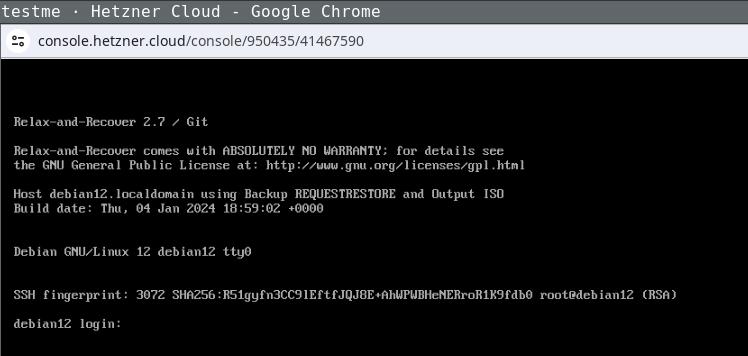
Now watch the system on the Console booting into the REAR system: image Login the recovery console (root without password) and fix its default route to make it reachable:
ip addr
[..]
2: enp1s0
..
$ ip route add 172.31.1.1 dev enp1s0
$ ip route add default via 172.31.1.1
ping 49.13.193.226
64 bytes from 49.13.193.226: icmp_seq=83 ttl=52 time=27.7 ms
The network configuration might differ, the source system in this example used DHCP, as the target does. If REAR detects changed static network configuration it guides you through the setup pretty nicely. Login via SSH (REAR will store your ssh public keys in the image) and start the recovery process, follow the steps as suggested by REAR:
ssh -l root 49.13.193.226
Welcome to Relax-and-Recover. Run "rear recover" to restore your system !
RESCUE debian12:~ # rear recover
Relax-and-Recover 2.7 / Git
Running rear recover (PID 673 date 2024-01-04 19:20:22)
Using log file: /var/log/rear/rear-debian12.log
Running workflow recover within the ReaR rescue/recovery system
Will do driver migration (recreating initramfs/initrd)
Comparing disks
Device vda does not exist (manual configuration needed)
Switching to manual disk layout configuration (GiB sizes rounded down to integer)
/dev/vda had size 137438953472 (128 GiB) but it does no longer exist
/dev/sda was not used on the original system and has now 163842097152 (152 GiB)
Original disk /dev/vda does not exist (with same size) in the target system
Using /dev/sda (the only available of the disks) for recreating /dev/vda
Current disk mapping table (source => target):
  /dev/vda => /dev/sda
Confirm or edit the disk mapping
1) Confirm disk mapping and continue 'rear recover'
[..]
User confirmed recreated disk layout
[..]
This step re-recreates your original disk layout and mounts it to /mnt/local/ (this example uses a pretty lame layout, but usually REAR will handle things like lvm/btrfs just nicely):
mount
/dev/sda3 on /mnt/local type ext4 (rw,relatime,errors=remount-ro)
/dev/sda1 on /mnt/local/boot type ext4 (rw,relatime)
Now clone your source systems data to /mnt/local/ with whatever utility you like to use and exit the recovery step. After confirming everything went well, REAR will setup the bootloader (and all other config details like fstab entries and adjusted network configuration) for you as required:
rear> exit
Did you restore the backup to /mnt/local ? Are you ready to continue recovery ? yes
User confirmed restored files
Updated initramfs with new drivers for this system.
Skip installing GRUB Legacy boot loader because GRUB 2 is installed (grub-probe or grub2-probe exist).
Installing GRUB2 boot loader...
Determining where to install GRUB2 (no GRUB2_INSTALL_DEVICES specified)
Found possible boot disk /dev/sda - installing GRUB2 there
Finished 'recover'. The target system is mounted at '/mnt/local'.
Exiting rear recover (PID 7103) and its descendant processes ...
Running exit tasks
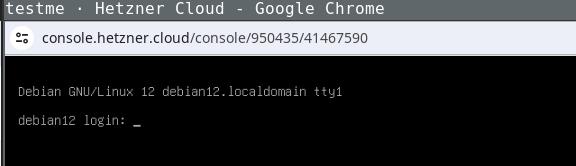
Now reboot the recovery console and watch it boot into your target systems configuration: image Being able to use this procedure for complete disaster recovery within Hetzner cloud VPS (using off-site backups) gives me a better feeling, too.

3 January 2024

John Goerzen: Live Migrating from Raspberry Pi OS bullseye to Debian bookworm

I ve been getting annoyed with Raspberry Pi OS (Raspbian) for years now. It s a fork of Debian, but manages to omit some of the most useful things. So I ve decided to migrate all of my Pis to run pure Debian. These are my reasons:
  1. Raspberry Pi OS has, for years now, specified that there is no upgrade path. That is, to get to a newer major release, it s a reinstall. While I have sometimes worked around this, for a device that is frequently installed in hard-to-reach locations, this is even more important than usual. It s common for me to upgrade machines for a decade or more across Debian releases and there s no reason that it should be so much more difficult with Raspbian.
  2. As I noted in Consider Security First, the security situation for Raspberry Pi OS isn t as good as it is with Debian.
  3. Raspbian lags behind Debian often times by 6 months or more for major releases, and days or weeks for bug fixes and security patches.
  4. Raspbian has no direct backports support, though Raspberry Pi 3 and above can use Debian s backports (per my instructions as Installing Debian Backports on Raspberry Pi)
  5. Raspbian uses a custom kernel without initramfs support
It turns out it is actually possible to do an in-place migration from Raspberry Pi OS bullseye to Debian bookworm. Here I will describe how. Even if you don t have a Raspberry Pi, this might still be instructive on how Raspbian and Debian packages work.

WARNINGS Before continuing, back up your system. This process isn t for the neophyte and it is entirely possible to mess up your boot device to the point that you have to do a fresh install to get your Pi to boot. This isn t a supported process at all.

Architecture Confusion Debian has three ARM-based architectures:
  • armel, for the lowest-end 32-bit ARM devices without hardware floating point support
  • armhf, for the higher-end 32-bit ARM devices with hardware float (hence hf )
  • arm64, for 64-bit ARM devices (which all have hardware float)
Although the Raspberry Pi 0 and 1 do support hardware float, they lack support for other CPU features that Debian s armhf architecture assumes. Therefore, the Raspberry Pi 0 and 1 could only run Debian s armel architecture. Raspberry Pi 3 and above are capable of running 64-bit, and can run both armhf and arm64. Prior to the release of the Raspberry Pi 5 / Raspbian bookworm, Raspbian only shipped the armhf architecture. Well, it was an architecture they called armhf, but it was different from Debian s armhf in that everything was recompiled to work with the more limited set of features on the earlier Raspberry Pi boards. It was really somewhere between Debian s armel and armhf archs. You could run Debian armel on those, but it would run more slowly, due to doing floating point calculations without hardware support. Debian s raspi FAQ goes into this a bit. What I am going to describe here is going from Raspbian armhf to Debian armhf with a 64-bit kernel. Therefore, it will only work with Raspberry Pi 3 and above. It may theoretically be possible to take a Raspberry Pi 2 to Debian armhf with a 32-bit kernel, but I haven t tried this and it may be more difficult. I have seen conflicting information on whether armhf really works on a Pi 2. (If you do try it on a Pi 2, ignore everything about arm64 and 64-bit kernels below, and just go with the linux-image-armmp-lpae kernel per the ARMMP page) There is another wrinkle: Debian doesn t support running 32-bit ARM kernels on 64-bit ARM CPUs, though it does support running a 32-bit userland on them. So we will wind up with a system with kernel packages from arm64 and everything else from armhf. This is a perfectly valid configuration as the arm64 like x86_64 is multiarch (that is, the CPU can natively execute both the 32-bit and 64-bit instructions). (It is theoretically possible to crossgrade a system from 32-bit to 64-bit userland, but that felt like a rather heavy lift for dubious benefit on a Pi; nevertheless, if you want to make this process even more complicated, refer to the CrossGrading page.)

Prerequisites and Limitations In addition to the need for a Raspberry Pi 3 or above in order for this to work, there are a few other things to mention. If you are using the GPIO features of the Pi, I don t know if those work with Debian. I think Raspberry Pi OS modified the desktop environment more than other components. All of my Pis are headless, so I don t know if this process will work if you use a desktop environment. I am assuming you are booting from a MicroSD card as is typical in the Raspberry Pi world. The Pi s firmware looks for a FAT partition (MBR type 0x0c) and looks within it for boot information. Depending on how long ago you first installed an OS on your Pi, your /boot may be too small for Debian. Use df -h /boot to see how big it is. I recommend 200MB at minimum. If your /boot is smaller than that, stop now (or use some other system to shrink your root filesystem and rearrange your partitions; I ve done this, but it s outside the scope of this article.) You need to have stable power. Once you begin this process, your pi will mostly be left in a non-bootable state until you finish. (You did make a backup, right?)

Basic idea The basic idea here is that since bookworm has almost entirely newer packages then bullseye, we can just switch over to it and let the Debian packages replace the Raspbian ones as they are upgraded. Well, it s not quite that easy, but that s the main idea.

Preparation First, make a backup. Even an image of your MicroSD card might be nice. OK, I think I ve said that enough now. It would be a good idea to have a HDMI cable (with the appropriate size of connector for your particular Pi board) and a HDMI display handy so you can troubleshoot any bootup issues with a console.

Preparation: access The Raspberry Pi OS by default sets up a user named pi that can use sudo to gain root without a password. I think this is an insecure practice, but assuming you haven t changed it, you will need to ensure it still works once you move to Debian. Raspberry Pi OS had a patch in their sudo package to enable it, and that will be removed when Debian s sudo package is installed. So, put this in /etc/sudoers.d/010_picompat:
pi ALL=(ALL) NOPASSWD: ALL
Also, there may be no password set for the root account. It would be a good idea to set one; it makes it easier to log in at the console. Use the passwd command as root to do so.

Preparation: bluetooth Debian doesn t correctly identify the Bluetooth hardware address. You can save it off to a file by running hcitool dev > /root/bluetooth-from-raspbian.txt. I don t use Bluetooth, but this should let you develop a script to bring it up properly.

Preparation: Debian archive keyring You will next need to install Debian s archive keyring so that apt can authenticate packages from Debian. Go to the bookworm download page for debian-archive-keyring and copy the URL for one of the files, then download it on the pi. For instance:
wget http://http.us.debian.org/debian/pool/main/d/debian-archive-keyring/debian-archive-keyring_2023.3+deb12u1_all.deb
Use sha256sum to verify the checksum of the downloaded file, comparing it to the package page on the Debian site. Now, you ll install it with:
dpkg -i debian-archive-keyring_2023.3+deb12u1_all.deb

Package first steps From here on, we are making modifications to the system that can leave it in a non-bootable state. Examine /etc/apt/sources.list and all the files in /etc/apt/sources.list.d. Most likely you will want to delete or comment out all lines in all files there. Replace them with something like:
deb http://deb.debian.org/debian/ bookworm main non-free-firmware contrib non-free
deb http://security.debian.org/debian-security bookworm-security main non-free-firmware contrib non-free
deb https://deb.debian.org/debian bookworm-backports main non-free-firmware contrib non-free
(you might leave off contrib and non-free depending on your needs) Now, we re going to tell it that we ll support arm64 packages:
dpkg --add-architecture arm64
And finally, download the bookworm package lists:
apt-get update
If there are any errors from that command, fix them and don t proceed until you have a clean run of apt-get update.

Moving /boot to /boot/firmware The boot FAT partition I mentioned above is mounted at /boot by Raspberry Pi OS, but Debian s scripts assume it will be at /boot/firmware. We need to fix this. First:
umount /boot
mkdir /boot/firmware
Now, edit fstab and change the reference to /boot to be to /boot/firmware. Now:
mount -v /boot/firmware
cd /boot/firmware
mv -vi * ..
This mounts the filesystem at the new location, and moves all its contents back to where apt believes it should be. Debian s packages will populate /boot/firmware later.

Installing the first packages Now we start by installing the first of the needed packages. Eventually we will wind up with roughly the same set Debian uses.
apt-get install linux-image-arm64
apt-get install firmware-brcm80211=20230210-5
apt-get install raspi-firmware
If you get errors relating to firmware-brcm80211 from any commands, run that install firmware-brcm80211 command and then proceed. There are a few packages that Raspbian marked as newer than the version in bookworm (whether or not they really are), and that s one of them.

Configuring the bootloader We need to configure a few things in /etc/default/raspi-firmware before proceeding. Edit that file. First, uncomment (or add) a line like this:
KERNEL_ARCH="arm64"
Next, in /boot/cmdline.txt you can find your old Raspbian boot command line. It will say something like:
root=PARTUUID=...
Save off the bit starting with PARTUUID. Back in /etc/default/raspi-firmware, set a line like this:
ROOTPART=PARTUUID=abcdef00
(substituting your real value for abcdef00). This is necessary because the microSD card device name often changes from /dev/mmcblk0 to /dev/mmcblk1 when switching to Debian s kernel. raspi-firmware will encode the current device name in /boot/firmware/cmdline.txt by default, which will be wrong once you boot into Debian s kernel. The PARTUUID approach lets it work regardless of the device name.

Purging the Raspbian kernel Run:
dpkg --purge raspberrypi-kernel

Upgrading the system At this point, we are going to run the procedure beginning at section 4.4.3 of the Debian release notes. Generally, you will do:
apt-get -u upgrade
apt full-upgrade
Fix any errors at each step before proceeding to the next. Now, to remove some cruft, run:
apt-get --purge autoremove
Inspect the list to make sure nothing important isn t going to be removed.

Removing Raspbian cruft You can list some of the cruft with:
apt list '~o'
And remove it with:
apt purge '~o'
I also don t run Bluetooth, and it seemed to sometimes hang on boot becuase I didn t bother to fix it, so I did:
apt-get --purge remove bluez

Installing some packages This makes sure some basic Debian infrastructure is available:
apt-get install wpasupplicant parted dosfstools wireless-tools iw alsa-tools
apt-get --purge autoremove

Installing firmware Now run:
apt-get install firmware-linux

Resolving firmware package version issues If it gives an error about the installed version of a package, you may need to force it to the bookworm version. For me, this often happened with firmware-atheros, firmware-libertas, and firmware-realtek. Here s how to resolve it, with firmware-realtek as an example:
  1. Go to https://packages.debian.org/PACKAGENAME for instance, https://packages.debian.org/firmware-realtek. Note the version number in bookworm in this case, 20230210-5.
  2. Now, you will force the installation of that package at that version:
    apt-get install firmware-realtek=20230210-5
    
  3. Repeat with every conflicting package until done.
  4. Rerun apt-get install firmware-linux and make sure it runs cleanly.
Also, in the end you should be able to:
apt-get install firmware-atheros firmware-libertas firmware-realtek firmware-linux

Dealing with other Raspbian packages The Debian release notes discuss removing non-Debian packages. There will still be a few of those. Run:
apt list '?narrow(?installed, ?not(?origin(Debian)))'
Deal with them; mostly you will need to force the installation of a bookworm version using the procedure in the section Resolving firmware package version issues above (even if it s not for a firmware package). For non-firmware packages, you might possibly want to add --mark-auto to your apt-get install command line to allow the package to be autoremoved later if the things depending on it go away. If you aren t going to use Bluetooth, I recommend apt-get --purge remove bluez as well. Sometimes it can hang at boot if you don t fix it up as described above.

Set up networking We ll be switching to the Debian method of networking, so we ll create some files in /etc/network/interfaces.d. First, eth0 should look like this:
allow-hotplug eth0
iface eth0 inet dhcp
iface eth0 inet6 auto
And wlan0 should look like this:
allow-hotplug wlan0
iface wlan0 inet dhcp
    wpa-conf /etc/wpa_supplicant/wpa_supplicant.conf
Raspbian is inconsistent about using eth0/wlan0 or renamed interface. Run ifconfig or ip addr. If you see a long-named interface such as enx<something> or wlp<something>, copy the eth0 file to the one named after the enx interface, or the wlan0 file to the one named after the wlp interface, and edit the internal references to eth0/wlan0 in this new file to name the long interface name. If using wifi, verify that your SSIDs and passwords are in /etc/wpa_supplicant/wpa_supplicant.conf. It should have lines like:
network= 
   ssid="NetworkName"
   psk="passwordHere"
 
(This is where Raspberry Pi OS put them).

Deal with DHCP Raspberry Pi OS used dhcpcd, whereas bookworm normally uses isc-dhcp-client. Verify the system is in the correct state:
apt-get install isc-dhcp-client
apt-get --purge remove dhcpcd dhcpcd-base dhcpcd5 dhcpcd-dbus

Set up LEDs To set up the LEDs to trigger on MicroSD activity as they did with Raspbian, follow the Debian instructions. Run apt-get install sysfsutils. Then put this in a file at /etc/sysfs.d/local-raspi-leds.conf:
class/leds/ACT/brightness = 1
class/leds/ACT/trigger = mmc1

Prepare for boot To make sure all the /boot/firmware files are updated, run update-initramfs -u. Verify that root in /boot/firmware/cmdline.txt references the PARTUUID as appropriate. Verify that /boot/firmware/config.txt contains the lines arm_64bit=1 and upstream_kernel=1. If not, go back to the section on modifying /etc/default/raspi-firmware and fix it up.

The moment arrives Cross your fingers and try rebooting into your Debian system:
reboot
For some reason, I found that the first boot into Debian seems to hang for 30-60 seconds during bootstrap. I m not sure why; don t panic if that happens. It may be necessary to power cycle the Pi for this boot.

Troubleshooting If things don t work out, hook up the Pi to a HDMI display and see what s up. If I anticipated a particular problem, I would have documented it here (a lot of the things I documented here are because I ran into them!) So I can t give specific advice other than to watch boot messages on the console. If you don t even get kernel messages going, then there is some problem with your partition table or /boot/firmware FAT partition. Otherwise, you ve at least got the kernel going and can troubleshoot like usual from there.

2 January 2024

Matthew Garrett: Dealing with weird ELF libraries

Libraries are collections of code that are intended to be usable by multiple consumers (if you're interested in the etymology, watch this video). In the old days we had what we now refer to as "static" libraries, collections of code that existed on disk but which would be copied into newly compiled binaries. We've moved beyond that, thankfully, and now make use of what we call "dynamic" or "shared" libraries - instead of the code being copied into the binary, a reference to the library function is incorporated, and at runtime the code is mapped from the on-disk copy of the shared object[1]. This allows libraries to be upgraded without needing to modify the binaries using them, and if multiple applications are using the same library at once it only requires that one copy of the code be kept in RAM.

But for this to work, two things are necessary: when we build a binary, there has to be a way to reference the relevant library functions in the binary; and when we run a binary, the library code needs to be mapped into the process.

(I'm going to somewhat simplify the explanations from here on - things like symbol versioning make this a bit more complicated but aren't strictly relevant to what I was working on here)

For the first of these, the goal is to replace a call to a function (eg, printf()) with a reference to the actual implementation. This is the job of the linker rather than the compiler (eg, if you use the -c argument to tell gcc to simply compile to an object rather than linking an executable, it's not going to care about whether or not every function called in your code actually exists or not - that'll be figured out when you link all the objects together), and the linker needs to know which symbols (which aren't just functions - libraries can export variables or structures and so on) are available in which libraries. You give the linker a list of libraries, it extracts the symbols available, and resolves the references in your code with references to the library.

But how is that information extracted? Each ELF object has a fixed-size header that contains references to various things, including a reference to a list of "section headers". Each section has a name and a type, but the ones we're interested in are .dynstr and .dynsym. .dynstr contains a list of strings, representing the name of each exported symbol. .dynsym is where things get more interesting - it's a list of structs that contain information about each symbol. This includes a bunch of fairly complicated stuff that you need to care about if you're actually writing a linker, but the relevant entries for this discussion are an index into .dynstr (which means the .dynsym entry isn't sufficient to know the name of a symbol, you need to extract that from .dynstr), along with the location of that symbol within the library. The linker can parse this information and obtain a list of symbol names and addresses, and can now replace the call to printf() with a reference to libc instead.

(Note that it's not possible to simply encode this as "Call this address in this library" - if the library is rebuilt or is a different version, the function could move to a different location)

Experimentally, .dynstr and .dynsym appear to be sufficient for linking a dynamic library at build time - there are other sections related to dynamic linking, but you can link against a library that's missing them. Runtime is where things get more complicated.

When you run a binary that makes use of dynamic libraries, the code from those libraries needs to be mapped into the resulting process. This is the job of the runtime dynamic linker, or RTLD[2]. The RTLD needs to open every library the process requires, map the relevant code into the process's address space, and then rewrite the references in the binary into calls to the library code. This requires more information than is present in .dynstr and .dynsym - at the very least, it needs to know the list of required libraries.

There's a separate section called .dynamic that contains another list of structures, and it's the data here that's used for this purpose. For example, .dynamic contains a bunch of entries of type DT_NEEDED - this is the list of libraries that an executable requires. There's also a bunch of other stuff that's required to actually make all of this work, but the only thing I'm going to touch on is DT_HASH. Doing all this re-linking at runtime involves resolving the locations of a large number of symbols, and if the only way you can do that is by reading a list from .dynsym and then looking up every name in .dynstr that's going to take some time. The DT_HASH entry points to a hash table - the RTLD hashes the symbol name it's trying to resolve, looks it up in that hash table, and gets the symbol entry directly (it still needs to resolve that against .dynstr to make sure it hasn't hit a hash collision - if it has it needs to look up the next hash entry, but this is still generally faster than walking the entire .dynsym list to find the relevant symbol). There's also DT_GNU_HASH which fulfills the same purpose as DT_HASH but uses a more complicated algorithm that performs even better. .dynamic also contains entries pointing at .dynstr and .dynsym, which seems redundant but will become relevant shortly.

So, .dynsym and .dynstr are required at build time, and both are required along with .dynamic at runtime. This seems simple enough, but obviously there's a twist and I'm sorry it's taken so long to get to this point.

I bought a Synology NAS for home backup purposes (my previous solution was a single external USB drive plugged into a small server, which had uncomfortable single point of failure properties). Obviously I decided to poke around at it, and I found something odd - all the libraries Synology ships were entirely lacking any ELF section headers. This meant no .dynstr, .dynsym or .dynamic sections, so how was any of this working? nm asserted that the libraries exported no symbols, and readelf agreed. If I wrote a small app that called a function in one of the libraries and built it, gcc complained that the function was undefined. But executables on the device were clearly resolving the symbols at runtime, and if I loaded them into ghidra the exported functions were visible. If I dlopen()ed them, dlsym() couldn't resolve the symbols - but if I hardcoded the offset into my code, I could call them directly.

Things finally made sense when I discovered that if I passed the --use-dynamic argument to readelf, I did get a list of exported symbols. It turns out that ELF is weirder than I realised. As well as the aforementioned section headers, ELF objects also include a set of program headers. One of the program header types is PT_DYNAMIC. This typically points to the same data that's present in the .dynamic section. Remember when I mentioned that .dynamic contained references to .dynsym and .dynstr? This means that simply pointing at .dynamic is sufficient, there's no need to have separate entries for them.

The same information can be reached from two different locations. The information in the section headers is used at build time, and the information in the program headers at run time[3]. I do not have an explanation for this. But if the information is present in two places, it seems obvious that it should be able to reconstruct the missing section headers in my weird libraries? So that's what this does. It extracts information from the DYNAMIC entry in the program headers and creates equivalent section headers.

There's one thing that makes this more difficult than it might seem. The section header for .dynsym has to contain the number of symbols present in the section. And that information doesn't directly exist in DYNAMIC - to figure out how many symbols exist, you're expected to walk the hash tables and keep track of the largest number you've seen. Since every symbol has to be referenced in the hash table, once you've hit every entry the largest number is the number of exported symbols. This seemed annoying to implement, so instead I cheated, added code to simply pass in the number of symbols on the command line, and then just parsed the output of readelf against the original binaries to extract that information and pass it to my tool.

Somehow, this worked. I now have a bunch of library files that I can link into my own binaries to make it easier to figure out how various things on the Synology work. Now, could someone explain (a) why this information is present in two locations, and (b) why the build-time linker and run-time linker disagree on the canonical source of truth?

[1] "Shared object" is the source of the .so filename extension used in various Unix-style operating systems
[2] You'll note that "RTLD" is not an acryonym for "runtime dynamic linker", because reasons
[3] For environments using the GNU RTLD, at least - I have no idea whether this is the case in all ELF environments

comment count unavailable comments

1 January 2024

Russ Allbery: 2023 Book Reading in Review

In 2023, I finished and reviewed 53 books, continuing a trend of year-over-year increases and of reading the most books since 2012 (the last year I averaged five books a month). Reviewing continued to be uneven, with a significant slump in the summer and smaller slumps in February and November, and a big clump of reviews finished in October in addition to my normal year-end reading and reviewing vacation. The unevenness this year was mostly due to finishing books and not writing reviews immediately. Reviews are much harder to write when the finished books are piling up, so one goal for 2024 is to not let that happen again. I enter the new year with one book finished and not yet reviewed, after reading a book about every day and a half during my December vacation. I read two all-time favorite books this year. The first was Emily Tesh's debut novel Some Desperate Glory, which is one of the best space opera novels I have ever read. I cannot improve on Shelley Parker-Chan's blurb for this book: "Fierce and heartbreakingly humane, this book is for everyone who loved Ender's Game, but Ender's Game didn't love them back." This is not hard science fiction but it is fantastic character fiction. It was exactly what I needed in the middle of a year in which I was fighting a "burn everything down" mood. The second was Night Watch by Terry Pratchett, the 29th Discworld and 6th Watch novel. Throughout my Discworld read-through, Pratchett felt like he was on the cusp of a truly stand-out novel, one where all the pieces fit and the book becomes something more than the sum of its parts. This was that book. It's a book about ethics and revolutions and governance, but also about how your perception of yourself changes as you get older. It does all of the normal Pratchett things, just... better. While I would love to point new Discworld readers at it, I think you do have to read at least the Watch novels that came before it for it to carry its proper emotional heft. This was overall a solid year for fiction reading. I read another 15 novels I rated 8 out of 10, and 12 that I rated 7 out of 10. The largest contributor to that was my Discworld read-through, which was reliably entertaining throughout the year. The run of Discworld books between The Fifth Elephant (read late last year) and Wintersmith (my last of this year) was the best run of Discworld novels so far. One additional book I'll call out as particularly worth reading is Thud!, the Watch novel after Night Watch and another excellent entry. I read two stand-out non-fiction books this year. The first was Oliver Darkshire's delightful memoir about life as a rare book seller, Once Upon a Tome. One of the things I will miss about Twitter is the regularity with which I stumbled across fascinating people and then got to read their books. I'm off Twitter permanently now because the platform is designed to make me incoherently angry and I need less of that in my life, but it was very good at finding delightfully quirky books like this one. My other favorite non-fiction book of the year was Michael Lewis's Going Infinite, a profile of Sam Bankman-Fried. I'm still bemused at the negative reviews that this got from people who were upset that Lewis didn't turn the story into a black-and-white morality play. Bankman-Fried's actions were clearly criminal; that's not in dispute. Human motivations can be complex in ways that are irrelevant to the law, and I thought this attempt to understand that complexity by a top-notch storyteller was worthy of attention. Also worth a mention is Tony Judt's Postwar, the first book I reviewed in 2023. A sprawling history of post-World-War-II Europe will never have the sheer readability of shorter, punchier books, but this was the most informative book that I read in 2023. 2024 should see the conclusion of my Discworld read-through, after which I may return to re-reading Mercedes Lackey or David Eddings, both of which I paused to make time for Terry Pratchett. I also have another re-read similar to my Chronicles of Narnia reviews that I've been thinking about for a while. Perhaps I will start that next year; perhaps it will wait for 2025. Apart from that, my intention as always is to read steadily, write reviews as close to when I finished the book as possible, and make reading time for my huge existing backlog despite the constant allure of new releases. Here's to a new year full of more new-to-me books and occasional old favorites. The full analysis includes some additional personal reading statistics, probably only of interest to me.

Paul Wise: FLOSS Activities December 2023

Focus This month I didn't have any particular focus. I just worked on issues in my info bubble.

Changes

Issues
  • Feature in UDD
  • Conffile removal needed in neomutt
  • dpkg vendor config needed in Armbian
  • New SWH listers needed for depp & depp (different projects)

Review

Administration
  • Debian wiki: approve accounts

Communication
  • Respond to queries from Debian users and contributors on the mailing lists and IRC

Sponsors The SWH work was sponsored. All other work was done on a volunteer basis.

31 December 2023

Chris Lamb: Favourites of 2023

This post should have marked the beginning of my yearly roundups of the favourite books and movies I read and watched in 2023. However, due to coming down with a nasty bout of flu recently and other sundry commitments, I wasn't able to undertake writing the necessary four or five blog posts In lieu of this, however, I will simply present my (unordered and unadorned) highlights for now. Do get in touch if this (or any of my previous posts) have spurred you into picking something up yourself

Books

Peter Watts: Blindsight (2006) Reymer Banham: Los Angeles: The Architecture of Four Ecologies (2006) Joanne McNeil: Lurking: How a Person Became a User (2020) J. L. Carr: A Month in the Country (1980) Hilary Mantel: A Memoir of My Former Self: A Life in Writing (2023) Adam Higginbotham: Midnight in Chernobyl (2019) Tony Judt: Postwar: A History of Europe Since 1945 (2005) Tony Judt: Reappraisals: Reflections on the Forgotten Twentieth Century (2008) Peter Apps: Show Me the Bodies: How We Let Grenfell Happen (2021) Joan Didion: Slouching Towards Bethlehem (1968)Erik Larson: The Devil in the White City (2003)

Films Recent releases

Unenjoyable experiences included Alejandro G mez Monteverde's Sound of Freedom (2023), Alex Garland's Men (2022) and Steven Spielberg's The Fabelmans (2022).
Older releases (Films released before 2022, and not including rewatches from previous years.) Distinctly unenjoyable watches included Ocean's Eleven (1960), El Topo (1970), L olo (1992), Hotel Mumbai (2018), Bulworth (1998) and and The Big Red One (1980).

30 December 2023

Russ Allbery: Review: The Hound of Justice

Review: The Hound of Justice, by Claire O'Dell
Series: Janet Watson Chronicles #2
Publisher: Harper Voyager
Copyright: July 2019
ISBN: 0-06-269938-5
Format: Kindle
Pages: 325
The Hound of Justice is a near-future thriller novel with Sherlock Holmes references. It is a direct sequel to A Study in Honor. This series is best read in order. Janet Watson is in a much better place than she was in the first book. She has proper physical therapy, a new arm, and a surgeon's job waiting for her as soon as she can master its features. A chance meeting due to an Inauguration Day terrorist attack may even develop into something more. She just needs to get back into the operating room and then she'll feel like her life is back on track. Sara Holmes, on the other hand, is restless, bored, and manic, rudely intruding on Watson's date. Then she disappears, upending Watson's living arrangements. She's on the trail of something. When mysterious destructible notes start appearing in Watson's books, it's clear that she wants help. The structure of this book didn't really work for me. The first third or so is a slice-of-life account of Watson's attempt to resume her career as a surgeon against a backdrop of ongoing depressing politics. This part sounds like the least interesting, but I was thoroughly engrossed. Watson is easy to care about, hospital politics are strangely interesting, and while the romance never quite clicked for me, it had potential. I was hoping for another book like A Study in Honor, where Watson's life and Holmes's investigations entwine and run in parallel. That was not to be. The middle third of the book pulls Watson away to Georgia and a complicated mix of family obligations and spy-novel machinations. If this had involved Sara's fae strangeness, verbal sparring, and odd tokens of appreciation, maybe it would have worked, but Sara Holmes is entirely off-camera. Watson is instead dealing with a minor supporting character from the first book, who drags her through disguises, vehicle changes, and border stops in a way that felt excessive and weirdly out of place. (Other reviews say that this character is the Mycroft Holmes equivalent; the first initial of Micha's name fits, but nothing else does so far as I can tell.) Then the last third of the novel turns into a heist. I like a heist novel as much as the next person, but a good heist story needs a team with chemistry and interplay, and I didn't know any of these people. There was way too little Sara Holmes, too much of Watson being out of her element in a rather generic way, and too many steps that Watson is led through without giving the reader a chance to enjoy the competence of the team. It felt jarring and disconnected, like Watson got pulled out of one story and dropped into an entirely different story without a proper groundwork. The Hound of Justice still has its moments. Watson is a great character and I'm still fully invested in her life. She was pulled into this mission because she's the person Holmes knows with the appropriate skills, and when she finally gets a chance to put those skills to use, it's quite satisfying. But, alas, the magic of A Study in Honor simply isn't here, in part because Sara Holmes is missing for most of the book and her replacements and stand-ins are nowhere near as intriguing. The villain's plan seems wildly impractical and highly likely to be detected, and although I can come up with some explanations to salvage it, those don't appear in the book. And, as in the first book, the villain seems very one-dimensional and simplistic. This is certainly not a villain worthy of Holmes. Fittingly, given the political movements O'Dell is commenting on, a lot of this book is about racial politics. O'Dell contrasts the microaggressions and more subtle dangers for Watson as a black woman in Washington, D.C., with the more explicit and active racism of the other places to which she travels over the course of the story. She's trying very hard to give the reader a feeling for what it's like to be black in the United States. I don't have any specific complaints about this, and I'm glad she's attempting it, but I came away from this book with a nagging feeling that Watson's reactions were a tiny bit off. It felt like a white person writing about racism rather than a black person writing about racism: nothing is entirely incorrect, but the emotional beats aren't quite where black authors would put them. I could be completely wrong about this, and am certainly much less qualified to comment than O'Dell is, but there were enough places that landed slightly wrong that I wanted to note it. I would still recommend A Study in Honor, but I'm not sure I can recommend this book. This is one of those series where the things that I enjoyed the most about the first book weren't what the author wanted to focus on in subsequent books. I would read more about the day-to-day of Watson's life, and I would certainly read more of Holmes and Watson sparring and circling and trying to understand each other. I'm less interested in somewhat generic thrillers with implausible plots and Sherlock Holmes references. At the moment, this is academic, since The Hound of Justice is the last book of the series so far. Rating: 6 out of 10

28 December 2023

Russ Allbery: Review: Nettle & Bone

Review: Nettle & Bone, by T. Kingfisher
Publisher: Tor
Copyright: 2022
ISBN: 1-250-24403-X
Format: Kindle
Pages: 242
Nettle & Bone is a standalone fantasy novel with fairy tale vibes. T. Kingfisher is a pen name for Ursula Vernon. As the book opens, Marra is giving herself a blood infection by wiring together dog bones out of a charnel pit. This is the second of three impossible tasks that she was given by the dust-wife. Completing all three will give her the tools to kill a prince. I am a little cautious of which T. Kingfisher books I read since she sometimes writes fantasy and sometimes writes horror and I don't get along with horror. This one seemed a bit horrific in the marketing, so I held off on reading it despite the Hugo nomination. It turns out to be just on the safe side of my horror tolerance, with only a couple of parts that I read a bit quickly. One of those is the opening, which I am happy to report does not set the tone for the rest of the book. Marra starts the story in a wasteland full of disease, madmen, and cannibals (who, in typical Ursula Vernon fashion, turn out to be nicer than the judgmental assholes outside of the blistered land). She doesn't stay there long. By chapter two, the story moves on to flashbacks explaining how Marra ended up there, alternating with further (and less horrific) steps in her quest to kill the prince of the Northern Kingdom. Marra is a princess of a small, relatively poor coastal kingdom with a good harbor and acquisitive neighbors. Her mother, the queen, has protected the kingdom through arranged marriage of her daughters to the prince of the Northern Kingdom, who rules it in all but name given the mental deterioration of his father the king. Marra's eldest sister Damia was first, but she died suddenly and mysteriously in a fall. (If you're thinking about the way women are injured by "accident," you have the right idea.) Kania, the middle sister, is next to marry; she lives, but not without cost. Meanwhile, Marra is sent off to a convent to ensure that there are no complicating potential heirs, and to keep her on hand as a spare. I won't spoil the entire backstory, but you do learn it all. Marra is a typical Kingfisher protagonist: a woman who is way out of her depth who persists with stubbornness, curiosity, and innate decency because what else is there to do? She accumulates the typical group of misfits and oddballs common in Kingfisher's quest fantasies, characters that in the Chosen One male fantasy would be supporting characters at best. The bone-wife is a delight; her chicken is even better. There are fairy godmothers and a goblin market and a tooth extraction that was one of the creepiest things I've read without actually being horror. It is, in short, a Kingfisher fantasy novel, with a touch more horror than average but not enough to push it out of the fantasy genre. I think my favorite part of this book was not the main quest. It was the flashback scenes set in the convent, where Marra has the space (and the mentorship) to develop her sense of self.
"We're a mystery religion," said the abbess, when she'd had a bit more wine than usual, "for people who have too much work to do to bother with mysteries. So we simply get along as best we can. Occasionally someone has a vision, but [the goddess] doesn't seem to want anything much, and so we try to return the favor."
If you have read any other Kingfisher novels, much of this will be familiar: the speculative asides, the dogged determination, the slightly askew nature of the world, the vibes-based world-building that feels more like a fairy tale than a carefully constructed magic system, and the sense that the main characters (and nearly all of the supporting characters) are average people trying to play the hands they were dealt as ethically as they can. You will know that the tentative and woman-initiated romance is coming as soon as the party meets the paladin type who is almost always the romantic interest in one of these books. The emotional tone of the book is a bit predictable for regular readers, but Ursula Vernon's brain is such a delightful place to spend some time that I don't mind.
Marra had not managed to be pale and willowy and consumptive at any point in eighteen years of life and did not think she could achieve it before she died.
Nettle & Bone won the Hugo for Best Novel in 2023. I'm not sure why this specific T. Kingfisher novel won and not any of the half-dozen earlier novels she's written in a similar style, but sure, I have no objections. I'm glad one of them won; they're all worth reading and hopefully that will help more people discover this delightful style of fantasy that doesn't feel like what anyone else is doing. Recommended, although be prepared for a few more horror touches than normal and a rather grim first chapter. Content warnings: domestic abuse. The dog... lives? Is equally as alive at the end of the book as it was at the end of the first chapter? The dog does not die; I'll just leave it at that. (Neither does the chicken.) Rating: 8 out of 10

27 December 2023

David Bremner: Added a derived backend for org export

See web-stacker for the background. yantar92 on #org-mode pointed out that a derived backend would be a cleaner solution. I had initially thought it was too complicated, but I have to agree the example in the org-mode documentation does pretty much what I need. This new approach has the big advantage that the generation of URLs happens at export time, so it's not possible for the displayed program code and the version encoded in the URL to get out of sync.
;; derived backend to customize src block handling
(defun my-beamer-src-block (src-block contents info)
  "Transcode a SRC-BLOCK element from Org to beamer
         CONTENTS is nil.  INFO is a plist used as a communication
         channel."
  (let ((attr (org-export-read-attribute :attr_latex src-block :stacker)))
    (concat
     (when (or (not attr) (string= attr "both"))
       (org-export-with-backend 'beamer src-block contents info))
     (when attr
       (let* ((body  (org-element-property :value src-block))
              (table '(? ?\n ?: ?/ ?? ?# ?[ ?] ?@ ?! ?$ ?& ??
                         ?( ?) ?* ?+ ?, ?= ?%))
              (slug (org-link-encode body table))
              (simplified (replace-regexp-in-string "[%]20" "+" slug nil 'literal)))
         (format "\n\\stackerlink %s " simplified))))))
(defun my-beamer-export-to-latex
    (&optional async subtreep visible-only body-only ext-plist)
  "Export current buffer as a (my)Beamer presentation (tex).
    See org-beamer-export-to-latex for full docs"
  (interactive)
  (let ((file (org-export-output-file-name ".tex" subtreep)))
    (org-export-to-file 'my-beamer file
      async subtreep visible-only body-only ext-plist)))
(defun my-beamer-export-to-pdf
    (&optional async subtreep visible-only body-only ext-plist)
  "Export current buffer as a (my)Beamer presentation (PDF).
  See org-beamer-export-to-pdf for full docs."
  (interactive)
  (let ((file (org-export-output-file-name ".tex" subtreep)))
    (org-export-to-file 'my-beamer file
      async subtreep visible-only body-only ext-plist
      #'org-latex-compile)))
(with-eval-after-load "ox-beamer"
  (org-export-define-derived-backend 'my-beamer 'beamer
    :translate-alist '((src-block . my-beamer-src-block))
    :menu-entry '(?l 1 ((?m "my beamer .tex" my-beamer-export-to-latex)
                        (?M "my beamer .pdf" my-beamer-export-to-pdf)))))
An example of using this in an org-document would as below. The first source code block generates only a link in the output while the last adds a generated link to the normal highlighted source code.
* Stuff
** Frame
#+attr_latex: :stacker t
#+NAME: last
#+BEGIN_SRC stacker :eval no
  (f)
#+END_SRC
#+name: smol-example
#+BEGIN_SRC stacker :noweb yes
  (defvar x 1)
  (deffun (f)
    (let ([y 2])
      (deffun (h)
        (+ x y))
      (h)))
  <<last>>
#+END_SRC
** Another Frame 
#+ATTR_LATEX: :stacker both
#+begin_src smol :noweb yes
  <<smol-example>>
#+end_src

Bits from Debian: Statement about the EU Cyber Resilience Act

Debian Public Statement about the EU Cyber Resilience Act and the Product Liability Directive The European Union is currently preparing a regulation "on horizontal cybersecurity requirements for products with digital elements" known as the Cyber Resilience Act (CRA). It is currently in the final "trilogue" phase of the legislative process. The act includes a set of essential cybersecurity and vulnerability handling requirements for manufacturers. It will require products to be accompanied by information and instructions to the user. Manufacturers will need to perform risk assessments and produce technical documentation and, for critical components, have third-party audits conducted. Discovered security issues will have to be reported to European authorities within 25 hours (1). The CRA will be followed up by the Product Liability Directive (PLD) which will introduce compulsory liability for software. While a lot of these regulations seem reasonable, the Debian project believes that there are grave problems for Free Software projects attached to them. Therefore, the Debian project issues the following statement:
  1. Free Software has always been a gift, freely given to society, to take and to use as seen fit, for whatever purpose. Free Software has proven to be an asset in our digital age and the proposed EU Cyber Resilience Act is going to be detrimental to it. a. As the Debian Social Contract states, our goal is "make the best system we can, so that free works will be widely distributed and used." Imposing requirements such as those proposed in the act makes it legally perilous for others to redistribute our work and endangers our commitment to "provide an integrated system of high-quality materials with no legal restrictions that would prevent such uses of the system". (2) b. Knowing whether software is commercial or not isn't feasible, neither in Debian nor in most free software projects - we don't track people's employment status or history, nor do we check who finances upstream projects (the original projects that we integrate in our operating system). c. If upstream projects stop making available their code for fear of being in the scope of CRA and its financial consequences, system security will actually get worse rather than better. d. Having to get legal advice before giving a gift to society will discourage many developers, especially those without a company or other organisation supporting them.
  2. Debian is well known for its security track record through practices of responsible disclosure and coordination with upstream developers and other Free Software projects. We aim to live up to the commitment made in the Debian Social Contract: "We will not hide problems." (3) a.The Free Software community has developed a fine-tuned, tried-and-tested system of responsible disclosure in case of security issues which will be overturned by the mandatory reporting to European authorities within 24 hours (Art. 11 CRA). b. Debian spends a lot of volunteering time on security issues, provides quick security updates and works closely together with upstream projects and in coordination with other vendors. To protect its users, Debian regularly participates in limited embargos to coordinate fixes to security issues so that all other major Linux distributions can also have a complete fix when the vulnerability is disclosed. c. Security issue tracking and remediation is intentionally decentralized and distributed. The reporting of security issues to ENISA and the intended propagation to other authorities and national administrations would collect all software vulnerabilities in one place. This greatly increases the risk of leaking information about vulnerabilities to threat actors, representing a threat for all the users around the world, including European citizens. d. Activists use Debian (e.g. through derivatives such as Tails), among other reasons, to protect themselves from authoritarian governments; handing threat actors exploits they can use for oppression is against what Debian stands for. e. Developers and companies will downplay security issues because a "security" issue now comes with legal implications. Less clarity on what is truly a security issue will hurt users by leaving them vulnerable.
  3. While proprietary software is developed behind closed doors, Free Software development is done in the open, transparent for everyone. To retain parity with proprietary software the open development process needs to be entirely exempt from CRA requirements, just as the development of software in private is. A "making available on the market" can only be considered after development is finished and the software is released.
  4. Even if only "commercial activities" are in the scope of CRA, the Free Software community - and as a consequence, everybody - will lose a lot of small projects. CRA will force many small enterprises and most probably all self employed developers out of business because they simply cannot fulfill the requirements imposed by CRA. Debian and other Linux distributions depend on their work. If accepted as it is, CRA will undermine not only an established community but also a thriving market. CRA needs an exemption for small businesses and, at the very least, solo-entrepreneurs.

Information about the voting process: Debian uses the Condorcet method for voting. Simplistically, plain Condorcets method can be stated like so : "Consider all possible two-way races between candidates. The Condorcet winner, if there is one, is the one candidate who can beat each other candidate in a two-way race with that candidate." The problem is that in complex elections, there may well be a circular relationship in which A beats B, B beats C, and C beats A. Most of the variations on Condorcet use various means of resolving the tie. Debian's variation is spelled out in the constitution, specifically, A.5(3) Sources: (1) CRA proposals and links & PLD proposals and links (2) Debian Social Contract No. 2, 3, and 4 (3) Debian Constitution

Next.

Previous.