Jonathan Dowland: Arturia Microfreak

](https://jmtd.net/log/synths/microfreak.jpg) Arturia Microfreak. CC-BY-SA 4

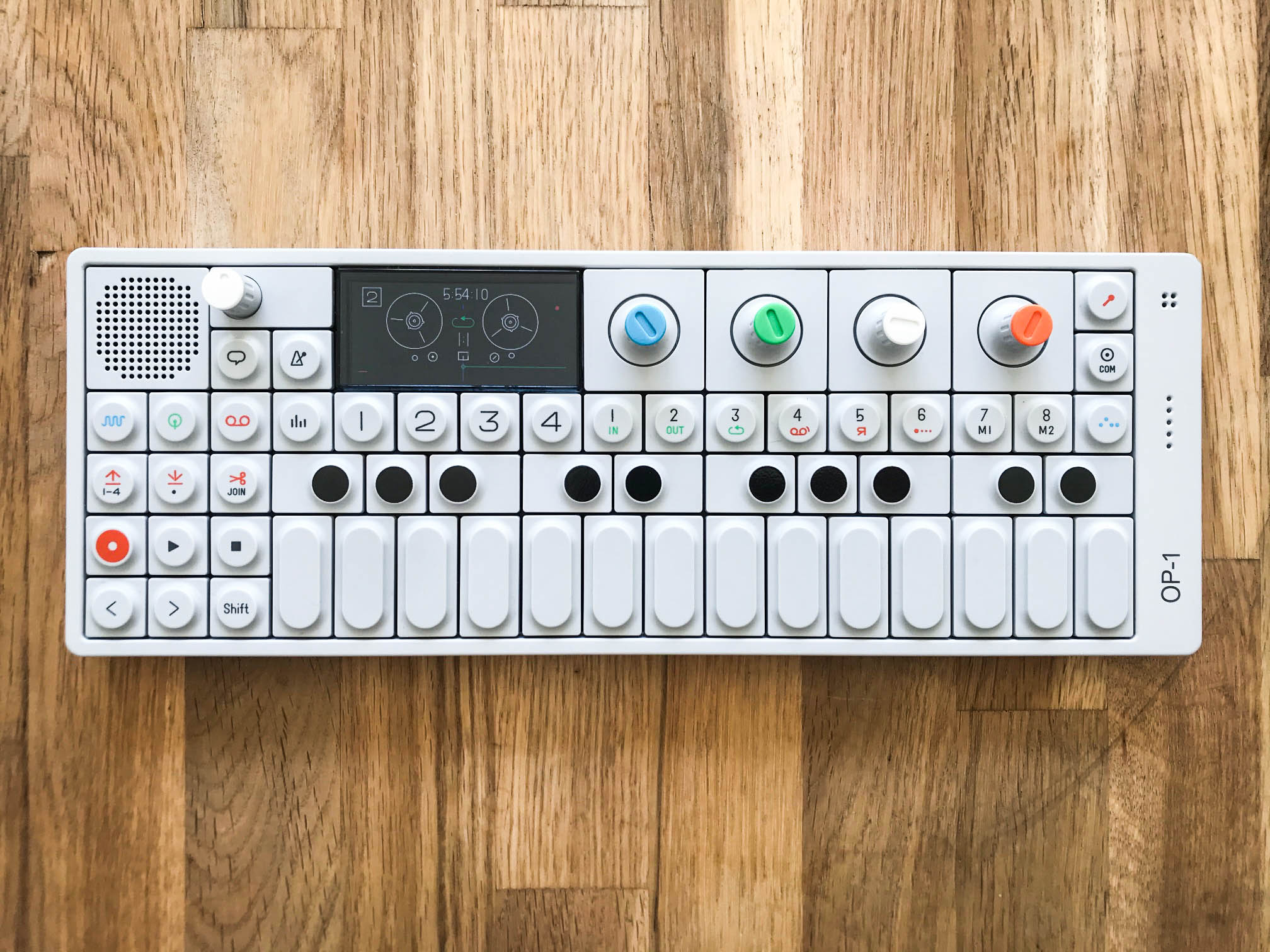 The Teenage Engineering OP-1.
Arturia Microfreak. CC-BY-SA 4
The Teenage Engineering OP-1.
Russell wrote a great comment on my last
post (thanks!):
What benefits do these things offer when a general purpose computer can do so many things nowadays? Is there a USB keyboard that you can connect to a laptop or phone to do these things? I presume that all recent phones have the compute power to do all the synthesis you need if you have the right software. Is it just a lack of software and infrastructure for doing it on laptops/phones that makes synthesisers still viable?I've decided to turn my response into a post of its own. The issue is definitely not compute power. You can indeed attach a USB keyboard to a computer and use a plethora of software synthesisers, including very faithful emulations of all the popular classics. The raw compute power of modern hardware synths is comparatively small: I ve been told the modern Korg digital synths are on a par with a raspberry pi. I ve seen some DSPs which are 32 bit ARMs, and other tools which are roughly equivalent to arduinos. I can think of four reasons hardware synths remain popular with some despite the above:

 A new minor release of the drat package
arrived on CRAN today, which is
just over a year since the previous release. drat stands for
drat R Archive Template, and helps with easy-to-create and
easy-to-use repositories for R packages. Since its inception in
early 2015 it has found reasonably widespread adoption among R users
because repositories with marked releases is the better way to
distribute code.
Because for once it really is as your mother told you: Friends
don t let friends install random git commit snapshots. Properly
rolled-up releases it is. Just how CRAN shows us: a model that has
demonstrated for over two-and-a-half decades how to do this.
And you can too:
drat is easy to use, documented by six
vignettes and just works. Detailed information about
drat is at its documentation site. That
said, and these days , if you mainly care about github code then r-universe is there too, also
offering binaries its makes and all that jazz. But sometimes you just
want to, or need to, roll a local repository and drat can help
you there.
This release contains a small PR (made by Arne Holmin just after the
previous release) adding support for an OSflacour variable (helpful
for macOS). We also corrected an issue with one test file being
insufficiently careful of using git2r only when installed,
and as usual did a round of maintenance for the package concerning both
continuous integration and documentation.
The NEWS file summarises the release as follows:
Courtesy of my CRANberries, there is a comparison to the previous release. More detailed information is on the drat page as well as at the documentation site. If you like this or other open-source work I do, you can sponsor me at GitHub.Changes in drat version 0.2.5 (2024-10-21)
- Function
insertPackagehas a new optional argumentOSflavour(Arne Holmin in #142)- A test file conditions correctly about git2r being present (Dirk)
- Several smaller packaging updates and enhancements to continuous integration and documentation have been added (Dirk)
This post by Dirk Eddelbuettel originated on his Thinking inside the box blog. Please report excessive re-aggregation in third-party for-profit settings.
organization/repo format), we've to do some mapping in between.
In my case it looks like this:
#tfvars Input for Module
org_secrets =
    "SECRET_A" =
        repos = [
            "infra-foo",
            "infra-baz",
            "deployment-foobar",
        ]
    "SECRET_B" =
        repos = [
            "job-abc",
            "job-xyz",
        ]


# Module Code
/*
Limitation: The GH search API which is queried returns at most 1000
results. Thus whenever we reach that limit this approach will no longer work.
The query is also intentionally limited to internal repositories right now.
*/
data "github_repositories" "repos"
    query           = "org:myorg archived:false -is:public -is:private"
    include_repo_id = true

/*
The properties of the github_repositories.repos data source queried
above contains only lists. Thus we've to manually establish a mapping
between the repository names we need as a lookup key later on, and the
repository id we got in another list from the search query above.
*/
locals
    # Assemble the set of repository names we need repo_ids for
    repos = toset(flatten([for v in var.org_secrets : v.repos]))
    # Walk through all names in the query result list and check
    # if they're also in our repo set. If yes add the repo name -> id
    # mapping to our resulting map
    repos_and_ids =
        for i, v in data.github_repositories.repos.names : v => data.github_repositories.repos.repo_ids[i]
        if contains(local.repos, v)


resource "github_actions_organization_secret" "org_secrets"
    for_each        = var.org_secrets
    secret_name     = each.key
    visibility      = "selected"
    # the logic how the secret value is sourced is omitted here
    plaintext_value = data.xxx
    selected_repository_ids = [
        for r in each.value.repos : local.repos_and_ids[r]
        if can(local.repos_and_ids[r])
    ]
output-block
to provide the information which repository is missing. What we
need is the set of missing repositories and the validation condition:
locals
    # Debug facility in combination with an output and precondition check
    # There we can report which repository we still have in our configuration
    # but no longer get as a result from the data provider query
    missing_repos = setsubtract(local.repos, data.github_repositories.repos.names)

# Debug facility - If we can not find every repository in our
# search query result, report those repos as an error
output "missing_repos"
    value = local.missing_repos
    precondition
        condition     = length(local.missing_repos) == 0
        error_message = format("Repos in config missing from resultset: %v", local.missing_repos)
terraform apply failed that way.

 Ada Lovelace Day was
celebrated on October 8 in 2024, and on this occasion, to celebrate and
raise awareness of the contributions of women to the STEM fields we
interviewed some of the women in Debian.
Here we share their thoughts, comments, and concerns with the hope of inspiring
more women to become part of the Sciences, and of course, to work inside of
Debian.
This article was simulcasted to the debian-women mail list.
Beatrice Torracca
1. Who are you?
I am Beatrice, I am Italian. Internet technology and everything computer-related
is just a hobby for me, not my line of work or the subject of my academic
studies. I have too many interests and too little time. I would like to do lots
of things and at the same time I am too Oblomovian to do any.
2. How did you get introduced to Debian?
As a user I started using newsgroups when I had my first dialup connection and
there was always talk about this strange thing called
Linux. Since moving from DR DOS to Windows was a shock
for me, feeling like I lost the control of my machine, I tried Linux with
Debian Potato and I never strayed
away from Debian since then for my personal equipment.
3. How long have you been into Debian?
Define "into". As a user... since Potato, too many years to count. As a
contributor, a similar amount of time, since early 2000 I think. My first
archived email about contributing to the translation of the description of
Debian packages dates 2001.
4. Are you using Debian in your daily life? If yes, how?
Yes!! I use testing. I have it on my desktop PC at home and I have it on my
laptop. The desktop is where I have a local IMAP server that fetches all the
mails of my email accounts, and where I sync and back up all my data. On both I
do day-to-day stuff (from email to online banking, from shopping to taxes), all
forms of entertainment, a bit of work if I have to work from home
(GNU R for statistics,
LibreOffice... the usual suspects). At work I am
required to have another OS, sadly, but I am working on setting up a
Debian Live system to use there too.
Plus if at work we start doing bioinformatics there might be a Linux machine in
our future... I will of course suggest and hope for a Debian system.
5. Do you have any suggestions to improve women's participation in Debian?
This is a tough one. I am not sure. Maybe, more visibility for the women already
in the Debian Project, and make the newcomers feel seen, valued and welcomed. A
respectful and safe environment is key too, of course, but I think Debian made
huge progress in that aspect with the
Code of Conduct. I am a big fan of
promoting diversity and inclusion; there is always room for improvement.
Ileana Dumitrescu (ildumi)
1. Who are you?
I am just a girl in the world who likes cats and packaging
Free Software.
2. How did you get introduced to Debian?
I was tinkering with a computer running Debian a few years ago, and I decided to
learn more about Free Software. After a search or two, I found
Debian Women.
3. How long have you been into Debian?
I started looking into contributing to Debian in 2021. After contacting Debian
Women, I received a lot of information and helpful advice on different ways I
could contribute, and I decided package maintenance was the best fit for me. I
eventually became a Debian Maintainer in 2023, and I continue to maintain a few
packages in my spare time.
4. Are you using Debian in your daily life? If yes, how?
Yes, it is my favourite GNU/Linux operating system! I use it for email,
chatting, browsing, packaging, etc.
5. Do you have any suggestions to improve women's participation in Debian?
The mailing list for Debian Women may
attract more participation if it is utilized more. It is where I started, and I
imagine participation would increase if it is more engaging.
Kathara Sasikumar (kathara)
1. Who are you?
I'm Kathara Sasikumar, 22 years old and a recent Debian user turned Maintainer
from India. I try to become a creative person through sketching or playing
guitar chords, but it doesn't work! xD
2. How did you get introduced to Debian?
When I first started college, I was that overly enthusiastic student who signed
up for every club and volunteered for anything that crossed my path just like
every other fresher.
But then, the pandemic hit, and like many, I hit a low point. COVID depression
was real, and I was feeling pretty down. Around this time, the
FOSS Club at my college suddenly became more active.
My friends, knowing I had a love for free software, pushed me to join the club.
They thought it might help me lift my spirits and get out of the slump I was in.
At first, I joined only out of peer pressure, but once I got involved, the club
really took off. FOSS Club became more and more active during the pandemic, and
I found myself spending more and more time with it.
A year later, we had the opportunity to host a
MiniDebConf at our college. Where I got to
meet a lot of Debian developers and maintainers, attending their talks
and talking with them gave me a wider perspective on Debian, and I loved the
Debian philosophy.
At that time, I had been distro hopping but never quite settled down. I
occasionally used Debian but never stuck around. However, after the MiniDebConf,
I found myself using Debian more consistently, and it truly connected with me.
The community was incredibly warm and welcoming, which made all the difference.
3. How long have you been into Debian?
Now, I've been using Debian as my daily driver for about a year.
4. Are you using Debian in your daily life? If yes, how?
It has become my primary distro, and I use it every day for continuous learning
and working on various software projects with free and open-source tools. Plus,
I've recently become a Debian Maintainer (DM) and have taken on the
responsibility of maintaining a few packages. I'm looking forward to
contributing more to the Debian community
Rhonda D'Vine (rhonda)
1. Who are you?
My name is Rhonda, my pronouns are she/her, or per/pers. I'm 51 years old,
working in IT.
2. How did you get introduced to Debian?
I was already looking into Linux because of university, first it was
SuSE. And people played around with gtk. But when they
packaged GNOME and it just didn't even install I
looked for alternatives. A working colleague from back then gave me a CD of
Debian. Though I couldn't install from it because
Slink didn't recognize the pcmcia
drive. I had to install it via floppy disks, but apart from that it was
quite well done. And the early GNOME was working, so I never looked back.
3. How long have you been into Debian?
Even before I was more involved, a colleague asked me whether I could help with
translating the release documentation. That was my first contribution to Debian,
for the slink release in early 1999. And I was using some other software before
on my SuSE systems, and I wanted to continue to use them on Debian obviously. So
that's how I got involved with packaging in Debian. But I continued to help with
translation work, for a long period of time I was almost the only person active
for the German part of the website.
4. Are you using Debian in your daily life? If yes, how?
Being involved with Debian was a big part of the reason I got into my jobs since
a long time now. I always worked with maintaining Debian (or
Ubuntu) systems.
Privately I run Debian on my laptop, with occasionally switching to Windows in
dual boot when (rarely) needed.
5. Do you have any suggestions to improve women's participation in Debian?
There are factors that we can't influence, like that a lot of women are pushed
into care work because patriarchal structures work that way, and don't have the
time nor energy to invest a lot into other things. But we could learn to
appreciate smaller contributions better, and not focus so much on the quantity
of contributions. When we look at longer discussions on mailing lists, those
that write more mails actually don't contribute more to the discussion, they
often repeat themselves without adding more substance. Through working on our
own discussion patterns this could create a more welcoming environment for a lot
of people.
Sophie Brun (sophieb)
1. Who are you?
I'm a 44 years old French woman. I'm married and I have 2 sons.
2. How did you get introduced to Debian?
In 2004 my boyfriend (now my husband) installed Debian on my personal computer
to introduce me to Debian. I knew almost nothing about Open Source. During my
engineering studies, a professor mentioned the existence of Linux,
Red Hat in particular, but without giving any details.
I learnt Debian by using and reading (in advance)
The Debian Administrator's Handbook.
3. How long have you been into Debian?
I've been a user since 2004. But I only started contributing to Debian in 2015:
I had quit my job and I wanted to work on something more meaningful. That's why
I joined my husband in Freexian, his company.
Unlike most people I think, I started contributing to Debian for my work. I only
became a DD in 2021 under gentle social pressure and when I felt confident
enough.
4. Are you using Debian in your daily life? If yes, how?
Of course I use Debian in my professional life for almost all the tasks: from
administrative tasks to Debian packaging.
I also use Debian in my personal life. I have very basic needs:
Firefox,
LibreOffice, GnuCash
and Rhythmbox are the main
applications I need.
Sruthi Chandran (srud)
1. Who are you?
A feminist, a librarian turned Free Software advocate and a Debian Developer.
Part of Debian Outreach team and
DebConf Committee.
2. How did you get introduced to Debian?
I got introduced to the free software world and Debian through my husband. I
attended many Debian events with him. During one such event, out of curiosity, I
participated in a Debian packaging workshop. Just after that I visited a Tibetan
community in India and they mentioned that there was no proper Tibetan font in
GNU/Linux. Tibetan font was my first package in Debian.
3. How long have you been into Debian?
I have been contributing to Debian since 2016 and Debian Developer since 2019.
4. Are you using Debian in your daily life? If yes, how?
I haven't used any other distro on my laptop since I got introduced to Debian.
5. Do you have any suggestions to improve women's participation in Debian?
I was involved with actively mentoring newcomers to Debian since I started
contributing myself. I specially work towards reducing the gender gap inside the
Debian and Free Software community in general. In my experience, I believe that
visibility of already existing women in the community will encourage more women
to participate. Also I think we should reintroduce mentoring through
debian-women.
T ssia Cam es Ara jo (tassia)
1. Who are you?
T ssia Cam es Ara jo, a Brazilian living in Canada. I'm a passionate learner who
tries to push myself out of my comfort zone and always find something new to
learn. I also love to mentor people on their learning journey. But I don't
consider myself a typical geek. My challenge has always been to not get
distracted by the next project before I finish the one I have in my hands. That
said, I love being part of a community of geeks and feel empowered by it. I love
Debian for its technical excellence, and it's always reassuring to know that
someone is taking care of the things I don't like or can't do. When I'm not
around computers, one of my favorite things is to feel the wind on my cheeks,
usually while skating or riding a bike; I also love music, and I'm always
singing a melody in my head.
2. How did you get introduced to Debian?
As a student, I was privileged to be introduced to FLOSS at the same time I was
introduced to computer programming. My university could not afford to have labs
in the usual proprietary software model, and what seemed like a limitation at
the time turned out to be a great learning opportunity for me and my colleagues.
I joined this student-led initiative to "liberate" our servers and build
LTSP-based labs - where a single powerful computer could power a few dozen
diskless thin clients. How revolutionary it was at the time! And what an
achievement! From students to students, all using Debian. Most of that group
became close friends; I've married one of them, and a few of them also found
their way to Debian.
3. How long have you been into Debian?
I first used Debian in 2001, but my first real connection with the community was
attending DebConf 2004. Since then, going to DebConfs has become a habit. It is
that moment in the year when I reconnect with the global community and my
motivation to contribute is boosted. And you know, in 20 years I've seen people
become parents, grandparents, children grow up; we've had our own child and had
the pleasure of introducing him to the community; we've mourned the loss of
friends and healed together. I'd say Debian is like family, but not the kind you
get at random once you're born, Debian is my family by choice.
4. Are you using Debian in your daily life? If yes, how?
These days I teach at Vanier College in Montr al. My favorite course to teach is
UNIX, which I have the pleasure of teaching mostly using Debian. I try to
inspire my students to discover Debian and other FLOSS projects, and we are
happy to run a FLOSS club with participation from students, staff and alumni. I
love to see these curious young minds put to the service of FLOSS. It is like
recruiting soldiers for a good battle, and one that can change their lives, as
it certainly did mine.
5. Do you have any suggestions to improve women's participation in Debian?
I think the most effective way to inspire other women is to give visibility to
active women in our community. Speaking at conferences, publishing content,
being vocal about what we do so that other women can see us and see themselves
in those positions in the future. It's not easy, and I don't like being in the
spotlight. It took me a long time to get comfortable with public speaking, so I
can understand the struggle of those who don't want to expose themselves. But I
believe that this space of vulnerability can open the way to new connections. It
can inspire trust and ultimately motivate our next generation. It's with this in
mind that I publish these lines.
Another point we can't neglect is that in Debian we work on a volunteer basis,
and this in itself puts us at a great disadvantage. In our societies, women
usually take a heavier load than their partners in terms of caretaking and other
invisible tasks, so it is hard to afford the free time needed to volunteer. This
is one of the reasons why I bring my son to the conferences I attend, and so far
I have received all the support I need to attend DebConfs with him. It is a way
to share the caregiving burden with our community - it takes a village to raise
a child. Besides allowing us to participate, it also serves to show other women
(and men) that you can have a family life and still contribute to Debian.
My feeling is that we are not doing super well in terms of diversity in Debian
at the moment, but that should not discourage us at all. That's the way it is
now, but that doesn't mean it will always be that way. I feel like we go through
cycles. I remember times when we had many more active female contributors, and
I'm confident that we can improve our ratio again in the future. In the
meantime, I just try to keep going, do my part, attract those I can, reassure
those who are too scared to come closer. Debian is a wonderful community, it is
a family, and of course a family cannot do without us, the women.
These interviews were conducted via email exchanges in October, 2024. Thanks to
all the wonderful women who participated in this interview. We really appreciate
your contributions in Debian and to Free/Libre software.
 Designed by Freepik
[Unit]
ConditionPathIsSymbolicLink=/run/systemd/generator/network-online.target.wants/systemd-networkd-wait-online.service

[Service]
ExecStart=
ExecStart=/lib/systemd/systemd-networkd-wait-online -i eth99.43:carrier -i lo:carrier -i eth99.42:carrier -i eth99.44:degraded -i bond0:degraded
ExecStart=/lib/systemd/systemd-networkd-wait-online --any -o routable -i eth99.43 -i eth99.45 -i bond0isoinfo -d). A long time ago .
A long time ago a computer was a woman (I think almost exclusively a women, not a man) who was employed to do a lot of repetitive mathematics typically for accounting and stock / order processing.
Then along came Lyons, who deployed an artificial computer to perform
the same task, only with fewer errors in less time. Modern day
computing was born we had entered the age of the Digital Computer.
These computers were large, consumed huge amounts of power but were precise, and gave repeatable, verifiable results.
Over time the huge mainframe digital computers have shrunk in size,
increased in performance, and consume far less power so much so that
they often didn t need the specialist CFC based, refrigerated liquid
cooling systems of their bigger mainframe counterparts, only requiring
forced air flow, and occasionally just convection cooling. They shrank
so far and became cheep enough that the Personal Computer became to be,
replacing the mainframe with its time shared resources with a machine
per user. Desktop or even portable laptop computers were everywhere.
We networked them together, so now we can share information around
the office, a few computers were given specialist tasks of being
available all the time so we could share documents, or host databases
these servers were basically PCs designed to operate 24 7, usually more
powerful than their desktop counterparts (or at least with faster
storage and networking).
Next we joined these networks together and the internet was born. The dream of a paperless office might actually become realised we can now send email (and documents) from one organisation (or individual) to another via email. We can make our specialist computers applications available outside just the office and web servers / web apps come of age.
Fast forward a few years and all of a sudden we need huge data-halls
filled with Rack scale machines augmented with exotic GPUs and NPUs
again with refrigerated liquid cooling, all to do the same task that we
were doing previously without the magical buzzword that has been named
AI; because we all need another dot com bubble or block chain band
waggon to jump aboard. Our AI enabled searches take slightly longer,
consume magnitudes more power, and best of all the results we are given
may or may not be correct .
Progress, less precise answers, taking longer, consuming more power,
without any verification and often giving a different result if you
repeat your question AND we still need a personal computing device to
access this wondrous thing.
Remind me again why we are here?
(time lines and huge swaves of history simply ignored to make an
attempted comic point this is intended to make a point and not be
scholarly work)

libglib2.0-dev such that it would absorb more functionality and in particular provide tools for working with .gir files. Those tools practically require being run for their host architecture (practically this means running under qemu-user) which is at odds with the requirements of architecture cross bootstrap. The qemu requirement was expressed in package dependencies and also made people unhappy attempting to use libglib2.0-dev for i386 on amd64 without resorting to qemu. The use of qemu in architecture bootstrap is particularly problematic as it tends to not be ready at the time bootstrapping is needed.
As a result, Simon proposed and implemented the introduction of a libgio-2.0-dev package providing a subset of libglib2.0-dev that does not require qemu. Packages should continue to use libglib2.0-dev in their Build-Depends unless involved in architecture bootstrap. Helmut reviewed and tested the implementation and integrated the necessary changes into rebootstrap. He also prepared a patch for libverto to use the new package and proposed adding forward compatibility to glib2.0.
Helmut continued working on adding cross-exe-wrapper to architecture-properties and implemented autopkgtests later improved by Simon. The cross-exe-wrapper package now provides a generic mechanism to a program on a different architecture by using qemu when needed only. For instance, a dependency on cross-exe-wrapper:i386 provides a i686-linux-gnu-cross-exe-wrapper program that can be used to wrap an ELF executable for the i386 architecture. When installed on amd64 or i386 it will skip installing or running qemu, but for other architectures qemu will be used automatically. This facility can be used to support cross building with targeted use of qemu in cases where running host code is unavoidable as is the case for GObject introspection.
This concludes the joint work with Simon and Niels Thykier on glib2.0 and architecture-properties resolving known architecture bootstrap regressions arising from the glib2.0 refactoring earlier this year.
dpkg, the question arises how this affects existing packages. The dedup.debian.net infrastructure provides an easy playground to answer such questions, so Helmut gathered file metadata from all binary packages in unstable and performed an explorative analysis. Some results include:
/usr-merge is not the only cause for aliasing problems in Debian.
dpkg can enforce.
setup.py test. This month, Stefano did some more rebuilds, starting with experimental versions of dh-python.
During the Python 3.12 transition, we had added a dependency on python3-setuptools to dh-python, to ease the transition. Python 3.12 removed distutils from the stdlib, but many packages were expecting it to still be available. Setuptools contains a version of distutils, and dh-python was a convenient place to depend on setuptools for most package builds. This dependency was never meant to be permanent. A rebuild without it resulted in mass-filing about 340 bugs (and around 80 more by mistake).
A new feature in Python 3.12, was to have unittest s test runner exit with a non-zero return code, if no tests were run. We added this feature, to be able to detect tests that are not being discovered, by mistake. We are ignoring this failure, as we wouldn t want to suddenly cause hundreds of packages to fail to build, if they have no tests. Stefano did a rebuild to see how many packages were affected, and found that around 1000 were. The Debian Python community has not come to a conclusion on how to move forward with this.
As soon as Python 3.13 release candidate 2 was available, Stefano did a rebuild of the Python packages in the archive against it. This was a more complex rebuild than the others, as it had to be done in stages. Many packages need other Python packages at build time, typically to run tests. So transitions like this involve some manual bootstrapping, followed by several rounds of builds. Not all packages could be tested, as not all their dependencies support 3.13 yet. The result was around 100 bugs in packages that need work to support Python 3.13. Many other packages will need additional work to properly support Python 3.13, but being able to build (and run tests) is an important first step.
setup.py test, backported a large upstream patch set to make buildbot work with SQLAlchemy 2.0, and upgraded 25 other Python packages to new upstream versions.
sbuild reviewing and improving a MR for refactoring the unshare backend.
gcc-defaults.
/usr-move. With more and more key packages such as libvirt or fuse3 fixed. We re moving into the boring long-tail of the transition.
glib2.0 above, rebootstrap moves a lot further, but still fails for any architecture.
libcupsfilter to fix the autopkgtest and a dependency problem of this package. After package splix was abandoned by upstream and OpenPrinting.org adopted its maintenance, Thorsten uploaded their first release.

 Welcome to the September 2024 report from the Reproducible Builds project!
Our reports attempt to outline what we ve been up to over the past month, highlighting news items from elsewhere in tech where they are related. As ever, if you are interested in contributing to the project, please visit our Contribute page on our website.
Table of contents:
binsider tool to analyse ELF binaries
 Reproducible Builds developer Orhun Parmaks z has announced a fantastic new tool to analyse the contents of ELF binaries. According to the project s
README page:
Binsider can perform static and dynamic analysis, inspect strings, examine linked libraries, and perform hexdumps, all within a user-friendly terminal user interface!More information about Binsider s features and how it works can be found within Binsider s documentation pages.
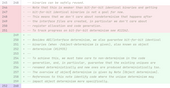 A seven-year-old bug about the nondeterminism of object code generated by the Glasgow Haskell Compiler (GHC) received a recent update, consisting of Rodrigo Mesquita noting that the issue is:
95% fixed by [merge request] !12680 when -fobject-determinism is enabled. [ ]
The linked merge request has since been merged, and Rodrigo goes on to say that:
After that patch is merged, there are some rarer bugs in both interface file determinism (eg.#25170) and in object determinism (eg.#25269) that need to be taken care of, but the great majority of the work needed to get there should have been merged already. When merged, I think we should close this one in favour of the more specific determinism issues like the two linked above.
zlib/deflate compression in .zip and .apk files and later followed up with the results of her subsequent investigation.
CONFIG_MODULE_SIG flag. [ ]
zlib to zlib-ng as reproducibility requires identical compressed data streams. [ ]
maven-lockfile that is designed aid building Maven projects with integrity . [ ]
This is a report of Part 1 of my journey: building 100% bit-reproducible packages for every package that makes up [openSUSE s] minimalVM image. This target was chosen as the smallest useful result/artifact. The larger package-sets get, the more disk-space and build-power is required to build/verify all of them.
This work was sponsored by NLnet s NGI Zero fund.
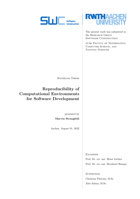 Marvin Strangfeld published his bachelor thesis, Reproducibility of Computational Environments for Software Development from RWTH Aachen University. The author offers a more precise theoretical definition of computational environments compared to previous definitions, which can be applied to describe real-world computational environments. Additionally, Marvin provide a definition of reproducibility in computational environments, enabling discussions about the extent to which an environment can be made reproducible. The thesis is available to browse or download in PDF format.
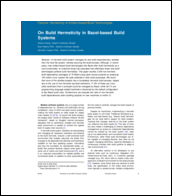 In addition, Shenyu Zheng, Bram Adams and Ahmed E. Hassan of Queen s University, ON, Canada have published an article on hermeticity in Bazel-based build systems:
A hermetic build system manages its own build dependencies, isolated from the host file system, thereby securing the build process. Although, in recent years, new artifact-based build technologies like Bazel offer build hermeticity as a core functionality, no empirical study has evaluated how effectively these new build technologies achieve build hermeticity. This paper studies 2,439 non-hermetic build dependency packages of 70 Bazel-using open-source projects by analyzing 150 million Linux system file calls collected in their build processes. We found that none of the studied projects has a completely hermetic build process, largely due to the use of non-hermetic top-level toolchains. [ ]
 In Debian this month, 14 reviews of Debian packages were added, 12 were updated and 20 were removed, all adding to our knowledge about identified issues. A number of issue types were updated as well. [ ][ ]
In addition, Holger opened 4 bugs against the
debrebuild component of the devscripts suite of tools. In particular:
#1081047: Fails to download .dsc file.#1081048: Does not work with a proxy.#1081050: Fails to create a debrebuild.tar.#1081839: Fails with E: mmdebstrap failed to run error.build_path variation. Holger Levsen provided a rationale for this change in the issue, which has already been made to the tests being performed by tests.reproducible-builds.org. This month, this issue was closed by Santiago R. R., nicely explaining that build path variation is no longer the default, and, if desired, how developers may enable it again.
 In openSUSE news, Bernhard M. Wiedemann published another report for that distribution.
 diffoscope is our in-depth and content-aware diff utility that can locate and diagnose reproducibility issues. This month, Chris Lamb made the following changes, including preparing and uploading version
278 to Debian:
python3-setuptools dependency. (#1080825)Standards-Version to 4.7.0. [ ]0.5.11-4 was uploaded to Debian unstable by Holger Levsen making the following changes:
pkg-config package with one on pkgconf, following a Lintian check. [ ]Standards-Version field to 4.7.0, with no related changes needed. [ ]0.7.28 was uploaded to Debian unstable by Holger Levsen including a change by Jelle van der Waa to move away from the pipes Python module to shlex, as the former will be removed in Python version 3.13 [ ].
classes.dex file (and thus a different .apk) depending on the number of cores available during the build, thereby breaking Reproducible Builds:
We ve rebuilt [tagv3.6.1] multiple times (each time in a fresh container): with 2, 4, 6, 8, and 16 cores available, respectively:
- With 2 and 4 cores we always get an unsigned APK with SHA-256
14763d682c9286ef.- With 6, 8, and 16 cores we get an unsigned APK with SHA-256
35324ba4c492760instead.
 A new plugin for the Gradle build tool for Java has been released. This easily-enabled plugin results in:
reproducibility settings [being] applied to some of Gradle s built-in tasks that should really be the default. Compatible with Java 8 and Gradle 8.3 or later.
 There were a rather substantial number of improvements made to our website this month, including:
ext4, erofs and FAT filesystems can now be made reproducible . [ ]
agama-integration-tests (random)contrast (FTBFS-nocheck)cpython (FTBFS-2038)crash (parallelism, race)ghostscript (toolchain date)glycin-loaders (FTBFS -j1)gstreamer-plugins-rs (date, other)kernel-doc/Sphinx (toolchain bug, parallelism/race)kernel (parallelism in BTF)libcamera (random key)libgtop (uname -r)libsamplerate (random temporary directory)lua-luarepl (FTBFS)meson (toolchain)netty (modification time in .a)nvidia-persistenced (date)nvidia-xconfig (date-related issue)obs-build (build-tooling corruption)perl (Perl records kernel version)pinentry (make efl droppable)python-PyGithub (FTBFS 2024-11-25)python-Sphinx (parallelism/race)python-chroma-hnswlib (CPU)python-libcstpython-pygraphviz (random timing)python312 (.pyc embeds modification time)python312 (drop .pyc from documentation time)scap-security-guide (date)seahorse (parallelism)subversion (minor Java .jar modification times)xen/acpica (date-related issue in toolchain)xmvn (random)magic-wormhole-transit-relay.python-sphobjinv.lomiri-content-hub.python-mt-940.tree-puzzle.muon-meson. The Reproducible Builds project operates a comprehensive testing framework running primarily at tests.reproducible-builds.org in order to check packages and other artifacts for reproducibility. In September, a number of changes were made by Holger Levsen, including:
osuosl4 node to Debian trixie in anticipation of running debrebuild and rebuilderd there. [ ][ ][ ]osuosl4 node as offline due to ongoing xfs_repair filesystem maintenance. [ ][ ]risc64 architecture to the multiarch version skew tests for Debian trixie and sid. [ ][ ][ ]virt 32,64 b nodes as down. [ ]virt32b and virt64b nodes [ ], performed some maintenance of the cbxi4a node [ ][ ] and marked most armhf architecture systems as being back online.
#reproducible-builds on irc.oftc.net.
rb-general@lists.reproducible-builds.org
Dear Debian community,
this are my bits from DPL for September.
New lintian maintainer
I'm pleased to welcome Louis-Philippe V ronneau as a new Lintian
maintainer. He humorously acknowledged his new role, stating,
"Apparently I'm a Lintian maintainer now". I remain confident that
we can, and should, continue modernizing our policy checker, and I see
this as one important step toward that goal.
SPDX name / license tools
There was a discussion about deprecating the unique names for DEP-5 and
migrating to fully compliant SPDX names.
Simon McVittie wrote: "Perhaps our Debian-specific names are
better, but the relevant question is whether they are sufficiently
better to outweigh the benefit of sharing effort and specifications with
the rest of the world (and I don't think they are)." Also Charles
Plessy sees the value of deprecating the Debian ones and align on
SPDX.
The thread on debian-devel list contains several practical hints for
writing debian/copyright files.
proposal: Hybrid network stack for Trixie
There was a very long discussion on debian-devel list about the network
stack on Trixie that started in July and was continued in end of
August / beginning of September. The discussion was also covered
on LWN. It continued in a
"proposal: Hybrid network stack for Trixie" by Lukas M rdian.
Contacting teams
I continued reaching out to teams in September. One common pattern I've
noticed is that most teams lack a clear strategy for attracting new
contributors. Here's an example snippet from one of my outreach emails,
which is representative of the typical approach:
Q: Do you have some strategy to gather new contributors for your team?
A: No.
Q: Can I do anything for you?
A: Everything that can help to have more than 3 guys :-D
Well, only the first answer, "No," is typical. To help the JavaScript
team, I'd like to invite anyone with JavaScript experience to join the
team's mailing list and offer to learn and contribute. While I've only
built a JavaScript package once, I know this team has developed
excellent tools that are widely adopted by others. It's an active and
efficient team, making it a great starting point for those looking to
get involved in Debian. You might also want to check out the
"Little tutorial for JS-Team beginners".
Given the lack of a strategy to actively recruit new contributors--a
common theme in the responses I've received--I recommend reviewing my
talk from DebConf23 about teams. The Debian Med team would have
struggled significantly in my absence (I've paused almost all work with
the team since becoming DPL) if I hadn't consistently focused on
bringing in new members. I'm genuinely proud of how the team has managed
to keep up with the workload (thank you, Debian Med team!). Of course,
onboarding newcomers takes time, and there's no guarantee of long-term
success, but if you don't make the effort, you'll never find out.
OS underpaid
The Register, in its article titled
"Open Source Maintainers Underpaid, Swamped by Security, Going Gray",
summarizes the 2024 State of the
Open Source Maintainer Report. I find this to be an interesting read,
both in general and in connection with the challenges mentioned in the
previous paragraph about finding new team members.
Kind regards
Andreas.
 After (quite) a summer break, here comes the 4th article of the 5-episode blog post series on Polis, written by Guido Berh rster, member of staff at my company Fre(i)e Software GmbH.
Have fun with the read on Guido's work on Polis,
 Almost all of my Debian contributions this month were
sponsored by Freexian.
You can also support my work directly via
Liberapay.
Pydantic
My main Debian project for the month turned out to be getting
Pydantic back into a good state in
Debian testing. I ve used Pydantic quite a bit in various projects, most
recently in Debusine, so
I have an interest in making sure it works well in Debian. However, it had
been stalled on 1.10.17 for quite a while due to the complexities of getting
2.x packaged. This was partly making sure everything else could cope with
the transition, but in practice mostly sorting out packaging of its new
Rust dependencies. Several
other people (notably Alexandre Detiste, Andreas Tille, Drew Parsons, and
Timo R hling) had made some good progress on this, but nobody had quite got
it over the line and it seemed a bit stuck.
Learning Rust is on my to-do list, but merely not knowing a language hasn t
stopped me before.
So I learned how the Debian Rust team s packaging
works, upgraded a few
packages to new upstream versions (including
rust-half
and upstream rust-idna test
fixes), and packaged rust-jiter. After a
lot of waiting around for various things and chasing some failures in other
packages I was eventually able to get current versions of both pydantic-core
and pydantic into testing.
I m looking forward to being able to drop our clunky v1 compatibility code
once debusine can rely on running on trixie!
OpenSSH
I upgraded the Debian packaging to OpenSSH
9.9p1.
YubiHSM
I upgraded python-yubihsm, yubihsm-connector, and yubihsm-shell to new
upstream versions.
I noticed that I could enable some tests in python-yubihsm and
yubihsm-shell; I d previously thought the whole test suite required a real
YubiHSM device, but when I looked closer it turned out that this was only
true for some tests.
I fixed yubihsm-shell build failures on some 32-bit architectures (upstream
PRs #431,
#432), and also made it
build
reproducibly.
Thanks to Helmut Grohne, I fixed yubihsm-connector to apply udev rules to
existing devices when the package is
installed.
As usual, bookworm-backports is up to date with all these changes.
Python team
setuptools
72.0.0 removed
the venerable
setup.py test command. This caused some fallout in Debian,
some of which was quite non-obvious as packaging helpers sometimes fell back
to different ways of running test suites that didn t quite work. I fixed
django-guardian,
manuel,
python-autopage,
python-flask-seeder,
python-pgpdump,
python-potr,
python-precis-i18n,
python-stopit,
serpent,
straight.plugin,
supervisor, and
zope.i18nmessageid.
As usual for new language versions, the addition of Python 3.13 caused some
problems. I fixed psycopg2,
python-time-machine, and
python-traits.
I fixed build/autopkgtest failures in
keymapper,
python-django-test-migrations,
python-rosettasciio,
routes,
transmissionrpc, and
twisted.
buildbot was in a bit of a mess due to
being incompatible with SQLAlchemy 2.0. Fortunately by the time I got to it
upstream had committed a workable set of patches, and the main difficulty
was figuring out what to cherry-pick since they haven t made a new upstream
release with all of that yet. I figured this out and got us up to 4.0.3.
Adrian Bunk asked whether python-zipp
should be removed from trixie. I spent some time investigating this and
concluded that the answer was no, but looking into it was an interesting
exercise anyway.
On the other hand, I looked into flask-appbuilder, concluded that it should
be removed, and filed a removal request.
I upgraded some embedded CSS files in
nbconvert.
I upgraded importlib-resources, ipywidgets, jsonpickle, pydantic-settings,
pylint (fixing a test failure),
python-aiohttp-session, python-apptools, python-asyncssh,
python-django-celery-beat, python-django-rules, python-limits,
python-multidict, python-persistent, python-pkginfo, python-rt, python-spur,
python-zipp, stravalib, transmissionrpc, vulture, zodbpickle,
zope.exceptions (adopting it),
zope.i18nmessageid, zope.proxy, and zope.security to new upstream versions.
debmirror
The experimental and *-proposed-updates suites used to not have
Contents-* files, and a long time ago debmirror was changed to just skip
those files in those suites. They were added to the Debian archive some
time ago, but debmirror carried on skipping them anyway. Once I realized
what was going on, I removed these unnecessary special cases
(#819925,
#1080168).
 Another short status update of what happened on my side last
month. Besides the usual amount of housekeeping last month was a lot
about getting old issues resolved by finishing some stale merge
requests and work in pogress MRs. I also pushed out the Phosh 0.42.0
Release
phosh
enable setting (MR)
(a 3y old MR cleaned up and out of the way).plugin file (MR)Fixes: tag in git commit messages as well (MR)scroll_down button take focus (MR). This prevents the OSK from folding when the text view is focused and ones scrolls to the bottom.scroll_down button (MR) - just to make the visual more appealingg_input_stream_read_all* (MR)debian/latest instead of debian/sid (commit, commit).pytest instead of nose as test runner (MR)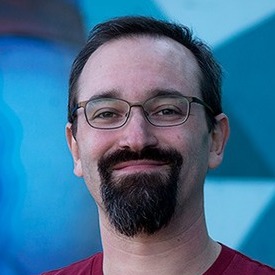 The Reproducible Builds project relies on several projects, supporters and sponsors for financial support, but they are also valued as ambassadors who spread the word about our project and the work that we do.
This is the eighth installment in a series featuring the projects, companies and individuals who support the Reproducible Builds project. We started this series by featuring the Civil Infrastructure Platform project, and followed this up with a post about the Ford Foundation as well as recent ones about ARDC, the Google Open Source Security Team (GOSST), Bootstrappable Builds, the F-Droid project, David A. Wheeler and Simon Butler.
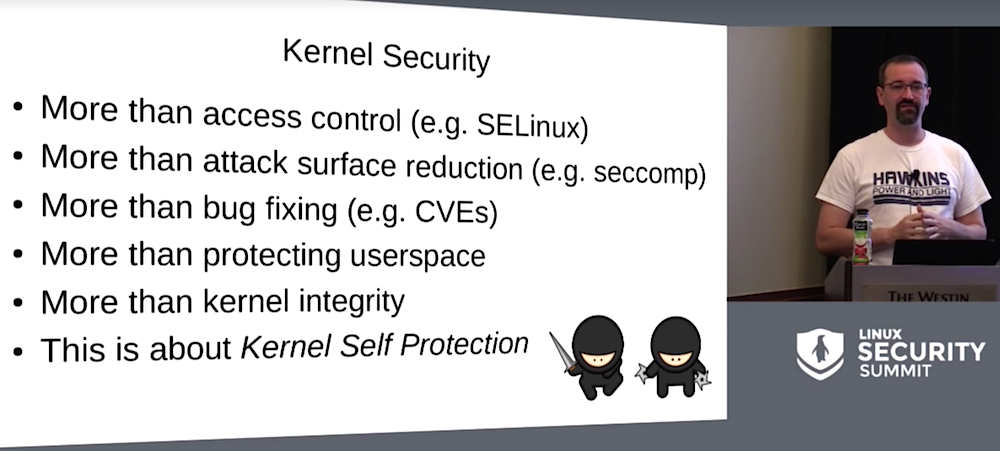
Today, however, we will be talking with Kees Cook,
founder of the Kernel Self-Protection Project.
ebuild out of Gentoo
and when they looked for someone to
help out they reached out to me. We recognized the Linux kernel was pretty much
the weakest link in the Chrome OS security posture and I joined them to help
solve that. Their userspace was pretty well handled but the kernel had a lot
of weaknesses, so focusing on hardening was the next place to go. When I
compared notes with other users of the Linux kernel within Google there were a
number of common concerns and desires. Chrome OS already had an upstream
first requirement, so I tried to consolidate the concerns and solve them
upstream. It was challenging to land anything in other kernel team repos at
Google, as they (correctly) wanted to minimize their delta from upstream, so I
needed to work on any major improvements entirely in upstream and had a lot of
support from Google to do that. As such, my focus shifted further from working
directly on Chrome OS into being entirely upstream and being more of a
consultant to internal teams, helping with integration or sometimes
backporting. Since the volume of needed work was so gigantic I needed to find
ways to inspire other developers (both inside and outside of Google) to help.
Once I had a budget I tried to get folks paid (or hired) to work on these areas
when it wasn t already their job.
 Vagrant: So my understanding of some of your recent work is basically
defining undefined behavior in the language or compiler?
Kees: I ve found the term undefined behavior to have a really strict
meaning within the compiler community, so I have tried to redefine my goal as
eliminating unexpected behavior or ambiguous language constructs . At the
end of the day ambiguity leads to bugs, and bugs lead to exploitable security
flaws. I ve been taking a four-pronged approach: supporting the work people are
doing to get rid of ambiguity, identify new areas where ambiguity needs to be
removed, actually removing that ambiguity from the C language, and then dealing
with any needed refactoring in the Linux kernel source to adapt to the new
constraints.
None of this is particularly novel; people have recognized how dangerous some
of these language constructs are for decades and decades but I think it is a
combination of hard problems and a lot of refactoring that nobody has the
interest/resources to do. So, we have been incrementally going after the lowest
hanging fruit. One clear example in recent years was the elimination of C s
implicit fall-through in
switch statements. The language would just fall
through between adjacent cases if a break (or other code flow directive)
wasn t present. But this is ambiguous: is the code meant to fall-through, or
did the author just forget a break statement? By defining the [[fallthrough]] statement,
and requiring its use in
Linux,
all switch statements now have explicit code flow, and the entire class of
bugs disappeared. During our refactoring we actually found that 1 in 10 added
[[fallthrough]] statements were actually missing break statements. This
was an extraordinarily common bug!
So getting rid of that ambiguity is where we have been. Another area I ve been
spending a bit of time on lately is looking at how defensive security work has
challenges associated with metrics. How do you measure your defensive security
impact? You can t say because we installed locks on the doors, 20% fewer
break-ins have happened. Much of our signal is always secondary or
retrospective, which is frustrating: This class of flaw was used X much over
the last decade so, and if we have eliminated that class of flaw and will never
see it again, what is the impact? Is the impact infinity? Attackers will just
move to the next easiest thing. But it means that exploitation gets
incrementally more difficult. As attack surfaces are reduced, the expense of
exploitation goes up.
Next.