Search Results: "gio"

13 February 2010

Martin F. Krafft: ACTA: less knowledge means less resistance

Right now, your government is probably engaged in the discussion of the Anti-Counterfeiting Trade Agreement (ACTA). You are likely not aware of that because your government has been actively keeping these negotiations and details surrounding them secret. Your government does not want you to know about a treaty that has far-reaching negative effects on your freedom, as well as your basic human rights. If you did know, you might speak up and make it difficult for the drivers of ACTA to smoothly push their interests past you. The red light should light up in your head right now! The goals of the trade agreement that is being negotiated are multifarious, but essentially seem to centre around challenges related to intellectual property, and copyright in the digital age, even though it is sometimes claimed that the agreement serves primarily to contain trade of fake Prada bags and Rolex watches. In reality, ACTA is about content producers like movie studios, who try everything to prevent you from copying their work without paying for it even if you cannot actually purchase the work, because of e.g. technical measures designed to prevent certain people from legally obtaining content, or simply because the media companies are greedy and consider it PR-savvy to delay the release of a given work in certain countries until after people have had a chance to pay a lot of money to the cinemas. In theory, a creative work goes out of copyright 50 or 75 years after its author died, depending on whether the creativity can be attributed to a person or a corporation, respectively. Therefore, 50 or 75 years after creation, it gets increasingly hard to monetise a work that has not been reinvented in that period of time. Sounds plausible to you and me, but this sort of stuff frightens companies like Disney, who seem powerful enough to simply have the law changed. That is not how things should work. The media producers are failing to control the Internet, and hence they want to turn it into something more like cable TV, which they do know how to control. ACTA aims to make copyright infringement a criminal offence. ACTA wants to make it possible for a government to cut you off the Internet because someone thinks you did something bad they don t actually have to prove it though, accusation is enough. Similar efforts have already failed all over the world, e.g. in France and New Zealand. That s a sign, not a reason to try again. ACTA wants to set in stone that you have absolutely no rights when you cross borders. This is largely already the case border officials can pretty much do with you whatever they want now it s supposed to be made official, and legally binding. ACTA will create a culture of surveillance and suspicion. ACTA is designed to break the Internet, among other things. But worst of all: I am just speculating because we are not supposed to know the details. The best current source of information on ACTA seems to be Canadian law professor Dr. Michael Geist, who has been collecting content and linking to articles consistently since the ACTA negotiations commenced 2 3 years ago. The Electronic Frontier Foundation also has comprehensive resources available. It s even more important today than before to put an end to this secrecy. Don t let your government enter secret agreements that affect you and your life, refusing to talk to you about it beforehand, and probably refusing all responsibility afterwards. Talk to your politicians and ask questions that cannot be answered with stock replies. If you have specific contact addresses for politicians, please let me know so I can add them. Colin Jackson helped me with this article at Kiwi Foo Camp. He also takes an issue with the secrecy around ACTA.

6 February 2010

John Goerzen: The Big-Publisher Ebook Scam

There s been a lot written about the Amazon vs. Macmillan dust-up. I ve seen a lot of posts by people that work for publishers saying that there are costs to making a book, and that $9.99 just won t cut it for an ebook. They say that publishers invest in typesetting, editing, selection, art, and various stages of quality control. All of that is true. Too bad they aren t doing it with ebooks. I ve had some books published, and while the process varies from publisher to publisher, the editing process usually involves technical editors (people that check my facts), copy editors (people that help the writing and grammar), cover designers, and QC staff. Often I will see PDFs or printed pages at the final stage, and at that point can catch things like bad table formatting or lines split at inopportune places. My point here is that there s a lot of editing going on, and there are many pairs of eyeballs looking at the printed page before it goes to the presses. In the year or so since I ve owned my Kindle, I can absolutely guarantee you that this process is not happening with ebooks. Most of the time, it is quite obvious that nobody has even looked at the finished product. Some intern has whipped up a quick conversion from whatever typesetting software they use, give it a quick glance, and call it good. One of my own books, Real World Haskell, is available in Kindle form. O Reilly took better than average care of that process, but even so, I certainly didn t approve screenshots before it went out like I did for paper (not that I d have had time after the paper project was done anyway.) From memory, some of the flaws I m aware of: In some of these cases, it is quite obvious that a human didn t even bother to look at the result. Harper Collins got a huge black eye after their LOTR fiasco, and still took quite a long time to fix it. Now, if the publishers were actually going to put as much care into the quality of their ebooks as they do into the quality of their paper books, then sure, I d pay almost the cost of a paperback. But very few of them are doing that. It is quite obvious to me usually by the end of the first chapter of a book whether anybody even looked at the result of their conversion. Bottom line: If they re going to sell me an inferior product, don t expect me to pay near full price. If they can get their act together on quality, only then would they have room to start arguing for higher prices. If all you re going to do with the ebook is run the paper version through some buggy filter, you haven t incurred much additional cost, and it is plainly visible to all. Note: I would like to say that Lonely Planet and O Reilly have done good jobs with the tools available, and while their results aren t perfect, they have done a good job working with rendering their sometimes very complex print layouts for a Kindle.

1 February 2010

Erich Schubert: Maps-Calendar Mashup

Well, I'd not call it a Mashup - it's actually backed by a custom database, a Xapian index for full text search and so on. To me, a true mashup would work without own server side code.Anyway, what it does is this: It's using the Maps V3 API, currently in public testing, which seems to give quite some extra speed compared to earlier versions. I've also added two extra controls, a search box at the top center, and a "Go to" menu on the left, which uses the visitor position from Google.The data is coming from swing dancing calendars, so it's real world data, and you should get different results every day. Most of the data is from Germany, so that is where you can see the marker aggregation and these things in effect.Here's the prototype.There is still lots of things to do, but this is just my free time project, when I'm not at work, dancing or with my friends. I don't know yet if this will remain online, it's more of a toy project for me. Still it's cool to see where there are swing dancing events, and it's cool to be able to just zoom to another city and see where you could "hop by" for a dancing event while you're there. But there are just a lot of UI issues to solve to get this really usable, and I'm not much of an UI guy...P.S. if it doesn't work, that probably means I'm currently working on it. There is no staging, and no "production system".

31 January 2010

Russell Coker: Choosing an Australian Mobile Telco for use with Android

Since playing with the IBM Seer augmented reality software [1] I ve been lusting after a new mobile phone which can do such things. While the implementation of Seer that I tried was not of great practical use to me (not being a tennis fan I was only there to learn about computers) it was a demonstration of an exciting concept. It will surely be implemented by IBM in other venues that are of more immediate interest, and we can probably expect other vendors to write similar systems to compete with IBM. So the question is how to get a phone that will run such things well. The answer is probably not to rely on a contract plan for this, currently Vodaphone [2] is currently the only Australian telco that sells a phone that can run Seer, it is offering a HTC Magic (which was released in April 2009) on a $29 per month plan. A phone that is 9 months old isn t necessarily a bad thing, but the has been out for more than 6 months and has some significant benefits (such as a 5MP camera). So it seems that Three (my current provider) is probably the best option at this time. Virgin would save my $4 per month, but would only give me 300M of Internet data per month, and the Virgin limit of $60 per month of calls might not be enough for me. Vodaphone offers a deal for $25 that only includes 200MB of data, that might be enough for just phone use, but wouldn t be enough for tethering for laptop net access. I wonder how well tethering works on an Android phone, can you make a phone call while transmitting data from a tethered laptop? I find that with my Viewty when I receive an SMS or phone call it stops the net access. That makes a tethered Viewty impractical for some support tasks as it s fairly common that I need to talk to someone while logging in to their server I m sure that most people who use mobile Internet services regularly need to phone someone while using them. My current Three bill is $29 per month for the phone plan and $15 per month for Internet access. If I m going to buy phones outright instead of getting them with the plan then I want to reduce the overall amount of money I spend on phone plans and using tethering instead of a 3G USB dongle would allow this. I think that I can get something that comes close to my ideal mobile phone [8] (apart from being able to connect a keyboard, mouse, and monitor) if I import it from overseas. We really need more competition in the Australian mobile phone market. We have only two phone companies offering Android phones, Three is sold out of the obsolete model that they offer while Vodaphone has stock of an obsolete model.

28 January 2010

John Goerzen: Greek Mythology and the Old Testament

I have lately been reading Homer s epic poems: first The Iliad, and now I am nearly done with The Odyssey. I figure there isn t anyone alive today that believes that Zeus literally caused thunder in answer to a prayer, or that Athene really transformed Ulysses between having a youthful and an aged physical appearance at a whim. Despite our understanding that these poems don t reflect a literal truth, we still find meaning and truth in them. It is for this reason that they are read by high school and college students all over the world. This same reason drives our reading of more modern plays and novels everything from King Lear to Catcher in the Rye. We learn something of the author s world, something about our world, and if we are truly lucky, a deeper understanding of the universal truths of human life. And it is with that preface that I suggest that the Old Testament or parts of it, at least ought to be read in the same manner. Modern Christianity speaks of a loving, caring God, one who is deeply concerned for the wellbeing of all. Under this understanding, forgiveness is more desired than retribution, and helping the week is better than enslaving them. How then can one square that with a literal reading of the Old Testament? This was a key question I asked over a span of perhaps 15 years. I was perplexed that the God of Love ought to turn someone into a pillar of salt for turning her head the right way, that almost all life on earth might be extinguished by a flood, that slavery is condoned and regulated, and all sorts of people being stoned to death, animals killed for no reason. In short, the God of the Torah, at least, didn t seem to me to be even the same person as the God the Church talks about. I raised this question with many people, and there was even a seminar on it at a convention I went to in 2001. The answers I got usually were of one of two types: 1) God is beyond our comprehension, and this is one of the mysteries we will never understand because that s just the way it is; or 2) the arrival of Jesus changed things, and it s impossible for a modern person to fully appreciate the laws as they existed prior to that. These are really two sides of the same stick: they re both saying, Yep, that s odd. But we have to believe that the Bible is inerrant and literally true, so we just have to accept the mystery and move on. Except I m not so good at accepting mysteries and moving on. It strikes me as odd that nobody even mentioned the third option: that some of the stuff in the Old Testament is, to be blunt, made up. This even though I have come to learn later that some of those people probably believed this to be the most correct explanation. Now, that doesn t mean it has no value or that is doesn t show us truth. Romeo & Juliet was made up, but we learn from it. A typical example of this is the creation myth. There are some that are very defensive about it, perhaps thinking that it weakens their religion to admit it might not be literally true. To me, I find that insisting upon its literal truth weakens the religion; can we not see how a piece of literature speaks to us today and leave it at that? Need we say that Shakespeare s Julius Caesar is an inferior play because it is a work of historical fiction? The position I suggest here is not some crazy nutjob position. Wikipedia has a concise overview of some of the scholarship surrounding these ideas. I now count myself as somewhat inspired by Homer to read the Old Testament in the same way that I read Homer: as a story that can speak to us today, one that inspired a nation in captivity and after, and launched perhaps the most amazing religious movement in history. I only wish that more people would admit the possibility of a non-literal reading of the Bible. This return to an earlier era of Christianity is, in my mind, the only way that Christianity can maintain its relevance in this age. Update: A note I received suggests I ought to make a bit of a clarification. I am not bothered by the fact that people have differing opinions about the historicity of Genesis. I m all for putting all the opinions out there for sure. I think that really the concern over whether Genesis is literally true or not is mostly irrelevant. I have no problem with Christians that find Genesis to be literally true. What I m lamenting is the attitude that you re not Christian if you re not sure that Genesis is literally true or saying anything else about Genesis undermines Christianity. I believe neither of those statements, and would really rather that we collectively got past the creationism vs. evolution debate already. Update 2: It appears that my use of a bit of technical language has caused some confusion. A creation myth can be defined as a supernatural story or explanation that describes the beginnings of humanity, earth, life, and the universe (cosmogony), often as a deliberate act by one or more deities. It is a category of explanations. Simply calling the Genesis story a creation myth is an act of categorization only, and doesn t imply anything about its accuracy or value.

Biella Coleman: New Zealand, a photo-round up

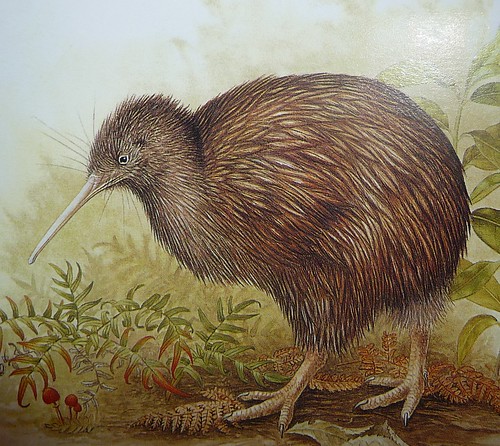
kiwiwiwiwiw Kiwis have to be one of the cutest birds of all time. A bit chubby and clumsy looking, they are (to me, at least), walking, breathing icon of furry cuteness. Truth be told, I did not see one live in action during my recent trip to New Zealand, but I did see a Weka bird which is pretty similar. (Micah and I just consulted the Internets and agreed that we did in fact see cherubic Kiwi not a Weka. In fact, Micah almost ran one over on the west coast of the southern island but his quick reflexes born from years of saving servers while typing saved the bird. So as you can tell by now I finally got to go to New Zealand for a few weeks, even able to travel the south island before attending THE Linux conference of the region, LCA where I gave a talk (video to be posted when available). I jumped at the opportunity and was thrilled to find out that I could actually spend some time traveling around before the intense week long conference. So on January 5th I headed down with Micah to what I have found out is one of the windiest cities on earth ( Windy Wellington ) for a few days before heading to the south island to do a loop on the northern half of the island. I wanted to conquer the mountains made famous by a certain set of movies, but last semester was all about sitting in front of the computer, a sort of agonizing life of the mind, which did not prepare me physically for mountain trekking or as it call it there, tramping. So we decided to stick close to the coast (with one transalpine train that serenaded us through some awesome mountain passes) and hike along the coast, snorkel and swim, and kayak. After Andrew showed us around Wellington, we headed to the sea town of Kaikoura brimming with sea life, such as seals, dolphins, and birds. The two highlights there were our snorkeling trip and a hike along the peninsula. Originally we were going to go diving but I arrived to NZ with a head cold so we opted for the sinus friendlier version and snorkeled in the massive kelp forest, which was strikingly beautiful (I am used to tropical reefs and waters). There happened to be a lot of seals and given their curious nature, they would dart over right next to you and play. One seal I called him the twirler was chubby and mellow and twirled next to me for a long while. The lady seals were sleeker and faster and liked to dive deep down and the zoom up and surprise you. As someone who has spent a lot of time underwater, I found it fun and weird to be with animals that pay attention to you given that most of the sea life ignores you. The hike in Kaikoura was fantastic as well. You go high on a bluff and stare down at this water sparkling with the most beautiful blue hues brought out even more majestically by the white rocks. If I were to go back I would hike along the water and up above on the bluff. After a brief stopover in Christchurch to visit a friend, we took the transalpine train (across Arthur s pass) which was superbly beautiful and arrived on the west coast whose seas are far more rough, rocky, andtemperamental than on the east coast. The vegetation is lush as lush can be and you get the feeling that dinosaurs would have been a happy lot in these parts. The cool part about this area are the many rivers that feed into the ocean (we spent an afternoon swimming and exploring the caves in one) and then what are called the pancake rocks, which are odd geological creatures that really amaze. We then made our way to the Marlborough Sounds area, which includes the city of Nelson (apparently the sunniest in New Zealand) as well as many olive and grape vineyards in outlying areas. We spent some time in the Alpine lakes region hiking but more of the time on the coast. The highlight for me and it is a place I would love to go back to is the Abel Tasman National Park. We spent time hiking and kayaking there and you can even hike down the coast for 5-6 days (there are excellent camping facilities along the way). The coast is simply majestic with alpine like forest conditions (unfortunately a cool old tree whose name I can t remember is no longer common). This forest is situated along the most stunning waters, an electric but totally clear turquoise blue deceivingly inviting because the water was quite cold (but not as cold as the Oregon coast over the summer, which I went swimming in only once after weeks of bike travel). Along with the blue, parts of the coastal waters were a stunning clear green that I have never seen despite my many sea travels. If you ever plan on going to the South Island, I would not miss this area and might even try to spend a few days or more hiking the coastal trails and listening to the cool-as/sweet as birds, one of which has double vocal cords so it sings what sounds to be like totally electronic bird calls. We returned via the same ferry a massive 7 story ship from Picton to Wellington but the conditions were far far worse during our return trip. When we got out of the sounds, we hit the Cook Straight, notorious for being rough and tumble. And indeed, once we hit the waves, I felt like I was no longer in a boat but amusement park ride, the bow of the ship thrown high only to fall hard on upon the waves. It was sort of fun or fun for about 10 minutes until people, most especially kids, started yaking all over the place. It was really the most flagrant yakfest I have ever experienced (I mean it is a 7 story ferry, you can fit a lot of people on that boat) and that made the sail particularly difficult. I have pretty strong sea legs, never once getting sick sick during the year I spent at sea but massive yaking will bring out the sea sick feeling in even the hardiest of sea souls and I was thrilled to arrive in Wellington. Wellington is the only large city I spent any considerable time in and it is a pretty awesome one. The city center area is flat and by the water, with a magnificent area filled with museums, the national library, parks, breweries, and piers where kids like to jump off high things. The botanical gardens were the most beautiful I have been to and since I am a flower nut, I was in high heaven. In this area there are a ridiculous number of great coffee shops (NYC has a thing or two to learn as we don t have enough, I suspect it has something to do with insane real estate prices). The city is surrounded by hills populated by houses, some of the precipitously perched on cliffs that require lifts to get to! It was a wonderful home base for what was a sweet as conference (as they would say down there). And I hope to write about it sometime soon.

23 January 2010

Jan Wagner: new nagios-plugins (1.4.14-1), now also installable on kfreebsd and hurd

Last night here at BSP I released nagios-plugins (1.4.14-1), which has a couple of fixes and enhancements. For more information, see the changelog.
The main change may, that with this version, the package should be installable on non-linux archs, where iputils-ping is not available. The downside of using inetutils-ping is, that its behavior is different from iputils-ping. As result of this, check_ping will timeout much often, even if there isn t any problem and you will have false positives. As suggested long ago, at least on this archs, you should consider to replace the use of check_ping with check_icmp.

22 January 2010

Theppitak Karoonboonyanan: Thailand Mini-DebCamp 2010

Hello, Planet Debian. I'm pleased to have announced about the first Debian event in Thailand: Thailand MiniDebCamp 2010. This is a follow-up to Taiwan MiniDebConf 2009 in last September in Taipei. At the end of that event, we discussed about having a mini-DebCamp in Thailand during the New Year holidays. However, with many factors, it has been moved to this March. And the date has been settled on 13-19 March. The place will be Khon Kaen University (KKU) in Khon Kaen, a north-eastern province of Thailand (close to Lao, if you look for it in a map). In this event, we plan to arrange a Bug Squad Party for the Squeeze release, and some meetings between DDs and local people, to encourage more Debian activities in Thailand and nearby countries. Thailand has started its GNU/Linux development and usage since no later than 1997. Currently, we have projects like Thai Linux Working Group for upstream Thai resource developments; OpenTLE.Org and thaiopensource.org for local distros (Ubuntu-based); and some communities like ubuntuclub, debianclub, and more others for other distros. The user base is slowly growing, while developer base is yet growing more slowly. We have had domestic events occasionally. But certainly, an international one like this would effectively encourage more prospecters, as well as create closer cooperations with the global projects. We also hope this event to be a meeting point for developers from nearby regions. And internationalization, among other issues, can be discussed and worked out. So, please be invited to join and discuss. Please make sure to add your name to the Wiki page so we can prepare things for you, including accommodation. And feel free to propose your agenda in BarCamp style. It will be summarized some time before the event date. We also have a mailing list for updates and discussions.

15 January 2010

Eddy Petrișor: Busy, busy, busy and lazy me

It has been quite some time since my last post. I have been involved in quite a few things and the last part of 2009 which left no time for anything else. At the begining of 2010, just to set things on a good tone from the new year, I went on a snowboarding vacation to Austria to Kitzb hel.

Presidential campaign and pure irrationality in Romania

I got involved in Remus Cernea's presidential campaign, which was quite a success, considering the media blockade he was subject to. Unfortunately, Romanians seem to more and more indoctrinated, idiotic and gullible, probably thanks to newer generations that come through public schools after 12 years of religious indctrination and media promoting stupidity, non-values, ignorance and so on.

The more I live in this country, the more I realize how I don't feel like fitting in, because I refuse to be a mindless sheep, a moron, listening to anything the news at 5 say (those living in Romania know what I mean). I obstinately form my own ideas and question everything.

Significant event in my life

In September 2009 a life-turning event took place in my life - don't worry, is nothing bad, is pure good - and my eyes opened entirely. I have bacame a sponge trying to know more and more and this has helped me see the world with new eyes, from a new perspective, without lies or preconceptions.

Now I am thingking freely.


I am sorry for not going into details, but I have my reasons. Those who have the eyes and brains to understand what I am talking about, surely have understood by now what has happened to me ;-) .

Snowboarding vacation

At the begining of this year I went with my wife and some friends to Austria for a vacation. Kitzb hel's slopes and conditions were very good (bad points were only due to a couple of areas where snowboarders had to open at least one binding).

<iframe frameborder="0" height="350" marginheight="0" marginwidth="0" scrolling="no" src="http://www.openstreetmap.org/export/embed.html?bbox=12.2575,47.3556,12.5092,47.5304&amp;layer=mapnik" style="border: 1px solid black" width="425"></iframe>
View Larger Map

Weather was good and snow was icy only late in the afternoon. I was quite suprised to see stores close at 6pm, but overall, it was a well deserved vacation and I enjoyed it very much. My wife's skills on the board got better, although the third day some beginner skyer broke one of the bindings of my wife's snowboard and she had to use a rental instead. The rental was a quite new Burton board and Otilia got used to it and liked to the extent that we decided the next board we buy (for either of us) will be a Burton.

Did it worth it to drive 1500 km (roughly 1000 miles for the metric system challenged people :-P) for this vacation? Definitely! Did I enjoy the drive? Well, let's just say that the 950km from Kitzb hel to the Romanian border were made in approximately the same time it took us to make the last 550km to Bucharest, while 110km of those last were on the A1 "highway".

I'll probably put some photos from my vacation somewhere on the intenets, but don't hold your breath :-P .

Instead of conclusions

I know I promissed a lot of people to take care of some things like Wormux and some kernel bug debugging and I didn't kept my promise. I appologise, yet I don't expect anyone to accept my appologies. I am still unsure when I'll get back to that. I still care for Debian, yet the day has only 24 hours and I have to use at least 7 of those on sleep.

14 January 2010

John Goerzen: System Administrators Might Save Your Life

There s a lot of responsibility on the shoulders of system administrators. Unless you re one, it s probably hard to grasp the full weight of it. This week has been full of reminders for me. This afternoon, shortly after lunch, I got word that people were having trouble with phones. A few minutes of testing showed that calls within our city were working fine, but it was completely impossible to place or receive long-distance calls. A little while later, a local newspaper s website indicated that numerous cities over a multi-county region, all served by the CenturyLink local telephone company, were out of service in this manner. I figure that represents hundreds of square miles, or a patch of rural Kansas roughly the size of Los Angeles. Adding to the problem was the fact that emergency 911 services are accessed via these long-distance lines that were down. For roughly three hours, 911 was completely down across this entire area. What s more, many cellphone towers and Internet access options were also taken down, since they feed from these same lines. This adds up to a situation that could very easily cost lives due to delayed response of emergency medical, fire, or police services. In the end, the problem was traced to a bad controller card on a Titan 5500 owned by AT&T. Now, here s the system administration angle: If you worked for the phone company and had to troubleshoot a problem that you knew had taken down emergency services for thousands of people, what kind of pressure would you be feeling? Would you be able to keep your cool? I m glad that I don t have that kind of job. I also wouldn t like to be the engineer (or, more likely, accountant) that decided that they didn t need any more redundancy to provide good service to the area. Especially considering this is the second time in the last year or two this has happened. But, ironically, yesterday I signed a purchase order for a new Asterisk PBX (corporate phone) server. When selecting a machine for that task, I am always completely conscious of the responsibility on my shoulders: several hundred employees rely on the machine that is ultimately my responsibility to select. Our own access to 911 would be cut if the machine were to go down. I never forget that the correct operation of the systems that our team sets up and deploys could help save someone s life, and that a malfunction could cost the company dearly in terms of revenue, productivity, image or worse. Nearly four years ago, we switched from an analog PBX, with outsourced support, to a digital VOIP system running Asterisk. Note that we use VOIP in-house, but do not use it externally. Anyhow, I can not say that the Asterisk PBX has been 100% perfect; I doubt that this could be honestly said of any PBX of any complexity. I can say, though, that it saved us well over $100,000 AND has proven far more reliable than the system it replaced. Outages are exceptionally rare and brief now. Plus we have internal expertise to fix it, rather than having to wait for a technician to be dispatched from a city 2 hours away to fix anything. I know I don t have the resources to build a perfect PBX that will never go down (if such a thing is even possible), but I take my responsibility regarding a reliable PBX extremely seriously. We used to have a frequent problem: someone would call 911, then hang up. We suspected this was often on accident maybe people hit 9 for an outside line, then misdialed their number. In any case, 911 dispatch would then call our main office, saying they got a hangup. A person or team would then go across our entire campus making sure nobody was in distress that nobody had managed to dial, then passed out, for instance. With Asterisk, I was able to help this situation. Whenever somebody calls 911 now, two emails are generated: the first contains details about the call, such as the extension number that called and the duration of the call. This goes to all people that are likely to receive a callback from 911. It may not always pinpoint the source (as with somebody using a wireless phone), but almost every time will give us a very good idea where the call came from. The second email is a recording of the call, and serves as an additional clue, but goes to fewer people. I am aware that email isn t a perfect medium, but: it let us make a dramatic (albeit imperfect) solution to a problem that very few institutions our size are able to address nearly so well. There s a lot of weight on our shoulders: keeping the accounting system up, the Internet links up, the web store or the sales phone lines, the shipping systems or the document archives up. These things going down can spell deep trouble in many ways. And sometimes the systems we maintain might save a life. Such as this morning, when someone was feeling symptoms of a heart attack, used our phones to call a colleague for help, that person called 911, and an ambulance was dispatched. I know the system worked exactly as it should, because I had two familiar emails from Asterisk in my mailbox this morning when I got to work.

12 January 2010

John Goerzen: Sing to Me, Muse

(a review of Homer s Iliad)
Here, therefore, huge and mighty warrior though you be, here shall you die. - Homer (The Iliad)
And with that formidable quote, I begin my review of The Iliad. I shall not exhaust you with a rehashing of the plot; that you can find on Wikipedia. Nor shall I be spending page upon page of analyzing the beautiful imagery, the implications of our understanding of fate and destiny, or all the other things that compel English majors to write page after page on the topic. Nor even shall I try to decipher whether it is a piece of history or a piece of legend. Rather, I intend to talk about why I read it: it s a really good story.
Sing to me, O goddess Muse, the wrath of Achilles, son of Peleus, which brought countless ills upon the Acheans.
As I d be reading it, I d think to myself: Ah ha! Now here we finally have a section of the story that doesn t speak to modern life. Perhaps it was a section the fear of being enslaved or butchered by conquerors, or about pride leading both sides to fight a war they need not have, or a graphic description of a spear going clear through someone s head or neck. And then, I d have to sit and think. Are we really so far removed from that? Here we are, in a supposedly civilized world. We use remotely-operated drones to drop bombs on people, and think it naught but regrettable collateral damage when the brains and intestines of dozens of innocent victims are scattered about, killing them, all for the chance of killing one enemy. But we aren t the only ones to blame; we live in a world in which killing the innocent is often the goal. People fly airplanes into skyscrapers, drop atomic weapons to flatten entire cities, and kill noncombatants in terrible numbers. And for what? A little power, some prestige, some riches, some vengeance, some wounded pride? Slavery is not dead, either. We that can happily afford Internet access most likely abhor the thought. What, though, can we make of the fact that people are starving in this world in record numbers? That our actions may literally wipe some nations off the map? Are those people as free as we are? Do our actions repress them? I suspect you can t read the Iliad without being at least a bit introspective.
Fear, O Achilles, the wrath of heaven; think on your own father and have compassion upon me, who am the more pitiable
One of the great things about reading the Iliad is that I can learn about the culture of the ancient civilizations. Now, of course, one can read about this in history books and Wikipedia. But reading some dry sentence is different from reading a powerful story written by and for them. I know that the Iliad isn t exactly a work of history, but it sure shows what made people tick: their religion, their morals, their behavior, and what they valued. I feel that I finally have some sort of insight into their society, and I am glad of it.
The day that robs a child of his parents severs him from his own kind; his head is bowed, his cheeks are wet with tears, and he will go about destitute among the friends of his father, plucking one by the cloak and another by the shirt. Some one or other of these may so far pity him as to hold the cup for a moment towards him and let him moisten his lips, but he must not drink enough to wet the roof of his mouth; then one whose parents are alive will drive him from the table with blows and angry words.
There are gory battle scenes in the Iliad, but then there are also heart-wrenching tender moments: when Hector leaves his wife to go fight, for instance, and worries about the future of his child if he should die. That s not to say I found the entire story riveting. I would have liked it to be 1/3 shorter. The battle just dragged on and on. And yet, I will grant that there was some purpose served by that: it fatigued me as a reader, which perhaps gave me a small sense of the fatigue felt by the participants in the story.
Why, pray, must the Argives needs fight the Trojans? What made the son of Atreus gather the host and bring them?
A question that was never answered, for either side: why are we so foolish that we must go to war? One tragedy among many is that neither side got smart about it until way too late, if ever they did at all. I read The Illiad in the Butler translation, which overall I liked. Some of these quotes, however, use the Lattimore one. This completes the first item on my 2010 reading list. I leave you with this powerful hope for the future, written almost three thousand years ago. Despite my criticisms above, we have made a lot of progress, haven t we? What a beautiful ideal it is, and what a long ways we have yet to walk.
I wish that strife would vanish away from among gods and mortals, and gall, which makes a man grow angry for all his great mind, that gall of anger that swarms like smoke inside of a man s heart and becomes a thing sweeter to him by far than the dripping of honey.
Sing to me, O goddess, the anger of Achilles, that one day his story may speak less to our hearts, for then will we have outgrown it.

11 January 2010

Gunnar Wolf: Engineer? Scientist?

Looking over some articles in the March 2009 issue of the Communications of the ACM magazine, I found a very good piece column (Is software engineering engineering?, Denning, Peter J., and Riehle Richard D. , Communications of the ACM, 03/2009, Volume 52, Number 3, p.24-26, (2009) ). Quoting from it:
The search for an alternative to the programmer image is already a generation old. In 1989 we asked: Are we mathematicians? Scientists? Engineers? We concluded that we are all three. We adopted the term "computing", an analogue to the European "informatics", to avoid bias towards any one label or description. (...) Predictable outcomes (principle of least surprise) Engineers believe that unexpected behaviors can be not only costly, but dangerous; consequently, they work hard to build systems whose behaviorthey can predict. In software engineering, we try to eliminate surprises by deriving rigurous specifications from well-researched requirements, then using tools from program verification and process management to assure that the specifications are met. The ACM Risks Forum documents a seemingly unending series of surprises from systems on which such attengion has been lavished. Writing in ACM SIGSOFT in 2005, Riehle suggested a cultural side of this: where researchers and artists have a high tolerance, if not love, for surprises, engineers do everything in their power to eliminate surprises. Many of our software developers have been raised in a research tradition, not an engineering tradition.
It would be an interesting excercise to find how people rate themselves in this regard in a large group of developers, and find the differences in their coding styles, or how varied (in developer profiles) are each of the sub-groups.

31 December 2009

John Goerzen: My Reading List for 2010

I can hear the question now: What kind of guy puts The Iliad and War and Peace on a list of things to read for fun? Well, me. I think that reading things by authors I ve never read before, people that take positions I haven t heard of before or don t agree with, or works that are challenging, will teach me something. And learning is fun. My entire list for 2010 is at Goodreads. I ve highlighted a few below. I don t expect to read all 34 books on the Goodreads list necessarily, but there is the chance. The Iliad by Homer, 750BC, trans. by Alexander Pope, 704 pages. A recent NPR story kindled my interest in this work. I m looking forward to it. The Oxford History of the Classical World by Boardman, Griffin, and Murray, 1986, 882 pages. It covers ancient Greece and Rome up through the fall of the Roman empire. The Fires of Heaven (Wheel of Time #5) by Robert Jordan, 1994, 912 pages. I ve read books 1 through 4 already, and would like to continue on the series. War and Peace by Lev Leo Nikolayevich Tolstoy, 1869, 1392 pages. Been on my list for way too long. Time to get to it. Haven t read anything by Tolstoy before. The Politics of Jesus by John Howard Yoder, 1972, 2nd ed., 270 pages. Aims to dispel the notion of Jesus as apolitical. An Intimate History of Humanity by Theodore Zeldin, 1996, 496 pages. Picked this up at Powell s in Portland on a whim, and it s about time I get to it. The Myth of a Christian Nation: How the Quest for Political Power Is Destroying the Church by Gregory A. Boyd, 2007, 224 pages. An argument that the American evangelical church allowed itself to be co-opted by the political right (and some on the left) and argues this is harmful to the church. Also challenges the notion that America ever was a Christian nation. Daily Life in Ancient Rome: The People and the City at the Height of the Empire, by Jerome Carcopino, 2003, 368 pages. I ve always been fascinated with how things were on the ground rather than at the perspective of generals and kings, and this promises to be interesting. Slavery, Sabbath, War, and Women: Case Issues in Biblical Interpretation (Conrad Grebel Lectures) by Willard M. Swartley, 1983, 368 pages. Looking at how people have argued from different Biblical perspectives about various issues over the years. To the Lighthouse by Virginia Woolf, 1927, 252 pages. I can t believe I ve never read Woolf before. Yet another one I m really looking forward to. Tales of the Jazz Age by F. Scott Fitzgerald, 1922, 319 pages. Per Goodreads: This book of five confessional essays from the 1930s follows Fitzgerald and his wife Zelda from the height of their celebrity as the darlings of the 1920s to years of rapid decline leading to the self-proclaimed Crack Up in 1936. Ulysses by James Joyce, 1922 (1961 unabridged version), 783 pages. The Future of Faith by Harvey Cox, 2009, 256 pages. Per Goodreads, Cox explains why Christian beliefs and dogma are giving way to new grassroots movements rooted in social justice and spiritual experience. Heard about this one in an interview with Diane Rehm. Being There by Jerzy Kosi ski, 1970, 128 pages. Jesus: Uncovering the Life, Teachings, and Relevance of a Religious Revolutionary by Marcus Borg, 2006, 352 pages. Whether or not you agree with Borg, this has got to be a thought-provoking title. The Three Musketeers by Alexandre Dumas, 1844, 640 pages. The Book of Tea by Kakuzo Okakura, 1906, 154 pages. Per Goodreads: In 1906 in turn-of-the century Boston, a small, esoteric book about tea was written with the intention of being read aloud in the famous salon of Isabella Gardner. It was authored by Okakura Kakuzo, a Japanese philosopher, art expert, and curator. Little known at the time, Kakuzo would emerge as one of the great thinkers of the early 20th century, a genius who was insightful, witty and greatly responsible for bridging Western and Eastern cultures. Nearly a century later, Kakuzo s The Book of Tea is still beloved the world over. Interwoven with a rich history of tea and its place in Japanese society is poignant commentary on Eastern culture and our ongoing fascination with it, as well as illuminating essays on art, spirituality, poetry, and more. More of my list is at Goodreads.

20 December 2009

Russell Coker: I Bought the Bose QC-15

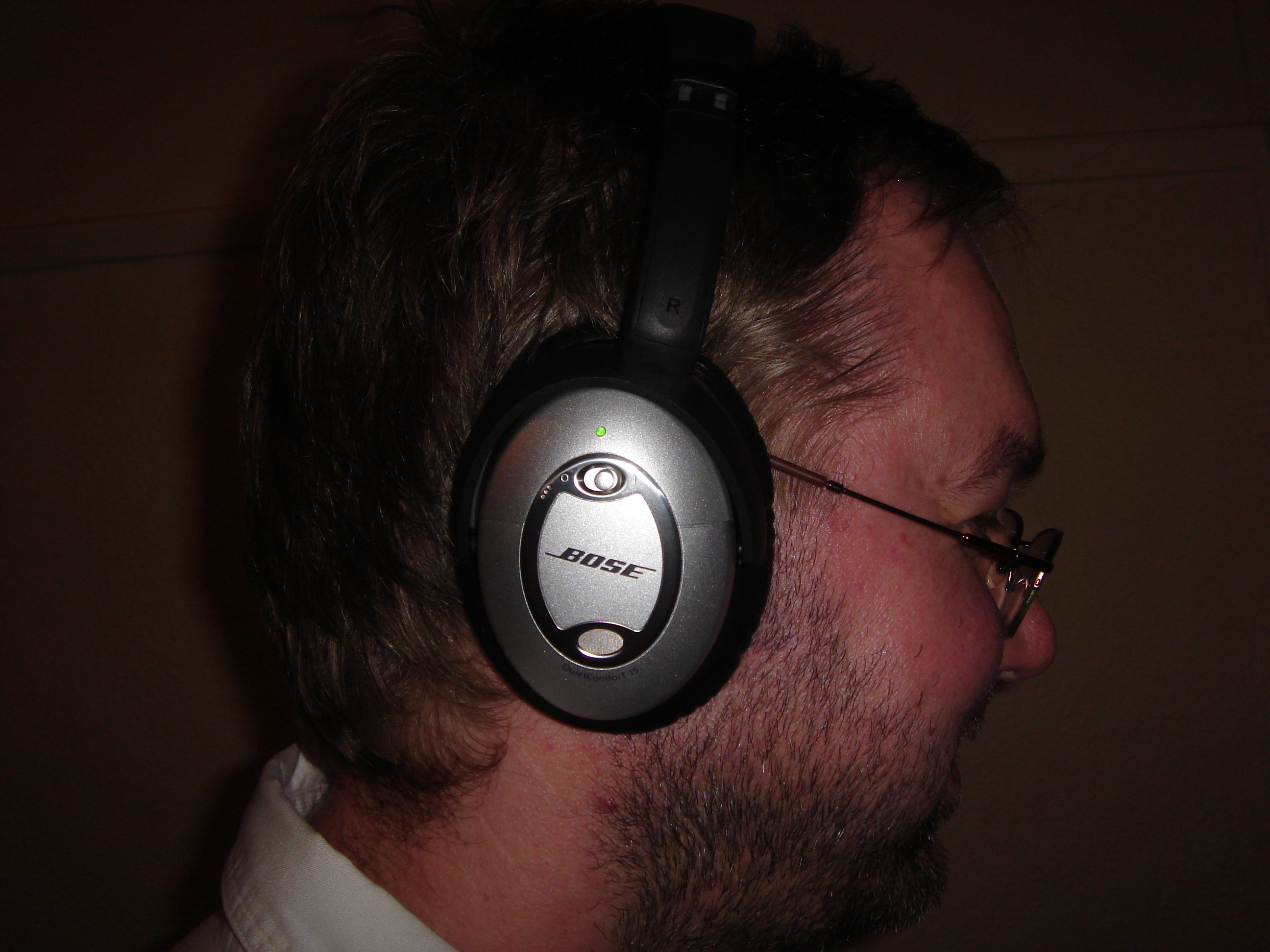
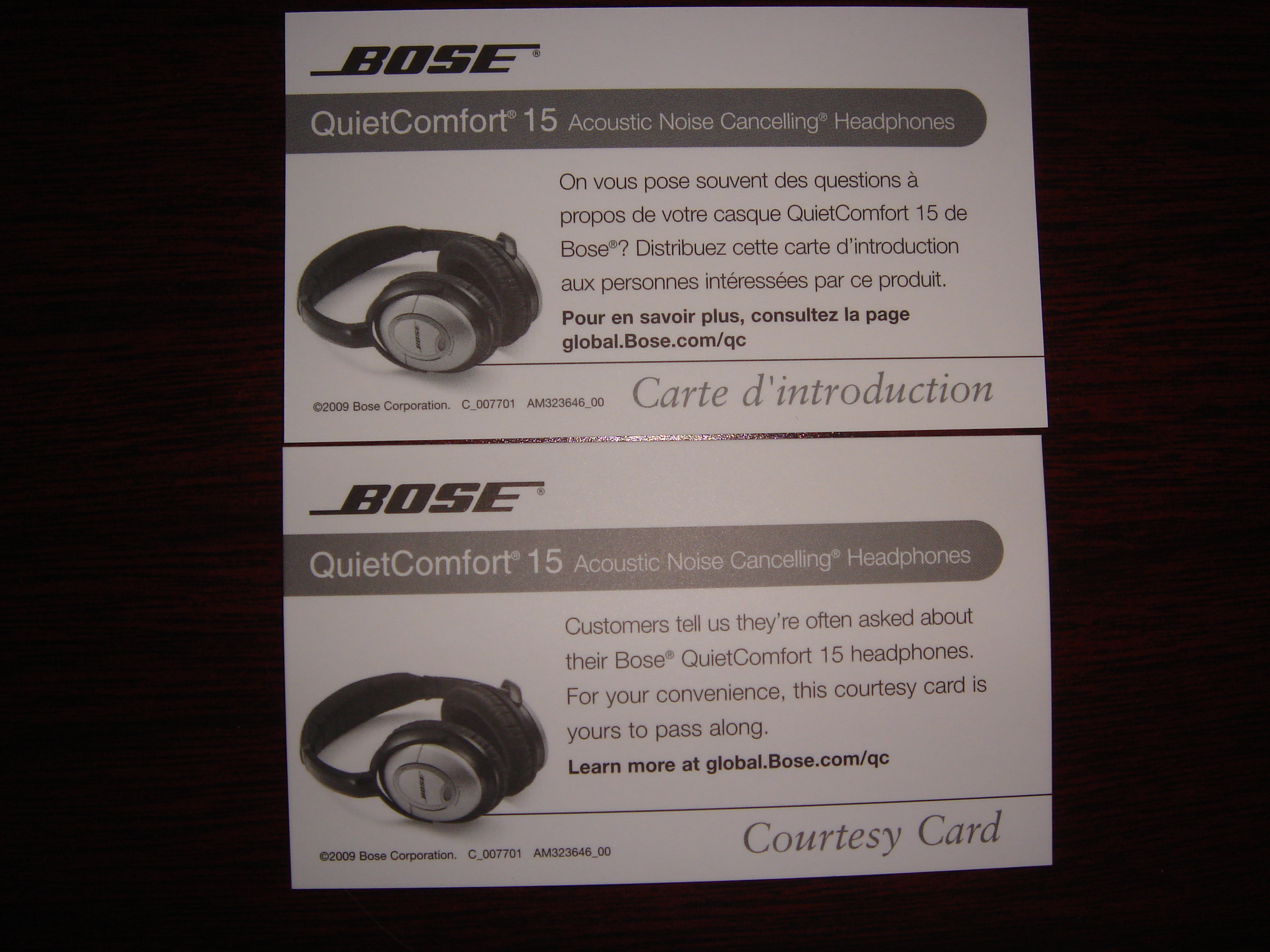
I bought the Bose QC15 noise canceling headphones for my trip back from the US. See my previous posts about Noise Canceling Headphones [1] and Testing Noise Canceling Headphones [2] for the details of my search. I first tried my new headphones in my hotel room and they worked really well at blocking the noise from the nearby road (El Camino Real in Menlo Park) as well as the noise from the heater in my room. At the airport they entirely blocked the sound of the airport air conditioning system (which was surprisingly loud I didn t realise how loud until I tried the headphones). On the flight the headphones worked really well. I used them for hours when they weren t plugged in to any source, just stopping the noise was a huge benefit. I was also able to listen to music (both MP3s on my laptop and the plane sound system) at a relatively low volume with an apparent high quality. The Bose store I visited in Stanford mall has a sound system set up to emulate the noise you experience inside a jet to demonstrate what the headset can do. It really lives up to this demonstration! I recommend them to anyone who wants over-ear noise canceling headphones and can afford $US300 + tax. But one thing to note is that not everyone likes such things my wife didn t like the sound that they generate (the least bad way to describe it is as a soft hiss). This is definitely not something you would want to buy based on reviews alone, it must be tested in-store. The main technical suggestion I can make for improvement to the QC-15 is for it to have slightly softer and thicker padding where it contacts the sides of the wearer s head. I find that my glasses prevent it from making as good contact as I would like, and that when wearing it while eating the contact is significantly broken with every jaw movement which is really annoying. A minor suggestion is that every pair of headphones should have the left and right ear pieces clearly marked, I really shouldn t have to read an instruction manual to discover which way to wear it. One thing that surprised me was the inclusion of business cards for the headset! Here is a picture:

The picture links to a larger picture that also shows the French version of the same text on the other side. I was astonished by this, encouraging happy customers to help sell your products is a reasonable and effective form of product promotion (really this is what I m doing for Bose with this blog post). But giving customers business cards is going too far anyone who wants me to hand out their business cards can offer to pay me to do so (and I probably won t accept). But if such things are considered to be a good idea then here are a few suggestions for other things that they could do:
  1. Create a Bose dating site where one can meet people who like music and traveling (this does sound appealing). In about 10 years the children of people who meet that way would start buying audio gear
  2. Start a Bose fan club.
  3. Create a template that be used by a tattoo parlor to make a Bose tattoo.
  4. Sell Bose fan t-shirts to people who aren t dedicated enough to get a tattoo.
  5. Register Bose as a religion, that gets tax free status among other benefits.
It s a pity that Bose doesn t make any water-proof noise canceling headphones. It would be something for their marketing people to wear while jumping over a shark on water skis [3]. But seriously the best thing that Bose could do to have their products promoted would be to start by printing the web site for each product on the item, my headset has two patent numbers listed which seem unlikely to provide any benefit for anyone, in that space they could have printed the global.bose.com/qc URL that is on the business card. Of course providing the URL really doesn t do any good when the URL actually is useless. It starts by giving me a page asking which country I am in the correct thing to do is to use geoip to determine the country and then give the user the option of selecting another country if that one is not ideal. Then after I select a country it doesn t take me to a specific page for the product! I could have typed in www.bose.com and got the same result (in terms of US shopping at least) while typing six fewer characters! Next like most corporate web sites the Bose site doesn t appear to be configured for longevity of URLs URLs which are clearly designed for the computer rather than humans are expected to change without warning. This discourages linking to any page that one might discover through web searches or navigating the site, and causes them to lose a lot of potential links. Having specific URLs for all the products (including the obsolete ones) that are designed firstly for humans to read and write would be a good idea. It would be really useful to be able to compare the features of new products with the ones that are going cheap on eBay. For someone who is considering buying a new product now the purchase decision would be easier if they knew that the company would provide resources to help them get a better price on eBay in a few years if they want to upgrade to a newer model. One thing to keep in mind is the fact that the reputation of a company (which makes a dramatic impact on the prices customers are prepared to pay) depends largely on a long history of making quality products. Telling customers about those historic products is one of the most sensible things that most corporations fail to do on the Internet.

18 December 2009

Asheesh Laroia: Diversity in Free Software: South Asians as an example

As someone born in India, I sometimes look around and wonder, Where are the Indians (and other South Asians) in Free Software? (I don't mean to exclude South Asians from other countries, so I will lump us together. I believe that we are more similar than we are different, although I know more about India than about the rest of South Asia.) There is no shortage of Indians performing information technology jobs in the United States. The same is true in academia; the Computing Research Association uses National Science Foundation data to show about 15% of computer science bacholor's degrees are awarded to "Asians or Pacific Islanders." These are not precise numbers targeted at South Asians in particular, but they confirm a general feeling that plenty of technologists in the United States are from that part of the world. South Asia is quite a populous region, coming in at over one billion people. It, too, has plenty of technology workers. So much FLOSS conversation happens in English, and India is well-suited to handle this; English is an "official language". Indian academia reports that there are 350 million English users and about 90 million English speakers. So let's visually compare the Debian developers map for South Asia (over one billion people) and that of New Zealand, a country of four million. India: New Zealand: These two countries have about the same number of Debian developers (at least, who have marked their location in the Debian LDAP database). About four. South Asians comprise about one sixth of the world's population. There are about one thousand Debian developers; we represent at best 1% of that. These numbers are comparable to the under-representation of women in Free Software, especially when you compare the figure to South Asians' over-representation in the rest of information technology. That makes me sad. Take a look at the Debian developer map again. You'll see that Debian is certainly not an Americans-only project, or even an English-speakers-only project. South America has a respectable dotting of developers, and Western- to Central-Europe are packed. I have strong feelings about Free Software. It emerges from an ethos of personal empowerment, and with open source it has become a dominant force in computing. Yet there are plenty of sharp people -- at least women and South Asians -- who, somehow, become culturally excluded from participating.

Why care about diversity? Consider the diversity of contributors we already have. Some contribute to Free Software because of particular business needs, such as what caused Avi Kivity to write KVM, the new leader in Linux-based virtualization. Everaldo's art background gave us the "Crystal" icon set that set the standard for sharp-looking icons on the Free Desktop for years. Josh Coalson knew about compressing sound, and his Free Lossless Audio Codec is now the standard in high quality audio. We already have a great deal of diversity. We should be celebrating! Back in 2001, FLAC's users were celebrating. In that year, I decided to ditch proprietary operating systems because I felt I could achieve all my computing needs in the Free world. A happy user of FLAC myself, I lurked on the mailing list as I watched grateful people thank Josh for the great software he wrote. Different contributions will excite different sorts of users. The more different people we have improving FLOSS, the more happy users we can make. Happy users of FLOSS are Free users. Happy users can become contributors, putting forth code, documentation, translations, and word-of-mouth marketing. The first reason to improve diversity in FLOSS is to better suit our users' needs. The more diversity we have in our contributors, the more chance we have of tickling our users in the ways that please them the most. I wish to see an end to software that restricts users' freedom, so I want to see us build the tools that users want. One thing that pleases me is when I see other people contributing who seem similar to me. When I went to Debconf, I was thrilled to be surrounded by people who cared about software freedom and technical excellence. I had even more fun being social, chatting about rainforests, mutual friends, websites, and music. I might have had the most fun playing the card game Mao. A second reason, then, to improve diversity in FLOSS is to increase contributor retention by increasing joy. Mao was an example of a cultural bond I happened to share with a handful of Debianites. The more diversity we have, the more frequent these sorts of coincidences will be. The final, most obvious, reason to reach out to groups of people who do not typically contribute is that we can increase our numbers. That by itself is so valuable. Ubuntu sees 100 new bugs per week, even after the bug squad's efforts. If we can do a better job of recruiting new contributors, the raw numbers give us more strength in creating and maintaining world-class software as well as letting the world know about it.

Changing the balance I believe that there are plenty of South Asians quite capable of contributing to FLOSS. I believe the same of women. I believe the same of men. Back to the topic at hand. Why do the South Asians vanish when we look at Free Software, not tech in general? There are plenty of reasons I can dream up, based on my experience with Indians.
  • Plenty of South Asian parents urge their children to make low-risk career choices.
  • My mother reports that schools in India focus on memorization instead of creativity. This can leave little room for extracurricular pursuits.
It's tough for FLOSS advocates to work directly on these distant issues. But I think we can focus some problems we can help solve. Crucially, awareness of Free Software spreads best by social circles. I learned about Linux from a friend at a summer camp. I'll repeat that:
  • Awareness of Free Software spreads best by social networks.
So if you want to spread that awareness, try to be a bridge. If you meet someone from an unusual background for open source who needs support or mentorship, try to help. That is an investment in the diversity and growth of Free Software. Those people can now unlock more "open source minorities."

What success looks like Google Summer of Code helps some new contributors get started and provides that mentorship. Rachel McCreary was invited to the SciPy conference after a successful summer. Her father left a comment explaining how her sisters participated in FLOSS via Google's Highly Open Participation (GHOP) Contest:
Rachel was inspired and motivated by BOTH of her little sisters, each completing six GHOP tasks (if memory serves).
GHOP and GSOC has been a game-changer for these girls. Rachel's younger sister is applying to schools such as MIT with an interest in a science major. The youngest daughter now has a Caltech poster on her wall with the intent to eventually attend.
Their proud Dad
Soon, these stories will be commonplace. Until then, we have work to do. (I'm still researching these topics. If you can help me find any sort of data to help me learn more about diversity in FLOSS, even if it seems like I wouldn't like it, leave a comment.)

14 December 2009

Russell Coker: Nagios and SSL in Debian

I was doing some work on NRPE (the Nagios Remote Plugin Executor) and I noticed bug report #547092 [1] which concerns the fact that the default configuration uses the same SSL certificate for all Debian servers and provides a patch to fix the problem. After building the patched package I followed the advice of the DebianAdministration.org article on creating self-signed SSL certificates [2]. cert_file=/etc/ssl/certs/FOO-cert.pem
privatekey_file=/etc/ssl/private/FOO-key.pem
cacert_file=/etc/ssl/certs/cacert.pem Then I added the above lines to /etc/nagios/nrpe.cfg to instruct the nrpe to use the certificates. For the Nagios server I had the problem that most of the systems I monitor run old versions of NRPE while only a few are recent Debian systems that allow me to easily install a new SSL checking nrpe. So I installed the following script as /usr/lib/nagios/plugins/check_nrpe to run either the old or the new check_nrpe: #!/bin/sh -e
if echo $2 egrep -q server0\ server2\ mail ; then
/usr/local/sbin/check_nrpe -C /etc/cert/cert.pem -k /etc/cert/key.pem -r /etc/cert/cacert.pem $*
else
/usr/lib/nagios/plugins/check_nrpe.orig $*
fi The reason I started working on Nagios was to try and solve bug #560002 [3] which I filed. The bug concerns the fact that applications such as mailq which are run as part of Nagios checks were inheriting a TCP socket file handle from the nrpe. SE Linux prevents such file handles from being inherited, but it does mean that I get audit messages (and this is not a good case for a dontaudit rule). Update:
One thing I forgot to mention is that the SSL key checking requires that the server common name used in the SSL certificate of the nrpe system matches the name that is used by the check_nrpe program. So if you check by IP address then you need to use the IP address in the certificate name which is rather ugly. So I have moved to putting the hostname of each server in /etc/hosts on the NAGIOS system and using the hostname in the SSL certificate. This required using $HOSTNAME$ instead of $HOSTADDRESS$ in the NAGIOS configuration (thanks to John Slee for a tip in that regard). Update2:
I removed some printf debugging from the script. It seems that I included a pre-production version of the script in the first version of this blog post.

13 December 2009

Julian Andres Klode: APT2 progress report for the 1st half of December


This week was successful. I have pushed some changes from November to the repository which change the license to LGPL-2.1+ (which makes bi-directional sharing of code with other projects easier, since most Vala code is under the same license) and implement HTTP using libsoup2.4 directly, instead of using GIO and GVFS for this. I also added a parser for the sources.list format which uses regular expressions to parse the file and is relatively fast. The code needs a current checkout of Vala s git master to work correctly; as released versions had a bug which I noticed today and J rg Billeter fixed in Vala 25 minutes later; thank you J rg. While nothing else happened in the public repository, the internal branch has seen a lot of new code; including SQLite 3 caches; Acquire text progress handling; and capt; the command-line advanced package tool. Most of the code will need to be reworked before it will be published, but I hope to have this completed until Christmas. It will also depend on Vala 0.7.9 or newer, which is yet to be released. The decision to use SQLite 3 as a backend means that we won t see the size limitations APT has and that development can be simplified by using SQL queries for filtering requests. It also means that APT2 will be very fast in most actions, like searching; which currently happens in 0.140 seconds (unstable,experimental and more repositories enabled), whereas aptitude takes 1.101 seconds, cupt (which has no on-disk cache) 1.292 seconds, and apt-cache 0.475 seconds. Searching is performed by one SQL query. I also want to thank Jens Georg <mail@jensge.org>, who wrote Rygel s Database class which is also used with minor modifications (like defaulting to in-memory journals) in APT2 as well. Rygel.Database is a small wrapper around sqlite3 which makes it easier to program for Vala programmers. The command-line application capt provides a shell based on readline with history (and later on command completion) as well as direct usage like capt config dump or capt search python-apt . Just as with Eugene s cupt, capt will be the only program in the core APT2 distribution and provide the same functionality currently provided by apt-get, apt-config and friends. The name is not perfect and can be easily confused with cupt , but it was the closest option for now; considering that the name apt is already used by Java (for its Annotation Processing Tool ). That s all for now, I ll tell you once all those features have passed my QA, and there is really something usable in the repository. In the meanwhile, you can discuss external dependency solvers, database layouts and other stuff in their threads on deity@lists.debian.org. And a screenshot from capt:
jak@hp:~/Desktop/APT2:temp$ capt
apt$ help
APT2 0.0.20091213 command-line frontend
Commands:
  config dump               Dump the configuration
  config get OPTION         Get the given option
  config set OPTION VALUE   Set the given option
  search EXPRESSION         Search for the given expression
  show PACKAGE              Show all versions of the given package
  sources list              Print a list of all sources
  version                   Print the version of APT2
apt$ search python-apt
build-depends-python-apt - Dummy package to fulfill package dependencies
python-apt - Python interface to libapt-pkg
python-apt-dbg - Python interface to libapt-pkg (debug extension)
python-apt-dev - Python interface to libapt-pkg (development files)
python-aptdaemon - Python module for the server and client of aptdaemon
python-aptdaemon-gtk - Python GTK+ widgets to run an aptdaemon client
apt$
Posted in APT2

Clint Adams: Sanjana Kumar goes to the movies

I have an imaginary automobile. It is the finest hybrid of German and Japanese engineering. It has a peppy little engine and a turning radius so small it would make a baby camel cry, and a six-speed manual transmission, and it is powered by the urine of vegan bears. My imaginary father asked me why I would possibly want to buy an imaginary car with a manual transmission. Obviously, whichever marketing campaign brainwashed him in the first place wasn't strong enough on the memetics, because after borrowing my imaginary car, he shut the hell up. You see, it's considerably more fun to drive than an automatic. There are other benefits as well, of course. The primary one is that the transmission does what I want. An automatic transmission is configured for maximum comfort , so it wastes a lot of power when shifting. With a manual, you can slip from gear to gear with minimal clutch time, or in some cases, if you're feeling sassy, without using the clutch at all. You can control your engine speed so that your shift will be just as smooth as an automatic without the egregiously long clutch disengagement or shift overlap. You also can see the road in front of you, so you're always going to be smarter than an automatic transmission, unless you don't understand how slopes work or what collisions with other cars mean to your well-being. Now some NRA member is going to point out that you can get a shift kit and tweak your automatic to be less awful. While spending money on this type of thing sounds like a great idea, a shift kit is not going to bring an automatic into the same league as my car. I can still start the car when the battery's dead. I can get higher fuel efficiency (vegan bears don't exactly urinate for free). I can shift into fifth gear, and coming from a full stop, drive up a hill without stalling (this is particularly useful when a squirrel has gnawed the teeth off of all your other gears). Furthermore, shift kit or not, an automatic is absolutely no fun. Someday, when transmissions have advanced into the realm of liquid hyperspace buckminsterfullerene cones that commune with the unicorns, and they'll have cameras and radar feeding the car's computer with useful information about its surroundings so it can make intelligent shift decisions faster than a human. Then I'll have to choose between saner and more fun. That era has not yet arrived. This is a lousy metaphor for debhelper.

2 December 2009

Margarita Manterola: The tyranny of Spanish users

Caution: Latin American rant ahead. With my Latin American Spanish keyboard (xkb code "la") I can type in: But not in: It turns out that for some people it's more important to have 3 (yes THREE) asciitilde (~) in the Latin American Spanish keyboard, than to allow people to write in the language spoken by 51% of South American people, or the second official language in Paraguay (spoken by 94% of the population). The same thing happens with the Traditional Spanish keyboard (code "es"), which was initially thought only for Spain, but is now widely sold all over Latin America. It includes 2 asciitilde, but no dead_tilde. I think this is outrageous and I'm very very pissed about this. As can be seen in the posts I've made to the bugs in Debian and in FreeDesktop. However, it looks like we Latin Americans are overwhelmed by the amount of Spanish people in Free Software (particularly in Debian) who don't care that Brazil is the biggest economy in the region nor that other native american languages can't be written without a dead_tilde. For the record, there are some other European languages, that can't be written with the Latin American keyboard, such as: But in this case, it makes much more sense to not be able to write those than not being able to write Portuguese or Guaran , and it's not like there are 3 macrons and no dead_macrons, there are no macrons at all (same for all others).

Next.

Previous.