Search Results: "ah"

29 October 2017

Russ Allbery: Review: Why We Sleep

Review: Why We Sleep, by Matthew Walker
Publisher: Scribner
Copyright: October 2017
ISBN: 1-5011-4433-2
Format: Kindle
Pages: 341
The world is full of theories, and corresponding books, about things that will make you healthier or prevent disease. Nearly all of them are scams, either intentional or created through the placebo effect and the human tendency to see patterns that don't exist. The rare ones that aren't have a certain pattern: they're grounded in our best understanding of biology, align with what our body wants to do anyway, have been thoroughly studied using proper testing methodology, and don't make money for powerful corporations. I'm fairly sure this is one of those rare ones that isn't a scam. And, if so, it's rather important and worth your attention. Matthew Walker is a professor of neuroscience and biology at the University of California at Berkeley, where he's the founder of the Center for Human Sleep Science. He's not a doctor; he started medical training, but (as he says in the book) found himself more attracted to questions than answers. He's a professional academic researcher who has been studying sleep for decades. This book is a combination of summary of the current state of knowledge of academic sleep research and a plea: get more sleep, because we're literally killing ourselves with the lack of it. Walker opens the book with a discussion of the mechanisms of sleep: how we biologically fall asleep and why, how this has changed over time, and how it changes with age. Along with that, he defines sleep: the REM and NREM sleep cycle that you may have already heard of, how it manifests itself in most people, and where dreams fit in. The second part then discusses what happens when you sleep, with a focus on what goes wrong when you don't. (Spoiler: A lot. Study after study, all cited and footnoted, has found connections between sleep and just about every aspect of mental and physical health.) The third part does the same for dreams, fitting them into the picture along with a scientific discussion of just what's going on during dreams. The fourth and final part tackles the problem: why don't we get enough sleep, and what can we do about it? I will warn in advance that this book will make you paranoid about your sleeping patterns. Walker has the missionary zeal of an academic who has sunk his teeth into something really important that society needs to take into account and will try to drown you in data, analysis, analogies, and sheer earnestness until you will believe him. He wants you to get at least seven, and preferably eight, hours of sleep a night. Every night, with as little variation as you can manage. Everyone, even if you think you're someone who doesn't need as much sleep (you're probably not). There's a ton of science here, a great popularization of a whole field of research, but this is also a book that's trying to get you to do something. Normally, that sort of book raises my shields. I'm not much of a believer in any book of the general genre of "most people are doing this basic part of life wrong, and should do it my way instead." But the hallmarks of good science are here: very widespread medical consensus, no corporate interest or obvious path to profit, and lots of studies (footnoted here, with some discussions of methodology although not the statistical details, which will require looking up the underlying studies and careful caveats where studies indicate correlation but may not find causes). And Walker makes the very telling point early in the book that nearly every form of life on the planet sleeps in one way or another (defined as a daily recurring period of time during which it doesn't respond to outside stimulus), which is a strong indicator of universal necessity. Given the vulnerability and loss of useful hours that come with sleep, one would expect some species to find an evolutionary path away from it if it were dispensable. But except for extremely short-lived species, we've never found a living creature that didn't sleep. Walker's argument for duration is also backed up by repeated studies on human capability before and after various quantities of sleep, and on studies of the sleep phases in various parts of the night. Study after study used six hours as the cutoff point and showed substantial deterioration in physical and mental capabilities even after only one night of short sleeping. (Reducing sleep to four hours is nearly catastrophic.) And, more worrisomely, that degradation is still measurable after "catching up" on sleep on subsequent nights. Sleeping in on weekends doesn't appear to fully compensate for the damage done by short-sleeping during the week. When Walker gets into the biological reasons for sleep, one starts to understand why it's so important. I think the part I found the most fascinating was the detailed analysis of what the brain is doing while you sleep. It's not inactive at all, even outside of REM sleep. Walker and other sleep researchers have done intriguing experiments showing how different parts of the sleep cycle transfer memories from short to long term storage, transfer physical skills into subconscious parts of the brain, discard short term memories that the conscious brain has tagged as being unwanted, and free up space for new knowledge acquisition. REM sleep appears to attempt to connect otherwise unrelated memories and bits of knowledge, inverting how association normally works in the brain, thus providing some concrete explanation for sleep's role in creativity. And (this research is fairly new), deep NREM sleep causes temporary physical changes in the brain that appear to be involved in flushing metabolic waste products away, including the plaque involved in Alzheimer's. The last part of the book is probably the most concretely useful: what can one practically do to get more sleep? There is quite a lot that's proven effective, but Walker starts with something else: sleeping pills. Here, you can almost see the lines drawn by a lawyer around what Walker should say. He stresses that he's not a medical doctor while laying out study after study that all point in the same direction: sleeping pills are a highly dangerous medical fraud that will shorten your lifespan for negligible benefit in helping you fall asleep, while limiting your brain's ability to enter true sleep. They're sedation, sedation is not sleep, and the four billion dollar sleeping pill market is literally making everything worse. The good news is there is an effective treatment for insomnia that works for many people; the better news is that it's completely free (although Walker does suggest some degree of medical supervision for serious insomnia so that some parts of it can be tailored to you). He walks through CBT-I (cognitive behavior therapy for insomnia), which is now the medically recommended primary treatment for insomnia, and takes apart the pieces to show how they line up with the results of sleep research studies. Alongside that are recommendations for improving sleep for people who don't have clinical insomnia but who aren't regularly getting the recommended amount of sleep. There are a lot of interesting bits here (and he of course talks about blue LED light and its relationship to melatonin cycles), but I think the most interesting for me was that you have to lower your core body temperature by a couple of degrees (Fahrenheit) to enter sleep. The temperature of your sleeping environment is therefore doubly important: temperature changes are one of the signals your body uses to regulate circadian rhythms (cold being a signal of night), and a colder sleeping area helps you lower your core body temperature so that you can fall asleep. (The average person does best with a sleeping room temperature of 65F, 18C.) There's even more in here: I haven't touched on Walker's attack on the US tendency to push high school start times earlier and earlier in the day (particularly devastating for teenagers, whose circadian rhythms move two hours later in the day than adults before slowly returning to an adult cycle). Or the serious problems of waking to an alarm clock, and the important benefits of the sleep that comes at the end of a full night's cycle. Or the benefits of dreams in dealing with trauma and some theories for how PTSD may interfere with that process. Or the effect of sleep on the immune system. Walker's writing style throughout Why We Sleep is engaging and clear, although sometimes too earnest. He really wants the reader to believe him and to get more sleep, and sometimes that leaks around the edges. One can also see the effort he's putting into not reading too much into research studies, but if there's a flaw in the science here, it's that I think Walker takes a few tentative conclusions a bit too far. (I'm sure these studies have the standard research problem of being frequently done on readily-available grad students rather than representative samples of the population, although the universality of sleep works in science's favor here.) Some of the recitations of research studies can get rather dry, and I once again discovered how boring I find most discussion of dreams, but for a first book written by an academic, this is quite readable. This is one of those books that I want everyone to read mostly so that they can get the information in it, not as much for the enjoyment of reading the book itself. I've been paying closer attention to my own sleep patterns for the last few years, and my personal experience lines up neatly with the book in both techniques to get better sleep and the benefits of that sleep. I'd already reached the point where I was cringing when people talk about regularly going on four or five hours of sleep; this is an entire book full of researched reasons to not do that. (Walker points out that both Reagan and Thatcher, who bragged about not requiring much sleep, developed Alzheimer's, and calls out Trump for making the same brag.) The whole book may not be of interest to everyone, but I think everyone should at least understand why the World Heath Organization recommends eight hours a night and labels shift work a probable carcinogen. And, as Walker points out, we should be teaching some of this stuff in school health classes alongside nutrition and sex education. Alas, Walker can't provide much advice on what I think is the largest robber of sleep: the constant time pressure of modern life, in which an uninterrupted nine hour sleep opportunity feels like an unaffordable luxury. Rating: 9 out of 10

24 October 2017

Daniel Silverstone: Introducing the car

For many years now, I have been driving a diesel based VW Passat Estate. It has served me very well and been as reliable as I might have hoped given how awful I am with cars. Sadly Gunther was reaching the point where it was going to cost more per year to maintain than the car was worth, and also I've been being more and more irked by not having a car from the future. I spent many months doing spreadsheets, trying to convince myself I could somehow afford a Tesla of some variety. Sadly I never quite managed it. As such I set my sights on the more viable BEVs such as the Nissan Leaf. For a while, nothing I saw was something I wanted. I am quite unusual it seems, in that I don't want a car which is a "Look at me, I'm driving an electric car" fashion statement. I felt like I'd never get something which looked like a normal car, but happened to be a BEV. Then along came the Hyundai Ioniq. Hybrid, Plug-in Hybrid, and BEV all looking basically the same, and not in-your-face-special. I began to covet. Eventually I caved and arranged a test drive of an Ioniq plug-in hybrid because the BEV was basically on 9 month lead. I enjoyed the drive and was instantly very sad because I didn't want a plug-in hybrid, I wanted a BEV. Despondent, I left the dealership and went home. I went online and found a small number of second-hand Ioniq BEVs but as I scrolled through the list, none seemed to be of the right trim level. Then, just as I was ready to give up hope, I saw a new listing, no photo, of the right thing. One snag, it was 200 miles away. No matter, I rang the place, confirmed it was available, and agreed to sleep on the decision. The following morning, I hadn't decided to not buy, so I called them up, put down a deposit to hold the car until I could test drive it, and then began the long and awkward process of working out how I would charge the car given I have no off-street parking so I can't charge at home. (Yeah yeah, you'd think I'd have checked that first, but no I'm just not that sensible). Over the week I convinced myself I could do it, I ordered RFID cards for various schemes, signed up with a number of services, and then, on Friday last week, I drove down to a hotel near the dealership and had a fitful night's sleep. I rocked up to the dealership exactly as they opened for business, shook the hand of the very helpful salesman who had gone through the purchase process with me over the phone during the week, and got to see the car. Instant want coursed through me as I sat in it and decided "Yes, this somehow feels right". I took the car for about a 45 minute test drive just to see how it felt relative to the plug-in hybrid I'd driven the week before and it was like night and day. The BEV felt so much better to drive. I was hooked. Back to the dealership and we began the paperwork. Emptying Gunther of all of the bits and bobs scattered throughout his nooks and crannies took a while and gave me a chance to say goodbye to a car which, on reflection, had actually been a pleasure to own, even when its expensive things went wrong, more than once. But once I'd closed the Passat for the last time, and handed the keys over, it was quite a bittersweet moment as the salesman drove off in what still felt like my car, despite (by this point) it not being so. Sitting in the Ioniq though, I headed off for the 200 mile journey back home. With about 90% charge left after the test drive, I had two stops planned at rapid chargers and I headed toward my first. Unfortunately disaster struck, the rapid (50KW) charger refused to initialise, and I ended up with my car on the slower (7KW) charger to get enough juice into it to drive on to the next rapid charger enabled service station. When I got the message that my maximum charge period (45m) had elapsed, I headed back to the car to discover I couldn't persuade it to unlock from the car. Much hassle later, and an AA man came and together we learned that it takes 2 to tango, one to pull the emergency release in the boot, the other to then unplug the cable. Armed with this knowledge, I headed on my way to a rapid charger I'd found on the map which wasn't run by the same company. Vainly hoping that this would work better, I plugged the car in, set the charger going, and headed into the adjacent shop for a rest break. I went back to the car about 20 minutes later to see the charger wasn't running. Horror of horrors. I imagined maybe some nasty little oik had pressed 'stop' so I started the charger up again, and sat in the car to read my book. After about 3 minutes, the charge stopped. Turns out that charger was slightly iffy and couldn't cope with the charge current and kept emergency-stopping as a result. The lovely lady I spoke to about it directed me to a nearby (12 miles or so, easily done with the charge I had) charger in the grounds of a gorgeous chateau hotel. That one worked perfectly and I filled up. I drove on to my second planned stop and that charge went perfectly too. In fact, every charge since has gone flawlessly. So perhaps my baptism of failed charges has hardened me to the problems with owning a BEV. I've spent the past few days trying different charge points around Manchester enjoying my free charge capability, and trying different names for the car before I finally settled on which is a reasonable Korean boy's name (since the car is Korean I even got to set that as the bluetooth ID) and it's roughly pronounced sock/gin which are two wonderful things in life. I'm currently sat in a pub, eating a burger, enjoying myself while suckles on the teat of "free" electricity to make up for the fact that I've developed a non-trivial habit of leaving Audi drivers in the dust at traffic lights. Further updates may happen as I play with Android Auto and other toys in an attempt to eventually be able to ask the car to please "freeze my buttocks" (a feature it has in the form of air-conditioned seats.)

23 October 2017

Arturo Borrero Gonz lez: New job at Wikimedia Foundation

Wikimedia Foundation logo Today it s my first day working at the Wikimedia Foundation, the non-profit foundation behind well-known projects like Wikipedia and others. This is a full-time, remote job as part of the Wikimedia Cloud Services team, as Operations Engineer. I will be working with modern infrastructure/hosting technologies such as OpenStack and Kubernetes to provide support to the Wikimedia movement and community. All contributors of the movement that provide value to the Wikimedia movement are welcome to use our resources. The recruitment process took several months and was really challenging, 6 or 7 interviews with different people with, of course, heavy technical checks. The Wikimedia Foundation has been always in my radar due to 2 facts:
  1. They serve a very relevant mission, commited to freedom of knowledge, community colaboration, focusing in the benefit that this provides to the society.
  2. They have a huge infrastructure/technological deployment which, among other things, allows Wikipedia to be one of the TOP5-TOP10 websites.
This new job is a big challenge for me and I m a bit nervous. I feel like this is a big step forward in my professional career and I will try to do my best :-) My new email address is aborrero@wikimedia.org. You can find me in IRC freenode as well, nick arturo. Great times ahead! :-)

19 October 2017

Clint Adams: Scuttlebutt at the precinct

So who s getting patchwork into Debian?
Posted on 2017-10-19
Tags: bamamba

18 October 2017

Joey Hess: extending Scuttlebutt with Annah

This post has it all. Flotillas of sailboats, peer-to-peer wikis, games, and de-frogging. But, I need to start by talking about some tech you may not have heard of yet... So, how could these be combined together, and what might the result look like? Well, I could start by posting a Scuttlebutt message that defines what True is. And another Scuttlebutt message defining False. And then, another Scuttlebutt message to define the AND function, which would link to my messages for True and False. Continue this until I've built up enough Annah code to write some almost useful programs. Annah can't do any IO on its own (though it can model IO similarly to how Haskell does), so for programs to be actually useful, there needs to be Scuttlebutt client support. The way typing works in Annah, a program's type can be expressed as a Scuttlebutt link. So a Scuttlebutt client that wants to run Annah programs of a particular type can pick out programs that link to that type, and will know what type of data the program consumes and produces. Here are a few ideas of what could be built, with fairly simple client-side support for different types of Annah programs... This kind of extensibility in a peer-to-peer system is exciting! With these new systems, we can consider lessons from the world wide web and replicate some of the good parts, while avoiding the bad. Javascript has been both good and bad for the web. The extensibility is great, and yet it's a neverending security and privacy nightmare, and it ties web pages ever more tightly to programs hidden away on servers. I believe that Annah combined with Scuttlebutt will comprehensively avoid those problems. Shall we build it?
This exploration was sponsored by Jake Vosloo on Patreon.

Norbert Preining: Kobo firmware 4.6.9995 mega update (KSM, nickel patch, ssh, fonts)

It has been ages that I haven t updated the MegaUpdate package for Kobo. Now that a new and seemingly rather bug-free and quick firmware release (4.6.9995) has been released, I finally took the time to update the whole package to the latest releases of all the included items. The update includes all my favorite patches and features: Kobo Start Menu, koreader, coolreader, pbchess, ssh access, custom dictionaries, and some side-loaded fonts. Kobo Logo So what are all these items: Install procedure Download Mark6 Kobo GloHD firmware: Kobo 4.6.9995 for GloHD Mega update: Kobo-4.6.9995-combined/Mark6/KoboRoot.tgz Mark5 Aura firmware: Kobo 4.6.9995 for Aura Mega update: Kobo-4.6.9995-combined/Mark5/KoboRoot.tgz Mark4 Kobo Glo, Aura HD firmware: Kobo 4.6.9995 for Glo and AuraHD Mega update: Kobo-4.6.9995-combined/Mark4/KoboRoot.tgz Latest firmware Warning: Sideloading or crossloading the incorrect firmware can break/brick your device. The link below is for Kobo GloHD ONLY. The first step is to update the Kobo to the latest firmware. This can easily be done by just getting the latest firmware from the links above and unpacking the zip file into the .kobo directory on your device. Eject and enjoy the updating procedure. Mega update Get the combined KoboRoot.tgz for your device from the links above and put it into the .kobo directory, then eject and enjoy the updating procedure again. After this the device should reboot and you will be kicked into KSM, from where after some time of waiting Nickel will be started. If you consider the fonts too small, select Configure, then the General, and add item, then select kobomenuFontsize=55 and save. Remarks to some of the items included The full list of included things is above, here are only some notes about what specific I have done. WARNINGS If this is the first time you install this patch, you to fix the password for root and disable telnet. This is an important step, here are the steps you have to take (taken from this old post):
  1. Turn on Wifi on the Kobo and find IP address
    Go to Settings Connect and after this is done, go to Settings Device Information where you will see something like
    IP Address: 192.168.1.NN

    (numbers change!)
  2. telnet into your device
    telnet 192.168.1.NN
    it will ask you the user name, enter root (without the quotes) and no password
  3. (ON THE GLO) change home directory of root
    edit /etc/passwd with vi and change the entry for root by changing the 6th field from: / to /root (without the quotes). After this procedure the line should look like
    root::0:0:root:/root:/bin/sh
    don t forget to save the file
  4. (ON THE GLO) create ssh keys for dropbear
    [root@(none) ~]# mkdir /etc/dropbear
    [root@(none) ~]# cd /etc/dropbear
    [root@(none) ~]# dropbearkey -t dss -f dropbear_dss_host_key
    [root@(none) ~]# dropbearkey -t rsa -f dropbear_rsa_host_key
  5. (ON YOUR PERSONAL COMPUTER) check that you can log in with ssh
    ssh root@192.168.1.NN
    You should get dropped into your device again
  6. (ON THE GLO) log out of the telnet session (the first one you did)
    [root@(none) ~]# exit
  7. (ON THE GLO) in your ssh session, change the password of root
    [root@(none) ~]# passwd
    you will have to enter the new password two times. Remember it well, you will not be easily able to recover it without opening your device.
  8. (ON THE GLO) disable telnet login
    edit the file /etc/inetd.conf.local on the GLO (using vi) and remove the telnet line (the line starting with 23).
  9. restart your device
The combined KoboRoot.tgz is provided without warranty. If you need to reset your device, don t blame me!

17 October 2017

Russ Allbery: Bundle haul

Confession time: I started making these posts (eons ago) because a close friend did as well, and I enjoyed reading them. But the main reason why I continue is because the primary way I have to keep track of the books I've bought and avoid duplicates is, well, grep on these posts. I should come up with a non-bullshit way of doing this, but time to do more elegant things is in short supply, and, well, it's my blog. So I'm boring all of you who read this in various places with my internal bookkeeping. I do try to at least add a bit of commentary. This one will be more tedious than most since it includes five separate Humble Bundles, which increases the volume a lot. (I just realized I'd forgotten to record those purchases from the past several months.) First, the individual books I bought directly: Ilona Andrews Sweep in Peace (sff)
Ilona Andrews One Fell Sweep (sff)
Steven Brust Vallista (sff)
Nicky Drayden The Prey of Gods (sff)
Meg Elison The Book of the Unnamed Midwife (sff)
Pat Green Night Moves (nonfiction)
Ann Leckie Provenance (sff)
Seanan McGuire Once Broken Faith (sff)
Seanan McGuire The Brightest Fell (sff)
K. Arsenault Rivera The Tiger's Daughter (sff)
Matthew Walker Why We Sleep (nonfiction)
Some new books by favorite authors, a few new releases I heard good things about, and two (Night Moves and Why We Sleep) from references in on-line articles that impressed me. The books from security bundles (this is mostly work reading, assuming I'll get to any of it), including a blockchain bundle: Wil Allsop Unauthorised Access (nonfiction)
Ross Anderson Security Engineering (nonfiction)
Chris Anley, et al. The Shellcoder's Handbook (nonfiction)
Conrad Barsky & Chris Wilmer Bitcoin for the Befuddled (nonfiction)
Imran Bashir Mastering Blockchain (nonfiction)
Richard Bejtlich The Practice of Network Security (nonfiction)
Kariappa Bheemaiah The Blockchain Alternative (nonfiction)
Violet Blue Smart Girl's Guide to Privacy (nonfiction)
Richard Caetano Learning Bitcoin (nonfiction)
Nick Cano Game Hacking (nonfiction)
Bruce Dang, et al. Practical Reverse Engineering (nonfiction)
Chris Dannen Introducing Ethereum and Solidity (nonfiction)
Daniel Drescher Blockchain Basics (nonfiction)
Chris Eagle The IDA Pro Book, 2nd Edition (nonfiction)
Nikolay Elenkov Android Security Internals (nonfiction)
Jon Erickson Hacking, 2nd Edition (nonfiction)
Pedro Franco Understanding Bitcoin (nonfiction)
Christopher Hadnagy Social Engineering (nonfiction)
Peter N.M. Hansteen The Book of PF (nonfiction)
Brian Kelly The Bitcoin Big Bang (nonfiction)
David Kennedy, et al. Metasploit (nonfiction)
Manul Laphroaig (ed.) PoC GTFO (nonfiction)
Michael Hale Ligh, et al. The Art of Memory Forensics (nonfiction)
Michael Hale Ligh, et al. Malware Analyst's Cookbook (nonfiction)
Michael W. Lucas Absolute OpenBSD, 2nd Edition (nonfiction)
Bruce Nikkel Practical Forensic Imaging (nonfiction)
Sean-Philip Oriyano CEHv9 (nonfiction)
Kevin D. Mitnick The Art of Deception (nonfiction)
Narayan Prusty Building Blockchain Projects (nonfiction)
Prypto Bitcoin for Dummies (nonfiction)
Chris Sanders Practical Packet Analysis, 3rd Edition (nonfiction)
Bruce Schneier Applied Cryptography (nonfiction)
Adam Shostack Threat Modeling (nonfiction)
Craig Smith The Car Hacker's Handbook (nonfiction)
Dafydd Stuttard & Marcus Pinto The Web Application Hacker's Handbook (nonfiction)
Albert Szmigielski Bitcoin Essentials (nonfiction)
David Thiel iOS Application Security (nonfiction)
Georgia Weidman Penetration Testing (nonfiction)
Finally, the two SF bundles: Buzz Aldrin & John Barnes Encounter with Tiber (sff)
Poul Anderson Orion Shall Rise (sff)
Greg Bear The Forge of God (sff)
Octavia E. Butler Dawn (sff)
William C. Dietz Steelheart (sff)
J.L. Doty A Choice of Treasons (sff)
Harlan Ellison The City on the Edge of Forever (sff)
Toh Enjoe Self-Reference ENGINE (sff)
David Feintuch Midshipman's Hope (sff)
Alan Dean Foster Icerigger (sff)
Alan Dean Foster Mission to Moulokin (sff)
Alan Dean Foster The Deluge Drivers (sff)
Taiyo Fujii Orbital Cloud (sff)
Hideo Furukawa Belka, Why Don't You Bark? (sff)
Haikasoru (ed.) Saiensu Fikushon 2016 (sff anthology)
Joe Haldeman All My Sins Remembered (sff)
Jyouji Hayashi The Ouroboros Wave (sff)
Sergei Lukyanenko The Genome (sff)
Chohei Kambayashi Good Luck, Yukikaze (sff)
Chohei Kambayashi Yukikaze (sff)
Sakyo Komatsu Virus (sff)
Miyuki Miyabe The Book of Heroes (sff)
Kazuki Sakuraba Red Girls (sff)
Robert Silverberg Across a Billion Years (sff)
Allen Steele Orbital Decay (sff)
Bruce Sterling Schismatrix Plus (sff)
Michael Swanwick Vacuum Flowers (sff)
Yoshiki Tanaka Legend of the Galactic Heroes, Volume 1: Dawn (sff)
Yoshiki Tanaka Legend of the Galactic Heroes, Volume 2: Ambition (sff)
Yoshiki Tanaka Legend of the Galactic Heroes, Volume 3: Endurance (sff)
Tow Ubukata Mardock Scramble (sff)
Sayuri Ueda The Cage of Zeus (sff)
Sean Williams & Shane Dix Echoes of Earth (sff)
Hiroshi Yamamoto MM9 (sff)
Timothy Zahn Blackcollar (sff)
Phew. Okay, all caught up, and hopefully won't have to dump something like this again in the near future. Also, more books than I have any actual time to read, but what else is new.

16 October 2017

Iain R. Learmonth: No more no surprises

Debian has generally always had, as a rule, sane defaults and no surprises . This was completely shattered for me when Vim decided to hijack the mouse from my terminal and break all copy/paste functionality. This has occured since the release of Debian 9. I expect for my terminal to behave consistently, and this is broken every time I log in to a Debian 9 system where I have not configured Vim to disable this functionality. I also see I m not alone in this frustration. To fix this, in your .vimrc:
if !has("gui_running")
  set mouse=
endif
(This will check to see if your using GVim or similar, where it would be reasonable to expect the mouse to work.) This is perhaps not aggresive enough though. I never want to have console applications trying to use the mouse. I ve configured rxvt to do things like open URLs in Firefox, etc. that I always want to work, and I always want my local clipboard to be used so I can copy/paste between remote machines. I ve found a small patch that would appear to disable mouse reporting for rxvt, but unfortunately I cannot do this through an Xresources option. If someone is looking for something to do for Hacktoberfest, I d love to see this be an option for rxvt without re-compiling:
diff --git a/src/rxvt.h b/src/rxvt.h
index 5c7cf66..2751ba3 100644
--- a/src/rxvt.h
+++ b/src/rxvt.h
@@ -646,7 +646,7 @@ enum  
 #define PrivMode_ExtMouseRight  (1UL<<24) // xterm pseudo-utf-8, but works in non-utf-8-locales
 #define PrivMode_BlinkingCursor (1UL<<25)
 
-#define PrivMode_mouse_report   (PrivMode_MouseX10 PrivMode_MouseX11 PrivMode_MouseBtnEvent PrivMode_MouseAnyEvent)
+#define PrivMode_mouse_report   0 /* (PrivMode_MouseX10 PrivMode_MouseX11 PrivMode_MouseBtnEvent PrivMode_MouseAnyEvent) */
 
 #ifdef ALLOW_132_MODE
 # define PrivMode_Default (PrivMode_Autowrap PrivMode_ShiftKeys PrivMode_VisibleCursor PrivMode_132OK)

Russ Allbery: Free software log (September 2017)

I said that I was going to start writing these regularly, so I'm going to stick to it, even when the results are rather underwhelming. One of the goals is to make the time for more free software work, and I do better at doing things that I record. The only piece of free software work for September was that I made rra-c-util compile cleanly with the Clang static analyzer. This was fairly tedious work that mostly involved unconfusing the compiler or converting (semi-intentional) crashes into explicit asserts, but it unblocks using the Clang static analyzer as part of the automated test suite of my other projects that are downstream of rra-c-util. One of the semantic changes I made was that the vector utilities in rra-c-util (which maintain a resizable array of strings) now always allocate room for at least one string pointer. This wastes a small amount of memory for empty vectors that are never used, but ensures that the strings struct member is always valid. This isn't, strictly speaking, a correctness fix, since all the checks were correct, but after some thought, I decided that humans might have the same problem that the static analyzer had. It's a lot easier to reason about a field that's never NULL. Similarly, the replacement function for a missing reallocarray now does an allocation of size 1 if given a size of 0, just to avoid edge case behavior. (I'm sure the behavior of a realloc with size 0 is defined somewhere in the C standard, but if I have to look it up, I'd rather not make a human reason about it.) I started on, but didn't finish, making rra-c-util compile without Clang warnings (at least for a chosen set of warnings). By far the hardest problem here are the Clang warnings for comparisons between unsigned and signed integers. In theory, I like this warning, since it's the cause of a lot of very obscure bugs. In practice, gah does C ever do this all over the place, and it's incredibly painful to avoid. (One of the biggest offenders is write, which returns a ssize_t that you almost always want to compare against a size_t.) I did a bunch of mechanical work, but I now have a lot of bits of code like:
     if (status < 0)
         return;
    written = (size_t) status;
    if (written < avail)
        buffer->left += written;
which is ugly and unsatisfying. And I also have a ton of casts, such as with:
    buffer_resize(buffer, (size_t) st.st_size + used);
since st.st_size is an off_t, which may be signed. This is all deeply unsatisfying and ugly, and I think it makes the code moderately harder to read, but I do think the warning will potentially catch bugs and even security issues. I'm still torn. Maybe I can find some nice macros or programming styles to avoid the worst of this problem. It definitely requires more thought, rather than just committing this huge mechanical change with lots of ugly code. Mostly, this kind of nonsense makes me want to stop working on C code and go finish learning Rust.... Anyway, apart from work, the biggest thing I managed to do last month that was vaguely related to free software was upgrading my personal servers to stretch (finally). That mostly went okay; only a few things made it unnecessarily exciting. The first was that one of my systems had a very tiny / partition that was too small to hold the downloaded debs for the upgrade, so I had to resize it (VM disk, partition, and file system), and that was a bit exciting because it has an old-style DOS partition table that isn't aligned (hmmm, which is probably why disk I/O is so slow on those VMs), so I had to use the obsolete fdisk -c=dos mode because I wasn't up for replacing the partition right then. The second was that my first try at an upgrade died with a segfault during the libc6 postinst and then every executable segfaulted. A mild panic and a rescue disk later (and thirty minutes and a lot of swearing), I tracked the problem down to libc6-xen. Nothing in the dependency structure between jessie and stretch forces libc6-xen to be upgraded in lockstep or removed, but it's earlier in the search path. So ld.so gets upgraded, and then finds the old libc6 from the libc6-xen package, and the mismatch causes immediate segfaults. A chroot dpkg --purge from the rescue disk solved the problem as soon as I knew what was going on, but that was a stressful half-hour. The third problem was something I should have known was going to be an issue: an old Perl program that does some internal stuff for one of the services I ran had a defined @array test that has been warning for eons and that I never fixed. That became a full syntax error with the most recent Perl, and then I fixed it incorrectly the first time and had a bunch of trouble tracking down what I'd broken. All sorted out now, and everything is happily running stretch. (ejabberd, which other folks had mentioned was a problem, went completely smoothly, although I suspect I now have too many of the plugin packages installed and should do a purging.)

15 October 2017

Iain R. Learmonth: Free Software Efforts (2017W41)

Here s my weekly report for week 41 of 2017. In this week I have explored some Java 8 features, looked at automatic updates in a few Linux distributions and decided that actually I don t need swap anymore.

Debian The issue that was preventing the migration of the Tasktools Packaging Team s mailing list from Alioth to Savannah has now been resolved. Ana s chkservice package that I sponsored last week has been ACCEPTED into unstable and since MIGRATED to testing.

Tor Project I have produced a patch for the Tor Project website to update links to the Onionoo documentation now this has moved (#23802 ). I ve updated the Debian and Ubuntu relay configuration instructions to use systemctl instead of service where appropriate (#23048 ). When a Tor relay is less than 2 years old, an alert will now appear on Atlas to link to the new relay lifecycle blog post (#23767 ). This should hopefully help new relay operators understand why their relay is not immediately fully loaded but instead it takes some time to ramp up. I have gone through the tickets for Tor Cloud and did not find any tickets that contain any important information that would be useful to someone reviving the project. I have closed out these tickets and the Tor Cloud component no longer has any non-closed tickets (#7763, #8544, #8768, #9064, #9751, #10282, #10637, #11153, #11502, #13391, #14035, #14036, #14073, #15821 ). I ve continued to work on turning the Atlas application into an integrated part of Tor Metrics (#23518 ) and you can see some progress here. Finally, I ve continued hacking on a Twitter bot to tweet factoids about the public Tor network and you can now enjoy some JavaDoc documentation if you d like to learn a little about its internals. I am still waiting for a git repository to be created (#23799 ) but will be publishing the sources shortly after that ticket is actioned.

Sustainability I believe it is important to be clear not only about the work I have already completed but also about the sustainability of this work into the future. I plan to include a short report on the current sustainability of my work in each weekly report. I have not had any free software related expenses this week. The current funds I have available for equipment, travel and other free software expenses remains 60.52. I do not believe that any hardware I rely on is looking at imminent failure. I d like to thank Digital Ocean for providing me with futher credit for their platform to support my open source work. I do not find it likely that I ll be travelling to Cambridge for the miniDebConf as the train alone would be around 350 and hotel accomodation a further 600 (to include both me and Ana).

10 October 2017

Carl Chenet: The Slack Threat

During a long era, electronic mail was the main communication tool for enterprises. Slack, which offer public or private group discussion boards and instant messaging between two people, challenge its position, especially in the IT industry. Not only Slack has features known and used since IRC launch in the late 80s, but Slack also offers file sending and sharing, code quoting, and it indexing for ulterior searches everything that goes through the application. Slack is also modular with numerous plug-in to easily add new features. Using the Software-As-A-Service (SAAS) model, Slack basic version is free, and users pay for options. Slack is now considered by the Github generation like the new main enterprise communication tool. As I did in my previous article on the Github threat, this one won t promote Slask s advantages, as many other articles have already covered all these points ad nauseam, but to show the other side and to warn the companies using this service about its inherent risks. So far, these risks have been ignored, sometimes voluntary in the name of the It works ideology. Neglecting all economic and safety consideration, neglecting all threat to privacy and individual freedom. We ll see about them below.


Github, a software forge as a SAAS, with all the advantage but also all the risk of its economic model

All your company communication since its creation When a start-up chooses Slack, all of its internal communication will be stored by Slack. When someone uses this service, the simple fact to chat through it means that the whole communication is archived. One may point that within the basic Slack offer, only the last 10.000 messages can be read and searched. Bad argument. Slack stored every message and every file shared as it pleases. We ll see below this application behavior is of capital importance in the Slack threat to enterprises. And the problem is the same for all other companies which choose Slack at one point or another. If they replace their traditional communication method with it, Slack will have access to capital data, not only in volume, but also because of their value for the company itself Or anyone interested in this company life. Search Your Entire Archive One of the main arguments to use Slack is its Search your entire archive feature. One can search almost anything one can think of. Why? Because everything is indexed. Your team chat archive or the more or less confidential documents exchanged with the accountant department; everything is in it in order to provide the most effective search tool.

The search bar, well-known by Slack users

We can t deny it s a very attractive feature for everyone inside the company. But it is also a very attractive feature for everyone outside of the company who would want to know more about its internal life. Even more if you re looking for a specific subject. If Slack is the main communication tool of your company, and if as I ve experienced in my professional life, some teams prefer to use it than to go to the office next door or even bug you to put the information on the dedicated channel, one can easily deduce that nothing in this type of company escape Slack. The automatic indexation and the search feature efficiency are excellent tools to get all the information needed, in quantity and in quality. As such, it s a great social engineering tool for everyone who has access to it, with a history as old as the use of Slack as a communication tool in the company. Across borders And Beyond! Slack is a Web service which uses mainly Amazon Web services and most specially Cloudfront, as stated by the available information on Slack infrastructure. Even without a complete study of said infrastructure, it s easy to state that all the data regarding many innovative global companies around the world (and some of them including for all their internal communication since their creation) are located in the United States, or at least in the hands of a US company, which must follow US laws, a country with a well-known history of large scale industrial espionage, as the whistleblower Edward Snowden demonstrated it in 2013 and where company data access has no restriction under the Patriot Act, as in the Microsoft case (2014) where data stored in Ireland by the Redmond software editor have been given to US authorities.

Edward Snowden, an individual and corporate freedom fighter

As such, Slack s automatic indexation and search tool are a boon for anyone spy agency or hacker which get authorized access to it. To trust a third party with all, or at least most of, your internal corporate communication is a certain risk for your company if the said third party doesn t follow the same regulations as yours or if it has different interests, from a data security point of view or more globally on its competitiveness. A badly timed data leak can be catastrophic. What s the point of secretly preparing a new product launch or an aggressive takeover if all your recent Slack conversations have leaked, including your secret plans? What if Slack is hacked? First let s remember that even if a cyber attack may appear as a rare or hypothetical scenario to a badly informed and hurried manager, it is far from being as rare as she or he believes it (or wants to believe it). Infrastructure hacking is quite common, as a regular visit to Hacker News will give you multiple evidence. And Slack itself has already been hacked. February 2015: Slack is the victim during four days of a cyber attack, which was made public by the company in March. Officially, the unauthorized access was limited to information on the users profiles. It is impossible to measure exactly what and who was impacted by this attack. In a recent announcement, Yahoo confessed that these 3 billion accounts (you ve read well: 3 billions) were compromised late 2014!

Yahoo, the company which suffered the largest recorded cyberattack regarding the compromised account numbers

Officially, Slack stated that No financial or payment information was accessed or compromised in this attack. Which is, and by far, the least interesting of all data stored within Slack! With company internal communication indexed sometimes from the very beginning of said company and searchable, Slack may be a potential target for cybercriminal not looking for its users financial credentials but more their internal data already in a usable format. One can imagine Slack must give information on a massive data leak, which can t be ignored. But what would happen if only one Slack user is the victim of said leak? The Free Alternative Solutions As we demonstrated above, companies need to find an alternative solution to Slack, one they can host themselves to reduce data leaks and industrial espionage and dependency on the Internet connection. Luckily, Slack success created its own copycats, some of them being also free software. Rocket.chat is one of them. Its comprehensive service offers chat rooms, direct messages and file sharing but also videoconferencing and screen sharing, and even most features. Check their dedicated page. You can also try an online demo. And even more, Rocket Chat has a very simple extension system and an API. Mattermost is another service which has the advantages of proximity and of compatibility with Slack. It offers numerous features including the main expected by this type of software. It also offers numerous apps and plug-ins to interact with online services, software forges, and continuous integration tools. It works In the introduction, we discussed the It works effect, usually invoked to dispel any arguments about data protection and exchange confidentiality we discussed in this article. True, one single developer can ask: why worry about it? All I want is to chat with my colleagues and send files! Because Slack service subscription in the long term put the company continuously at risk. Maybe it s not the employees place to worry about it, they just have to do their job the more efficiently possible. On the other side, the company management, usually non-technical, may not be aware of what risks will threaten their company with this technical choice. The technical management may pretend to be omniscient, nobody is fooled. Either someone from the direction will ask the right question (where are our data and who can access them?) or someone from the technical side alert them officially on these problems. This is this technical audience, even if not always heard by their direction, which is the target of this article. May they find in it the right arguments to be convincing. We hope that the several points we developed in this article will help you to make the right choice. About Me Carl Chenet, Free Software Indie Hacker, founder of the French-speaking Hacker News-like Journal du hacker. Follow me on social networks Translated from French by St phanie Chaptal. Original article written in October 2016.


8 October 2017

Daniel Pocock: A step change in managing your calendar, without social media

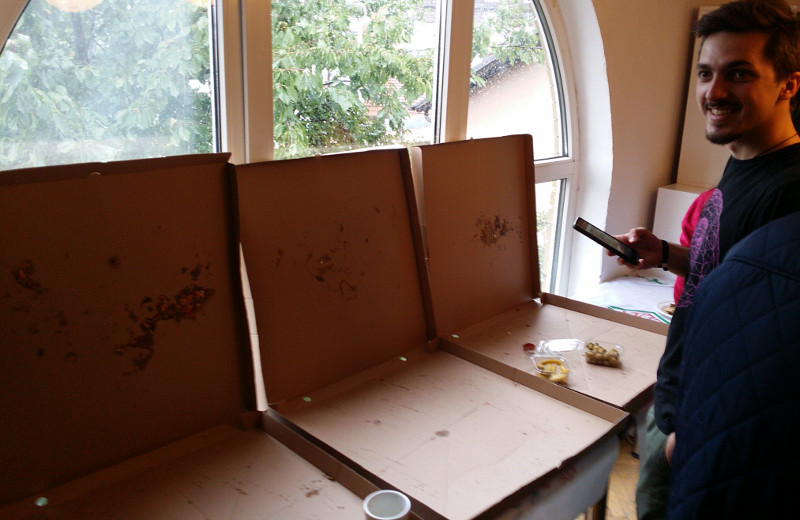
Have you been to an event recently involving free software or a related topic? How did you find it? Are you organizing an event and don't want to fall into the trap of using Facebook or Meetup or other services that compete for a share of your community's attention? Are you keen to find events in foreign destinations related to your interest areas to coincide with other travel intentions? Have you been concerned when your GSoC or Outreachy interns lost a week of their project going through the bureaucracy to get a visa for your community's event? Would you like to make it easier for them to find the best events in the countries that welcome and respect visitors? In many recent discussions about free software activism, people have struggled to break out of the illusion that social media is the way to cultivate new contacts. Wouldn't it be great to make more meaningful contacts by attending more a more diverse range of events rather than losing time on social media? Making it happen There are already a number of tools (for example, Drupal plugins and Wordpress plugins) for promoting your events on the web and in iCalendar format. There are also a number of sites like Agenda du Libre and GriCal who aggregate events from multiple communities where people can browse them. How can we take these concepts further and make a convenient, compelling and global solution? Can we harvest event data from a wide range of sources and compile it into a large database using something like PostgreSQL or a NoSQL solution or even a distributed solution like OpenDHT? Can we use big data techniques to mine these datasources and help match people to events without compromising on privacy? Why not build an automated iCalendar "to-do" list of deadlines for events you want to be reminded about, so you never miss the deadlines for travel sponsorship or submitting a talk proposal? I've started documenting an architecture for this on the Debian wiki and proposed it as an Outreachy project. It will also be offered as part of GSoC in 2018. Ways to get involved If you would like to help this project, please consider introducing yourself on the debian-outreach mailing list and helping to mentor or refer interns for the project. You can also help contribute ideas for the specification through the mailing list or wiki. Mini DebConf Prishtina 2017 This weekend I've been at the MiniDebConf in Prishtina, Kosovo. It has been hosted by the amazing Prishtina hackerspace community. Watch out for future events in Prishtina, the pizzas are huge, but that didn't stop them disappearing before we finished the photos:
Iain R. Learmonth: Tor Relays on Twitter

A while ago I played with a Twitter bot that would track radio amateurs using a packet radio position reporting system, tweet their location and a picture from Flickr that was taken near to their location and a link to their packet radio activity on aprs.fi. It s really not that hard to put these things together and they can be a lot of fun. The tweets looked like this: This isn t about building a system that serves any critical purpose, it s about fun. As the radio stations were chosen essentially at random, there could be some cool things showing up that you wouldn t otherwise have seen. Maybe you d spot a callsign of a station you ve spoken to before on HF or perhaps you d see stations in areas near you or in cool places. On Friday evening I took a go at hacking together a bot for Tor relays. The idea being to have regular snippets of information from the Tor network and perhaps you ll spot something insightful or interesting. Not every tweet is going to be amazing, but it wasn t running for very long before I spotted a relay very close to its 10th birthday: The relays are chosen at random, and tweet templates are chosen at random too. So far, tweets about individual relays can be about age or current bandwidth contribution to the Tor network. There are also tweets about how many relays run in a particular autonomous system (again, chosen at random) and tweets about the total number of relays currently running. The total relays tweets come with a map: The maps are produced using xplanet. The Earth will rotate to show the current side in daylight at the time the tweet is posted. Unfortunately, the bot currently cannot tweet as the account has been suspended. You should still be able to though and tweets will begin appearing again once I ve resolved the suspension. I plan to rewrite the mess of cron-activated Python scripts into a coherent Python (maybe Java) application and publish the sources soon. There are also a number of new templates for tweets I d like to explore, including number of relays and bandwidth contributed per family and statistics on operating system diversity. Update (2017-10-08): The @TorAtlas account should now be unsuspended.

5 October 2017

Wouter Verhelst: Patching Firefox

At work, I help maintain a smartcard middleware that is provided to Belgian citizens who want to use their electronic ID card to, e.g., log on to government websites. This middleware is a piece of software that hooks into various browsers and adds a way to access the smartcard in question, through whatever APIs the operating system and the browser in question provide for that purpose. The details of how that is done differ between each browser (and in the case of Google Chrome, for the same browser between different operating systems); but for Firefox (and Google Chrome on free operating systems), this is done by way of a PKCS#11 module. For Firefox 57, mozilla decided to overhaul much of their browser. The changes are large and massive, and in some ways revolutionary. It's no surprise, therefore, that some of the changes break compatibility with older things. One of the areas in which breaking changes were made is in the area of extensions to the browser. Previously, Firefox had various APIs available for extensions; right now, all APIs apart from the WebExtensions API are considered "legacy" and support for them will be removed from Firefox 57 going forward. Since installing a PKCS#11 module manually is a bit complicated, and since the legacy APIs provided a way to do so automatically provided the user would first install an add-on (or provided the installer of the PKCS#11 module sideloads it), most parties who provide a PKCS#11 module for use with Firefox will provide an add-on to automatically install it. Since the alternative involves entering the right values in a dialog box that's hidden away somewhere deep in the preferences screen, the add-on option is much more user friendly. I'm sure you can imagine my dismay when I found out that there was no WebExtensions API to provide the same functionality. So, after asking around a bit, I filed bug 1357391 to get a discussion started. While it took some convincing initially to get people to understand the reasons for wanting such an API, eventually the bug was assigned the "P5" priority -- essentially, a "we understand the need and won't block it, but we don't have the time to implement it. Patches welcome, though" statement. Since having an add-on was something that work really wanted, and since I had the time, I got the go-ahead from management to look into implementing the required code myself. I made it obvious rather quickly that my background in Firefox was fairly limited, though, and so was assigned a mentor to help me through the process. Having been a Debian Developer for the past fifteen years, I do understand how to develop free software. Yet, the experience was different enough that still learned some new things about free software development, which was somewhat unexpected. Unfortunately, the process took much longer than I had hoped, which meant that the patch was not ready by the time Firefox 57 was branched off mozilla's "central" repository. The result of that is that while my patch has been merged into what will eventually become Firefox 58, it looks strongly as though it won't make it into Firefox 57. That's going to cause some severe headaches, which I'm not looking forward to; and while I can certainly understand the reasons for not wanting to grant the exception for the merge into 57, I can't help but feeling like this is a missed opportunity. Anyway, writing code for the massive Open Source project that mozilla is has been a load of fun, and in the process I've learned a lot -- not only about Open Source development in general, but also about this weird little thing that Javascript is. That might actually be useful for this other project that I've got running here. In closing, I'd like to thank Tomislav 'zombie' Jovanovic for mentoring me during the whole process, without whom it would have been doubtful if I would even have been ready by now. Apologies for any procedural mistakes I've made, and good luck in your future endeavours! :-)

3 October 2017

Reproducible builds folks: Reproducible Builds: Weekly report #127

Here's what happened in the Reproducible Builds effort between Sunday September 24 and Saturday September 30 2017: Development and fixes in key packages Kai Harries did an initial packaging of the Nix package manager for Debian. You can track his progress in #877019. Uploads in Debian: Packages reviewed and fixed, and bugs filed Patches sent upstream: Reproducible bugs (with patches) filed in Debian: QA bugs filed in Debian: Reviews of unreproducible packages 103 package reviews have been added, 153 have been updated and 78 have been removed in this week, adding to our knowledge about identified issues. Weekly QA work During our reproducibility testing, FTBFS bugs have been detected and reported by: diffoscope development Mattia Rizzolo uploaded version 87 to stretch-backports. strip-nondeterminism development reprotest development tests.reproducible-builds.org reproducible-website development Misc. This week's edition was written by Ximin Luo, Bernhard M. Wiedemann, Holger Levsen and Chris Lamb & reviewed by a bunch of Reproducible Builds folks on IRC & the mailing lists.

2 October 2017

James McCoy: Monthly FLOSS activity - 2017/09 edition

Debian devscripts Before deciding to take an indefinite hiatus from devscripts, I prepared one more upload merging various contributed patches and a bit of last minute cleanup. I also setup integration with Travis CI to hopefully catch issues sooner than "while preparing an upload", as was typically the case before. Anyone with push access to the Debian/devscripts GitHub repo can take advantage of this to test out changes, or keep the development branches up to date. In the process, I was able to make some improvements to travis.debian.net, namely support for DEB_BUILD_PROFILES and using a separate, minimal docker image for running autopkgtests. unibilium neovim Oddly, the mips64el builds were in BD-Uninstallable state, even though luajit's buildd status showed it was built. Looking further, I noticed the libluajit-5.1 ,-dev binary packages didn't have the mips64el architecture enabled, so I asked for it to be enabled. msgpack-c There were a few packages left which would FTBFS if I uploaded msgpack-c 2.x to unstable. All of the bug reports had either trivial work arounds (i.e., forcing use of the v1 C++ API) or trivial patches. However, I didn't want to continue waiting for the packages to get fixed since I knew other people had expressed interest in the new msgpack-c. Trying to avoid making other packages insta-buggy, I NMUed autobahn-cpp with the v1 work around. That didn't go over well, partly because I didn't send a finalized "Hey, I'd like to get this done and here's my plan to NMU" email. Based on that feedback, I decided to bump the remaining bugs to "serious" instead of NMUing and upload msgpack-c. Thanks to Jonas Smedegaard for quickly integrating my proposed fix for libdata-messagepack-perl. Hopefully, upstream has some time to review the PR soon. vim subversion
neovim

27 September 2017

Dirk Eddelbuettel: RcppAnnoy 0.0.10

A few short weeks after the more substantial 0.0.9 release of RcppAnnoy, we have a quick bug-fix update. RcppAnnoy is our Rcpp-based R integration of the nifty Annoy library by Erik. Annoy is a small and lightweight C++ template header library for very fast approximate nearest neighbours. Micha l Benesty noticed that our getItemsVector() function didn't, ahem, do much besides crashing. Simple bug, they happen--now fixed, and a unit test added. Changes in this version are summarized here:

Changes in version 0.0.10 (2017-09-25)
  • The getItemsVector() function no longer crashes (#24)

Courtesy of CRANberries, there is also a diffstat report for this release.

This post by Dirk Eddelbuettel originated on his Thinking inside the box blog. Please report excessive re-aggregation in third-party for-profit settings.

26 September 2017

Colin Watson: A mysterious bug with Twisted plugins

I fixed a bug in Launchpad recently that led me deeper than I expected. Launchpad uses Buildout as its build system for Python packages, and it s served us well for many years. However, we re using 1.7.1, which doesn t support ensuring that packages required using setuptools setup_requires keyword only ever come from the local index URL when one is specified; that s an essential constraint we need to be able to impose so that our build system isn t immediately sensitive to downtime or changes in PyPI. There are various issues/PRs about this in Buildout (e.g. #238), but even if those are fixed it ll almost certainly only be in Buildout v2, and upgrading to that is its own kettle of fish for other reasons. All this is a serious problem for us because newer versions of many of our vital dependencies (Twisted and testtools, to name but two) use setup_requires to pull in pbr, and so we ve been stuck on old versions for some time; this is part of why Launchpad doesn t yet support newer SSH key types, for instance. This situation obviously isn t sustainable. To deal with this, I ve been working for some time on switching to virtualenv and pip. This is harder than you might think: Launchpad is a long-lived and complicated project, and it had quite a number of explicit and implicit dependencies on Buildout s configuration and behaviour. Upgrading our infrastructure from Ubuntu 12.04 to 16.04 has helped a lot (12.04 s baseline virtualenv and pip have some deficiencies that would have required a more complicated bootstrapping procedure). I ve dealt with most of these: for example, I had to reorganise a lot of our helper scripts (1, 2, 3), but there are still a few more things to go. One remaining problem was that our Buildout configuration relied on building several different environments with different Python paths for various things. While this would technically be possible by way of building multiple virtualenvs, this would inflate our build time even further (we re already going to have to cope with some slowdown as a result of using virtualenv, because the build system now has to do a lot more than constructing a glorified link farm to a bunch of cached eggs), and it seems like unnecessary complexity. The obvious thing to do seemed to be to collapse these into a single environment, since there was no obvious reason why it should actually matter if txpkgupload and txlongpoll were carefully kept off the path when running most of Launchpad: so I did that. Then our build system got very sad. Hmm, I thought. To keep our test times somewhat manageable, we run them in parallel across 20 containers, and we randomise the order in which they run to try to shake out test isolation bugs. It s not completely unknown for there to be some oddities resulting from that. So I ran it again. Nope, but slightly differently sad this time. Furthermore, I couldn t reproduce these failures locally no matter how hard I tried. Oh dear. This was obviously not going to be a good day. In fact I spent a while on various different guesswork-based approaches. I found bug 571334 in Ampoule, an AMP-based process pool implementation that we use for some job runners, and proposed a fix for that, but cherry-picking that fix into Launchpad didn t help matters. I tried backing out subsets of my changes and determined that if both txlongpoll and txpkgupload were absent from the Python module path in the context of the tests in question then everything was fine. I tried running strace locally and staring at the output for some time in the hope of enlightenment: that reminded me that the two packages in question install modules under twisted.plugins, which did at least establish a reason they might affect the environment that was more plausible than magic, but nothing much more specific than that. On Friday I was fiddling about with this again and trying to insert some more debugging when I noticed some interesting behaviour around plugin caching. If I caused the txpkgupload plugin to raise an exception when loaded, the Twisted plugin system would remove its dropin.cache (because it was stale) and not create a new one (because there was now no content to put in it). After that, running the relevant tests would fail as I d seen in our buildbot. Aha! This meant that I could also reproduce it by doing an even cleaner build than I d previously tried to do, by removing the cached txpkgupload and txlongpoll eggs and allowing the build system to recreate them. When they were recreated, they didn t contain dropin.cache, instead allowing that to be created on first use. Based on this clue I was able to get to the answer relatively quickly. Ampoule has a specialised bootstrapping sequence for its worker processes that starts by doing this:
from twisted.application import reactors
reactors.installReactor(reactor)
Now, twisted.application.reactors.installReactor calls twisted.plugin.getPlugins, so the very start of this bootstrapping sequence is going to involve loading all plugins found on the module path (I assume it s possible to write a plugin that adds an alternative reactor implementation). If dropin.cache is up to date, then it will just get the information it needs from that; but if it isn t, it will go ahead and import the plugin. If the plugin happens (as Twisted code often does) to run from twisted.internet import reactor at some point while being imported, then that will install the platform s default reactor, and then twisted.application.reactors.installReactor will raise ReactorAlreadyInstalledError. Since Ampoule turns this into an info-level log message for some reason, and the tests in question only passed through error-level messages or higher, this meant that all we could see was that a worker process had exited non-zero but not why. The Twisted documentation recommends generating the plugin cache at build time for other reasons, but we weren t doing that. Fixing that makes everything work again. There are still a few more things needed to get us onto pip, but we re now pretty close. After that we can finally start bringing our dependencies up to date.

Reproducible builds folks: Reproducible Builds: Weekly report #126

Here's what happened in the Reproducible Builds effort between Sunday September 17th and Saturday September 23rd 2017: Media coverage Reproducible work in other packages Packages reviewed and fixed, and bugs filed Reviews of unreproducible packages 1 package reviews was added, 49 have been updated and 54 have been removed in this week, adding to our knowledge about identified issues. One issue type was updated: Weekly QA work During our reproducibility testing, FTBFS bugs have been detected and reported by: diffoscope development Version 87 was uploaded to unstable by Mattia Rizzolo. It included contributions from: strip-nondeterminism development reprotest development Version 0.7 was uploaded to unstable by Ximin Luo: tests.reproducible-builds.org Vagrant Cascadian and Holger Levsen: Holger Levsen: Misc. This week's edition was written by Bernhard M. Wiedemann, Chris Lamb, Vagrant Cascadian & reviewed by a bunch of Reproducible Builds folks on IRC & the mailing lists.

19 September 2017

Reproducible builds folks: Reproducible Builds: Weekly report #125

Here's what happened in the Reproducible Builds effort between Sunday September 10 and Saturday September 16 2017: Upcoming events Reproduciblity work in Debian devscripts/2.17.10 was uploaded to unstable, fixing #872514. This adds a script to report on reproducibility status of installed packages written by Chris Lamb. #876055 was opened against Debian Policy to decide the precise requirements we should have on a build's environment variables. Bugs filed: Non-maintainer uploads: Reproduciblity work in other projects Patches sent upstream: Reviews of unreproducible packages 16 package reviews have been added, 99 have been updated and 92 have been removed in this week, adding to our knowledge about identified issues. 1 issue type has been updated: diffoscope development reprotest development trydiffoscope development Version 65 was uploaded to unstable by Chris Lamb including these contributions: Reproducible websites development tests.reproducible-builds.org Misc. This week's edition was written by Ximin Luo, Bernhard M. Wiedemann, Chris Lamb, Holger Levsen and Daniel Shahaf & reviewed by a bunch of Reproducible Builds folks on IRC & the mailing lists.

Next.

Previous.