Search Results: "Martin"

6 January 2008

Martin F. Krafft: New blog software and Ikiwiki templates

Every time I read a blog post about a blog having moved or a redesign , I swear to myself, again and again, that I would never do alike. And yet, having just finished the migration of all my posts from PyBloxsom to Ikiwiki, I feel uneasy and may have overlooked an issue or two. Thus, I am asking my readers this way to report any problems to me. But there s more to this post. I switched to using Ikiwiki because I ve had major problems in the past, drawing the lines between blog posts, wiki notes, and pages to be published on a home page. In fact, for the past years, I never had a home page and instead published information intended for posterity on my blog. Ikiwiki is mainly a wiki compiler, but it can be used to generate blog feeds as well, so it is, for me, the ideal tool to fuse the three into one. The result, http://madduck.net, is still far from done and looks quite awful. The blog works (as far as I can tell), but I ran out of time for the rest. Specifically, I need to work on the layout and design. The Gopher-like, plain Ikiwiki style is usable, but I find it too cluttered and unappealing. Unfortunately, Ikiwiki does not (yet) make it easy to amend the underlying templates in a consistent way, nor does it allow the use of different templates for different parts of the site. It is to specify a different template to be used on a page-by-page basis, but such a template cannot reuse an existing template, making it quite hard to achieve a consistent look across sites incorporating different components, such as blog, home page, and wiki. I postulate that the Template Toolkit would solve a number of problems because of the wrapper directive, which makes template reuse quite trivial. Please refer to my wishlist request for more information. Another problem I encounter on Ikiwiki sites is with tags. Tags are mainly specific to the object to which they re stuck. However, I often use them the other way around, too: as concepts. And sometimes I d like to see all pages related to a given concept ( tagged with a given tag ). The only way to do this with Ikiwiki is to instantiate a page for each tag and slap a map on it. This is quite tedious and I d really love to see Ikiwiki do so by default for all tags. Fortunately, Ikiwiki is well maintained and growing, so my hopes are up. If it weren t written in Perl, I d have already taken a stab at it, but as it stands, I ll have to wait for someone else to do it, or for a rainy weekend when I am not afraid to get my hands dirty.

Christian Perrier: Number of bugs reported in Debian per year

This week-end, among other things, I played a little to get the number of bugs reported overs years in the Debian BTS. Here are the results:
2007: 53337
2006: 59665
2005: 57436
2004: 62327
2003: 50836
2002: 47618
2001: 46289
2000: 27181
1999: 22448
1998: 15002
1997:  9987
1996:  4205
1995: 2158
First bug for each year:
2008: 458489 Petter Reinholdtsen -> sysqrd Closed (in unstable)
2007: 405152 Martin-Eric Racine -> myspell-lv Closed
2006: 345487 Erich Schubert -> lintian Opened
2005: 288051 Nick Sillik -> gstreamer-misc Closed
2004: 225724 Peter van Rossum -> mldonkey-server Closed
2003: 174888 Chris Garguzi -> hotkeys Closed
2002: 127270 root@ttimo.net ->libapache-mod-auth-pam Closed
2001: 80981  William Steve Applegate -> php4 Closed
2000: 53800  Hamish Moffatt -> sattrack Closed
1999: 31352  Richard Stallman -> dselect Opened LOOK THIS ONE
1998: 16350  Joey Hess -> xbase-clients Closed
1997:  6363  Andreas Jellinghaus -> mgetty-fax Closed
1996:  2158  Ian Jackson -> ncurses3.0 Closed
1995:   563  Ian Jackson -> tar Closed
A few interesting things there: Anyone feeling like doing the same for Launchpad? And, for those who wonder, I of course did all this by hand. No fancy automated script, just my hands and some (little) hammering of the BTS.

5 January 2008

Dirk Eddelbuettel: RQuantLib 0.2.8

Version 0.9.0 of QuantLib was released a couple of days ago on Christmas Eve; as usual, Debian packages for QuantLib were uploaded right away following a few earlier pre-releases. As QuantLib is approaching its 1.0 release, a few API changes requires updates to basically all of RQuantLib's C++ source files. Luckily most changes were minor. At the same time, we also generalised the Binary (aks Digital) option pricer to allow for a 'binType' argument (with values 'cash', 'asset' or 'gap' for CashOrNothing, AssetOrNothing or Gap digitals) as well as an 'excType' argument to switch between European and American exercise. Dominick made a small change to the DiscountCurve object to seamlessly pass a switch variable indicating whether we have 'flat' curves or not. Another change was the addition of formal unit tests using the RUnit from CRAN (which we happened to have added to Debian recently in the wave of new RMetrics packages). We use the scheme initially proposed by Gregor Gojanc and extended by Martin Maechler for RMetrics that allows the unit tests to be run from both the source and the installed package which is nice. As QuantLib itself has a massive amount of unit tests in its code; I am hoping to add more and more of those into RQuantLib itself as we add more functionality. On that front, more exciting news: RQuantLib is now hosted on R-Forge. Potential contributors are encouraged to register at R-Forge and to get in touch -- this is a great way to learn about combining C++ and R. To wrap up, the new version 0.2.8 is currently in the queue at R's master CRAN host and should hit the CRAN mirrors shortly; likewise the Debian package has been uploaded and should also propagate to Debian mirrors in due course. As usual, source are also available locally on my site.

3 January 2008

Martin-Éric Racine: Hunting for a new laptop (part 2)

Earlier, I had reported on my quest for a new laptop. To recap, I had narrowed down my choice to an LG model whose 12.1" 1280x800 WXGA display and ATI Mobility Radeon X1250 graphic chip failed to be recognized by the Ubuntu CD. Back then, my initial tests were performed using a Feisty CD. Since then, I have returned with a Gutsy CD and got equally disappointing results: E: screen found, but none offers a usable configuration. Some people suggested buying a laptop with an all-Intel chipset. While Intel chipsets are indeed the best-supported in the business, largely because Intel invests its own resources into coding Linux drivers for all of its products, products based on Intel chipsets tend to be double the price of those based on VIA motherboards with ATI graphic chips. Seeing how quickly hardware devaluates on the market, it feels rather unjustified to pay such a fortune for an Intel-based product, only to see its market value cut in half less than a year later. Here's a tip for AMD/ATI marketroids: invest as much resources into coding GPL kernel and X.org drivers for all of your products as you did for the OLPC project and always do so a good 12 months before entry to market. Otherwise, prepare for bankruptcy, because companies like Intel who don't shun the Linux market will eat you alive. Me goes back laptop hunting...

1 January 2008

Julian Andres Klode: Bye, 2007 - Welcome 2008!


April 2007, I joined the Fellowship of the Free Software Foundation Europe. I also became involved in the development of Debian GNU/Linux with my first package, aufs, sponsored by Daniel Baumann. This was the starting point for my Debian stuff. Now I maintain 6 packages in Debian. One of the most interesting packages is gnome-app-install, which will be part of the gnome-desktop task (already added to tasksel’s list). Users will be able to install applications easily. It also activates the automatic codec installation, so users will be able to play most multimedia files easily. 30th December, I finally got assigned my AM, Martin Zobel-Helas (zobel), and I’m happy to be able to continue the NM process now. On the Ubuntu side, some things have happened, too. I merged several new versions of dir2ogg and a new aufs version, and became an Ubuntu Member on the 29th November. In 2008, I plan to complete the New Maintainer process and become an Ubuntu MOTU. I will continue my packaging stuff, and will merge new features from Debian to Ubuntu and from Ubuntu to Debian. A happy new year to everyone and sorry for blogging this such late.

28 December 2007

Martin-Éric Racine: O: planner -- project management application

While looking at outstanding bugs against my Debian packages, I noticed that an RC bug had crept in against Planner. The bug itself isn't new. In fact, Ubuntu had experienced it already and simply decided to build their package without SQL support to resolve the issue. Planner is a fairly well-matured piece of software, with very few bugs remaining. It remains quite usable in everyday use. However, it has fallen behind in terms of keeping its code up-to-date against the latest versions of some optional dependencies. Tonight, I was just sitting here pondering what to do and it occurred to me that I'm simply no longer interested in maintaining the package. I have done a fairly good job of overhauling the build scripts and of upgrading them for the Python transition but, at this stage, I feel that I've accomplished as much as I could do. Besides, I no longer have the time to maintain so many packages, so I have decided to focus on maintaining those I actually care for and Planner isn't one of them. The package already is assigned to Debian's GNOME team, so no need to actually orphan it, since anyone from the team can pick it up. If you're a member of the GNOME team and feel like taking over, perhaps even submitting patches to upstream to close a few more bugs, go right ahead and jump in.

Holger Levsen: 24C3 day two - 8h to complete a blog post

It's noon now and half the attendees or so the day hasn't really begun. Sure, some people here at the 24C3 in Berlin are having lunch already, but most are having breakfast or not even that yet. As the Debian booth is set up (mugs are sold out, bags almost...) and there are no interesting talks for me at the moment, I'm having a second breakfast in the smokers lounge is the cellar. Officially, this is the third non smoking congress and inofficially it's the third time there is an official smoker place ;-) This time, it's a lounge with comfortable sofas, ambient light and loud music...

About four weeks ago I was contacted by Martin Michlmayr and asked if the video team could make use of some hardware donation a company wanted to sponsor. I said yes, and so last week two boxes arrived at my house: a small audio mixer, a Behringer XENYX 1202 with 12-channels and XLR and chinch inputs, which is supposed to help us improve the audio quality in small venues. The second box contained a TwinPact100, which is a video converter box. It has an SVGA-input (supporting up to 1600x1200), an SVGA-output (sending the same signal out) and DV (firewire) output (and more features we don't really care about). So for us it's basically a SVGA-passthrough box which also outputs a video stream (of a speakers laptop in our use case) over firewire. So no more capturing of slides with a normal camera, yay! Yesterday Ben Hutchings and me tested this box and found it working, then Ben also fixed an issue with dvswitch, which we use to mix different firewire video streams together, probably even as soon as FOSDEM again! Many thanks to hitflip.de for this nice donation!

When I arrived here this morning I hoped to see the BabelBox I set up last night to be still running, and it was, yay! BabelBox is a d-i setup which loops through an installation of Debian etch in 36 languages, mostly using the graphical installer. And this will be running here for approx 72 hours non-stop resulting in 289 installations without a single keystroke :) IMO it shows real nicely two of the three major strengths of d-i: internationalisation and automatisation.

I guess it's pretty unlikely that I'll find some time during the last two days of the congress to take Andre Salomons packages for the OLPC laptop and demonstrate d-i's third major feature: it's modular design. It's more likely to be an excercise for next year though (I'll arrive home on the 31st..), here is too much stuff happening. Installing babelbox was just following a good howto. In any case, there is a OLPC.de meeting planned tomorrow at 12.30 noon at the Debian booth or in the Embedded Corner. Just come along and look out for the green cluster of XOs :)

And by now it's 8 PM - time flies when you're having fun. I just noticed that my wireless connection is up since seven hours uninterrupted! Wow.

27 December 2007

Martin Michlmayr: Installer finally working again on Linksys NSLU2

The release release team of Debian released 4.0r2 today which fixes the bug that kept the installer from working on ARM based systems, such as the Linksys NSLU2. This means that installations are finally possible again. I've updated my installation instructions accordingly. I've also updated the tar ball used for the manual installation to 4.0r2 but I doubt many people are interested in this method now that the installer is working again.

25 December 2007

Annabelle Tully: Death

My best friend, the best damn programmer and nicest person I’ve ever met, was found dead december 22nd 2007. Some of you might have known him, his name was Thomas Martinsen, and he was known as “tech”.
I want the world to know what a fantastic person he was. R.I.P.

24 December 2007

Steve Kemp: I saw momma kissing santa claus

Well I've been in Devon for the past week, and will remain here for another week. During that time I've averaged about ten minutes of online time a day! So far things are going well, but it will be wierd spending time with another family over Christmas. Still I've been vaguely productive. I've released a new version of chronicle - which has the CGI support for leaving comments upon my entries. (TODO: Reinstate some previous comments for Martin Krafft) One thing I'd not anticipated was the amount of spam I'd start recieving. The peak so far was 40+ comments a day, all with random URLs. I deleted them manually for the first day - but now I've written a shell script or two to classify comments via the spamfilter I use for handling email. I'm not 100% sure I should have done that. I suspect that over time I will find better results if I actually have a distinct "blog spam" and "blog ham" corpus - rather than risk confusion over "email" and "blog" texts to classify. Still I shall wait and see. The only thing that I think I want to do now is add a bit more fine control over the comment process, so the choice is not just between comments being globally on, or globally off. A nice middle-ground where I could say "Comments enabled for entries posted within the past two weeks or so". Anyway thats my quota for today. Now I have to walk the family dog ..

Martin Michlmayr: Joining HP

I joined HP's Open Source and Linux Organization (OSLO) at the beginning of the month as an Open Source Community Expert. I spent the last three weeks in Ft. Collins for some training and to get to know the team, but normally I'll be working from home in Europe. The main focus of my work will be governance issues related to the deployment of FOSS in enterprise environments. However, I've already started to get involved in a number of other areas I'm interested in, such as community relations. I'm pretty excited about my new position because it is a good fit for my skills and interests.

23 December 2007

Martin-Éric Racine: Valga - Valka : 1 linn, 2 riiki - 1 pils ta, 2 valstis

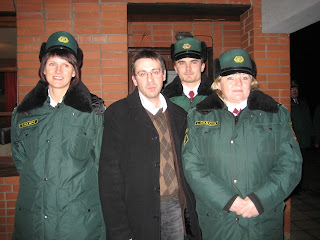
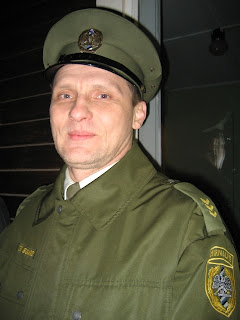
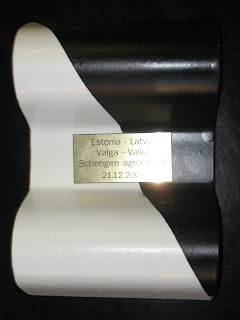
Thursday evening, I joined the inhabitants of the twin town of Valga-Valka, sitting smack on the Estonian-Latvian border, to celebrate their entry into the Schengen treaty. Ever since I first crossed the border there on a roadtrip from Tallinn to Fallingbostel, in year 2001, I knew I would have to return and, sure enough, I briefly passed through during last summer with an Estonian friend, on our way to an acquaintance's birthday party. Still, that told me nothing of the town's life and left me wanting for more. Upon hearing that year 2004 EU accession countries would join Schengen in December 2007, I immediately promised myself to show up and join the crowd. As it turns out, I missed Aleks Tapin of the All About Latvia blog by very little, having I caught his last-minute e-mail the next afternoon. Aleks blogged a great article depicting the Latvian side of life and providing some background info on the town, if you're curious. I arrived late-evening on Thursday via the Tallinn-Viljandi-Valga bus and checked into my hotel, then proceeded to checkpoint Valga II around 23:30, with the intention of grabbing a drink on the Latvian side and returning just before midnight for the celebrations. Hardly anyone was in sight, except for Latvian officer abana who was completing the inspection of a Russian car with three noisy passengers. Upon presenting her with my passport, officer abana cheerfully lead me to the office and slid my passport through a slot to officer Bukss, who was visibly surprised to have any tourist show up on the last day of his job to get their passport stamped. Upon explaining to him the reasons for my presence, he pointed me to a nearby bar where I could have a drink, visibly amused by the situation. I spent the next few minutes in a local casino in the company of three hilarious Latvian truck drivers, Zintars and Aivars, two Latvians with limited English language skills and Yuri, an ethnic Russian living in Ireland who was born stateless on the Latvian side of the town and who later acquired Estonian citizenship by claiming ancestral land on the Estonian side. Upon returning to the border, just minutes before midnight, I found myself in the middle of a huge crowd of villagers, police officers, border guards and politicians from both countries - barely getting noticed by anyone. I handed my passport to an Estonian border guard who emotionally commented to a civilian friend of his nearby that, "Wow! That was the last one!", handing me my passport back just as the midnight bells rang and the mayor of the Estonian side started his speech amidst pyrotechnics lining the road. I then had a chance to chat with the Estonian mayor, who promptly handed me a bilingual certificate, signed by the mayors of both towns, attesting that I was the first to cross the open border, while introducing me to his two young daughters with whom he was about to take a stroll on the Latvian side. The next morning, an even bigger and more symbolic event took place: the demolition of the fence that had been cutting the S prus/Rai a street in half. You can see a picture of what the street looked like before on Aleks' blog article [edit: or on Jens-Olaf's blog article]. After the fence was removed, it instead looked like this: The crowd then proceeded to checkpoint Valga III, where a stage had been setup for the politicians to make their speeches. An interesting fact is that, because of the way the border was drawn, along a creek leading to Pedeli river, an Estonian main road was technically on the Latvian border and thus aptly named "Raja" (border) street. The Estonian mayor commented in his speech that the the brand new supermarket standing behind us was also technically on borderland and could not have possibly been built earlier, weren't it for the Schengen treaty matter-of-factedly eliminating borders between participating EU countries. The speeches were closed by a youth group whose choreography featured six break-dancing boys, dressed as Estonian and Latvian border guards and as border posts. The choreography ended with the teenage border guards carrying away the human posts on their shoulders, just as a choir of young girls replaced them with songs in either languages. Before catching my bus back to Tallinn, I dropped by the Valga tourist info, only to face a nervous-looking Kapo officer in plain clothes. Upon mumbling something about the tourist info and wanting to grab maps, I noticed that a press conference was taking place behind. As he finally let me pass to the tourist info side of the building, a familiar voice said to me, "Hey! Weren't you at our place last summer with Martin Ranna?" Yup, the wife of the acquaintance whose birthday party I had attended last summer is working there and greeted with me refreshments and munchies she had cooked in prevision for the presidential visit! As was my luck, she had one of the commemorative plaques that had been given to the politicians at Valga III on hand: I was glad to see the town becoming one again, even though it is ethnically divided. There are already signs of people on both sides learning one another's languages and shopping on either side of town, not to mention plans of merging the municipal bus operations of the Estonian and Latvian halves of the town, so I'm sure that they'll get there in due course. For me, Schengen brought a much more practical and quite welcome change: the end of messy border crossing stamps that were rapidly filling my almost new passport, every time I visited the head office of our company in Tallinn. While Estonian border guards mostly stamp passports in an orderly fashion, being careful to fit exactly 8 stamps in a single page and to put entry and exit stamps side-by-side, Finnish border guards apparently are incapable of doing so, instead systematically wasting pages by either stamping sloppily in a way that makes it impossible for more than 4 stamps to appear on a given page or by flipping to a brand new page, every time I had to cross the border. In case anyone ever wondered why I'm currently representing Estonian interests abroad, despite living in Finland, this example is one of the many reasons: Finnish authorities routinely display arrogant carelessness towards the population and doubly so towards immigrants. It amounts to an accumulation of idiocy that has costly consequences on people's lives. For some, it's about being denied the public institutions' support when they need it the most and their life forever going downhill thereafter. For me, it has been about countless missed opportunities (jobs, love affairs, travel plans), plus very costly passport and residence permit renewals. Given this, I simply don't see myself ever representing Finnish interests ever again. Faith no more. Besides, the Estonians are fun and easy-going people. Siski ma m tlen, kas ma peaksen n d Eestisse kolima v i?
21 December 2007

Brett Parker: More on rss2maildir.py...

Just to confirm, yes, I do know of rss2email - it has the unfortunate side effect of needing an MTA configured to process the rss feeds and seperate them in to seperate maildirs, basically I wanted something that would write straight to the maildir for me because then I don't have to think about the config for the MTA on each machine that I want to use it on. Thanks to Martin for the suggestion of pandoc, I'll take a look at that over the next few days to see if it'll make the "plain text" generation slightly neater than the current HTMLParser based code.

18 December 2007

Martin F. Krafft: bugscripts and rng

Yes, Bastian, there is a way to do what you want. I believe I told you from the very start: refactor reportbug and implement reportbug-ng on top of the existing code. But no, you chose to reimplement everything (a typical thing to do for GUI programmers) and now you are asking us maintainers to change the way we've been doing things for years? You also make presumptuous statements about how we deal with bug reports. If you personally hate how certain packages prepare bug reports, then maybe you should personally suck it up and use different software? Seems like a more logical and less intrusive way forward, then expecting others to "send a friendly mail" to ask for more information on a bug report. Maybe you have all the time in the world, but I don't. I can work on e.g. mdadm (which uses an interactive bug script) only on rare occasions, and then I'd rather fix and close bugs than to indulge in another iteration of bug submitter ping-pong. You are also personally annoyed by long pre-subject texts, which you doubt anyone reads? I don't even bother to challenge that, but let me say that pre-subject texts are there to prevent stupid bug reports, or bug reports filed in the wrong place, and to take load off the maintainer. So you chose to ignore them? Given the projected user-base of your tool, I'd say you should rather force people to read them by asking them to transcribe the text. If you don't want to pop up a terminal, well, why the heck didn't you integrate debconf properly, while reusing reportbug, and taking a step forward to provide a proper interface for bug scripts? Why do you even bother to whine about interface issues at this point? Feel free to take over my packages, which make use of interactive bug scripts. I see zero reason to change them, and I will not. NP: The Flower Kings: Paradox Hotel

Martin F. Krafft: Taxes and wars

I was considering importing my car to Switzerland. When I moved in 2002, I asked the customs office about the process and was told that I'd need to pay taxes and fees, so I postponed the import until Day Unknown. Today, a very friendly customs official told me that this is not true and that I could have imported my car duty-free if I had done so as part of my move. Slightly annoyed, I went on to discover what those duties would be today. I found out that there are seven different types of fees I'll have to pay, and tried to understand the reason for these fees:
  1. To import a car, you need a form 11.010, downloadable from the Swiss Customs Office. Because each download causes extra work for the administrator, they charge a nominal fee of CHF 0.70 to get the PDF file.

  2. I take that form to the customs office. There, the officials will assemble around the car and attempt to lift it. I don't know why they do that, but they charge you between CHF 12 and CHF 15 per 100kg of weight. I think it must be recompensation for the hard physical labour. Also, each customs official can lift 100kg, which explains those figures they seemed a bit arbitrary at first.

  3. Next, they'll ask 4% of the estimated value of the car as a car tax. They do this because the value of a car is directly related to the area it covers, and since Switzerland is so small, you effectively have to buy a couple of square metres for the car. It's not quite as easy as that though: once I bought the area under my car, I have to move the car away, because I cannot park my car on the area I just bought. I have to buy parking space for that. If I don't want to buy a parking space, I have to keep the car moving. In order to keep the car moving I need to fork over CHF 40 per year for a permit to drive the car on Swiss highways.

  4. Now, I pay 7.6% value-added tax. It makes no difference that the car isn't new, that I am not selling or buying it, nor that I have already paid 16% VAT in Germany when I bought it. Since I am about to "consume" the car in Switzerland, I have to pay consumer tax. Since I also consume the physical labour the officials put into the car lifting exercise, as well as the area under the car I bought, I pay VAT for (car value + lifting tax + area under car). Unfortunately, the European Union will not pay back the consumer tax I previously paid as part of the export, since I already consumed the car there.

  5. I then get a report about the import. This costs CHF 20. I don't need this report, but I have to buy it. The reason is that the computer admins are so overworked serving PDF files to future importers that they have not had time to stop the computers from printing this report, and the special paper and toner used by all administrative offices in Switzerland costs about CHF 20 per page. An alternative explanation is that CHF 20 is the smallest bit of "money" in Switzerland, everything else is "change".

  6. I will also have to pay annual taxes for possession of a car, the value to be determined by the custom officials. Since I already paid for the area under the car while moving and while stationary, I think the annual car tax is levied for environmental reasons. A lot of people drive through Switzerland to get from Germany to Italy or from Austria to France, pumping a lot of exhaust gas into the Swiss air. This makes them guilty, just like inhabitants of Switzerland who own a car are guilty. Due to legal reasons, the Swiss government can only punish Swiss people for those sins, so the annual car tax is a little higher to cover for all environmental damage. It is doubtful where the money goes, though. I also have to continue paying taxes in Germany, because I still have a residence with my parents.

  7. Finally, I have to purchase a car insurance. That insurance does not insure the car, it insures the others on the road. Actually, it is a driver-car-dependent insurance, meaning that the others are insured only if I am the driver of my car. If I drive another car, or someone else drives my car, the others will not be insured. unless I pay higher insurance fees. Because cars with a larger area under them and those that require more people to lift them are more dangerous, the insurance fee is proportional to the car density. At least I can give up my German insurance and be covered by the Swiss insurance. However, I cannot keep my German insurance and be covered in Switzerland. I think this is because the head of customs department and the CEO of the insurance company have sex with each other.

It's been a great day, given how much I learnt. I finally understand why people have fought wars over taxes. I think I may leave the car in Germany. PS: Yes, this post may be considered hyperbole. NP: The Pineapple Thief: 8 Days Later

14 December 2007

Martin F. Krafft: Surveys on the console

As part of my research, I may have to conduct a survey among Debian contributors. The word "survey" usually elicits frowns because surveys are often misconducted. MJ has taken the time to draft up some advice to surveyors. Problems with surveys generally fall into one of two categories: content and presentation. I'll refrain from making statements about content (Wikipedia has some stuff on questionaire construction) and instead concentrate on presentation in the following. Commonly in the digital age, surveys are administered via a web page or e-mail. In my recent Ph.D. transfer report, I identified a number of shortcomings with these approaches: Asking Debian contributors to click radio buttons on a web page is a bit like expecting a mountain biking champion to ride a tricycle across a paddock: painful, if not offensive. Furthermore, web surveys can only be taken while on-line, when most of us have better things to do. E-mail surveys address some of these problems, but create new ones: answers cannot be constrained to a domain (think multiple-choice), character set and formatting issues make evaluation difficult, and it's impossible to prevent users from attaching comments or modifying responses. In thinking about the issue, I came up with a third means to administer a survey: a console tool. Think of a Debian package which provides a console application controlled by a study-specific data file. The data file specifies the questions and their answer domains, and the tool presents those to the participant. Since most of Debian happens on the console anyway, such an approach to surveys seems more appropriate. Interaction with the survey tool would be as easy as pressing the 2 or 4 keys to select one of the multiple choices, and the tool would immediately move on to the next question (and not wait for the user to hit enter). Obviously, n and p should allow navigation back and forth across the set, and c would spawn a text editor to give the user a chance to attach a comment to his/her current response, in which s/he might criticise the question or provide additional information. Finally, the tool should be able to pick up where it left off, should the user chose to exit/suspend the survey for now. Integration with debconf or another interface abstraction is also worth consideration. There is more to it: people change their minds and should thus be able to amend responses. With their consent, it might be valuable to track such changes and inquire about their motivations. As I was thinking about how to realise this, I suddenly arrived at version control: use Git as a backend storage. The set of cool features this would enable seems to be endless: it works off-line and can be used to track aforementioned changes, but also offers the possibility to create a squashed result in case the participant prefers to submit only the final result. Furthermore, it's a trivial change between anonymous submissions, and submissions authenticated by a GPG signature. In addition, the survey tool should be able to display questions according to previous responses (control flow). For instance, if the survey determines that a given user is a contributor to the bug tracking system, but not a project member, it wouldn't make sense to ask when s/he received his/her Debian account. Furthermore, questions could be dynamically creatable from context, so that the survey can drill into depth depending on previous responses, rather than asking the same questions to all participants. I am currently applying for funding to outsource the development of such a tool. If you are interested in coding it up and getting paid for it, speak to me. Here are some more specifications to keep in mind before jumping on: These are likely to be incomplete, but should convey the basic picture. Feedback is always welcome! NP: Oceansize: Frames Update: James Andrewartha pointed me to purity, which asks multiple-choice questions on the console. It has the kind of interface which I envision. Also, Chris Lamb suggested this personality survey as a base line. Well, actually he just suggested I look into it.

Martin F. Krafft: Finally on the right track

It's now three weeks since I am officially a Ph.D. student at the University of Limerick, but I've been too busy to do anything about it. Today, I finally updated my research webpage and sat down to tell you the tale of how I successfully defended my research, but failed to leave the country the next day. As is customary in the British system, I initially enrolled at UL as a Master student. In October, I then applied for a transfer to the Ph.D. track, submitted a transfer report and prepared for a live defence, according to the UL code of practice. On 23 November, I presented my research to my examiners, Dr. P r gerfalk and Patrick Healy, who found my work to be at Ph.D. level and approved of my transfer. I was moderately nervous going into the presentation, not really knowing what was expected of me. In the end, however, the presentation went well and the ensuing discussion provided valuable feedback. Thank you, P r and Paddy, as well as Norah (who chaired), and Brian (my supervisor) for all your time, help, and support. After the defence, Mel waited outside with a beer in hand, and it being Friday and all, I happily popped the cap and drank. Plans to head to The Stables gave way to chilling on the couch in 110 (my home away from home), before we headed to town for the Kila gig. We arrived early, had some beers, enjoyed the show, had some more beers, went home, and had some more beers to Guitar Hero, and when I crawled into bed, I was shocked to find out that I had lost all track of time and it was in fact already 5:30 on Saturday morning, instead of the perceived 2 o'clock. See, the source of this shock was a plane that left Dublin the next day around noon, and a rental car that was to get me there, leaving the house at 8. But when my alarm shattered my drunk dreams at 7:30, it quickly became clear (or well, everything was blurred, actually), that I would have a hard time getting into the car, and I would certainly never manage to navigate it to Dublin, a three hour drive. So I called up the airline and the rental company and rescheduled for the next day (only one flight from Dublin to Zurich a day), and went back to dreamland. I am entirely unsure whether my Ph.D. transfer defence was enough of a reason to get smashed. I still had a good time, though as always in Ireland, especially with this crowd NP: The Flower Kings: The Rainmaker

13 December 2007

Martin F. Krafft: Delaying mail delivery

My current mailfilter has two features which increase my day-to-day productivity:
  1. a "tickler," which is a reminder system inspired by the tickler file component of David Allen's Getting Things Done action management method: I can submit emails and notes to the tickler along with a timestamp in the future, and the tickler delivers the mail (or note) to my inbox when the timestamp has passed.
  2. the ability to delay certain types of mail (e.g. Debian mail is held until the weekend, while news items and the like are only delivered at night).
My current implementations work alright, but they're brittle and crap. What's worse is that the two features could be combined and handled by one and the same tool, but I implemented them differently for now: The tickler consists of a Maildir, to which I can submit mails, either by mailing a note to a specific email address (currently broken, thus not linked from here), or by adding a tickle stamp (X-Tickle header) to a message with this script, saving it to the local tickler mailbox and asking offlineimap to shove it to the server. On this server, the tickler queue is regularly scanned by a script, which resubmits mail whose timestamp has expired to my mailfilter, where it is treated somewhat specially as a resubmitted mail. After almost three months with this setup, I can identify the following shortcomings: When I implemented the delay queue, I knew of these problems and went a different way: delayed mail is stored in a Maildir and a (msgid, timestamp, filename) tuple is inserted into an sqlite3 database on the mail server. This script regularly processes the queue. If I just sent you the chills, at least we have the same taste. There are numerous problems with this approach, the foremost being that Maildir filenames are not guaranteed to be constant: mails jump between the new and cur directories, and tags, such as seen are encoded in the filename (thus, symlinks also cannot be used). My script now uses an ugly heuristic, which at least makes it work. I should investigate whether inodes could be used instead as I think those wouldn't change throughout the lifetime of a mail, at least while it's not moved between folders. I initially considered just dumping messages to files and encoding the timestamp in the files' mtime, but then I would not be able to access the queue with mutt in case I needed to fetch a delayed mail prematurely, or if I wanted to synchronise the queue with offlineimap as well. The past few days, I've been condensing experiences from both approaches and am working out a new technique to combine both features. In essence, I think the database/index approach is the best, if I can figure out a way to uniquely identify mail message files, ideally across folders. Assuming I can use inodes for that, delayed mail would then be stored into the delayed Maildir and an (inode, timestamp) tuple saved into the database. Tickler mail would be stored along with all other mail in my store Maildir and would get a similar entry in the database. This approach solves some problems and leaves others. Assuming I synchronise the store Maildir remotely (which I do), then I can easily fathom making modifications via IMAP which causes orphan records in the database (if only IMAP would allow me to store key=value pairs for mails ). Furthermore, I'd have to submit mails to the tickler by bouncing them to an email address, and deleting the local copy, unless I want duplicates. If now the mail is somehow dropped, I've lost mail. Still unhappy about all of this, still searching for a better implementation, I'd appreciate any feedback! NP: Luminous Flesh Giants: Duma I Upadek

12 December 2007

Martin-Éric Racine: Ubuntu on an LG E200 laptop?

As my aging ThinkPad is starting to show signs of an impeding retirement, I recently began looking for a newer laptop to replace it. My current choice would be for an LG Electronics model E200-A.CPPPV laptop. However, when trying an Ubuntu Feisty live CD on it, X failed to find any usable screen resolution and aborted. Thus I was wondering if anybody had better results using a Gutsy CD? In principle, the hardware should be supported, since it's all Intel and ATI components but, these days, you never know, especially with graphic and wireless chipsets. Comments?

10 December 2007

Steve Kemp: Open your eyes, look up to the skies and see

If you have a (public) revision controlled ~/bin/, or bash/shell scripts I'd love to see them. Feel free to post links to your repositories as comments. I'm certain there are some great tools and utilities out there with I could be using. Right now the only external thing I'm using is Martin Krafft's pub script. I don't use it often, but it is very neat and handy when I do want it. (Something that I'd never have considered writing myself, which suggests there are many more gems I'm missing!) In other news my migration to mercurial is going extremely well. With only minimal downtime. Downtime for services really comes about because I have several websites which are powered entirely with a CVS checkout of remote repositories, so the process looks a little like this:

Next.

Previous.


