Search Results: "tar"

20 October 2011

Maximilian Attems: New meme: OS of your president web presence

Let's start that a new meme on planet, haven't seen one for a while. The Austrian president starts the relaunched web presence with a "Putin" style parachute jump.
 lynx -dump -head http://www.bundespraesident.at/ 
HTTP/1.1 200 OK
Date: Thu, 20 Oct 2011 08:42:35 GMT
Server: Apache/2.2.16 (Debian)
X-Powered-By: PHP/5.3.3-7+squeeze3
So apparently the used typo3 installation is newer, but the used OS for the Austrian presidential web site is: Debian Squeeze.

19 October 2011

Yves-Alexis Perez: Debian grsec kernels

I received recently a mail about my attempt to provide Grsecurity kernels in Debian. The sender found the bug by accident, and asked me why I didn't do some more publicity here. So here we are. I won't go into details on what grsecurity is, it's fairly complex. But it's basically a hardening patch for the Linux kernel, with three main components: A lot of this touches low level stuff in the kernel, especially memory management. Ideally this patch would be pushed upstream, but Brad Spengler (grsecurity main developper) already said he wasn't interested in upstreaming it and upstream already said the patch was too huge and invasive to include it like that (especially since the original authors aren't interested in maintaining it upstream). There's an ongoing effort to split the patch and merge things little by little, but in the meanwhile having a mid-term solution would be nice. I know Debian users rebuilding grsecurity-patched kernels themselves, and I know some of them would appreciate having them included in the Debian kernel. Fortunately, the linux-2.6 source package has a nice feature which is called featureset. Basically it's a way to build some (binary) packages using a different set of patches and a different config. For example this was used to provide xen/openvz/vserver patchsets, and is now used to provide rt kernels. So I though it'd be nice to provide a grsec featureset, and starting doing the work. I have a working setup for producing those kernels, so I've opened a wishlist bug against the kernel (#605090) to have this merged. Those packages follow the sid kernel. There's an ongoing work for Squeeze, but it's a bit harder there because both the grsecurity patchset and the Debian kernel ship a whole lot of backports to the Linux kernel, meaning the grsecurity patch doesn't apply directly to the Debian source package. Basically I need to remove some of the hunks (since they are already applied to the source) and port some others (since there are some backported code not present in the vanilla 2.6.32, for example the drm code). Until the patches are merged and the bug is closed, I host some of the built packages at:

deb http://molly.corsac.net/~corsac/debian/kernel-grsec/packages/ sid/ The repository is signed by my key which you can add to your apt setup using apt-key add. If you want to rebuild the packages yourself, here's the method:

mkdir kernel-grsec
cd kernel-grsec
svn checkout svn://svn.debian.org/svn/kernel/dists/sid/linux-2.6
git clone git://anonscm.debian.org/users/corsac/grsec-patches.git
wget http://www.kernel.org/pub/linux/kernel/v3.0/linux-3.0.tar.bz2
wget http://www.kernel.org/pub/linux/kernel/v3.0/linux-3.0.tar.bz2.sign
gpg --verify linux-3.0.tar.bz2
cd linux-2.6
apt-get build-dep linux-2.6
export QUILT_PATCHES=../grsec-patches
quilt push -a
python debian/bin/genorig.py ../linux-3.0.tar.bz2
debian/rules orig
fakeroot debian/rules source
fakeroot make -f debian/rules.gen binary-arch_amd64_grsec_amd64 You could also do dpkg-buildpackage, pdebuild or whatever. Kernel handbook is a nice reading too if you want more information on how to rebuild Debian kernels. The quilt push -a may fail if you checkout an svn version more recent than mine. I try to keep patches up to date but I usually have some delay. Note that installing the kernel will require installing linux-grsec-base package. Binary is not yet available on my mirror but you can easily build it. Source can be found on git.debian.org. If you're interested by this, don't hesitate to mail me or the bug.

Julien Valroff: Openbox 3.5 & xdg autostart

Since the 3.5.0 release, Openbox automatically starts applications with .desktop files in /etc/xdg/autostart. This was already the case with previous releases when setting the . $GLOBALAUTOSTART instruction in the autostart script. This instruction is now deprecated. This has puzzled me as some applications were started twice in my Openbox session: those launched via my ~/.config/openbox/autostart script which are also launched through xdg autostart. I also like to use notify-osd when in openbox, but it seems the new gnome-fallback session requires notification-daemon. In my Openbox session, I have noticed that notification-daemon was launched whereas my autostart script specifies to use notify-osd. I then discovered that /etc/xdg/autostart/notification-daemon.desktop was the cause of this. I had to drop a notification-daemon.desktop file in my ~/.config/autostart/ directory with the following contents:
[Desktop Entry]
Name=Notification Daemon
Comment=Display notifications
Exec=/usr/lib/notification-daemon/notification-daemon
Terminal=false
Type=Application
NoDisplay=true
OnlyShowIn=LXDE;OPENBOX;GNOME;
AutostartCondition=GNOME3 unless-session gnome
X-GNOME-Autostart-enabled=true
X-OPENBOX-Autostart-enabled=false
The last two lines allow me to not start notification-daemon only when using Openbox ie. it still starts automatically when launching a GNOME session. You can check what applications are automatically started through xdg with:
/usr/lib/openbox/openbox-xdg-autostart --list
The results are quite amazing, most applications being only configured to start in GNOME or KDE, but nothing seems to be very coordinated amongst maintainers. I find this quite misleading, and would prefer openbox to stick with the previous default behaviour. Who said diehard ?!

Ritesh Raj Sarraf: OpenXenManager

OpenXenManager cleared the NEW queue and is now available in the archive. What it is:read more

Lior Kaplan: LibreOffice Conference 2011

I ve recently been to the LibreOffice Conference 2011 in Paris. It s very nice to finally meet in person all those names from the malinglist and the bug reports. Although meeting most people for the first time, I left the conference with a strong feeling of a community (which I m proud to be a member of), this is a very motivating feeling. During the conference I had the chance to work on LibreOffice related issues: The 3 patches began when I noticed a few weird strings to translate in the context of installation media good luck to those who will try to install LibreOffice from 5.25 disk, 3.5 disk or a tape drive. These 3 strings are now removed from the code with other 36 unused strings. So translators please take the strings to translate with a grain of salt. Post conference tasks (always ending up with more stuff to do after a conference):
Filed under: LibreOffice, Openoffice.org

18 October 2011

Lars Wirzenius: In search of boredom

A month ago I started a new job, at Codethink, a British software development company. We work mainly on and with free software. I'm working on a new project called Baserock, a way to build embedded Linux systems that we think will avoid many of the pain points that people usually have. Baserock is still in its formative stages, not something you can really play with. Codethink has its main office in Manchester, so the past weekend I moved there with my fianc . Oh yeah, Soile and I got engaged. Rings of Palladium. While I've been having a lot of fun, I'd like to be bored for a while now. Instead, I'm going to Prague for ELC Europe.

John Goerzen: Greece part 3: Water

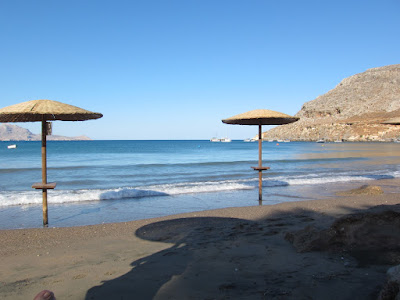
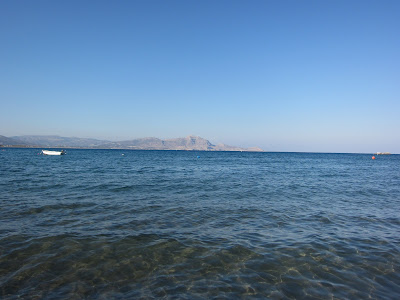
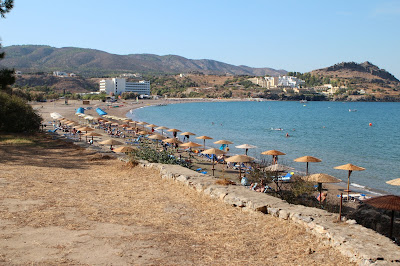
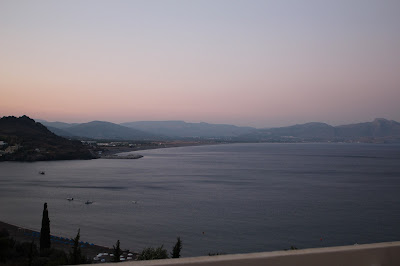
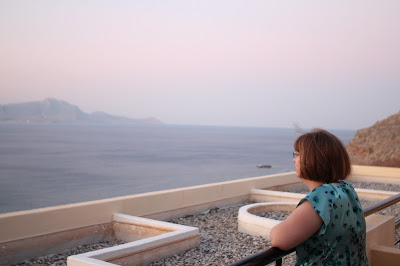
See also parts 1 and 2. That s a photo of Vlicha Beach, near our hotel. But before I talk about the Greek beaches, I need to explain something about living in Kansas. Kansas is in the middle of the United States. The nearest ocean is the Gulf of Mexico, which is 700 miles (1100km) away. That s roughly the same as the distance between Berlin and Minsk, or New York and Chicago. And I believe it s farther away from a saltwater body than all (or almost all) of Europe. So we re not just going to the beach every weekend or something. Vlicha Beach was all those incredible things you ever hear about beaches. The water was so clear that I could easily see my feat while wading in it. That, and the fish swimming around them. It was peaceful, relaxing, and picturesque. Between the deep blue of the sea and the same in the sky, I suppose it is no wonder that blue is often associated with Greece. We weren t exactly the only ones there. Though I think we were the only ones there with Kindles, which seemed to be much more popular in the USA than in Europe. We got several interested people carrying paper books asking what they were. Towards dusk, the mist would become more pronounced and the mountains off in the distance started to fade: The evening before we were set to fly home, we spent some time sitting on our balcony watching dusk set in. One last gaze out over the beautiful Aegean, the misty mountains, and the boats in the distance.

Raphaël Hertzog: What about creating The Ubuntu Administrator s Handbook?

I am currently running a crowdfunding campaign whose ultimate goal is to liberate the English translation of a French book that I have written. This book will be named The Debian Administrator s Handbook because it has primarily been written for Debian. Creating a new Ubuntu book based on The Debian Administrator s Handbook But since Ubuntu is based on Debian, a large part of its content applies equally well to Ubuntu. While discussing with Mark Shuttleworth, he suggested me to reuse those parts and to create a new book dedicated to Ubuntu. It would also cover the latest cloud technologies that Ubuntu has been delivering (since this is a topic that the current book does not cover). This is something that I have been envisioning for a while and something that I would be ready to try if we manage to complete the liberation of the current book. This project would then bring a truly free book to the Ubuntu ecosystem. Why? The official Ubuntu books are not really free There s a policy in place that ensures that official Ubuntu books use a free software/culture license and they are effectively available under the terms of a Creative Commons Share Alike license. But try to create a derivative book you won t find the sources (LaTeX or DocBook usually with most big books). You can only find a few PDF copies if you google for it. But this is really not the preferred form of modification for such a book. Those books are also not packaged. Ubuntu much like Debian deserves to have a good book embodying the values of free software that can be shipped together with its product. When I speak of liberation of the book, I really mean it in the way that free software hackers are used to: a public Git repository containing the DocBook sources, the pictures and the .dia files for the various schemas. Help Ubuntu by spreading the word I understand that at this point this proposed Ubuntu book is really hypothetical ( vaporware one could say) but we need to go step by step to make it a reality. And the first step is to ensure that we manage to liberate the Debian Administrator s Handbook. For this I am seeking the support of the Ubuntu community to promote the current fundraising campaign. If the perspective of the Ubuntu book is not enough to convince you, you ll be glad to learn that I also commit to give back to Ubuntu 15% of the money raised via the link below (once VAT has been subtracted). Click here to go to the crowdfunding campaign page and pledge a few euros. Then share this article (or the link http://debian-handbook.info/go/ulule-ubuntu/) and convince others to participate. At this point, the liberation target is entirely reachable with your help and the help of the community: the remaining 18 K needed in the liberation fund represent 720 persons giving 25 EUR each or 1800 persons giving 10 EUR each. Thank you very much for your support and your help in this project!

One comment Liked this article? Click here. My blog is Flattr-enabled.

17 October 2011

Peter Makholm: Splicing two sockets in Perl (request for help)

A couple of times I have written code which basically does this:
  1. accept() an incoming connection
  2. do some magic to get another socket
  3. start passing bit between the two sockets
  4. perform a correct close down sequence
An example use case of this is a proxy implementing the HTTP CONNECT method, but in for some known hostnames it will log a message and mangle the hostname before proceeding. This has been used as a legacy fall back solution while changing a network setup. But my uses are not restricted to HTTP proxies I have done the same for a few legacy protocols where the magic has been of different complexities. The two final steps are quite general and it would be nice to have a module doing just that. Take two sockets and make it easy (or even automatic) to pass bytes between them. The na ve non-blocking solution would use a scalar string buffer for each direction and perform a select loop while maintaining the write vector depending on which buffers contain data. I have written this code multiple times. In development this is usually quite successful, in production less so. While Perl might be quite suited for the magic in step 2, the na ve way of passing bytes have quite an overhead for the buffer management. A less na ve way would use a array of strings for buffers, but I m not quite sure if this would be a win in all cases. You might be able to get away with some string operations on the read side of the buffer, but it might be more expensive on the write side. I have not benchmarked this. Most of the time I don t care about Perl level IO handles. I know that there is a real C level file descriptor beneath. So an even better POSIX compliant solution might be to use XS to have plain C strings and use readv()/writev() and a iovec structure as buffer. Can we do even better? At least on Linux we can. With the Linux splice() specific system call it is possible to us a pipe as buffer and never to have to copy data from and to user space. I have not been able to find any off the shelf solution on CPAN. So I think I need to write it myself, but what would the nice and general API be? I guess the basic interface would be something like:
    my $chain = IO::Splice->new($fh1, $fh2);
    $chain->pump(); # read and write from both handles if possible and needed
    $chain->read($fh1);  # read to buffer from one specific handle
    $chain->write($fh2); # write from buffer to one specific handle
    $chain->can_write(); # returns the handles it needs to write to
but it might be simpler to have two callbacks for setting a file handle in write or no-write state:
    my $readset  = IO::Select->new( $fh1, $fh2);
    my $writeset = IO::Select->new();
    my $chain = IO::Splice->new( $fh1, $fh2,
        writable => sub    $writeset->add( shift )  ,
        unwritable => sub   $writeset->remove( shift )  
    );
    while ( ... select ... )  
        $chain->pump();
     
As said, I think I have plenty of implementations of the na ve way but before releasing some code it would be nice to get some input on the API. But the best feedback would be a module that already have a usable API but might not implement the Linux specific way. That would allow me to steal the interface

Raphaël Hertzog: GNOME 3 transition happening in Debian unstable

The few articles I wrote that explained how to install GNOME 3 from Debian experimental have been very popular. So I figured out that a small update would be welcome. The Debian GNOME team started uploading a mix of GNOME 3.0 and 3.2 packages to Debian unstable because the release team is ready to take care of this transition. This means that as soon as the packages are ready in Debian unstable, the release team will ensure that they also reach wheezy (aka the current testing distribution). So if you re a Debian unstable/testing user with a GNOME Desktop, expect some important changes by the way my experience with GNOME 3 was recently plagued by some rendering issues resulting in parts of the screen not being properly refreshed. While trying to track this down (and investigating clutter as a possible culprit) I came upon this mail on the clutter-devel mailing list. I recompiled mutter with the indicated patch and it fixed my issue. I immediately uploaded mutter 3.0.2.1-4 with the fix so this issue should be gone for the many people who are going to experience GNOME 3 for the first time in the coming days. It s also worth noting that contrary to how upstream handles it (they hide the fallback mode and the user has to enable an option to use it in place of the GNOME Shell), Debian has a dedicated session for the GNOME 3 fallback mode so you decide what you get right from the login screen. This will be appreciated by the people who do not see GNOME 3 as a step in the right direction. Unless they switch to XFCE as some did. As far I am concerned, I m already used to GNOME 3. I spend most of my time in terminals, browsers and an IRC application and the whole Shell does not fundamentally changes my work habits.

21 comments Liked this article? Click here. My blog is Flattr-enabled.

Martin Meredith: Adventures with the Galaxy SII

Good morning all! It feels like forever since I last blogged . Which is extremely bad of me *slaps own wrist*. However, I m been horrendously stupidly busy. As some of you may know, I m very much an Android fan. Recently, I ve gotten myself a shiny Galaxy SII. Given the fact that alongside my day job of being a Web Developer for an Online Retailer, I m also a Voluntary Ambulance Person I thought it d be useful to ask my current workplace if they d provide me a mobile phone cover for my new phone. Of course, work were more than happy to provide me with a shiny Samsung Galaxy S2 case (I actually went for the Case-Mate Barely There in brushed aluminium). Being a voluntary Ambulance Person, I regularly have to go to random places to pick up an ambulance/attend an event. Because of that I rely quite heavily on Google Maps and it s navigation features (Free Sat Nav in my opinion, the killer feature of Android). Having only had my phone a week, I started to find that there were a few problems with the GPS. Whereas previously, I d been able to lock on almost instantly, It d now take me about half an hour (literally) to get a lock on anything. I tried Googling, I tried everything I could think of, but to no avail. I downloaded GPS Test, and it was showing that while it was picking up a couple of sattelites, it wasn t picking up enough to get a decent lock The image above is a screenshot of the GPS test from directly outside my front door, taken after it had settled down. As you can imagine, I wasn t happy and was ready to send the phone back. Then, for some reason, a brainwave hit me (It doesn t happen often). What changed from when it was working to now? I know! The Case *takes case off, tries GPS test again* It can be amazing what happens when you realise that shiny case you have is mainly made of aluminium. Guess what works well at deflecting radio signals and the like You got it, aluminium. So now I need to decide whether to get another case or whether to just take the case off when I need to do sensible things. Other than the case problem, I m finding that the Samsung Galaxy SII is a great phone (as soon as I got rid of Touchwiz). I m not a fan of the OEM Samsung crap that s been bolted onto the phone, and will, as soon as there s a decent release, be putting a copy of CyanogenMod on the phone (I ve already made most of the tweaks I just want rid of SNS) In other news I ve started more and more gaming again. If you re interested in a couple of rounds of TF2 or some SC2 (or some Portal 2 Co-Op) then give me a shout with your Steam ID / Battle.net ID and I ll see what I can do. I m thinking of starting doing some Let s Play Videos, as my Youtube Channel is looking a bit sparse! I m going to try and start blogging a bit more aswell so if there s anything you want to see me blog about pop a post in the comments below! Till next time..

16 October 2011

Andrew Pollock: [life] Still no Smudge

It'll be a week today since I assume Smudge disappeared. Still no sign of her. I got one call from my posters around the neighbourhood, but I'm now pretty confident that it was another black cat. I really got my hopes up on that one. I don't know what else to do. I could be out beating bushes every spare minute, but I feel like I'm chasing a potentially moving target around an unbounded space. I've had no bites in the cat traps out by the front door. Not even a skunk. The waiting game sucks. I have no idea if she's dead or alive.

15 October 2011

Joachim Breitner: Help wanted maintaining link-monitor-applet

Jean-Yves Lefort s link-monitor-applet, an applet for the GNOME panel, is a great tool for those with often-changing and possibly unreliable network connection. It allows me to see, at one glance, whether I can reach the router, the internet and/or my VPN. Furthermore, the latency display tells me whether there is a point in working over SSH right now. I often observe other people, e.g. on conferences, to stare for a while at a non-loading web page, then fire up a terminal window and run random ping commands, while I immediately see that the network is down and can relax.
Unfortunately, Jean-Yves seems to have stopped working on link-monitor-applet and does not reply to bug reports. This was not a big deal as long as I could use the last released version with minor patches of mine, but now gnome-panel 3 is coming up and all applets need porting to GTK3. Yesterday and today I worked on that, and got it so far that the applet is fully functional, although the visual styling is not perfect yet, because I m not sure how to do what Jean-Yves did with GtkStyle and GdkGC now with GtkStyleContext and Cairo. The code is in the gnome3 branch of my git repository.
For this issue, and any further maintenance work, I m looking for someone who is willing to take upstream responsibility for link-monitor-applet, e.g. making sure it works with the latest GNOME (well, GNOME in fallback mode) and that bug reports are handled. The code base is not too big, and both the non-standard build system and the gob-enhanced C code are fine to work with. I ll still be happy to serve as the maintainer of the Debian package of link-monitor-applet.

Flattr this post

14 October 2011

John Goerzen: Greece part 2: History (and sauntering up to guys with machine guns)

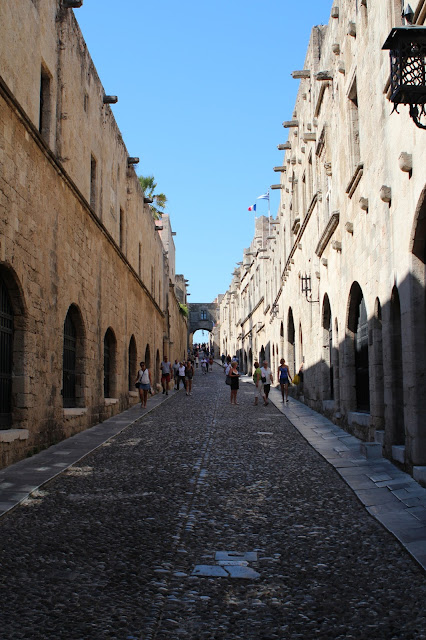
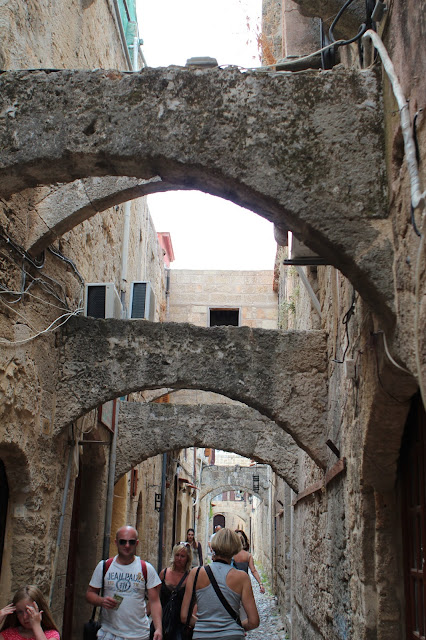
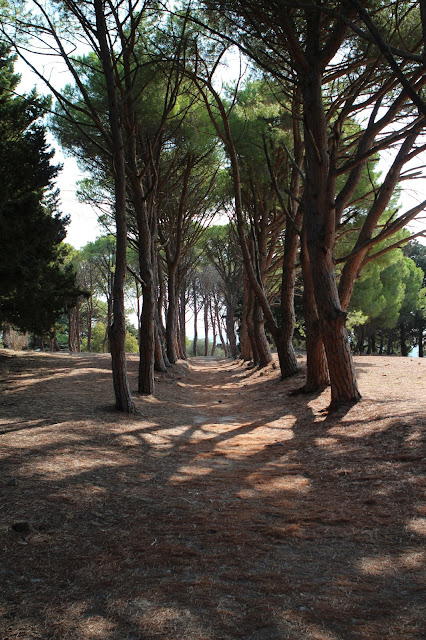
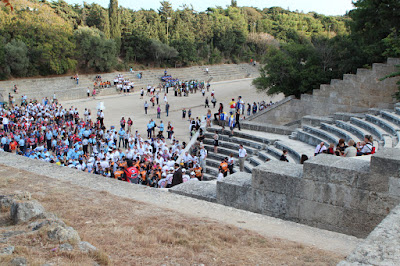
Terah and I went to the Greek island Rhodes recently. This is the second in a series about it. I am one to enjoy history. There is something deeply, well, connecting, about standing in an old place. There is a timeless quality to it a feeling of being connected to so many people of the past, and yet still being connected to change, visible in things such as weathering of stones. To gaze at pottery that s 300 years old, walk past 700-year-old walls, or pass through what remains of the grand portico of an ancient temple to Athena stirs a feeling I can barely explain, of timelessness. Although Rhodes doesn t have the famous Greek sites such as the Parthenon or Delphi, I can t help but wonder why the Rhodes sites aren t better known. They were incredible and it is hard to condense all that we saw into a short blog post. I have to start with the medieval Rhodes Old Town. We got off the bus a few blocks from it one bright morning, and our first task was to find a gate across the moat. Oh yes, A GATE ACROSS THE MOAT. It s a dry moat, and that bridge off in the distance is the gate we were headed to. Outside of the outer wall is a nice quiet walking area. The moat and walls completely surround Old Town and, for the most part, date back about 500 years. The round stones you see on that picture, we were told, were likely surplus from catapults and other projectile weapons. Cross one line of walls and you come to another, with original canons still present. The Knights Hospitaller of St. John, which held Rhodes for a few centuries until the Ottomans captured it, sure knew how to build to impress. The gate we happened to use was Amboise, the Grand Master s Gate. Right there is the stunningly rebuilt landmark Palace of the Grand Master. It is absolutely impossible for any photograph to begin to do this building justice. Between its imported Greek and Roman floors, to the grand nature of everything in it, and the archaeological museum in one corner, it was a fitting start to a visit to Old Town. Here s one of the main staircases. Just near the Palace is quiet courtyard with an old door. Pass through that door and suddenly you re in the midst of the busy Old Town. And among the landmarks in Old Town, the most prominent is Ippoton, the Avenue of the Knights. Along this avenue are the buildings built by the various nationalities of knights, many of which are historical sites in their own. Taken together, it is quite clear why Rhodes is said to be one of the world s best-preserved medieval cities. Down at the other end of Ippoton is the Knights Hospital, which is now part of the archaeological museum. Step off the Avenue a few blocks and you get to some quieter narrow streets just as old, in many cases. On Sunday morning, we were able to visit Mount Filerimos. In contrast to the busy Rhodes, Filerimos had an air of quiet and still to it. It was the site of a monastery, two historic churches, and a landmark Italian cross on the mountaintop. We arrived, and begin our visit with a walk up the quiet stone path. When we got to the top, we walked past this peaceful church. As we walked past the outside, we heard the beautiful music of chant from indoors. We got to step in and listen to mass for a few minutes. In typical fashion, directly in front of the church are two much older sites: one, the ruins of a temple to Athena, and the other a 4th-century Christian bapistery. Rhodes is a popular tourist destination, and of course we saw plenty of popular sites (such as the grandmaster s palace). Filerimos had a few tourists too, but not as many. I frequently like to operate on the plan of going wherever all the tourists aren t. And so, on Filerimos, that meant seeing what was behind the monastery. It started with this peaceful tree-lined path. And the deserted, but intentionally open, gate led to the remains of a Byzantine fortress, which had been a staging area for both the Knights and the Ottomans before their campaigns to capture Rhodes. It also provided incredible views of the surrounding countryside. The first historic site we had visited on our trip was the Acropolis of Lindos, parts of which are 2300 years old. Here s a view of the mountain from the rooftop of the Kalypso, our favorite restaurant in Lindos. The columns of the temple to Athena Lindia are visible, and of course so are the walls. The road up to the acropolis is accessible only on foot or by donkey. It is apparently the only road that has ever been used to get to the acropolis. Here is the partially-restored grand portico to the temple. There s an old Christian church (4th century, if memory serves) at the Acropolis too. The Acropolis makes some pretty good use of natural defenses too. Here s a view from one level of it. There s a manmade wall up there at the very top. And, of course, the beautiful Aegean always in the background. There are lots of cats on Rhodes. Here is a kitten napping at the top of the Lindos Acropolis: Lindos itself is a beautiful town. Here s one of the quieter streets: Notice the pebble steps leading into the houses those intricate pieces of artwork are all over. This post won t be complete without the story of our visit to the Acropolis of Rhodes. We walked there from Old Town. At the Acropolis, there are the remains of a temple to Apollo, an ancient theater, and an ancient stadium where qualifying matches for the Olympics were held. As we got closer to the area, we were repeatedly passed by people dressed in uniforms of various types. And as we got there, we joined a stream of people entering the area. The ancient stadium had apparently thousands of people in it, country names were being read off over the loudspeakers, policemen wielding machine guns were standing by, and we had absolutely no idea what was going on. At this point, you can appreciate the difference between Terah and me. Terah thought that we have no idea what is happening, she was tired from the walk, and so thought we should just leave. I thought that we have no idea what is happening, which is a great reason to stay. So Terah opted to sit and read a bit under some trees while I explored. Here s a view of the stadium as it was emptying out, seen from the theater: I explored the temple and theater, and eventually we were ready to head back. We knew there was a bus back to the New Market (from where we could get a bus back to our hotel), but didn t know where the bus stop was. The obvious place to ask were the policemen, which I thought I would do. Terah thought she would just stay sitting under the trees, on the grounds that the policemen nearest us were all carrying machine guns and perhaps wouldn t like to be disturbed. This led to my cryptic tweet:
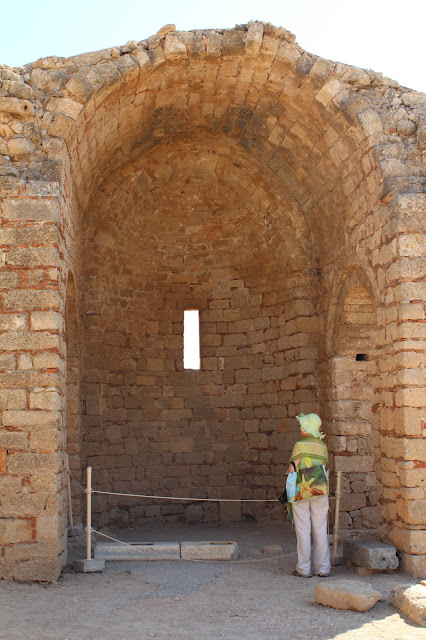
Only ONE of us is the kind of person that goes up to guys with machine guns to ask what s happening. Me to Terah today
They told me that it was the preparations for the opening ceremony for a global shooting contest, and also gave me directions to the bus stop.

Ritesh Raj Sarraf: Laptop Mode Tools - 1.60

Hello World,

I am very pleased to announce the release of Laptop Mode Tools, version 1.60.
This release includes lots of bug fixes and should make power savings much better on your machines.
The battery polling daemon now, more reliably, gets triggered and killed based on power states.

read more

13 October 2011

Yves-Alexis Perez: Fun with network cards

The issue This morning (while I was running late for an appointement) I had a very weird stuff happening on my Thinkpad T61 laptop. Since I recently offered myself a shiny Thinkpad x201s, I have to admit I don't use much my T61 anymore. But this morning I had to print a page (for this appointement) and, as I didn't yet configured my printer on the x201s, I went to the T61. But I noticed that the network was down. I've tried quickly on wireless but, bad luck, my current wifi setup selects the channel automatically and it prefers choosing channels which aren't available in the US. Guess what, my T61 comes from the US and has those channels completely disabled, so no wireless available either. The investigation I first tried to

modprobe -r e1000e
modprobe e1000e to see if it fixed the problem, but it didn't. Worse, the interface disappeared and never reappeared. I tried to reboot but it didn't fix the problem, the link was still down. Running really late, I put the file on a usb key and printed it from the powerbook and postponed the fix for later. Now, this evening, I tried to investigate a bit more. Symptoms weren't only that the nic wasn't working, but there was a high load on the system (1-2 at idle), unresponsiveness every second or so, and watching top I could see spikes of high cpu usage for the kworker kernel thread. Typing that on google you can find a lot of people running on this issue, usually starting around kernel 2.6.36 or 2.6.37. Now, I might have upgraded the kernel recently to 3.0.0-4, but that didn't look related since the problem first appeared when the laptop was up and running. And I tried to reboot under 2.6.39, 2.6.38 and even 2.6.32 and the problem was still present. Each time, unloading the module would fix the problem, but loading it again wouldn't make the interface reappear. People advised to boot with pcie_ports=compat but that didn't do anything. I tried to boot without intel_iommu=force (disable Intel Vt-d) and pcie_aspm (Active State Power Management) but nothing either. Considering a userland issue, I've tried to boot a grml live distro (always keep a grml.iso in your /boot, extlinux-update will even put it in your menu automatically), and the problem was still present. So not a Debian kernel issue, not a userland issue, only thing left was the laptop. I didn't update the Bios recently, so I wondered exactly what could be the problem. I started to feel a little bad, since I still really like that laptop, and that I already decided to lend it to my sister since her own T61 is sitting with a dead system board in my shelf. I know she might have some negative waves, but she was not even landed when the problem first appear. The fix Then I had a flash. It's not mystery that I'm used to break network cards, and I had the bright idea to shutdown the laptop, disconnect AC and battery, then let it idle a bit. I even tried the secret Thinkpad power button code but I think it's unrelated. Then I re-plugged the battery, booted to grml and the issue was gone. I rebooted on the standard Debian and the link was up, network was working. So what happenned? The (tentative) explanation My guess is that, somehow, the network card firmware has an issue and choked on something (a network frame or an attack exactly like the one we demonstrated on ASF firmware). In fact, no, I don't think it's the e1000e firmware. My T61 comes with Intel vPro, which includes AMT (Active Management Technology), a remote management solution a bit like ASF but more advanced. As far as I know, AMT firmware always runs, even when it's disabled, it's just completely idle. Idle, but in this case I think it choked on something, and a reboot isn't enough to restart the AMT firmware. But a real hard reset without any power seems to do the trick. What next? Well, a part of me is pretty scared, but another is just bored. I mean, we know about that, that's exactly the kind of issue we are warning people of. I have no idea what exactly happened, and there's no way I'll be able to reproduce that, but I'm pretty sure it's something lying at a pretty low level in the platform, and which can severely disable your workstation. Now if it happens again I won't lose too much time on this. TL;DR: helping other people In case you came here because you searched on google terms like kworker cpu usage , e1000e, interrupts, it might be a good idea to first reboot on a live CD to eliminate installation issues, then shutdown the laptop, remove the battery and let it few seconds idle. This might be enough to reset something inside and fix the situation.

Alastair McKinstry: #### [WATER FRACTIONS IN EXTRASOLAR PLANETESIMALS](http://arxiv.org/PS_cache/arxiv/pdf/1110/1110.1774v1.pdf) #### Jura & Xu, Arxiv.org. #exoplanets, #water, #phd > Abstract: With the goal of using externally-polluted white dwarfs to investigate the water fractions of extrasolar planetesimals, we assemble from the literature a sample that we estimate to be more than 60% complete of DB white dwarfs warmer than 13,000 K, more luminous than 3 10 3 L and within 80 pc of the Sun. When considering all the stars together, we find the summed mass accretion rate of heavy atoms exceeds that of hydrogen by over a factor of 1000. If so, this sub-population of extrasolar asteroids treated as an ensemble has little water and is at least a factor of 20 drier than CI chondrites, the most primitive meteorites. In contrast, while an apparent excess of oxygen in a single DB can be interpreted as evidence that the accreted material originated in a water-rich parent body, we show that at least in some cases, there can be sufficient uncertainties in the time history of the accretion rate that such an argument may be ambiguous. Regardless of the difficulty associated with interpreting the results from an individual object, our analysis of the population of polluted DBs provides indirect observational support for the theoretical view that a snow line is important in disks where rocky planetesimals form. Ok, so we now have a way of estimating how wet planetary systems *were*, at the time they fell into the white dwarf star. Not very representative of the time they before the planet got roasted to a crisp by the stars Red Giant stage, however. Recovering the hydrogenation state of serpentinized minerals might be possible and useful.

#### [WATER FRACTIONS IN EXTRASOLAR PLANETESIMALS](http://arxiv.org/PS_cache/arxiv/pdf/1110/1110.1774v1.pdf) #### Jura & Xu, Arxiv.org. #exoplanets, #water, #phd > Abstract: With the goal of using externally-polluted white dwarfs to investigate the water fractions of extrasolar planetesimals, we assemble from the literature a sample that we estimate to be more than 60% complete of DB white dwarfs warmer than 13,000 K, more luminous than 3 10 3 L and within 80 pc of the Sun. When considering all the stars together, we find the summed mass accretion rate of heavy atoms exceeds that of hydrogen by over a factor of 1000. If so, this sub-population of extrasolar asteroids treated as an ensemble has little water and is at least a factor of 20 drier than CI chondrites, the most primitive meteorites. In contrast, while an apparent excess of oxygen in a single DB can be interpreted as evidence that the accreted material originated in a water-rich parent body, we show that at least in some cases, there can be sufficient uncertainties in the time history of the accretion rate that such an argument may be ambiguous. Regardless of the difficulty associated with interpreting the results from an individual object, our analysis of the population of polluted DBs provides indirect observational support for the theoretical view that a snow line is important in disks where rocky planetesimals form. Ok, so we now have a way of estimating how wet planetary systems *were*, at the time they fell into the white dwarf star. Not very representative of the time they before the planet got roasted to a crisp by the stars Red Giant stage, however. Recovering the hydrogenation state of serpentinized minerals might be possible and useful.

Sven Mueller: Strange MySQL (5.0) issue with authentication

Dear Lazyweb . I ran into a very strange issue with MySQL authentication. The initial situation is as follows:
Two MySQL servers, let s name them a0.my.do.main and a1.my.do.main. Their my.cnf configuration is identical except for the server_id (equals 1 on a0 and 2 on a1).
Since I wanted to set up a master< ->master replication, I created a user repl@%.my.do.main on a0, then shut down the mysql server on both hosts, copied over the mysql database on the filesystem layer (i.e. rsync of the data directory), then started mysql on both hosts again. So far, so good, both servers came up nicely, and local (unix socket) login as a root user worked fine as expected. However: Logging in via TCP socket only works from a1 (to both a0 and a1). Logging in via TCP socket from a0 doesn t work to either host. I also created a test user sven @ %.my.do.main (I also tried with @ % ) which has all privileges.
Here is what the commands output:

sven@a0 ~ > mysql -u sven -ptestpass -h a0.my.do.main
ERROR 1045 (28000): Access denied for user 'sven'@'a0.my.do.main' (using password: YES)
sven@a0 ~ > mysql -u sven -ptestpass -h a1.my.do.main
ERROR 1045 (28000): Access denied for user 'sven'@'a0.my.do.main' (using password: YES)
sven@a1 ~ > mysql -u sven -ptestpass -h a0.my.do.main
Welcome to the MySQL monitor. Commands end with ; or \g.
Your MySQL connection id is 32
Server version: 5.0.77-log Source distribution Type 'help;' or '\h' for help. Type '\c' to clear the buffer. mysql> Bye
sven@a1 ~ > mysql -u sven -ptestpass -h a1.my.do.main
Welcome to the MySQL monitor. Commands end with ; or \g.
Your MySQL connection id is 24
Server version: 5.0.77-log Source distribution Type 'help;' or '\h' for help. Type '\c' to clear the buffer.
mysql>
All packages on both machines are up to date (CentOS5 with all updates available). The server variables shown with show variables also seem identical (except for the hostname and the server id). Besides, it looks more like a client problem to me than a server problem. Last datapoint: If I define the mysql user sven with an explicit host (a0.my.do.main and a1.my.do.main) instead of a wildcard, everything works nicely, from and to both hosts. So, dear lazyweb: Does anyone have an idea what might be causing this issue? Update: Due to some comments, let me add a few points of information:
  1. flush hosts doesn t help. Host resolution looks OK, according to documentation, the hostname in the error message is what the server things is right, not what the client specified, and that documentation seems to be consistent with my experiences.
  2. The db and user tables look as expected. And I m quite sure they are not the issue here, as I can connect from other hosts that match the host pattern.
  3. There is no ~/.my.cnf on either host
  4. Copying the database files on the filesystem layer is one of the documented ways of initializing the database on the slave for replication. Anyway, I had the same issue when trying to set up the database on the slave by loading a dump.
  5. DNS looks fine, both forward and reverse mappings, both servers use the same DNS server.
  6. IPv6 is not involved, it is disabled on these servers
Thanks for the hint at serverfault.com, I will try that if I don t get sufficient info here. Update 2 Another strange data point:
When I disable the (non-privileged) anonymous access user in the mysql.user table (i.e. drop the rows with user= "), everything works as expected from both servers. However, why does it work from one host (client) to both DBs if the anonymous access is allowed (with no privileges except for being able to see that the test and mysql databases exist), but not from the other host (client)? It really looks like an issue on the client side, but I still don t get what exactly goes wrong.

12 October 2011

Sam Hartman: Moonshot SSP

It s been a while since I ve written about Moonshot. A lot has gone on; we ve been too busy doing to be busy blogging. However there s something that s happened recently that s so cool I had to take a moment to discuss it. Padl Software, the same people (well person) who brought us LDAP support to replace NIS and the first Active Directory clone, has now produced a GSS-EAP Security Service Provider. That s software that implements the Moonshot protocol and plugs it into the standard Windows security infrastructure. This is neat because it allows you to use GSS-EAP with unmodified Windows applications like Internet Explorer and Outlook/Exchange. Obviously, this will be great for Moonshot. However, I think the positive affects are more far-reaching than that. Luke has demonstrated that we can evolve the Windows security infrastructure without waiting for Microsoft to lead the way. For those of us working in the enterprise security space, that s huge. We can innovate and bring our innovation to Windows. In terms of getting acceptance in important user communities, getting funding for work, and making a practical difference, that s a big deal. This code is still in the early stages. Padl has not decided how the code will be made available. We don t know if it will be under an open-source license yet. Luke, naturally wants to get paid for his work. However if this code does get released under an open-source license, it will be very valuable. That will give all of us who are looking for a starting point for security innovations a starting point for bringing our innovations to Windows. Some in the open-source community will argue that we shouldn t work on improving Windows: if the open-source platforms have features Windows does not, then it may drive people to open-source. Especially for enterprise infrastructure, it tends not to work that way. You need broad cross-platform support to drive new technology. However, it does mean that we can take control of the evolution of our infrastructure; even for Windows there is no requirement that a single vendor controls what is possible.

Gerfried Fuchs: Global2000 Geburtstagsfest

No, my blog isn't dead, and neither is me. It's just that way too many things happened since this year's debconf that got me a bit off tracks. I managed to do daily business like keeping my packages in shape and the backports queue low, and that was mostly it. No clue if that will change anytime soon, but I guess I would like to keep you updated with an event where you can meet me next week: There will be the Global 2000 Birthday Party going on in the WUK on Thursday 20th, so if you happen to be in Vienna at that time, drop by and enjoy some great bands. ... which brings me to one of the local bands from Vienna: Heinz aus Wien. They are around for well over 10 years now and are still rocking quite well. Here are some examples of their songs, like always: Like always, enjoy!

/music permanent link Comments: 0 Flattr this

Next.

Previous.