Search Results: "he"

15 March 2016

Michal Čihař: Weekly phpMyAdmin contributions 2016-W10

Last week was quite equally split between refactoring and bug fixing. As we're getting closer to 4.6.0 release more people give feedback on it and some corner case issues are being discovered. However the biggest challenge was strange bug that was reported long time ago - it affected only Italian translation on Windows server. After lot of debugging, I've realized that trying to encode Cardinalit </td> to json (using json_encode) causes this problem. Obviously there have to be more conditions met as this string only doesn't cause it, however removing it or placing x between and < fixes the problem. In the end I've workarounded it in our code and hopefully I will get to create proper bugreport for php so that it can be fixed upstream as well. The refactoring was mostly focused on encoding conversion part which is now all embedded in the Encoding class. It was quite simplified and should also speed up pages a bit as it does the initialization only when needed not on every phpMyAdmin's page. Handled issues:

Filed under: English phpMyAdmin 0 comments

Dirk Eddelbuettel: x13binary 0.1.2

A new version of x13binary is now on CRAN. It updates the underlying X-13ARIMA-SEATS binary to build 1.1.26 which was released recently by the US Census Bureau. Our x13binary package takes the pain out of installing this, and provides it to the seasonal package upon which other packages such as gunsales or ggseas build their functionality. Things just work: Depend on x13binary and on all relevant OSs supported by R, you should have an X-13ARIMA-SEATS binary installed which will be called seamlessly by the higher-level packages. See this announcement blog post describing the initial 0.1.0 release; we had since followed up with a 0.1.1 release tightening up behaviour on two edge case OSs. Courtesy of CRANberries, there is also a diffstat report for the most recent release as well as the preceding bugfix release.

This post by Dirk Eddelbuettel originated on his Thinking inside the box blog. Please report excessive re-aggregation in third-party for-profit settings.

14 March 2016

Bits from Debian: New Debian Developers and Maintainers (January and February 2016)

The following contributors got their Debian Developer accounts in the last two months: The following contributors were added as Debian Maintainers in the last two months: Congratulations!

Julian Andres Klode: Dropping SHA-1 support in APT

Tomorrow is the anniversary of Caesar s assassination APT will see a new release, turning of support for SHA-1 checksums in Debian unstable and in Ubuntu xenial, the upcoming LTS release. While I have no knowledge of an imminent attack on our use of SHA1, Xenial (Ubuntu 16.04 LTS) will be supported for 5 years, and the landscape may change a lot in the next 5 years. As disabling the SHA1 support requires a bit of patching in our test suite, it s best to do that now rather than later when we re forced to do it. This will mean that starting tomorrow, some third party repositories may stop working, such as the one for the web browser I am writing this with. Debian Derivatives should be mostly safe for that change, if they are registered in the Consensus, as that has checks for that. This is a bit unfortunate, but we have no real choice: Technical restrictions prevent us from just showing a warning in a sensible way. There is one caveat, however: GPG signatures may still use SHA1. While I have prepared the needed code to reject SHA1-based signatures in APT, a lot of third party repositories still ship Release files signed with signatures using SHA-1 as the digest algorithms. Some repositories even still use 1024-bit DSA keys. I plan to enforce SHA2 for GPG signatures some time after the release of xenial, and definitely for Ubuntu 16.10, so around June-August (possibly during DebConf). For xenial, I plan to have a SRU (stable release update) in January to do the same (it s just adding one member to an array). This should give 3rd party providers a reasonable time frame to migrate to a new digest algorithm for their GPG config and possibly a new repository key. Summary
Filed under: Debian, Ubuntu

Simon Richter: IPsec settings for FortiNet VPN

So, a customer uses a FortiNet VPN gateway. Because I have perfectly fine IPsec software already installed, the only thing missing are appropriate settings. As they use IKEv1 in aggressive mode, there is not much of an error reply if you get any of them wrong. So, here's a StrongSwan setup that works for me:

conn fortinet
        left=%any
        leftauth=psk
        leftid=""
        leftauth2=xauth
        xauth_identity="your username"
        leftsourceip=%config
        right=gateway IP address
        rightsubnet=VPN subnet
        rightauth=psk
        keyexchange=ikev1
        aggressive=yes
        ike=aes128-sha1-modp1536!
        esp=aes128-sha1-modp1536!
        auto=add
Not sure if that can be optimized further by getting the VPN subnet through mode_config as well, but I'm basically happy with the current state. In addition to that, you need the PSK and XAUTH secrets, obviously.

Lunar: Reproducible builds: week 46 in Stretch cycle

What happened in the reproducible builds effort between March 6th and March 12th:

Packages fixed The following packages have become reproducible due to changes in their build dependencies: dfc, gap-openmath, gnubik, gplanarity, iirish, iitalian, monajat, openimageio, plexus-digest, ruby-fssm, vdr-plugin-dvd, vdr-plugin-spider. The following packages became reproducible after getting fixed:
  • adduser/3.114 by Niels Thykier.
  • bsdmainutils/9.0.7 by Michael Meskes.
  • criu/2.0-1 by Salvatore Bonaccorso.
  • genometools/1.5.8+ds-2 by Sascha Steinbiss.
  • gfs2-utils/3.1.8-1 uploaded by Bastian Blank, fix by Christoph Berg.
  • gmerlin/1.2.0~dfsg+1-5 by IOhannes m zm lnig.
  • heroes/0.21-14 by Stephen Kitt.
  • kmc/2.3+dfsg-3 by Sascha Steinbiss.
  • polyml/5.6-3 by James Clarke.
  • sed/4.2.2-7.1 by Niels Thykier.
  • snpomatic/1.0-3 by Sascha Steinbiss.
  • tantan/13-4 by Sascha Steinbiss.
Some uploads fixed some reproducibility issues, but not all of them: Patches submitted which have not made their way to the archive yet:
  • #817979 on modernizr by Sascha Steinbiss: sort list of files included in feature-detects.js.
  • #818027 on snapper by Sascha Steinbiss: always use /bin/sh as shell.

tests.reproducible-builds.org Always use all cores on armhf builders. (h01ger) Improve the look of Debian dashboard. (h01ger)

Package reviews 118 reviews have been removed, 114 added and 15 updated in the previous week. 15 FTBFS have been filled by Chris Lamb. New issues: xmlto_txt_output_locale_specific.

Misc. Lunar seeks new maintainers for diffoscope, several mailing lists, and these very weekly reports.

13 March 2016

Vincent Sanders: I changed my mind, Erase and rewind

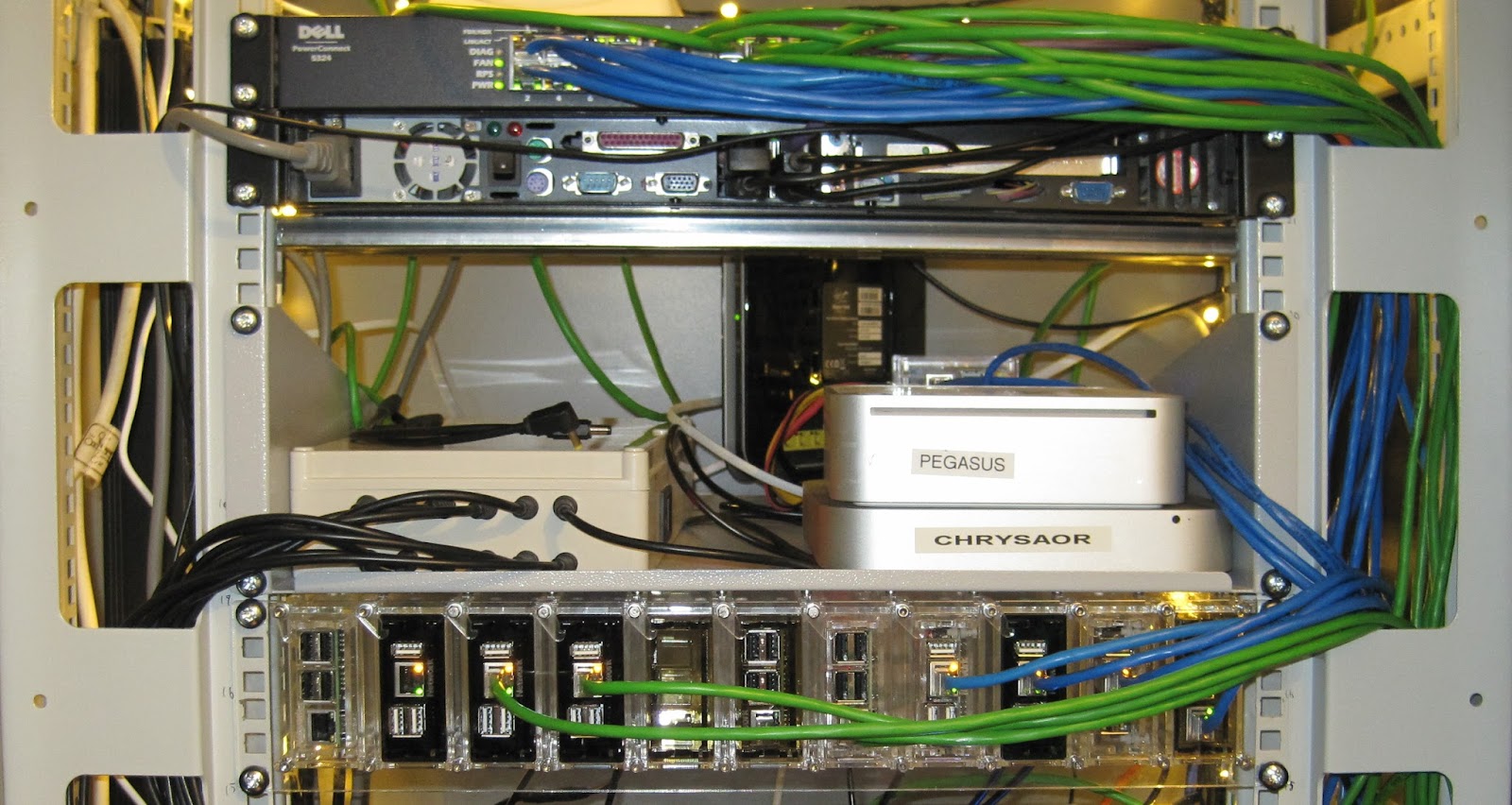
My recent rack design turned out to simply not be practical. It did not hold all the SBC I needed it to and most troubling accessing connectors was impractical. I was forced to remove the enclosure from the rack and go back to piles of SBC on a shelf.

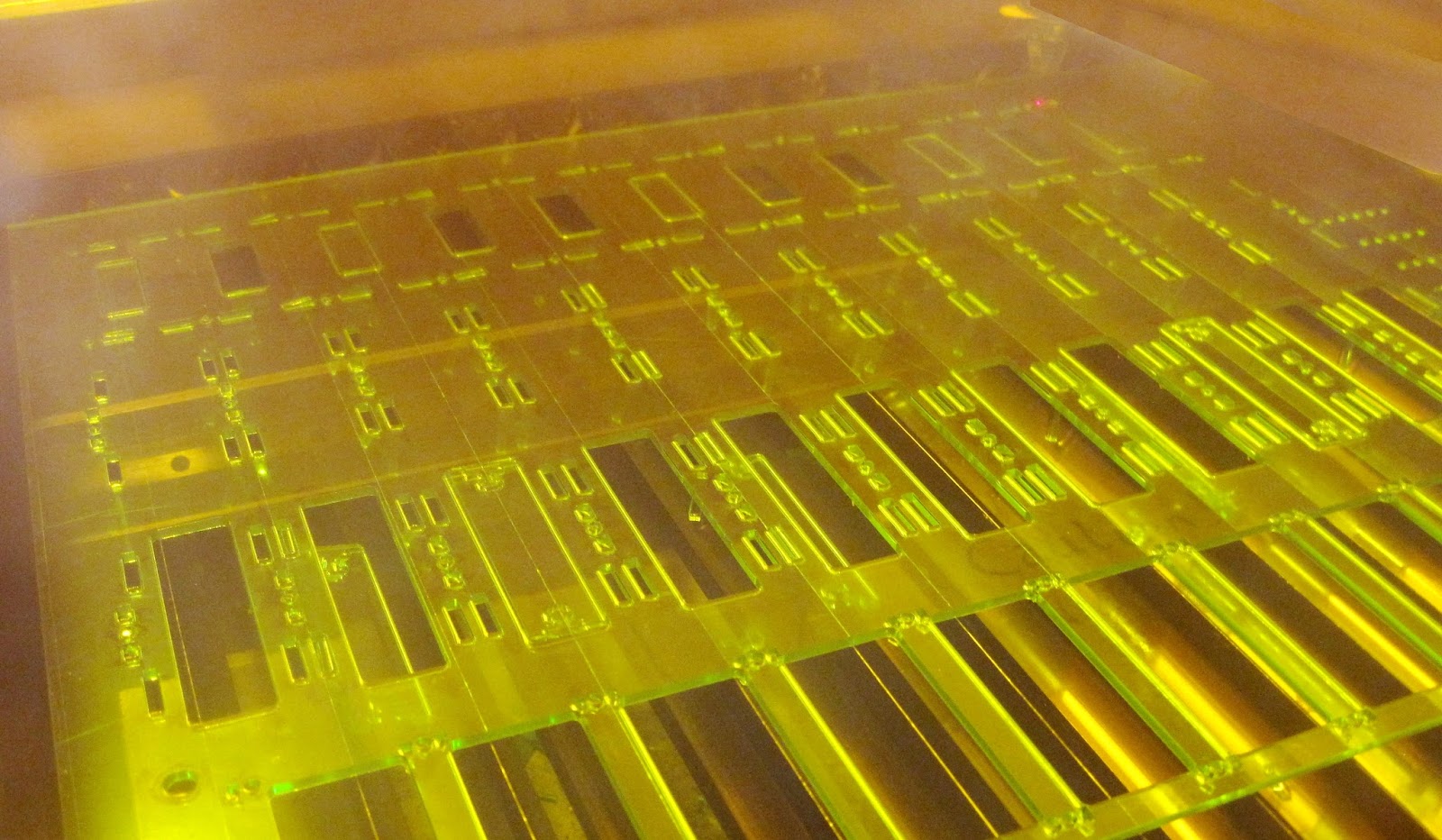
View of the acrylic being laser cut through the heavily tinted window
This sent me back to the beginning of the design process. The requirement for easy access to connectors had been compromised on in my first solution because I wanted a compact 1U size. This time I returned to my initial toast rack layout but retaining the SBC inside their clip cases.

By facing the connectors downwards and providing basic cable management the design should be much more practical.

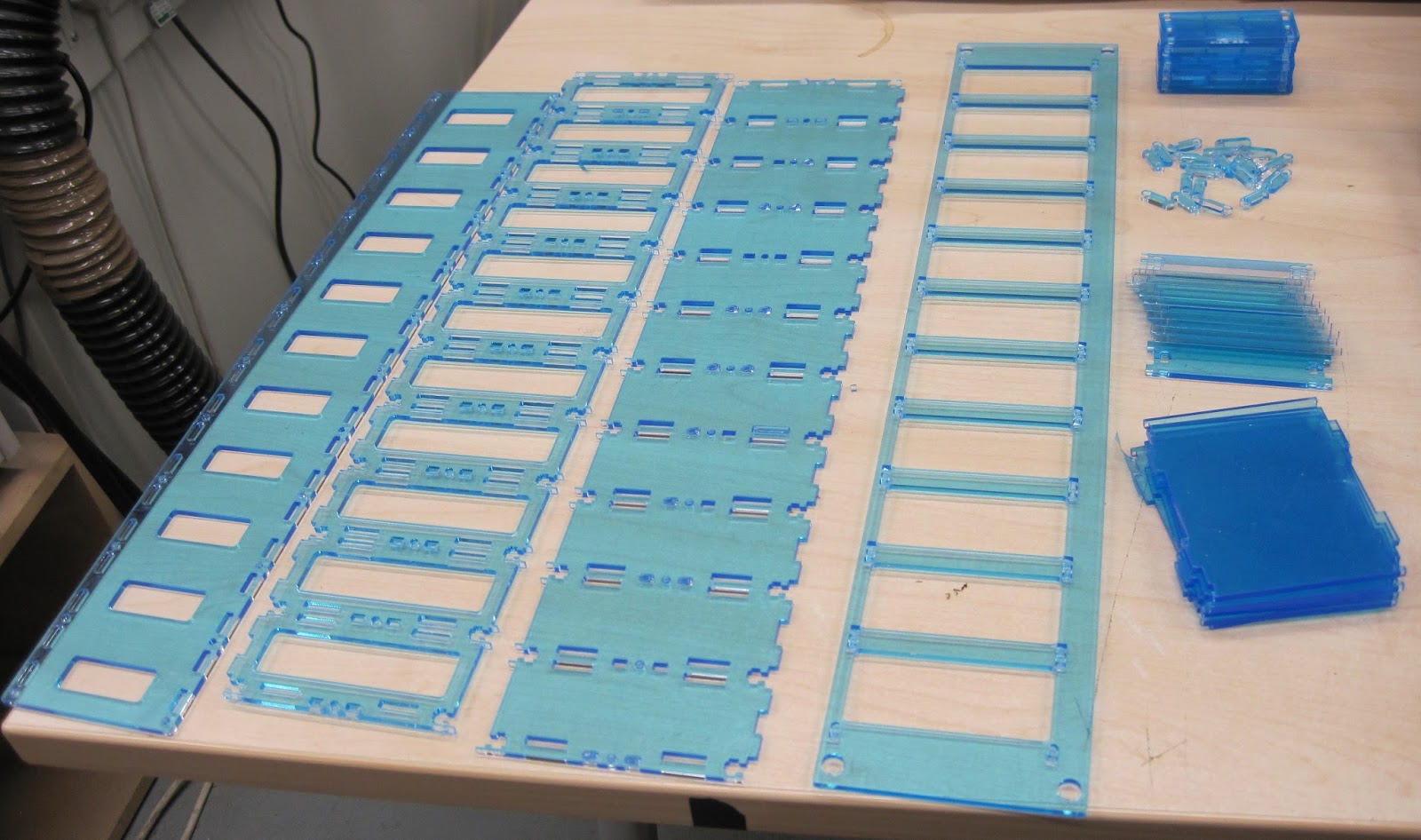
My design process is to use the QCAD package to create layered 2D outlines which are then converted from DXF into toolpaths with Lasercut CAM software. The toolpaths are then uploaded to the laser cutter directly from the PC running Lasercut.

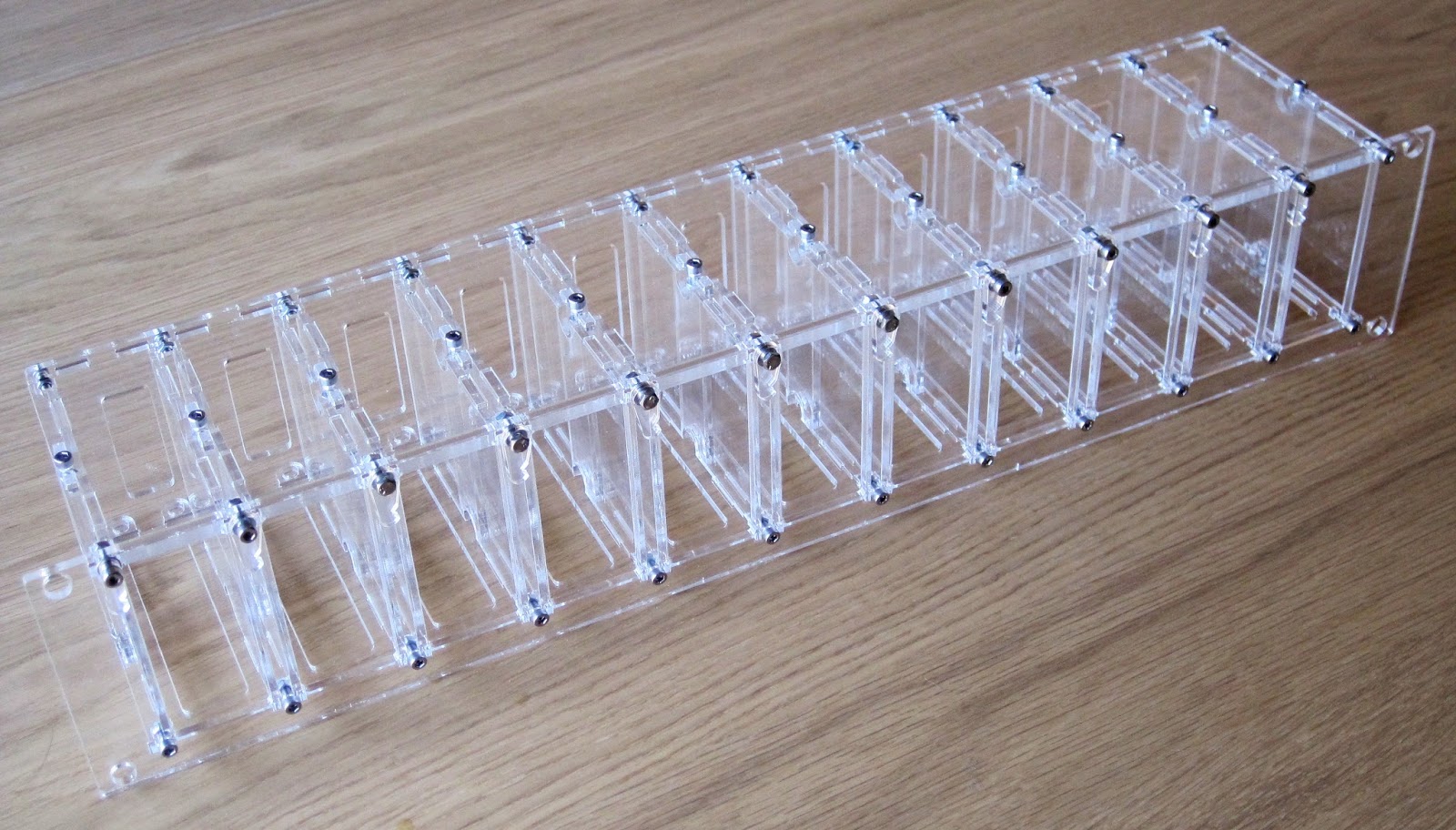
Assembled sub rack enclosureDespite the laser cutters being professional grade systems the Lasercut software is a continuous cause of issues for many users, it is the only closed source piece of software in the production process and it has a pretty poor user interface. On this occasion my main issue with it was my design was quite large at 700mm by 400mm which caused the software to crash repeatedly. I broke the design down into two halves and this allowed me to continue.

Once I defeated the software the design was laser cut from 3mm clear extruded acrylic. The assembled is secured with 72 off M3 nuts and bolts. The resulting construction is very strong and probably contains much more material than necessary.

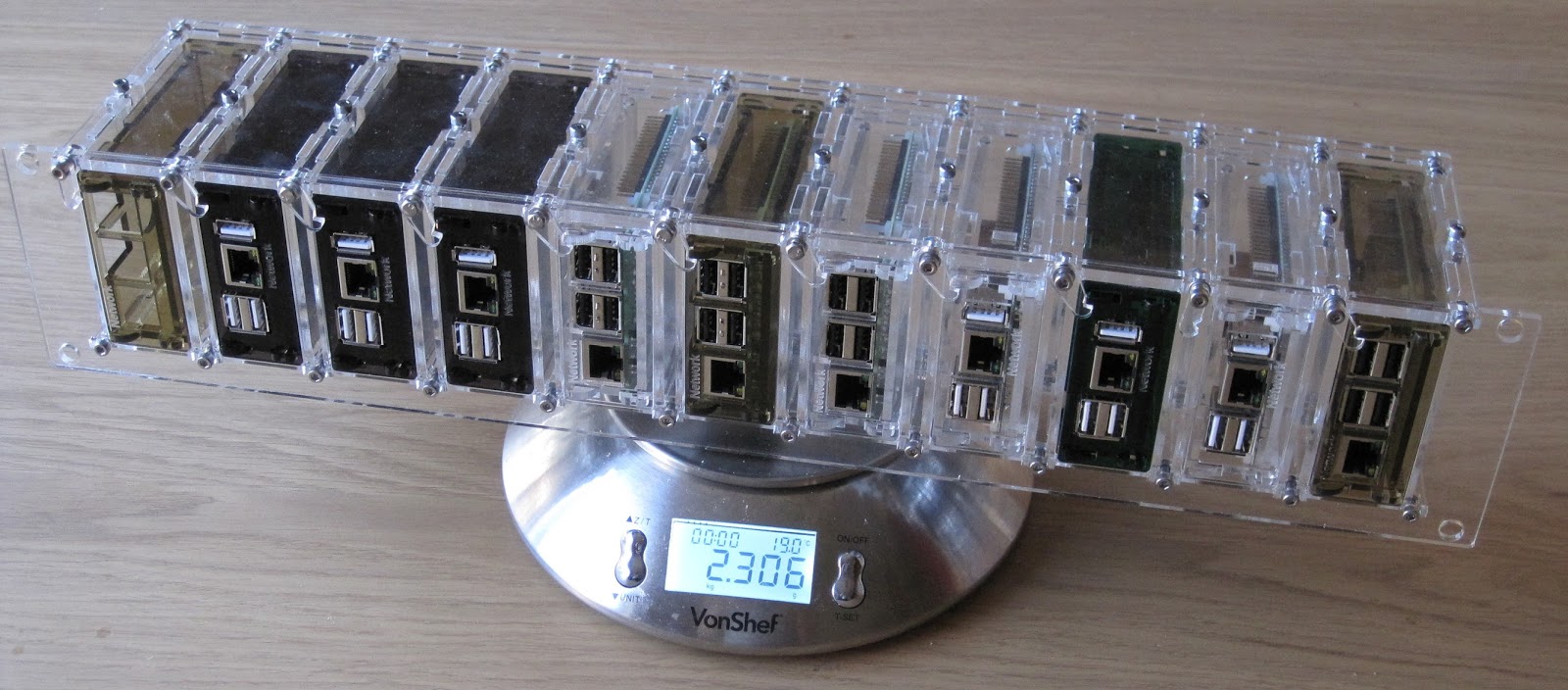
One interesting thing I discovered is that in going from a 1U enclosure holding 5 units to a 2U design holding 11 units I had increased the final weight from 320g to 980g and when all 11 SBC are installed that goes up to a whopping 2300g. Fortunately this is within the mechanical capabilities of the material but it is the heaviest thing I have ever constructed from 3mm acrylic.

bolted into the rack and operatingOnce installed in the rack with all SBC inserted and connected this finally actually works and provides a practical solution. The self is finally clear of SBC and has enough space for all the other systems I need to accommodate for various projects.

As usual the design files are all freely available though I really cannot see anyone else needing to replicate this.

Amaya Rodrigo:


,

. 3D

, , 3D ( , , , , , , , , , , , , ), .
, . , - - , , , . , .
1.
. . , . , . 104
: 8 (4967) 76-11-11, 8 (4967) 76-01-11

2. ,
. . , . , . 21/2
: +7 (4967) 37-72-72, +7 (916) 037-72-72, +7 (915) 037-72-72

3.
. . , , . 64
: 8 (915) 118-49-98, 8 (925) 545-72-58, 8 (495) 545-72-58

4. -3
. . , . , . 2
: 8 (4967) 35-11-22, 8 (916) 40-100-60, 8 (903) 193-02-07

</div></p>

Amaya Rodrigo:


,

. 3D

, , 3D ( , , , , , , , , , , , , ), .
, . , - - , , , . , .
1. ,
. . , . , . 26, 6
: 8 (49234) 2-69-58, 8 (900) 476-84-25

2.
. . , . , . 149 , 2-
: 8 (49234) 77-9-44, 8 (919) 000-79-44

3.
. . , , . 17
: +7 (49234) 77-5-77, +7 (904) 251-46-99

</div></p>

Amaya Rodrigo:


, , , , , .

, , , , , , , , , , , , , , , , , , .
, .
, , , .
, , - . , , . . , , , , , .
, . , , . , , , , .
:

. , , .
, , , . , , , , , , .
, , , .
</div></p>

Amaya Rodrigo:


. , , . - . .

, , , , , , , , , , , , .


. . . ( ), . .
.
- .
- .
. - .37/39.
. - . .6
18.01.2016
! 18.01.2016
09.10.2015

13.01.2015

11.03.2016
, , , , ?
11.03.2016
. " / . . - 1.6
11.03.2016
. 8 . . . . .
</div></p>

Amaya Rodrigo:


. , , . - . .

, , , , , , , , , , , , .


. . . ( ), . .
.
- .
- .
. - .37/39.
. - . .6
18.01.2016
! 18.01.2016
09.10.2015

13.01.2015

11.03.2016
, , , , ?
11.03.2016
. " / . . - 1.6
11.03.2016
. 8 . . . . .
</div></p>

Andreas Metzler: How to put on one's hardboots, when ligaments are damaged

I have finally managed to do (a little bit of) snowboarding again this weekend. Previously I had failed early, when trying to pull on my hard-boots. I had (partially) torn some ligament in the ankle joint in February and am generally fine now, but exactly this movement still caused pain. What worked was to
  1. take the liner out of the boot,
  2. pull on the liner,
  3. step into the outer shell.

Antoine Beaupr : State of Mapping on the Debian Desktop

TL;DR: Mapbox Studio classic is not as good as Tilemill, Mapbox studio is very promising, but you still need to signup for access, and kosmtik seems to be working right now. Use kosmtik and help getting it in Debian.

The requirement I have been following the development of fascinating tools from the Development seed people, now seemingly all focused on the Mapbox brand. They created what seemed to me a revolutionary desktop tool called Tilemill. Tilemill allowed you to create custom map stylesheets on your desktop to outline specific areas or patterns or "things". My interest was to create outdoor maps - OSM has pretty good biking maps, but no generic outdoor tiles out there (I need stuff for skiing, canoeing, biking)... Mapbox has Mapbox outdoors but that's a paid plan as well. Oh and there's a place to download Garmin data files especially made for outdoors as well, and that could be loaded in Qmapshack, but they don't have coverage in Canada at all. Besides, I would like to print maps, I know, crazy... So I have been looking forward to seeing Tilemill packaged in Debian given how annoying it is to maintain Node apps (period). Unfortunately, by the time Debian people figured out all the Node dependencies, the Tilemill project stopped and has been stalled since 2012. It seems the Mapbox people have now been working on other products, and in the meantime, the community, scratching their heads, just switched to other projects.

Overview of alternatives I wrote this long post to the Debian bugtrackers to try to untangle all of this, but figured this would be interesting to a wider community than the narrow group of people working on Javascript packages, so I figured I would send this on Debian planet. So Here's a summary of what happened so far, after Tilemill development stopped. Hang on to your tiles boys and girls, there's a lot going on!

Mapbox Studio classic Mapbox people have released a new product in September 2014 named Mapbox studio classic. The code is still freely available and seems to be a fork of tilemill. Mapbox classic still has releases on github, last one is from November 2015. It looks like Mapbox studio classic has some sort of Mapbox.com lock-in, and there are certainly new copyright issues, if only with the bundled fonts, but it could probably be packaged after addressing those issues. There is an ITP for Mapbox Studio classic as well.

Mapbox Studio Then there's Mapbox Studio, which is a full rewrite of Mapbox Studio classic. You need to "signup" somehow to get access, even though parts of the code are free, namely the Mapbox GL studio project. It is an interesting project because it aims to make all this stuff happen in a web browser, which means it "should" work everywhere. Unfortunately for us, it means it doesn't work anywhere without a signup form, so that's out for me at least. There is an [ITP for Mapbox-studio][] yet it is unclear to me what that one means because the source code to Mapbox-studio doesn't seem to be available, as far as i can tell (and the ITP doesn't say either). That is actually the ITP for Mapbox studio classic.

Kosmtik The Openstreetmap-carto developers have mostly switched to kosmtik instead of Mapbox. Kosmtik is another Node desktop app that seems fairly lightweight and mostly based on plugins. Ross has an ITP for kosmtik. The package is waiting on other node dependencies to be uploaded (yes, again).

The future of Tilemill And there's still this RFP for tilemill, which should probably be closed now because the project seems dead and plenty of alternatives exist. I wonder if node some dependencies that were packaged for Tilemill actually now need to be removed from Debian, because they have become useless leaf packages... I am leaving the Tilemill RFP open for someone to clean that up.

CartoCSS Oh, and finally one could mention another Mapbox project, Carto, a command line CSS tools that implements some sort of standard CSS language that all those tools end up using to talk to Mapnik, more or less. There are no RFPs for that.

Bits from Debian: Debian selected to participate in the Google Summer of Code

GSoC 2016 logo For the tenth time running, Debian has been selected as a mentoring organization for the Google Summer of Code (Debian-specific program page), an internship program open to university students aged 18 and up. Our team of amazing mentors has cooked up an exciting list of projects this year, and we would be glad to have you on board with Debian for one of those summer internships. The student application period will open on March 14 (and close on March 25), but feel free to subscribe to our mailing list and get in touch with our mentors. You can also catch us on our IRC channel #debian-soc.

Ingo Juergensmann: Letsencrypt: challenging challenges solved

A few weeks ago I was wondering in Letsencrypt: challenging challenges about how to setup Letsencrypt when a domain is spread across several virtual machines (VM). One of the possible solutions would be to consolidate everything on one single VM, which is nothing I would like to do. The second option would need to generate the Letsencrypt certs on the webserver and copy over the certs to the appropriate VM on a regular basis or event driven. The third option is to use a network share - and this is what I'm using right now. So, my setup is as following after I solved the GlusterFS issue with rpcbind binding to all interfaces, although it has been configured to only listen to certain interfaces (solution was: simply remove all NFS related stuff): On Dom0 (or the host machine) I run GlusterFS as a server on a small 1 GB LVM as part of a replicate with the VM that will do the actual Letsencrypt work:
Volume Name: le
Type: Replicate
Status: Started
Number of Bricks: 1 x 2 = 2
Transport-type: tcp
Bricks:
Brick1: 192.168.x.254:/srv/gfs/le
Brick2: 192.168.x.1:/srv/gfs/le
This is to ensure that on reboot of the machine every other VM using Letsencrypt certs can mount the GlusterFS share, because the host machine will be there for sure whereas the other VM generating the certs with the letsencrypt.sh script might still be booting. And when the GlusterFS share is missing services will not start on the other VMs because of the missing certs, of course. So, the replica on the virtualization host (Dom0) is only acting as some kind of always-being-available network share, because, well, the other VM will not always be there... for example during a kernel update when a reboot is required. The same setup is on my mailserver, acting as the second GlusterFS brick of that replica drive. The mailserver hosts the bind9 nameserver as well and I might do something that new domains with Letsencrypt certs get added to my DNSSEC setup as well. Of course, when the letsencrypt.sh script creates or updates the certs, it needs the certs being mounted in that configured location, so I needed to add a line to /etc/fstab:
192.168.x.254:/le /etc/letsencrypt.sh/certs glusterfs noexec,nodev,_netdev 0 0
Basically the same needs to be done on the other VMs where you want to use the certs as well, but you may want to mount the share as read-only there. The next step was a little more tricky. When letsencrypt.sh generates new certs, Letsencrypt will contact the webserver for that domain to respond to the ACME challenge. This requires that on each VM you want to use letsencrypt you have to run a webserver. Well, actually at least that there is somewhere a webserver that can answer these requests for that specific domain... Now, the setup of the webserver (Apache in my case) is like this: I'm using the Apache macro module to make it more easy, so I generated two small configs in /etc/apache/conf-available and enabled them bei a2enconf: letsencrypt-proxy.conf to do some setup for proxying the ACME challenges to a common website called acme.example.org. And then letsencrypt-sslredir.conf to setup SSL redirection when everything is in place and the domain can be switched over to HTTPS-only. letsencrypt-proxy.conf:
<Macro le_proxy>
ProxyRequests Off
<Proxy *>
Order deny,allow
Allow from all
</Proxy>
ProxyPass /.well-known/acme-challenge/ http://acme.windfluechter.net/
ProxyPassReverse / http://% HTTP_HOST /.well-known/acme-challenge/
</Macro>
letsencrypt-sslredir.conf:
<Macro le_sslredir>
RewriteEngine on
RewriteCond % HTTPS !=on
RewriteRule . https://% HTTP_HOST % REQUEST_URI [L]
</Macro>
So, after all the setup of a virtual host for Apache looks like this:
<Macro example.org>
(lots of setup stuff)
</Macro>
<VirtualHost 31.172.31.x:443 [2a01:a700:4629:x::1]:443>
Header always set Strict-Transport-Security "max-age=31556926; includeSubDomains"
SSLEngine on
# letsencrypt certs:
SSLCertificateFile /etc/letsencrypt.sh/certs/example.org/fullchain.pem
SSLCertificateKeyFile /etc/letsencrypt.sh/certs/example.org/privkey.pem
SSLHonorCipherOrder On
Use example.org
Use le_proxy
</VirtualHost>
<VirtualHost 31.172.31.x:80 [2a01:a700:4629:x::1]:80>
Use example.org
Use le_proxy
Use le_sslredir
</VirtualHost>
le_sslredir is only needed when you are sure that you want all traffic being redirected to HTTPS. For example when your blog is listed on planet.debian.org or other Planets you might want to omit this from your HTTP config because bug #813313 is not yet solved. In the end, when creating a new Letsencrypt cert, you need to add the le_proxy macro to your website, add the domain to letsencrypt.sh config in /etc/letsencrypt.sh/domains.txt and then the scripts will request a new cert from Letsencrypt, handling the ACME challenge stuff via the URL redirection in le_proxy being redirected to your acme.exmaple.org site and finally writes your new cert to the GlusterFS share. From that share you can then use the new cert on all needed VMs, be it your mailserver, webserver or XMPP/SIP server VMs. At least this works for me.
Kategorie:

Siri Reiter: The good life

It doesn't matter if I'm messy or lazy or don't reach my goals, or if I do. What matters is to feel good about what I do. I feel good when I do what's important to me. Resistance is about uncertainty. It's natural. So I try to relax about it. Take a bite and try it out anyway. Or take a break before I dive in.

12 March 2016

Daniel Pocock: Google Summer of Code opportunities for ham radio and SDR

I've started preparing some ideas for Google Summer of Code projects I'd be willing to help mentor this year and one of them is for ham radio, with a focus on software defined radio (SDR). Can you help? If you can help as a co-mentor or simply help refer students for this project please get in touch with me. Ander the terms of the program students are paid a $US 5,500 stipend by Google and source code is fully published under a genuine free software license . Details about the project and how students can apply Students applying for this project are invited to submit two applications, one under the GNU Radio project and another under the Debian Project. The aim of this project is to make ready-to-run solutions for ham radio enthusiasts. The typical use case is a ham who has a spare computer in his shack, he should be able to boot the computer from DVD or USB stick using the Debian Ham Radio Live Blend or the GNU Radio Live SDR and have a functional transceiver within a few minutes. A student may not be able to do everything required for this project in one summer. We are looking for a student who can make any incremental improvement to bring us closer to this goal. Here are some of the tasks that may be involved:
  • survey the existing GNU Radio samples for ham radio, many are listed on the HamRadio page of the GNU Radio wiki.
  • design user interface improvements for the samples to make them more intuitive to new users and traditional radio operators. Consider how they can interact with Hardware such as a VFO tuning knob, PTT microphone switch and even a morse key.
  • look through the other packages in the Debian Ham Radio metapackage list and consider how they could interact with GNU Radio. In particular, we are interested in the use of message bus solutions, such as ZeroMQ or D-Bus - for example, GNU Radio could send alerts on the bus when incoming signals exceed the squelch threshold. GNU Radio could also receive events over a message bus, for example, patching GPredict to send Doppler shift information.
  • developing and packaging libraries needed to process digital voice transmissions
  • look at how one or more of the samples can be deployed as a Debian package so users can just install the package and have a working radio
Prerequisites The following experience is highly desirable:
  • ham radio license
  • GNU/Linux skills (Debian or Ubuntu or another distribution like Fedora)
  • use of version control systems (Git)
  • C++ or Python or both
Mentor(s)
  • Daniel Pocock (VK3TQR/M0GLR/HB9FZT)
Application process To apply
  • please introduce yourself on both the GNU Radio mailing list and the Debian Hams mailing list
  • Fill in the formal application for both GNU Radio and Debian
  • Pick some items from the list above or feel free to suggest another piece of work relevant to this theme. Give us a detailed, week-by-week plan for completing the task over the summer.
  • find at least one other member of the GNU Radio or Debian community who is willing to be a co-mentor on the project. Please try communicating with us over IRC or email and give us examples of your existing work on Github or elsewhere.

Bits from Debian: Debian is looking for three interns in the Outreachy Program

Outreachy logo As part of its diversity outreach initiatives, Debian will be participating in the upcoming 12th round (May - August 2016) of Outreachy, an internship program open worldwide to women (cis and trans), trans men and genderqueer people, as well as nationals and residents of the United States of any gender who are Black/African American, Hispanic/Latin@, American Indian, Alaska Native, Native Hawaiian, or Pacific Islander. Thanks to the generosity of our donors, and specifically of our sponsor Intel who has given us funds specifically for one intern, Debian will be able to welcome three interns this round. Applications for the program are open until March 22nd, so don't wait up! Debian has a lot of interesting internship opportunities this year. More info about the program is available on the Debian specific program page, as well as on the official website. Feel free to contact the outreach team and mentors on our mailing list or IRC channel #debian-soc in irc.oftc.net If you want Debian to keep participating in such programs, and expand its outreach efforts, you can donate to one of the organizations supporting the Debian project, or volunteer some time by participating in discussions on our mailing list.

Simon Richter: 8192!

So, finally I've also joined the club. 2048 board with 8192 tile

Next.

Previous.