Search Results: "tg"

18 February 2013

Steve McIntyre: Ladies. And Fire Engines. And all for Charity!

My lovely wife Jo has signed up for a charity event in May this year. To help support the UK Fire Fighters Charity, she has committed to a sponsored driving challenge. If she can raise enough funds in sponsorship, she'll get to drive a fire engine, a tractor and (it's rumoured) maybe even a combine harvester too! I've chipped in some money towards the total already; I'm sure Jo would love it if some other nice people pledged on her JustGiving page too. Go on, it's for a good cause! :-)

Aigars Mahinovs: Istabai.lv installation

So, the price of heating my apartment has gone up significantly since last year and a lot of people have noticed the same trend. As a geek, I want not just any solutions, but geekiest solutions possible to that enter a Smart Home system. The heating in my apartment is separated from all other apartments with a separate heat meter that measures both heating water flow and the temperature difference on the incoming and outgoing pipes, so if I reduce the heating consumption I will immediately see that in lower heating bills. This particular smart home system is very simple and made in Latvia and also relatively cheap, so I decided to give this a try. The start was very simple I filled out a form on their home page and got a call the next day to verify the specifics. They already knew my building and had experience installing there, so they offered me two options: I could have two thermal sensors and a radiator controller on each of the 3 radiators in my apartment or (seeing how my apartment is relatively small and well ventilated thus reducing the efficiency of per-room control) one thermal sensor and one radiator controller installed on a new valve that they would build into the heating pipe just outside my apartment. I chose the second option as that was cheaper, simpler and involved less installation for me. Also they offered a nice discount. A plumber of my building installed the valve at some point during the day, I did not even have to be there or arrange anything special, it was all included in the main bill. Then the next day a friendly guy came by to my office and gave me three very cute boxes. The packaging was very, very Apple-like. The three devices were named mother , spy and puller basically that is a base station, a temperature sensor and a radiator regulator a wireless stepper motor. The installation was straight forward I connected the base station (something very similar to this thin in size and looks) to Ethernet and power, went to the web address specified on the sticker on the base station, completed a registration process there, entered a code from the base of the base station into the website and it just found it. After that I pressed a button on the temperature sensor (a Zippo lighter sized box with a built-in Li-Ion battery rechargeable via microUSB once a year or so) and put that on a shelf. I secured it with some double-sided tape after the cat got to it once and played some hockey while I was away. The temperature sensor immediately showed up in the Web UI and I could assign it to a room. The regulator installation was the most complex bit, but it was trivial as well all I had to do was insert some AA batteries (helpfully included in the box, should last a couple years by their estimates), then go outside to the newly installed inlet valve, put this thing on, screw the thread with my hands and then push and hold a button for 10 seconds. After that the controller came to life, connected with the base station and started spinning the valve, testing its operational range I presume. The range is very good you can see 13% signal in the screenshots that is across the whole of the apartment, trough 3 solid walls and another 5 meters out in the hallway inside another wall. As soon as that was done, the Web UI showed the controller and asked my to assign it to a room. So now I have 1 room defined with 1 temperature sensor and one controller. That is all that is needed. Temperature From the charts I have already found out that at current inside/outside temperatures my apartment cools down at around 0.3 degrees C per hour and with current radiator settings it heats up by around 1 degree C per hour. I should turn the radiators up a bit thus increasing the rate at which the system is able to heat things up. Also I should try to re-inspect all possible cold spots to see why the cooldown speed is so high. I expected it to be lower. At least now I have real data to compare things. Temperature chart At this point you can either fire up your web browser or a Android/iOS client on you mobile device to monitor and control the temperature of the apartment. But that was not enough for me I opted for the PRO upgrade which includes the ability to program a weekly cycle of desired temperatures. The programming is limited and thus simple to do there are three temperature modes: day, night and eco. The idea is that you have the night mode every night, then at some time during the day, you have the day mode (to wake up), then you switch to eco mode (when noone is home) and then in the evening you go back to day mode and later to night mode. There are separate sliders for each day of the week and temperature settings for each of the modes for every programmed room. Time zones Temperatures in zones Devices Total investment so far 210 Ls (or around 3 months worth of just heating bills). The experience of other users tells of 30-50% heating bill reduction, so this should pay for itself in 2-3 years. In addition I get a more stable and predictable temperature at home and some more geeky stuff to brag about yay! These guys have their work cut out for them I have no idea how/of they do international orders, I would definately like to see more information in the web site about how my system is working (more temperature history, valve state history, wireless signal and battery history, mobile apps are a bit wonky it feels like the mobile app does not respect the temperature set over the web and tries to reassert itself when opened and it often shows out-of-date temperature data with no indication that it is out-of-date + the mobile apps are missing charts. All in all this is a great start: easy, quite cheap and stylish home heating automation. Good work! P.S. I am pretty sure they use Linux, but it is so packaged, that there is basically no way to confirm or deny that. P.P.S. Also check out this overnight chart, there is definitely some mode switch anticipation going on :)
Overnight temperatures

16 February 2013

Ingo Juergensmann: Status of m68k port

Just another short status update on the m68k port and the autobuilders. According to Buildd.Net we have currently 6425 packages installed:
wanna-build statistics - Sat Feb 16 22:52:37 CET 2013
----------------------------------------------------- Distribution unstable:
---------------------
Installed : 6425 (buildd_m68k-ara5: 1011, buildd_m68k-arrakis: 86,
buildd_m68k-elgar: 217, buildd_m68k-kullervo: 52,
buildd_m68k-vivaldi: 123, tg: 3234, unknown: 1701,
wouter: 1)
Needs-Build : 1375
Building : 35 (buildd_m68k-ara5: 1, buildd_m68k-arrakis: 1,
buildd_m68k-elgar: 1, buildd_m68k-kullervo: 1,
buildd_m68k-vivaldi: 1, tg: 30)
Built : 3 (buildd_m68k-arrakis: 3)
Uploaded : 14 (tg: 14)
Failed : 80 (buildd_m68k-ara5: 31, tg: 49)
Dep-Wait : 3 (tg: 3)
Reupload-Wait : 0
Install-Wait : 0
Failed-Removed : 0
Dep-Wait-Removed: 0
BD-Uninstallable: 1750
Auto-Not-For-Us : 187
Not-For-Us : 21
total : 9978 64.39% (6425) up-to-date, 64.53% (6439) including uploaded
13.78% (1375) need building
0.35% ( 35) currently building
0.03% ( 3) already built, but not uploaded
0.83% ( 83) failed/dep-wait
0.00% ( 0) old failed/dep-wait
17.54% (1750) not installable, because of missing build-dep
1.87% (187) need porting or cause the buildd serious grief (Auto)
0.21% ( 21) need porting or cause the buildd serious grief
Considering from where we came we're doing well. Especially given the fact that still some buildds are not working properly because of the missing SCSI driver for NCR53C9XF (espfast) chips. Having that driver working would result in 4 additional buildds and at least one that is currently using slower IDE interface. Oh, even Kullervo is working again! Now it just needs to get relocated to the datacenter again... :-)
Kategorie:

13 February 2013

Jan Wagner: Searching painting: Strawberry and Man on Pumps with Sparkling wine

We are searching a motive for a painting or a painting itself for a quite while now. This should find it's place in our living room. Unfortunately we didn't found one, which matched our both prospect and/or wasn't compatible with the rest of our living room. Yesterday we stumbled upon a motive which was quite nice, but was too small and it was neighter possible to get it in a bigger size nor to find out who was the origin painter of the picture. Now we are searching for the name of the picture and/or the painter. Any hints appreciated at 'blog - at - waja - dot - info'. A photo with higher resolution can be found here Update: Okay ... an unknown people (many thanks) hinted me, that google image search is the tool that could be very usefull. Google revealed that the painter is Inna Panasenko. P.S. Is it noticeable that I'm in vacation mode? ;)

8 February 2013

Olivier Berger: RDF development in PHP with a PostGreSQL triple store thanks to the LibRDF OO wrapper for redland/librdf

Redland/librdf offers powerful features like being able to persist an RDF model to a relational database (only PostGreSQL seems to work on my setup with 1.0.16, but I may have misconfigured it). You can then do SPARQL queries over the model, and lots of other nice things. Unfortunately, the default PHP bindings are not really object-oriented, so the code isn t looking so good. But thanks to a gentleman named David Shea, there is an object-oriented library named LibRDF (case is sensitive), that helps write nice looking PHP. I discovered it via the blog post of Felix Ostrowski, who took over the maintenance of the LibRDF library (still the docs live on the original author s site). In his post, Felix illustrates how you may use it to parse Richard Cyganiak s FOAF profile. But the examples he gives don t illustrate the full potential of persistence of the RDF graph into the DB. Here s my contribution in 2 examples that will hopefully help : first, one that load Richard s FOAF to the DB, and one, that later retrieve the saved model and perform the same query (both pushed to my github clone of the library). There may be some problems with the use of librdf, including its availability, as it is not full PHP of course and I ve heard of memory management problems, but, depening on your needs, this may be quite handy for writing Linked Data applications.

7 February 2013

Christoph Berg: PostgreSQL minor releases

We've just put the new PostgreSQL minor releases live on apt.postgresql.org. Building 5 major versions for 10 distributions produces quite a lot of stuff: Compiling took a bit more than 10 hours on a 2-cpu VM. Of course that includes running regression tests and the postgresql-common testsuite. Note: This will be the last update published on pgapt.debian.net. Please update your sources.list entries to point to apt.postgresql.org!

29 January 2013

Jonathan Carter: Ubuntu Developer Summit for 13.04 (Raring)

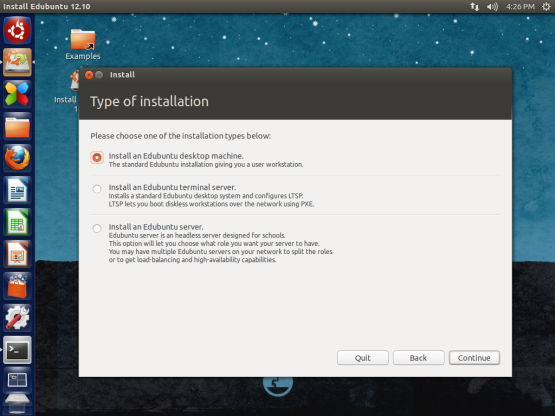
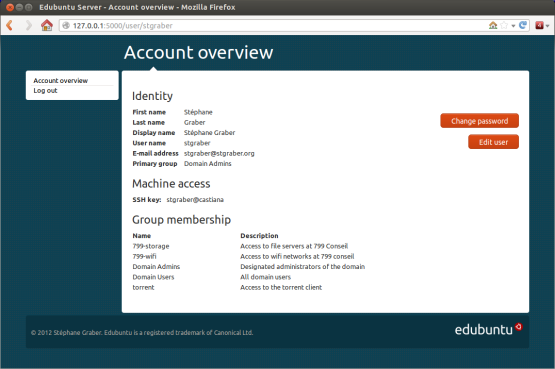
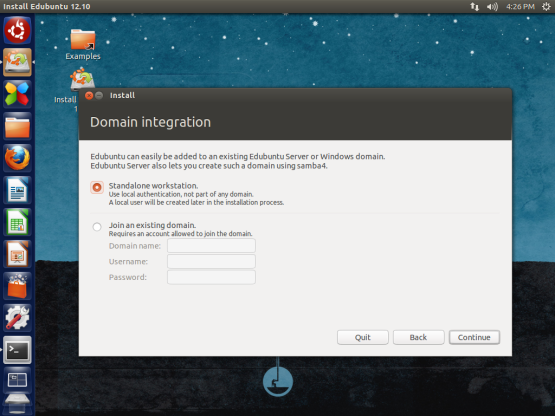
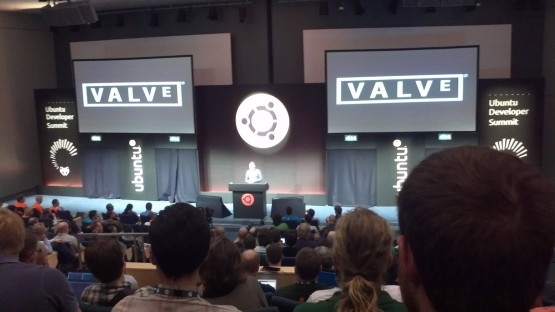
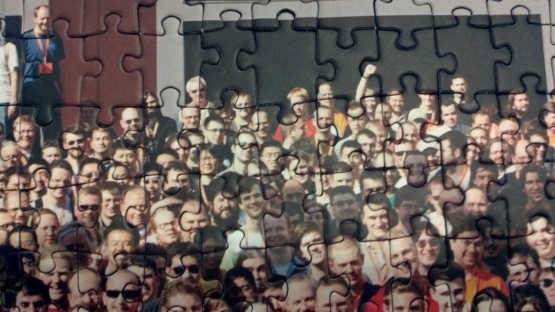
The War on Time Whoosh! I ve been incredibly quiet on my blog for the last 2-3 months. It s been a crazy time but I ll catch up and explain everything over the next few entries. Firstly, I d like to get out a few details about the last Ubuntu Developer Summit that took place in Copenhagen, Denmark in October. I m usually really good at getting my blog post out by the end of UDS or a day or two after, but this time it just flew by so incredibly fast for me that I couldn t keep up. It was a bit shorter than usual at 4 days, as apposed to the usual 5. The reason I heard for that was that people commented in previous post-UDS surveys that 5 days were too long, which is especially understandable for Canonical staff who are often in sprints (away from home) for the week before the UDS as well. I think the shorter period works well, it might need a bit more fine-tuning, I think the summary session at the end wasn t that useful because, like me, there wasn t enough time for people to process the vast amount of data generated during UDS and give nice summaries on it. Overall, it was a great get-together of people who care about Ubuntu and also many areas of interest outside of Ubuntu. Copenhagen, Denmark I didn t take many photos this UDS, my camera is broken and only takes blurry pics (not my fault I swear!). So I just ended up taking a few pictures with my phone. Go tag yourself on Google+ if you were there. One of the first interesting things I saw when arriving in Copenhagen was the hotel we stayed in. The origami-like design reminded me of the design of the Quantal Quetzel logo that is used for the current stable Ubuntu release. 2012-10-28_05-50-14_21 quantal The Road ahead for Edubuntu to 14.04 and beyond St phane previously posted about the vision we share for Edubuntu 14.04 and beyond, this was what was mostly discussed during UDS and how we ll approach those goals for the 13.04 release. This release will mostly focus on the Edubuntu Server aspect. If everything works out, you will be able to use the standard Edubuntu DVD to also install an Edubuntu Server system that will act as a Linux container host as well as an Active Directory compatible directory server using Samba 4. The catch with Samba 4 is that it doesn t have many administration tools for Linux yet. St phane has started work on a web interface for Edubuntu server that looks quite nice already. I m supposed to do some CSS work on it, but I have to say it looks really nice already, it s based on the MAAS service theme and St phane did some colour changes and fixes on it already. edu-server-account edu-server-password From the Edubuntu installer, you ll be able to choose whether this machine should act as a domain server, or whether you would like to join an existing domain. Since Edubuntu Server is highly compatible with Microsoft Active Directory, the installer will connect to it regardless of whether it s a Windows Domain or Edubuntu Domain. This should make it really easy for administrators in schools with mixed environments and where complete infrastructure migrations are planned. Authentication Options Choosing machine role You will be able to connect to the same domain whether you re using Edubuntu on thin clients, desktops or tablets and everything is controllable using the Epoptes administration tool. Many people are asking whether this is planned for Ubuntu / Ubuntu Server as well, since this could be incredibly useful in other organisations who have a domain infrastructure. It s currently meant to be easily rebrandable and the aim is to have it available as a general solution for Ubuntu once all the pieces work together. Empowering Ubuntu Flavours This cycle, Ubuntu is making some changes to the release schedule. One of the biggest changes made this cycle is that the alpha and beta releases are being dropped for the main Ubunut product. This session was about establishing how much divergence and changes the Ubuntu Flavours (Ubuntu Studio, Mythbuntu, Kubuntu, Lubuntu and Edubuntu) could have from the main release cycle. Edubuntu and Kubuntu decided to be a bit more conservative and maintain the snapshot releases. For Edubuntu it has certainly helped so far in identifying and finding some early bugs and I m already glad that we did that. Mythbuntu is also a notable exception since it will now only do LTS releases. We re tempted to change Edubuntu s official policy that the LTS releases are the main releases and treat the releases in between more like technology previews for the next LTS. It s already not such a far stretch from the truth, but we ll need to properly review and communicate that at some point. Valve at UDS and Steam for Linux One of the first plenaries was from Valve where Drew Bliss talked about Steam on Linux. Steam is one of the most popular publishing and distribution systems for games and up until recently it has only been available on Windows and Mac. Valve (the company behind Steam and many popular games such as Half Life and Portal) are actively working on porting games to run natively on Linux as well. Some people have asked me what I think about it, since the system is essentially using a free software platform to promote a lot of non-free software. My views on this is pretty simple, I think it s an overwhelmingly good thing for Linux desktop adoption and it s been proven to be a good thing for people who don t even play games. Since the announcement from Valve, Nvidia has already doubled perfomance in many cases for its Linux drivers. AMD, who have been slacking on Linux support the last few years have beefed up their support drastically with the announcement of new drivers that were released earlier this month. This new collection of AMD drivers also adds support for a range of cards where the drivers were completely discontinued, giving new life to many older laptops and machines which would be destined for the dumpster otherwise. This benefits not only gamers, but everyone from an average office worker who wants snappy office suite performance and fast web browsing to designers who work with graphics, videos and computer aided design. Also, it means that many home users who prefer Linux-based systems would no longer need to dual-boot to Windows or OS X for their games. While Steam will actively be promoting non-free software, it more than makes up for that by the enablement it does for the free software eco-system. I think anyone who disagrees with that is somewhat of a purist and should be more willing to make compromises in order to make progress. Ubuntu Release Changes Last week, there was a lot of media noise stating that Ubuntu will no longer do releases and will become a rolling release except for the LTS releases. This is certainly not the case, at least not any time soon. One meme that I ve noticed increasingly over the last UDSs was that there s an increasing desire to improve the LTS releases and using the usual Ubuntu releases more and more for experimentation purposes. I think there s more and more consensus that the current 6 month cycle isn t really optimal and that there must be a better way to get Ubuntu to the masses, it s just the details of what the better way is that leaves a lot to be figured out. There s a desire between developers to provide better support (better SRUs and backports) for the LTS releases to make it easier for people to stick with it and still have access to new features and hardware support. Having less versions between LTS releases will certainly make that easier. In my opinion it will probably take at least another 2 cycles worth of looking at all the factors from different angles and getting feedback from all the stakeholders before a good plan will have formed for the future of Ubuntu releases. I m glad to see that there is so much enthusiastic discussion around this and I m eager to see how Ubuntu s releases will continue to evolve. Lightning Talks Lightning talks are a lot like punk-rock songs. When it s good, it s really, really amazingly good and fun. When it s bad, at least it will be over soon :) Unfortunately, since it s been a few months since the UDS, I can t remember all the details of the lightning talks, but one thing that I find worth mentioning is that they re not just awesome for the topic they aim to produce (for example, the one lightning talks session I attended was on the topic of Tests in your software ), but since they are more demo-like than presentation-like, you get to learn a lot of neat tricks and cool things that you didn t know before. Every few minutes someone would do something and I d hear someone say something like Awesome! I didn t know you could do that with apt-daemon! . It s fun and educational and I hope lightning talks will continue to be a tradition at future UDSs. Social Stefano Rivera (fellow MOTU, Debianista, Capetonian, Clugger) wins the prize for person I ve seen in the most countries in one year. In 2012, I saw him in Cape Town for Scaleconf, Managua during Debconf, Oakland for a previous UDS and Copenhagen for this UDS. Sometimes when I look at silly little statistics like that I realise what a great adventure the year was! Between the meet n greet, an evening of lightning talks and the closing party (which was viking themed and pretty awesome) there was just one free evening left. I used it to gather with the Debian folk who were at UDS. It was great to see how many Debian people were attending, I think we had around a dozen or so people at the dinner and there were even more who couldn t make it since they work for Canonical or Linaro and had to attend team dinners the same evening. It was as usual, great to put some more faces to names and get to know some people better. It was also great to have a UDS with many strong technical community folk present who is willing to engage in discussion. There were still a few people who felt missing but it was less than at some previous UDSs. I also discovered my face on a few puzzles! They were a *great* idea, I saw a few people come and go to work on them during the week, they seem to have acted as good menial activities for people to fix their brains when they got fried during sessions :) 2012-10-31_14-32-28_374 Overall, this was a good and punchy UDS. I ll probably not make the next one in Oakland due to many changes in my life currently taking place (although I will remotely participate), but will probably make the one later this year, especially if it s in Europe. I ll also make a point of live-blogging a bit more, it s just so hard remembering all the details a few months after the fact. Thanks to everyone who contributed their piece in making it a great week!

Julien Danjou: Going to FOSDEM 2013

For the first time, I'll be at FOSDEM 2013 in Brussels on Sunday 2nd February 2013. You'll find me probably hanging out in the cloud devroom where I'll talk about Ceilometer with my fellow developers Nick Barcet and Eoghan Glynn. I also hope I'll find time to take a peek at some other talks, like PostgreSQL's ones that Dimitri Fontaine will handle. See you there!

25 January 2013

Johannes Schauer: Bootstrappable Debian - New Milestone

This post is about the port bootstrap build ordering tool (naming suggestions welcome) which was started as a Debian Google Summer of Code project in 2012 and continued to be developed afterwards. Sources are available through gitorious. In the end of November 2012, I managed to put down an approximation algorithm to the feedback arc set problem which allowed to break the dependency graph into a directed acyclic graph with only few removed build dependencies. I wrote about this effort on our mailinglist but didnt mention it here because it was still too much of a proof-of-concept. Later, in January 2013, I mentioned the result of this algorithm in an email wookey and me wrote to debian-devel mailinglist. Many things happened since November 2012:
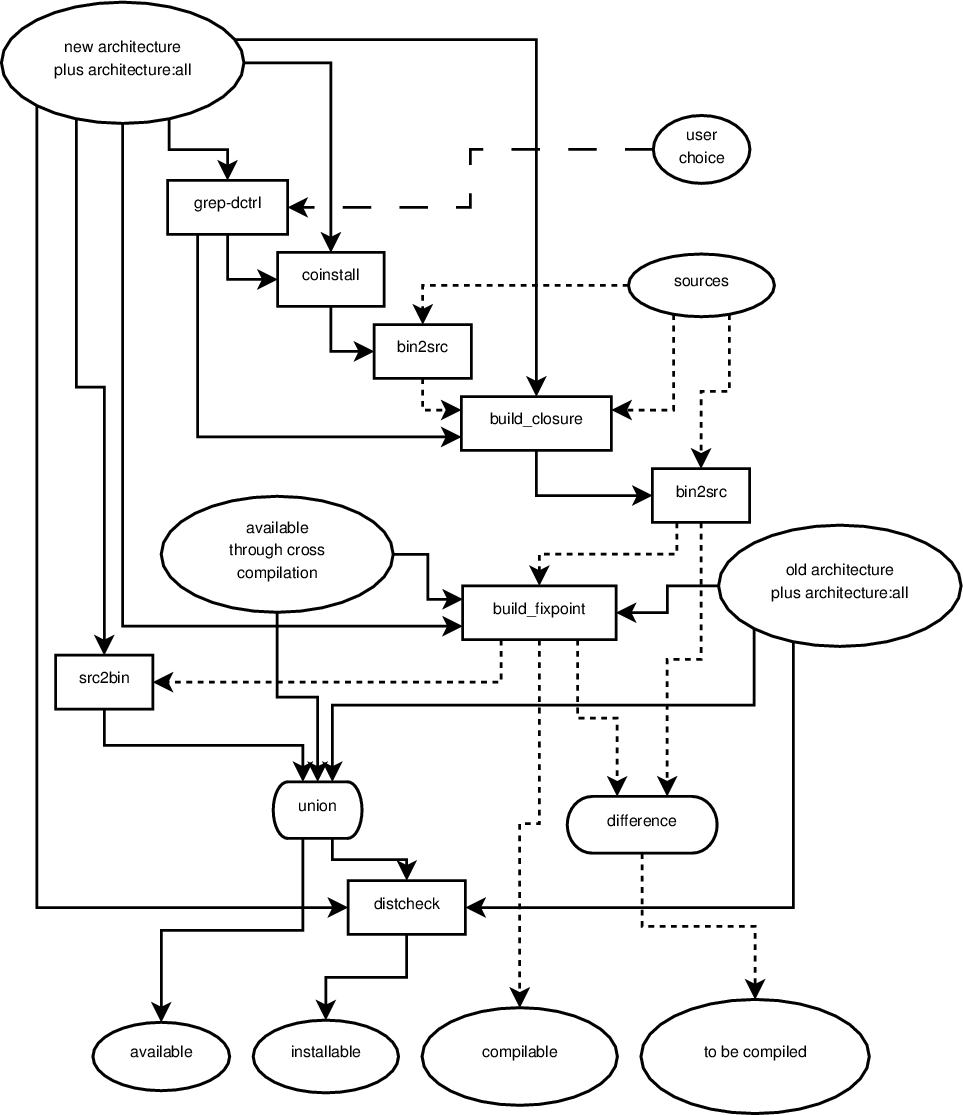
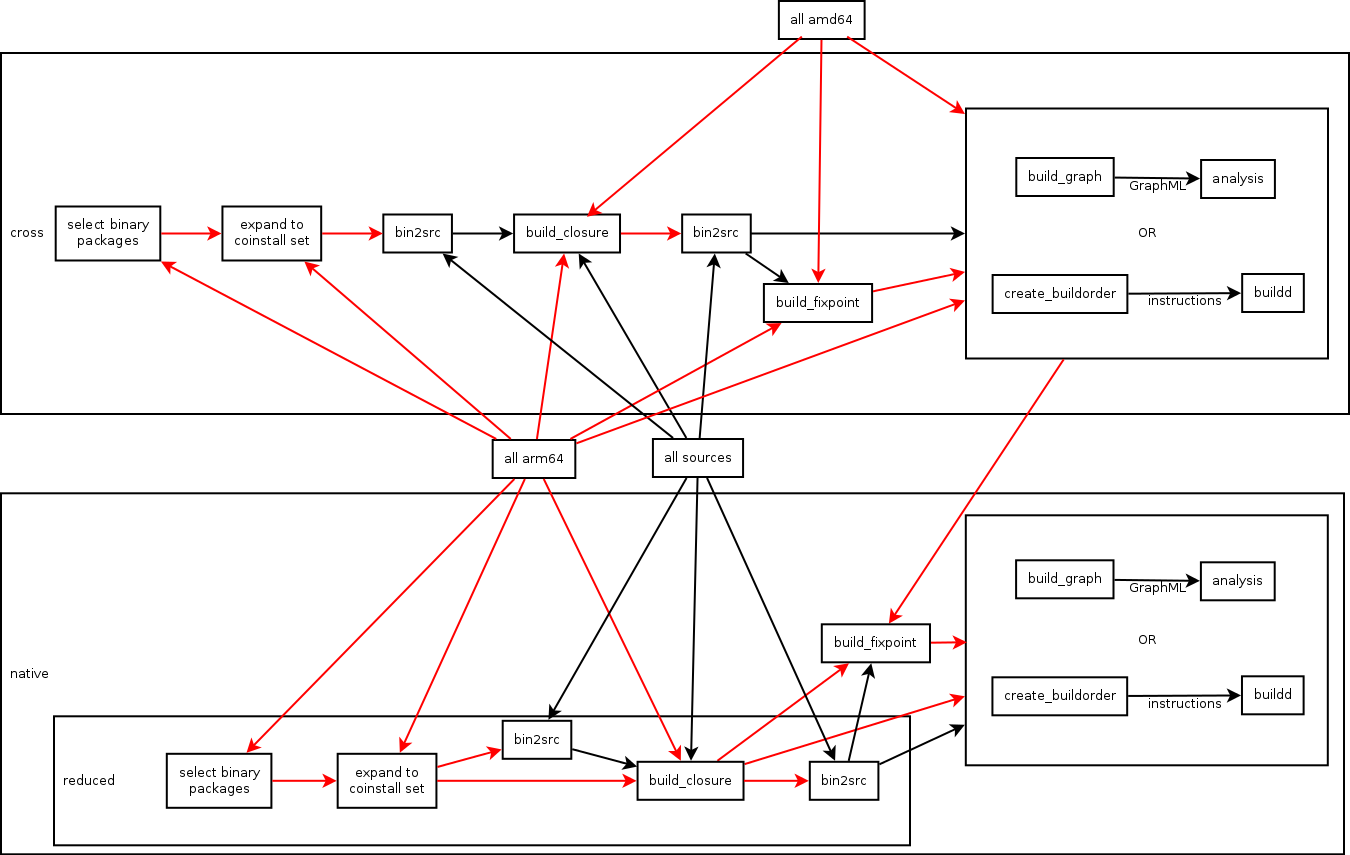
Processing pipeline instead of monolithic tools The tools I developed so far tried to accomplish everything by themselves, reusing functionality implemented in a central library. Therefor, if one wanted to try out even trivial new things, it mostly meant to hack some OCaml code. Pietro Abate suggested to instead develop smaller tools which could work independently of each other, would only execute one algorithm each and could easily be connected together in different ways to achieve different effects. This switch is now done and all functionality from the old tools is moved into a new toolset. The exchange format between the tools is either plain text files in deb822 control format (Packages/Sources files) or a dependency graph. The dependency graph is currently marshalled by OCaml but future versions should work with just passing a GraphML (an XML graph format) representation around. This new way of doing things seems close to the UNIX philosophy (each program does one thing well, data is stored as text, every program is a filter). For example the deb822 control output can easily be manipulated using grep-dctrl(1) and there exist many tools which can read, analyze and manipulate GraphML. It is a big improvement over the old, monolithic tools which did not allow to manipulate any intermediate result by external, existing tools. Currently, a shell script (native.sh) will execute all tools in a meaningful order, connecting them together correctly. The same tools will be used for a future cross.sh but they will be connected differently. I wrote about a first proposal of what the individual tools should do and how they should be connected in this email from which I also linked a confusing overview of the pipeline. This overview has recently been improved to be even more confusing and the current version of the lower half (the native part) now looks like this: native reduced Solid arrows represent a flow of binary packages, dottend arrows represent a flow of source packages, ovals represent a set of packages, boxes with rounded corners represent set operations, rectangular boxes represent filters. There is only one input to a filter, which is the arrow connected to the top of the box. Outgoing arrows from the bottom represent the filtered input. Ingoing arrows to either side are arguments to the filter and control how the filter behaves depending on the algorithm. I will explain this better once the pipeline proved to be less in flux. The pipeline is currently executed like this by native.sh.

Two new ways to break dependency cycles have been discovered So far, we knew of three ways to formally break dependency cycles:
  • remove build dependencies through build profiles
  • find out that the build dependency is only used to build arch:all packages and therefor put it into Build-Depends-Indep
  • cross compile some source packages
Two new methods can be added to the above:

Dependency graph definition changed Back in September when I was visiting irill, Pietro found a flaw in how the dependency graph used to be generated. He supplied a new definition of the dependency graph which does away with the problem he found. After fixing some small issues with his code, I changed all the existing algorithms to use the new graph definition. The old graph is as of today removed from the repository. Thanks to Pietro for supplying the new graph definition - I must still admit that my OCaml foo is not strong enough to have come up with his code.

Added complexity for profile built source packages As mentioned in the introduction, wookey and me addressed the debian-devel list with a proposal on necessary changes for an automated bootstrapping of Debian. During the discussiong, two important things came up which are to be considered by the dependency graph algorithms:
  • profile built source packages may not create all binary packages
  • profile built source packages may need additional build dependencies
Both things make it necessary to alter the dependency graph during the generation of a feedback arc set and feedback vertex set beyond the simple removal of edges. Luckily, the developed approximation algorithms can be extended to support such changes in the graph.

Different feedback arc set algorithms The initially developed feedback arc set algorithm is well suited to discover build dependency edges which should be dropped. It performs far worse when creating the final build order because it only considers edges by itself and not how many edges of a source package can be dropped by profile building it. The adjusted algorithm for generating a build order is more of a feedback vertex set algorithm because instead of greedily finding the edge with most cycles through it, it greedily finds the source package which would break most cycles if it was profile built.

Generating a build order with less profile built source packages After implementing all the features above I now feel more confident to publish the current status of the tools to a wider audience. The following test shows a run of the aforementioned ./native.sh shell script. Its final output is a list of source packages which have to be profile built and a build order. Using the resulting build order, starting from a minimal build system (essential:yes, build-essential and debhelper), all source packages will be compiled which are needed to compile all binary packages in the system. The result will therefor be a list of source and binary packages which fulfill the following property:
  • all binary packages can be built from the available source packages
  • all source packages can be built with the available binary packages
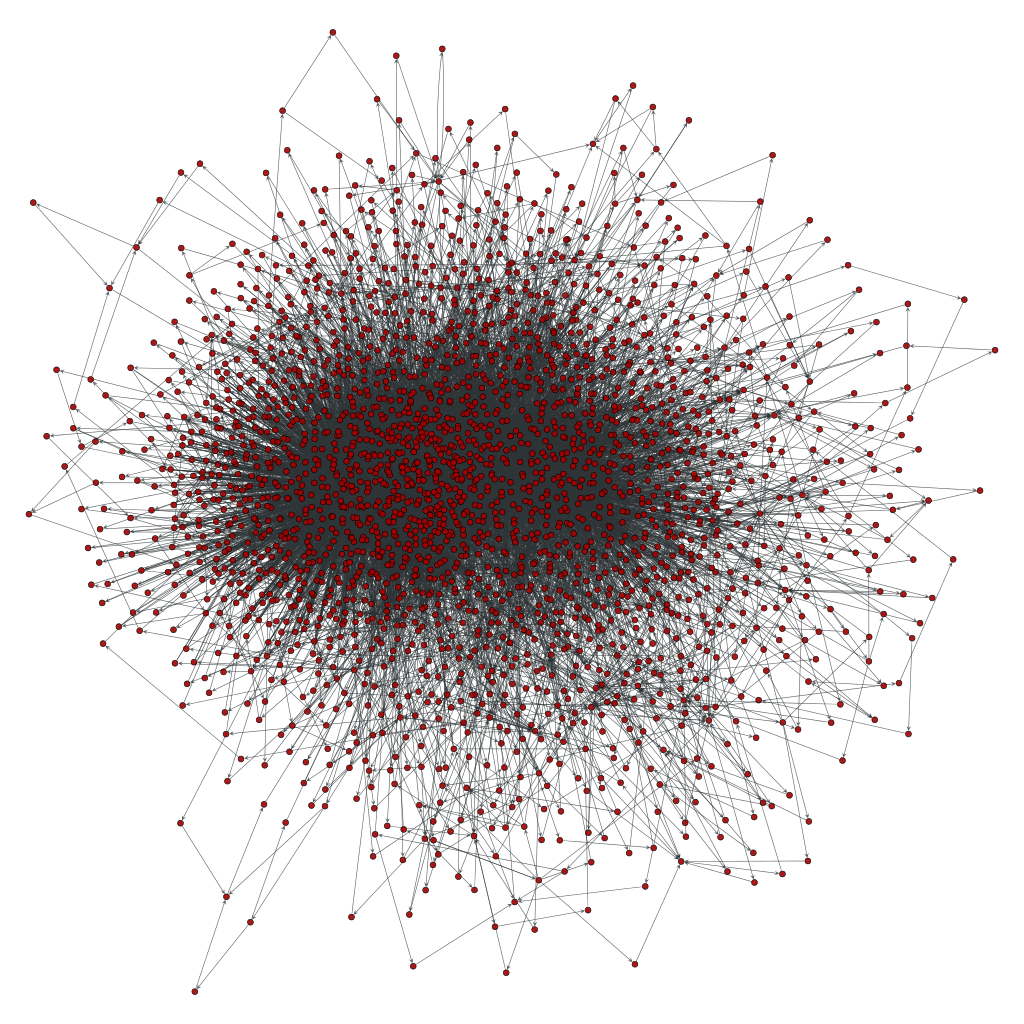
I called this a "reduceded distribution" in earlier posts. The interesting property of this specific selection is, that it contains the biggest problem set of Debian when bootstrapping it: a 900 to 1000 nodes big strongly connected component. Here is a visualization of the problem: hideous mess Source packages do not yet come with build profiles and the cross build situation can not yet be analyzed, so the following assumptions were made: The last point is about 14 build dependencies which were decided to be broken by the feedback arc set algorithm but for which other data sources did not indicate that they are actually breakable. Those 14 are dynamically generated by native.sh. If above assumptions should not be too far from the actual situation, then not more than 73 source packages have to be modified to bootstrap a reduced distribution. This reduced distribution even includes dependency-wise "big" packages like webkit, metacity, iceweasel, network-manager, tracker, gnome-panel, evolution-data-server, kde-runtime, libav and nautilus. By changing one line in native.sh one could easily develop a build order which generates gnome-desktop or really any given (meta-)package selection. All of native.sh takes only 80 seconds to execute on my system (Core i5, 2.5 GHz, singlethreaded). Here is the final build order which creates 2044 binary packages from 613 source packages.
  1. nspr, libio-pty-perl, libmcrypt, unzip, libdbi-perl, cdparanoia, libelf, c-ares, liblocale-gettext-perl, libibverbs, numactl, ilmbase, tbb, check, libogg, libatomic-ops, libnl($), orc($), libaio, tcl8.4, kmod, libgsm, lame, opencore-amr, tcl8.5, exuberant-ctags, mhash, libtext-iconv-perl, libutempter, pciutils, gperf, hspell, recode, tcp-wrappers, fdupes, chrpath, libbsd, zip, procps, wireless-tools, cpufrequtils, ed, libjpeg8, hesiod, pax, less, dietlibc, netkit-telnet, psmisc, docbook-to-man, libhtml-parser-perl, libonig, opensp($), libterm-size-perl, linux86, libxmltok, db-defaults, java-common, sharutils, libgpg-error, hardening-wrapper, cvsps, p11-kit, libyaml, diffstat, m4
  2. openexr, enca, help2man, speex, libvorbis, libid3tag, patch, openjade1.3, openjade, expat, fakeroot, libgcrypt11($), ustr, sysvinit, netcat, libirman, html2text, libmad, pth, clucene-core, libdaemon($), texinfo, popt, net-tools, tar, libsigsegv, gmp, patchutils($), dirac, cunit, bridge-utils, expect, libgc, nettle, elfutils, jade, bison
  3. sed, indent, findutils, fastjar, cpio, chicken, bzip2, aspell, realpath, dctrl-tools, rsync, ctdb, pkg-config($), libarchive, gpgme1.0, exempi, pump, re2c, klibc, gzip, gawk, flex-old, original-awk, mawk, libtasn1-3($), flex($), libtool
  4. libcap2, mksh, readline6, libcdio, libpipeline, libcroco, schroedinger, desktop-file-utils, eina, fribidi, libusb, binfmt-support, silgraphite2.0, atk1.0($), perl, gnutls26($), netcat-openbsd, ossp-uuid, gsl, libnfnetlink, sg3-utils, jbigkit, lua5.1, unixodbc, sqlite, wayland, radvd, open-iscsi, libpcap, linux-atm, gdbm, id3lib3.8.3, vo-aacenc, vo-amrwbenc, fam, faad2, hunspell, dpkg, tslib, libart-lgpl, libidl, dh-exec, giflib, openslp-dfsg, ppl($), xutils-dev, blcr, bc, time, libdatrie, libpthread-stubs, guile-1.8, libev, attr, libsigc++-2.0, pixman, libpng, libssh2, sqlite3, acpica-unix, acl, a52dec
  5. json-c, cloog-ppl, libverto, glibmm2.4, rtmpdump, libdbd-sqlite3-perl, nss, freetds, slang2, libpciaccess, iptables, e2fsprogs, libnetfilter-conntrack, bash, libthai, python2.6($), libice($), libpaper, libfontenc($), libxau, libxdmcp($), openldap($), cyrus-sasl2($), openssl, python2.7($)
  6. psutils, libevent, stunnel4, libnet-ssleay-perl, libffi, readline5, file, libvoikko, gamin, libieee1284, build-essential, libcap-ng($), lcms($), keyutils, libxml2, libxml++2.6, gcc-4.6($), binutils, dbus($), libsm($), libxslt, doxygen($)
  7. liblqr, rarian, xmlto, policykit-1($), libxml-parser-perl, tdb, devscripts, eet, libasyncns, libusbx, icu, linux, libmng, shadow, xmlstarlet, tidy, gavl, flac, dbus-glib($), libxcb, apr, krb5, alsa-lib
  8. usbutils, enchant, neon27, uw-imap, libsndfile, yasm, xcb-util, gconf($), shared-mime-info($), audiofile, ijs($), jbig2dec, libx11($)
  9. esound, freetype, libxkbfile, xvidcore, xcb-util-image, udev($), libxfixes, libxext($), libxt, libxrender
  10. tk8.4, startup-notification, libatasmart, fontconfig, libxp, libdmx, libvdpau, libdrm, libxres, directfb, libxv, libxxf86dga, libxxf86vm, pcsc-lite, libxss, libxcomposite, libxcursor, libxdamage, libxi($), libxinerama, libxrandr, libxmu($), libxpm, libxfont($)
  11. xfonts-utils, libxvmc, xauth, libxtst($), libxaw($)
  12. pmake, corosync, x11-xserver-utils, x11-xkb-utils, coreutils, xft, nas, cairo
  13. libedit, cairomm, tk8.5, openais, pango1.0($)
  14. ocaml, blt, ruby1.8, firebird2.5, heimdal, lvm2($)
  15. cvs($), python-stdlib-extensions, parted, llvm-2.9, ruby1.9.1, findlib, qt4-x11($)
  16. xen, mesa, audit($), avahi($)
  17. x11-utils, xorg-server, freeglut, libva
  18. jasper, tiff3, python3.2($)
  19. openjpeg, qt-assistant-compat, v4l-utils, qca2, jinja2, markupsafe, lcms2, sip4, imlib2, netpbm-free, cracklib2, cups($), postgresql-9.1
  20. py3cairo, pycairo, pam, libgnomecups, gobject-introspection($)
  21. gdk-pixbuf, libgnomeprint, gnome-menus, gsettings-desktop-schemas, pangomm, consolekit, vala-0.16($), colord($), atkmm1.6
  22. libgee, gtk+3.0($), gtk+2.0($)
  23. gtkmm2.4, poppler($), openssh, libglade2, libiodbc2, gcr($), libwmf, systemd($), gcj-4.7, java-atk-wrapper($)
  24. torque, ecj($), vala-0.14, gnome-keyring($), gcc-defaults, gnome-vfs($)
  25. libidn, libgnome-keyring($), openmpi
  26. mpi-defaults, dnsmasq, wget, lynx-cur, ghostscript, curl
  27. fftw3, gnupg, libquvi, xmlrpc-c, raptor, liboauth, groff, fftw, boost1.49, apt
  28. boost-defaults, libsamplerate, cmake, python-apt
  29. qjson, qtzeitgeist, libssh, qimageblitz, pkg-kde-tools, libical, dwarves-dfsg, automoc, attica, yajl, source-highlight, pygobject, pygobject-2, mysql-5.5($)
  30. libdbd-mysql-perl, polkit-qt-1, libdbusmenu-qt, raptor2, dbus-python, apr-util
  31. rasqal, serf, subversion($), apache2
  32. git, redland
  33. xz-utils, util-linux, rpm, man-db, make-dfsg, libvisual, cryptsetup, libgd2, gstreamer0.10
  34. mscgen, texlive-bin
  35. dvipng, luatex
  36. libconfig, transfig, augeas, blas, libcaca, autogen, libdbi, linuxdoc-tools, gdb, gpm
  37. ncurses, python-numpy($), rrdtool, w3m, iproute, gcc-4.7, libtheora($), gcc-4.4
  38. libraw1394, base-passwd, lm-sensors, netcf, eglibc, gst-plugins-base0.10
  39. libiec61883, qtwebkit, libvirt, libdc1394-22, net-snmp, jack-audio-connection-kit($), bluez
  40. redhat-cluster, gvfs($), pulseaudio($)
  41. phonon, libsdl1.2, openjdk-6($)
  42. phonon-backend-gstreamer($), gettext, libbluray, db, swi-prolog, qdbm, swig2.0($)
  43. highlight, libselinux, talloc, libhdate, libftdi, libplist, python-qt4, libprelude, libsemanage, php5
  44. samba, usbmuxd, libvpx, lirc, bsdmainutils, libiptcdata, libgtop2, libgsf, telepathy-glib, libwnck3, libnotify, libunique3, gnome-desktop3, gmime, glib2.0, json-glib, libgnomecanvas, libcanberra, orbit2, udisks, d-conf, libgusb
  45. libgnomeprintui, libimobiledevice, nautilus($), libbonobo, librsvg
  46. evas, wxwidgets2.8, upower, gnome-disk-utility, libgnome
  47. ecore, libbonoboui
  48. libgnomeui
  49. graphviz
  50. exiv2, libexif, lapack, soprano, libnl3, dbus-c++
  51. atlas, libffado, graphicsmagick, libgphoto2, network-manager
  52. pygtk, jackd2, sane-backends, djvulibre
  53. libav($), gpac($), ntrack, python-imaging, imagemagick, dia
  54. x264($), matplotlib, iceweasel
  55. strigi, opencv, libproxy($), ffms2
  56. kde4libs, frei0r, glib-networking
  57. kde-baseapps, kate, libsoup2.4
  58. geoclue, kde-runtime, totem-pl-parser, libgweather, librest, libgdata
  59. webkit
  60. zenity, gnome-online-accounts
  61. metacity, evolution-data-server
  62. gnome-panel
  63. tracker
The final recompilation of profile built source packages is omitted. Source packages marked with a ($) are selected to be profile built. All source packages listed in the same line can be built in parallel as they do not depend upon each other. This order looks convincing as it first compiles a multitude of source packages which have no or only few build dependencies lacking. Later steps allow fewer source packages to be compiled in parallel. The amount of needed build dependencies is highest in the source packages that are built last.

24 January 2013

Dirk Eddelbuettel: Rcpp reaches 100 dependents on CRAN

With the arrival earlier today of the stochvol package onto the CRAN network for R, our Rcpp project reached a new milestone: 100 packages have either a Depends:, Imports: or LinkingTo: statement on it. The full list will always be at the bottom of the CRAN page for Rcpp; I also manually edit a list on my Rcpp page. But for the record as of today, here is the current list as produced by a little helper script I keep:
 acer                apcluster           auteur             
 bcp                 bfa                 bfp                
 bifactorial         blockcluster        ccaPP              
 cda                 classify            clusteval          
 ConConPiWiFun       EpiContactTrace     fastGHQuad         
 fdaMixed            forecast            fugeR              
 GeneticTools        gMWT                gof                
 gRbase              gRim                growcurves         
 GUTS                jaatha              KernSmoothIRT      
 LaF                 maxent              mets               
 minqa               mirt                mRMRe              
 multmod             mvabund             MVB                
 NetworkAnalysis     ngspatial           oem                
 openair             orQA                parser             
 pbdBASE             pbdDMAT             phom               
 phylobase           planar              psgp               
 quadrupen           Rchemcpp            Rclusterpp         
 RcppArmadillo       RcppBDT             rcppbugs           
 RcppClassic         RcppClassicExamples RcppCNPy           
 RcppDE              RcppEigen           RcppExamples       
 RcppGSL             RcppOctave          RcppRoll           
 RcppSMC             RcppXts             rforensicbatwing   
 rgam                RInside             Rmalschains        
 Rmixmod             robustgam           robustHD           
 rococo              RProtoBuf           RQuantLib          
 RSNNS               RSofia              rugarch            
 RVowpalWabbit       SBSA                sdcMicro           
 sdcTable            simFrame            spacodiR           
 sparseHessianFD     sparseLTSEigen      SpatialTools       
 stochvol            surveillance        survSNP            
 termstrc            tmg                 transmission       
 trustOptim          unmarked            VIM                
 waffect             WideLM              wordcloud          
 zic                
And not to be forgotten is BioConductor which has another 10:
 ddgraph            GeneNetworkBuilder GOSemSim          
 GRENITS            mosaics            mzR               
 pcaMethods         Rdisop             Risa              
 rTANDEM  
As developers of Rcpp, we are both proud and also a little humbled. The packages using Rcpp span everything from bringing new libraries to R, to implementing faster ways of doing things we have before to doing completely new things. It is an exciting time to be using R, and to be connecting R to C++, especially with so many exciting things happening in C++ right now. Follow the Rcpp links for more, and come join us on the Rcpp-devel mailing list to discuss and learn.

18 January 2013

Ingo Juergensmann: Progress of m68k port

A few weeks ago on Christmas Wouter and I blogged about the successful reinstallation of m68k buildds after a very long period of years of inactivity. This even got us mentioned on Slashdot. It's been now roughly 3 weeks since then and we made some sort of progress:

Debian-ports.org shows now that we're from 20% keeping up to about 60% keeping up. The installed packages went from ~1900 to about 3800 and we even triggered 200 packages from BD-uninstallable to Needs-Build:

  wanna-build statistics - Fri Jan 18 06:52:36 CET 2013
  -----------------------------------------------------
Distribution unstable:
---------------------
Installed       :  3868 (buildd_m68k-ara5: 488, buildd_m68k-arrakis: 20,
                         buildd_m68k-elgar: 106, buildd_m68k-vivaldi: 80,
                         tg: 1412, unknown: 1761, wouter: 1)
Needs-Build     :  3500
Building        :    26 (buildd_m68k-ara5: 1, buildd_m68k-elgar: 1,
                         buildd_m68k-vivaldi: 1, tg: 23)
Built           :     0
Uploaded        :     1 (tg: 1)
Failed          :    34 (buildd_m68k-ara5: 17, tg: 17)
Dep-Wait        :     4 (tg: 4)
Reupload-Wait   :     0
Install-Wait    :     0
Failed-Removed  :     0
Dep-Wait-Removed:     0
BD-Uninstallable:  2320
Auto-Not-For-Us :   188
Not-For-Us      :     9
total           :  9975
 38.78% (3868) up-to-date,  38.79% (3869) including uploaded
 35.09% (3500) need building
  0.26% ( 26) currently building
  0.00% (  0) already built, but not uploaded
  0.38% ( 38) failed/dep-wait
  0.00% (  0) old failed/dep-wait
 23.26% (2320) not installable, because of missing build-dep
  1.88% (188) need porting or cause the buildd serious grief (Auto)
  0.09% (  9) need porting or cause the buildd serious grief
So, overall we're performing fine. The mention on Slashdot even brought up new donors of hardware. Someone offered SCSI/SCA disks up to 73 GB in size and another person even offered several Amigas, from which we'll using a Amiga 2000 with Blizzard 2060 accellerator card as a new buildd. This leads me to a medium-sized drawback: we actually have several Amigas with a Blizzard 2060 as buildds. Unfortunately there's no SCSI driver in current kernels for that kind of hardware. This results in the effect that we can't use as many machines as we could. Currently we are using 3 active buildds and some Aranym VMs running on Thorsten Glasers hosts. We could add 4 more buildds when there would be a working SCSI driver. So, if anyone likes to contribute to the m68k port and loves kernel hacking, this would be a great way to help us. :-)
Kategorie:

13 January 2013

Thorsten Glaser: PSA: Unicode codepoints, referring to

PSA: Referring to Unicode codepoints. If your Unicode codepoint is, numerically, between 0 and 65533, inclusive, convert it to hexadecimal and zero-pad it to four nibbles. For example, the Euro sign is Unicode codepoint #8364 which is 20AC hex; the Eszett is 223 which is DF hex, padded 00DF.
Then write an uppercase U , a plus sign + , and the four nibbles: U+20AC U+00DF
In mksh, JSON, etc. it s a backslash \ , a lower-case u and four nibbles. Otherwise, your Unicode codepoint will be, numerically, between 65536 and 1114111, inclusive, that is hex 10000 to 10FFFF. (There s nothing on 65534 and 65535, nor above these figures.) In this case, convert it to hex, zero-pad it to eight nibbles and write it as an uppercase U , a hyphen-minus - and the eight nibbles. In C-like escapes for environments supporting the Unicode SMP, that s a backslash \ , an upper-case U and eight nibbles. Do not, in either case, use less (or more) hex digits than specified here. For example, there s a famous Unicode codepoint U-0001F4A9 PILE OF POO . That s not the same as U+1F4A9. The latter reads as U+1F4A GREEK CAPITAL LETTER OMICRON WITH PSILI AND VARIA and a digit 9 ( 9). Be educated.

11 January 2013

Julien Danjou: Overriding cl-json object encoding

CL-JSON provides an encoder for Lisp data structures and objects to JSON format. Unfortunately, in some case, its default encoding mechanism for CLOS objects isn't exactly doing the right thing. I'll show you how Common Lisp makes it easy to change that. Identifying the problem CL-JSON & CLOS CL-JSON mechanism encoding CLOS object is really neat. Let's see how it works for a simple case:
(defclass kitten ()
((tail :initarg :tail)))

(json:encode-json-to-string (make-instance 'kitten :tail 'black))

will produce:
 "tail":"black" 

Still using CL-JSON, we can also decode the JSON object to a CLOS object:
(slot-value
(json:with-decoder-simple-clos-semantics
(json:decode-json-from-string " \"tail\":\"black\" "))
:tail)

That code will return "black". Note that it's also possible to specify which class should be used when decoding objects, but that's beyond the purpose of this article. Postmodern Now, let's introduce Postmodern, a wonderful Common Lisp system providing access to the wonderful PostgreSQL database. It also provides a simple system to map rows in a database to CLOS classes, called DAO for Database access objects. With this, we can easily store our kitten into a table.
(defclass kitten ()
((tail :initarg :tail))
(:metaclass postmodern:dao-class))

If we try to encode this to JSON, it will produce the exact same result seen previously. The problem is what happens when one of our column has a NULL value. Postmodern encodes this using the :null symbol. So this code:
(defclass kitten ()
((tail :initarg :tail :col-type (or s-sql:db-null text)))
(:metaclass postmodern:dao-class))

(postmodern:deftable kitten
(postmodern:!dao-def))

(postmodern:connect-toplevel )

(postmodern:create-table 'kitten)

(json:encode-json-to-string
(postmodern:make-dao 'kitten))

will return:
" "tail":"null" "

Fail! The fact that the column is NULL is represented by the :null symbol. And CL-JSON encodes all symbols as string. This is not at all what we want here! Overriding encode-json CL-JSON provides and uses the encode-json method to encode all kind of object. It is defined as a generic function, and a lot of different methods are implemented to handle the different standard Common Lisp types. The one used for standard-object is defined liked that:
(defmethod encode-json ((o standard-object)
&optional (stream *json-output*))
"Write the JSON representation (Object) of the CLOS object O to
STREAM (or to *JSON-OUTPUT*)."
(with-object (stream)
(map-slots (stream-object-member-encoder stream) o)))

All we need to do here, is to create a new method for our kitten objects, that handles correctly the :null case.
(defclass kitten ()
((tail :initarg :tail :col-type (or s-sql:db-null text)))
(:metaclass postmodern:dao-class))

(export 'kitten)

;; Switch package just to define the new method
(in-package :json)
(defmethod encode-json ((o cl-user:kitten)
&optional (stream json:*json-output*))
"Write the JSON representation (Object) of the postmodern DAO CLOS object
O to STREAM (or to *JSON-OUTPUT*)."
(with-object (stream)
(map-slots (lambda (key value)
(as-object-member (key stream)
(encode-json (if (eq value :null) nil value) stream)))
o)))

;; Go back into our package
(in-package :cl-user)

(postmodern:deftable kitten
(postmodern:!dao-def))

(postmodern:connect-toplevel )

(postmodern:create-table 'kitten)

(json:encode-json-to-string
(postmodern:make-dao 'kitten))

With that new method, as soon as we encounter a :null symbol as a value for an object's slot, we replace it by nil. Now if we try to encode another kitten, we'll get:
 "tail":null 

which is far better for our JavaScript data consumers! In the end, I think that this kind of trick is feasible that easily because of the way CLOS provides its generic method implementation. The fact that methods don't belong to any class makes the extension of every program, library and class so much easier. Doing this in another language like Java would likely by impossible, and in Python it would unlikely be as clean as it is done in Common Lisp. The ability to teach any library about how it should handle your class just by defining a new method is really handy!

10 January 2013

Debian Med: Bits from Debian Med team (Posted by Andreas Tille)

This are the new years bits from Debian Med team. We try to make the wishes for a healthy new year becoming true with Free Software. :-)
Debian Med Bug Squashing Advent Calendar 2012 As last year the Debian Med team did some advent calendar bug squashing. The summary states 15 bugs from Debian Med scope which is less than last year but Debian Med team members also did some general bug squashing to help the Wheezy release. Finally this makes a lot of sense also for Debian Med if we can speed up the release. When counting the additional 12 RC bugs fixed in the advent calendar effort we again managed to fix more than one bug per day. Please keep on squashing RC bugs for Wheezy!
Mentoring of Month Last year Andreas Tille started the Mentoring of Month effort to lower the entrance barrier for newcomers. There was no student for every month and not each package was uploaded at end of month but expecting such a high number of newcomers would be unrealistic anyway. So I'd like to draw some positive conclusion that we now have some newcomers friendly invited to the project and some packages uploaded or at least prepared which would not be there without the MoM project. Finally all MoM students liked the project and we will continue it in the future and would like to recommend other teams to do something similar.
Planed Debian Med sprint in Kiel The next Debian Med sprint for real life meeting of Debian Med developers and users will happen in Kiel 23rd/24th of February. All interested people are invited to join to continue the success of the past two sprints. We are currently in the planing phase but there are just some hot topics which are workflows, licensing (specifically bug #694908), cooperation with Ubuntu and BioLinux and other things.
Metapackages targeting at Wheezy Currently Debian Med metapackages version 1.13.2 are in unstable and once the unblock request is accepted by Debian release team this version will target at Wheezy. This means your very last chance to influence the metapackage content regarding some missing dependencies is defacto over now. Please closely observe our web sentinel in case you are interested in the work of Debian Med and tell us if packages are missing from our focus.

Kind regards and see you at Debian Med sprint
Andreas.

7 January 2013

Thomas Koch: searching a job: Debian, Java, Python, ...

I'm looking for a new position as a Software Developer in eastern Switzerland, southern Germany or remote. Please have a look at my CV if some of the following buzzwords sound interesting to you:

Java, Python, Debian packaging, Git, Gerrit, Eclipse, JUnit, Java QA tools, Hadoop, HBase, ZooKeeper, Lucene, REST, ATOM, HTTP, Guava, Guice, LaTeX, Emacs, OTRS, GnuPG, SSH, Web Crawling and Indexing, Big Data, Scrum, functional programming, web development (Apache Webserver, MySQL, PHP, HTML, CSS, Javascript), D, Scala, PostgreSQL, semantic technologies, XMPP

4 January 2013

Thorsten Glaser: on the linguistic gender of hosts, with an xz reminder

Let s start a convention: bare-metal machines have the linguistic male gender ( der Computer , he needs to be rebooted), whereas VMs have the linguistic female gender ( die virtuelle Maschine , she runs better since the last upgrade of Linux-KVM), and neutral linguistic gender is used when you cannot or do not want or need to make such distinction.
This is, of course, entirely unrelated to human gender, but not unrelated to #debian-68k (on OFTC) discussions ;-) ObRant: DO NOT USE xz COMPRESSION LEVELS ABOVE 6! (For -7 we can make exceptions, for example in Debian *-dbg or *-source packages.) You may use -e if you absolutely need the better compression, but please think of the poor sods who have to create the archives. You must not use the highest compression levels -8 or -9 since they have absolutely insane memory requirements on compression and will still hinder machines with less RAM on decompression. (Using -e only affects CPU usage at compression time; decompression is exactly as fast and memory-consuming as without.) Furthermore, DO NOT CHOOSE A COMPRESSION LEVEL WITH A DICTIONARY SIZE MUCH LARGER THAN THE DATA TO COMPRESS, as that makes absolutely no sense and will rather worsen than improve compression. As a reminder, xz uses the following dictionary sizes: Decompression uses less than 1 MiB more than the dictionary size, but the dictionary must always be allocated wholly. (You re fine to use custom presets, but mind the RAM usage!) As a general rule, if you have something of up to 20 MiB to compress, -4 is fine, and -5 will only be better if you have similar data spread across the whole of the file instead of close to each other. When I make mksh distfiles, I instead put files close to each other that have related content, which improves compression much more nicely without penalising low-memory systems; for example, you could put documentation, Makefiles, scripts, m4(1) files, and C source code into groups before archiving, instead of doing it alphabetically. Another note on bzip2: its decompression is slow. I see no reason to use it any more, at all. Use gzip(1) if you care for compatibility or have an issue with xz not having a free copyright licence, and xz otherwise.

3 January 2013

Richard Hartmann: GnuPG key transition statement

-----BEGIN PGP SIGNED MESSAGE-----
Hash: SHA1,SHA512
I am transitioning GPG keys from an old 1024-bit DSA key to a new
4096-bit RSA key.  The old key will continue to be valid for some
time, but I prefer all new correspondance to be encrypted to the new
key, and will be making all signatures going forward with the new key.
This transition document is signed with both keys to validate the
transition.
If you have signed my old key, I would appreciate signatures on my new
key as well, provided that your signing policy permits that without
re-authenticating me.
The old key, which I am transitioning away from, is:
  pub   1024D/DFCA34A3 2007-10-07 [expires: 2013-10-24]
    Key fingerprint = FE23 BE62 DF18 72FB C58D  D637 FFAE 0427 DFCA 34A3
The new key, to which I am transitioning, is:
  pub   4096R/95206DD3 2013-01-02 [expires: 2016-01-02]
    Key fingerprint = DF0B FDFF 4A4D DA01 7944  1B8F 6906 4B01 9520 6DD3
To fetch the full new key from a public key server using GnuPG, run:
  gpg --keyserver keys.gnupg.net --recv-key 95206DD3
If you have already validated my old key, you can then validate that
the new key is signed by my old key:
  gpg --check-sigs 95206DD3
If you then want to sign my new key, a simple and safe way to do that
is by using caff (shipped in Debian as part of the "signing-party"
package) as follows:
  caff 95206DD3
Please contact me via e-mail at <richih.mailinglist@gmail.com>
if you have any questions about this document or this transition.
    Richard Hartmann
    richih.mailinglist@gmail.com
    2013-01-03
-----BEGIN PGP SIGNATURE-----
Version: GnuPG v1.4.12 (GNU/Linux)
iEYEARECAAYFAlDk27gACgkQ/64EJ9/KNKMGDgCeLyQy6yhEu3OB8UarJ6LYOfVY
ihgAnRSbYMrVxK+28souMHiLx4y0rSQ+iQIcBAEBCgAGBQJQ5Nu4AAoJEGkGSwGV
IG3TcbYP/je8mu+MCIiNNY8w/gN+/9S8gEGWd2p9LeN71xpCuSpBVSevAxxStV9R
2XRTfI8tf/nk27y+4073IscUTPaBkb2IhvIfCnFmOtZjP9slS2JMHOylqH3KLulQ
Cm/IbpKCAwTmQtRMzFxKoRjNPJDCVzZYpoD9r7TmIrs+iKtDQ/w/zQmtwEFWncYK
2JJqVEd+qN9REpWlKDDifcUDPGiugsICelAaUF8VMvp2ouVxQTGbz53IdAgvrX9G
vM+BAfel3W73nfF3L+08vgad0BGGMnEWcfcZ6r+DKu2WXgC8AXT0Y32sD8TiGJSd
JrWMqwec1iOd6lfOpFDdhSCFyMl5r1NiOLw5iNsETHYjysW2N1wZCicmF/8ukm/y
EpIXf3z8vtLrofGLN1jTC34Jugts8C5NNRil195Hkim36t2F97OJswNLhxt7nQ41
vhyXaBK3kwOZ1nVp6xM/yMnQzi5eVO1W/BE8Wr27O6pe3KqEx0Lv8zBzQjj4ly64
shyNRY3gzxs/KZ3p/3nrSn1AYOXIuCM3nILh89qQ/ynotrqYmpFkUorUSSOvraoQ
LN5IPH0wh8F2eDUCui2fGDEmnQ5S5mlHnIZmL3gkPVGLhNaoFQh0R8UwUO6HIxMQ
cTxv5TGL1YWtIvl0bvlEXK6MA4g0ZBXk15JZkWUD84zycr5cb79d
=DFzt
-----END PGP SIGNATURE-----

31 December 2012

Thorsten Glaser: Not just Amigas, editors and errnos

mksh made quite some waves (machine translation of the third article) recently. Let s state it s not just Amigas ara5 is a buildd running the Atari kernel, an emulated though. On the other hand, the bare-metal Ataris used to be the fastest buildds, so I expect we get them back online soonish. I m currently fighting with some buildd software bugfixes, but once they re in, we will make more of them. Oh, and porterboxen! Does anyone want to host a VM with a porterbox? Requirements: wheezy host system (can be emulated), 1 GiB RAM, one CPU core with about 6500 BogoMIPS or more (so the emulated system has decent speed; an AMD Phenom II X4 3.2 GHz does just fine). Oh, and mksh is ported to more and more platforms, like 386BSD 0.0 with GCC 1.39, and QNX 4 with Watcom and more bugfixes are also being worked on. And let s not forget features! jupp got refreshed: it s got a bracketed paste mode, which is even auto-enabled on xterm-xfree86 (though the xterm(1) in MirBSD s a tad too old to know it; will update that later, just imported sendmail(8) 8.14.6 and lynx(1) 2.8.8dev.15 into base, more to come) and will be enhanced later (should disable auto-indent, wordwrap, status line updates, and possibly more), lots of new functions and bindings, now uses mkstemp(3) to create backup files race-free, and more (read the NEWS file). In MirBSD, Benny and I just added a number of errnos, mostly for SUSv4 compliance and being able to compile more software from pkgsrc without needing to patch. This is being tested right now (although I should probably go out and watch fireworks in less than a half-hour), together with the new imports and the bunch of small fixes we accumulate (even though most development in MirBSD is currently in mksh(1) and similar doesn t mean that all is, or worse, we were dead, which we aren t). I ll publish a new snapshot some time in January. The Grml 2012.12 also contains a pretty up-to-date MirBSD, with a boot(8/i386)loader that now ignores GUID partition table entries when deciding what to use for the a slice. If you haven t already done so, read Benjamin Mako Hill s writings!

Russ Allbery: Review: Wasted Heart

Review: Wasted Heart, by Lynn Galli
Publisher: Penikila
Copyright: 2010
ISBN: 1-935611-32-1
Format: Kindle
Pages: 252
Austy is a lawyer working for the US District Attorney's office in Seattle. Six months ago, she moved there from Virginia, in large part because she fell in love with her best friend. Her married best friend. Now, she's trying (mostly unsuccessfully) to deal with the Seattle lesbian scene while becoming (successfully) the go-to lawyer for prosecuting cases with a substantial technology component. Two things are about to complicate that life: meeting and working with FBI special agent Elise Bridie, and working on a case that involves her best friend's company. Yes, that best friend. This is, as you might have guessed, a lesbian romance novel, so with that should come my "reading out of genre disclaimer": it's rather easy, when reading a genre one normally doesn't read, to find books fresh and interesting when they're unoriginal to regular genre readers, or to miss genre conventions or reactions because one has not read the previous work. You should therefore take my opinions with a grain of salt, particularly if you read more romance novels than I do (which wouldn't be hard). I grabbed this book for a few reasons: I felt like reading a warm-hearted story focused on human relationships, I wanted a reasonably fast read (since I'm obsessed with meaningless numeric milestones, like how many books I read in a year), and I wanted something with an upbeat ending. Romance generally delivers on those fronts. Lesbian romance has the added bonus of avoiding a whole bunch of gender essentialism and heterosexual romance tropes that tend to give me hives. Landing was excellent, so I thought I'd see if I could find more of that. Wasted Heart does indeed deliver, although it's not quite as good as Landing. There's a bit too much physical attraction and love based on appearance for my taste, but Galli leavens that with quite a lot of interesting psychology. Both Austy and Elise are private and cautious people, and for me that makes the romance feel more realistic. It also draws out the initial phase of getting to know the other person, which is the part of the romance that I often find the most interesting. Elise in particular is a great character maybe a little too ideal in a few places, but smart and observant in a way that's very fun to read about. Like a lot of romances, there is some annoying miscommunication and misunderstanding (predictably right around the height of the tension), but it's not quite as stupid as those problems usually are, and Galli doesn't drag it out until one starts wanting to hit the characters with blunt objects. As good or better is the community that surrounds the main characters. Galli has a full cast of believable and interesting characters, most notably including Austy's old gang from Virginia. The tensions between having a group of friends one cares about deeply, wanting to build a new life after making a major break and major decision but having difficulty sustaining that under the onslaught of those friends, and being easily tossed about by expressive and outgoing people when one is private and a bit quiet all play out here. And, refreshingly, without a lot of angst, and with quite a bit of intelligent introspection. Both Austy and her friends are smarter and more considerate than most of the characters I've seen in this sort of situation. Another good bit is the little pieces of legal drama. Galli doesn't neglect Austy's work life, and while this is certainly not a legal thriller or procedural, we do get some nice scenes of Austy doing her job. I love courtroom scenes, particularly ones (like these) that are more on the realistic side, so that was a nice bonus. Austy and Elise's jobs also lead to a somewhat predictable bit of drama, and I was a bit less enamored of that; the more I thought about it, the less well it hung together for me. But I did like that it stayed firmly on the realistic side, including a look at psychological aftereffects for real people rather than thriller protagonists. This is not the sort of book that I would tell someone to rush out and buy, but it met my criteria nicely and delivered just the sort of entertainment I was looking for. (And it's not particularly expensive on Kindle, at least in the US.) There was a bit too much focus on physical appearance and physical infatuation, and Elise might be just a little too perfect, but I enjoyed it. Note that I read the special edition, which includes a (much appreciated) epilogue that closes out the story. That seems to be the default edition for sale everywhere I look, but in case you see the older version, I recommend the special edition. Rating: 7 out of 10

23 December 2012

Ben Hutchings: What's in the Linux kernel for Debian 7.0 'wheezy', part 1

As you may know, Debian 7.0 (codename 'wheezy') includes Linux 3.2. I'm maintaining the 3.2.y stable series at kernel.org which will collect bug fixes and some new hardware support as nominated by kernel developers and distributors, following the usual stable kernel rules. The Debian package has some additional features not present in mainline Linux 3.2. Union filesystem Debian Live needs a union filesystem to allow writing files on top of the read-only live system image. To support this, we include Aufs developed by Junjiro R. Okajima. I hope that Linux will gain union mount or union filesystem support in time for the next release, but currently it doesn't take much work on our part to integrate. Security hardening Bufferbloat I backported two big pieces of the solution to bufferbloat:

Next.

Previous.