Review:
Iris Kelly Doesn't Date, by Ashley Herring Blake
| Series: |
Bright Falls #3 |
| Publisher: |
Berkley Romance |
| Copyright: |
October 2023 |
| ISBN: |
0-593-55058-7 |
| Format: |
Kindle |
| Pages: |
381 |
Iris Kelly Doesn't Date is a sapphic romance novel (probably a
romantic comedy, although I'm bad at romance subgenres). It is the third
book in the Bright Falls series. In the romance style, it has a new set
of protagonists, but the protagonists of the previous books appear as
supporting characters and reading this will spoil the previous books.
Among the friend group we were introduced to in
Delilah Green Doesn't Care, Iris was the irrepressible loudmouth.
She's bad at secrets, good at saying whatever is on her mind, and has zero
desire to either get married or have children. After one of the side
plots of
Astrid Parker Doesn't Fail, she
has sworn off dating entirely.
Iris is also now a romance novelist. Her paper store didn't get enough
foot traffic to justify staying open, so she switched her planner business
to online only and wrote a romance novel that was good enough to get a
two-book deal. Now she needs to write a second book and she has
absolutely nothing. Her own avoidance of romantic situations is not
helping, but neither is her meddling family who are convinced her choices
about marriage and family can be overturned with sufficient pestering.
She desperately needs to shake up her life, get out of her creative rut,
and do something new. Failing that, she'll settle for meeting someone in
a bar and having some fun.
Stevie is a barista and actress living in Portland. Six months ago, she
broke up with Adri, her creative partner, girlfriend of six years, and the
first person with whom she had a serious relationship. More precisely,
Adri broke up with her. They're still friends, truly, even though that
friendship is being seriously strained by Adri dating Vanessa, another
member of their small and close-knit friend group. Stevie has
occasionally-crippling anxiety, not much luck in finding real acting roles
in Portland, and a desperate desire to not make waves. Ren, the fourth
member of their friend group, thinks Stevie needs a new relationship, or
at least a fling. That's how Stevie, with Ren as backup and
encouragement, ends up at the same bar with Iris.
The resulting dance and conversation was rather fun for both Stevie and
Iris. The attempted one-night stand afterwards was a disaster due to
Stevie's anxiety, and neither of them expected to see the other again.
Stevie therefore felt safe pretending they'd hit it off to get her friends
off her back. When Iris's continued restlessness lands her in an audition
for Adri's fundraiser play that she also talked Stevie into performing in,
this turns into a full-blown fake dating trope.
These books continue to be impossible to put down. I'm not sure what
Blake is doing to make the pacing so perfect, but as with the previous
books of the series I found this utterly compulsive reading. I started it
in the afternoon, took a break in the evening for a few hours, and then
finished it at 2am.
I wasn't sure if a book focused on Iris would work as well, but I need not
have worried.
Iris Kelly Doesn't Date is both more dramatic and
more trope-centered than the earlier books, but Blake handles that in a
way that fits Iris's personality and wasn't annoying even to a reader like
me, who has an aversion to many types of relationship drama. The secret
is Stevie, and specifically having the other protagonist be someone with
severe anxiety.
No was never a very easy word for Stevie when it came to
Adri, when it came to anyone, really. She could handle the little
stuff do you want a soda, have you seen this movie, do you
like onions on your pizza but the big stuff, the stuff that caused
disappointed expressions and down-turned mouths... yeah, she sucked at
that part. Her anxiety would flare, and she'd spend the next week
convinced her friends hated her, she'd die alone and miserable, and
wasn't worth a damn to anyone. Then, when said friend or family
member eventually got ahold of her to tell her that, no, of course
they didn't hate her, why in the world would she think that, her
anxiety would crest once again, convincing her that she was terrible
at understanding people and could never trust her own brain to make
heads or tails of any social situation.
This is a spot-on description of a particular type of anxiety, but also
this is the perfect protagonist to pair with Iris. Throughout the series,
Iris has always been the ride-or-die friend, the person who may have no
idea how to help but who will show up anyway and at least try to distract
you. Stevie's anxiety makes Iris feel protective, which reveals one of
the best sides of Iris's personality, and then the protectiveness plays
off against Iris's own relationship issues and tendency to avoid taking
anything too seriously. It's one of those relationships that starts a bit
one-sided and then becomes mutually supporting once Stevie gets her feet
under her. That's a relationship pattern I really enjoy reading about.
As with the rest of the series, the friendship dynamics are great. Here
we get to see two friend groups at work: Iris's, which we've seen in the
previous two volumes and which expanded interestingly in
Astrid
Parker Doesn't Fail, and Stevie's, which is new. I liked all of these
people, even Adri in her own way (although she's the hardest to like).
The previous happily-ever-afters do get a bit awkward here, but Blake
tries to make that part of the plot and also avoids most of the problem of
somewhat-boring romantic bliss by spreading the friendship connections a
bit wider.
Stevie's friend group formed at orientation at Reed College, and that let
me put my finger on another property of this series: essentially all of
the characters are from a very specific social class. They're nearly all
arts people (bookstore owner, photographer, interior decorator, actress,
writer, director), they've mostly gone to college, and while most of them
don't have lots of money, there's always at least one person in each
friend group with significant wealth. Jordan, from the previous book, is
a bit of an exception since she works in a trade (a carpenter), but she
still acts like someone from that same social class. It's a bit like
reading Jane Austen novels and realizing that the protagonists are drawn
from a very specific and very narrow portion of society.
This is not a complaint, to be clear; I have no objections to reading
about a very specific social class. But if one has already read lots of
books about this class of people, I could see that diminishing the appeal
of this series a bit. There are a lot of assumptions baked into the story
that aren't really questioned, such as the ubiquity of therapists. (I
don't know how Stevie affords one on a barista salary.) There are also
some small things in the terminology (therapy speak, for example) and in
the specific type of earnestness with which the books attempt to be
diverse on most axes
other than social class that I suspect may
grate a bit for some readers. If that's you, this is your warning.
There is a third-act breakup here, just like the previous volumes. There
is also a defense of the emotional punch of third-act breakups in romance
novels in the book itself, put into Iris's internal monologue, so I
suspect that's the author's answer to critics like myself who don't like
the trope. I was less frustrated by this one because it fit the drama
level of the protagonists, but I'll also know to expect a third-act
breakup in any Blake novel I read in the future.
But, all that said, the summary once again is that I loved this book and
could not put it down. Iris is dramatic and occasionally self-destructive
but has a core of earnest empathy that makes her easy to like. She's
exactly the sort of extrovert who is soothing to introverts rather than
draining because she carries the extrovert load of social situations.
Stevie is adorably earnest and thoughtful beneath her anxiety. They two
of them are wildly different and yet remarkably good together, and I loved
reading their story.
Highly recommended, along with the whole series. Start with
Delilah
Green Doesn't Care; if you like that, you're in for a treat.
Content note: This book is also rather sex-forward and pretty explicit in
the sex scenes, maybe a touch more than
Astrid Parker Doesn't Fail.
If that is or is not your thing in romance novels, be aware going in.
Rating: 9 out of 10
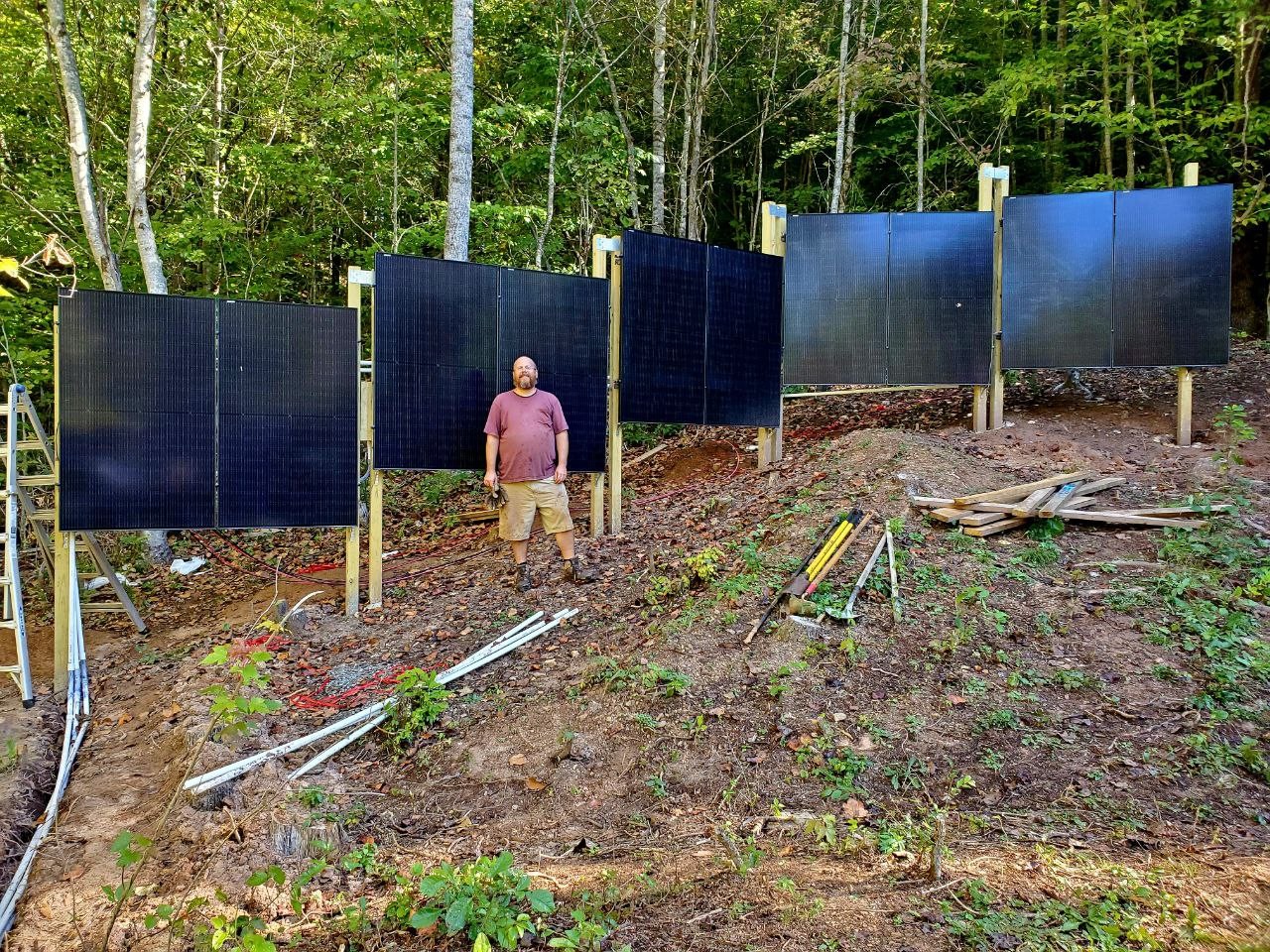
 I have been working all year on a solar upgrade aimed at December. Now here
it is, midwinter, and my electric car is charging on a cloudy day from my
offgrid solar fence.
I lived happily enough with 1 kilowatt of solar that I
installed in 2017.
Meanwhile, solar panel prices came down massively, incentives increased
and everything came together: This was the year.
In the spring I started clearing forest trees that were leaning over the house,
making both a firebreak and a solar field.
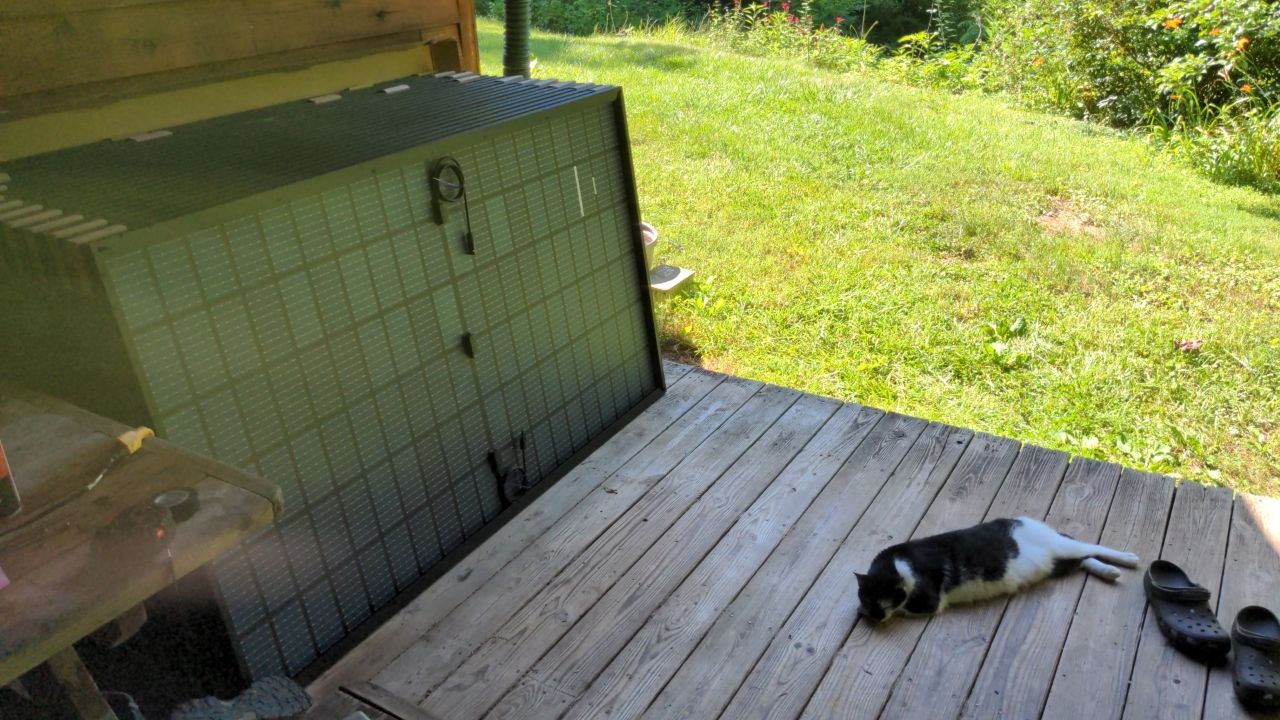
In June I picked up a pallet of panels in a box truck.






 Like each month, have a look at the work funded by

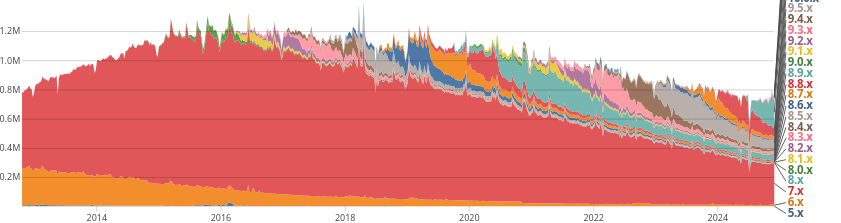 This graph is disgregated into minor versions, and I don t want to come up with
yet another graph for it but it supports (most of) the narrative I presented
above although I do miss the recent drop builtwith reported in D7 s
numbers!


 ).
Firebuild on macOS can already accelerate simple projects and rebuild itself with Xcode. Since Xcode introduces a lot of nondeterminism to the build, Firebuild can t shine in acceleration with Xcode yet, but can provide
 (This post is also published on