Search Results: "mak"

18 November 2024

Russ Allbery: Review: Delilah Green Doesn't Care

Review: Delilah Green Doesn't Care, by Ashley Herring Blake
Series: Bright Falls #1
Publisher: Jove
Copyright: February 2022
ISBN: 0-593-33641-0
Format: Kindle
Pages: 374
Delilah Green Doesn't Care is a sapphic romance novel. It's the first of a trilogy, although in the normal romance series fashion each book follows a different protagonist and has its own happy ending. It is apparently classified as romantic comedy, which did not occur to me while reading but which I suppose I can see in retrospect. Delilah Green got the hell out of Bright Falls as soon as she could and tried not to look back. After her father died, her step-mother lavished all of her perfectionist attention on her overachiever step-sister, leaving Delilah feeling like an unwanted ghost. She escaped to New York where there was space for a queer woman with an acerbic personality and a burgeoning career in photography. Her estranged step-sister's upcoming wedding was not a good enough reason to return to the stifling small town of her childhood. The pay for photographing the wedding was, since it amounted to three months of rent and trying to sell photographs in galleries was not exactly a steady living. So back to Bright Falls Delilah goes. Claire never left Bright Falls. She got pregnant young and ended up with a different life than she expected, although not a bad one. Now she's raising her daughter as a single mom, running the town bookstore, and dealing with her unreliable ex. She and Iris are Astrid Parker's best friends and have been since fifth grade, which means she wants to be happy for Astrid's upcoming wedding. There's only one problem: the groom. He's a controlling, boorish ass, but worse, Astrid seems to turn into a different person around him. Someone Claire doesn't like. Then, to make life even more complicated, Claire tries to pick up Astrid's estranged step-sister in Bright Falls's bar without recognizing her. I have a lot of things to say about this novel, but here's the core of my review: I started this book at 4pm on a Saturday because I hadn't read anything so far that day and wanted to at least start a book. I finished it at 11pm, having blown off everything else I had intended to do that evening, completely unable to put it down. It turns out there is a specific type of romance novel protagonist that I absolutely adore: the sarcastic, confident, no-bullshit character who is willing to pick the fights and say the things that the other overly polite and anxious characters aren't able to get out. Astrid does not react well to criticism, for reasons that are far more complicated than it may first appear, and Claire and Iris have been dancing around the obvious problems with her surprise engagement. As the title says, Delilah thinks she doesn't care: she's here to do a job and get out, and maybe she'll get to tweak her annoying step-sister a bit in the process. But that also means that she is unwilling to play along with Astrid's obsessively controlling mother or her obnoxious fiance, and thus, to the barely disguised glee of Claire and Iris, is a direct threat to the tidy life that Astrid's mother is trying to shoehorn her daughter into. This book is a great example of why I prefer sapphic romances: I think this character setup would not work, at least for me, in a heterosexual romance. Delilah's role only works if she's a woman; if a male character were the sarcastic conversational bulldozer, it would be almost impossible to avoid falling into the gender stereotype of a male rescuer. If this were a heterosexual romance trying to avoid that trap, the long-time friend who doesn't know how to directly confront Astrid would have to be the male protagonist. That could work, but it would be a tricky book to write without turning it into a story focused primarily on the subversion of gender roles. Making both protagonists women dodges the problem entirely and gives them so much narrative and conceptual space to simply be themselves, rather than characters obscured by the shadows of societal gender rules. This is also, at it's core, a book about friendship. Claire, Astrid, and Iris have the sort of close-knit friend group that looks exclusive and unapproachable from the outside. Delilah was the stereotypical outsider, mocked and excluded when they thought of her at all. This, at least, is how the dynamics look at the start of the book, but Blake did an impressive job of shifting my understanding of those relationships without changing their essential nature. She fleshes out all of the characters, not just the romantic leads, and adds complexity, nuance, and perspective. And, yes, past misunderstanding, but it's mostly not the cheap sort that sometimes drives romance plots. It's the misunderstanding rooted in remembered teenage social dynamics, the sort of misunderstanding that happens because communication is incredibly difficult, even more difficult when one has no practice or life experience, and requires knowing oneself well enough to even know what to communicate. The encounter between Delilah and Claire in the bar near the start of the book is cornerstone of the plot, but the moment that grabbed me and pulled me in was Delilah's first interaction with Claire's daughter Ruby. That was the point when I knew these were characters I could trust, and Blake never let me down. I love how Ruby is handled throughout this book, with all of the messy complexity of a kid of divorced parents with her own life and her own personality and complicated relationships with both parents that are independent of the relationship their parents have with each other. This is not a perfect book. There's one prank scene that I thought was excessively juvenile and should have been counter-productive, and there's one tricky question of (nonsexual) consent that the book raises and then later seems to ignore in a way that bugged me after I finished it. There is a third-act breakup, which is not my favorite plot structure, but I think Blake handles it reasonably well. I would probably find more niggles and nitpicks if I re-read it more slowly. But it was utterly engrossing reading that exactly matched my mood the day that I picked it up, and that was a fantastic reading experience. I'm not much of a romance reader and am not the traditional audience for sapphic romance, so I'm probably not the person you should be looking to for recommendations, but this is the sort of book that got me to immediately buy all of the sequels and start thinking about a re-read. It's also the sort of book that dragged me back in for several chapters when I was fact-checking bits of my review. Take that recommendation for whatever it's worth. Content note: Reviews of Delilah Green Doesn't Care tend to call it steamy or spicy. I have no calibration for this for romance novels. I did not find it very sex-focused (I have read genre fantasy novels with more sex), but there are several on-page sex scenes if that's something you care about one way or the other. Followed by Astrid Parker Doesn't Fail. Rating: 9 out of 10

17 November 2024

Russ Allbery: Review: Dark Deeds

Review: Dark Deeds, by Michelle Diener
Series: Class 5 #2
Publisher: Eclipse
Copyright: January 2016
ISBN: 0-6454658-4-4
Format: Kindle
Pages: 340
Dark Deeds is the second book of the self-published Class 5 science fiction romance series. It is a sequel to Dark Horse and will spoil the plot of that book, but it follows the romance series convention of switching to a new protagonist in the same universe and telling a loosely-connected story. Fiona, like Rose in the previous book, was kidnapped by the Tecran in one of their Class 5 ships, although that's not entirely obvious at the start of the story. The book opens with her working as a slave on a Garmman trading ship while its captain works up the nerve to have her killed. She's spared this fate when the ship is raided by Krik pirates. Some brave fast-talking, and a touch of honor among thieves, lets her survive the raid and be rescued by a pursuing Grih battleship, with a useful electronic gadget as a bonus. The author uses the nickname "Fee" for Fiona throughout this book and it was like nails on a chalkboard every time. I had to complain about that before getting into the review. If you've read Dark Horse, you know the formula: lone kidnapped human woman, major violations of the laws against mistreatment of sentient beings that have the Grih furious on her behalf, hunky Grih starship captain who looks like a space elf, all the Grih are fascinated by her musical voice, she makes friends with a secret AI... Diener found a formula that worked well enough that she tried it again, and it would not surprise me if the formula repeated through the series. You should not go into this book expecting to be surprised. That said, the formula did work the first time, and it largely does work again. I thoroughly enjoyed Dark Horse and wanted more, and this is more, delivered on cue. There are worse things, particularly if you're a Kindle Unlimited reader (I am not) and are therefore getting new installments for free. The Tecran fascination with kidnapping human women is explained sufficiently in Fiona's case, but I am mildly curious how Diener will keep justifying it through the rest of the series. (Maybe the formula will change, but I doubt it.) To give Diener credit, this is not a straight repeat of the first book. Fiona is similar to Rose but not identical; Rose had an unshakable ethical calm, and Fiona is more of a scrapper. The Grih are not stupid and, given the amount of chaos Rose unleashed in the previous book, treat the sudden appearance of another human woman with a great deal more caution and suspicion. Unfortunately, this also means far less of my favorite plot element of the first book: the Grih being constantly scandalized and furious at behavior the protagonist finds sadly unsurprising. Instead, this book has quite a bit more action. Dark Horse was mostly character interactions and tense negotiations, with most of the action saved for the end. Dark Deeds replaces a lot of the character work with political plots and infiltrating secret military bases and enemy ships. The AI (named Eazi this time) doesn't show up until well into the book and isn't as much of a presence as Sazo. Instead, there's a lot more of Fiona being drafted into other people's fights, which is entertaining enough while it's happening but which wasn't as delightful or memorable as Rose's story. The writing continues to be serviceable but not great. It's a bit cliched and a bit awkward. Also, Diener uses paragraph breaks for emphasis. It's hard to stop noticing it once you see it. Thankfully, once the story gets going and there's more dialogue, she tones that down, or perhaps I stopped noticing. It's that kind of book (and that kind of series): it's a bit rough to get started, but then there's always something happening, the characters involve a whole lot of wish-fulfillment but are still people I like reading about, and it's the sort of unapologetic "good guys win" type of light science fiction that is just the thing when one simply wants to be entertained. Once I get into the book, it's easy to overlook its shortcomings. I spent Dark Horse knowing roughly what would happen but wondering about the details. I spent Dark Deeds fairly sure of the details and wondering when they would happen. This wasn't as fun of an experience, but the details were still enjoyable and I don't regret reading it. I am hoping that the next book will be more of a twist, or will have a character more like Rose (or at least a character with a better nickname). Sort of recommended if you liked Dark Horse and really want more of the same. Followed by Dark Minds, which I have already purchased. Rating: 6 out of 10

13 November 2024

Russell Coker: Modern Sleep

Julius wrote an insightful blog post about the modern sleep issue with Windows [1]. Basically Microsoft decided that the right way to run laptops is to never entirely sleep, which uses more battery but gives better options for waking up and doing things. I agree with Microsoft in concept and this is something that is a problem that can be solved. A phone can run for 24+ hours without ever fully sleeping, a laptop has a more power hungry CPU and peripherals but also has a much larger battery so it should be able to do the same. Some of the reviews for Snapdragon Windows laptops claim up to 22 hours of actual work without charging! So having suspend not really stop the system should be fine. The ability of a phone to never fully sleep is a change in quality of the usage experience, it means that you can access it and immediately have it respond and it means that all manner of services can be checked for new updates which may require a notification to the user. The XMPP protocol (AKA Jabber) was invented in 1999 which was before laptops were common and Instant Message systems were common long before then. But using Jabber or another IM system on a desktop was a very different experience to using it on a laptop and using it on a phone is different again. The modern sleep allows laptops to act like phones in regard to such messaging services. Currently I have Matrix IM clients running on my Android phone and Linux laptop, if I get a notification that takes much typing for a response then I get out my laptop to respond. If I had an ARM based laptop that never fully shut down I would have much less need for Matrix on a phone. Making modern sleep popular will lead to more development of OS software to work with it. For Linux this will hopefully mean that regular Linux distributions (as opposed to Android which while running a Linux kernel is very different to Debian etc) get better support for such things and therefore become more usable on phones. Debian on a Librem 5 or PinePhonePro isn t very usable due to battery life issues. A laptop with an LTE card can be used for full mobile phone functionality. With modern sleep this is a viable option. I am tempted to make a laptop with LTE card and bluetooth headset a replacement for my phone. Some people will say what if someone tries to call you when it s not convenient to have your laptop with you , my response is what if people learn to not expect me to answer the phone at any time as they managed that in the 90s . Seriously SMS or Matrix me if you want an instant response and if you want a long chat schedule it via SMS or Matrix. Dell has some useful advice about how to use their laptops (and probably most laptops from recent times) in this regard [2]. You can t close the lid before unplugging the power cable you have to unplug first and then close. You shouldn t put a laptop in a sealed bag for travel either. This is a terrible situation, you can put a tablet in a bag and don t need to take any special precautions when unplugging and laptops should work the same. The end result of what Microsoft, Dell, Intel, and others are doing will be good but they are making some silly design choices along the way! I blame Intel mostly for selling laptop CPUs with TDPs >40W! For an amusing take on this Linus Tech Tips has a video about being forced to use MacBooks by Microsoft s implementation of Modern Sleep [3]. I ll try out some ARM laptops in the near future and blog about how well they work on Debian.

12 November 2024

Paul Tagliamonte: Complex for Whom?

In basically every engineering organization I ve ever regarded as particularly high functioning, I ve sat through one specific recurring conversation which is not a conversation about complexity . Things are good or bad because they are or aren t complex, architectures needs to be redone because it s too complex some refactor of whatever it is won t work because it s too complex. You may have even been a part of some of these conversations or even been the one advocating for simple light-weight solutions. I ve done it. Many times. Rarely, if ever, do we talk about complexity within its rightful context complexity for whom. Is a solution complex because it s complex for the end user? Is it complex if it s complex for an API consumer? Is it complex if it s complex for the person maintaining the API service? Is it complex if it s complex for someone outside the team maintaining it to understand? Complexity within a problem domain I ve come to believe, is fairly zero-sum there s a fixed amount of complexity in the problem to be solved, and you can choose to either solve it, or leave it for those downstream of you to solve that problem on their own. That being said, while I believe there is a lower bound in complexity to contend with for a problem, I do not believe there is an upper bound to the complexity of solutions possible. It is always possible, and in fact, very likely that teams create problems for themselves while trying to solve a problem. The rest of this post is talking to the lower bound. When getting feedback on an early draft of this blog post, I ve been informed that Fred Brooks coined a term for what I call lower bound complexity Essential Complexity , in the paper No Silver Bullet Essence and Accident in Software Engineering , which is a better term and can be used interchangeably.

Complexity Culture In a large enough organization, where the team is high functioning enough to have and maintain trust amongst peers, members of the team will specialize. People will begin to engage with subsets of the work to be done, and begin to have their efficacy measured against that part of the organization s problems. Incentives shift, and over time it becomes increasingly likely that two engineers may have two very different priorities when working on the same system together. Someone accountable for uptime and tasked with responding to outages will begin to resist changes. Someone accountable for rapidly delivering features will resist gates between them and their users. Companies (either wittingly or unwittingly) will deal with this by tasking engineers with both production (feature development) and operational tasks (maintenance), so the difference in incentives isn t usually as bad as it could be. When we get a bunch of folks from far-flung corners of an organization in a room, fire up a slide deck and throw up some aspirational to-be architecture diagram in order to get a sign-off to solve some problem (be it someone needs a credible promotion packet, new feature needs to get delivered, or the system has begun to fail and needs fixing), the initial reaction will, more often than I d like, start to devolve into a discussion of how this is going to introduce a bunch of complexity, going to be hard to maintain, why can t you make it less complex? Right around here is when I start to try and contextualize the conversation happening around me understand what complexity is that being discussed, and understand who is taking on that burden. Think about who should be owning that problem, and work through the tradeoffs involved. Is it best solved here, or left to consumers (be them other systems, developers, or users). Should something become an API call s optional param, taking on all the edge-cases and on, or should users have to implement the logic using the data you return (leaving everyone else to take on all the edge-cases and maintenance)? Should you process the data, or require the user to preprocess it for you? Frequently it s right to make an active and explicit decision to simplify and leave problems to be solved downstream, since they may not actually need to be solved or perhaps you expect consumers will want to own the specifics of how the problem is solved, in which case you leave lots of documentation and examples. Many other times, especially when it s something downstream consumers are likely to hit, it s best solved internal to the system, since the only thing that can come of leaving it unsolved are bugs, frustration and half-correct solutions. This is a grey-space of tradeoffs, not a clear decision tree. No one wants the software manifestation of a katamari ball or a junk drawer, nor does anyone want a half-baked service unable to handle the simplest use-case.

Head-in-sand as a Service Popoffs about how complex something is, are, to a first approximation, best understood as meaning complicated for the person making comments . A lot of the #thoughtleadership believe that an AWS hosted EKS k8s cluster running images built by CI talking to an AWS hosted PostgreSQL RDS is not complex. They re right. Mostly right. This is less complex less complex for them. It s not, however, without complexity and its own tradeoffs it s just complexity that they do not have to deal with. Now they don t have to maintain machines that have pesky operating systems or hard drive failures. They don t have to deal with updating the version of k8s, nor ensuring the backups work. No one has to push some artifact to prod manually. Deployments happen unattended. You click a button and get a cluster. On the other hand, developers outside the ops function need to deal with troubleshooting CI, debugging access control rules encoded in turing complete YAML, permissions issues inside the cluster due to whatever the fuck a service mesh is, everyone needs to learn how to use some k8s tools they only actually use during a bad day, likely while doing some x.509 troubleshooting to connect to the cluster (an internal only endpoint; just port forward it) not to mention all sorts of rules to route packets to their project (a single repo s binary being run in 3 containers on a single vm host). Beyond that, there s the invisible complexity complexity on the interior of a service you depend on. I think about the dozens of teams maintaining the EKS service (which is either run on EC2 instances, or alternately, EC2 instances in a trench coat, moustache and even more shell scripts), the RDS service (also EC2 and shell scripts, but this time accounting for redundancy, backups, availability zones), scores of hypervisors pulled off the shelf (xen, kvm) smashed together with the ones built in-house (firecracker, nitro, etc) running on hardware that has to be refreshed and maintained continuously. Every request processed by network ACL rules, AWS IAM rules, security group rules, using IP space announced to the internet wired through IXPs directly into ISPs. I don t even want to begin to think about the complexity inherent in how those switches are designed. Shitloads of complexity to solve problems you may or may not have, or even know you had. What s more complex? An app running in an in-house 4u server racked in the office s telco closet in the back running off the office Verizon line, or an app running four hypervisors deep in an AWS datacenter? Which is more complex to you? What about to your organization? In total? Which is more prone to failure? Which is more secure? Is the complexity good or bad? What type of Complexity can you manage effectively? Which threaten the system? Which threaten your users?

COMPLEXIVIBES This extends beyond Engineering. Decisions regarding what tools are we able to use be them existing contracts with cloud providers, CIO mandated SaaS products, a list of the only permissible open source projects will incur costs in terms of expressed complexity . Pinning open source projects to a fixed set makes SBOM production less complex . Using only one SaaS provider s product suite (even if its terrible, because it has all the types of tools you need) makes accreditation less complex . If all you have is a contract with Pauly T s lowest price technically acceptable artisinal cloudary and haberdashery, the way you pay for your compute is less complex for the CIO shop, though you will find yourself building your own hosted database template, mechanism to spin up a k8s cluster, and all the operational and technical burden that comes with it. Or you won t and make it everyone else s problem in the organization. Nothing you can do will solve for the fact that you must now deal with this problem somewhere because it was less complicated for the business to put the workloads on the existing contract with a cut-rate vendor. Suddenly, the decision to reduce complexity because of an existing contract vehicle has resulted in a huge amount of technical risk and maintenance burden being onboarded. Complexity you would otherwise externalize has now been taken on internally. With a large enough organizations (specifically, in this case, i m talking about you, bureaucracies), this is largely ignored or accepted as normal since the personnel cost is understood to be free to everyone involved. Doing it this way is more expensive, more work, less reliable and less maintainable, and yet, somehow, is, in a lot of ways, less complex to the organization. It s particularly bad with bureaucracies, since screwing up a contract will get you into much more trouble than delivering a broken product, leaving basically no reason for anyone to care to fix this. I can t shake the feeling that for every story of technical mandates gone awry, somewhere just out of sight there s a decisionmaker optimizing for what they believe to be the least amount of complexity least hassle, fewest unique cases, most consistency as they can. They freely offload complexity from their accreditation and risk acceptance functions through mandates. They will never have to deal with it. That does not change the fact that someone does.

TC;DR (TOO COMPLEX; DIDN T REVIEW) We wish to rid ourselves of systemic Complexity after all, complexity is bad, simplicity is good. Removing upper-bound own-goal complexity ( accidental complexity in Brooks s terms) is important, but once you hit the lower bound complexity, the tradeoffs become zero-sum. Removing complexity from one part of the system means that somewhere else maybe outside your organization or in a non-engineering function must grow it back. Sometimes, the opposite is the case, such as when a previously manual business processes is automated. Maybe that s a good idea. Maybe it s not. All I know is that what doesn t help the situation is conflating complexity with everything we don t like legacy code, maintenance burden or toil, cost, delivery velocity.
  • Complexity is not the same as proclivity to failure. The most reliable systems I ve interacted with are unimaginably complex, with layers of internal protection to prevent complete failure. This has its own set of costs which other people have written about extensively.
  • Complexity is not cost. Sometimes the cost of taking all the complexity in-house is less, for whatever value of cost you choose to use.
  • Complexity is not absolute. Something simple from one perspective may be wildly complex from another. The impulse to burn down complex sections of code is helpful to have generally, but sometimes things are complicated for a reason, even if that reason exists outside your codebase or organization.
  • Complexity is not something you can remove without introducing complexity elsewhere. Just as not making a decision is a decision itself; choosing to require someone else to deal with a problem rather than dealing with it internally is a choice that needs to be considered in its full context.
Next time you re sitting through a discussion and someone starts to talk about all the complexity about to be introduced, I want to pop up in the back of your head, politely asking what does complex mean in this context? Is it lower bound complexity? Is this complexity desirable? Is what they re saying mean something along the lines of I don t understand the problems being solved, or does it mean something along the lines of this problem should be solved elsewhere? Do they believe this will result in more work for them in a way that you don t see? Should this not solved at all by changing the bounds of what we should accept or redefine the understood limits of this system? Is the perceived complexity a result of a decision elsewhere? Who s taking this complexity on, or more to the point, is failing to address complexity required by the problem leaving it to others? Does it impact others? How specifically? What are you not seeing? What can change? What should change?

Sven Hoexter: fluxcd: Validate flux-system Root Kustomization

Not entirely sure how people use fluxcd, but I guess most people have something like a flux-system flux kustomization as the root to add more flux kustomizations to their kubernetes cluster. Here all of that is living in a monorepo, and as we're all humans people figure out different ways to break it, which brings the reconciliation of the flux controllers down. Thus we set out to do some pre-flight validations. Note1: We do not use flux variable substitutions for those root kustomizations, so if you use those, you've to put additional work into the validation and pipe things through flux envsubst. First Iteration: Just Run kustomize Like Flux Would Do It With a folder structure where we've a cluster folder with subfolders per cluster, we just run a for loop over all of them:
for CLUSTER in $ CLUSTERS ; do
    pushd clusters/$ CLUSTER 
    # validate if we can create and build a flux-system like kustomization file
    kustomize create --autodetect --recursive
    if ! kustomize build . -o /dev/null 2> error.log; then
        echo "Error building flux-system kustomization for cluster $ CLUSTER "
        cat error.log
    fi
    popd
done
Second Iteration: Make Sure Our Workload Subfolder Have a kustomization.yaml Next someone figured out that you can delete some yaml files from a workload subfolder, including the kustomization.yaml, but not all of them. That left around a resource definition which lacks some other referenced objects, but is still happily included into the root kustomization by kustomize create and flux, which of course did not work. Thus we started to catch that as well in our growing for loop:
for CLUSTER in $ CLUSTERS ; do
    pushd clusters/$ CLUSTER 
    # validate if we can create and build a flux-system like kustomization file
    kustomize create --autodetect --recursive
    if ! kustomize build . -o /dev/null 2> error.log; then
        echo "Error building flux-system kustomization for cluster $ CLUSTER "
        cat error.log
    fi
    # validate if we always have a kustomization file in folders with yaml files
    for CLFOLDER in $(find . -type d); do
        test -f $ CLFOLDER /kustomization.yaml && continue
        test -f $ CLFOLDER /kustomization.yml && continue
        if [[ $(find $ CLFOLDER  -maxdepth 1 \( -name '*.yaml' -o -name '*.yml' \) -type f wc -l) != 0 ]]; then
            echo "Error Cluster $ CLUSTER  folder $ CLFOLDER  lacks a kustomization.yaml"
        fi
    done
    popd
done
Note2: I shortened those snippets to the core parts. In our case some things are a bit specific to how we implemented the execution of those checks in GitHub action workflows. Hope that's enough to transport the idea of what to check for.

10 November 2024

Dirk Eddelbuettel: inline 0.3.20: Mostly Maintenance

A new release of the inline package got to CRAN today marking the first release in three and half years. inline facilitates writing code in-line in simple string expressions or short files. The package was used quite extensively by Rcpp in the very early days before Rcpp Attributes arrived on the scene providing an even better alternative for its use cases. inline is still used by rstan and a number of other packages. This release was tickled by changing in r-devel just this week, and the corresponding please fix or else email I received this morning. R_NO_REMAP is now the default in r-devel, and while we had already converted most (old-style) calls into the API to using the now mandatory Rf_ prefix, the package contained few remaining cases in examples as well as one in code generation. The release also contains a helpful contributed PR making an error message a little clearer, plus several small and common maintenance changed around continuous integration, package layout and the repository. The NEWS extract follows and details the changes some more.

Changes in inline version 0.3.20 (2024-11-10)
  • Error message formatting is improved for compileCode (Alexis Derumigny in #25)
  • Switch to using Authors@R, other general packaging maintenance for continuous integration and repository
  • Use Rf_ in a handful of cases as R-devel now mandates it

Thanks to my CRANberries, you can also look at a diff to the previous release Questions, comments etc should go to the rcpp-devel mailing list off the R-Forge page. Bugs reports are welcome at the GitHub issue tracker as well (where one can also search among open or closed issues). If you like this or other open-source work I do, you can sponsor me at GitHub.

This post by Dirk Eddelbuettel originated on his Thinking inside the box blog. Please report excessive re-aggregation in third-party for-profit settings.

Reproducible Builds: Reproducible Builds in October 2024

Welcome to the October 2024 report from the Reproducible Builds project. Our reports attempt to outline what we ve been up to over the past month, highlighting news items from elsewhere in tech where they are related. As ever, if you are interested in contributing to the project, please visit our Contribute page on our website. Table of contents:
  1. Beyond bitwise equality for Reproducible Builds?
  2. Two Ways to Trustworthy at SeaGL 2024
  3. Number of cores affected Android compiler output
  4. On our mailing list
  5. diffoscope
  6. IzzyOnDroid passed 25% reproducible apps
  7. Distribution work
  8. Website updates
  9. Reproducibility testing framework
  10. Supply-chain security at Open Source Summit EU
  11. Upstream patches

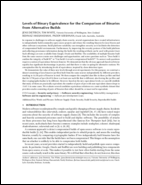
Beyond bitwise equality for Reproducible Builds? Jens Dietrich, Tim White, of Victoria University of Wellington, New Zealand along with Behnaz Hassanshahi and Paddy Krishnan of Oracle Labs Australia published a paper entitled Levels of Binary Equivalence for the Comparison of Binaries from Alternative Builds :
The availability of multiple binaries built from the same sources creates new challenges and opportunities, and raises questions such as: Does build A confirm the integrity of build B? or Can build A reveal a compromised build B? . To answer such questions requires a notion of equivalence between binaries. We demonstrate that the obvious approach based on bitwise equality has significant shortcomings in practice, and that there is value in opting for alternative notions. We conceptualise this by introducing levels of equivalence, inspired by clone detection types.
A PDF of the paper is freely available.

Two Ways to Trustworthy at SeaGL 2024 On Friday 8th November, Vagrant Cascadian will present a talk entitled Two Ways to Trustworthy at SeaGL in Seattle, WA. Founded in 2013, SeaGL is a free, grassroots technical summit dedicated to spreading awareness and knowledge about free source software, hardware and culture. Vagrant s talk:
[ ] delves into how two project[s] approaches fundamental security features through Reproducible Builds, Bootstrappable Builds, code auditability, etc. to improve trustworthiness, allowing independent verification; trustworthy projects require little to no trust. Exploring the challenges that each project faces due to very different technical architectures, but also contextually relevant social structure, adoption patterns, and organizational history should provide a good backdrop to understand how different approaches to security might evolve, with real-world merits and downsides.

Number of cores affected Android compiler output Fay Stegerman wrote that the cause of the Android toolchain bug from September s report that she reported to the Android issue tracker has been found and the bug has been fixed.
the D8 Java to DEX compiler (part of the Android toolchain) eliminated a redundant field load if running the class s static initialiser was known to be free of side effects, which ended up accidentally depending on the sharding of the input, which is dependent on the number of CPU cores used during the build.
To make it easier to understand the bug and the patch, Fay also made a small example to illustrate when and why the optimisation involved is valid.

On our mailing list On our mailing list this month:

diffoscope diffoscope is our in-depth and content-aware diff utility that can locate and diagnose reproducibility issues. This month, Chris Lamb made the following changes, including preparing and uploading versions 279, 280, 281 and 282 to Debian:
  • Ignore errors when listing .ar archives (#1085257). [ ]
  • Don t try and test with systemd-ukify in the Debian stable distribution. [ ]
  • Drop Depends on the deprecated python3-pkg-resources (#1083362). [ ]
In addition, Jelle van der Waa added support for Unified Kernel Image (UKI) files. [ ][ ][ ] Furthermore, Vagrant Cascadian updated diffoscope in GNU Guix to version 282. [ ][ ]

IzzyOnDroid passed 25% reproducible apps The IzzyOnDroid project has reached a good milestone by reaching over 25% of the ~1,200 Android apps provided by their repository (of official APKs built by the original application developers) having been confirmed to be reproducible by a rebuilder.

Distribution work In Debian this month:
  • Holger Levsen uploaded devscripts version 2.24.2, including many changes to the debootsnap, debrebuild and reproducible-check scripts. This is the first time that debrebuild actually works (using sbuild s unshare backend). As part of this, Holger also fixed an issue in the reproducible-check script where a typo in the code led to incorrect results [ ]
  • Recently, a news entry was added to snapshot.debian.org s homepage, describing the recent changes that made the system stable again:
    The new server has no problems keeping up with importing the full archives on every update, as each run finishes comfortably in time before it s time to run again. [While] the new server is the one doing all the importing of updated archives, the HTTP interface is being served by both the new server and one of the VM s at LeaseWeb.
    The entry list a number of specific updates surrounding the API endpoints and rate limiting.
  • Lastly, 12 reviews of Debian packages were added, 3 were updated and 18 were removed this month adding to our knowledge about identified issues.
Elsewhere in distribution news, Zbigniew J drzejewski-Szmek performed another rebuild of Fedora 42 packages, with the headline result being that 91% of the packages are reproducible. Zbigniew also reported a reproducibility problem with QImage. Finally, in openSUSE, Bernhard M. Wiedemann published another report for that distribution.

Website updates There were an enormous number of improvements made to our website this month, including:
  • Alba Herrerias:
    • Improve consistency across distribution-specific guides. [ ]
    • Fix a number of links on the Contribute page. [ ]
  • Chris Lamb:
  • hulkoba
  • James Addison:
    • Huge and significant work on a (as-yet-merged) quickstart guide to be linked from the homepage [ ][ ][ ][ ][ ]
    • On the homepage, link directly to the Projects subpage. [ ]
    • Relocate dependency-drift notes to the Volatile inputs page. [ ]
  • Ninette Adhikari:
    • Add a brand new Success stories page that highlights the success stories of Reproducible Builds, showcasing real-world examples of projects shipping with verifiable, reproducible builds . [ ][ ][ ][ ][ ][ ]
  • Pol Dellaiera:
    • Update the website s README page for building the website under NixOS. [ ][ ][ ][ ][ ]
    • Add a new academic paper citation. [ ]
Lastly, Holger Levsen filed an extensive issue detailing a request to create an overview of recommendations and standards in relation to reproducible builds.

Reproducibility testing framework The Reproducible Builds project operates a comprehensive testing framework running primarily at tests.reproducible-builds.org in order to check packages and other artifacts for reproducibility. In October, a number of changes were made by Holger Levsen, including:
  • Add a basic index.html for rebuilderd. [ ]
  • Update the nginx.conf configuration file for rebuilderd. [ ]
  • Document how to use a rescue system for Infomaniak s OpenStack cloud. [ ]
  • Update usage info for two particular nodes. [ ]
  • Fix up a version skew check to fix the name of the riscv64 architecture. [ ]
  • Update the rebuilderd-related TODO. [ ]
In addition, Mattia Rizzolo added a new IP address for the inos5 node [ ] and Vagrant Cascadian brought 4 virt nodes back online [ ].

Supply-chain security at Open Source Summit EU The Open Source Summit EU took place recently, and covered plenty of topics related to supply-chain security, including:

Upstream patches The Reproducible Builds project detects, dissects and attempts to fix as many currently-unreproducible packages as possible. We endeavour to send all of our patches upstream where appropriate. This month, we wrote a large number of such patches, including:

Finally, If you are interested in contributing to the Reproducible Builds project, please visit our Contribute page on our website. However, you can get in touch with us via:

8 November 2024

Thomas Lange: Using NIS (Network Information Service) in 2024

The topic of this posting already tells you that an old Unix guy tells stories about old techniques. I'm a happy NIS (formerly YP) user since 30+ years. I started using it with SunOS 4.0, later using it with Solaris and with Linux since 1999. In the past, a colleague wasn't happyly using NIS+ when he couldn't log in as root after a short time because of some well known bugs and wrong configs. NIS+ was also much slower than my NIS setup. I know organisations using NIS for more than 80.000 user accounts in 2024. I know the security implications of NIS but I can live with them, because I manage all computers in the network that have access to the NIS maps. And NIS on Linux offers to use shadow maps, which are only accessible to the root account. My users are forced to use very long passwords. Unfortunately NIS support for the PAM modules was removed in Debian in pam 1.4.0-13, which means Debian 12 (bookworm) is lacking NIS support in PAM, but otherwise it is still supported. This only affects changing the NIS password via passwd. You can still authenticate users and use other NIS maps. But yppasswd is deprecated and you should not use it! If you use yppasswd it may generate a new password hash by using the old DES crypt algorithm, which is very weak and only uses the first 8 chars in your password. Do not use yppasswd any more! yppasswd only detects DES, MD5, SHA256 and SHA512 hashes, but for me and some colleagues it only creates weak DES hashes after a password change. yescrypt hashes which are the default in Debian 12 are not supported at all. The solution is to use the plain passwd program. On the NIS master, you should setup your NIS configuration to use /etc/shadow and /etc/passwd even if your other NIS maps are in /var/yp/src or similar. Make sure to have these lines in your /var/yp/Makefile:
PASSWD      = /etc/passwd
SHADOW      = /etc/shadow
Call make once, and it will generate the shadow and passwd map. You may want to set the variable MINUID which defines which entries are not put into the NIS maps. On all NIS clients you still need the entries (for passwd, shadow, group,...) that point to the nis service. E.g.:
passwd:         files nis systemd
group:          files nis systemd
shadow:         files nis
You can remove all occurences of "nis" in your /etc/pam.d/common-password file. Then you can use the plain passwd program to change your password on the NIS master. But this does not call make in /var/yp for updating the NIS shadow map. Let's use inotify(7) for that. First, create a small shell script /usr/local/sbin/shadow-change:
#! /bin/sh
PATH=/usr/sbin:/usr/bin
# only watch the /etc/shadow file
if [ "$2" != "shadow" ]; then
  exit 0
fi
cd /var/yp   exit 3
sleep 2
make
Then install the package incron.
# apt install incron
# echo root >> /etc/incron.allow
# incrontab -e
Add this line:
/etc    IN_MOVED_TO     /usr/local/sbin/shadow-change $@ $# $%
It's not possible to use IN_MODIFY or watch other events on /etc/shadow directly, because the passwd command creates a /etc/nshadow file, deletes /etc/shadow and then moves nshadow to shadow. inotify on a file does not work after the file was removed. You can see the logs from incrond by using:
# journalctl _COMM=incrond
e.g.
Oct 01 12:21:56 kueppers incrond[6588]: starting service (version 0.5.12, built on Jan 27 2023 23:08:49)
Oct 01 13:43:55 kueppers incrond[6589]: table for user root created, loading
Oct 01 13:45:42 kueppers incrond[6589]: PATH (/etc) FILE (shadow) EVENT (IN_MOVED_TO)
Oct 01 13:45:42 kueppers incrond[6589]: (root) CMD ( /usr/local/sbin/shadow-change /etc shadow IN_MOVED_TO)
I've disabled the execution of yppasswd using dpkg-divert
# dpkg-divert --local --rename --divert /usr/bin/yppasswd-disable /usr/bin/yppasswd
chmod a-rwx /usr/bin/yppasswd-disable
Do not forget to limit the access to the shadow.byname map in ypserv.conf and general access to NIS in ypserv.securenets. I've also discovered the package pamtester, which is a nice package for testing your pam configs.

Freexian Collaborators: Debian Contributions: October s report (by Anupa Ann Joseph)

Debian Contributions: 2024-10 Contributing to Debian is part of Freexian s mission. This article covers the latest achievements of Freexian and their collaborators. All of this is made possible by organizations subscribing to our Long Term Support contracts and consulting services.

rebootstrap, by Helmut Grohne After significant changes earlier this year, the state of architecture cross bootstrap is normalizing again. More and more architectures manage to complete rebootstrap testing successfully again. Here are two examples of what kind of issues the bootstrap testing identifies. At some point, libpng1.6 would fail to cross build on musl architectures whereas it would succeed on other ones failing to locate zlib. Adding --debug-find to the cmake invocation eventually revealed that it would fail to search in /usr/lib/<triplet>, which is the default library path. This turned out to be a bug in cmake assuming that all linux systems use glibc. libpng1.6 also gained a baseline violation for powerpc and ppc64 by enabling the use of AltiVec there. The newt package would fail to cross build for many 32-bit architectures whereas it would succeed for armel and armhf due to -Wincompatible-pointer-types. It turns out that this flag was turned into -Werror and it was compiling with a warning earlier. The actual problem is a difference in signedness between wchar_t and FriBidChar (aka uint32_t) and actually affects native building on i386.

Miscellaneous contributions
  • Helmut sent 35 patches for cross build failures.
  • Stefano Rivera uploaded the Python 3.13.0 final release.
  • Stefano continued to rebuild Python packages with C extensions using Python 3.13, to catch compatibility issues before the 3.13-add transition starts.
  • Stefano uploaded new versions of a handful of Python packages, including: dh-python, objgraph, python-mitogen, python-truststore, and python-virtualenv.
  • Stefano packaged a new release of mkdocs-macros-plugin, which required packaging a new Python package for Debian, python-super-collections (now in NEW review).
  • Stefano helped the mini-DebConf Online Brazil get video infrastructure up and running for the event. Unfortunately, Debian s online-DebConf setup has bitrotted over the last couple of years, and it eventually required new temporary Jitsi and Jibri instances.
  • Colin Watson fixed a number of autopkgtest failures to get ansible back into testing.
  • Colin fixed an ssh client failure in certain cases when using GSS-API key exchange, and added an integration test to ensure this doesn t regress in future.
  • Colin worked on the Python 3.13 transition, fixing problems related to it in 15 packages. This included upstream work in a number of packages (postgresfixture, python-asyncssh, python-wadllib).
  • Colin upgraded 41 Python packages to new upstream versions.
  • Carles improved po-debconf-manager: now it can create merge requests to Salsa automatically (created 17, new batch coming this month), imported almost all the packages with debconf translation templates whose VCS is Salsa (currently 449 imported), added statistics per package and language, improved command line interface options. Performed user support fixing different issues. Also prepared an abstract for the talk at MiniDebConf Toulouse.
  • Santiago Ruano Rinc n continued the organization work for the DebConf 25 conference, to be held in Brest, France. Part of the work relates to the initial edits of the sponsoring brochure. Thanks to Benjamin Somers who finalized the French and English versions.
  • Rapha l forwarded a couple of zim and hamster bugs to the upstream developers, and tried to diagnose a delayed startup of gdm on his laptop (cf #1085633).
  • On behalf of the Debian Publicity Team, Anupa interviewed 7 women from the Debian community, old and new contributors. The interview was published in Bits from Debian.

6 November 2024

Bits from Debian: Bits from the DPL

Dear Debian community, this is Bits from DPL for October. In addition to a summary of my recent activities, I aim to include newsworthy developments within Debian that might be of interest to the broader community. I believe this provides valuable insights and foster a sense of connection across our diverse projects. Also, I welcome your feedback on the format and focus of these Bits, as community input helps shape their value. Ada Lovelace Day 2024 As outlined in my platform, I'm committed to increasing the diversity of Debian developers. I hope the recent article celebrating Ada Lovelace Day 2024 featuring interviews with women in Debian will serve as an inspiring motivation for more women to join our community. MiniDebConf Cambridge This was my first time attending the MiniDebConf in Cambridge, hosted at the ARM building. I thoroughly enjoyed the welcoming atmosphere of both MiniDebCamp and MiniDebConf. It was wonderful to reconnect with people who hadn't made it to the last two DebConfs, and, as always, there was plenty of hacking, insightful discussions, and valuable learning. If you missed the recent MiniDebConf, there's a great opportunity to attend the next one in Toulouse. It was recently decided to include a MiniDebCamp beforehand as well. FTPmaster accepts MRs for DAK At the recent MiniDebConf in Cambridge, I discussed potential enhancements for DAK to make life easier for both FTP Team members and developers. For those interested, the document "Hacking on DAK" provides guidance on setting up a local DAK instance and developing patches, which can be submitted as MRs. As a perfectly random example of such improvements some older MR, "Add commands to accept/reject updates from a policy queue" might give you some inspiration. At MiniDebConf, we compiled an initial list of features that could benefit both the FTP Team and the developer community. While I had preliminary discussions with the FTP Team about these items, not all ideas had consensus. I aim to open a detailed, public discussion to gather broader feedback and reach a consensus on which features to prioritize. Sometimes, packages are rejected not because of DFSG-incompatible licenses but due to other issues that could be resolved within an existing package (as discussed in my DebConf23 BoF, "Chatting with ftpmasters"[1]). During the "Meet the ftpteam" BoF (Log/transcription of the BoF can be found here), for the moment until the MR gets accepted, a new option was proposed for FTP Team members reviewing packages in NEW:

Accept + Bug Report This option would allow a package to enter Debian (in unstable or experimental) with an automatically filed RC bug report. The RC bug would prevent the package from migrating to testing until the issues are addressed. To ensure compatibility with the BTS, which only accepts bug reports for existing packages, a delayed job (24 hours post-acceptance) would file the bug.

When binary package names change, currently the package must go through the NEW queue, which can delay the availability of updated libraries. Allowing such packages to bypass the queue could expedite this process. A configuration option to enable this bypass specifically for uploads to experimental may be useful, as it avoids requiring additional technical review for experimental uploads. Previously, I believed the requirement for binary name changes to pass through NEW was due to a missing feature in DAK, possibly addressable via an MR. However, in discussions with the FTP Team, I learned this is a matter of team policy rather than technical limitation. I haven't found this policy documented, so it may be worth having a community discussion to clarify and reach consensus on how we want to handle binary name changes to get the MR sensibly designed. When a developer requests the removal of a package whether entirely or for specific architectures RM bugs must be filed for the package itself as well as for each package depending on it. It would be beneficial if the dependency tree could be automatically resolved, allowing either:
a) the DAK removal tooling to remove the entire dependency tree
   after prompting the bug report author for confirmation, or
b) the system to auto-generate corresponding bug reports for all
   packages in the dependency tree.
The latter option might be better suited for implementation in an MR for reportbug. However, given the possibility of large-scale removals (for example, targeting specific architectures), having appropriate tooling for this would be very beneficial. In my opinion the proposed DAK enhancements aim to support both FTP Team members and uploading developers. I'd be very pleased if these ideas spark constructive discussion and inspire volunteers to start working on them--possibly even preparing to join the FTP Team. On the topic of ftpmasters: an ongoing discussion with SPI lawyers is currently reviewing the non-US agreement established 22 years ago. Ideally, this review will lead to a streamlined workflow for ftpmasters, removing certain hurdles that were originally put in place due to legal requirements, which were updated in 2021. Contacting teams My outreach efforts to Debian teams have slowed somewhat recently. However, I want to emphasize that anyone from a packaging team is more than welcome to reach out to me directly. My outreach emails aren't following any specific orders--just my own somewhat na ve view of Debian, which I'm eager to make more informed. Recently, I received two very informative responses: one from the Qt/KDE Team, which thoughtfully compiled input from several team members into a shared document. The other was from the Rust Team, where I received three quick, helpful replies one of which included an invitation to their upcoming team meeting. Interesting readings on our mailing lists I consider the following threads on our mailing list some interesting reading and would like to add some comments. Sensible languages for younger contributors Though the discussion on debian-devel about programming languages took place in September, I recently caught up with it. I strongly believe Debian must continue evolving to stay relevant for the future. "Everything must change, so that everything can stay the same." -- Giuseppe Tomasi di Lampedusa, The Leopard I encourage constructive discussions on integrating programming languages in our toolchain that support this evolution. Concerns regarding the "Open Source AI Definition" A recent thread on the debian-project list discussed the "Open Source AI Definition". This topic will impact Debian in the future, and we need to reach an informed decision. I'd be glad to see more perspectives in the discussions particularly on finding a sensible consensus, understanding how FTP Team members view their delegated role, and considering whether their delegation might need adjustments for clarity on this issue. Kind regards Andreas.

4 November 2024

Ravi Dwivedi: Asante Kenya for a Good Time

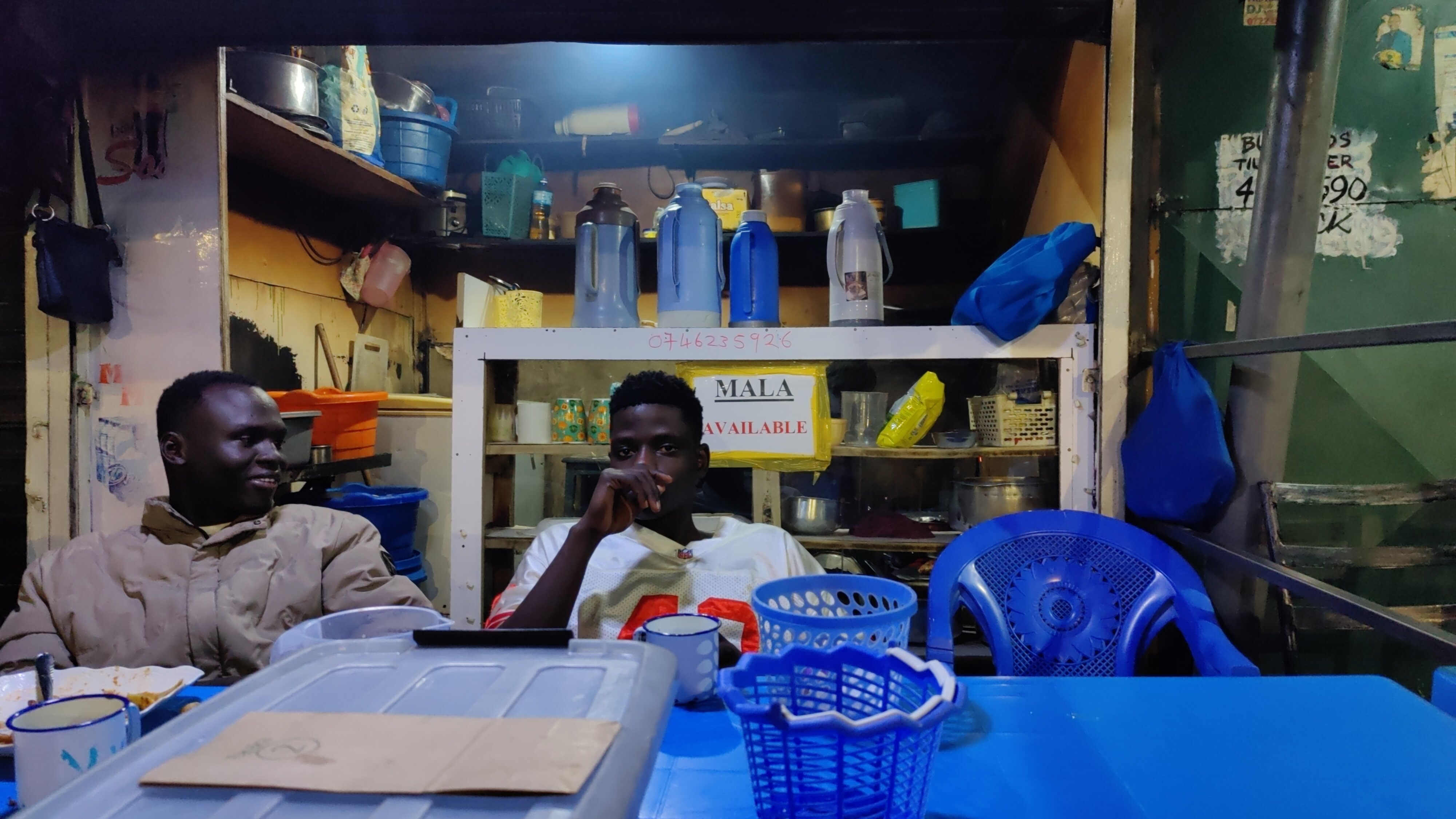
In September of this year, I visited Kenya to attend the State of the Map conference. I spent six nights in the capital Nairobi, two nights in Mombasa, and one night on a train. I was very happy with the visa process being smooth and quick. Furthermore, I stayed at the Nairobi Transit Hotel with other attendees, with Ibtehal from Bangladesh as my roommate. One of the memorable moments was the time I spent at a local coffee shop nearby. We used to go there at midnight, despite the grating in the shops suggesting such adventures were unsafe. Fortunately, nothing bad happened, and we were rewarded with a fun time with the locals.
The coffee shop Ibtehal and me used to visit during the midnight
Grating at a chemist shop in Mombasa, Kenya
The country lies on the equator, which might give the impression of extremely hot temperatures. However, Nairobi was on the cooler side (10 25 degrees Celsius), and I found myself needing a hoodie, which I bought the next day. It also served as a nice souvenir, as it had an outline of the African map printed on it. I also bought a Safaricom SIM card for 100 shillings and recharged it with 1000 shillings for 8 GB internet with 5G speeds and 400 minutes talk time.

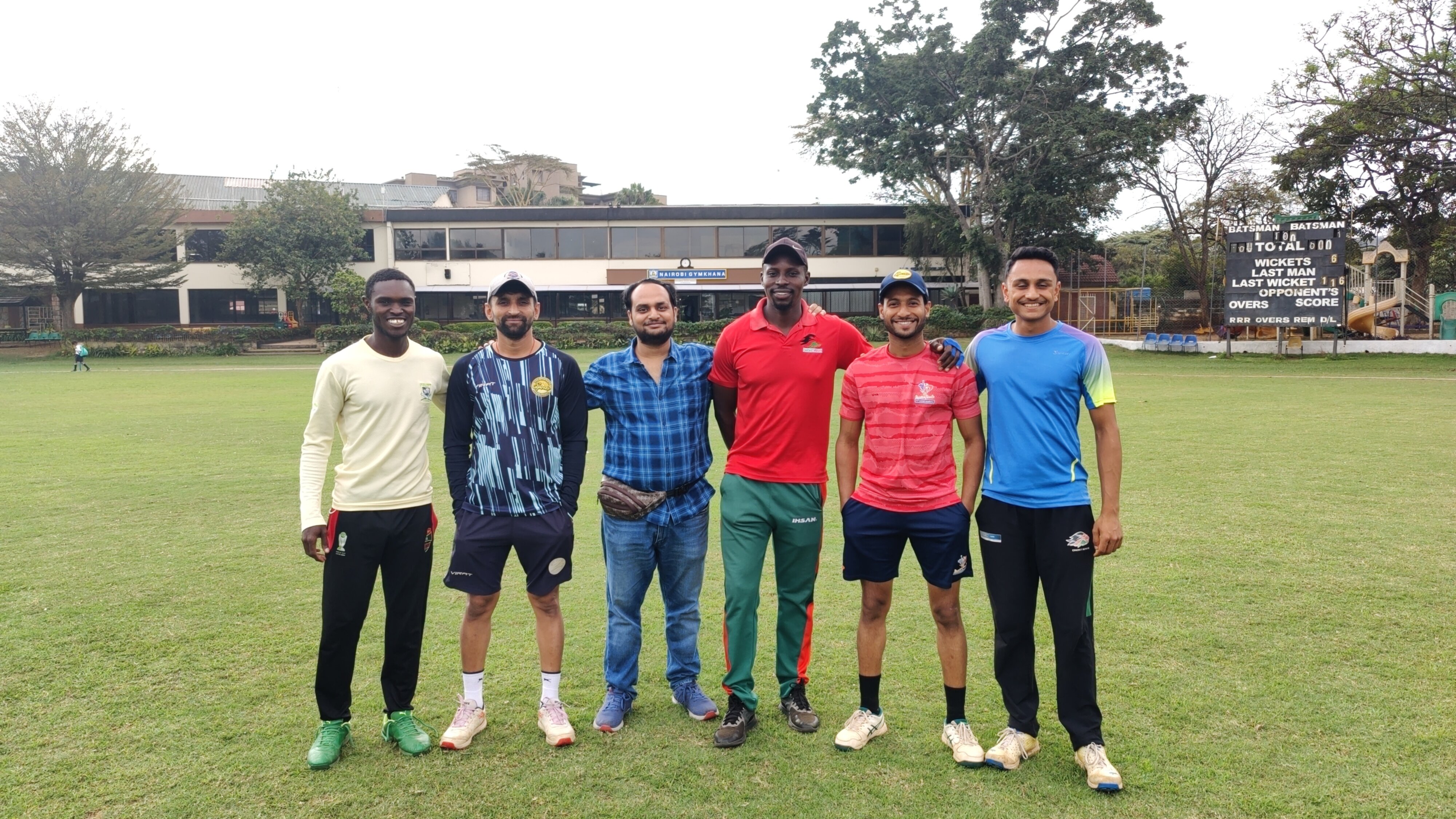
A visit to Nairobi s Historic Cricket Ground On this trip, I got a unique souvenir that can t be purchased from the market a cricket jersey worn in an ODI match by a player. The story goes as follows: I was roaming around the market with my friend Benson from Nairobi to buy a Kenyan cricket jersey for myself, but we couldn t find any. So, Benson had the idea of visiting the Nairobi Gymkhana Club, which used to be Kenya s main cricket ground. It has hosted some historic matches, including the 2003 World Cup match in which Kenya beat the mighty Sri Lankans and the record for the fastest ODI century by Shahid Afridi in just 37 balls in 1996. Although entry to the club was exclusively for members, I was warmly welcomed by the staff. Upon reaching the cricket ground, I met some Indian players who played in Kenyan leagues, as well as Lucas Oluoch and Dominic Wesonga, who have represented Kenya in ODIs. When I expressed interest in getting a jersey, Dominic agreed to send me pictures of his jersey. I liked his jersey and collected it from him. I gave him 2000 shillings, an amount suggested by those Indian players.
Me with players at the Nairobi Gymkhana Club
Cricket pitch at the Nairobi Gymkhana Club
A view of the cricket ground inside the Nairobi Gymkhana Club
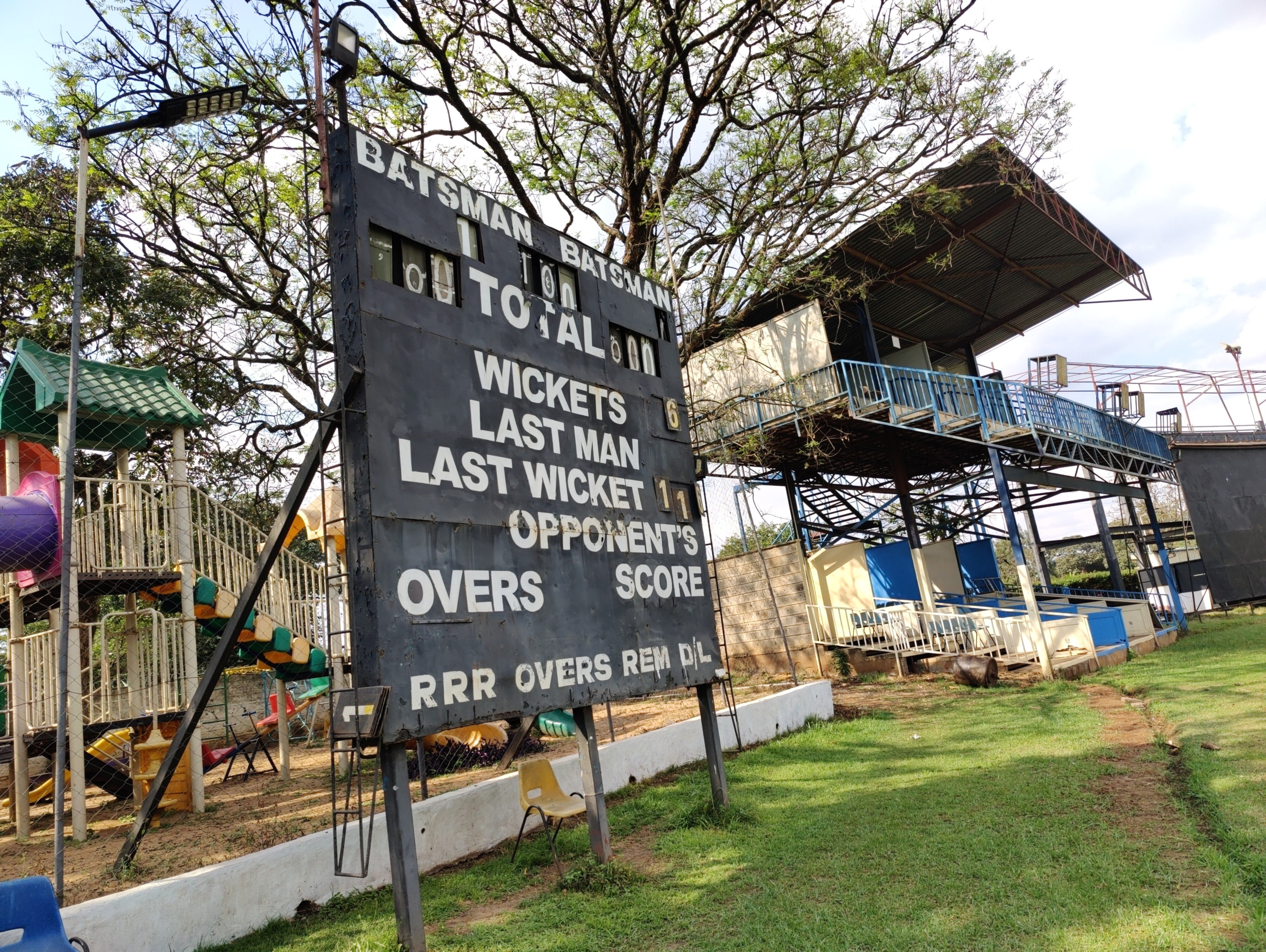
Scoreboard at the Nairobi Gymkhana cricket ground

Giraffe Center in Nairobi Kenya is known for its safaris and has no shortage of national parks. In fact, Nairobi is the only capital in the world with a national park. I decided not to visit one, as most of them were expensive and offered multi-day tours, and I didn t want to spend that much time in the wildlife. Instead, I went to the Giraffe Center in Nairobi with Pragya and Rabina. The ticket cost 1500 Kenyan shillings (1000 Indian rupees). In Kenya, matatus - shared vans, usually decorated with portraits of famous people and play rap songs - are the most popular means of public transport. Reaching the Giraffe Center from our hotel required taking five matatus, which cost a total of 150 shillings, and a 2 km walk. The journey back was 90 shillings, suggesting that we didn t find the most efficient route to get there. At the Giraffe Center, we fed giraffes and took photos.
A matatu with a Notorious BIG portrait.
Inside the Giraffe Center

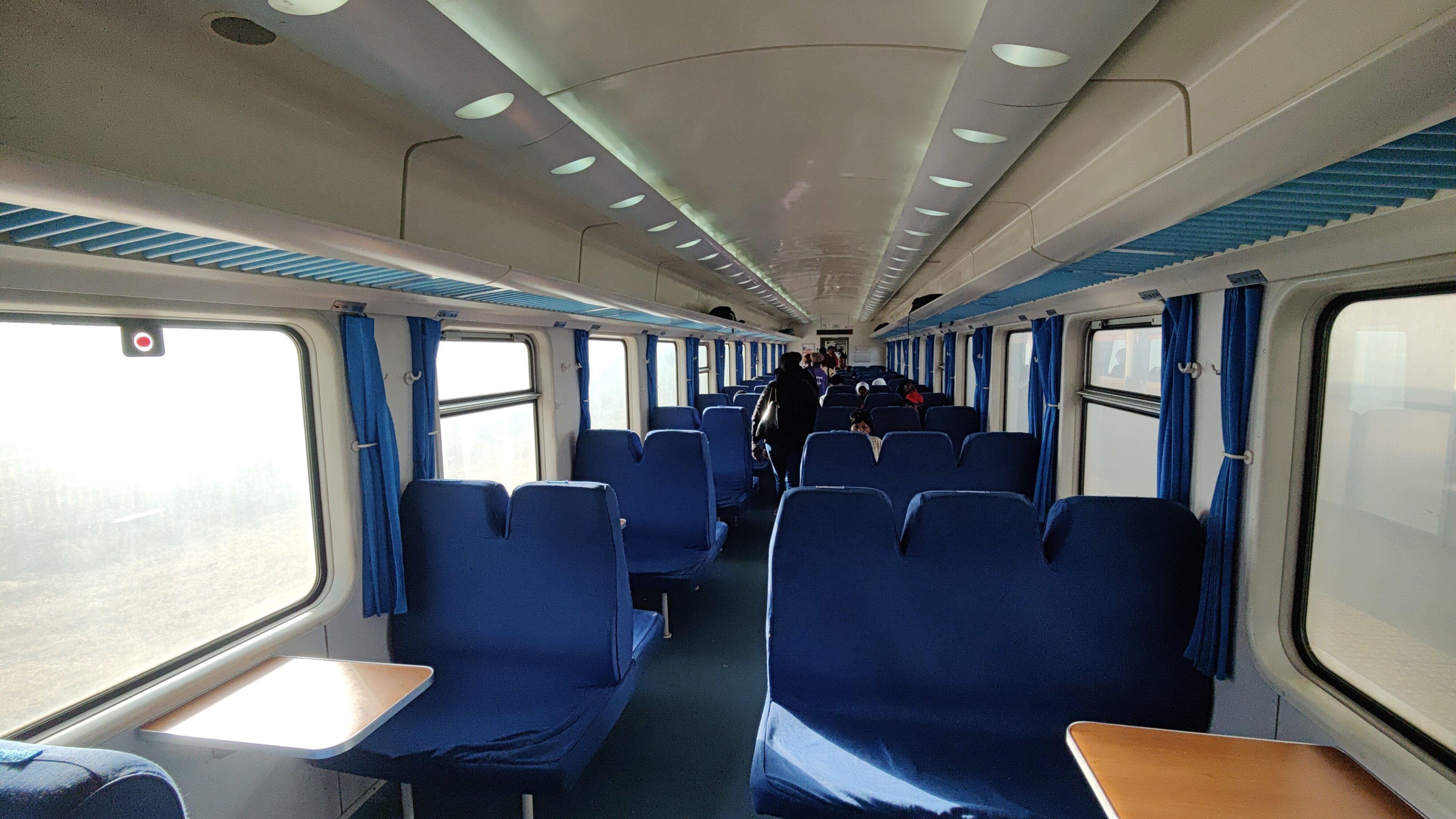
Train ride from Nairobi to Mombasa I took a train from Nairobi to Mombasa. The train is known as the SGR Train, where SGR refers to Standard Gauge Railway. The journey was around 500 km. M-Pesa was the only way to make payment for pre-booking the train ticket, and I didn t have an M-Pesa account. Pragya s friend Mary helped facilitate the payment. I booked a second-class ticket, which cost 1500 shillings (1000 Indian rupees). The train was scheduled to depart from Nairobi at 08:00 hours in the morning and arrive in Mombasa at 14:00 hours. The security check at the station required scanning our bags and having them sniffed by sniffer dogs. I also fell victim to a scam by a security official who offered to help me get my ticket printed, only to later ask me to get him some coffee, which I politely declined. Before boarding the train, I was treated to some stunning views at the Nairobi Terminus station. It was a seating train, but I wished it were a sleeper train, as I was sleep-deprived. The train was neat and clean, with good toilets. The train reached Mombasa on time at around 14:00 hours.
SGR train at Nairobi Terminus.
Interior of the SGR train

Arrival in Mombasa
Mombasa Terminus station.
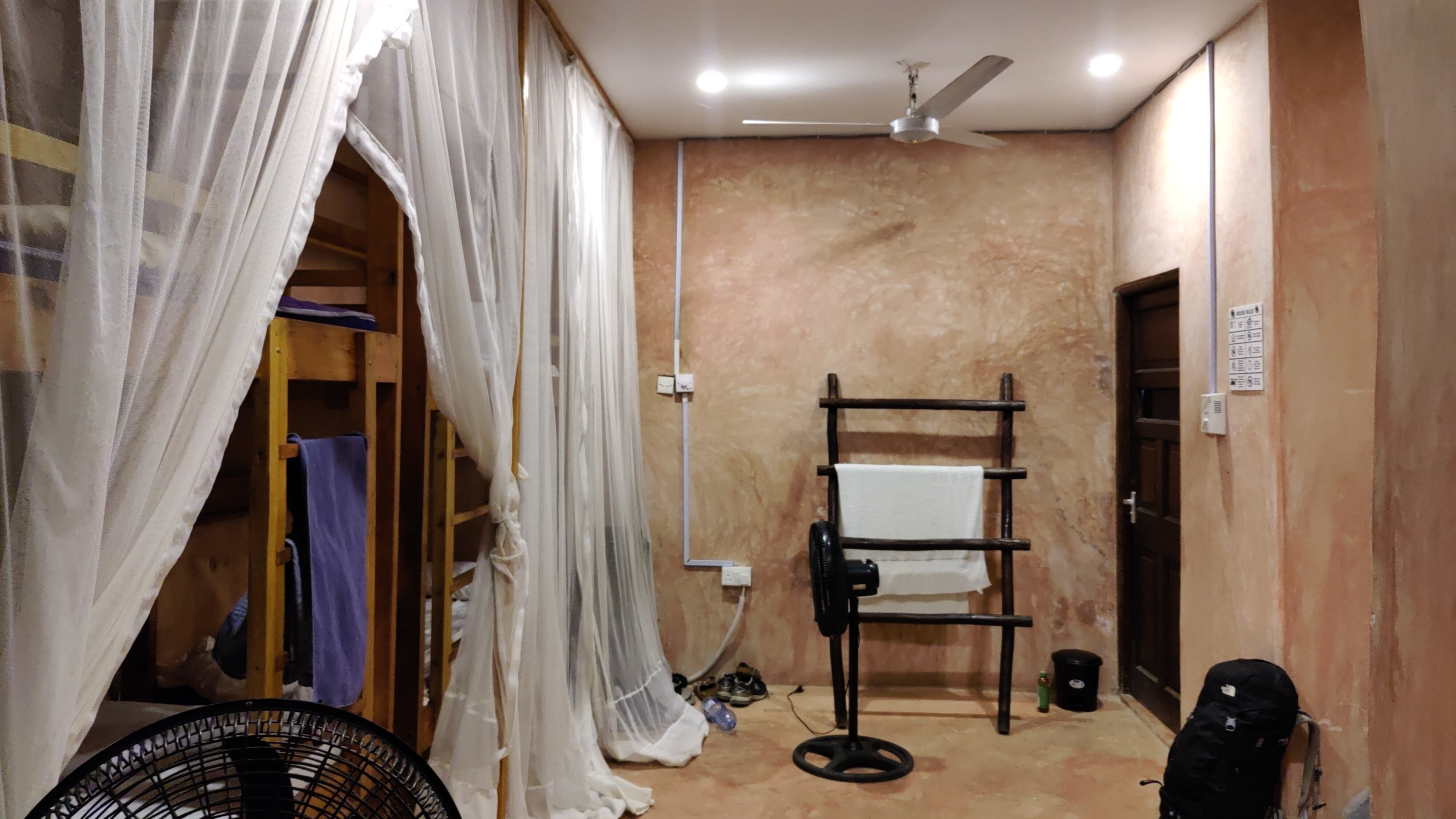
Mombasa was a bit hotter than Nairobi, with temperatures reaching around 30 degrees Celsius. However, that s not too hot for me, as I am used to higher temperatures in India. I had booked a hostel in the Old Town and was searching for a hitchhike from the Mombasa Terminus station. After trying for more than half an hour, I took a matatu that dropped me 3 km from my hostel for 200 shillings (140 Indian rupees). I tried to hitchhike again but couldn t find a ride. I think I know why I couldn t get a ride in both the cases. In the first case, the Mombasa Terminus was in an isolated place, so most of the vehicles were taxis or matatus while any noncommercial cars were there to pick up friends and family. If the station were in the middle of the city, there would be many more car/truck drivers passing by, thus increasing my possibilities of getting a ride. In the second case, my hostel was at the end of the city, and nobody was going towards that side. In fact, many drivers told me they would love to give me a ride, but they were going in some other direction. Finally, I took a tuktuk for 70 shillings to reach my hostel, Tulia Backpackers. It was 11 USD (1400 shillings) for one night. The balcony gave a nice view of the Indian Ocean. The rooms had fans, but there was no air conditioning. Each bed also had mosquito nets. The place was walking distance of the famous Fort Jesus. Mombasa has had more Islamic influence compared to Nairobi and also has many Hindu temples.
The balcony at Tulia Backpackers Hostel had a nice view of the ocean.
A room inside the hostel with fans and mosquito nets on the beds

Visiting White Sandy Beaches and Getting a Hitchhike Visiting Nyali beach marked my first time ever at a white sand beach. It was like 10 km from the hostel. The next day, I visited Diani Beach, which was 30 km from the hostel. Going to Diani Beach required crossing a river, for which there s a free ferry service every few minutes, followed by taking a matatu to Ukunda and then a tuk-tuk. The journey gave me a glimpse of the beautiful countryside of Kenya.
Nyali beach is a white sand beach
This is the ferry service for crossing the river.
During my return from Diani Beach to the hostel, I was successful in hitchhiking. However, it was only a 4 km ride and not sufficient to reach Ukunda, so I tried to get another ride. When a truck stopped for me, I asked for a ride to Ukunda. Later, I learned that they were going in the same direction as me, so I got off within walking distance from my hostel. The ride was around 30 km. I also learned the difference between a truck ride and a matatu or car ride. For instance, matatus and cars are much faster and cooler due to air conditioning, while trucks tend to be warmer because they lack it. Further, the truck was stopped at many checkpoints by the police for inspections as it carried goods, which is not the case with matatus. Anyways, it was a nice experience, and I am grateful for the ride. I had a nice conversation with the truck drivers about Indian movies and my experiences in Kenya.
Diani beach is a popular beach in Kenya. It is a white sand beach.
Selfie with truck drivers who gave me the free ride

Back to Nairobi I took the SGR train from Mombasa back to Nairobi. This time I took the night train, which departs at 22:00 hours, reaching Nairobi at around 04:00 in the morning. I could not sleep comfortably since the train only had seater seats. I had booked the Zarita Hotel in Nairobi and had already confirmed if they allowed early morning check-in. Usually, hotels have a fixed checkout time, say 11:00 in the morning, and you are not allowed to stay beyond that regardless of the time you checked in. But this hotel checked me in for 24 hours. Here, I paid in US dollars, and the cost was 12 USD.

Almost Got Stuck in Kenya Two days before my scheduled flight from Nairobi back to India, I heard the news that the airports in Kenya were closed due to the strikes. Rabina and Pragya had their flight back to Nepal canceled that day, which left them stuck in Nairobi for two additional days. I called Sahil in India and found out during the conversation that the strike was called off in the evening. It was a big relief for me, and I was fortunate to be able to fly back to India without any changes to my plans.
Newspapers at a stand in Kenya covering news on the airport closure

Experience with locals I had no problems communicating with Kenyans, as everyone I met knew English to an extent that could easily surpass that of big cities in India. Additionally, I learned a few words from Kenya s most popular local language, Swahili, such as Asante, meaning thank you, Jambo for hello, and Karibu for welcome. Knowing a few words in the local language went a long way. I am not sure what s up with haggling in Kenya. It wasn t easy to bring the price of souvenirs down. I bought a fridge magnet for 200 shillings, which was the quoted price. On the other hand, it was much easier to bargain with taxis/tuktuks/motorbikes. I stayed at three hotels/hostels in Kenya. None of them had air conditioners. Two of the places were in Nairobi, and they didn t even have fans in the rooms, while the one in Mombasa had only fans. All of them had good Wi-Fi, except Tulia where the internet overall was a bit shaky. My experience with the hotel staff was great. For instance, we requested that the Nairobi Transit Hotel cancel the included breakfast in order to reduce the room costs, but later realized that it was not a good idea. The hotel allowed us to revert and even offered one of our missing breakfasts during dinner. The staff at Tulia Backpackers in Mombasa facilitated the ticket payment for my train from Mombasa to Nairobi. One of the staff members also gave me a lift to the place where I could catch a matatu to Nyali Beach. They even added an extra tea bag to my tea when I requested it to be stronger.

Food At the Nairobi Transit Hotel, a Spanish omelet with tea was served for breakfast. I noticed that Spanish omelette appeared on the menus of many restaurants, suggesting that it is popular in Kenya. This was my first time having this dish. The milk tea in Kenya, referred to by locals as white tea, is lighter than Indian tea (they don t put a lot of tea leaves).
Spanish Omelette served in breakfast at Nairobi Transit Hotel
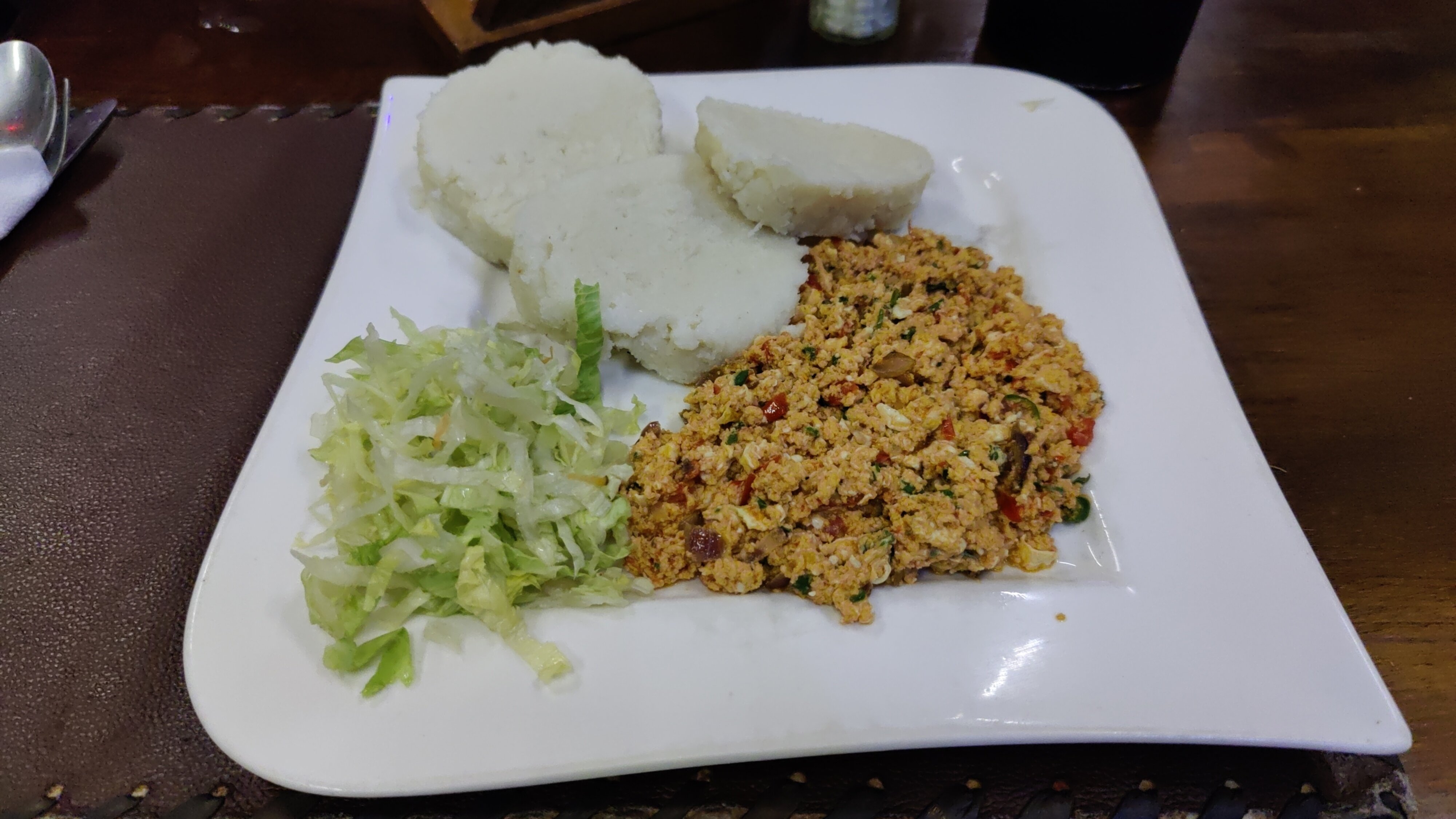
I also sampled ugali with eggs. In Mombasa, I visited an Indian restaurant called New Chetna and had a buffet thali there twice.
Ugali with eggs.

Tips for Exchanging Money In Kenya, I exchanged my money at forex shops a couple of times. I received good exchange rates for bills larger than 50 USD. For instance, 1 USD on xe.com was 129 shillings, and I got 128.3 shillings per USD (a total of 12,830 shillings) for two 50 USD notes at an exchange in Nairobi, while 127 shillings, which was the highest rate at the banks. On the other hand, for smaller bills such as a one US dollar note, I would have got 125 shillings. A passport was the only document required for the exchange, and they also provided a receipt. A good piece of advice for travelers is to keep 50 USD or larger bills for exchanging into the local currency while saving the smaller US dollar bills for accommodation, as many hotels and hostels accept payment in US dollars (in addition to Kenyan shillings).

Missed Malindi and Lamu There were more places on my to-visit list in Kenya. But I simply didn t have time to cover them, as I don t like rushing through places, especially in a foreign country where there is a chance of me underestimating the amount of time it takes during transit. I would have liked to visit at least one of Kilifi, Watamu or Malindi beaches. Further, Lamu seemed like a unique place to visit as it has no cars or motorized transport; the only options for transport are boats and donkeys. That s it for now. Meet you in the next one :)

3 November 2024

Guido G nther: Free Software Activities October 2024

Another short status update of what happened on my side last month. Besides a phosh bugfix release improving text input and selection was a prevalent pattern again resulting in improvements in the compositor, the OSK and some apps. phosh phoc phosh-mobile-settings libphosh-rs phosh-osk-stub phosh-osk-data xdg-desktop-portal-phosh Debian ModemManager Calls GTK feedbackd Chatty libcmatrix phosh-ev git-buildpackage Unified push specification swipeGuess wlr-clients iotas (Note taking app) Flare (Signal app) xdg-desktop-portal Reviews This is not code by me but reviews on other peoples code. The list is fairly incomplete, hope to improve on this in the upcoming months: Help Development If you want to support my work see donations. This includes a list of hardware we want to improve support for. Thanks a lot to all current and past donors.

2 November 2024

Russell Coker: Moving Between Devices

I previously wrote about the possibility of transferring work between devices as an alternative to convergence (using a phone or tablet as a desktop) [1]. This idea has been implemented in some commercial products already. MrWhosTheBoss made a good YouTube video reviewing recent Huawei products [2]. At 2:50 in that video he shows how you can link a phone and tablet, control one from the other, drag and drop of running apps and files between phone and tablet, mirror the screen between devices, etc. He describes playing a video on one device and having it appear on the other, I hope that it actually launches a new instance of the player app as the Google Chromecast failed in the market due to remote display being laggy. At 7:30 in that video he starts talking about the features that are available when you have multiple Huawei devices, starting with the ability to move a Bluetooth pairing for earphones to a different device. At 16:25 he shows what Huawei is doing to get apps going including allowing apk files to be downloaded and creating what they call Quick Apps which are instances of a web browser configured to just use one web site and make it look like a discrete app, we need something like this for FOSS phone distributions does anyone know of a browser that s good for it? Another thing that we need is to have an easy way of transferring open web pages between systems. Chrome allows sending pages between systems but it s proprietary, limited to Chrome only, and also takes an unreasonable amount of time. KDEConnect allows sharing clipboard contents which can be used to send URLs that can then be pasted into a browser, but the process of copy URL, send via KDEConnect, and paste into other device is unreasonably slow. The design of Chrome with a Send to your devices menu option from the tab bar is OK. But ideally we need a Send to device for all tabs of a window as well, we need it to run from free software and support using your own server not someone else s server (AKA the cloud ). Some of the KDEConnect functionality but using a server rather than direct connection over the same Wifi network (or LAN if bridged to Wifi) would be good. What else do we need?

Russell Coker: What is a Workstation?

I recently had someone describe a Mac Mini as a workstation , which I strongly disagree with. The Wikipedia page for Workstation [1] says that it s a type of computer designed for scientific or technical use, for a single user, and would commonly run a multi-user OS. The Mac Mini runs a multi-user OS and is designed for a single user. The issue is whether it is for scientific or technical use . A Mac Mini is a nice little graphical system which could be used for CAD and other engineering work. But I believe that the low capabilities of the system and lack of expansion options make it less of a workstation. The latest versions of the Mac Mini (to be officially launched next week) have up to 64G of RAM and up to 8T of storage. That is quite decent compute power for a small device. For comparison the HP ML 110 Gen9 workstation I m currently using was released in 2021 and has 256G of RAM and has 4 * 3.5 SAS bays so I could easily put a few 4TB NVMe devices and some hard drives larger than 10TB. The HP Z640 workstation I have was released in 2014 and has 128G of RAM and 4*2.5 SATA drive bays and 2*3.5 SATA drive bays. Previously I had a Dell PowerEdge T320 which was released in 2012 and had 96G of RAM and 8*3.5 SAS bays. In CPU and GPU power the recent Mac Minis will compare well to my latest workstations. But they compare poorly to workstations from as much as 12 years ago for RAM and storage. Which is more important depends on the task, if you have to do calculations on 80G of data with lots of scans through the entire data set then a system with 64G of RAM will perform very poorly and a system with 96G and a CPU less than half as fast will perform better. A Dell PowerEdge T320 from 2012 fully loaded with 192G of RAM will outperform a modern Mac Mini on many tasks due to this and the T420 supported up to 384G. Another issue is generic expansion options. I expect a workstation to have a number of PCIe slots free for GPUs and other devices. The T320 I used to use had a PCIe power cable for a power hungry GPU and I think all the T320 and T420 models with high power PSUs supported that. I think that a usable definition of a workstation is a system having a feature set that is typical of servers (ECC RAM, lots of storage for RAID, maybe hot-swap storage devices, maybe redundant PSUs, and lots of expansion options) while also being suitable for running on a desktop or under a desk. The Mac Mini is nice for running on a desk but that s the only workstation criteria it fits. I think that ECC RAM should be a mandatory criteria and any system without it isn t a workstation. That excludes most Apple hardware. The Mac Mini is more of a thin-client than a workstation. My main workstation with ECC RAM could run 3 VMs that each have more RAM than the largest Mac Mini that will be sold next week. If 32G of non-ECC RAM is considered enough for a workstation then you could get an Android phone that counts as a workstation and it will probably cost less than a Mac Mini.

1 November 2024

Colin Watson: Free software activity in October 2024

Almost all of my Debian contributions this month were sponsored by Freexian. You can also support my work directly via Liberapay. Ansible I noticed that Ansible had fallen out of Debian testing due to autopkgtest failures. This seemed like a problem worth fixing: in common with many other people, we use Ansible for configuration management at Freexian, and it probably wouldn t make our sysadmins too happy if they upgraded to trixie after its release and found that Ansible was gone. The problems here were really just slogging through test failures in both the ansible-core and ansible packages, but their test suites are large and take a while to run so this took some time. I was able to contribute a few small fixes to various upstreams in the process: This should now get back into testing tomorrow. OpenSSH Martin- ric Racine reported that ssh-audit didn t list the ext-info-s feature as being available in Debian s OpenSSH 9.2 packaging in bookworm, contrary to what OpenSSH upstream said on their specifications page at the time. I spent some time looking into this and realized that upstream was mistakenly saying that implementations of ext-info-c and ext-info-s were added at the same time, while in fact ext-info-s was added rather later. ssh-audit now has clearer output, and the OpenSSH maintainers have corrected their specifications page. I looked into a report of an ssh failure in certain cases when using GSS-API key exchange (which is a Debian patch). Once again, having integration tests was a huge win here: the affected scenario is quite a fiddly one, but I was able to set it up in the test, and thereby make sure it doesn t regress in future. It still took me a couple of hours to get all the details right, but in the past this sort of thing took me much longer with a much lower degree of confidence that the fix was correct. On upstream s advice, I cherry-picked some key exchange fixes needed for big-endian architectures. Python team I packaged python-evalidate, needed for a new upstream version of buildbot. The Python 3.13 transition rolls on. I fixed problems related to it in htmlmin, humanfriendly, postgresfixture (contributed upstream), pylint, python-asyncssh (contributed upstream), python-oauthlib, python3-simpletal, quodlibet, zope.exceptions, and zope.interface. A trickier Python 3.13 issue involved the cgi module. Years ago I ported zope.publisher to the multipart module because cgi.FieldStorage was broken in some situations, and as a result I got a recommendation into Python s dead batteries PEP 594. Unfortunately there turns out to be a name conflict between multipart and python-multipart on PyPI; python-multipart upstream has been working to disentangle this, though we still need to work out what to do in Debian. All the same, I needed to fix python-wadllib and multipart seemed like the best fit; I contributed a port upstream and temporarily copied multipart into Debian s python-wadllib source package to allow its tests to pass. I ll come back and fix this properly once we sort out the multipart vs. python-multipart packaging. tzdata moved some timezone definitions to tzdata-legacy, which has broken a number of packages. I added tzdata-legacy build-dependencies to alembic and python-icalendar to deal with this in those packages, though there are still some other instances of this left. I tracked down an nltk regression that caused build failures in many other packages. I fixed Rust crate versioning issues in pydantic-core, python-bcrypt, and python-maturin (mostly fixed by Peter Michael Green and Jelmer Vernoo , but it needed a little extra work). I fixed other build failures in entrypoints, mayavi2, python-pyvmomi (mostly fixed by Alexandre Detiste, but it needed a little extra work), and python-testing.postgresql (ditto). I fixed python3-simpletal to tolerate future versions of dh-python that will drop their dependency on python3-setuptools. I fixed broken symlinks in python-treq. I removed (build-)depends on python3-pkg-resources from alembic, autopep8, buildbot, celery, flufl.enum, flufl.lock, python-public, python-wadllib (contributed upstream), pyvisa, routes, vulture, and zodbpickle (contributed upstream). I upgraded astroid, asyncpg (fixing a Python 3.13 failure and a build failure), buildbot (noticing an upstream test bug in the process), dnsdiag, frozenlist, netmiko (fixing a Python 3.13 failure), psycopg3, pydantic-settings, pylint, python-asyncssh, python-bleach, python-btrees, python-cytoolz, python-django-pgtrigger, python-django-test-migrations, python-gssapi, python-icalendar, python-json-log-formatter, python-pgbouncer, python-pkginfo, python-plumbum, python-stdlib-list, python-tokenize-rt, python-treq (fixing a Python 3.13 failure), python-typeguard, python-webargs (fixing a build failure), pyupgrade, pyvisa, pyvisa-py (fixing a Python 3.13 failure), toolz, twisted, vulture, waitress (fixing CVE-2024-49768 and CVE-2024-49769), wtf-peewee, wtforms, zodbpickle, zope.exceptions, zope.interface, zope.proxy, zope.security, and zope.testrunner to new upstream versions. I tried to fix a regression in python-scruffy, but I need testing feedback. I requested removal of python-testing.mysqld.

30 October 2024

Russell Coker: Links October 2024

Dacid Brin wrote an interesting article about AI ecosystems and how humans might work with machines on creative projects [1]. Also he s right about influencers being like funghi. Cory Doctorow wrote an interesting post about DRM, coalitions, and cheating [2]. It seems that people like me who want trusted computing to secure their own computers don t fit well in any of the coalitions. The CHERI capability system for using extra hardware to validate jump addresses is an interesting advance in computer science [3]. The lecture is froim the seL4 Summit, this sort of advance in security goes well with a formally proven microkernel. I hope that this becomes a checkbox when ordering a custom RISC-V design. Bunnie wrote an insightful blog post about how the Mossad might have gone about implementing the exploding pager attack [4]. I guess we will see a lot more of this in future, it seems easy to do. Interesting blog post about Control Flow Integrity in the V8 engine of Chrome [5]. Interesting blog post about the new mseal() syscall which can be used by CFI among other things [6]. This is the Linux kernel documentation about the Control-flow Enforcement Technology (CET) Shadow Stack [7]. Unfortunately not enabled in Debian/Unstable yet. ARM added support for Branch Target Identification in version 8.5 of the architecture [8]. The CEO of Automatic has taken his dispute with WPEngine to an epic level, this video catalogues it, I wonder what is wrong with him [9]. NuShell is an interesting development in shell technology which runs on Linux and Windows [10]. Interesting article about making a computer game without coding using ML [11]. I doubt that it would be a good game, but maybe educational for kids. Krebs has an insightful article about location tracking by phones which is surprisingly accurate [12]. He has provided information on how to opt out of some of it on Android, but we need legislative action! Interesting YouTube video about how to make a 20kW microwave oven and what it can do [13]. Don t do this at home, or anywhere else! The Void editor is an interesting project, a fork of VSCode that supports DIRECT connections to LLM systems where you don t have their server acting as a middle-man and potentially snooping [14].

27 October 2024

Enrico Zini: Typing decorators for class members with optional arguments

This looks straightforward and is far from it. I expect tool support will improve in the future. Meanwhile, this blog post serves as a step by step explanation for what is going on in code that I'm about to push to my team.
Let's take this relatively straightforward python code. It has a function printing an int, and a decorator that makes it argument optional, taking it from a global default if missing:
from unittest import mock
default = 42
def with_default(f):
    def wrapped(self, value=None):
        if value is None:
            value = default
        return f(self, value)
    return wrapped
class Fiddle:
    @with_default
    def print(self, value):
        print("Answer:", value)
fiddle = Fiddle()
fiddle.print(12)
fiddle.print()
def mocked(self, value=None):
    print("Mocked answer:", value)
with mock.patch.object(Fiddle, "print", autospec=True, side_effect=mocked):
    fiddle.print(12)
    fiddle.print()
It works nicely as expected:
$ python3 test0.py
Answer: 12
Answer: 42
Mocked answer: 12
Mocked answer: None
It lacks functools.wraps and typing, though. Let's add them. Adding functools.wraps Adding a simple @functools.wraps, mock unexpectedly stops working:
# python3 test1.py
Answer: 12
Answer: 42
Mocked answer: 12
Traceback (most recent call last):
  File "/home/enrico/lavori/freexian/tt/test1.py", line 42, in <module>
    fiddle.print()
  File "<string>", line 2, in print
  File "/usr/lib/python3.11/unittest/mock.py", line 186, in checksig
    sig.bind(*args, **kwargs)
  File "/usr/lib/python3.11/inspect.py", line 3211, in bind
    return self._bind(args, kwargs)
           ^^^^^^^^^^^^^^^^^^^^^^^^
  File "/usr/lib/python3.11/inspect.py", line 3126, in _bind
    raise TypeError(msg) from None
TypeError: missing a required argument: 'value'
This is the new code, with explanations and a fix:
# Introduce functools
import functools
from unittest import mock
default = 42
def with_default(f):
    @functools.wraps(f)
    def wrapped(self, value=None):
        if value is None:
            value = default
        return f(self, value)
    # Fix:
    # del wrapped.__wrapped__
    return wrapped
class Fiddle:
    @with_default
    def print(self, value):
        assert value is not None
        print("Answer:", value)
fiddle = Fiddle()
fiddle.print(12)
fiddle.print()
def mocked(self, value=None):
    print("Mocked answer:", value)
with mock.patch.object(Fiddle, "print", autospec=True, side_effect=mocked):
    fiddle.print(12)
    # mock's autospec uses inspect.getsignature, which follows __wrapped__ set
    # by functools.wraps, which points to a wrong signature: the idea that
    # value is optional is now lost
    fiddle.print()
Adding typing For simplicity, from now on let's change Fiddle.print to match its wrapped signature:
      # Give up with making value not optional, to simplify things :(
      def print(self, value: int   None = None) -> None:
          assert value is not None
          print("Answer:", value)
Typing with ParamSpec
# Introduce typing, try with ParamSpec
import functools
from typing import TYPE_CHECKING, ParamSpec, Callable
from unittest import mock
default = 42
P = ParamSpec("P")
def with_default(f: Callable[P, None]) -> Callable[P, None]:
    # Using ParamSpec we forward arguments, but we cannot use them!
    @functools.wraps(f)
    def wrapped(self, value: int   None = None) -> None:
        if value is None:
            value = default
        return f(self, value)
    return wrapped
class Fiddle:
    @with_default
    def print(self, value: int   None = None) -> None:
        assert value is not None
        print("Answer:", value)
mypy complains inside the wrapper, because while we forward arguments we don't constrain them, so we can't be sure there is a value in there:
test2.py:17: error: Argument 2 has incompatible type "int"; expected "P.args"  [arg-type]
test2.py:19: error: Incompatible return value type (got "_Wrapped[P, None, [Any, int   None], None]", expected "Callable[P, None]")  [return-value]
test2.py:19: note: "_Wrapped[P, None, [Any, int   None], None].__call__" has type "Callable[[Arg(Any, 'self'), DefaultArg(int   None, 'value')], None]"
Typing with Callable We can use explicit Callable argument lists:
# Introduce typing, try with Callable
import functools
from typing import TYPE_CHECKING, Callable, TypeVar
from unittest import mock
default = 42
A = TypeVar("A")
# Callable cannot represent the fact that the argument is optional, so now mypy
# complains if we try to omit it
def with_default(f: Callable[[A, int   None], None]) -> Callable[[A, int   None], None]:
    @functools.wraps(f)
    def wrapped(self: A, value: int   None = None) -> None:
        if value is None:
            value = default
        return f(self, value)
    return wrapped
class Fiddle:
    @with_default
    def print(self, value: int   None = None) -> None:
        assert value is not None
        print("Answer:", value)
if TYPE_CHECKING:
    reveal_type(Fiddle.print)
fiddle = Fiddle()
fiddle.print(12)
# !! Too few arguments for "print" of "Fiddle"  [call-arg]
fiddle.print()
def mocked(self, value=None):
    print("Mocked answer:", value)
with mock.patch.object(Fiddle, "print", autospec=True, side_effect=mocked):
    fiddle.print(12)
    fiddle.print()
Now mypy complains when we try to omit the optional argument, because Callable cannot represent optional arguments:
test3.py:32: note: Revealed type is "def (test3.Fiddle, Union[builtins.int, None])"
test3.py:37: error: Too few arguments for "print" of "Fiddle"  [call-arg]
test3.py:46: error: Too few arguments for "print" of "Fiddle"  [call-arg]
typing's documentation says:
Callable cannot express complex signatures such as functions that take a variadic number of arguments, overloaded functions, or functions that have keyword-only parameters. However, these signatures can be expressed by defining a Protocol class with a call() method:
Let's do that! Typing with Protocol, take 1
# Introduce typing, try with Protocol
import functools
from typing import TYPE_CHECKING, Protocol, TypeVar, Generic, cast
from unittest import mock
default = 42
A = TypeVar("A", contravariant=True)
class Printer(Protocol, Generic[A]):
    def __call__(_, self: A, value: int   None = None) -> None:
        ...
def with_default(f: Printer[A]) -> Printer[A]:
    @functools.wraps(f)
    def wrapped(self: A, value: int   None = None) -> None:
        if value is None:
            value = default
        return f(self, value)
    return cast(Printer, wrapped)
class Fiddle:
    # function has a __get__ method to generated bound versions of itself
    # the Printer protocol does not define it, so mypy is now unable to type
    # the bound method correctly
    @with_default
    def print(self, value: int   None = None) -> None:
        assert value is not None
        print("Answer:", value)
if TYPE_CHECKING:
    reveal_type(Fiddle.print)
fiddle = Fiddle()
# !! Argument 1 to "__call__" of "Printer" has incompatible type "int"; expected "Fiddle"
fiddle.print(12)
fiddle.print()
def mocked(self, value=None):
    print("Mocked answer:", value)
with mock.patch.object(Fiddle, "print", autospec=True, side_effect=mocked):
    fiddle.print(12)
    fiddle.print()
New mypy complaints:
test4.py:41: error: Argument 1 to "__call__" of "Printer" has incompatible type "int"; expected "Fiddle"  [arg-type]
test4.py:42: error: Missing positional argument "self" in call to "__call__" of "Printer"  [call-arg]
test4.py:50: error: Argument 1 to "__call__" of "Printer" has incompatible type "int"; expected "Fiddle"  [arg-type]
test4.py:51: error: Missing positional argument "self" in call to "__call__" of "Printer"  [call-arg]
What happens with class methods, is that the function object has a __get__ method that generates a bound versions of itself. Our Printer protocol does not define it, so mypy is now unable to type the bound method correctly. Typing with Protocol, take 2 So... we add the function descriptor methos to our Protocol! A lot of this is taken from this discussion.
# Introduce typing, try with Protocol, harder!
import functools
from typing import TYPE_CHECKING, Protocol, TypeVar, Generic, cast, overload, Union
from unittest import mock
default = 42
A = TypeVar("A", contravariant=True)
# We now produce typing for the whole function descriptor protocol
#
# See https://github.com/python/typing/discussions/1040
class BoundPrinter(Protocol):
    """Protocol typing for bound printer methods."""
    def __call__(_, value: int   None = None) -> None:
        """Bound signature."""
class Printer(Protocol, Generic[A]):
    """Protocol typing for printer methods."""
    # noqa annotations are overrides for flake8 being confused, giving either D418:
    # Function/ Method decorated with @overload shouldn't contain a docstring
    # or D105:
    # Missing docstring in magic method
    #
    # F841 is for vulture being confused:
    #   unused variable 'objtype' (100% confidence)
    @overload
    def __get__(  # noqa: D105
        self, obj: A, objtype: type[A]   None = None  # noqa: F841
    ) -> BoundPrinter:
        ...
    @overload
    def __get__(  # noqa: D105
        self, obj: None, objtype: type[A]   None = None  # noqa: F841
    ) -> "Printer[A]":
        ...
    def __get__(
        self, obj: A   None, objtype: type[A]   None = None  # noqa: F841
    ) -> Union[BoundPrinter, "Printer[A]"]:
        """Implement function descriptor protocol for class methods."""
    def __call__(_, self: A, value: int   None = None) -> None:
        """Unbound signature."""
def with_default(f: Printer[A]) -> Printer[A]:
    @functools.wraps(f)
    def wrapped(self: A, value: int   None = None) -> None:
        if value is None:
            value = default
        return f(self, value)
    return cast(Printer, wrapped)
class Fiddle:
    # function has a __get__ method to generated bound versions of itself
    # the Printer protocol does not define it, so mypy is now unable to type
    # the bound method correctly
    @with_default
    def print(self, value: int   None = None) -> None:
        assert value is not None
        print("Answer:", value)
fiddle = Fiddle()
fiddle.print(12)
fiddle.print()
def mocked(self, value=None):
    print("Mocked answer:", value)
with mock.patch.object(Fiddle, "print", autospec=True, side_effect=mocked):
    fiddle.print(12)
    fiddle.print()
It works! It's typed! And mypy is happy!

26 October 2024

Russell Coker: The CUPS Vulnerability

The Announcement Late last month there was an announcement of a severity 9.9 vulnerability allowing remote code execution that affects all GNU/Linux systems (plus others) [1]. For something to affect all Linux systems that would have to be either a kernel issue or a sshd issue. The announcement included complaints about the lack of response of vendors and And YES: I LOVE hyping the sh1t out of this stuff because apparently sensationalism is the only language that forces these people to fix . He seems to have a different experience to me of reporting bugs, I have had plenty of success getting bugs fixed without hyping them. I just report the bug, wait a while, and it gets fixed. I have reported potential security bugs without even bothering to try and prove that they were exploitable (any situation where you can make a program crash is potentially exploitable), I just report it and it gets fixed. I was very dubious about his ability to determine how serious a bug is and to accurately report it so this wasn t a situation where I was waiting for it to be disclosed to discover if it affected me. I was quite confident that my systems wouldn t be at any risk. Analysis Not All Linux Systems Run CUPS When it was published my opinion was proven to be correct, it turned out to be a series of CUPS bugs [2]. To describe that as all GNU/Linux systems (plus others) seems like a vast overstatement, maybe a good thing to say if you want to be a TikTok influencer but not if you want to be known for computer security work. For the Debian distribution the cups-browsed package (which seems to be the main exploitable one) is recommended by cups-daemon, as I have my Debian systems configured to not install recommended packages by default that means that it wasn t installed on any of my systems. Also the vast majority of my systems don t do printing and therefore don t have any part of CUPS installed. CUPS vs NAT The next issue is that in Australia most home ISPs don t have IPv6 enabled and CUPS doesn t do the things needed to allow receiving connections from the outside world via NAT with IPv4. If inbound port 631 is blocked on both TCP and USP as is the default on Australian home Internet or if there is a correctly configured firewall in place then the network is safe from attack. There is a feature called uPnP port forwarding [3] to allow server programs to ask a router to send inbound connections to them, this is apparently usually turned off by default in router configuration. If it is enabled then there are Debian packages of software to manage this, the miniupnpc package has the client (which can request NAT changes on the router) [4]. That package is not installed on any of my systems and for my home network I don t use a router that runs uPnP. The only program I knowingly run that uses uPnP is Warzone2100 and as I don t play network games that doesn t happen. Also as an aside in version 4.4.2-1 of warzone2100 in Debian and Ubuntu I made it use Bubblewrap to run the game in a container. So a Remote Code Execution bug in Warzone 2100 won t be an immediate win for an attacker (exploits via X11 or Wayland are another issue). MAC Systems Debian has had AppArmor enabled by default since Buster was released in 2019 [5]. There are claims that AppArmor will stop this exploit from doing anything bad. To check SE Linux access I first use the semanage fcontext command to check the context of the binary, cupsd_exec_t means that the daemon runs as cupsd_t. Then I checked what file access is granted with the sesearch program, mostly just access to temporary files, cupsd config files, the faillog, the Kerberos cache files (not used on the Kerberos client systems I run), Samba run files (might be a possibility of exploiting something there), and the security_t used for interfacing with kernel security infrastructure. I then checked the access to the security class and found that it is permitted to check contexts and access-vectors not access that can be harmful. The next test was to use sesearch to discover what capabilities are granted, which unfortunately includes the sys_admin capability, that is a capability that allows many sysadmin tasks that could be harmful (I just checked the Fedora source and Fedora 42 has the same access). Whether the sys_admin capability can be used to do bad things with the limited access cupsd_t has to device nodes etc is not clear. But this access is undesirable. So the SE Linux policy in Debian and Fedora will stop cupsd_t from writing SETUID programs that can be used by random users for root access and stop it from writing to /etc/shadow etc. But the sys_admin capability might allow it to do hostile things and I have already uploaded a changed policy to Debian/Unstable to remove that. The sys_rawio capability also looked concerning but it s apparently needed to probe for USB printers and as the domain has no access to block devices it is otherwise harmless. Below are the commands I used to discover what the policy allows and the output from them.
# semanage fcontext -l grep bin/cups-browsed
/usr/bin/cups-browsed                              regular file       system_u:object_r:cupsd_exec_t:s0 
# sesearch -A -s cupsd_t -c file -p write
allow cupsd_t cupsd_interface_t:file   append create execute execute_no_trans getattr ioctl link lock map open read rename setattr unlink write  ;
allow cupsd_t cupsd_lock_t:file   append create getattr ioctl link lock open read rename setattr unlink write  ;
allow cupsd_t cupsd_log_t:file   append create getattr ioctl link lock open read rename setattr unlink write  ;
allow cupsd_t cupsd_runtime_t:file   append create getattr ioctl link lock open read rename setattr unlink write  ;
allow cupsd_t cupsd_rw_etc_t:file   append create getattr ioctl link lock open read rename setattr unlink write  ;
allow cupsd_t cupsd_t:file   append create getattr ioctl link lock open read rename setattr unlink write  ;
allow cupsd_t cupsd_tmp_t:file   append create getattr ioctl link lock open read rename setattr unlink write  ;
allow cupsd_t faillog_t:file   append getattr ioctl lock open read write  ;
allow cupsd_t init_tmpfs_t:file   append getattr ioctl lock read write  ;
allow cupsd_t krb5_host_rcache_t:file   append create getattr ioctl link lock open read rename setattr unlink write  ; [ allow_kerberos ]:True
allow cupsd_t print_spool_t:file   append create getattr ioctl link lock open read relabelfrom relabelto rename setattr unlink write  ;
allow cupsd_t samba_var_t:file   append getattr ioctl lock open read write  ;
allow cupsd_t security_t:file   append getattr ioctl lock open read write  ;
allow cupsd_t security_t:file   append getattr ioctl lock open read write  ; [ allow_kerberos ]:True
allow cupsd_t usbfs_t:file   append getattr ioctl lock open read write  ;
# sesearch -A -s cupsd_t -c security
allow cupsd_t security_t:security check_context; [ allow_kerberos ]:True
allow cupsd_t security_t:security   check_context compute_av  ;
# sesearch -A -s cupsd_t -c capability
allow cupsd_t cupsd_t:capability net_bind_service; [ allow_ypbind ]:True
allow cupsd_t cupsd_t:capability   audit_write chown dac_override dac_read_search fowner fsetid ipc_lock kill net_bind_service setgid setuid sys_admin sys_rawio sys_resource sys_tty_config  ;
# sesearch -A -s cupsd_t -c capability2
allow cupsd_t cupsd_t:capability2   block_suspend wake_alarm  ;
# sesearch -A -s cupsd_t -c blk_file
Conclusion This is an example of how not to handle security issues. Some degree of promotion is acceptable but this is very excessive and will result in people not taking security announcements seriously in future. I wonder if this is even a good career move by the researcher in question, will enough people believe that they actually did something good in this that it outweighs the number of people who think it s misleading at best?

25 October 2024

Jonathan Dowland: Behringer Model-D (synths I didn't buy)

Whilst researching what synth to buy, I learned of the Behringer1 Model-D2: a 2018 clone of the 1970 Moog Minimoog, in a desktop form factor.
Behringer Model-D Behringer Model-D
In common with the original Minimoog, it's a monophonic analogue synth, featuring three audible oscillators3 , Moog's famous 12-ladder filter and a basic envelope generator. The model-d has lost the keyboard from the original and added some patch points for the different stages, enabling some slight re-routing of the audio components.
1970 Moog Minimoog 1970 Moog Minimoog
Since I was focussing on more fundamental, back-to-basics instruments, this was very appealing to me. I'm very curious to find out what's so compelling about the famous Moog sound. The relative lack of features feels like an advantage: less to master. The additional patch points makes it a little more flexible and offer a potential gateway into the world of modular synthesis. The Model-D is also very affordable: about 200 GBP. I'll never own a real Moog. For this to work, I would need to supplement it with some other equipment. I'd need a keyboard (or press the Micron into service as a controller); I would want some way of recording and overdubbing (same as with any synth). There are no post-mix effects on the Model-D, such as delay, reverb or chorus, so I may also want something to add those. What stopped me was partly the realisation that there was little chance that a perennial beginner, such as I, could eek anything novel out of a synthesiser design that's 54 years old. Perhaps that shouldn't matter, but it gave me pause. Whilst the Model-D has patch points, I don't have anything to connect to them, and I'm firmly wanting to avoid the Modular Synthesis money pit. The lack of effects, and polyphony could make it hard to live-sculpt a tone. I started characterizing the Model-D as the "heart" choice, but it seemed wise to instead go for a "head" choice. Maybe another day!

  1. There's a whole other blog post of material I could write about Behringer and their clones of classic synths, some long out of production, and others, not so much. But, I decided to skip on that for now.
  2. taken from the fact that the Minimoog was a productised version of Moog's fourth internal prototype, the model D.
  3. 2 oscillators is more common in modern synths

24 October 2024

Emmanuel Kasper: back to blogging and running a feed reader as a containerized systemd service

After reading about Jonathan McDowell feed reader install and the back to blogging initiative, I decided to install a feed reader to follow all those nice blog posts. With a feed reader you can compose your own feed of news based on blog posts, websites, mastodon toots. And then you are independant from ad oriented ranking algorithms of social networks. Since Jonathan used FreshRSS as a feed reader, I started with the same software. On a quick glance on its github page, it sounded like a good project:
  • active contributions
  • different channels for stable and latest version of the software
  • container images pointing to the stable release
  • support multiple databases for storage, including PostgreSQL
  • correct documentation mentioning security caveats
I prefer to do the container image installation using podman since:
  • upgrades from FreshRSS are easy to do and can be done separately from operating system upgrades
  • I do not mess my based operating system with php (subjective) and in case of a compromized freshrss, the freshrss/apache install would be still restrained to its own Linux namespaces, separated from the rest of the system.
Podman is image compatible with Docker as they both implement the OCI runtime specification, and have a nearly identical command line interface. This installation will be done on a Debian server, but should work too on any Linux distribution. Initial setup
  • start a container image based on the start command provided by the FreshRSS project. The podman command line is nearly identical to the docker command line, excepts that podman expects the fully qualified domain name associated with the container image, and I chose to run the freshrss container on the localhost interface only. I also use a defined version tag, because using the latest tag makes it complicated to track which exact ersion I have installed.
# podman pull docker.io/freshrss/freshrss:1.20.1
# podman run --detach --restart unless-stopped --log-opt max-size=10m \
  --publish 127.0.0.1:8081:80 \
  --env TZ=Europe/Paris \
  --env 'CRON_MIN=1,31' \
  --volume freshrss_data:/var/www/FreshRSS/data \
  --volume freshrss_extensions:/var/www/FreshRSS/extensions \
  --name freshrss \
  docker.io/freshrss/freshrss:1.20.1
  • verify where the podman volumes have been created. This is where the user data of freshrss will be stored.
# podman volume ls
# podman volume inspect freshrss_data
  • now that freshrss is installed, you can start its configuration wizard at localhost:8081. You should keep the default sqlite choice
  • finally after running the wizard, you can login again and add some feeds
  • verify that your config has been stored outside the container, and inside the volume (so that it will not be erased in case of upgrages)
# ls -l /var/lib/containers/storage/volumes/freshrss_data/_data/users/
  • verify the state of sqlite database
echo '.tables'  sqlite3  /var/lib/containers/storage/volumes/freshrss_data/_data/users/<your freshrss user>/db.sqlite 
category  entry     entrytag  entrytmp  feed      tag
Going with FreshRSS in Production Podman has this very nice feature that it can generate a systemd unit from a running container, and use systemd to start a container on boot. This is in contrary to docker where the docker daemon does the stop/start of containers on boot. I prefer the systemd approach as it treats containers the same way as other system services. Once the freshrss container is running we can generate a systemd unit of it with:
# podman generate systemd --new --name freshrss   tee /etc/systemd/system/container-freshrss.service
Let s stop the container we started previously, and use systemd to manage it:
# podman stop freshrss
# systemctl enable --now container-freshrss.service
We can verify that we have a listening socket on the localhost interface, on the source port 8081
# systemctl status container-freshrss.service
  ...
# ss --listening --numeric --process '( sport = 8081 )'
Netid         State           Recv-Q          Send-Q                   Local Address:Port                   Peer Address:Port         Process         
tcp           LISTEN          0               4096                         127.0.0.1:8081                        0.0.0.0:*             users:(("conmon",pid=4464,fd=5))
Nota Bene: conmon (8) is the process managing the network namespace in which fresh-rss is running, hence it is displayed as the process owning the listening socket Exposing FreshRSS to the external world We have now a running service, but we need to make it reachable from the internet. The simplest, classical way, is to create a subdomain and a VirtualHost configured as a reverse proxy to access the service at 127.0.0.1:8081. Fortunately the FreshRSS authors have documented this setup in https://github.com/FreshRSS/FreshRSS/tree/edge/Docker#alternative-reverse-proxy-using-apache and those steps are no different from a standard application behind a web reverse proxy. Upgrading freshrss container to a newer version A documentation showing how to install a piece of software is nothing when it does not show how to upgrade that said software. Installing is easy, upgrading is where the challenge is. Fortunately to the good stateless design of freshrss (everything is in the sqlite database, which is backed by a non-epheremal volume in our setup), switchting versions is a peace of cake.
# podman pull docker.io/freshrss/freshrss:1.20.2
# systemctl stop container-freshrss.service
# sed -i 's,docker.io/freshrss/freshrss:1.20.1,docker.io/freshrss/freshrss:1.20.2,' /etc/systemd/system/container-freshrss.service
# systemctl daemon-reload
# systemctl start container-freshrss.service
If you need to rollback, you just need to revert version numbers in the instruction above. Enjoy your own reader feed ! I will add the following feeds of blogs I like, let us see if I follow them better with a feed reader !

Next.

Previous.