Search Results: "eric"

10 September 2014

Ian Donnelly: New Release: Elektra 0.8.8

Hi Everybody! Great news! I am very happy to announce that we have reached a new milestone for Elektra and released a new version, 0.8.8! This release comes right on the tail of the 0.8.7 release and it might just be our biggest release yet! We already have a great article covering all the changes from the previous release on our News documentation on GitHub. I just wanted to focus on a few of those changes on this blog, especially the ones that pertain to my Google Summer of Code Project. First of all, Felix has worked to greatly improve the ini plug-in. This is the plug-in I used in my technical demo for mounting Samba s smb.conf file. It now works even better with complex ini files such as smb.conf which means the automatic merging of files like smb.conf is even better now! That really goes to show one of the greatest strengths of the design of Elektra. Just by improving plug-ins, all the functions of Elektra can improve as well. The merge code was not changed in this release, yet because of an updated plug-in, the merge has improved. Secondly, there have been some good improvements to the kdb command-line tool. Many of these improvements were used in my technical demo, but now they are actually a part of release (and a little more refined from then). We added a new command called kdb remount which allows a user (or script) to mount a file to the Elektra Key Database using an existing backend. An example of this command is:
kdb remount [new filename] [new path] [existing mountpoint]

This command mounts the new file to the new path in the Key Database using an existing backend. This works with the conffile merging by allowing us to mount the various versions of the conffile without having to specify which backend to use (it will use the same backend as the currently used conffile). Additionally, the umount command was updated to allow users to umount using the current mountpath (allowing commands such as kdb umount system/smb.conf) as opposed to backends. Moreover, we added an option to the kdb import command to specify a merge strategy using thing -s option. Now you can import a file into the Key Database and merge the content of that file with the current Keys in the Database. Thirdly, we added some new scripts to Elektra to help with the ucf integration. These scripts were used in my technical demo, but now they are part of the release. elektra-mount and elektra-umount are wrappers for the commands kdb mount and kdb umount respectively. They are designed to be used in debian package scripts and are adapted for easier use than the generic commands. For instance, running elektra-mount will check to see if a file is already mounted at that location in the Key Database. Similarly, elektra-umount will not produce an error if the file was already unmounted. This is because maintainer scripts can be run multiple times in a row and producing an error will stop dpkg even when it shouldn t. Additionally, we added a script called elektra-merge which can be used as a method for ucf to merge configuration files. This script acts as a liaison between ucf and elektra allowing automatic merges to be done by ucf using Elektra s merge features in a seamless manner. For information of how these scripts work, check out my tutorial on integrating elektra-merge into a debian package. The last bit of news I would like to share is the great progress of the Debian package. Thanks to Pino Toscano, version 0.8.7-4 of Elektra is now available in the Debian testing repo! This is great news as we are now that much closer to replacing the outdated Elektra 0.7 versions that are currently the latest versions of Elektra in the stable repo. Once the 0.8.X versions of Elektra make it to stable it will be much easier for us to keep the latest versions of Elektra in Debian, and that s key to allowing Elektra to help improve users lives. You can download the release from:
http://www.markus-raab.org/ftp/elektra/releases/elektra-0.8.8.tar.gz size: 1644441
md5sum: fe11c6704b0032bdde2d0c8fa5e1c7e3
sha1: 16e43c63cd6d62b9fce82cb0a33288c390e39d12
sha256: ae75873966f4b5b5300ef5e5de5816542af50f35809f602847136a8cb21104e2 And the API-Documentation can be found here: http://doc.libelektra.org/api/0.8.8/html/ Hope you enjoy the new release! Sincerely,
Ian S. Donnelly

6 September 2014

Joachim Breitner: ICFP 2014

Another on-my-the-journey-back blog post; this time from the Frankfurt Airport Train Station my flight was delayed (if I knew that I could have watched the remaining Lightning Talks), and so was my train, but despite 5min of running through the Airport just not enough. And now that the free 30 Minutes of Railway Station Internet are used up, I have nothing else to do but blog... Last week I was attending ICFP 2014 in Gothenburg, followed by the Haskell Symposium and the Haskell Implementors Workshop. The justification to attend was the paper on Safe Coercions (joint work with Richard Eisenberg, Simon Peyton Jones and Stephanie Weirich), although Richard got to hold the talk, and did so quite well. So I got to leisurely attend the talks, while fighting the jet-lag that I brought from Portland. There were as expected quite a few interesting talks. Among them the first keynote, Kathleen Fisher on the need for formal methods in cars and toy-quadcopters and unmanned battle helicopters, which made me conclude that my Isabelle skills might eventually become relevant in practical applications. And did you know that if someone gains access to your car s electronics, they can make the seat belt pull you back hard? Stefanie Weirich s keynote (and the subsequent related talks by Jan Stolarek and Richard Eisenberg) on what a dependently typed Haskell would look like and what we could use it for was mouth-watering. I am a bit worried that Haskell will be become a bit obscure for newcomers and people that simply don t want to think about types too much, on the other hand it seems that Haskell as we know it will always stay there, just as a subset of the language. Similarly interesting were refinement types for Haskell (talks by Niki Vazou and by Eric Seidel), in the form of LiquidTypes, something that I have not paid attention to yet. It seems to be a good way for more high assurance in Haskell code. Finally, the Haskell Implementors Workshop had a truckload of exciting developments in and around Haskell: More on GHCJS, Partial type signatures, interactive type-driven development like we know it from Agda, the new Haskell module system and amazing user-defined error messages the latter unfortunately only in Helium, at least for now. But it s not the case that I only sat and listened. During the Haskell Implementors Workshop I held a talk Contributing to GHC with a live demo of me fixing a (tiny) bug in GHC, with the aim of getting more people to hack on GHC (slides, video). The main message here is that it is not that big of deal. And despite me not actually saying much interesting in the talk, I got good feedback afterwards. So if it now actually motivates someone to contribute to GHC, I m even more happier. And then there is of course the Hallway Track. I discussed the issues with fusing a left fold (unfortunately, without a great solution). In order to tackle this problem more systematically, John Wiegley and I created the beginning of a List Fusion Lab , i.e. a bunch of list benchmark and the possibility to compare various implementations (e.g. with different RULES) and various compilers. With that we can hopefully better assess the effect of a change to the list functions. PS: The next train is now also delayed, so I ll likely miss my tram and arrive home even later... PPS: I really have to update my 10 year old picture on my homepage (or redesign it completely). Quite a few people knew my name, but expected someone with shoulder-long hair... PPPS: Haskell is really becoming mainstream: I just talked to a randomly chosen person (the boy sitting next to me in the train), and he is a Haskell enthusiast, building a structured editor for Haskell together with his brother. And all that as a 12th-grader...

Jonathan McDowell: Breaking up with America

Back in January I changed jobs. This took me longer to decide to do than it should have. My US visa (an L-1B) was tied to the old job, and not transferable, so leaving the old job also meant leaving the US. That was hard to do; I'd had a mostly fun 3 and a half years in the SF Bay Area. The new job had an office in Belfast, and HQ in the Bay Area. I went to work in Belfast, and got sent out to the US to meet coworkers and generally get up to speed. During that visit the company applied for an H-1B visa for me. This would have let me return to the US in October 2014 and start working in the US office; up until that point I'd have continued to work from Belfast. Unfortunately there were 172,500 applications for 85,000 available visas and mine was not selected for processing. I'm disappointed by this. I've enjoyed my time in the US. I had a green card application in process, but after nearly 2 years it still hadn't completed the initial hurdle of the labor certification stage (a combination of a number of factors, human, organizational and governmental). However the effort of returning to live here seems too great for the benefits gained. I can work for a US company with a non-US office and return on an L-1B after a year. And once again have to leave should I grow out of the job, or the job change in some way that doesn't suit me, or the company hit problems and have to lay me off. Or I can try again for an H-1B next year, aiming for an October 2015 return, and hope that this time my application gets selected for processing. Neither really appeals. Both involve putting things on hold in the hope longer terms pans out as I hope. And to be honest I'm bored of that. I've loved living in America, but I ended up spending at least 6 months longer in the job I left in January than I'd have done if I'd been freely able to change employer without having to change continent. So it seems the time has come to accept that America and I must part ways, sad as that is. Which is why I'm currently sitting in SFO waiting for a flight back to Belfast and for the first time in 5 years not having any idea when I might be back in the US.

Thomas Goirand: Debconf 14 activity

Before I start a short listing of (some of) the stuff I did during Debconf 14, I d like to say how much I enjoyed everyone there. You guys (all of you, really!) are just awesome, and it s always a real pleasure to see you all, each time. Anyway, here s a bits of the stuff I did. 1/ packaging of Google Cloud Engine client tools. Thanks to the presence of Eric and Jimmy, I was able to finish the work I started at Debconf 13 last year. All python modules are packaged and uploaded. Only the final client (the gcloud command line utility) isn t uploaded, even though it s already packaged. The reason is that this client downloads stuff from internet, so I need to get the full, bundled, version of it, to avoid this. Eric gave me the link, I just didn t have time to finish it yet. Though the (unfinished) package is already in the Git in Alioth. 2/ Tasksel talks We discussed improvements in Tasksel both during the conference, and later (in front of beers ). I was able to add a custom task on a modified version of the Tasksel package for my own use. I volunteered myself for adding a more task option in Tasksel for Jessie+1 because I really would like to see this feature, and nobody raised hand, but honestly, I have no idea how to do it, and therefore, I m not sure I ll be able to do so. We ll see Anyway, before this happen, we must make sure that we know what kind of tasks we want in this more tasks screen, otherwise it d be useless work for nothing. Therefore, I have setup a wiki page. Please edit the page and drop your ideas there. I ve already added entries for desktops and Debian blends, but I m sure there s more that we could add. 3/ Custom Debian CD I started experimentation on building my own Debian Wheezy CD image (well, DVD, since the resulting image is nearly 2GB). This was fun, but I am still having the issue that the installer fails to install Dash, so the CD is still unusable. I ll try to debug it. Oh I nearly forgot of course , the ISO image aims at including all OpenStack Icehouce packages backported to Wheezy, and the goal was to include the above custom Tasksel task, with an OpenStack proxy node task, and a OpenStack compute task. Let s hope I can figure out what the issue is, and finally release it. 4/ OpenStack talk Nothing special to say, just watch the video. I hope my talk was interesting enough. Of course, after watching myself, I hate everything I see, and would like to correct so many mistakes, but that s the usual, I guess. 5/ Some RC fixing Thanks to the nice work of our DPL rebuilding all the archive, I had to fix a couple of FTBFS issues on my own packages. 3 of them have been easy to fix (2 missing build-dependencies which I missed because my automated build environment has them by default, and a unit test failure), I still don t understand what s going on with Ceilometer. I also NMU-ed transmission (switching from 2.82 to 2.84, as upstream had the bugfix, and current maintainer was not responsive) which was the last blocker for the miniupnpc transition to Jessie. After the 5 days delay of the upload, it went in Sid, then migrated to Jessie, together with the miniupnpc library. I also fixed a trivial RC bug with python3-webob. 6/ Python team meeting It was nice to see everyone, and hopefully, we ll soon implement what we discussed. I hope to start migrating some of my OpenStack dependencies to the team once we move to Git (though please don t expect this to happen before the Juno release, which keeps me very busy these days). There s probably more stuff which I did during Debconf 14 (hacking or otherwise), but either it s not worth sharing, or I can t remember :)

30 August 2014

Joachim Breitner: DebConf 14

I m writing this blog post on the plane from Portland towards Europe (which I now can!), using the remaining battery live after having watched one of the DebConf talks that I missed. (It was the systemd talk, which was good and interesting, but maybe I should have watched one of the power management talks, as my battery is running down faster than it should be, I believe.) I mostly enjoyed this year s DebConf. I must admit that I did not come very prepared: I had neither something urgent to hack on, nor important things to discuss with the other attendees, so in a way I had a slow start. I also felt a bit out of touch with the project, both personally and technically: In previous DebConfs, I had more interest in many different corners of the project, and also came with more naive enthusiasm. After more than 10 years in the project, I see a few things more realistic and also more relaxed, and don t react on Wouldn t it be cool to have crazy idea very easily any more. And then I mostly focus on Haskell packaging (and related tooling, which sometimes is also relevant and useful to others) these days, which is not very interesting to most others. But in the end I did get to do some useful hacking, heard a few interesting talks and even got a bit excited: I created a new tool to schedule binNMUs for Haskell packages which is quite generic (configured by just a regular expression), so that it can and will be used by the OCaml team as well, and who knows who else will start using hash-based virtual ABI packages in the future... It runs via a cron job on people.debian.org to produce output for Haskell and for OCaml, based on data pulled via HTTP. If you are a Debian developer and want up-to-date results, log into wuiet.debian.org and run ~nomeata/binNMUs --sql; it then uses the projectb and wanna-build databases directly. Thanks to the ftp team for opening up incoming.debian.org, by the way! Unsurprisingly, I also held a talk on Haskell and Debian (slides available). I talked a bit too long and we had too little time for discussion, but in any case not all discussion would have fitted in 45 minutes. The question of which packages from Hackage should be added to Debian and which not is still undecided (which means we carry on packaging what we happen to want in Debian for whatever reason). I guess the better our tooling gets (see the next section), the more easily we can support more and more packages. I am quite excited by and supportive of Enrico s agenda to remove boilerplate data from the debian/ directories and relying on autodebianization tools. We have such a tool for Haskell package, cabal-debian, but it is unofficial, i.e. neither created by us nor fully endorsed. I want to change that, so I got in touch with the upstream maintainer and we want to get it into shape for producing perfect Debian packages, if the upstream provided meta data is perfect. I d like to see the Debian Haskell Group to follows Enrico s plan to its extreme conclusion, and this way drive innovation in Debian in general. We ll see how that goes. Besides all the technical program I enjoyed the obligatory games of Mao and Werewolves. I also got to dance! On Saturday night, I found a small but welcoming Swing-In-The-Park event where I could dance a few steps of Lindy Hop. And on Tuesday night, Vagrant Cascadian took us (well, three of us) to a blues dancing night, which I greatly enjoyed: The style was so improvisation-friendly that despite having missed the introduction and never having danced Blues before I could jump right in. And in contrast to social dances in Germany, where it is often announced that the girls are also invited to ask the boys, but then it is still mostly the boys who have to ask, here I took only half a minute of standing at the side until I got asked to dance. In retrospect I should have skipped the HP reception and went there directly... I m not heading home at the moment, but will travel directly to G teborg to attend ICFP 2014. I hope the (usually worse) west-to-east jet lag will not prevent me from enjoying that as much as I could.

25 August 2014

Erich Schubert: Analyzing Twitter - beware of spam

This year I started to widen up my research; and one data source of interest was text because of the lack of structure in it, that makes it often challenging. One of the data sources that everybody seems to use is Twitter: it has a nice API, and few restrictions on using it (except on resharing data). By default, you can get a 1% random sample from all tweets, which is more than enough for many use cases.
We've had some exciting results which a colleague of mine will be presenting tomorrow (Tuesday, Research 22: Topic Modeling) at the KDD 2014 conference:
SigniTrend: Scalable Detection of Emerging Topics in Textual Streams by Hashed Significance Thresholds
Erich Schubert, Michael Weiler, Hans-Peter Kriegel
20th ACM SIGKDD Conference on Knowledge Discovery and Data Mining
You can also explore some (static!) results online at signi-trend.appspot.com

In our experiments, the "news" data set was more interesting. But after some work, we were able to get reasonable results out of Twitter as well. As you can see from the online demo, most of these fall into pop culture: celebrity deaths, sports, hip-hop. Not much that would change our live; and even less that wasn't before captured by traditional media.
The focus of this post is on the preprocessing needed for getting good results from Twitter. Because it is much easier to get bad results!
The first thing you need to realize about Twitter is that due to the media attention/hype it gets, it is full of spam. I'm pretty sure the engineers at Twitter already try to reduce spam; block hosts and fraud apps. But a lot of the trending topics we discovered were nothing but spam.
Retweets - the "like" of Twitter - are an easy source to see what is popular, but are not very interesting if you want to analyze text. They just reiterate the exact same text (except for a "RT " prefix) than earlier tweets. We found results to be more interesting if we removed retweets. Our theory is that retweeting requires much less effort than writing a real tweet; and things that are trending "with effort" are more interesting than those that were just liked.
Teenie spam. If you ever searched for a teenie idol on Twitter, say this guy I hadn't heard of before, but who has 3.88 million followers on Twitter, and search for Tweets addressed to him, you will get millions over millions of results. Many of these tweets look like this: Now if you look at this tweet, there is this odd "x804" at the end. This is to defeat a simple spam filter by Twitter. Because this user did not tweet this just once: instead it is common amongst teenie to spam their idols with follow requests by the dozen. Probably using some JavaScript hack, or third party Twitter client. Occassionally, you see hundreds of such tweets, each sent within a few seconds of the previous one. If you get a 1% sample of these, you still get a few then...
Even worse (for data analysis) than teenie spammers are commercial spammers and wannabe "hackers" that exercise their "sk1llz" by spamming Twitter. To get a sample of such spam, just search for weight loss on Twitter. There is plenty of fresh spam there, usually consisting of some text pretending to be news, and an anonymized link (there is no need to use an URL shortener such as bit.ly on Twitter, since Twitter has its own URL shortener t.co; and you'll end up with double-shortened URLs). And the hacker spam is even worse (e.g. #alvianbencifa) as he seems to have trojaned hundreds of users, and his advertisement seems to be a nonexistant hash tag, which he tries to get into Twitters "trending topics".
And then there are the bots. Plenty of bots spam Twitter with their analysis of trending topics, reinforcing the trending topics. In my opinion, bots such as trending topics indonesia are useless. No wonder there are only 280 followers. And of the trending topics reported, most of them seem to be spam topics...

Bottom line: if you plan on analyzing Twitter data, spend considerable time on preprocessing to filter out spam of various kind. For example, we remove singletons and digits, then feed the data through a duplicate detector. We end up discarding 20%-25% of Tweets. But we still get some of the spam, such as that hackers spam.
All in all, real data is just messy. People posting there have an agenda that might be opposite to yours. And if someone (or some company) promises you wonders from "Big data" and "Twitter", you better have them demonstrate their use first, before buying their services. Don't trust visions of what could be possible, because the first rule of data analysis is: Garbage in, garbage out.

23 August 2014

Daniel Pocock: Want to be selected for Google Summer of Code 2015?

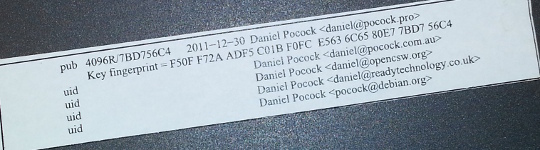
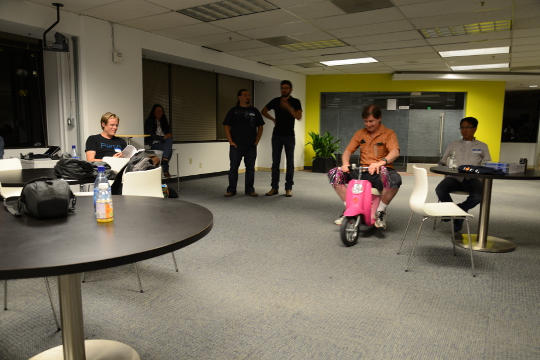
I've mentored a number of students in 2013 and 2014 for Debian and Ganglia and most of the companies I've worked with have run internships and graduate programs from time to time. GSoC 2014 has just finished and with all the excitement, many students are already asking what they can do to prepare and be selected in 2015. My own observation is that the more time the organization has to get to know the student, the more confident they can be selecting that student. Furthermore, the more time that the student has spent getting to know the free software community, the more easily they can complete GSoC. Here I present a list of things that students can do to maximize their chance of selection and career opportunities at the same time. These tips are useful for people applying for GSoC itself and related programs such as GNOME's Outreach Program for Women or graduate placements in companies. Disclaimers There is no guarantee that Google will run the program again in 2015 or any future year. There is no guarantee that any organization or mentor (including myself) will be involved until the official list of organizations is published by Google. Do not follow the advice of web sites that invite you to send pizza or anything else of value to prospective mentors. Following the steps in this page doesn't guarantee selection. That said, people who do follow these steps are much more likely to be considered and interviewed than somebody who hasn't done any of the things in this list. Understand what free software really is You may hear terms like free software and open source software used interchangeably. They don't mean exactly the same thing and many people use the term free software for the wrong things. Not all open source projects meet the definition of free software. Those that don't, usually as a result of deficiencies in their licenses, are fundamentally incompatible with the majority of software that does use genuinely free licenses. Google Summer of Code is about both writing and publishing your code and it is also about community. It is fundamental that you know the basics of licensing and how to choose a free license that empowers the community to collaborate on your code well after GSoC has finished. Please review the definition of free software early on and come back and review it from time to time. The The GNU Project / Free Software Foundation have excellent resources to help you understand what a free software license is and how it works to maximize community collaboration. Don't look for shortcuts There is no shortcut to GSoC selection and there is no shortcut to GSoC completion. The student stipend (USD $5,500 in 2014) is not paid to students unless they complete a minimum amount of valid code. This means that even if a student did find some shortcut to selection, it is unlikely they would be paid without completing meaningful work. If you are the right candidate for GSoC, you will not need a shortcut anyway. Are you the sort of person who can't leave a coding problem until you really feel it is fixed, even if you keep going all night? Have you ever woken up in the night with a dream about writing code still in your head? Do you become irritated by tedious or repetitive tasks and often think of ways to write code to eliminate such tasks? Does your family get cross with you because you take your laptop to Christmas dinner or some other significant occasion and start coding? If some of these statements summarize the way you think or feel you are probably a natural fit for GSoC. An opportunity money can't buy The GSoC stipend will not make you rich. It is intended to make sure you have enough money to survive through the summer and focus on your project. Professional developers make this much money in a week in leading business centers like New York, London and Singapore. When you get to that stage in 3-5 years, you will not even be thinking about exactly how much you made during internships. GSoC gives you an edge over other internships because it involves publicly promoting your work. Many companies still try to hide the potential of their best recruits for fear they will be poached or that they will be able to demand higher salaries. Everything you complete in GSoC is intended to be published and you get full credit for it. Imagine a young musician getting the opportunity to perform on the main stage at a rock festival. This is how the free software community works. It is a meritocracy and there is nobody to hold you back. Having a portfolio of free software that you have created or collaborated on and a wide network of professional contacts that you develop before, during and after GSoC will continue to pay you back for years to come. While other graduates are being screened through group interviews and testing days run by employers, people with a track record in a free software project often find they go straight to the final interview round. Register your domain name and make a permanent email address Free software is all about community and collaboration. Register your own domain name as this will become a focal point for your work and for people to get to know you as you become part of the community. This is sound advice for anybody working in IT, not just programmers. It gives the impression that you are confident and have a long term interest in a technology career. Choosing the provider: as a minimum, you want a provider that offers DNS management, static web site hosting, email forwarding and XMPP services all linked to your domain. You do not need to choose the provider that is linked to your internet connection at home and that is often not the best choice anyway. The XMPP foundation maintains a list of providers known to support XMPP. Create an email address within your domain name. The most basic domain hosting providers will let you forward the email address to a webmail or university email account of your choice. Configure your webmail to send replies using your personalized email address in the From header. Update your ~/.gitconfig file to use your personalized email address in your Git commits. Create a web site and blog Start writing a blog. Host it using your domain name. Some people blog every day, other people just blog once every two or three months. Create links from your web site to your other profiles, such as a Github profile page. This helps reinforce the pages/profiles that are genuinely related to you and avoid confusion with the pages of other developers. Many mentors are keen to see their students writing a weekly report on a blog during GSoC so starting a blog now gives you a head start. Mentors look at blogs during the selection process to try and gain insight into which topics a student is most suitable for. Create a profile on Github Github is one of the most widely used software development web sites. Github makes it quick and easy for you to publish your work and collaborate on the work of other people. Create an account today and get in the habbit of forking other projects, improving them, committing your changes and pushing the work back into your Github account. Github will quickly build a profile of your commits and this allows mentors to see and understand your interests and your strengths. In your Github profile, add a link to your web site/blog and make sure the email address you are using for Git commits (in the ~/.gitconfig file) is based on your personal domain. Start using PGP Pretty Good Privacy (PGP) is the industry standard in protecting your identity online. All serious free software projects use PGP to sign tags in Git, to sign official emails and to sign official release files. The most common way to start using PGP is with the GnuPG (GNU Privacy Guard) utility. It is installed by the package manager on most Linux systems. When you create your own PGP key, use the email address involving your domain name. This is the most permanent and stable solution. Print your key fingerprint using the gpg-key2ps command, it is in the signing-party package on most Linux systems. Keep copies of the fingerprint slips with you. This is what my own PGP fingerprint slip looks like. You can also print the key fingerprint on a business card for a more professional look. Using PGP, it is recommend that you sign any important messages you send but you do not have to encrypt the messages you send, especially if some of the people you send messages to (like family and friends) do not yet have the PGP software to decrypt them. If using the Thunderbird (Icedove) email client from Mozilla, you can easily send signed messages and validate the messages you receive using the Enigmail plugin. Get your PGP key signed Once you have a PGP key, you will need to find other developers to sign it. For people I mentor personally in GSoC, I'm keen to see that you try and find another Debian Developer in your area to sign your key as early as possible. Free software events Try and find all the free software events in your area in the months between now and the end of the next Google Summer of Code season. Aim to attend at least two of them before GSoC. Look closely at the schedules and find out about the individual speakers, the companies and the free software projects that are participating. For events that span more than one day, find out about the dinners, pub nights and other social parts of the event. Try and identify people who will attend the event who have been GSoC mentors or who intend to be. Contact them before the event, if you are keen to work on something in their domain they may be able to make time to discuss it with you in person. Take your PGP fingerprint slips. Even if you don't participate in a formal key-signing party at the event, you will still find some developers to sign your PGP key individually. You must take a photo ID document (such as your passport) for the other developer to check the name on your fingerprint but you do not give them a copy of the ID document. Events come in all shapes and sizes. FOSDEM is an example of one of the bigger events in Europe, linux.conf.au is a similarly large event in Australia. There are many, many more local events such as the Debian France mini-DebConf in Lyon, 2015. Many events are either free or free for students but please check carefully if there is a requirement to register before attending. On your blog, discuss which events you are attending and which sessions interest you. Write a blog during or after the event too, including photos. Quantcast generously hosted the Ganglia community meeting in San Francisco, October 2013. We had a wild time in their offices with mini-scooters, burgers, beers and the Ganglia book. That's me on the pink mini-scooter and Bernard Li, one of the other Ganglia GSoC 2014 admins is on the right. Install Linux GSoC is fundamentally about free software. Linux is to free software what a tree is to the forest. Using Linux every day on your personal computer dramatically increases your ability to interact with the free software community and increases the number of potential GSoC projects that you can participate in. This is not to say that people using Mac OS or Windows are unwelcome. I have worked with some great developers who were not Linux users. Linux gives you an edge though and the best time to gain that edge is now, while you are a student and well before you apply for GSoC. If you must run Windows for some applications used in your course, it will run just fine in a virtual machine using Virtual Box, a free software solution for desktop virtualization. Use Linux as the primary operating system. Here are links to download ISO DVD (and CD) images for some of the main Linux distributions: If you are nervous about getting started with Linux, install it on a spare PC or in a virtual machine before you install it on your main PC or laptop. Linux is much less demanding on the hardware than Windows so you can easily run it on a machine that is 5-10 years old. Having just 4GB of RAM and 20GB of hard disk is usually more than enough for a basic graphical desktop environment although having better hardware makes it faster. Your experiences installing and running Linux, especially if it requires some special effort to make it work with some of your hardware, make interesting topics for your blog. Decide which technologies you know best Personally, I have mentored students working with C, C++, Java, Python and JavaScript/HTML5. In a GSoC program, you will typically do most of your work in just one of these languages. From the outset, decide which language you will focus on and do everything you can to improve your competence with that language. For example, if you have already used Java in most of your course, plan on using Java in GSoC and make sure you read Effective Java (2nd Edition) by Joshua Bloch. Decide which themes appeal to you Find a topic that has long-term appeal for you. Maybe the topic relates to your course or maybe you already know what type of company you would like to work in. Here is a list of some topics and some of the relevant software projects:


  • System administration, servers and networking: consider projects involving monitoring, automation, packaging. Ganglia is a great community to get involved with and you will encounter the Ganglia software in many large companies and academic/research networks. Contributing to a Linux distribution like Debian or Fedora packaging is another great way to get into system administration.
  • Desktop and user interface: consider projects involving window managers and desktop tools or adding to the user interface of just about any other software.
  • Big data and data science: this can apply to just about any other theme. For example, data science techniques are frequently used now to improve system administration.
  • Business and accounting: consider accounting, CRM and ERP software.
  • Finance and trading: consider projects like R, market data software like OpenMAMA and connectivity software (Apache Camel)
  • Real-time communication (RTC), VoIP, webcam and chat: look at the JSCommunicator or the Jitsi project
  • Web (JavaScript, HTML5): look at the JSCommunicator
Before the GSoC application process begins, you should aim to learn as much as possible about the theme you prefer and also gain practical experience using the software relating to that theme. For example, if you are attracted to the business and accounting theme, install the PostBooks suite and get to know it. Maybe you know somebody who runs a small business: help them to upgrade to PostBooks and use it to prepare some reports. Make something Make some small project, less than two week's work, to demonstrate your skills. It is important to make something that somebody will use for a practical purpose, this will help you gain experience communicating with other users through Github. For an example, see the servlet Juliana Louback created for fixing phone numbers in December 2013. It has since been used as part of the Lumicall web site and Juliana was selected for a GSoC 2014 project with Debian. There is no better way to demonstrate to a prospective mentor that you are ready for GSoC than by completing and publishing some small project like this yourself. If you don't have any immediate project ideas, many developers will also be able to give you tips on small projects like this that you can attempt, just come and ask us on one of the mailing lists. Ideally, the project will be something that you would use anyway even if you do not end up participating in GSoC. Such projects are the most motivating and rewarding and usually end up becoming an example of your best work. To continue the example of somebody with a preference for business and accounting software, a small project you might create is a plugin or extension for PostBooks. Getting to know prospective mentors Many web sites provide useful information about the developers who contribute to free software projects. Some of these developers may be willing to be a GSoC mentor. For example, look through some of the following: Getting on the mentor's shortlist Once you have identified projects that are interesting to you and developers who work on those projects, it is important to get yourself on the developer's shortlist. Basically, the shortlist is a list of all students who the developer believes can complete the project. If I feel that a student is unlikely to complete a project or if I don't have enough information to judge a student's probability of success, that student will not be on my shortlist. If I don't have any student on my shortlist, then a project will not go ahead at all. If there are multiple students on the shortlist, then I will be looking more closely at each of them to try and work out who is the best match. One way to get a developer's attention is to look at bug reports they have created. Github makes it easy to see complaints or bug reports they have made about their own projects or other projects they depend on. Another way to do this is to search through their code for strings like FIXME and TODO. Projects with standalone bug trackers like the Debian bug tracker also provide an easy way to search for bug reports that a specific person has created or commented on. Once you find some relevant bug reports, email the developer. Ask if anybody else is working on those issues. Try and start with an issue that is particularly easy and where the solution is interesting for you. This will help you learn to compile and test the program before you try to fix any more complicated bugs. It may even be something you can work on as part of your academic program. Find successful projects from the previous year Contact organizations and ask them which GSoC projects were most successful. In many organizations, you can find the past students' project plans and their final reports published on the web. Read through the plans submitted by the students who were chosen. Then read through the final reports by the same students and see how they compare to the original plans. Start building your project proposal now Don't wait for the application period to begin. Start writing a project proposal now. When writing a proposal, it is important to include several things:
  • Think big: what is the goal at the end of the project? Does your work help the greater good in some way, such as increasing the market share of Linux on the desktop?
  • Details: what are specific challenges? What tools will you use?
  • Time management: what will you do each week? Are there weeks where you will not work on GSoC due to vacation or other events? These things are permitted but they must be in your plan if you know them in advance. If an accident or death in the family cut a week out of your GSoC project, which work would you skip and would your project still be useful without that? Having two weeks of flexible time in your plan makes it more resilient against interruptions.
  • Communication: are you on mailing lists, IRC and XMPP chat? Will you make a weekly report on your blog?
  • Users: who will benefit from your work?
  • Testing: who will test and validate your work throughout the project? Ideally, this should involve more than just the mentor.
If your project plan is good enough, could you put it on Kickstarter or another crowdfunding site? This is a good test of whether or not a project is going to be supported by a GSoC mentor. Learn about packaging and distributing software Packaging is a vital part of the free software lifecycle. It is very easy to upload a project to Github but it takes more effort to have it become an official package in systems like Debian, Fedora and Ubuntu. Packaging and the communities around Linux distributions help you reach out to users of your software and get valuable feedback and new contributors. This boosts the impact of your work. To start with, you may want to help the maintainer of an existing package. Debian packaging teams are existing communities that work in a team and welcome new contributors. The Debian Mentors initiative is another great starting place. In the Fedora world, the place to start may be in one of the Special Interest Groups (SIGs). Think from the mentor's perspective After the application deadline, mentors have just 2 or 3 weeks to choose the students. This is actually not a lot of time to be certain if a particular student is capable of completing a project. If the student has a published history of free software activity, the mentor feels a lot more confident about choosing the student. Some mentors have more than one good student while other mentors receive no applications from capable students. In this situation, it is very common for mentors to send each other details of students who may be suitable. Once again, if a student has a good Github profile and a blog, it is much easier for mentors to try and match that student with another project. GSoC logo generic Conclusion Getting into the world of software engineering is much like joining any other profession or even joining a new hobby or sporting activity. If you run, you probably have various types of shoe and a running watch and you may even spend a couple of nights at the track each week. If you enjoy playing a musical instrument, you probably have a collection of sheet music, accessories for your instrument and you may even aspire to build a recording studio in your garage (or you probably know somebody else who already did that). The things listed on this page will not just help you walk the walk and talk the talk of a software developer, they will put you on a track to being one of the leaders. If you look over the profiles of other software developers on the Internet, you will find they are doing most of the things on this page already. Even if you are not selected for GSoC at all or decide not to apply, working through the steps on this page will help you clarify your own ideas about your career and help you make new friends in the software engineering community.

18 August 2014

Julien Danjou: OpenStack Ceilometer and the Gnocchi experiment

A little more than 2 years ago, the Ceilometer project was launched inside the OpenStack ecosystem. Its main objective was to measure OpenStack cloud platforms in order to provide data and mechanisms for functionalities such as billing, alarming or capacity planning. In this article, I would like to relate what I've been doing with other Ceilometer developers in the last 5 months. I've lowered my involvement in Ceilometer itself directly to concentrate on solving one of its biggest issue at the source, and I think it's largely time to take a break and talk about it. Ceilometer early design For the last years, Ceilometer didn't change in its core architecture. Without diving too much in all its parts, one of the early design decision was to build the metering around a data structure we called samples. A sample is generated each time Ceilometer measures something. It is composed of a few fields, such as the the resource id that is metered, the user and project id owning that resources, the meter name, the measured value, a timestamp and a few free-form metadata. Each time Ceilometer measures something, one of its components (an agent, a pollster ) constructs and emits a sample headed for the storage component that we call the collector. This collector is responsible for storing the samples into a database. The Ceilometer collector uses a pluggable storage system, meaning that you can pick any database system you prefer. Our original implementation has been based on MongoDB from the beginning, but we then added a SQL driver, and people contributed things such as HBase or DB2 support. The REST API exposed by Ceilometer allows to execute various reading requests on this data store. It can returns you the list of resources that have been measured for a particular project, or compute some statistics on metrics. Allowing such a large panel of possibilities and having such a flexible data structure allows to do a lot of different things with Ceilometer, as you can almost query the data in any mean you want. The scalability issue We soon started to encounter scalability issues in many of the read requests made via the REST API. A lot of the requests requires the data storage to do full scans of all the stored samples. Indeed, the fact that the API allows you to filter on any fields and also on the free-form metadata (meaning non indexed key/values tuples) has a terrible cost in terms of performance (as pointed before, the metadata are attached to each sample generated by Ceilometer and is stored as is). That basically means that the sample data structure is stored in most drivers in just one table or collection, in order to be able to scan them at once, and there's no good "perfect" sharding solution, making data storage scalability painful. It turns out that the Ceilometer REST API is unable to handle most of the requests in a timely manner as most operations are O(n) where n is the number of samples recorded (see big O notation if you're unfamiliar with it). That number of samples can grow very rapidly in an environment of thousands of metered nodes and with a data retention of several weeks. There is a few optimizations to make things smoother in general cases fortunately, but as soon as you run specific queries, the API gets barely usable. During this last year, as the Ceilometer PTL, I discovered these issues first hand since a lot of people were feeding me back with this kind of testimony. We engaged several blueprints to improve the situation, but it was soon clear to me that this was not going to be enough anyway.
Thinking outside the box Unfortunately, the PTL job doesn't leave him enough time to work on the actual code nor to play with anything new. I was coping with most of the project bureaucracy and I wasn't able to work on any good solution to tackle the issue at its root. Still, I had a few ideas that I wanted to try and as soon as I stepped down from the PTL role, I stopped working on Ceilometer itself to try something new and to think a bit outside the box. When one takes a look at what have been brought recently in Ceilometer, they can see the idea that Ceilometer actually needs to handle 2 types of data: events and metrics. Events are data generated when something happens: an instance start, a volume is attached, or an HTTP request is sent to an REST API server. These are events that Ceilometer needs to collect and store. Most OpenStack components are able to send such events using the notification system built into oslo.messaging. Metrics is what Ceilometer needs to store but that is not necessarily tied to an event. Think about an instance CPU usage, a router network bandwidth usage, the number of images that Glance is storing for you, etc These are not events, since nothing is happening. These are facts, states we need to meter. Computing statistics for billing or capacity planning requires both of these data sources, but they should be distinct. Based on that assumption, and the fact that Ceilometer was getting support for storing events, I started to focus on getting the metric part right. I had been a system administrator for a decade before jumping into OpenStack development, so I know a thing or two on how monitoring is done in this area, and what kind of technology operators rely on. I also know that there's still no silver bullet this made it a good challenge. The first thing that came to my mind was to use some kind of time-series database, and export its access via a REST API as we do in all OpenStack services. This should cover the metric storage pretty well. Cooking Gnocchi
A cloud of gnocchis!
At the end of April 2014, this led met to start a new project code-named Gnocchi. For the record, the name was picked after confusing so many times the OpenStack Marconi project, reading OpenStack Macaroni instead. At least one OpenStack project should have a "pasta" name, right? The point of having a new project and not send patches on Ceilometer, was that first I had no clue if it was going to make something that would be any better, and second, being able to iterate more rapidly without being strongly coupled with the release process. The first prototype started around the following idea: what you want is to meter things. That means storing a list of tuples of (timestamp, value) for it. I've named these things "entities", as no assumption are made on what they are. An entity can represent the temperature in a room or the CPU usage of an instance. The service shouldn't care and should be agnostic in this regard. One feature that we discussed for several OpenStack summits in the Ceilometer sessions, was the idea of doing aggregation. Meaning, aggregating samples over a period of time to only store a smaller amount of them. These are things that time-series format such as the RRDtool have been doing for a long time on the fly, and I decided it was a good trail to follow. I assumed that this was going to be a requirement when storing metrics into Gnocchi. The user would need to provide what kind of archiving it would need: 1 second precision over a day, 1 hour precision over a year, or even both. The first driver written to achieve that and store those metrics inside Gnocchi was based on whisper. Whisper is the file format used to store metrics for the Graphite project. For the actual storage, the driver uses Swift, which has the advantages to be part of OpenStack and scalable. Storing metrics for each entities in a different whisper file and putting them in Swift turned out to have a fantastic algorithm complexity: it was O(1). Indeed, the complexity needed to store and retrieve metrics doesn't depends on the number of metrics you have nor on the number of things you are metering. Which is already a huge win compared to the current Ceilometer collector design. However, it turned out that whisper has a few limitations that I was unable to circumvent in any manner. I needed to patch it to remove a lot of its assumption about manipulating file, or that everything is relative to now (time.time()). I've started to hack on that in my own fork, but then everything broke. The whisper project code base is, well, not the state of the art, and have 0 unit test. I was starring at a huge effort to transform whisper into the time-series format I wanted, without being sure I wasn't going to break everything (remember, no test coverage). I decided to take a break and look into alternatives, and stumbled upon Pandas, a data manipulation and statistics library for Python. Turns out that Pandas support time-series natively, and that it could do a lot of the smart computation needed in Gnocchi. I built a new file format leveraging Pandas for computing the time-series and named it carbonara (a wink to both the Carbon project and pasta, how clever!). The code is quite small (a third of whisper's, 200 SLOC vs 600 SLOC), does not have many of the whisper limitations and it has test coverage. These Carbonara files are then, in the same fashion, stored into Swift containers. Anyway, Gnocchi storage driver system is designed in the same spirit that the rest of OpenStack and Ceilometer storage driver system. It's a plug-in system with an API, so anyone can write their own driver. Eoghan Glynn has already started to write a InfluxDB driver, working closely with the upstream developer of that database. Dina Belova started to write an OpenTSDB driver. This helps to make sure the API is designed directly in the right way. Handling resources Measuring individual entities is great and needed, but you also need to link them with resources. When measuring the temperature and the number of a people in a room, it is useful to link these 2 separate entities to a resource, in that case the room, and give a name to these relations, so one is able to identify what attribute of the resource is actually measured. It is also important to provide the possibility to store attributes on these resources, such as their owners, the time they started and ended their existence, etc.
Relationship of entities and resources
Once this list of resource is collected, the next step is to list and filter them, based on any criteria. One might want to retrieve the list of resources created last week or the list of instances hosted on a particular node right now. Resources also need to be specialized. Some resources have attributes that must be stored in order for filtering to be useful. Think about an instance name or a router network. All of these requirements led to to the design of what's called the indexer. The indexer is responsible for indexing entities, resources, and link them together. The initial implementation is based on SQLAlchemy and should be pretty efficient. It's easy enough to index the most requested attributes (columns), and they are also correctly typed. We plan to establish a model for all known OpenStack resources (instances, volumes, networks, ) to store and index them into the Gnocchi indexer in order to request them in an efficient way from one place. The generic resource class can be used to handle generic resources that are not tied to OpenStack. It'd be up to the users to store extra attributes. Dropping the free form metadata we used to have in Ceilometer makes sure that querying the indexer is going to be efficient and scalable.
The indexer classes and their relations
REST API All of this is exported via a REST API that was partially designed and documented in the Gnocchi specification in the Ceilometer repository; though the spec is not up-to-date yet. We plan to auto-generate the documentation from the code as we are currently doing in Ceilometer. The REST API is pretty easy to use, and you can use it to manipulate entities and resources, and request the information back.
Macroscopic view of the Gnocchi architecture
Roadmap & Ceilometer integration All of this plan has been exposed and discussed with the Ceilometer team during the last OpenStack summit in Atlanta in May 2014, for the Juno release. I led a session about this entire concept, and convinced the team that using Gnocchi for our metric storage would be a good approach to solve the Ceilometer collector scalability issue. It was decided to conduct this project experiment in parallel of the current Ceilometer collector for the time being, and see where that would lead the project to. Early benchmarks Some engineers from Mirantis did a few benchmarks around Ceilometer and also against an early version of Gnocchi, and Dina Belova presented them to us during the mid-cycle sprint we organized in Paris in early July. The following graph sums up pretty well the current Ceilometer performance issue. The more you feed it with metrics, the more slow it becomes.
For Gnocchi, while the numbers themselves are not fantastic, what is interesting is that all the graphs below show that the performances are stable without correlation with the number of resources, entities or measures. This proves that, indeed, most of the code is built around a complexity of O(1), and not O(n) anymore.
Next steps
Cl ment drawing the logo
While the Juno cycle is being wrapped-up for most projects, including Ceilometer, Gnocchi development is still ongoing. Fortunately, the composite architecture of Ceilometer allows a lot of its features to be replaced by some other code dynamically. That, for example, enables Gnocchi to provides a Ceilometer dispatcher plugin for its collector, without having to ship the actual code in Ceilometer itself. That should help the development of Gnocchi to not be slowed down by the release process for now. The Ceilometer team aims to provide Gnocchi as a sort of technology preview with the Juno release, allowing it to be deployed along and plugged with Ceilometer. We'll discuss how to integrate it in the project in a more permanent and strong manner probably during the OpenStack Summit for Kilo that will take place next November in Paris.

13 August 2014

Ian Donnelly: The New Deal: ucf Integration

Hi Everybody, A few days ago I posted an entry on this blog called dpkg Woes where I explained that due to a lack of response, we were abandoning our plan to patch dpkg for my Google Summer of Code project, and I explained that we had a new solution. Well today I would like to tell you about that solution. Instead of patching dpkg, which would take a long time and seemed like it would never make it upstream, we have added some new features to ucf which will allow my Google Summer of Code project to be realized. If you don t know, ucf, which stands for Update Configuration File, is a popular Debian package whose goal is to preserve user changes to config files. It is meant to act as an alternative to considering a configuration file a conffile on systems that use dpkg. Instead, package maintainers can use ucf to handle these files in a conffile-like way. Where conffiles must work on all systems, because they are shipped with the package, configuration files that use ucf can be handled by maintainer scripts and can vary between systems. ucf exists as a script that allows conffile-like handling of non-conffile configuration files and allows much more flexibility than dpkg s conffile system. In fact, ucf even includes an option to perform a three-way merge on files it manages, it currently only uses diff3 for the task though. As you can see, ucf has a goal that while different than ours, seems naturally compatible to our goal of automatic conffile merging. Obviously, since ucf is a different tool than dpkg we had to re-think how we were going to integrate with ucf. Luckily, integration with ucf proved to be much more simple than integration with dpkg. All we had to do to integrate with ucf was to add a generic hook to attempt a three way merge using any tool created for the task such as Elektra and kdb merge. Felix submitted a pull request with the exact code almost a week ago and we have talked with Manoj Srivastava, the developer for ucf, and he seemed to really like the idea. The only changes we made are to add an option for a three-way merge command, and if one is present, the merge is attempted using the specified command. It s all pretty simple really. Since we decided to include a generic hook for a three-way merge command instead of an Elektra-specific one (which would be less open and would create a dependency on Elektra), we also had to add functionality to Elektra to work with this hook. We ended up writing a new script, called elektra-merge which is now included in our repository. All this script does is act as a liaison between the ucf --three-way-merge-command option and Elektra itself. The script automatically mounts the correct files for theirs and base and dest using the new remount command. Since the only parameters that are passed to the ucf merge command are the paths of ours, theirs, base and result, we were missing vital information on how to mount these files. Our solution was to create the remount command which mirrors the backend configuration of an existing mountpoint to create a new mountpoint using a new file. So if ours is mounted to system/ours using ini, kdb remount /etc/theirs system/theirs system/ours will mount /etc/theirs to system/theirs using the same backend as ours. Since theirs, base, and result should all have the same backend as ours, we can use remount to mount these files even if all we know is their paths. Now, package maintainers can edit their scripts to utilize this new feature. If they want, package maintainers can specify a command to use to merge files using ucf during package upgrades. I will soon be posting a tutorial about how to integrate this feature into a package and how to use Elektra in your scripts in order to allow for automatic three-way merges during package upgrade. I will post a link to the tutorial here once it is published. Sincerely,
Ian S. Donnelly

Riku Voipio: Booting Linaro ARMv8 OE images with Qemu

A quick update - Linaro ARMv8 OpenEmbbeded images work just fine with qemu 2.1 as well:

$ http://releases.linaro.org/14.07/openembedded/aarch64/Image
$ http://releases.linaro.org/14.07/openembedded/aarch64/vexpress64-openembedded_lamp-armv8-gcc-4.9_20140727-682.img.gz
$ qemu-system-aarch64 -m 1024 -cpu cortex-a57 -nographic -machine virt \
-kernel Image -append 'root=/dev/vda2 rw rootwait mem=1024M console=ttyAMA0,38400n8' \
-drive if=none,id=image,file=vexpress64-openembedded_lamp-armv8-gcc-4.9_20140727-682.img \
-netdev user,id=user0 -device virtio-net-device,netdev=user0 -device virtio-blk-device,drive=image
[ 0.000000] Linux version 3.16.0-1-linaro-vexpress64 (buildslave@x86-64-07) (gcc version 4.8.3 20140401 (prerelease) (crosstool-NG linaro-1.13.1-4.8-2014.04 - Linaro GCC 4.8-2014.04) ) #1ubuntu1~ci+140726114341 SMP PREEMPT Sat Jul 26 11:44:27 UTC 20
[ 0.000000] CPU: AArch64 Processor [411fd070] revision 0
...
root@genericarmv8:~#
Quick benchmarking with age-old ByteMark nbench:
Index Qemu Foundation Host
Memory 4.294 0.712 44.534
Integer 6.270 0.686 41.983
Float 1.463 1.065 59.528
Baseline (LINUX) : AMD K6/233*
Qemu is upto 8x faster than Foundation model on Integers, but only 50% faster on Math. Meanwhile, the Host pc spends 7-40x slower emulating ARMv8 than executing native instructions.

5 August 2014

Riku Voipio: Testing qemu 2.1 arm64 support

Qemu 2.1 was just released a few days ago, and is now a available on Debian/unstable. Trying out an (virtual) arm64 machine is now just a few steps away for unstable users:

$ sudo apt-get install qemu-system-arm
$ wget https://cloud-images.ubuntu.com/trusty/current/trusty-server-cloudimg-arm64-disk1.img
$ wget https://cloud-images.ubuntu.com/trusty/current/unpacked/trusty-server-cloudimg-arm64-vmlinuz-generic
$ qemu-system-aarch64 -m 1024 -cpu cortex-a57 -nographic -machine virt -kernel trusty-server-cloudimg-arm64-vmlinuz-generic \
-append 'root=/dev/vda1 rw rootwait mem=1024M console=ttyAMA0,38400n8 init=/usr/lib/cloud-init/uncloud-init ds=nocloud ubuntu-pass=randomstring' \
-drive if=none,id=image,file=trusty-server-cloudimg-arm64-disk1.img \
-netdev user,id=user0 -device virtio-net-device,netdev=user0 -device virtio-blk-device,drive=image
[ 0.000000] Linux version 3.13.0-32-generic (buildd@beebe) (gcc version 4.8.2 (Ubuntu/Linaro 4.8.2-19ubuntu1) ) #57-Ubuntu SMP Tue Jul 15 03:52:14 UTC 2014 (Ubuntu 3.13.0-32.57-generic 3.13.11.4)
[ 0.000000] CPU: AArch64 Processor [411fd070] revision 0
...
-snip-
...
ubuntu@ubuntu:~$ cat /proc/cpuinfo
Processor : AArch64 Processor rev 0 (aarch64)
processor : 0
Features : fp asimd evtstrm
CPU implementer : 0x41
CPU architecture: AArch64
CPU variant : 0x1
CPU part : 0xd07
CPU revision : 0

Hardware : linux,dummy-virt
ubuntu@ubuntu:~$
The "init=/usr/lib/cloud-init/uncloud-init ds=nocloud ubuntu-pass=randomstring" is ubuntu cloud stuff that will set the ubuntu user password to "randomstring" - don't use "randomstring" literally there, if you are connected to internets... For more detailed writeup of using qemu-system-aarch64, check the excellent writeup from Alex Bennee.

31 July 2014

Russell Coker: Links July 2014

Dave Johnson wrote an interesting article for Salon about companies ripping off the tax system by claiming that all their income is produced in low tax countries [1]. Seb Lee-Delisle wrote an insightful article about how to ask to get paid to speak [2]. I should do that. Daniel Pocock wrote an informative article about the reConServer simple SIP conferencing server [3]. I should try it out, currently most people I want to conference with are using Google Hangouts, but getting away from Google is a good thing. Fran ois Marier wrote an informative post about hardening ssh servers [4]. S. E. Smith wrote an interesting article I Am Tired of Hearing Programmers Defend Gender Essentialism [5]. Bert Archer wrote an insightful article about lazy tourism [6]. His initial example of love locks breaking bridges was a bit silly (it s not difficult to cut locks off a bridge) but his general point about lazy/stupid tourism is good. Daniel Pocock wrote an insightful post about new developments in taxis, the London Taxi protest against Uber, and related changes [7]. His post convinced me that Uber is a good thing and should be supported. I checked the prices and unfortunately Uber is more expensive than normal taxis for my most common journey. Cory Doctorow wrote an insightful article for The Guardian about the moral issues related to government spying [8]. The Verge has an interesting review of the latest Lytro Lightbox camera [9]. Not nearly ready for me to use, but interesting technology. Prospect has an informative article by Kathryn Joyce about the Protestant child sex abuse scandal in the US [10]. Billy Graham s grandson is leading the work to reform churches so that they protect children instead of pedophiles. Prospect also has an article by Kathryn Joyce about Christians home-schooling kids to try and program them to be zealots and how that hurts kids [11]. The Daily Beast has an interesting article about the way that the extreme right wing in the US are trying to kill people, it s the right wing death panel [12]. Jay Michaelson wrote an informative article for The Daily Beast about right-wing hate groups in the US who promote the extreme homophobic legislation in Russia and other countries [13]. It also connects to the Koch brothers who seem to be associated with most evil. Elias Isquith wrote an insightful article for Salon about the current right-wing obsession with making homophobic discrimination an issue of religious liberty will hurt religious people [14]. He also describes how stupid the right-wing extremists are in relation to other issues too. EconomixComix.com has a really great comic explaning the economics of Social Security in the US [15]. They also have a comic explaining the TPP which is really good [16]. They sell a comic book about economics which I m sure is worth buying. We need to have comics explaining all technical topics, it s a good way of conveying concepts. When I was in primary school my parents gave me comic books covering nuclear physics and other science topics which were really good. Mia McKenzie wrote an insightful article for BlackGirlDangerous.com about dealing with racist white teachers [17]. I think that it would be ideal to have a school dedicated to each minority group with teachers from that group.

22 July 2014

Neil Williams: Validating ARMMP device tree blobs

I ve done various bits with ARMMP and LAVA on this blog already, usually waiting until I ve got all the issues ironed out before writing it up. However, this time I m just going to do a dump of where it s at, how it works and what can be done. I m aware that LAVA can seem mysterious at first, the package description has improved enormously recently, thanks to exposure in Debian: LAVA is a continuous integration system for deploying operating systems onto physical and virtual hardware for running tests. Tests can be simple boot testing, bootloader testing and system level testing, although extra hardware may be required for some system tests. Results are tracked over time and data can be exported for further analysis. The LAVA documentation has a glossary of terms like result bundle and all the documentation is also available in the lava-server-doc package. The goal is to validate the dtbs built for the Debian ARMMP kernel. One of the most accessible ways to get the ARMMP kernel onto a board for testing is tftp using the Debian daily DI builds. Actually using the DI initrd can come later, once I ve got a complete preseed config so that the entire install can be automated. (There are some things to sort out in LAVA too before a full install can be deployed and booted but those are at an early stage.) It s enough at first to download the vmlinuz which is common to all ARMMP deployments, supply the relevant dtb, partner those with a minimal initrd and see if the board boots. The first change comes when this process is compared to how boards are commonly tested in LAVA with a zImage or uImage and all/most of the modules already built in. Packaged kernels won t necessarily raise a network interface or see the filesystem without modules, so the first step is to extend a minimal initramfs to include the armmp modules.

apt install pax u-boot-tools
The minimal initramfs I selected is one often used within LAVA:
wget http://images.armcloud.us/lava/common/linaro-image-minimal-initramfs-genericarmv7a.cpio.gz.u-boot
It has a u-boot header added, as most devices using this would be using u-boot and this makes it easier to debug boot failures as the initramfs doesn t need to have the header added, it can simply be downloaded to a local directory and passed to the board as a tftp location. To modify it, the u-boot header needs to be removed. Rather than assuming the size, the u-boot tools can (indirectly) show the size:
$ ls -l linaro-image-minimal-initramfs-genericarmv7a.cpio.gz.u-boot
-rw-r--r-- 1 neil neil  5179571 Nov 26  2013 linaro-image-minimal-initramfs-genericarmv7a.cpio.gz.u-boot
$ mkimage -l linaro-image-minimal-initramfs-genericarmv7a.cpio.gz.u-boot 
Image Name:   linaro-image-minimal-initramfs-g
Created:      Tue Nov 26 22:30:49 2013
Image Type:   ARM Linux RAMDisk Image (gzip compressed)
Data Size:    5179507 Bytes = 5058.11 kB = 4.94 MB
Load Address: 00000000
Entry Point:  00000000
Referencing http://www.omappedia.com/wiki/Development_With_Ubuntu, the header size is the file size minus the data size listed by mkimage.
5179571 - 5179507 == 64
So, create a second file without the header:
dd if=linaro-image-minimal-initramfs-genericarmv7a.cpio.gz.u-boot of=linaro-image-minimal-initramfs-genericarmv7a.cpio.gz skip=64 bs=1
decompress it
gunzip linaro-image-minimal-initramfs-genericarmv7a.cpio.gz
Now for the additions
dget http://ftp.uk.debian.org/debian/pool/main/l/linux/linux-image-3.14-1-armmp_3.14.12-1_armhf.deb
(Yes, this process will need to be repeated when this package is rebuilt, so I ll want to script this at some point.)
dpkg -x linux-image-3.14-1-armmp_3.14.12-1_armhf.deb kernel-dir
cd kernel-dir
Pulling in the modules we need for most needs, comes thanks to a script written by the Xen folks. The set is basically disk, net, filesystems and LVM.
find lib -type d -o -type f -name modules.\*  -o -type f -name \*.ko  \( -path \*/kernel/lib/\* -o  -path \*/kernel/crypto/\* -o  -path \*/kernel/fs/mbcache.ko -o  -path \*/kernel/fs/ext\* -o  -path \*/kernel/fs/jbd\* -o  -path \*/kernel/drivers/net/\* -o  -path \*/kernel/drivers/ata/\* -o  -path \*/kernel/drivers/scsi/\* -o -path \*/kernel/drivers/md/\* \)   pax -x sv4cpio -s '%lib%/lib%' -d -w >../cpio
gzip -9f cpio
original Xen script (GPL-3+) I found it a bit confusing that i is used for extract by cpio, but that s how it is. Extract the minimal initramfs to a new directory:
sudo cpio -id < ../linaro-image-minimal-initramfs-genericarmv7a.cpio
Extract the new cpio into the same location. (Yes, I could do this the other way around and pipe the output of find into the already extracted location but that's for when I get a script to do this):
sudo cpio --no-absolute-filenames -id < ../ramfs/cpio
CPIO Manual Use newc format, the new (SVR4) portable format, which supports file systems having more than 65536 i-nodes. (4294967295 bytes)
(41M)
find .   cpio -H newc -o > ../armmp-image.cpio
... and add the u-boot header back:
mkimage -A arm -T ramdisk -C none -d armmp-image.cpio.gz debian-armmp-initrd.cpio.gz.u-boot
Now what? Now send the combination to LAVA and test it. Results bundle for a local LAVA test job using this technique. (18k) submission JSON - uses file:// references, so would need modification before being submitted to LAVA elsewhere. complete log of the test job (72k) Those familiar with LAVA will spot that I haven't optimised this job, it boots the ARMMP kernel into a minimal initramfs and then expects to find apt and other tools. Actual tests providing useful results would use available tools, add more tools or specify a richer rootfs. The tests themselves are very quick (the job described above took 3 minutes to run) and don't need to be run particularly often, just once per board type per upload of the ARMMP kernel. LAVA can easily run those jobs in parallel and submission can be automated using authentication tokens and the lava-tool CLI. lava-tool can be installed without lava-server, so can be used in hooks for automated submissions. Extensions That's just one DTB and one board. I have a range of boards available locally: * iMX6Q Wandboard (used for this test)
* iMX.53 Quick Start Board (needs updated u-boot)
* Beaglebone Black
* Cubie2
* CubieTruck
* arndale (no dtb?)
* pandaboard Other devices available could involve ARMv7 devices hosted at www.armv7.com and validation.linaro.org - as part of a thank you to the Debian community for providing the OS which is (now) running all of the LAVA infrastructure. That doesn't cover all of the current DTBs (and includes many devices which have no DTBs) so there is plenty of scope for others to get involved. Hopefully, the above will help get people started with a suitable kernel+dtb+initrd and I'd encourage anyone interested to install lava-server and have a go at running test jobs based on those so that we start to build data about as many of the variants as possible. (If anyone in DI fancies producing a suitable initrd with modules alongside the DI initrd for armhf builds, or if anyone comes up with a patch for DI to do that, it would help enormously.) This will at least help Debian answer the question of what the Debian ARMMP package can actually support. For help on LAVA, do read through the documentation and then come to us at #linaro-lava or the linaro-validation mailing list or file bugs in Debian: reportbug lava-server. , so you can ask me. I'm giving one talk on the LAVA software and there will be a BoF on validation and CI in Debian.

21 July 2014

Keith Packard: Glamorous Intel

Reworking Intel Glamor The original Intel driver Glamor support was based on the notion that it would be better to have the Intel driver capture any fall backs and try to make them faster than Glamor could do internally. Now that Glamor has reasonably complete acceleration, and its fall backs aren t terrible, this isn t as useful as it once was, and because this uses Glamor in a weird way, we re making the Glamor code harder to maintain. Fixing the Intel driver to not use Glamor in this way took a bit of effort; the UXA support is all tied into the overall operation of the driver. Separating out UXA functions The first task was to just identify which functions were UXA-specific by adding _uxa to their names. A couple dozen sed runs and now a bunch of the driver is looking better. Next, a pile of UXA-specific functions were actually inside the non-UXA parts of the code. Those got moved out, and a new intel_uxa.h file was created to hold all of the definitions. Finally, a few non UXA-specific functions were actually in the uxa files; those got moved over to the generic code. Removing the Glamor paths in UXA Each one of the UXA functions had a little piece of code at the top like:
if (uxa_screen->info->flags & UXA_USE_GLAMOR)  
    int ok = 0;
    if (uxa_prepare_access(pDrawable, UXA_GLAMOR_ACCESS_RW))  
        ok = glamor_fill_spans_nf(pDrawable,
                      pGC, n, ppt, pwidth, fSorted);
        uxa_finish_access(pDrawable, UXA_GLAMOR_ACCESS_RW);
     
    if (!ok)
        goto fallback;
    return;
 
Pulling those out shrank the UXA code by quite a bit. Selecting Acceleration (or not) The intel driver only supported UXA before; Glamor was really just a slightly different mode for UXA. I switched the driver from using a bit in the UXA flags to having an accel variable which could be one of three options: I added ACCEL_NONE to give us a dumb frame buffer mode. That actually supports DRI3 so that we can bring up Mesa and run it under X before we have any acceleration code ready; avoiding a dependency loop when doing new hardware. All that it requires is a kernel that offers mode setting and buffer allocation. Initializing Glamor With UXA no longer supporting Glamor, it was time to plug the Glamor support into the top of the driver. That meant changing a bunch of the entry points to select appropriate Glamor or UXA functionality, instead of just calling into UXA. So, now we ve got lots of places that look like:
        switch (intel->accel)  
#if USE_GLAMOR
        case ACCEL_GLAMOR:
                if (!intel_glamor_create_screen_resources(screen))
                        return FALSE;
                break;
#endif
#if USE_UXA
        case ACCEL_UXA:
                if (!intel_uxa_create_screen_resources(screen))
                        return FALSE;
        break;
#endif
        case ACCEL_NONE:
                if (!intel_none_create_screen_resources(screen))
                        return FALSE;
                break;
         
Using a switch means that we can easily elide code that isn t wanted in a particular build. Of course accel is an enum, so places which are missing one of the required paths will cause a compiler warning. It s not all perfectly clean yet; there are piles of UXA-only paths still. Making It Build Without UXA The final trick was to make the driver build without UXA turned on; that took several iterations before I had the symbols sorted out appropriately. I built the driver with various acceleration options and then tried to count the lines of source code. What I did was just list the source files named in the driver binary itself. This skips all of the header files and the render program source code, and ignores the fact that there are a bunch of #ifdef s in the uxa directory selecting between uxa, glamor and none.
    Accel                    Lines          Size(B)
    -----------             ------          -------
    none                      7143            73039
    glamor                    7397            76540
    uxa                      25979           283777
    sna                     118832          1303904
    none legacy              14449           152480
    glamor legacy            14703           156125
    uxa legacy               33285           350685
    sna legacy              126138          1395231
The legacy addition supports i810-class hardware, which is needed for a complete driver. Along The Way, Enable Tiling for the Front Buffer While hacking the code, I discovered that the initial frame buffer allocated for the screen was created without tiling (!) because a few parameters that depend on the GTT size were not initialized until after that frame buffer was allocated. I haven t analyzed what effect this has on performance. Page Flipping and Resize Page flipping (or just flipping) means switching the entire display from one frame buffer to another. It s generally the fastest way of updating the screen as you don t have to copy any bits. The trick with flipping is that a client hands you a random pixmap and you need to stuff that into the KMS API. With UXA, that s pretty easy as all pixmaps are managed through the UXA API which knows which underlying kernel BO is tied with each pixmap. Using Glamor, only the underlying GL driver knows the mapping. Fortunately (?), we have the EGL Image extension, which lets us take a random GL texture and turn it into a file descriptor for a DMA-BUF kernel object. So, we have this cute little dance:

fd = glamor_fd_from_pixmap(screen,
                               pixmap,
                               &stride,
                               &size);
bo = drm_intel_bo_gem_create_from_prime(intel->bufmgr, fd, size);
    close(fd);
    intel_glamor_get_pixmap(pixmap)->bo = bo;
That last bit remembers the bo in some local memory so we don t have to do this more than once for each pixmap. glamorfdfrompixmap ends up calling eglCreateImageKHR followed by gbmbo_import and then a kernel ioctl to convert a prime handle into an fd. It s all quite round-about, but it does seem to work just fine. After I d gotten Glamor mostly working, I tried a few OpenGL applications and discovered flipping wasn t working. That turned out to have an unexpected consequence all full-screen applications would run flat-out, and not be limited to frame rate. Present recovers from a failed flip queue operation by immediately performing a CopyArea; not waiting for vblank. This needs to get fixed in Present by having it re-queued the CopyArea for the right time. What I did in the intel driver was to add a bunch more checks for tiling mode, pixmap stride and other things to catch pixmaps that were going to fail before the operation was queued and forcing them to fall back to CopyArea at the right time. The second adventure was with XRandR. Glamor has an API to fix up the screen pixmap for a new frame buffer, but that pulls the size of the frame buffer out of the pixmap instead of out of the screen. XRandR leaves the pixmap size set to the old screen size during this call; fixing that just meant getting the pixmap size set correctly before calling into glamor. I think glamor should get fixed to use the screen size rather than the pixmap size. Painting Root before Mode set The X server has generally done initialization in one order:
  1. Create root pixmap
  2. Set video modes
  3. Paint root window
Recently, we ve added a -background none option to the X server which causes it to set the root window background to none and have the driver fill in that pixmap with whatever contents were on the screen before the X server started. In a pre-Glamor world, that was done by hacking the video driver to copy the frame buffer console contents to the root pixmap as it was created. The trouble here is that the root pixmap is created long before the upper layers of the X server are ready for drawing, so you can t use the core rendering paths. Instead, UXA had kludges to call directly into the acceleration functions. What we really want though is to change the order of operations:
  1. Create root pixmap
  2. Paint root window
  3. Set video mode
That way, the normal root window painting operation will take care of getting the image ready before that pixmap is ever used for scanout. I can use regular core X rendering to get the original frame buffer contents into the root window, and even if we re not using -background none and are instead painting the root with some other pattern (like the root weave), I get that presented without an intervening black flash. That turned out to be really easy just delay the call to I830EnterVT (which sets the modes) until the server is actually running. That required one additional kludge I needed to tell the DIX level RandR functions about the new modes; the mode setting operation used during server init doesn t call up into RandR as RandR lists the current configuration after the screen has been initialized, which is when the modes used to be set. Calling xf86RandR12CreateScreenResources does the trick nicely. Getting the root window bits from fbcon, setting video modes and updating the RandR/Xinerama DIX info is now all done from the BlockHandler the first time it is called. Performance I ran the current glamor version of the intel driver with the master branch of the X server and there were not any huge differences since my last Glamor performance evaluation aside from GetImage. The reason is that UXA/Glamor never called Glamor s image functions, and the UXA GetImage is pretty slow. Using Mesa s image download turns out to have a huge performance benefit:
1. UXA/Glamor from April
2. Glamor from today
       1                 2                 Operation
------------   -------------------------   -------------------------
     50700.0        56300.0 (     1.110)   ShmGetImage 10x10 square 
     12600.0        26200.0 (     2.079)   ShmGetImage 100x100 square 
      1840.0         4250.0 (     2.310)   ShmGetImage 500x500 square 
      3290.0          202.0 (     0.061)   ShmGetImage XY 10x10 square 
        36.5          170.0 (     4.658)   ShmGetImage XY 100x100 square 
         1.5           56.4 (    37.600)   ShmGetImage XY 500x500 square 
     49800.0        50200.0 (     1.008)   GetImage 10x10 square 
      5690.0        19300.0 (     3.392)   GetImage 100x100 square 
       609.0         1360.0 (     2.233)   GetImage 500x500 square 
      3100.0          206.0 (     0.066)   GetImage XY 10x10 square 
        36.4          183.0 (     5.027)   GetImage XY 100x100 square 
         1.5           55.4 (    36.933)   GetImage XY 500x500 square
Running UXA from today the situation is even more dire; I suspect that enabling tiling has made CPU reads through the GTT even worse than before?
1: UXA today
2: Glamor today
       1                 2                 Operation
------------   -------------------------   -------------------------
     43200.0        56300.0 (     1.303)   ShmGetImage 10x10 square 
      2600.0        26200.0 (    10.077)   ShmGetImage 100x100 square 
       130.0         4250.0 (    32.692)   ShmGetImage 500x500 square 
      3260.0          202.0 (     0.062)   ShmGetImage XY 10x10 square 
        36.7          170.0 (     4.632)   ShmGetImage XY 100x100 square 
         1.5           56.4 (    37.600)   ShmGetImage XY 500x500 square 
     41700.0        50200.0 (     1.204)   GetImage 10x10 square 
      2520.0        19300.0 (     7.659)   GetImage 100x100 square 
       125.0         1360.0 (    10.880)   GetImage 500x500 square 
      3150.0          206.0 (     0.065)   GetImage XY 10x10 square 
        36.1          183.0 (     5.069)   GetImage XY 100x100 square 
         1.5           55.4 (    36.933)   GetImage XY 500x500 square
Of course, this is all just x11perf, which doesn t represent real applications at all well. However, there are applications which end up doing more GetImage than would seem reasonable, and it s nice to have this kind of speed up. Status I m running this on my crash box to get some performance numbers and continue testing it. I ll switch my desktop over when I feel a bit more comfortable with how it s working. But, I think it s feature complete at this point. Where s the Code As usual, the code is in my personal repository. It s on the glamor branch.
git://people.freedesktop.org/~keithp/xf86-video-intel  glamor

17 July 2014

Russ Allbery: wallet 1.1

Wallet is the secure credential management infrastructure that we use at Stanford, primarily for keytabs but increasingly for any sort of security keys that have to be stored somewhere and retrieved by specific systems or people. The primary goal of this release is to add Duo support. This is currently somewhat preliminary, with only a single Duo integration object type that creates a UNIX integration. (Well, technically it can create any type of integration, but the integration information is returned in the format expected by the UNIX integration.) I expect a later release to rename all existing "duo" object types to "duo-unix" and add additional object types for the various other types of integrations that one wants to support, but that work will have to wait for another day. Since it's been over a year since the previous release, there are also other accumulated bug fixes and improvements. I also tried to merge or address as many issues or patches that had been sent to me over the past year as I could, although many larger patches or improvements had to be deferred. Highlights: There are also multiple other bug fixes and general improvements, such as using DateTime objects uniformly for all database access that involves date fields, and recording ACL renames in the ACL history table. Both the API and the database layer are still kind of a mess, and I'd love to rewrite them with the benefit of experience and more knowledge, but that's a project for another day. You can get the latest release from the wallet distribution page.

16 July 2014

Matthias Klumpp: AppStream 0.7 specification and library released

appstream-logoToday I am very happy to announce the release of AppStream 0.7, the second-largest release (judging by commit number) after 0.6. AppStream 0.7 brings many new features for the specification, adds lots of good stuff to libappstream, introduces a new libappstream-qt library for Qt developers and, as always, fixes some bugs. Unfortunately we broke the API/ABI of libappstream, so please adjust your code accordingly. Apart from that, any other changes are backwards-compatible. So, here is an overview of what s new in AppStream 0.7: Specification changes Distributors may now specify a new <languages/> tag in their distribution XML, providing information about the languages a component supports and the completion-percentage for the language. This allows software-centers to apply smart filtering on applications to highlight the ones which are available in the users native language. A new addon component type was added to represent software which is designed to be used together with a specific other application (think of a Firefox addon or GNOME-Shell extension). Software-center applications can group the addons together with their main application to provide an easy way for users to install additional functionality for existing applications. The <provides/> tag gained a new dbus item-type to expose D-Bus interface names the component provides to the outside world. This means in future it will be possible to search for components providing a specific dbus service:
$ appstream-index what-provides dbus org.freedesktop.PackageKit.desktop system
(if you are using the cli tool) A <developer_name/> tag was added to the generic component definition to define the name of the component developer in a human-readable form. Possible values are, for example The KDE Community , GNOME Developers or even the developer s full name. This value can be (optionally) translated and will be displayed in software-centers. An <update_contact/> tag was added to the specification, to provide a convenient way for distributors to reach upstream to talk about changes made to their metadata or issues with the latest software update. This tag was already used by some projects before, and has now been added to the official specification. Timestamps in <release/> tags must now be UNIX epochs, YYYYMMDD is no longer valid (fortunately, everyone is already using UNIX epochs). Last but not least, the <pkgname/> tag is now allowed multiple times per component. We still recommend to create metapackages according to the contents the upstream metadata describes and place the file there. However, in some cases defining one component to be in multiple packages is a short way to make metadata available correctly without excessive package-tuning (which can become difficult if a <provides/> tag needs to be satisfied). As small sidenote: The multiarch path in /usr/share/appdata is now deprecated, because we think that we can live without it (by shipping -data packages per library and using smarter AppStream metadata generators which take advantage of the ability to define multiple <pkgname/> tags) Documentation updates In general, the documentation of the specification has been reworked to be easier to understand and to include less duplication of information. We now use excessive crosslinking to show you the information you need in order to write metadata for your upstream project, or to implement a metadata generator for your distribution. Because the specification needs to define the allowed tags completely and contain as much information as possible, it is not very easy to digest for upstream authors who just want some metadata shipped quickly. In order to help them, we now have Quickstart pages in the documentation, which are rich of examples and contain the most important subset of information you need to write a good metadata file. These quickstart guides already exist for desktop-applications and addons, more will follow in future. We also have an explicit section dealing with the question How do I translate upstream metadata? now. More changes to the docs are planned for the next point releases. You can find the full project documentation at Freedesktop. AppStream GObject library and tools The libappstream library also received lots of changes. The most important one: We switched from using LGPL-3+ to LGPL-2.1+. People who know me know that I love the v3 license family of GPL licenses I like it for tivoization protection, it s explicit compatibility with some important other licenses and cosmetic details, like entities not loosing their right to use the software forever after a license violation. However, a LGPL-3+ library does not mix well with projects licensed under other open source licenses, mainly GPL-2-only projects. I want libappstream to be used by anyone without forcing the project to change its license. For some reason, using the library from proprietary code is easier than using it from a GPL-2-only open source project. The license change was also a popular request of people wanting to use the library, so I made the switch with 0.7. If you want to know more about the LGPL-3 issues, I recommend reading this blogpost by Nikos (GnuTLS). On the code-side, libappstream received a large pile of bugfixes and some internal restructuring. This makes the cache builder about 5% faster (depending on your system and the amount of metadata which needs to be processed) and prepares for future changes (e.g. I plan to obsolete PackageKit s desktop-file-database in the long term). The library also brings back support for legacy AppData files, which it can now read. However, appstream-validate will not validate these files (and kindly ask you to migrate to the new format). The appstream-index tool received some changes, making it s command-line interface a bit more modern. It is also possible now to place the Xapian cache at arbitrary locations, which is a nice feature for developers. Additionally, the testsuite got improved and should now work on systems which do not have metadata installed. Of course, libappstream also implements all features of the new 0.7 specification. With the 0.7 release, some symbols were removed which have been deprecated for a few releases, most notably as_component_get/set_idname, as_database_find_components_by_str, as_component_get/set_homepage and the pkgname property of AsComponent (which is now a string array and called pkgnames ). API level was bumped to 1. Appstream-Qt A Qt library to access AppStream data has been added. So if you want to use AppStream metadata in your Qt application, you can easily do that now without touching any GLib/GObject based code! Special thanks to Sune Vuorela for his nice rework of the Qt library! And that s it with the changes for now! Thanks to everyone who helped making 0.7 ready, being it feedback, contributions to the documentation, translation or coding. You can get the release tarballs at Freedesktop. Have fun!

11 July 2014

Russ Allbery: Net::Duo 1.00

This is the first release of Net::Duo, which provides an object-oriented Perl interface for the Duo Security REST APIs. It attempts to abstract some of the API details and provide an object-oriented view of the returned objects in order to make use of the API in Perl code more natural than dealing with JSON data structures directly. Currently, some parts of the Auth and Admin APIs are implemented alongside with generic methods to call any of the JSON-based APIs. The approach I took with this module was a bit of a science experiment, and I'm still not entirely sure what I think about the results. Duo Security offers sample Perl code that provides the equivalent of the call and call_json Net::Duo methods but stops there. One sends in data structures and gets back data structures from JSON and manipulates everything in that format. I prefer a more object-oriented style, and want the module to do a bit more of the work for me, so this implementation wraps some of the APIs in objects with method calls. For updates, there are setters for the object itself and then a commit method to push the changes to Duo. This requires more implementation effort, and each API that should get richer treatment has to be modelled, but the resulting code looks like more natural object-oriented code. I wasn't completely sure going in if the effort to reward tradeoff made sense, and having finished the module sufficiently for Stanford's immediate needs, I'm still not sure. It was certainly more effort to write the base module this way, but on the other hand it also meant that I could map Perl notions of true and false to Duo's and provide much simpler methods for common operations. I still think this will make the code more maintainable in the long run, but I think it's within the margin of difference of opinion. Regardless, you can get the latest version from the Net::Duo distribution page and shortly from CPAN as well.

9 July 2014

Sune Vuorela: CMake and library properties

When writing libraries with CMake, you need to set a couple of properties, especially the VERSION and SOVERSION properties. For library libbar, it could look like:
set_property(TARGET bar PROPERTY VERSION 0.0.0 )
set_property(TARGET bar PROPERTY SOVERSION 0 )
This will give you a libbar.so => libbar.so.0 => libbar.so.0.0.0 symlink chain with a SONAME of libbar.so.0 encoded into the library. The SOVERSION target property controls the number in the middle part of the symlink chain as well as the numeric part of the SONAME encoded into the library. The VERSION target property controls the last part of the last element of the symlink chain This also means that the first part of VERSION should match what you put in SOVERSION to avoid surprises for others and for the future you. Both these properties control Technical parts and should be looked at from a technical perspective. They should not be used for the version of the software , but purely for the technical versioning of the library. In the kdeexamples git repository, it is handled like this:
set(BAR_VERSION_MAJOR 1)
set(BAR_VERSION_MINOR 2)
set(BAR_VERSION_PATCH 3)
set(BAR_VERSION $ BAR_VERSION_MAJOR .$ BAR_VERSION_MINOR .$ BAR_VERSION_PATCH )
And a bit later:
set_target_properties(bar PROPERTIES VERSION $ BAR_VERSION
SOVERSION $ BAR_VERSION_MAJOR )
which is a fine way to ensure that things actually matches. Oh. And these components is not something that should be inherited from other external projects. So people, please be careful to use these correct.

6 July 2014

Dominique Dumont: Status and next step on lcdproc automatic configuration upgrade with Perl and Config::Model

Back in March, I uploaded a Debian s version of lcdproc with a unique feature: user and maintainer configurations are merged during package upgrade: user customizations and developers enhancements are both preserved in the new configuration file. (See this blog for more details). This avoids tedious edition of the configuration LCDd.conf file after every upgrade of lcdproc package. At the beginning of June, a new version of lcdproc (0.5.7-1) was uploaded. This triggered another round of automatic upgrades on user s systems. According to the popcon rise of libconfig-model-lcdproc-perl, about 100 people have upgraded lcdproc on their system. Since automatic upgrade has an opt-out feature, one cannot say for sure that 100 people are actually using automatic upgrade, but I bet a fair portion are them are. So far, only one people has complained: a bug report was filed about the many dependencies brought by libconfig-model-lcdproc-perl. The next challenge for lcdproc configuration upgrade is brought by a bug reported on Ubuntu: the device file provided by imon kernel module is a moving target: The device file created by the kernel can be /dev/lcd0 or /dev/lcd1 or even /dev/lcd2. Static configuration files and moving target don t mix well. The obvious solution is to provide a udev rule so that a symbolic link is created from a fixed location (/dev/lcd-imon) to the moving target. Once the udev rule is installed, the user only has to update LCDd.conf file to use the symlink as imon device file and we re done. But, wait The whole point of automatic configuration upgrade is to spare the user this kind of trouble: the upgrade must be completely automatic. Moreover, the upgrade must work in all cases: whether udev is available (Linux) or not. If udev is not available, the value present in the configuration file must be preserved. To know whether udev is available, the upgrade tool (aka cme) will check whether the file provided by udev (/dev/lcd-imon) is present or not. This will be done by lcdproc postinst script (which is run automatically at the end of lcdproc upgrade). Which means that the new udev rule must also be
activated in the postinst script before the upgrade is done. In other words, the next version of lcdproc (0.5.7-2) will: In the lcdproc configuration model installed by libconfig-model-lcdproc-perl, the imon device parameter is enhanced so that running cme check lcdproc or cme migrate lcdproc issues a warning if /dev/lcd-imon exists and if imon driver is not configured to use it. This way, the next installation of lcdproc will deliver a fix for imon and cme will fix user s configuration file without requiring user input. The last point is admittedly bad marketing as users will not be aware of the magic performed by Config::Model Oh well In the previous section, I ve briefly mentioned that imon_device parameter is enhanced in lcdproc configuration model. If you re not already bored, let s lift the hood and see what kind of enhancements was added. Let s peek in lcdproc configuration file, LCDd.conf file which is used to generate lcdproc configuration model. You may remember that the formal description of all LCDd.conf parameters and their properties is generated from LCDd.conf to provide lcdproc configuration model. The comments in LCDd.conf follow a convention so that most properties of the parameters can be extracted from the comments. In the example below, the comments show that NewFirmware is a boolean value expressed as yes or no, the latter being the default :
# Set the firmware version (New means >= 2.0) [default: no; legal: yes, no]
NewFirmware=no
Back to the moving target. In LCDd.conf, imon device file parameter is declared this way:
# Select the output device to use
Device=/dev/lcd0
This means that device is a string where the default value is /dev/lcd0. Which is wrong once the special udev rule provided with Debian packages is activated. With this rule, the default value must be /dev/lcd-imon. To fix this problem, a special comment is added in the Debian version of LCDd.conf to tune further the properties of the device parameter:
# select the device to use
#  %
#   default~
#   compute
#     use_eval=1
#     formula="my $l = '/dev/lcd-imon'; -e $l ? $l : '/dev/lcd0';"
#     allow_override=1 -
#   warn_if:not_lcd_imon
#     code="my $l = '/dev/lcd-imon';defined $_ and -e $l and $_ ne $l ;"
#     msg="imon device does not use /dev/lcd-imon link."
#     fix="$_ = undef;"
#   warn_unless:found_device_file
#     code="defined $_ ? -e : 1"
#     msg="missing imon device file"
#     fix="$_ = undef;"
#   - % 
Device=/dev/lcd0
This special comment between % and % follows the syntax of Config::Model::Loader. A small configuration model is declared there to enhance the model generated from LCDd.conf file. Here are the main parts: In both warn_unless and warn_if parts, the fix code snippet is run when by the command cme fix lcdproc and is used to repair the warning condition. In this case, the fix consists in resetting the device configuration value so the computed value above can be used. cme fix lcdproc is triggered during package post install script installed by dh_cme_upgrade. Come to think of it, generating a configuration model from a configuration file can probably be applied to other projects: for instance, php.ini and kdmrc are also shipped with detailed comments. May be I should make a more generic model generator from the example used to generate lcdproc model Well, I will do it if people show interest. Not in the form yeah, that would be cool , but in the form, yes, I will use your work to generate a configuration model for project [...] . I ll let you fill the blank ;-)
Tagged: Config::Model, configuration, debian, lcdproc, Perl, upgrade

Ian Campbell: Setting absolute date based Amazon S3 bucket lifecycles with curl

For my local backup regimen I use flexbackup to create a full backup twice a year and differential/incremental backups on a weekly/monthly basis. I then upload these to a new amazon S3 bucket for each half year (so each bucket corresponds to the a full backup plus the associated differentials and incrementals). I then set the bucket's lifecycle to archive to glacier (cheaper offline storage) from the month after that half year has ended (reducing costs) and to delete it a year after the half ends. It used to be possible to do this via the S3 web interface but the absolute date based options seem to have been removed in favour of time since last update, which is not what I want. However the UI will still display such lifecycles if they are configured and directs you to the REST API to set them up. I had a look around but couldn't any existing CLI tools to do this directly but I figured it must be possible with curl. A little bit of reading later I found that it was possible but it involved some faff calculating signatures etc. Luckily EricW has written Amazon S3 Authentication Tool for Curl (AKA s3curl) which automates the majority of that faff. The tool is "New BSD" licensed according to that page or Apache 2.0 license according to the included LICENSE file and code comments. Setup Following the included README setup ~/.s3curl containing your id and secret key (I called mine personal which I then use below). Getting the existing lifecycle Retrieving an existing lifecycle is pretty easy. For the bucket which I used for the first half of 2014:
$ s3curl --id=personal -- --silent http://$bucket.s3.amazonaws.com/?lifecycle   xmllint --format -
<?xml version="1.0" encoding="UTF-8"?>
<LifecycleConfiguration xmlns="http://s3.amazonaws.com/doc/2006-03-01/">
  <Rule>
    <ID>Archive and Expire</ID>
    <Prefix/>
    <Status>Enabled</Status>
    <Transition>
      <Date>2014-07-31T00:00:00.000Z</Date>
      <StorageClass>GLACIER</StorageClass>
    </Transition>
    <Expiration>
      <Date>2015-01-31T00:00:00.000Z</Date>
    </Expiration>
  </Rule>
</LifecycleConfiguration>
See GET Bucket Lifecycle for details of the XML. Setting a new lifecycle The desired configuration needs to be written to a file. For example to set the lifecycle for the bucket I'm going to use for the second half of 2014:
$ cat s3.lifecycle
<LifecycleConfiguration>
  <Rule>
    <ID>Archive and Expire</ID>
    <Prefix/>
    <Status>Enabled</Status>
    <Transition>
      <Date>2015-01-31T00:00:00.000Z</Date>
      <StorageClass>GLACIER</StorageClass>
    </Transition>
    <Expiration>
      <Date>2015-07-31T00:00:00.000Z</Date>
    </Expiration>
  </Rule>
</LifecycleConfiguration>
$ s3curl --id=personal --put s3.lifecycle --calculateContentMd5 -- http://$bucket.s3.amazonaws.com/?lifecycle
See PUT Bucket Lifecycle for details of the XML.

Next.

Previous.

