Search Results: "sto"

28 April 2010

Petter Reinholdtsen: Thoughts on roaming laptop setup for Debian Edu

For some years now, I have wondered how we should handle laptops in Debian Edu. The Debian Edu infrastructure is mostly designed to handle stationary computers, and less suited for computers that come and go. Now I finally believe I have an sensible idea on how to adjust Debian Edu for laptops, by introducing a new profile for them, for example called Roaming Workstations. Here are my thought on this. The setup would consist of the following: I believe all the pieces to implement this are in Debian/testing at the moment. If we work quickly, we should be able to get this ready in time for the Squeeze release to freeze. Some of the pieces need tweaking, like libpam-ccreds should get support for pam-auth-update (#566718) and nslcd (or perhaps debian-edu-config) should get some integration code to stop its daemon when the LDAP server is unavailable to avoid long timeouts when disconnected from the net. If we get Kerberos enabled, we need to make sure we avoid long timeouts there too. If you want to help out with implementing this for Debian Edu, please contact us on debian-edu@lists.debian.org.

John Goerzen: Download A Piece of Internet History

Back in the early 1990s, before there was a World Wide Web, there was the Internet Gopher. It was a distributed information system in the same sense as the web, but didn t use hypertext and was text-based. Gopher was popular back then, as it made it easy to hop from one server to the next in a way that FTP didn t. Gopher has hung on over the years, and is still clinging to life in a way. Back in 2007, I was disturbed at the number of old famous Gopher servers that had disappeared off the Internet without a trace. Some of these used to be known by most users of the Internet in the early 90s. To my knowledge, no archive of this data existed. Nobody like archive.org had ever attempted to save Gopherspace. So I decided I would. I wrote Gopherbot, a spidering archiver for Gopherspace. I ran it in June 2007, and saved off all the documents and sites it could find. That saved 40GB of data, or about 780,000 documents. Since that time, more servers have died. To my knowledge, this is the only comprehensive archive there is of what Gopherspace was like. (Another person is working on a new 2010 archive run, which I m guessing will find some new documents but turn up fewer overall than 2007 did.) When this was done, I compressed the archive with tar and bzip2 and split it out to 4 DVDs and mailed copies to a few people in the Gopher community. Recently, we ve noted that hard disk failures have hobbled a few actually maintained Gopher sites, so I read this archive back in and posted it on BitTorrent. If you d like to own a piece of Internet history, download the torrent file and go to town (and please stick around to seed if you can). This is 15GB compressed, and also includes a rare video interview with two of the founders of Gopher. There are some plans to potentially host this archive publicly in the manner of archive.org; we ll have to wait and see if anything comes of it. Finally, I have tried to find a place willing to be a permanent host of this data, and to date have struck out. If anybody knows of such a place, please get in touch. I regret that so many Gopher sites disappeared before 2007, but life is what it is, and this is the best snapshot of the old Gopherspace that I m aware of and would like to make sure that this piece of history is preserved.

Wouter Verhelst: It was a dark and stormy night.

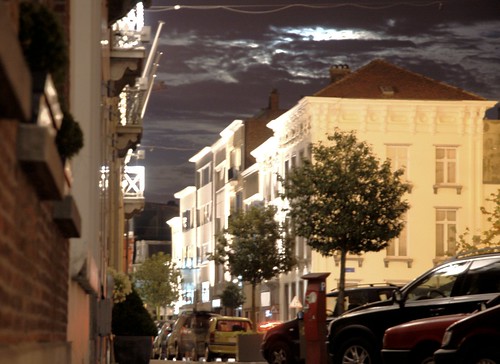
Onze-Lieve-Vrouwestraat The moon shone through the clouds. The sun didn't. The lightning did. Or, well, didn't. The beer flew wildly, and changed the food into something of the past. Discussions arose about lasers, ceramic knifes, and stormy nights. Promises were made that were only kept by some, including me, but not including him. Much was said that mattered little. Little was said that should've been forgotten. Yet much was. He would've been proud.

Andrew Pollock: [life] 17 days

Getting close now. Sarah had another ultrasound yesterday, just to check things. Unfortunately I couldn't be there due to a self-inflicted scheduling screw up. Apparently you could see hair on the ultrasound, so I'm a bit bummed to have missed it. The baby has "dropped", so that's good. Her head's still down, and she's swallowing, so that's all good too. Weight-wise she's now in the 38th percentile. We're booked in for a C-section on the 14th, unless she comes of her own free will between now and then (which is what we'd prefer), in which case our OB will allow an attempt at a VBAC. Our OB is reluctant to allow the pregnancy to go past 39 weeks, given prior history and Sarah's heart, and they don't induce for VBACs, so it's going to require some planetary alignment to avoid a C-section. The whole heart thing still being an issue was only a fairly recent discovery for us. Sarah's cardiac surgeon had told us we could go forth and have as many kids as we wanted, but it turns out the fine print in that statement is that while the previous aneurysm has been repaired, she has an undiagnosed connective tissue disorder, so there's no telling what might happen with the rest of her aorta in the future. So her OB is just doing what a good high-risk OB should do, and being extra paranoid, on two fronts. So we've got a couple of weeks to try and convince our daughter to come more than a week and 2 days early. I don't think we have statistics on our side, unfortunately (although I had a surprisingly hard time finding concrete statistics on delivery dates relative to due dates for first-time deliveries versus subsequent deliveries).

Andrew Pollock: [life/americania] TransLink to become Clipper

No sooner do I discover it, and TransLink up and renames itself to Clipper. I wonder how much that exercise is going to cost? I'm also curious as to what they're going to do in terms of a new domain name. Ah, marketing:
Why is the name being changed? Now that the system is fully operational on five transit agencies - Muni, BART, AC Transit, Caltrain and Golden Gate Transit and Ferry - it is available to the majority of Bay Area transit riders. Giving the system a new name and logo helps make it more appealing to potential customers and also takes away any confusion with other local programs such as FasTrak, Fast Pass, as well as several other transportation programs around the world that are also named TransLink.
With Bay Area public transportation being woefully inadequate, I have to wonder if much of any adoption problems (which is what I presume they're trying to solve with this rebranding) are more a function of overall patronage?

27 April 2010

Matthew Garrett: Radeon reclocking

Alex released another set of Radeon power management patches over the weekend, and I've been adding my own code on top of that (Alex's patches go on top of drm-next, mine go on top of there). I've left it stress-testing for a couple of hours without it falling over, which tells me that it's stable enough that I can feel smug. This is a pleasing counterpoint to the previous experiences I've been having, which have been rife with a heady mixture of chip lockups or kernel deadlocks. It turns out that gpus are hard.

There's a few things you need to know about gpus. The first is that if they're discrete devices they typically have their own memory controller and video memory. The second is that there's an impressive number of ways that you can end up touching that memory. The third is that they tend to get upset if something tries to touch that memory and the memory controller is in the middle of reclocking at the time.

The first and most obvious use of video memory is by the gpu itself. Accelerated operations on radeon are carried out by sending a command packet to the command processor. This is achieved by sharing a ring buffer between the cpu and the gpu, with the gpu reading packets out of that ring buffer and performing the operations contained within them. Many of these operations will touch video memory (that being the nature of most things you want a gpu to do), and if that happens bad things occur. Like the card locking up and potentially taking your PCI bus with it.

So, obviously, we don't want that to happen. The first thing we do is take a mutex that blocks any further accelerated operations from being submitted by userspace. Then we wait until we get an interrupt from the gpu telling us that the display engine has gone idle. The problem here is that we don't have a terribly good idea of how many more operations there are to complete and we don't know how long each of those operations is going to take, but this is less bad than some of the alternatives[1]. Jerome Glisse has some ideas on how to improve this to require less waiting, but the effects should still be pretty much invisible to the average user.

So we've stopped the command processor touching ram. Everything's good, right?

Well, not really. The obvious problem is that users typically want to display something, so there's a separate chunk of chip that's repeatedly copying video memory over to your monitor. That's got to go too. Thankfully, there's a convenient bit in the crtc registers that lets us turn that off, but the pretty unsurprising downside is that your screen goes blank while that's happening. So we don't want to do that. Instead, we try to perform the reclock while there's nothing being displayed on the screen - that is, while we're in the screen region where a crt's electron gun would be scanning back from the bottom of the screen to the top. It turns out that rather a lot of display assumptions depend on this happening even if there's no crt, no electron gun and no thick sheet of glass with a decent approximation of vacuum behind it, so we get to do this even if we're displaying to an LVDS. And we have about 400-500 microseconds to do it - an almost generous amount of time.

So we ask the hardware to generate an interrupt when we enter vblank and then we reclock. Except the hardware has an irritating habit of lying - sometimes we get the interrupt a line or two before vblank, sometimes we get it after we've already gone out the other side. Vexing, and not entirely solved yet - so sometimes you'll still get a single blank frame during reclock. But there are plans, and they'll probably even work.

At this point the acceleration hardware isn't touching the memory and the scanout hardware isn't touching the memory. Except it still crashes under some workloads. This one took me longer to track down, but the answer turned out to be pretty straightforward. Not all operations are accelerated. When they're not accelerated they have to be done in software. That means that the CPU has to write to the video memory itself. I'm sure you can see where this is going. This was fixed without too much trouble once I'd finished picking through the driver to work out every location where objects might be mapped into the CPU's address space, at which point it's a simple matter of unmapping them and blocking the fault handler from remapping them until the reclock is finished. Linux, thankfully, has lots of synchronisation primitives. And now everything works.

Except when it doesn't. This took a final period of head scratching, followed by the discovery that ttm (the memory allocator used by radeon) has a background thread that would occasionally fire to clean up objects. And by clean up objects, I mean change their mapping - which means updating their status in the gart, which means touching video memory. So, let's block that. And that tripped me off to the fact that even if it couldn't submit new commands, the CPU could still create or destroy objects - with the same consequences.

So, once all of these are blocked, video memory is quiescent and we can do what we want. And we do, at least once I'd sorted out the bits where I was taking locks in the wrong order and deadlocking. Depending on the powerplay tables available on your card we'll chose different rates and so your power savings will vary heavily depending on the values that your vendor provided, but the card I'm testing on sees a handy 30W drop at idle. Right now we're only changing clocks and not dropping voltage so there's potentially a little more to come.

While getting this stable was pretty miserable, the documented entry points for clock changing made a lot of this easier than it would otherwise have been. It's also probably worth noting that Intel's clock configuration registers are entirely missing from any public documentation and the dirver Intel submitted to make them work in their latest chips appeared to have been deliberately obfuscated, so thanks to AMD for making all of this possible.

[1] It's possible to insert various command packets that either indicate when they've passed or stall until a register value gets updated, but these either cause awkward problems with the cp locking or mean that the gui idle functionality never goes idle, so they're not ideal either.

Ingo Juergensmann: Johan Schl ter: "Child pornography is great"

For many activists in net-politics it is apparent that the fight against child pornography is just an excuse for establishing a EU-wide content filtering infrastructure. This infrastructure for content filtering can be used to filter other content than child pornography as well. For example politicians in Germany already requested blocking gambling sites, Nazi sites, left extremistic political sites and others, when we had that kind of discussion last year over here. The proposal of a law putting up stop pages in front of child pronography sites by former minister for family Ursula "Zensursula" von der Leyen passed the parliament, but shortly after last years parliament elecetion all political parties didn't want that law anymore.
EU commissioner Cecilia "Censilia" Malmstr m introduced a similar proposal for a EU-wide blocking iinitiative a short while ago, as you might now. Christian Engstr m, member of the EU parliament of the swedish Pirate Party, wrote today on his blog that content right industry welcomes child pornography as a way to introduce content filter and blocking infrastructure:

Child pornography is great, the speaker at the podium declared enthusiastically. It is great because politicians understand child pornography. By playing that card, we can get them to act, and start blocking sites. And once they have done that, we can get them to start blocking file sharing sites .

The venue was a seminar organized by the American Chamber of Commerce in Stockholm on May 27, 2007, under the title Sweden A Safe Haven for Pirates? . The speaker was Johan Schl ter from the Danish Anti-Piracy Group, a lobby organization for the music and film industry associations, like IFPI and others.

[...]

Start with child porn, which everybody agrees is revolting, and find some politicians who want to appear like they are doing something. Never mind that the blocking as such is ridiculously easy to circumvent in less than 10 seconds. The purpose at this stage is only to get the politicians and the general public to accept the principle that censorship in the form of filters is okay. Once that principle has been established, it is easy to extend it to other areas, such as illegal file sharing. And once censorship of the Internet has been accepted in principle, they can start looking at ways to make it more technically difficult to circumvent.


If you already have not, then please act now and contact your local EU representive and kindly ask to refuse this directive of Malmstr m and enlighten them by supplying arguments such those MOGIS (MissbrauchsOpfer Gegen InternetSperren, abuse survivors against internet blocking) put up on their webpage (English and other languages).

The abuse of childs and the documentation of such abuse (child pornography is a bad term anyway) needs to be stopped! But access blocking is the wrong direction. Better take care of a more effective criminal prosecution. Documentation of child abuse needs to get removed from the web and the producers needs to get arrested.

So, please act now!

P.S.: there's a nice video on http://cleanternet.org/

Phil Hands: The rise of the Clan MacDebian

I've asked the weavers to start doing their job today, so with luck the tailors will still have time to make kilts ready to wear for DebConf10.If you've been wondering if you'd like some Debian Tartan, now's your chance. We've ordered a little over 16 yards more than we need, which will be enough to make about 2 extra kilts and a few ties (depending on exact details), so order early to avoid disappointment.Of course, kilts are not the only thing one can make out of tartan. The tailors make other things, but there's nothing stopping you from buying some cloth by the yard and being inventive (it costs about 25.00 GBP per yard). We'll also be making ties, so if you're interested in one of those, please add yourself to the relevant table on the wiki, and I'll get in touch with prices etc.Full details of this silliness are available on the wiki page -- send any questions to phil at hands dot comUpdate 16:00 UTC 27th: one 8-yard kilt snapped up already (numbers above updated)

Bdale Garbee: TeleMetrum in Stock

First, I was pleasantly surprised to discover that TeleMetrum is now the subject of a post on the Make magazine site. Very cool! As reported last week, I've been waiting for better GPS antennas to arrive, but heavy snow here in Colorado last Friday delayed delivery. They finally arrived, and as I hoped, they appear to completely solve our signal strength problem! So... [drum roll, please!]... I am very happy to announce that the first production build of TeleMetrum boards and starter kits are now "in stock" at the Garbee and Garbee web store, along with other products designed by the Altus Metrum community! Keith and I are still working on the new Java-based ground station software and user documentation for the system. Watch this space for updates. I hope we'll have both ready for download by the time customers actually receive hardware...

Diego Escalante Urrelo: Summer lessons

Over the last few months I ve been working for Igalia, as an intern, fixing regressions in Epiphany, which extends to WebKitGTK+ sometimes. Surely a dream job: working on my favourite projects, on a great company, surrounded by great teammates and friends. Igalia: Free Software Engineering I m happy about it, really really happy. I love this job, totally, completely!. I ve had the chance to learn a lot. Here I d like to share some things I have learned so far, I look forward to post again with more ideas, but meanwhile here you have two. Different timezones are hard The time when I find most of the Igalia crew online is between 2am and 12pm. Of course this doesn t mean you can t find them past 12pm, but it s already 7pm or 8pm in Europe then. I m on UTC-5 and Spain is on UTC+1 or (now) UTC+2. You probably agree that asking anyone to wake up at 7am in summer is unrealistic. Luckily, Igalia doesn t make me pass a turing test everyday at a fixed time. This rocks.

valpo
Valpara so, Chile I love it when people understand that a happy hacker working at midnight is better than an unhappy hacker working on a set in stone schedule. Kudos to Igalia for that. Your code should explain and defend itself My written expression teacher says Your text should be good enough to explain and defend itself . This applies to code too. I confirmed this at the expense of Xan s patience. It s a common situation: when the maintainer reviews your patch you are not around to explain it, or present the rationale you put into the change. The solution? well, simple, your patch and commit log should explain by themselves.

Felix, chillin
Don t just post a patch and do this.
Review it yourself. I saw, after realising how much ping-pong Xan and I had to play to get a patch in, that my patches lacked a harder review by myself before being posted. You have to be your first reviewer. Be a severe judge of your patch, ask yourself if you would accept such a patch, if you would like a commit message like that, if that variable name is really good, if someone could quickly grasp what s it all about, etc. Get into the flippy flops of the maintainer, don t assume everything is obvious to everyone.

26 April 2010

Wouter Verhelst: Yanina Wickmayer, heroine of the Belgian fed cup team

Last weekend, I went to the Grenslandhallen in Hasselt, to see Belgium compete against Estonia in a Fed Cup tie of the World Group playoffs. The winner of this tie would gain a seat in the top-tier World Group next year, which opens the possibility of winning this competition. The Belgian team was the strongest possible one, with all four best Belgian female tennis players Yanina Wickmayer, Kim Clijsters, Justine Henin, and Kirsten Flipkens. On paper, the team should not have had any problems beating the Estonian team. Unfortunately, Justine fractured her pinky finger during practice on wednesday; and while it did not make it impossible for her to play, it did reduce her fitness somewhat, which meant that on Saturday, Kim and Yanina had to defend the Belgian colors. They did and won, but then Kim injured some muscle in her foot, which made it hard for her to walk on Sunday, let alone play. With only Justine, Yanina, and Kirsten available, coach Appelmans chose to put Justine on the field. Though she made a valiant effort, she unfortunately did not manage to beat an unleashed Kaia Kanepi, who it must be said played a terrific match. As such, it fell on Yanina to bring home the tie in the fourth singles rubber against Maret Ani. Being a bit nervous in the start of the first set, she made some unnecessary errors; but after a few games, she came through and started to play much better. Unfortunately, by that time the score was already at 5-1. Yanina won her first service game of the match to bring it to 5-2, but it wasn't enough, and Ani won the first set somewhat easily. She couldn't put anything on the table against a storming Wickmayer, however, and after two more sets, the outcome of the match and, by extension, the tie was clear: a win for Belgium. I can't help but note that Wickmayer has been a great player for the Belgian fed cup team these past few years, however. Since her first Fed Cup participation in 2007, she holds what is, given her ranking at the time, a rather impressive 9-4 win-loss record in Fed Cup. If it wasn't for Wickmayer, the Belgian team would not be where it is now. It was Wickmayer who won her three matches against Canada, one as part of a doubles team, to prevent demotion from world group II to the Europe/Africa zone back in 2009, with a 3-2 score. It was Wickmayer who won the crucial third rubber against higher-ranked Radwanska in February to beat Poland, with the latter even holding the home field advantage. And it's now been Wickmayer who won two of the three rubbers against Estonia that were needed to win the tie. So Congrats, Yanina!

Christoph Egger: [Review] AI Touchbook

Having my primary working Computer, a Lenovo Thinkpad, going into repair at the end of December I finally got up to ordering on of those TouchBook ARM based netbooks I was looking at for some time. After some processing time it finally got shipped in April and arrived here last Monday, time to write up my first impressions. Some words about the Hardware. The TouchBook ships with a so called "Beagle Board" featuring a OMAP3 Processor, ARM Cortex A8 running at 600MHz, 512MiB of RAM and a 8GiB SD Card for storage. It has a 8.9" touch screen and comes with USB and Bluetooth Sticks for wireless connectivity. The Display part contains all the needed Hardware and is detachable from the bottom that is just a keyboard sitting on the secondary Battery. You can open the Top to get at 4 intern USBs (3 USB-A and one Mini-USB) where 2 of these spots are occupied already for wireless networking and Bluetooth. First experience The TouchBook comes with an US Power Adaptor only so when I got the device I was running for some tiny Adaptor to get the plug into a normal EU Power Outlet (it's incredibly hard to get one for this Direction while it's easy to get some travelling stuff to plug EU Hardware into various different Outlets!). When I finally booted it the first thing you'll notice is the touch interface for the bootloader. That's quite a difference to all-text-based old grub! The shipped SD Card offers 3 Operating Systems, one custom Linux that might well be interesting to the average User, a Ubuntu Karmic that really OK for a Debianoid Hacker- both running a XFCE Desktop - and a Android that is really slow and doesn't seem to be good at anything. Needless to say I sticked with the Ubuntu for now. What to not expect Well this is a 600MHz CPU with half a Gig of RAM running of a SD Card. So don't expect it to be good at anything that can profit from today's High-End Hardware. The good Points First of all, I have to admit that the touch screen is a neat interface, way superior to the Touchpad Area you'll normally find on a Notebook - at least if you use the stylus. It's quite different from the inside-the-keyboard trackball the thinkpads have of course. The Website claims 10h of Battery life and while I've emptied the battery much faster under certain workloads (e.g. Playing cards) it does hold that promise with emacs fired up in org-mode, IRCing on a server over SSH and the mandatory wireless working. Same for a always-on on campus day which just works. Again putting the screen on the keyboard the wrong way 'round will give you a touchscreen tablet with the keyboard out of your way, an ideal configuration for playing. And I have to admit playing games like gtkballs or aisle riot real fun. So much fun actually I'm currently thinking on whether it would be feasible to get openpandora working on it. What I'm really missing There are two Properties that are really lacking from the device which would make it (in my personal opinion at least) a whole lot better: A simple Ethernet controller I could use to go online when sitting in the server room doing some maintenance without taking my WRT with me and some slot to store the stylus when not using it where it's easy to get out (currently I'm having it in my wallet). Then there's something (maybe a Kernel Bug): The Wireless is unable to find any new Access Point after disconnecting from some and walking out of reach from that. Force-unloading the kernel module and waiting 30 minutes worked for me multiple times but that's purely inacceptable. Finally there are some minor glitches. The shiny red cover just gets dirty every time you touch the thing and the Keyboard is really small (what a surprise on a 9" device) and has some of the special Keys (like the Home key) located at unusual spots (Page-Up/Down only available through the FN modifier). Shift and End at the right side are also labeled opposite from their actual function (at least on Ubuntu). The last ugliness is the top part battery only charging when the device is running, which means you"ll have the TouchBook running all night to get the battery charged and the Battery Monitor not working at all (at least in the current version of the operating systems). Where to go now I've not yet come around to really play with the operating system (apart from installing wicd, urxvt-unicode and awesome getting the most needed of my working environment). As I'm a Debian Developer I'll definitely need a Debian running on it (although I was told it'll be slow with software compiled for armv4te) and, as it needs to be running all night anyway, I'll try out gentoo pending another SD Card for experiments. Secondly there's currently no useable conforming Common Lisp Implementation in Debian for armel as far as I can tell. As arm was already working it shouldn't be that hard, let's see if I can change that but feel free to join me! Final Notes I was thinking of some mobile-ish note-taking device and remote ssh terminal for University which the device clearly can do even for 10h away from any power plug while being some non-standard non-x86 device to toy on (It's actually my second armel next to the sheeva plug mounted on my window board. As a final Remark: This blogpost was written on the TouchBook hacking some markdown into emacs while traveling by train to Erlangen where I study on Sunday Night after having read some chapters of Cory Doctorow's Little Brother on my E-Slick E-Book reader and finished later in my Room. Maybe I'll find some time to write a review for this device as well one day!

25 April 2010

Tiago Bortoletto Vaz: Government Resquest tool fails

So it s no surprise that Google, like other technology and telecommunications companies, regularly receives demands from government agencies to remove content from our services. Of course many of these requests are entirely legitimate, such as requests for the removal of child pornography (1). We also regularly receive requests from law enforcement agencies to hand over private user data. Again, the vast majority of these requests are valid and the information needed is for legitimate criminal investigations. However, data about these activities historically has not been broadly available. We believe that greater transparency will lead to less censorship (2).

source
(1)
Do your statistics cover all categories of content removals? No. Our policies and systems are set up to identify and remove child pornography whenever we become aware of it, regardless of whether that request comes from the government. As a result, it s difficult to accurately track which of those removals were requested by governments, and we haven t included those statistics here.
(So, why did you mention this as these requests ?)

(2)
* Chinese officials consider censorship demands as state secrets, so we cannot disclose that information at this time.
(where s the real transparency?) Furthermore, I tell you the incorrectness regarding requests/removals data from Brazil in your tool is a big truth.

Russell Coker: Links April 2010

Sam Harris gave an interesting TED talk about whether there are scientific answers to moral questions [1]. One of his insightful points was that when dealing with facts certain opinions should be excluded it would be good if journalists who report on issues of science could understand this. Another insight was that religious people most strongly agree with him regarding the issue of whether there are factual answers to moral questions but they think that God just handed the answers to their ancesters rather than making it an issue that requires consideration. He cites the issue of gay marriage as being a distraction from moral issues such as genocide and poverty. He asks how have we convinced ourself that every culture has a point of view worth considering? . He asks how the ignorance of the Taliban on the topic of physics is any less obvious than on the topic of human well-being. Dan Gilbert gave an insightful TED talk titled Why Are We Happy? [2]. One interesting fact he cites is that people who become paraplegic are no less happy in the long term than people who win the lottery. He points out that a shopping mall full of Zen monks is not going to be particularly profitable and uses this fact to explain the promotion of natural happiness over synthetic happiness in our society. Dan Barber gave an amusing and informative TED talk How I Fell in Love with a Fish [3]. He speaks about ecological fish farming and how the fish are more tasty as well as the farm being good for the environment. The farm in question is in the south-west of Spain, hopefully there will be more similar farms in other parts of the world soon. Gary Lauder gave an interesting brief TED talk about road signs [4]. His main point was to advocate a road sign saying take turns , but there are already signs in the US at freeway on-ramps saying that 1 or 2 cars may enter every time the light turns green which is a similar concept. The innovative thing he did was to estimate the amount of time and petrol wasted by stop signs, add that over a year based on the average income and then estimate that an annuity covering that ongoing expense would cost more than $2,000,000. This makes two stop signs at an intersection have an expense of $1,000,000 each. He suggests that rather than installing stop signs it would be cheaper to buy the adjacent land, chop down all trees, and then sell it again. Alan Siegel gave an insightful TED talk about simplifying legal documents [5]. He gives an example of an IRS document which was analysed with a Heat Map to show which parts confused the readers the IRS adopted a new document that his group designed which made it easier for taxpayers. He advocates legislation to make legal documents easier to understand for customers of financial services. Tim Berners Lee gave an interesting TED talk about Open Data, he illustrated it with some fantastic videos showing how mashups have been used with government data [6] and how the Open Street Map project developed over time. Martin F. Krafft gave an interesting Debconf talk about Tool Adoption Behavior in the Debian project [7]. One thing that I found particularly interesting was his description of the Delphi Method that he used to assemble a panel of experts and gather a consensus of opinion. The post-processing on this talk was very good, in some sections Martin s presentation notes are shown on screen with the video of him in the corner. As an aside, I think we really do need camera-phones. The Big Money has an interesting article comparing the Mafia Bust Out with the practices of US banks [8]. Mark Roth gave an exciting TED talk about using Hydrogen Sulphide to trigger suspended animation [9]. They are now doing human trials for suspending people who have serious injuries to reduce tissue damage during the process of surgery. Pawan Sinha gave an interesting TED talk about how brains learn to see [10]. He started by talking about curing blindness in people who have been blind since birth. But he then ended by showing some research into the correlation between visual processing and Autism, he showed that an Autistic child had significantly different visual patterns when playing Pong to an NT child. Adora Svitak gave an insightful TED talk about what adults can learn from kids [11]. She made some particularly interesting points about the education system requiring that adults respect children more and expect them to do better than their parents which is essential for all progress in society. The NY Times has an interesting article on animal homosexuality [12]. In terms of research it focusses on lesbian relationships between albatrosses. But a large part of the article is devoted to the politics of scientific research into animal sexuality. BrowserShots.org shows you what your web site looks like in different web browsers [13]. Cory Doctorow wrote an insightful article titles Can You Survive a Benevolent Dictatorship about the Apple DRM [14]. He describes the way the Apple Digital Restrictions Management (DRM) doesn t stop copyright violation but does reduce competition in the computer industry. He is not going to sell his work on the Apple store (for the iPad or iPhone etc) and suggests that customers should choose a more open platform. It s unfortunate that he didn t suggest a better platform.

24 April 2010

Andreas Metzler: balance sheet snowboarding season 2009/10

Since we had little snow this year shows a negative trend. Less days spent snowboarding, less meters of altitude. In December and around christmas I basically went snowboarding instead of talking a walk, stopping after an hour or two. The first reasonable day was January 23rd. My season ended April 17th with a perfect day at Warth. Here is the balance sheet:
2005/06 2006/07 2007/08 2008/09 2009/10
number of (partial) days2517293730
Dam ls101051016
Diedamskopf154242313
Warth/Schr cken03041
total meters of altitude12463474096219936226774202089
highscore10247m8321m12108m11272m11888m
# of runs309189503551462
On good days I had problems stopping ;-), ending up with three 11000m+ days. Not included above is one day in Brand (with the company I work for, I also did this last year) and my very first time at Lech am Arlberg. The road from Bregenzerwald to Lech is usually closed in winter due to danger of avalanches which is what stopped me before. This year it was open for some time due to little snow. I had great day there, although the snow cannons did not manage to cover all rocks.

Francois Marier: Monitoring a Belkin 600VA UPS with NUT on Debian/Ubuntu

I recently bought a Belkin 600VA UPS (model F6S600auUSB) and here's what I had to do to setup the monitoring and automatic shutdown on Ubuntu 9.10 (karmic). (This procedure should work on recent versions of Debian as well.)

This UPS comes with a proprietary monitoring tool (written in Java) and you can find instructions to get this working on the Ubuntu forums, but I was looking for a free solution that would integrate well with the rest of the system. So after reading this blog post I decided to go with the Network UPS Tools project:

$ apt-get install nut

Once the nut package is installed, I edited /etc/nut/nut.conf to set:

MODE=standalone

and created the following files:

$ vim /nut/ups.conf

[belkinusb]
driver = megatec_usb
port = auto
desc = "Belkin UPS, USB interface"

$ vim /etc/nut/upsd.conf

# MAXAGE 15
# LISTEN 127.0.0.1 3493
# MAXCONN 1024

$ vim /etc/nut/upsd.users

[local_mon]
password = MYPASSWORD
upsmon master

$ vim /etc/nut/upsmon.conf

MONITOR belkinusb@localhost 1 local_mon MYPASSWORD master
POWERDOWNFLAG /etc/killpower
SHUTDOWNCMD "/sbin/shutdown -h +0"

Then all that was left to do was to restart nut:

$ /etc/init.d/nut restart

and check syslog for any errors:

$ tail /var/log/syslog

While nut is running, it will monitor the UPS and report any power problems to syslog. Once the UPS is running on battery, it will make sure the computer is safely shut down before power runs out.

Hopefully future versions of GNOME Power Manager will be able to integrate with nut directly and display battery information through its notification icon.

Russell Coker: Is the NBN a Good Idea

Since writing my post about whether the National Broadband Network can ever break even [1] I ve had a number of people try to convince me of it s merit. He is my summary and rebuttal of some of the arguments for the NBN: The FUD Claims are made that Australia may fall behind the rest of the world, children may be disadvantaged in their education, or many other bad things may unless a faster net access is provided to everyone. That is FUD. If we are going to spend $43,000,000,000 then we should have some evidence that it will do some good. One thing to note is that rural areas will not get anything near the 100Mb/s speeds that FTTH will deliver to people in the cities. So if faster net access is actually essential then it would probably make sense to start by delivering ADSL2+ speeds to rural areas something that is not planned to be part of the NBN. Some people claim that having slow net access (ADSL2+) is going to preclude unknown future uses of the Internet. However the NBN is only going to be 100MB/s so any such claim is essentially that unknown things will happen in the future to make 24Mb/s too slow, but those unknown things won t make 100Mb/s too slow . I started using computer networks when a 1200/75 modem was considered fast. Over about the last 25 years typical net access speeds have increased from 1200b/s to about 12Mb/s, that s a factor of 10,000 speed improvement! Now the people who believe that we only need to multiply the current speed by a factor of 4 to address all future needs could be correct, but it seems unlikely and doesn t seem like a good idea for a $43,000,000,000 bet. If they were talking about 1Gb/s net access then things would be different in this regard. Technological Development Some people compare the NBN to the Apollo Program and suggest that the scientific research involved in implementing a FTTH network might result in useful developments in other areas. The Wikipedia page about Fiber to the premises by country indicates that Hong Kong had 1Gb/s available in 2006. It seems that a service which is rolled out 4 years later and 10 times slower than in Hong Kong is not going to involve a huge amount of research. Certainly nothing like the Apollo Program. It would allow multiple HDTV channels to be viewed at the same time According to the Australian Bureau of Statistics in 2001 the average Australian household had 2.6 people (3.0 in NT) [2]. The incidence of every member of a household wanting to watch a different live TV channel at the same time is probably quite low, it seems that young people nowadays spend as much time watching Youtube as they do watching TV. Based on the Wikipedia bit-rate page it seems that an ADSL2+ link could stream two HDTV channels. I could use fiber speeds today There are some people who claim that they need faster speeds for their data transfers right now. The problem is that the latency of data transfer is a bottleneck in transfer rates. In some quick tests between servers that have reasonably fast connections to the Internet I was only able to get one international transfer in excess of ADSL2+ speed (24Mb/s or 3MB/s). I was able to transfer data between London and Germany at a speed of 11MB/s which was possibly limited by the 100baseT Ethernet connection in the data center in Germany. Now if the people who pay for that German server were to pay more then they would get a higher speed. So anyone who downloads anything from my web site in it s current configuration would get a significant performance boost by using an NBN connection if they live in Europe! But if they live in Australia then they will probably get a fraction of that speed (a quick test indicates that my ADSL2+ connection gives me about 500KB/s from my web server. I need to have at least three transfers going at the same time to get more than 600KB/s when downloading files from other countries, and it s rare to have a single download run at a speed higher than 100KB/s. It would be handy if I could download at higher speeds from my ISP s mirror (which seems to be the only way someone in Australia can even use full ADSL2+ speeds). But it s certainly not worth the $5,000 per household installation cost of the NBN to get that. I m sure that there are some people who really do have usage patterns that could take advantage of fiber net access, one possibility would be downloading large files from a local source such as a major web site that uses a CDN. It seems likely to me that the majority of people who fit this category are using major porn services. Fiber would be good for Video-Conferencing To be better than ADSL for video-conferencing a NBN connection would need a faster upload speed. Internode is already selling NBN connections for the trial areas [3]. The cheapest fiber plans that they offer are at the 50/2 speed, that s 50Mb/s download and 2Mb/s upload in theory ADSL2+ should have a higher upload speed. In my tests the best result I ve got from sending files over my ADSL2+ link to another country is about 110KB/s (880Kb/s). The fact that the theoretical speed of a fiber connection is better than the measured speed of an ADSL2+ connection in this regard doesn t mean much, let s not assume that a fiber connection will get it s theoretical maximum speed. Not that you necessarily need higher speeds for video-conferencing, Youtube is one of many services that uses a lot less bandwidth than the upload speed of an ADSL2+ connection. Also video-calls which are supported on most 3G mobile phones use even less bandwidth again. I want an NBN connection to run a server at home The fastest connection for uploading that Internode offers to home users is the Home High plan at 100/8 speed, that is maybe a bit more than twice as fast for uploading as ADSL2+. They also offer a SOHO plan that supports 16Mb/s upload speed (at extra expense) and suggest that customers who want higher speeds contact their business sales department. But they include both sending and receiving data in the bandwidth quota for the fiber connections. Transmitting data at 16Mb/s isn t that great for a server. The cheapest virtual server plan on offer from Linode [4] includes 200GB of data transfer per month and has significantly higher transmission speeds. You could get a Linode virtual server plus an Internode ADSL2+ connection for about the same price as an Internode fiber connection to the home. There are two down-sides to virtual servers, one is that they are limited in the amount of RAM that they have (I can easily afford to buy 8G of RAM for a home system but renting an 8G virtual server is going to be expensive) and the other is that the storage is limited. Shared storage on virtual servers can be slow and is limited in size. If you need to run a server with a few terabytes of data storage (which is cheap on commodity SATA disks but expensive on server-grade disks) and you don t need to transfer much of it then a home server on the NBN might do well. Otherwise it s probably not going to work well for server use. The NBN will avoid people leaving their PC on to do downloads and save electricity To save electricity you would have to have a significant incidence of situations where a download can complete fast enough over the NBN to allow the user to turn their PC off before going to bed but be slow enough over ADSL to require that it be left on overnight. That would probably only apply to downloads from a CDN or from a local ISP mirror. From the Internode mirror I can download a test file at a speed of 850KB/s (I guess this means that my ADSL connection is not delivering full speed I suspect poor quality wiring in my home and would try to fix it if the current speed was too slow). In 5 minutes spend brushing my teeth I could download 250M of data, in the same time if I had a 100/4 connection on the NBN I might be able to download almost 3G of data. So in the unlikely event that I wanted to download a CD or DVD image and turn off my PC immediately before going to bed then the NBN would be a good thing. But then of course I would want to burn the CD or DVD image to disc and that would take long enough that I would leave it on overnight My ADSL connection gives really low speeds or I m out of range for ADSL Some people who live only a short distance from an exchange are unable to get ADSL2+. Some people live a long way from exchanges and are outside ADSL range. The ideal solution to these problems is not to provide fiber access to the majority of the population, it is to provide ADSL to everyone who is near an exchange and maybe provide fiber access to some people who are a long way from exchanges. I find it rather ironic that some people in the country are essentially saying because net access in the country is so slow we need fiber in the cities . The NBN is not going to give fiber to rural areas, satellite is one of the options that will be used. Really High Speeds I have been informed that to get the distances needed for the NBN they have to use Single Mode Fiber, this permits scaling up to higher speeds at some later time by changing the hardware at the end points. So we could end up with a Hong Kong speed network at some future time with the same fibers. This is a good thing. But I don t think that we need to get fiber installed right now so that we can use 100Mb, we could wait until there is enough need to get the faster transmission rates from the start. At the moment it s just a waste of money.

23 April 2010

Brandon Holtsclaw: Kansas City: Lucid Release, and GPG Key signing

With only a few days until the Ubuntu 10.04 "Lucid" release I'm starting the planning for a release party here in the Kansas City Metro area on the evening of Friday April 30th 2010, I'm not 100% on the venu yet , ideas welcome but I have setup a wiki page entry to get the discussion going.

I'd also like to setup a time before hand ( maybe an hour prior ) to do a "key signing party" for anyone that would like to exchange information. If there are any Debian Developers in the area I'd be thrilled to have one stop by to sign keys too, even if they could not or wish to not stay for the Lucid Release party, I still need one to begin part 2 of the NM process.

Just drop a note in the comments or email me ( me@brandonholtsclaw.com ) if you need any more info.

Jonathan McDowell: Out, damn'd PGP v3

Nearly a year ago people starting worrying about the complexity of SHA-1 being reduced and the potential availability of viable attacks against things such as PGP keys that used SHA-1. Many people (myself included) generated a new key, or updated preferences on keys that were otherwise strong enough. There were worries about what this might mean for Debian. We were getting ahead of ourselves a bit though. Firstly there haven't been any public viable attacks that I'm aware of (though of course this doesn't mean we shouldn't continue to migrate away), but secondly there's a much easier method of attack. PGP v3 keys. To quote RFC4880:

V3 keys are deprecated. They contain three weaknesses. First, it is relatively easy to construct a V3 key that has the same Key ID as any other key because the Key ID is simply the low 64 bits of the public modulus. Secondly, because the fingerprint of a V3 key hashes the key material, but not its length, there is an increased opportunity for fingerprint collisions. Third, there are weaknesses in the MD5 hash algorithm that make developers prefer other algorithms. See below for a fuller discussion of Key IDs and fingerprints.
At the time of writing Debian has 21 remaining v3 keys. This is a significant improvement over a year ago, when we had 200, but it's still 21 more than I'd like. I've been chasing people since last May (starting with those who had v3 + v4 keys, all of whom now only have a v4 key) and we're down to the stragglers. So it's time to name and shame, in the hope of kicking them into action. The following keys are what's left (doesn't match the currently active keyring because we've had a few replacements since the last promote):

0x0D2156BD3D97C149 Michael Stone <mstone>
0x225FD911CD269B31 Carlos Barros <cbf>
0x31E73F14E298966D James R. Van Zandt <jrv>
0x366CD3FEEBC11B01 Chris Waters <xtifr>
0x37A73FE355E8BC4D Frederic Lepied <lepied>
0x3E973117DCC528E9 Ardo van Rangelrooij <ardo>
0x5C7A46637953F711 Rich Sahlender <rsahlen>
0x5D6560F85F30F005 Craig Brozefsky <craig>
0x6B0E322836129171 Jim Westveer <jwest>
0x723724B4A5B6DD31 Christian Meder <meder>
0x7629B22ED71DAABD Adrian Bridgett <bridgett>
0x8FFC405EFD5A67CD Adam Di Carlo <aph>
0xB0D269DE17F3D4D1 Matthew Vernon <matthew>
0xBC151FC8D2A913A1 Peter S Galbraith <psg>
0xC1A0A171C2DCD3B1 Jim Mintha <jmintha>
0xC3168EBA23F5ADDB Ian Jackson <iwj>
0xCE951B1160D74C7D Patrick Cole <ltd>
0xE82A8B0D57137FE5 Paul Seelig <pseelig>
0xF20E242CE77AC835 Brian White <bcwhite>
0xFBAA570C3087194D Alan Bain <afrb2>
0xFFD1B4AC7C19FD19 David Engel <david>

Of these keys only 2 voted in the recent DPL election. 8 have failed to make any response to my mails (3 since last August). Only 9 have uploaded a package since August 2008. And 10 were already known to the MIA database. Some of them have stated they'll sort out a new key, but not yet done so.

If you are one of these people, please either get a new key sorted and signed and reply to the mails I've sent you, or reply and say you no longer wish to be involved in Debian. And if you know any of these people, encourage them to get a new key sorted and offer to sign it for them.

Ingo Juergensmann: Cleanternet - for a cleaner and safer Internet

Alexander Lehmann, creator of the great videos "Du bist Terrorist" (You're a Terrorist) and "Rette deine Freiheit" (Save your Freedom), has created another fine piece of video art:


http://cleanternet.org

It's about the new plan by EU commissionar Cecilia Malmstr m of censoring the Internet in the name of the fight against child porn. In Germany we had this discussion in the last year and although a law has been brought into action, all political parties don't want that law anymore. Putting up STOP signs in front of webpages is the wrong way to fight child porn.

Next.

Previous.